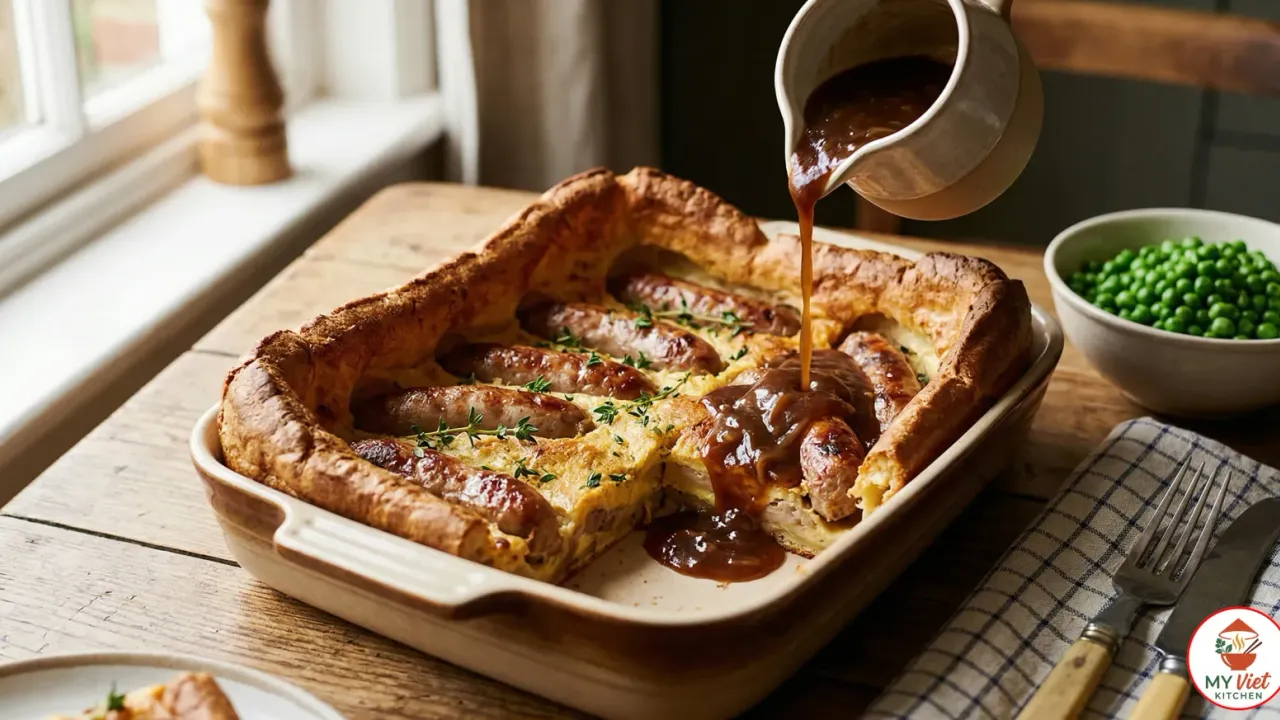
Toad in the hole is one of England’s most beloved comfort dishes. This classic recipe bakes juicy pork sausages inside a golden, crispy Yorkshire pudding batter until the whole thing puffs up into a magnificent, savory centerpiece. When served with rich onion gravy, this toad in the hole recipe delivers everything you love about British home cooking in a single baking dish. Whether you are feeding a hungry family on a weeknight or hosting a casual Sunday lunch, this guide walks you through every step for perfect results.
Prep Time: 15 minutes | Cook Time: 35 minutes | Servings: 4
Difficulty: Easy | Calories: ~620 per serving
What Makes Toad in the Hole Special?
Toad in the hole stands apart from other sausage dishes because of its remarkable contrast of textures. The Yorkshire pudding batter rises dramatically in the oven, creating tall, crispy edges and a soft, custard-like center. Meanwhile, the sausages roast inside the batter, releasing their savory juices into the surrounding pudding. As a result, every slice gives you a crackling edge, a pillowy middle, and a burst of meaty flavor from the sausage nestled within.
The dish traces its roots to 18th-century England, when cooks baked leftover meats in batter as an economical way to stretch ingredients. Over time, pork sausages became the standard filling. Yorkshire pudding batter, originally served as a side dish with roast beef, proved to be the perfect vehicle. Eventually, the combination caught on across the country and eventually became a staple of English home cooking. Today, toad in the hole appears on pub menus, school dinner trays, and family tables throughout Britain.
What truly makes this dish rewarding is how simple the technique is once you understand the science. Essentially, the batter relies on eggs, flour, and milk. Then, high oven heat turns the water in the batter to steam, which inflates it into those dramatic puffs. The fat must be smoking hot before the batter goes in. If you follow these two rules, your toad in the hole will rise beautifully every single time. In other words, it is a dish that looks impressive but requires very little actual skill.

Choosing the Right Sausages
The sausage defines the character of your toad in the hole. A good banger with high meat content and bold seasoning transforms this from a simple bake into a truly satisfying meal. With this in mind, here are the best options.
- Cumberland sausages (classic choice): Thick, coiled sausages from the Lake District seasoned with black pepper, nutmeg, and herbs. Their coarse grind gives a satisfying, meaty bite that holds up beautifully inside the batter. Cut the coil into individual portions before browning.
- Lincolnshire sausages (best choice): Sage is the star flavor in these traditional bangers from eastern England. The herbal, earthy taste pairs wonderfully with the rich, eggy Yorkshire pudding batter. Their coarse texture and natural casing give an excellent snap when you cut through them.
- Butcher-shop pork sausages: A quality butcher makes sausages with 80 percent or more meat content, natural casings, and fresh seasonings. These premium bangers deliver the best flavor and texture in toad in the hole. Ask for a traditional herb pork sausage and you will not be disappointed.
- Chipolata sausages (lighter option): These thinner sausages cook faster and create more batter-to-sausage ratio. Use eight chipolatas instead of six regular sausages. They work especially well for a lighter version or when children prefer smaller portions.
Ingredients for Toad in the Hole
Yorkshire Pudding Batter:
- 4 large eggs, at room temperature
- 1 cup all-purpose flour (125 grams)
- 1 cup whole milk, at room temperature
- 1/2 teaspoon salt
- 1/2 teaspoon English mustard powder
Sausages and Fat:
- 6 thick pork sausages (Cumberland or Lincolnshire)
- 1 tablespoon vegetable oil (for browning)
- 2 tablespoons beef dripping or vegetable oil (for the baking dish)
Onion Gravy:
- 2 large onions, thinly sliced
- 1 tablespoon butter
- 1 tablespoon all-purpose flour
- 1 cup beef stock
- 1/2 cup chicken stock
- 1 teaspoon Worcestershire sauce
- 1 teaspoon Dijon mustard
- 1 teaspoon balsamic vinegar
- Salt and black pepper to taste
Garnish:
- Fresh thyme sprigs
Pro tip: Every ingredient in the batter must be at room temperature. Cold eggs and cold milk produce less steam in the oven, which means your toad in the hole will not rise properly. Therefore, take the eggs and milk out of the fridge at least 30 minutes before you start mixing. This single step makes the difference between a flat, dense pudding and a tall, airy, golden one.
Step-by-Step Instructions
Step 1: Make the Yorkshire Pudding Batter
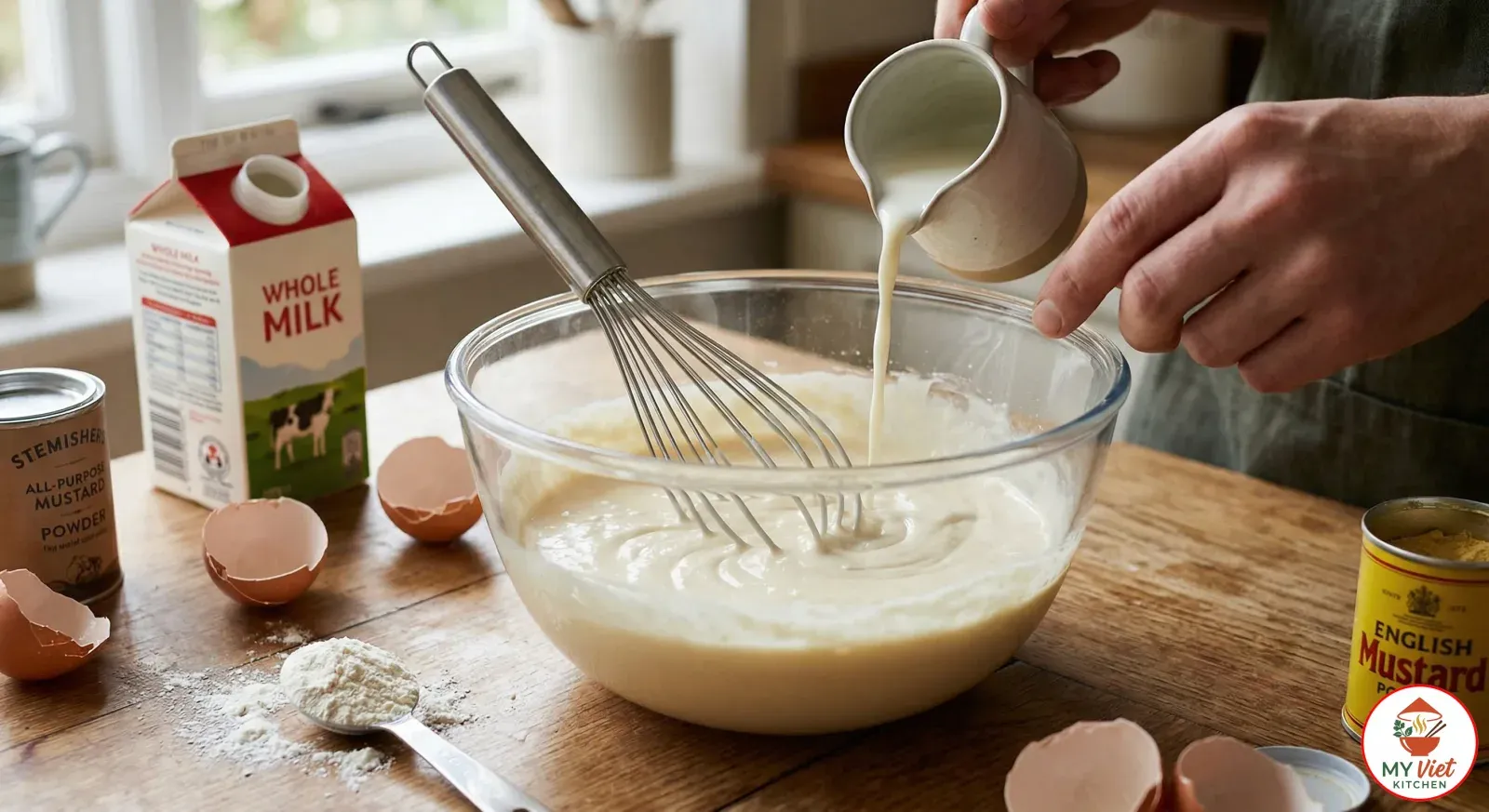
1 Crack the four eggs into a large mixing bowl and whisk them until fully combined. Add the flour and whisk vigorously until smooth, working out any lumps. Gradually pour in the milk while continuing to whisk. At this point, the batter should be thin and smooth, similar to the consistency of heavy cream. Stir in the salt and mustard powder.
Now set the batter aside and let it rest at room temperature for at least 30 minutes. After all, resting is essential because it allows the gluten strands in the flour to relax. As a result, the batter becomes more elastic and rises higher during baking. While the batter rests, you can brown the sausages and prepare the onions for the gravy. In fact, many experienced cooks make the batter the night before and refrigerate it, but always bring it back to room temperature before using.
Step 2: Brown the Sausages
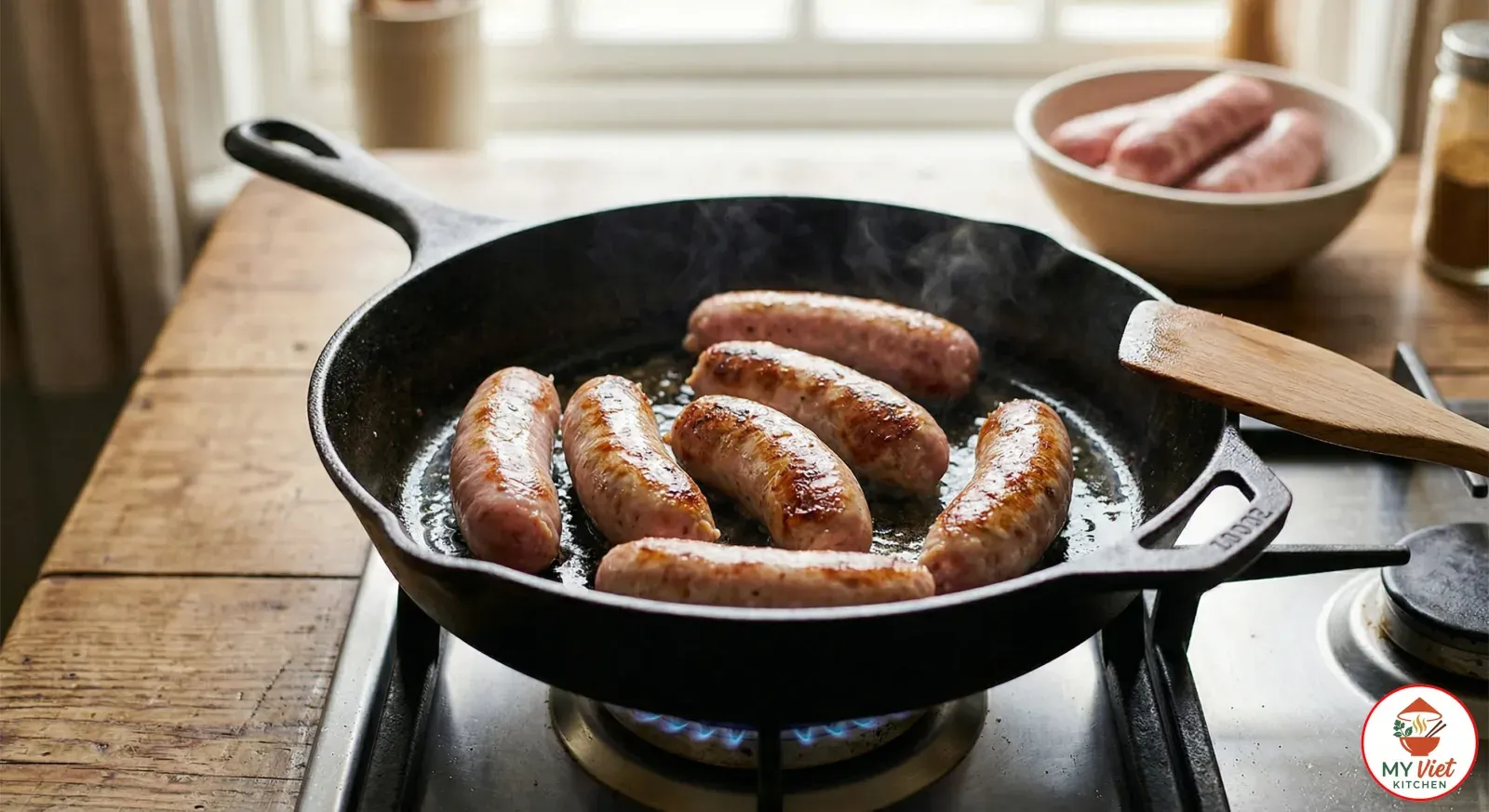
2 Heat the vegetable oil in a large skillet over medium heat. Add the sausages and brown them on all sides for about 5 minutes. You are not trying to cook them through at this stage. Instead, the goal is to develop a golden crust on the outside. Specifically, this browning creates the Maillard reaction, which builds deep savory flavor on the surface of the sausage.
Once browned, remove the sausages and set them aside on a plate. Similarly, do not wash the skillet if you plan to make the onion gravy in it later. Those browned bits clinging to the bottom of the pan are concentrated flavor. They will dissolve into the gravy and give it a rich, meaty depth that you cannot achieve any other way.
Step 3: Heat the Fat Until Smoking
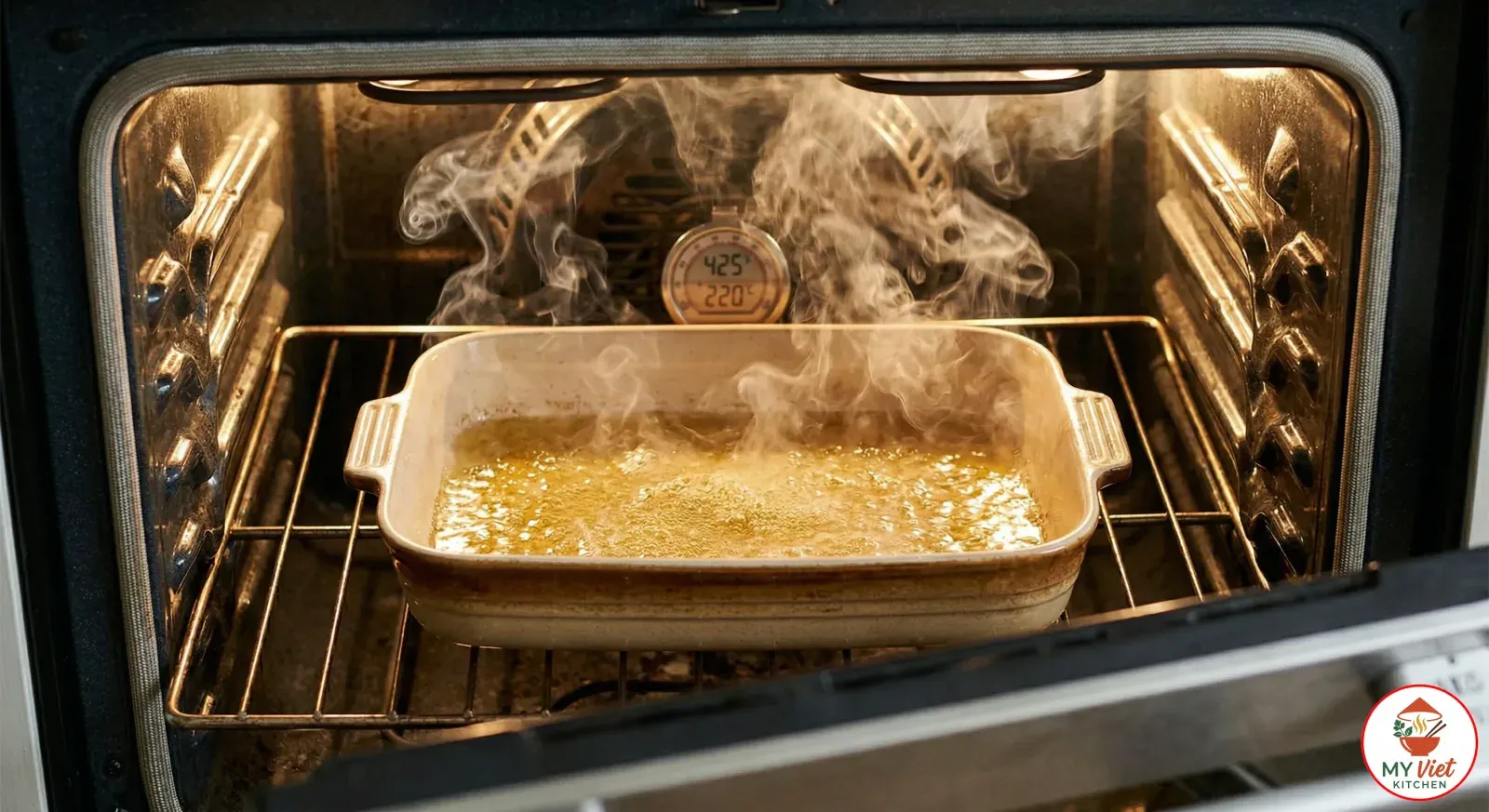
3 Preheat your oven to 425 degrees Fahrenheit (220 degrees Celsius). Add the beef dripping or vegetable oil to a large oven-safe baking dish, roughly 9 by 13 inches. Place the dish in the hot oven and let the fat heat for 10 minutes. Most importantly, the fat must reach smoking point before you add anything else.
This is the single most important step in the entire recipe. When cold batter hits smoking-hot fat, the water in the batter flash-converts to steam. That burst of steam is what inflates the Yorkshire pudding into its dramatic, towering puffs. If the fat is merely warm, the batter will spread flat and cook into a dense, heavy pancake. For that reason, wait until you see wisps of smoke rising from the dish before you proceed. Patience here guarantees a spectacular rise.
Step 4: Pour the Batter and Bake
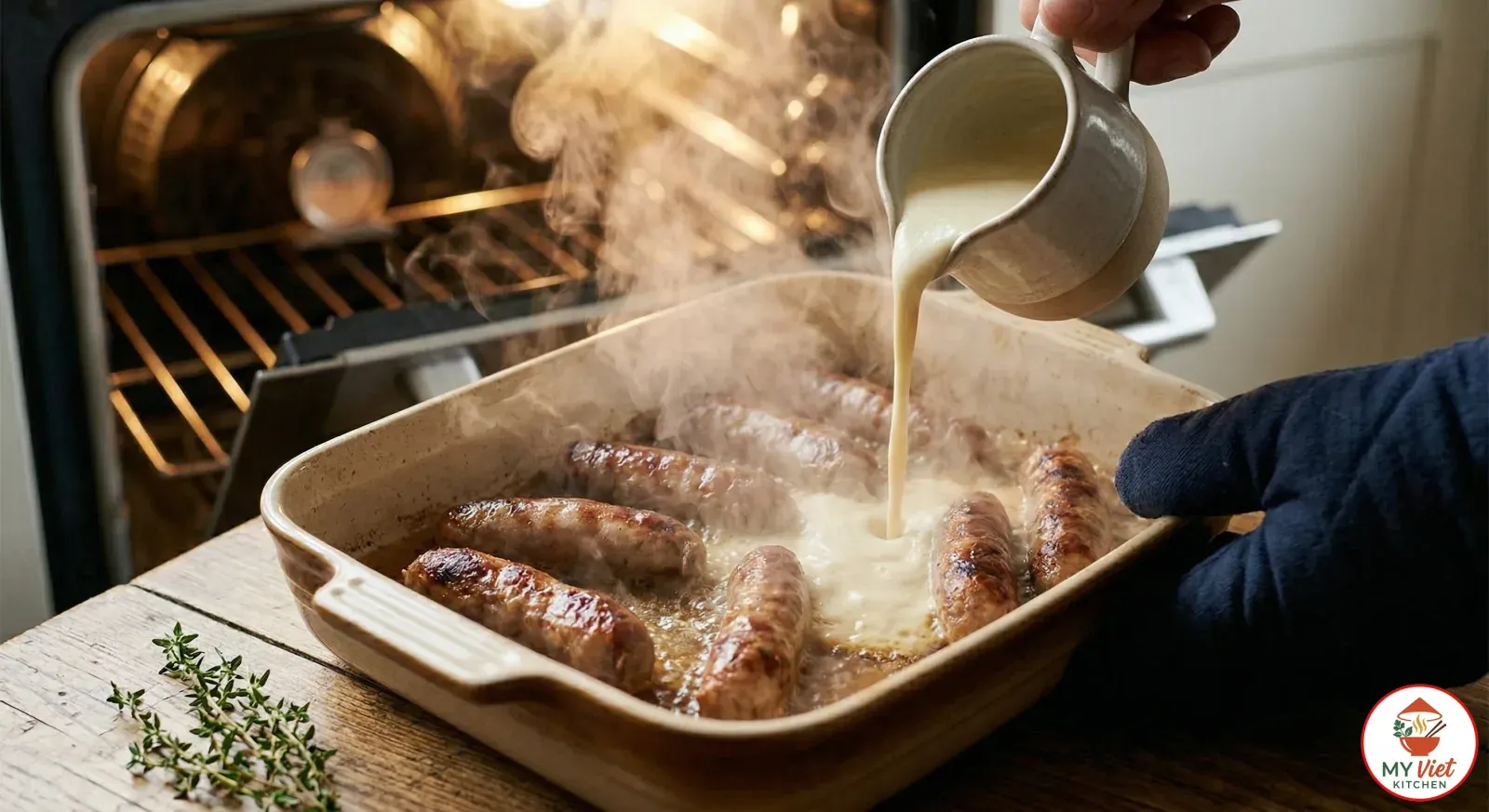
4 First, carefully remove the baking dish from the oven. Work quickly now because the fat will cool fast. Arrange the browned sausages evenly in the sizzling fat, spacing them apart. Immediately pour the rested batter around and between the sausages. You will hear a satisfying sizzle as the batter hits the hot fat. Undoubtedly, that sound means you have done everything right.
Then return the dish to the oven at once and close the door. Bake for 25 to 30 minutes until the batter has risen dramatically and turned a deep golden brown. The edges should be tall, crispy, and slightly charred. The center will be softer and more custard-like. Above all, do not open the oven door during the first 20 minutes of baking. Cold air rushing in causes the batter to collapse, and once it falls, it will not rise again. However, after 20 minutes, you can peek briefly if needed.
Step 5: Make the Onion Gravy and Serve
5 While the toad in the hole bakes, prepare the onion gravy. Return the skillet with the sausage drippings to medium-low heat. Next, add the butter and sliced onions. Stir to coat them in the fat and cook slowly for 15 minutes, stirring every few minutes. The onions should turn soft, golden, and deeply caramelized.
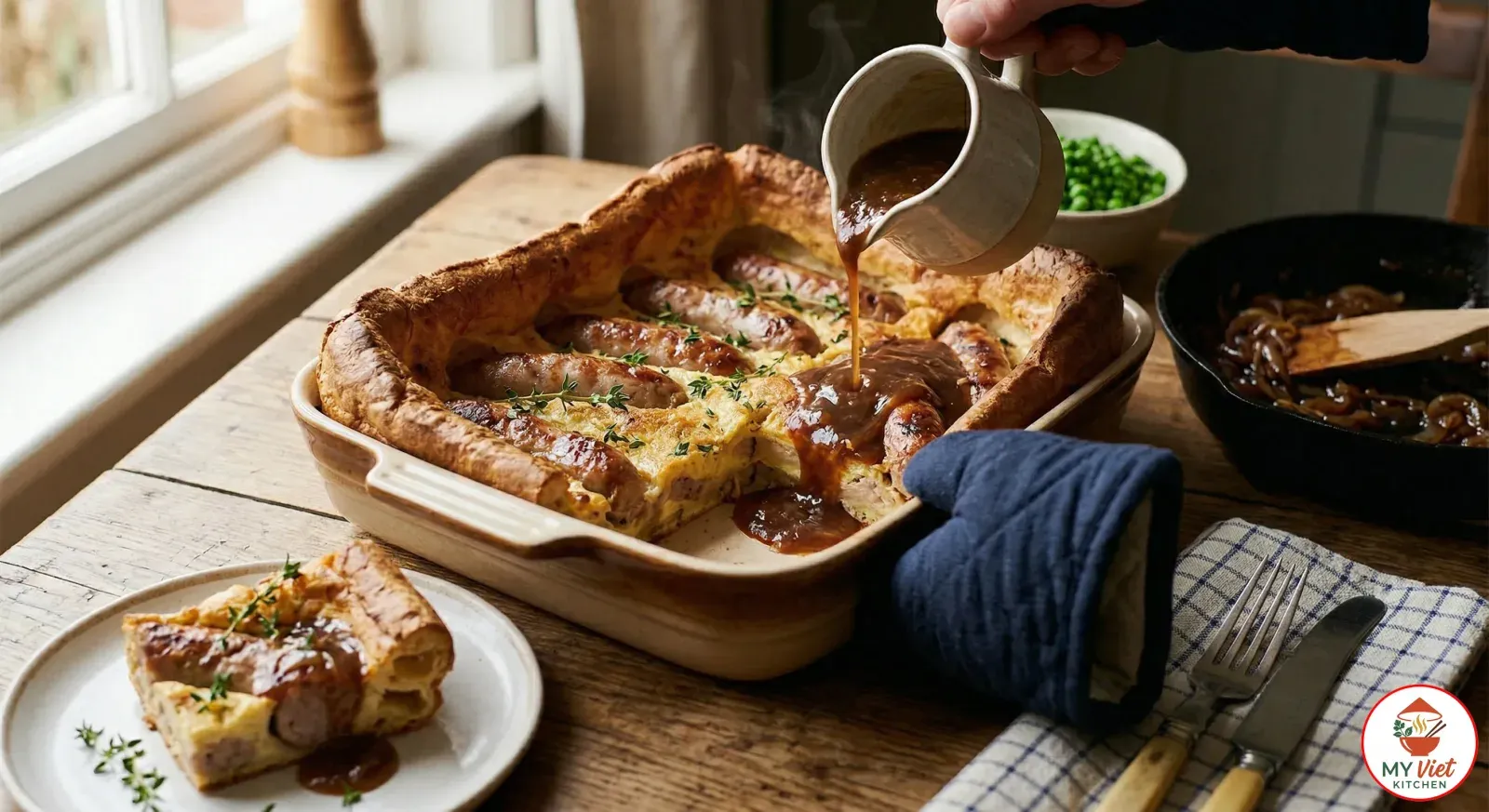
Afterwards, sprinkle the flour over the onions and stir for one minute to cook out the raw flour taste. Gradually pour in the beef stock and chicken stock while whisking constantly. Then add the Worcestershire sauce, Dijon mustard, and balsamic vinegar. Together, these three ingredients layer savory, tangy, and sweet notes into the gravy. Simmer for 5 minutes until the gravy thickens enough to coat the back of a spoon. Season with salt and pepper. Finally, when the toad in the hole comes out of the oven, cut it into generous portions and serve immediately with the hot onion gravy poured over the top. Garnish with fresh thyme sprigs.
Expert Tips for Perfect Toad in the Hole
Rest the Batter for Maximum Rise
Resting the Yorkshire pudding batter is not optional. During the rest period, the flour fully hydrates and the gluten relaxes. Consequently, this produces a batter that stretches more easily when steam pushes it upward. A rested batter rises higher, bakes crispier, and has a lighter interior. Thirty minutes is the minimum, but an hour or even overnight in the fridge gives even better results. Of course, just remember to bring refrigerated batter back to room temperature before pouring.
Keep the Oven Door Shut
Opening the oven door during the first 20 minutes is the fastest way to ruin your toad in the hole. The batter rises because of the trapped steam and high heat inside the oven. When you open the door, cool air rushes in and drops the temperature by 50 degrees or more. As a consequence, the steam escapes, the batter deflates, and you end up with a flat, dense result. Instead, only open the door after the batter has set and turned golden on top.
Use the Right Fat
Beef dripping is the traditional choice for toad in the hole because it has a high smoke point and adds a rich, savory flavor. Alternatively, vegetable oil works as a neutral substitute. However, avoid using butter or olive oil. Butter burns at high temperatures and olive oil has too low a smoke point. As a result, both will smoke excessively and give the batter a bitter taste. Similarly, lard is another excellent traditional option if you can find it.
Toad in the Hole vs Yorkshire Pudding Comparison
Toad in the hole and Yorkshire pudding share the same batter, but they serve very different purposes on the table. Here is how these two English classics compare.
| Feature | Toad in the Hole | Yorkshire Pudding |
|---|---|---|
| Main purpose | Complete main course with sausages | Side dish served with roast beef |
| Batter | Same egg, flour, and milk batter | Same egg, flour, and milk batter |
| Baking vessel | One large dish | Individual muffin tin cups |
| Protein | Sausages baked inside | Served alongside roast meat |
| Typical occasion | Weeknight family dinner | Traditional Sunday roast |
| Gravy | Onion gravy served on top | Beef gravy from the roast |
| Origin period | 18th century | 18th century |
Serving Suggestions
Toad in the hole is a substantial main course, but the right sides round out the meal beautifully. Here are the best traditional and modern accompaniments.
The Perfect Accompaniments:
- Steamed green vegetables: Broccoli, green beans, or peas add color and freshness. Their light flavor balances the richness of the batter and gravy.
- Braised red cabbage: Slow-cooked with apple and vinegar, this tangy side cuts through the heaviness of the dish. The sweetness of the apple pairs naturally with the savory sausages.
- Creamy mashed potatoes: Although toad in the hole is filling on its own, a scoop of buttery mash alongside it is a classic British indulgence. The mash soaks up extra gravy beautifully.
- Baked beans: A very British pairing that adds protein and a sweet, tomatoey contrast. Children especially love this combination for a hearty family dinner.
Beverage Pairings:
- English bitter (best match): A traditional cask ale with a malty body and gentle hop bitterness. Its earthy character complements the savory sausages and rich gravy perfectly.
- Brown ale: A smooth, slightly sweet beer with nutty and caramel notes. The malty sweetness echoes the golden, toasty flavor of the Yorkshire pudding batter.
- English cider: Dry, crisp apple cider from Somerset or Herefordshire refreshes the palate between bites. The acidity cuts through the richness of the dish nicely.
- Black tea or sparkling water: For a non-alcoholic option, a strong English breakfast tea works well with hearty food. Sparkling water with lemon also cleanses the palate between bites.
Storage and Reheating
Refrigerator: Store leftover toad in the hole in an airtight container for up to 2 days. Although the Yorkshire pudding batter will lose its crispness in the fridge, the flavor remains good. Also, keep any extra gravy in a separate container to prevent the batter from becoming soggy.
Freezer: You can freeze individual portions wrapped in foil for up to 1 month. The batter texture suffers slightly after freezing, so this dish is best eaten fresh. Nevertheless, you can freeze the onion gravy separately in portions for up to 2 months. Thaw everything in the fridge overnight before reheating.
Reheating: Place leftover toad in the hole on a baking sheet and reheat in a 375-degree Fahrenheit oven for 10 to 15 minutes. This restores some of the crispness to the batter. Meanwhile, warm the gravy separately in a small saucepan over low heat, adding a splash of stock if it has thickened too much. Avoid the microwave because it turns the Yorkshire pudding batter rubbery and limp.
Common Mistakes to Avoid
1. Not Getting the Fat Hot Enough
This is the number one reason toad in the hole fails. The fat in the baking dish must be smoking hot before you pour the batter in. Lukewarm fat means no initial steam burst, and without that steam, the batter stays flat. Instead, heat the dish with the fat in the oven for a full 10 minutes at 425 degrees Fahrenheit. You should see wisps of smoke when you pull it out.
2. Using Cold Batter Ingredients
Cold eggs and cold milk produce a batter that fights against the oven heat instead of working with it. As a result, the pudding rises unevenly or not at all. Take your eggs and milk out of the fridge at least 30 minutes ahead of time. In contrast, room-temperature batter hits the hot fat and creates steam instantly, giving you that dramatic puff.
3. Opening the Oven Door Too Early
Every time you open the oven door, hot air escapes and the temperature drops sharply. During the first 20 minutes, the batter is still setting. If the temperature drops, the steam collapses and the batter deflates permanently. Resist the urge to check on it. Accordingly, trust the process, set a timer, and keep the oven door closed until the batter is golden and firm on top.
4. Overcrowding the Sausages
Packing too many sausages into the dish leaves no room for the batter to rise between them. Instead, the batter pools around and under the sausages without enough space to puff up. Use six standard sausages in a 9-by-13-inch dish and space them evenly. As a result, this gives the batter enough room to climb and creates an attractive presentation.
Frequently Asked Questions
Why is it called toad in the hole?
The exact origin of the name remains a topic of debate among food historians. The most widely accepted theory is that the sausages poking out of the risen batter resemble toads peeking out of a hole in the ground. Indeed, the dish first appeared in print in the late 18th century. Early versions used various cheap cuts of meat, not just sausages. Eventually, pork sausages became the standard filling across England.
What is the best sausage for toad in the hole?
Cumberland and Lincolnshire pork sausages deliver the most traditional flavor. Cumberland bangers are thick and heavily seasoned with black pepper. Lincolnshire sausages feature sage as their signature spice. Both varieties have a high meat content that holds up well during the long bake. Alternatively, if you cannot find British sausages, choose any thick pork sausage with herbs, a natural casing, and at least 70 percent meat content.
Why did my toad in the hole not rise?
The most common cause is fat that was not hot enough. The fat must be visibly smoking before you add the batter. Other reasons include using cold batter ingredients, not resting the batter long enough, and opening the oven door during the first 20 minutes. Each of these factors reduces the steam that inflates the Yorkshire pudding. However, follow all four rules and your batter will rise every time.
Can I make toad in the hole with vegetarian sausages?
Yes, plant-based sausages work well in this recipe. Brown them first in a skillet just as you would with pork sausages. The batter recipe stays the same because it contains no meat products. Use vegetable oil instead of beef dripping in the baking dish. Make the gravy with vegetable stock for a fully vegetarian version. Furthermore, modern plant-based sausages hold their shape and develop a nice crust during baking.
How long should I rest the batter?
Rest the batter for at least 30 minutes at room temperature. This allows the flour to hydrate fully and the gluten to relax. Rested batter produces a lighter, crispier result. Additionally, you can prepare the batter up to 24 hours in advance and store it in the fridge. Just make sure to bring it back to room temperature before pouring it into the hot fat. Cold batter straight from the fridge will not rise as well.
What temperature should I bake toad in the hole?
Bake at 425 degrees Fahrenheit (220 degrees Celsius). High heat is essential for creating the steam that makes the batter rise. Do not lower the temperature during baking, even if the top looks dark. The high heat ensures the batter crisps on the outside while remaining light and airy inside. In contrast, a lower temperature produces a denser, heavier pudding that lacks the characteristic puff.
Variations and Adaptations
Herbed Batter:
Add a tablespoon of fresh chopped thyme, rosemary, or sage to the Yorkshire pudding batter before resting. The herbs infuse the batter with aromatic flavor that complements the sausages. Dried herbs work too, but use half the amount. Notably, this variation adds another layer of complexity without changing the technique at all.
Cheesy Toad in the Hole:
Scatter a generous handful of grated mature cheddar or Gruyere over the batter during the last 5 minutes of baking. The cheese melts into a golden, bubbly crust on top. Although this is not traditional, it is extremely popular with children and cheese lovers. In particular, the sharp flavor of the cheese pairs beautifully with the savory sausages and onion gravy.
Individual Portions:
Instead of one large dish, make individual toad in the holes using a muffin tin. Place one chipolata sausage in each cup with hot fat, then pour batter around it. Bake at the same temperature for 15 to 20 minutes. These individual portions cook faster, look elegant, and are easier to serve. Specifically, they work especially well for parties and buffets.
Caramelized Onion Toad in the Hole:
Caramelize sliced onions in the baking dish with the fat before adding the sausages and batter. The onions bake into the bottom of the pudding and create a sweet, savory base layer. As a result, this eliminates the need for a separate gravy, since the onions become part of the dish itself. Simply serve with a drizzle of balsamic glaze for extra flavor.
The Cultural Significance
Toad in the hole holds a special place in the story of English home cooking. It emerged during the 18th century as a way for resourceful cooks to make a satisfying meal from modest ingredients. Cheap cuts of meat, often leftovers from the Sunday roast, were encased in simple batter and baked until golden. Over time, sausages replaced the random meat scraps, and the dish evolved into the version we know today. Consequently, its origins in thrift and practicality give it a humble, honest character that resonates across generations.
In the 20th century, toad in the hole became a fixture of school dinners across Britain. Millions of children grew up eating it in canteens, served with lumpy gravy and overcooked vegetables. For many, the dish carries powerful nostalgic associations. Since then, celebrity chefs like Jamie Oliver and Nigel Slater have elevated the dish with better ingredients and careful technique, proving that this everyday meal deserves the same respect as any restaurant dish.
Beyond nostalgia, toad in the hole represents the broader tradition of Yorkshire pudding cookery that defines so much of English cuisine. In fact, the same batter that wraps the sausages also appears as individual puddings with roast beef, as a dessert filled with jam, and as a vessel for leftover stews. Indeed, Yorkshire pudding batter is one of the most versatile building blocks in the entire English kitchen. Once you master it for toad in the hole, you have the foundation for dozens of other classic British dishes.
Conclusion
Toad in the hole is English comfort food at its finest. Juicy pork sausages nestled inside crispy, golden Yorkshire pudding batter make a meal that looks impressive and tastes extraordinary. The secret lies in three simple rules: rest the batter, heat the fat until it smokes, and keep the oven door shut. Follow this recipe and you will pull a magnificent, puffed-up toad in the hole from your oven every single time. Serve it with rich onion gravy and a side of green vegetables for a complete British meal that feeds the whole family.
Ready to explore more classic British and European dishes? Browse our full collection of European dishes, including bangers and mash, shepherd’s pie, and beef Wellington. Each recipe is crafted with the same attention to authentic technique and flavor.