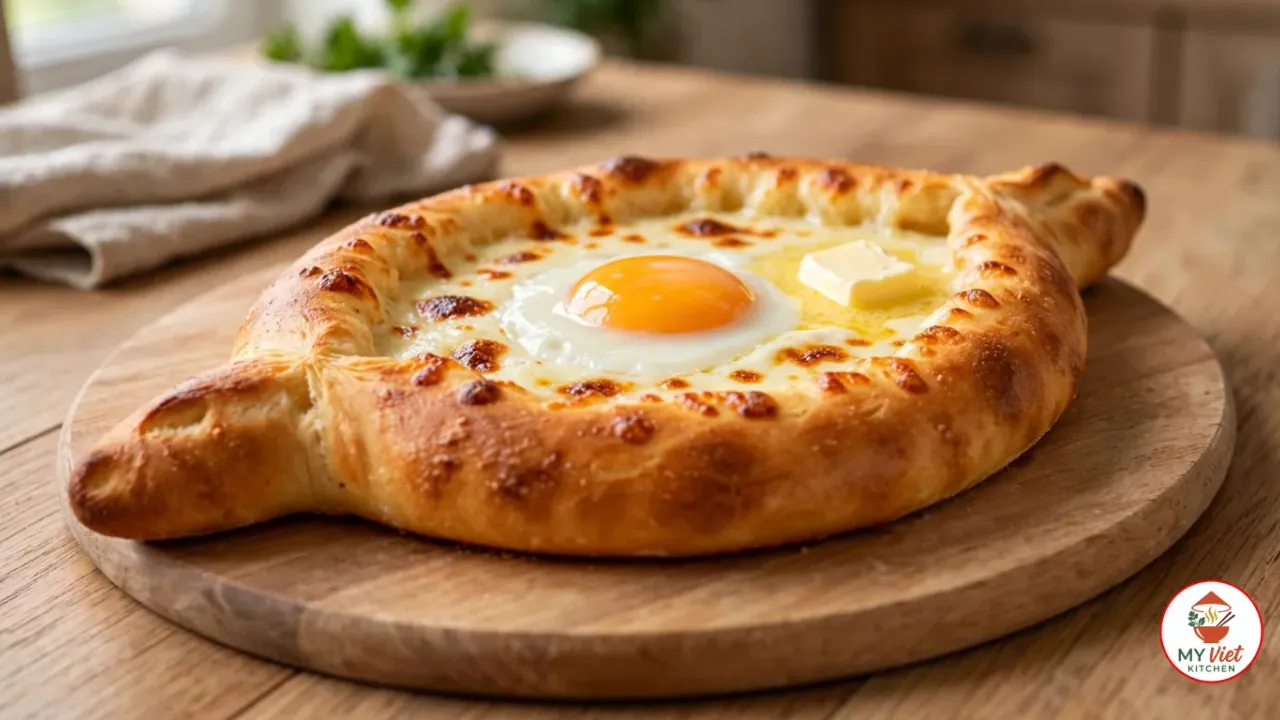
Khachapuri is a Georgian cheese-filled bread: a leavened dough that is left to rise, molded into one of several shapes and filled in the center with cheese and sometimes eggs (Wikipedia). This recipe makes the Adjarian version from Georgia’s Black Sea coast, four open boats of milk-enriched dough packed with mozzarella and feta, then finished with an egg and a pat of butter that get stirred in at the table.
Prep Time: 35 minutes | Cook Time: 20 minutes | Total Time: 2 hours 10 minutes, including 1 hour 15 minutes of rising and resting | Servings: 4
Difficulty: Medium | Calories: ~1,080 per boat

What Is Khachapuri?
The name joins two Georgian words, khacho (curd) and puri (bread). Wikipedia describes it as Georgia’s national dish, and “The Khachapuri Tradition in Georgia” entered the country’s list of intangible cultural heritage on 22 January 2019 (Wikipedia), by an order of the National Agency of Cultural Heritage Protection (UNEP Law and Environment Assistance Platform). How old khachapuri is remains unsettled. Darra Goldstein, author of The Georgian Feast, thinks it probably goes back to the 12th century, though its specific root is unclear (Wikipedia).
The word khachapuri covers a whole family of regional breads. Imeruli, the most popular form, is a yeast dough filled with salted white Imeretian cheese. Megruli is similar with more cheese on top, achma from Abkhazia is layered like a sauceless lasagna, and penovani from Samtskhe–Javakheti wraps the cheese in puff pastry (Wikipedia).
Imeruli is also the one economists price. The ISET Policy Institute’s Khachapuri Index, inspired by The Economist’s Big Mac Index, follows inflation through the flour, cheese, yeast, milk, eggs, butter and energy needed for one Imeretian khachapuri. In October 2025 that bill reached 7.3 Georgian lari, up 10.3% in a year (ISET Policy Institute).
Why Is Adjarian Khachapuri Shaped Like a Boat?
Adjara lies on the Black Sea, and its bread is said to represent a boat, the sea and the sun (Wikipedia). Tamada’s Table, the Georgian cooking channel behind the video above, gives the egg a specific role in that picture: it “symbolizes the sun and good weather for sailors” (Tamada’s Table).
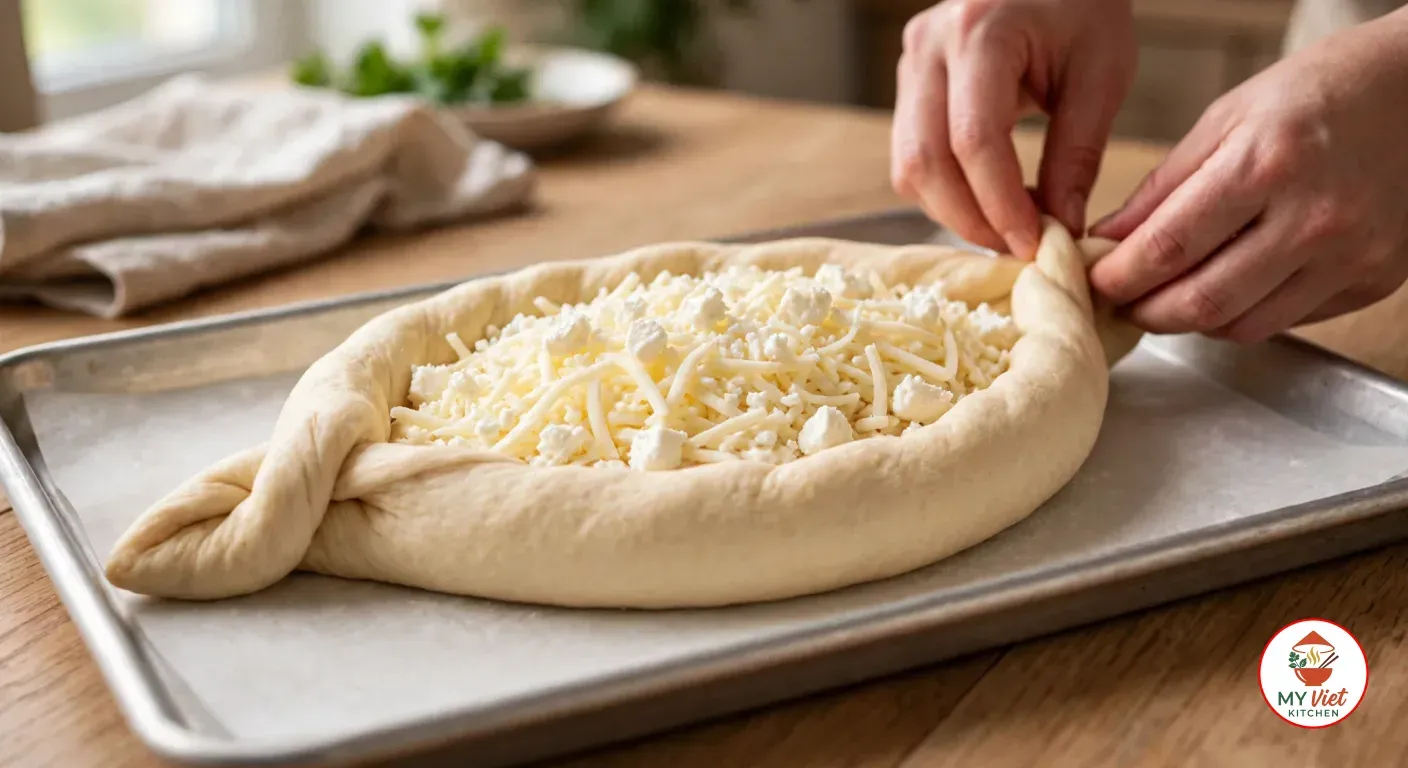
The shape also does a practical job. On an Adjarian khachapuri, the thick rolled sides act as a wall for a filling that turns liquid in the oven. America’s Test Kitchen rolls two opposite edges of a dough circle toward the center and pinches the ends into a football shape (America’s Test Kitchen). Tara’s Multicultural Table rolls the edges over a little of the cheese, so the rim bakes with a seam of it inside, then pinches and lightly twists the tips (Tara’s Multicultural Table). The steps below use that second method.
Which Cheese Should You Use for Khachapuri?
In Georgia the filling is tangy imeruli with sulguni (Wikipedia), a brined cheese from Samegrelo with a sour, moderately salty flavor and an elastic texture (Wikipedia). Where neither is sold, cooks pair mozzarella for the stretch with feta for the salt, and they disagree about the proportions:
| Recipe | Mozzarella | Feta | Makes |
|---|---|---|---|
| America’s Test Kitchen | 170 g | 170 g | 1 large bread |
| Tara’s Multicultural Table | 284 g | 113 g | 1 large bread |
| Tamada’s Table | 680 g | 227 g | 4 breads |
| This recipe | 400 g | 160 g | 4 boats |
An even split gives the sharpest filling, and three parts mozzarella to one of feta the mildest. This recipe follows Tara’s ratio of 2.5 to 1 and the same low-moisture whole-milk mozzarella (Tara’s Multicultural Table). If you find real sulguni, Tamada’s Table uses it alone, in place of both cheeses.
Water is what sets the Tamada’s Table khachapuri filling apart from the other two. That recipe stirs 2/3 cup into 2 pounds of cheese “as they do in Adjara” to loosen it (Tamada’s Table). The 6 tablespoons here keep roughly that proportion, and they help the center melt into a pool instead of a firm, stringy mat.
When Should the Egg Go Into Khachapuri?
Published khachapuri recipes split three ways. SBS Food adds a whole egg after 12 minutes at 180 °C and bakes for 7 more, until the egg is cooked (SBS Food). Tara’s Multicultural Table adds only a yolk near the end and gives it 2 to 4 minutes, “just enough to heat the egg” (Tara’s Multicultural Table). America’s Test Kitchen moves the baked bread to a wire rack and stirs its yolk and butter straight into the hot cheese (America’s Test Kitchen).
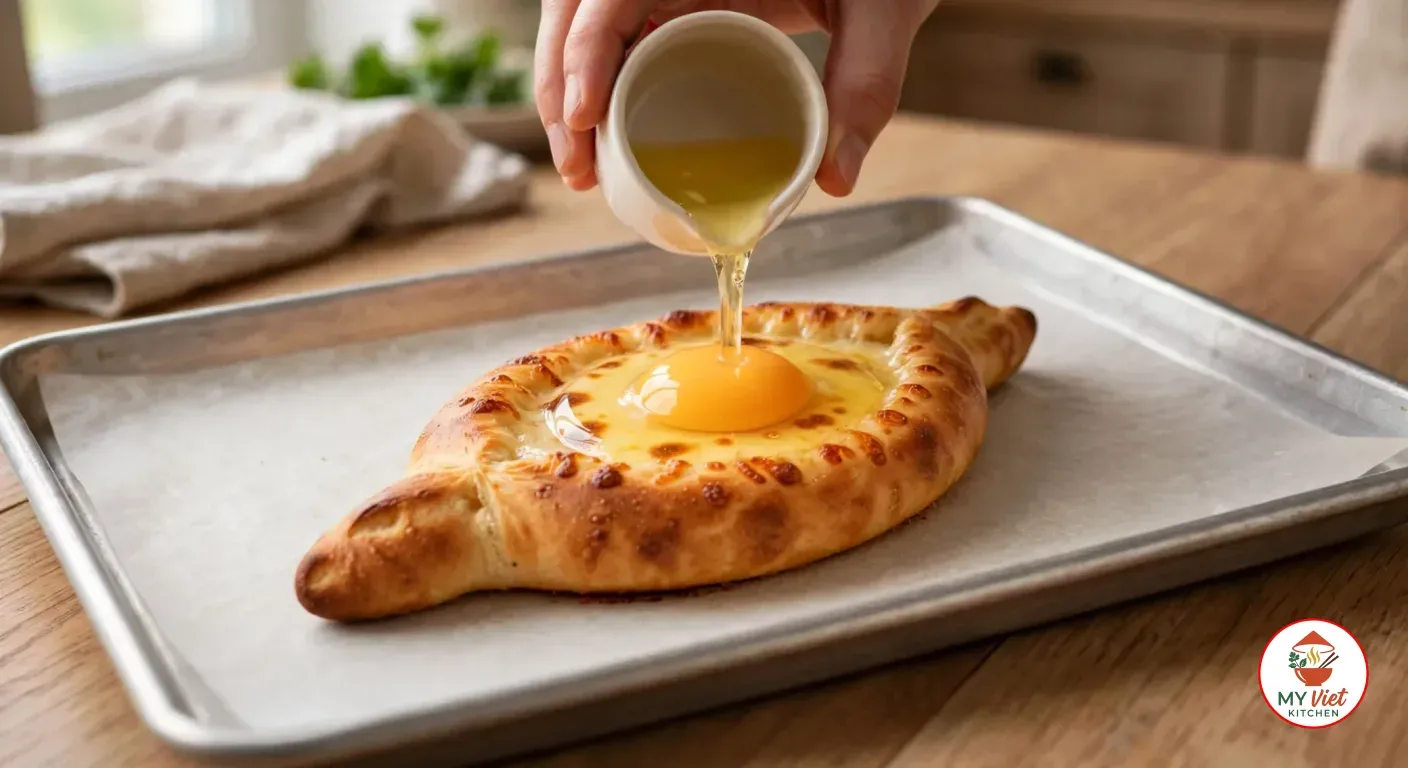
The whole egg is what makes the sunny-side-up look that Tamada’s Table describes (Tamada’s Table), so this recipe keeps it and gives it 3 to 4 minutes in a 230 °C (450 °F) oven. Sliding the egg from a cup puts it in the well without broken shell or a split yolk. Pull the boats while the white is still a little glossy near the yolk, since the molten cheese keeps cooking it on the way to the table.
Ingredients for Khachapuri
For the Dough:
- 400 g (3 1/3 cups) all-purpose flour
- 1 1/2 teaspoons instant yeast
- 1 teaspoon sugar
- 1 1/4 teaspoons fine salt
- 150 ml (2/3 cup) warm whole milk
- 100 ml (scant 1/2 cup) warm water
- 1 large egg, beaten
- 2 tablespoons sunflower or other neutral oil, plus a little for the bowl
For the Filling:
- 400 g (14 oz) low-moisture whole-milk mozzarella, coarsely grated
- 160 g (5.5 oz) feta, crumbled
- 6 tablespoons (90 ml) water
To Finish:
- 1 egg yolk beaten with 1 teaspoon water, for brushing
- 4 large eggs
- 4 tablespoons (55 g) unsalted butter, cut into 4 pats
You also need two rimmed baking sheets, parchment paper, a rolling pin, a pastry brush and a small cup for the eggs.
Step-by-Step Instructions
Step 1: Knead and Rise the Dough
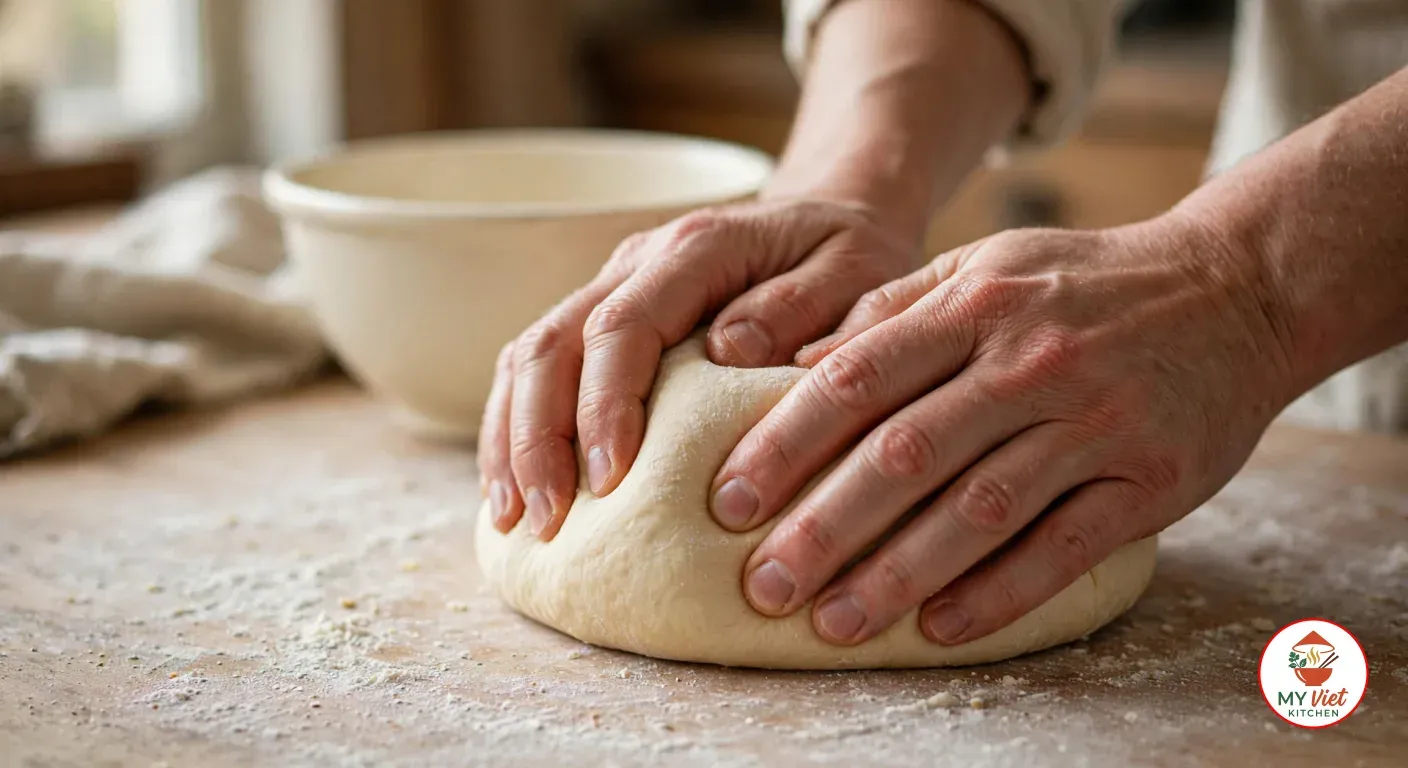
1Whisk the flour, yeast, sugar and salt in a large bowl. Pour in the warm milk, warm water, beaten egg and oil, and stir until no dry flour remains. Work the dough by hand on a floured counter for 8 to 10 minutes. It is ready when it feels smooth, soft and slightly tacky. Put it in a lightly oiled bowl, cover it and leave it somewhere warm for 1 hour, until it has grown to about twice its size.
Step 2: Loosen the Cheese Filling
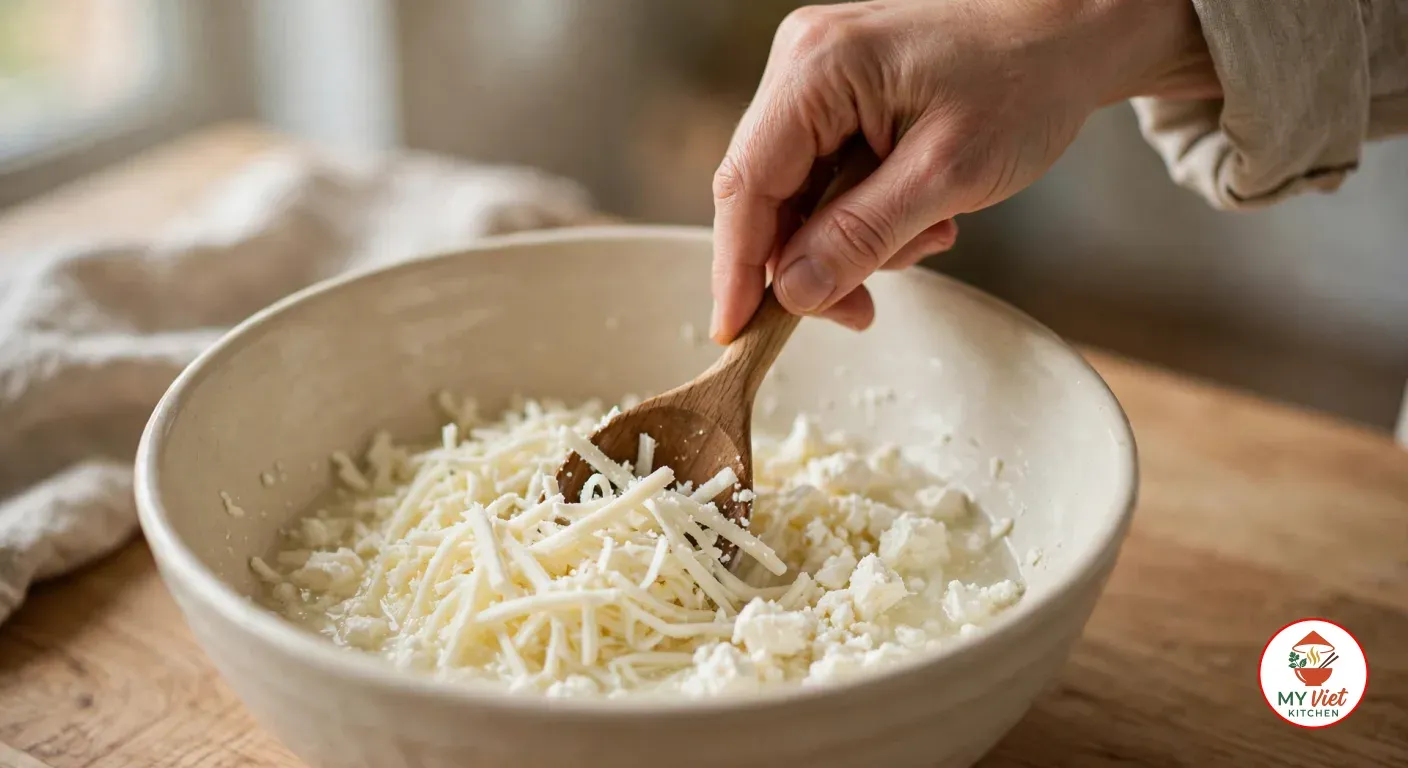
2While the dough rises, combine the grated mozzarella and crumbled feta in a bowl. Stir in the 6 tablespoons of water a little at a time, until the cheese looks moist and clumps loosely. Cover the bowl and leave it on the counter until the dough is ready.
Step 3: Shape the Boats
3Heat the oven to 230 °C (450 °F) with racks in the upper and lower thirds, and line two rimmed baking sheets with parchment. Divide the dough into 4 balls, cover them and let them relax for 15 minutes. Roll one ball into a 25 by 15 cm (10 by 6 inch) oval and lay it on a sheet. Spread a quarter of the cheese over it, leaving a 2.5 cm (1 inch) border. Roll the two long edges inward over the cheese, then gather each end and twist it to a sharp point. Repeat with the other balls, putting two boats on each sheet.
Step 4: Bake Until Golden
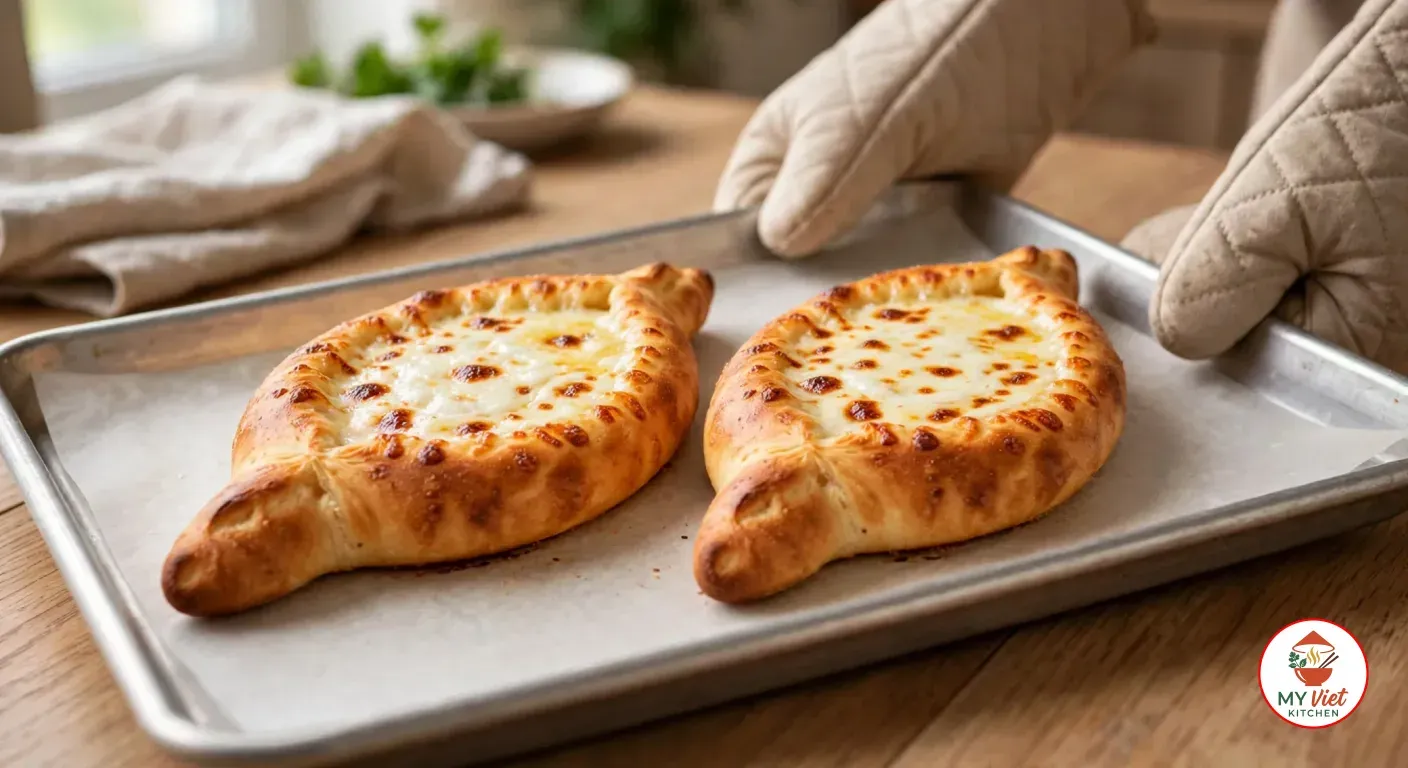
4Brush the dough rims with the egg yolk mixture. Give them 13 to 15 minutes in the oven, trading the top and bottom sheets at the halfway mark, until the crust is deep golden and the cheese is bubbling with a few browned spots.
Step 5: Add the Eggs
5Crack each egg into a small cup. Pull the sheets from the oven, press a shallow well into the middle of each boat with the back of a spoon and slide in an egg. Bake the boats 3 to 4 minutes more, and take them out once the white is starting to set and the yolk is still liquid.
Step 6: Butter, Stir and Tear
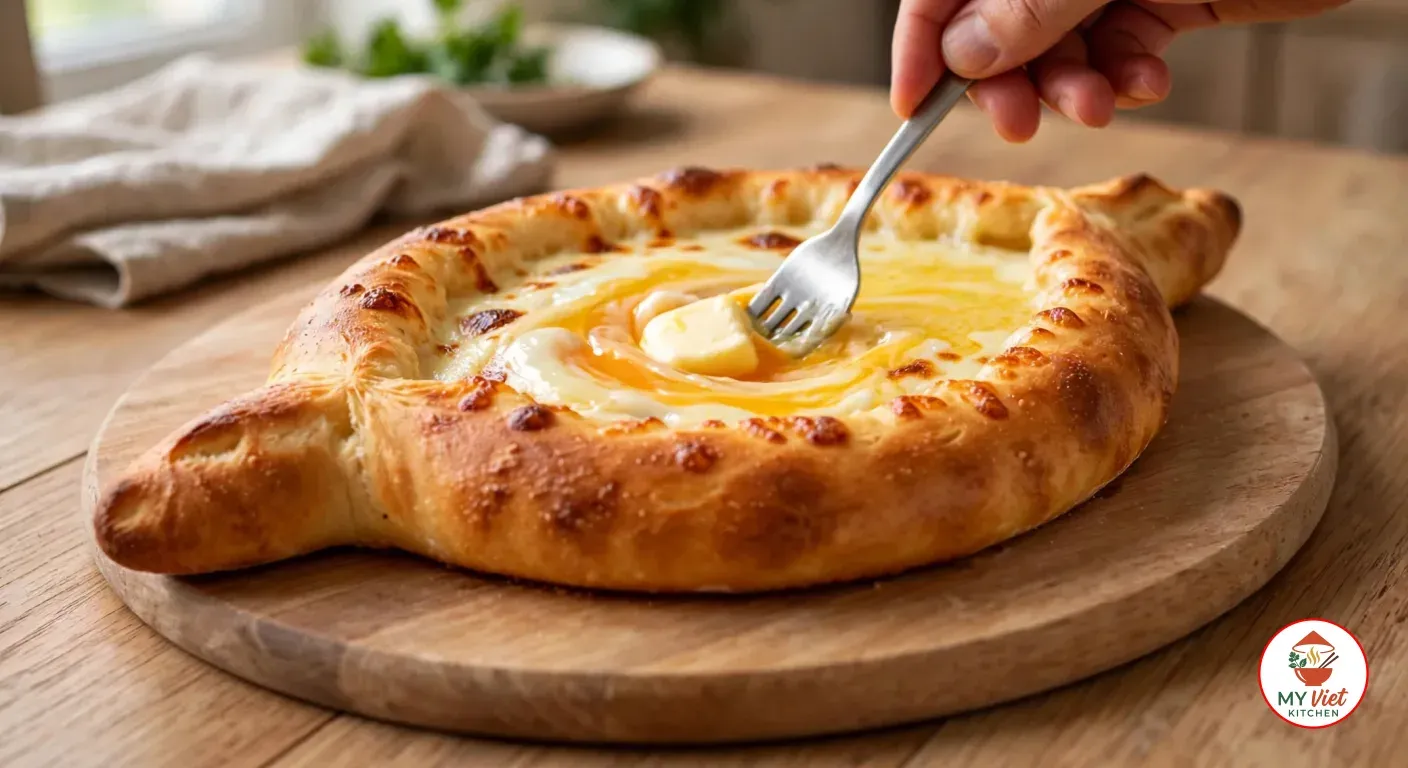
6Move each boat to a plate or board and set a pat of butter beside the egg. At the table, stir the yolk and butter into the hot cheese with a fork. Tear pieces of crust from the pointed ends and sides and dip them into the center, working your way around the boat.
Frequently Asked Questions
How do you eat Adjarian khachapuri?
With your hands and one fork. Tamada’s Table says the trick is “first to mix the egg and butter together with a fork, then rip off the sides of the bread and dip them into melting cheese, butter and runny yolk.” The same cook notes that a boat is very filling and that Georgians typically eat one for lunch with nothing alongside it (Tamada’s Table).
Can you make khachapuri ahead of time?
The dough and the cheese, yes. America’s Test Kitchen lets its dough rise in the refrigerator for about 24 hours, then gives it about 2 hours to come back to room temperature (America’s Test Kitchen). Tamada’s Table grates the cheese up to a day ahead, keeps it covered in the refrigerator and takes it out at least 1 hour before using it (Tamada’s Table). Shape and bake the boats just before the meal.
Can you use only mozzarella in khachapuri?
Yes, but taste it for salt. SBS Food calls mozzarella a good substitute for sulguni (SBS Food). Feta is what stands in for the tang of imeruli, so an all-mozzarella filling will be milder and may want a pinch of salt.
Can you make khachapuri without a runny yolk?
Yes. Leave the boats in the oven after adding the egg until the yolk is firm. Clemson Cooperative Extension advises people at risk of foodborne illness to avoid soft-cooked or runny eggs, and it names the very young, the elderly, pregnant women and people with health problems as particularly vulnerable to Salmonella (Clemson Cooperative Extension).
Sources
- Khachapuri, Wikipedia
- Sulguni, Wikipedia
- Khachapuri Index, ISET Policy Institute (archived copy, December 2025)
- Order No. 02/3 of 2019 on Granting Status of Monument of Intangible Cultural Heritage to Khachapuri Tradition in Georgia, UNEP Law and Environment Assistance Platform
- Adjaruli Khachapuri, Jessica Rudolph, America’s Test Kitchen
- Adjaruli Khachapuri, Tara’s Multicultural Table
- Adjaruli Khachapuri, SBS Food, from Feast magazine, August 2014
- Safe Handling of Eggs, Clemson Cooperative Extension, Home & Garden Information Center
- Georgian Cheese Bread Boat - Adjaruli Khachapuri, Georgian Cuisine at Tamada’s Table, YouTube, June 2020