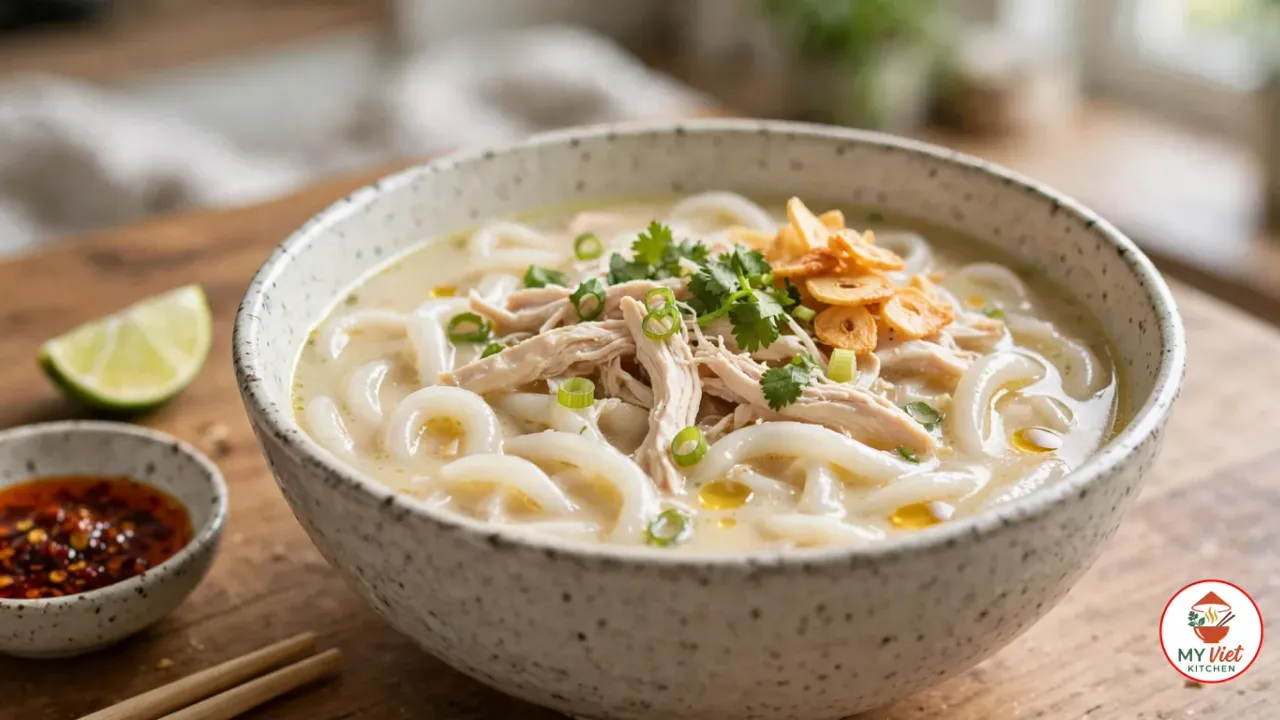
Khao piak sen (ເຂົ້າປຽກເສັ້ນ) is a Lao rice noodle soup whose name means “wet rice strands,” and it is commonly eaten for breakfast (Wikipedia). This version simmers bone-in chicken with galangal, lemongrass and makrut lime leaves, then cooks thick hand-cut rice and tapioca noodles right in the pot, where their starch turns the broth silky.
Prep Time: 15 minutes | Cook Time: 1 hour 40 minutes | Total Time: 1 hour 55 minutes, with the noodles made while the broth simmers | Servings: 4
Difficulty: Medium | Calories: ~680 per serving

What Is Khao Piak Sen?
Saeng’s Kitchen, a Lao recipe site, ranks khao piak sen among the most popular noodle soups in Laos, especially in Vientiane, where morning stalls sell both a noodle and a rice version (Saeng’s Kitchen). That rice version, khao piak khao, replaces the noodles with jasmine rice cooked into porridge (Cooking with Lane).
Which noodle lands in your bowl depends on where you order it. Saeng’s Kitchen describes three kinds: thin machine-made tapioca rice noodles at most restaurants, hand-cut noodles from local families at the morning markets, and extra-large ones called khao piak khao sen yai that look almost like long Korean rice cakes (Saeng’s Kitchen). The recipe below makes the hand-cut kind.
The closest relative of khao piak sen is across the border. Vietnamese bánh canh noodles are also thick and are made from tapioca flour or a blend of rice and tapioca flour (Wikipedia), and Wikipedia compares the chew of both to udon (Wikipedia).
Why Does the Dough Need Boiling Water?
Warm water is how this dough usually fails. Saeng’s Kitchen calls it one of the most common mistakes, because water below a boil keeps the tapioca from turning sticky enough to fuse the flours together (Saeng’s Kitchen). Cooking with Lane describes the result: a dough that crumbles and won’t cut cleanly (Cooking with Lane).
Pour the water straight from the kettle and stir with a spoon until the mixture is cool enough to handle. Crafts to Crumbs advises working quickly at this stage and adding the water gradually, since the amount varies with the weather and the ingredients (Crafts to Crumbs).
How Much Tapioca Should the Noodles Have?
More tapioca means more chew, and published khao piak sen recipes land in different places:
| Recipe | Rice flour | Tapioca | Boiling water |
|---|---|---|---|
| Saeng’s Kitchen, standard | 1/2 cup | 1/2 cup | 1/3 cup |
| Saeng’s Kitchen, soft | 2/3 cup | 1/3 cup | 1/3 cup |
| Hungry in Thailand | 1 cup | 1 cup | 1 cup |
| Cooking with Lane | 1 cup | 1 1/2 cups | 2 cups |
| Crafts to Crumbs | 16 oz | 16 oz | 2 1/2 cups |
| Cooking With Khon Khao | 16 oz | 16 oz | 4 cups |
| This recipe | 1 cup | 1 1/2 cups | 3/4 to 1 cup |
Cooking with Lane compared the ratios directly. Equal parts came out soft and slimy, 1 part rice flour to 2 parts tapioca turned tough, and 1 to 1.5 hit the balance (Cooking with Lane). This recipe borrows that ratio but keeps the water near the Saeng’s Kitchen proportion, because too much can make the noodles fall apart in the pot (Saeng’s Kitchen).
Should the Noodles Cook in the Broth?
That comes down to preference. Some people like a thick broth with the noodles cooked in it, and others a thin one with the noodles boiled in a separate pot (Saeng’s Kitchen). Cooking them in the soup is what gives khao piak sen its distinct consistency, since the fresh noodles release their starch as they simmer (Wikipedia).
Here they all go into the broth for the last few minutes. For a thinner soup, boil them in a separate pot for 2 to 3 minutes (Saeng’s Kitchen) and add only a handful to the broth to thicken it, the trick Crafts to Crumbs uses (Crafts to Crumbs).
Ingredients for Khao Piak Sen
For the Fried Garlic and Broth:
- 3 tablespoons neutral cooking oil
- 4 garlic cloves, thinly sliced
- 1 kg (2 lb) bone-in, skin-on chicken thighs or leg quarters
- 2 shallots, minced
- 3 garlic cloves, lightly crushed
- 1 yellow onion, peeled and left whole
- 4 thin slices galangal, lightly crushed
- 1 lemongrass stalk, lightly crushed
- 4 makrut (kaffir) lime leaves, squeezed in your hand
- 1 small handful cilantro stems or roots
- 2.5 liters (10 1/2 cups) water
- 1 tablespoon fish sauce, plus more to taste
- 1 teaspoon fine salt
- 1/2 teaspoon ground black pepper
For the Noodles:
- 1 cup (150 g) rice flour, not glutinous
- 1 1/2 cups (180 g) tapioca flour, plus more for dusting
- 3/4 cup (180 ml) boiling water, plus up to 1/4 cup (60 ml) more
To Serve:
- 3 green onions, thinly sliced
- 1 handful chopped cilantro
- Lime wedges
- Chili oil
You also need a large stockpot, a heatproof mixing bowl, a rolling pin, a slotted spoon and a fine-mesh sieve.
Step-by-Step Instructions
Step 1: Fry the Garlic
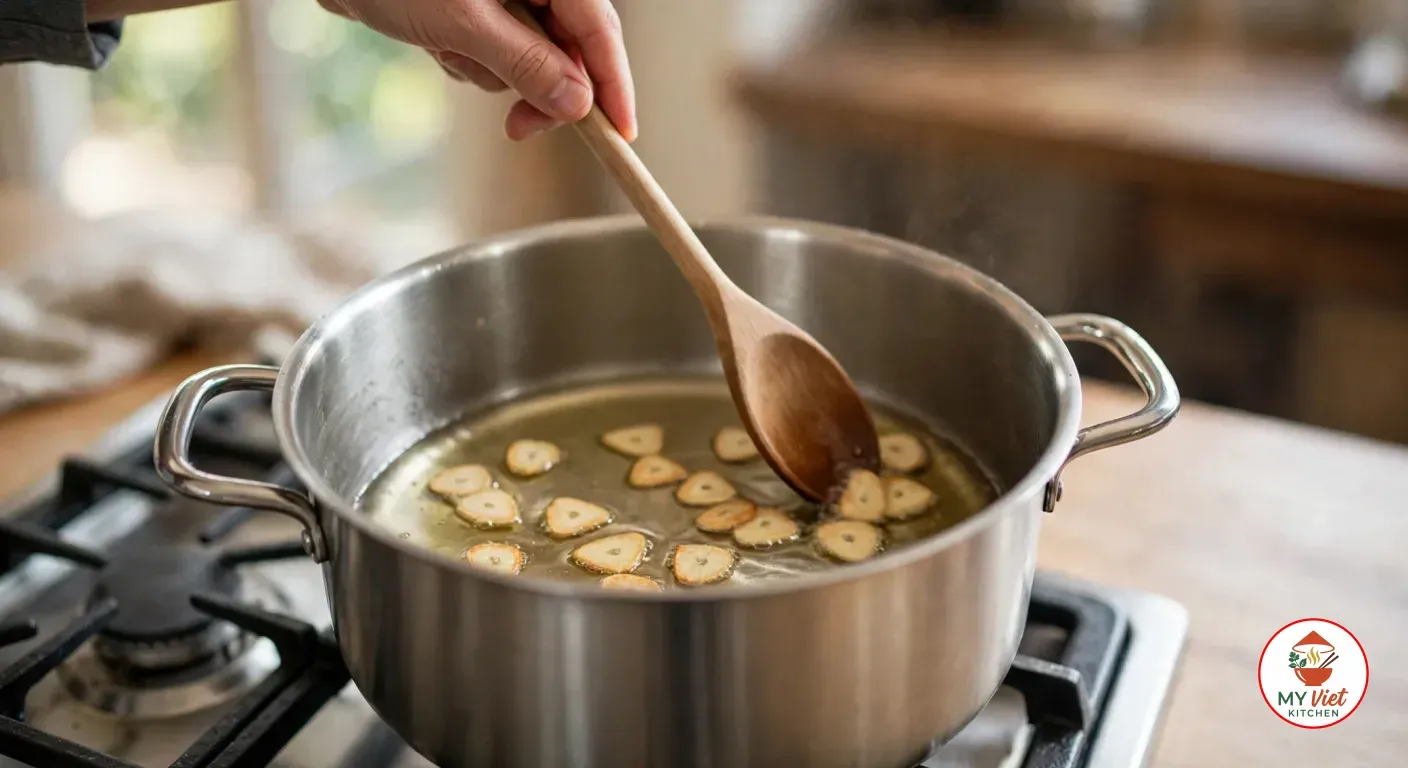
1Warm the oil in a large stockpot over medium-low heat. Add the sliced garlic and stir until it turns pale gold, 3 to 4 minutes. Lift it onto a paper towel with a slotted spoon, where it will crisp and darken a shade as it cools. Keep the fragrant oil in the pot.
Step 2: Simmer the Broth
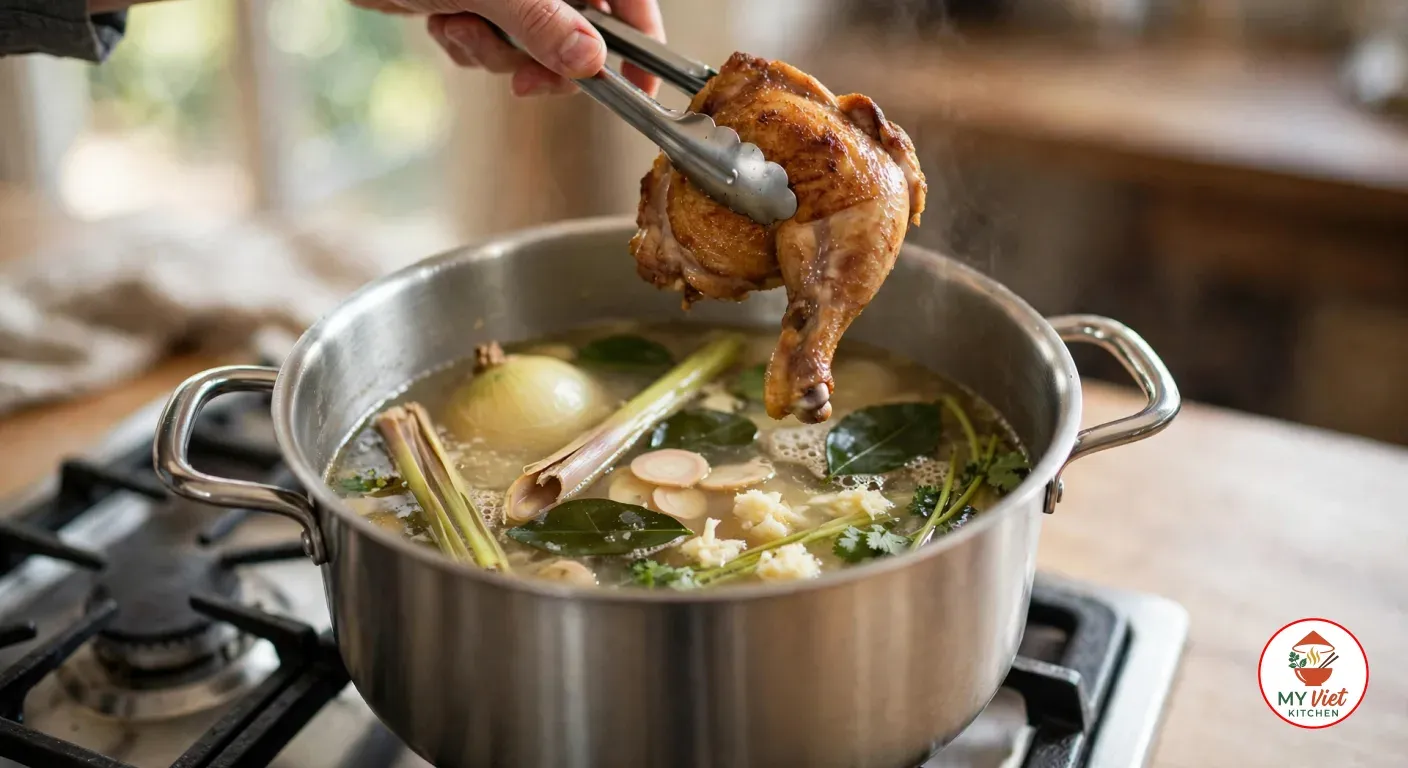
2Raise the heat to medium-high and brown the chicken in the garlic oil, skin side down, for about 5 minutes, then move it to a plate. Stir the shallots and crushed garlic in the pot for 1 minute. Pour in the water and add the onion, galangal, lemongrass, lime leaves, cilantro stems, fish sauce, salt and pepper. Bring to a boil, lower the chicken back in and reduce the heat to a gentle simmer. Cover and cook for 1 hour, skimming off any foam.
Step 3: Scald the Noodle Dough
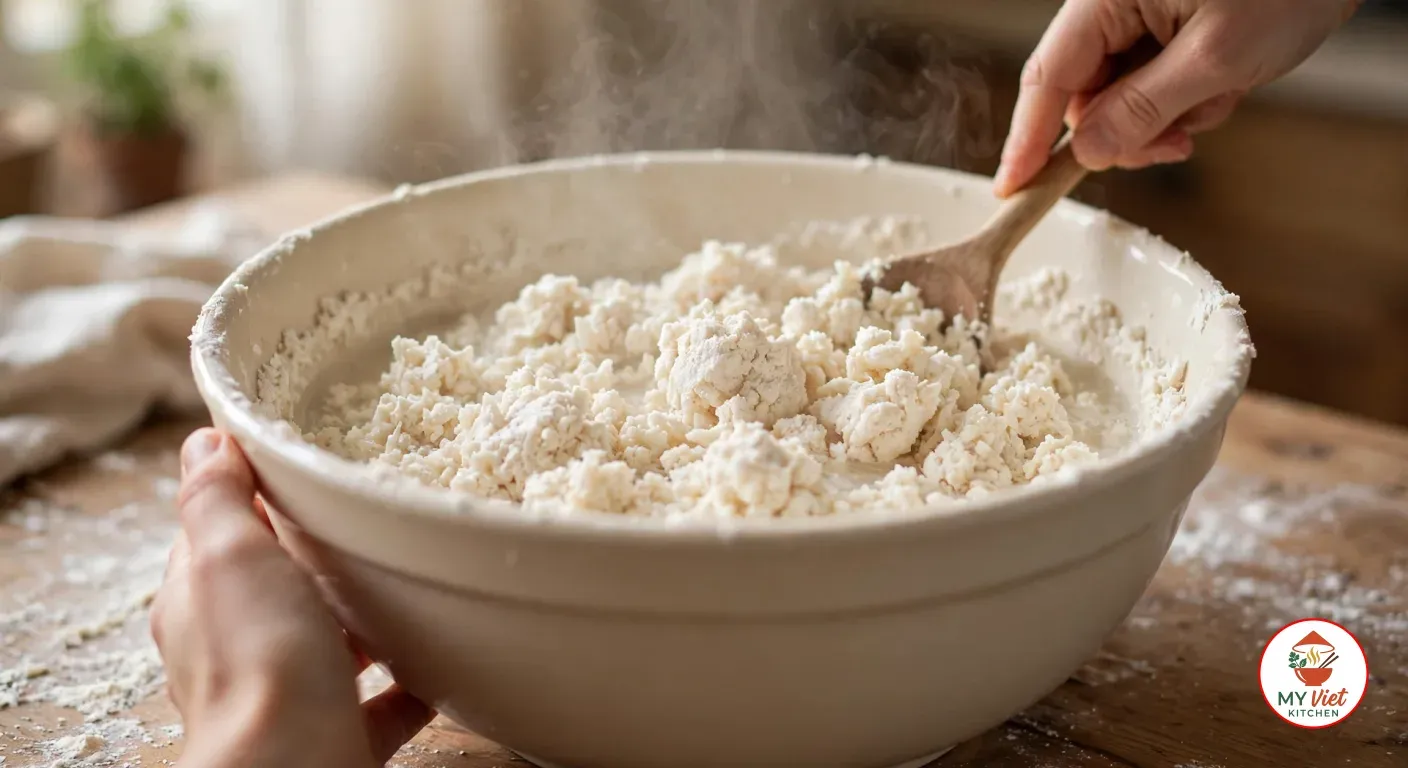
3While the broth simmers, whisk the rice flour and tapioca flour in a large heatproof bowl. Pour in the 3/4 cup of boiling water and stir fast with a wooden spoon. The mixture will look dry and shaggy. Once it is cool enough to touch, knead it in the bowl until it forms a smooth, firm ball, 3 to 4 minutes. If it stays crumbly, work in more boiling water 1 tablespoon at a time.
Step 4: Roll and Cut the Noodles
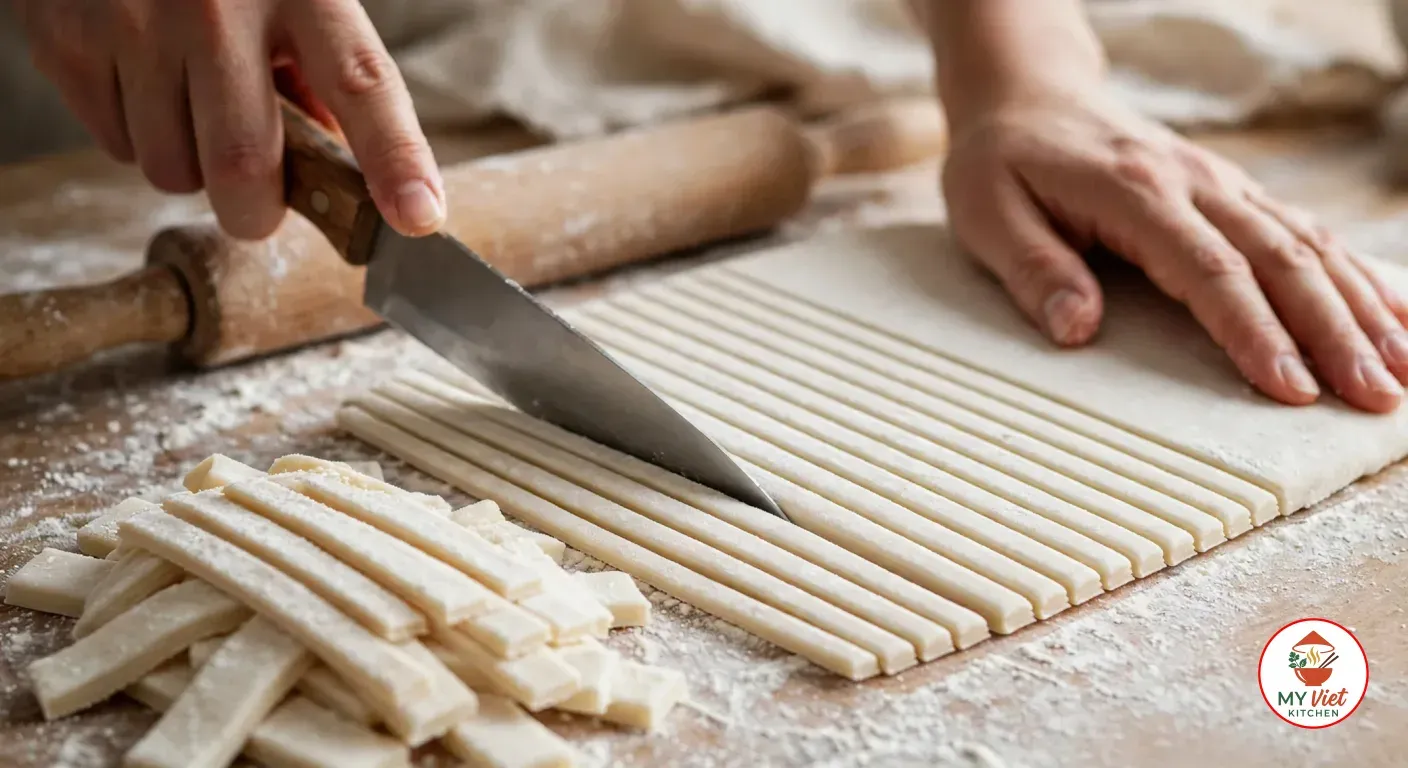
4Dust a board with tapioca flour and halve the dough. Roll each half into a rectangle about 6 mm (1/4 inch) thick, then slice it into strips about 6 mm wide. Toss the strips with a little more tapioca flour so they stay separate, and keep them under a damp towel until the broth is ready.
Step 5: Shred the Chicken
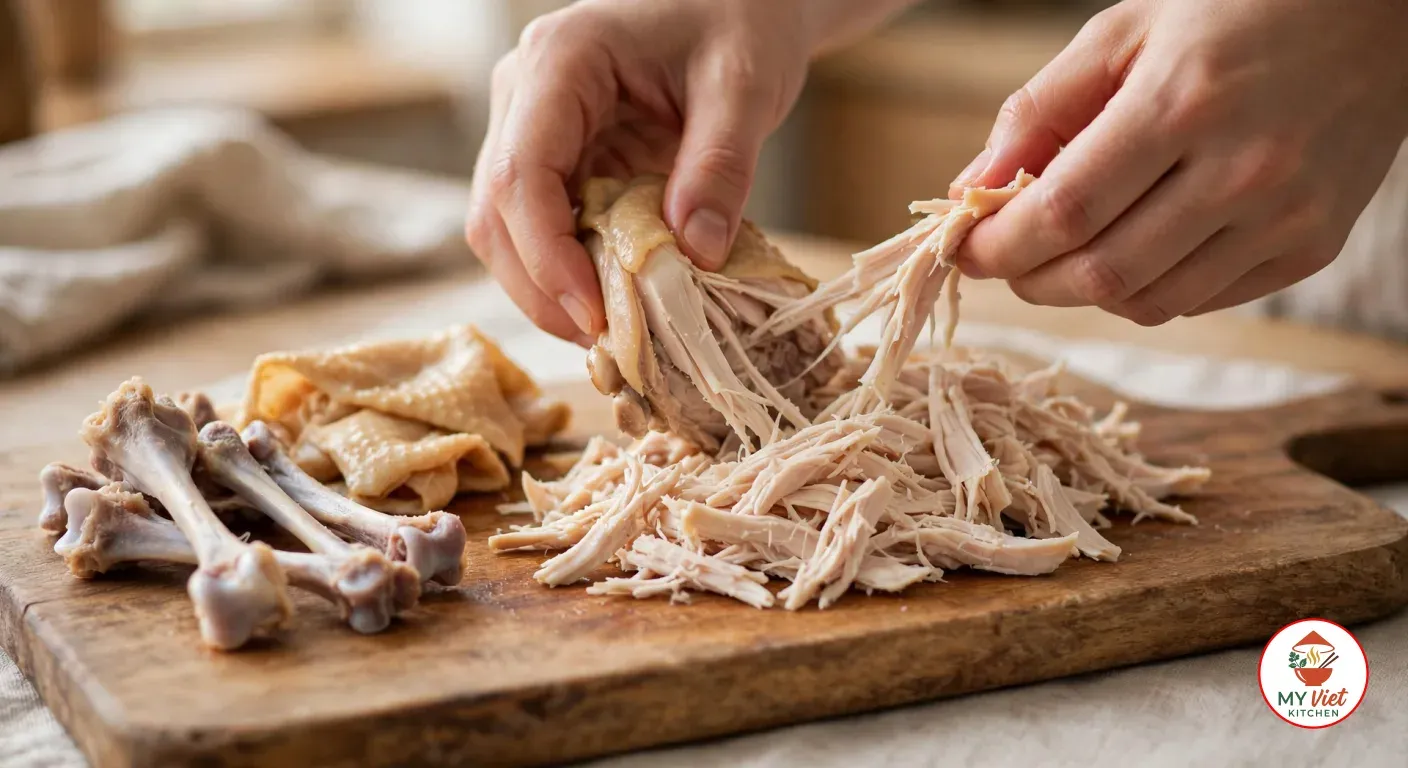
5Lift the chicken onto a cutting board and let it cool for 10 minutes. Pull the meat into long shreds with your fingers, discarding the skin and bones. Strain the broth into a clean container through a fine-mesh sieve, throw away the aromatics, and return the strained broth to the pot.
Step 6: Cook the Noodles in the Broth
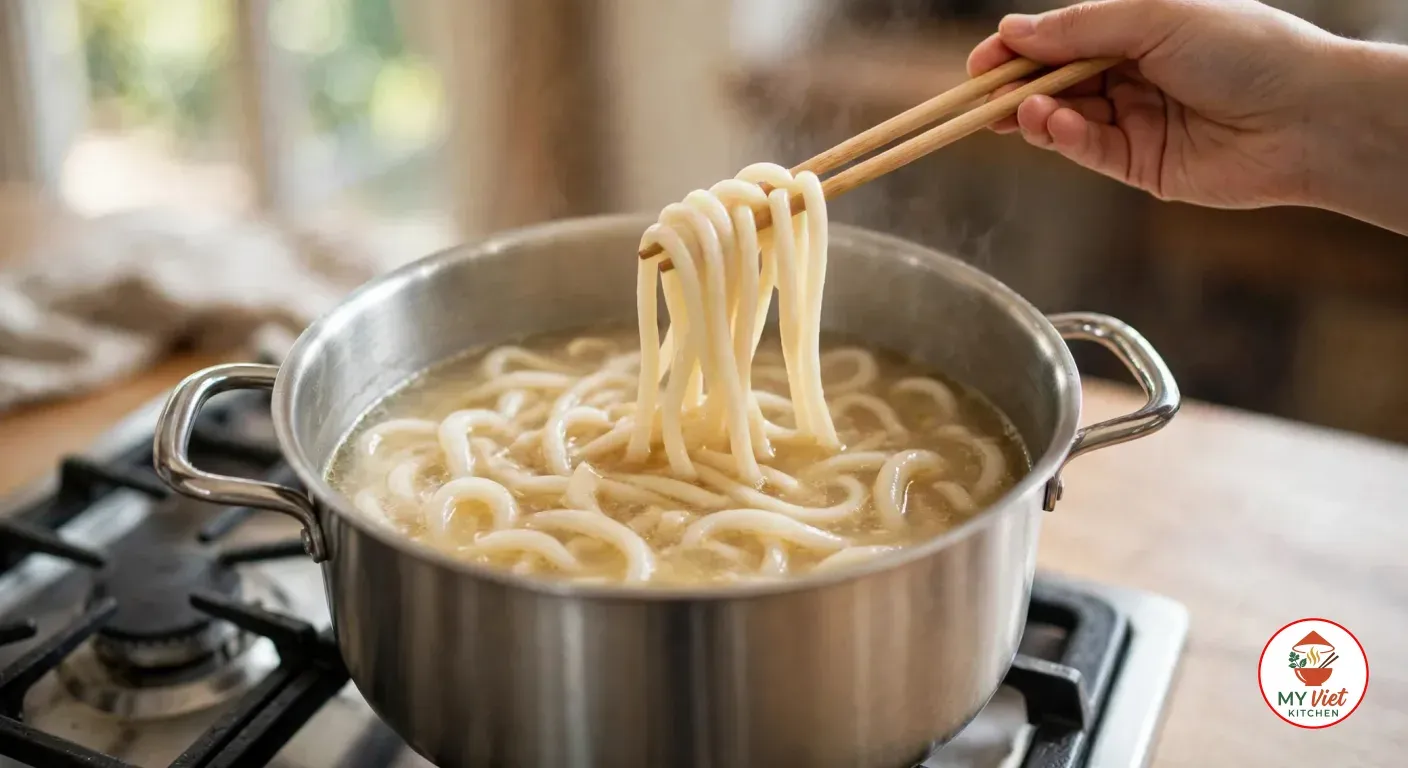
6Bring the broth to a rolling boil. Drop in the noodles a handful at a time and stir only once or twice, because they are brittle until cooked. Simmer for 3 to 4 minutes, until they float, feel tender but chewy, and the broth has thickened. Taste for fish sauce and salt. Divide the chicken among 4 deep bowls, ladle the noodles and broth over it, and top with the green onions, cilantro and fried garlic. Pass the lime wedges and chili oil at the table.
Frequently Asked Questions
Is khao piak sen gluten-free?
The noodles are (Cooking with Lane). This broth has no soy sauce either, but check the labels on your fish sauce and chili oil if you are avoiding gluten.
What can you use instead of homemade noodles?
Udon is a common shortcut (Saeng’s Kitchen), though Cooking with Lane warns that it won’t give the soup the same starchiness or chew (Cooking with Lane). Hungry in Thailand notes that ready-made khao piak sen noodles are also sold at most Asian grocery stores (Hungry in Thailand).
Can you make khao piak sen ahead?
Yes, in parts. Crafts to Crumbs refrigerates the uncooked noodles for as long as 2 days, tossed with extra tapioca flour in a zip-top bag, and freezes the broth for up to three months. Store the two apart, because reheating the soup with its noodles can leave it very thick (Crafts to Crumbs).
What else goes in a bowl of khao piak sen in Laos?
A plain bowl holds broth, noodles, chicken strips and sometimes pork blood cubes. You can ask for a poached egg or khanom kuu, a small cylindrical donut for dipping, and many Lao diners add enough chili oil to turn the broth red (Saeng’s Kitchen).
Sources
- Khao piak sen, Wikipedia
- Bánh canh, Wikipedia
- Khao Piak Sen | Lao Chicken Noodle Soup, Saeng’s Kitchen
- Khao Piak Sen - Authentic Lao Tapioca Chicken Noodle Soup Recipe, Cooking with Lane
- Khao Piak Sen, Crafts to Crumbs
- Khao Piak Sen Recipe (Lao Noodle Soup), Hungry in Thailand
- KHAO PIAK SEN | Handmade NOODLE + BROTH | Lao Chicken Noodle Soup | ນ້ຳເຂົ້າປຽກ, Cooking With Khon Khao, YouTube, October 2021