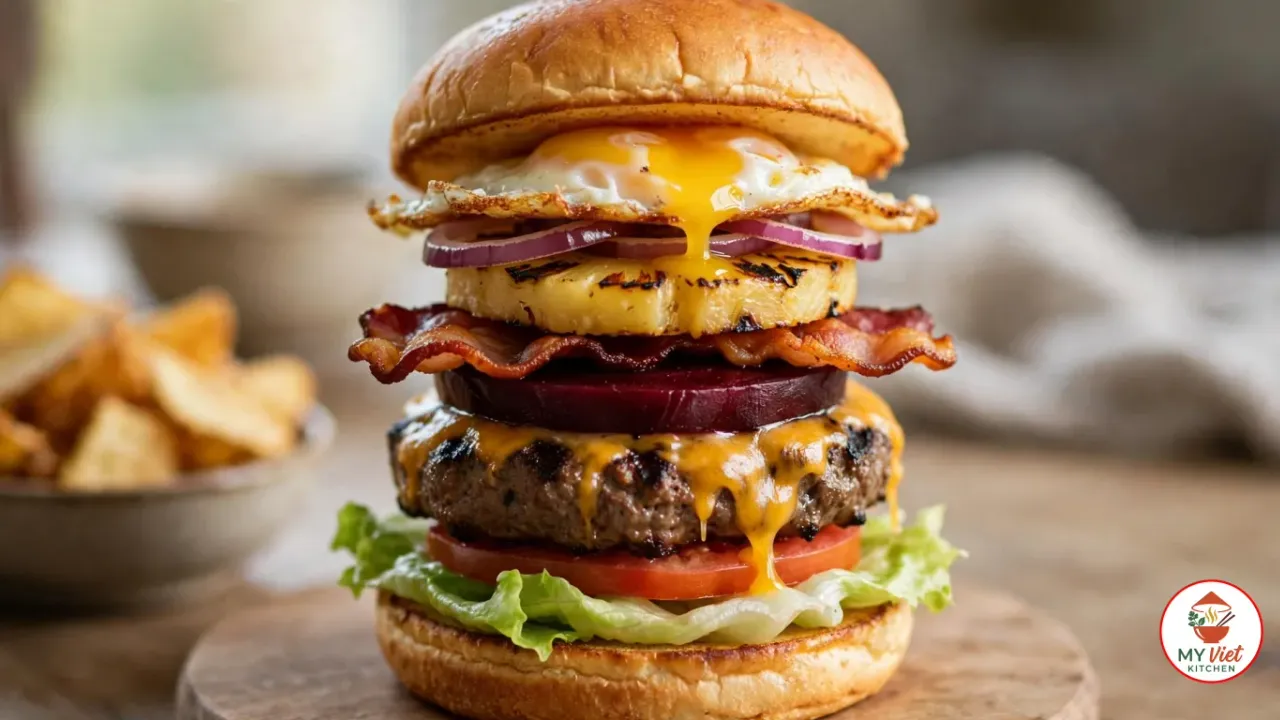
The beetroot burger is the pride of Australian barbecue culture, and one bite explains exactly why this towering creation has become a national icon. Unlike any other burger in the world, the classic Aussie beetroot burger stacks a juicy beef patty with sliced beetroot, a runny fried egg, crispy bacon, grilled pineapple, melted cheese, and fresh salad on a soft toasted bun. This complete guide walks you through every step of building the perfect beetroot burger at home, from seasoning the patty to nailing the assembly order so nothing slides out.
Prep Time: 20 minutes | Cook Time: 15 minutes | Servings: 4
Difficulty: Easy | Calories: ~620 per serving
What Makes the Beetroot Burger Special?
The beetroot burger holds a unique place in the global burger landscape. While Americans focus on simplicity and the Japanese chase wagyu perfection, Australians built something entirely different. They created a burger that embraces contrast and abundance. Sweet beetroot meets salty bacon. A runny egg yolk mingles with tangy tomato sauce. Grilled pineapple adds tropical brightness against the rich beef. Every layer serves a purpose, and together they produce a flavor experience that no single-topping burger can replicate.
The tradition of adding beetroot to burgers in Australia dates back to the mid-20th century. Canned beetroot was inexpensive, widely available, and had a long shelf life, making it a practical pantry staple for families across the country. Takeaway shops and fish-and-chip joints started adding it to their burgers as a standard ingredient. Over time, the beetroot burger became so deeply embedded in Australian food culture that ordering a burger “with the lot” automatically includes beetroot. Beetroot on burgers is considered as essentially Australian as Vegemite on toast.
What truly separates the Aussie beetroot burger from ordinary burgers is the layering philosophy. Each component is chosen to balance and contrast with the others. The result is a burger where every bite delivers something different. You taste sweet, salty, tangy, smoky, and umami all at once. This generous stacking approach reflects the laid-back, go-big attitude of Australian barbecue culture itself.

Choosing the Right Beetroot for Your Burger
Selecting the right beetroot is essential for building an authentic beetroot burger that tastes the way Australians intended. Not all beetroot preparations work equally well between two bun halves. The texture, sweetness level, and moisture content all matter when you are stacking a burger this tall.
- Canned sliced beetroot (best choice): This is the traditional option for an Australian beetroot burger. Canned beetroot is tender, mildly sweet, and slices cleanly. It comes pre-cooked and ready to use, which keeps preparation simple. Drain and pat dry before using to prevent excess moisture from soaking the bun.
- Fresh roasted beetroot: Roasting fresh beetroot at 400 degrees Fahrenheit for 45 to 60 minutes produces a deeper, earthier flavor with natural caramelization. However, it requires significant extra prep time. Slice it thinly after roasting and cooling.
- Pickled beetroot: The added vinegar tang can be appealing, but pickled beetroot introduces a sharpness that competes with the other flavors. Use it sparingly or only if you enjoy a more acidic burger profile.
- Raw beetroot (not recommended): Raw beetroot is too hard, too earthy, and too crunchy for a burger. It will not compress when you bite down, causing the entire stack to slide apart. Always cook beetroot before adding it to your burger.
Ingredients for the Beetroot Burger
Beef Patties:
- 1.5 pounds ground beef (80/20 blend)
- 1 teaspoon salt
- 1/2 teaspoon black pepper
- 1 teaspoon garlic powder
Toppings and Assembly:
- 4 soft burger buns, lightly toasted
- 4 canned beetroot slices, drained and patted dry
- 4 large eggs
- 4 slices cheddar cheese
- 4 pineapple rings, canned or fresh
- 4 rashers bacon
- 1 large ripe tomato, sliced into 4 rounds
- 4 iceberg lettuce leaves
- 1 small red onion, sliced into rings
- 4 tablespoons tomato sauce (ketchup)
- 2 tablespoons butter for toasting buns
Pro tip: Use an 80/20 ground beef blend for the juiciest patties. Leaner beef dries out quickly on the grill, and since a beetroot burger relies on the patty being moist and flavorful, the extra fat makes a real difference. Shape each patty slightly wider than the bun because they shrink during cooking.
Step-by-Step Instructions
Step 1: Prepare the Beef Patties
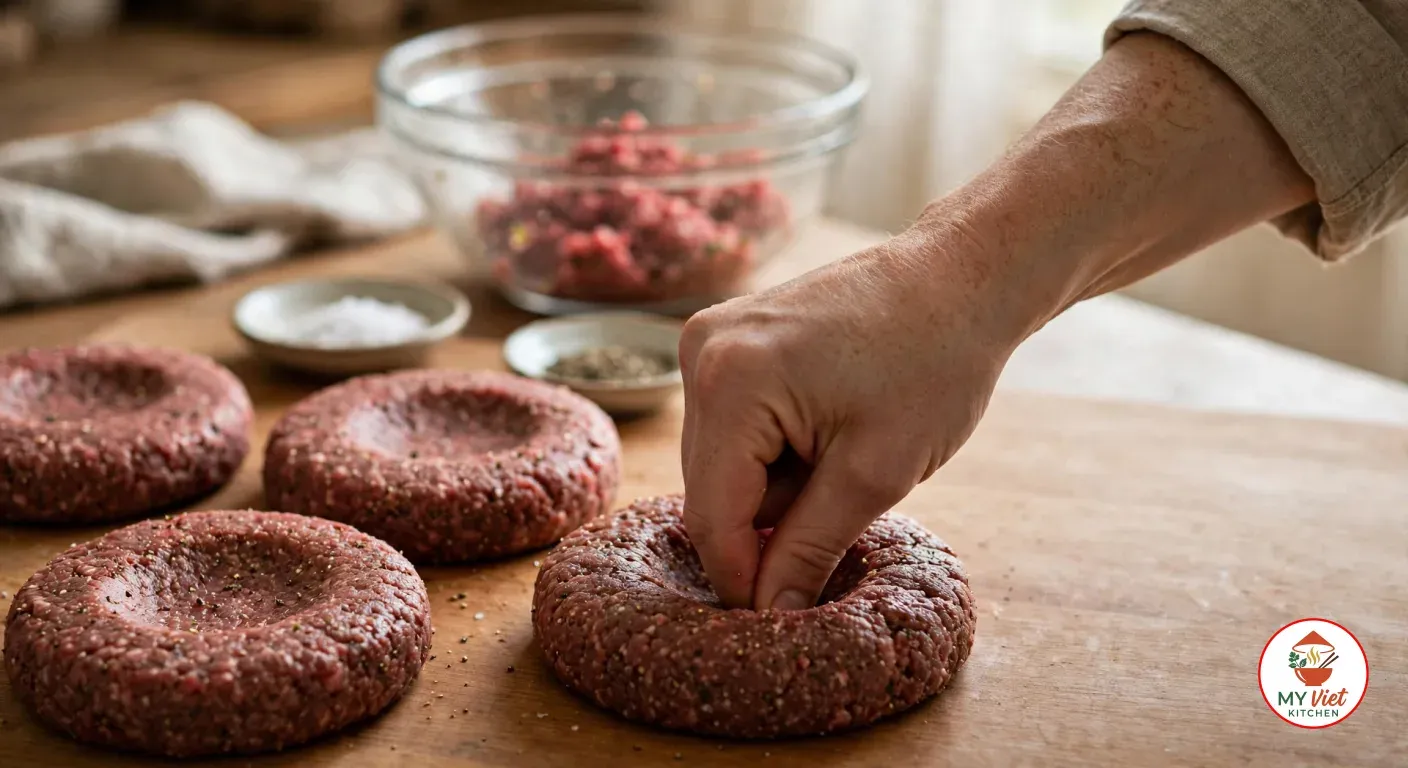
1 In a large mixing bowl, combine the ground beef with salt, black pepper, and garlic powder. Mix gently using your hands until the seasoning is evenly distributed. Overmixing makes the patties dense and tough, so stop as soon as the spices are incorporated. Divide the mixture into 4 equal portions of roughly 6 ounces each.
Shape each portion into a flat disc about 3/4 inch thick and slightly wider than your burger buns. Press a shallow dimple into the center of each patty with your thumb. This simple trick prevents the patty from puffing up into a dome shape during grilling, ensuring even cooking and a flat surface for stacking your beetroot burger toppings. Place the formed patties on a plate and refrigerate while you prepare the other components.
Step 2: Cook the Bacon Until Crispy
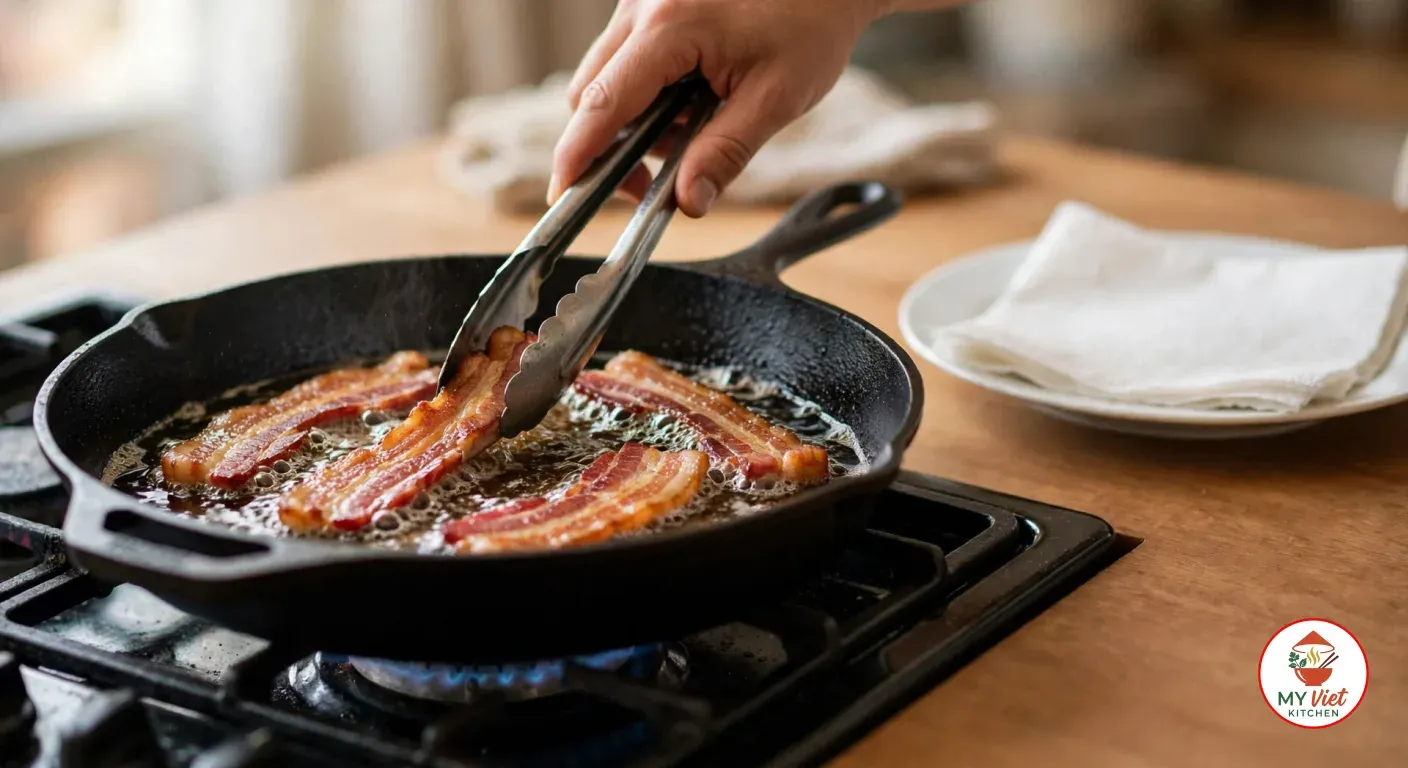
2 Place the bacon rashers in a cold skillet and set it over medium heat. Starting with a cold pan allows the fat to render slowly, producing evenly crispy bacon without burning. Cook for 3 to 4 minutes per side, adjusting the heat if the bacon starts to darken too quickly. The ideal bacon for a beetroot burger should be crispy at the edges but still slightly chewy in the center.
Transfer the finished bacon to a plate lined with paper towels to drain. Importantly, reserve about a tablespoon of the rendered bacon fat in the pan. You will use this flavorful fat to fry the eggs in the next step. This small detail adds a subtle smoky quality to the eggs that ties the whole burger together.
Step 3: Grill the Patties and Pineapple
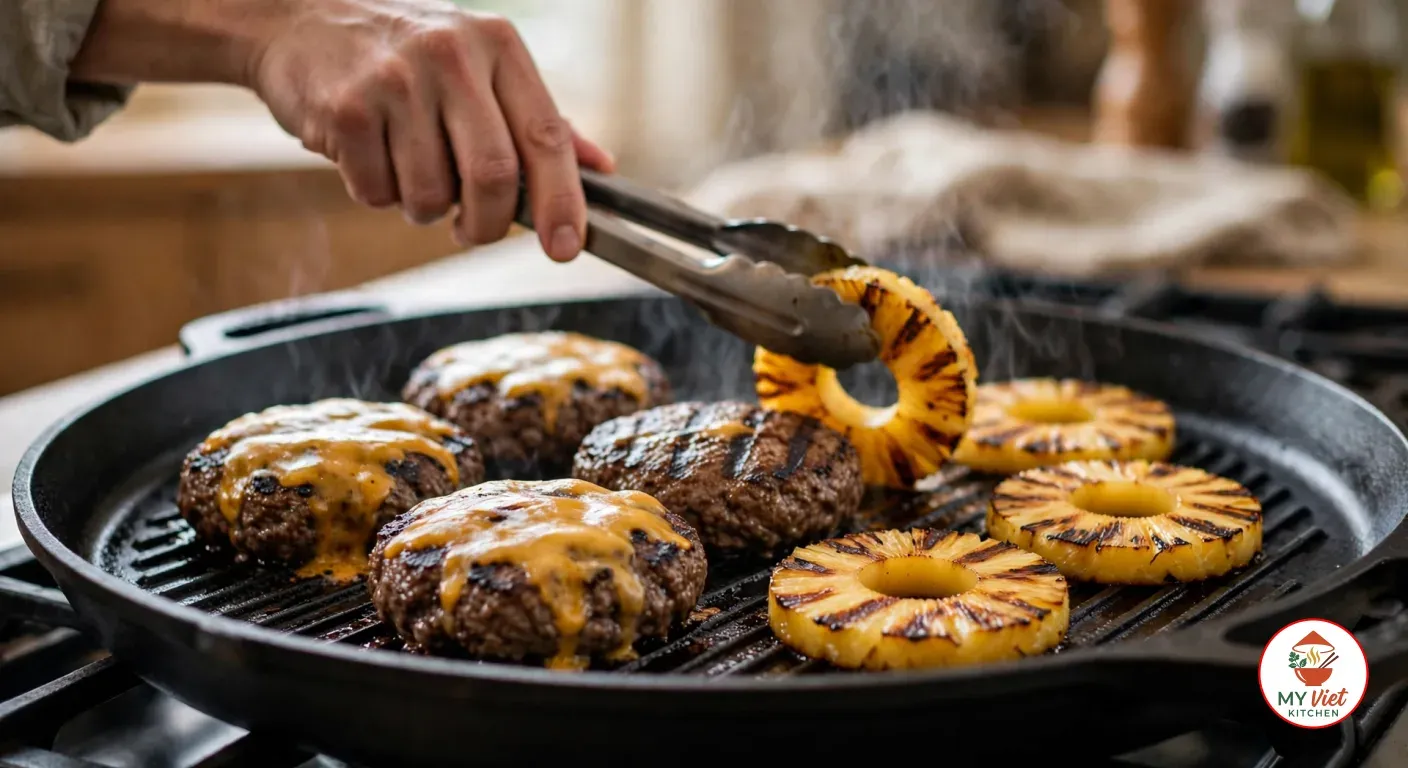
3 Preheat your grill, grill pan, or flat griddle to medium-high heat. Lightly oil the grates or surface to prevent sticking. Place the patties on the grill and cook without pressing them down. Pressing squeezes out the juices and leads to a dry patty. Cook for 4 to 5 minutes on the first side until a dark crust forms, then flip once.
Cook for another 4 minutes on the second side for medium doneness. During the last minute, lay a slice of cheddar cheese on each patty. Close the grill lid or cover with a metal dome to trap the heat and melt the cheese evenly. At the same time, grill the pineapple rings alongside the patties for about 2 minutes per side. The high heat caramelizes the natural sugars in the pineapple, adding a sweet smokiness that complements the beetroot beautifully in the finished beetroot burger.
Step 4: Fry the Eggs
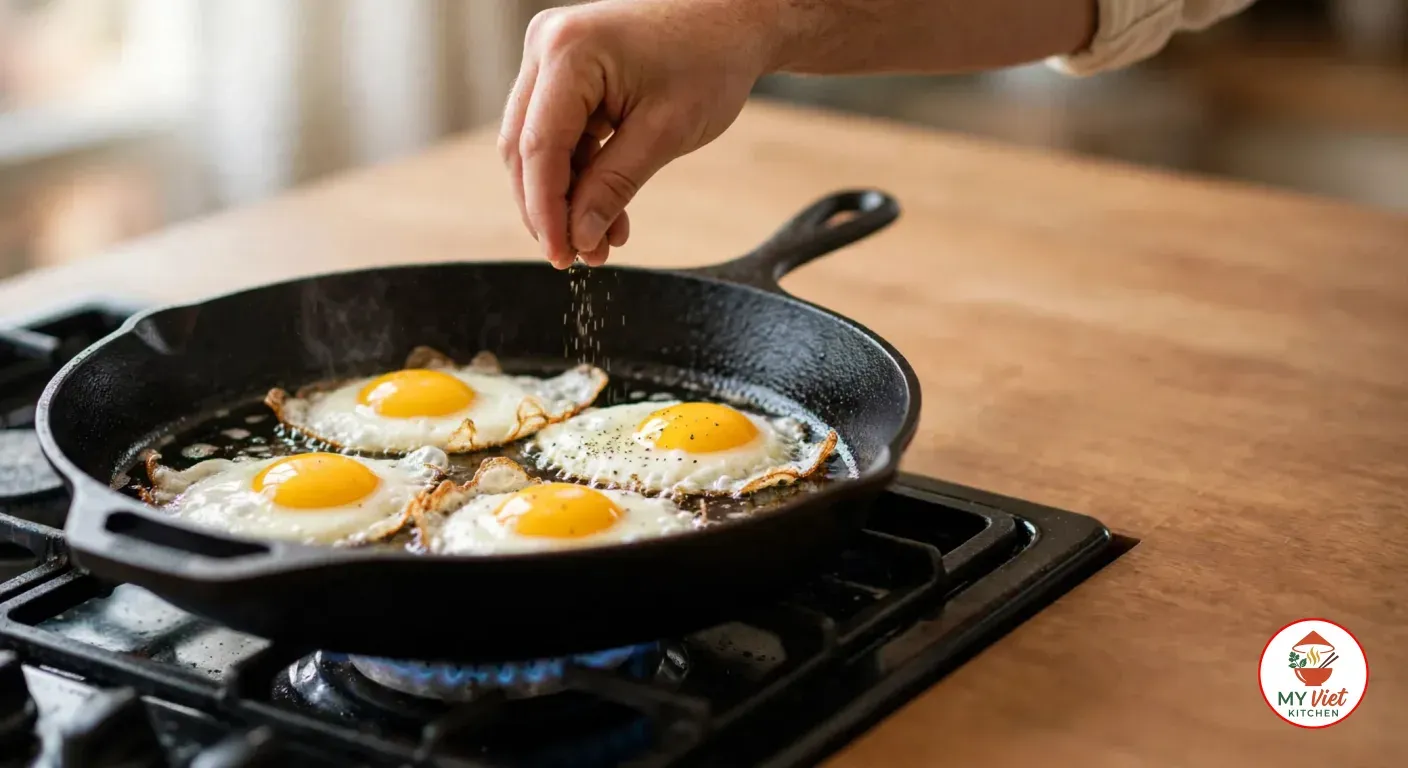
4 Return the skillet with the reserved bacon fat to medium heat. Crack the eggs into the pan one at a time, leaving space between them. Cook for about 3 minutes until the whites are fully set but the yolks remain soft and runny. A runny yolk is essential for an authentic Australian beetroot burger because it acts as a rich, golden sauce that binds the layers together when you take your first bite.
If you prefer a fully cooked yolk, flip the egg and cook for 30 seconds more. However, most Australians consider the runny yolk a non-negotiable element of a proper beetroot burger. Season each egg with a small pinch of salt and pepper while still in the pan.
Step 5: Toast the Buns and Assemble
5 Split the burger buns and spread a thin layer of butter on each cut side. Place them cut-side down on the grill or in a hot pan for 1 to 2 minutes until golden and lightly crispy. Toasting the buns is not optional for a beetroot burger. The toasted surface creates a moisture barrier that prevents the bun from turning soggy under the weight of the beetroot, egg, and pineapple juices.
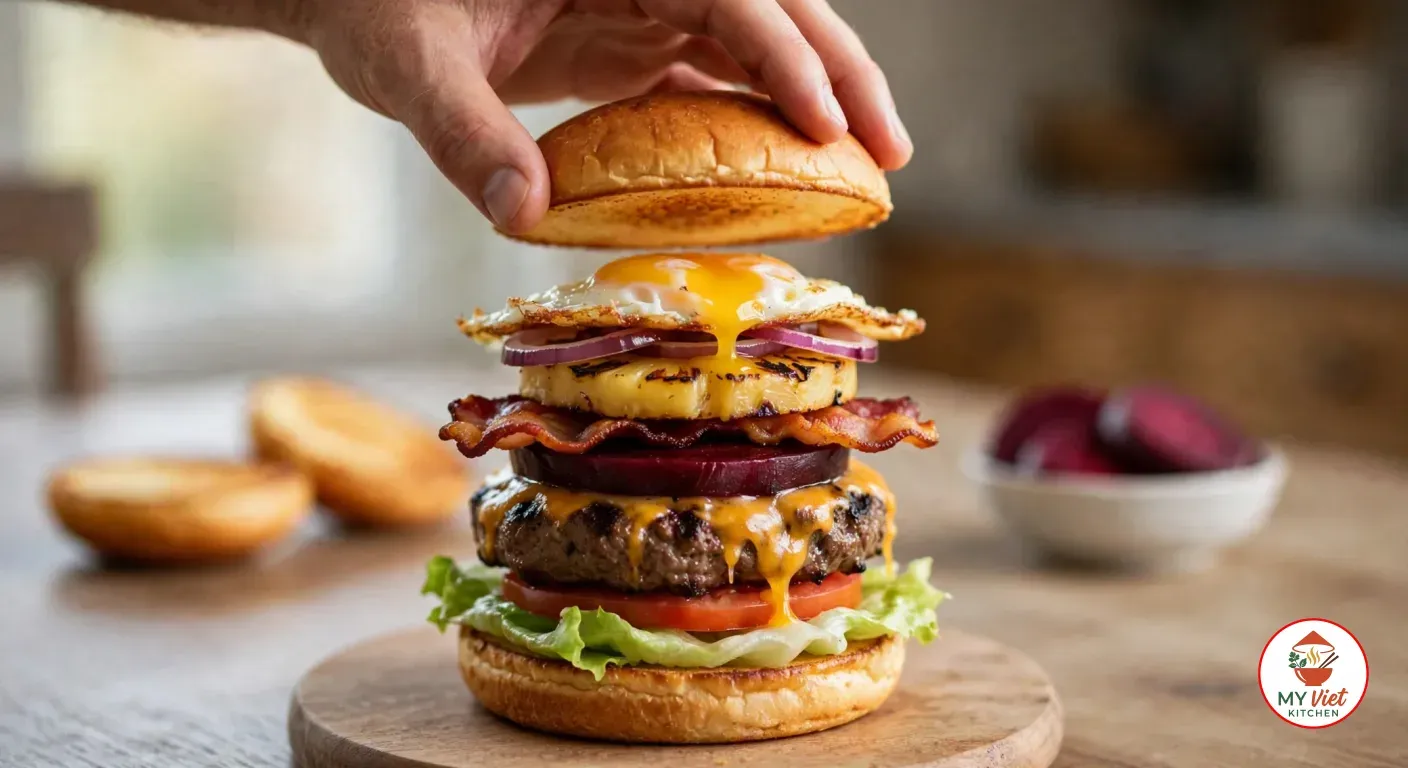
Now assemble in this order for the best structural integrity: spread tomato sauce on the bottom bun, then add a lettuce leaf, a tomato slice, the cheeseburger patty, a beetroot slice, a bacon rasher, a grilled pineapple ring, onion rings, and the fried egg on top. Finally, place the top bun and press down gently. The lettuce on the bottom acts as a waterproof layer, while the egg on top keeps the yolk contained until the first bite. Serve your beetroot burger immediately while everything is still warm.
Expert Tips for the Perfect Beetroot Burger
Drain the Beetroot Thoroughly
The biggest challenge when making a beetroot burger is moisture management. Canned beetroot contains a lot of liquid, and that liquid will turn your bun purple and soggy within minutes if you skip this step. Drain the beetroot slices in a colander, then lay them on a double layer of paper towels. Pat the top dry with another paper towel. Let them sit for at least 5 minutes before assembling. This simple preparation step is the difference between a clean, enjoyable burger and a dripping mess.
Master the Stacking Order
Assembly order matters more for a beetroot burger than for most burgers because of the sheer number of toppings. Place sturdy, dry ingredients like lettuce near the bun to create a moisture barrier. Position heavy items like the patty in the middle for stability. Keep slippery ingredients like beetroot and pineapple sandwiched between grippy layers like cheese and bacon. The fried egg goes on top so the yolk stays contained until you bite through it.
Season Simply
With so many bold flavors competing in a beetroot burger, the patty seasoning should remain simple. Salt, pepper, and a touch of garlic powder are all you need. Complex spice blends or herbs get lost under the beetroot, pineapple, and egg. Let the beef flavor speak for itself and allow the toppings to do the heavy lifting. A well-seasoned but uncomplicated patty provides the savory foundation that everything else builds upon.
Aussie Burger vs. American Burger: Key Differences
The Australian beetroot burger and the classic American cheeseburger represent two fundamentally different approaches to the same food. Here is a side-by-side comparison that highlights what makes each tradition unique.
| Feature | Australian Beetroot Burger | American Cheeseburger |
|---|---|---|
| Signature topping | Sliced beetroot | Pickles |
| Egg | Fried egg (almost always) | Rarely included |
| Pineapple | Common | Uncommon |
| Bacon | Standard | Optional upgrade |
| Condiment | Tomato sauce | Ketchup and mustard |
| Cheese | Cheddar | American or cheddar |
| Bun | Soft, lightly toasted | Varies widely |
| Philosophy | More is more | Balance and simplicity |
Both styles are delicious, but the Aussie beetroot burger wins on sheer variety of flavors and textures in a single bite. If you enjoy exploring different burger traditions, also check out our European dishes collection for more internationally inspired recipes.
Serving Suggestions
In Australia, the beetroot burger is most at home at a backyard barbecue, a beachside cookout, or a local takeaway shop. It is substantial enough to be a full meal on its own, but pairing it with the right sides elevates the experience. Here are some ideas to round out your Aussie burger feast.
The Perfect Accompaniments:
- Hot chips (thick-cut fries): Australians serve their burgers with chunky, golden chips seasoned with chicken salt. They are the quintessential side for any beetroot burger.
- Coleslaw: A creamy, tangy coleslaw provides a cool contrast to the warm, loaded burger. Keep the dressing light so it does not compete with the burger flavors.
- Garden salad: A simple salad of mixed greens, cucumber, and cherry tomatoes with a lemon vinaigrette offers a fresh, light counterpoint.
- Sweet potato fries: The natural sweetness of sweet potato pairs brilliantly with the earthy beetroot in the burger.
Beverage Pairings:
- Australian pale ale: A crisp, hoppy pale ale cuts through the richness of the beef, cheese, and egg beautifully.
- Ginger beer: Non-alcoholic ginger beer adds a spicy sweetness that complements the beetroot burger perfectly.
- Lemon squash: A classic Australian soft drink choice that refreshes the palate between bites of the loaded burger.
- Shiraz: A bold Australian Shiraz with peppery notes matches the smoky, meaty character of a beetroot burger with bacon.
Storage and Reheating
Refrigerator: Store leftover cooked patties separately from the toppings and buns in airtight containers for up to 3 days. Do not assemble the full burger for storage because the moisture from the beetroot and egg will make the bun soggy within hours.
Freezer: Uncooked patties freeze well for up to 3 months. Place parchment paper between each patty and store them in a freezer bag. Thaw in the refrigerator overnight before grilling. Cooked patties can also be frozen, though they lose some juiciness upon reheating.
Reheating: Reheat cooked patties in a skillet over medium heat for 2 to 3 minutes per side. Alternatively, warm them in the oven at 350 degrees Fahrenheit for 8 to 10 minutes. Fry a fresh egg and toast fresh buns when reassembling. Never microwave a fully assembled beetroot burger because the bun becomes rubbery and the toppings turn limp.
Common Mistakes to Avoid
1. Not Draining the Beetroot
Placing wet beetroot straight from the can onto the bun is the fastest way to ruin a beetroot burger. The juice soaks into the bread, turning it soft, purple, and structurally weak. Always drain canned beetroot in a colander and pat each slice dry with paper towels. This takes less than a minute and saves the entire burger from becoming a soggy disaster.
2. Pressing the Patties on the Grill
Pressing down on the patties with a spatula while they grill is a common habit that destroys juiciness. Each press forces out flavorful fat and moisture, leaving you with a dry, dense puck. For a great beetroot burger, place the patty on the grill and leave it alone until it is time to flip. The patty will develop a beautiful crust on its own. Resist the urge to press, and your reward is a juicy, tender center.
3. Overcomplicating the Patty Seasoning
A beetroot burger already has layers of complex flavor from the beetroot, pineapple, egg, and bacon. Adding Worcestershire sauce, herbs, onion powder, and smoked paprika to the patty creates flavor competition rather than harmony. Keep the seasoning simple with just salt, pepper, and garlic powder. Let the toppings shine and allow the beef to serve as the savory anchor.
4. Skipping the Bun Toasting
An untoasted bun simply cannot support the weight and moisture of a fully loaded beetroot burger. Within minutes, the bottom bun collapses from the juices of the patty, egg yolk, and beetroot. Toasting creates a firm, golden crust that acts as a moisture barrier. Additionally, the slight crunch of a toasted bun adds another texture to the eating experience. Always toast both halves, cut-side down, until golden.
Frequently Asked Questions
Why do Australians put beetroot on burgers?
Australians have been adding beetroot to burgers since the mid-20th century when canned beetroot was a cheap, shelf-stable pantry staple. Its sweet, earthy flavor provided an appealing contrast to savory beef. Over decades, the combination became a beloved national tradition. Today, a beetroot burger is considered an essential part of Australian food identity, found at backyard barbecues and takeaway shops across the country.
Should you use fresh or canned beetroot for burgers?
Canned beetroot is the traditional and most practical choice for a beetroot burger. It is pre-cooked, tender, and has a mild sweetness that pairs naturally with beef. Fresh beetroot works if you roast it first, but it requires 45 to 60 minutes of additional cooking time. Most Australians reach for canned beetroot because it delivers the authentic flavor with zero extra effort.
What is a burger with the lot in Australia?
A “burger with the lot” is the ultimate Australian creation that includes every possible topping on a single burger. It features a beef patty, beetroot, fried egg, bacon, pineapple, cheese, lettuce, tomato, onion, and tomato sauce. This maximalist approach is the default at most Australian takeaway shops. Ordering a beetroot burger “with the lot” is the full experience.
How do you stop beetroot from making the burger bun soggy?
Drain the canned beetroot thoroughly and pat each slice dry with paper towels before assembling. Place the beetroot between the patty and the bacon rather than directly on the bun. Toast the buns well to create a firm, moisture-resistant surface. These three steps together keep the bun intact and prevent the telltale purple staining that makes a messy beetroot burger.
Can you make a beetroot burger vegetarian?
Absolutely. Replace the beef patty with a grilled portobello mushroom, a black bean patty, or a plant-based burger patty. Keep all the traditional toppings including the beetroot, fried egg, pineapple, and cheese. For a fully vegan version, skip the egg, cheese, and butter. A thick slice of grilled halloumi also makes an excellent protein swap for a vegetarian beetroot burger.
Variations and Adaptations
Chicken Beetroot Burger:
Replace the beef patty with a grilled or crumbed chicken breast for a lighter take on the classic beetroot burger. Chicken pairs beautifully with the sweet beetroot and tangy pineapple. Season the chicken with salt, pepper, and a squeeze of lemon juice. The overall flavor profile becomes brighter and less heavy, making this a great option for warmer days when you want the Aussie burger experience without the heaviness of beef.
Lamb Beetroot Burger:
Lamb is hugely popular in Australia, and a lamb patty makes a fantastic swap for beef. The slightly gamey, rich flavor of lamb stands up beautifully to beetroot. Mix ground lamb with cumin, coriander, and a pinch of chili flakes for a patty with Middle Eastern-inspired warmth. Top it with all the classic Aussie fixings. This variation highlights the flavors that make a beetroot burger so versatile.
BBQ Bacon Beetroot Burger:
Swap the tomato sauce for smoky BBQ sauce to add another layer of depth. Double the bacon for extra crunch and smokiness. Add a handful of crispy fried onion strings on top for texture. This variation leans into the smoky, sweet profile of the beetroot burger and is ideal for outdoor grilling sessions. If you enjoy bold, smoky flavors, also explore our BBQ pulled pork recipe for another grilling favorite.
Air Fryer Beetroot Burger:
For a lower-fat version, cook the patties in an air fryer at 375 degrees Fahrenheit for 10 to 12 minutes, flipping halfway through. Air frying produces a nicely seared exterior with less oil. Cook the bacon in the air fryer first at 400 degrees for 8 minutes. The pineapple can also be air fried for 5 minutes per side. Assemble the beetroot burger as usual with all the classic toppings.
The Cultural Significance of the Aussie Beetroot Burger
The beetroot burger is more than just a sandwich in Australia. It is a cultural touchstone that connects generations of Australians to backyard barbecues, beach holidays, and small-town takeaway shops. Every Australian has a memory tied to biting into a towering burger with beetroot juice running down their arms. It represents the relaxed, unpretentious approach to food that defines Australian culture. You do not need fancy ingredients or complicated techniques. You need good beef, fresh toppings, a hot grill, and the willingness to stack everything as high as it will go.
The beetroot burger also reflects a uniquely Australian approach to borrowing and adapting food from other cultures. The hamburger came from America, the beetroot from Eastern European culinary traditions, and the pineapple from tropical trade routes. Australians combined them into something entirely their own. This willingness to remix global influences into a distinctly local creation is a pattern you see throughout Australian food culture, from meat pies to lamingtons to the flat white coffee. If you enjoy discovering how cultures put their own spin on global dishes, check out our banh mi recipe for another brilliant example of culinary fusion.
What keeps the beetroot burger alive is not nostalgia alone. It is genuinely delicious. The combination of sweet, earthy beetroot with salty bacon, tangy pineapple, rich egg yolk, and juicy beef creates a burger that covers every taste sensation in a single bite. No wonder it has survived decades of food trends and still appears on menus from Sydney to Perth. For more globally inspired home cooking, explore our full Asian dishes and European dishes collections.
Conclusion
Making a proper Australian beetroot burger at home is simple, satisfying, and guaranteed to impress anyone who has never experienced this iconic Aussie creation. The entire process takes just 35 minutes from start to plate. The key to success lies in three fundamentals: drain the beetroot well, do not press the patties on the grill, and toast the buns thoroughly. Follow these principles and your beetroot burger will be everything it should be.
Whether you are hosting a weekend barbecue, craving something bold and flavorful, or simply curious about Australian food culture, the beetroot burger delivers on every level. The sweet earthiness of beetroot, the richness of a runny egg yolk, the crunch of bacon, and the tropical sweetness of grilled pineapple all come together in a burger unlike anything else in the world. Try this recipe once and you will understand why Australians refuse to eat a burger without beetroot.