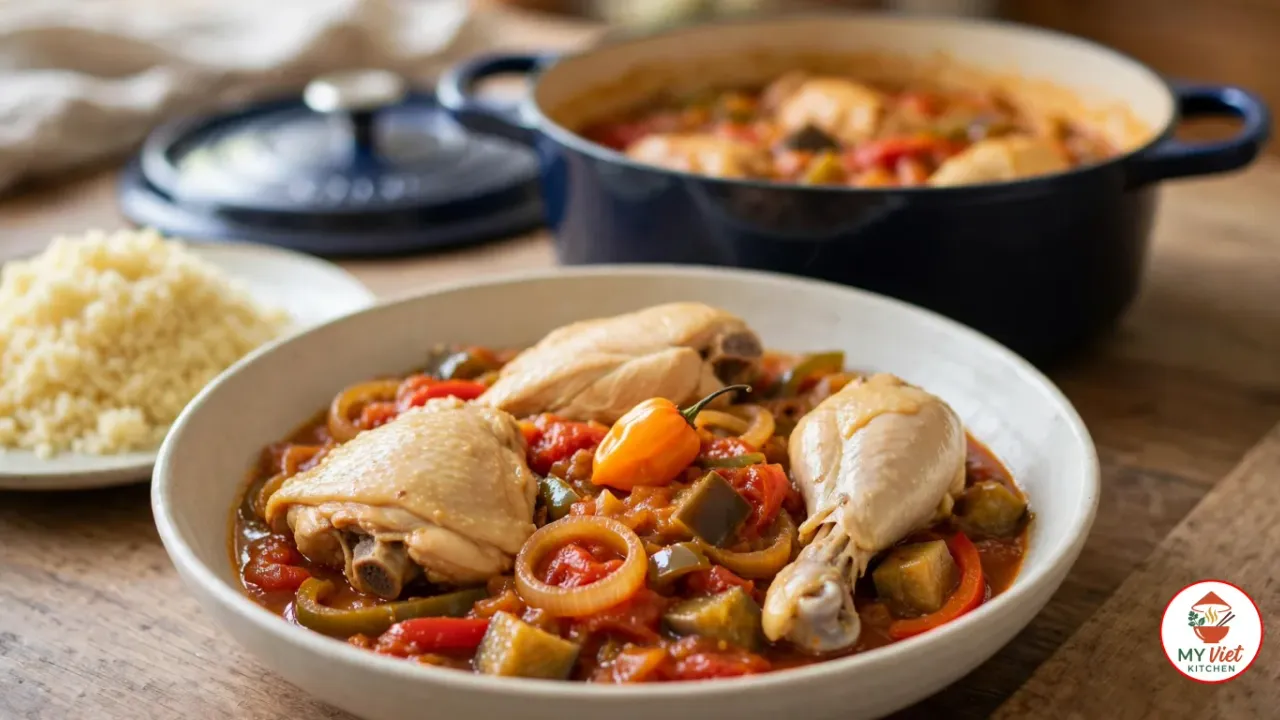
Kedjenou is a spicy chicken stew from Côte d’Ivoire (Ivory Coast), slow-cooked with vegetables in a sealed pot (Wikipedia). Nobody stirs it: the pot stays shut and is shaken from time to time. This recipe cooks a cut-up chicken on the stove with onions, tomatoes, eggplant, ginger and one whole chili, and adds no water.
Prep Time: 20 minutes | Cook Time: 70 minutes | Total Time: 1 hour 30 minutes | Servings: 4
Difficulty: Easy | Calories: ~480 per serving

What Is Kedjenou?
Kedjenou belongs to the canari, a terracotta pot set over a fire or coals, and the bird inside is chicken or guinea hen. Wikipedia calls kedjenou a traditional and popular dish of Côte d’Ivoire. One version skips the pot: the stew is wrapped and sealed in a banana leaf and placed under hot coals (Wikipedia).
French Wikipedia adds more detail. Its article describes kédjénou as the recipe of farm workers and hunters, made with bushmeat, chicken or rabbit. The meat goes into the canari in pieces with chili, sliced onions, crushed tomatoes, salt, grated fresh ginger and aromatic leaves, and cooks in the closed pot for forty minutes. Baoulé cooks close the mouth of the canari with banana leaves. Eggplant and a few drops of palm wine count as additions that stay within tradition (Wikipédia).
The name is usually explained through the shaking. Imma, the cook behind Immaculate Bites, writes that the dish is believed to have originated with the Baoulé, an ethnic group in Ivory Coast, and that according to several sources the word comes from the Baoulé language and “means to move or shake” (Immaculate Bites).
In Côte d’Ivoire, kedjenou is traditionally served with attieke (attiéké), which is made with grated cassava (Wikipedia). It is also maquis food. A maquis is a small open-air restaurant of a kind unique to the country, and it normally features chicken and fish that are braised and served with onions and tomatoes, attieke or kedjenou (Wikipedia).
Does Kedjenou Need Any Added Liquid?
Often none. Wikipedia notes that little or no liquid is sometimes added, so the meat cooks in its own juices, which tenderizes it and concentrates the flavors (Wikipedia). Published recipes for kedjenou differ on how strictly to take that.
Brad Harvey of Whats4eats adds nothing to his pot. If it looks far too dry at the start, he allows 1/2 cup of water or chicken stock, but he expects the tomatoes to give off enough liquid (Whats4eats). Imma pours in about 1/4 cup of chicken broth for extra sauce (Immaculate Bites).
Paule-Odile Beke goes furthest. The London-based chef, originally from Ivory Coast, adds half a litre of palm wine to a whole boiling chicken in her recipe for Cuisine Noir (Cuisine Noir); the magazine’s profile of her gives her background (Cuisine Noir). The video above lists vegetable stock among its ingredients (African Cooking with Estelle).
The kedjenou in the steps below gets no liquid at all. About 700 g of ripe tomatoes, two onions, an eggplant and two bell peppers release enough juice for a thick sauce, provided the lid stays shut. If your tomatoes are pale and firm, take Harvey’s 1/2 cup of water as insurance.
Why Shake the Pot Instead of Stirring?
Stirring kedjenou means opening the lid, and the lid is what keeps the juices in. Beke’s recipe says not to open the pot until the cooking time is over. She shakes it every 10 minutes so the ingredients are well mixed (Cuisine Noir).
Shaking also keeps the bottom layer from catching. Imma describes a pot shaken frequently and vigorously, traditionally every 5 to 10 minutes, so that neither chicken nor sauce sticks to the base. In the oven she shakes hers only once or twice, and it does not stick (Immaculate Bites). On the stovetop, Harvey warns, the pot needs shaking a little more often than in the oven (Whats4eats).
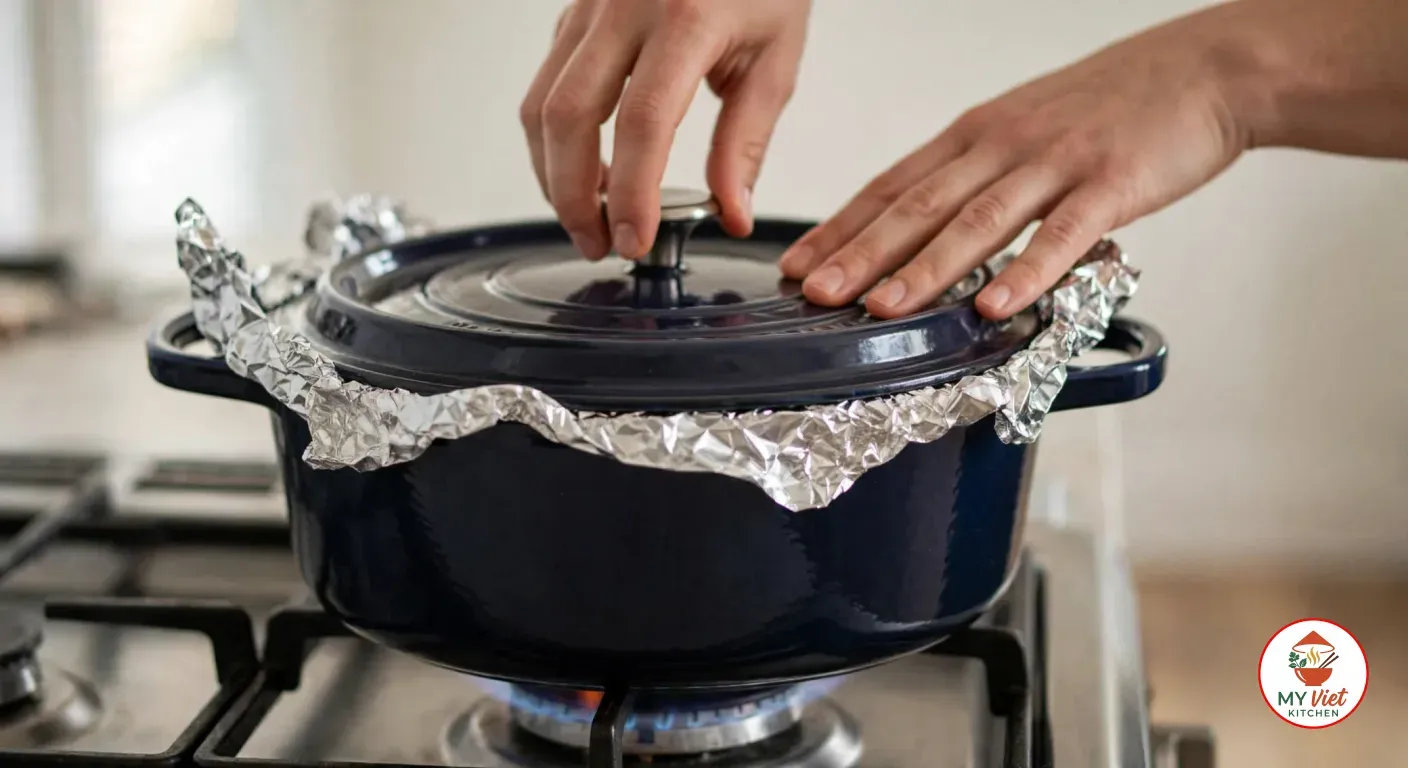
The seal can be improvised. Harvey covers the pot with one or two layers of aluminum foil and sets the lid on top of the foil (Whats4eats). Beke ties banana or pandan leaves over a clay pot or a tajine with cooking thread before the lid goes on (Cuisine Noir). For Western kitchens, Imma suggests a deep casserole with a tight-fitting lid, such as a Dutch oven, in place of the canari (Immaculate Bites). The video builds the pot in layers: half of the vegetables go in first, as “a base for the chicken to sit on while cooking” (African Cooking with Estelle).
Ingredients for Kedjenou
For the Chicken:
- 1 whole chicken (about 1.6 kg / 3.5 lb), cut into 8 pieces, skin on
- 1 1/2 teaspoons fine salt
- 1/2 teaspoon ground black pepper
- 1 teaspoon dried thyme
For the Pot:
- 2 medium onions, sliced into rings
- 4 large ripe tomatoes (about 700 g / 1.5 lb), roughly chopped
- 1 small eggplant (about 250 g / 9 oz), cut into 2.5 cm (1 inch) cubes
- 2 bell peppers (1 green, 1 red), seeded and sliced
- 4 cloves garlic, minced
- 1 tablespoon grated fresh ginger
- 2 bay leaves
- 1 whole habanero or Scotch bonnet chili
For Serving:
- Attieke or white rice, for serving
You also need a heavy pot of about 5 litres (5 quarts) with two side handles and a lid that sits flat, such as an enameled cast-iron Dutch oven, plus a sheet of aluminum foil, oven mitts and a food thermometer.
Step-by-Step Instructions
Step 1: Season the Chicken
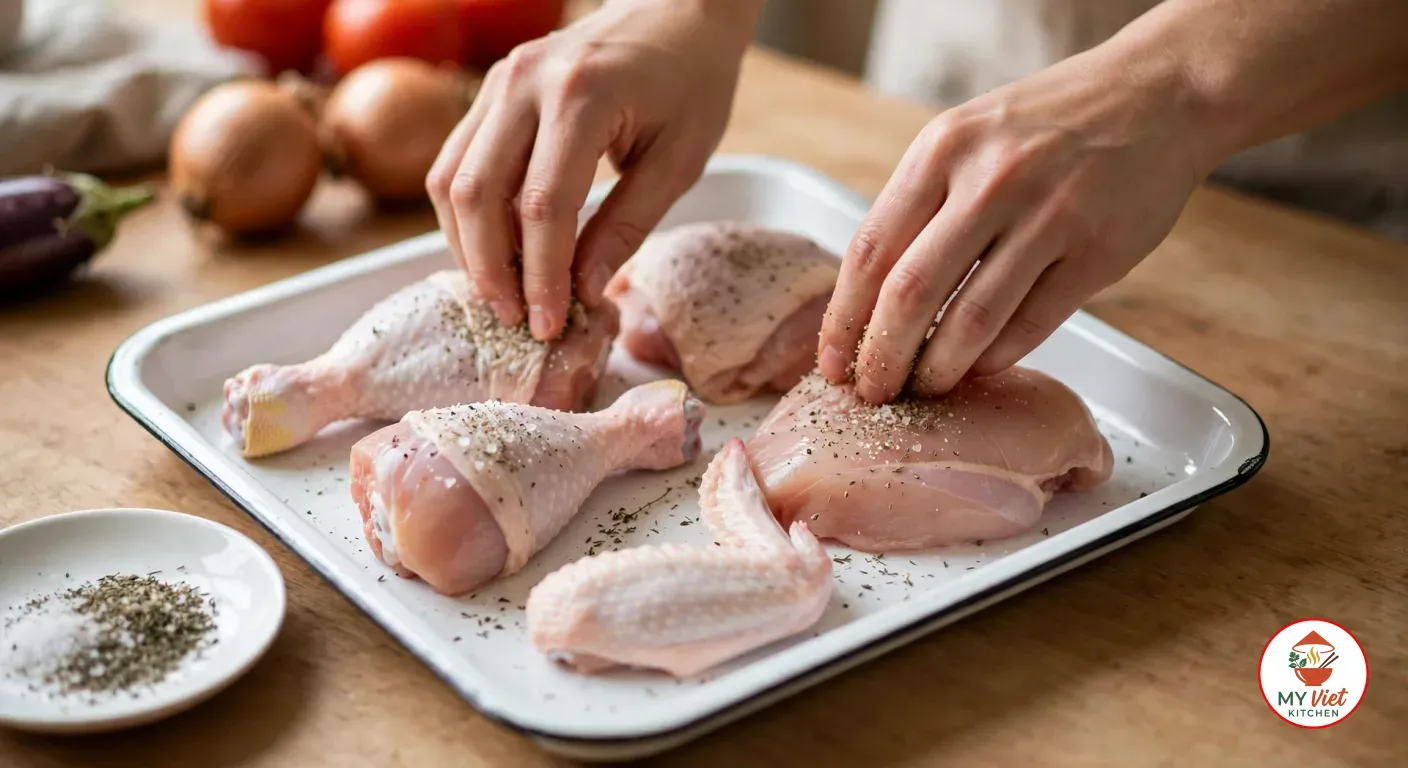
1Dry the chicken pieces well with paper towels. Mix the salt, black pepper and thyme, then rub the mixture over every piece and under the skin where it lifts easily. Leave the chicken on the counter for 10 minutes while you slice the onions and cut up the tomatoes, eggplant and bell peppers. The chicken goes into the pot raw, without browning.
Step 2: Layer the Pot
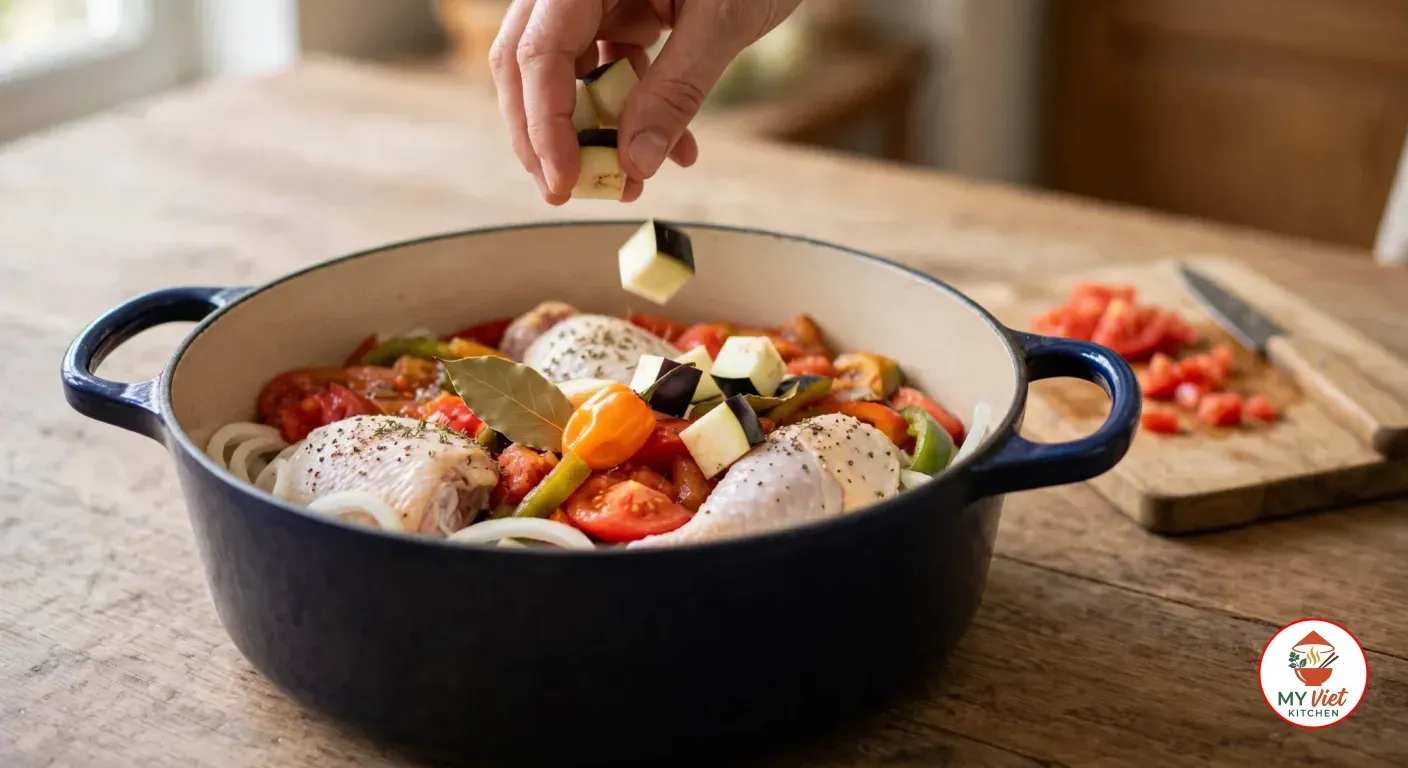
2Spread the sliced onions over the bottom of a heavy 5-litre (5-quart) Dutch oven and cover them with half of the tomatoes. Arrange the chicken on top, skin side up, in a snug layer. Scatter the garlic and ginger over the chicken, then the eggplant, the bell peppers and the remaining tomatoes. Tuck in the bay leaves and set the whole chili on top. Add no water, stock or oil.
Step 3: Seal and Cook
3Cover the pot with a sheet of aluminum foil and press the lid down onto it, so the foil fills any gap around the rim. Put the pot on a medium burner. After about 10 minutes you should hear the juices bubbling steadily inside; turn the heat down to low.
Step 4: Shake the Pot
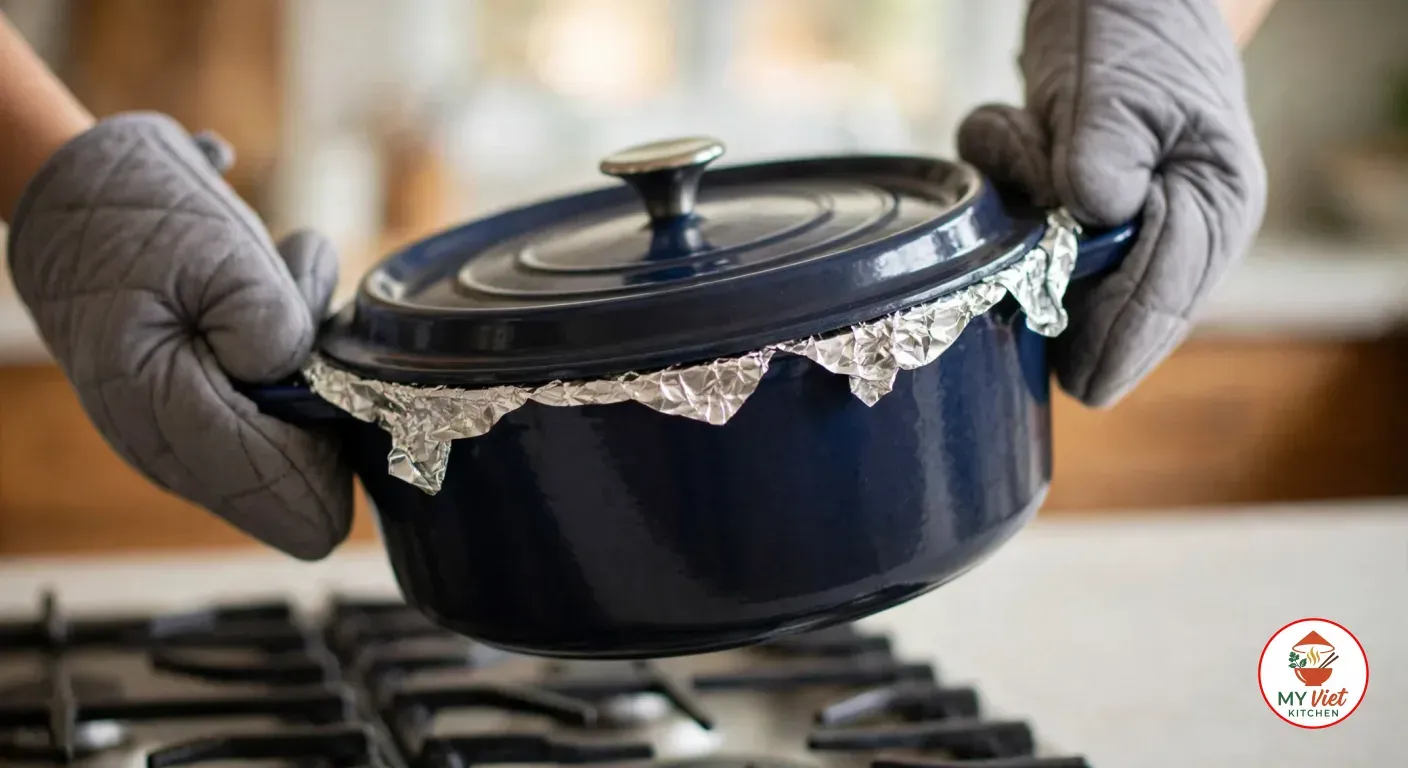
4Keep the heat low and the lid shut for 55 to 60 minutes. Every 10 to 15 minutes, put on oven mitts, grip both handles with your thumbs pressing the lid down, and swirl the pot firmly for about 5 seconds to move the chicken and vegetables around. Set it back on the burner each time.
Step 5: Finish and Serve
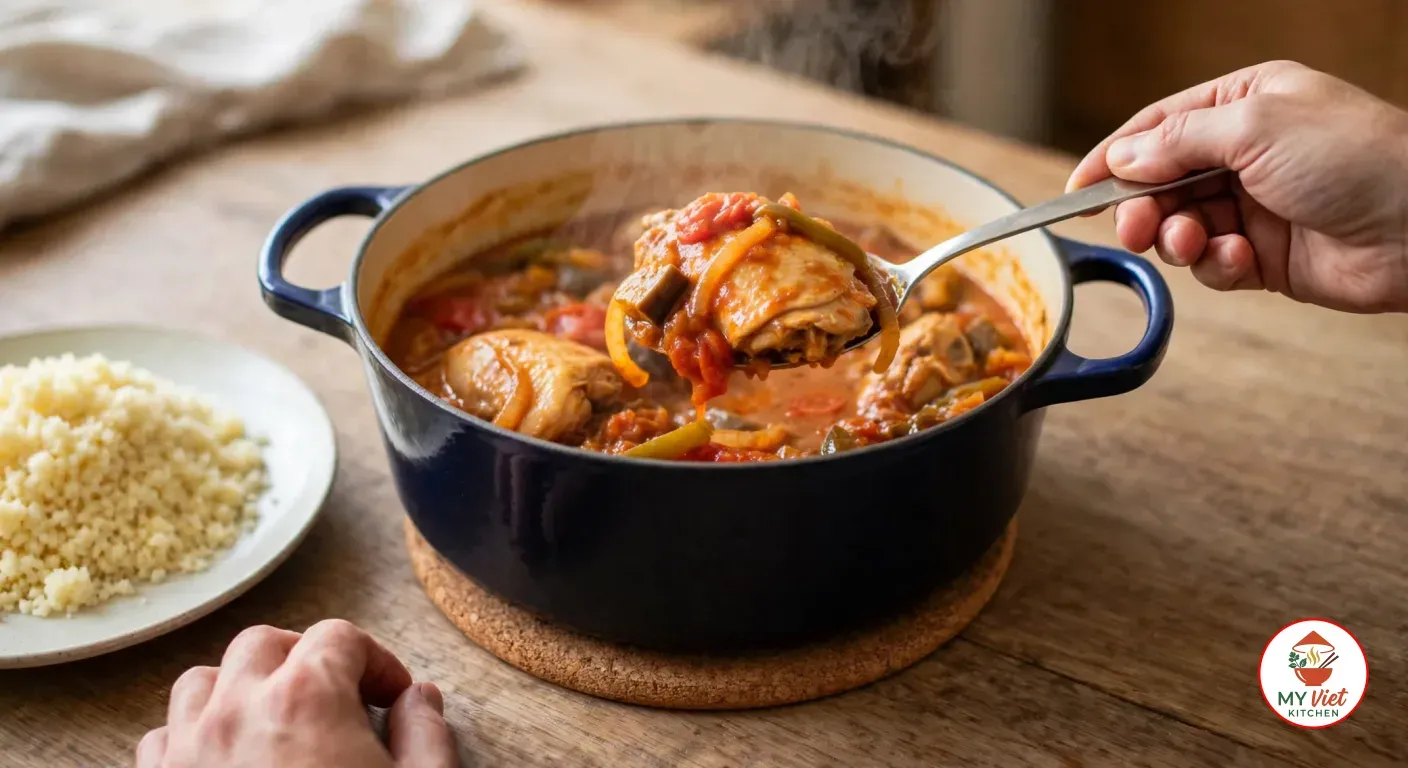
5Take the pot off the heat and lift the lid away from you, because a rush of steam comes out. The chicken should be tender, and a thermometer pushed into the thickest piece, away from the bone, should read 74 °C (165 °F). If it reads lower, seal the pot again and cook for 10 minutes more. Take out the bay leaves and the chili, taste the sauce for salt, and spoon the chicken and sauce over attieke or white rice.
Frequently Asked Questions
Can you cook kedjenou in the oven?
Yes, kedjenou works in the oven, and two of the recipes cited here cook it that way. Brad Harvey bakes the foil-sealed pot at 325 °F for 2 to 3 hours and takes it out occasionally to shake it (Whats4eats). Imma sets the oven to 350 °F, bakes for about 1 hour until the chicken is tender and shakes the pot once or twice without opening it (Immaculate Bites).
Should you brown the chicken first?
Plain kedjenou is not browned. Harvey notes that some recipes, mostly French ones, first brown the chicken in peanut oil and sauté the onions, which adds flavor but in his words “is not strictly authentic” (Whats4eats). Paule-Odile Beke does sauté the skin-on pieces in her clay pot for 10 minutes over medium-high heat before the vegetables go in (Cuisine Noir).
How spicy is kedjenou?
It depends on what you do with the chili. French Wikipedia calls the stew very spicy and puts chili in twice, crushed and whole (Wikipédia). Harvey chops 2 or 3 hot chiles into the pot (Whats4eats). Beke crushes 2 Scotch bonnets (Cuisine Noir). Imma lists a single whole habanero as optional (Immaculate Bites). The recipe on this page follows her and leaves one chili whole. Chop it before it goes in for a much hotter pot.
How do you know the chicken is cooked through?
Check the thickest piece with a thermometer. For poultry pieces such as breasts, legs, thighs and wings, Health Canada’s chart reads 74 °C (165 °F). It recommends a digital thermometer, pushed through the thickest part of the meat to the middle without touching any bone (Health Canada).
How long does leftover kedjenou keep?
Two to three days in the fridge. Health Canada advises refrigerating leftovers promptly in shallow containers and discarding cooked food left out at room temperature for over two hours. Whatever you will not eat inside 2 to 3 days should go into the freezer. Reheat leftovers to 74 °C (165 °F) (Health Canada).
Sources
- Kedjenou, Wikipedia
- Kédjénou, Wikipédia (in French)
- Ivorian cuisine, Wikipedia
- Kedjenou Chicken, Imma, Immaculate Bites
- Kedjenou (Ivoirian stewed chicken and vegetables), Brad Harvey, Whats4eats
- Kédjénou Recipe, Paule Odile Beke, Cuisine Noir, August 2020
- Paule-Odile Beke Highlights African Culinary Heritage With Douceurs d’Ivoire, Cuisine Noir, October 2020
- Safe cooking temperatures, Health Canada
- Food safety tips for leftovers, Health Canada
- How to Make Ivory Coast Style Kedjenou Chicken Stew with Boiled White Rice, African Cooking with Estelle / Cuisine Africaine, YouTube, September 2018