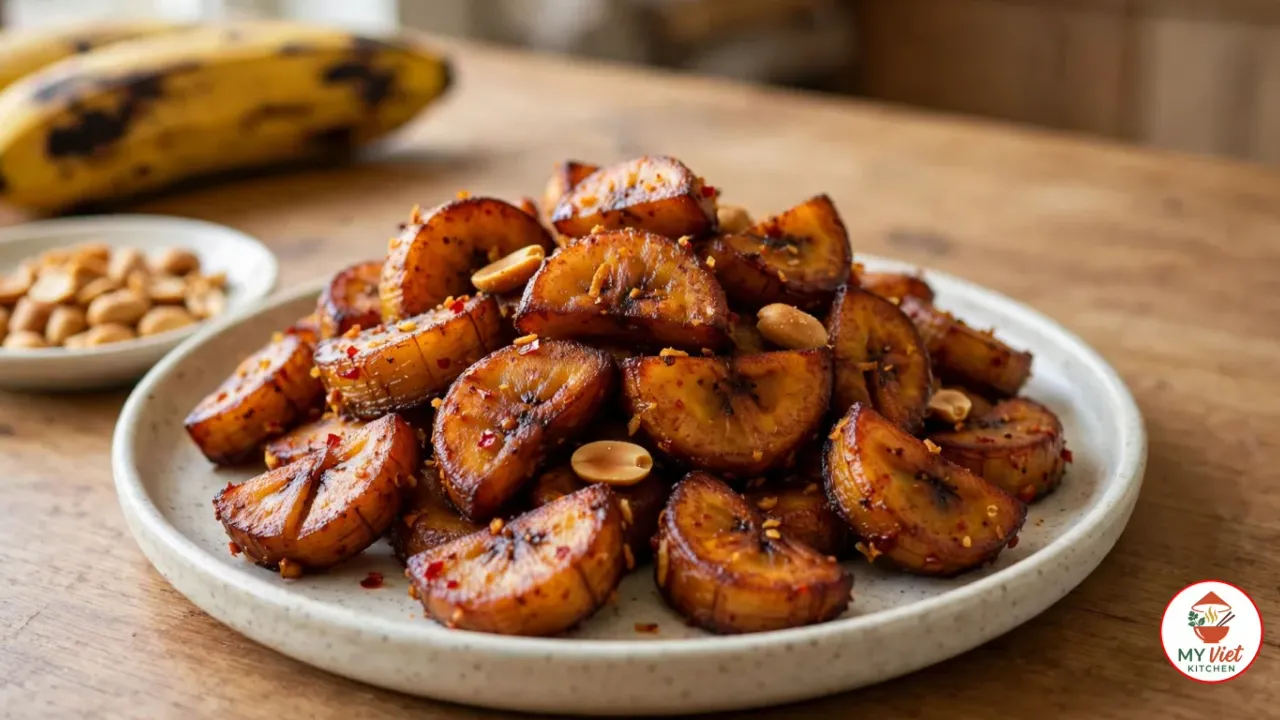
Kelewele is a popular Ghanaian food of fried plantains seasoned with spices, and in Accra street vendors usually sell it at night (Wikipedia). For this kelewele recipe, fresh ginger and onion are grated into a wet paste with cayenne, aniseed, cloves and nutmeg. The plantain pieces sit in the paste for 15 minutes, fry in three batches and go to the table with roasted peanuts.
Prep Time: 15 minutes | Cook Time: 15 minutes | Total Time: 45 minutes, including 15 minutes of resting in the spice paste | Servings: 4
Difficulty: Easy | Calories: ~350 per serving

What Is Kelewele?
Ripe plantain is peeled, cut into chunks or cubes, spiced and fried in hot oil. Wikipedia calls kelewele a popular choice for dinner and says it is often served with bean stew, with peanuts, or alone as a dessert (Wikipedia).
The word covers the seasoning as well as the snack. Yewande Komolafe of NYT Cooking describes kelewele as “a popular Ghanaian salty-sweet spice mix” that usually coats fried plantains in a dish “also known as kelewele”. In her recipe the blend of garlic, ginger, nutmeg and cloves seasons pork chops and pears instead (NYT Cooking).
On the street it is evening food. Fafa Gilbert, who writes Ndudu by Fafa, describes it as “readily available in most street corners each evening” and hardly during the day. A reader of hers replied that kelewele is now sold in the afternoon too, though less intensely than in the evening (Ndudu by Fafa).
Fran Osseo-Asare of BetumiBlog, who was then preparing a book with Barbara Baeta, thinks the usual English translation undersells it: “Western cookbooks generally describe kelewele as something like ‘spicy fried plantain cubes,’ but that is like calling a sunset ‘beautiful.’” (BetumiBlog)
Which Spices Go Into Kelewele?
The shortest list has three items. Ginger, cayenne pepper and salt are the typical kelewele spices, and onions, anise, cloves, nutmeg, cinnamon and chili powder may be added (Wikipedia). Ed Gibbon’s Congo Cookbook grinds grated ginger root, red pepper and salt and mixes them with water. It notes that some recipes replace the water with lemon juice and that others toss the plantains in dry spices (The Congo Cookbook).
Osseo-Asare found those three-spice versions “anemic” next to the kelewele prepared in Ghana. There, she writes, cooks grind fresh ginger and onion and “also commonly pound and add sekoni (aniseed), hwentia” and cloves (BetumiBlog). Hwentia is Xylopia aethiopica, an identification a University of Ghana food scientist gave her. Wikipedia lists that spice as grains of Selim, with a musky flavor and a use similar to black pepper (Wikipedia). She also advises against dried ground ginger (BetumiBlog).
Two Ghanaian cooks on YouTube add calabash nutmeg, the seed of the tropical African tree Monodora myristica, which was once widely sold as an inexpensive nutmeg substitute (Wikipedia). Sweet Adjeley’s ingredient list for the video above reads chili peppers, a quarter of a medium onion, two thumb-sized pieces of ginger, two to four calabash nutmegs, 1/4 teaspoon of cloves and salt (Sweet Adjeley). Nanaaba lists a quarter onion, ginger, six roasted dry red chilies, three calabash nutmegs, five hwentia, a cardamom pod, black pepper and salt for four plantains (Nanaaba’s Kitchen).
The recipe below stays with spices a supermarket carries: fresh ginger and onion as in Ghana, aniseed and cloves from Osseo-Asare’s list, cayenne for the heat and a little ordinary nutmeg where the videos use calabash nutmeg.
How Ripe Should the Plantains Be?
Riper than you might expect. Osseo-Asare wants them “very ripe and sweet” (BetumiBlog), and her recipe asks for four slightly over-ripe plantains, somewhat black and soft but not completely. Ripeness, she adds, is part of the secret of good kelewele: the sweetness has to come through, and the outside has to caramelize (BetumiBlog).
There is a limit at the other end. Nanaaba’s ingredient list warns against over-ripened plantains because they absorb a lot of oil while frying (Nanaaba’s Kitchen), and the Congo Cookbook asks for plantains that are “ripe, but not past ripe” (The Congo Cookbook). Wikipedia’s summary agrees: the oil should be hot, the plantain not too soft, and the pieces fried until their sugar caramelizes and the edges turn brown (Wikipedia).
In practice that means a plantain whose yellow skin is heavily spotted or streaked with black and which gives a little when pressed but still holds its shape under the knife. As for that shape, Osseo-Asare points out that in Ghana the plantain “is generally cut on a diagonal rather than into a straight cube” (BetumiBlog), and the steps below cut it her way.
Ingredients for Kelewele
For the Spice Paste:
- 40 g (1.5 oz) fresh ginger, a piece about 5 cm (2 inches) long, peeled
- 1/4 medium onion, peeled
- 1/2 teaspoon cayenne pepper, or more to taste
- 1/2 teaspoon ground aniseed
- 1/4 teaspoon ground cloves
- 1/4 teaspoon ground nutmeg
- 1/2 teaspoon fine salt
- 1 tablespoon water
For Frying and Serving:
- 4 ripe plantains (about 1.1 kg / 2.5 lb), yellow skins heavily spotted with black
- 1 litre (4 cups) vegetable oil, for frying
- 1/2 cup (75 g) dry-roasted peanuts, for serving
You also need a fine grater, a deep, heavy pot about 20 cm (8 inches) across, a frying thermometer, a slotted spoon and a tray lined with paper towels.
Step-by-Step Instructions
Step 1: Make the Spice Paste
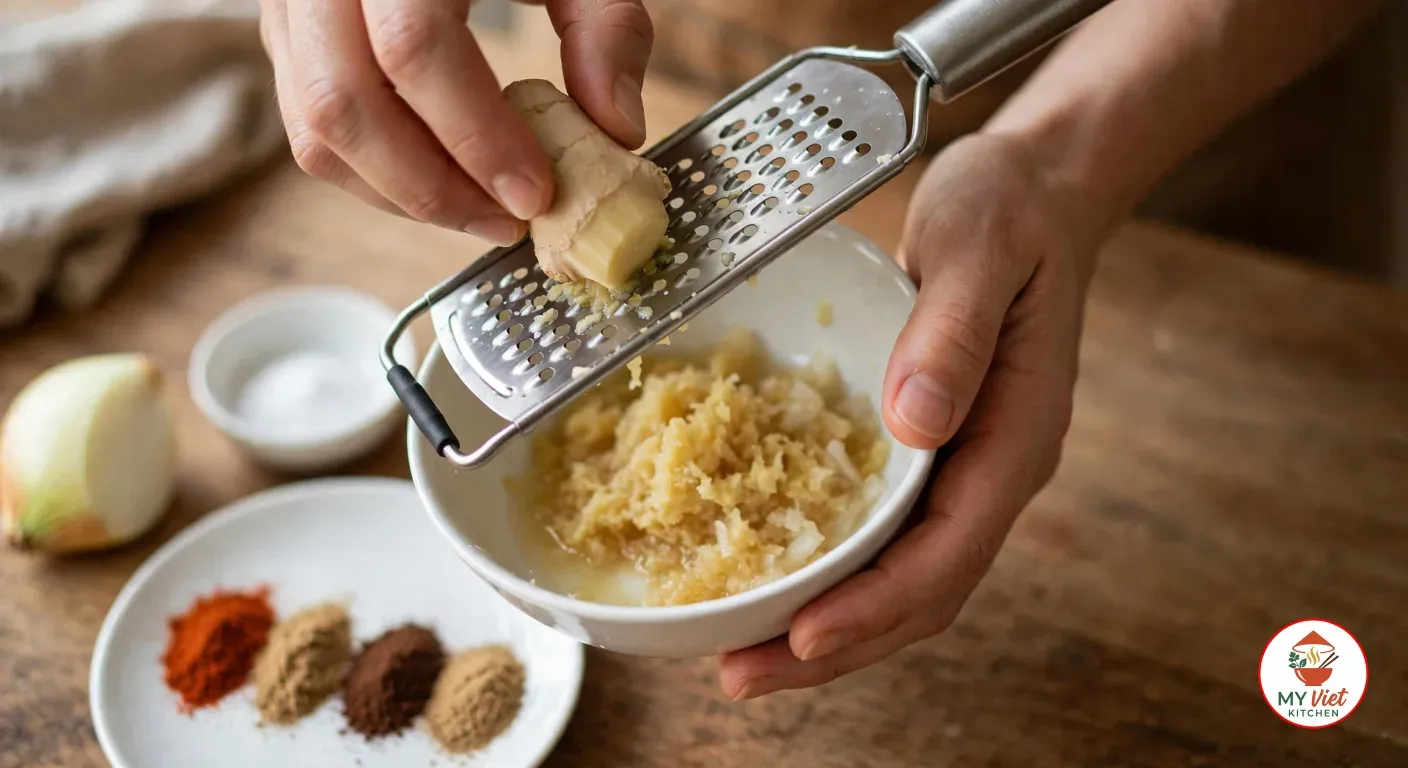
1Grate the ginger and the onion on the fine holes of a grater into a small bowl, scraping in the juice and whatever clings to the back of the grater. Stir in the cayenne, aniseed, cloves, nutmeg, salt and water. The paste should be wet and loose, with no dry spice left around the rim of the bowl.
Step 2: Cut and Coat the Plantains
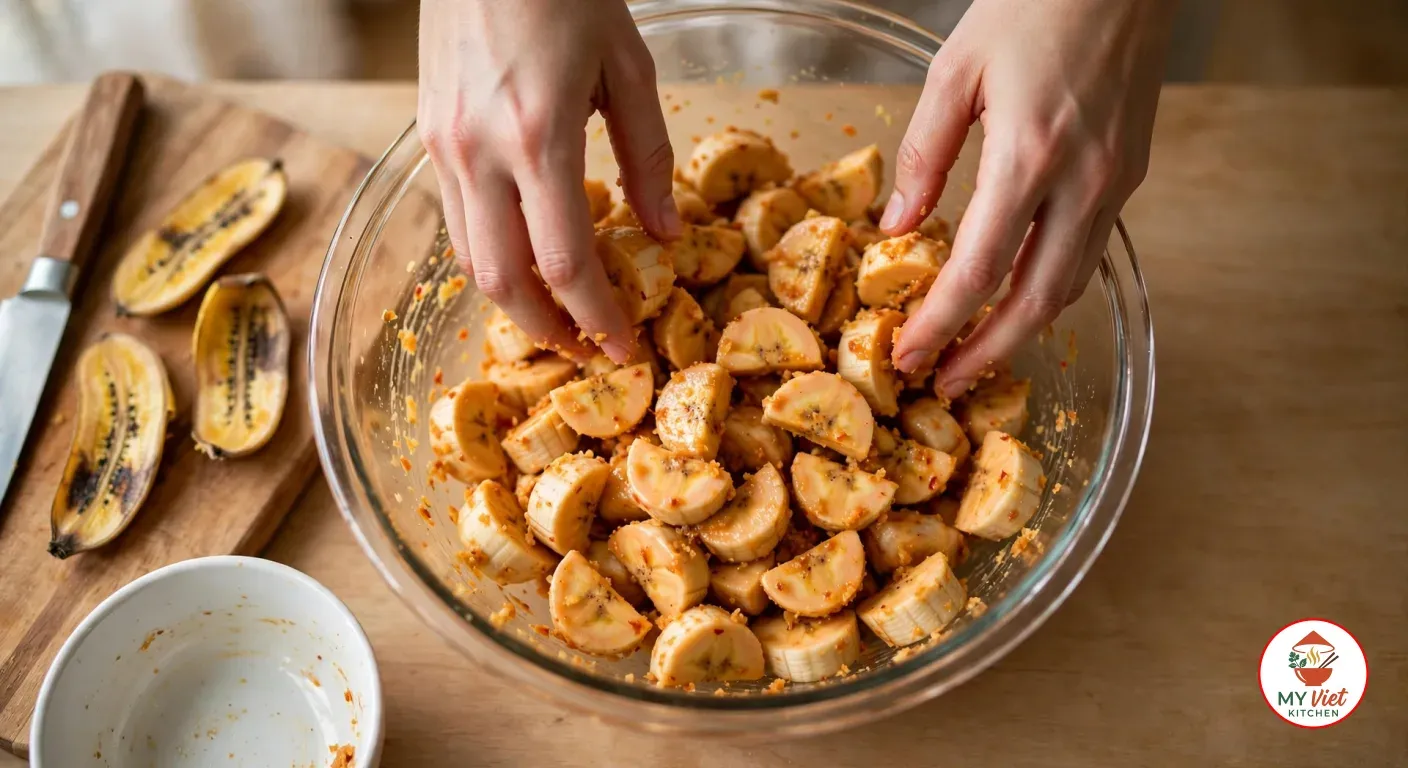
2Trim both ends off each plantain, slit the skin from end to end and peel it away. Cut each plantain in half lengthwise, then cut across both halves on a diagonal into pieces about 2 cm (3/4 inch) wide. Put the pieces in a large bowl, scrape the spice paste over them and turn them gently until every piece is coated. Leave the bowl on the counter for 15 minutes.
Step 3: Heat the Oil
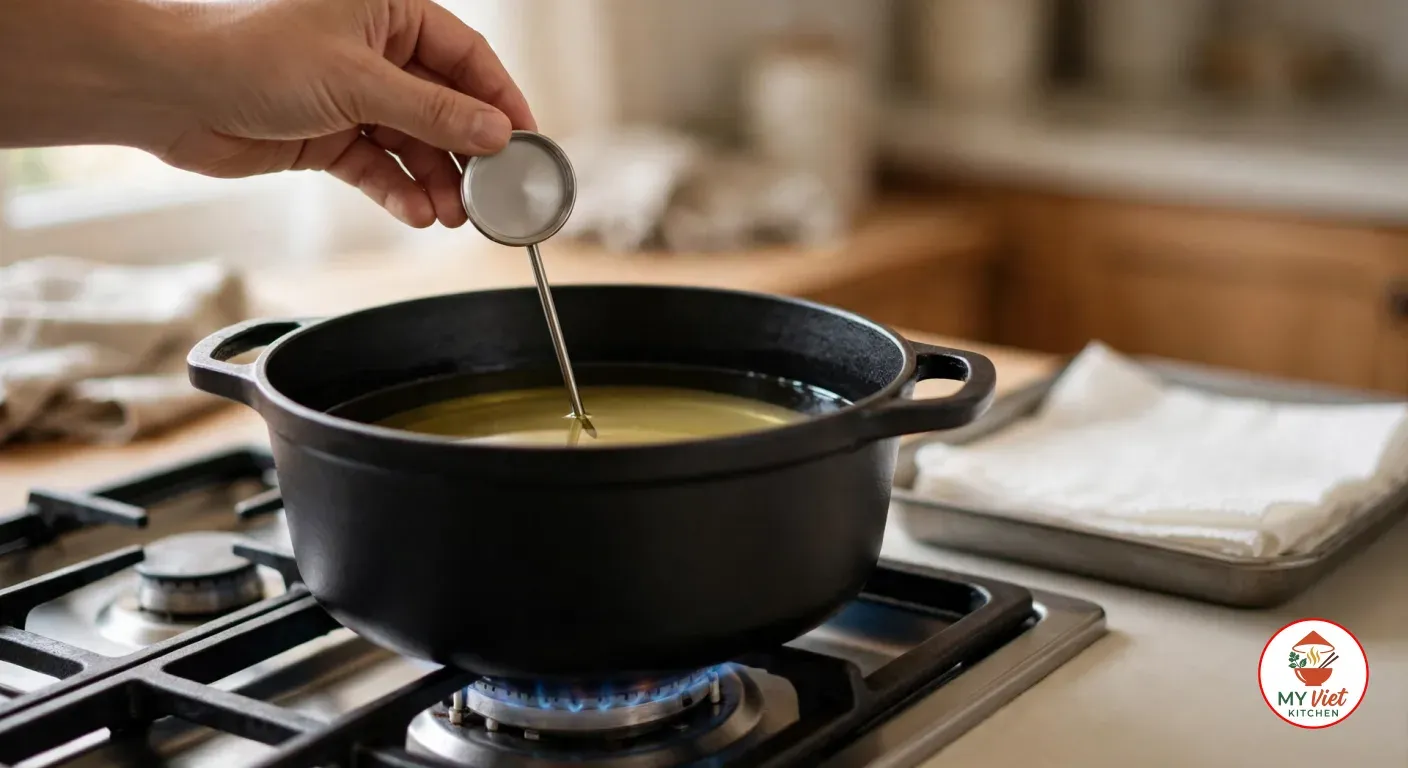
3While the plantains rest, set a deep, heavy pot about 20 cm (8 inches) across on the stove and pour in the oil. It should be about 3 cm (1 1/4 inches) deep and come no more than halfway up the side. Heat it over medium-high heat until a frying thermometer reads 175 °C (350 °F). Line a tray with paper towels and set it next to the stove.
Step 4: Fry in Batches
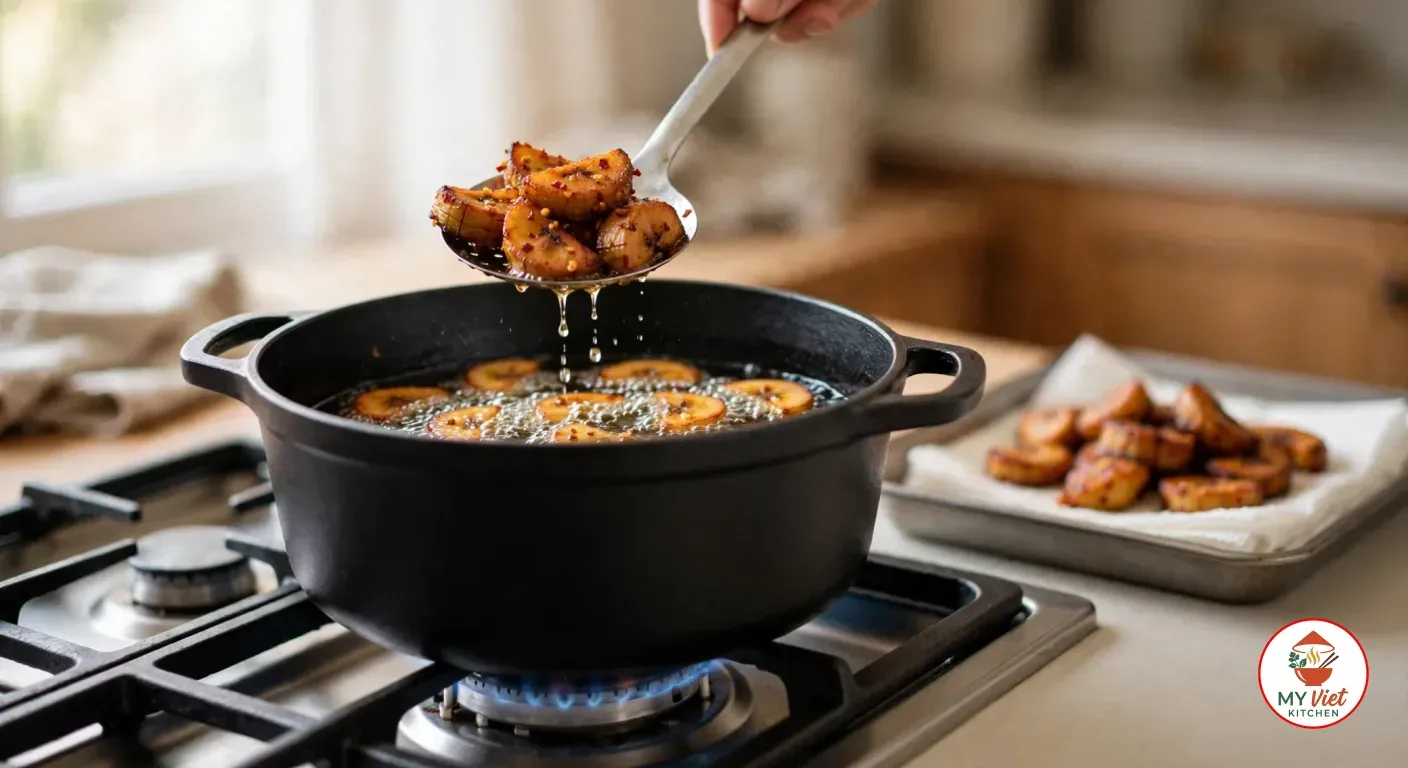
4Lower about a third of the plantain pieces into the oil with a slotted spoon, letting any liquid drip back into the bowl first. Fry for 4 to 6 minutes. Move the pieces around once or twice so they do not stick together, and lift them onto the paper towels when they are deep golden brown with dark, caramelized edges. Bring the oil back to 175 °C (350 °F) before each of the two remaining batches.
Step 5: Serve with Peanuts
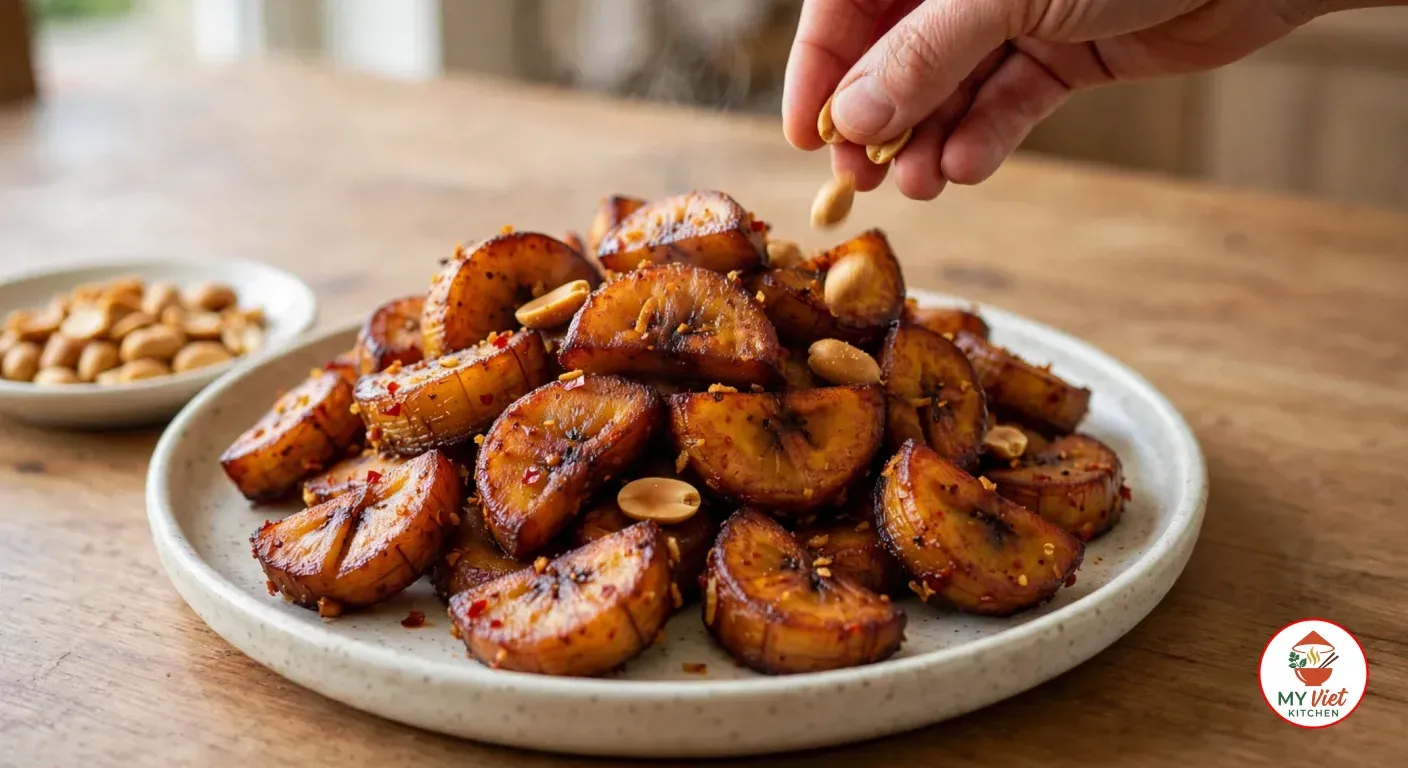
5Pile the hot kelewele into a bowl or onto a plate and scatter the roasted peanuts over the top, or put them in a small dish alongside. Serve it straight away.
Frequently Asked Questions
What is the difference between kelewele and plain fried plantain?
The seasoning. Plain fried plantain is called alloco in Côte d’Ivoire and Burkina Faso and dodo in Yoruba in Nigeria, and it often comes with chili pepper and onions. Kelewele is the Ghanaian food whose plantains are seasoned with spices (Wikipedia). The spice mixture is tossed with the raw pieces before they go into the oil (The Congo Cookbook).
What do you eat with kelewele?
Roasted peanuts, first of all. Fran Osseo-Asare calls the sweet, spicy, chewy plantain “a perfect counter to the mild crunchy/creamy flavor and texture of the peanuts” and likes both with an ice-cold beer, ginger beer or bissap (BetumiBlog). Wikipedia also lists bean stew, and names red red and fish stew as the dishes kelewele typically accompanies in Ghana (Wikipedia). Fafa Gilbert pours a glass of freshly blended pineapple juice (Ndudu by Fafa).
What can you use instead of calabash nutmeg and hwentia?
Ordinary nutmeg covers the calabash nutmeg. Nanaaba lists three calabash nutmegs for four plantains and says to substitute regular nutmeg, “but use only 1/4 of it” (Nanaaba’s Kitchen). Osseo-Asare’s own recipe treats nutmeg as optional. Hwentia, in her words, adds “a spicy, peppery, but not hot, flavor” (BetumiBlog). None of the cooks cited here names a replacement for it, and the recipe on this page simply leaves it out.
Can you make kelewele ahead of time?
Only the spice mix. Fried kelewele is, in Osseo-Asare’s words, “best eaten immediately or soon after cooking”. Her son-in-law, though, fries his with a kelewele spice mix that is prepared for him in large batches in Ghana and brought to California by visiting family (BetumiBlog). The Congo Cookbook keeps the first batches in a warmed oven until all the plantains are fried, then serves them immediately (The Congo Cookbook).
Sources
- Fried plantain: Kelewele, Wikipedia
- Kelewele: My favorite Ghanaian Snack, Fran Osseo-Asare, BetumiBlog, May 2007
- King of Kelewele: Recipe #53, Fran Osseo-Asare, BetumiBlog, June 2011
- Kelewele, Ed Gibbon, The Congo Cookbook (archived copy)
- Kelewele Recipe with Sage, Fafa Gilbert, Ndudu by Fafa, July 2015
- Kelewele-Spiced Pork Chops and Pears, Yewande Komolafe, NYT Cooking
- Grains of Selim, Wikipedia
- Monodora myristica, Wikipedia
- How To Make The Authentic Ghana 🇬🇭 Kelewele Special Recipe, A Popular Ghanaian Street Food, Sweet Adjeley, YouTube, November 2022
- How to make the best KELEWELE - Spiced Fried Plantain✔, Nanaaba’s Kitchen, YouTube, October 2018