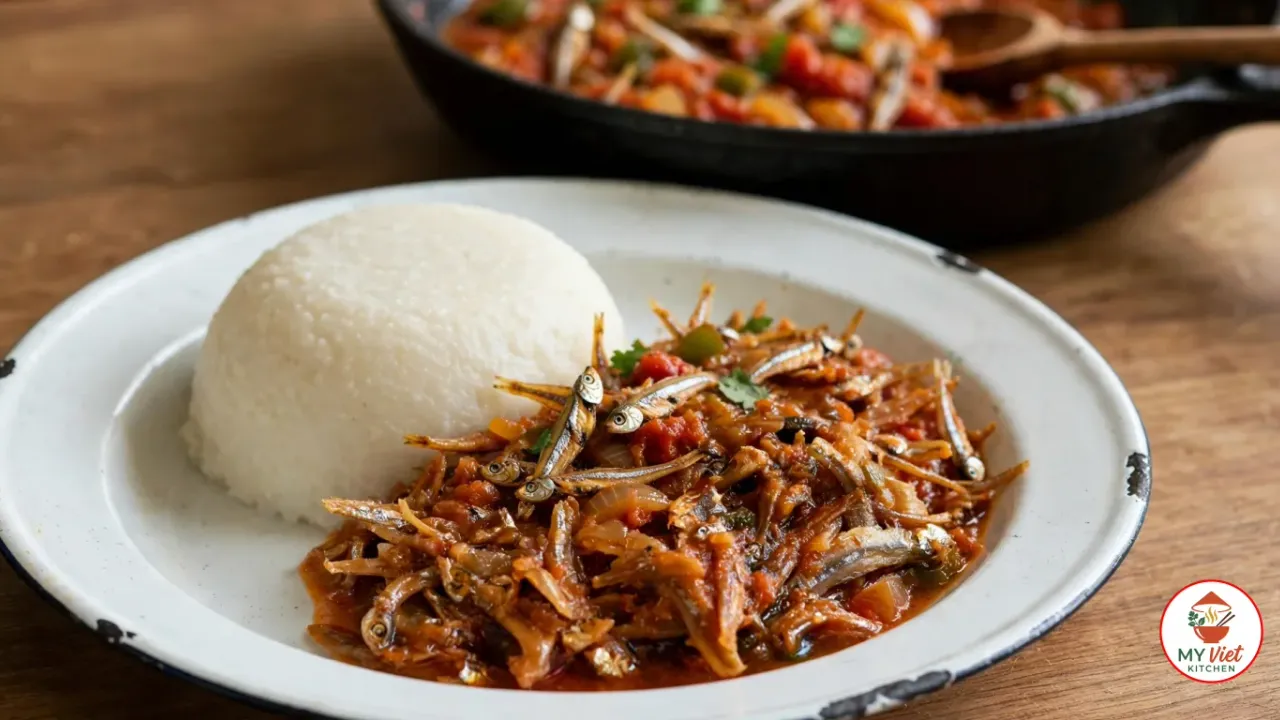
Kapenta is the name used in Zambia, Malawi and Zimbabwe for two small fish from Lake Tanganyika, a sardine and a sprat, usually sold sun-dried (Wikipedia). In this kapenta recipe you soak the dried fish to draw out salt and grit and fry them until the tails crisp. Then they go into a quick sauce of onion, tomato and green pepper. Eat it with nshima or sadza.
Prep Time: 20 minutes | Cook Time: 25 minutes | Total Time: 45 minutes, including a 10-minute soak | Servings: 4
Difficulty: Easy | Calories: ~320 per serving

Which Kapenta Should You Buy?
Buy it dried, in a sealed bag. A survey of 13 fishing companies on the Zimbabwean side of Lake Kariba found most of the catch “is salted, sun-dried, and marketed in various size plastic packs”, some of them 500 g bags. Salt goes on in the boat, as soon as each haul comes out of the water (FAO). Frozen kapenta exists too, but it costs more, and fresh fish are not sold in markets outside the fishing villages (Wikipedia).
Expect fish about the length of your little finger. Limnothrissa miodon, the species fished on Lake Kariba, grows there to “a size of around five centimetres” (FAO). Elsewhere it is usually about 10 cm long, and the other kapenta species, Stolothrissa tanganicae, about 7 cm (Wikipedia).
Kariba kapenta is not native to that lake. The Zambian government introduced the fish from Lake Tanganyika between 1967 and 1969. Commercial fishing started in Zimbabwe in July 1973, and from 1976 the boats switched to lift nets lowered from pontoons at night, with lights to draw the shoals. By the early 2000s, Kariba was landing between 20,000 and 30,000 t a year (FAO).
So Zambian shops sell kapenta from two lakes. An FAO mission in 1985 found dried kapenta in Chipata “coming mostly from Lake Kariba (yellow kapenta) and to a lesser extent from Lake Tanganyika (silver kapenta)”. Retailers there and in Lusaka said their customers preferred the silver (FAO). Either suits this recipe. Pick a bag of whole fish rather than broken bits and dust. Kariba packers sieve out broken fish, salt grains, dirt and beetles before bagging (FAO).
Should You Soak Dried Kapenta Before Cooking?
For a sauce like this one, yes. Rumbie of ZimboKitchen, a Zimbabwean recipe site, pours hot water over 250 g of dried kapenta and leaves it for 15 minutes. “The soaking is done to remove the excess salt which is used to preserve the kapenta during the drying up process,” she explains (ZimboKitchen). In a later stew she cuts the soak in boiling water to 10 minutes (ZimboKitchen), the time used here.
The Zambian recipes found for this page wash the fish rather than soak them. Kitwe Online’s recipe washes 500 g twice in warm water (Kitwe Online), and the description of the video above says to clean the fish in hot water at least three times. Either way, dry the fish well before they meet hot oil.
There is also a way to skip most of the oil. Robert Sakapaji’s Zambian recipe card for the Feed the Future Innovation Lab for Fish cleans the fish in warm water and lets them dry. Then they roast in a dry pan with a little salt. The pan is stirred and shaken “so that the fish are flipped on all sides, preventing them from burning” (Fish Innovation Lab).
Researchers preparing kapenta powder dry-roasted their samples the same way, “Emulating the traditional process used in Zambian home kitchens” (Fish Innovation Lab). To cook it that way, dry-roast the kapenta in Step 2 for about 8 minutes, then use just 1 tablespoon of oil for the onion in Step 3.
Ingredients for Kapenta
For the Fish:
- 250 g (9 oz) dried kapenta
- About 1.5 litres (6 cups) just-boiled water, for soaking
- 3 tablespoons (45 ml) vegetable oil
For the Sauce:
- 1 medium onion, thinly sliced
- 2 garlic cloves, finely chopped
- 1 teaspoon curry powder
- 1/2 teaspoon paprika
- 3 medium tomatoes (about 350 g), chopped
- 1 small green pepper, diced
- 1/2 cup (120 ml) water
- Salt, only if needed
- 2 tablespoons chopped fresh coriander
Step-by-Step Instructions
Step 1: Soak and Drain the Kapenta
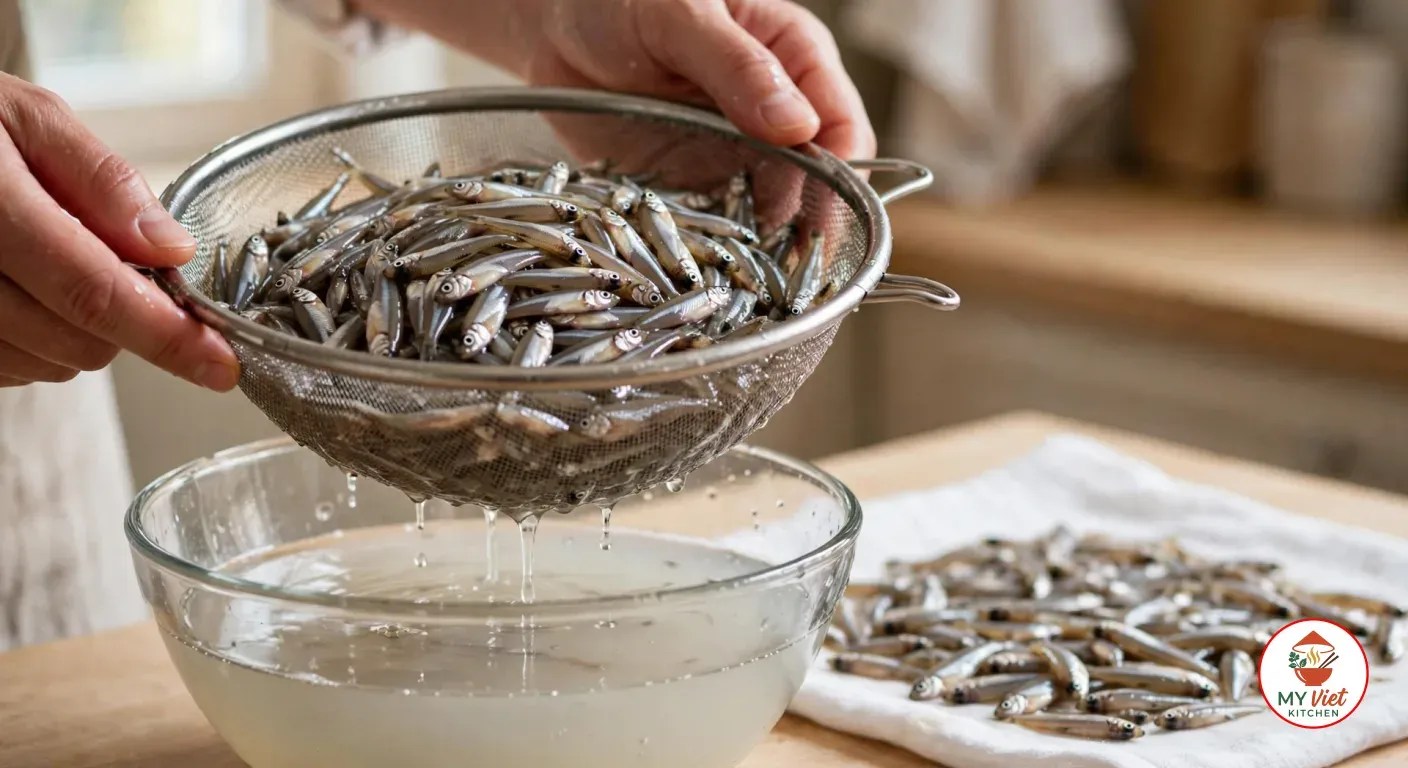
1Tip the kapenta onto a tray and pick out any grit, bits of grass or net, and broken pieces. Put the fish in a heatproof bowl, pour over enough just-boiled water to cover them completely, stir once and leave them for 10 minutes. Drain them in a sieve and rinse once under warm running water. Lay them on a clean cloth and pat them as dry as you can. Wet fish spit in the hot oil and steam instead of turning crisp.
Step 2: Fry the Kapenta Until Crisp
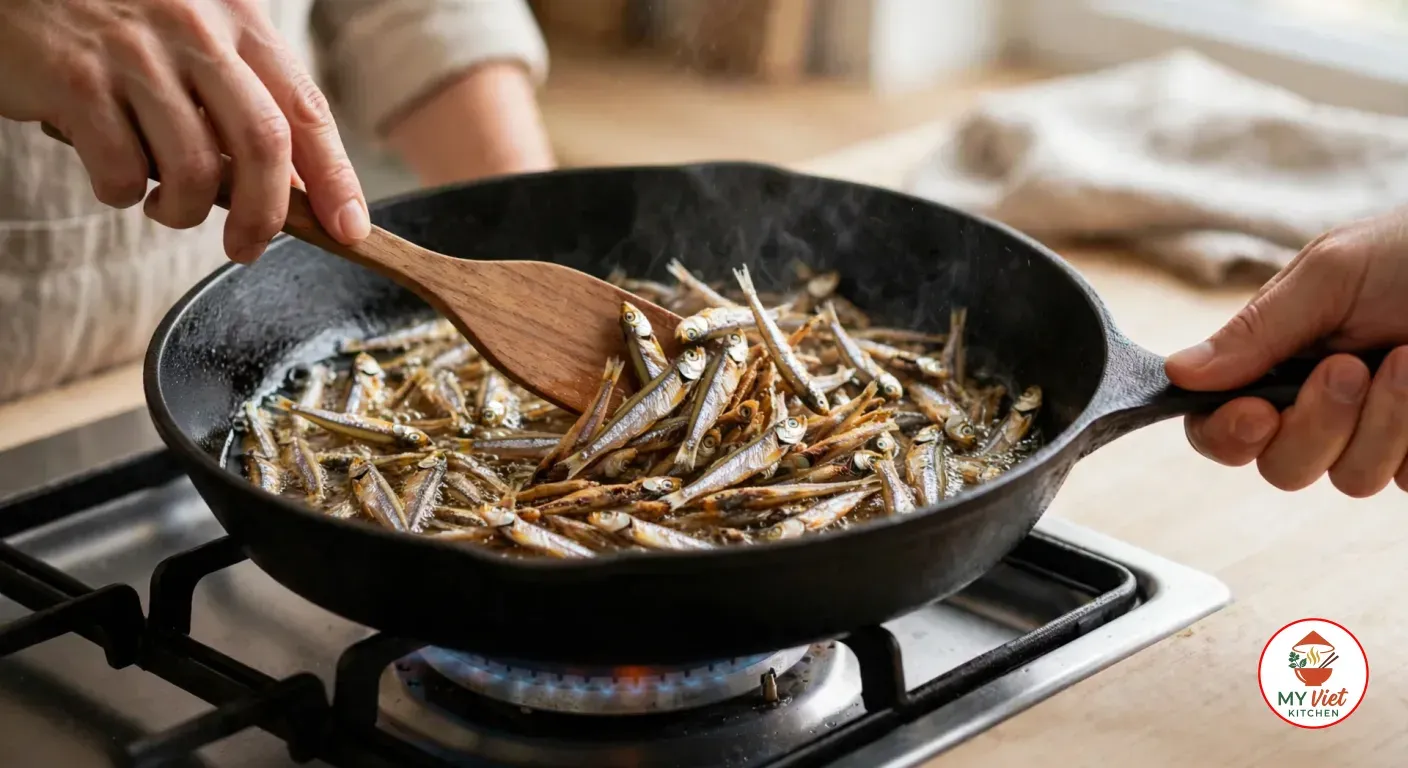
2Heat the oil in a 28 cm (11-inch) frying pan over medium-high heat until it shimmers. Add the kapenta and spread them out flat. Fry for 6 to 8 minutes, turning them with a flat spatula every minute or so, until most of them are golden brown and the tails are crisp. Lift them onto a plate with a slotted spoon and leave the oil in the pan.
Step 3: Cook the Tomato and Onion Base
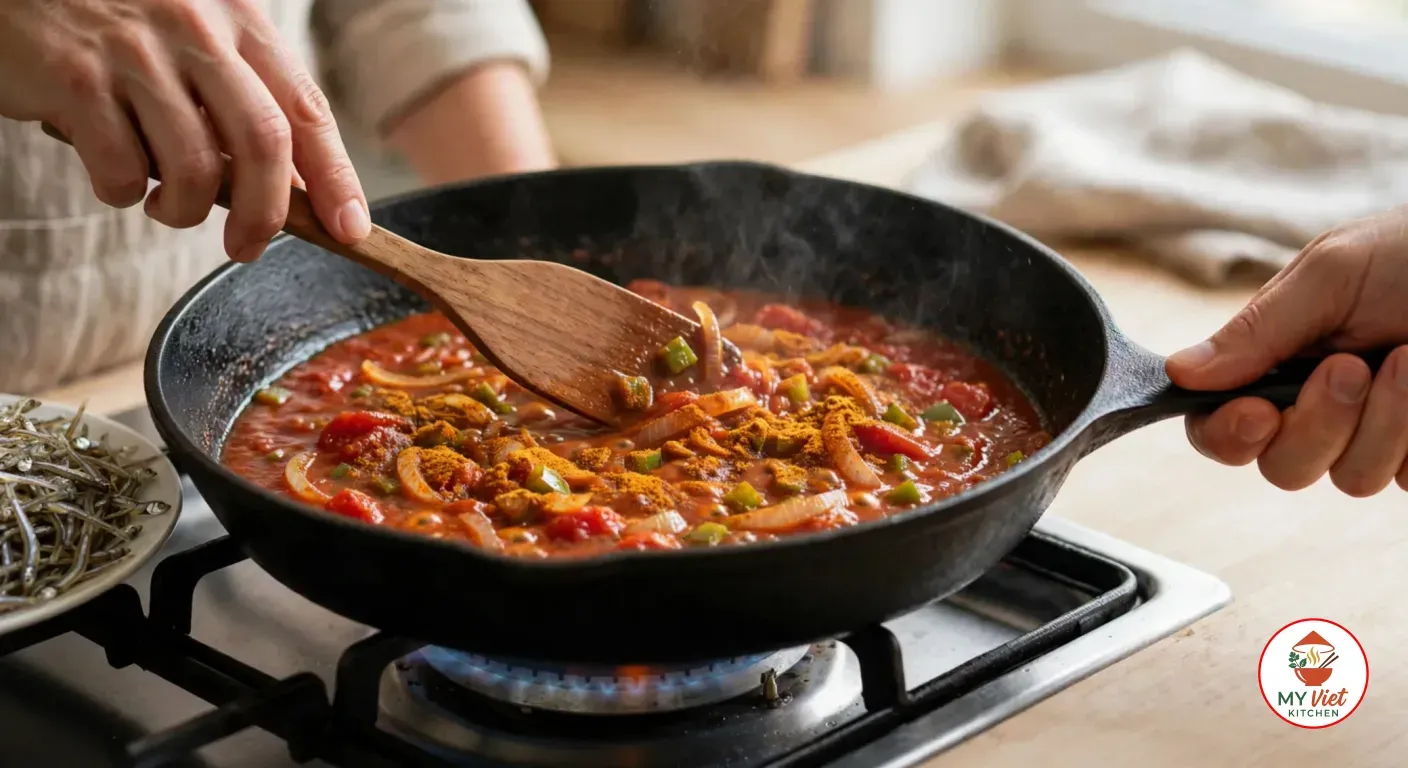
3Turn the heat down to medium. Cook the onion in the same oil for 3 to 4 minutes until soft, then stir in the garlic, curry powder and paprika for 30 seconds. Add the tomatoes and green pepper, cover and cook for 5 minutes. Uncover, press the tomatoes with the back of the spatula and give them another 2 to 3 minutes, until they have collapsed into a thick sauce. Pour in the water and bring it back to a simmer.
Step 4: Combine and Simmer
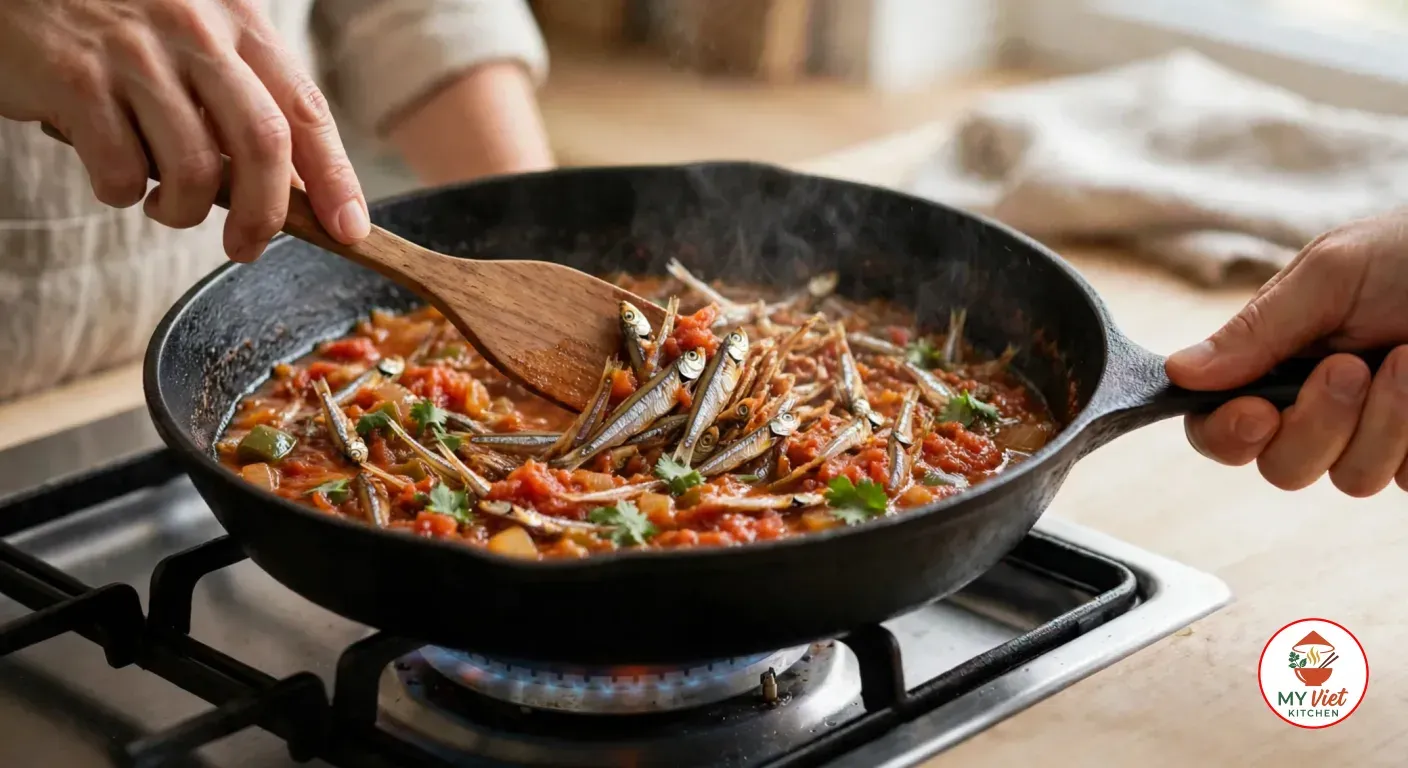
4Return the fried kapenta to the pan and fold them through the sauce gently, so the little fish stay whole. Put the lid back on, lower the heat and leave the pan for 3 to 5 minutes at a lazy bubble, so the fish soften slightly and take up some of the sauce. Taste before you salt, because dried kapenta often carries salt of its own. Scatter over the coriander and serve hot with nshima, sadza or rice.
Frequently Asked Questions
Are kapenta and matemba the same fish?
Yes. Matemba is another name for kapenta, heard especially in Zimbabwe. Wikipedia gives both names for the fish in Zambia, Malawi and Zimbabwe (Wikipedia), and Rumbie of ZimboKitchen writes “Kapenta, in our vernacular matemba, are one of Zimbabwe’s traditional meals” (ZimboKitchen). Dagaa from Lake Victoria is a different small fish, Rastrineobola argentea. Wikipedia says dried kapenta is preferred to the “slightly bitter” dried dagaa, which sells for less (Wikipedia).
Do you eat kapenta heads and bones?
Yes, kapenta is eaten whole, heads, bones and all. Mississippi State University’s fish innovation lab notes that small fish “are often eaten whole, which allows for increasing calcium intake from the bones” (Fish Innovation Lab). A 2010 study in the African Journal of Food, Agriculture, Nutrition and Development compared dried kapenta with other animal products. It found whole-fish products “much better sources of minerals and trace elements such as calcium, iron and zinc” than fish fillet (AJFAND). When the FishFirst! Zambia team ground dry-roasted Kariba kapenta bought in Lusaka markets into powder, lab tests put it at 71 g protein and 2,860 mg calcium per 100 g (Fish Innovation Lab).
Can you cook kapenta with peanuts?
Yes, groundnuts are a common addition. Wikipedia describes Zimbabwean kapenta shallow-fried “with onions, tomatoes and groundnut powder” (Wikipedia). Kitwe Online’s Zambian version boils 500 g of kapenta, adds tomato and onion, then cooks it with 500 g of pounded, sieved groundnuts for about 40 minutes more (Kitwe Online). To try it with this recipe, stir 3 tablespoons of groundnut powder into the water at the end of Step 3. Simmer for 5 minutes before the fish go back in, and loosen the sauce with a splash of water if it gets too thick.
How do you store dried kapenta and leftovers?
Keep dried kapenta sealed in a cool, dry cupboard and check the bag for small beetles before you cook. In its survey of Kariba warehouses, FAO found beetle infestations worst in March, April and May, when heat and very low humidity can over-dry the fish (FAO). Once cooked, treat the stew like any fish leftovers. Health Canada’s limit for cooked fish is 3 to 4 days in a fridge set to 4 °C (40 °F) or lower, or 4 to 6 months frozen (Health Canada). Warm it through in a pan with a spoonful of water.
Sources
- Kapenta, Wikipedia
- Post-harvest handling of kapenta (Limnothrissa miodon) at Lake Kariba, Zimbabwe, S.E. Mutsekwa, Department of National Parks and Wildlife Management, Zimbabwe, in Proceedings of the symposium on post-harvest fish technology, FAO, October 1990
- Inshore fisheries and fish population changes in Lake Kariba, J. Kolding, B. Musando and N. Songore, FAO Fisheries Technical Paper 426/2, 2003
- Economic feasibility of fish-culture in Zambia, Richard L’Heureux, FAO, July 1985
- Pan fried Matemba (Kapenta) with onion, Rumbie, ZimboKitchen, February 2013
- Dried Matemba (Kapenta) stew, Rumbie, ZimboKitchen, February 2013
- Dried Kapenta (Matemba) stew, Rumbie, ZimboKitchen, November 2017
- Dried Kapenta Recipe, Gloria Miyoba, Kitwe Online, August 2012
- Kapenta in peanut butter sauce, Bubala, Kitwe Online, April 2012
- Dried Small Fish (Kapenta), Lora Iannotti, Feed the Future Innovation Lab for Fish, March 2020, and its recipe card by Robert Sakapaji
- Technical brief: Complementary Food for Africa+Dried Fish Powder (ComFA+Fish), nutrient analysis and sensory panels I-II results, Kathleen Ragsdale et al., Feed the Future Innovation Lab for Fish, June 2023
- Use of dried kapenta (Limnothrissa miodon and Stolothrissa tanganicae) and other products based on whole fish for complementing maize-based diets, A. Haug et al., African Journal of Food, Agriculture, Nutrition and Development, 2010
- Safe food storage, Health Canada, April 2024
- SIYAVONGA (KAPENTA) / EASY KAPENTA RECIPE/ HOW TO PREPARE SIAVONGA/ZAMBIAN FOOD., Mutale’s kitchen, YouTube, September 2020