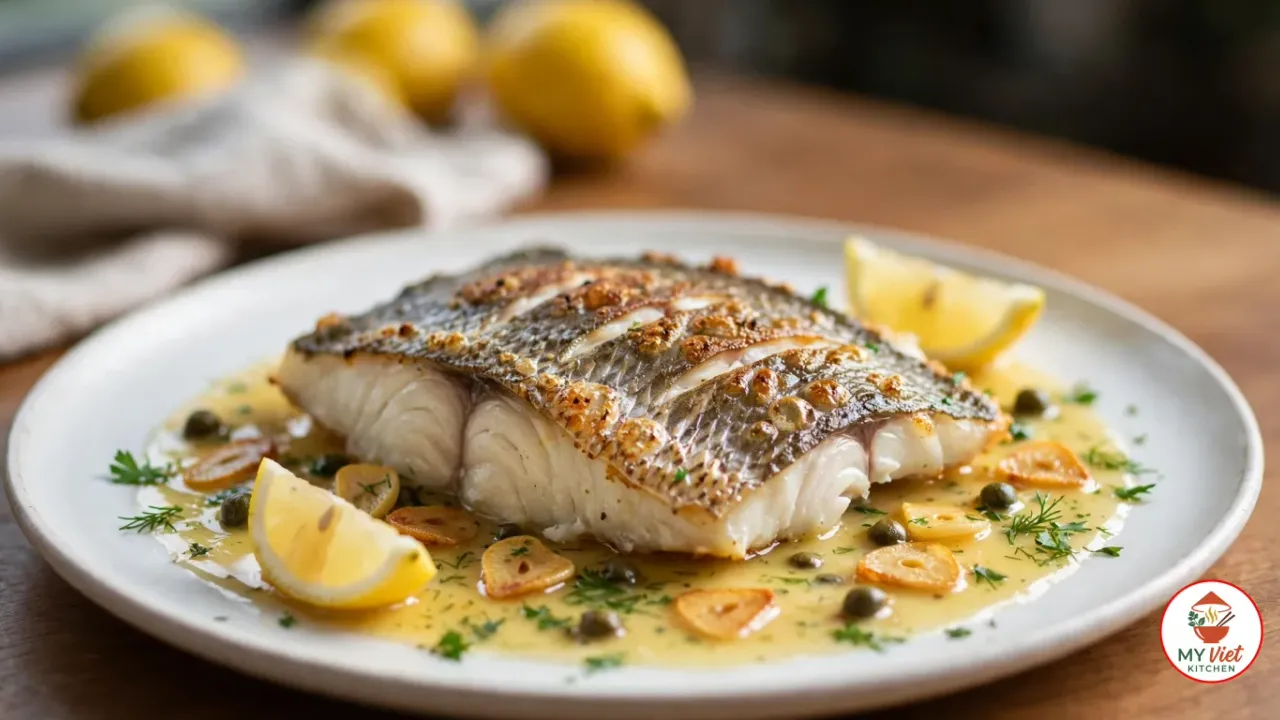
Barramundi recipe lovers already know why this Australian fish has earned a devoted following around the world. With its buttery white flesh, crispy golden skin, and mild sweet flavor, barramundi delivers restaurant-quality results right in your home kitchen. This pan-seared barramundi recipe pairs perfectly crisped fillets with a bright lemon butter sauce loaded with garlic, capers, and fresh herbs. In fact, the entire dish comes together in under 30 minutes, making it ideal for both weeknight dinners and elegant entertaining.
Prep Time: 10 minutes | Cook Time: 15 minutes | Servings: 4
Difficulty: Easy | Calories: ~340 per serving
What Makes This Barramundi Recipe Special?
Barramundi holds a legendary status in Australian cuisine. Known locally as “barra,” this silvery fish thrives in the tropical waters of northern Australia, from Queensland to Western Australia. Aboriginal Australians have caught and cooked barramundi for thousands of years, and it remains the most prized catch for recreational anglers across the country. Additionally, barramundi is one of the few fish that tastes just as spectacular from a farm as it does from the wild, because its clean flavor comes from the species itself rather than its diet.
What sets this barramundi recipe apart from other fish dishes is the contrast of textures. The skin, when seared correctly, shatters like a thin cracker. Meanwhile, the flesh underneath stays moist, tender, and almost creamy. Few other fish deliver this dramatic difference between exterior and interior. The lemon butter sauce ties everything together by adding brightness and richness without masking the delicate flavor of the fish. Therefore, each bite offers crunch, silkiness, acidity, and warmth all at once.
Barramundi also stands out for its nutritional profile. A single fillet provides over 34 grams of protein with minimal fat. It contains omega-3 fatty acids, potassium, and vitamin D while remaining low in mercury. For these reasons, barramundi has become a favorite among health-conscious home cooks who want clean protein without sacrificing flavor. However, the real secret to a perfect barramundi recipe is technique, not ingredients. Master the sear, and the fish does the rest.

Choosing the Right Barramundi
Selecting high-quality barramundi is the first step toward a great result. Whether you shop at a fishmonger, a supermarket, or order online, here is what to look for. The flesh should be translucent, firm to the touch, and free of any strong fishy odor. Fresh barramundi smells like clean ocean water. If it smells sharp or ammonia-like, walk away.
- Wild-caught Australian barramundi (best choice): Wild barra from northern Australian waters has the most complex flavor and firmest texture. It feeds on a natural diet of smaller fish and crustaceans, which gives the flesh a subtle sweetness. Look for it at specialty seafood markets or online suppliers.
- Farm-raised barramundi: Australian and US-farmed barramundi is widely available at grocery stores. It offers consistent quality, mild flavor, and excellent texture. Farms like Australis Barramundi raise the fish sustainably without antibiotics. This is the most accessible option for most home cooks.
- Frozen barramundi fillets: Frozen fillets are convenient and often flash-frozen at peak freshness, which preserves quality well. Thaw them overnight in the refrigerator before cooking. Avoid thawing at room temperature, as uneven warming affects texture.
- Skin-on vs. skinless: For this barramundi recipe, always choose skin-on fillets. The skin is where the magic happens. It crisps into a golden, crackling layer that elevates the dish from good to extraordinary. Skinless fillets work for baking or poaching but miss the point of a pan-seared preparation.
Ingredients for Pan-Seared Barramundi
For the Fish:
- 4 barramundi fillets, skin-on, about 6 ounces each
- 2 tablespoons olive oil
- Salt and black pepper to taste
For the Lemon Butter Sauce:
- 3 tablespoons unsalted butter
- 3 cloves garlic, thinly sliced
- Juice of 1 large lemon (about 3 tablespoons)
- Zest of 1 lemon
- 2 tablespoons capers, drained
- 2 tablespoons fresh parsley, chopped
- 1 tablespoon fresh dill, chopped
For Serving:
- Lemon wedges
- Extra fresh herbs for garnish
Pro tip: Dry skin is the single most important factor for achieving crispy barramundi. Pat each fillet with paper towels at least twice, pressing firmly to draw out all surface moisture. Some chefs even leave the fillets uncovered on a rack in the refrigerator for 30 minutes before cooking. This extra step produces skin that rivals any restaurant.
Step-by-Step Barramundi Recipe Instructions
Step 1: Prepare the Barramundi Fillets
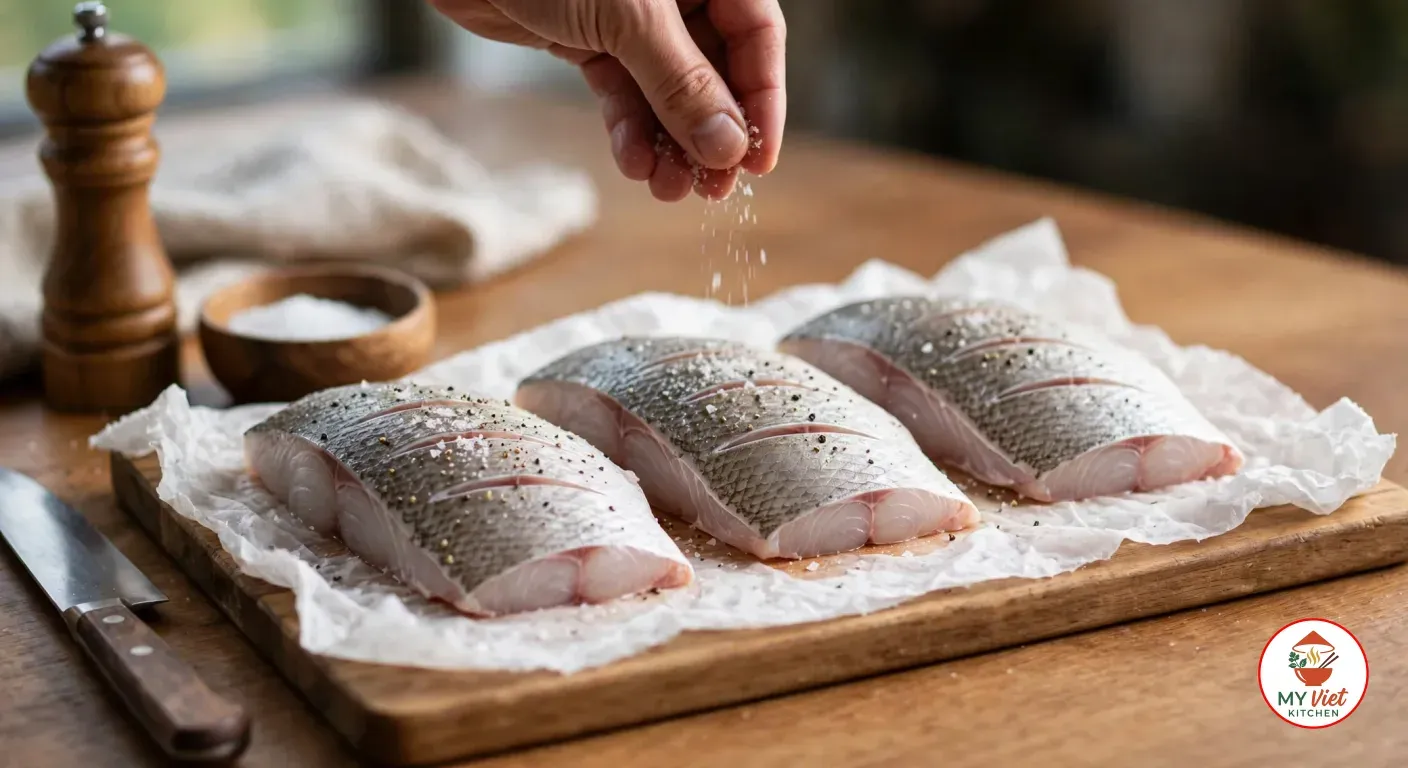
1 Remove the barramundi fillets from the refrigerator 15 minutes before cooking. This allows the fish to come closer to room temperature, which promotes even cooking throughout the fillet. Pat both sides of each fillet completely dry with paper towels. This step is essential because surface moisture creates steam instead of a sear, and steam prevents the skin from crisping.
Using a sharp knife, score the skin side with 3 shallow diagonal cuts spaced about 1 inch apart. Do not cut deeper than the skin layer. These scores serve two purposes: they prevent the fillet from curling as the skin contracts in the hot pan, and they allow heat to penetrate more evenly. Finally, season both sides generously with salt and black pepper. The salt also helps draw out last traces of moisture from the skin surface.
Step 2: Sear the Skin Side Until Crispy
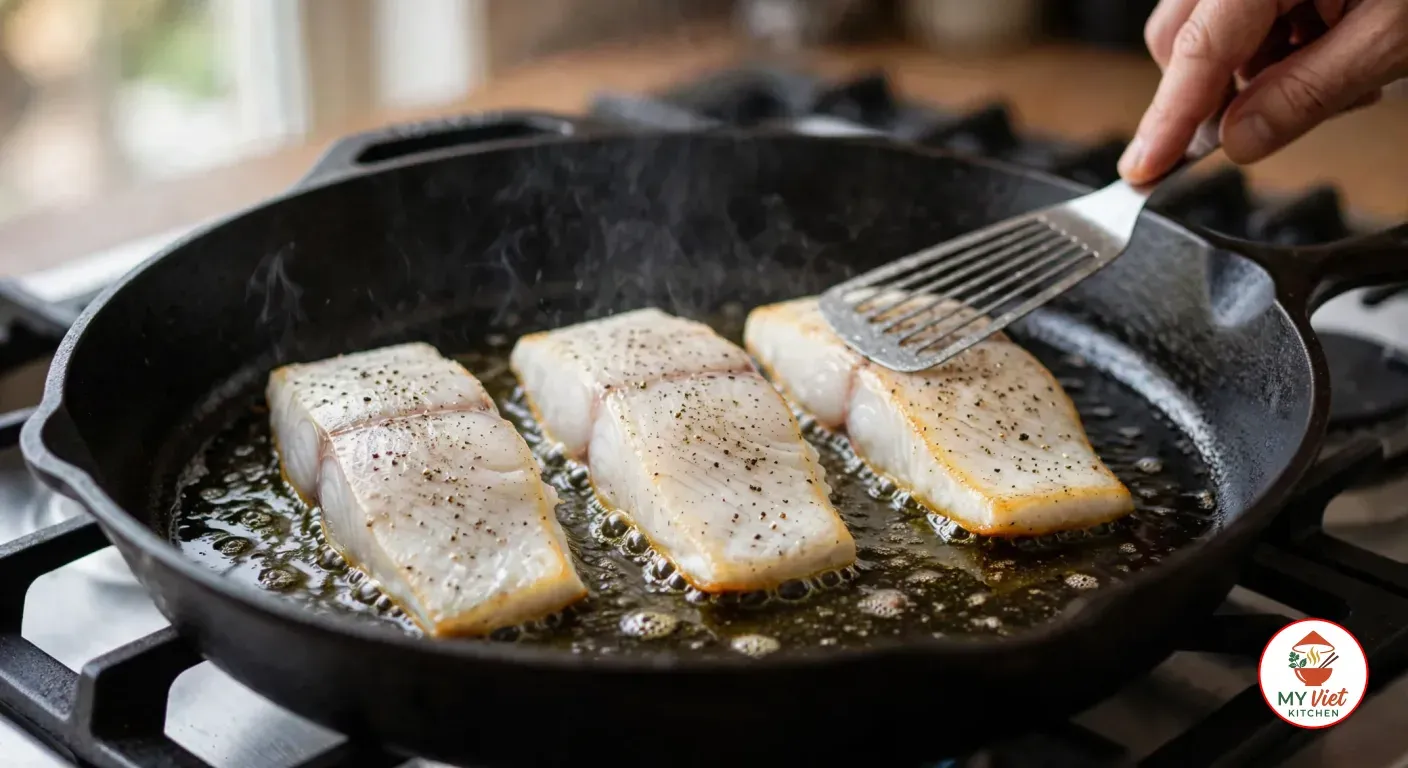
2 Heat the olive oil in a large stainless-steel or cast-iron skillet over medium-high heat. Wait until the oil shimmers and just begins to smoke lightly. This temperature is critical because barramundi skin needs aggressive initial heat to crisp properly. If the pan is not hot enough, the skin sticks and tears instead of releasing cleanly.
Carefully lay each fillet into the pan skin-side down, placing it away from you to avoid splatter. Immediately press each fillet gently with a fish spatula for the first 30 seconds. This ensures the entire skin surface makes full contact with the hot pan. Without this step, the edges of the skin curl upward and cook unevenly. After pressing, leave the fillets undisturbed for 4 to 5 minutes. You will see the flesh gradually turn opaque from the bottom upward. Resist the urge to move or peek under the fish. The skin will release naturally when it reaches the right level of crispiness.
Step 3: Flip and Finish Cooking
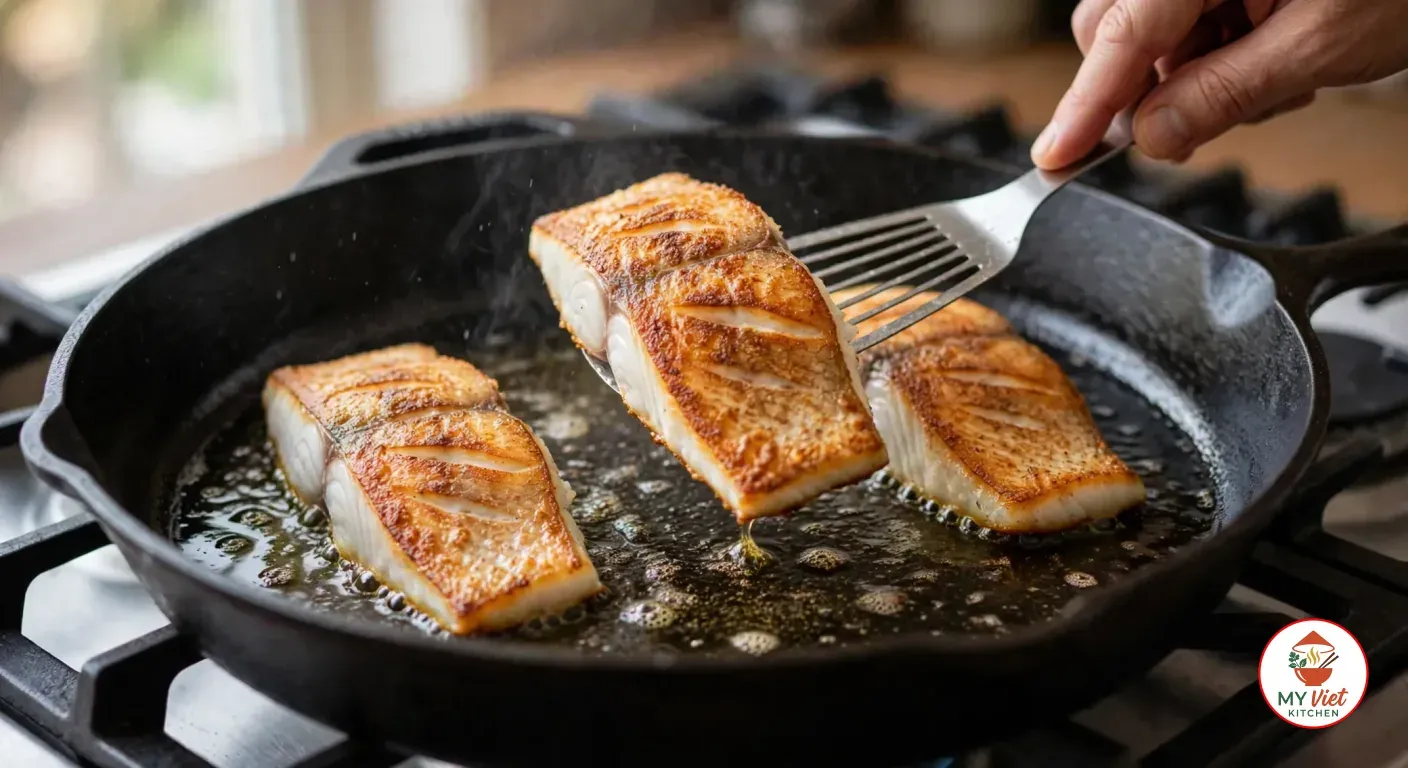
3 When the skin has turned deep golden brown and the flesh is opaque about three-quarters of the way up the fillet, it is time to flip. Use a thin fish spatula to turn each fillet carefully onto the flesh side. Cook for just 2 to 3 more minutes. The residual heat from the skin side will continue to cook the center of the fish.
The barramundi is done when the thickest part reaches 145 degrees Fahrenheit on an instant-read thermometer. Alternatively, press the top gently with your finger. The flesh should feel firm but still spring back slightly. Overcooked barramundi turns dry and chalky, so err on the side of removing it a few seconds early. Transfer the fillets to a warm plate, skin-side up, and tent loosely with aluminum foil while you make the sauce.
Step 4: Make the Lemon Butter Sauce
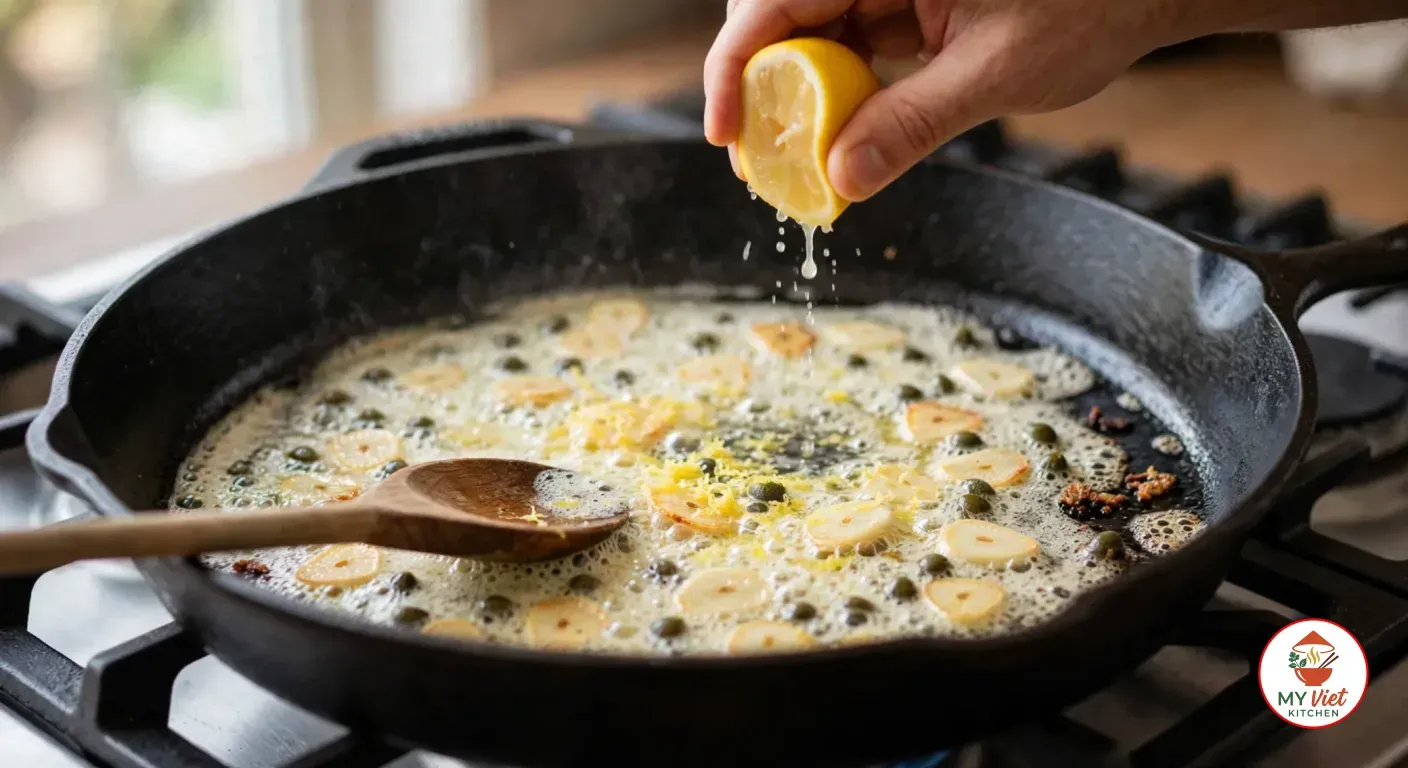
4 Reduce the heat to medium-low. Add the butter to the same skillet used for the fish. As the butter melts and begins to foam, add the thinly sliced garlic and drained capers. Stir gently for about 1 minute until the garlic softens and turns fragrant but does not brown. The capers will sizzle and pop slightly, which is normal.
Pour in the fresh lemon juice and add the lemon zest. Use a wooden spoon to scrape up any browned bits from the bottom of the pan. These bits, known as fond, are packed with concentrated flavor from the barramundi sear. Stir everything together for 30 seconds until the sauce comes together. Remove the skillet from heat and fold in the chopped parsley and dill. The herbs add freshness and color. Taste the sauce and adjust with a pinch of salt if needed.
Step 5: Plate and Serve
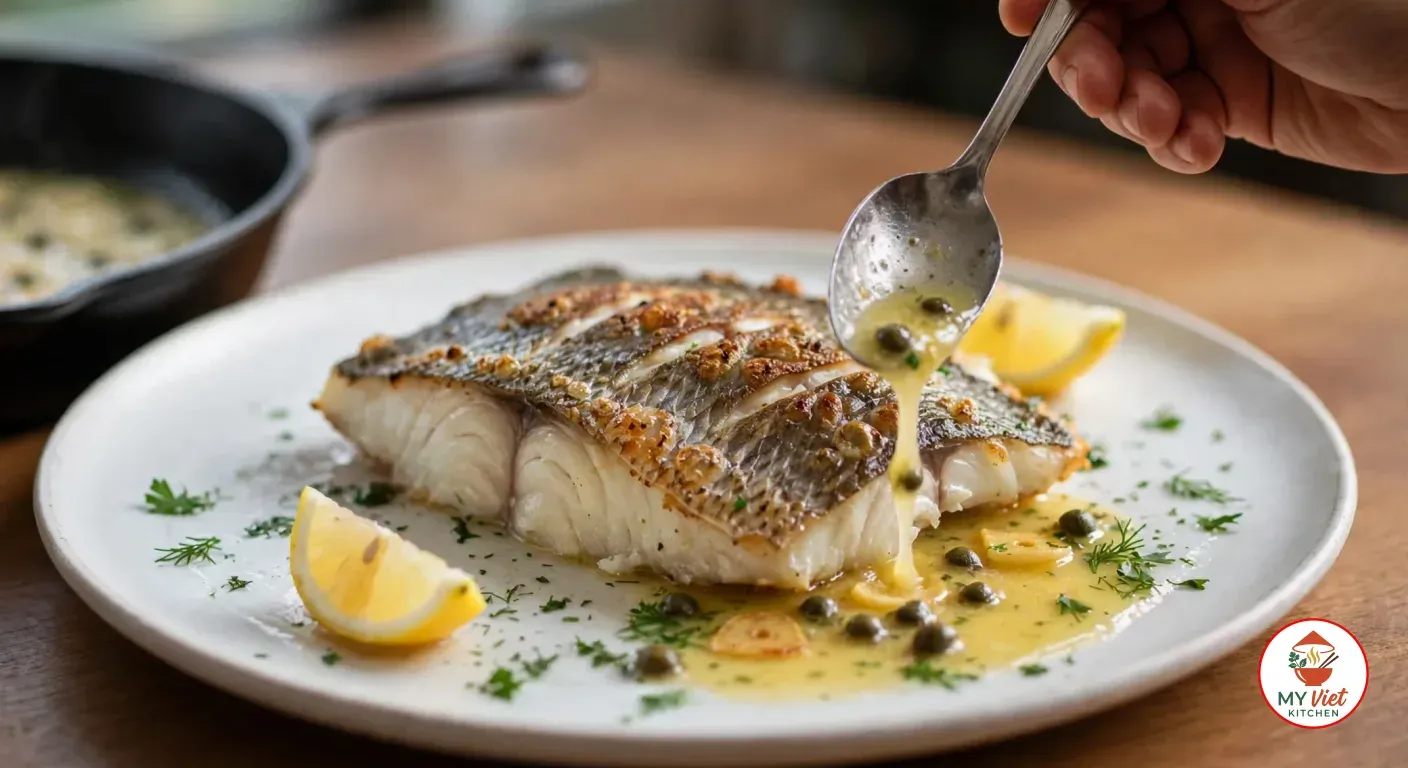
5 Place each barramundi fillet on a warm plate with the crispy skin facing up. This presentation keeps the skin crunchy and showcases the golden sear. Spoon the lemon butter sauce generously over and around each fillet, making sure to distribute the garlic slices and capers evenly. Garnish with fresh lemon wedges and a final sprinkle of herbs. Serve the barramundi immediately while the skin is at its crispiest and the sauce is warm.
Expert Tips for the Perfect Barramundi Recipe
Start with a Screaming Hot Pan
The number one mistake home cooks make with barramundi is starting with a pan that is not hot enough. A properly preheated skillet causes the proteins in the skin to seize and release from the surface almost immediately. This creates the glass-like crispiness that defines a great pan-seared fish. If the pan is too cool, the skin fuses to the metal and tears when you try to flip. Heat the oil until it shimmers and shows the faintest wisp of smoke before adding the fish.
Use the Right Pan
Stainless steel and cast iron are the best choices for searing barramundi. Both materials retain heat evenly and maintain temperature when the cold fish hits the surface. Nonstick pans, on the other hand, cannot reach the same high temperatures safely. They also prevent the development of fond, those flavorful browned bits that form the base of the lemon butter sauce. If you only own nonstick cookware, consider investing in a single cast-iron skillet for fish and steak searing.
Do Not Move the Fish
Once the barramundi hits the pan, patience becomes your most important tool. Leave the fillet completely undisturbed for the full 4 to 5 minutes of skin-side cooking. Moving it, lifting it to check, or shaking the pan disrupts the Maillard reaction happening between the skin and the hot surface. Trust the process. When the skin has properly crisped, the fillet will release from the pan on its own. If it resists when you try to slide the spatula under, give it another 30 seconds.
Barramundi Cooking Methods Compared
Pan-searing is the star of this barramundi recipe, but this versatile fish responds well to several cooking methods. Here is how the most popular techniques compare so you can choose the best approach for your meal.
| Method | Time | Skin Texture | Best For |
|---|---|---|---|
| Pan-searing | 7-8 minutes | Very crispy | Weeknight dinners, date nights |
| Grilling | 8-10 minutes | Lightly charred | Summer cookouts, smoky flavor |
| Baking (400F) | 12-15 minutes | Soft | Hands-off cooking, meal prep |
| Steaming | 10-12 minutes | Soft | Asian preparations, light meals |
| Deep frying | 5-6 minutes | Ultra crispy | Fish and chips, beer batter |
Regardless of method, the most important rule for cooking barramundi is the same: do not overcook it. This fish dries out quickly once it passes 145 degrees Fahrenheit internally. Use an instant-read thermometer until you develop the feel for when barramundi is done.
Serving Suggestions
Barramundi pairs beautifully with a wide range of side dishes. Its mild, buttery flavor works as a canvas for both simple and bold accompaniments. In Australia, pan-seared barramundi is traditionally served with chips and salad at pubs. However, it also shines as the centerpiece of a more refined plate.
The Perfect Accompaniments:
- Roasted baby potatoes: Crispy on the outside and fluffy within, they soak up the lemon butter sauce perfectly.
- Steamed asparagus: The slight bitterness of asparagus complements the sweet, mild barramundi flesh. A squeeze of lemon ties them together.
- Mashed cauliflower: A lighter alternative to mashed potatoes that keeps the meal low in carbohydrates while adding a creamy base.
- Mixed green salad: Dressed with a simple lemon vinaigrette, a fresh salad balances the richness of the butter sauce.
- Jasmine rice: Fluffy steamed rice absorbs the sauce and stretches the meal further for feeding a crowd.
Beverage Pairings:
- Australian Chardonnay: A lightly oaked Chardonnay from Margaret River matches the buttery richness of the fish.
- Sauvignon Blanc: Its bright acidity and citrus notes echo the lemon butter sauce beautifully.
- Australian pale ale: A crisp, hoppy pale ale from a local Australian brewery cuts through the richness and keeps things casual.
- Sparkling water with lime: For a non-alcoholic option, the bubbles and citrus refresh the palate between bites.
Storage and Reheating
Refrigerator: Store cooked barramundi in an airtight container for up to 2 days. Keep the sauce in a separate container to prevent the skin from becoming soggy. The fish tastes best when reheated within 24 hours.
Freezer: Cooked barramundi can be frozen for up to 1 month, although the skin will lose its crispiness entirely. For best results, freeze the raw fillets instead and cook them fresh. Raw barramundi freezes well for up to 3 months when wrapped tightly in plastic and placed in a freezer bag.
Reheating: Place the cooked fillets on a wire rack set over a baking sheet. Reheat in a preheated oven at 300 degrees Fahrenheit for 8 to 10 minutes. This gentle temperature warms the fish through without drying it out. Avoid the microwave, as it turns the flesh rubbery and makes the skin limp. Reheat the lemon butter sauce separately in a small saucepan over low heat.
Common Mistakes to Avoid
1. Not Drying the Skin Thoroughly
Moisture is the enemy of crispy skin. Even a thin layer of water on the surface of the barramundi creates steam when it contacts the hot oil, which prevents the Maillard reaction from occurring. The result is pale, soft, chewy skin instead of golden crispiness. Pat each fillet with paper towels at least twice, pressing firmly on the skin side. For even better results, let the fillets rest uncovered on a rack in the refrigerator for 20 to 30 minutes before cooking.
2. Overcooking the Fish
Barramundi goes from perfectly flaky to dry and chalky within a narrow window. Many home cooks leave the fish on the heat too long out of fear that it is undercooked. However, the fillet continues cooking for about 30 seconds after you remove it from the pan due to carryover heat. Therefore, pull the barramundi from the skillet when the center still looks slightly translucent. It will finish cooking on the plate while you prepare the sauce.
3. Using a Cold Pan
Placing barramundi into a pan that has not reached proper temperature is a recipe for stuck, torn skin and an uneven sear. The oil should shimmer visibly and produce a light wisp of smoke before any fish touches the surface. A properly heated pan creates an immediate barrier between the skin and the metal, which is what allows the fillet to release cleanly when it finishes crisping. Give your pan a full 2 to 3 minutes of preheating time.
4. Crowding the Pan
Fitting too many fillets into the skillet at once drops the pan temperature rapidly. The fish steams rather than sears, and the skin never crisps. Leave at least 1 inch of space between each fillet. If your skillet cannot fit all four fillets comfortably, cook them in two batches. Wipe the pan between batches, add fresh oil, and reheat before adding the next round.
Frequently Asked Questions
What does barramundi taste like?
Barramundi has a mild, buttery flavor with a clean, sweet finish that appeals to nearly everyone. The flesh is white, moist, and medium-firm with large flakes. It is less fishy than salmon and richer than tilapia. In fact, barramundi is often recommended as an ideal fish for people who say they do not like seafood. The skin, when crisped properly, adds a savory crunch that completes the experience.
Is barramundi a healthy fish to eat?
Barramundi is one of the healthiest fish available. A 6-ounce fillet provides roughly 34 grams of protein with only about 3 grams of fat and 140 calories before cooking oil is added. It contains omega-3 fatty acids, potassium, and vitamin D. Furthermore, barramundi is low in mercury compared to larger predatory fish like swordfish and tuna. According to NOAA Fisheries, choosing smaller, sustainably farmed fish like barramundi is one of the best ways to eat seafood responsibly.
Can you cook barramundi from frozen?
You can bake barramundi from frozen at 400 degrees Fahrenheit for 20 to 25 minutes. However, for this barramundi recipe with crispy skin, you must thaw the fillets first. Frozen fillets release water as they thaw in the hot pan, which prevents the skin from crisping. Thaw barramundi overnight in the refrigerator, or place it in a sealed bag submerged in cold water for 30 minutes. Never thaw fish at room temperature or in warm water.
Is barramundi the same as sea bass?
Barramundi is sometimes marketed as Asian sea bass or giant perch, but it is a distinct species called Lates calcarifer. It is not the same as European sea bass or Chilean sea bass. Barramundi has a milder, sweeter flavor than European sea bass and a firmer texture than Chilean sea bass. The name barramundi itself comes from an Australian Aboriginal language and means “large-scaled river fish.” You can use barramundi as a substitute in most sea bass recipes, though the flavor profile will differ slightly.
What is the best way to cook barramundi?
Pan-searing is widely considered the best way to cook barramundi because it crisps the skin while keeping the flesh moist and flaky. Grilling and baking also produce excellent results. The key to any cooking method is avoiding overcooking. Barramundi dries out quickly past 145 degrees Fahrenheit internal temperature. Monitor the cook time closely, and remember that the fish continues cooking for a short time after you remove it from the heat source.
Variations and Adaptations
Asian-Style Barramundi:
Replace the lemon butter sauce with a ginger-soy glaze. Combine 2 tablespoons soy sauce, 1 tablespoon rice vinegar, 1 teaspoon sesame oil, freshly grated ginger, and a pinch of sugar. Drizzle over the seared barramundi and garnish with sliced scallions and sesame seeds. This variation works wonderfully with steamed jasmine rice. For more Asian-inspired fish preparations, explore our seafood recipe collection.
Mediterranean Barramundi:
Top the seared fillets with a quick olive tapenade made from chopped Kalamata olives, sun-dried tomatoes, capers, garlic, and olive oil. The briny, tangy tapenade pairs beautifully with the mild sweetness of barramundi. Serve alongside roasted cherry tomatoes and a bed of orzo for a complete Mediterranean meal.
Barramundi Fish Tacos:
Cut the barramundi into strips and season with cumin, smoked paprika, garlic powder, and lime zest before searing. Serve in warm corn tortillas with shredded cabbage, pickled red onion, avocado slices, and a chipotle lime crema. Barramundi’s firm texture holds up perfectly in tacos, and the mild flavor lets the toppings shine. If you enjoy fish tacos, also try our classic fish tacos recipe for another crowd-pleasing option.
Whole Roasted Barramundi:
For a dramatic presentation, roast a whole barramundi stuffed with lemon slices, fresh herbs, and garlic. Score both sides and rub with olive oil, salt, and pepper. Roast at 425 degrees Fahrenheit for 25 to 30 minutes until the skin crisps and the flesh flakes. Whole roasted barramundi is a centerpiece dish that impresses guests effortlessly.
The Cultural Significance of Barramundi in Australia
Barramundi occupies a place in Australian culture that goes far beyond the dinner plate. For Aboriginal Australians, barramundi has been a vital food source for tens of thousands of years. Rock paintings in Arnhem Land, some dating back over 40,000 years, depict barramundi alongside other important species. The fish represents abundance and connection to the waterways that sustain life across northern Australia. Catching barra remains a deeply meaningful tradition in many Indigenous communities today.
In modern Australian culture, barramundi fishing is practically a national sport in the tropical north. Every year, thousands of anglers head to locations like the Daly River in the Northern Territory, Lake Tinaroo in Queensland, and the Ord River in Western Australia to chase trophy barra. The fish is famous for its explosive fighting ability. A hooked barramundi leaps dramatically from the water and runs hard against the line. Consequently, landing a large barramundi is considered one of the great achievements in Australian recreational fishing.
Barramundi also holds economic importance for Australia. The country’s aquaculture industry has grown steadily, with barramundi farms in Queensland and South Australia producing sustainable fish for both domestic consumption and export. Australian-farmed barramundi meets strict environmental and welfare standards, making it one of the most responsibly produced fish in the world. Whether caught wild from a tropical river or farmed sustainably in clean waters, barramundi represents Australian food culture at its finest. For more international seafood inspiration, explore our Asian dishes collection for other ways to prepare fresh fish.
Conclusion
This barramundi recipe proves that a spectacular fish dinner does not require complicated techniques or a long list of ingredients. With just a hot pan, skin-on fillets, and a few pantry staples for the sauce, you can produce restaurant-quality crispy barramundi at home in under 30 minutes. The keys to success are simple: dry the skin thoroughly, preheat the pan properly, resist the urge to move the fish, and pull it off the heat before it overcooks.
Barramundi’s mild buttery flavor, impressive nutritional profile, and forgiving texture make it one of the best fish for home cooks at every skill level. Whether you follow this classic pan-seared barramundi recipe or explore the Asian, Mediterranean, or taco variations, the result is always a crowd-pleasing meal. Once you experience that first bite of shatteringly crispy skin over silky, flaky flesh, you will understand why Australians have treasured this fish for thousands of years. Discover more delicious recipes on our My Viet Kitchen homepage.