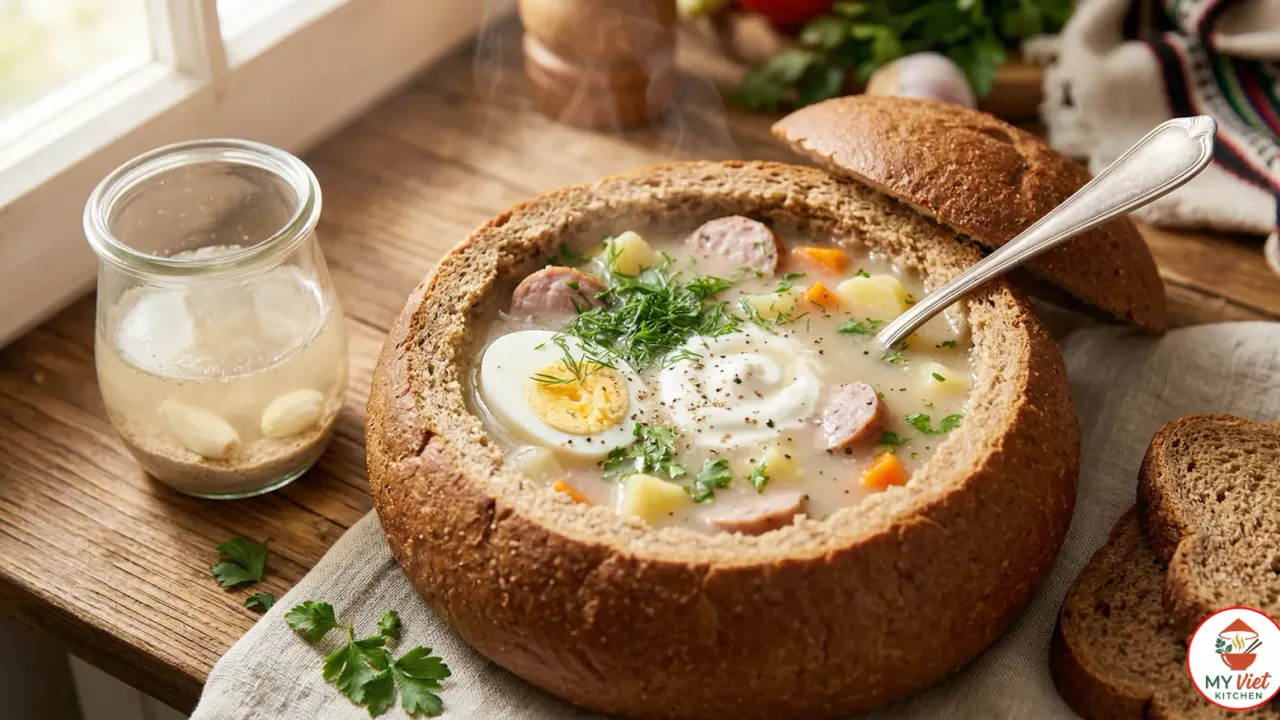
Zurek is one of the most distinctive soups in all of European cuisine, and this zurek recipe shows you exactly how to make it at home. This Polish fermented rye soup delivers a sour, savory, and deeply comforting flavor that you will not find in any other dish. Built on a base of zakwas, a naturally fermented rye starter, and loaded with smoky white sausage and halved hard-boiled eggs, zurek is a bowl of Polish soul. This zurek recipe walks you through every step, from the fermented starter to the final garnish of fresh dill.
Prep Time: 30 minutes | Cook Time: 45 minutes | Servings: 6
Difficulty: Medium | Calories: ~380 per serving
What Makes This Zurek Recipe Special?
What sets this zurek recipe apart from every other soup is its base ingredient: fermented rye flour. While most soups rely on stock, cream, or tomato for body, zurek gets its character from zakwas, a live-culture rye starter that ferments for several days until it turns pleasantly sour. This fermentation process creates a complexity that no amount of vinegar or lemon juice can replicate. The sourness is deep, rounded, and layered rather than sharp or harsh.
Beyond the zakwas, this zurek recipe uses traditional Polish ingredients that bring smoke, richness, and warmth to the bowl. Biala kielbasa, the unsmoked white sausage that Poles prize during Easter, adds meaty substance. Hard-boiled eggs floating in the tangy broth give each serving a satisfying protein punch. A swirl of sour cream at the end rounds out the acidity and creates a velvety texture.
Zurek has roots stretching back centuries in Polish cooking, with the oldest written references appearing in the 1600s. It was originally a peasant dish, because rye flour was cheap and fermentation required no fancy equipment. Today it graces the tables of high-end restaurants in Warsaw and Krakow, proving that humble origins often produce the greatest dishes.

Choosing the Right Zakwas for Zurek
The zakwas is the heart of any zurek recipe. Without it, you simply have a different soup. Selecting or making a good starter determines how your final bowl will taste.
- Homemade zakwas (best choice): Mix rye flour with warm water and a crushed garlic clove in a glass jar. Cover loosely and leave at room temperature for five days, stirring daily. The mixture will bubble, thicken, and develop a tangy aroma similar to sourdough bread. Homemade zakwas gives the deepest, most authentic flavor.
- Store-bought bottled zakwas: Available at Polish delis, European groceries, and online. Bottled zakwas is convenient and produces very good results. Look for brands that list only rye flour, water, and garlic. Avoid versions with added vinegar, because that means the fermentation was cut short.
- Sourdough starter substitute (not ideal): If you already maintain a wheat or rye sourdough starter, you can thin it with water and use it in a pinch. However, the flavor profile will differ because sourdough starters contain different strains of bacteria than a traditional zakwas. The result will be sour, but it will lack the specific rye depth.
Ingredients for Zurek
Broth Base:
- 8 cups meat broth (pork or chicken)
- 2 bay leaves
- 5 whole allspice berries
- 1 teaspoon dried marjoram
Fermented Rye Starter:
- 2 cups zakwas (fermented rye starter, homemade or store-bought)
Vegetables and Aromatics:
- 3 medium potatoes, peeled and cubed
- 2 medium carrots, peeled and diced
- 1 medium onion, finely diced
- 2 cloves garlic, minced
Proteins and Finishing:
- 1 pound biala kielbasa (Polish white sausage)
- 6 hard-boiled eggs, peeled and halved
- 1/2 cup sour cream or heavy cream
- 2 tablespoons horseradish (fresh or jarred)
- Salt and white pepper to taste
- Fresh dill and parsley for garnish
Pro tip: Use white pepper instead of black pepper in your zurek. White pepper blends into the pale broth without leaving dark specks, and it has a milder, earthier heat that complements the sour rye flavor. Polish cooks consider this a small but important detail.
Step-by-Step Instructions
Step 1: Prepare the Zakwas (Fermented Rye Starter)
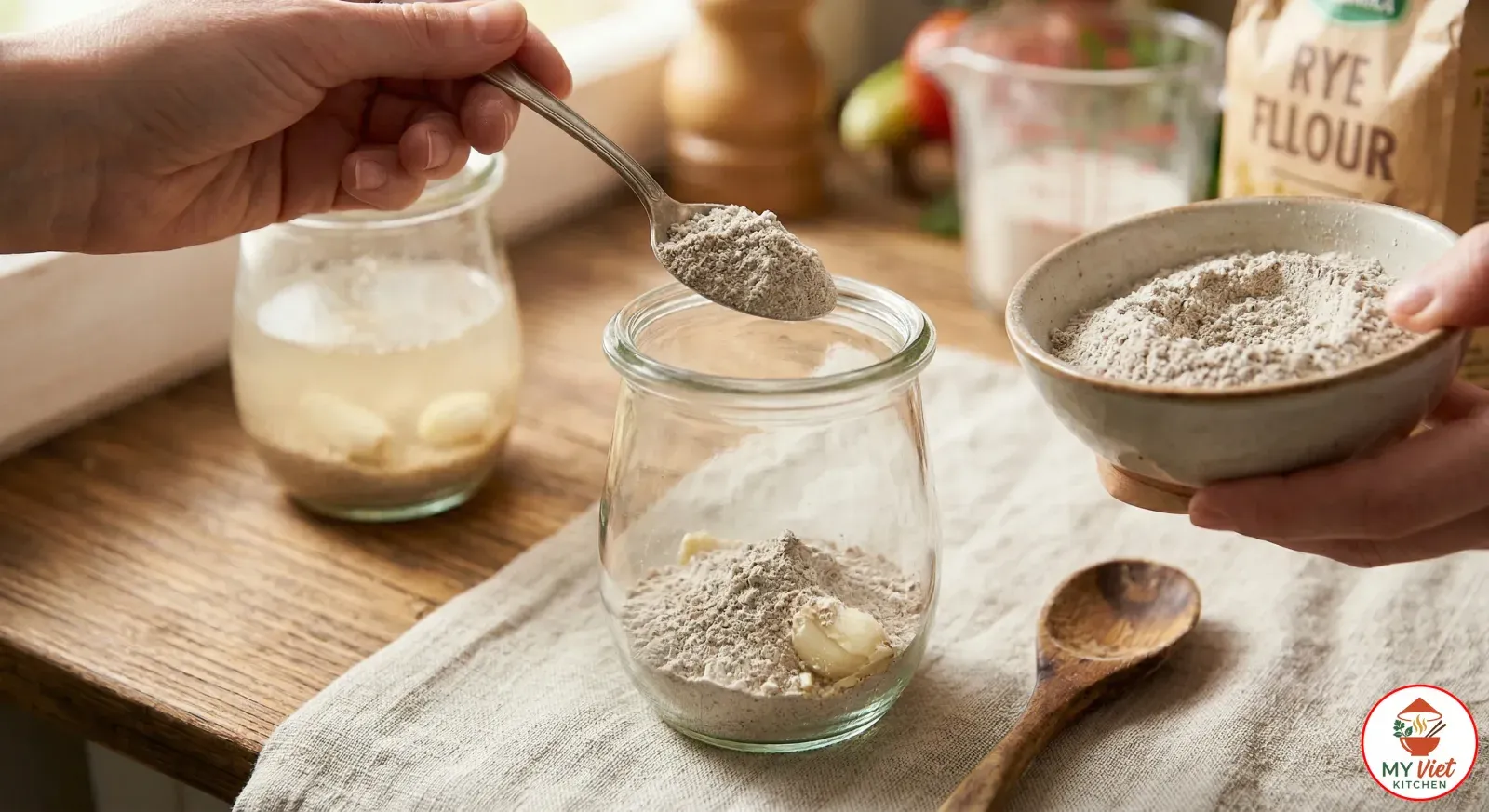
1 If you are making your own zakwas, start this step five days before you plan to cook. Combine half a cup of rye flour with two cups of warm water and one crushed garlic clove in a clean glass jar. Stir well, cover the jar loosely with a cloth or paper towel, and place it in a warm spot in your kitchen.
Stir the mixture once a day. By day three, you should see small bubbles forming and notice a pleasant sour smell. By day five, the zakwas will have a strong tangy aroma and a slightly thick consistency. Strain out the garlic and any lumps before using. If you are using store-bought zakwas, simply shake the bottle well and measure out two cups. Either way, bring the zakwas to room temperature before adding it to hot broth.
Step 2: Build the Broth Base
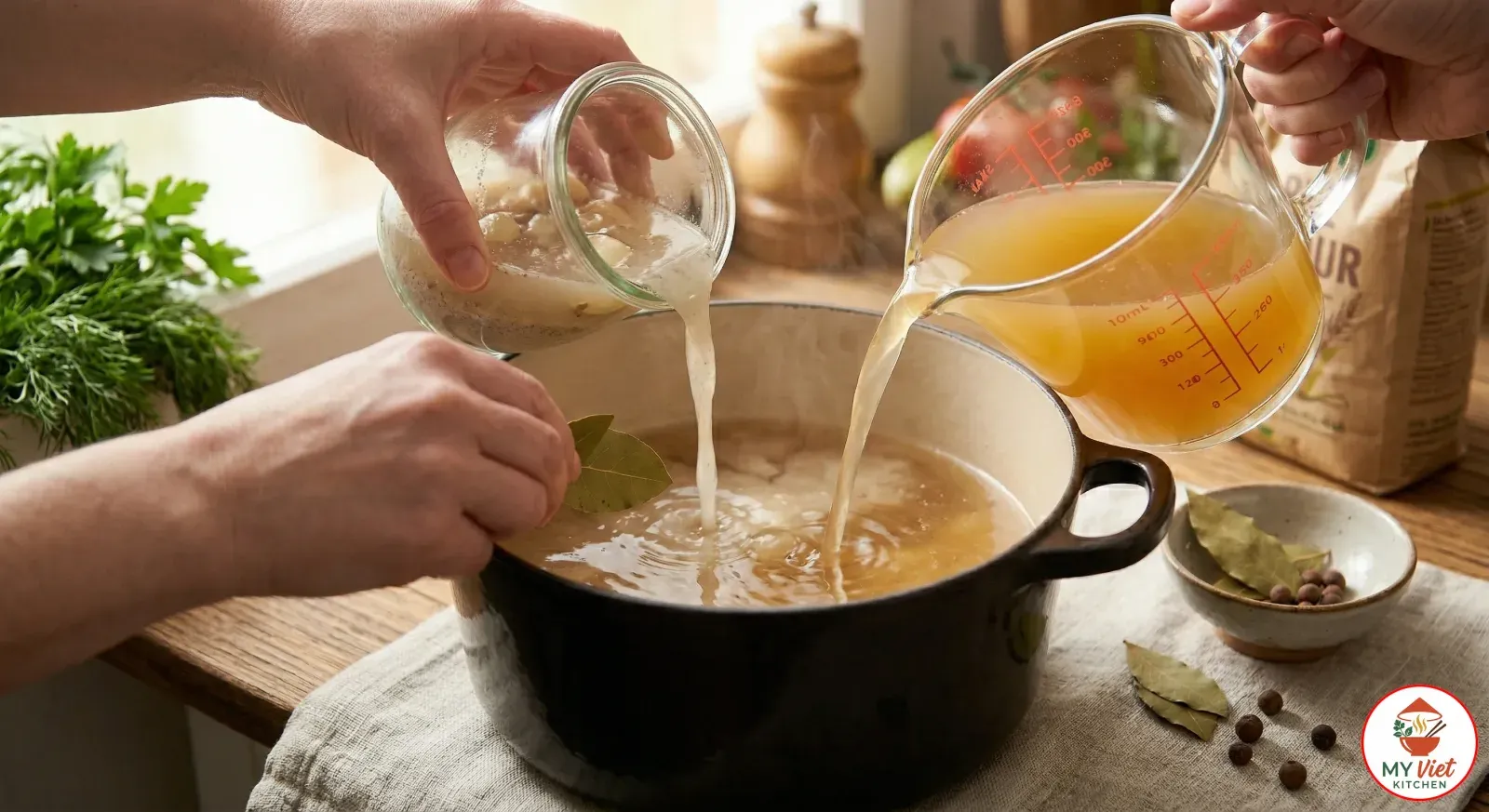
2 Pour eight cups of meat broth into a large pot and bring it to a gentle simmer over medium heat. Add the bay leaves and allspice berries. Then add the diced carrots, diced onion, and cubed potatoes. Cook for about 15 minutes until the potatoes are just tender when pierced with a knife.
While the vegetables cook, prepare the white sausage in a separate pot. Place the biala kielbasa in cold water, bring it to a gentle simmer, and cook for 10 minutes. Do not boil the sausage hard, because that will cause the casing to split and the texture to turn rubbery. Once cooked, remove the sausage and slice it into thick rounds about half an inch wide. Set the slices aside.
Step 3: Add the Zakwas and Season
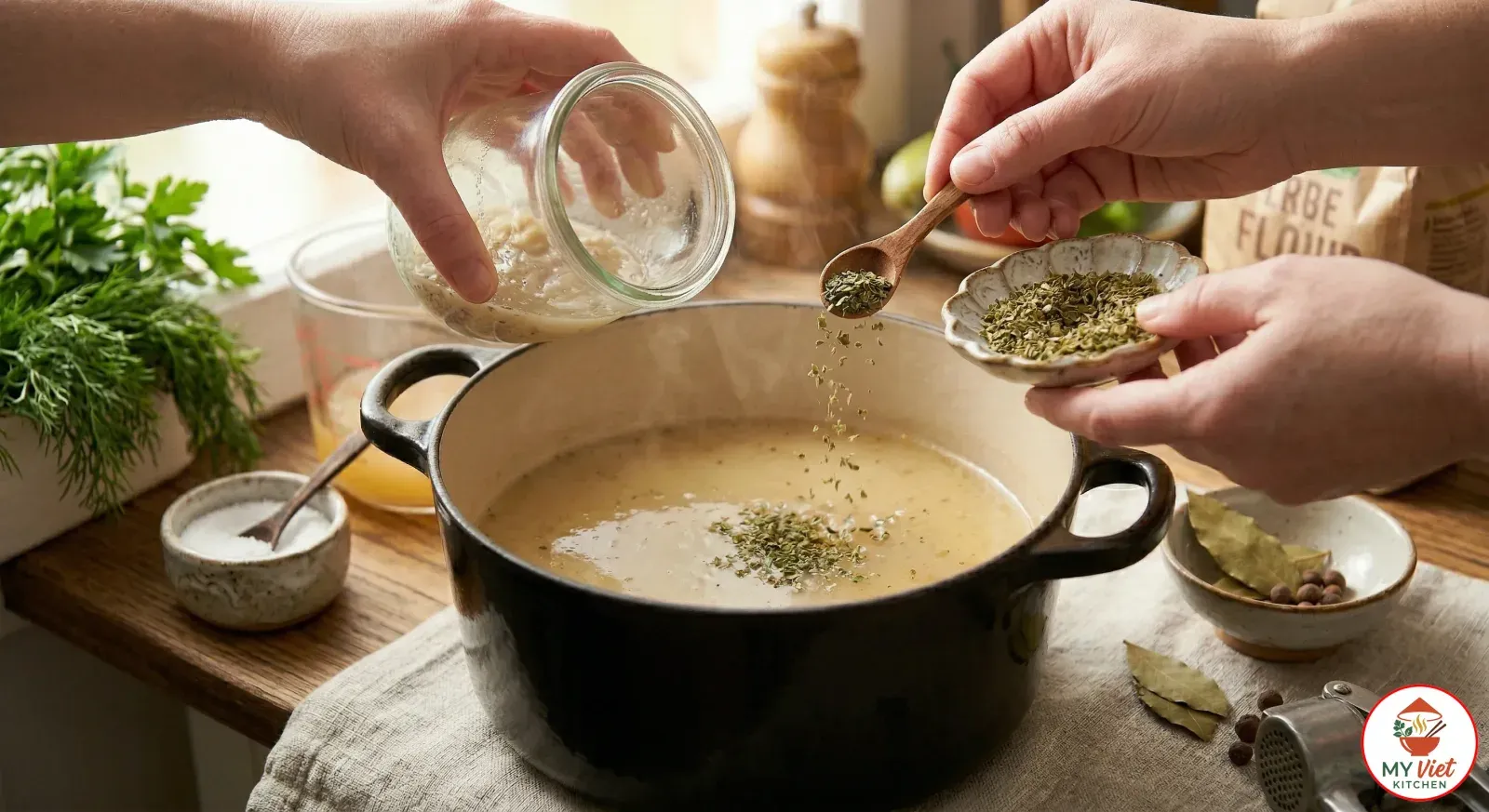
3 This is the step that transforms a plain broth into zurek. Pour the zakwas into the pot gradually, stirring constantly as you add it. The broth will turn cloudy and take on its characteristic pale, creamy color. Add the minced garlic and dried marjoram, then simmer for 10 minutes so the sour flavor blends into the soup.
Next, temper the sour cream. Spoon half a cup of sour cream into a small bowl and whisk in a ladleful of hot broth. This step prevents the cream from curdling when it hits the hot soup. Pour the tempered cream back into the pot and stir gently. Add the horseradish, salt, and white pepper. Taste the broth and adjust the seasoning. The soup should have a clear sour tang balanced by the richness of the cream and broth.
Step 4: Assemble and Serve
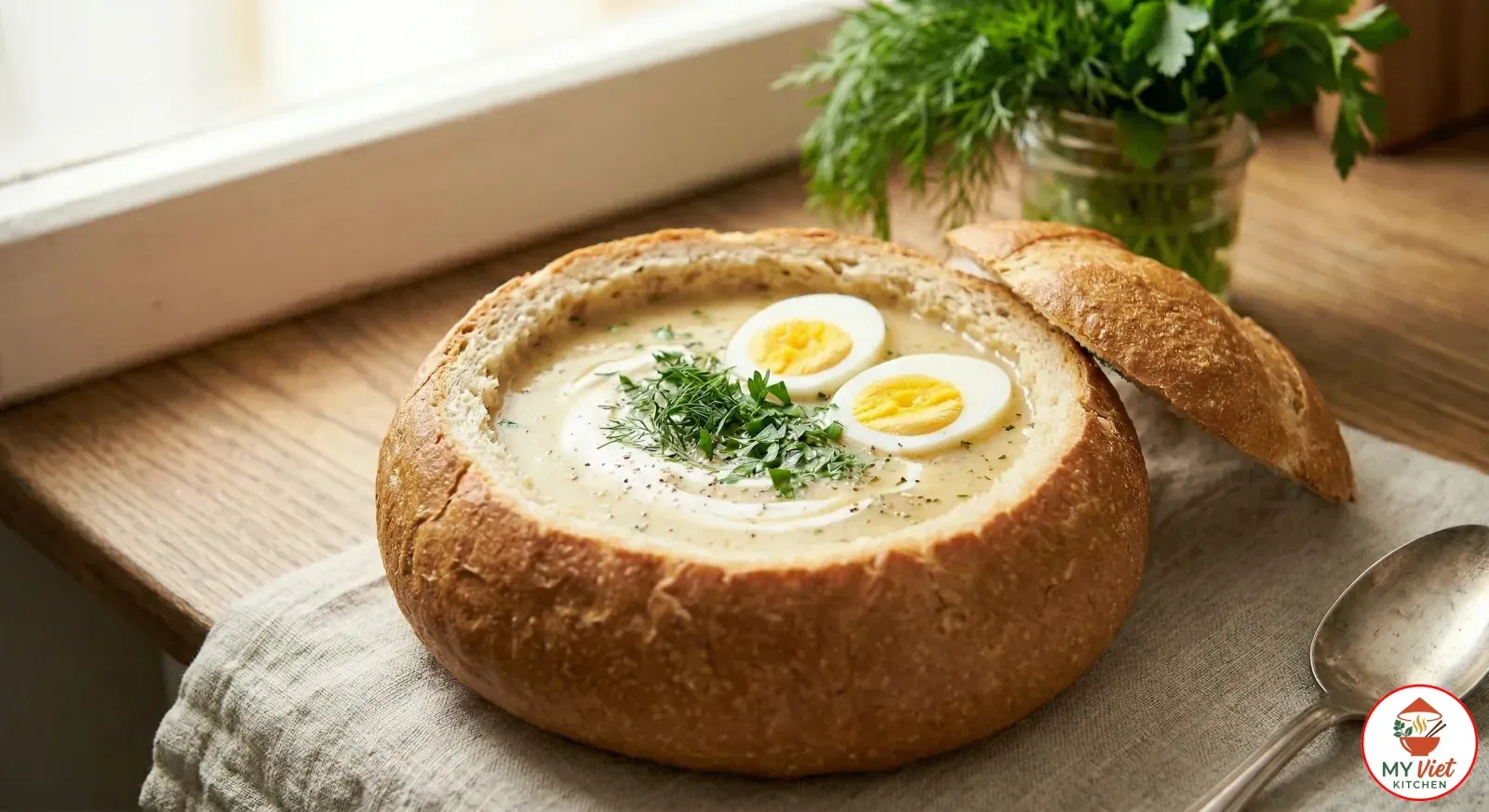
4 Add the sliced white sausage to the pot and let it heat through for about 5 minutes. Remove the bay leaves and allspice berries. Ladle the hot zurek into deep bowls. Place two halves of a hard-boiled egg into each serving so they float on the surface of the soup.
Garnish each bowl with a generous sprinkle of chopped fresh dill and parsley. For an impressive presentation, serve the zurek in hollowed-out round bread loaves. The bread bowl soaks up the tangy broth as you eat, and you finish the meal by tearing off and eating the bread itself. Alternatively, serve with thick slices of dark rye bread on the side for dunking.
Expert Tips for the Perfect Zurek Recipe
Ferment Your Own Zakwas When Possible
Homemade zakwas gives any zurek recipe a depth that bottled versions struggle to match. The five-day wait is worth it. The live cultures in a homemade starter create layers of sour, yeasty, and slightly nutty flavors that define an exceptional bowl of zurek. If you bake sourdough bread, think of zakwas as the soup equivalent of your starter.
Always Temper the Sour Cream
Never dump cold sour cream straight into a hot pot. The sudden temperature change will cause it to curdle into lumpy white bits floating in your broth. Instead, whisk a ladleful of hot soup into the cream first to bring it up to temperature slowly. Then stir the warmed mixture back into the pot. This technique gives you a silky, smooth broth every time.
Add the Zakwas Gradually
Pour the zakwas in a thin stream while stirring. This is a crucial detail in any zurek recipe, because adding too much at once can make the soup overly sour. Start with one and a half cups, taste, and then add more if you want a stronger tang. You can always add more sourness, but you cannot take it away. This cautious approach ensures perfect balance in every batch.
Zurek vs. Other Polish Sour Soups
Poland has a rich tradition of sour soups, and zurek sits among several related dishes. Each uses a different souring method and set of ingredients. Here is how they compare.
| Soup | Souring Agent | Key Ingredients | When Served |
|---|---|---|---|
| Zurek | Fermented rye flour (zakwas) | White sausage, eggs, potatoes, marjoram | Easter breakfast, year-round comfort food |
| Barszcz bialy | Fermented wheat flour | White sausage, eggs, similar to zurek | Easter, mainly in southern Poland |
| Barszcz czerwony | Fermented beet juice or vinegar | Clear beet broth, uszka dumplings | Christmas Eve supper |
| Krupnik | None (not sour) | Barley, root vegetables, meat broth | Winter, everyday meals |
| Kapusniak | Sauerkraut brine | Sauerkraut, pork ribs, potatoes | Year-round, especially Lent |
Serving Suggestions
In Poland, zurek is a substantial meal on its own. It appears at breakfast tables, lunch spreads, and casual dinners alike. The right presentation and side dishes elevate it from everyday soup to a memorable feast.
Classic Accompaniments:
- Bread bowl (chleb): Serving zurek inside a hollowed-out round bread loaf is the most iconic presentation. The bread absorbs the tangy broth, and diners eat the bowl along with the soup. Use a dense, crusty sourdough or wheat boule for best results.
- Dark rye bread: Thick slices of Polish dark rye bread pair beautifully with the sour broth. The earthy, slightly bitter flavor of the rye echoes the zakwas in the soup. Butter each slice lightly before serving.
- Extra horseradish: Place a small dish of freshly grated horseradish on the table. Guests can stir in as much heat as they like. The sharp bite of horseradish cuts through the richness and lifts every spoonful.
- Pierogi: Potato-and-cheese-filled dumplings make a hearty side that turns a bowl of zurek into a full Polish feast.
Beverage Pairings:
- Polish lager: A cold Tyskie or Zywiec beer contrasts the warm, sour broth and refreshes the palate between spoonfuls.
- Kompot: A traditional Polish fruit drink made by simmering apples, plums, or berries in sweetened water. Its gentle sweetness balances the tang of the zurek.
- Chilled vodka: A small shot of ice-cold Zubrowka or Wyborowa alongside hot zurek is a classic Polish pairing. The clean spirit cuts through the richness of the broth.
- Hot black tea: A simple cup of strong black tea rounds out the meal nicely, especially on cold mornings when zurek is served for Easter breakfast.
Storage and Reheating
Refrigerator: Zurek keeps for up to 4 days in the fridge in a sealed container. Store the soup, sausage, and eggs separately for the best texture. The broth thickens slightly as it cools, which is normal. The sour flavor also deepens overnight, so taste and adjust the seasoning when you reheat it.
Freezer: You can freeze the broth base (without the eggs and sausage) for up to 2 months. Cool the soup fully before transferring it to freezer-safe containers. Leave an inch of space at the top for expansion. Thaw in the fridge overnight, then reheat and add freshly cooked sausage and eggs before serving.
Reheating: Warm the zurek gently on the stove over medium-low heat. Stir often to prevent the cream from separating. Do not bring it to a full boil, because high heat can cause the sour cream to curdle and the potatoes to fall apart. Add a splash of fresh zakwas if the sour flavor has faded during storage.
Common Mistakes to Avoid
1. Boiling the Soup After Adding Cream
Once you stir the sour cream into the broth, keep the heat low. A hard boil will cause the cream to curdle and separate, leaving your zurek looking broken and grainy. A gentle simmer is all you need to keep everything smooth and velvety. If you accidentally overheat the pot, a quick blast with an immersion blender can sometimes save the texture.
2. Using Vinegar Instead of Zakwas
Some shortcut recipes suggest adding vinegar to the broth for sourness. This produces a flat, one-dimensional acid taste that bears no resemblance to real zurek. The zakwas brings fermented complexity, a slight yeastiness, and the unmistakable rye aroma that defines this soup. There is no true substitute for it, so take the time to ferment or buy proper zakwas.
3. Overcooking the White Sausage
Biala kielbasa is a delicate, unsmoked sausage. Boiling it hard or cooking it too long makes the casing split and the meat turn dry and crumbly. Simmer the sausage gently for just 10 minutes, then slice and add it to the zurek near the end. This keeps the sausage tender, juicy, and full of flavor.
4. Skipping the Marjoram
Dried marjoram is the signature herb of zurek. Without it, the soup tastes incomplete. Marjoram adds a warm, slightly sweet, and faintly floral note that ties the sour broth and smoky sausage together. Do not substitute oregano, because it is too strong and will overpower the delicate balance. Use good-quality dried marjoram and add it early so it has time to infuse.
Frequently Asked Questions
What does zurek taste like?
Zurek has a unique sour and savory flavor that sets it apart from any other soup. The fermented rye starter gives it a pleasant tanginess similar to sourdough bread, while the broth adds depth and creaminess. Smoky notes from the white sausage, warmth from marjoram and garlic, and a subtle kick from horseradish round out the profile. It is complex, comforting, and deeply satisfying.
Can I buy zakwas or do I have to make it?
You can buy ready-made zakwas at Polish delis, European grocery stores, and online retailers. Bottled zakwas saves five days of fermenting time and still produces very good results. Look for brands that list only rye flour, water, and garlic as ingredients. If you prefer the fullest flavor, homemade zakwas is always the best choice.
What is the difference between zurek and barszcz bialy?
Both soups look similar and share key ingredients like white sausage and eggs. The main difference is the fermented base. Zurek uses rye flour for its starter, while barszcz bialy uses wheat flour. This gives zurek a stronger, more complex sour note with a nuttier, more robust character. In many Polish households, the two names overlap, and the distinction depends on regional tradition.
Is zurek gluten-free?
No, traditional zurek contains gluten because the zakwas is made from rye flour. There is no standard gluten-free replacement that replicates the exact flavor. Some cooks try fermented rice water or diluted apple cider vinegar, but the result will taste different from the original. If you need a gluten-free option, consider a different Polish soup like rosol (clear chicken broth) instead.
When do Polish people eat zurek?
Zurek is closely tied to Easter in Poland, where it appears as a centerpiece of the Easter breakfast table. It sits alongside blessed foods like eggs, bread, and white sausage in the traditional swieconka basket. However, many Polish families enjoy this soup year-round as a hearty weekend meal, and restaurants across Poland serve it every day regardless of the season.
Can I make zurek without meat?
Yes, a vegetarian zurek recipe works well. Use vegetable broth as the base and skip the sausage. Add extra potatoes and sliced mushrooms for body and depth. Keep the hard-boiled eggs and sour cream to maintain richness. The fermented rye starter carries enough character to make even a meatless zurek feel substantial and full of flavor.
Variations and Adaptations
Zurek in a Bread Bowl:
This is the most popular restaurant presentation across Poland. Hollow out a round bread loaf, ladle the hot zurek inside, and place the lid of bread on top. The bread soaks up the tangy broth as you eat. When the soup is gone, tear off the softened bread and finish it too. This method eliminates the need for a separate side dish and makes every meal feel like a celebration.
Smoked Sausage Version:
If you cannot find biala kielbasa, use regular Polish smoked kielbasa instead. The flavor will be smokier and more intense than the traditional version. Slice the smoked sausage and brown it in a skillet before adding it to the soup. The crispy edges add a pleasant texture contrast to the soft potatoes and silky broth.
Mushroom and Vegetable Zurek:
For a meatless zurek recipe with extra depth, saute sliced button mushrooms and dried porcini in butter before adding them to the broth. The mushrooms bring an earthy, umami richness that compensates for the missing sausage. Add a spoonful of miso paste for even more savory depth. This version works beautifully during Lent or for vegetarian guests.
The Cultural Significance of Zurek
Zurek holds a special place in Polish culinary heritage that goes far beyond ordinary soup. It is deeply woven into the rhythms of the Polish calendar, especially the Easter celebration. On Holy Saturday, Polish families bring baskets of food to church for a blessing. These baskets contain bread, eggs, salt, horseradish, and white sausage, the very same ingredients that go into a pot of zurek. On Easter morning, the blessed foods come together in this soup, making zurek a sacred act of cooking as much as a meal.
The tradition of fermenting rye flour speaks to a broader Polish philosophy of waste nothing and transform everything. Peasant families who could not afford expensive ingredients discovered that a handful of rye flour, some water, and a clove of garlic could produce something extraordinary when given time and patience. This spirit of resourcefulness runs through all of European peasant cooking and helps explain why the simplest dishes often carry the deepest meaning.
Today, zurek appears on the menus of Poland’s finest restaurants alongside dishes that cost ten times as much. Yet it remains at its best when made at home in a big pot, shared with family, and eaten with bread that still holds the warmth of the oven. Every Polish grandmother has her own version, and every grandchild remembers the smell of zakwas fermenting on the kitchen counter as the signal that a special meal was on its way.
Conclusion
This zurek recipe gives you a true taste of Poland in your own kitchen. The keys to a great pot are straightforward: use real zakwas for authentic sourness, simmer the white sausage gently to keep it tender, temper the cream to avoid curdling, and do not forget the marjoram. Follow this zurek recipe step by step, and you will produce a bowl of tangy, creamy, sausage-laden soup that captures centuries of Polish cooking tradition.
Ready to explore more Eastern European classics? Browse our European dishes collection, including borscht, pierogi, and goulash. Also discover our full range of Asian soups and stews for more global comfort food inspiration.