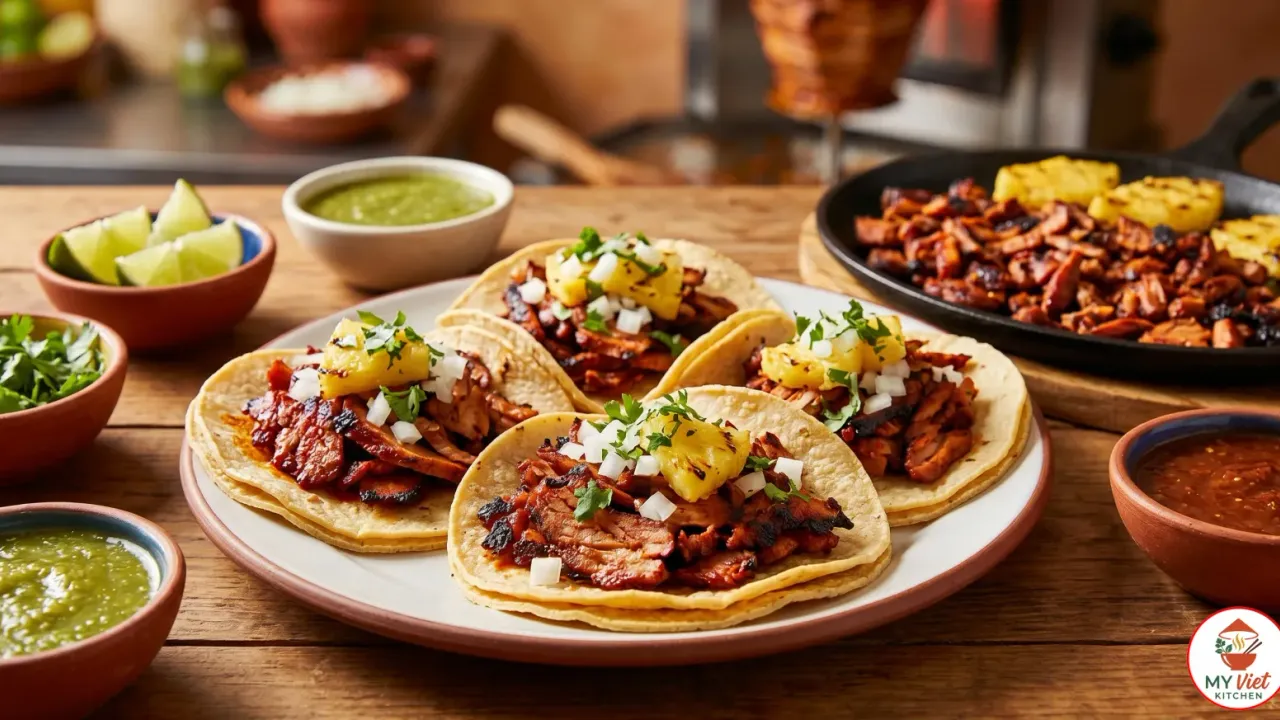
Tacos al Pastor are arguably Mexico’s most beloved street food — thin slices of chile-marinated pork, shaved from a vertical spit, piled onto small corn tortillas and crowned with pineapple, raw onion, and fresh cilantro. The flavor is bold, smoky, sweet, and bracingly acidic all at once. At My Viet Kitchen, we have cooked our way through dozens of global street food traditions, and this tacos al pastor recipe stands among the most satisfying to master at home.
Prep Time: 30 minutes | Cook Time: 25 minutes | Servings: 4 (about 16 tacos)
Difficulty: Medium | Calories: ~410 per serving
What Makes Tacos al Pastor Special?
Few dishes carry a story as layered as tacos al pastor. The recipe traces its origins to Lebanese immigrants who arrived in central Mexico during the early 20th century. They brought with them the tradition of shawarma — meat stacked on a vertical rotating spit called a trompo. Mexican cooks adopted the technique enthusiastically. However, they swapped lamb for locally abundant pork and replaced Middle Eastern spice blends with dried chiles, achiote paste, and citrus. The result is a dish that is unmistakably Mexican yet carries echoes of the Middle East in every bite.
The defining characteristic of al pastor is the trompo itself. In traditional taquerías, the seasoned pork stacks in thin layers onto the spit, sometimes reaching several feet tall. A fresh pineapple crowns the top and slowly bastes the rotating meat with sweet juice as the outer layer crisps against a gas flame. The taquero shaves the meat directly into corn tortillas with practiced, theatrical speed. At home, you can replicate this magic in a cast-iron skillet with thin-sliced pork and a very hot pan.
What makes the flavor profile truly distinctive is the combination of earthy dried chiles, the rusty, slightly bitter depth of achiote, and the bright acidity of citrus and vinegar. Together, these create a marinade that penetrates deeply and caramelizes beautifully at high heat. The Maillard reaction — the same browning chemistry behind a seared steak — develops a slightly charred crust that adds complexity no amount of seasoning alone can match.
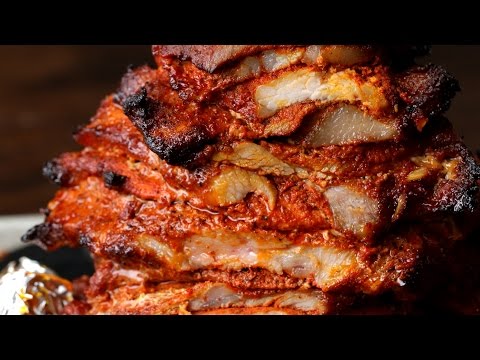
Choosing the Right Pork for Tacos al Pastor
The cut of pork matters more than almost any other variable in this recipe. Choose wisely, and the marinade does the rest of the work. Here are your main options:
- Pork shoulder (best choice): Also called pork butt or Boston butt, this cut has generous fat marbling that keeps the meat moist during high-heat cooking. Fat carries flavor and prevents the thin slices from drying out. This is the cut used by every serious taquería.
- Pork loin: Leaner and easier to slice very thin, but it dries out quickly over high heat. If you use loin, marinate for the full overnight period and cook in shorter batches to avoid overcooking.
- Pork tenderloin: The leanest option. It works, but you must be careful not to overcook it. Slice as thin as possible and cook very briefly — 2 minutes per side over maximum heat.
Ingredients for Tacos al Pastor
Main Ingredients:
- 2 lbs (900 g) boneless pork shoulder, sliced 1/4 inch thin
- 1/2 fresh pineapple, cut into rings about 1/2 inch thick
- 16 small corn tortillas (4–5 inches in diameter)
- 1 small white onion, finely diced
- 1 cup fresh cilantro, roughly chopped
- 2 limes, cut into wedges
- Salsa verde or tomatillo salsa, for serving
For the Achiote Marinade:
- 3 dried guajillo chiles, stems and seeds removed
- 2 dried ancho chiles, stems and seeds removed
- 2 tablespoons achiote paste (also sold as annatto paste)
- 4 cloves garlic, peeled
- 1/2 cup white vinegar
- 1/4 cup fresh orange juice
- 2 tablespoons fresh lime juice
- 1 teaspoon dried Mexican oregano
- 1 teaspoon ground cumin
- 1 teaspoon smoked paprika
- 1/2 teaspoon ground black pepper
- 1 teaspoon kosher salt
For the Toppings:
- Salsa verde (tomatillo salsa)
- Salsa roja (tomato-based red salsa)
- Pickled red onions (optional but excellent)
- Sliced radishes for crunch
- Crumbled queso fresco (optional)
Pro tip: Achiote paste gives al pastor its signature brick-red color and earthy, slightly peppery flavor. Find it at any Latin grocery store or online. Do not substitute with achiote powder alone — the paste contains additional spices and fat that make the marinade cling better to the meat.
Step-by-Step Instructions
Step 1: Toast and Rehydrate the Dried Chiles
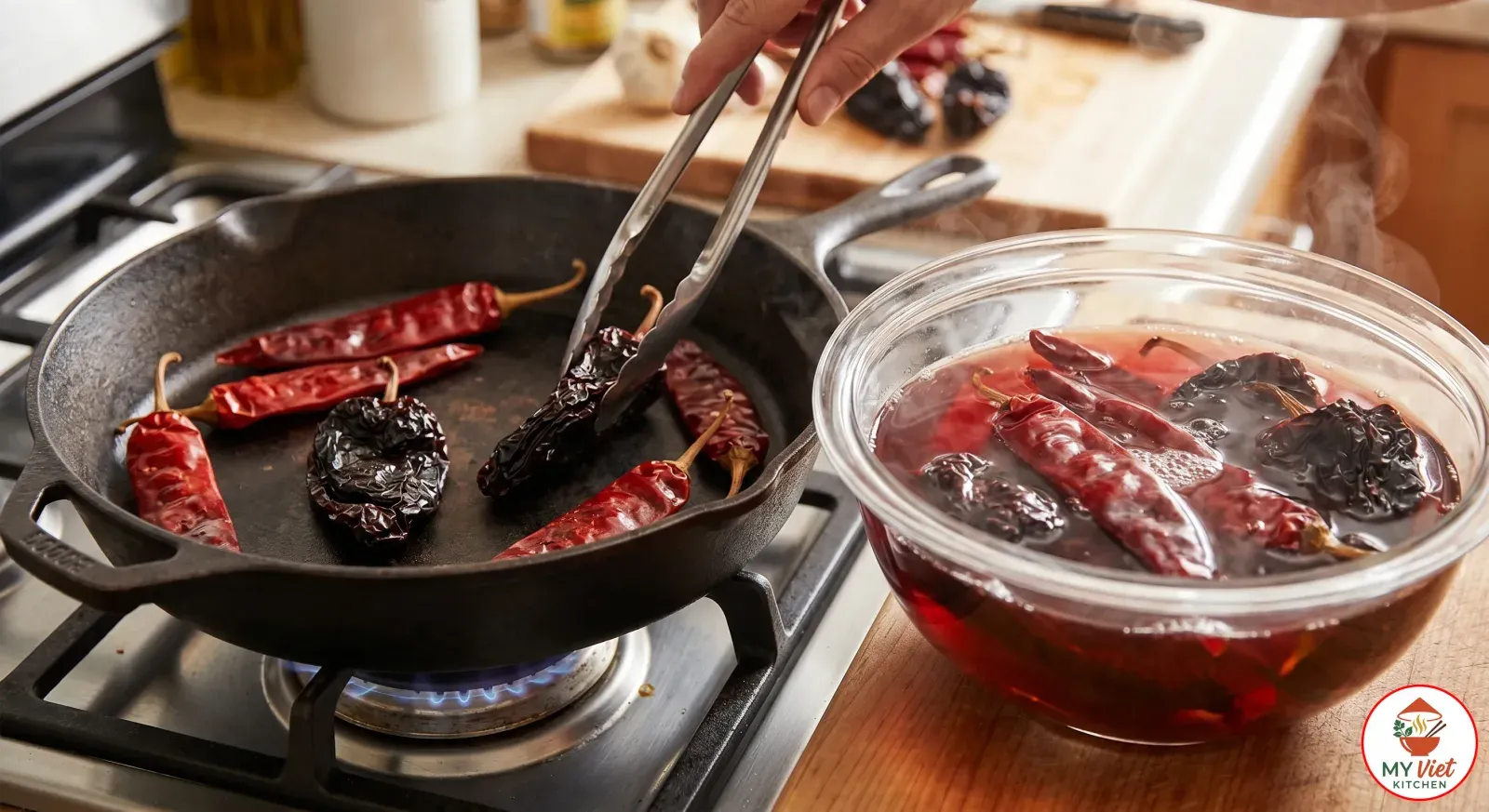
1 First, heat a dry skillet over medium heat. Add the guajillo and ancho chiles and toast them for about 30 seconds per side. You are looking for a slightly darker color and a fragrant, toasty aroma. Be careful not to burn them — bitterness sets in fast. Transfer the toasted chiles immediately to a heatproof bowl and pour boiling water over them. Cover the bowl and soak for 15 minutes. This process rehydrates the chiles and releases their deep, complex flavor into the soaking liquid. Drain them before blending, but save the soaking water in case your blender needs a little extra liquid to run smoothly.
Step 2: Blend the Achiote Marinade
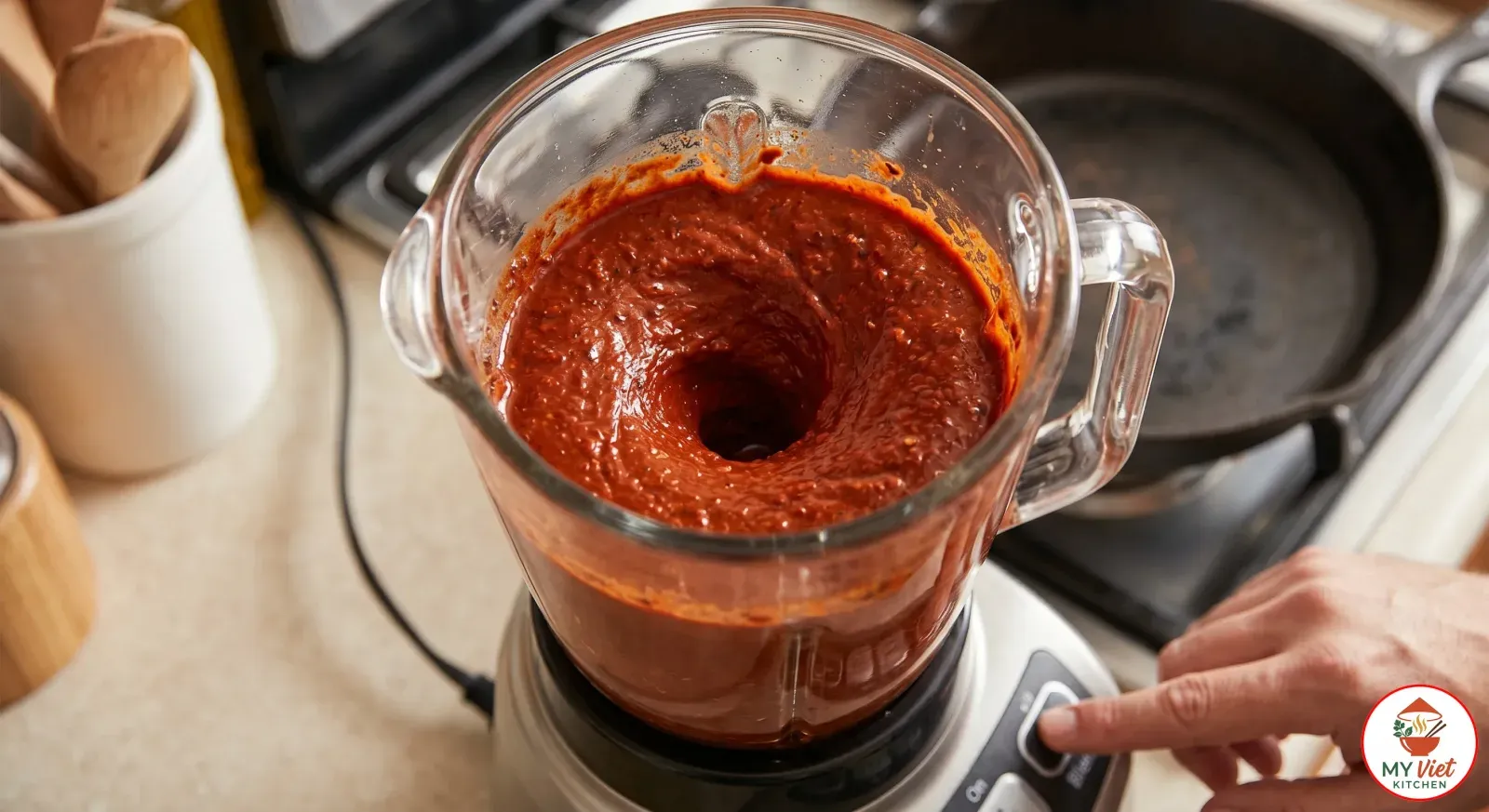
2 Add the drained chiles to a blender along with the achiote paste, garlic, vinegar, orange juice, lime juice, oregano, cumin, smoked paprika, black pepper, and salt. Blend on high speed until the marinade is completely smooth. A powerful blender is ideal here — you want a silky, uniform paste with no visible chile skin. If the mixture is too thick, add one or two tablespoons of the reserved chile soaking water. Taste the marinade. It should be tangy, deeply savory, and slightly spicy. Adjust salt and lime juice as needed.
Step 3: Marinate the Pork
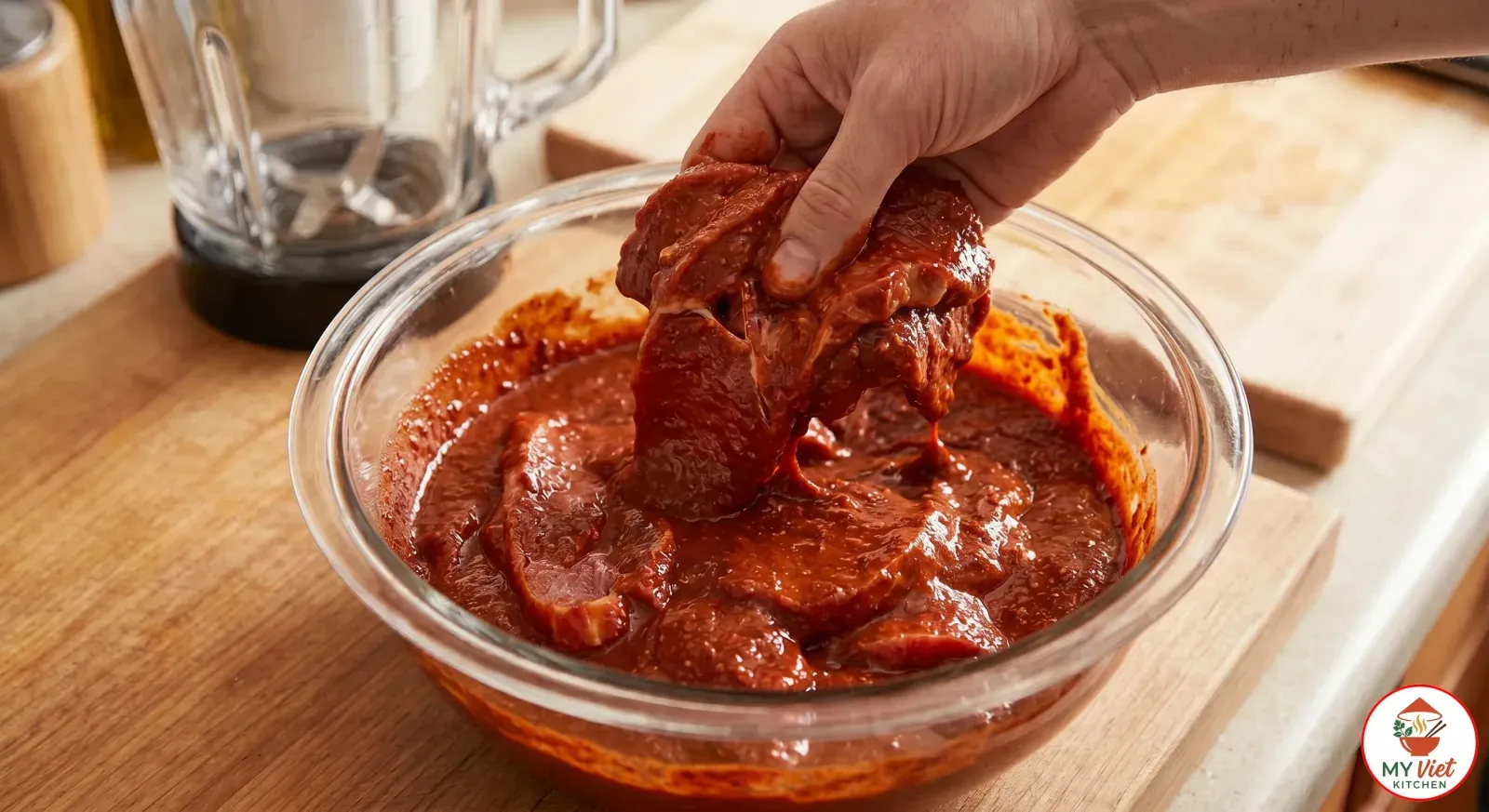
3 Slice the pork shoulder as thinly as possible — about 1/4 inch thick. Partially freezing the pork for 30 minutes beforehand makes slicing much easier. Place the slices in a large bowl or zip-top bag and pour the marinade over them. Use your hands to work the marinade into every surface of every slice. Cover and refrigerate for at least 4 hours. Overnight is strongly recommended. The vinegar and citrus juice gently tenderize the pork while the chiles and achiote penetrate deeply. After 24 hours, however, the acid begins to break down the texture too aggressively, so do not exceed one full day.
Step 4: Cook the Pork and Pineapple
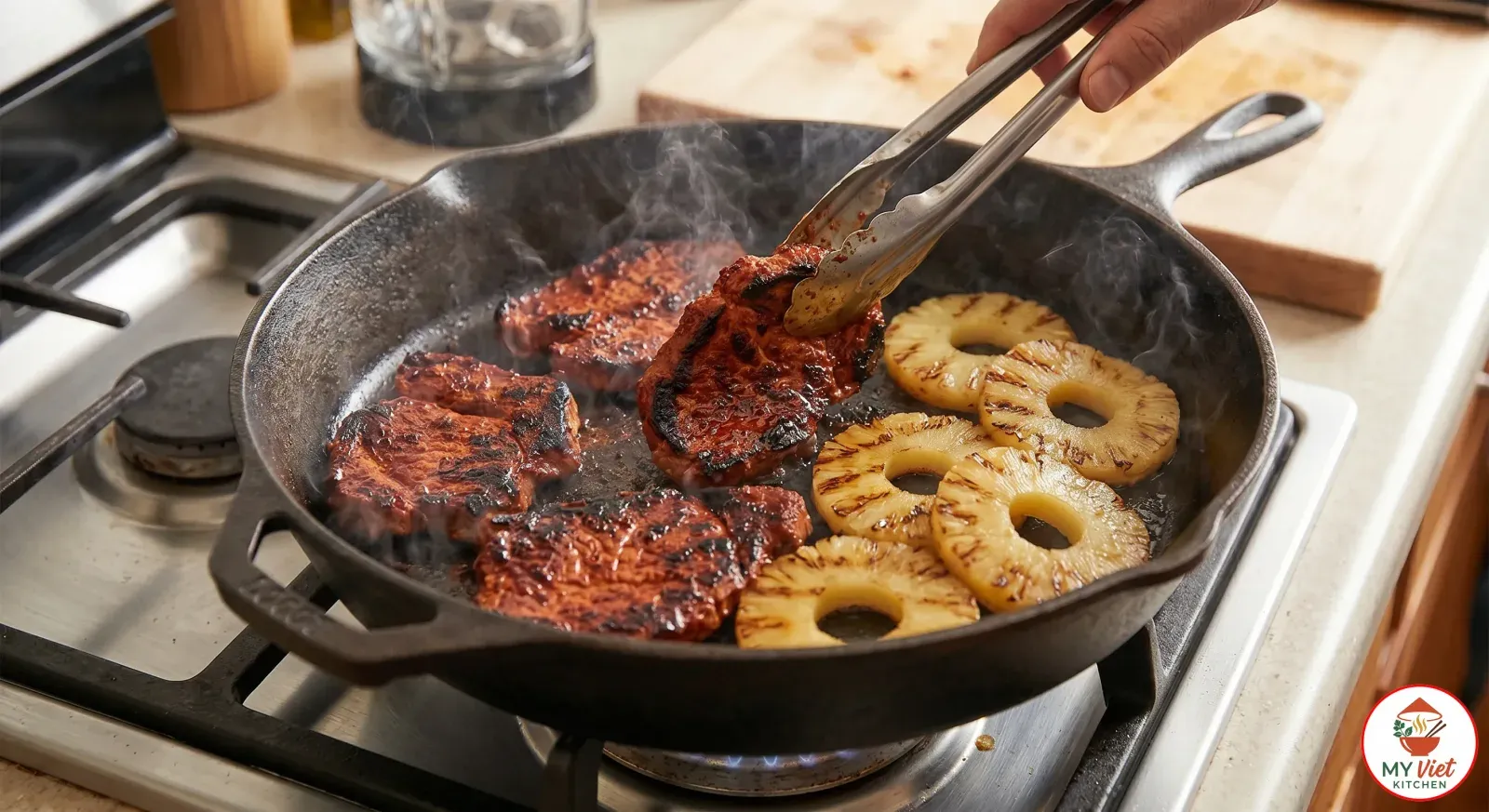
4 Heat a large cast-iron skillet or heavy grill pan over high heat until very hot — a drop of water should evaporate on contact. Do not add oil; the pork shoulder has enough fat. Place the pork slices in a single layer without crowding. Cook for 3 to 4 minutes per side until the edges develop a dark, caramelized char. Work in batches rather than crowding the pan. Crowding drops the pan temperature and steams the meat instead of searing it. While the last batch of pork cooks, place pineapple rings on the same hot pan. Cook for 2 minutes per side until they pick up caramel-colored grill marks.
Step 5: Rest and Chop
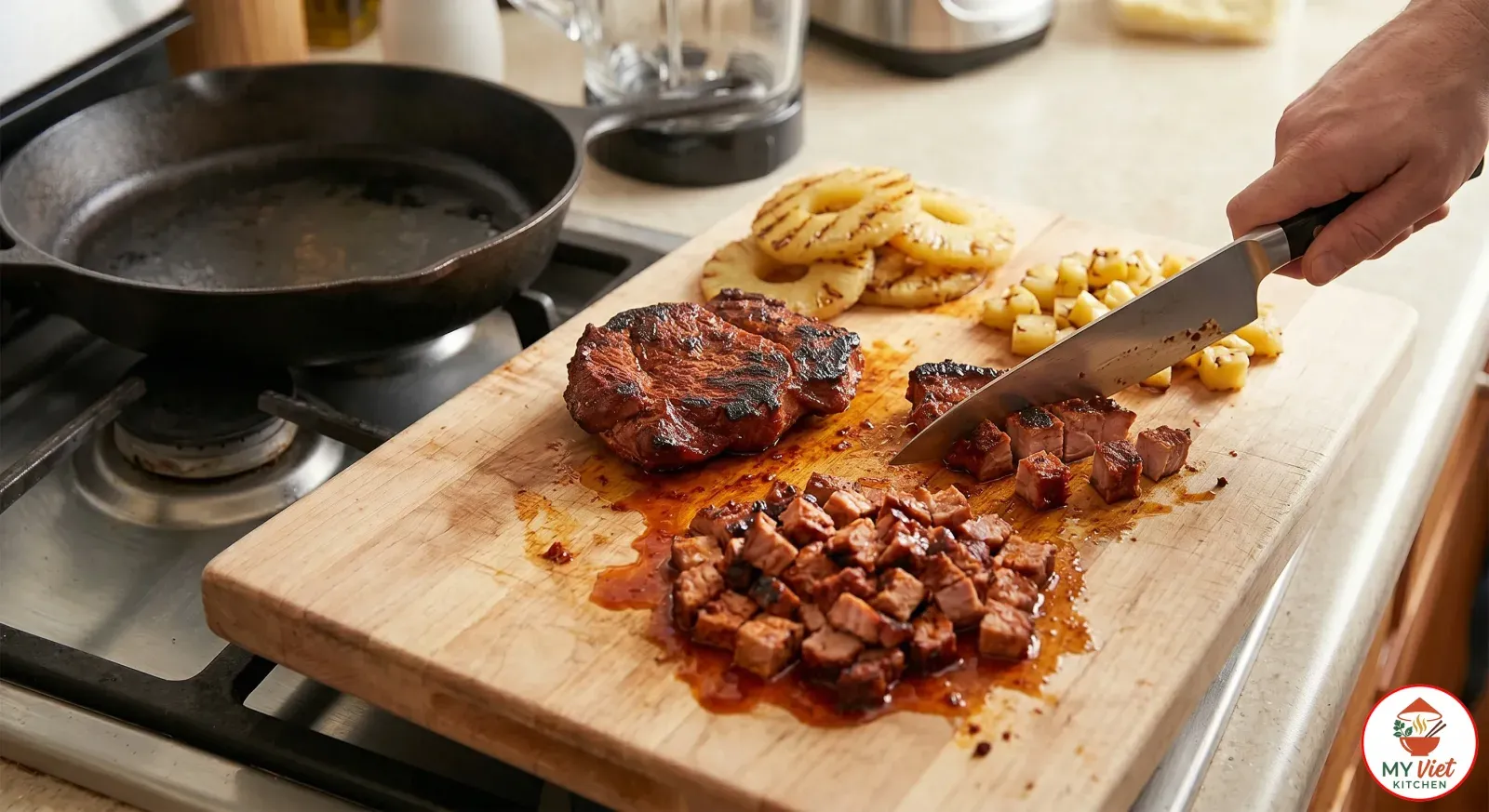
5 Transfer the cooked pork to a cutting board and let it rest for 2 minutes. This brief rest allows the juices to redistribute within the meat. Then chop the pork into small, roughly 1/2-inch pieces with a sharp chef’s knife. Chop the grilled pineapple into similar-sized cubes. This step is important — al pastor meat should be in small, bite-sized pieces, not large chunks that fall out of the tortilla. Collect any juices from the cutting board and pour them back over the chopped meat for maximum flavor.
Step 6: Warm the Tortillas and Assemble
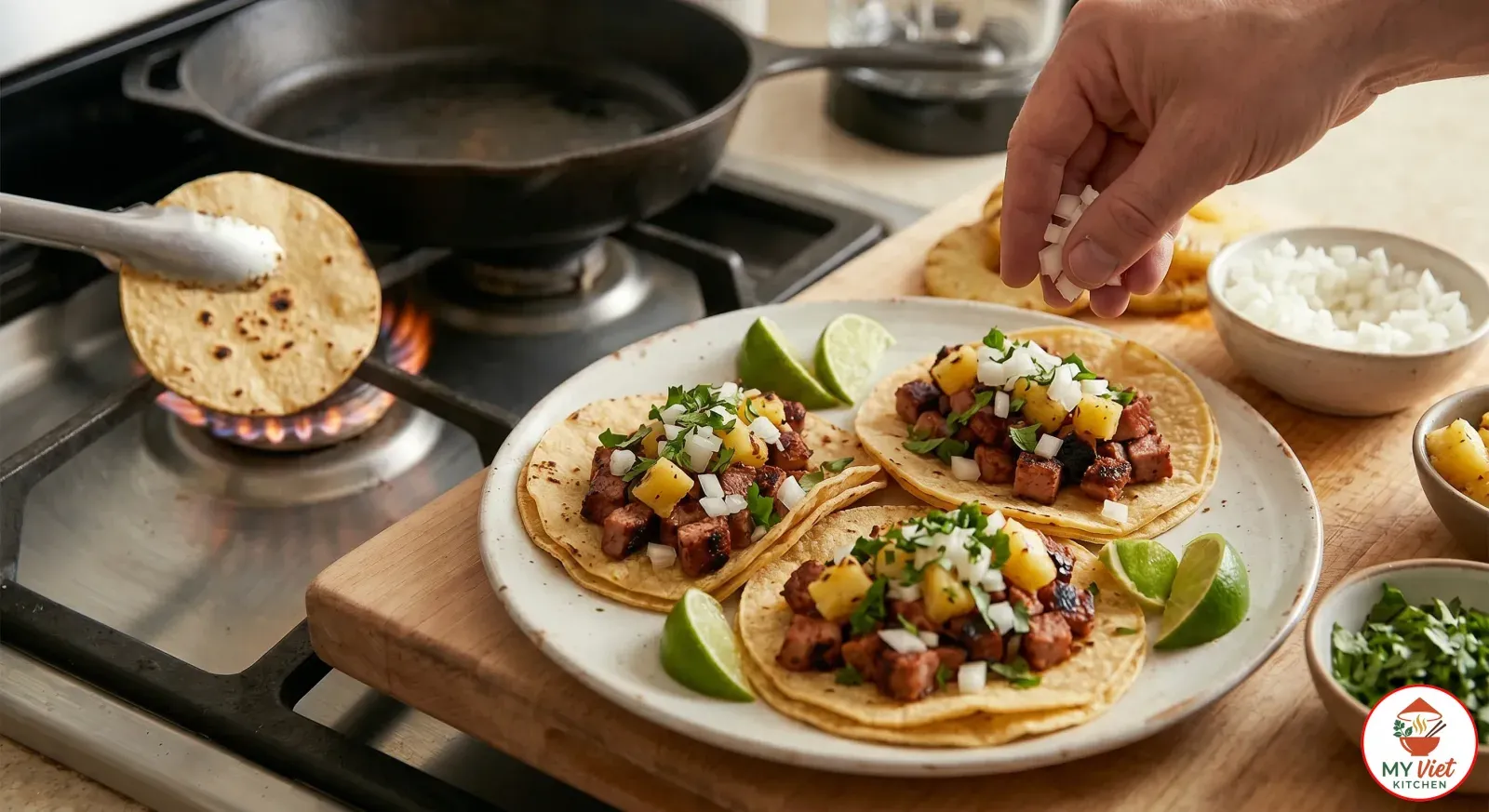
6 Warm the corn tortillas directly over a gas burner flame for about 20 seconds per side, flipping with tongs, until they develop a few char spots and become pliable. Alternatively, heat them in a dry skillet over medium-high heat. Stack two tortillas together for each taco — this is essential, as a single small corn tortilla is rarely strong enough to hold the filling without tearing. Spoon a generous mound of chopped pork onto each double tortilla. Add several pieces of grilled pineapple, a pinch of finely diced white onion, and a handful of fresh cilantro. Serve immediately with lime wedges and your choice of salsa.
Expert Tips for Perfect Tacos al Pastor
Use Maximum Heat
Al pastor needs very high heat to replicate the char of a trompo. A cast-iron skillet retains heat better than thin stainless steel pans. Preheat the skillet for at least 3 minutes over high heat before adding any meat. The dramatic sizzle when the pork hits the pan is exactly what you want.
Slice the Pork as Thin as Possible
Thin slices cook faster and develop more charred surface area per bite. Aim for 1/4 inch or thinner. As noted earlier, partially freezing the pork shoulder for 20 to 30 minutes firms it up enough to make thin slicing straightforward even with a standard kitchen knife.
Don’t Skip the Pineapple
Some home cooks skip the pineapple, thinking it is optional. It is not. The grilled pineapple contributes sweetness and acidity that balances the rich, slightly bitter marinade. Furthermore, bromelain in the pineapple juice helps tenderize the pork during marination when included in the marinade itself. Use fresh pineapple — canned pineapple has been heat-processed and lacks the enzymatic activity.
Make the Marinade a Day Ahead
The marinade stores well in the refrigerator for up to five days. Making it ahead actually improves the flavor as the spices bloom further in the acidic base. This makes tacos al pastor an ideal dish for entertaining — the bulk of the work happens the day before the party.
Tacos al Pastor vs. Other Mexican Pork Tacos
Mexico has a rich tradition of pork tacos, and it is worth understanding how al pastor fits into that landscape. Each style has distinct techniques, flavors, and regional associations.
| Style | Cooking Method | Key Flavors | Region |
|---|---|---|---|
| Al Pastor | Vertical spit / high-heat skillet | Chiles, achiote, citrus, pineapple | Central Mexico (Mexico City) |
| Carnitas | Braised in lard (confit) | Rich, porky, crispy exterior | Michoacán |
| Cochinita Pibil | Pit-roasted, banana leaf wrapped | Achiote, sour orange, deeply smoky | Yucatán |
| Birria | Braised in a chile broth (consommé) | Chiles, tomatoes, spices, rich stew | Jalisco |
| Adobada | Pan-fried or griddle-cooked | Similar to al pastor, often spicier | Northern Mexico |
Serving Suggestions
In Mexico, tacos al pastor arrive simply dressed — the complex flavor of the meat needs only a few carefully chosen garnishes. Traditional street taquerías offer an array of salsas, and regulars build their own combinations.
The Perfect Accompaniments:
- Salsa verde: The tart, herby green sauce cuts through the richness of the pork beautifully. Spoon it generously over each taco.
- Salsa roja: A tomato and chile-based red salsa adds a smoky, spicier counterpoint for those who want more heat.
- Pickled red onions: Quick-pickled in lime juice with a pinch of salt, these add bright acidity and a striking visual contrast against the deep red pork.
- Black beans: A side of simply seasoned black beans rounds out the meal and adds protein and fiber.
- Mexican rice: Fluffy, tomato-tinged rice provides a neutral base that absorbs any dripping salsa or pork juices on the plate.
Beverage Pairings:
- Agua fresca de jamaica (hibiscus water) — refreshing, tart, and non-alcoholic
- Mexican lager (Modelo, Pacifico) — light and crisp to complement the bold spices
- Horchata — creamy, sweet rice milk that soothes the heat of the chiles
- Mezcal or tequila — earthy agave spirits that echo the smokiness of the marinade
Storage and Reheating
Refrigerator: Store leftover cooked pork in an airtight container for up to 4 days. The flavor actually deepens overnight as the chile spices continue to bloom.
Freezer: Freeze cooked al pastor meat for up to 3 months. Portion it into flat freezer bags before freezing so it thaws quickly and evenly. Alternatively, freeze the marinated raw pork and cook directly from nearly thawed.
Reheating: Reheat the chopped pork in a very hot dry skillet for 2 to 3 minutes, tossing constantly. This method revives the caramelized exterior. Avoid microwaving — it steams the meat and makes it rubbery.
Common Mistakes to Avoid
1. Burning the Dried Chiles
Toast the chiles only until fragrant — about 30 seconds per side. Burning them introduces sharp, unpleasant bitterness that no amount of additional seasoning can mask. If you smell smoke or see the chile skin blackening significantly, start over with fresh chiles.
2. Crowding the Pan
Adding too much pork at once drops the pan temperature dramatically. The meat then steams in its own liquid instead of searing. Cook in small, single-layer batches. The extra time is worth the result — properly charred al pastor has a crust that sets it far apart from plain pan-cooked pork.
3. Skipping the Marination Time
A 30-minute marinade produces bland, surface-level color without the deep chile flavor that defines tacos al pastor. The minimum viable time is 4 hours. Plan ahead, and the dish rewards your patience generously.
4. Using Flour Tortillas
Flour tortillas, while delicious in their own context, overwhelm the flavor of al pastor with their soft, doughy character. Corn tortillas are essential here. Their slightly gritty texture and subtle corn flavor provide the perfect structural and flavor contrast to the spiced pork and sweet pineapple.
Frequently Asked Questions
What does al Pastor mean?
Al Pastor means “in the style of the shepherd” in Spanish. The name refers to Lebanese shawarma traditions brought to Mexico by Lebanese immigrants in the early 20th century. Over time, Mexican cooks replaced lamb with pork and substituted dried chiles and achiote for Middle Eastern spices.
What cut of pork is best for tacos al pastor?
Boneless pork shoulder (also called pork butt) is the best choice. It has enough fat to stay moist during high-heat cooking and absorbs the achiote marinade deeply. Pork loin works in a pinch but tends to dry out faster over the high heat required for proper searing.
Can I make tacos al pastor without a vertical spit?
Yes. A cast-iron skillet or grill pan over high heat gives excellent results at home. The key is very high heat and thin slices of pork so you develop charred edges quickly without overcooking the interior. Some cooks also stack the marinated slices on a skewer and roast in the oven at 450°F, then finish under the broiler for a few minutes.
Why is pineapple used in tacos al pastor?
Pineapple adds sweetness and acidity that balances the rich, smoky pork. It also contains bromelain, a natural enzyme that tenderizes the meat. In the traditional trompo preparation, a whole pineapple sits on top of the spit and slowly bastes the rotating pork with juice as it cooks through the day.
How long should I marinate the pork?
A minimum of 4 hours gives the marinade time to penetrate the pork. For the best flavor, marinate overnight — up to 24 hours. Beyond 24 hours, the citric acid in the orange and lime juice begins to break down the texture of the meat and makes it slightly mushy.
Variations and Adaptations
Oven-Roasted Al Pastor:
Stack the marinated pork slices on a metal skewer and stand them upright on a foil-lined baking sheet. Roast at 450°F (230°C) for 20 minutes, then switch to the broiler for 5 minutes to crisp the outer layer. Slice off the edges as you would a trompo. This method produces an impressive centerpiece for a dinner party.
Chicken Al Pastor:
Use the same achiote marinade with boneless, skinless chicken thighs in place of pork. Marinate for 2 to 4 hours. Cook over high heat in the same manner. The result is lighter but still deeply flavorful. Chicken thighs have enough fat to survive the high-heat sear without drying out.
Vegetarian Al Pastor:
Cauliflower florets or thick slices of king oyster mushrooms absorb the achiote marinade surprisingly well. Roast at 425°F (220°C) until caramelized and slightly charred. The smokiness and spice of the marinade carry through powerfully even without meat, making this a satisfying option for plant-based diners.
Al Pastor Quesadilla:
Leftover al pastor meat makes an outstanding quesadilla filling. Layer it with Oaxacan cheese or Chihuahua cheese between two flour tortillas and cook in a dry skillet until the cheese melts. Serve with salsa and crema for a quick weeknight meal that uses every last bit of leftover pork.
The Cultural Significance of Tacos al Pastor
Tacos al pastor represents one of the most vivid examples of culinary fusion in the Americas. The dish did not emerge from a formal restaurant kitchen or a culinary school — it grew organically from the interaction of Lebanese immigrant communities and Mexican street food culture in cities like Puebla and Mexico City during the mid-20th century. According to Smithsonian Magazine, Lebanese immigrants who settled in Mexico brought the vertical spit tradition with them, and Mexican cooks transformed it into something entirely their own within a generation.
Today, the trompo stands as one of Mexico’s most iconic culinary symbols. In any Mexico City neighborhood, the sight of a rotating spit with its crown of pineapple signals not just food, but community — a gathering point where office workers, taxi drivers, and families stand side by side waiting for their tacos. The taquero’s skill in shaving the meat and assembling the taco in one fluid motion is a craft passed down through apprenticeship, not recipe cards.
At home, recreating tacos al pastor connects you to that long chain of culinary transmission. You may not have a trompo in your kitchen, but you bring the same spirit to your cast-iron skillet — the attention to marinade, the respect for high heat, the care in choosing ripe pineapple and good corn tortillas. That spirit, ultimately, is what Mexican street food is about.
Conclusion
This tacos al pastor recipe brings one of Mexico’s greatest street foods to your home kitchen without any specialized equipment. The key steps are a thorough overnight marinade in toasted dried chiles, achiote, and citrus; very high heat to develop a proper char; and thin slicing of the pork so every piece has both crust and juicy interior. Finally, double your tortillas, don’t skip the pineapple, and squeeze lime over everything at the table.
If you enjoy exploring bold, globally inspired recipes, explore more dishes from our global recipe collection at My Viet Kitchen. You might also enjoy our recipes for Cochinita Pibil — Yucatán’s extraordinary pit-roasted pork — or our guide to Birria de Res, the rich beef stew from Jalisco that has taken the world by storm. Each recipe carries its own story, and every story is worth cooking.