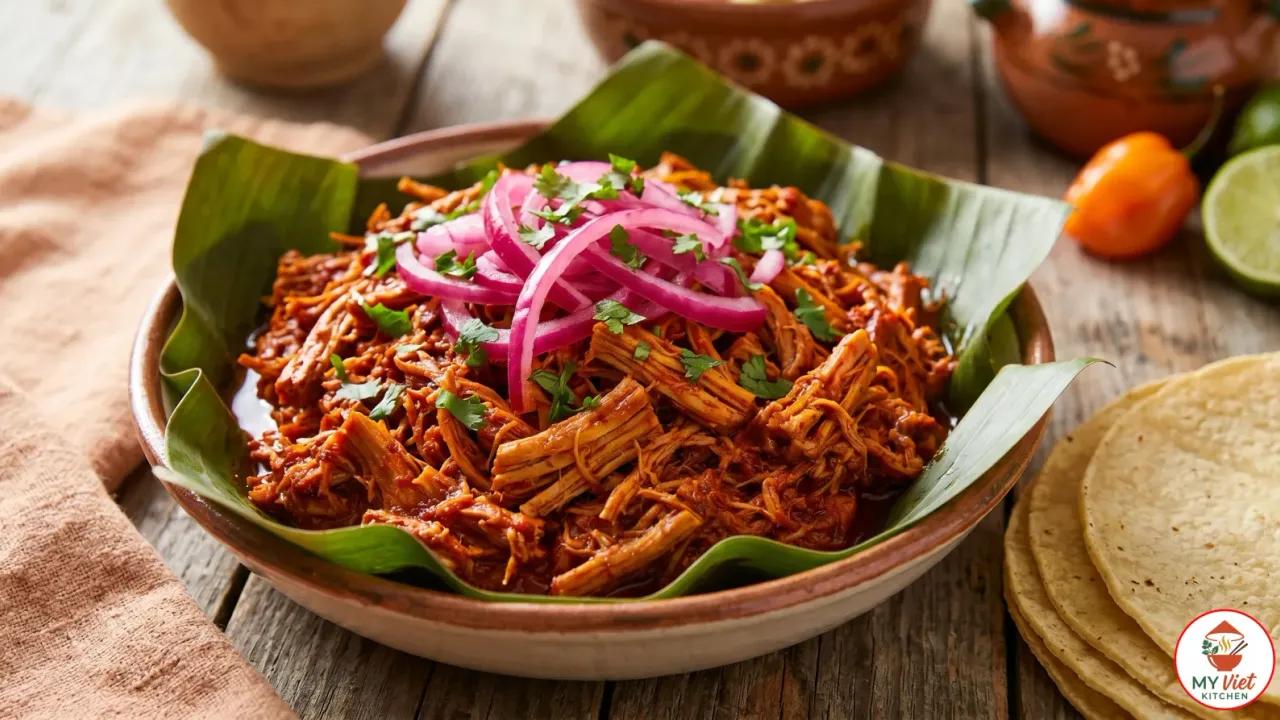
Few dishes capture the soul of a region quite like cochinita pibil, the legendary slow-roasted pork from Mexico’s Yucatan Peninsula. This ancient Mayan dish transforms a simple pork shoulder into something extraordinary through an earthy achiote marinade, the gentle perfume of banana leaves, and hours of patient cooking. In this recipe, you will learn how to recreate this iconic dish at home with accessible ingredients and straightforward techniques that deliver authentic results.
Prep Time: 30 minutes | Cook Time: 240 minutes | Servings: 8
Difficulty: Medium | Calories: ~420 per serving
What Makes Cochinita Pibil Special?
Cochinita pibil stands apart from other slow-cooked pork dishes thanks to its bold, layered flavor. The dish relies on achiote paste, a brick-red blend made from annatto seeds, spices, and vinegar. This paste gives the pork its deep crimson color and a taste that is earthy, slightly bitter, and subtly sweet all at once. The sour orange juice in the marinade breaks down the meat and adds bright acidity. Together, these two parts create a flavor that no other spice blend can match.
In the Yucatan, cooks wrap the pork in banana leaves and bury it in a pit lined with hot stones. The word “pibil” comes from the Mayan word “pib,” which means pit oven. Most home cooks today use a Dutch oven or slow cooker instead. Even so, the banana leaves remain key. They lock in moisture, add a mild herbal scent to the meat, and stop the edges from drying out during the long cook.
Unlike pulled pork or Cuban lechon, cochinita pibil does not rely on smoke or sweet rubs. Instead, the magic comes from the mix of achiote and citrus. The result is a bright, tangy, and fragrant dish that tastes like nothing else. Once you try it, you will see why this recipe has lasted for centuries.

Choosing the Right Pork Cut
The pork cut you pick makes or breaks this dish. Fatty cuts with lots of tissue work best because they melt down over the long cook time. Here are the top choices for cochinita pibil.
- Pork shoulder (best choice): Also called pork butt or Boston butt, this cut has great marbling and fat that melts into the meat as it cooks. It shreds with ease every time.
- Pork leg: Leaner than the shoulder but still a traditional choice in the Yucatan. If you use this cut, keep the cooking time slightly longer and add extra juice to prevent dryness.
- Pork loin: Too lean for authentic cochinita pibil. The lack of fat means it dries out easily and cannot achieve that melt-in-your-mouth texture. Avoid this cut for this recipe.
Ingredients for Cochinita Pibil
Main Ingredients:
- 4 pounds boneless pork shoulder, cut into large chunks
- 2 to 3 banana leaves, thawed if frozen
- 1 large white onion, sliced into rings
- 2 habanero peppers, left whole
For the Achiote Marinade:
- 3.5 ounces achiote paste
- 1/2 cup fresh sour orange juice (or 1/3 cup orange juice plus 3 tablespoons lime juice)
- 1/4 cup white vinegar
- 6 cloves garlic, minced
- 1 teaspoon ground cumin
- 1 teaspoon dried oregano (Mexican oregano preferred)
- 1 teaspoon black pepper
- 1 teaspoon salt
- 1/2 teaspoon ground allspice
For the Pickled Red Onion Topping:
- 1 large red onion, finely diced
- 1/2 cup fresh lime juice
- 1/2 cup fresh cilantro, chopped
- Salt to taste
- Warm corn tortillas for serving
Pro tip: Look for achiote paste rather than achiote powder. The paste already contains spices and vinegar, so it dissolves easily into the marinade and coats the pork more evenly. El Yucateco and La Anita are two reliable brands available at most Latin grocery stores.
Step-by-Step Instructions
Step 1: Prepare the Achiote Marinade
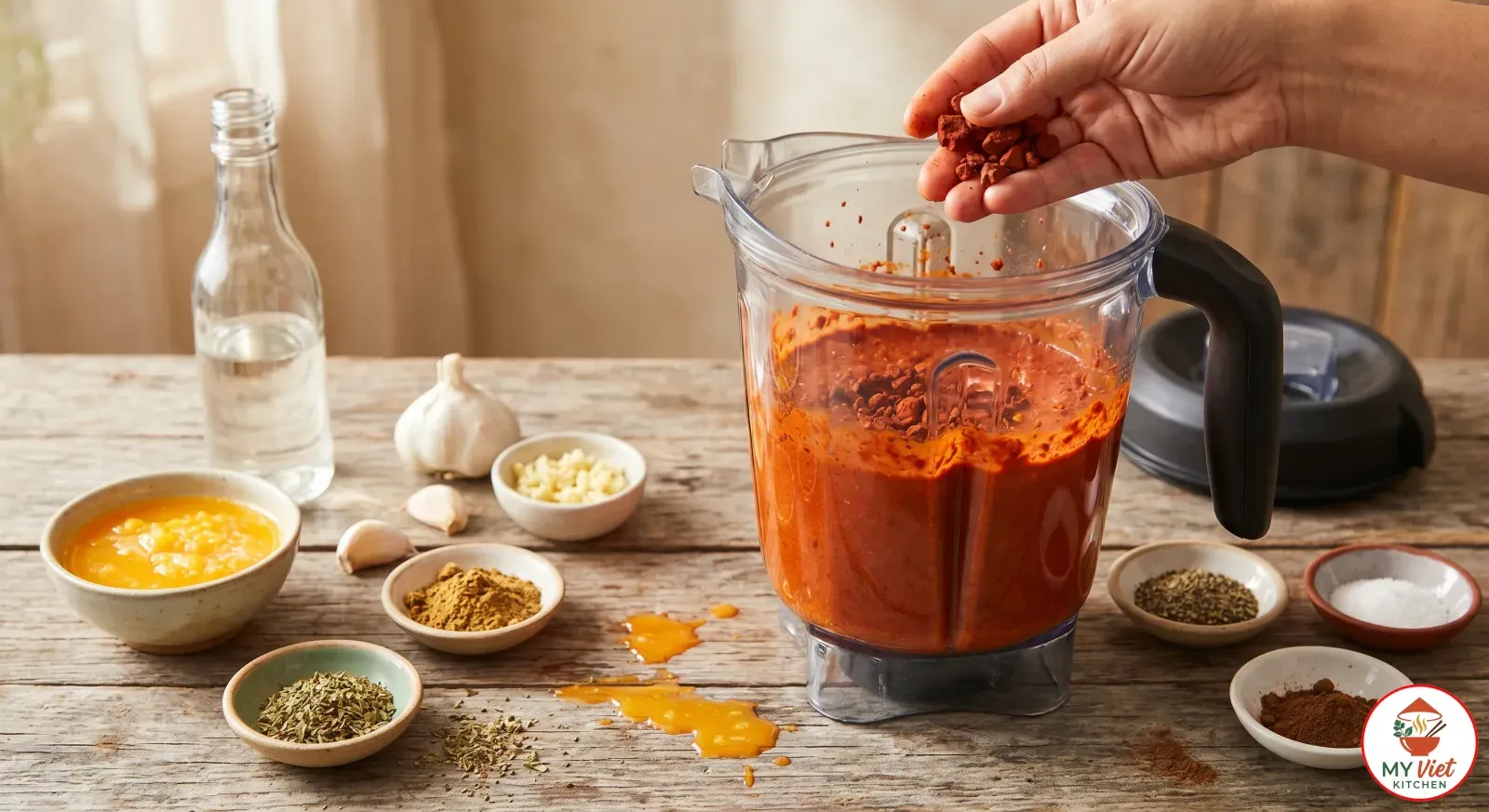
1Break the achiote paste into small bits and drop them into a blender. Add the sour orange juice, white vinegar, garlic, cumin, oregano, black pepper, salt, and allspice. Blend on high until smooth. If the paste won’t break down, add one more tablespoon of juice and blend again. The mix should pour like a thin sauce and coat the back of a spoon. This step matters because lumps of paste lead to uneven flavor on the finished pork.
Step 2: Marinate the Pork
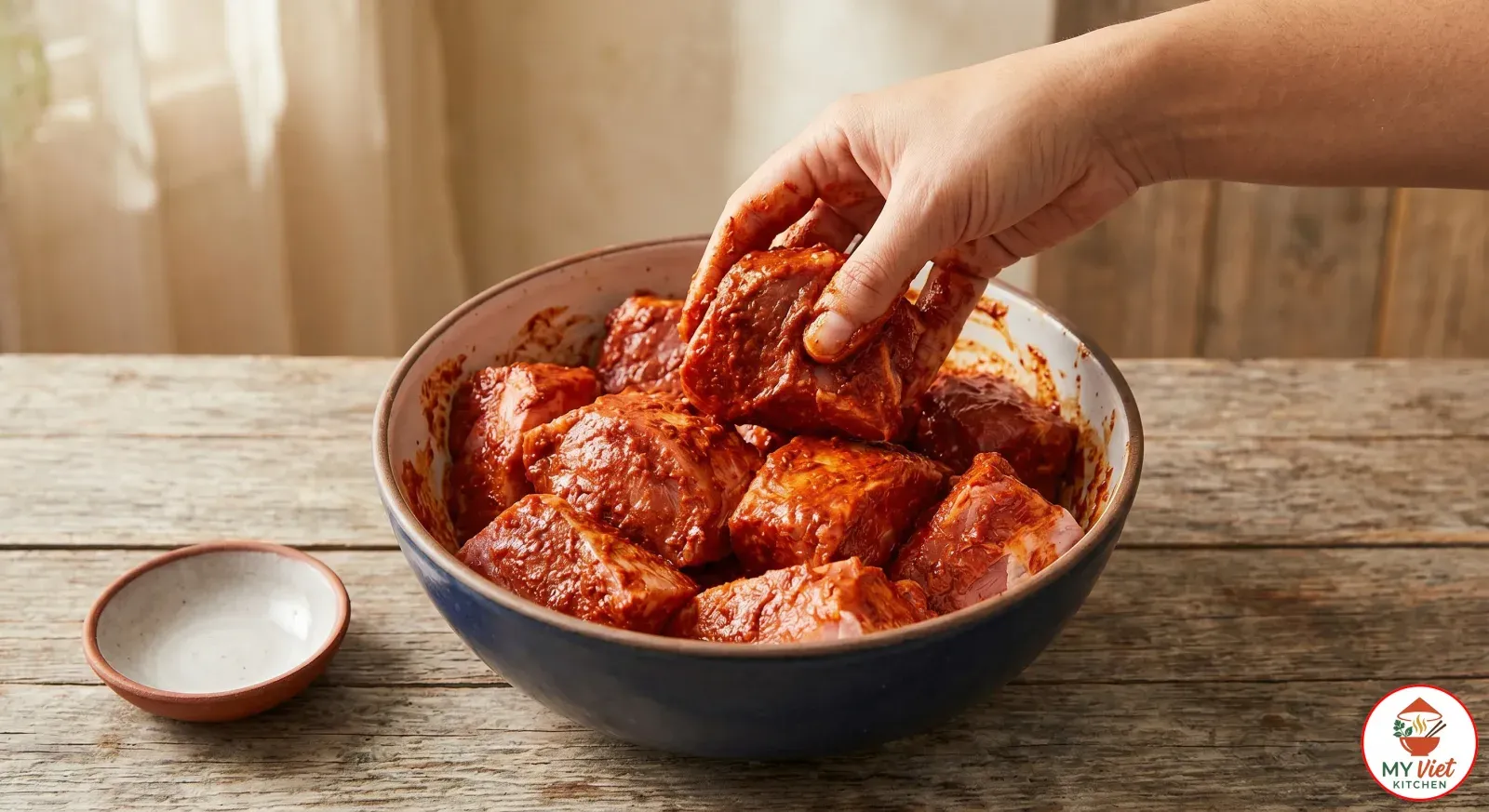
2Cut the pork into big chunks, about three to four inches each. Place them in a deep bowl or a large zip-top bag. Pour the marinade over the pork and rub it into every surface. Each piece should have a thick coat of the red paste. Cover the bowl with plastic wrap or seal the bag. Then, place it in the fridge for at least four hours. For the best results, let it sit overnight. The acid in the citrus juice slowly softens the meat fibers, so the longer it rests, the more tender it gets.
Step 3: Prepare the Banana Leaves
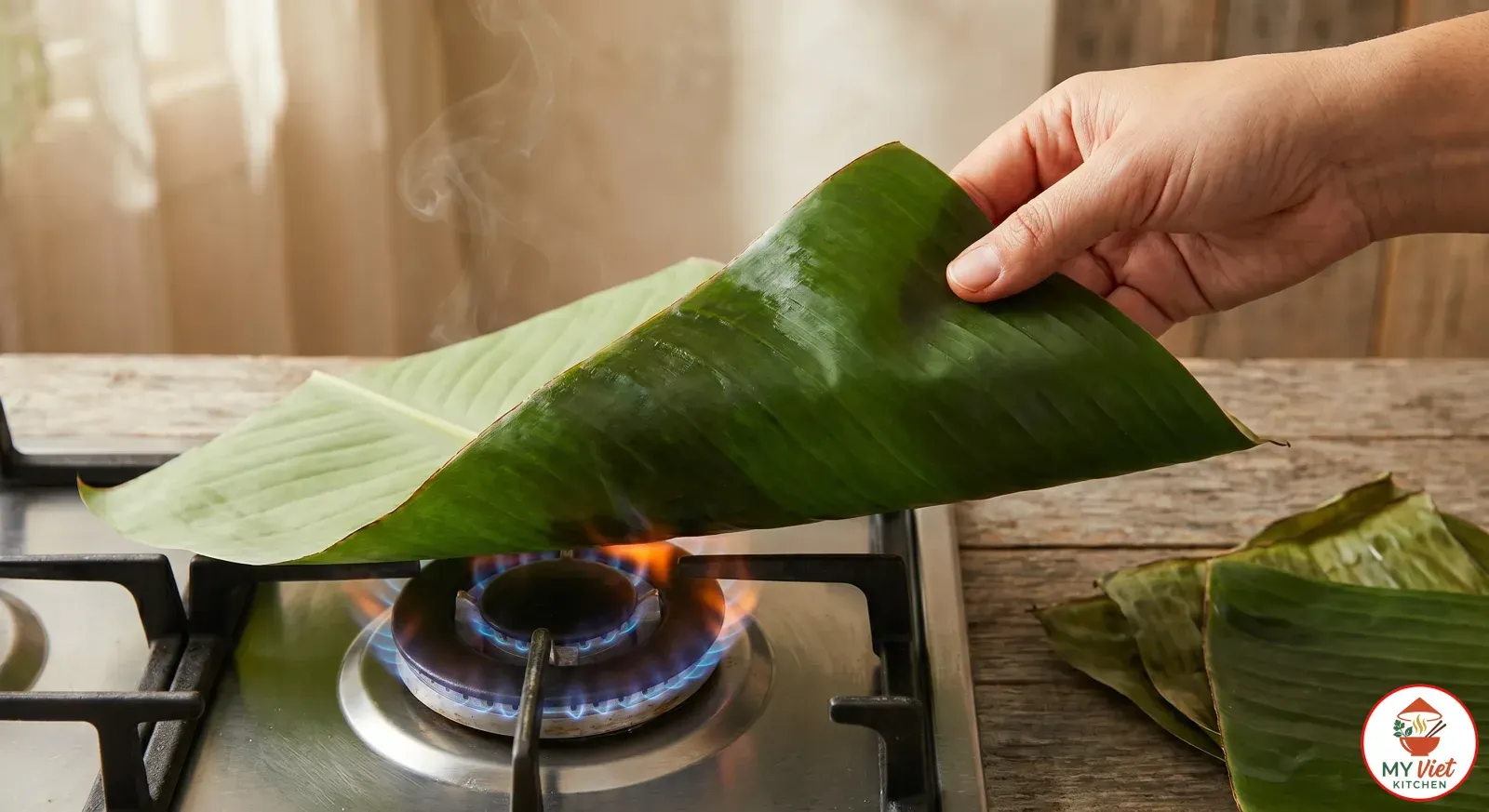
3Take each banana leaf and pass it over an open flame or warm it in a dry skillet for about 10 seconds per side. The heat makes the leaf soft and easy to fold without cracking. You will see the color darken and smell a light herbal scent. After that, line a Dutch oven or large pan with the leaves. Let the edges hang over the sides. Later, you will fold these flaps over the top to seal the pork inside.
Step 4: Assemble and Wrap
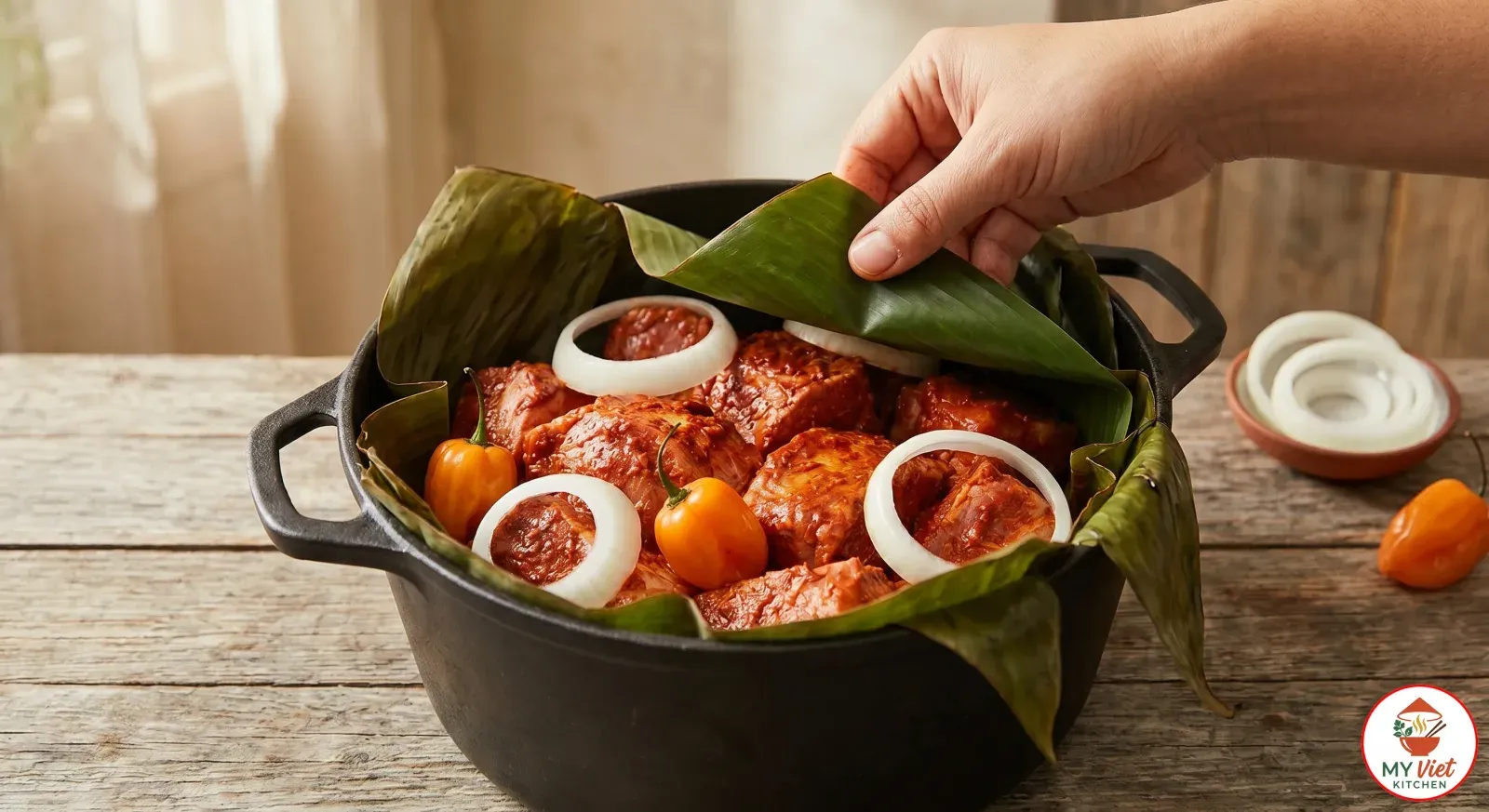
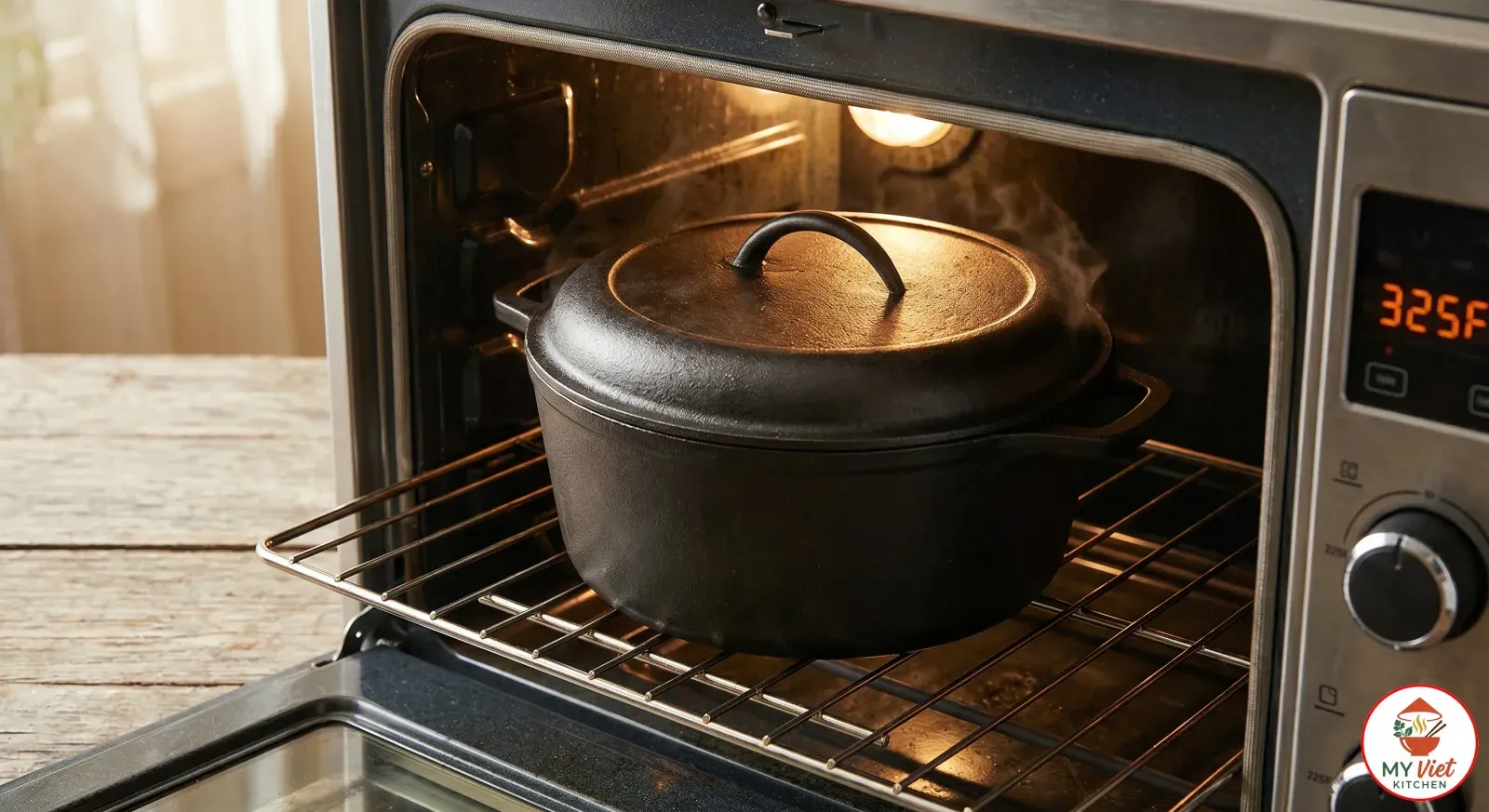
4Preheat your oven to 325F. Place the pork into the lined pot and pour all the marinade over the meat. Lay the onion rings on top. Then, tuck the whole habanero peppers among the pork pieces. Keeping them whole stops them from giving off too much heat at once. Instead, they add a gentle, fruity warmth that defines true cochinita pibil. Finally, fold the banana leaf flaps over the top to wrap the pork in a snug packet.
Step 5: Slow Roast the Pork
5Put the lid on the Dutch oven or seal the pan tightly with a double layer of foil. Set it on the center rack. Bake at 325F for three and a half to four hours. The low heat and tight seal create steam that melts the tough parts of the pork. You will know the cochinita pibil is done when the meat falls apart with a light touch of a fork. Do not open the lid while it cooks. Each time you do, heat and moisture escape.
Step 6: Shred and Serve
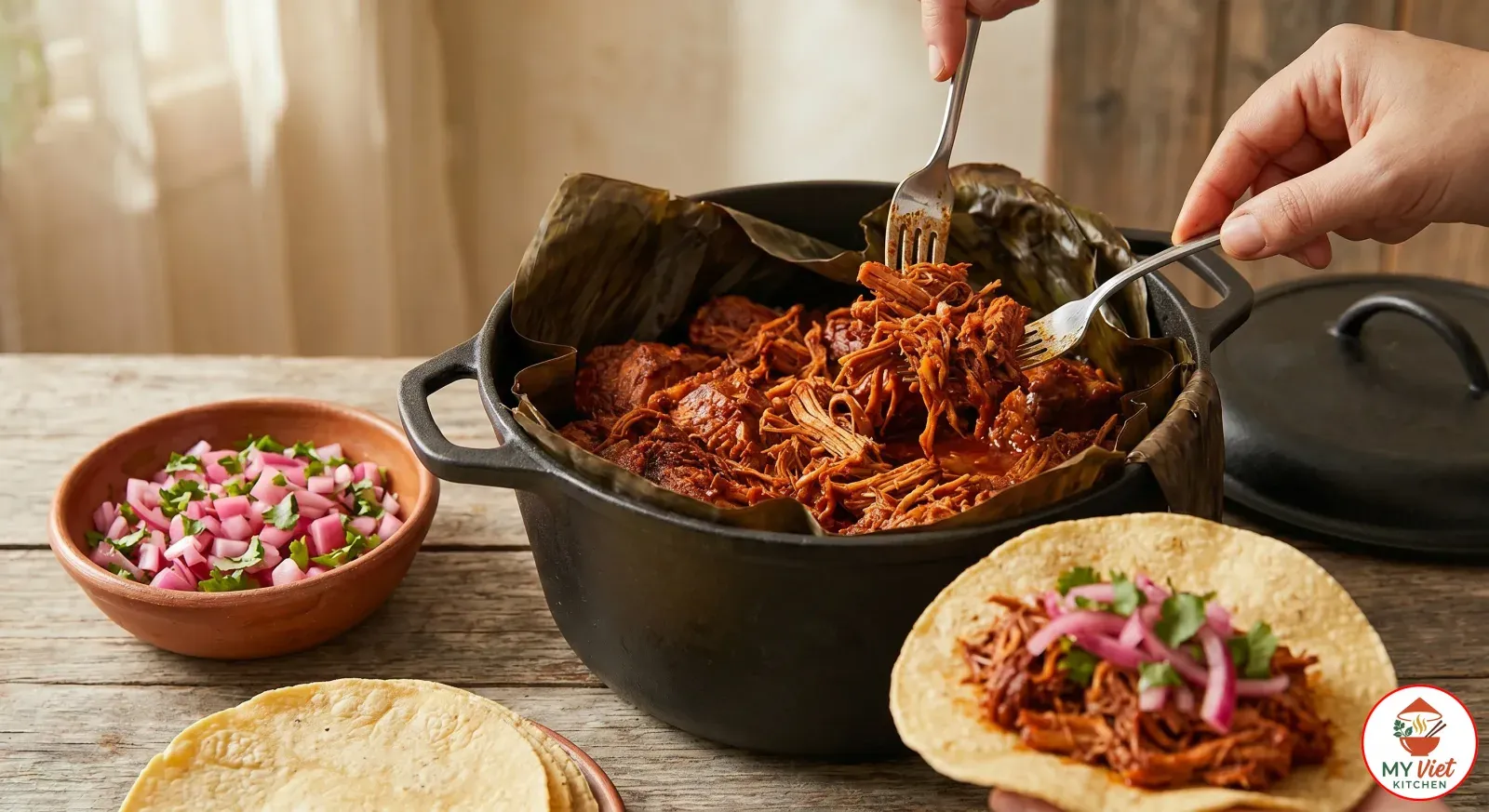
6Open the banana leaf packet with care and take out the habaneros and onion rings. Use two forks to shred the pork right in the pot. It should pull apart with no effort into long, soft strands. Toss the meat in the juices at the bottom. Meanwhile, make the topping by mixing diced red onion with lime juice, cilantro, and a pinch of salt. Serve the cochinita pibil on warm corn tortillas with the pickled onion on top.
Expert Tips for Perfect Cochinita Pibil
Marinate Overnight for Maximum Flavor
Four hours of soaking gives good results, but a full night in the fridge takes it to the next level. The acid works through the meat over time. As a result, you get pork that is tender all the way through, not just on the outside. Plan ahead and start the marinade the night before you cook.
Keep the Habaneros Whole
Whole habaneros add a fruity, mild heat without taking over the dish. If you cut them open, the spice floods the liquid and hides the achiote flavor. By keeping them whole, you stay in control. For more heat, poke each pepper once with a knife before you add it to the pot.
Do Not Skip the Banana Leaves
Banana leaves do two things at once. First, they seal in steam and keep the pork moist. Second, they add a light, green, herbal taste that foil simply cannot match. You can find frozen banana leaves at Asian and Latin food stores. If you cannot find them at all, use parchment paper instead, though the taste will not be the same.
Cochinita Pibil vs. Carnitas vs. Al Pastor
Mexico offers several iconic pork preparations, and each one delivers a distinct experience. Here is a comparison to highlight what sets cochinita pibil apart from other popular Mexican pork dishes.
| Feature | Cochinita Pibil | Carnitas | Al Pastor |
|---|---|---|---|
| Region | Yucatan | Michoacan | Central Mexico |
| Key Flavor | Achiote and sour orange | Lard and citrus | Dried chiles and pineapple |
| Cooking Method | Slow roasted in banana leaves | Braised and fried in lard | Spit roasted |
| Texture | Pull-apart tender | Crispy edges, tender inside | Charred and juicy |
| Color | Deep red-orange | Golden brown | Reddish with char marks |
Serving Suggestions
In the Yucatan, cochinita pibil appears at breakfast, lunch, and dinner. The versatility of this dish means it works with a wide range of accompaniments. Here are the most traditional and satisfying ways to serve it.
The Perfect Accompaniments:
- Corn tortillas: The classic vehicle for cochinita pibil. Warm them on a dry skillet until they puff slightly for the best texture.
- Pickled red onion: The tangy, bright pink onions cut through the richness of the pork and add a refreshing crunch.
- Habanero salsa: A fiery salsa made with roasted habaneros and tomatoes amplifies the Yucatan flavor profile.
- Black beans: Creamy refried black beans provide a hearty base that complements the tangy pork.
- Rice: Simple Mexican red rice rounds out the meal and absorbs the flavorful cooking juices.
Beverage Pairings:
- Horchata: This creamy rice drink cools the palate between bites of spiced pork.
- Mexican lager: A cold beer like Modelo or Pacifico pairs perfectly with the rich, tangy meat.
- Jamaica (hibiscus water): The tart, floral notes of this traditional drink complement the achiote flavors beautifully.
Storage and Reheating
Refrigerator: Store the shredded pork in an airtight container with its cooking juices for up to five days. The flavors actually deepen and improve after a day of resting in the fridge.
Freezer: Portion the cochinita pibil into freezer-safe bags or containers with some cooking liquid. It freezes well for up to three months. Thaw overnight in the refrigerator before reheating.
Reheating: Warm the pork in a skillet over medium heat with a splash of its cooking juices. This method revives the flavors and slightly crisps the edges. Avoid the microwave because it dries out the meat and dulls the achiote flavor.
Common Mistakes to Avoid
1. Using Achiote Powder Instead of Paste
Achiote powder is just ground annatto seeds. The paste, on the other hand, also has garlic, vinegar, and spices that are key to the real flavor. If you swap powder for paste, your marinade will taste flat and plain. Always look for the paste for the best results.
2. Cooking at Too High a Temperature
High heat makes the pork tighten up and turn tough before the fat can melt. Cochinita pibil needs low, slow cooking at 325F. If you crank up the oven, you end up with dry, stringy meat instead of the soft, pull-apart texture you want.
3. Skipping the Marinating Time
The marinade does far more than coat the outside. The acid in the citrus juice soaks into the meat and starts to soften the tough fibers. Without enough time, the center of each piece stays bland. Give the pork at least four hours, and ideally a full night, for the best flavor.
Frequently Asked Questions
What is cochinita pibil?
Cochinita pibil is a traditional slow-roasted pork dish from the Yucatan Peninsula in Mexico. Cooks marinate the pork in a paste made from achiote seeds and sour orange juice, wrap it in banana leaves, and roast it for several hours. The name comes from the Mayan word “pib,” which means underground oven. According to the Smithsonian Magazine, this cooking technique dates back to pre-Columbian times.
What can I use instead of sour orange juice?
Sour oranges can be hard to find outside of Latin America. To copy the flavor, mix two parts fresh orange juice with one part lime juice. Then, add a tablespoon of white vinegar. This blend comes very close to the tart, sharp taste of real sour oranges.
Can I make cochinita pibil in a slow cooker?
Yes, a slow cooker works well for this recipe. Line the insert with banana leaves, add the marinated pork, and cook on low for eight to ten hours. The texture will be equally tender. However, the oven method produces slightly more concentrated flavors because the sealed Dutch oven traps heat more efficiently.
Where can I buy achiote paste?
Most grocery stores carry achiote paste in the international or Latin foods aisle. You can also find it at Mexican markets and online retailers. Brands like El Yucateco and La Anita offer high-quality options. If your local stores do not stock it, ordering online ensures you get an authentic product delivered to your door.
How long does cochinita pibil last in the fridge?
When stored in an airtight container with its cooking juices, cochinita pibil stays fresh in the refrigerator for up to five days. Interestingly, many cooks prefer leftover cochinita pibil because the flavors meld and intensify after a day or two of resting.
Variations and Adaptations
Chicken Pibil:
Swap the pork for bone-in chicken thighs to make a lighter dish. Cut the cook time to two hours at 325F. The chicken soaks up the achiote marinade well and gives you a rich flavor in less time.
Instant Pot Cochinita Pibil:
For a fast weeknight meal, cook the pork on the pressure cook setting for 60 minutes with a natural release. You lose the banana leaf wrapper, but the pressure cooker still makes the pork very tender in much less time. After you shred the meat, toss it back in the juices and serve.
Cochinita Pibil Tortas:
Pile the shredded pork onto crusty Mexican bolillo rolls with pickled red onion, sliced avocado, and habanero salsa. This sandwich version makes a hearty lunch and showcases the pork in a completely different format. Consequently, it has become a popular street food throughout Mexico.
The Cultural Significance of Cochinita Pibil
Cochinita pibil is far more than just food in the Yucatan. It stands for centuries of Mayan cooking tradition that lived on through great change. The dish goes back to a time before the Spanish arrived, when the Maya cooked wild game in pits called “pibs.” After the Spanish brought pigs to the area, local cooks used the same method on pork, and cochinita pibil was born.
Today, this dish sits at the heart of Yucatan life, from Dia de los Muertos to Sunday family meals. In small towns, families still dig pits in their yards and cook whole pigs wrapped in banana leaves over hot coals. The work brings neighbors together, and everyone shares the feast. In 2019, the Mexican government named cochinita pibil part of the cultural heritage of the Yucatan. This honor shows just how much this dish means to the nation.
Conclusion
Making cochinita pibil at home brings one of Mexico’s best dishes to your table. You do not need a backyard pit or fancy tools. The keys are simple: use real achiote paste, give the pork time to soak up the marinade, wrap it in banana leaves, and cook it low and slow. Do not rush any part of the process. Patience gives you pork that is full of flavor, very tender, and stained that stunning red color.
Ready to explore more incredible recipes from around the world? Browse our full recipe collection for dishes from every continent. If you enjoy bold Latin American flavors, you might also love our Empanadas or Ceviche recipes.