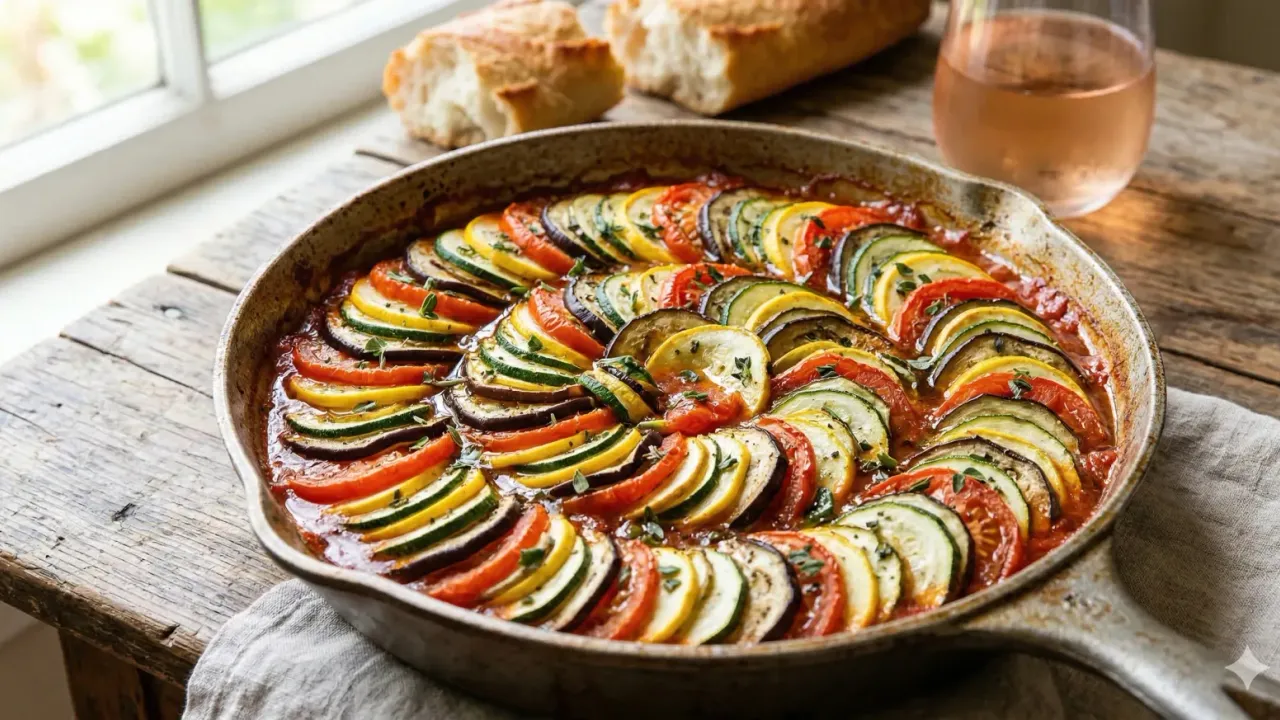
Ratatouille is the crown jewel of Provencal cooking, and this ratatouille recipe captures every sun-drenched flavor of southern France. Layers of tender eggplant, zucchini, bell peppers, and ripe tomatoes bake together in a fragrant herb sauce until they melt into something extraordinary. Moreover, this classic French vegetable dish proves that the simplest ingredients can create the most memorable meals.
Prep Time: 25 minutes | Cook Time: 55 minutes | Servings: 6
Difficulty: Easy | Calories: ~210 per serving
What Makes Ratatouille Special?
Ratatouille comes from the sun-soaked Provence region of southern France. The name derives from the French word “touiller,” meaning to stir. Originally, it was humble peasant food made from whatever summer vegetables grew in the garden. However, this rustic stew has since become a beloved symbol of French cuisine. Its beauty lies in simplicity: fresh vegetables, good olive oil, and fragrant herbs.
What sets a great ratatouille apart is the way each vegetable keeps its identity while contributing to a unified whole. The eggplant turns silky and creamy. The zucchini holds a slight bite. Meanwhile, the tomatoes collapse into a rich, sweet sauce that ties everything together. The bell peppers add brightness, and the herbs infuse each layer with the scent of a Provencal hillside. As a result, every forkful tastes like summer in the south of France.
Furthermore, ratatouille is one of the most versatile dishes in the French kitchen. It works as a main course, a side dish, or even a topping for crusty bread. You can serve it hot from the oven, at room temperature, or cold the next day. In fact, many French cooks insist it tastes best after resting overnight. The Provencal tradition treats this dish as both everyday comfort food and a celebration of the harvest season.

Choosing the Right Vegetables for Ratatouille
The vegetables are everything in ratatouille. Since the dish has so few ingredients, quality matters enormously. Here is how to pick the best produce for your ratatouille recipe.
- Eggplant (the star): Choose firm, glossy eggplants that feel heavy for their size. Italian or globe eggplants work best for slicing into even rounds. Avoid any with soft spots or wrinkled skin. Additionally, smaller eggplants tend to have fewer seeds and less bitterness than oversized ones.
- Zucchini and yellow squash: Pick medium-sized squash, about 6 to 8 inches long. They should feel firm with bright, unblemished skin. Large zucchini become watery and seedy, so smaller is better. Similarly, the skin should have no soft patches.
- Bell peppers: Red and yellow peppers add the most sweetness and color. Green peppers work but taste slightly bitter in comparison. Look for peppers with tight, shiny skin. They should feel heavy and snap when you press them.
- Tomatoes: Roma tomatoes are the best choice because they are meaty with fewer seeds. They slice cleanly into uniform rounds. Ripe, in-season tomatoes make a huge difference. Nevertheless, quality canned crushed tomatoes work perfectly for the base sauce year-round.
- Fresh herbs: Thyme, basil, and herbes de Provence are essential. Dried herbs work for the sauce, but fresh thyme tucked between the vegetable slices adds an aroma that dried simply cannot match.
Ingredients for Ratatouille
Vegetables:
- 2 medium eggplants, cut into 1/2-inch rounds
- 3 medium zucchini, cut into 1/2-inch rounds
- 2 yellow squash, cut into 1/2-inch rounds
- 2 red bell peppers, cut into 1-inch pieces
- 1 yellow bell pepper, cut into 1-inch pieces
- 6 Roma tomatoes, cut into 1/2-inch rounds
Sauce Base:
- 1 can (14 ounces) crushed tomatoes
- 1 large yellow onion, diced
- 4 cloves garlic, minced
- 2 tablespoons tomato paste
- 3 tablespoons olive oil, plus more for drizzling
Herbs and Seasoning:
- 1 teaspoon fresh thyme leaves
- 4 sprigs fresh thyme for layering
- 1 tablespoon fresh basil, chopped
- 1 teaspoon herbes de Provence
- 1 bay leaf
- Salt and black pepper to taste
- Fresh basil leaves for garnish
Pro tip: Cut all vegetables to the same thickness, about half an inch. Uniform slices ensure everything cooks at the same rate. Thick pieces stay undercooked while thin ones turn mushy. Therefore, take an extra minute with your knife. A mandoline slicer makes this step fast and foolproof. This single detail separates a great ratatouille from an average one.
Step-by-Step Instructions
Step 1: Prepare the Base Sauce
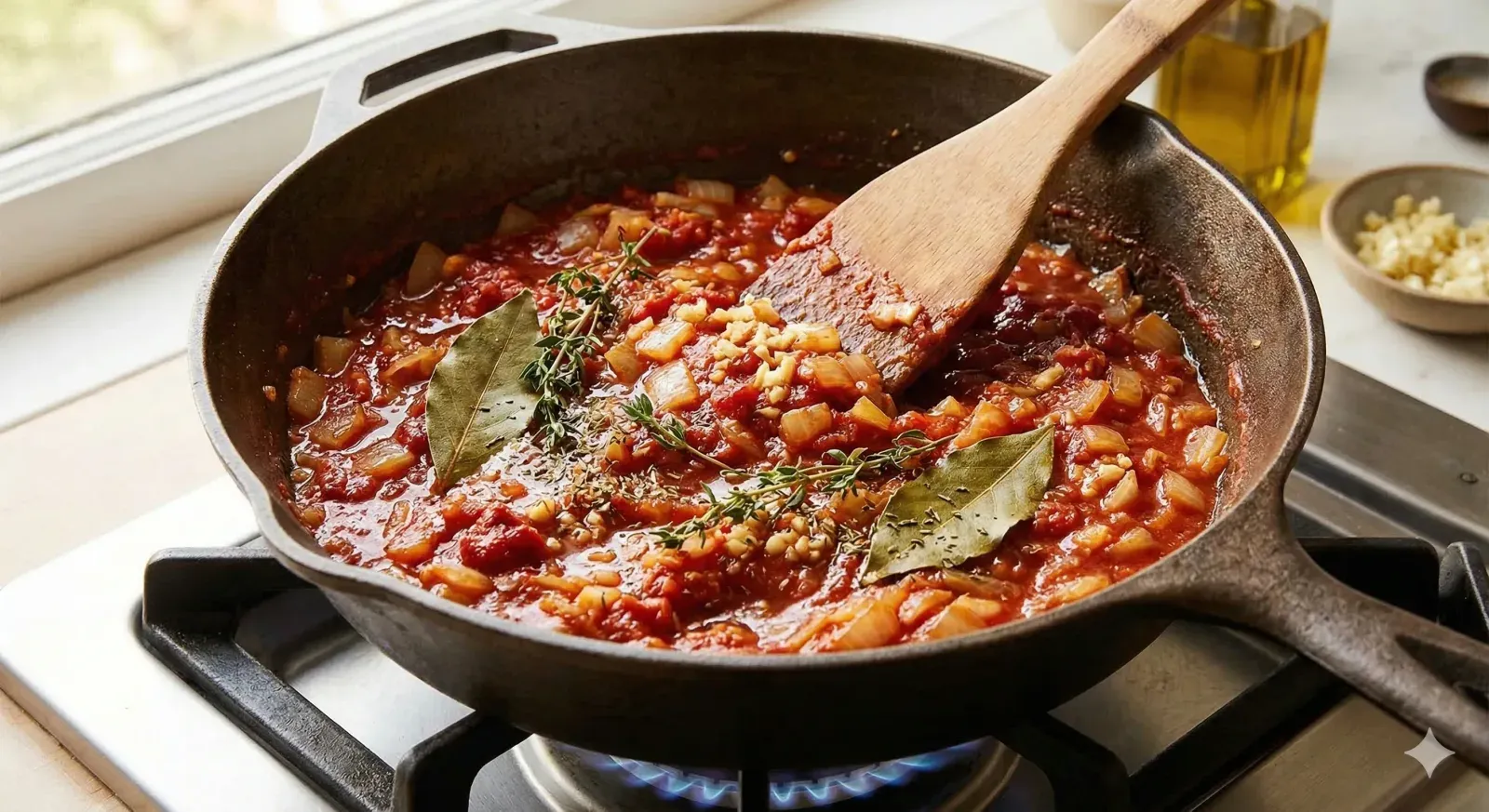
1 Preheat your oven to 375 degrees Fahrenheit. Heat 2 tablespoons of olive oil in a large oven-safe skillet or Dutch oven over medium heat. Add the diced onion and cook for 5 minutes, stirring occasionally, until it turns soft and translucent. Then add the minced garlic and tomato paste. Stir for 1 minute until the garlic becomes fragrant and the paste darkens slightly.
Pour in the crushed tomatoes and stir well. Add the herbes de Provence, bay leaf, and a generous pinch of salt. Let the sauce simmer for 10 minutes until it thickens and the flavors meld together. Consequently, you will have a rich, concentrated base that supports all the layered vegetables above it. Remove the bay leaf before moving on.
Step 2: Slice and Arrange the Vegetables
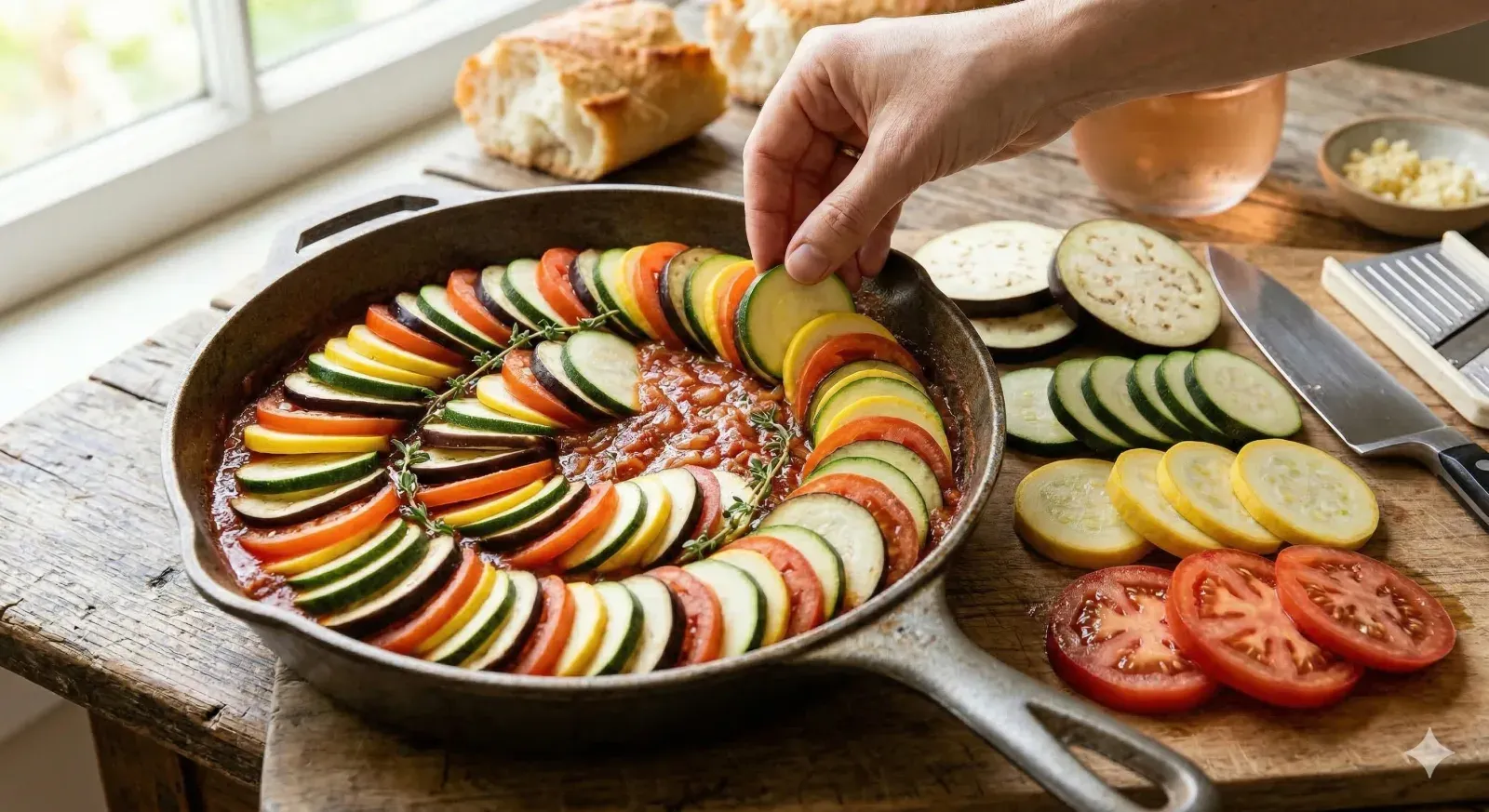
2 Cut the eggplant, zucchini, yellow squash, and Roma tomatoes into uniform half-inch rounds. Keep each vegetable in its own pile. Spread the finished tomato sauce evenly across the bottom of your skillet. This sauce acts as a flavorful bed for the vegetables and prevents sticking.
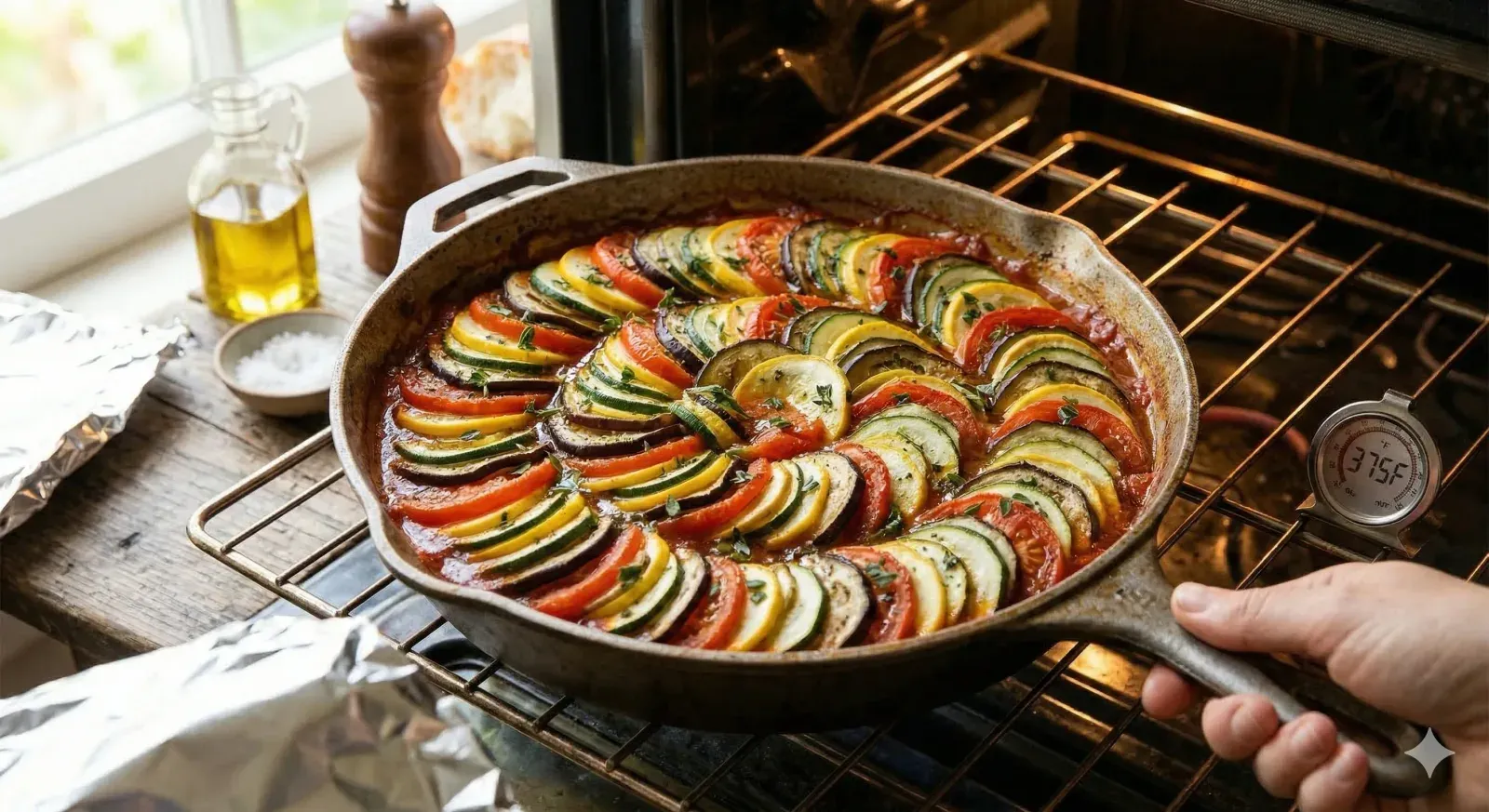
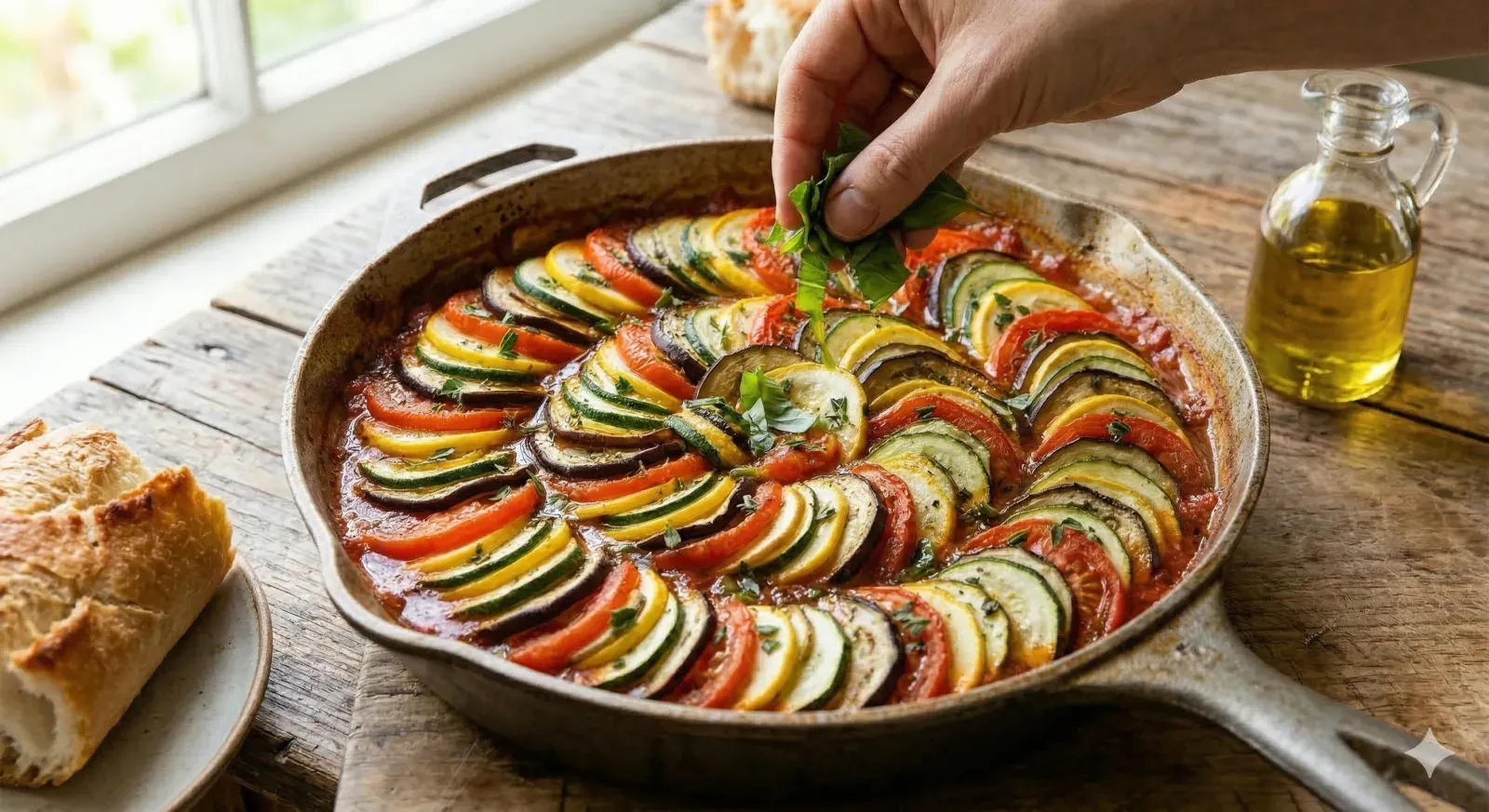
Now arrange the vegetable slices in an alternating pattern on top of the sauce. Stand them upright in tight, overlapping rows, spiraling from the outside edge toward the center. Alternate the colors: eggplant, zucchini, tomato, squash, and repeat. Tuck fresh thyme sprigs between the slices as you go. Besides looking stunning, this arrangement ensures even cooking throughout the dish.
Step 3: Season and Bake
3 Drizzle the remaining tablespoon of olive oil over the arranged vegetables. Season generously with salt, pepper, and fresh thyme leaves. The oil helps the tops caramelize and prevents drying. Cover the skillet tightly with aluminum foil or a lid.
Place the skillet in the preheated oven and bake for 40 minutes. The covered cooking traps steam, which gently softens the vegetables without washing away their flavors. During this time, the tomato sauce below bubbles and infuses the vegetables from underneath. In other words, every slice absorbs flavor from both sides. Resist the urge to peek too often since opening the foil releases precious steam.
Step 4: Uncover and Finish
4 Remove the foil and return the skillet to the oven. Bake uncovered for another 15 minutes. The edges of the vegetables should begin to caramelize and turn golden. Meanwhile, the sauce below will bubble and thicken around the edges. This final blast of dry heat concentrates the flavors beautifully.
Take the ratatouille out and let it rest for 10 minutes. The dish continues cooking gently as it sits, and the sauce settles. Garnish with torn fresh basil leaves and one final drizzle of your best olive oil. The basil wilts slightly from the heat, releasing its peppery fragrance across the whole dish. Serve directly from the skillet for a rustic, beautiful presentation.
Expert Tips for Perfect Results
Slice Everything the Same Thickness
Uniform slices are the secret to even cooking. Aim for exactly half an inch. Thicker pieces will be raw in the center while thin ones collapse into mush. A sharp knife works fine, but a mandoline slicer guarantees perfect consistency. Additionally, even slices create that gorgeous layered look that makes ratatouille so visually striking.
Use the Best Olive Oil You Can Afford
Olive oil is not just a cooking fat in ratatouille. It is a flavor ingredient. Use a regular olive oil for the sauce base and save your best extra virgin for the final drizzle. That finishing oil adds a peppery, fruity note you can actually taste. Consequently, skimping on oil means skimping on flavor. A good Provencal olive oil makes this dish sing.
Do Not Skip the Resting Time
Ratatouille straight from the oven tastes good. Ratatouille that rests for 10 minutes tastes great. The sauce thickens as it cools, and the vegetables absorb more flavor. For the best results, make it several hours ahead or even the night before. The flavors meld and deepen in ways that fresh-from-the-oven simply cannot match. Patience pays off with this dish.
Ratatouille Styles: A Regional Comparison
Ratatouille takes many forms depending on the region and the cook. The classic version from Provence is the most famous, but other styles offer their own charm. Here is how the major approaches compare.
| Style | Origin | Method | Defining Feature |
|---|---|---|---|
| Traditional Provencal | Provence, France | Stewed on stovetop | Vegetables cooked together in a pot, rustic and chunky |
| Tian-Style (Layered) | Provence, France | Baked in oven | Thin slices layered in a pattern, elegant presentation |
| Confit Byaldi | Thomas Keller adaptation | Slow-baked, piperade base | Paper-thin slices, vinaigrette finish, fine-dining style |
| Bohemienne | Avignon, France | Long stewed | Only eggplant and tomatoes, no zucchini or peppers |
| Quick Saute | Modern adaptation | High-heat stovetop | Cubed vegetables sauteed fast, weeknight-friendly |
Serving Suggestions
Ratatouille shines as a main course for vegetarians or as a side dish alongside grilled meat or fish. Its versatility means you can pair it in dozens of ways. Here are the best options.
Classic Accompaniments:
- Crusty French bread: A warm baguette is the classic partner. Tear off chunks and scoop up the saucy vegetables. The bread soaks up the tomato-herb juices beautifully.
- Creamy polenta: A bed of soft, buttery polenta turns ratatouille into a hearty main course. The smooth texture contrasts with the tender vegetables.
- Grilled chicken or fish: Pan-seared chicken breast or grilled white fish like sea bass pairs perfectly. The light ratatouille balances richer proteins. Furthermore, the herbs complement both poultry and seafood.
- Poached or fried eggs: Nestle eggs into the warm ratatouille for a stunning brunch dish. The runny yolk mixes with the tomato sauce for something truly special.
- Fluffy couscous or rice: Plain couscous or steamed rice absorbs the flavorful sauce. This pairing makes the dish more filling without competing with the vegetable flavors.
Beverage Pairings:
- Provencal rose: A chilled dry rose from Provence is the perfect match. Its light berry notes and crisp acidity mirror the brightness of the vegetables.
- Cotes du Rhone red: A medium-bodied red with earthy, peppery notes stands up well to the rich tomato sauce. Serve it slightly cool for the best pairing.
- Sauvignon Blanc: The grassy, citrus notes of a good Sauvignon Blanc cut through the richness. This is a wonderful choice for warm-weather dining.
- Sparkling lemonade: For a non-alcoholic option, homemade sparkling lemonade with fresh herbs provides a refreshing contrast to the warm vegetables.
Storage and Reheating
Refrigerator: Store ratatouille in a sealed container for up to 5 days. It tastes even better after a day in the fridge. The flavors merge and deepen overnight. In fact, many Provencal cooks deliberately make extra for the next day.
Freezer: Ratatouille freezes well for up to 3 months. Let it cool completely before transferring to freezer-safe containers. Leave a bit of headspace since the liquid expands. Thaw overnight in the refrigerator before reheating.
Reheating: Warm gently in the oven at 325 degrees for 15 to 20 minutes. Alternatively, reheat on the stovetop over low heat, stirring carefully to avoid breaking the vegetable slices. Add a splash of water or broth if the sauce has thickened too much. Microwave works in a pinch, although the oven gives the best results.
Common Mistakes to Avoid
1. Using Out-of-Season Vegetables
Ratatouille is a summer dish at heart. Watery, tasteless winter tomatoes and rubbery off-season eggplant produce a bland result. For the best flavor, make this dish between June and September when the vegetables are at their peak. However, if you crave it in winter, use quality canned tomatoes for the sauce and choose the firmest eggplant available.
2. Cutting Vegetables Unevenly
Thick chunks next to paper-thin slices means some pieces turn to mush while others stay raw. Take the time to cut everything to a uniform half-inch thickness. This ensures even cooking throughout. A mandoline slicer eliminates guesswork entirely. Consequently, every bite has the same perfect tenderness.
3. Overcooking Until Mushy
Ratatouille should be tender, not baby food. The vegetables need to hold their shape and retain a slight bite. Overbaking turns everything into a formless stew. Watch the timing carefully. The covered bake softens things, and the uncovered finish adds color. Pulling it out at the right moment is the key to texture.
4. Skimping on Olive Oil
Olive oil carries flavor and helps the vegetables caramelize. Too little oil gives you dry, bland results. Be generous with it, especially the finishing drizzle. The oil also helps your body absorb the fat-soluble vitamins in the vegetables. Therefore, do not treat the oil as optional or reduce it thinking you are being healthier.
Frequently Asked Questions
What is the difference between ratatouille and caponata?
Both are Mediterranean vegetable dishes, but they come from different countries with different flavor profiles. Ratatouille is French, featuring tomatoes, zucchini, eggplant, and bell peppers with herbs de Provence. Caponata is Sicilian and has a distinct sweet-and-sour taste from vinegar and sugar, often with capers and olives. In contrast, ratatouille relies on the natural sweetness of the vegetables and the fragrance of fresh herbs.
Can I make ratatouille ahead of time?
Absolutely, and many cooks prefer it that way. Make the full dish a day ahead and refrigerate it. The flavors deepen and meld overnight as the vegetables absorb the sauce. Reheat gently at 325 degrees in the oven or on the stovetop. This makes ratatouille an ideal choice for dinner parties since the hardest work is done before guests arrive.
Do I need to salt the eggplant before making ratatouille?
Salting is optional but helpful. Sprinkle the eggplant slices with salt and let them sit for 20 to 30 minutes. This draws out excess moisture and reduces any lingering bitterness. Pat them dry before using. Modern eggplant varieties are less bitter than older types, so you can skip this step if pressed for time. Nevertheless, it does improve the final texture.
Is ratatouille healthy?
Yes, ratatouille is exceptionally nutritious. It packs multiple servings of vegetables into one dish and is naturally low in calories at about 210 per serving. The dish is rich in vitamins A and C, dietary fiber, and antioxidants from the tomatoes and peppers. Additionally, it is naturally vegan and gluten-free, fitting into Mediterranean, Whole30, and plant-based diets with ease.
What vegetables can I substitute in ratatouille?
The classic lineup is eggplant, zucchini, bell peppers, and tomatoes. You can swap yellow squash for zucchini, or try Japanese eggplant for a more delicate texture. Some cooks add mushrooms, fennel, or artichoke hearts for variety. However, avoid starchy vegetables like potatoes since they change the character of the dish entirely. Stick to soft summer vegetables for the most authentic result.
Should ratatouille be served hot or cold?
It works beautifully at any temperature. Warm from the oven, it makes a comforting main course. At room temperature, it shines as a Provencal summer dish alongside grilled meat. Cold from the fridge, it spreads onto crusty bread like a vegetable bruschetta. The flavors actually intensify as the dish cools, so do not hesitate to enjoy leftovers straight from the refrigerator.
Variations and Adaptations
Confit Byaldi (Fine-Dining Style):
This is the version made famous by chef Thomas Keller and the Pixar movie. Slice all vegetables paper-thin using a mandoline. Make a piperade sauce base with roasted peppers and tomatoes. Layer the ultra-thin slices in a tight spiral pattern. Bake low and slow at 275 degrees for two hours. Finish with a drizzle of basil vinaigrette. The result is an elegant, refined take on the rustic original.
Quick Stovetop Ratatouille:
For a weeknight-friendly version, cube all the vegetables into half-inch pieces instead of slicing them. Saute each vegetable separately in olive oil, then combine everything in one pot with the tomato sauce. Simmer for 20 minutes. You lose the beautiful layered look, but the flavor is still excellent. This method takes about 30 minutes from start to finish.
Ratatouille Gratin:
For a heartier version, top the baked ratatouille with a layer of breadcrumbs mixed with grated Parmesan and a drizzle of olive oil. Return it to the oven for 10 minutes until the top turns golden and crispy. Alternatively, add crumbled goat cheese during the last five minutes of baking. The cheese melts into tangy pockets throughout the vegetables, adding richness to an otherwise light dish.
Stuffed Pepper Ratatouille:
Hollow out bell peppers and fill them with a mixture of diced ratatouille vegetables and cooked quinoa or rice. Top with tomato sauce, cover, and bake. This turns the classic into a self-contained meal. It also makes portion control easy and adds a fun presentation twist for dinner parties.
The Cultural Significance of Ratatouille
Ratatouille represents the soul of Provencal cooking: letting great ingredients speak for themselves. It began as poor man’s food, a way for farmers to use up the flood of summer vegetables that ripened all at once. There was nothing fancy about it. However, that simplicity turned out to be its greatest strength. The dish proves that you do not need expensive ingredients to create something extraordinary.
In 2007, the Pixar film “Ratatouille” brought this humble dish to global attention in a way no cookbook ever had. Its central message, that anyone can cook, mirrors the spirit of the dish itself. Since then, a whole generation has grown up associating ratatouille with creativity, passion, and the democratic nature of good food. Restaurants around the world reported spikes in ratatouille orders after the film’s release.
In Provence today, ratatouille remains an everyday staple rather than a special-occasion dish. Families make big batches during the summer harvest and eat it for days. It appears at picnics, potlucks, and weeknight dinners alike. This accessibility is exactly what makes ratatouille such an enduring classic. It belongs to everyone, regardless of skill level or budget, and it rewards honest cooking with honest flavor.
Conclusion
This ratatouille recipe captures the vibrant, sun-soaked flavors of southern France in one beautiful dish. The keys are straightforward: use the freshest vegetables you can find, cut them evenly, build a flavorful sauce base, and bake until tender. Follow this ratatouille recipe step by step, and you will create a dish that looks stunning on the table and tastes even better than it looks.
Ready to explore more European classics? Browse our European dishes collection, including coq au vin, bouillabaisse, and moussaka. Also check out our Asian vegetable dishes for more plant-forward inspiration from around the world.