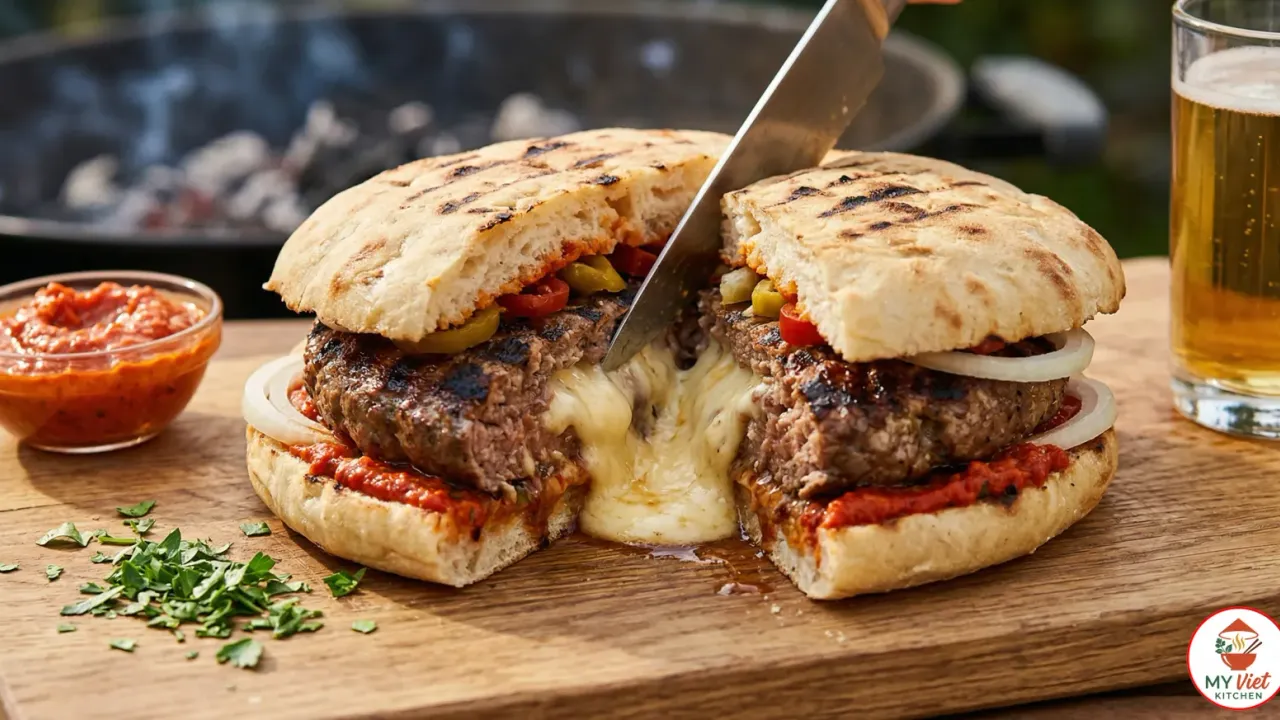
Pljeskavica is Serbia’s answer to the burger, and it puts every fast-food patty to shame. This massive, juicy grilled patty blends beef, pork, and lamb into a seasoned masterpiece. Moreover, the stuffed version hides a molten core of kajmak cheese that erupts with every bite. Served in warm lepinja flatbread with smoky ajvar and sharp raw onion, pljeskavica delivers bold Balkan flavor that you can recreate at home. This pljeskavica recipe walks you through the authentic technique step by step.
Prep Time: 30 minutes | Cook Time: 15 minutes | Total Time: 45 minutes | Servings: 6
Difficulty: Medium | Calories: ~480 per serving
What Makes Pljeskavica Special?
Pljeskavica stands apart from ordinary burgers because of its three-meat blend. Beef provides structure and a robust beefy backbone. Pork adds fat that keeps the patty moist on the grill. Lamb brings a rich, savory depth that lifts the whole flavor. Furthermore, the meat is kneaded until sticky and tight. This binds the proteins. As a result, the patty holds its shape on the grill. You need no breadcrumbs or eggs.
The dish comes from Serbia, where it is a national treasure. Street vendors in Belgrade, Novi Sad, and Leskovac serve it from smoky charcoal grills. The name comes from the Serbian word “pljeskati,” meaning to clap or flatten. Cooks clap the meat between their palms to shape it. Therefore, the name describes the very act that creates it. In Leskovac, a city in the south, pljeskavica reaches legend status. The annual Leskovac Grill Festival draws huge crowds. Consequently, the Leskovac-style stuffed version is the gold standard.
What truly sets pljeskavica apart from Western burgers is the stuffing. A pocket of kajmak cheese melts inside as it grills. When you cut in, the warm, tangy cream oozes out and mixes with the meat juices. Additionally, the toppings play a big role. Ajvar, a smoky roasted pepper spread, takes the place of ketchup. Raw white onion adds bite. Pickled hot peppers bring heat. Together, these parts create a sandwich that is bolder and richer than any plain burger.

Choosing the Right Meat Blend
The meat blend is the foundation of great pljeskavica. Each type of meat serves a specific purpose. Your choice of ratio and quality determines whether the patty turns out juicy or dry. Here are the best options for building the perfect blend at home.
- Beef (80/20 ground, best foundation): Use ground beef with a 20 percent fat content. Lean beef produces dry, crumbly patties. The fat melts during grilling and bastes the meat from within. Furthermore, beef provides the structural backbone that holds everything together. It should make up roughly half of the total blend.
- Pork (ground shoulder): Pork shoulder has the ideal fat-to-meat ratio for pljeskavica. The extra fat keeps the patty incredibly moist. Additionally, pork adds a subtle sweetness that balances the lamb. Ground pork from the shoulder cut is fattier than loin. Therefore, always choose shoulder for the juiciest results.
- Lamb (ground leg or shoulder): Lamb brings a distinctive, slightly earthy flavor that defines authentic pljeskavica. The savory depth of lamb is irreplaceable. However, too much lamb can be overpowering. Keep it to about a quarter of the total blend. If lamb is unavailable, you can use all beef and pork. In contrast, the flavor will be milder and less complex.
- Two-meat option (budget alternative): A simple blend of beef and pork still produces excellent pljeskavica. Use a 60/40 ratio of beef to pork. This version costs less and appeals to those who dislike lamb. Similarly, it works well for feeding larger groups. The results are still far superior to a single-meat patty.
Ingredients for Pljeskavica
The Meat Mixture:
- 1 pound ground beef (80/20 fat ratio)
- 8 ounces ground pork (shoulder preferred)
- 8 ounces ground lamb
- 1 large onion, finely grated
- 3 cloves garlic, minced
- 1 teaspoon sweet paprika
- 1 teaspoon salt
- 1/2 teaspoon black pepper
- 1/2 teaspoon baking soda
- 3 tablespoons sparkling mineral water
For the Filling:
- 4 ounces kajmak cheese (or mix equal parts cream cheese and mascarpone)
- Pinch of salt for the kajmak substitute
For Serving:
- 6 lepinja flatbreads or large pita rounds
- 1/2 cup ajvar (roasted red pepper spread)
- 1 large white onion, thinly sliced into rings
- Pickled hot peppers
- Fresh tomato slices (optional)
- Shredded cabbage (optional)
Pro tip: The baking soda and sparkling water are the secret weapons in authentic pljeskavica. The baking soda raises the pH of the meat. This helps the proteins retain more moisture during grilling. Consequently, the patty stays juicy instead of drying out. Meanwhile, the sparkling water adds tiny gas bubbles that make the texture lighter. Together, they transform dense ground meat into a tender, almost fluffy patty. Do not skip these two ingredients. They make the difference between a good pljeskavica and an extraordinary one.
Step-by-Step Instructions
Step 1: Prepare the Meat Mixture
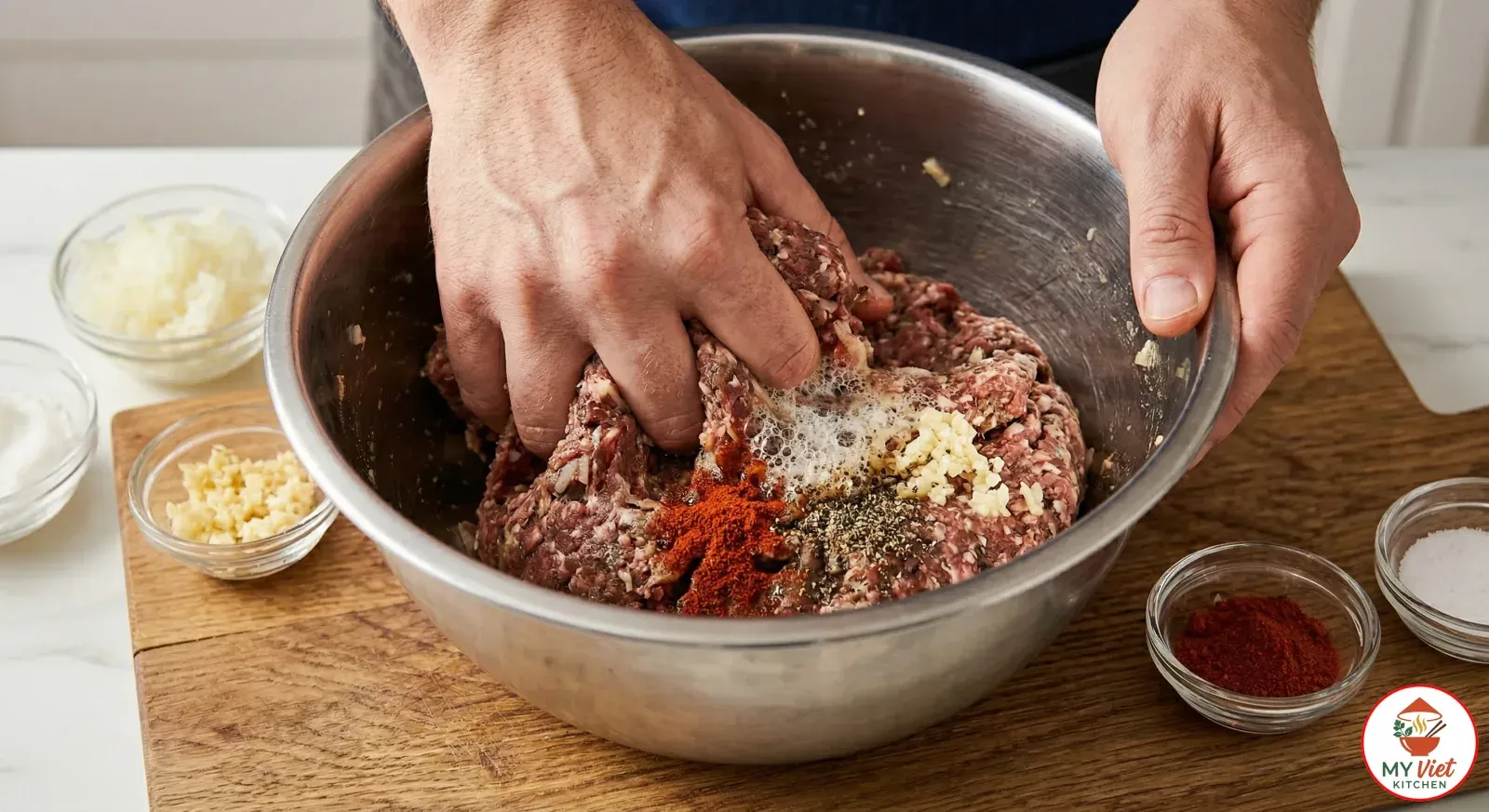
1 Combine the ground beef, pork, and lamb in a large mixing bowl. Add the grated onion, minced garlic, sweet paprika, salt, and black pepper. Sprinkle the baking soda over the meat. Pour in the sparkling mineral water. Now mix everything together with your hands for 3 to 4 minutes. The mixture should become sticky and pull away from the sides of the bowl.
The kneading step is key. You are building up myosin in the meat. These proteins form a natural glue. As a result, the patty holds together with no eggs or crumbs. Furthermore, the grated onion puts juice right into the meat. This liquid steams inside the patty on the grill. Consequently, each bite stays juicy. Cover the bowl and chill for at least 2 hours. Overnight rest is even better. The flavors blend and the proteins firm up.
Step 2: Shape and Stuff the Patties
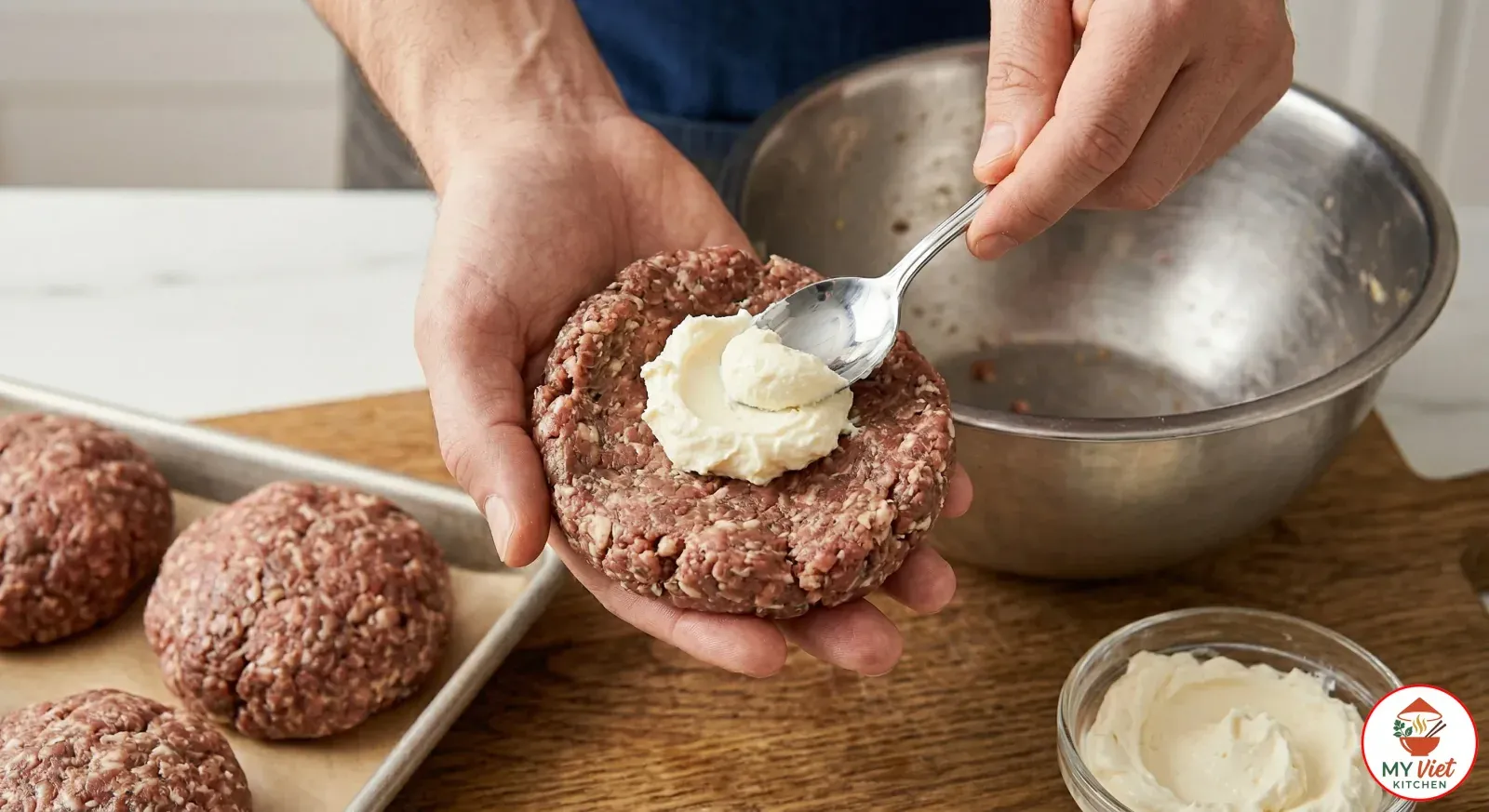
2 Divide the chilled meat mixture into 6 equal portions. Take one portion and flatten it between your palms into a wide disc about 8 inches across and 1/3 inch thick. Place a generous tablespoon of kajmak cheese in the center. Fold the edges of the meat over the filling. Reshape the patty into a flat round about 6 inches in diameter. Press the edges firmly to seal the cheese inside.
Good seals on the edges are vital. Any gap lets melted kajmak leak out on the grill. Therefore, pinch the seams well. Wet your hands if the meat sticks. Moreover, keep the patties thin and wide, not thick and small. Real pljeskavica is much larger than a Western burger. The thin shape cooks evenly all the way through. Additionally, more surface area means more charred crust. That crust is where most of the flavor lives.
Step 3: Rest and Prepare the Grill
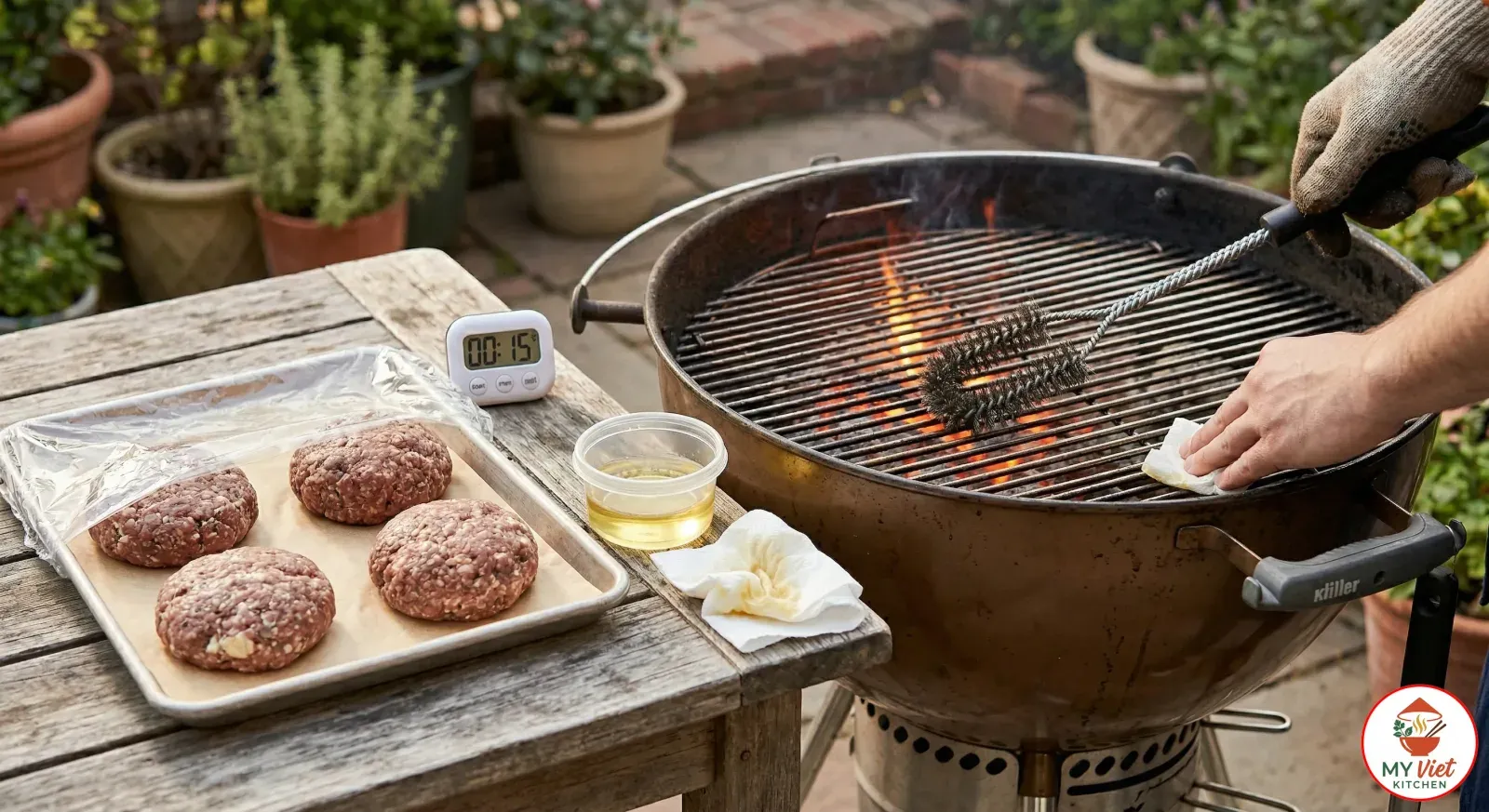
3 Place the shaped patties on a parchment-lined tray. Refrigerate them for 15 minutes. This firming step prevents the patties from falling apart when they hit the hot grill. Meanwhile, preheat your charcoal or gas grill to high heat. Clean the grates with a wire brush. Oil them generously with a paper towel dipped in vegetable oil.
Charcoal is the classic and best method. The smoky flavor from hot coals defines real Serbian pljeskavica. However, a gas grill or cast iron pan works well at home. In fact, cast iron gives a great crust. The key is very high heat. The grill should be hot enough that water drops sizzle and vanish on contact. Furthermore, oiling the grates stops the meat from tearing when you flip it. A clean, hot, oiled surface is a must for the best results.
Step 4: Grill the Pljeskavica
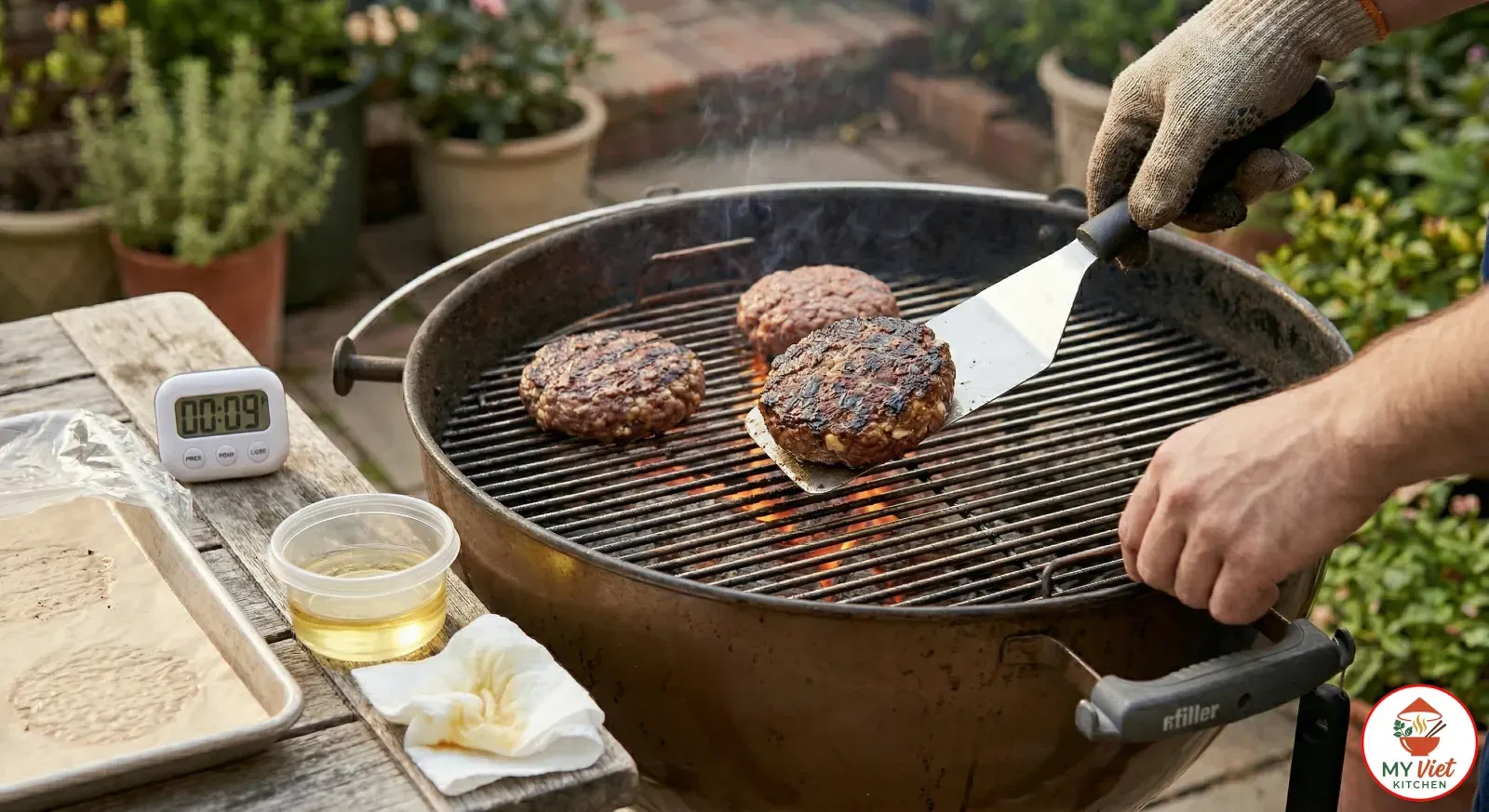
4 Place the chilled patties on the hot grill grates. Cook for 5 to 6 minutes on the first side without moving them. The meat develops a deep, dark crust through the Maillard reaction. Flip carefully using a wide spatula. Cook for another 5 to 6 minutes on the second side. The internal temperature should reach 160 degrees Fahrenheit for food safety.
Do not press down on the patties with your spatula. Pressing squeezes out the juices and melted kajmak. Consequently, you lose the very moisture that makes pljeskavica extraordinary. Instead, let the heat do the work. Flip only once. Moreover, resist the urge to check the bottom too early. Lifting the patty before the crust sets causes it to stick and tear. Trust the timing. After 5 minutes on high heat, the patty releases naturally from the grates. That clean release tells you it is ready to flip.
Step 5: Assemble and Serve
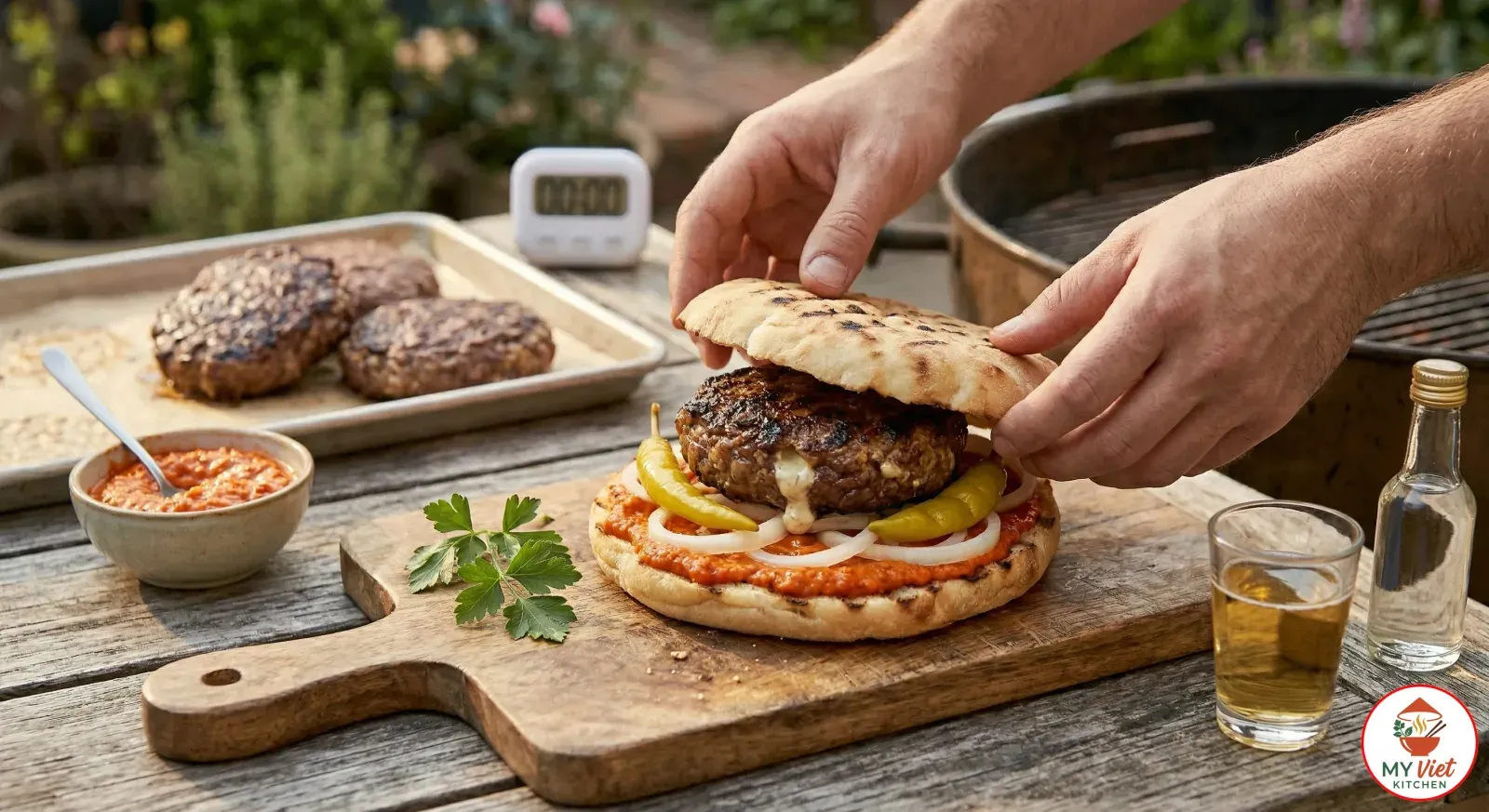
5 Split the lepinja bread in half while the pljeskavica rests for 2 minutes off the grill. Spread a generous layer of ajvar on the bottom half of the bread. Place the grilled patty on top. Add thinly sliced raw white onion and a few pickled hot peppers. Close the sandwich with the top half of the bread. Serve immediately while the kajmak inside is still melted and flowing.
The resting period allows the juices to redistribute through the meat. Cutting or serving the patty immediately causes the juices to run out. Therefore, patience here rewards you with a juicier bite. Additionally, warm the lepinja bread on the grill for 30 seconds per side. Warm bread absorbs the meat juices and ajvar more effectively. Furthermore, the slight toast adds a satisfying crunch. Each component contributes to the final experience. The smoky meat, tangy kajmak, sweet ajvar, and sharp onion create layers of flavor in every single bite.
Expert Tips for Perfect Pljeskavica
Knead the Meat Thoroughly
Kneading is what sets great pljeskavica apart from a weak patty. Mix the meat with your hands for a full 3 to 4 minutes. It should feel sticky, almost like paste. This means the myosin proteins have kicked in. They act as a natural glue on the grill. In contrast, under-mixed meat falls apart through the grates. Furthermore, kneading spreads the spices evenly. Every bite should taste the same. Do not use a spoon or fork. Your hands bring the warmth and pressure needed to bind it all.
Rest the Meat Overnight
Serbian grill masters always mix their pljeskavica a day ahead. Overnight rest lets the salt soak deep into the meat. The baking soda has time to soften the fibers fully. Moreover, the garlic, paprika, and onion flavors spread through every part. Consequently, rested meat tastes far better than a fresh mix. At minimum, rest the blend for 2 hours. However, 12 to 24 hours in the fridge gives the best outcome. This patience is the single biggest key to real flavor.
Use High Heat and Flip Only Once
Pljeskavica needs fierce heat. The grill should be as hot as you can get it. High heat builds a fast crust that locks in juice and stops sticking. Flip the patty only once. Each extra flip raises the chance of it breaking. Additionally, too many flips stop a good crust from forming. Instead, trust the timing. Five to six minutes per side gives a deep char outside and a juicy, cheese-filled center. The gap between the smoky crust and melted kajmak is what makes this dish so good.
Pljeskavica vs. Other Balkan Grilled Meats
The Balkans have a rich tradition of grilled meat dishes. Each country offers its own specialty. However, pljeskavica holds a unique place among them. Here is how it compares to other beloved Balkan grilled meats.
| Feature | Pljeskavica (Serbia) | Cevapi (Bosnia) | Kofte (Turkey) | Mici (Romania) |
|---|---|---|---|---|
| Shape | Large flat patty | Small finger-shaped | Oval or round | Small cylinders |
| Meat Blend | Beef, pork, lamb | Beef and lamb | Lamb or beef | Beef, pork, lamb |
| Stuffed | Yes, with kajmak | No | No | No |
| Bread | Lepinja | Somun | Pide or lavash | Fresh bread |
| Key Condiment | Ajvar | Kajmak on top | Yogurt sauce | Mustard |
| Signature Feature | Melted cheese center | Charcoal smokiness | Warm spice blend | Baking soda rise |
Serving Suggestions
In Serbia, pljeskavica is most commonly served as street food in lepinja bread. However, it also appears on restaurant tables as a plated main course. The right accompaniments transform this grilled patty into a complete and memorable meal. Moreover, the bold flavors of pljeskavica pair well with both simple sides and more elaborate spreads.
The Perfect Accompaniments:
- Ajvar: This smoky roasted red pepper and eggplant spread is non-negotiable. It adds sweetness, smokiness, and a velvety texture. Furthermore, ajvar is the traditional condiment that defines the pljeskavica experience in Serbia.
- Shopska salad: Diced tomatoes, cucumbers, onion, and peppers topped with crumbled white cheese. The fresh, tangy salad balances the richness of the grilled meat beautifully. Additionally, it is the most popular salad in the Balkans.
- Urnebes: A spicy Serbian cheese spread made from feta, roasted peppers, and chili. It adds heat and creaminess as an extra condiment. Consequently, it intensifies the overall flavor profile.
- French fries: Thick-cut fries are the go-to side dish at Serbian grill restaurants. They soak up the meat juices and ajvar that drip from the sandwich. In fact, no Serbian grill plate is complete without them.
- Pickled vegetables: Pickled peppers, cabbage, and mixed vegetables cut through the richness. The acidity refreshes the palate between bites of the heavy, savory patty.
Beverage Pairings:
- Jelen Pivo (Serbian lager): A cold Serbian lager is the most authentic pairing. The crisp, clean beer washes down the rich meat and cuts through the fat. Moreover, the light carbonation refreshes the palate perfectly.
- Vranac red wine: This full-bodied Balkan red wine from Montenegro and Serbia stands up to the bold meat flavors. Its dark fruit notes complement the charred crust beautifully.
- Rakija (plum brandy): A small glass of sljivovica before or after the meal is a Serbian tradition. This potent fruit brandy aids digestion. Additionally, its sharp flavor cleanses the palate.
- Ayran (yogurt drink): This chilled, salted yogurt beverage is popular across the Balkans and Turkey. The cool, tangy drink tames the spice from pickled peppers. Instead of fighting the rich flavors, it complements them smoothly.
Storage and Reheating
Refrigerator: Store cooked pljeskavica patties in an airtight container for up to 3 days. Keep the bread, ajvar, and toppings separate. Assembled sandwiches become soggy within hours. However, the patties on their own reheat well. Furthermore, the flavors actually deepen overnight as the seasonings continue to meld.
Freezer: Freeze uncooked shaped patties for up to 3 months. Place parchment paper between each patty to prevent sticking. Thaw overnight in the refrigerator before grilling. Alternatively, freeze the raw meat mixture in a sealed bag. Form the patties after thawing. In fact, freezing uncooked patties preserves the texture better than freezing cooked ones. The kajmak filling freezes well inside the patties.
Reheating: Reheat cooked patties on a hot skillet or grill for 2 to 3 minutes per side. Do not use the microwave. Microwaving makes the exterior rubbery and the kajmak leaks out entirely. Instead, a hot pan restores the crispy crust. Add a splash of water to the pan and cover with a lid for the last 30 seconds. Consequently, the steam melts the kajmak inside without drying out the meat. Meanwhile, warm the bread separately on the grill or in a toaster.
Common Mistakes to Avoid
1. Skipping the Resting Time
Freshly mixed meat has not had time to develop flavor or binding strength. The salt needs hours to penetrate the proteins. The baking soda needs time to tenderize the meat. Moreover, the grated onion juice needs to distribute evenly. Skipping the rest produces a patty that tastes flat and falls apart easily. Always refrigerate the mixture for at least 2 hours. Overnight is ideal. This single step makes the biggest difference in the final result.
2. Making the Patties Too Thick
Pljeskavica should be wide and thin, not small and thick. A thick patty takes too long to cook through. Consequently, the outside burns before the inside reaches a safe temperature. Furthermore, a thick patty does not develop enough surface crust relative to its volume. The crust-to-meat ratio is important. Traditional pljeskavica spans 6 to 8 inches in diameter. Aim for about 1/3 inch thickness after stuffing. That proportion delivers the perfect balance of charred exterior and juicy interior.
3. Using Lean Meat
Lean ground beef produces a dry, crumbly patty. Fat is not the enemy in pljeskavica. It is the source of flavor and juiciness. Use 80/20 ground beef at minimum. The pork should come from the shoulder, which is naturally fatty. Without sufficient fat, the patty dries out on the grill. Additionally, the kajmak filling cannot compensate for a dry meat base. Instead, the cheese melts into an already juicy patty. The combination of rendered fat and melted kajmak creates the signature luscious texture.
4. Pressing the Patty on the Grill
Pressing down on the patty with a spatula is a common habit that destroys pljeskavica. Every press forces out the juices and the melted kajmak. As a result, the patty becomes flat, dry, and hollow inside. The entire point of stuffing the patty is to trap the melted cheese within. Therefore, let the pljeskavica cook undisturbed. Flip it once with a wide spatula. Treat it gently. The reward for restraint is a patty that gushes with molten kajmak at the first bite.
Frequently Asked Questions
What is pljeskavica?
Pljeskavica is a Serbian grilled meat patty made from a blend of beef, pork, and lamb. The name comes from the Serbian word “pljeskati,” meaning to clap or flatten. Street vendors and grill restaurants across Serbia serve it in lepinja flatbread with ajvar, raw onion, and pickled peppers. Furthermore, the stuffed version contains kajmak cheese that melts inside during grilling. It holds the status of a national dish in Serbia. In fact, the city of Leskovac hosts an annual grill festival largely dedicated to celebrating pljeskavica.
What meat is used in pljeskavica?
Traditional pljeskavica uses three meats: beef, pork, and lamb. Beef provides the structural base. Pork adds fat and moisture that keeps the patty juicy. Lamb contributes a distinctive savory depth. However, a two-meat blend of beef and pork also works well. Similarly, some modern versions use only beef. The three-meat blend produces the most authentic and complex flavor. Moreover, the fat content matters more than the specific cuts. Aim for a total fat content of about 20 percent across the blend.
What is the difference between pljeskavica and a hamburger?
Several important differences separate pljeskavica from a standard hamburger. The meat blend uses beef, pork, and lamb rather than pure beef. The patty is much larger and thinner, spanning 6 to 8 inches. Additionally, the meat is heavily kneaded until sticky. This eliminates the need for egg or breadcrumb binders. The stuffed version contains kajmak cheese inside. Furthermore, pljeskavica is served in lepinja flatbread with ajvar and raw onion. In contrast, hamburgers use sesame buns with ketchup and lettuce. The flavor profile is bolder and more complex.
What is kajmak and where can I buy it?
Kajmak is a creamy, tangy Balkan dairy product made by skimming the cream from slowly heated milk. It has a texture between clotted cream and cream cheese. You can find it at Eastern European or Balkan grocery stores. Online specialty retailers also carry it. If kajmak is unavailable, mix equal parts cream cheese and mascarpone with a pinch of salt. This substitute closely mimics the tangy, rich texture. Moreover, some Serbian communities have local producers who sell fresh kajmak at farmers markets.
Can I make pljeskavica without a grill?
Yes, a cast iron skillet or grill pan works well for indoor cooking. Heat the pan over high heat until it smokes. Cook the patties for 5 to 6 minutes per side. Cast iron delivers excellent crust formation. However, you will miss the smoky charcoal flavor. To compensate, add half a teaspoon of smoked paprika to the meat mixture. Additionally, a broiler set to high can simulate overhead grill heat. Place the patties 4 inches from the element. Regardless of the method, the key is maximum heat for a proper sear.
How do I prevent the patties from falling apart?
Three techniques prevent pljeskavica from crumbling. First, knead the meat thoroughly for 3 to 4 minutes until it becomes sticky. The myosin proteins act as a natural binder. Second, refrigerate the mixture for at least 2 hours. The cold firms the fat and allows the proteins to set. Third, chill the shaped patties for 15 minutes before grilling. Furthermore, use a hot, well-oiled grill surface. The rapid crust formation seals the patty together. Consequently, following all three steps virtually guarantees a patty that holds its shape perfectly.
Variations and Adaptations
Leskovacka Pljeskavica (Leskovac Style):
The Leskovac version is the most famous regional variation. It adds finely diced hot peppers directly into the meat mixture. Consequently, the patty itself carries a spicy kick. The stuffing often includes both kajmak and a spicy cheese spread called urnebes. Leskovacka pljeskavica is typically even larger than the standard version. It can span 10 inches in diameter. Moreover, it is always cooked over charcoal. The Leskovac Grill Festival showcases this style to hundreds of thousands of visitors every year.
Gurmanska Pljeskavica (Gourmet Style):
This upscale variation stuffs the patty with multiple fillings. Kajmak, smoked ham, and roasted peppers go inside the meat. Some versions add mushrooms or a slice of aged cheese. The result is a more complex, restaurant-quality patty. Furthermore, gurmanska pljeskavica often appears on restaurant menus rather than street food stalls. The multiple fillings create pockets of different flavors throughout the patty. Each bite reveals a new combination of melted cheese, smoky ham, and sweet pepper.
Chicken or Turkey Pljeskavica (Lighter Version):
Replace the traditional meats with ground chicken or turkey for a lighter option. Add 2 tablespoons of olive oil to the mixture to compensate for the lower fat content. Additionally, increase the grated onion by half. The extra moisture prevents the lean meat from drying out. However, the flavor is milder than the original. To boost the taste, add a teaspoon of smoked paprika and a pinch of cumin. Similarly, stuff with feta cheese instead of kajmak for a tangier filling that complements poultry well.
Vegetarian Pljeskavica:
A modern adaptation uses a base of mushrooms, walnuts, and cooked lentils. Pulse the mushrooms and walnuts in a food processor until finely chopped. Mix with cooked lentils, breadcrumbs, and the same seasonings as the original. The texture is surprisingly meaty. Moreover, smoked paprika and a touch of liquid smoke replicate the charcoal flavor. Stuff with feta or goat cheese. In contrast to the meat version, these patties cook faster. Grill for 3 to 4 minutes per side until a firm crust forms.
The Cultural Significance of Pljeskavica
Pljeskavica is far more than street food in Serbia. It is a symbol of pride and shared joy. Every town has its top grill spot. Families argue over who makes the best patty. Moreover, the dish ties Serbians to their roots. Grilling meat over open flame goes back ages in the Balkans. Pljeskavica is the modern form of that old practice. It carries the spirit of sitting around fire, sharing a meal, and having a good time.
The annual Leskovac Grill Festival, known as Rostiljijada, is one of the biggest food events in the region. Every September, this city turns into a huge open-air grill. Pljeskavica is the main star. Grill masters compete to make the largest and tastiest patties. In fact, the world record for the biggest pljeskavica was set here. Furthermore, the fest draws over half a million guests each year. It shows the deep bond Serbians have with this dish.
Beyond Serbia, pljeskavica has spread across the Balkans and into communities around the world. You can find it in Balkan spots from Chicago to Vienna to Sydney. Each place adds its own twist. However, the heart stays the same. A big, bold, grilled meat patty served with pride and warmth. Making pljeskavica at home links you to this rich way of life. It is a way to take part in a culture that loves good food, big flavors, and the joy of cooking over fire. For more European grilling ideas, check out our full set at myvietkitchen.com/category/european-dishes/.
Conclusion
Making real Serbian pljeskavica at home is easy with the right steps. The three-meat blend, deep kneading, and overnight rest form the base of success. Furthermore, filling the patty with kajmak lifts it from a plain burger to something special. The melted cheese center, the charred crust, and the smoky ajvar all work in sync. Every bite gives a layered taste that no basic burger can touch.
Whether you grill over coals in the yard or use cast iron in the kitchen, pljeskavica pays you back well. Learn the method once. Then share it with friends and family. The dish fits parties, big events, and simple weeknight meals alike. Moreover, the many versions let you adjust it to any taste or diet. From the spicy Leskovac style to a lighter chicken take, pljeskavica is hugely flexible. Start with this recipe and make it yours. For more global grilling recipes and European classics, browse our full set at myvietkitchen.com/category/european-dishes/.