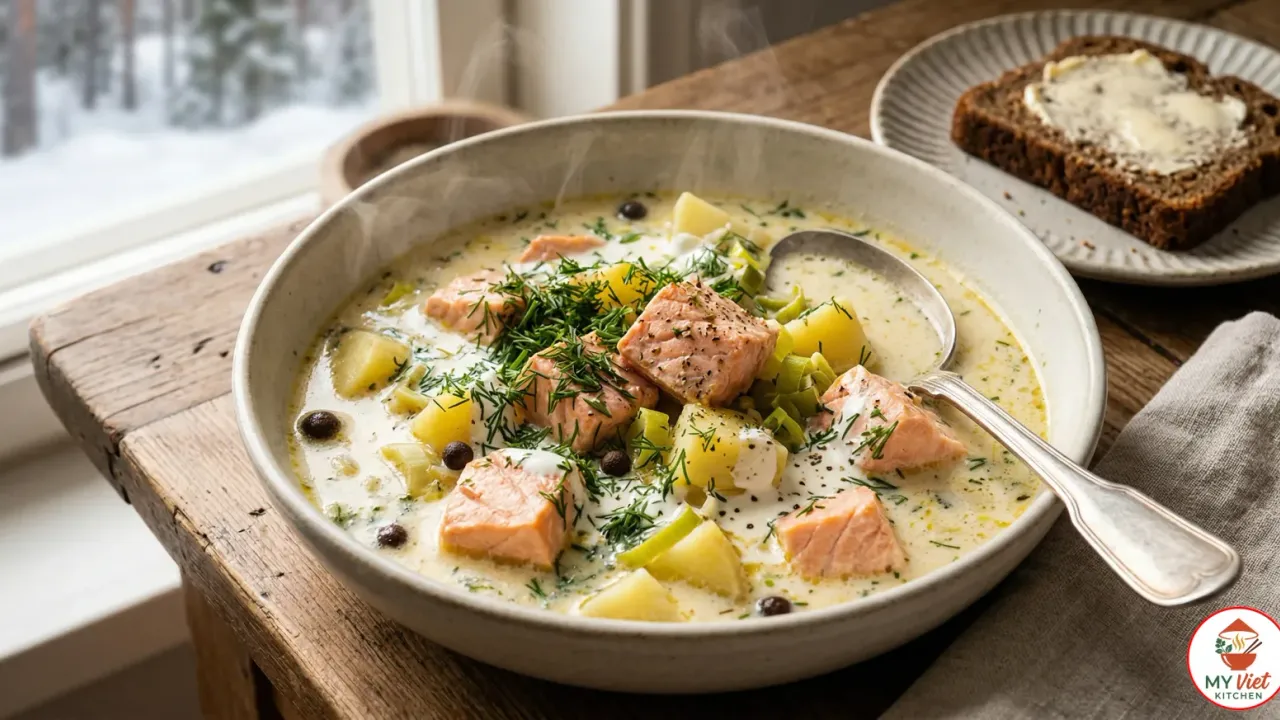
Lohikeitto is Finland’s most beloved comfort food, a soul-warming salmon soup that turns simple Nordic ingredients into something truly extraordinary. This lohikeitto recipe combines tender salmon fillets, creamy potatoes, and aromatic leeks in a velvety dill-infused broth that captures the essence of Finnish home cooking. Whether you first tasted it at a Helsinki market hall or you are discovering it for the first time, this soup delivers warmth, richness, and elegance in every spoonful.
Prep Time: 15 minutes | Cook Time: 25 minutes | Servings: 4
Difficulty: Easy | Calories: ~420 per serving
What Makes Lohikeitto Special?
Lohikeitto holds a revered place in Finnish cuisine. In a country where salmon runs through cold, pristine rivers every summer, this soup represents the most natural way to celebrate that abundance. Finnish grandmothers have passed this recipe down through generations, and nearly every family has its own version. The dish appears at casual weeknight dinners and elegant holiday tables alike, because it bridges the gap between simplicity and sophistication effortlessly.
What sets lohikeitto apart from other salmon soups around the world is its restraint. There is no heavy roux, no overwhelming spice blend, and no complicated technique. Instead, the soup relies on the quality of its few ingredients. Fresh salmon provides richness. Potatoes add body and starch. Leeks bring a gentle sweetness. Moreover, a generous handful of fresh dill ties everything together with its bright, grassy aroma. The cream goes in at the very end, just enough to create a silky finish without masking the clean taste of the fish.
In Finland, lohikeitto also carries the quiet wisdom of cooking with the seasons. Summer brings wild salmon from Lapland’s rivers, and the soup celebrates that catch with minimal fuss. During the dark winter months, it becomes a beacon of comfort against the cold. This dual identity, both celebratory and comforting, is what makes lohikeitto one of the most important dishes in the Finnish culinary tradition.

Choosing the Right Salmon
The salmon is the heart of this lohikeitto recipe, so selecting the right fillet matters enormously. You want fish that is fresh, firm, and mild in flavor. The quality of the salmon determines the quality of the soup.
- Fresh Atlantic salmon (best choice): This is the traditional Finnish choice. Atlantic salmon has a rich, buttery flavor and a high fat content that melts beautifully into the broth. Look for thick center-cut fillets with bright orange-pink flesh and no brown spots.
- Wild-caught sockeye or coho: These varieties have a deeper color and firmer texture than farmed salmon. They hold their shape well during poaching and add a slightly more robust flavor. However, they are leaner, so the soup may be slightly less rich.
- Arctic char (alternative): If salmon is unavailable, arctic char makes an excellent substitute. It has a similar flavor profile with a slightly milder taste. Finnish cooks sometimes use char interchangeably with salmon in this soup.
- Fish to avoid: Skip canned salmon, as its soft texture and strong flavor will produce a murky, fishy soup. Also avoid smoked salmon, which overpowers the delicate broth. Hot-smoked salmon can work as a garnish on top, but it should not replace the fresh fillets in the pot.
Ingredients for Lohikeitto
Main Ingredients:
- 1.5 pounds fresh salmon fillet, skin removed, cut into 1-inch cubes
- 4 medium Yukon Gold potatoes, peeled and diced into 1/2-inch cubes
- 2 medium leeks, white and light green parts, sliced
- 1 large carrot, peeled and diced
For the Broth:
- 4 cups fish stock or vegetable broth
- 1 cup heavy cream
- 2 tablespoons unsalted butter
- 1 bay leaf
- 6 whole allspice berries
Seasonings and Finish:
- 1/2 cup fresh dill, chopped, plus extra for garnish
- 1 teaspoon fine sea salt, plus more to taste
- 1/2 teaspoon white pepper
- 1 tablespoon fresh lemon juice
Pro tip: Use Yukon Gold potatoes rather than russets. Yukon Golds hold their shape during simmering and release just enough starch to give the broth a naturally creamy body. Russets break down too quickly and turn the soup gluey. If Yukon Golds are unavailable, any waxy potato variety will work well.
Step-by-Step Instructions
Step 1: Cook the Vegetables
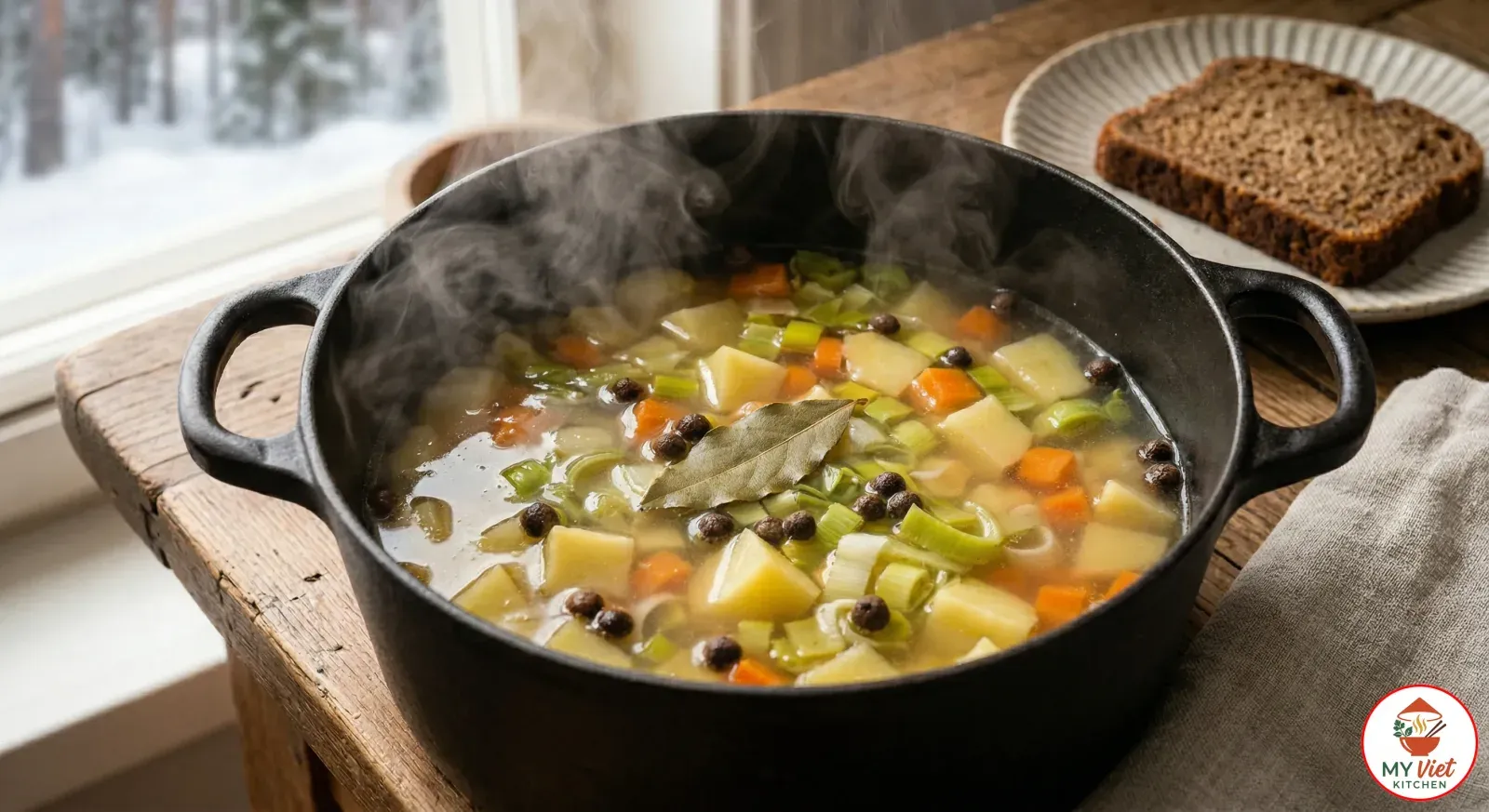
1 Melt the butter in a large pot or Dutch oven over medium heat. Add the sliced leeks and diced carrot. Stir gently and cook for 3 to 4 minutes until the leeks soften and become translucent. The butter coats the vegetables and helps draw out their natural sweetness without browning them.
Pour in the fish stock and add the diced potatoes, bay leaf, and allspice berries. Bring the liquid to a boil, then immediately reduce the heat to a gentle simmer. Cook uncovered for 12 to 15 minutes until the potatoes are just tender when pierced with a knife. They should hold their shape but yield easily. The allspice berries release a warm, slightly peppery fragrance that is characteristic of Finnish cooking.
Step 2: Add the Salmon
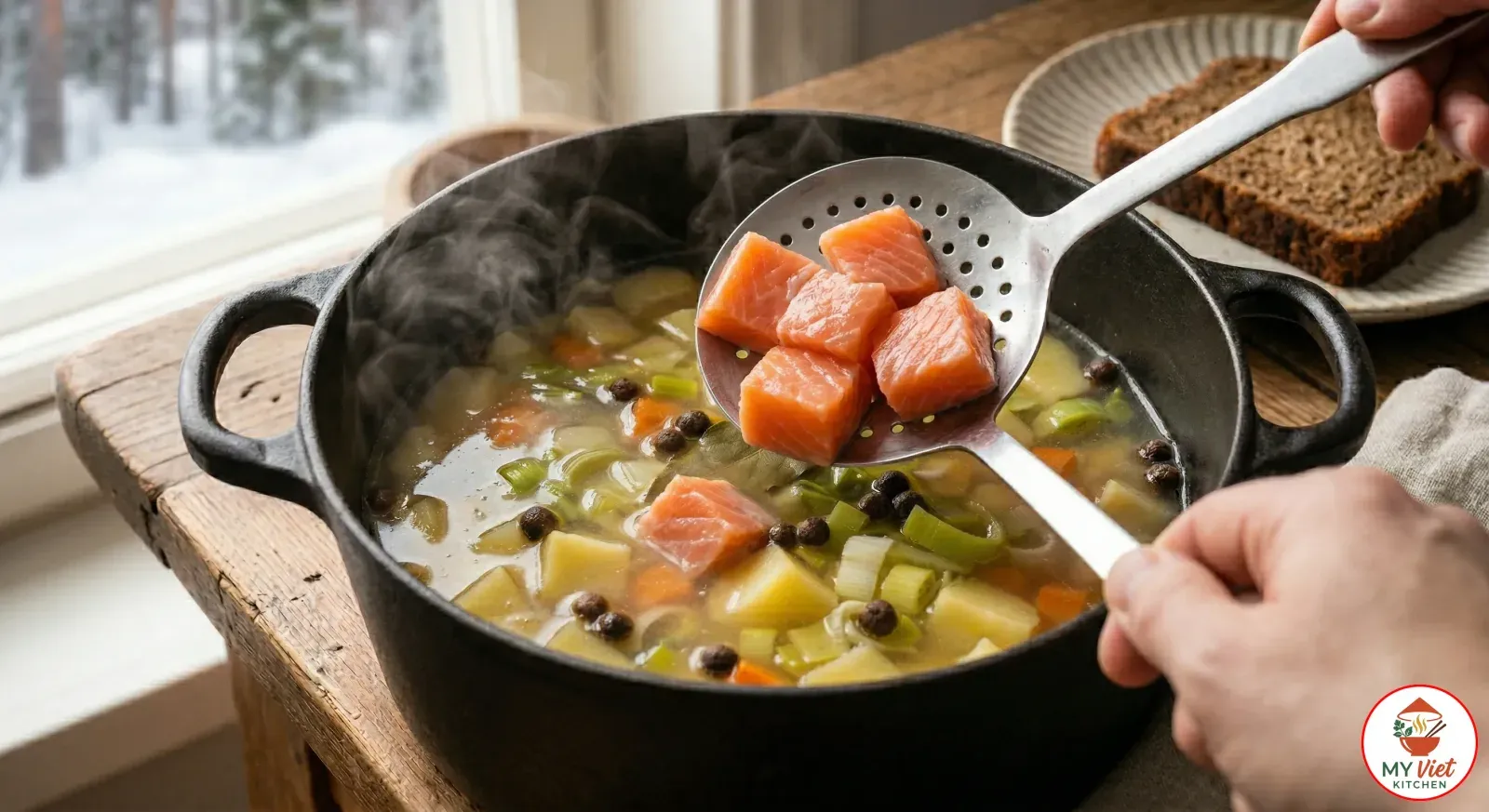
2 Gently slide the salmon cubes into the simmering broth. Distribute them evenly across the pot so they cook uniformly. Do not stir the soup at this point. Let the fish poach undisturbed for 4 to 5 minutes. The salmon will turn from translucent to opaque pink, and the edges will begin to flake.
Poaching is the key technique here, because it keeps the salmon moist and tender. A rolling boil would toughen the fish and break the cubes apart. Therefore, keep the heat low so that only small bubbles rise gently to the surface. The salmon continues to cook from residual heat even after you remove the pot from the stove, so slightly underdone is better than overdone at this stage.
Step 3: Add Cream and Dill
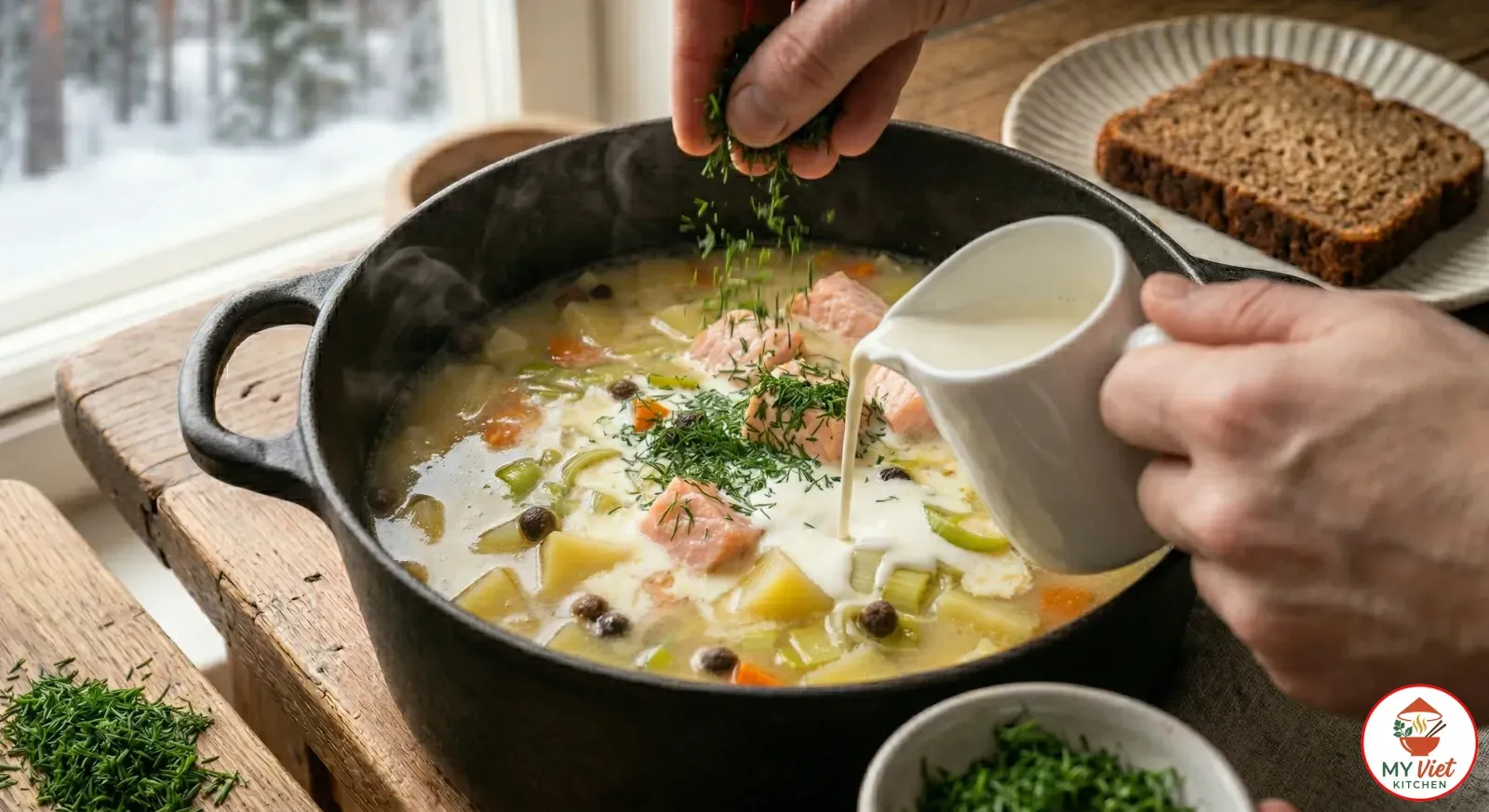
3 Remove the bay leaf and allspice berries with a slotted spoon. Lower the heat to the lowest setting and pour in the heavy cream. Stir very gently, moving the spoon around the salmon pieces rather than through them. The cream transforms the clear broth into a velvety, pale gold soup.
Add the chopped fresh dill, lemon juice, salt, and white pepper. Let the soup warm through for about 2 minutes. Do not allow it to boil after adding the cream, because boiling can cause the cream to separate and the texture to become grainy. The dill should stay bright green and fragrant. Taste the broth and adjust the seasoning. A squeeze more lemon often brightens everything. Ladle the lohikeitto into warm bowls and finish each serving with an extra sprinkle of fresh dill.
Expert Tips for Perfect Lohikeitto
Cut the Salmon into Large Cubes
Resist the temptation to cut the salmon into small pieces. Generous 1-inch cubes hold their shape during poaching and create satisfying bites in the finished soup. Small pieces overcook quickly and dissolve into the broth. Additionally, larger cubes give each spoonful a clear contrast between the creamy liquid and the firm, flaky fish.
Add the Dill at the Very End
Fresh dill loses its flavor rapidly when exposed to heat. Stirring it into a boiling pot would destroy its bright, grassy character within minutes. Instead, add the dill after you remove the pot from direct heat. This way, the warmth of the soup gently releases the dill’s essential oils without cooking them away. The result is a vibrant green garnish that perfumes every spoonful.
Use White Pepper Instead of Black
Finnish cooks traditionally use white pepper in lohikeitto. White pepper has a sharper, more earthy heat than black pepper. It also blends invisibly into the pale broth, whereas black pepper specks can look out of place. Furthermore, white pepper complements the dill and allspice better than black pepper does. A small amount goes a long way, so start with half a teaspoon and add more to taste.
Lohikeitto vs. Other Salmon Soups
Salmon soup exists in many cultures, but each version reflects its region’s traditions and available ingredients. Here is how lohikeitto compares to its closest relatives around the world.
| Soup | Origin | Key Flavors | Defining Feature |
|---|---|---|---|
| Lohikeitto | Finland | Dill, allspice, cream | Light, clean broth with cream added at end |
| Salmon Chowder | USA / Canada | Bacon, corn, thyme | Thick, roux-based, often with corn and bacon |
| Ukha | Russia | Bay leaf, peppercorns, root vegetables | Clear fish broth, no cream, served with vodka |
| Fiskesuppe | Norway | Cream, root vegetables, parsley | Heavier cream base, often includes shrimp and cod |
| Sancocho de Pescado | Latin America | Cilantro, lime, plantain | Tropical fish stew with starchy vegetables |
Serving Suggestions
In Finland, lohikeitto arrives at the table in a large pot so everyone can serve themselves. The soup is a complete meal on its own, but a few well-chosen accompaniments make the experience even better. Tradition calls for simplicity, because the soup itself is the star.
Classic Accompaniments:
- Dark Finnish rye bread (ruisleipa): Dense, slightly sour rye bread is the traditional partner for lohikeitto. Spread it with salted butter and dip it into the creamy broth. The earthy, tangy flavor of rye complements the richness of the salmon perfectly.
- Buttered crusty bread: If rye bread is unavailable, any good crusty bread works well. Warm it in the oven and serve it with butter on the side. The bread soaks up the broth beautifully.
- Simple cucumber salad: Thinly sliced cucumbers dressed with white vinegar, sugar, and dill provide a cool, refreshing contrast to the warm soup. This light side dish cleanses the palate without competing for attention.
- Fresh seasonal salad: A lightly dressed green salad with a lemon vinaigrette rounds out the meal during warmer months. Keep the dressing simple so it does not overpower the soup.
Beverage Pairings:
- Dry white wine: A crisp Sauvignon Blanc or a dry Riesling pairs beautifully with lohikeitto. The wine’s acidity cuts through the cream and highlights the dill. Avoid heavily oaked Chardonnays, which would overwhelm the soup’s delicate flavors.
- Finnish beer (sahti or lager): A light, clean lager refreshes the palate between spoonfuls. For a more traditional choice, try sahti, a Finnish farmhouse ale flavored with juniper. Its herbal notes echo the botanical character of the dill.
- Sparkling water with lemon: Cold sparkling water with a squeeze of lemon keeps the focus on the soup. It is the simplest pairing and one of the most effective for a weeknight meal.
- Hot tea or coffee: In Finland, strong coffee often accompanies lunch. A cup of black coffee after the soup is entirely traditional. Alternatively, herbal tea with chamomile rounds out the meal gently.
Storage and Reheating
Refrigerator: Store leftover lohikeitto in a sealed container for up to 2 days. The flavors deepen overnight as the dill and allspice continue to infuse the broth. However, the salmon may soften slightly. For the best texture, store the broth and fish separately if possible.
Freezer: Freeze the broth and vegetable base (without salmon and cream) for up to 2 months. Cool completely before transferring to freezer-safe containers. When ready to serve, thaw overnight in the refrigerator. Reheat the broth to a simmer and add fresh salmon cubes and cream. Do not freeze the soup with cream and fish already added, because the texture suffers considerably.
Reheating: Warm the soup gently on the stove over medium-low heat. Bring it to a bare simmer, never a full boil. Boiling will toughen the salmon and cause the cream to separate. Stir occasionally and add a splash of broth or cream if the soup has thickened too much overnight. Taste and adjust the seasoning, since cold mutes flavors and you may need a pinch more salt or a squeeze of lemon.
Common Mistakes to Avoid
1. Boiling the Soup After Adding Cream
This is the most common mistake with lohikeitto. Once you pour in the cream, the soup must stay below a boil. High heat causes the cream to curdle and separate, leaving greasy streaks in the broth. Keep the flame low and stir gently. A soft simmer is all you need to warm the soup through. Patience at this stage protects the silky texture that makes lohikeitto so appealing.
2. Overcooking the Salmon
Salmon cooks quickly in hot broth. Leaving it in the pot too long turns tender fillets into dry, chalky chunks. Four to five minutes of gentle poaching is enough for 1-inch cubes. The fish should be slightly translucent in the center when you turn off the heat, because it continues cooking from residual warmth. Therefore, err on the side of underdone rather than overdone.
3. Using Dried Dill Instead of Fresh
Dried dill and fresh dill are entirely different ingredients in terms of flavor. Dried dill tastes dusty and faint, while fresh dill bursts with bright, anise-like fragrance. Lohikeitto depends on fresh dill for its signature character. If you cannot find fresh dill, use fresh parsley with a pinch of fennel fronds as an alternative. Dried dill should be your absolute last resort, and you would need to triple the amount to get any noticeable flavor.
4. Cutting Potatoes Too Large
Large potato chunks take too long to cook and throw off the timing of the entire recipe. By the time the potatoes become tender, the rest of the vegetables may be overcooked. Cut the potatoes into uniform 1/2-inch cubes so they cook in 12 to 15 minutes. Uniform size also ensures even cooking, so every piece reaches the same tenderness at the same time.
Frequently Asked Questions
What kind of salmon is best for lohikeitto?
Fresh Atlantic salmon works best for lohikeitto because of its high fat content and mild flavor. Choose thick center-cut fillets with bright orange-pink flesh. Wild-caught salmon like sockeye or coho also works well but produces a slightly leaner soup. Avoid canned or smoked salmon, as they overpower the delicate, clean broth that defines this Finnish dish.
Can I make lohikeitto without cream?
Yes, and many Finnish home cooks do exactly that. For a lighter version, replace the cream with whole milk or a plant-based alternative like oat cream. You can also skip the dairy entirely and let the starchy potatoes thicken the broth naturally. Mash a few potato pieces against the side of the pot to release starch and add body. The soup will be lighter but still deeply satisfying.
Is lohikeitto gluten-free?
Traditional lohikeitto is naturally gluten-free. The recipe contains no flour, breadcrumbs, or gluten-based thickeners. All the body comes from potatoes and cream. Just check your fish stock or vegetable broth label to confirm there are no hidden gluten ingredients. Serve with gluten-free bread instead of rye to keep the entire meal safe for those with celiac disease or gluten sensitivity.
How do I prevent the salmon from falling apart?
Three things keep your salmon intact. First, cut it into generous 1-inch cubes. Second, add the fish to gently simmering broth, not a rolling boil. Third, resist the urge to stir after the salmon goes in. Let the cubes poach undisturbed for 4 to 5 minutes. If you need to move them, use a large spoon to gently push them beneath the surface rather than stirring in circles.
What is the difference between lohikeitto and salmon chowder?
Lohikeitto is lighter and cleaner than American salmon chowder. Finnish salmon soup starts with a simple broth and adds cream only at the end, while chowder typically begins with a heavy roux or cream base from the start. Lohikeitto relies on dill and allspice for its signature Nordic flavor, whereas chowder often includes bacon, corn, and thyme. The Finnish version lets the salmon speak for itself.
Can I freeze lohikeitto?
You can freeze the broth and vegetable base for up to 2 months. However, do not freeze the soup after adding salmon and cream. The fish texture degrades and the cream can separate when reheated. Prepare the base ahead of time, freeze it in portions, and add fresh salmon and cream after thawing and reheating. This approach gives you convenience without sacrificing quality.
Variations and Adaptations
Summer Lohikeitto with New Potatoes:
During Finnish summer, tiny new potatoes appear at markets. Leave them whole or halve them and add them to the broth. Their thin skins and waxy flesh absorb the dill-infused liquid beautifully. This version feels lighter and more seasonal. Some cooks also add fresh peas or asparagus tips during the last few minutes of cooking for a burst of green.
Dairy-Free Version:
Replace the butter with olive oil and swap the heavy cream for full-fat coconut cream or oat-based cooking cream. The soup will have a slightly different flavor profile, but the coconut cream adds a pleasant richness. Alternatively, increase the potatoes and mash a portion of them to thicken the broth naturally. This adaptation works well for lactose-intolerant guests.
Smoked Salmon Garnish Version:
Cook the soup with fresh salmon as directed. Then, just before serving, lay thin slices of cold-smoked salmon on top of each bowl. The smokiness adds another layer of flavor without overpowering the broth. This presentation looks stunning and adds a gourmet touch to an otherwise rustic dish. Drizzle a few drops of good olive oil over the smoked salmon for extra elegance.
Lohikeitto with Trout:
Finnish lake trout makes an excellent substitute for salmon. The flavor is milder and slightly more delicate, so use a bit more butter in the base to compensate. Trout fillets are thinner, so reduce the poaching time to 3 minutes. This variation is especially popular in Finland’s lake district, where freshwater trout is more readily available than ocean salmon.
The Cultural Significance of Lohikeitto
Lohikeitto occupies a unique place in Finnish food culture. It is one of those rare dishes that belongs equally to everyday cooking and national identity. In Finland, salmon fishing is not just an industry but a way of life. Rivers across the country, from the Teno in Lapland to the Kymi in the south, teem with Atlantic salmon each summer. The soup represents the most honest expression of that resource: fresh fish, clean water, and a few ingredients from the garden.
The dish also reflects the Finnish philosophy of rugged simplicity. There is a concept in Finnish culture known as “sisu,” which roughly translates to stoic determination and resilience. Lohikeitto embodies this spirit. It does not rely on exotic spices or elaborate techniques. Instead, it draws extraordinary flavor from ordinary ingredients through careful, patient cooking. In a harsh northern climate where survival once depended on making the most of limited resources, this soup tells the story of a people who learned to create comfort from simplicity.
Today, lohikeitto appears everywhere in Finland, from school cafeterias to Michelin-starred restaurants. It is served at midsummer celebrations alongside grilled sausages and fresh strawberries. It warms ski lodges in Lapland during the polar night. Moreover, it has become an ambassador for Finnish cuisine internationally, introducing people around the world to the clean, balanced flavors of Nordic cooking. Making this soup at home connects you to a culinary tradition that values quality, restraint, and deep respect for natural ingredients.
Conclusion
This lohikeitto recipe proves that great cooking does not require complexity. A handful of fresh ingredients, gentle heat, and proper timing are all you need to create one of Finland’s most treasured dishes. Focus on sourcing the best salmon you can find, keep the broth at a gentle simmer, add the cream at the very end, and finish with a generous amount of fresh dill. These four principles will guide you to a bowl of soup that is creamy, comforting, and remarkably elegant.
Ready to explore more Nordic and European comfort dishes? Browse our European dishes collection, including borscht, beef stroganoff, and bouillabaisse. For more warming soup recipes from around the world, check out our Asian dishes collection for bold broths and noodle soups that satisfy the soul.