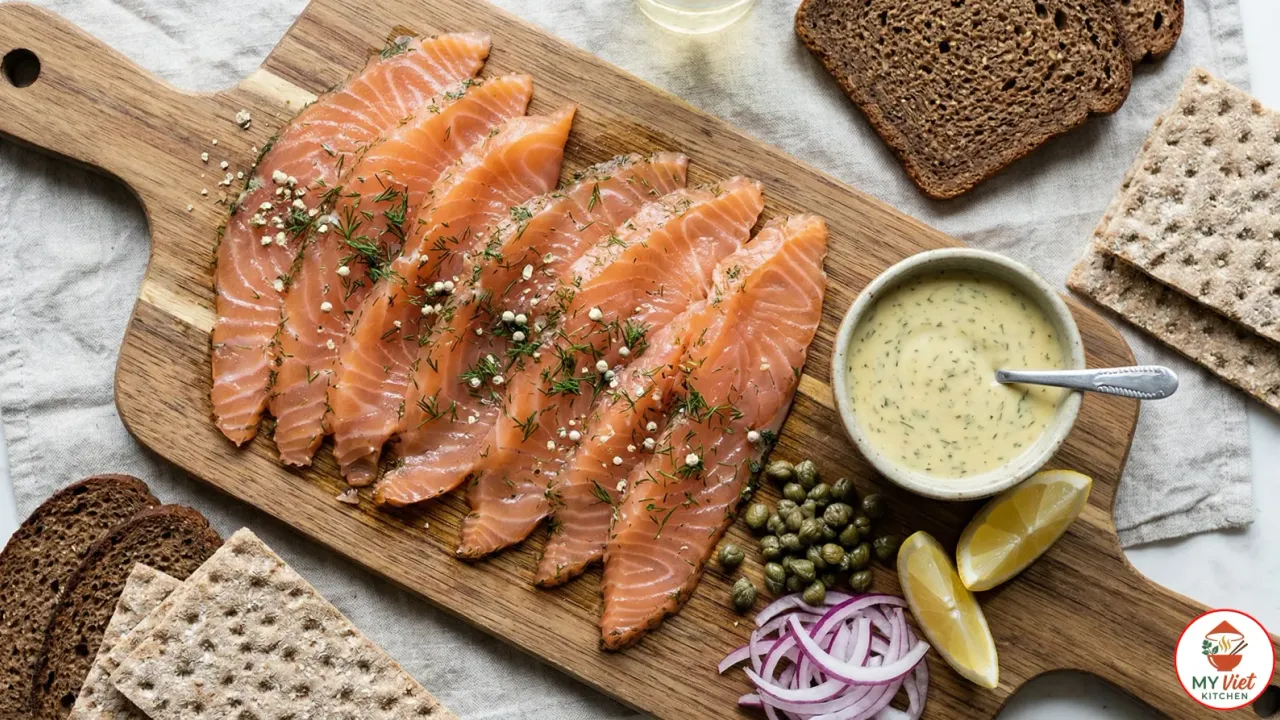
Gravlax is one of the most elegant dishes you can make at home, and it requires no cooking at all. This classic Scandinavian cured salmon transforms a fresh fillet into something extraordinary using nothing more than salt, sugar, dill, and two days of patience. Known as gravad lax in Swedish, this centuries-old Nordic technique produces silky, translucent slices of salmon with a delicate herbal fragrance. Follow this complete guide to make authentic gravlax from scratch, along with the traditional mustard dill sauce called hovmastarsas.
Prep Time: 20 minutes | Cook Time: None (48-hour cure) | Servings: 8
Difficulty: Easy | Calories: ~220 per serving
What Makes Gravlax Special?
Gravlax stands apart from other cured fish because it is so simple. There is no smoke, no special tools, and no heat. Instead, the salmon cures in a dry mix of salt and sugar that pulls out moisture. As the fish loses water, its proteins firm up and its flavors grow stronger. As a result, the texture falls between raw sashimi and smoked salmon, with a clean taste that lets the fish shine.
The name “gravlax” comes from the Old Norse word grav, meaning “grave” or “to dig,” and lax, meaning “salmon.” According to historical records, medieval Scandinavian fishermen originally buried salted salmon in the sand above the high-tide line, allowing it to ferment slightly. Over the centuries, the technique evolved from fermentation to simple salt-and-sugar curing. By the 18th century, Scandinavian cooks had added dill to the cure, and the modern version of gravlax was born. Today, it holds a place of honor on every Scandinavian holiday table, from Swedish midsummer to Norwegian Christmas.
What truly sets gravlax apart from smoked salmon or lox is the flavor. Because no smoke touches the fish, you taste the salmon in its purest form. The dill adds a gentle, fresh note. The sugar balances the salt, and the white pepper brings a subtle warmth. It is refined yet simple, and making it at home costs far less than buying it at a shop. In fact, a single fillet produces enough gravlax to serve eight people as a generous appetizer.

Choosing the Right Salmon for Gravlax
Since gravlax is not cooked, the quality of your salmon matters more than in any other recipe. Start at a fish shop or market you trust. Above all, the fish should smell like the sea, never fishy or sour. Here are your best options for a great cure.
- Atlantic salmon (best choice): This is the traditional pick for gravlax across Scandinavia. Atlantic salmon has a high fat content that produces the signature buttery, melt-on-your-tongue texture. A center-cut fillet about 1.5 inches thick gives you the most uniform cure from edge to center. Look for bright orange-pink flesh with no discoloration.
- King salmon (Chinook): The richest wild salmon you can find. King salmon has even more fat than Atlantic, which creates an exceptionally silky gravlax with deep, complex flavor. The flesh ranges from deep red to almost white depending on the run. It costs more, but the quality is extraordinary.
- Sockeye salmon: A leaner option with a vivid ruby-red color and a more intense, almost mineral flavor. Sockeye produces a firmer gravlax that slices beautifully. Because of its intensity, the deeper taste stands up well to bold accompaniments. However, its lower fat content means the texture will be less buttery than Atlantic or King.
- Thin tail pieces (not recommended): The tapered tail end of any salmon fillet is too thin for even curing. It overcures in hours while the thick center barely starts. The result is rubbery edges and a raw middle. Always use a center-cut or head-end piece that is at least 1 inch thick at its thinnest point.
Ingredients for Gravlax
For the Cure:
- 2 pounds fresh salmon fillet, skin on, pin bones removed
- 1/3 cup coarse sea salt
- 1/4 cup granulated sugar
- 2 tablespoons white peppercorns, crushed
- 1 large bunch fresh dill, roughly chopped (about 1 cup packed)
- 2 tablespoons aquavit or vodka (optional)
- 1 teaspoon lemon zest
For the Mustard Dill Sauce (Hovmastarsas):
- 3 tablespoons Dijon mustard
- 1 tablespoon whole grain mustard
- 2 tablespoons honey
- 1 tablespoon white wine vinegar
- 1/3 cup neutral oil, such as canola or grapeseed
- 3 tablespoons fresh dill, finely chopped
- Salt and white pepper to taste
For Serving:
- Dark rye bread or crispbread
- Lemon wedges
- Capers
- Thinly sliced red onion
- Fresh dill sprigs for garnish
Pro tip: Use coarse sea salt or kosher salt for the cure, never fine table salt. Fine salt dissolves too quickly and can overcure the surface of the salmon before the interior is ready. Coarse crystals release their salinity slowly and evenly, giving you a uniform texture from edge to center. Similarly, crush your white peppercorns yourself with a mortar and pestle for the freshest, most aromatic flavor.
Step-by-Step Instructions
Step 1: Prepare the Cure Mixture
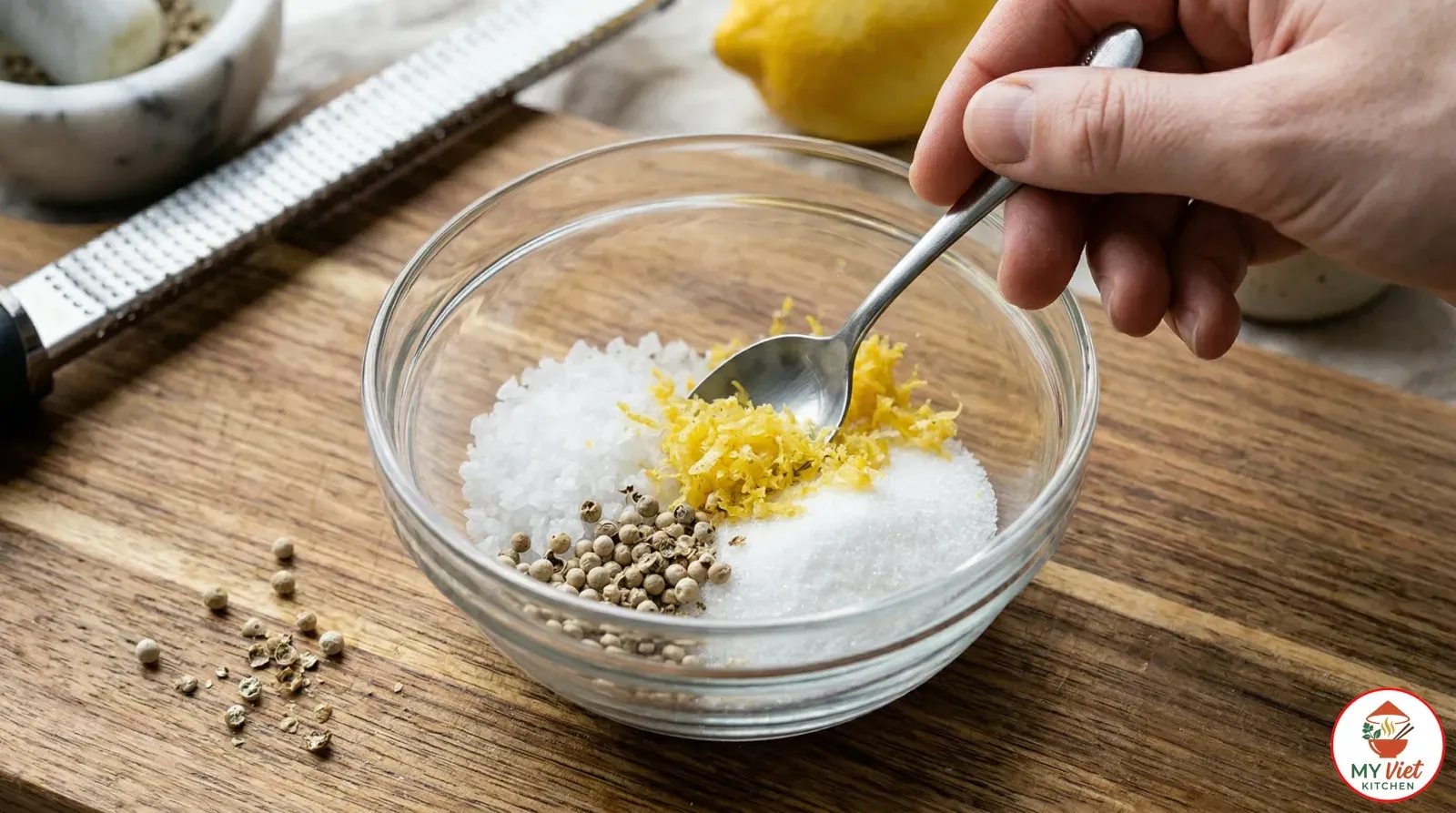
1 Combine the coarse sea salt, sugar, crushed white peppercorns, and lemon zest in a small bowl. Stir them together until evenly mixed. This dry cure works through osmosis: the salt and sugar pull moisture out of the salmon, concentrating its flavor while preserving the flesh. The ratio of roughly 4 parts salt to 3 parts sugar creates a balanced cure that seasons the fish without making it overly salty. However, if you prefer a sweeter gravlax in the Swedish style, increase the sugar to equal parts with the salt.
Step 2: Apply the Cure to the Salmon
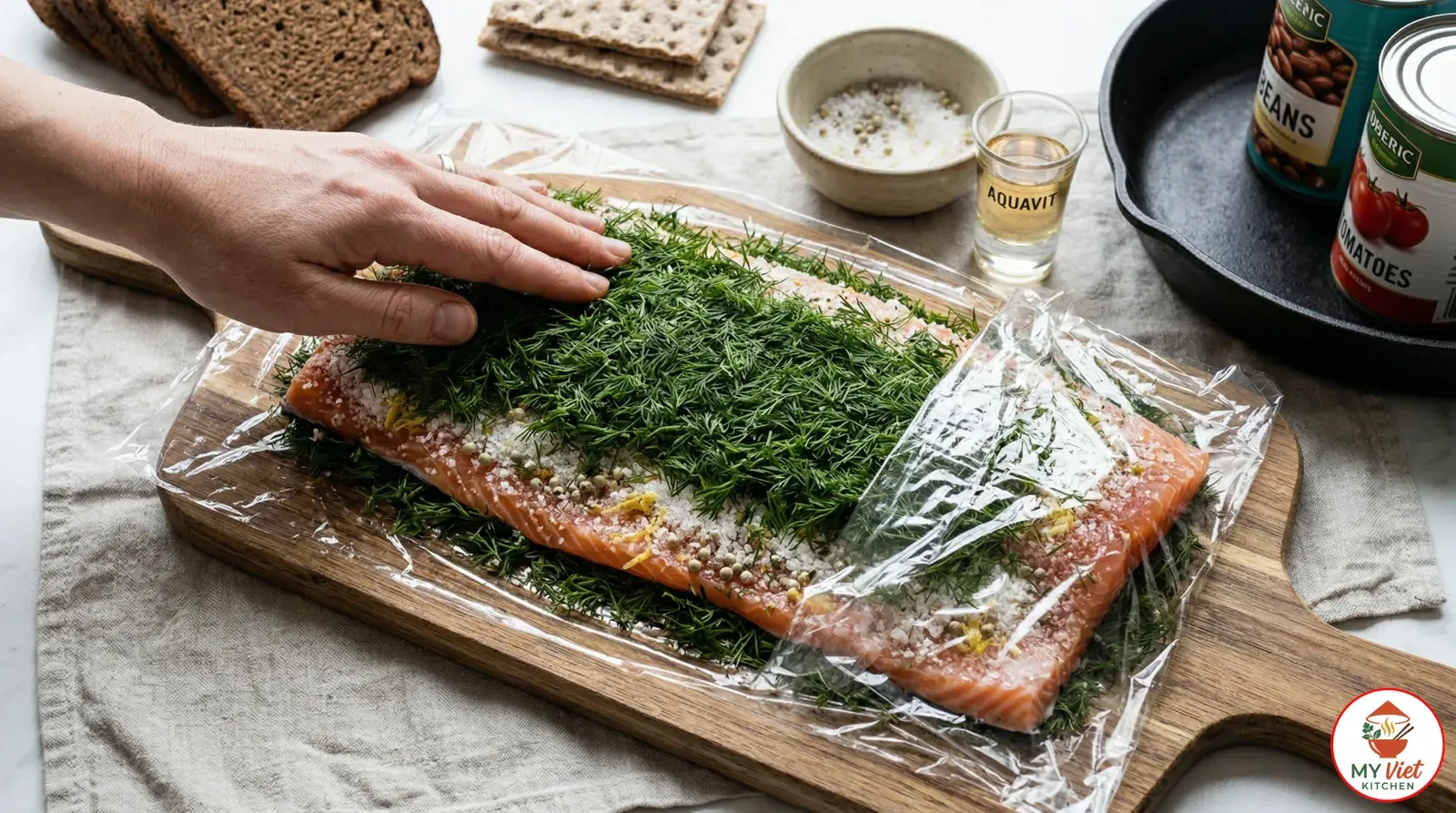
2 Tear off a large sheet of plastic wrap, long enough to fully enclose the salmon fillet. Spread half of the chopped dill in an even layer on the plastic. Place the salmon fillet skin-side down on top of the dill bed. If you are using aquavit or vodka, splash it evenly over the flesh side of the salmon now. Specifically, the alcohol helps the cure penetrate the fish and adds a subtle botanical note.
Pack the entire cure mixture firmly onto the flesh side of the salmon. Press it down so every surface is covered. Then pile the remaining dill on top, creating a thick herbal blanket. Wrap the plastic tightly around the fish, making sure no cure mixture spills out. For extra security, wrap it in a second layer of plastic. Ultimately, the goal is a snug, sealed package that holds everything in contact with the fish.
Step 3: Press and Refrigerate for 48 Hours
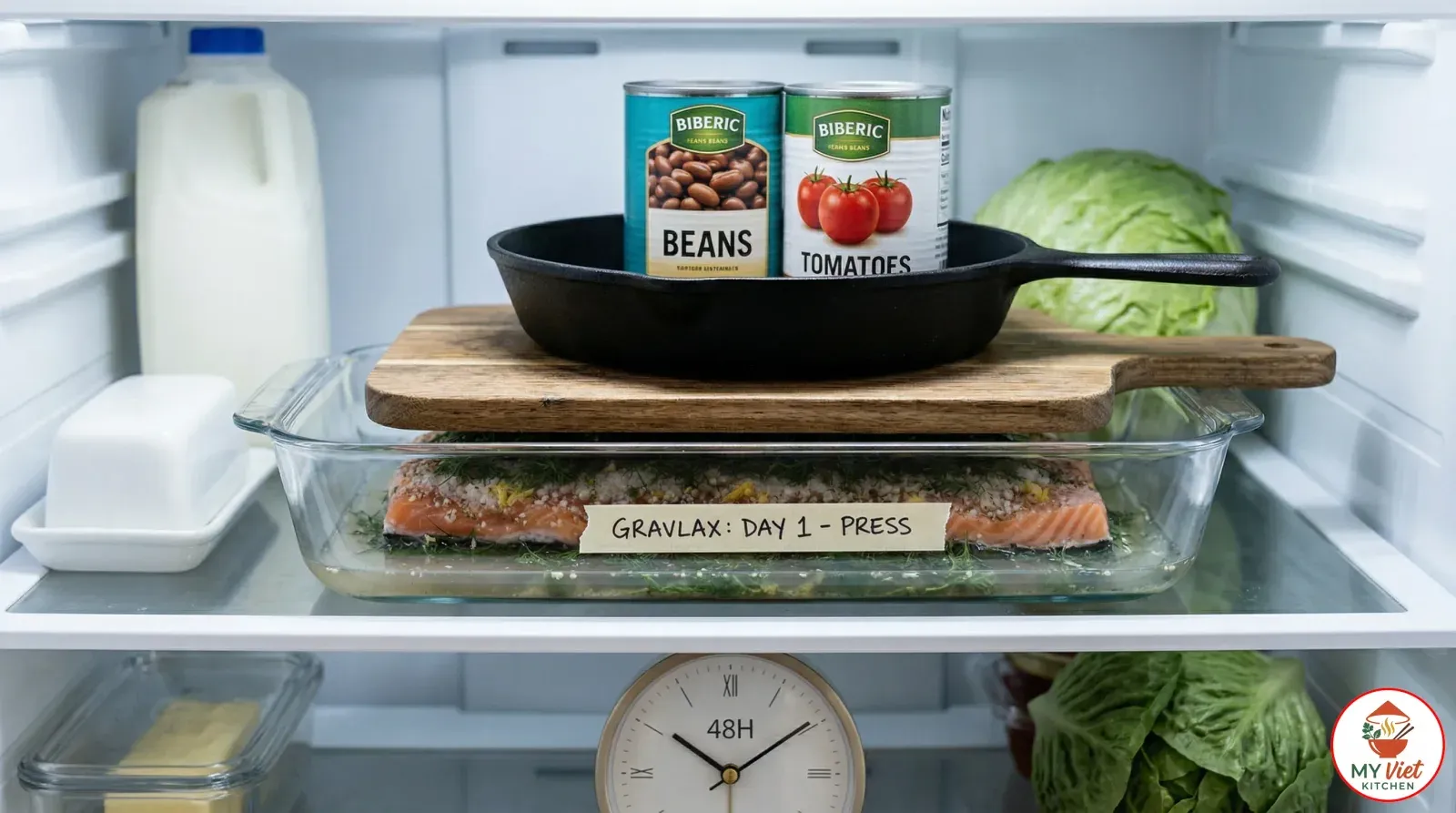
3 Place the wrapped salmon in a shallow baking dish or rimmed sheet pan. Set a small cutting board or flat plate directly on top of the fish. Then weigh it down with something heavy, such as a few cans of beans or a cast-iron skillet. The weight presses the cure into the salmon and helps expel moisture evenly. Slide the entire setup into the refrigerator.
Flip the salmon package every 12 hours, which means you will flip it roughly 4 times during the full 48-hour cure. Each time you flip, drain off the liquid that has pooled in the dish. This brine is the moisture that the cure has drawn from the fish. In other words, removing it prevents the salmon from sitting in its own liquid, which would make the cure uneven. After 48 hours, the gravlax should feel firm to the touch and look slightly translucent. If you press the thickest part and it still feels very soft, give it another 6 to 12 hours.
Step 4: Rinse, Dry, and Slice the Gravlax
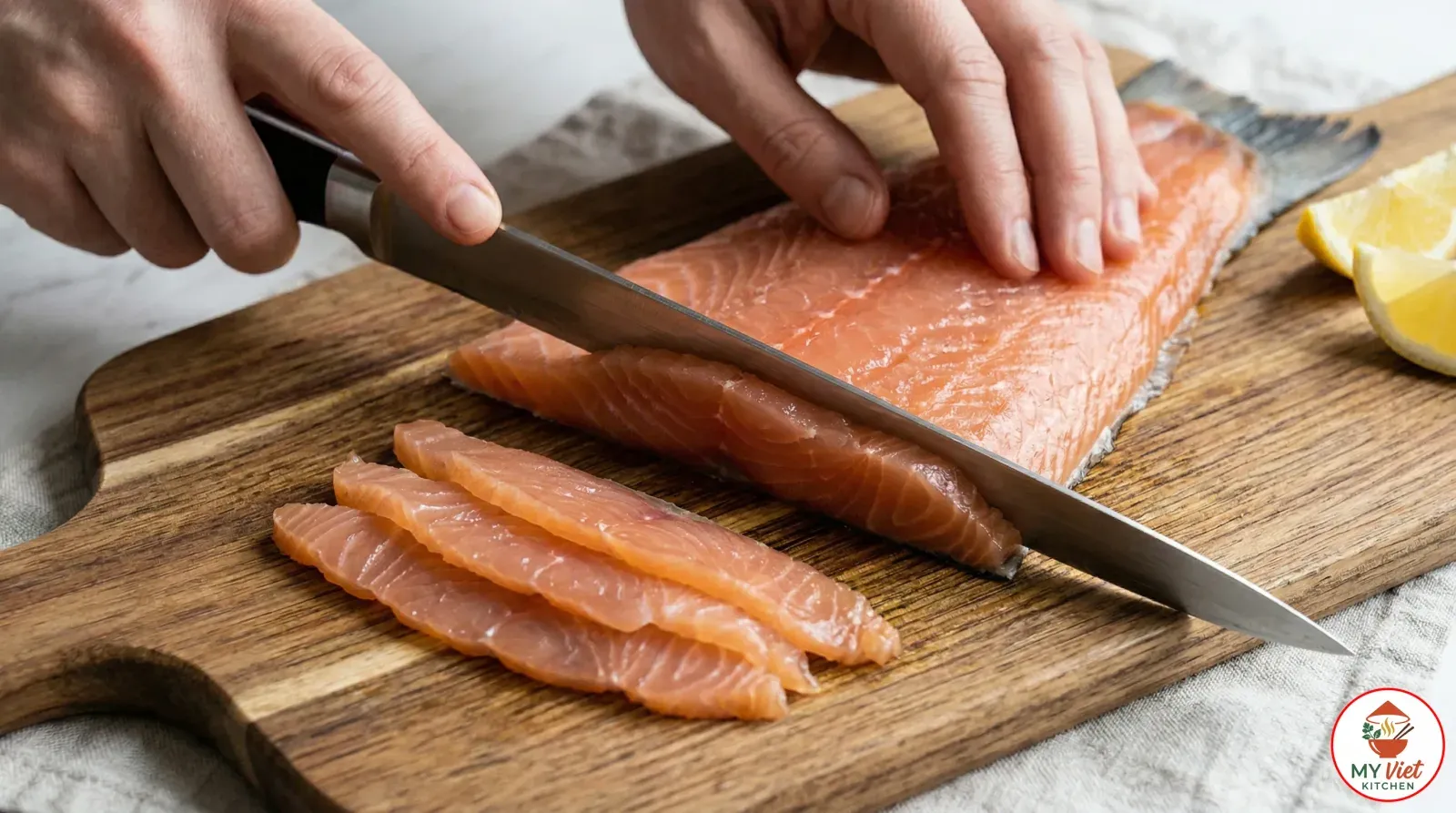
4 Unwrap the salmon and gently scrape off the dill and remaining cure with the back of a knife. Rinse the fillet briefly under cold running water to remove excess salt, then pat it completely dry with paper towels. At this point, the gravlax is ready to slice and eat. At this point, the flesh should look slightly darker and more translucent than raw salmon, with a firm, silky feel.
Slicing is the most important skill in serving gravlax. Use a long, thin, sharp knife. Hold the blade at a very shallow angle, almost parallel to the cutting board. Start at the tail end and cut paper-thin slices, drawing the knife toward you in long, smooth strokes. Separate each slice from the skin as you go. The thinner you slice, the more the texture shines. By contrast, thick slices feel chewy, while thin ones practically dissolve on the tongue. Take your time with this step because it makes all the difference in presentation and eating experience.
Step 5: Make the Mustard Dill Sauce
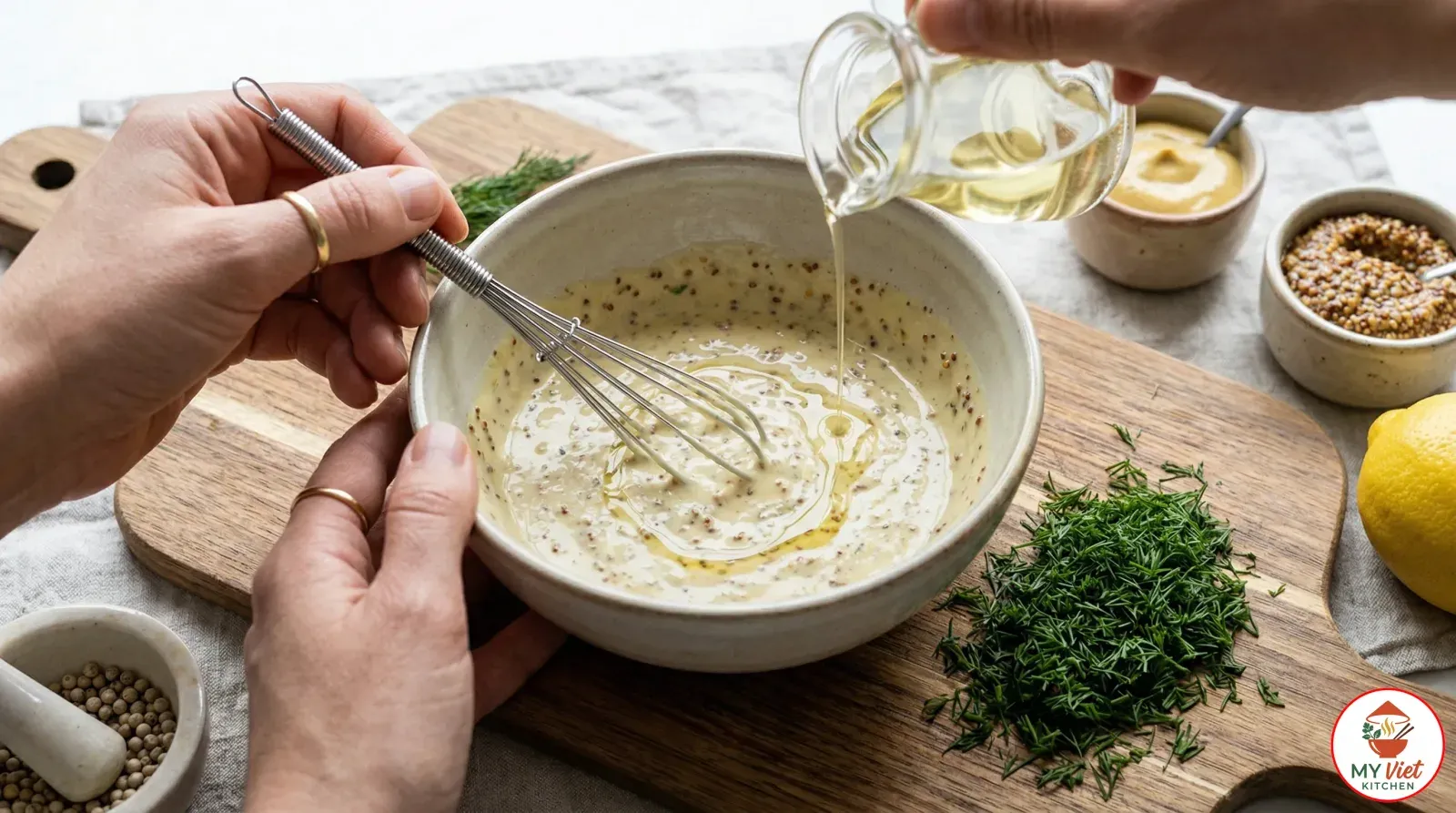
5 In a medium bowl, whisk together the Dijon mustard, whole grain mustard, honey, and white wine vinegar until smooth. Then slowly drizzle in the neutral oil while whisking constantly. Gradually, the mixture will emulsify into a thick, creamy sauce similar to a vinaigrette. Continue whisking until all the oil is incorporated and the sauce has a pourable but clinging consistency.
Fold in the finely chopped dill and season with salt and white pepper to taste. This sauce, called hovmastarsas in Swedish, is the classic accompaniment to gravlax across Scandinavia. The mustard’s sharpness cuts through the rich fattiness of the cured salmon, while the honey adds a gentle sweetness. Additionally, the dill in the sauce echoes the dill in the cure, creating a cohesive flavor throughout the dish. Make this sauce at least an hour before serving so the flavors have time to meld in the refrigerator.
Expert Tips for Perfect Results
Choose the Right Salt Grain Size
Grain size controls how fast the cure works. Coarse sea salt or kosher salt dissolves slowly, giving the cure time to penetrate the salmon evenly from surface to center. Fine table salt, by contrast, dissolves almost instantly and can overcure the outer layer before reaching the interior. Consequently, the result is a salty, mushy exterior around a still-raw center. Always reach for the coarse crystals. If you only have fine salt, reduce the quantity by about a quarter and check the fish 12 hours earlier than usual.
Keep the Fillet Thickness Uniform
A fillet that varies in thickness will cure unevenly. The thin edges finish hours before the thick center. To fix this, ask your fish shop for a center-cut piece that is the same thickness throughout. If you end up with a tapered fillet, fold the thin tail part under the thick part before you apply the cure. This doubles the thickness at the tail end and slows the cure there. As a result, the whole piece finishes at roughly the same time.
Weigh Down the Salmon Properly
The weight on top of the curing salmon serves two purposes. First, it presses the cure mixture firmly against the flesh, ensuring maximum contact. Second, it helps squeeze out moisture, which speeds up the curing process and produces a denser, more sliceable texture. Use about 2 to 3 pounds of weight, evenly distributed. A small cutting board topped with canned goods works perfectly. Do not skip this step, because unweighted gravlax cures more slowly and develops a softer, less traditional texture.
Gravlax vs. Smoked Salmon vs. Lox: A Comparison
People often confuse gravlax with smoked salmon and lox. While all three start with salmon and use salt, the techniques and resulting flavors differ significantly. This table breaks down the key differences to help you understand where gravlax fits in the world of cured salmon.
| Feature | Gravlax | Cold-Smoked Salmon | Lox (Traditional) |
|---|---|---|---|
| Curing Method | Salt, sugar, dill | Salt cure, then cold smoke | Salt brine only |
| Smoke | None | Yes, cold smoke (below 80F) | None |
| Cure Time | 48 hours | 12-24 hours cure + 8-12 hours smoke | Several weeks in brine |
| Origin | Scandinavia (Sweden, Norway, Denmark) | Various (Scotland, Nordic countries) | Eastern Europe (via New York) |
| Texture | Silky, firm, translucent | Silky, slightly drier | Very soft, almost buttery |
| Flavor | Clean, herbal, delicate | Smoky, savory | Very salty, rich |
| Typical Price | Low (homemade) to moderate | Moderate to high | High (specialty shops) |
Serving Suggestions
Gravlax is traditionally served as a starter or part of a Scandinavian smorgasbord. The delicate flavor and silky texture pair best with simple, clean accompaniments that do not overpower the salmon. Arrange thin slices on a platter with the garnishes alongside, and let guests assemble their own bites.
Classic Accompaniments:
- Dark rye bread or crispbread: The dense, slightly sour flavor of Scandinavian rye bread is the quintessential base for gravlax. Toast it lightly for a subtle crunch that contrasts the silky fish. Swedish knackebrod crispbread also works beautifully.
- Mustard dill sauce (hovmastarsas): This classic pairing is practically mandatory. The sharp mustard and sweet honey balance the rich, fatty salmon. Drizzle it over each slice or serve it alongside as a dip.
- Lemon wedges: A squeeze of fresh lemon brightens every bite and cuts through the richness. Place several wedges around the platter so guests can add as much or as little as they want.
- Capers and red onion: Briny capers and thinly sliced red onion add sharp, pungent contrast. Use them sparingly, because a little goes a long way against the delicate salmon.
- Boiled new potatoes: In Sweden and Norway, warm boiled potatoes with butter are a traditional side that turns gravlax into a light main course. The starchy warmth balances the cold, silky fish perfectly.
Beverage Pairings:
- Aquavit: The traditional Scandinavian spirit seasoned with caraway and dill. Serve it ice-cold in small glasses. Its herbal, slightly sweet flavor mirrors the dill in the gravlax for a harmonious match.
- Dry white wine (Chablis or Sancerre): A crisp, unoaked white wine with good acidity cleanses the palate between bites of rich salmon. The mineral notes complement the clean flavors of the cure.
- Champagne or dry sparkling wine: The effervescence and acidity of Champagne make it an elegant pairing for gravlax at celebrations. Brut styles work best because sweetness competes with the delicate fish.
- Craft lager or pilsner: A cold, clean Scandinavian-style lager refreshes the palate and does not overwhelm the subtle flavors. This is the casual, everyday pairing across the Nordic countries.
Storage and Shelf Life
Refrigerator: Once cured, gravlax keeps in the refrigerator for up to 5 days. Wrap it tightly in plastic or store it in a sealed container. The flavor actually improves during the first day after curing as the salt distributes more evenly. After day 3, the texture begins to firm up further. Slice only what you need and keep the rest as a whole piece, because unsliced gravlax stays fresh longer.
Freezer: Gravlax freezes well for up to 2 months. For the most convenient storage, slice the gravlax first and lay the slices in a single layer on parchment paper. Stack the layers, wrap tightly in plastic, and place in a freezer bag. This method lets you pull out individual slices as needed. Thaw overnight in the refrigerator. The texture softens slightly but remains excellent.
Serving temperature: Remove the gravlax from the refrigerator 10 to 15 minutes before serving. Cold dulls flavor, and a few minutes at room temperature allows the fat in the salmon to soften slightly. This small step makes the texture more luxurious and the flavor more pronounced. Do not leave it out for more than 30 minutes, however, since raw cured fish should stay cool.
Common Mistakes to Avoid
1. Using Fine Table Salt
Fine salt dissolves rapidly and saturates the surface of the salmon before the cure can work its way inward. The outer layer becomes overly salty and mushy while the center stays undercured. Always use coarse sea salt or kosher salt. The larger crystals melt gradually, allowing the salt to penetrate evenly over the full 48 hours. This is the single most common mistake home cooks make with gravlax, and it is the easiest one to prevent.
2. Skipping the Weight
Without weight pressing down on the salmon, the cure mixture does not maintain firm contact with the flesh. The gravlax cures unevenly and develops a soft, almost raw texture in places. Place a cutting board directly on the wrapped fish and stack 2 to 3 pounds of weight on top. Cans, a heavy pot, or a cast-iron skillet all work well. The pressure also helps expel moisture, which concentrates the flavor and produces the dense, sliceable texture that defines excellent gravlax.
3. Slicing Too Thick
Thick slices of gravlax feel rubbery and chewy. The magic of this dish lies in paper-thin cuts that practically melt on the tongue. Use a long, sharp knife and hold it at the shallowest angle you can manage, almost horizontal to the cutting board. Draw the blade toward you in a single smooth stroke for each slice. A sharp knife is non-negotiable here. Sharpen yours before you start slicing, because a dull blade tears the delicate flesh instead of cutting it cleanly.
4. Overcuring the Salmon
Leaving the salmon in the cure for longer than 72 hours makes it excessively salty and unpleasantly firm. The texture goes from silky to jerky-like, and no amount of rinsing can reverse it. Stick to 48 hours for the ideal balance. Start checking the firmness at 36 hours if your fillet is thinner than 1 inch. When the thickest part feels firm but still has a slight give when you press it, the gravlax is ready. Remove it from the cure promptly.
Frequently Asked Questions
Is gravlax safe to eat raw?
Yes, gravlax is safe when prepared correctly with fresh, high-quality salmon. The concentrated salt-and-sugar cure inhibits harmful bacterial growth by drawing moisture out of the fish. For the safest results, use sushi-grade salmon or fish that has been previously frozen, since freezing kills parasites. Most commercially sold salmon in supermarkets has already been flash-frozen at sea. If you have concerns, ask your fishmonger about the freezing history of the fillet.
What is the difference between gravlax and smoked salmon?
The fundamental difference is smoke. Gravlax is cured exclusively with salt, sugar, and dill, so the flavor is clean, herbal, and salmon-forward. Smoked salmon goes through a salt cure followed by cold smoking or hot smoking, which adds a distinctive woody, smoky flavor. In terms of texture, gravlax tends to be silkier and more translucent, while smoked salmon is slightly drier and firmer. Both are delicious, but they taste quite different despite starting from the same fish.
How long does gravlax need to cure?
The ideal curing time is 48 hours in the refrigerator. At this point, the salt and sugar have fully penetrated the salmon, creating a firm texture and well-seasoned flavor throughout. You can taste a small piece at 24 hours, but the center will still be quite soft. Going beyond 72 hours makes the fish overly salty and tough. Flip the salmon every 12 hours and drain the accumulated liquid each time for the most consistent results.
Can I freeze gravlax?
Absolutely. Slice the gravlax first, then layer the slices between sheets of parchment paper. Wrap the stack in plastic and place it in a freezer bag. It keeps well for up to 2 months. Thaw overnight in the refrigerator whenever you want a serving. The texture softens slightly after freezing, but it remains excellent on bread, crackers, or in a salad. Keeping pre-sliced portions in the freezer makes gravlax a convenient luxury for unexpected guests.
What kind of salmon is best for gravlax?
Atlantic salmon is the traditional and most popular choice because of its high fat content and buttery texture. King salmon offers even richer results for a premium price. Sockeye produces a firmer, leaner gravlax with a vivid red color. Regardless of species, always choose a center-cut fillet that is at least 1 inch thick for even curing. Freshness is the most important factor, so buy from a trusted fishmonger and check that the flesh smells clean and looks vibrant.
Do I need to use aquavit for gravlax?
Aquavit is a traditional addition but not a requirement. It adds a subtle caraway and anise note that complements the dill beautifully. Vodka is a neutral substitute that helps the cure penetrate without adding flavor. You can also skip the alcohol completely and still produce excellent gravlax. The salt, sugar, and dill do all the essential work. Think of the aquavit as an optional finishing touch for those who want the most authentic Scandinavian flavor.
Variations and Adaptations
Beetroot Gravlax:
For a stunning visual twist, add 1 cup of finely grated raw beetroot to the cure mixture. The beet juice stains the salmon a deep magenta-pink, creating a show-stopping presentation when sliced. The flavor also changes subtly, gaining an earthy sweetness that pairs beautifully with horseradish cream instead of the traditional mustard dill sauce. This variation is particularly popular in Denmark and at modern Nordic restaurants. Cure for the same 48 hours and follow all the standard steps.
Gin and Juniper Gravlax:
Replace the aquavit with 2 tablespoons of gin and add 1 tablespoon of lightly crushed juniper berries to the cure. The piney, botanical character of gin and juniper gives the gravlax a forest-floor aroma that is sophisticated and unexpected. Reduce the dill by half and add a teaspoon of crushed coriander seeds for complexity. This version works especially well as part of a cocktail party spread alongside gin and tonics.
Asian-Inspired Gravlax:
Swap the dill for a combination of cilantro and thinly sliced lemongrass. Add 1 tablespoon of grated fresh ginger and a teaspoon of Sichuan peppercorns to the cure. Replace the aquavit with sake. Serve with a soy-ginger dipping sauce instead of the mustard dill. This fusion approach keeps the fundamental curing technique intact while taking the flavor profile in an entirely new direction. It pairs wonderfully with steamed rice and pickled vegetables.
Citrus Gravlax:
Add the zest of 1 orange and 1 lime to the cure along with the lemon zest. Replace half the dill with fresh tarragon. The citrus brightens the salmon and gives each slice a sunny, aromatic lift. This lighter version shines in spring and summer. Serve it with a citrus vinaigrette instead of the traditional mustard sauce, and garnish with segments of blood orange for a beautiful plate.
The Cultural Significance of Gravlax
Gravlax is woven into the cultural fabric of Scandinavian life. In Sweden, it appears at nearly every major celebration, from the midsummer midsommar feast to the Christmas julbord buffet. Indeed, families pass down their own cure recipes across generations, debating the correct ratio of salt to sugar with the same passion that Italian grandmothers argue about tomato sauce. A Swedish holiday table without gravlax is almost unthinkable.
In Norway and Denmark, the tradition runs equally deep. Norwegian fishermen have cured salmon for centuries along the fjord-lined coast, and Danish smorrebroed open-faced sandwiches frequently feature gravlax as a topping alongside horseradish and mustard. Most importantly, the dish reflects a deeper Scandinavian philosophy about food: respect the ingredient, use minimal intervention, and let quality speak for itself. There is nothing complicated about salt, sugar, dill, and salmon. The artistry lies in balance and patience.
Beyond the Nordic countries, gravlax has earned a place on fine-dining menus around the world. Chefs in New York, London, Tokyo, and Sydney serve their own interpretations, adding ingredients from local traditions while honoring the original technique. The dish has become a symbol of how simple preservation methods can produce something genuinely luxurious. Making gravlax at home connects you to a lineage of Scandinavian cooks stretching back to the Middle Ages, and it proves that some of the best food requires nothing more than time and a handful of ingredients.
Conclusion
This gravlax recipe proves that extraordinary food does not require extraordinary effort. A fresh salmon fillet, a simple cure of salt, sugar, and dill, and 48 hours of patience in the refrigerator are all you need. The technique is forgiving and the results are spectacular. Thin, silky slices of cured salmon with a fragrant herbal character that no store-bought version can match. Pair it with the classic mustard dill sauce, arrange it on a board with dark rye bread and lemon wedges, and you have an appetizer that impresses every guest at the table.
Ready to explore more European classics? Browse our European dishes collection for recipes like beef bourguignon, bouillabaisse, and bacalhau a bras. Each one brings centuries of culinary tradition to your home kitchen.