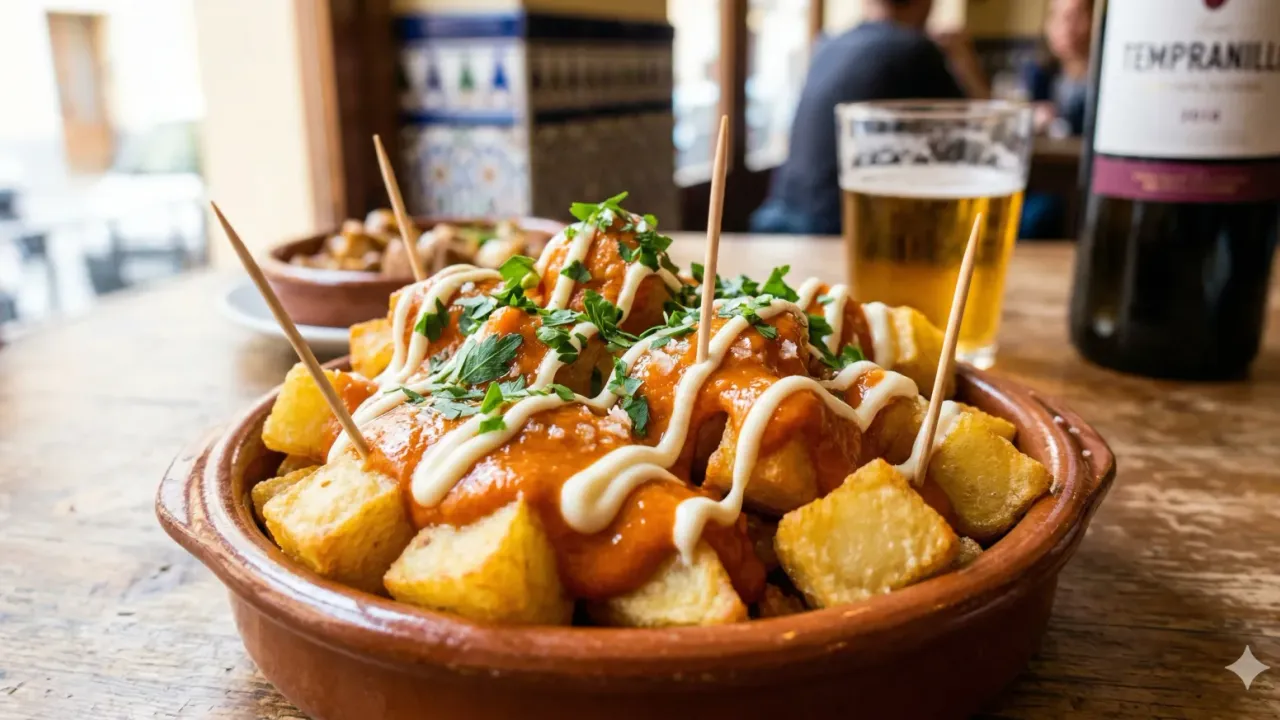
Patatas bravas are the undisputed king of Spanish tapas. These golden, crispy fried potato cubes arrive at the table smothered in a bold, smoky sauce that bites back with gentle heat. Walk into any bar in Madrid or Barcelona, and you will find a plate of these fierce little potatoes on nearly every table. This patatas bravas recipe gives you everything you need to recreate this beloved dish at home, from perfectly crispy potatoes to an authentic bravas sauce that sings with smoked paprika and sherry vinegar.
Prep Time: 15 minutes | Cook Time: 30 minutes | Servings: 4
Difficulty: Easy | Calories: ~320 per serving
What Makes Patatas Bravas Special?
Patatas bravas hold a unique place in Spanish food culture. Unlike most fried potato dishes around the world, these are never plain. The magic lives in the sauce. Bravas sauce is a fiery blend of tomatoes, smoked paprika, and cayenne that transforms ordinary potatoes into something bold and memorable. Every bar in Spain has its own closely guarded recipe. Some versions lean smoky, others lean spicy, and a few incorporate roasted peppers for extra depth. This variation makes ordering patatas bravas an adventure wherever you go.
What truly sets this dish apart is its simplicity. You need just a handful of ingredients and basic cooking techniques. Yet the result punches far above its weight. The contrast between the crunchy, golden exterior and the soft, creamy interior of each potato cube creates a texture that is deeply satisfying. Meanwhile, the bravas sauce delivers layers of flavor: smoky first, then tangy, then a slow building heat that lingers on the tongue.
Additionally, the social context matters. Patatas bravas are tapas food, meant for sharing over drinks with friends. They arrive on small plates with toothpicks, and everyone reaches in together. This communal eating style is central to Spanish culture. Making them at home brings that same relaxed, generous spirit to your own table. The dish is fast, affordable, and impressive, which explains why it has conquered menus far beyond Spain.

Choosing the Right Potatoes
The potato variety you select determines the final texture of your patatas bravas. Not all potatoes fry the same way, so choosing wisely makes a real difference. Here are the best options ranked by performance.
- Yukon Gold (best choice): These medium-starch potatoes strike the ideal balance. They fry to a beautiful golden color with a crispy shell, while the inside stays buttery and creamy. Their natural yellow hue also looks gorgeous on the plate.
- Russet potatoes: High starch content makes russets exceptionally crispy when fried. They absorb less oil and develop a thick, crunchy crust. However, the interior can be slightly drier and more mealy than Yukon Gold. They work well if you prefer maximum crunch.
- Maris Piper: Popular in European kitchens, this variety fries beautifully with a fluffy center. If you can find them at specialty stores, they are an excellent choice. Their starch content sits between Yukon Gold and russet.
- Red or waxy potatoes (avoid): Low-starch potatoes hold their shape too well and never develop a proper crispy exterior. They turn rubbery instead of crunchy during frying. Save these for salads and roasts instead.
Ingredients for Patatas Bravas
For the Potatoes:
- 2 pounds Yukon Gold potatoes, peeled and cut into 1-inch cubes
- Vegetable oil for frying (about 4 cups)
- 1 teaspoon sea salt
For the Bravas Sauce:
- 2 tablespoons extra virgin olive oil
- 3 cloves garlic, minced
- 1 small onion, finely diced
- 1 can (14 ounces) crushed tomatoes
- 1 tablespoon smoked paprika (pimenton de la Vera)
- 1 teaspoon sweet paprika
- 1/2 teaspoon cayenne pepper
- 1 tablespoon sherry vinegar
- 1 teaspoon sugar
- Salt and black pepper to taste
For the Garlic Alioli:
- 1/3 cup mayonnaise
- 1 clove garlic, finely grated
- 1 tablespoon lemon juice
- Pinch of salt
For Garnish:
- Fresh flat-leaf parsley, roughly chopped
Pro tip: Smoked paprika is not optional here. Specifically, you want pimenton de la Vera, which is made from peppers smoked over oak fires in the La Vera region of Spain. This ingredient gives bravas sauce its signature campfire smokiness. Regular paprika tastes flat by comparison. A tin of pimenton de la Vera costs a few dollars and lasts for months, so it is well worth the investment.
Step-by-Step Instructions
Step 1: Prepare and Parboil the Potatoes
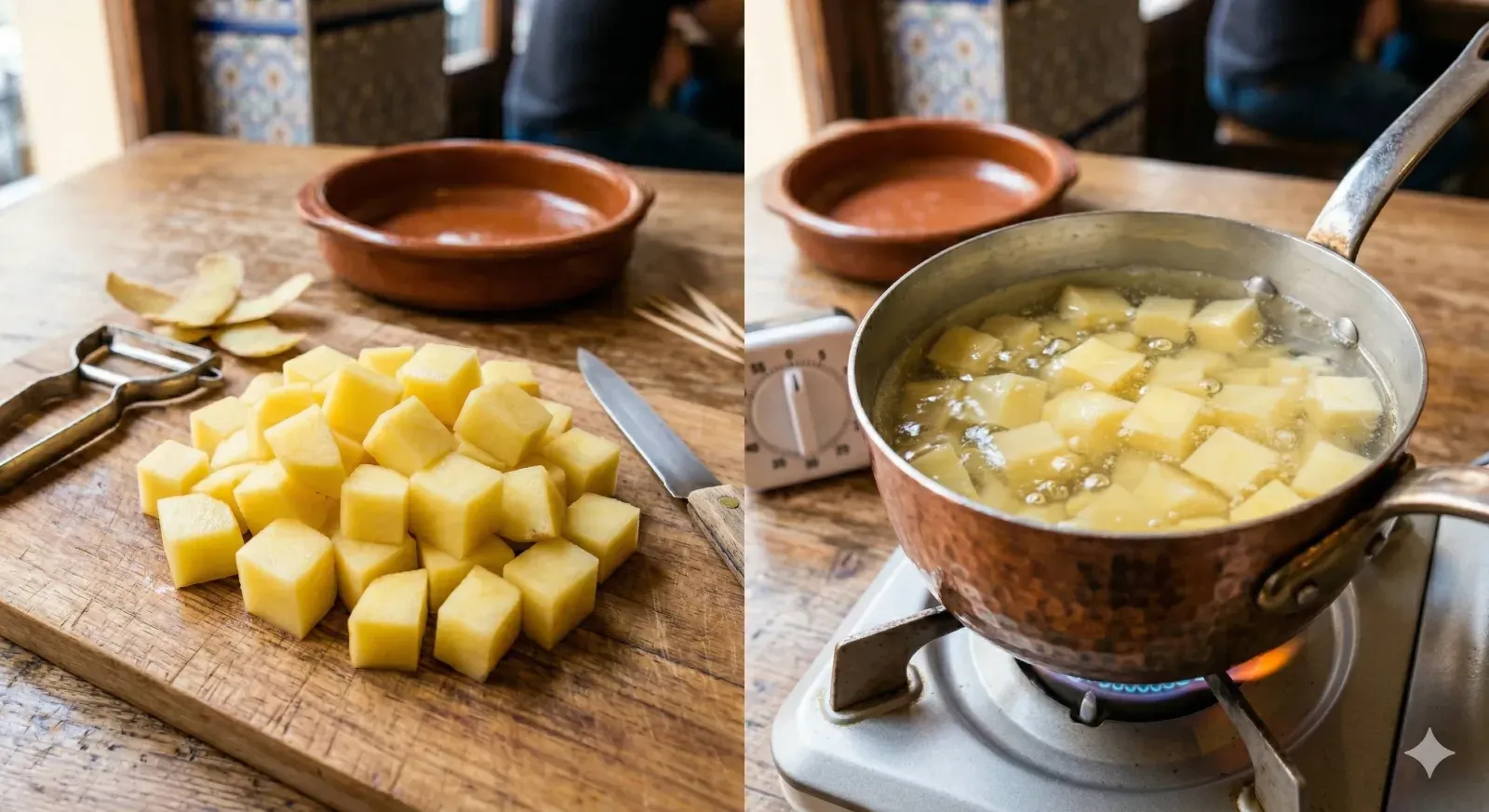
1 Peel the potatoes and cut them into rough 1-inch cubes. Uniform size matters here because it ensures even cooking. Place the cubes in a large pot and cover with cold salted water. Bring the pot to a boil over high heat. Then reduce to a gentle simmer and cook for exactly 8 minutes.
The potatoes should be just tender when pierced with a knife. Do not overcook them, or they will fall apart during frying. Drain the potatoes in a colander and spread them on a baking sheet. Let them steam dry for at least 10 minutes. This drying step is crucial because surface moisture causes dangerous oil splatter and prevents proper crisping.
Step 2: Make the Bravas Sauce
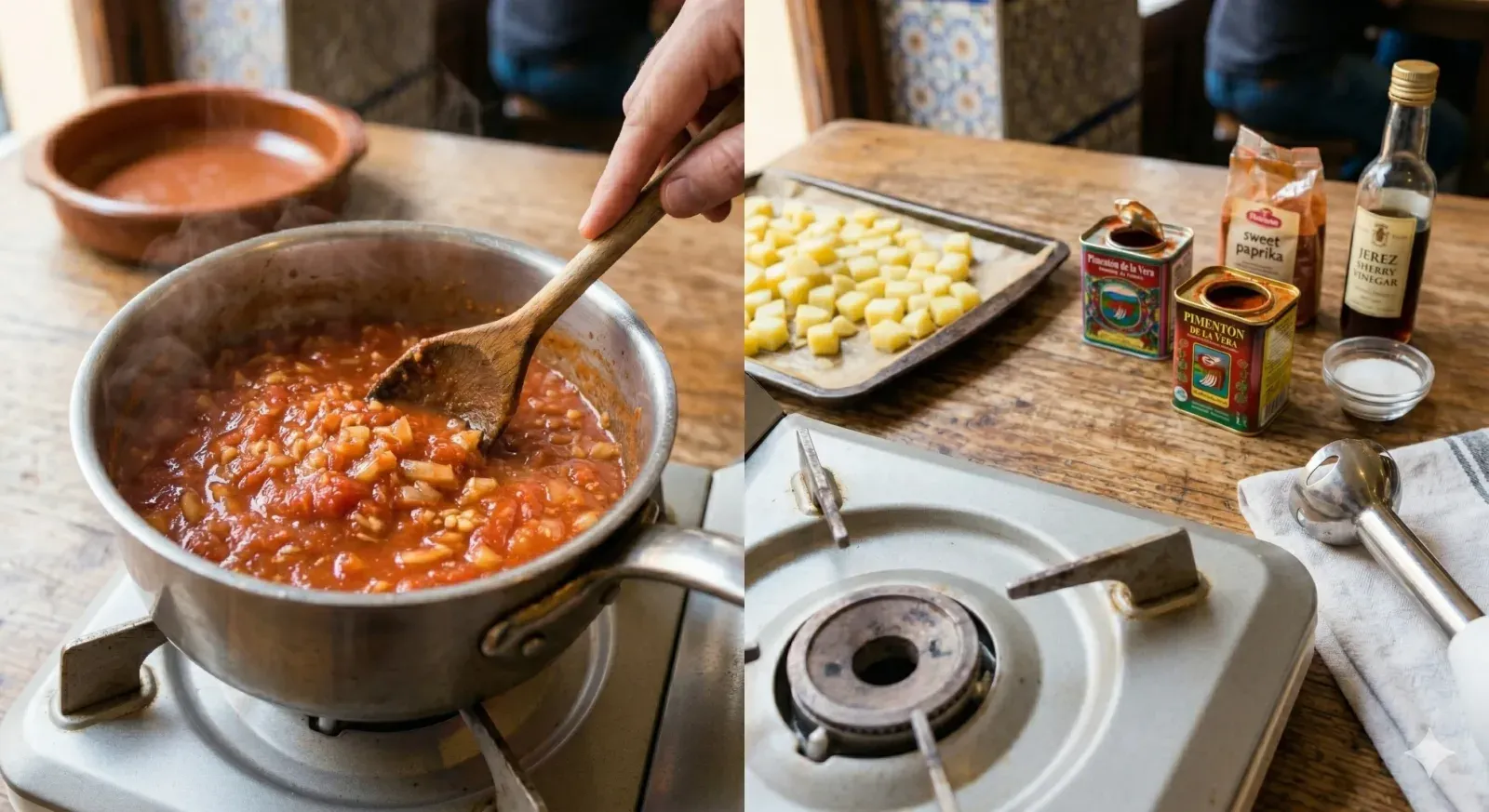
2 While the potatoes dry, prepare the sauce. Heat 2 tablespoons of olive oil in a medium saucepan over medium heat. Add the diced onion and cook for 4 minutes until soft and translucent. Stir in the minced garlic and cook for another 30 seconds until fragrant. Now add the smoked paprika, sweet paprika, and cayenne pepper.
Stir the spices constantly for 30 seconds. This blooming step releases the essential oils in the paprika and intensifies the smoky flavor. Next, pour in the crushed tomatoes, sherry vinegar, and sugar. Stir everything together and bring to a gentle simmer. Let the sauce bubble away for 15 minutes, stirring occasionally. It should thicken noticeably. Finally, blend the sauce with an immersion blender until completely smooth. Season with salt and pepper to taste.
Step 3: Prepare the Garlic Alioli
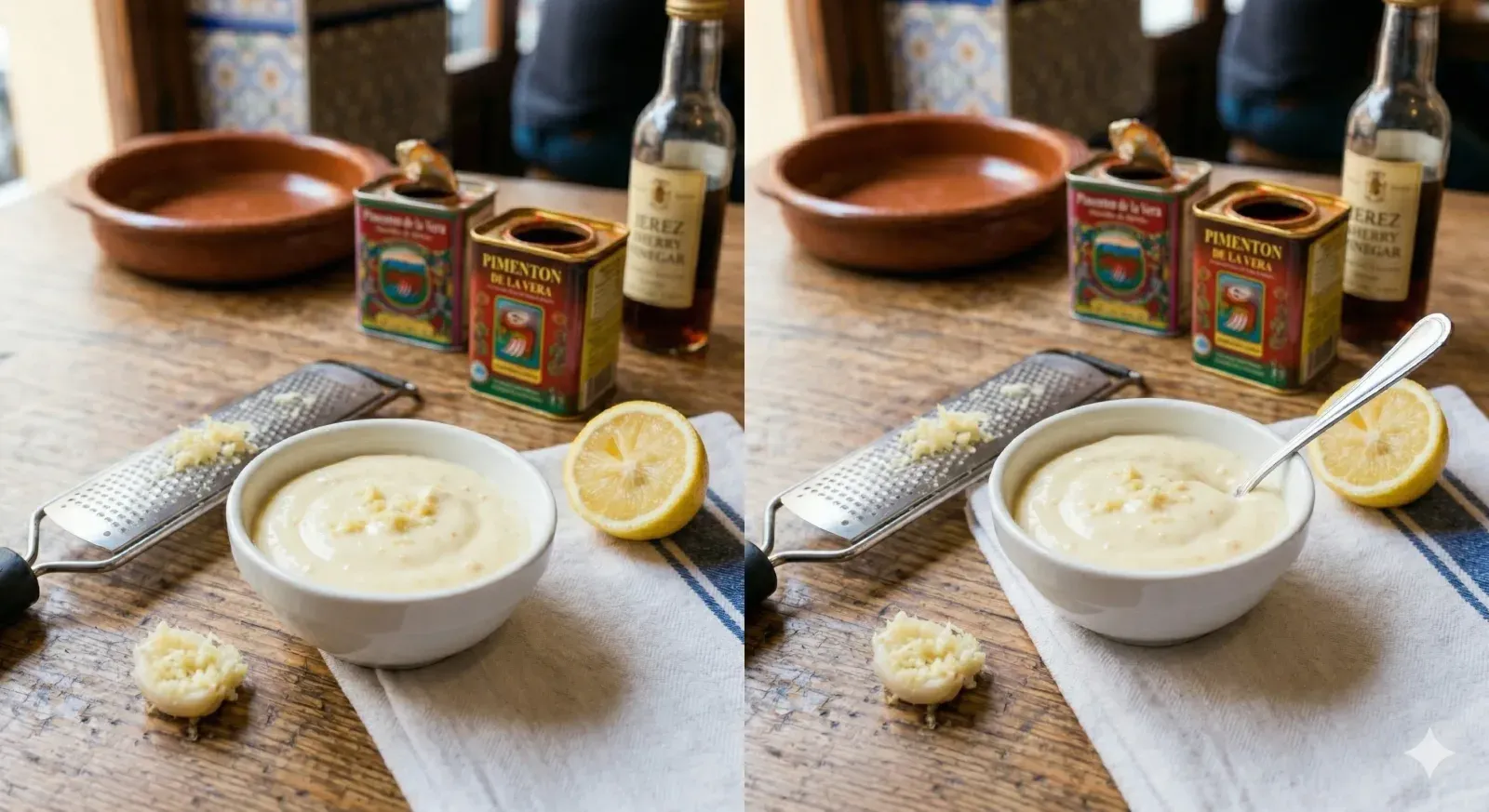
3 In a small bowl, combine the mayonnaise with the finely grated garlic, lemon juice, and a pinch of salt. Stir until smooth and creamy. The garlic should be grated on a microplane so it dissolves into the mayo without leaving chunks. Cover the bowl and place it in the refrigerator until serving time.
Traditional Spanish alioli contains only garlic and olive oil, emulsified by hand. However, this simplified version delivers the same garlicky punch with far less effort. If you prefer a more authentic approach, you can make a true alioli by slowly whisking olive oil into crushed garlic with a mortar and pestle.
Step 4: Fry the Potatoes Until Golden and Crispy
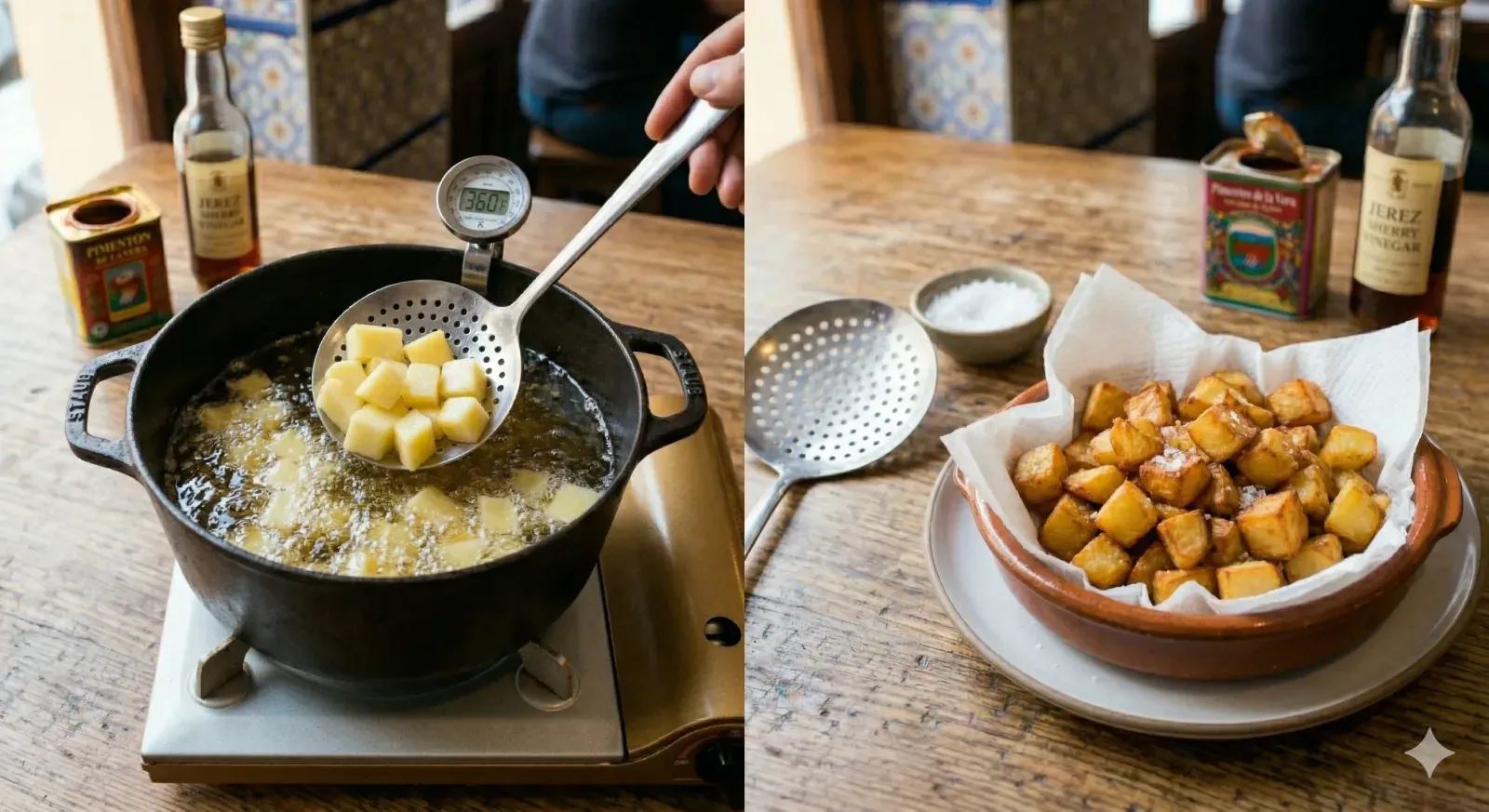
4 Heat the vegetable oil in a heavy-bottomed pot or Dutch oven to 360 degrees Fahrenheit. Use a thermometer to monitor the temperature closely. Working in small batches, carefully lower the dried potato cubes into the hot oil. Do not overcrowd the pot, as this drops the oil temperature and creates soggy results.
Fry each batch for 5 to 7 minutes, turning occasionally with a slotted spoon. The potatoes are done when they turn deep golden brown and feel very crispy on the outside. Remove them with a slotted spoon and drain on a plate lined with paper towels. Season each batch immediately with sea salt while still glistening with oil. The salt sticks better to hot, slightly oily surfaces.
Step 5: Assemble and Serve
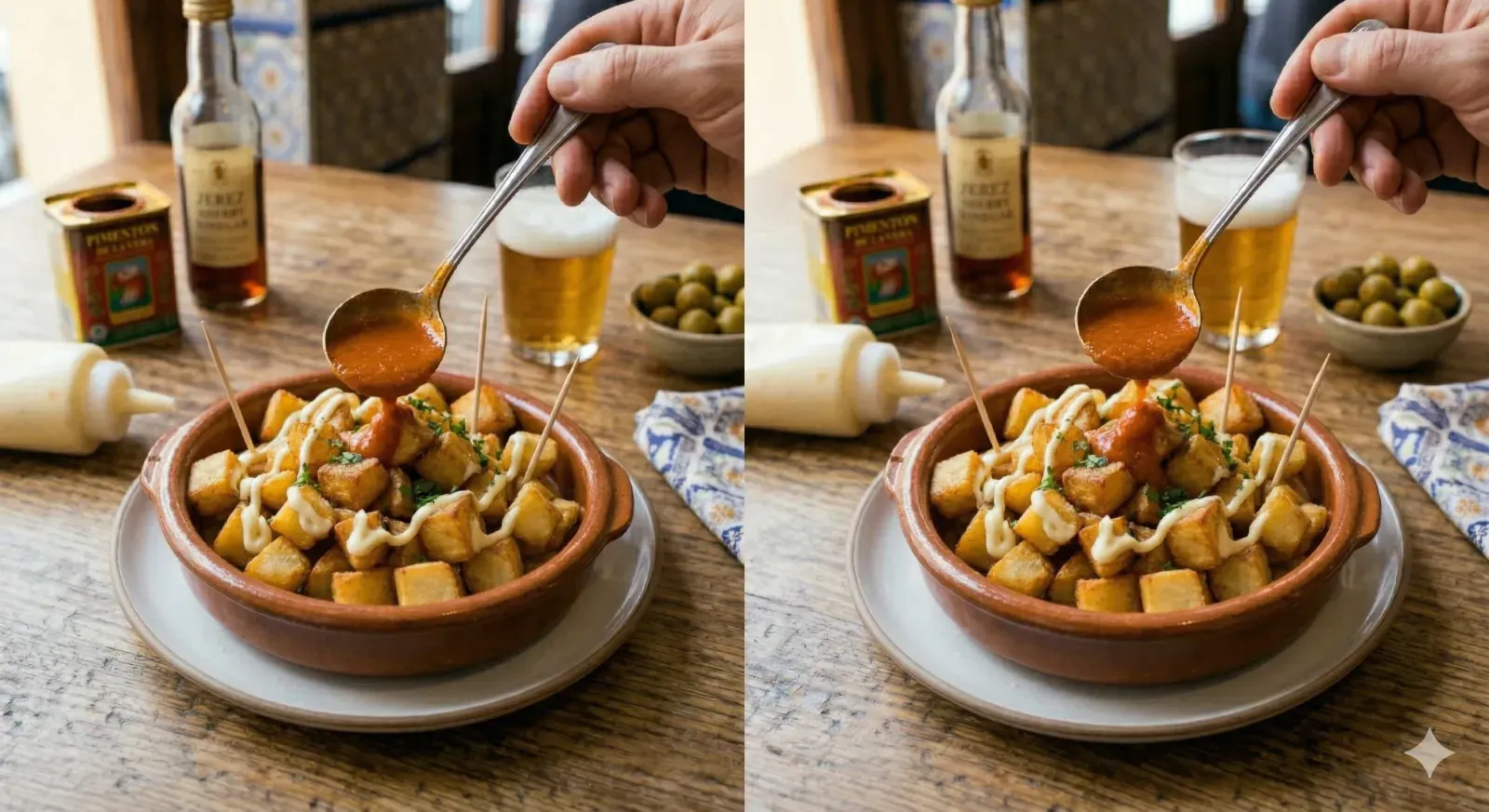
5 Pile the hot, crispy potatoes onto a serving plate or shallow bowl. Spoon the warm bravas sauce generously over the top. You want enough sauce to coat the potatoes without drowning them. Then drizzle the garlic alioli in bold zigzag lines across the entire dish.
Finish with a scattering of freshly chopped parsley for color and freshness. Serve the patatas bravas immediately with toothpicks for picking. Speed matters here because the potatoes lose their crunch quickly once the sauce hits them. Bring the plate to the table while everything is still hot, and let your guests dive in right away.
Expert Tips for Perfect Patatas Bravas
Parboiling Is the Secret to Crunch
Skipping the parboil is the most common shortcut that ruins this dish. When you boil the potatoes first, the surface becomes rough and starchy. That rough surface is exactly what crisps up during frying. Without it, you get smooth, hard potatoes that never achieve the same golden crunch. Think of it like the technique behind the best roast potatoes in British cooking.
Bloom Your Spices in Oil
Adding paprika directly to the tomatoes wastes its potential. Instead, stir the paprika into the hot oil with the garlic for 30 seconds before adding the liquid. This technique, called blooming, dissolves the fat-soluble flavor compounds in the spices. As a result, your bravas sauce will taste significantly smokier and more complex. Just be careful not to burn the paprika, as it turns bitter quickly.
Control Your Oil Temperature
Frying at the wrong temperature causes problems every time. Oil below 340 degrees produces greasy, limp potatoes that absorb too much fat. Oil above 380 degrees browns the outside before the interior finishes cooking. A clip-on thermometer is your best friend here. Maintain a steady 360 degrees throughout the frying process for consistent, perfect results.
Regional Patatas Bravas Styles Across Spain
No two cities in Spain make patatas bravas the same way. The debate over the “correct” version is fierce and unending. Here is a comparison of the most famous regional styles.
| City / Region | Sauce Style | Potato Cut | Distinctive Feature |
|---|---|---|---|
| Madrid | Tomato-based with smoked paprika and cayenne | Irregular cubes, skin on or off | The original style; sauce is smooth and spicy |
| Barcelona | Bravas sauce plus alioli drizzled together | Cubes or thick wedges | Always served with both sauces combined |
| Basque Country | Spicy pepper-based salsa without tomato | Thick rounds or large cubes | Uses local guindilla peppers for heat |
| Andalusia | Tomato sauce with extra garlic and cumin | Small cubes, double fried | Heavier garlic presence, served with aioli |
| Galicia | Mild paprika sauce, less heat | Boiled then pan-fried wedges | Focuses on potato flavor over spice |
Serving Suggestions
In Spain, patatas bravas rarely arrive alone. They are part of a larger tapas spread, shared alongside other small plates. Building the right combination turns a simple snack into a complete meal.
Classic Tapas Accompaniments:
- Jamon serrano: Thin slices of cured Spanish ham balance the richness of the fried potatoes with their salty, nutty flavor. The contrast between hot potatoes and cold ham is fantastic.
- Pimientos de padron: Blistered green peppers sprinkled with sea salt make a light, fresh companion. Most are mild, but the occasional spicy one keeps things exciting.
- Tortilla espanola: A thick Spanish potato omelet served at room temperature alongside bravas creates the ultimate potato-lovers plate. Both dishes celebrate the humble spud in different ways.
- Crusty bread: Use good bread to mop up every last drop of bravas sauce and alioli from the plate. Nothing should go to waste.
Beverage Pairings:
- Cana (small draft beer): This is the classic pairing. A cold, small beer cuts through the richness and heat of the bravas. In Spain, you order a cana with your tapas, not a full pint.
- Tempranillo red wine: A young, fruity Tempranillo from Rioja or Ribera del Duero stands up to the smoky paprika in the sauce. Serve it slightly chilled for maximum refreshment.
- Tinto de verano: Red wine mixed with lemon soda makes a refreshing summer drink. Its light sweetness complements the spicy sauce beautifully.
- Sparkling water with lemon: For a non-alcoholic option, the carbonation cleanses the palate between bites. The lemon adds a bright note that echoes the vinegar in the sauce.
Storage and Reheating
Refrigerator: Store leftover fried potatoes and bravas sauce separately. The potatoes keep for 2 days, and the sauce lasts up to 5 days. Keeping them apart prevents the potatoes from turning soggy in the refrigerator.
Freezer: The bravas sauce freezes beautifully for up to 3 months. Pour it into a freezer-safe container and thaw overnight in the fridge. Fried potatoes do not freeze well because they lose their crunch entirely. It is always better to fry fresh potatoes.
Reheating: Reheat leftover potatoes in a hot oven at 425 degrees Fahrenheit for 10 to 12 minutes. Spread them on a baking sheet in a single layer so the heat can crisp all sides evenly. A microwave will make them soft and rubbery, so avoid it completely. Warm the sauce gently in a small pan on the stovetop.
Common Mistakes to Avoid
1. Crowding the Frying Pot
Adding too many potatoes at once drops the oil temperature dramatically. The result is pale, greasy potatoes that never get crispy. Always fry in small batches, leaving plenty of room for each cube to float freely. Patience here pays off with a much better crunch.
2. Using Regular Paprika Instead of Smoked
Regular sweet paprika adds color but very little flavor. Smoked paprika from La Vera is what gives bravas sauce its soul. The smokiness is the defining characteristic. Without it, your sauce will taste like plain tomato sauce with some heat. Invest in the real thing for authentic results.
3. Skipping the Parboil Step
Frying raw potato cubes takes much longer and produces uneven results. The outside burns before the inside cooks through. Parboiling solves this problem by pre-cooking the interior. It also creates a rough, starchy surface that fries into an incredibly crispy shell. Never skip this step.
4. Saucing Too Early
Adding the bravas sauce to the potatoes before serving them immediately is a mistake. The hot sauce softens the crispy coating within minutes. Always sauce the potatoes at the very last moment, right at the table. Better yet, serve the sauce on the side and let guests apply their own.
Frequently Asked Questions
What are patatas bravas?
Patatas bravas are a beloved Spanish tapas dish made from fried potato cubes topped with a spicy tomato-based sauce. The name translates to “fierce potatoes” because of the bold heat in the bravas sauce. They are served in bars and restaurants across Spain as a shareable snack alongside drinks. Almost every region has its own version.
What is bravas sauce made of?
Authentic bravas sauce starts with crushed tomatoes simmered with smoked paprika, sweet paprika, cayenne pepper, garlic, and onion. Sherry vinegar provides tang, and a touch of sugar balances the acidity. The sauce is cooked until thick, then blended smooth. Smoked paprika from La Vera is the key ingredient that gives bravas sauce its distinctive smoky depth.
Can I bake patatas bravas instead of frying them?
Yes, baking is a lighter alternative. Toss the cubed potatoes with olive oil and salt, then spread them on a baking sheet in a single layer. Bake at 425 degrees Fahrenheit for 35 to 40 minutes, flipping halfway through. The results will not be as crunchy as deep-fried, but the flavor remains excellent. This method also uses significantly less oil.
What is the difference between patatas bravas and patatas aioli?
The distinction comes down to the sauce. Patatas bravas use a spicy, smoky tomato sauce, while patatas aioli are topped with garlic mayonnaise only. Many Spanish bars now serve both sauces on the same plate, combining the heat of bravas with the creaminess of alioli. This combination has become the modern standard in Barcelona especially.
What type of potato is best for patatas bravas?
Yukon Gold potatoes deliver the best balance of creamy interior and crispy exterior. Their medium starch content makes them ideal for frying. Russet potatoes also work well and produce an even crispier shell. Avoid waxy varieties like red potatoes because they do not develop a proper golden crust when fried.
How do I make patatas bravas crispy?
Crispiness comes from a two-stage method. First, parboil the potatoes for 8 minutes to soften the interior and roughen the surface. Then dry them completely before frying in oil at 360 degrees Fahrenheit. Fry in small batches so the temperature stays consistent. This approach creates an outer shell that shatters when you bite through it.
Variations and Adaptations
Oven-Baked Patatas Bravas:
For a healthier version, roast the potato cubes in the oven instead of frying. Toss them with 3 tablespoons of olive oil, smoked paprika, and salt before roasting at 425 degrees. The edges caramelize and crisp up nicely after 35 to 40 minutes. You lose some of the deep-fried crunch, but you gain a smoky flavor from the oven roasting.
Air Fryer Patatas Bravas:
The air fryer produces surprisingly crispy results with minimal oil. Toss parboiled potatoes with a tablespoon of olive oil and cook at 400 degrees for 18 to 20 minutes. Shake the basket every 5 minutes for even browning. This method uses roughly 90 percent less oil than deep frying while still delivering a satisfying crunch.
Vegan Patatas Bravas:
The bravas sauce and potatoes are naturally vegan. Simply replace the mayonnaise-based alioli with a plant-based version. Blend soaked cashews with garlic, lemon juice, and water for a creamy, dairy-free alternative. Alternatively, many stores now carry vegan mayonnaise that works perfectly here.
Extra-Spicy Bravas:
If you love heat, add a finely chopped fresh chile to the sauce. Guindilla peppers are traditional in some regions. You can also increase the cayenne to a full teaspoon or stir in a spoonful of harissa paste. Taste as you go, because you can always add more heat but cannot take it away.
The Cultural Significance of Patatas Bravas
Patatas bravas are woven into the social fabric of Spain. They represent far more than a plate of fried potatoes. In Madrid, where the dish likely originated in the mid-20th century, every neighborhood bar claims to serve the best version in the city. Regular customers are fiercely loyal to their local spot. Debates about whose bravas sauce reigns supreme can last for hours.
The tapas tradition itself is deeply connected to Spanish identity. Going out for tapas is not about the food alone. It is about spending time with friends and family, moving from bar to bar, sharing small plates and conversation. Patatas bravas sit at the center of this ritual because they are affordable, universally loved, and pair perfectly with a cold beer. They are the great equalizer of Spanish cuisine, enjoyed equally by students, workers, and executives.
Beyond Spain, patatas bravas have become a global ambassador for Spanish cooking. You can find them on tapas menus from London to Tokyo. Their popularity speaks to a universal truth: perfectly fried potatoes topped with a bold, well-made sauce will always win people over. Yet no matter how far the dish travels, it always carries a piece of Spain with it.
Conclusion
This patatas bravas recipe delivers everything the dish should be: crispy golden potatoes, a smoky and spicy bravas sauce, and a cool garlic alioli that ties it all together. The keys to success are simple. Parboil your potatoes before frying, use real smoked paprika from La Vera, and maintain your oil at a steady 360 degrees. Follow these steps, and you will produce tapas-bar-quality patatas bravas in your own kitchen.
Ready to explore more European classics? Browse our full European dishes collection for recipes like gazpacho, tortellini in brodo, and souvlaki. Each recipe brings a different corner of Europe to your kitchen table.