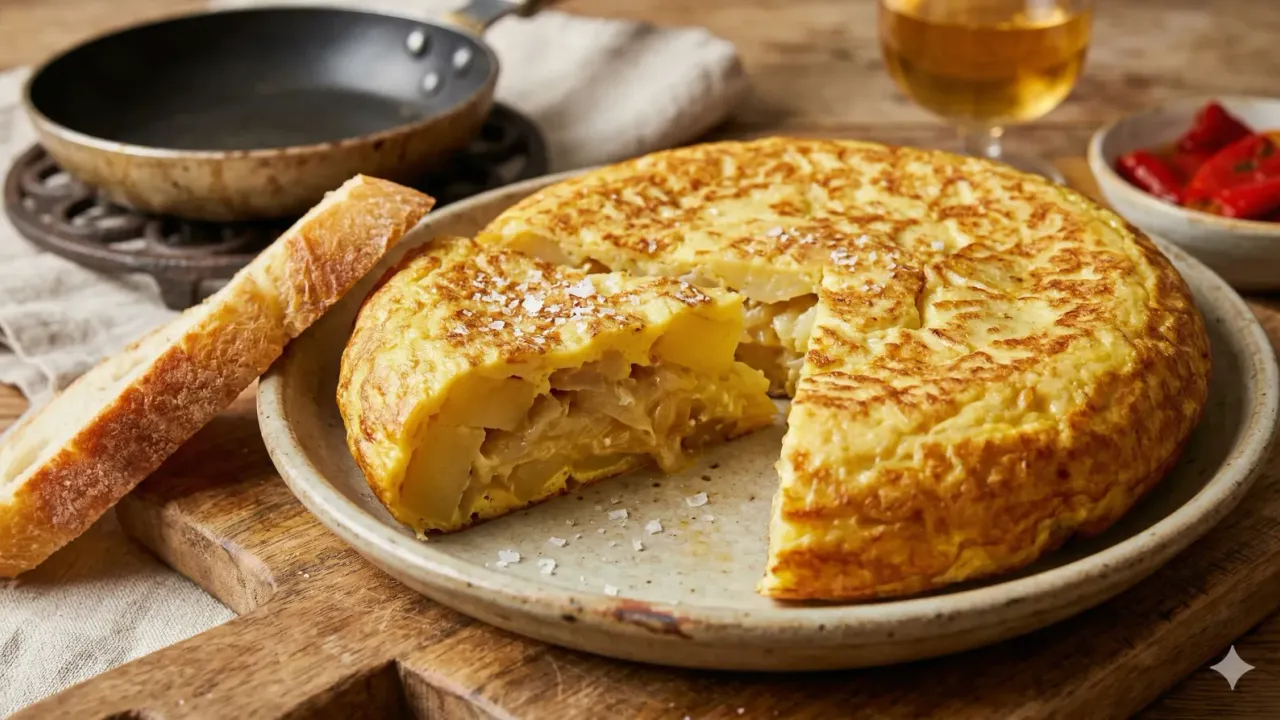
Tortilla espanola is the heart and soul of Spanish home cooking. This thick, golden potato omelette appears on every tapas bar counter, at every family gathering, and inside countless lunchboxes across Spain. Despite using only potatoes, onions, eggs, and olive oil, a well-made tortilla espanola delivers extraordinary flavor and texture. This recipe walks you through every detail so you can make an authentic Spanish tortilla in your own kitchen today.
Prep Time: 20 minutes | Cook Time: 35 minutes | Servings: 6
Difficulty: Medium | Calories: ~290 per serving
What Makes Tortilla Espanola Special?
Tortilla espanola stands apart from every other egg dish in the world. A French omelette is thin, delicate, and cooked in seconds. By contrast, a Spanish tortilla is thick, sturdy, and cooked slowly over gentle heat. The potatoes are not boiled or roasted beforehand. Instead, they are poached in a generous amount of olive oil until silky and tender. This slow oil-poaching technique gives the potatoes a rich, almost buttery quality that you cannot achieve any other way.
The beauty of this dish lies in its contradictions. It looks humble but tastes luxurious. The ingredient list is short, yet the technique demands attention and care. Consequently, every bite reveals layers of flavor: the sweetness of slow-cooked onion, the earthiness of potato, the richness of good olive oil, and the custard-like softness of barely set eggs. Together, these elements create something far greater than the sum of their parts.
Furthermore, tortilla espanola is remarkably versatile. Spaniards eat it for breakfast, lunch, dinner, and as a late-night snack. It travels well, tastes wonderful at room temperature, and feeds a crowd on a modest budget. The dish dates back to at least the 19th century and remains as popular today as ever. Learning to make it well is a skill that will serve you for a lifetime.

Choosing the Right Potatoes
Your potato choice shapes the entire texture of the finished tortilla espanola. The ideal potato holds its shape during frying but turns creamy once folded into the eggs. Here are the best options for this dish.
- Yukon Gold (best choice): These medium-starch potatoes are the top pick for tortilla espanola. They stay intact during oil-poaching and develop a silky, almost waxy texture inside the omelette. Their natural golden color also gives the finished dish an appealing warm hue.
- Russet potatoes: High starch makes russets very tender after cooking. However, they break apart more easily when stirred into the eggs. If you use russets, handle the mixture gently. The result is a softer, more custard-like tortilla with less visible potato structure.
- Maris Piper: Available in many European markets, this variety performs beautifully here. It offers a fluffy texture with enough structure to hold its shape. If you can find them, they are an excellent alternative to Yukon Gold.
- Red or new potatoes (avoid): Waxy potatoes stay too firm inside the tortilla. They resist absorbing the egg and create a disjointed texture. The filling should feel unified, and waxy varieties prevent that cohesion.
Ingredients for Tortilla Espanola
For the Potato and Onion Base:
- 2 pounds Yukon Gold potatoes, peeled and sliced 1/8 inch thick
- 1 large Spanish onion, thinly sliced
- 1 1/2 cups extra virgin olive oil for frying
For the Egg Mixture:
- 6 large free-range eggs
- 1 teaspoon fine sea salt
- 1/2 teaspoon freshly ground black pepper
For Finishing:
- Flaky sea salt (such as Maldon)
Pro tip: The olive oil matters enormously in tortilla espanola because the potatoes poach directly in it. Use a good-quality extra virgin olive oil with a mild, fruity flavor. The potatoes absorb the oil’s character during cooking, so a harsh or bitter oil will carry through to the finished dish. You do not need the most expensive bottle on the shelf, but avoid anything that tastes sharp or peppery. Save that for finishing drizzles instead.
Step-by-Step Instructions
Step 1: Slice and Fry the Potatoes and Onions
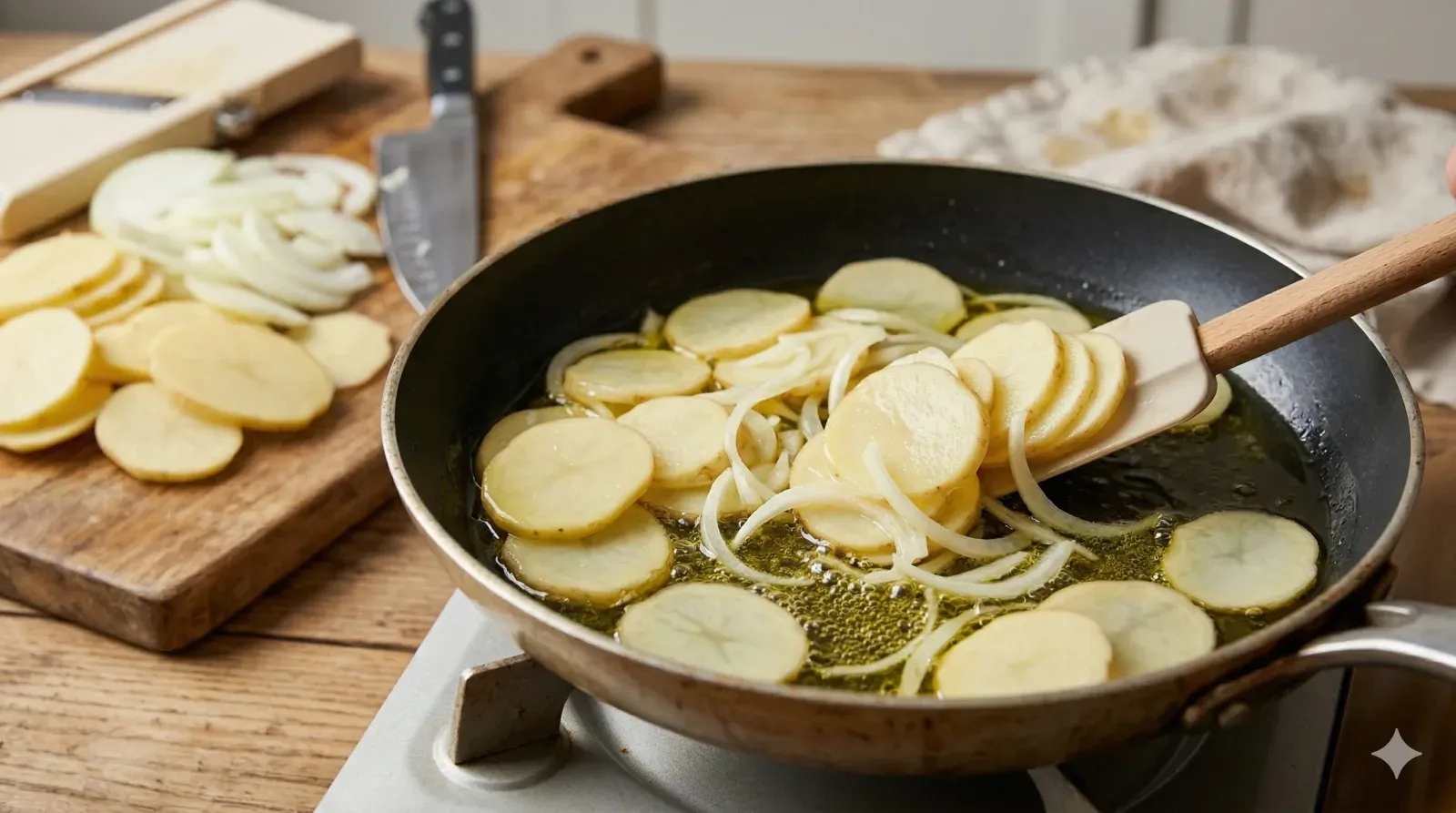
1 Peel the potatoes and slice them into thin rounds, about 1/8 inch thick. A mandoline makes this fast and uniform, but a sharp knife works fine too. Thinly slice the onion into half-moons. Pour 1 1/2 cups of olive oil into a 10-inch nonstick skillet and heat it to 280 degrees Fahrenheit. This temperature is much lower than typical frying.
Add the potato slices and onion to the warm oil. Gently stir to separate the layers and ensure even cooking. The oil should bubble gently around the potatoes, not sizzle aggressively. Cook for 20 to 25 minutes, stirring occasionally. The goal is to poach the potatoes until they are completely tender and starting to break at the edges. They should not brown at all. Meanwhile, the onions will turn translucent and sweet.
Step 2: Beat the Eggs and Combine with Potatoes
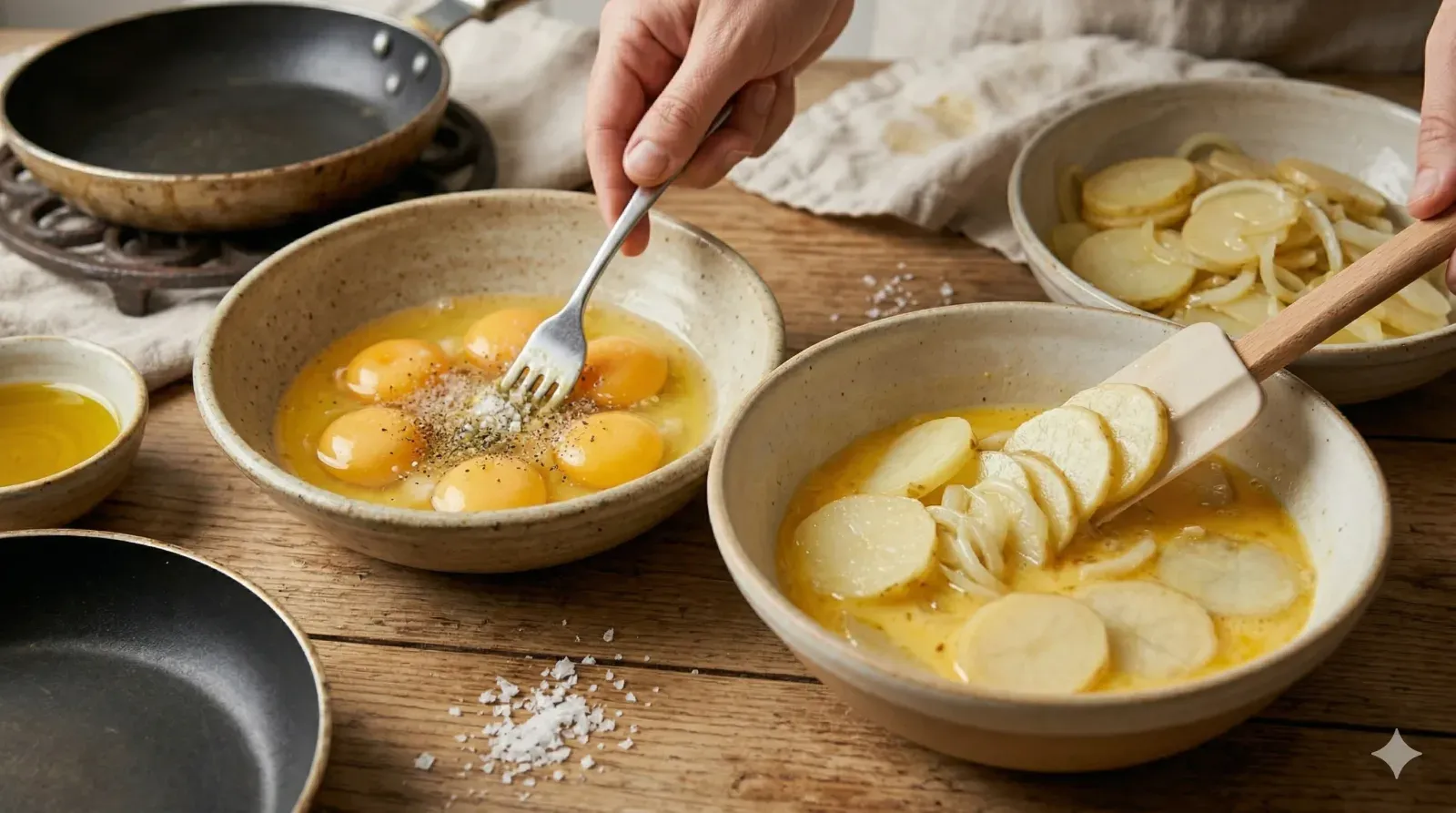
2 While the potatoes cook, crack 6 eggs into a large mixing bowl. Add the salt and pepper. Beat the eggs with a fork until the whites and yolks are just combined. Do not over-beat them. You want a cohesive mixture, not a frothy one.
When the potatoes are fully tender, drain them through a colander set over a heatproof bowl. Reserve the olive oil for cooking the tortilla and for future use. Let the potatoes cool for about 3 minutes. Then gently fold them into the beaten eggs using a rubber spatula. Be careful not to mash the potatoes completely. Some pieces should remain intact for texture. Let this mixture rest for 10 minutes at room temperature. During this time, the warm potatoes absorb the egg, which binds the tortilla together.
Step 3: Cook the First Side
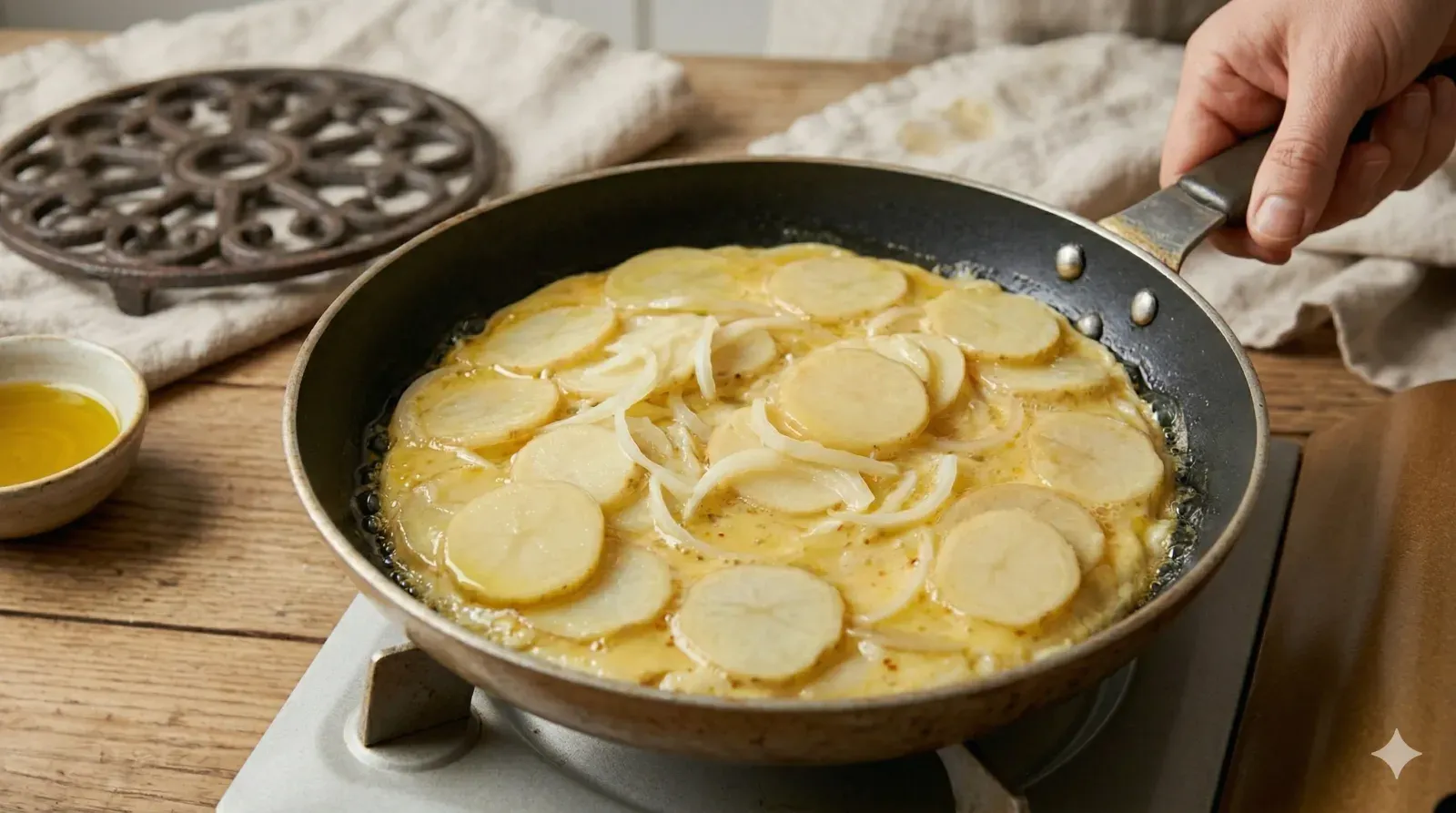
3 Heat 2 tablespoons of the reserved olive oil in the same nonstick skillet over medium-high heat. Swirl the oil to coat the bottom and sides of the pan. Pour in the potato-egg mixture and spread it evenly with a spatula. Immediately reduce the heat to medium-low. This initial burst of high heat sets the bottom quickly and creates a golden crust.
Cook the tortilla undisturbed for the first 2 minutes. After that, gently shake the pan every minute or so to prevent sticking. The tortilla is ready to flip when the edges have pulled away from the sides of the pan and the bottom is set and golden brown. This takes about 5 to 7 minutes total. The top will still look wet and uncooked at this point, which is exactly right.
Step 4: Flip the Tortilla
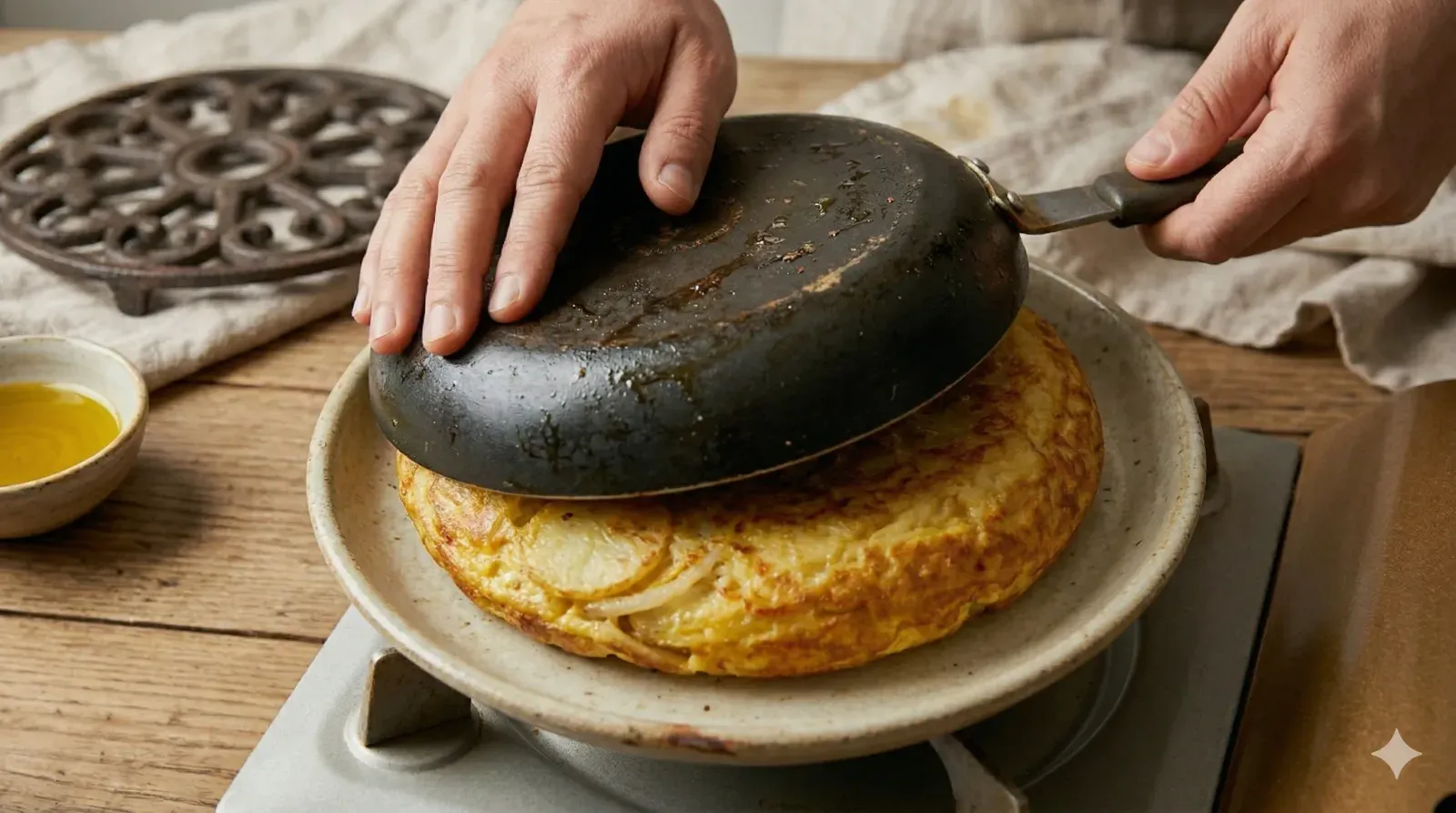
4 This is the moment that intimidates most cooks. Grab a large flat plate that is slightly wider than the skillet. Place the plate face-down over the pan. Hold the plate firmly against the rim with one hand while gripping the skillet handle with the other. In one swift, confident motion, flip the entire assembly upside down.
The tortilla should land neatly on the plate. Add another tablespoon of reserved oil to the empty skillet. Slide the tortilla back into the pan with the uncooked side now facing down. Use a spatula to tuck the edges underneath, shaping the tortilla into a neat round cake. Cook for 3 to 4 more minutes on medium-low heat. The center should still have a very slight wobble when you shake the pan gently. Residual heat will finish setting it during resting.
Step 5: Rest and Serve
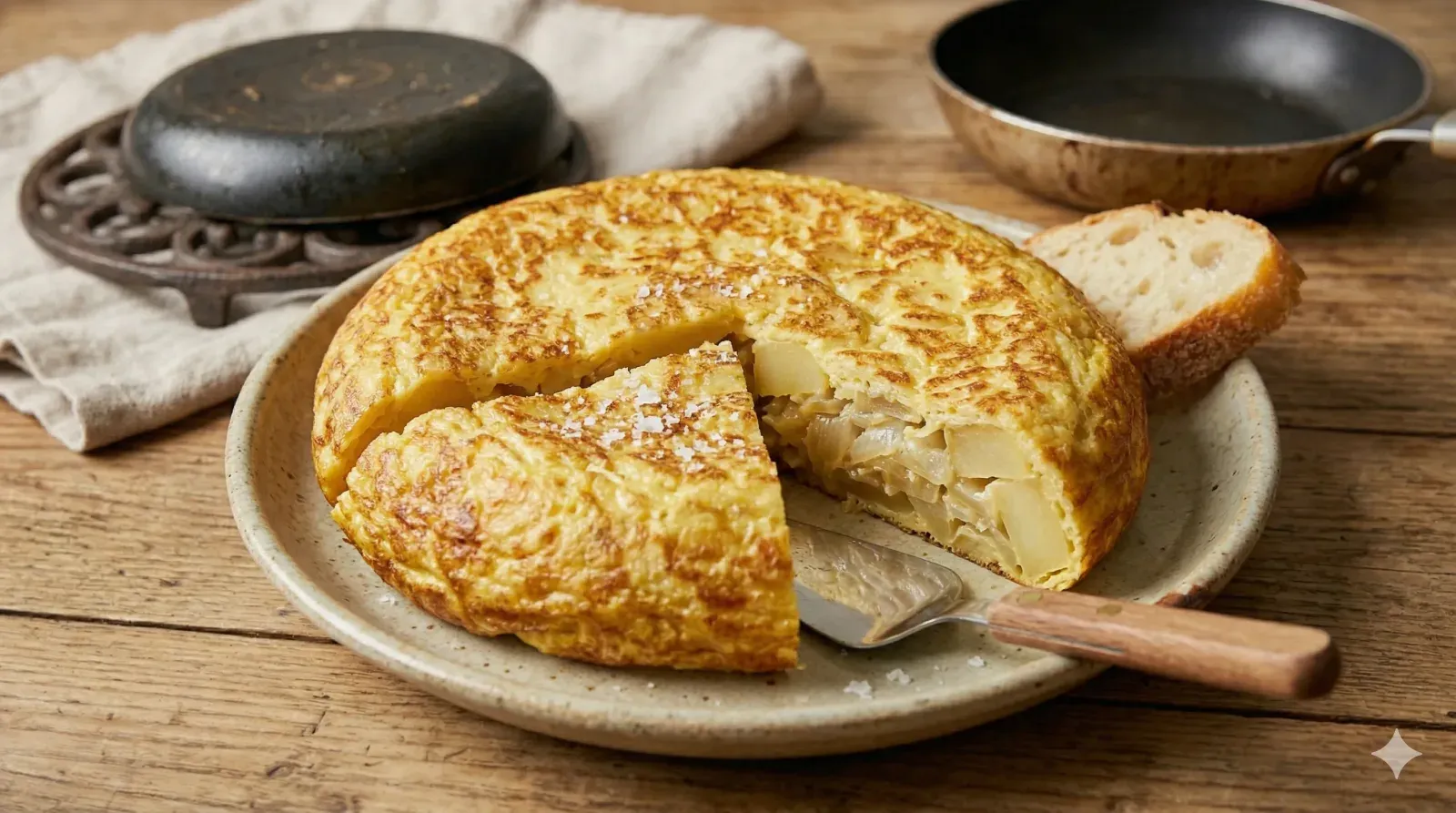
5 Slide the finished tortilla espanola onto a clean serving plate. Resist the urge to cut into it immediately. Let the tortilla rest for at least 5 minutes. During this time, the residual heat continues cooking the center gently. The eggs firm up to a custardy, just-set consistency that is the hallmark of a great tortilla espanola.
Sprinkle the top with a pinch of flaky sea salt. Cut into wedges and serve warm or at room temperature. In Spain, many cooks prefer the tortilla after it has rested for 30 minutes to an hour. The flavors meld together beautifully as it cools. Either way, this is a dish that rewards patience at every stage.
Expert Tips for Perfect Tortilla Espanola
Use a Nonstick Skillet
A nonstick pan is essential for tortilla espanola. The flip is the most critical moment in the entire recipe. If the tortilla sticks to the pan, it will tear apart when you try to invert it. Even well-seasoned cast iron can be unreliable here. Choose a high-quality 10-inch nonstick skillet with sloped sides. The sloped shape helps the tortilla slide freely and makes flipping far easier.
Keep the Oil Temperature Low
The potatoes should poach gently in the olive oil, never fry. If you hear loud sizzling or see the potatoes browning, your heat is too high. The oil temperature should hover around 275 to 280 degrees. Low heat allows the potatoes to cook through evenly while absorbing the olive oil’s flavor. Browned potatoes create a different texture entirely and change the character of the dish.
Let the Mixture Rest Before Cooking
After folding the drained potatoes into the eggs, let the mixture sit for 10 minutes. This resting period is not optional. The warm potatoes absorb the raw egg during this time. As a result, the tortilla holds together better during cooking and flipping. Skipping this rest produces a looser, more fragile omelette that falls apart easily. Patience at this stage makes the flip much less stressful.
Regional Tortilla Espanola Styles Across Spain
Spain takes its tortilla espanola seriously. Every region has strong opinions about the correct way to prepare it. Here is a comparison of the most notable regional variations.
| Region | Onion | Egg Texture | Distinctive Feature |
|---|---|---|---|
| Madrid | Usually included | Fully set throughout | Firm, sliceable tortilla served at room temperature in bars |
| Basque Country | Always included | Runny center (jugosa) | Creamy, almost custard-like interior that flows when cut |
| Castilla y Leon | Often omitted | Fully set | Purist approach with just potatoes and eggs, no onion |
| Galicia | Included, plus chorizo | Medium set | Adds chorizo or peppers for extra flavor |
| Andalusia | Included | Medium set | Served as pincho (small slice on bread) in tapas bars |
Serving Suggestions for Tortilla Espanola
Tortilla espanola works in nearly any meal context. It shines as a tapas dish, a main course, or a portable lunch. The following pairings bring out the best in this versatile omelette.
Classic Accompaniments:
- Crusty baguette: Slice the tortilla and serve it on bread as a pincho de tortilla. This is the most popular way to enjoy it in Spanish bars. The bread soaks up the olive oil and egg, creating a deeply satisfying bite.
- Mixed green salad: A simple salad with peppery arugula, cherry tomatoes, and a sherry vinaigrette balances the richness of the tortilla. The acidity cuts through the egg and olive oil perfectly.
- Roasted red peppers: Piquillo peppers from Navarra are the traditional choice. Their sweet, smoky flavor complements the savory tortilla beautifully. You can stuff them with goat cheese for an extra layer of indulgence.
- Jamon serrano: Thin slices of cured ham alongside wedges of tortilla espanola make an effortless but impressive tapas spread. The salty ham enhances the subtle flavors of the omelette.
Beverage Pairings:
- Albarino white wine: This crisp Galician white has enough acidity to cut through the richness of the eggs and olive oil. Its citrus and stone fruit notes pair naturally with the simplicity of tortilla espanola.
- Cana (small draft beer): A cold, small beer is the everyday companion for tortilla in Spanish bars. The carbonation and bitterness refresh the palate between bites of the rich omelette.
- Fino sherry: Dry, nutty fino sherry from Jerez is a classic pairing with egg dishes. Its yeasty complexity draws out the subtle flavors of the olive oil-poached potatoes. Serve it well chilled.
- Fresh orange juice: For breakfast or brunch, freshly squeezed orange juice provides bright acidity that wakes up the palate. This is how many Spanish families enjoy their morning tortilla.
Storage and Reheating
Room temperature: Tortilla espanola keeps safely at room temperature for up to 4 hours. In Spain, it commonly sits on bar counters all morning without refrigeration. The high egg-to-potato ratio and thorough cooking make this safe in a temperate kitchen.
Refrigerator: Wrap leftover tortilla tightly in plastic wrap or place it in an airtight container. It stays fresh in the refrigerator for up to 3 days. Bring it to room temperature for 20 minutes before eating. Cold tortilla espanola tastes flat because the olive oil solidifies and mutes the flavors.
Reheating: If you prefer your tortilla warm, reheat individual slices in a dry nonstick skillet over medium-low heat for 2 minutes per side. Alternatively, warm the whole tortilla in a 300-degree oven for 10 minutes. Avoid the microwave at all costs. It turns the eggs rubbery and destroys the delicate texture that makes this dish special.
Common Mistakes to Avoid
1. Frying the Potatoes at High Heat
The most common error is treating this step like deep frying. High heat browns the potatoes and creates a crispy exterior. That sounds appealing, but it produces the wrong texture for tortilla espanola. Browned, crispy potatoes do not meld with the egg mixture properly. Instead, they stay separate and crunchy inside the omelette. Keep the temperature low and think of it as poaching, not frying.
2. Overcooking the Eggs
A dry, rubbery tortilla is an overcooked tortilla. Remove the omelette from the heat while the center still has a slight jiggle. Residual heat continues cooking the eggs for several minutes after you take the pan off the stove. This carryover cooking is your secret weapon. Pull the tortilla early, and the resting period will bring it to the perfect custardy set.
3. Using a Small Pan
A tortilla espanola should be about 1.5 to 2 inches thick. Using a pan that is too large spreads the mixture too thin. Conversely, a pan that is too small makes flipping nearly impossible because the tortilla becomes a thick, heavy disk. A 10-inch skillet is the ideal size for 6 eggs and 2 pounds of potatoes. This ratio produces the classic proportions.
4. Hesitating During the Flip
A tentative flip leads to disaster every time. The tortilla slides halfway off the plate, folds over on itself, or breaks apart. Commit fully to the motion. Press the plate firmly against the pan, take a breath, and flip in one decisive movement. Speed creates a clean transfer. Hesitation creates a mess on your stovetop.
Frequently Asked Questions
What is tortilla espanola?
Tortilla espanola is a traditional Spanish omelette made with eggs, potatoes, and often onions. Unlike a thin French omelette, it is thick, round, and cooked slowly in olive oil. Spaniards serve it at room temperature or warm, cut into wedges. It appears on nearly every tapas menu across the country and is one of the most iconic dishes in Spanish cuisine.
Should tortilla espanola have onion?
This is one of the fiercest debates in Spanish cooking. Traditionalists in certain regions insist on potatoes and eggs only. However, many cooks add thinly sliced onions because they bring sweetness and moisture to the omelette. The onion caramelizes gently during the oil-poaching step. Both versions are considered completely authentic, so choose based on your personal preference.
How do you flip a tortilla espanola without breaking it?
Place a flat plate wider than the skillet directly on top of the pan. Hold the plate firmly against the rim with one hand. Then flip the skillet and plate together in one quick, confident motion. The tortilla lands on the plate cleanly. Slide it back into the oiled pan with the uncooked side down. Confidence and speed matter far more than technique here.
Can I make tortilla espanola ahead of time?
Yes, and many Spanish cooks actually prefer it this way. Tortilla espanola tastes even better after resting for 30 minutes to an hour at room temperature. The flavors meld together as it cools. You can also prepare it the night before and refrigerate it. Simply bring the tortilla back to room temperature before serving the next day for the best flavor.
What type of potato is best for tortilla espanola?
Yukon Gold potatoes work best because they hold their shape during oil-poaching yet become wonderfully creamy inside the finished omelette. Russet potatoes also produce good results, though they tend to break apart more easily. Avoid waxy varieties like red or new potatoes. They stay too firm and do not absorb the egg mixture properly, creating a disjointed texture.
Why is my tortilla espanola dry inside?
A dry interior almost always means the tortilla cooked too long. The center should still have a slight wobble when you remove it from the heat. Residual heat continues setting the eggs during the resting period. Cooking over high heat also dries things out. Keep the flame at medium-low after the initial sear, and pull the tortilla while the middle still appears slightly underdone.
Variations and Adaptations
Tortilla with Chorizo:
Add 4 ounces of diced Spanish chorizo to the skillet during the last 5 minutes of potato poaching. The chorizo releases smoky, paprika-infused oil that flavors the entire tortilla. This version is popular in Galicia and other northern regions. The spiced sausage adds protein and a beautiful red-orange color throughout the omelette.
Tortilla with Peppers and Spinach:
Fold in a handful of roasted red pepper strips and wilted baby spinach when combining the potatoes with the eggs. The peppers add sweetness while the spinach contributes an earthy note and vibrant green color. This vegetable-loaded version works especially well for brunch or a light dinner with salad on the side.
Mini Tortilla Bites:
For parties and gatherings, make individual mini tortillas in a muffin tin. Divide the potato-egg mixture among greased muffin cups and bake at 375 degrees for 15 to 18 minutes. These bite-sized portions are perfect finger food. They eliminate the intimidating flip entirely and look adorable on a tapas platter.
Lighter Tortilla Espanola:
Reduce the oil by baking the potato slices instead of poaching them. Toss the slices with 2 tablespoons of olive oil and roast at 400 degrees for 20 minutes until tender. Then proceed with the recipe as normal. You lose some of the silky richness from oil-poaching, but the calorie count drops significantly. This method suits those watching their fat intake.
The Cultural Significance of Tortilla Espanola
Tortilla espanola is far more than a recipe in Spain. It is a national symbol, a source of regional pride, and a topic that sparks passionate debate at every dinner table. The question of whether a proper tortilla should include onion divides the country as fiercely as any political issue. Families pass down their specific techniques through generations, each convinced their method is the correct one.
In daily life, the tortilla espanola plays a role that few dishes can match. Workers carry slices in their lunchboxes. Grandmothers make them for Sunday family meals. Students eat them as affordable, filling dinners. Bars serve them from morning until late at night, sliced into wedges and displayed proudly on the counter. The dish transcends class, region, and occasion. It belongs to everyone.
Beyond its borders, tortilla espanola has become an ambassador for Spanish cuisine worldwide. Its simplicity speaks a universal language. Four ingredients, transformed by technique and patience into something extraordinary. That message resonates with home cooks everywhere. Making a tortilla espanola connects you to centuries of Spanish kitchen tradition, one gentle flip at a time.
Conclusion
This tortilla espanola recipe captures everything that makes the dish a Spanish icon. Silky olive oil-poached potatoes, sweet onions, and barely set eggs come together in a golden omelette that tastes remarkable at any temperature. The keys to success are straightforward: slice your potatoes thin, keep the oil temperature low, let the mixture rest before cooking, and flip with confidence. Master these steps, and you will produce a tortilla that rivals any tapas bar in Madrid.
Ready to explore more European classics? Browse our full European dishes collection for recipes like patatas bravas, gazpacho, and moussaka. Each recipe brings a different corner of Europe to your kitchen table.