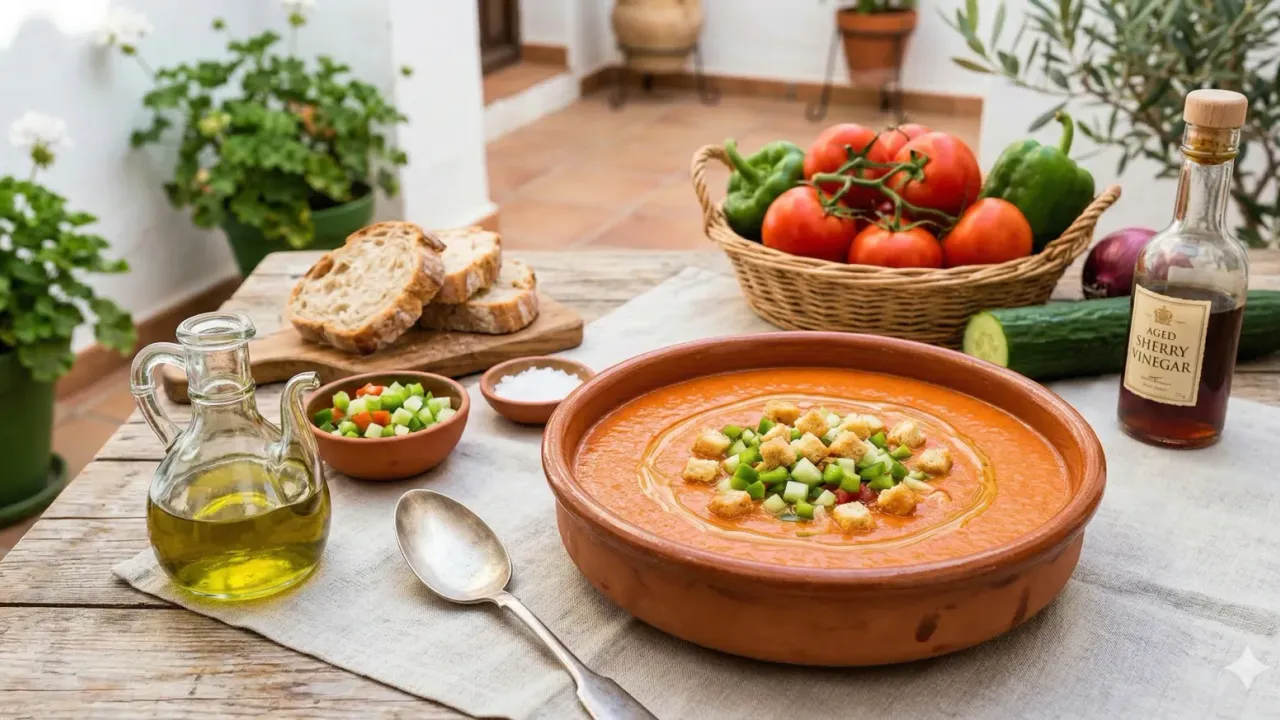
Gazpacho is the crown jewel of Spanish summer cooking, and this gazpacho recipe delivers the real thing straight to your kitchen. This vibrant chilled soup transforms ripe tomatoes, crisp cucumbers, and sweet peppers into a silky, ice-cold bowl of pure refreshment. Born under the blazing Andalusian sun, gazpacho requires zero cooking and comes together in just 20 minutes. Whether you serve it as a starter or a light meal on a hot day, this Spanish classic never disappoints.
Prep Time: 20 minutes | Cook Time: 0 minutes (no cooking required) | Servings: 6
Difficulty: Easy | Calories: ~150 per serving
What Makes Gazpacho Special?
Gazpacho stands apart from every other soup on the planet for one simple reason: it is entirely raw. Nothing hits a flame. Instead, the magic happens inside a blender where ripe summer vegetables merge into a smooth, chilled elixir. The result is a soup that tastes impossibly fresh. Every sip delivers the brightness of a garden at peak harvest. This no-cook approach also preserves the vitamins and enzymes that heat would destroy, making gazpacho one of the healthiest soups you can eat.
The soul of great gazpacho lies in the balance of five flavors: the sweetness of ripe tomatoes, the sharpness of raw garlic, the tang of sherry vinegar, the grassy richness of olive oil, and the cool crunch of cucumber. When these elements hit the right ratio, the soup becomes more than the sum of its parts. Furthermore, the day-old bread soaked in water adds a velvety body that turns a thin vegetable juice into a proper, spoonable soup. This thickening trick dates back centuries to the field workers of Andalusia.
Gazpacho traces its roots to southern Spain, where Roman and Moorish influences shaped early versions made from bread, garlic, olive oil, and water. Tomatoes arrived from the Americas in the 16th century and transformed the dish into the red soup we know today. In Andalusia, gazpacho is not a recipe you follow from a book. It is something you learn by watching your grandmother adjust the vinegar by instinct and taste the tomatoes before deciding how much salt they need.

Choosing the Right Tomatoes for Gazpacho
The tomato is the backbone of any gazpacho recipe. Because the soup is uncooked, the quality of your tomatoes determines everything. Here is how to pick the best ones.
- Vine-ripened tomatoes (best choice): Deep red, heavy for their size, and fragrant at the stem end. These tomatoes are bursting with natural sugars and acid. They produce a gazpacho with rich color and full flavor right out of the blender.
- Roma or plum tomatoes: These have thick flesh, fewer seeds, and less water content. They yield a thicker, meatier gazpacho that holds up well in the bowl. However, they can lack the juicy sweetness of vine-ripened varieties, so taste first.
- Canned San Marzano tomatoes (off-season option): When fresh tomatoes are pale and mealy in winter, high-quality canned tomatoes deliver better results. They are picked at peak ripeness and packed immediately. Drain off some liquid before blending to control the thickness.
- Cherry or grape tomatoes: Surprisingly effective in a pinch. These small tomatoes stay sweet year-round because they have a higher sugar-to-water ratio. Use a mix of red and orange for added complexity.
Ingredients for Gazpacho
Base Vegetables:
- 2 pounds ripe tomatoes, cored and roughly chopped
- 1 medium cucumber, peeled and chopped
- 1 green bell pepper, seeded and chopped
- 1/2 red onion, roughly chopped
- 2 cloves garlic, peeled
Liquids and Seasonings:
- 1/4 cup extra virgin olive oil, plus more for drizzling
- 2 tablespoons sherry vinegar
- 1 cup cold water
- 1 teaspoon salt
- 1/4 teaspoon cumin (optional)
Bread and Garnish:
- 1 cup day-old bread, crusts removed and torn into pieces
- Diced cucumber for garnish
- Diced green or red pepper for garnish
- Croutons or diced bread fried in olive oil
- Extra virgin olive oil for drizzling
Pro tip: Sherry vinegar is not just an optional upgrade. It is the authentic acid of Andalusian gazpacho, and it adds a nutty, complex tang that red wine vinegar or lemon juice cannot replicate. Look for aged sherry vinegar at specialty stores. Even a small bottle will last you through many batches of gazpacho and elevate every single one.
Step-by-Step Instructions
Step 1: Soak the Bread
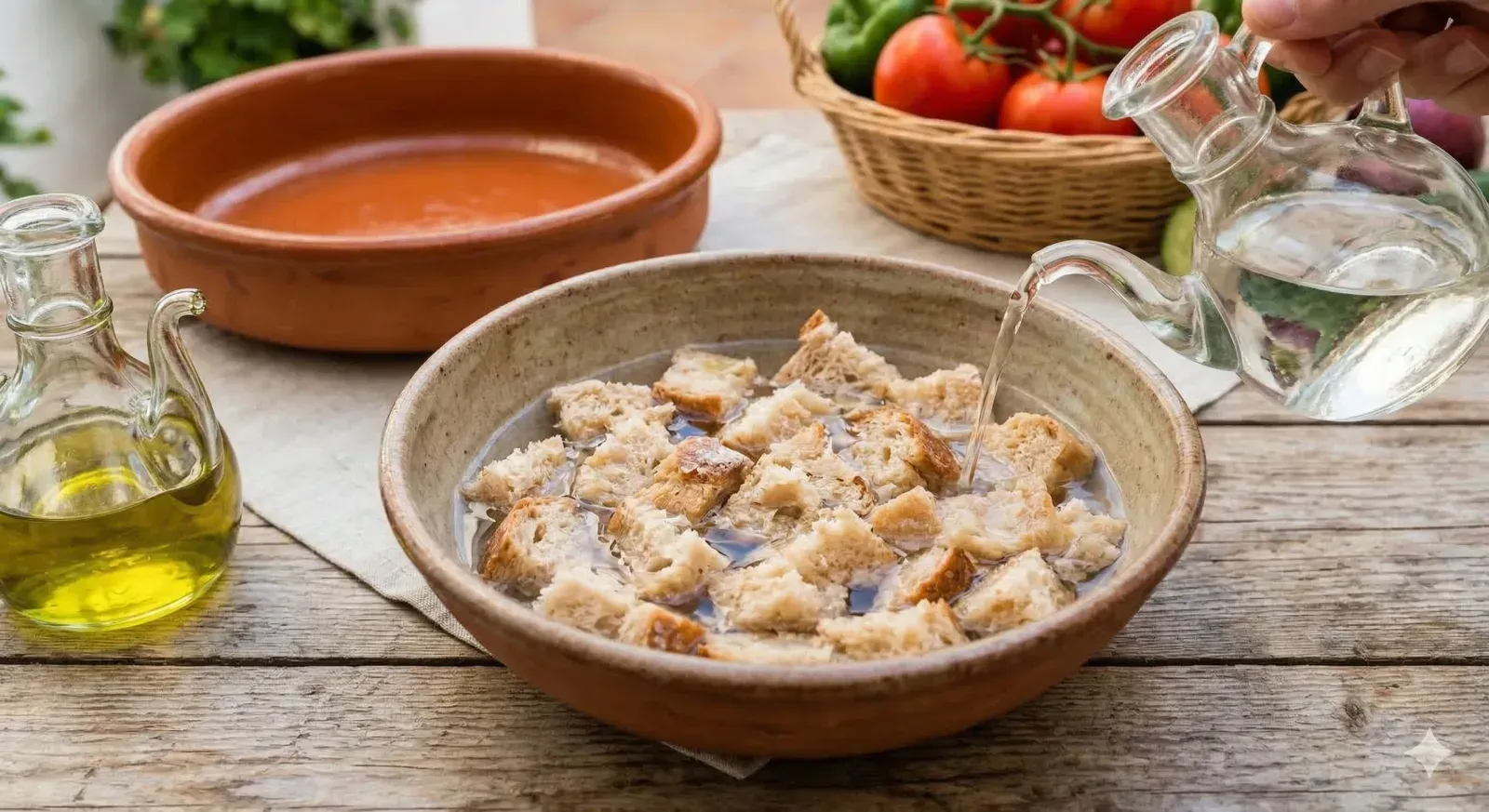
1 Tear the day-old bread into small chunks and place them in a bowl. Pour the cold water over the bread and let it soak for about 5 minutes. The bread should turn soft and spongy. This step is essential because the soaked bread acts as a natural thickener. It gives your gazpacho that signature creamy body without any dairy or cream.
While the bread soaks, prepare your vegetables. Core and chop the tomatoes, peel and chop the cucumber, seed and chop the green pepper, and roughly chop the red onion. Having everything ready before blending makes the process smooth and fast.
Step 2: Blend the Vegetables
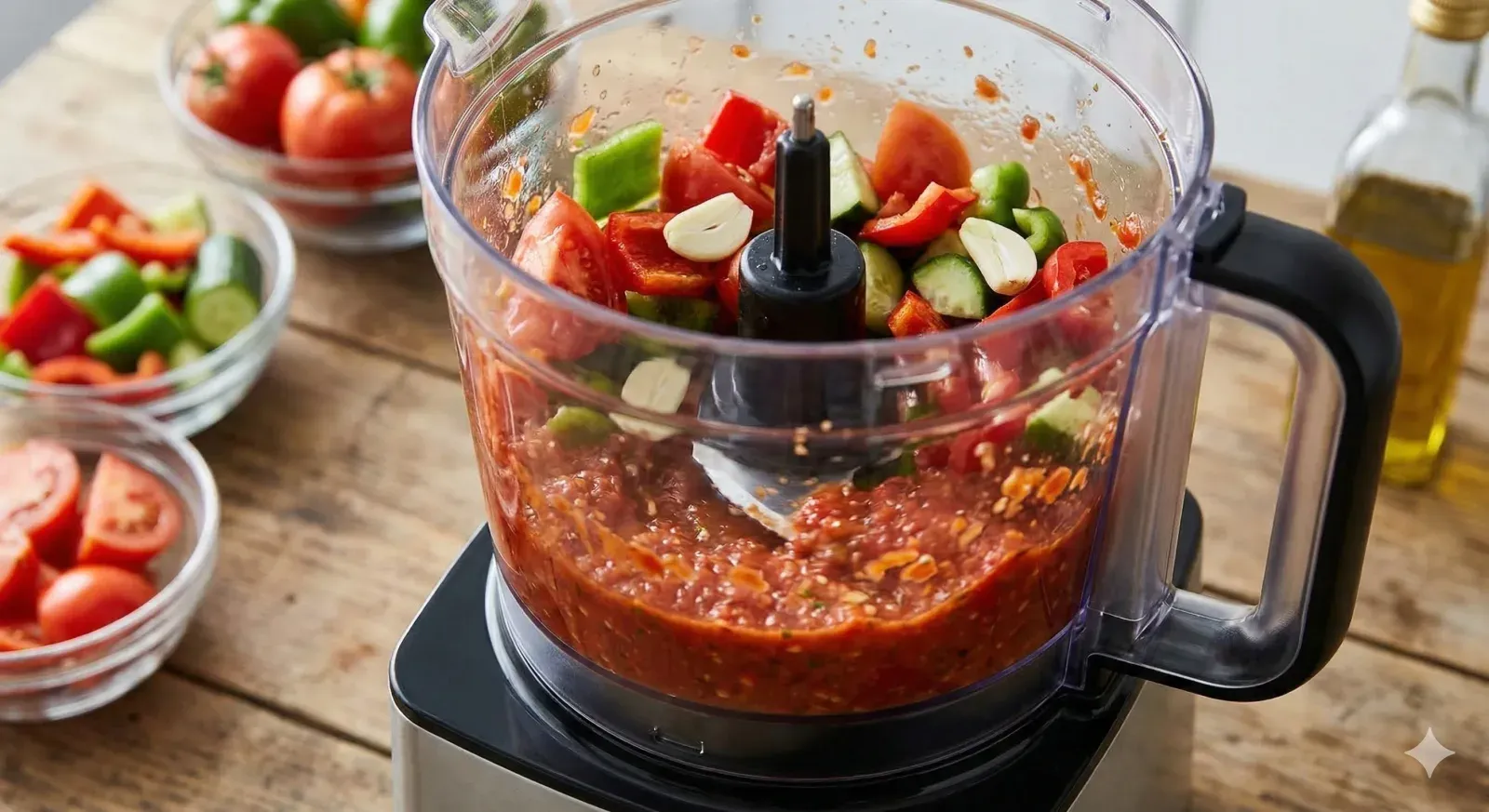
2 Add the chopped tomatoes, cucumber, green pepper, red onion, and garlic to a large blender or food processor. Squeeze the excess water from the soaked bread and add it to the jar. Pour in the sherry vinegar and sprinkle in the salt and optional cumin. Now blend on high speed for a full 2 minutes.
The key here is patience. Most people stop blending too early, which leaves the gazpacho grainy and uneven. A full 2 minutes of blending breaks down every fiber and produces a silky-smooth texture. If your blender is small, work in two batches. The mixture should look uniformly smooth with a vivid orange-red color.
Step 3: Emulsify with Olive Oil
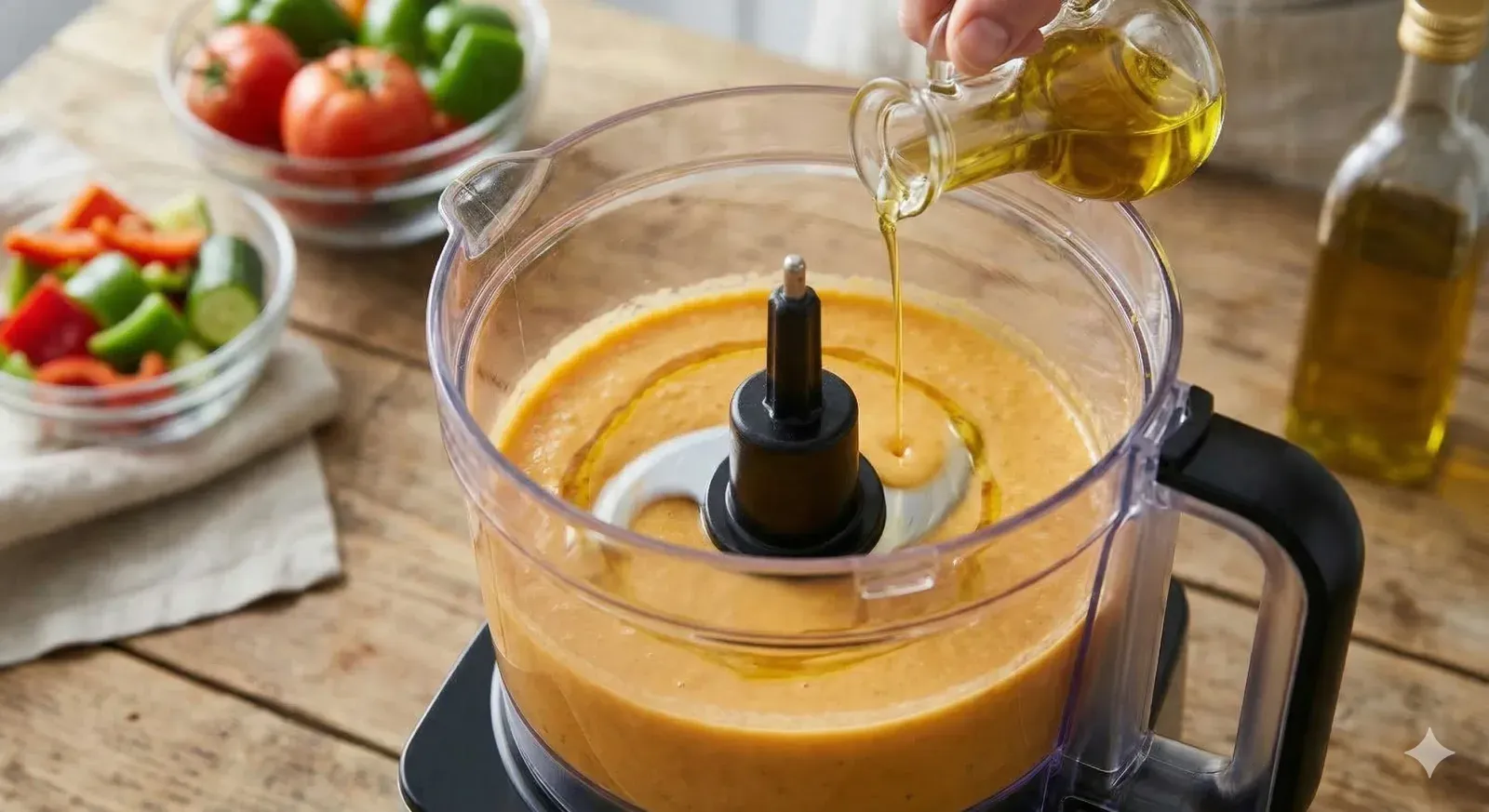
3 Turn the blender down to low speed. With the motor running, slowly drizzle in the extra virgin olive oil in a thin, steady stream. This technique creates an emulsion, similar to how you would make a vinaigrette or mayonnaise. The oil bonds with the vegetable puree and gives the gazpacho a luxurious, creamy mouthfeel.
Do not dump the oil in all at once. A slow drizzle is critical for proper emulsification. After the oil is fully incorporated, blend for another 30 seconds on high. Taste the mixture now and adjust the salt and vinegar. The gazpacho should taste bright, tangy, and savory with a gentle sweetness from the tomatoes.
Step 4: Strain and Chill
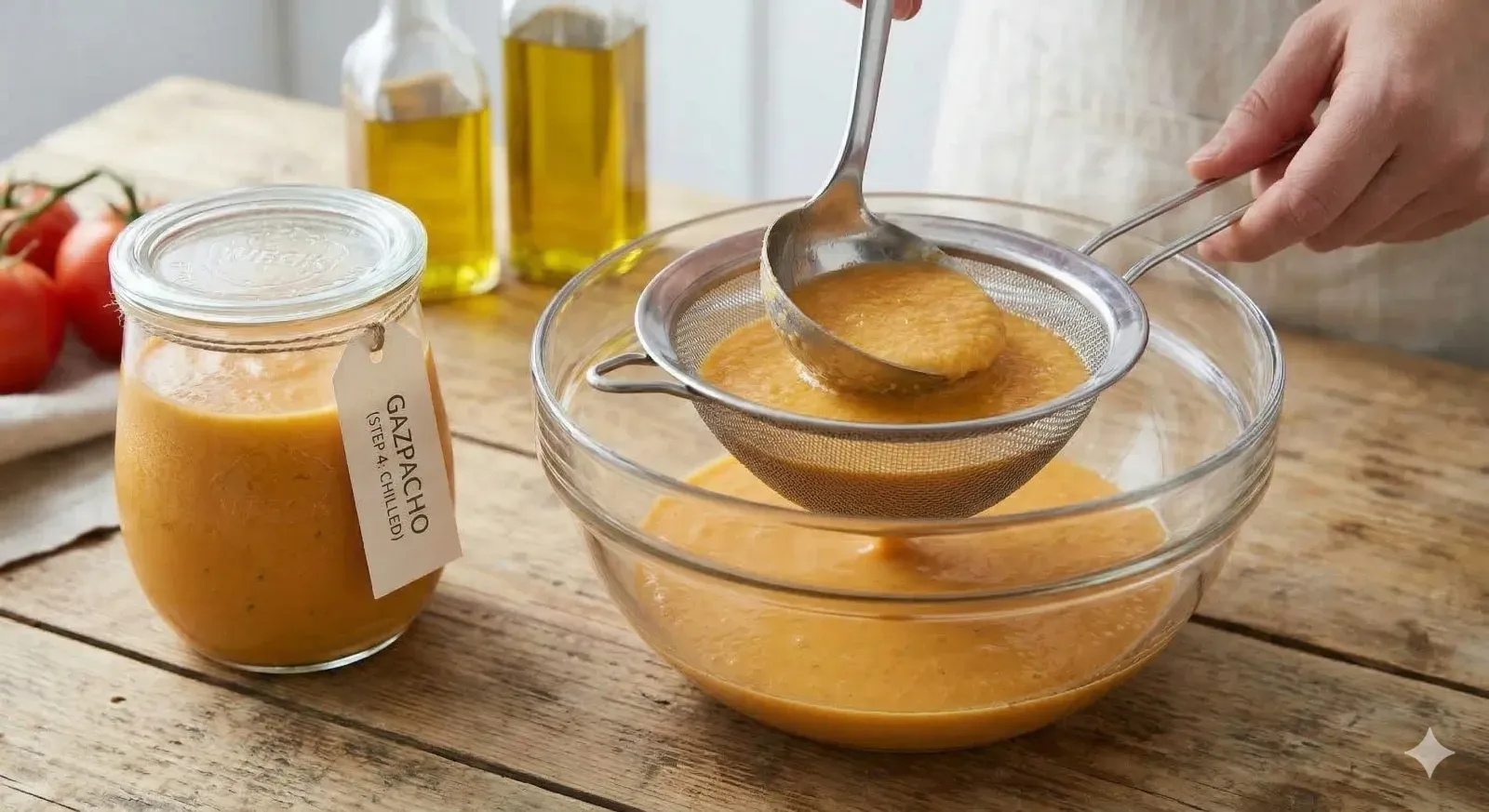
4 For a restaurant-quality finish, pass the blended soup through a fine-mesh sieve set over a large bowl. Use the back of a spoon or a ladle to press the pulp firmly against the mesh. This step removes seeds, skin, and any remaining fibers. The strained gazpacho will be incredibly smooth and elegant.
If you prefer a rustic, chunky texture, you can skip the straining entirely. Both versions are authentic. Once strained, cover the bowl tightly with plastic wrap and refrigerate for at least 2 hours. Overnight chilling delivers the best results because the flavors meld and deepen in the cold. The soup should be thoroughly cold before serving.
Step 5: Season, Garnish, and Serve
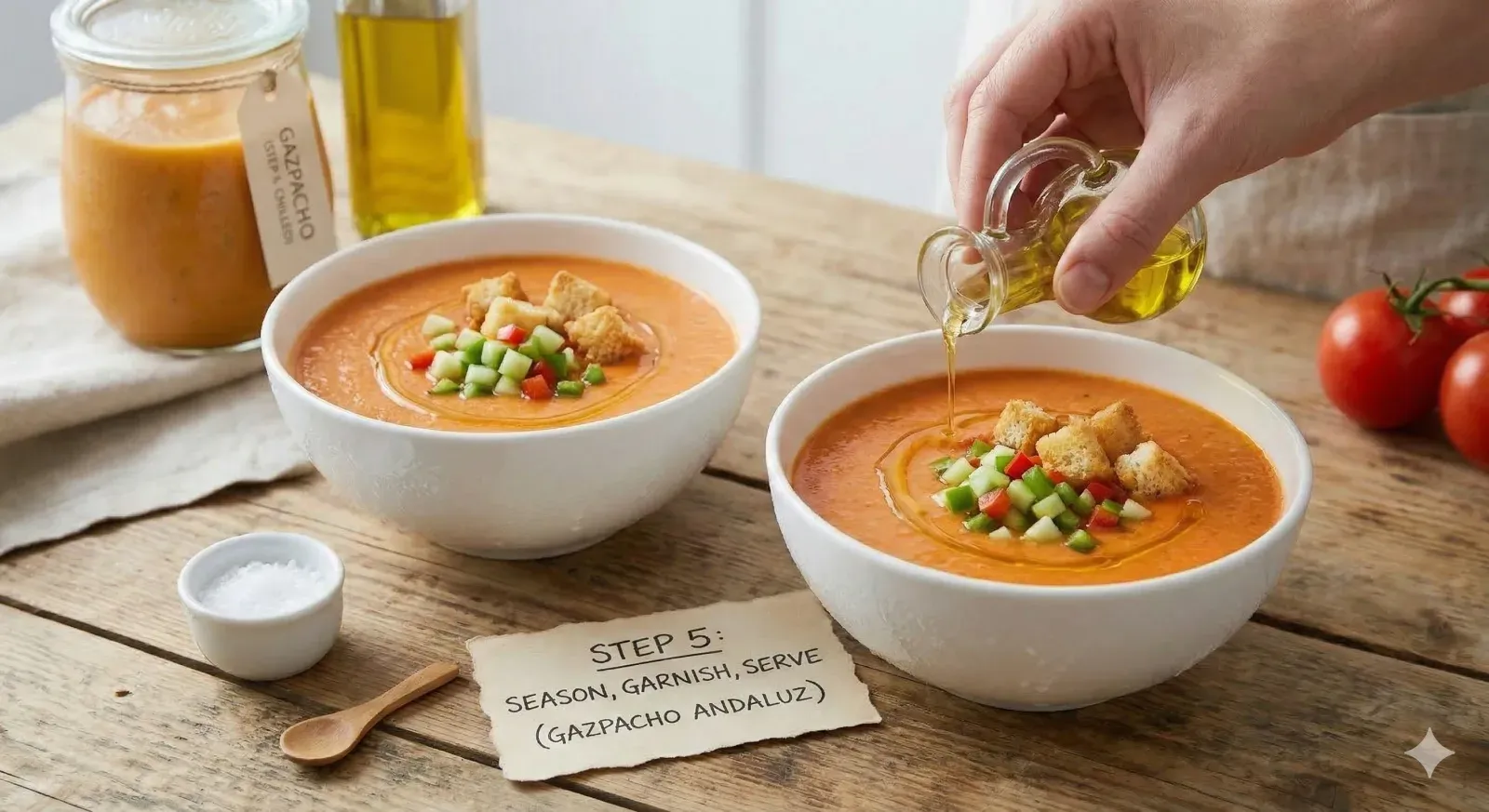
5 Pull the gazpacho from the fridge and give it a good stir. Taste it one more time. Cold mutes flavors, so you will likely need a touch more salt and vinegar now than you did at room temperature. This final adjustment is what separates great gazpacho from ordinary blended vegetables.
Ladle the soup into chilled bowls or tall glasses. Top each serving with a small pile of finely diced cucumber, diced pepper, and golden croutons. Finish with a generous drizzle of your best extra virgin olive oil. The garnishes add texture and visual contrast to the smooth, vibrant soup. Serve immediately while everything is ice cold.
Expert Tips for Perfect Results
Use the Ripest Tomatoes You Can Find
Since gazpacho is an uncooked soup, you cannot hide behind seasoning or technique. The tomato flavor is front and center. Seek out deep red, slightly soft tomatoes that smell sweet at the stem end. Farmers market tomatoes in July and August are ideal. If a tomato does not taste great raw, it will not taste great in your gazpacho either.
Chill Everything Before Blending
Starting with cold ingredients cuts down on chilling time and produces a better final texture. Keep your vegetables in the fridge until you are ready to blend. Some Andalusian cooks even chill their blender jar. Additionally, using ice-cold water for the bread soak ensures the soup starts at a lower temperature right from the beginning.
Season Twice: Before and After Chilling
Cold dulls our perception of salt, acid, and sweetness. A gazpacho that tastes perfect at room temperature will seem flat once it comes out of the fridge. Always taste and adjust seasoning after chilling. A small splash of sherry vinegar and a pinch of salt right before serving can wake up the entire bowl.
Regional Gazpacho and Cold Soup Styles
Spain alone has several distinct cold soups, and gazpacho-style dishes appear across the Mediterranean. Here is how the most famous versions compare.
| Name | Region | Key Ingredients | Texture and Serving |
|---|---|---|---|
| Gazpacho Andaluz | Andalusia, Spain | Tomatoes, cucumber, pepper, garlic, bread, olive oil, sherry vinegar | Smooth or slightly chunky, served cold in bowls with garnish |
| Salmorejo | Cordoba, Spain | Tomatoes, bread, garlic, olive oil (no cucumber or pepper) | Very thick and creamy, topped with jamon and hard-boiled egg |
| Ajoblanco | Malaga, Spain | Blanched almonds, garlic, bread, olive oil, sherry vinegar | White, creamy, served cold with grapes or melon |
| Porra Antequerana | Antequera, Spain | Tomatoes, bread, pepper, garlic, olive oil | Thicker than gazpacho, served with tuna and egg |
| Ajo Blanco Extremeno | Extremadura, Spain | Bread, garlic, olive oil, vinegar (no almonds) | Rustic white soup, simpler than Malaga version |
Serving Suggestions
In Spain, gazpacho appears at every point of the meal. It works as a first course before grilled fish, a light lunch on its own, or even a refreshing snack poured into a glass. The right accompaniments turn a simple bowl into a proper Spanish spread.
Classic Accompaniments:
- Olive oil croutons: Cube day-old bread and fry in olive oil until golden. Scatter them over each bowl for a satisfying crunch that contrasts the smooth, cold soup.
- Jamon serrano: Thin slices of cured Spanish ham draped alongside the bowl add a salty, savory depth. The combination of cold soup and aged ham is a classic Andalusian pairing.
- Hard-boiled eggs: Chopped or sliced, these add protein and richness. Sprinkle them on top of thicker gazpacho or salmorejo for a heartier meal.
- Grilled shrimp or prawns: A few warm, garlicky shrimp on top of cold gazpacho create an elegant contrast of temperatures and flavors that elevates the dish to restaurant level.
Beverage Pairings:
- Fino or manzanilla sherry: These bone-dry sherries from Jerez and Sanlucar are the traditional match. Their saline, yeasty character complements the tang of the vinegar and the richness of the olive oil.
- Albarino white wine: This crisp, aromatic Galician wine brings citrus and stone fruit notes that pair beautifully with the tomato-forward soup.
- Tinto de verano: A simple mix of red wine and lemon soda, this casual Spanish drink is refreshing alongside cold gazpacho on a hot afternoon.
- Sparkling water with lemon: For a non-alcoholic option, the bubbles and citrus cleanse the palate between spoonfuls without competing with the soup’s delicate flavors.
Storage and Reheating
Refrigerator: Gazpacho stores beautifully for up to 4 days in a sealed container. In fact, it tastes noticeably better the next day after the flavors have had time to meld. Give it a good stir before serving, as the solids may settle to the bottom.
Freezer: You can freeze gazpacho for up to 2 months. Pour it into freezer-safe bags or containers, leaving space for expansion. Thaw overnight in the refrigerator. The texture may become slightly thinner after freezing, so stir well and adjust seasoning. A fresh drizzle of olive oil brings it back to life.
Reheating: Traditional gazpacho is never heated. It is always served cold. If the soup comes out of the fridge too thick, thin it with a splash of cold water or a few ice cubes. Refresh the garnishes each time you serve leftover gazpacho for the best presentation and crunch.
Common Mistakes to Avoid
1. Using Under-Ripe or Mealy Tomatoes
This is the single biggest reason gazpacho falls flat. Pale, hard, or out-of-season tomatoes produce a watery, flavorless soup. Since there is no cooking to concentrate flavors, you need tomatoes that taste amazing raw. Wait for summer, hit the farmers market, or use quality canned tomatoes if fresh ones look sad.
2. Not Blending Long Enough
Thirty seconds in the blender will not cut it. Authentic gazpacho needs a full 2 minutes of high-speed blending to reach proper smoothness. Under-blended soup turns out grainy with visible chunks of onion and pepper. Take the time to blend thoroughly, and the difference in texture will be dramatic.
3. Skipping the Chilling Time
Room-temperature gazpacho is not gazpacho. The cold is part of the dish’s identity. At least 2 hours in the fridge is necessary. Overnight is even better. The flavors need time to merge, and the cold temperature is what makes the soup so refreshing. Rushing this step cheats you out of the full experience.
4. Using the Wrong Vinegar
Sherry vinegar is the soul of Andalusian gazpacho. Substituting white vinegar or balsamic changes the flavor profile entirely. Sherry vinegar provides a mellow, nutty acidity that lifts the tomatoes without overpowering them. If you cannot find sherry vinegar, red wine vinegar is the closest acceptable substitute.
Frequently Asked Questions
What is gazpacho made of?
Traditional Spanish gazpacho uses ripe tomatoes, cucumber, green bell pepper, red onion, garlic, day-old bread, extra virgin olive oil, and sherry vinegar. All the ingredients are raw and blended together into a smooth, chilled soup. No cooking is involved at any stage.
Is gazpacho served hot or cold?
Gazpacho is always served cold. It was created in the hot climate of southern Spain specifically as a cooling dish. The soup must chill for at least 2 hours before serving. Many Spanish families add an ice cube to each bowl during the hottest summer days to keep it extra frosty.
Can I make gazpacho without bread?
Absolutely. Leaving out the bread creates a lighter, thinner gazpacho that works well as a drinkable soup. This variation is also naturally gluten-free. To compensate for the lost body, add a bit more tomato or an extra tablespoon of olive oil. The flavor will still be excellent.
How long does gazpacho last in the fridge?
Properly stored gazpacho keeps for up to 4 days in a sealed container. The flavor improves after one night because the vegetable juices meld together. Stir before serving as natural separation is normal. Always add fresh garnishes when you serve leftovers.
What is the difference between gazpacho and salmorejo?
Gazpacho is lighter and includes cucumber, pepper, and onion along with tomatoes. Salmorejo, from Cordoba, uses only tomatoes, bread, garlic, and olive oil. As a result, salmorejo is much thicker and creamier. It is traditionally topped with chopped jamon serrano and hard-boiled eggs, while gazpacho gets vegetable garnishes and croutons.
Why does my gazpacho taste bland?
Bland gazpacho almost always comes down to under-ripe tomatoes or insufficient seasoning. Cold temperatures dull our taste perception, so you need to be generous with salt and vinegar. Taste after chilling, not just after blending. A pinch of sugar can also help if your tomatoes lack natural sweetness.
Variations and Adaptations
Watermelon Gazpacho:
Replace half the tomatoes with seedless watermelon for a sweet-savory twist. The melon adds natural sweetness and a gorgeous pink-red hue. Keep the cucumber, vinegar, and olive oil for balance. This version is stunning as a summer party appetizer served in shot glasses.
Strawberry Gazpacho:
Add a cup of ripe strawberries to the classic base for a fruity, aromatic variation. The berries pair surprisingly well with the tomatoes and vinegar. Garnish with diced strawberries and a sprinkle of black pepper. This unexpected combination works beautifully as a dinner party starter.
Green Gazpacho:
Swap the tomatoes for tomatillos, green grapes, honeydew melon, and extra cucumber. Add a handful of fresh herbs like basil or cilantro. The result is a bright green, tangy soup that offers a completely different flavor profile while staying true to the no-cook gazpacho spirit.
Spicy Gazpacho:
For those who like heat, add half a jalapeno or a few dashes of hot sauce to the blender. A pinch of smoked paprika complements the tomatoes and brings a distinctly Spanish warmth. Start with less chile than you think you need, since the heat builds as the soup chills.
The Cultural Significance of Gazpacho
Gazpacho is far more than a recipe in Spain. It is a cultural institution tied to identity, climate, and history. In Andalusia, families begin making gazpacho as soon as the summer heat arrives in June. Large batches fill pitchers in the refrigerator, ready to pour at any moment. Workers carry it to the fields in jugs. Children drink it from glasses after school. The soup is as essential to Andalusian life as olive oil and sunshine.
Historically, gazpacho was peasant food. Field laborers pounded stale bread, garlic, olive oil, and water together in a mortar to create a sustaining meal under the brutal Andalusian sun. The tomato, pepper, and cucumber arrived from the Americas centuries later and transformed the dish into its modern red form. This evolution mirrors the larger story of Spanish cuisine itself: ancient traditions reshaped by New World ingredients.
Today, gazpacho appears on the menus of Michelin-starred restaurants alongside its humblest origins in village kitchens. Chefs like Ferran Adria and Jose Andres have deconstructed and reimagined it, but the heart of the dish remains unchanged. It is still about ripe vegetables, good olive oil, a splash of vinegar, and the simple pleasure of eating something cold and vibrant when the world outside is burning hot.
Conclusion
This gazpacho recipe captures the authentic taste of Andalusia in every chilled spoonful. The keys to success are simple: start with the ripest tomatoes you can find, blend thoroughly, use real sherry vinegar, and give the soup time to chill properly. Follow these steps, and you will produce a vibrant, silky cold soup that tastes like a Spanish summer.
Ready to explore more European classics? Browse our full European dishes collection for recipes like ratatouille, bouillabaisse, and carbonara. Each recipe brings a different corner of Europe to your kitchen table.