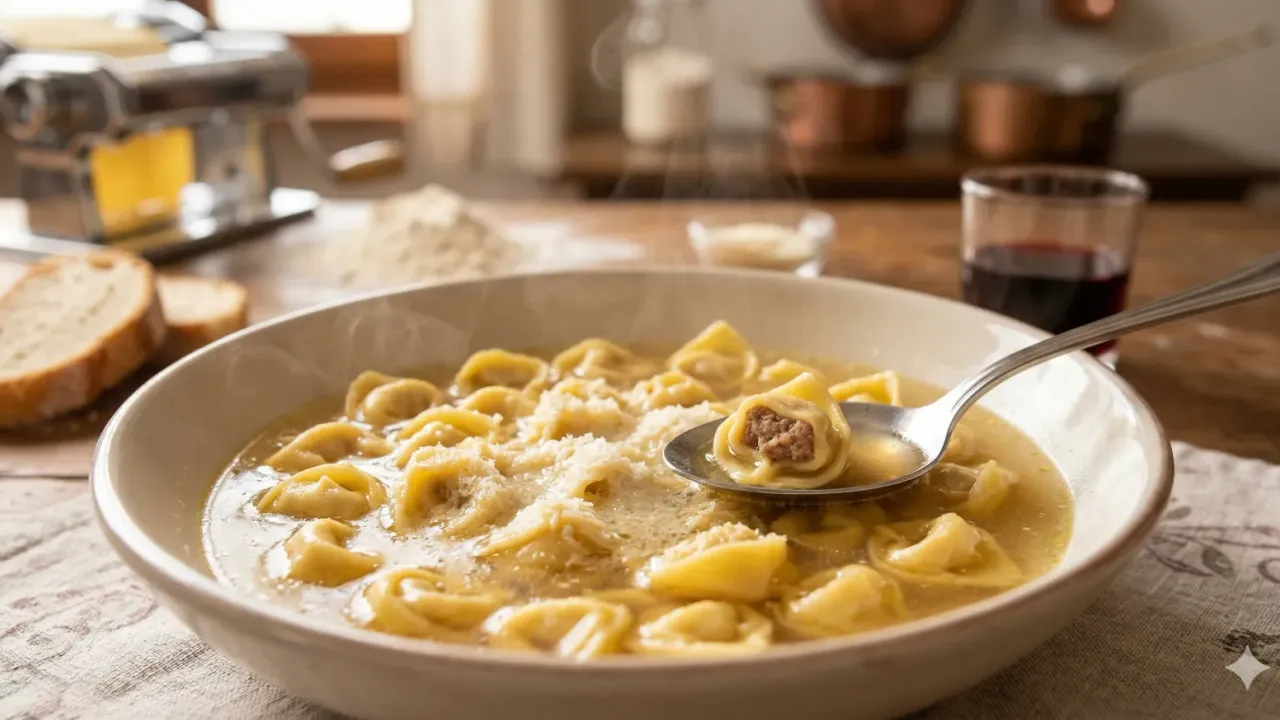
Tortellini in brodo is the soul of Italian comfort food — tiny, hand-folded pasta parcels swimming in a golden, aromatic broth that warms you from the inside out. This classic Italian tortellini soup has held a place of honor on holiday tables in Bologna for centuries. Each tortellino carries a savory filling of pork, mortadella, and aged Parmigiano-Reggiano. Meanwhile, the broth delivers a depth of flavor that no canned soup could ever approach. When you lift a spoonful to your lips, the clear liquid shimmers. The pasta yields gently. Then the filling releases its rich, meaty essence into every sip.
Prep Time: 90 minutes | Cook Time: 3 hours | Servings: 6
Difficulty: Advanced | Calories: ~420 per serving
What Makes Tortellini in Brodo Special?
Tortellini in brodo stands apart from every other pasta soup because of its deliberate simplicity. There is no heavy sauce masking the ingredients. No blanket of melted cheese hiding what lies beneath. Instead, every element must be perfect on its own. The broth must taste clean yet deeply savory. The pasta must be thin enough to cook in minutes yet strong enough to hold its filling. As a result, this dish demands the kind of attention that reveals a cook’s true skill.
In Bologna, the birthplace of this dish, tortellini in brodo is not everyday food. It appears at Christmas, Easter, and special family celebrations. Grandmothers begin making the filling days in advance. They roll pasta dough by hand until it is nearly translucent. Then they fold each tiny parcel with practiced fingers that have repeated the motion thousands of times. The broth simmers for hours, filling the kitchen with an aroma that signals something important is about to happen. This ritual transforms a simple soup into an event.
What truly elevates tortellini in brodo is the relationship between its two main components. The filling is intensely savory — concentrated pork, cured meats, and aged cheese packed into a space no larger than a thumbnail. The broth, by contrast, is gentle and restorative. Together, they create a balance that satisfies without overwhelming. Each spoonful offers richness and clarity in equal measure. That duality is why this dish has endured for over five hundred years without needing any modification.

Choosing the Right Broth
The broth is the foundation of tortellini in brodo. It carries the tortellini, seasons the pasta as it cooks, and delivers the first flavor your palate registers with every spoonful. A weak or cloudy broth undermines the entire dish. Here are the options worth considering when building your base.
- Capon broth (traditional choice): Capon is a castrated rooster with rich, fatty meat that produces the most flavorful and full-bodied broth. Italian families prize capon broth for its golden color and silky mouthfeel. If you can find a capon at a specialty butcher, this is the most authentic option for tortellini in brodo.
- Chicken and beef combination (best substitute): A whole chicken paired with beef shank or short ribs delivers a broth that closely rivals capon. The chicken provides clarity and a clean poultry backbone. The beef adds depth, gelatin, and body. This combination is the most practical choice for home cooks who cannot source capon.
- Chicken-only broth (lighter option): A broth made from chicken alone works well if you prefer a lighter result. Use a whole bird rather than just bones. The meat contributes flavor while the bones provide gelatin. However, chicken-only broth lacks the complexity that beef brings to the traditional version.
- Store-bought broth (quick alternative): High-quality, low-sodium chicken broth can serve as a base in a pinch. Enhance it by simmering it with a few chicken wings, a carrot, and a celery stalk for 30 minutes. Strain before using. This shortcut saves hours but produces a noticeably thinner result.
Ingredients for Tortellini in Brodo
For the Broth:
- 1 whole capon or chicken (about 4 pounds)
- 1 pound beef shank or short ribs
- 2 medium carrots, halved
- 2 celery stalks, halved
- 1 medium yellow onion, halved
- 1 bay leaf
- 5 whole black peppercorns
- 4 quarts cold water
- Salt to taste
For the Pasta Dough:
- 2 cups all-purpose flour (tipo 00 preferred)
- 3 large eggs
- 1 tablespoon extra virgin olive oil
- Pinch of fine salt
For the Filling:
- 8 ounces pork loin, cut into small pieces
- 4 ounces mortadella, finely chopped
- 4 ounces prosciutto di Parma, finely chopped
- 1 cup freshly grated Parmigiano-Reggiano cheese
- 1 large egg yolk
- 1/4 teaspoon freshly grated nutmeg
- Salt and freshly ground black pepper to taste
For Serving:
- Freshly grated Parmigiano-Reggiano cheese
Pro tip: Start the broth the day before you plan to serve. Refrigerate it overnight, and the fat will solidify on the surface for easy removal. This step produces a cleaner, lighter broth with better clarity. Cold broth also allows you to taste-test the seasoning more accurately since hot liquids can mask saltiness.
Step-by-Step Instructions
Step 1: Prepare the Broth
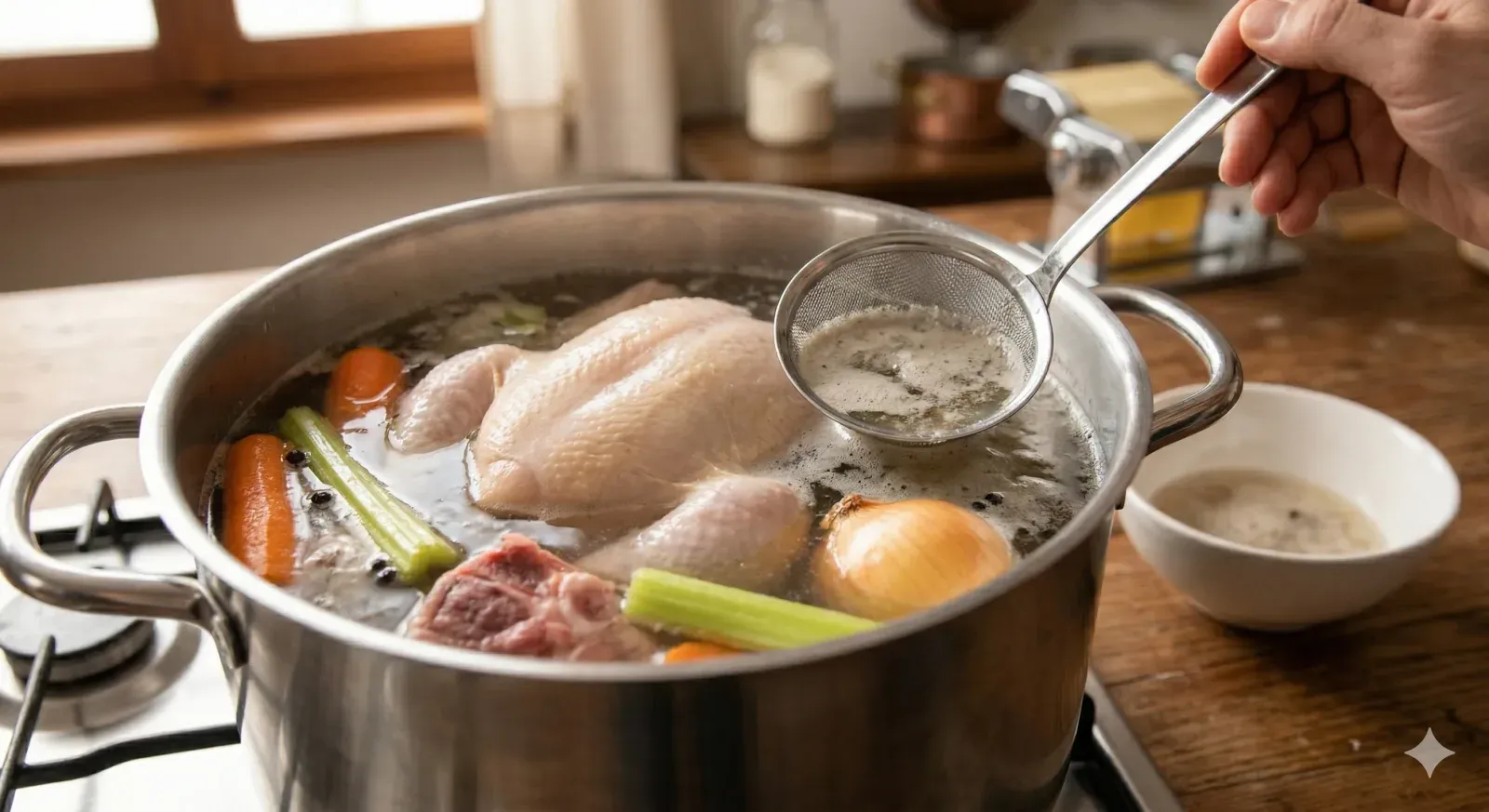
1 Place the whole capon or chicken and the beef shank into a large stockpot. Cover with 4 quarts of cold water. Starting with cold water is essential because it extracts flavor and gelatin gradually as the temperature rises. Hot water seals the surface of the meat and traps impurities inside. Set the pot over medium-high heat and bring it to a gentle boil. As the water heats, a grey foam will rise to the surface. Skim this foam carefully with a ladle during the first 15 minutes.
Once the broth reaches a gentle boil, add the carrots, celery, onion, bay leaf, and peppercorns. Reduce the heat to the lowest setting that maintains a bare simmer. You want tiny bubbles breaking the surface lazily, not a rolling boil. A vigorous boil emulsifies the fat into the liquid, which makes the broth cloudy and greasy. Simmer uncovered for 2.5 to 3 hours. Skim any remaining foam or fat every 30 minutes. The finished broth should be golden, transparent, and deeply savory. Strain it through a fine-mesh sieve lined with cheesecloth into a clean pot. Season with salt to taste. Set the meat aside for another use.
Step 2: Make the Pasta Dough
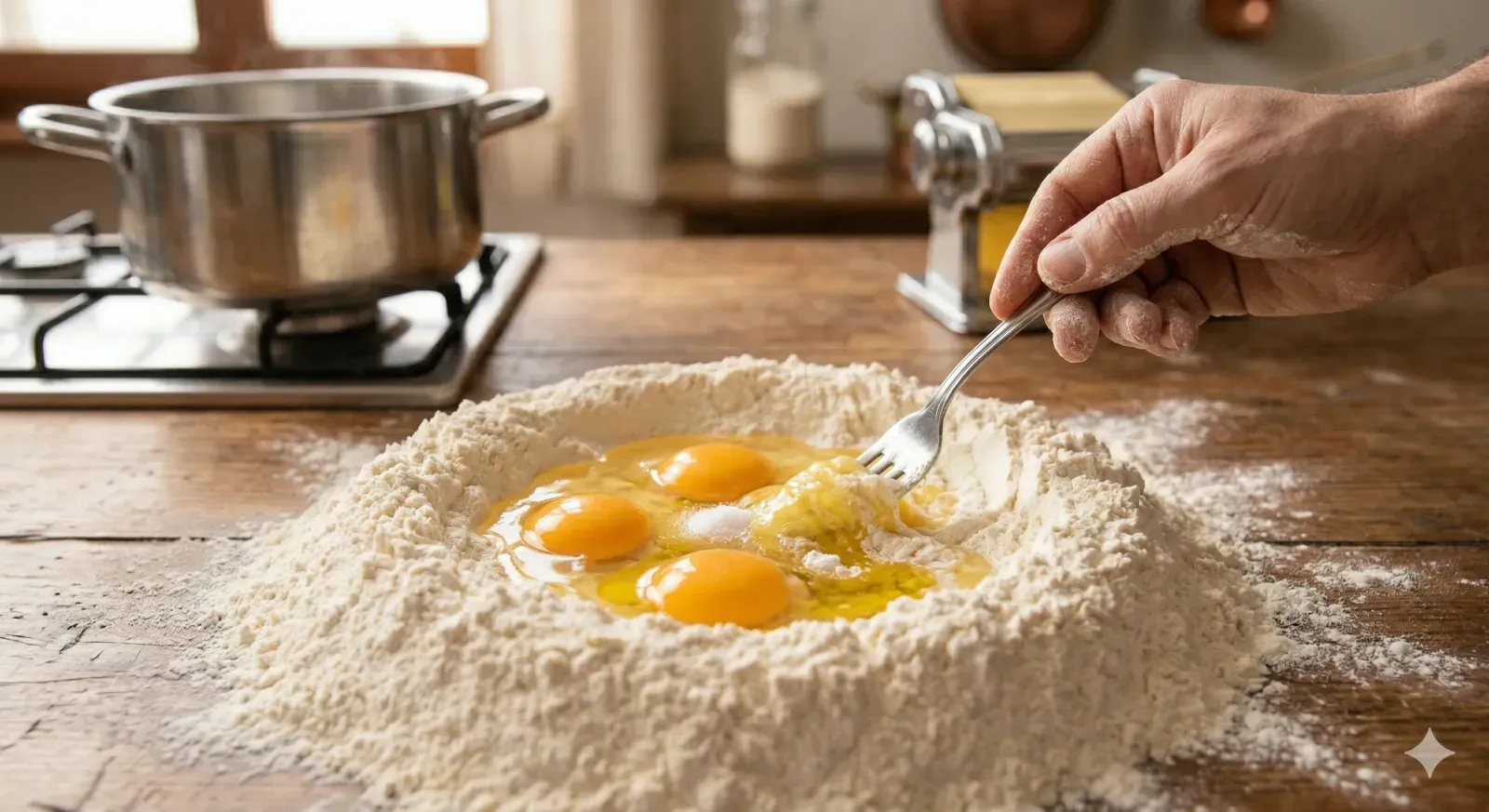
2 Mound the flour on a clean, dry work surface. Create a wide well in the center, making sure the walls are high enough to contain the eggs. Crack the three eggs into the well. Add the olive oil and a pinch of salt. Using a fork, beat the eggs gently while gradually pulling flour from the inner walls of the well. Work slowly to avoid breaking the outer wall, which would send egg running across your counter.
Once the mixture becomes too thick for the fork, switch to your hands. Gather the shaggy dough together and begin kneading. Push the dough away from you with the heel of your palm, fold it back, rotate a quarter turn, and repeat. Continue this motion for 8 to 10 minutes. The dough will transform from rough and sticky to smooth, elastic, and slightly tacky. If it sticks to your hands, dust with a tiny amount of flour. Wrap the finished dough tightly in plastic wrap. Let it rest at room temperature for 30 minutes. Resting relaxes the gluten strands, which makes rolling much easier.
Step 3: Prepare the Filling
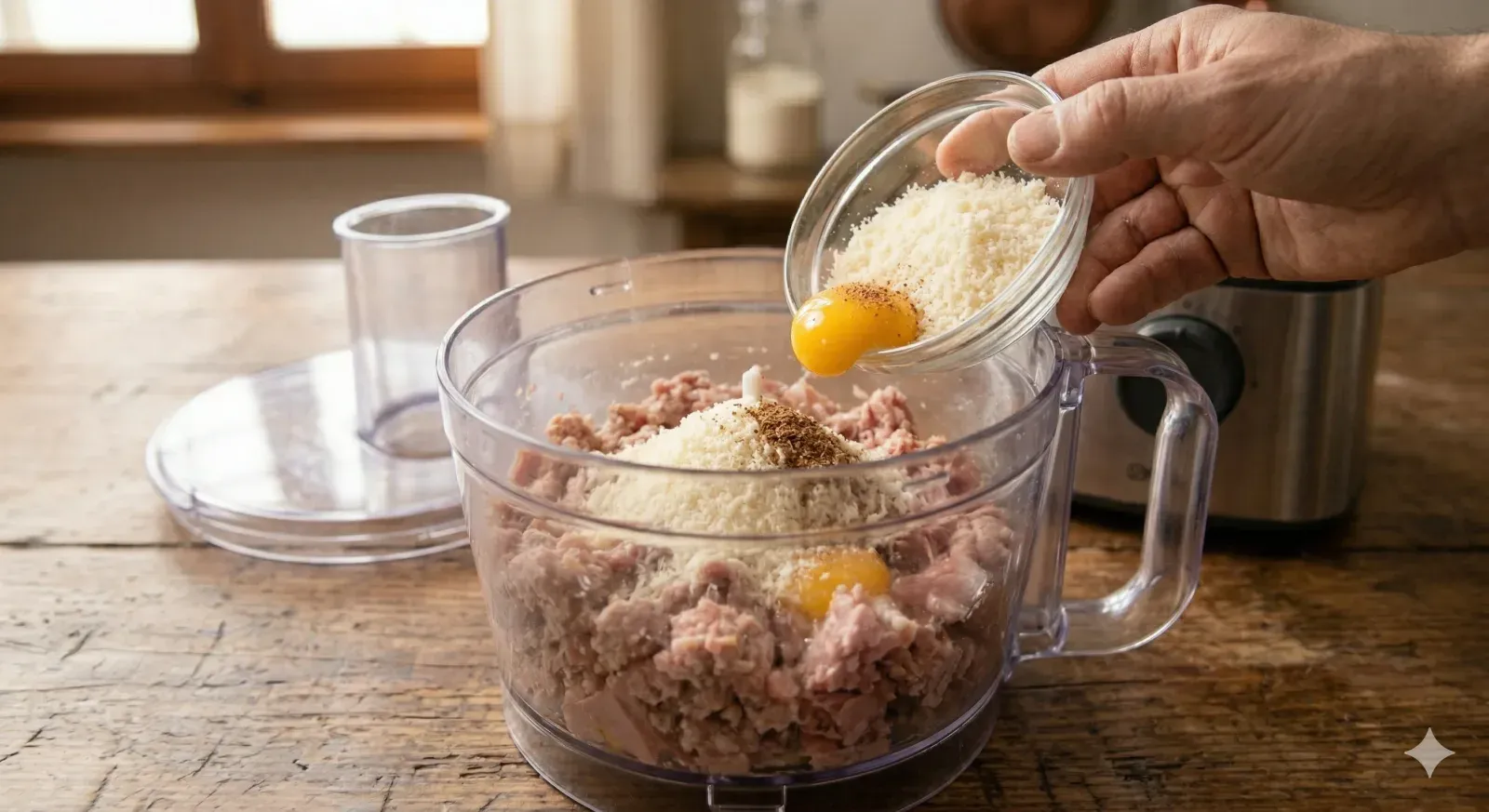
3 Heat a drizzle of olive oil in a medium skillet over medium heat. Add the pork loin pieces in a single layer. Cook without stirring for 3 minutes to build a golden crust on the bottom. Then turn and cook for another 5 minutes until the pork is cooked through and no longer pink in the center. Transfer the pork to a plate and let it cool completely. Hot meat releases steam in the food processor, which turns the filling into a wet paste rather than a textured mixture.
Once the pork has cooled, transfer it to a food processor along with the chopped mortadella and prosciutto. Pulse 8 to 10 times until the mixture is finely ground but still has some texture. Avoid processing into a smooth paste. Pour the mixture into a bowl. Fold in the Parmigiano-Reggiano, egg yolk, nutmeg, salt, and pepper. Mix until everything is evenly combined. Test the filling by pinching a small amount between your fingers. It should hold together without crumbling. If it feels too dry, add another egg yolk. If too wet, add a tablespoon more Parmesan.
Step 4: Shape the Tortellini
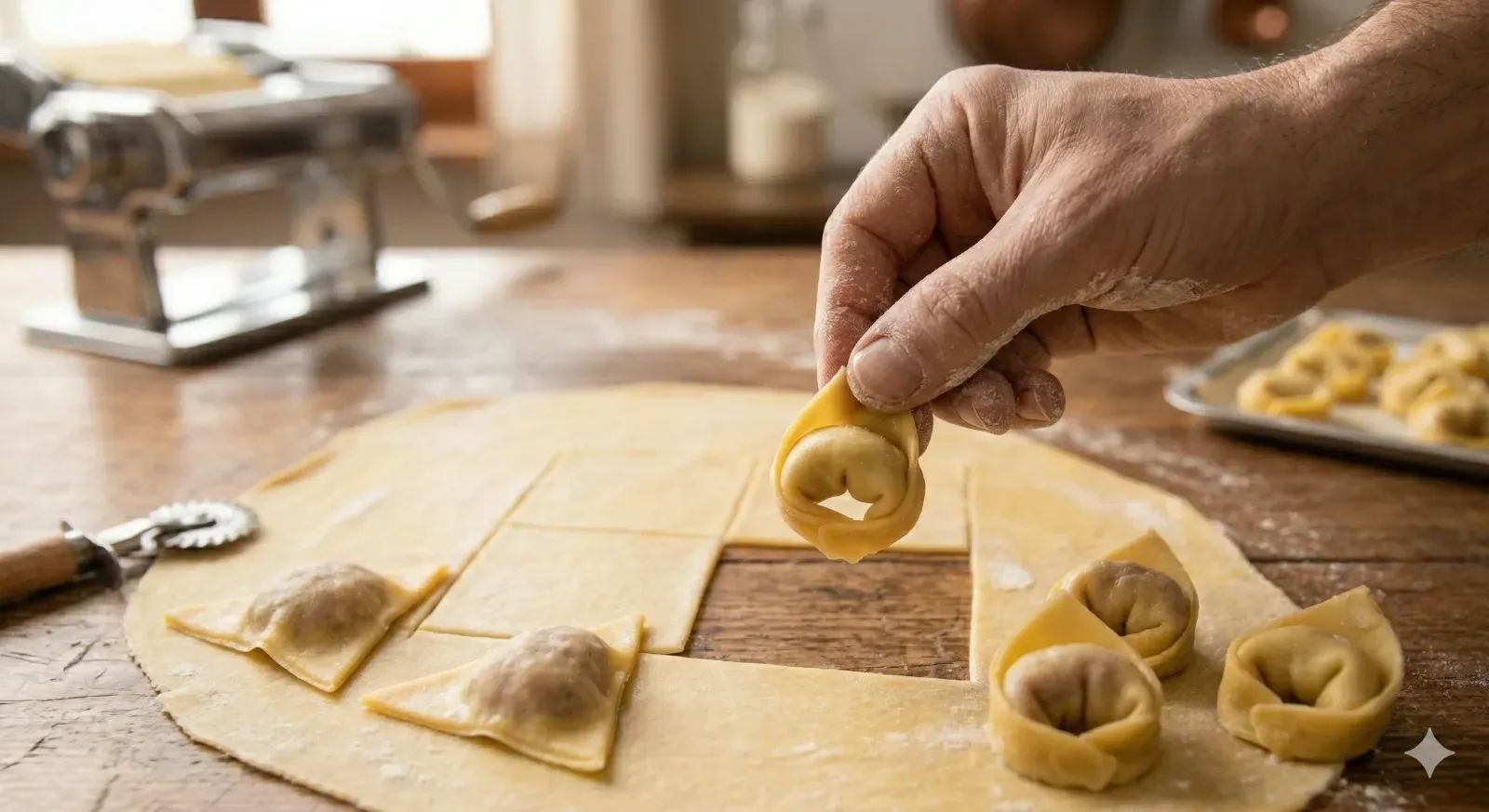
4 Divide the rested dough into four equal pieces. Work with one piece at a time and keep the rest covered to prevent drying. Roll the dough through a pasta machine, starting at the widest setting. Fold and pass through twice at each setting before narrowing to the next level. Continue until you reach the thinnest or second-thinnest setting. The pasta should be nearly translucent. You should be able to see the shadow of your hand through it.
Lay the rolled sheet on a lightly floured surface. Cut it into 2-inch squares using a sharp knife or a pastry wheel. Place approximately half a teaspoon of filling in the center of each square. Fold the square diagonally to form a triangle. Press the edges firmly to seal, pushing out any trapped air. Air pockets cause the tortellini to burst during cooking. Now pick up the triangle with the long edge facing you. Wrap it around the tip of your index finger, bringing the two pointed ends together. Pinch and press firmly to secure. The finished shape should look like a small ring or a tiny navel. Place each tortellino on a lightly floured tray with space between them. Repeat until all the dough and filling are used.
Step 5: Cook and Serve
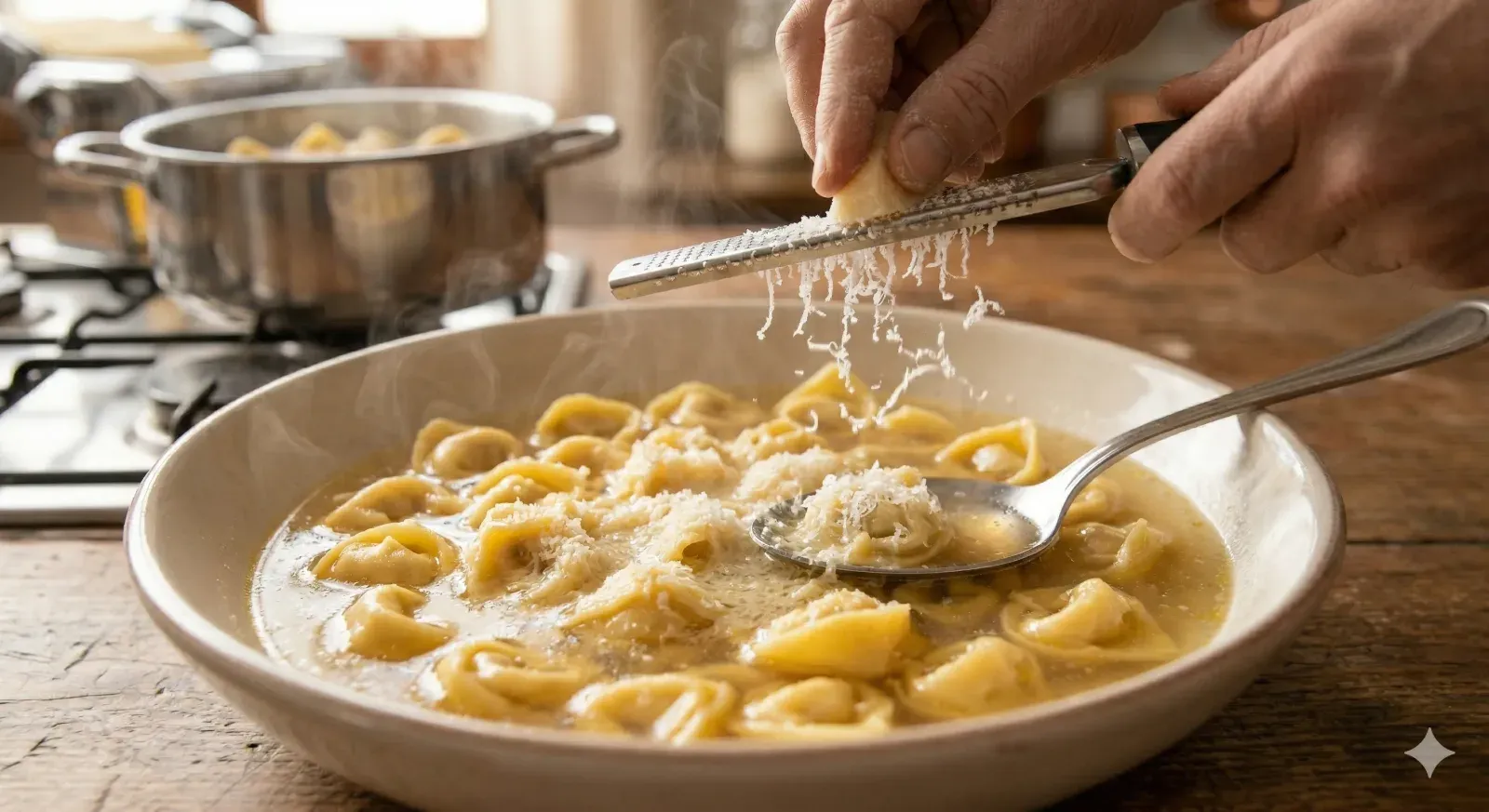
5 Bring the strained broth to a gentle boil in a large pot. Carefully lower the tortellini into the broth in batches. Do not overcrowd the pot, or the pasta will stick together. Cook for 3 to 4 minutes. Fresh tortellini are done when they float to the surface and the pasta edges feel tender when pressed. Maintain a gentle simmer rather than a vigorous boil. Aggressive bubbling can tear open the delicate parcels and release the filling into the broth.
Ladle the cooked tortellini and hot broth into warmed shallow bowls. Each serving should have about 15 to 20 tortellini floating in clear, aromatic broth. Finish with a generous shower of freshly grated Parmigiano-Reggiano. The cheese melts slowly into the hot liquid, adding richness and body to each spoonful. Serve immediately while the broth is steaming. Tortellini in brodo waits for no one — the pasta continues to absorb liquid as it sits, so prompt service preserves the ideal texture.
Expert Tips for Perfect Tortellini in Brodo
Roll the Pasta Thinner Than You Think
Thick pasta is the most common mistake when making tortellini at home. Remember that each tortellino has layers of dough folded over each other at the sealed edges. If the sheet is already thick, those overlapping areas become chewy and unpleasant. Roll the dough until you can nearly see through it. The thinnest setting on most home pasta machines produces the right result. Thin pasta cooks faster, stays tender, and lets the filling flavor come through clearly.
Seal Every Edge Completely
An imperfectly sealed tortellino is a ticking time bomb in the pot. Even a tiny gap allows broth to seep in and filling to leak out. Press the edges firmly with your fingertips after folding each triangle. Some cooks brush a thin line of water or egg wash along the edges before sealing. This extra moisture acts as glue and creates a stronger bond. Check each piece before placing it on the tray. If any edge looks loose, press it again.
Keep the Broth at a Gentle Simmer
Vigorous boiling is the enemy of tortellini. Aggressive bubbles toss the delicate pasta around the pot, causing collisions that tear the dough open. A gentle simmer — where small bubbles break the surface slowly — cooks the tortellini evenly without damaging them. Patience matters here. The difference between a gentle simmer and a rolling boil determines whether your tortellini arrive in the bowl intact or in pieces.
Use Freshly Grated Parmigiano-Reggiano
Pre-grated Parmesan cheese contains anti-caking agents like cellulose that prevent smooth melting. Freshly grated Parmigiano-Reggiano dissolves into the hot broth beautifully. It adds a subtle creaminess and savory complexity that the pre-grated versions simply cannot deliver. Grate it finely using a microplane for the best results. The Parmesan should melt on contact with the broth.
Regional Tortellini Styles Compared
Tortellini traditions vary across the Emilia-Romagna region and beyond. Each area brings its own philosophy to the filling, the size, and the serving method. Here is how the major styles differ.
| Style | Region | Filling | Key Characteristics |
|---|---|---|---|
| Tortellini in Brodo | Bologna | Pork, mortadella, prosciutto, Parmigiano | Small, served in clear capon broth, Christmas tradition |
| Tortellini alla Panna | Emilia-Romagna | Same meat filling | Served with cream sauce instead of broth, richer and heavier |
| Tortelloni | Emilia-Romagna | Ricotta and spinach or pumpkin | Larger size, vegetarian filling, served with butter and sage |
| Cappelletti | Romagna | Cheese or meat blend | Hat-shaped, slightly different fold, often lighter filling |
| Anolini | Parma / Piacenza | Braised beef and breadcrumbs | Round shape, served in beef broth, Parma holiday staple |
Serving Suggestions
Tortellini in brodo is traditionally served as a first course (primo) during Italian holiday meals. Its light yet satisfying nature makes it the perfect opener before a heavier second course. However, a generous portion also works beautifully as a standalone dinner on cold winter evenings. These accompaniments and beverages complement the dish perfectly.
Classic Accompaniments:
- Crusty Italian bread: A slice of rustic bread alongside the bowl catches any broth you want to savor to the last drop. Choose a bread with a firm crust and open crumb that absorbs liquid without falling apart. Keep it simple and unbuttered so it does not compete with the broth.
- Mixed green salad: A lightly dressed salad of mixed greens, shaved fennel, and lemon vinaigrette provides a fresh counterpoint to the warm, savory broth. Serve the salad after the tortellini as Italians traditionally do, rather than alongside it.
- Roasted meat second course: Follow the tortellini with a roasted chicken, braised beef, or pork loin for a traditional multi-course Italian meal. The broth course prepares the appetite for the richer main dish that follows.
- Parmigiano-Reggiano rind: Save your Parmesan rinds and simmer one directly in the broth during the last 30 minutes of cooking. The rind melts slightly and adds an extra layer of umami richness that deepens the flavor beautifully.
Beverage Pairings:
- Lambrusco (sparkling red wine): This lightly effervescent red wine from Emilia-Romagna is the regional pairing for tortellini in brodo. Its gentle fizz and fruity acidity cut through the richness of the pork filling. Choose a dry (secco) Lambrusco rather than a sweet one for the best match.
- Trebbiano di Romagna (white wine): A crisp, light white wine from the same region offers a refreshing contrast to the warm broth. Its subtle minerality and citrus notes complement the Parmigiano in both the filling and the garnish without overpowering the dish.
- Prosecco (sparkling wine): The gentle bubbles and apple-pear notes of a quality Prosecco make it a versatile partner for tortellini in brodo. It works especially well when serving the dish as a holiday starter alongside other festive courses.
- Warm herbal tea: For a non-alcoholic option, a light chamomile or lemon verbena tea mirrors the restorative quality of the broth. Avoid strongly flavored teas that might clash with the delicate savory notes of the dish.
Storage and Reheating
Refrigerator: Store leftover tortellini in brodo in an airtight container for up to 3 days. Keep the tortellini in the broth, as removing them causes the pasta to dry out and crack. The broth on its own keeps for up to 5 days refrigerated. Be aware that the tortellini will continue absorbing broth during storage. You may need to add fresh broth when reheating to restore the proper liquid-to-pasta ratio.
Freezer: Freeze uncooked tortellini separately from the broth for the best results. Arrange shaped tortellini on a parchment-lined baking sheet in a single layer. Freeze until solid, then transfer to a sealed freezer bag. They keep for up to 2 months. Freeze the broth separately in quart-sized containers. Thaw the broth overnight in the refrigerator before reheating. Cook the frozen tortellini directly from the freezer — do not thaw them first, as they become mushy.
Reheating: Warm the broth in a saucepan over medium heat until it reaches a gentle simmer. If the tortellini are already cooked in the broth, heat everything together gently. Avoid boiling, as aggressive heat can cause the reheated tortellini to split open. If you froze uncooked tortellini, bring the broth to a gentle boil first. Then add the frozen pasta and cook for 5 to 6 minutes until floating and tender. Add a splash of water or extra broth if the liquid has reduced too much.
Common Mistakes to Avoid
1. Using a Cloudy or Weak Broth
The broth is the star of this dish, not just a cooking liquid. A cloudy, greasy, or bland broth ruins the entire experience. Always start with cold water, skim diligently, and maintain a bare simmer rather than a boil. Strain through cheesecloth for crystal clarity. If your broth lacks depth after 3 hours, continue simmering until the flavor concentrates. Season with salt at the end — undersalted broth tastes flat and lifeless.
2. Overfilling the Tortellini
Half a teaspoon of filling per tortellino is enough. Beginners often add too much, which makes sealing impossible and causes the pasta to burst during cooking. The filling expands slightly as it heats. A tortellino that barely closes before cooking will definitely open in the pot. Less filling also means thinner pasta at the sealed edges, which creates a more elegant texture in the finished dish.
3. Letting the Pasta Dough Dry Out
Fresh egg pasta dries quickly when exposed to air. Dry dough cracks when you fold it, which makes sealing nearly impossible. Work with one portion of dough at a time. Keep the remaining pieces tightly wrapped in plastic. Once you cut the squares, fill and fold them within a few minutes. If the edges dry before you can seal them, brush lightly with water to restore moisture. Speed and organization are essential during the shaping phase.
4. Boiling the Tortellini Too Aggressively
Gentle heat is non-negotiable for cooking tortellini. A rolling boil throws the delicate parcels against each other and the sides of the pot. The impact tears open the thin pasta and releases the filling into the broth. Reduce the heat until only small bubbles appear at the surface. The tortellini should bob gently, not tumble violently. Three to four minutes at a gentle simmer is all they need.
Frequently Asked Questions
What is tortellini in brodo?
Tortellini in brodo is a traditional Italian dish from Bologna in the Emilia-Romagna region. It features small, hand-folded pasta parcels filled with a mixture of pork, mortadella, prosciutto, and Parmigiano-Reggiano. The tortellini are served in a rich, clear broth made from capon or a combination of chicken and beef. This dish holds a special place in Italian culture as the centerpiece of Christmas and holiday meals. Its simplicity highlights the quality of each ingredient.
Can I use store-bought tortellini for tortellini in brodo?
You can absolutely use store-bought tortellini as a practical shortcut. Look for fresh, refrigerated varieties with traditional fillings rather than dried versions. Fresh store-bought tortellini cooks in the same time as homemade and holds together well in broth. Dried tortellini from the shelf-stable aisle tends to split open and has a chewier texture. Italian specialty stores often carry artisan frozen tortellini that deliver results close to homemade. A good homemade broth compensates significantly for using store-bought pasta.
What broth is best for tortellini in brodo?
Traditional capon broth delivers the most authentic flavor. Capon produces a richer, more full-bodied broth than standard chicken. Since most cooks cannot easily find capon, a combination of whole chicken and beef shank is the best substitute. Simmer the meats with carrots, celery, onion, and a bay leaf for at least 2.5 hours. Strain the broth through cheesecloth for clarity. The resulting golden liquid should taste clean, deeply savory, and satisfying enough to drink on its own.
How do you fold tortellini properly?
Start by cutting the rolled pasta into 2-inch squares. Add a small mound of filling to the center. Fold the square diagonally into a triangle and press the edges firmly to remove air and seal. Hold the triangle with the longest edge facing you. Wrap it around the tip of your index finger, bringing the two bottom corners together. Pinch the overlapping points firmly to hold the shape. The result should look like a tiny ring or navel. Practice with a few pieces before committing to the full batch. Even imperfect tortellini taste wonderful.
Can I freeze homemade tortellini?
Freezing is one of the best ways to preserve homemade tortellini. Arrange the shaped, uncooked tortellini in a single layer on a parchment-lined baking sheet. Freeze them until completely solid, which takes about 2 hours. Then transfer the frozen pieces to a sealed freezer bag or airtight container. They store well for up to 2 months. Cook them directly from frozen — never thaw first, or they become soggy and stick together. Add 1 to 2 extra minutes of cooking time when boiling from frozen.
What is the difference between tortellini and tortelloni?
Size is the primary difference. Tortellini are small, roughly thumbnail-sized pasta parcels. Tortelloni are significantly larger, approximately twice the diameter. The fillings also differ by tradition. Tortellini typically contain a meat-based filling of pork, mortadella, and prosciutto. Tortelloni usually hold a vegetarian filling of ricotta and spinach or pumpkin. Serving styles differ as well — tortellini are traditionally served in broth, while tortelloni come with butter and sage sauce or a light cream sauce.
Variations and Adaptations
Tortellini alla Panna (Cream Sauce):
For a richer presentation, skip the broth and toss cooked tortellini with a simple cream sauce. Warm heavy cream with butter in a wide skillet until it thickens slightly. Add the cooked tortellini and toss gently to coat. Finish with a generous amount of Parmigiano-Reggiano and a crack of black pepper. This version is popular in Emilia-Romagna restaurants, though purists insist that broth is the only proper way to serve tortellini.
Chicken Filling Variation:
Replace the pork loin with an equal weight of boneless, skinless chicken thigh. Cook the chicken in the same manner — sear until golden and process with the mortadella and prosciutto. Chicken produces a slightly lighter filling that appeals to those who prefer poultry over pork. Keep the Parmigiano-Reggiano, egg yolk, and nutmeg the same. The result is a subtle variation that pairs especially well with chicken broth.
Vegetarian Tortellini:
Create a meat-free filling with ricotta, Parmigiano-Reggiano, sauteed spinach, and a touch of lemon zest. Squeeze all excess moisture from the spinach before mixing — wet filling weakens the pasta and causes bursting. Serve the vegetarian tortellini in a mushroom or vegetable broth for a completely meat-free dish. The nutmeg and Parmesan still provide plenty of savory depth without any animal protein.
Gluten-Free Adaptation:
Blend a gluten-free pasta dough using a mix of rice flour and tapioca starch in a 3:1 ratio. Add an extra egg yolk for binding, since gluten-free doughs lack the protein structure that regular flour provides. Roll the dough carefully between sheets of parchment paper, as it tears more easily. Shape the tortellini slightly larger than traditional to accommodate the more fragile dough. Cook gently in broth for 4 to 5 minutes. The texture differs from wheat pasta but still delivers a satisfying result.
The Cultural Significance of Tortellini in Brodo
Tortellini in brodo is far more than a recipe in Bologna — it is an identity. The dish is so important to the city that the Dotta Confraternita del Tortellino, a formal brotherhood, was established to protect and preserve the authentic recipe. In 1974, the organization registered the official recipe for tortellini filling with the Bologna Chamber of Commerce. They specified the exact proportions of pork loin, mortadella, prosciutto, Parmigiano-Reggiano, and egg. This level of devotion reveals how seriously Bolognese culture takes this humble pasta.
Legend traces the shape of tortellini to Venus, the goddess of love. According to the myth, a Bolognese innkeeper peeked through a keyhole at his most beautiful guest. He saw only her navel, and was so captivated that he rushed to the kitchen to create a pasta shape in its image. Whether or not the story holds any truth, it speaks to the romantic imagination that surrounds food in Italian culture. Every tortellino carries a trace of that mythology in its ring-like form.
During the Christmas season in Emilia-Romagna, families gather across generations to make tortellini together. Grandmothers teach grandchildren the proper fold. Aunts debate the correct ratio of mortadella to prosciutto. The kitchen becomes a workshop of tradition, laughter, and competitive precision. This communal preparation transforms cooking into ceremony. The tortellini that appear in the steaming broth on Christmas Day represent hours of shared labor and centuries of unbroken tradition. No factory-made pasta can replicate that meaning.
Conclusion
Tortellini in brodo rewards patience at every stage. A slow-simmered broth, a well-kneaded dough, a balanced filling, and a careful fold — each step builds toward a dish that is far greater than the sum of its parts. This recipe gives you everything you need to bring authentic Bolognese tradition into your own kitchen. The process takes time, certainly. However, the moment you taste that first spoonful of golden broth with a tender, meat-filled tortellino, you will understand exactly why Italian families have been making this dish for five hundred years.
Ready to explore more Italian and European classics? Browse our full collection of European dishes for recipes like lasagna, carbonara, and osso buco. If you try this tortellini in brodo recipe, leave a rating and share how it turned out.