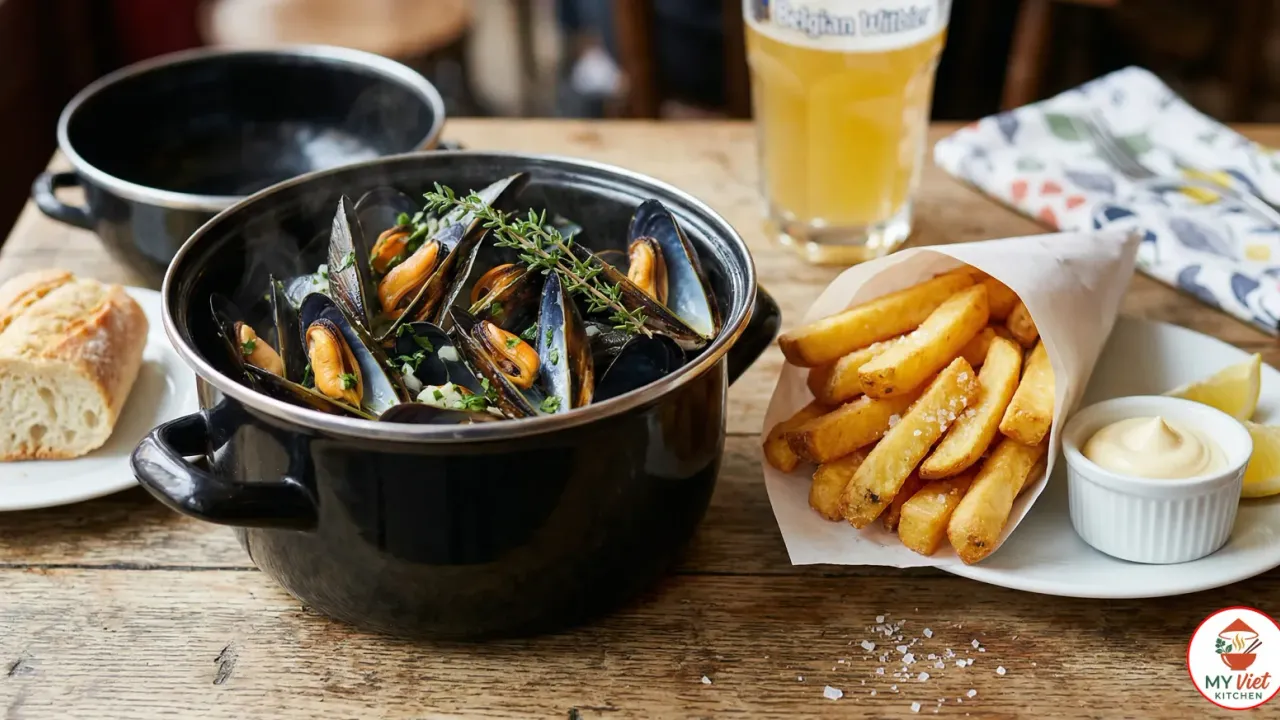
Moules-frites stands as Belgium’s most iconic national dish, and this authentic recipe brings together plump mussels steamed in a fragrant white wine broth with crispy double-fried Belgian frites. In fact, this combination of sea and earth has defined Belgian cuisine for over a century. Yet the dish is deceptively simple, relying on fresh, high-quality ingredients and precise technique rather than complex preparation. Whether you first encountered moules-frites at a bustling Brussels brasserie or a seaside friterie in Ostend, this recipe captures that same satisfying experience in your own kitchen.
Prep Time: 30 minutes | Cook Time: 35 minutes | Servings: 4
Difficulty: Easy | Calories: ~650 per serving
What Makes Moules-Frites Special?
The genius of moules-frites lies in the contrast between its two components. On one side, you have briny, tender mussels bathed in a perfumed broth of white wine, shallots, and fresh herbs. On the other, you have thick-cut frites with a shattering golden crust and a fluffy, pillowy interior. Together, they create a harmony of tastes and textures that no single dish can match. The salty sweetness of the mussels meets the starchy richness of the frites. Meanwhile, the aromatic broth ties everything together as a sauce for both parts.
Belgium claims moules-frites as its national dish, although France and the Netherlands also have strong mussel traditions. However, what sets the Belgian version apart is the commitment to the frites. In Belgium, the frites are never an afterthought or a simple side dish. They receive the same level of care and attention as the mussels. The double-frying technique, developed in Belgian friteries over generations, produces a frite that stays crispy for minutes after leaving the oil. As a result, this method separates true Belgian frites from ordinary French fries.
The dish also reflects Belgium’s geography and culture. Situated along the North Sea coast, Belgium has access to some of Europe’s finest mussels. According to the Belgian culinary tradition, the Zeeland mussels from the nearby Dutch-Belgian border region are particularly prized for their plump meat and clean brininess. Combined with Belgium’s world-class beer and dairy traditions, moules-frites shows the meeting of land and sea that defines Belgian cooking. Every fall, mussel season hits its peak. Restaurants across the country celebrate with big pots and piles of golden frites.

Choosing the Right Mussels for Moules-Frites
The quality of your mussels determines the success of this dish. Specifically, fresh mussels should smell like the ocean, with a clean, briny scent and no trace of ammonia. Also, the shells should appear glossy and tightly closed. Here are the best options for making moules-frites at home.
- Atlantic blue mussels (best choice): These are the traditional choice for moules-frites. They are small to medium in size with sweet, tender meat and thin black shells. Bouchot mussels, raised on wooden stakes along the Atlantic coast, are considered the premium variety. Because of their small size, they cook fast and evenly in the steam.
- Prince Edward Island mussels: Widely available in North American grocery stores, PEI mussels are farm-raised in cold Atlantic waters. They offer consistent quality, clean flavor, and minimal sand. Their shells are thin and open readily during cooking. These mussels work beautifully in moules-frites and require very little cleaning.
- Mediterranean mussels: Larger than Atlantic blues, these mussels have a slightly stronger, more mineral flavor. They work well in moules-frites but require slightly longer cooking time due to their thicker shells. So add one to two extra minutes of steaming time when using this type.
- Green-lipped mussels (not recommended): These New Zealand mussels are too large and have an assertive flavor that overpowers the delicate wine broth. Their thick shells also trap heat unevenly. Save them for grilling or baking rather than steaming in the classic Belgian style.
Ingredients for Moules-Frites
For the Mussels:
- 4 pounds fresh mussels, cleaned and debearded
- 2 tablespoons unsalted butter
- 4 medium shallots, finely diced
- 4 cloves garlic, minced
- 1 1/2 cups dry white wine (Muscadet or Sauvignon Blanc)
- 1 cup fish stock or clam juice
- 1 bay leaf
- 4 sprigs fresh thyme
- 1/2 cup fresh flat-leaf parsley, chopped
- Freshly ground black pepper to taste
For the Cream Variation (Optional):
- 1/2 cup heavy cream
- 1 tablespoon Dijon mustard
For the Belgian Frites:
- 2 pounds russet or Bintje potatoes
- Beef tallow or peanut oil for frying (about 2 quarts)
- Fine sea salt for seasoning
For Serving:
- Belgian-style mayonnaise
- Crusty bread for dipping
- Lemon wedges
Pro tip: Always buy about 20 percent more mussels than you think you need. After cleaning and discarding damaged ones, you will lose a portion of the original weight. Four pounds of store-bought mussels typically yield about 3 to 3.5 pounds of usable mussels after sorting.
Step-by-Step Instructions
Step 1: Clean and Sort the Mussels
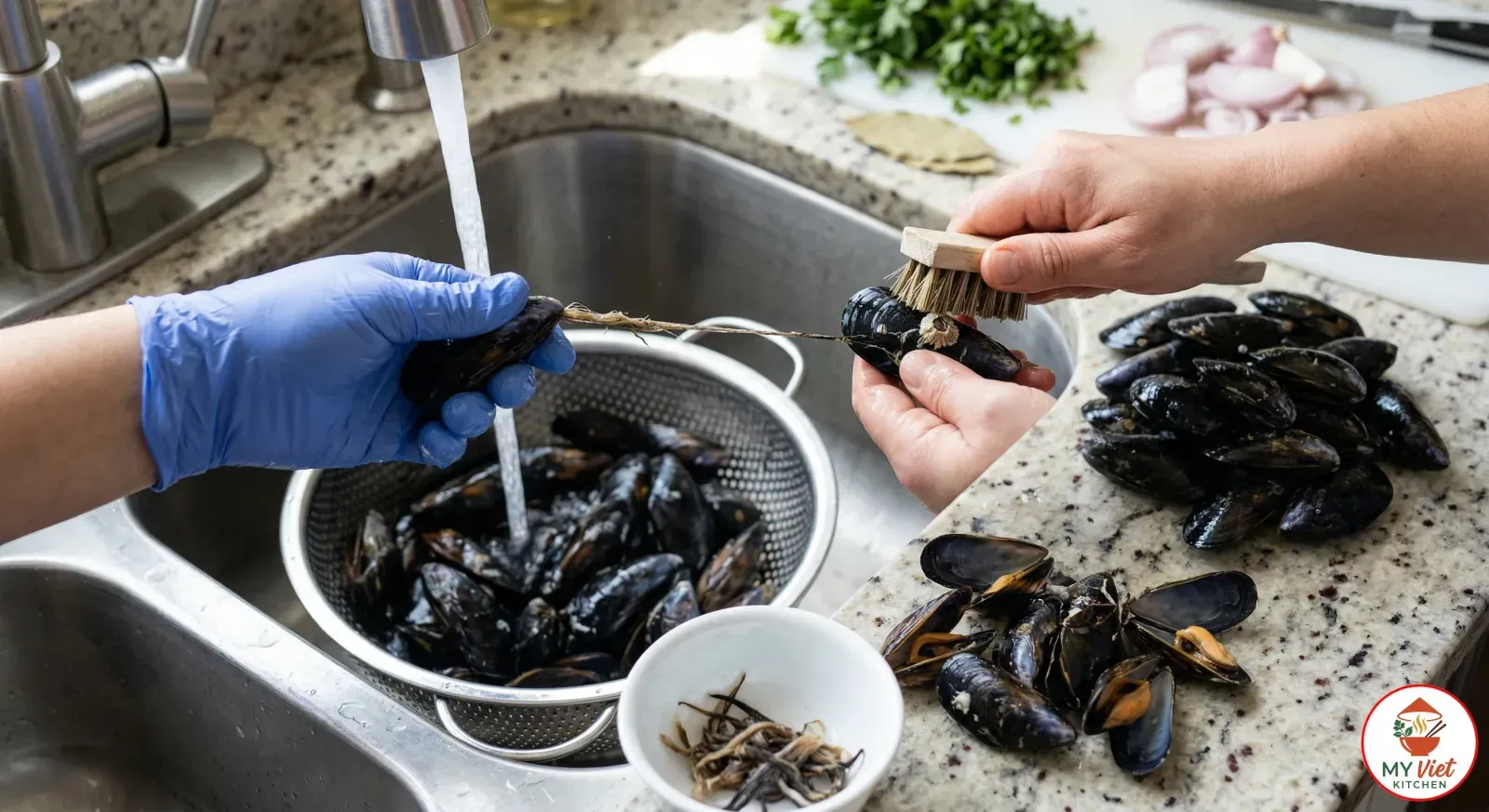
1Place the mussels in a large colander and rinse them under cold running water. Pull off any beards, the fibrous threads protruding from between the shells, by gripping them firmly and tugging toward the hinge. Scrub away any barnacles or debris with a stiff brush. Tap any open mussels sharply on the counter. If they close slowly within 30 seconds, they are alive and safe to cook. Discard any that stay open, have cracked shells, or feel unusually heavy, since heavy mussels often contain mud. Soak the cleaned mussels in cold salted water for 20 minutes to purge residual sand, then drain.
Step 2: First Fry the Potatoes (Blanch Fry)
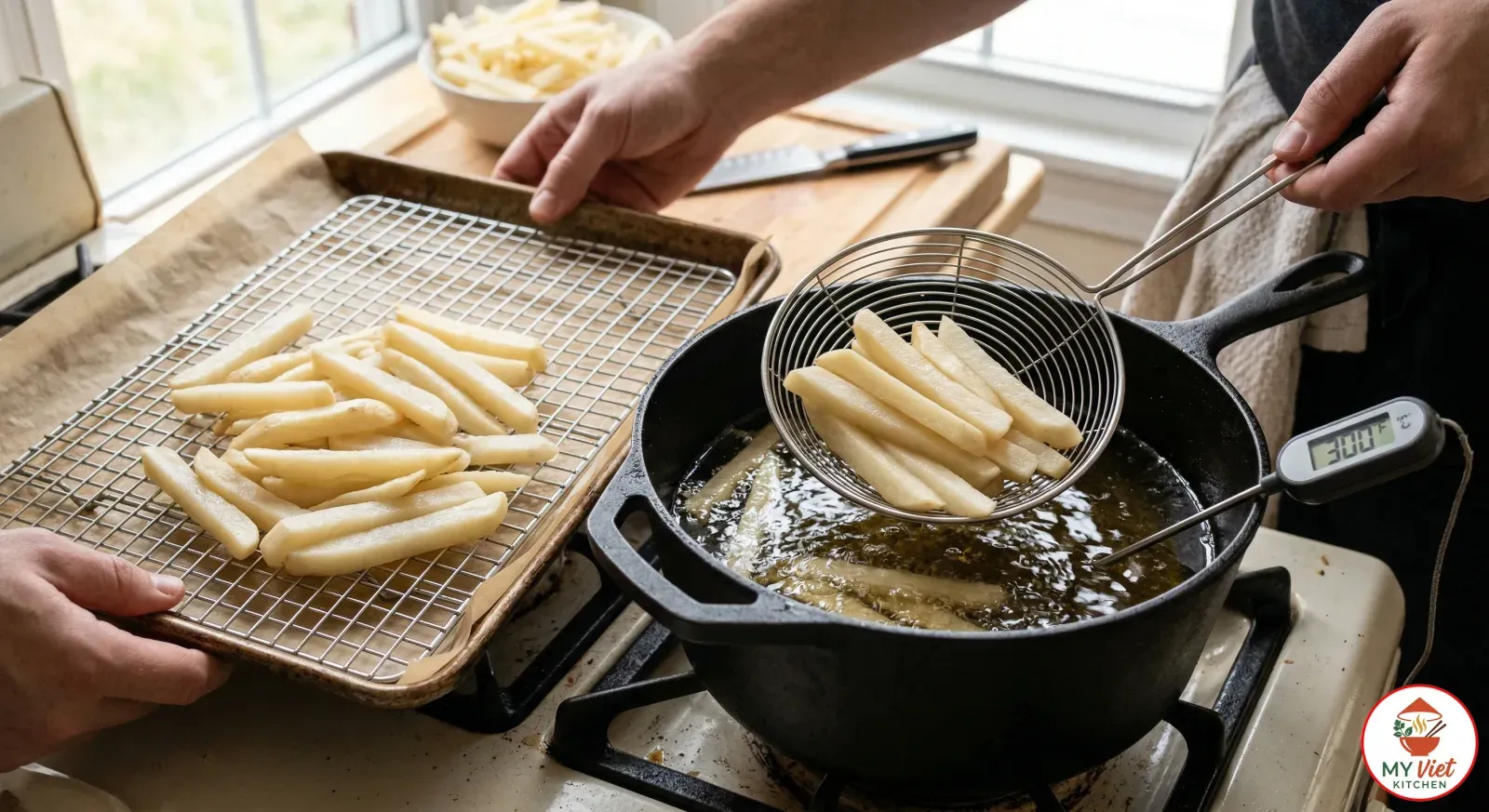
2Peel the potatoes and cut them into sticks about 1 centimeter (3/8 inch) thick. Rinse the cut frites in several changes of cold water until the water runs clear. This washes off extra starch that causes sticking and uneven browning. Dry the potatoes thoroughly with a clean kitchen towel, because any remaining moisture will cause dangerous splattering in hot oil. Heat the beef tallow or peanut oil to 300 degrees Fahrenheit (150 degrees Celsius) in a deep pot or Dutch oven. Fry the potatoes in batches for 6 to 8 minutes until they are cooked through and tender but still pale. Remove them with a slotted spoon and drain on a wire rack. Let them rest at room temperature for at least 30 minutes before the second fry.
Step 3: Build the Aromatic Base
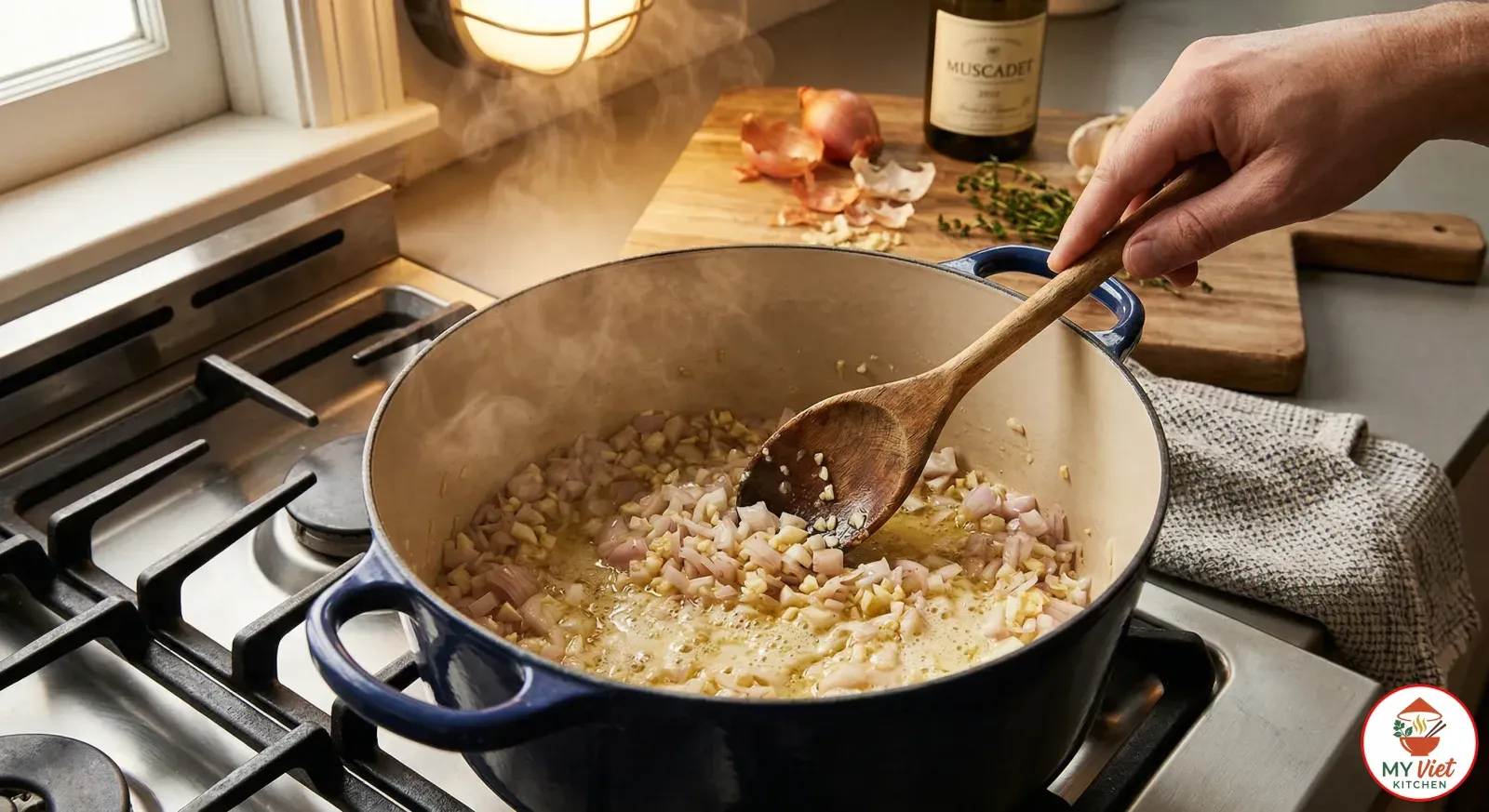
3Melt the butter in a large pot or Dutch oven over medium heat. The pot must be large enough to hold all the mussels with room for them to open. Add the diced shallots and cook for 3 to 4 minutes, stirring occasionally, until they turn soft and translucent. Shallots bring a sweeter, more mild flavor than onions to this dish. Add the minced garlic and stir for just 30 seconds until fragrant. Do not let the garlic brown, because browned garlic turns bitter and will taint the entire broth.
Step 4: Steam the Mussels
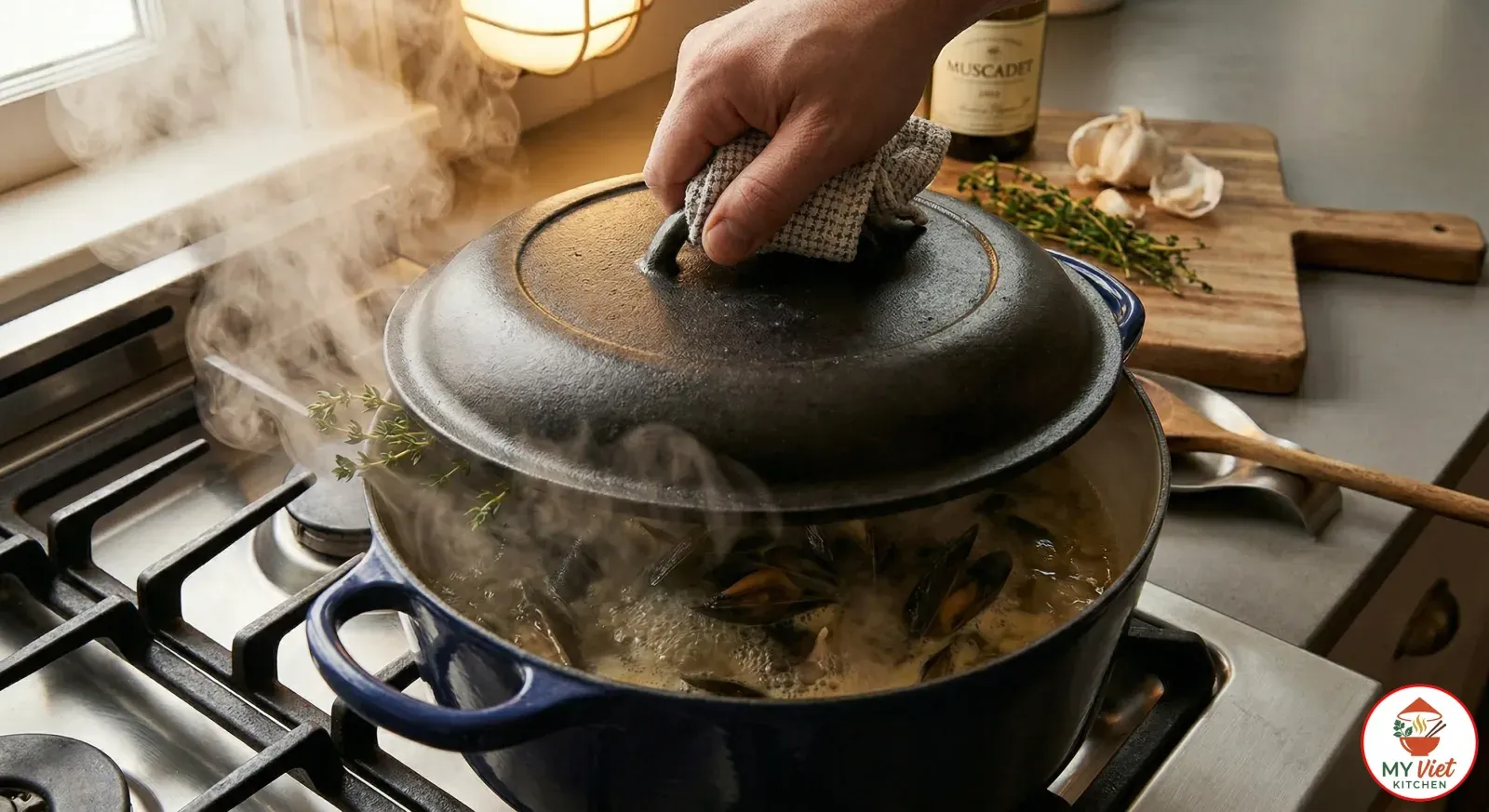
4Pour the white wine and fish stock into the pot with the shallot mixture. Add the bay leaf and thyme sprigs. Bring the liquid to a vigorous boil over high heat. Once the broth is rolling, add all the mussels at once and immediately cover with a tight-fitting lid. Steam for 4 to 5 minutes, shaking the pot vigorously once or twice during cooking to redistribute the mussels. Steam trapped under the lid cooks the mussels fast and evenly. Check after 4 minutes. Your moules-frites mussels are ready when most shells have opened wide, revealing plump orange meat inside.
Step 5: Finish the Broth
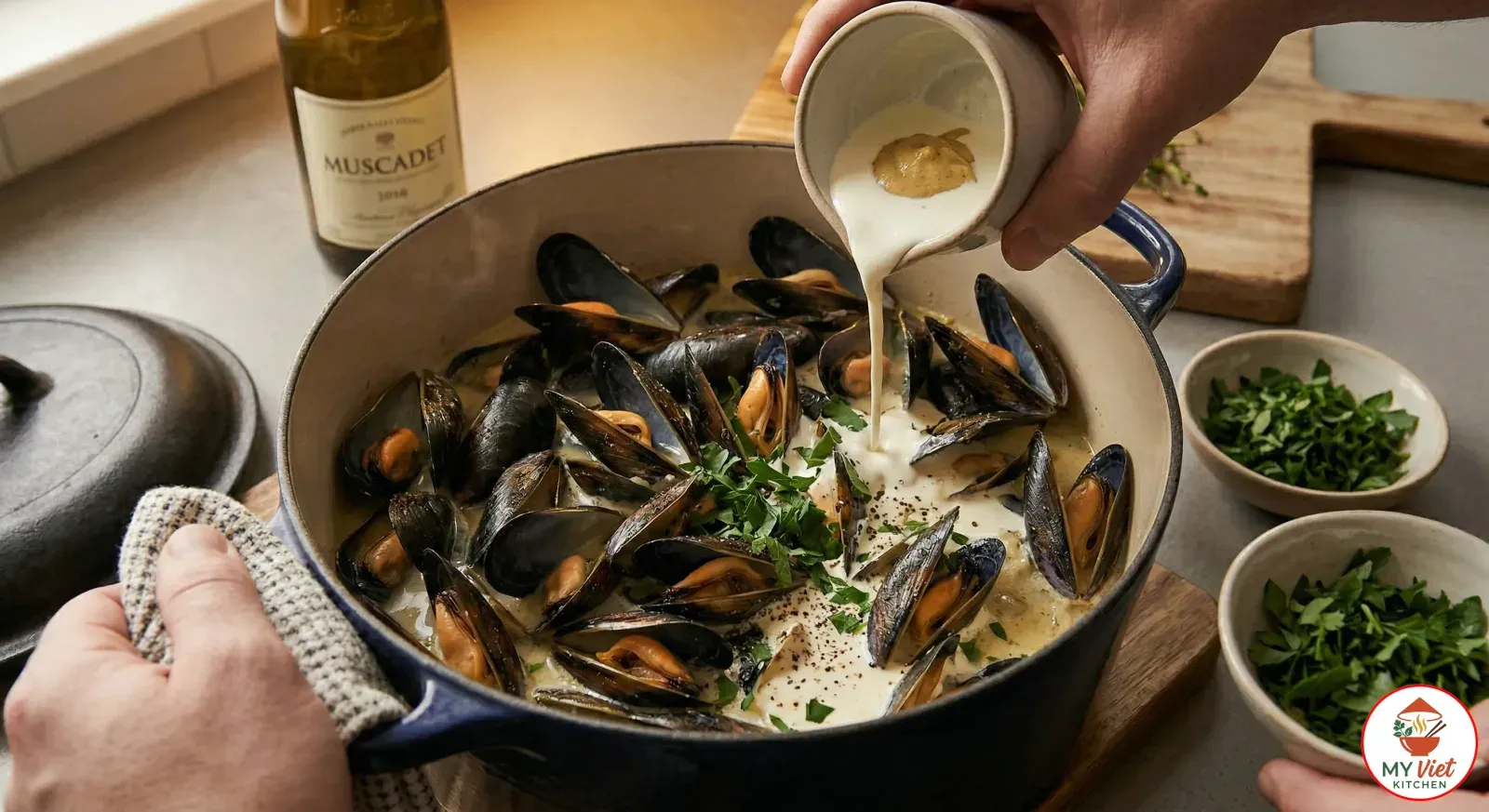
5Remove the pot from heat immediately once the mussels have opened. After all, overcooking makes mussels tough and rubbery within seconds, so timing is critical. Discard any mussels that did not open during cooking. If you want the richer moules a la creme variation, stir in the heavy cream and Dijon mustard now. Scatter the chopped parsley over the mussels and add several grinds of black pepper. Stir gently to combine without knocking the mussels from their shells. Taste the broth before adding salt. The mussels and fish stock contribute natural salinity, so additional salt is rarely needed.
Step 6: Double-Fry the Frites Until Crispy
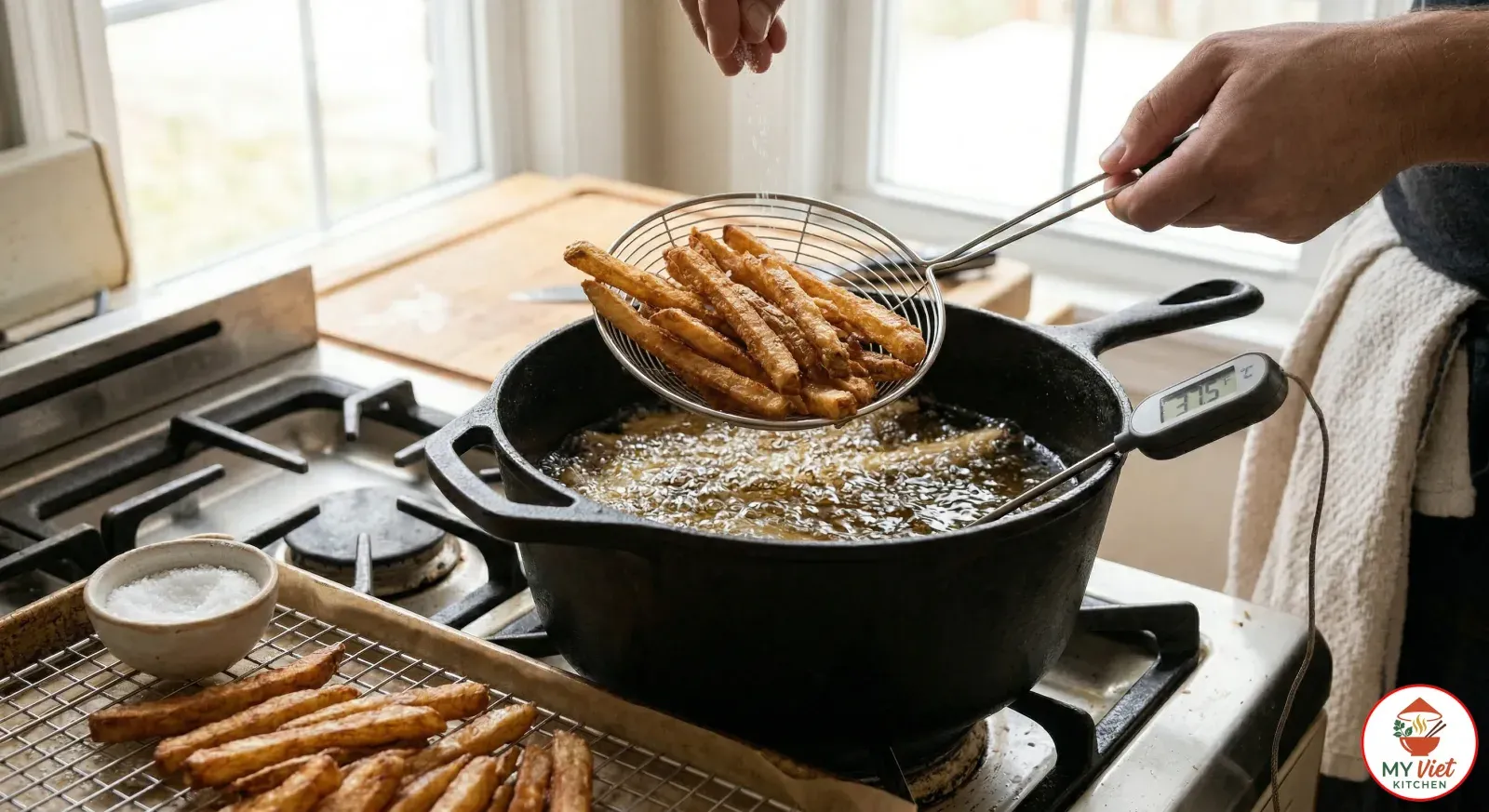
6Raise the oil temperature to 375 degrees Fahrenheit (190 degrees Celsius). Working in small batches of one or two handfuls, lower the blanched frites back into the hot oil. Fry for 2 to 3 minutes until they turn deep golden brown and develop an audible crunch when you tap them with a spoon. Remove each batch with a slotted spoon or spider strainer and drain on a wire rack. Season the frites with fine sea salt immediately while they are still glistening with oil. Salt sticks better to hot, oily frites. Let the oil return to temperature between batches to maintain consistent crispiness.
Step 7: Assemble and Serve
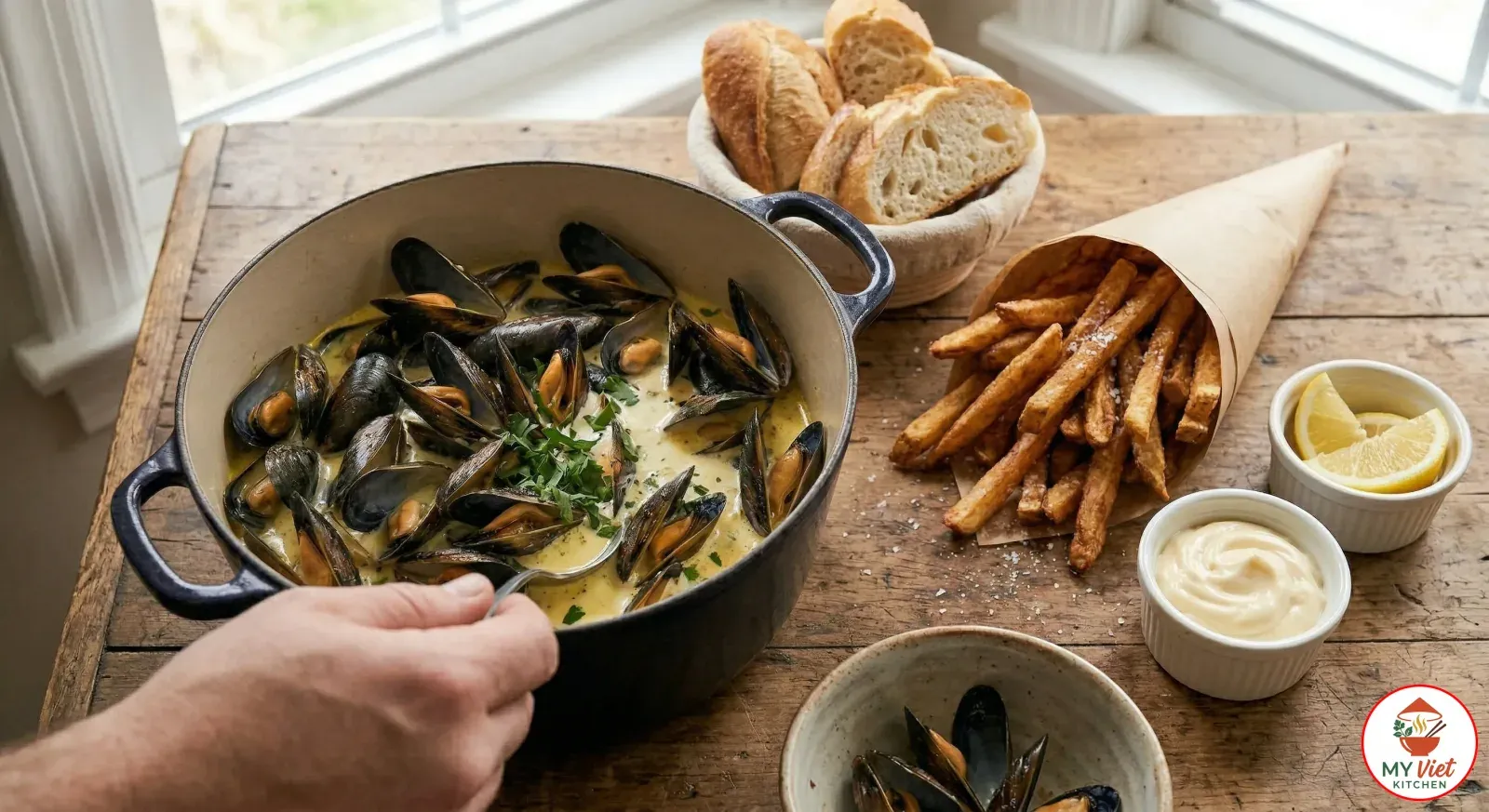
7Ladle the mussels and their aromatic broth into large, warmed bowls or serve them directly in the cooking pot placed on a trivet at the center of the table. Pile the hot frites alongside in a separate bowl or in a paper cone for an authentic Belgian presentation. Set out a ramekin of Belgian-style mayonnaise for dipping the frites, lemon wedges for squeezing over the mussels, and a basket of crusty bread for soaking up every drop of that extraordinary broth. Place an empty bowl on the table for discarded shells. Moules-frites is a communal, hands-on meal, so encourage everyone to dig in immediately while the frites are at their crispiest.
Expert Tips for Perfect Moules-Frites
Use Enough Heat for the Steam
The broth must be at a full, rolling boil before you add the mussels. If the liquid is only simmering, the mussels cook unevenly and some will overcook before others open. A vigorous boil generates the intense steam needed to cook all the mussels within that critical 4 to 5 minute window. Keep your burner on high and resist the urge to lower the heat after adding the mussels.
Choose the Right Pot Size
Your pot should be large enough that the mussels fill it no more than two-thirds full. Too many mussels blocks steam from flowing between the shells. A 6-quart Dutch oven works well for 4 pounds of mussels. If you only have a smaller pot, cook the mussels in two batches rather than cramming them all in at once. Fast, even steaming is the key to tender, juicy moules-frites.
Rest the Frites Between Frying
The resting period between the first and second fry is essential. During this time, leftover heat keeps cooking the inside while the surface dries out. This builds the contrast between the crispy outer shell and the soft, fluffy center that defines true Belgian frites. If you skip this rest, your frites will be raw inside or dry and tough all the way through. Thirty minutes is the minimum, but you can rest them for up to three hours.
Belgian Moules-Frites vs. French Moules Mariniere
Both Belgium and France claim mussels as a culinary treasure, but the two traditions approach the dish differently. Here is how the classic Belgian and French preparations compare.
| Feature | Belgian Moules-Frites | French Moules Mariniere |
|---|---|---|
| Primary accompaniment | Double-fried frites with mayonnaise | Crusty bread or thin French fries |
| Broth base | White wine, shallots, often with cream | White wine, shallots, butter, parsley |
| Frying fat | Beef tallow (traditional) | Vegetable oil (typical) |
| Serving style | Black enamel pot with frites on the side | Served in the cooking pot with bread |
| Common variations | Beer broth, cream, curry, blue cheese | Normandy style with cider and cream |
| Cultural status | National dish of Belgium | Regional specialty of northern France |
Serving Suggestions
In Belgium, moules-frites requires little else on the table. The dish is complete in itself, a full meal of protein, starch, and a flavorful broth that doubles as a sauce. However, a few well-chosen sides lift the meal to a new level.
The Perfect Accompaniments:
- Belgian mayonnaise: This is the traditional and non-negotiable condiment for frites in Belgium. Richer and more eggy than American mayo, it adds a creamy contrast to the salty, crispy frites.
- Crusty bread: A good baguette or sourdough boule is essential for mopping up every last drop of the wine and herb broth. The bread soaks up the rich flavors that pool at the bottom of the pot.
- Green salad: A simple salad of butter lettuce or frisee with a light vinaigrette adds freshness and cuts through the richness of the dish. Keep the dressing simple so it does not compete with the mussel broth.
- Lemon wedges: A squeeze of fresh lemon over the mussels brightens their natural brininess and balances the richness of the butter and cream in the broth.
Beverage Pairings:
- Belgian witbier: The citrus and coriander notes in a traditional witbier complement the briny mussels and aromatic broth beautifully. Hoegaarden and St. Bernardus Wit are excellent choices.
- Muscadet: This dry, mineral-driven white wine from the Loire Valley is the classic French pairing for mussels. Its crisp acidity and subtle salinity mirror the flavors in the dish.
- Belgian blonde ale: Slightly stronger than a witbier, a Belgian blonde like Leffe Blond or Duvel adds depth with its fruity esters and gentle malt sweetness.
- Sauvignon Blanc: The same grape that often goes into the cooking broth works just as well in the glass. Its herbaceous, citrusy character echoes the thyme and parsley in the recipe.
Storage and Reheating
Refrigerator: Store leftover mussels in their broth in an airtight container for up to 1 day. The mussels lose their delicate texture quickly, so consume them within 24 hours for the best results. Take the mussels out of their shells before storing to save space and help them reheat evenly.
Freezer: Cooked mussels can be frozen in their broth for up to 2 months. Shell the mussels first, then place them in a freezer-safe container and cover with the strained broth. Thaw overnight in the refrigerator before reheating. Frites do not freeze well after cooking, so prepare them fresh each time.
Reheating: Warm the mussels gently in their broth over medium-low heat. Bring the broth to a simmer and heat the mussels for just 2 to 3 minutes. Do not boil them, as aggressive heat turns mussels rubbery instantly. For frites, reheat in a 425-degree Fahrenheit oven for 8 to 10 minutes to restore their crispiness. The microwave destroys the texture of both components and should always be avoided.
Common Mistakes to Avoid
1. Overcooking the Mussels
This is the single most common error. Mussels need only 4 to 5 minutes of steaming to open and cook through. Every additional minute tightens the protein in the meat, turning plump mussels into small, tough, and chewy nuggets. Instead, set a timer and check at the 4-minute mark. Remove the pot from heat as soon as most shells have opened. A few stragglers will finish opening in the residual heat.
2. Skipping the Double-Fry Method
Similarly, single-frying potatoes produces frites that are pale and limp or dark and overcooked. The double-fry technique solves this problem by separating the cooking into two distinct phases. First, the low-temperature blanch fry cooks the potato through without browning it. Then the high-temperature finish fry creates the golden, crunchy shell. Consequently, attempting both in one round always results in inferior frites. Belgian friteries have perfected this method over more than a century.
3. Using Cheap Wine for the Broth
The wine forms the backbone of your moules-frites broth, so its quality matters. For instance, a harsh, acidic wine produces a sharp, unpleasant broth. Choose a clean, dry white wine that you would enjoy drinking. Muscadet, Sauvignon Blanc, and Pinot Grigio all work well. Avoid cooking wines sold in the grocery aisle, as they contain added salt and preservatives that ruin the broth’s clean flavor.
4. Not Drying the Potatoes Before Frying
Wet potatoes in hot oil create violent splattering and produce soggy frites. Because water on the surface turns to steam instantly, the exterior cannot crisp properly. After rinsing your cut potatoes, spread them on a clean kitchen towel and pat them completely dry. This step takes only two minutes but makes a dramatic difference in the final texture of your frites.
Frequently Asked Questions
What type of mussels are best for moules-frites?
Atlantic blue mussels, also called bouchot mussels, are the traditional and best choice. They have sweet, tender meat and thin shells that open quickly during steaming. Prince Edward Island mussels are an excellent North American alternative with consistent quality and minimal sand.
Can I make moules-frites with beer instead of wine?
Absolutely. Moules a la biere is a beloved Belgian variation that uses witbier or blonde ale instead of white wine. The beer adds malty sweetness and a slightly bitter depth. Use the same quantity as wine. Avoid dark stouts or heavily hopped IPAs, as their intense flavors overwhelm the mussels.
How many mussels should I buy per person?
Plan on about 1 pound (450 grams) of mussels per person as a main course. Buy an extra 20 percent to account for mussels you will discard during cleaning. For this recipe serving 4 people, 4 pounds provides generous portions with enough broth for dipping bread.
Why are my frites not crispy?
Soggy frites usually result from skipping the double-fry method, overcrowding the fryer, or not drying the potatoes before frying. The first fry at 300 degrees Fahrenheit cooks the inside, while the second fry at 375 degrees creates the crispy shell. Always fry in small batches and let the oil recover between rounds.
What is the best oil for Belgian frites?
As noted by Serious Eats, beef tallow is the classic and best choice for Belgian frites. It creates a richer flavor and crispier texture than any vegetable oil. If you prefer a lighter option, peanut oil is the best alternative with its high smoke point and neutral flavor. Avoid olive oil and butter for frying at these high temperatures.
Can I prepare any part of moules-frites in advance?
Yes. Complete the first fry of the frites up to 3 hours ahead and leave them at room temperature. Clean and debeard the mussels up to 4 hours in advance, storing them in the refrigerator under a damp towel. However, always steam the mussels just before serving, as reheated mussels lose their tender texture.
Variations and Adaptations
Moules a la Creme (Cream Sauce):
After steaming the mussels, stir half a cup of heavy cream and a tablespoon of Dijon mustard into the broth. The cream transforms the light wine broth into a velvety, rich sauce that clings to each mussel. This variation is especially popular in northern Belgium and pairs exceptionally well with a Belgian blonde ale.
Moules a la Biere (Beer Broth):
Replace the white wine with an equal amount of Belgian witbier or blonde ale. Add a teaspoon of whole-grain mustard to the broth for extra depth. The beer introduces malty sweetness and gentle bitterness that complement the mussels differently than wine. This version feels heartier and more rustic, perfect for colder months.
Moules au Curry (Curry Mussels):
Add 2 teaspoons of mild curry powder to the shallots during cooking, then proceed with the white wine and cream. The warm spice creates a golden, aromatic broth that remains distinctly Belgian while borrowing flavors from South Asian cuisine. Brussels restaurants have served this variation for decades, and it has become a modern classic.
Dairy-Free Adaptation:
Replace the butter with olive oil for cooking the shallots, and skip the cream entirely. The white wine and fish stock broth is naturally dairy-free and still delivers outstanding flavor. For the frites, use peanut oil or sunflower oil instead of beef tallow. The mussels themselves are naturally free of dairy, gluten, and most common allergens.
The Cultural Significance of Moules-Frites
Moules-frites occupies a unique place in Belgian identity. In a country often defined by its linguistic and cultural divisions between French-speaking Wallonia and Dutch-speaking Flanders, this dish transcends every boundary. Both communities claim it proudly. Walk into any restaurant in Brussels, Bruges, Antwerp, or Liege between September and April, and you will find moules-frites on the menu. The dish serves as a culinary common ground in a nation that sometimes struggles to find one.
Eating mussels in Belgium dates back centuries, fueled by the country’s proximity to the North Sea and the rich mussel beds of the Zeeland region along the Dutch border. Belgian friteries, the beloved street-side frite stands, have served frites since the late 1800s. Eventually, these two traditions merged into one dish that became greater than the sum of its parts. Today, moules-frites season is a national event. Restaurants compete for the year’s first batch of Zeeland mussels, and families gather around steaming black pots as a late-summer ritual. For many Belgians, mussel season signals the shift from summer to autumn just as surely as the changing leaves. Indeed, this is not merely a recipe. It is a piece of living cultural heritage that connects generations of Belgians to their land, their coast, and their table.
Conclusion
Making authentic moules-frites at home is far simpler than most people expect. The mussels require only minutes of steaming in a fragrant broth, and the double-fry method for the frites produces results that rival any Belgian friterie. Focus on sourcing fresh mussels, choosing a good dry white wine, and committing to the double-fry technique for the potatoes. These three fundamentals carry the entire dish. Once you master this recipe, you hold the key to one of Europe’s greatest comfort foods, a dish that has sustained and delighted Belgians for generations.
Ready to explore more European classics? Try our Belgian Waffles for another taste of Belgium, or discover Bouillabaisse for a different approach to seafood cookery. For more dishes from around the world, browse our full European recipes collection.