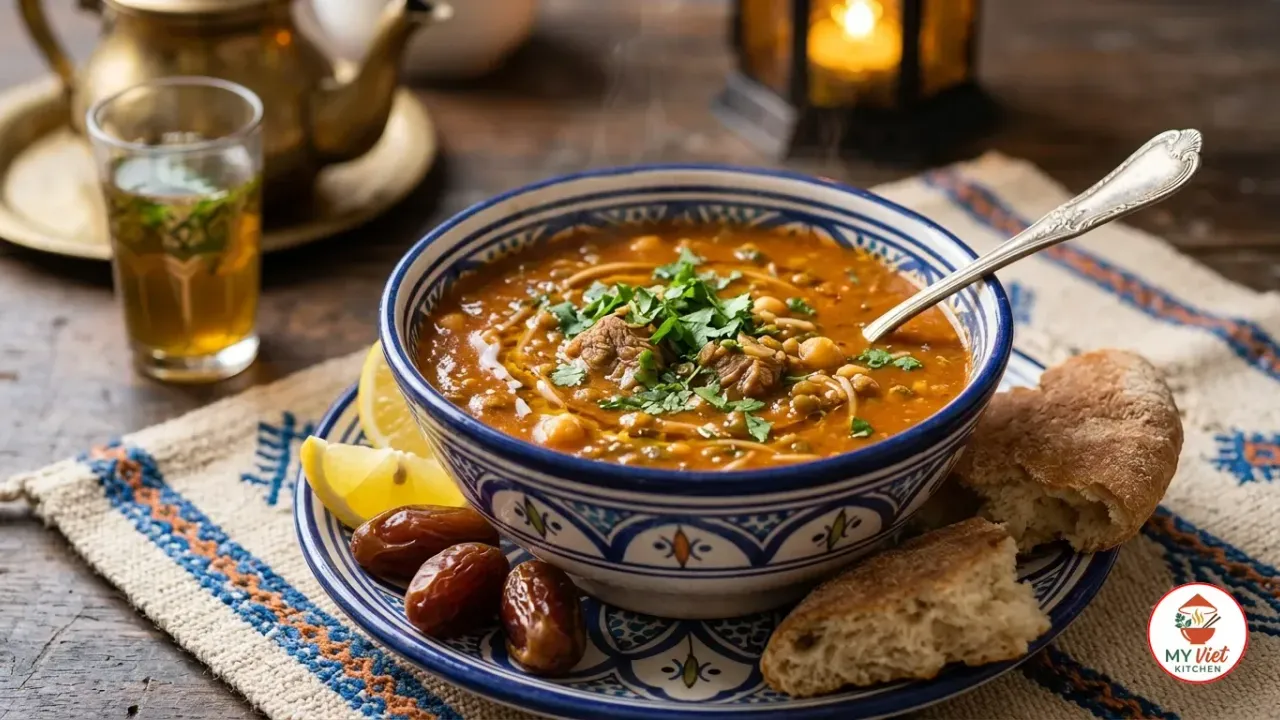
Harira is Morocco’s most celebrated soup, a deeply spiced and nourishing bowl of lentils, chickpeas, tomatoes, and tender lamb that fills kitchens across the country every evening during Ramadan. This harira recipe walks you through the authentic method that Moroccan home cooks have perfected over generations, from building a fragrant spice base to achieving the signature silky texture with a flour slurry. Whether you need a hearty dinner on a cold night or want to experience one of North Africa’s greatest comfort foods, this soup delivers warmth, flavor, and soul in every spoonful.
Prep Time: 20 minutes | Cook Time: 60 minutes | Servings: 6
Difficulty: Easy | Calories: ~320 per serving
What Makes Harira Special?
Harira holds a place of deep reverence in Moroccan culture that goes far beyond ordinary soup. It is the first food that touches the lips of millions of Moroccans each evening during Ramadan, when families gather around the table to break their daylong fast. The call to prayer sounds, a sip of water is taken, a date is eaten, and then a steaming bowl of harira arrives. This ritual repeats every night for an entire month, and it has done so for centuries. No other Moroccan dish carries this same spiritual and communal weight.
What makes this harira recipe remarkable from a culinary standpoint is the layering of flavors and textures within a single pot. The base starts with seared lamb and a bloom of warm spices: ginger, cinnamon, turmeric, and saffron. Then crushed tomatoes simmer down into a rich, slightly sweet foundation. Lentils and chickpeas cook until they melt into the broth, giving body and protein. A flour slurry poured in at the end transforms the texture from a thin broth into something velvety and luxurious. Finally, fresh cilantro, parsley, and lemon juice cut through the richness with bright, green freshness. Every element plays a specific role, and together they create a soup that is simultaneously hearty and elegant.
A Year-Round Staple Beyond Ramadan
Beyond Ramadan, harira appears at Moroccan tables throughout the year. Families serve it during cold winter evenings, at funeral gatherings as a gesture of comfort, and as a restorative meal after illness. Street vendors in Marrakech and Fez ladle bowls of harira from enormous pots that simmer all day. The soup transcends social class and regional differences. From the Atlas Mountains to the coastal cities, every Moroccan household has its own version, and every cook believes theirs is the best. Learning to make authentic harira connects you to one of the oldest and most beloved culinary traditions in all of North Africa.

Choosing the Right Lentils for Harira
The type of lentil you choose for your harira recipe directly affects the texture and body of the finished soup. Moroccan cooks traditionally favor lentils that break down during long simmering, because they want the legumes to dissolve partly into the broth and create natural thickness. Selecting the right variety ensures your harira recipe has that characteristic creamy consistency rather than a thin, watery texture.
- Brown lentils (best choice): These are the most common lentils in Moroccan kitchens. They hold their shape for the first 20 minutes, then gradually break down and release starch into the broth. This partial dissolution gives harira its signature body. Brown lentils are widely available and affordable at any grocery store.
- Green lentils: Slightly firmer than brown lentils, green lentils work well if you prefer a chunkier texture in your soup. They take about 5 to 10 minutes longer to cook through. The earthy, peppery flavor of green lentils adds depth that complements the warm spices beautifully.
- Red lentils: These dissolve completely during cooking, which creates a very smooth and thick broth. Use red lentils if you want a harira with no visible lentil pieces. However, the soup may become too thick, so reduce the flour slurry by half when using red lentils.
Ingredients for Harira
Meat and Legumes:
- 1 lb lamb shoulder, cut into small 1/2-inch cubes
- 1 cup dried brown or green lentils, rinsed and picked over
- 1 can (15 oz) chickpeas, drained and rinsed
Vegetables and Aromatics:
- 1 large onion, finely diced
- 4 large ripe tomatoes, peeled and crushed by hand
- 2 tablespoons tomato paste
- 4 stalks celery, finely diced
Spices and Seasonings:
- 1 teaspoon ground ginger
- 1 teaspoon ground cinnamon
- 1 teaspoon ground turmeric
- 1 teaspoon ground black pepper
- 1/2 teaspoon saffron threads, crushed between your fingers
- Salt to taste
Herbs, Thickener, and Finishing:
- 1/2 cup fresh cilantro, finely chopped
- 1/2 cup fresh flat-leaf parsley, finely chopped
- 3 tablespoons all-purpose flour
- 1/4 cup vermicelli noodles or angel hair pasta, broken into small pieces
- 2 tablespoons olive oil
- 2 tablespoons butter
- 8 cups water or beef broth
- Juice of 1 lemon
- Lemon wedges and dates for serving
Pro tip: Crush the saffron threads between your fingers and steep them in two tablespoons of warm water for 10 minutes before adding them to the pot. This blooming step releases the full color and flavor of saffron, turning your harira a gorgeous golden hue that dried threads alone cannot achieve.
Step-by-Step Instructions
Step 1: Sear the Meat and Build the Spice Base
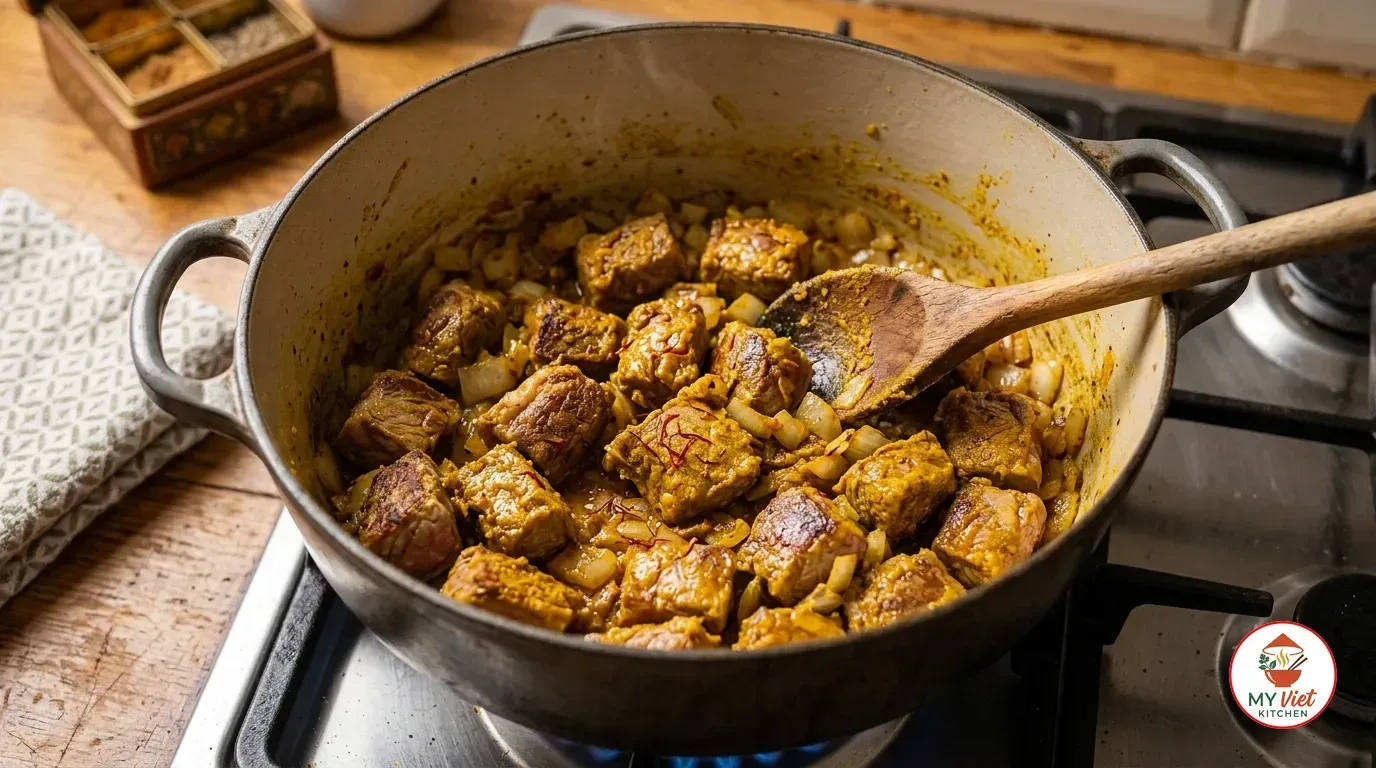
1 Heat the olive oil and butter together in a large, heavy-bottomed pot over medium-high heat. When the butter melts and begins to foam, add the lamb cubes in a single layer. Sear the meat for about 4 minutes, turning the pieces until they develop a golden-brown crust on all sides. This browning step triggers the Maillard reaction, which creates hundreds of flavor compounds that form the savory backbone of your harira recipe.
Add the diced onion to the pot and stir it into the lamb drippings. Cook for 5 minutes until the onion turns soft and translucent. Then add the ground ginger, cinnamon, turmeric, black pepper, and bloomed saffron. Stir constantly for about 1 minute until the spices become fragrant and coat the meat and onions evenly. Toasting the spices in fat activates their essential oils and deepens their flavor significantly.
Step 2: Add Tomatoes, Lentils, and Liquid
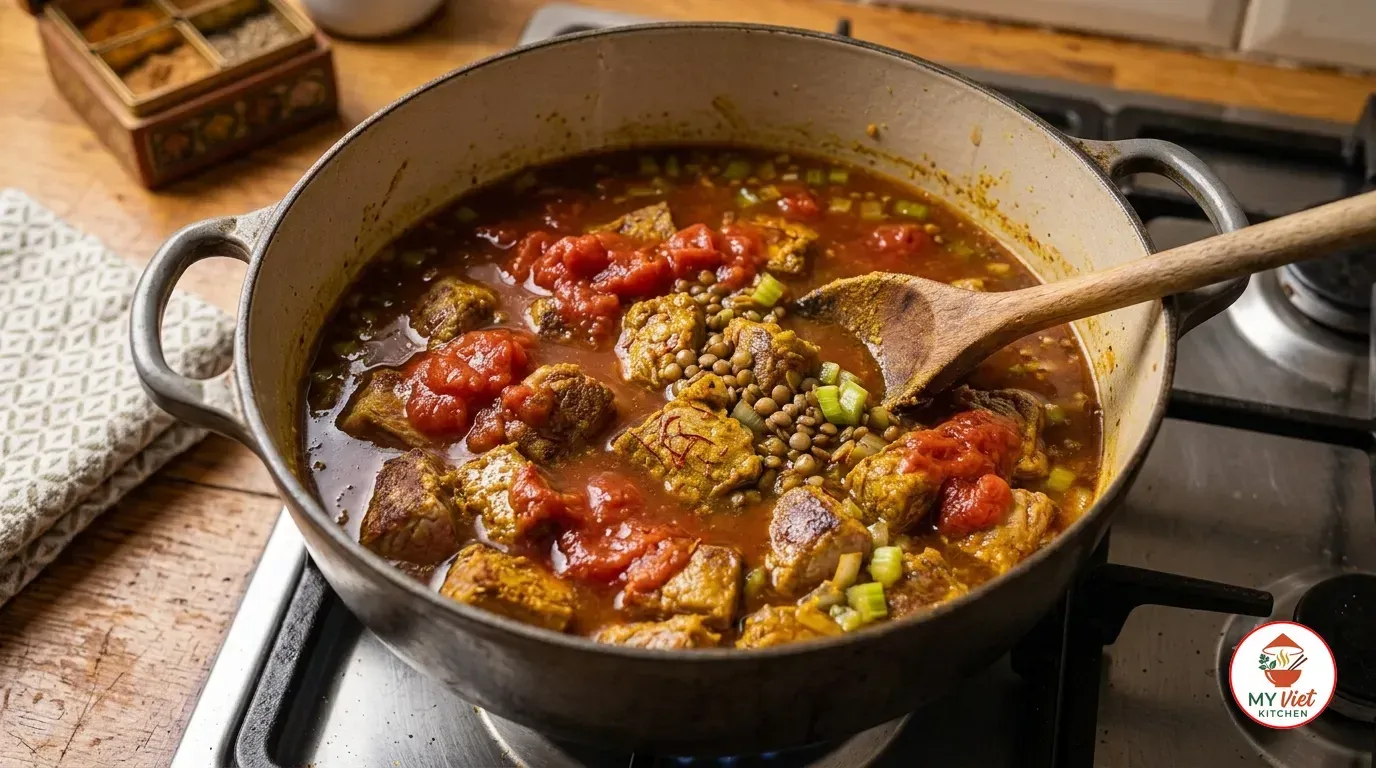
2 Add the crushed tomatoes and tomato paste to the pot. Stir well and cook for 3 minutes, allowing the tomatoes to break down and concentrate slightly. The tomato paste adds depth and a subtle sweetness that balances the warm spices. Pour in the 8 cups of water or beef broth, then add the rinsed lentils and diced celery.
Bring the pot to a boil over high heat, then immediately reduce the heat to medium-low. Cover the pot partially, leaving a small gap for steam to escape, and simmer for 40 minutes. During this time, the lentils will soften and start to break apart, the meat will become tender, and the broth will develop a rich, complex flavor. Stir the soup occasionally to prevent the lentils from sticking to the bottom.
Step 3: Add Chickpeas and Noodles
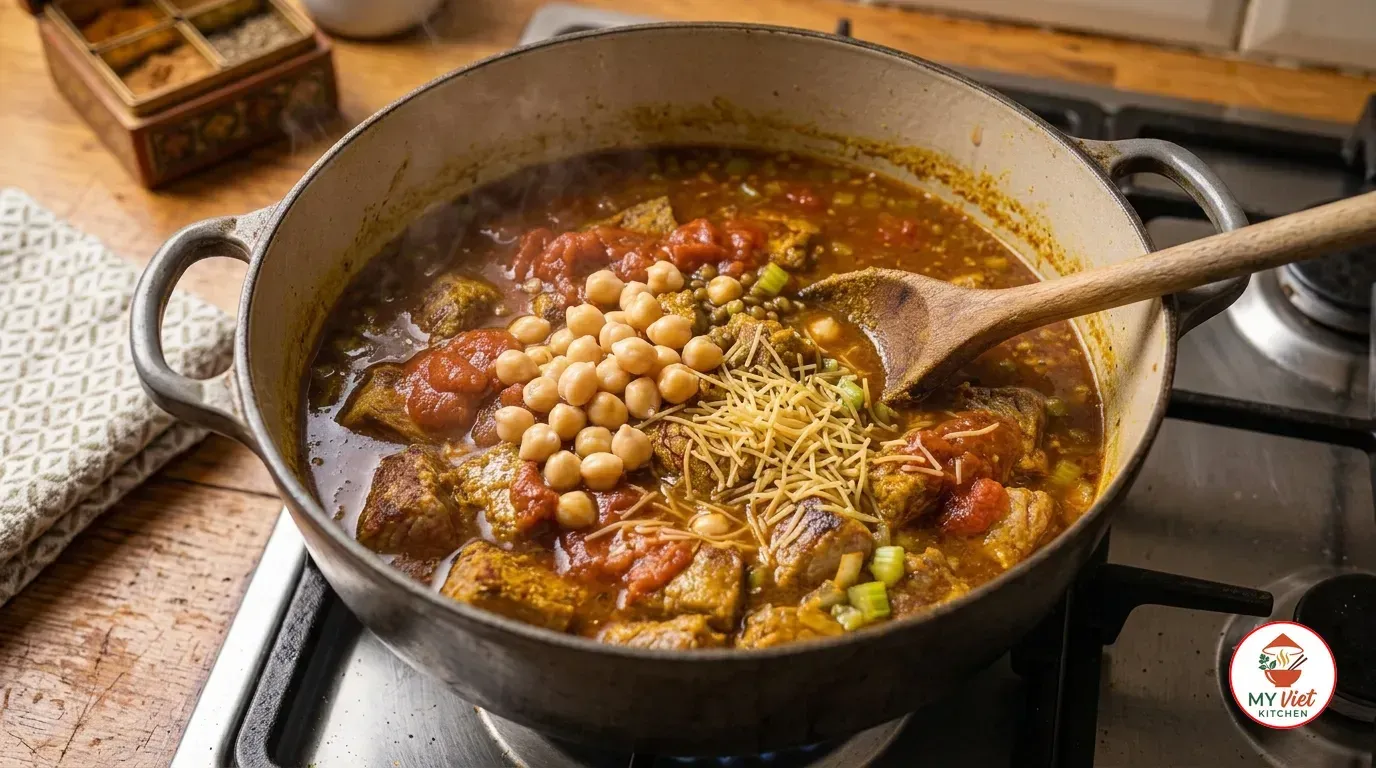
3 After 40 minutes, add the drained chickpeas and broken vermicelli noodles to the simmering soup. The chickpeas provide a pleasant textural contrast to the now-soft lentils. The vermicelli noodles add body and give the soup a slightly more substantial character. Stir gently and let everything simmer together for another 10 minutes until the noodles cook through completely.
Check the meat and lentils for tenderness at this stage. The lamb should fall apart easily when pressed with a spoon, and the lentils should be very soft with some pieces dissolving into the broth. If the meat still feels firm, continue simmering for an additional 10 minutes before proceeding to the next step.
Step 4: Thicken with the Flour Slurry
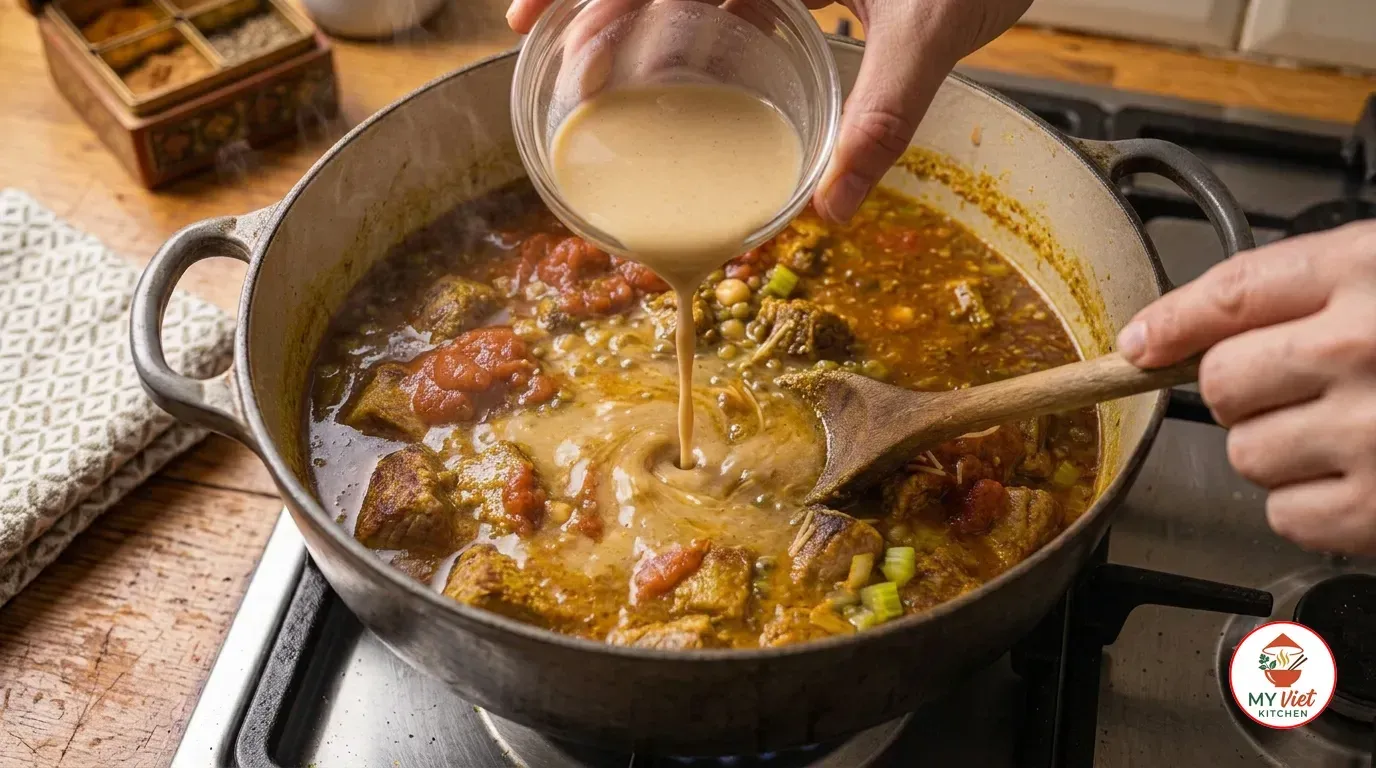
4 In a small bowl, whisk 3 tablespoons of all-purpose flour with half a cup of cold water until the mixture is completely smooth with no lumps at all. This step is critical. If lumps remain in the slurry, they will form unpleasant dough balls in your harira rather than blending smoothly into the broth.
Pour the flour slurry slowly into the simmering soup in a thin, steady stream while stirring the pot constantly with your other hand. Continue stirring for a full 5 minutes after adding the slurry. The harira will transform from a thinner broth into a velvety, almost creamy consistency. This thickening step is what distinguishes harira from ordinary lentil soup and gives it the luxurious mouthfeel that Moroccans love.
Step 5: Finish with Fresh Herbs and Lemon
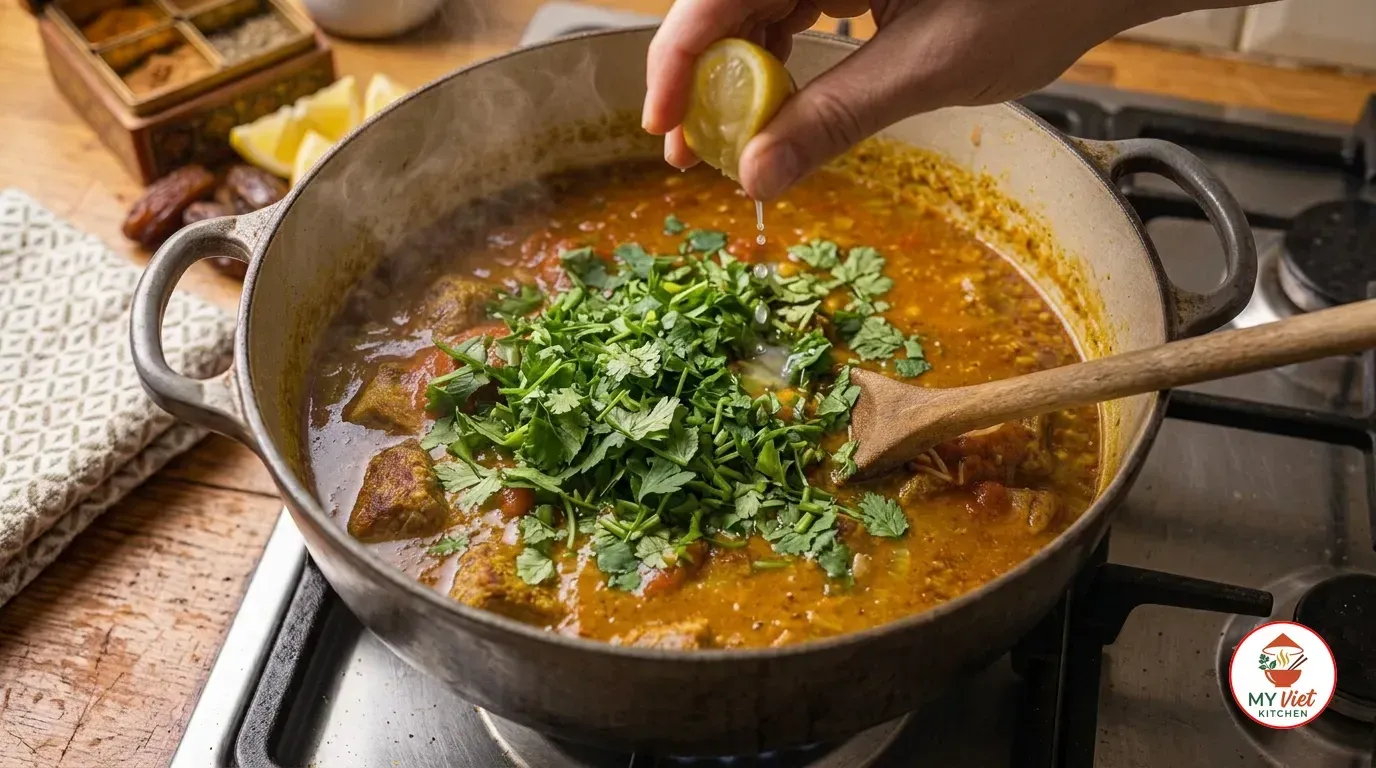
5 Remove the pot from the heat and stir in the chopped cilantro and parsley. Add the fresh lemon juice and stir one final time. The herbs and lemon juice brighten the entire soup instantly, cutting through the richness of the meat and the warmth of the spices. Taste the harira and adjust the salt and pepper to your preference.
Ladle the harira into deep bowls and serve immediately while steaming hot. Place lemon wedges and dates on the side of each bowl. In Morocco, diners squeeze extra lemon over their harira at the table and eat dates between spoonfuls. The sweetness of the dates paired with the savory, spiced soup creates a beautiful contrast that completes the experience of this beloved harira recipe.
Expert Tips for Perfect Harira
Toast Your Spices in Fat First
Many cooks add ground spices directly to the liquid, but this misses an opportunity to unlock their full potential. When you toast ginger, cinnamon, turmeric, and saffron in hot butter and olive oil, the heat activates volatile flavor compounds that dissolve into the fat. These fat-soluble flavors then distribute evenly throughout the soup as it simmers. Skipping this step produces a harira that tastes flat compared to one where the spices were properly bloomed.
Use Fresh Tomatoes When Possible
Fresh tomatoes give harira a brighter, more vibrant flavor than canned varieties. To peel them quickly, score a shallow X on the bottom of each tomato and blanch them in boiling water for 30 seconds. The skins will slip right off. Then crush them by hand directly into the pot, which creates an uneven texture that adds character to the finished soup. If fresh tomatoes are out of season, use a can of whole San Marzano tomatoes as the next best option.
Add Herbs at the Very End
Cilantro and parsley lose their bright flavor and vivid green color when cooked for more than a few minutes. Always add them after removing the pot from the heat. The residual warmth of the soup will gently wilt the herbs without destroying their essential oils. This technique keeps the harira tasting fresh and vibrant rather than dull and overcooked. Reserve a small handful of herbs to sprinkle on top of each bowl as a garnish for extra color.
Harira Across Morocco: Regional Variations
While every Moroccan family considers their harira recipe the definitive version, regional differences create distinct styles across the country. The core ingredients remain the same, but proportions, additional components, and techniques vary from city to city. Here is a comparison of the most notable regional styles.
| Regional Style | Key Differences |
|---|---|
| Fez harira | Uses more tomatoes and a heavier flour thickening, resulting in a richer, denser soup with a deep red color |
| Marrakech harira | Lighter and more broth-forward, often includes rice instead of noodles and emphasizes saffron heavily |
| Northern Morocco | Adds more vegetables including carrots and potatoes, creating a chunkier, stew-like version closer to Spanish influence |
| Algerian harira | Uses coriander seeds and caraway instead of cinnamon, with a stronger tomato flavor and sometimes includes broken wheat |
Serving Suggestions
Moroccan tradition dictates specific accompaniments for harira that elevate the experience from a simple soup course into a complete and satisfying meal. The sides are chosen carefully to complement the warm, savory, and slightly acidic character of the soup. Following these serving traditions brings authenticity to your table.
The Perfect Accompaniments:
- Dates: Eating sweet dates between spoonfuls of savory harira is a Ramadan tradition that provides quick energy after a day of fasting and creates a beautiful sweet-savory contrast
- Khobz (Moroccan bread): This dense, crusty round bread is perfect for tearing and dipping into the thick broth, and no Moroccan meal is complete without it
- Chebakia: These flower-shaped sesame cookies coated in honey are the classic sweet companion to harira during Ramadan
- Hard-boiled eggs: Sprinkled with cumin and salt, these add extra protein and substance alongside the soup
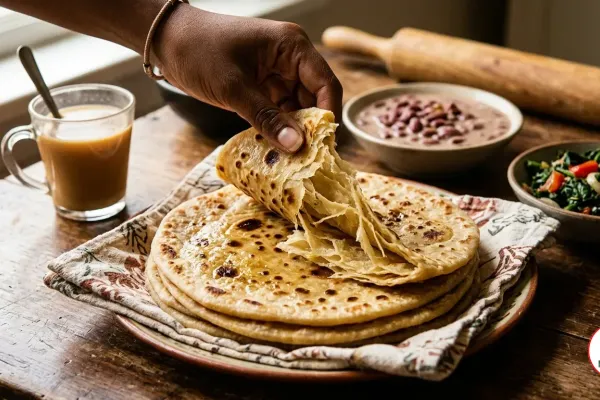
- Msemen flatbread: This flaky, layered Moroccan flatbread soaks up the broth beautifully and adds a buttery richness
Beverage Pairings:
- Moroccan mint tea: The traditional pairing, sweet mint tea served after the soup cleanses the palate and aids digestion
- Avocado smoothie: A popular Ramadan drink in Morocco, blended with milk and a touch of sugar for a creamy, refreshing complement
- Fresh orange juice: Squeezed from Moroccan oranges, this bright juice provides vitamin C and pairs naturally with the warm spices in harira
Storage and Reheating
Refrigerator: Store leftover harira in an airtight container for up to 4 days. The soup thickens considerably as it cools because of the flour and starch from the lentils. Many cooks actually prefer next-day harira because the flavors meld and deepen overnight, creating an even richer taste.
Freezer: Harira freezes well for up to 3 months. Divide the cooled soup into individual portions using freezer-safe containers or heavy-duty freezer bags. Leave an inch of headspace because the liquid expands as it freezes. Thaw overnight in the refrigerator before reheating.
Reheating: Warm harira gently on the stovetop over medium-low heat, stirring occasionally. Add a splash of water or broth to loosen the thickened texture back to its original consistency. Stir in a fresh squeeze of lemon juice and a sprinkle of chopped cilantro after reheating to restore the brightness that fades during storage. Avoid using the microwave if possible, because it heats unevenly and can scorch the thick broth.
Common Mistakes to Avoid
1. Adding the Flour Directly Without Making a Slurry
Dumping dry flour straight into the hot soup creates lumps that are nearly impossible to dissolve. Always whisk the flour with cold water first until the mixture is perfectly smooth. Then pour the slurry in a thin stream while stirring the soup constantly. This technique ensures the flour distributes evenly and thickens the broth into a smooth, velvety consistency without any unpleasant clumps.
2. Skipping the Meat-Searing Step
Some recipes suggest adding raw meat directly to the liquid, but this approach sacrifices an enormous amount of flavor. Searing the lamb first creates a caramelized crust through the Maillard reaction. Those browned bits on the bottom of the pot become fond, which dissolves into the broth as the soup simmers and adds deep, savory complexity. Take the extra 5 minutes to brown the meat properly, and your harira will taste significantly better.
3. Overcooking the Fresh Herbs
Cilantro and parsley become bitter and lose their vibrant green color when cooked for too long. Add them only after you remove the pot from the heat. The residual warmth of the soup is enough to wilt the herbs and release their aromatic oils without destroying the delicate flavors. If you stir the herbs into boiling soup, they will turn army green and taste muddy rather than fresh.
Frequently Asked Questions
Can I use beef instead of lamb in this harira recipe?
Absolutely. Beef chuck works as an excellent substitute for lamb in harira. Cut the beef into the same small cubes and follow the exact same method. Beef takes slightly longer to become tender, so add an extra 10 to 15 minutes of simmering time. The flavor profile will be slightly different because lamb has a distinctive richness, but beef produces a deeply satisfying harira that many Moroccan families actually prefer.
Why is harira served during Ramadan?
Harira has served as the traditional Ramadan fast-breaking soup in Morocco for centuries. After a full day without food or water, the body needs gentle nourishment that provides energy without overwhelming the stomach. Harira delivers exactly that. Lentils and chickpeas supply slow-release carbohydrates and protein. Meanwhile, the warm broth rehydrates the body gently. Spices like ginger and turmeric aid digestion naturally. Eating harira at iftar has become so deeply embedded in Moroccan culture that Ramadan without it is unthinkable.
Do I need saffron for authentic harira?
Saffron adds a distinctive golden color and a subtle floral, earthy flavor that no other spice replicates. However, it is expensive, and you can still make a delicious harira without it. If you omit saffron, increase the turmeric to one and a half teaspoons to compensate for the lost color. The flavor will differ slightly, but the soup will still taste excellent. If budget allows, even a small pinch of saffron makes a noticeable difference in the final result.
How do I make harira thicker or thinner?
Controlling the consistency of harira is simple. For a thicker soup, increase the flour slurry to 4 tablespoons of flour whisked with three-quarters cup of water. For a thinner version, reduce the flour to 2 tablespoons or skip the slurry altogether and let the naturally dissolving lentils provide the only thickening. You can also add more broth or water at any point during cooking to thin out the soup if it becomes too thick as the lentils break down.
Variations and Adaptations
Vegetarian Harira:
Omit the lamb entirely and use vegetable broth instead of water. Double the chickpeas to one full can plus half a cup of dried chickpeas soaked overnight. Add extra vegetables such as diced carrots, zucchini, and celery for more substance. The lentils and chickpeas provide ample protein, and the spice blend creates such depth that you will not miss the meat. This vegetarian harira recipe is common in Moroccan households during certain days of Ramadan.
Slow Cooker Harira:
Sear the meat and bloom the spices on the stovetop first, then transfer everything to a slow cooker. Add the tomatoes, lentils, chickpeas, and liquid. Cook on low for 6 to 8 hours or on high for 3 to 4 hours. In the last 30 minutes, stir in the flour slurry and noodles. Add the fresh herbs and lemon juice just before serving. This slow cooker harira recipe produces incredibly tender results because the long, gentle cooking melts the meat completely into the broth.
Chicken Harira:
Replace the lamb with bone-in chicken thighs for a lighter version. Sear the chicken thighs skin-side down until golden, then proceed with the recipe as written. Remove the chicken after 30 minutes of simmering, shred the meat off the bones, and return the shredded chicken to the pot. This chicken harira recipe cooks faster and produces a lighter broth that some people prefer during warmer months.
The Cultural Significance of Harira
Harira is woven into the fabric of Moroccan identity in ways that extend far beyond the kitchen. The soup connects generations because grandmothers teach daughters and granddaughters the family recipe, adjusting spice ratios and techniques through years of shared cooking. Every family guards their specific proportions closely, and friendly debates about whose harira reigns supreme are a beloved part of Moroccan social life.
During Ramadan, the preparation of harira becomes a communal act that structures the entire day. Markets overflow with fresh ingredients each afternoon as families shop for that evening’s batch. The sound of simmering pots echoes through apartment buildings and narrow medina streets. When the muezzin calls the maghrib prayer at sunset, millions of Moroccans sit down simultaneously to that first spoonful of harira. This shared moment creates a sense of unity and tradition that few other dishes in the world can match.
Harira Beyond Borders
Beyond Morocco, harira has spread throughout the Maghreb region and into the Moroccan diaspora communities of France, Belgium, the Netherlands, and Canada. Each community adapts the recipe slightly to local ingredients and tastes while preserving the essential character. The soup has also gained popularity among food enthusiasts worldwide who discover it through travel, restaurants, or food blogs. Regardless of where it is made, harira carries with it the warmth, generosity, and deep culinary wisdom of Moroccan cooking.
Conclusion
This harira recipe gives you everything you need to recreate one of Morocco’s most treasured dishes at home. The technique is straightforward once you understand the key steps: sear the meat for deep flavor, bloom the spices in fat, simmer the lentils until tender, thicken with a smooth flour slurry, and finish with bright herbs and lemon. Each element builds on the last, and together they produce a soup with remarkable depth and complexity. Even first-time cooks can achieve excellent results by following these instructions carefully.
Whether you prepare harira for Ramadan, as a warming winter dinner, or simply because you love Moroccan cuisine, this soup rewards your effort with flavor that improves with every bowl. The leftovers taste even better the next day, making it an ideal meal to cook in advance. Explore more of our African recipes collection for additional dishes that bring the flavors of the continent to your kitchen.