Jamon iberico is the crown jewel of Spanish gastronomy. This legendary cured ham comes from Iberian pigs raised on the sun-drenched pastures of western Spain. Each leg is dry-cured for years, developing a flavor so rich and complex that a single paper-thin slice can stop you mid-conversation. Whether you have purchased your first leg or received beautifully sliced portions as a gift, this guide will show you exactly how to serve, slice, and savor jamon iberico the way the Spanish do. No cooking is involved. Instead, this is about honoring one of the world’s greatest cured meats with the respect it deserves.
Prep Time: 15 minutes | Cook Time: None (cured, not cooked) | Servings: 8
Difficulty: Intermediate | Calories: ~230 per serving
What Makes Jamon Iberico Special?
The story of jamon iberico begins with the pig itself. The Iberian breed, also called the pata negra or “black hoof,” is unlike any commercial pig in the world. These animals carry a genetic trait that allows them to store fat within their muscle fibers, much like wagyu cattle. This intramuscular marbling is the foundation of everything that makes this ham extraordinary. When the pigs roam freely through the dehesa, the ancient oak forests of southwestern Spain, they feast on wild grasses, herbs, and most importantly, acorns. That acorn diet transforms their fat into oleic acid, the same heart-healthy monounsaturated fat found in olive oil.
After the pigs are processed, each hind leg begins a curing journey that lasts between 24 and 48 months. The legs are packed in sea salt, then hung in drying cellars called secaderos. Over the months, the salt slowly penetrates the meat while moisture evaporates. Natural enzymes break down proteins into amino acids, creating the deep umami flavor that defines the finished ham. Temperature and humidity fluctuate with the seasons, and the master curer monitors every leg by smell and touch. There are no shortcuts in this process. Time and nature do most of the work.
The result is a ham with a flavor profile that no other cured meat can match. First, you taste sweetness. Then come waves of nuttiness, olive, and dried fruit. The fat melts on your tongue at body temperature, coating your palate with a silky richness. Finally, a long, savory finish lingers for minutes. World-renowned chefs and food writers regularly call jamon iberico the finest cured meat on Earth. Once you taste the real thing, you will understand why.

Choosing the Right Grade of Jamon Iberico
Not all jamon iberico is created equal. Spanish law classifies this ham into strict grades based on the pig’s diet and breed purity. Understanding these grades helps you make an informed purchase. Here are the three main categories, ranked from highest to lowest quality.
- Jamon Iberico de Bellota (acorn-fed, black label): This is the pinnacle. The pigs roam free in the dehesa during the montanera, the acorn season from October to March. Each pig eats up to 22 pounds of acorns per day during this period. The acorn diet produces fat rich in oleic acid, giving the ham its silky texture and nutty sweetness. Curing lasts 36 to 48 months. Bellota ham is the most expensive, often exceeding $100 per pound for hand-sliced portions.
- Jamon Iberico de Cebo de Campo (pasture-raised, green label): These pigs enjoy outdoor access and eat a mix of natural forage and supplemental grain feed. They do not consume enough acorns to qualify as bellota grade. However, the outdoor lifestyle and mixed diet still produce excellent ham. Curing time typically ranges from 24 to 36 months. This grade offers a very good balance between quality and price, making it a smart choice for everyday enjoyment.
- Jamon Iberico de Cebo (grain-fed, white label): Cebo pigs are raised primarily indoors and fed a grain-based diet. The meat has less intramuscular fat and a milder flavor compared to bellota and cebo de campo. Curing still takes at least 24 months. Although this is the entry-level grade, it remains a fine product that far surpasses standard serrano ham. It works well for cooking applications and casual tapas boards.
What You Need for Serving Jamon Iberico
For Slicing a Whole Leg:
- 1 whole or half leg of jamon iberico (bone-in)
- 1 jamonero (ham holder/stand)
- 1 long flexible slicing knife (cuchillo jamonero, 10 to 12 inches)
- 1 short boning knife for trimming
- Clean cotton cloth or plastic wrap for covering
For the Accompaniment Board:
- Crusty bread or pan de cristal (thin, airy Spanish bread)
- Aged Manchego cheese, cut into thin wedges
- Marcona almonds, lightly toasted and salted
- Manzanilla green olives
- Quince paste (membrillo), sliced into thin rectangles
For Pan con Tomate:
- 2 ripe tomatoes, halved
- 1 clove garlic, peeled
- Extra virgin olive oil for drizzling
- Flaky sea salt
- Sliced rustic bread, toasted
Pro tip: The slicing knife matters enormously. A proper cuchillo jamonero has a long, narrow, flexible blade that bends slightly as you draw it across the ham. This flexibility lets you follow the contours of the leg and produce uniformly thin slices. A stiff kitchen knife forces you to hack rather than glide, producing thick, ragged pieces that do not melt on the tongue. Invest in a good jamonero knife. It will transform your slicing from frustrating to meditative.
Step-by-Step: How to Slice and Serve Jamon Iberico
Step 1: Secure the Ham in the Jamonero
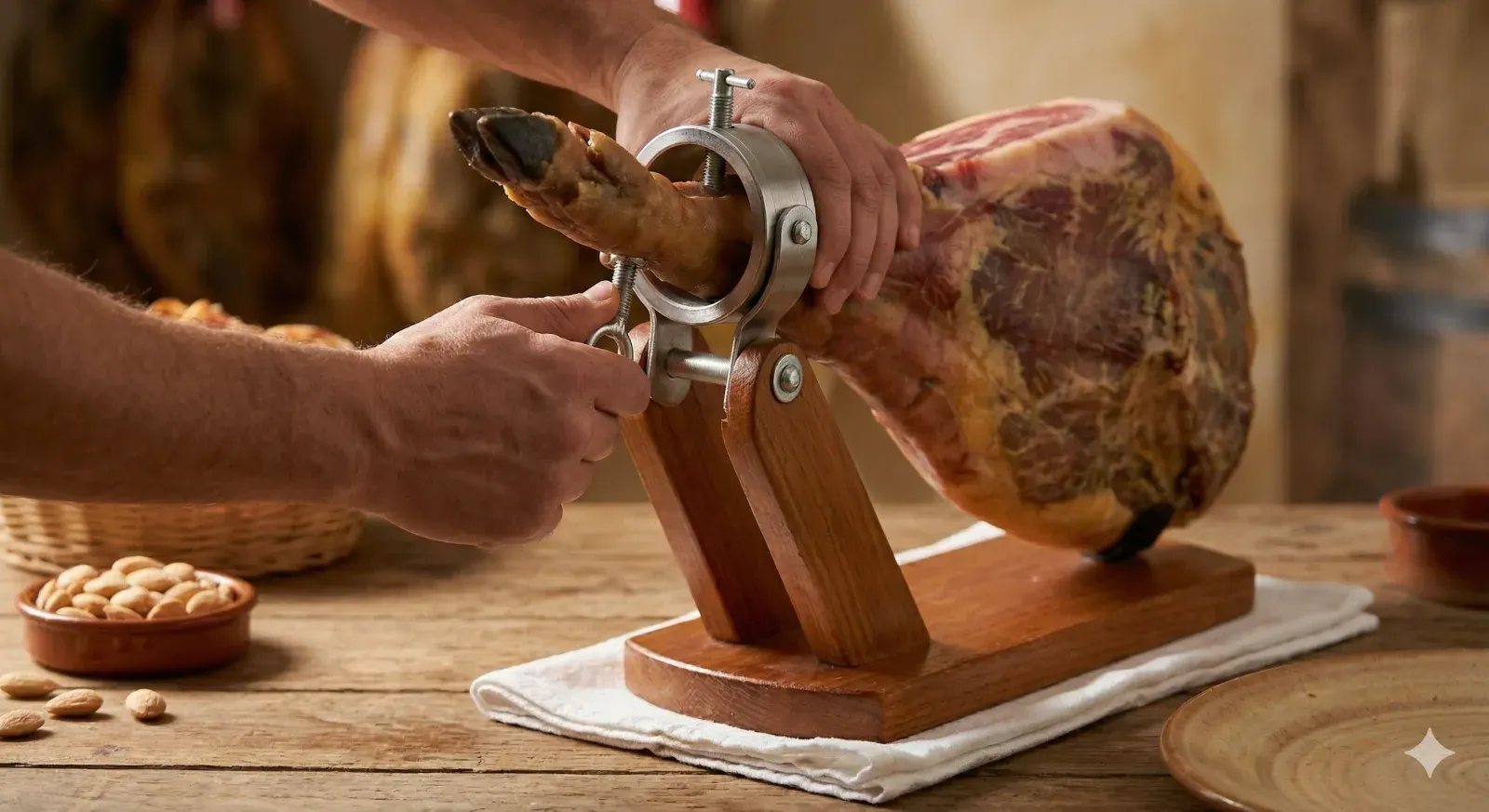
1 Start by clamping the jamon iberico leg firmly into the jamonero stand. Position it with the hoof pointing upward and the meatiest side, known as the maza, facing up. Tighten the clamp until the leg holds completely still. A wobbling ham is both dangerous and frustrating to slice.
Place the jamonero on a sturdy table or countertop. Some stands come with non-slip rubber feet, which helps considerably. If yours does not, place a damp kitchen towel beneath the base for stability. The ham should sit at a comfortable height where you can draw the knife toward you without straining. Proper positioning makes the entire process safer and more enjoyable.
Step 2: Trim the Outer Rind and Yellow Fat
2 Using the short boning knife, carefully remove the outer skin and dried yellow fat from the area you plan to slice. Work in small sections, clearing only enough surface for one sitting. Exposing too much meat at once allows air to dry it out, which dulls the flavor and toughens the texture.
Cut away the rind in thin strips, angling the blade away from your body. Beneath the yellow exterior fat, you will find a layer of white, fresh-looking fat. Keep this layer intact. It is rich in oleic acid and carries tremendous flavor. Set aside the trimmed rind and yellow fat. You will use these pieces later to cover the exposed surface and protect the ham between servings.
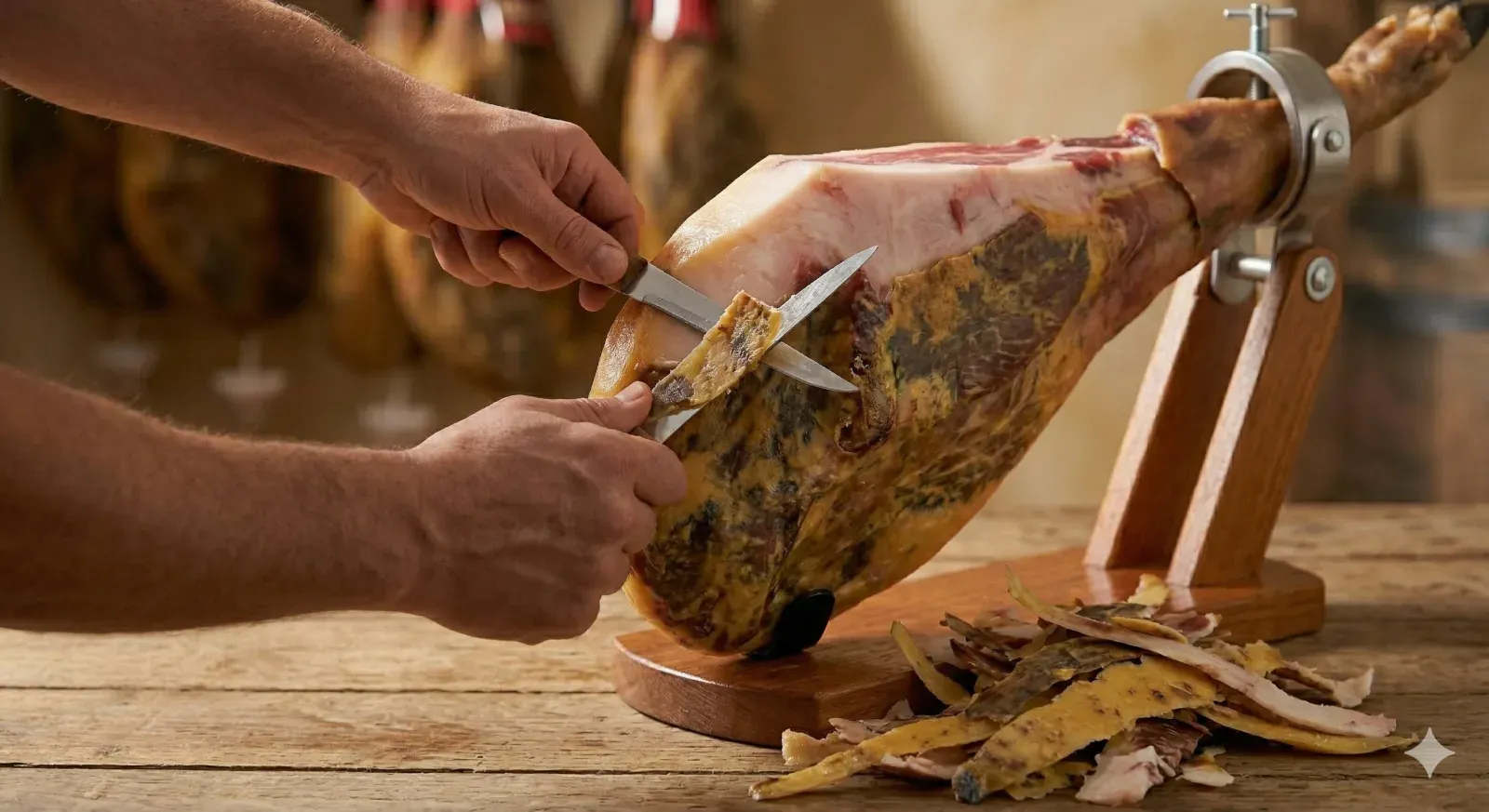
Step 3: Slice Paper-Thin Pieces Along the Grain
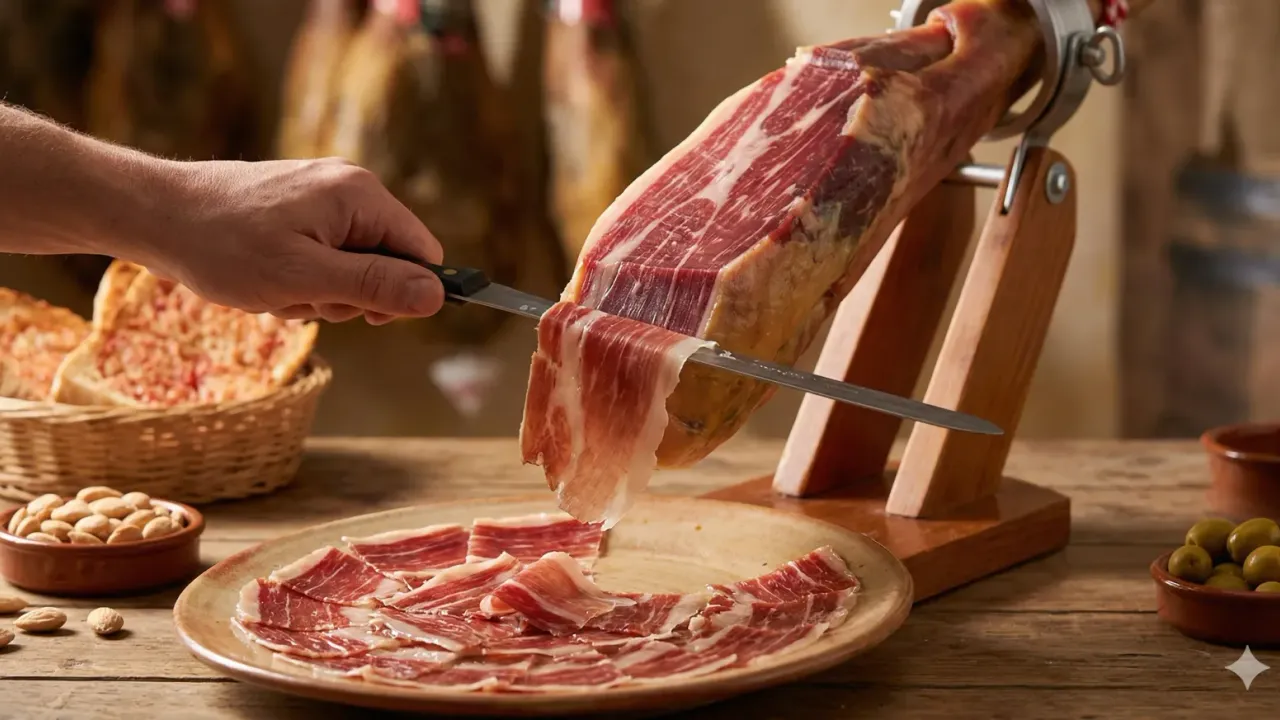
3 Now switch to the long, flexible cuchillo jamonero. Hold the blade nearly flat against the surface of the ham. Begin at the center of the cleared area and draw the knife toward you in a single, fluid stroke. The goal is to produce slices so thin they are nearly translucent. Each piece should be about 2 to 3 inches long and narrow enough to eat in one bite.
Let the weight and flexibility of the knife do the work. Pressing too hard produces thick, uneven slices. As you slice, you will notice the beautiful marbling of white fat running through the deep red meat. This intramuscular fat is the hallmark of quality jamon iberico. Work methodically from the center outward, keeping each cut level. When you reach the bone, use the shorter knife to cut small irregular pieces. These scraps are perfect for cooking or snacking.
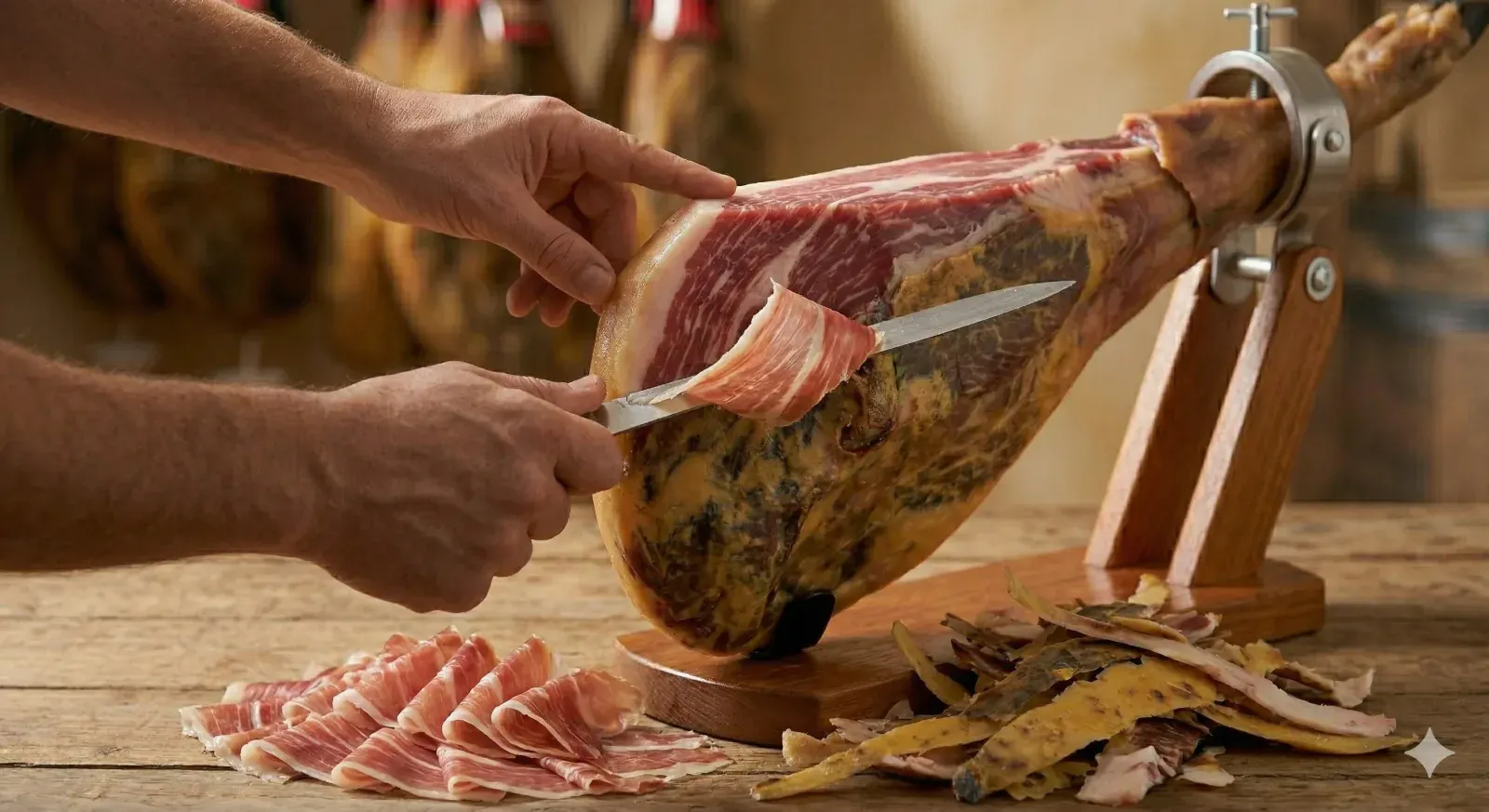
Step 4: Arrange the Slices on a Warm Plate
4 Transfer each slice immediately to a plate that has been gently warmed. A brief moment under warm running water or a few seconds in a low oven is sufficient. The subtle warmth causes the intramuscular fat to begin softening, which releases the ham’s aroma and makes the texture even silkier on the palate.
Lay the slices flat in a single layer. Never stack or fold them, because the delicate pieces will stick together and tear. Allow the arranged slices to rest at room temperature for at least 5 minutes before eating. During this time, the fat continues to soften and the flavors open up. Rushing this step means missing half of what makes jamon iberico extraordinary.
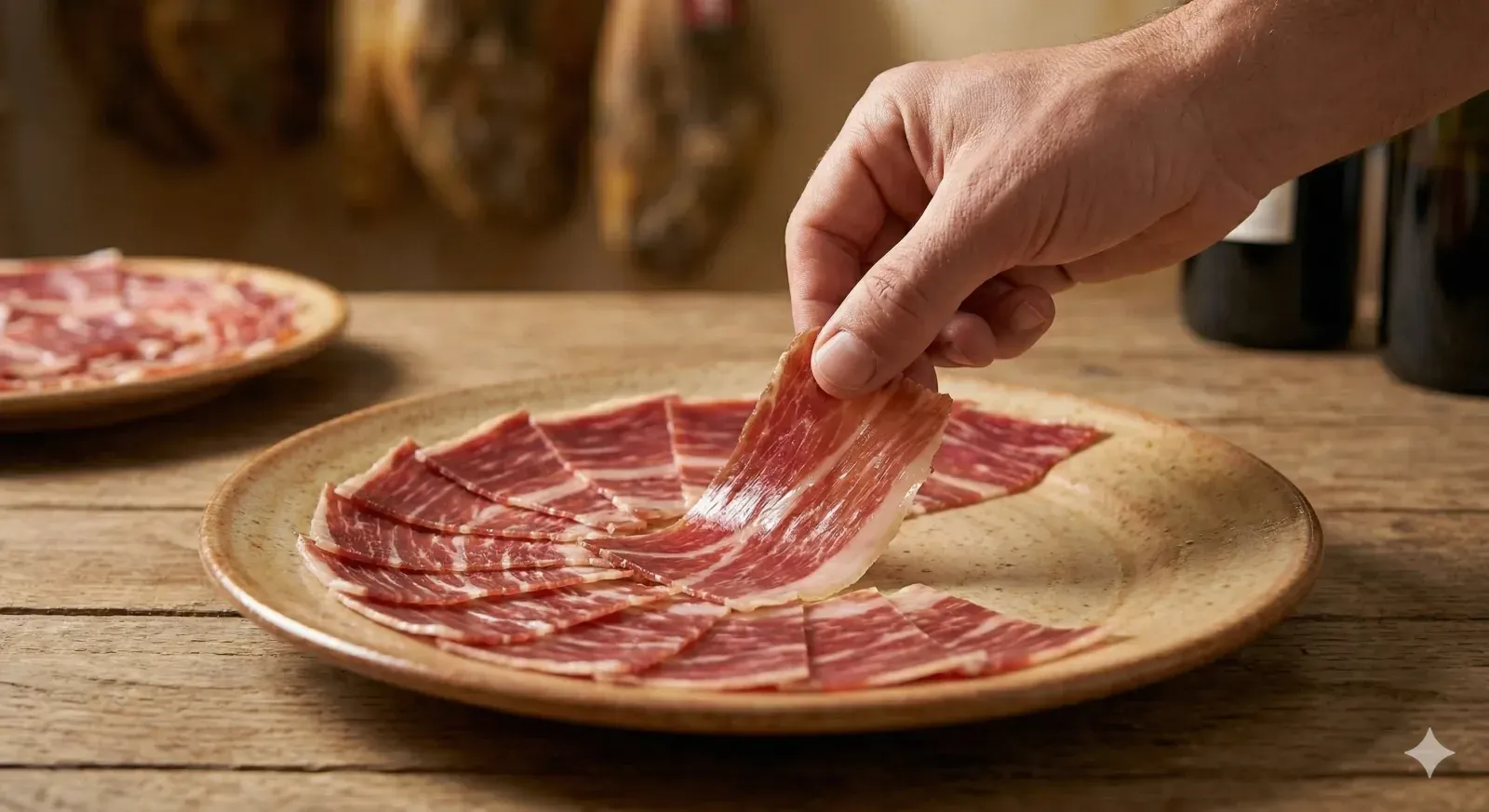
Step 5: Serve with Traditional Accompaniments
5 Present the sliced jamon iberico alongside a curated board of Spanish accompaniments. Include aged Manchego cheese, toasted Marcona almonds, green olives, and thin slices of quince paste. For pan con tomate, rub a halved ripe tomato across toasted bread, then rub with a garlic clove and drizzle with olive oil. Season with a pinch of flaky sea salt.
Encourage your guests to taste the ham on its own first. Place a single slice directly on the tongue and let the fat melt slowly. Notice the sweetness, the nuttiness, and the long savory finish. After appreciating the pure flavor, start combining it with the accompaniments. A bite of ham followed by a sliver of Manchego is a classic combination. Likewise, laying a slice over warm pan con tomate creates one of Spain’s most iconic bites.
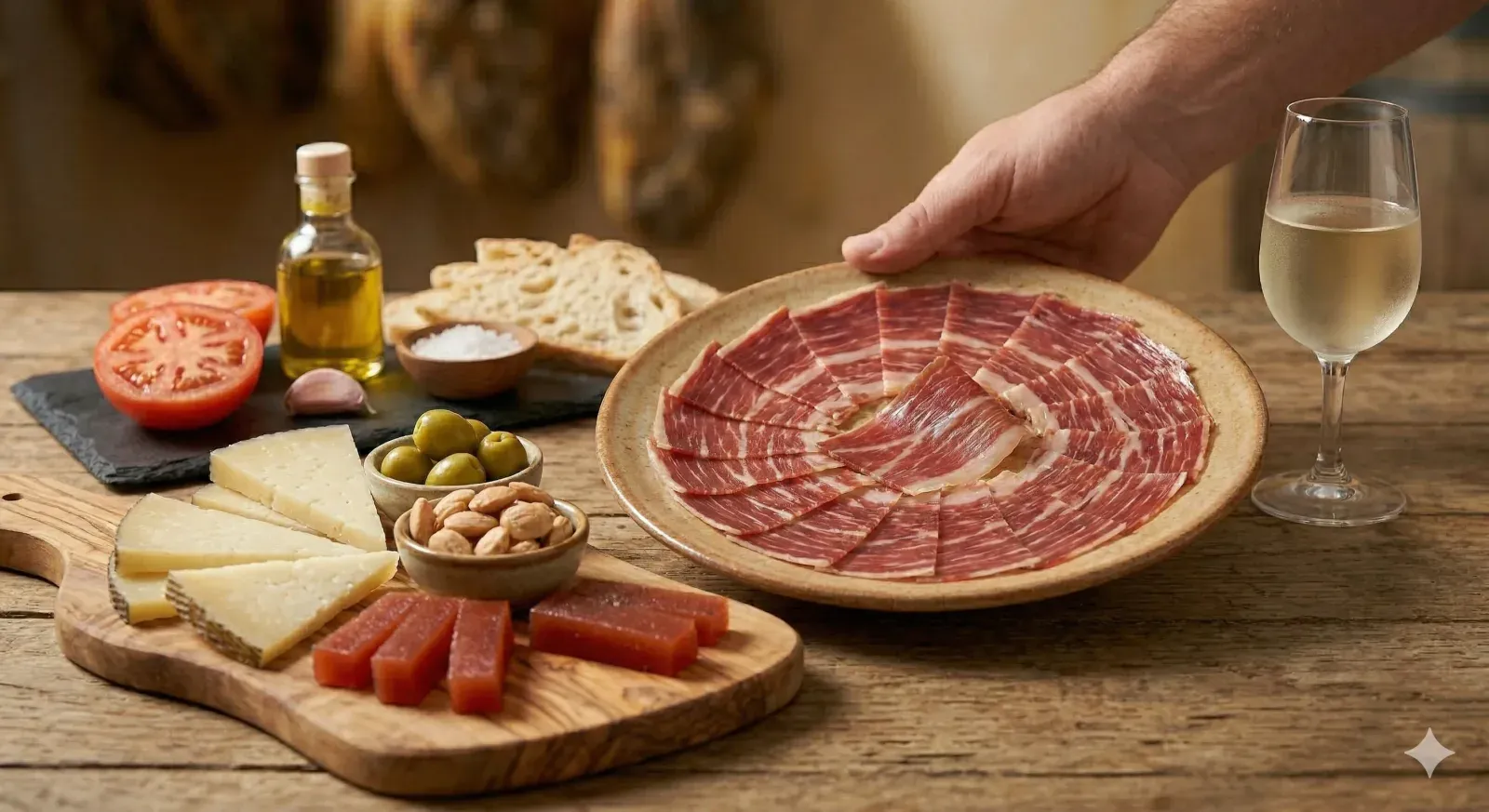
Expert Tips for Enjoying Jamon Iberico
Temperature Is Everything
Never serve jamon iberico straight from the refrigerator. Cold temperatures solidify the intramuscular fat, which locks away the flavor compounds and turns the texture waxy. Always bring sliced ham to room temperature at least 20 to 30 minutes before serving. The fat should glisten and feel soft to the touch. At this point, the aroma alone will tell you the ham is ready.
Thinner Slices Mean Better Flavor
Thick slices chew like regular deli meat and miss the point entirely. When jamon iberico is sliced paper-thin, the fat melts instantly on your tongue. This rapid melting releases all the volatile flavor compounds at once, creating that signature burst of nuttiness and sweetness. Master cortadores in Spain spend years perfecting their slicing technique because thickness changes everything about the eating experience.
Eat the Fat Intentionally
Trimming visible fat from jamon iberico is a mistake many newcomers make. The white intramuscular fat is where most of the flavor lives. In bellota-grade ham, this fat is rich in oleic acid and tastes like liquid hazelnuts. Spanish tradition holds that the fat is the soul of the ham. Eat every bit of it. The experience is incomplete without it.
Jamon Iberico vs. Other Spanish and European Cured Hams
Understanding how jamon iberico compares to other cured hams helps you appreciate what sets it apart. Here is a side-by-side look at the most notable varieties.
| Ham Variety | Origin | Pig Breed | Curing Time | Flavor Profile |
|---|---|---|---|---|
| Jamon Iberico de Bellota | Spain (Extremadura, Huelva, Salamanca) | Iberian pig (acorn-fed) | 36 to 48 months | Rich, nutty, sweet, with notes of olive and hazelnut |
| Jamon Serrano | Spain (nationwide) | White pig breeds | 12 to 18 months | Lean, salty, mild pork flavor |
| Prosciutto di Parma | Italy (Parma region) | Large White or Landrace | 12 to 24 months | Delicate, sweet, buttery |
| Prosciutto di San Daniele | Italy (Friuli region) | Large White or Landrace | 13 to 24 months | Slightly sweeter than Parma, more complex |
| Bayonne Ham | France (Basque Country) | Various French breeds | 9 to 12 months | Mild, slightly smoky, gentle salt |
Serving Suggestions and Beverage Pairings
Great jamon iberico deserves thoughtful companions. The right pairings enhance the ham without overwhelming its delicate flavors. Keep things simple and let the star ingredient shine.
Food Pairings:
- Manchego cheese: Aged Manchego from La Mancha is the classic partner. Its firm, nutty character mirrors the ham’s own nuttiness while adding a pleasant sharpness. Alternate bites of ham and cheese for a perfect balance.
- Pan con tomate: This simple Catalan preparation of tomato-rubbed toast provides acidity and texture. The juicy tomato cuts through the richness of the ham, and the crispy bread adds crunch. Together, they create one of Spain’s most beloved combinations.
- Marcona almonds: These flat, round Spanish almonds are fried in olive oil and lightly salted. Their buttery crunch complements the silky ham beautifully. They also share a similar nutty flavor profile, creating natural harmony on the palate.
- Quince paste (membrillo): A thin slice of this sweet, fragrant paste alongside the ham creates a stunning contrast. The fruit sweetness highlights the savory depth of the jamon iberico. This pairing is especially popular in Extremadura.
Beverage Pairings:
- Fino or Manzanilla sherry: This is the definitive pairing. The bone-dry, saline character of fino sherry from Jerez is a perfect match for the rich, nutty ham. Serve it ice-cold in a small copita glass. No wine pairing in the world works better with jamon iberico.
- Cava (Spanish sparkling wine): The acidity and bubbles in a brut cava cleanse the palate between bites. The effervescence lifts the richness of the fat and refreshes your mouth. Choose a cava from Penedes for the best results.
- Tempranillo (Rioja Crianza): A young, fruit-forward Rioja with moderate tannins pairs gracefully with the ham. The wine’s red berry notes and subtle oak aging complement the savory complexity. Avoid heavy, tannic reds that would overpower the delicate flavors.
- Cold beer (cana): Sometimes simplicity wins. A small glass of cold lager is the everyday pairing across Spain. The carbonation and chill cut through the fat, making each bite of ham taste as fresh as the first.
How to Store Jamon Iberico
Whole leg at room temperature: Store an uncut or partially carved leg in a cool, dry room between 59 and 68 degrees Fahrenheit. Avoid direct sunlight and areas near heat sources. After each slicing session, cover the exposed meat surface with the reserved trimmed fat or a clean cotton cloth. This prevents the surface from drying and oxidizing. A whole leg stored this way can last for several months.
Pre-sliced vacuum-sealed packages: Keep these in the refrigerator until ready to use. Before serving, open the package and lay the slices on a plate. Allow them to reach room temperature for 20 to 30 minutes. The fat needs time to soften for proper flavor release. Once opened, consume the slices within 2 to 3 days for optimal quality.
Leftover sliced ham: If you have sliced more than your guests can eat, wrap the remaining pieces loosely in wax paper or parchment. Place them in an airtight container in the refrigerator. Use within 3 days. Never freeze sliced jamon iberico, as freezing damages the delicate fat structure and drastically alters the texture. The silky mouthfeel will not return after thawing.
Common Mistakes to Avoid
1. Serving It Cold
This is the single most damaging mistake. Cold jamon iberico tastes flat, waxy, and one-dimensional. The intramuscular fat must be at room temperature to melt properly on your tongue. Always remove the ham from the refrigerator at least 20 minutes before serving. When the fat glistens and feels soft between your fingers, it is ready to eat.
2. Slicing Too Thick
Thick slices force you to chew rather than letting the ham dissolve on your palate. The entire tasting experience depends on paper-thin cuts. Practice your technique with patience. Each slice should be nearly translucent. If you can read a newspaper through it, you are slicing correctly. Thick pieces waste this premium ingredient’s potential.
3. Exposing Too Much Meat at Once
When carving a whole leg, only trim and expose enough surface for one session. The moment meat contacts air, oxidation begins. This dries the surface and creates a stale, flat flavor on the outer layer. Always cover the exposed cut surface with reserved fat or a cloth immediately after serving. Discipline here keeps every future slice tasting fresh.
4. Cooking with Premium Grades
Heat destroys the very qualities that make bellota-grade jamon iberico worth its price. The delicate flavor compounds and silky fat break down when cooked. If you want to use jamon iberico in hot dishes, choose the cebo grade instead. Save the bellota for slicing and eating at room temperature, where its full complexity can shine.
Frequently Asked Questions
What is jamon iberico?
Jamon iberico is a dry-cured ham made from the Iberian pig, a heritage breed native to the Iberian Peninsula. These pigs are raised in Spain and Portugal, often free-ranging through oak forests called dehesas. The ham is cured for 24 to 48 months, developing complex flavors of hazelnut, olive, and sweet pork. Food experts around the world consider it one of the finest cured meats ever produced.
What is the difference between jamon iberico and jamon serrano?
The key difference is the pig breed and curing duration. Jamon iberico comes from Iberian pigs that store fat within their muscles, creating rich marbling. Jamon serrano uses white pig breeds and cures for only 12 to 18 months. As a result, iberico ham has a deeper, nuttier flavor and silkier texture. Serrano ham is leaner, saltier, and more widely available at a lower price point.
How should I store jamon iberico at home?
Store a whole leg at room temperature in a cool, dry area between 59 and 68 degrees Fahrenheit. Cover the exposed cut surface with trimmed fat or a cotton cloth between uses. For pre-sliced vacuum-sealed packages, keep them in the refrigerator. Always bring sliced ham to room temperature for at least 20 minutes before serving to allow the fat to soften properly.
Why is jamon iberico so expensive?
The price reflects years of investment. Iberian pigs are raised for at least two years, often free-ranging in oak forests on a natural diet. The curing process then takes another 24 to 48 months. Each leg loses roughly 35 percent of its weight during aging. Additionally, the Iberian pig is a heritage breed that grows slowly and produces smaller yields than commercial breeds. Every step demands time, space, and expertise.
How do you eat jamon iberico?
Eat jamon iberico sliced paper-thin and at room temperature. Place a slice on your tongue and let the fat melt slowly to release the full range of flavors. Taste it on its own first. Then pair it with crusty bread, Manchego cheese, Marcona almonds, or a glass of fino sherry. Avoid cooking premium grades, because heat destroys the delicate texture and nuanced flavor that make this ham exceptional.
What does jamon iberico bellota mean?
Bellota means “acorn” in Spanish. Jamon iberico de bellota is the highest grade of Iberian ham. These pigs roam freely in oak forests during the montanera season, eating up to 22 pounds of acorns daily. This acorn diet transforms the fat into oleic acid, the same healthy fat in olive oil. Bellota ham has the richest flavor, silkiest texture, and longest curing time of all the grades.
Variations and Ways to Enjoy Jamon Iberico
Classic Tapa Style:
The purest way to enjoy jamon iberico is on its own with nothing but a warm plate. Arrange paper-thin slices in a single layer and let them rest until the fat softens. This minimalist presentation allows you to taste every nuance of the curing process. In Spain, this is how cortadores at the finest jamonarias present their product. It is a tasting experience, not a meal.
On Pan con Tomate:
Toast thick slices of rustic bread until golden. Rub a halved ripe tomato across the surface, then rub with a cut garlic clove. Drizzle generously with extra virgin olive oil and sprinkle with sea salt. Lay a slice of jamon iberico over the top. The acidity of the tomato and the richness of the ham create an unforgettable bite. This is arguably the single best way to combine jamon iberico with food.
With Melon or Figs:
Wrapping jamon iberico around wedges of ripe cantaloupe melon is a summer tradition in Spain. The sweet fruit balances the salty, savory ham perfectly. Fresh figs work even better when they are in season during late summer. Split a ripe fig in half, drape a slice of ham over it, and eat in one bite. The combination of sweet, salty, and silky is extraordinary.
In Croquetas:
Croquetas de jamon are one of Spain’s most beloved tapas. Use the trimmings and smaller pieces from around the bone for this purpose. Fold the chopped ham into a thick bechamel sauce, chill until firm, then bread and fry until golden. The creamy interior melts into the crispy coating, delivering intense ham flavor in every bite. This is an ideal use for cebo-grade ham.
The Cultural Significance of Jamon Iberico in Spain
Jamon iberico is far more than a food product in Spain. It is a cultural institution, woven into family traditions, celebrations, and daily life. During Christmas and Easter, whole legs of ham hang in millions of Spanish homes. Carving the jamon is a ceremonial act, often performed by the family patriarch or a skilled friend. Everyone gathers around the jamonero, eating slices as fast as they are cut, telling stories, and pouring wine. The ham brings people together in a way that few foods can match.
The dehesa ecosystem where iberico pigs roam is itself a cultural treasure. These ancient oak forests have been managed sustainably for centuries. The dehesa represents one of Europe’s most important examples of agroforestry, where farming and conservation coexist. Protecting the iberico pig tradition means protecting this landscape. Every purchase of authentic jamon iberico bellota supports the preservation of the dehesa and the rural communities that depend on it.
In recent decades, jamon iberico has gained global recognition. Spanish producers now export to markets across Europe, Asia, and the Americas. Yet the craft remains deeply personal. Master curers rely on generations of knowledge passed from parent to child. They judge readiness by pressing a cala, a thin bone probe, into the ham and smelling the aroma. No machine can replicate this sensory expertise. The tradition endures because people continue to value quality, patience, and authenticity over speed and convenience.
Conclusion
Jamon iberico stands alone among the world’s cured meats. From the heritage Iberian pigs grazing in ancient oak forests to the years of patient curing, every element of this ham reflects centuries of Spanish tradition. Serving it properly is simple but demands attention. Slice it paper-thin, let it reach room temperature, and taste it on its own before adding accompaniments. Pair it with fino sherry, Manchego cheese, and crusty bread for an experience that captures the essence of Spain.
Whether you are hosting a dinner party or enjoying a quiet evening at home, a plate of well-sliced jamon iberico elevates any occasion. Ready to discover more of Europe’s greatest culinary traditions? Explore our full European dishes collection for guides on patatas bravas, tortilla espanola, and gazpacho. Each post brings another corner of Europe to your table.