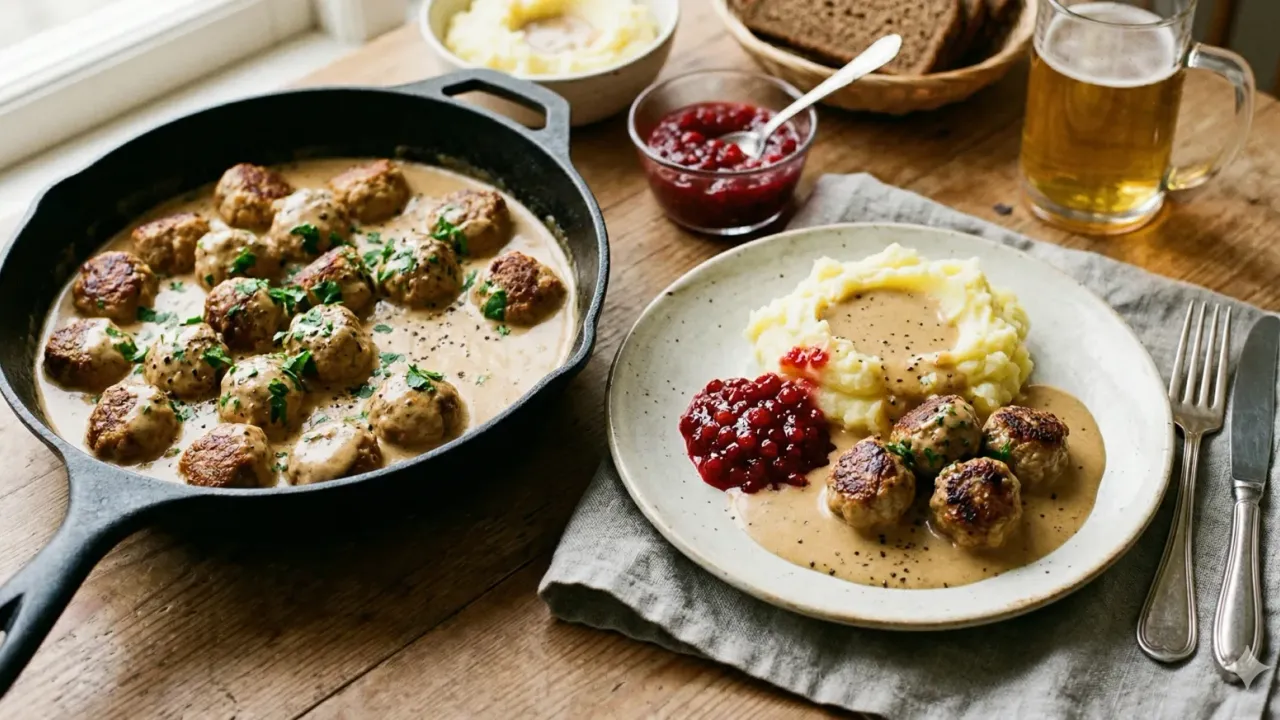
Swedish meatballs are one of Scandinavia’s most beloved comfort foods, and this recipe teaches you how to make them from scratch. Tender, juicy meatballs spiced with allspice and nutmeg simmer in a silky cream sauce. Served alongside buttery mashed potatoes and tart lingonberry jam, this dish delivers warmth in every single bite. Whether you know them from a family dinner in Stockholm or from the IKEA cafeteria, homemade Swedish meatballs stand in a class of their own.
Prep Time: 25 minutes | Cook Time: 30 minutes | Total Time: 55 minutes | Servings: 6
Difficulty: Medium | Calories: ~480 per serving
What Makes Swedish Meatballs Special?
Swedish meatballs, known as kottbullar in Swedish, stand apart from every other meatball tradition on the planet. Their defining quality is tenderness. A panade of milk-soaked breadcrumbs prevents the proteins from seizing up during cooking. As a result, each meatball stays pillowy soft inside while developing a golden crust on the outside. The spice profile is distinctly Scandinavian. Warm allspice, fragrant nutmeg, and sharp white pepper replace the garlic and oregano found in Italian versions. These warm spices create a subtle complexity that pairs perfectly with the rich cream sauce.
The cream sauce is the other half of this legendary pairing. Built on the browned bits left in the pan after searing, the sauce captures every ounce of meaty flavor. Beef broth provides a savory backbone while heavy cream adds velvety richness. A touch of soy sauce deepens the umami without any detectable soy flavor. Dijon mustard rounds out the sauce with a gentle sharpness. Together, these elements form a gravy that clings to each meatball and pools beautifully over mashed potatoes.
What truly completes the experience is the lingonberry jam served alongside. This tart, slightly sweet condiment cuts through the richness of the cream sauce like a blade. The contrast is deliberate and essential. In Swedish food culture, sweet fruit preserves often accompany savory meat dishes. Lingonberries grow wild across Scandinavia, and their bright acidity balances heavy winter fare. Without lingonberry jam, Swedish meatballs lose a critical dimension of flavor.

Choosing the Right Meat Blend for Swedish Meatballs
The meat blend is the foundation of great Swedish meatballs. Your choice directly affects the flavor, juiciness, and texture of the finished dish. Here is what to consider when selecting your ground meat.
- Beef and pork blend (best choice): A combination of ground beef and ground pork is the traditional Swedish approach. Beef provides deep, savory flavor and structure. Pork adds fat and moisture that keep the meatballs juicy. The ideal ratio is two parts beef to one part pork. Use an 80/20 ground beef for optimal fat content. Leaner blends produce drier, tougher meatballs.
- All-beef option: Ground beef alone works if pork is unavailable. Choose a higher fat content such as 80/20 or even 73/27. All-beef meatballs have a more pronounced meaty flavor. However, they tend to be slightly firmer and less delicate than the traditional blend. The panade becomes even more important here to maintain tenderness.
- Adding ground veal: Some traditional Swedish recipes call for a three-meat blend of beef, pork, and veal. Veal contributes a lighter flavor and extremely tender texture. Use equal parts of all three meats for the most refined version. This triple blend produces the softest, most delicate meatballs. It is the choice of many Swedish grandmothers.
- Turkey or chicken substitute: Ground turkey or chicken creates a lighter version with fewer calories. The flavor is milder, so increase the allspice and nutmeg by a quarter teaspoon each. Add an extra tablespoon of butter when searing to compensate for the lower fat content. Nevertheless, poultry meatballs lack the depth of the traditional beef and pork combination.
Ingredients for Swedish Meatballs
Meatball Mixture:
- 1 lb (450g) ground beef (80/20 blend)
- 8 oz (225g) ground pork
- 1/2 cup fine dry breadcrumbs
- 1/3 cup whole milk
- 1 large egg, lightly beaten
- 1 small yellow onion, finely grated
- 1/2 teaspoon ground allspice
- 1/4 teaspoon ground nutmeg
- 1/4 teaspoon ground white pepper
- 1 teaspoon salt
Cream Sauce:
- 3 tablespoons unsalted butter
- 3 tablespoons all-purpose flour
- 2 cups beef broth
- 1 cup heavy cream
- 2 teaspoons soy sauce
- 1 teaspoon Dijon mustard
- Salt and freshly ground black pepper to taste
For Serving:
- Lingonberry jam
- Fresh flat-leaf parsley for garnish
- Buttery mashed potatoes or egg noodles
Pro tip: Grate the onion instead of dicing it. Grated onion melts invisibly into the meat mixture, distributing its moisture and flavor evenly throughout every meatball. Diced onion creates pockets of raw onion that can cause meatballs to break apart during cooking. Additionally, soak the breadcrumbs in milk for a full 10 minutes before mixing. This panade is the secret to impossibly tender Swedish meatballs. It works by coating the meat proteins in starch, which prevents them from binding too tightly when heated.
Step-by-Step Instructions
Step 1: Make the Panade and Mix the Meatball Mixture
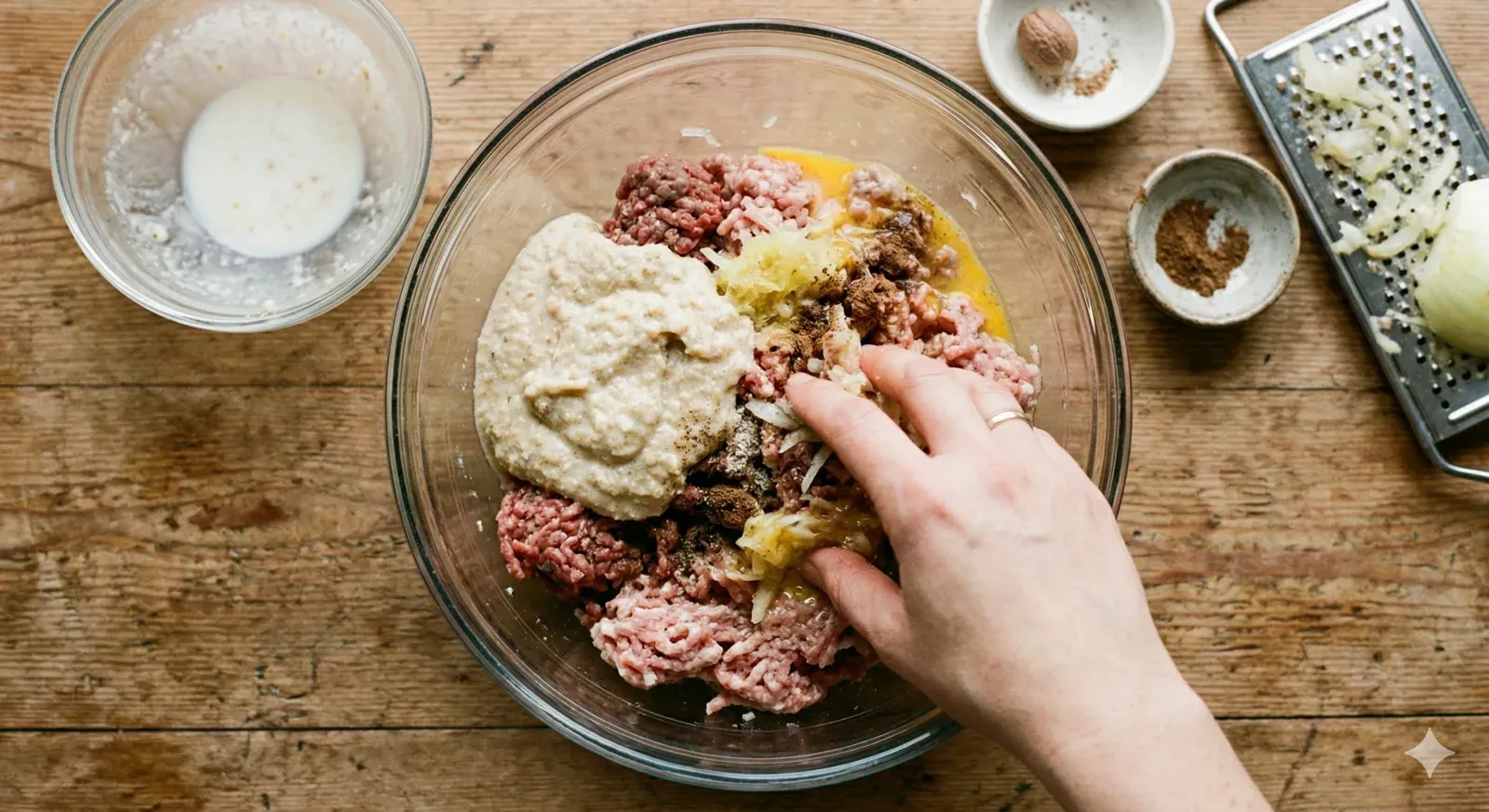
1 Start by preparing the panade. Combine the fine breadcrumbs with the whole milk in a small bowl. Stir once, then let the mixture sit undisturbed for 10 minutes. The breadcrumbs will absorb the milk and form a thick, sticky paste. This paste is the key to tender meatballs. Meanwhile, grate the onion on the fine side of a box grater directly into a large mixing bowl.
Add the ground beef, ground pork, soaked panade, beaten egg, allspice, nutmeg, white pepper, and salt to the bowl with the grated onion. Mix gently with your hands until everything is just combined. Avoid kneading or squeezing the meat aggressively. Overworking develops the proteins too much, which produces dense, rubbery meatballs. The mixture should look uniform but still feel soft and slightly sticky. Cover the bowl with plastic wrap and refrigerate for 20 minutes. Chilling firms the mixture and makes rolling much easier.
Step 2: Shape and Sear the Meatballs
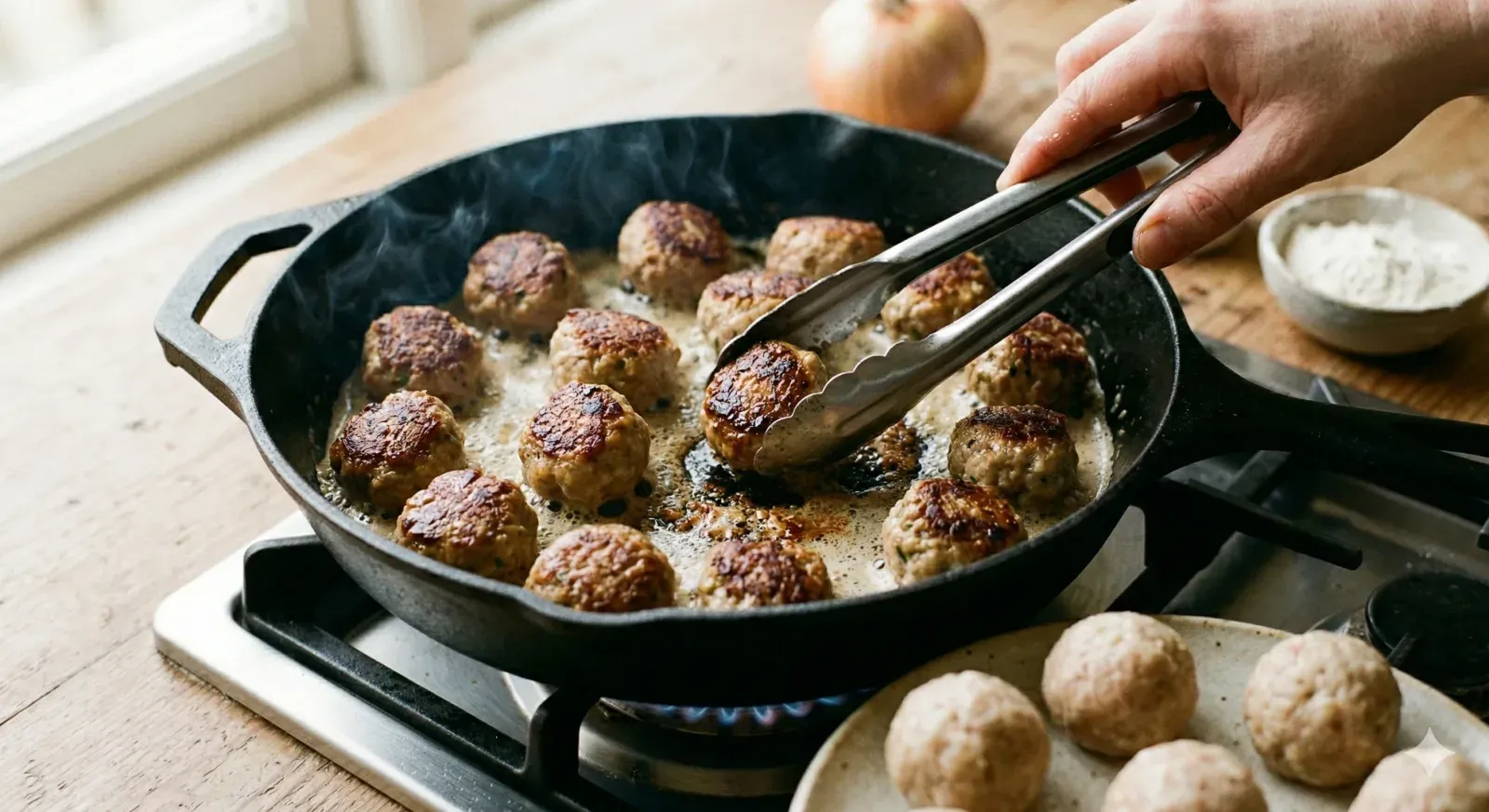
2 Remove the chilled meat mixture from the fridge. Dampen your hands with cold water to prevent sticking. Scoop tablespoon-sized portions and roll each one between your palms into smooth, round balls. Aim for about 1 inch in diameter. Consistent size ensures even cooking throughout the entire batch. In total, you should yield approximately 35 to 40 meatballs from this recipe.
Heat 2 tablespoons of butter in a large, heavy-bottomed skillet over medium-high heat. Wait until the butter foams and the foam subsides before adding the meatballs. Place them in the pan with space between each one. Crowding the pan causes steaming rather than searing. Instead, work in batches of 12 to 15 meatballs at a time. Cook for 6 to 8 minutes, turning them frequently with tongs. Each meatball should develop a deep golden-brown crust on all sides. Transfer the finished meatballs to a clean plate. They will not be fully cooked through at this stage, and that is perfectly fine. The simmering step finishes the cooking later.
Step 3: Build the Cream Sauce
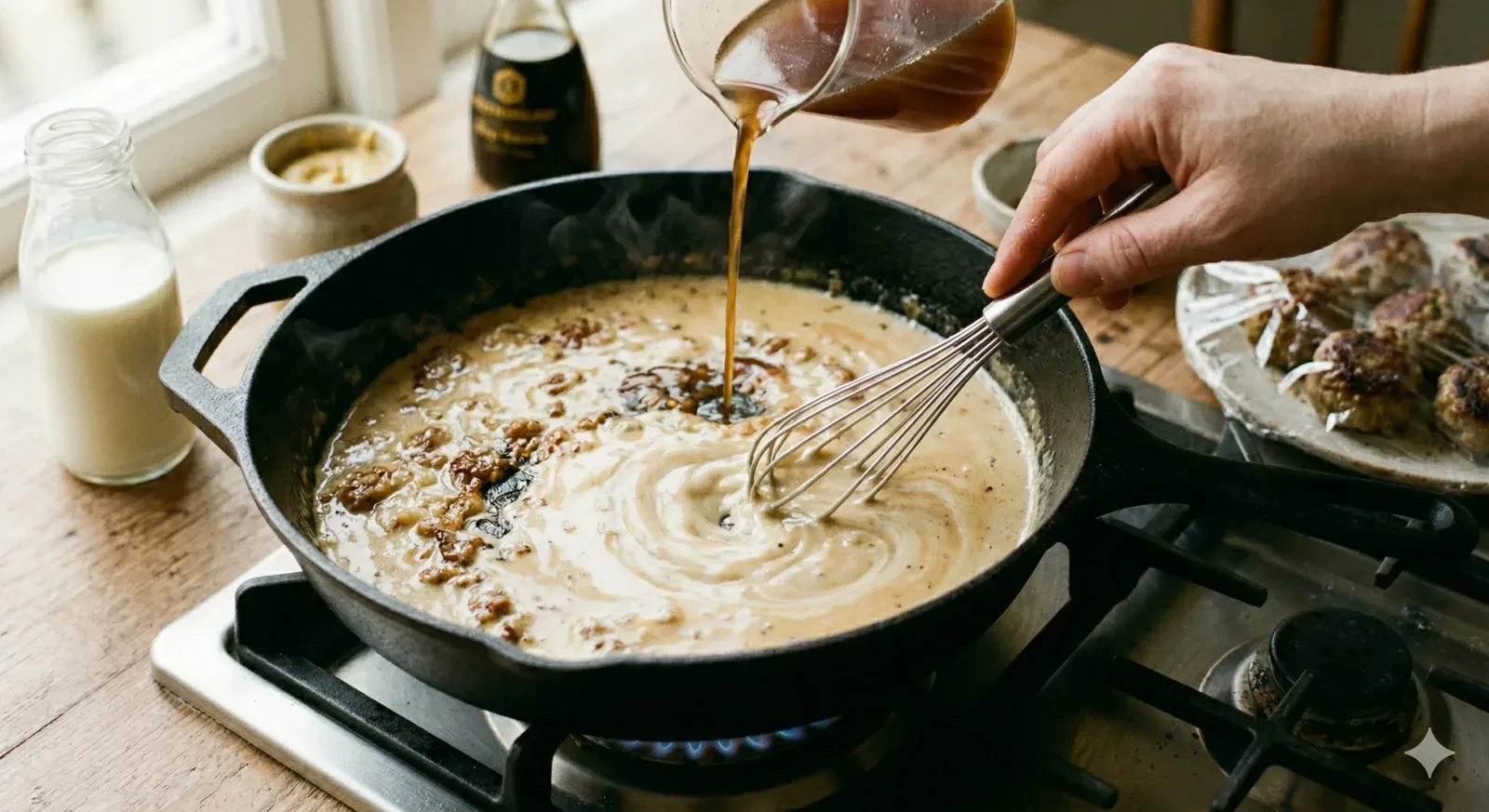
3 Reduce the heat to medium. The skillet should still contain all the browned bits from searing. These fond deposits hold tremendous flavor. Add the remaining tablespoon of butter and let it melt. Sprinkle in the all-purpose flour. Whisk constantly for 1 to 2 minutes until the roux turns a light golden color and smells faintly nutty. This cooking step removes the raw flour taste.
Slowly pour in the beef broth while whisking vigorously. Add it in a thin stream to prevent lumps from forming. Scrape up every browned bit from the bottom of the pan. These caramelized meat juices dissolve into the sauce and provide incredible depth. Then, once the broth is fully incorporated, add the heavy cream, soy sauce, and Dijon mustard. Stir until the sauce is smooth. Bring it to a gentle simmer. The sauce will thicken gradually as the flour activates. After about 3 minutes, it should coat the back of a spoon evenly.
Step 4: Simmer and Serve
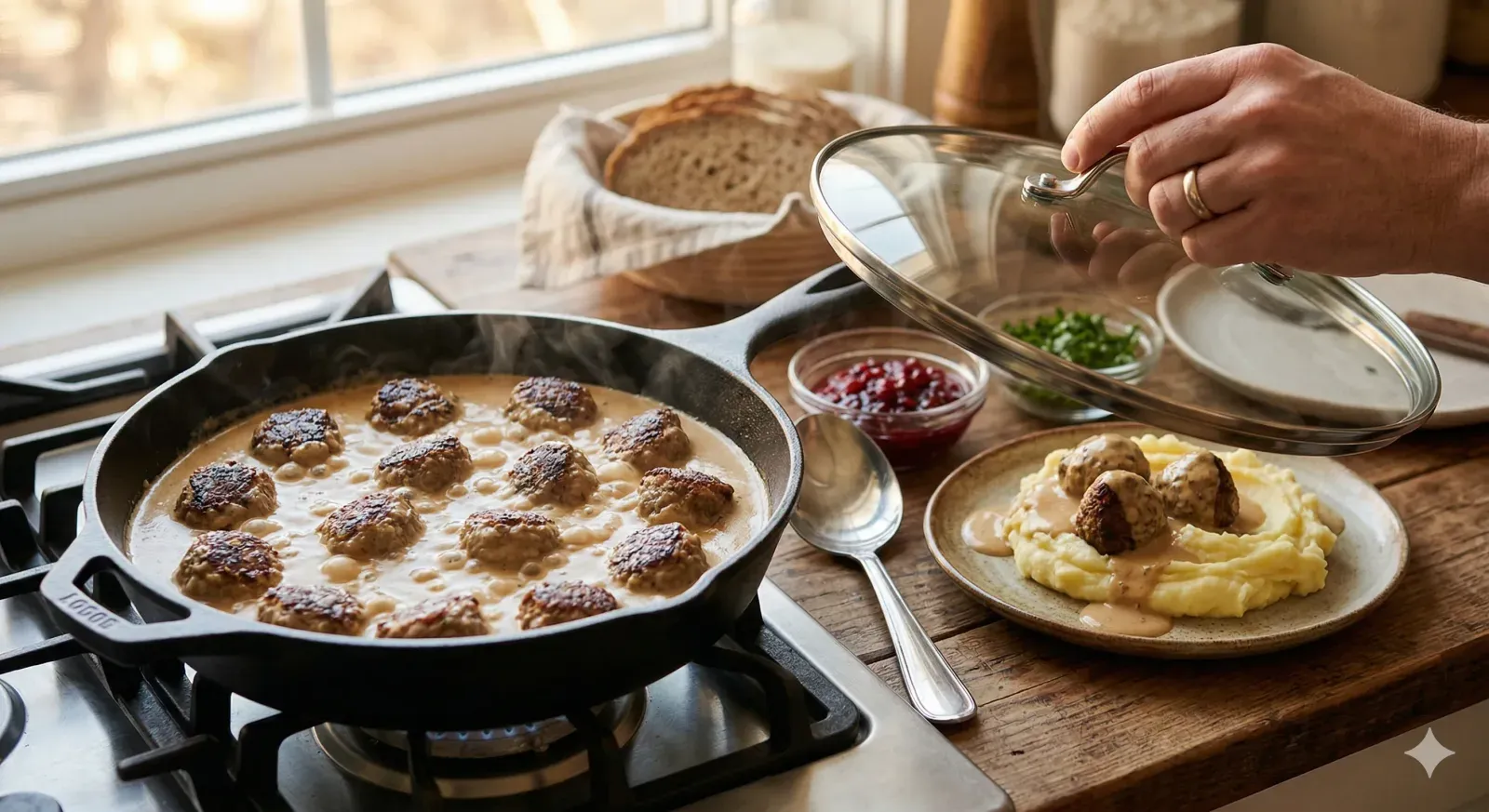
4 Return all the seared meatballs to the skillet. Nestle them gently into the cream sauce so each one is at least partially submerged. Reduce the heat to low. Cover the pan loosely and simmer for 15 to 20 minutes. Turn the meatballs once halfway through. As a result, the gentle heat cooks the centers through without toughening the exterior.
Check the sauce consistency after simmering. It should be thick enough to cling to the meatballs but still flow when the pan tilts. If the sauce is too thick, stir in a splash of broth. Conversely, if it seems thin, simmer uncovered for another 3 to 5 minutes. Season with salt and pepper to taste. Serve the meatballs and sauce over buttery mashed potatoes or wide egg noodles. Spoon lingonberry jam alongside each portion. Garnish with a scattering of fresh parsley. The bright green against the creamy sauce makes a stunning presentation.
Expert Tips for Perfect Swedish Meatballs
Never Skip the Panade
The panade is non-negotiable. Soaking breadcrumbs in milk creates a starchy paste that physically interrupts protein bonds in the ground meat. Without it, the meat proteins tighten during cooking and squeeze out moisture. You end up with hard, dry meatballs that bounce off the plate. With the panade, the starch acts as a buffer between meat fibers. Therefore, the proteins cannot clench together as aggressively. The result is a meatball that stays soft, moist, and almost mousse-like in the center.
Grate the Onion, Do Not Dice It
Grating the onion on a fine grater produces a pulpy liquid rather than distinct pieces. This onion pulp distributes evenly throughout the meat mixture. Every bite contains onion flavor without any crunchy bits disrupting the smooth texture. Diced onion, by contrast, creates hard pockets that release steam during cooking. These steam pockets can cause meatballs to crack or fall apart. Moreover, the even moisture from grated onion keeps the meatballs juicy throughout.
Sear in Batches for the Best Crust
Crowding the pan drops the temperature dramatically. When too many meatballs share the skillet, they steam instead of sear. Steamed meatballs turn gray and develop no crust at all. The Maillard reaction requires high, direct heat. Searing in small batches of 12 to 15 ensures each meatball sits on hot metal. Consequently, each one develops a deep brown exterior packed with flavor. This crust also helps the meatballs hold their shape during the simmering step.
Meatballs Around the World: A Regional Comparison
Meatballs appear in cuisines across every continent. Each culture brings its own seasoning, sauce, and serving style to this universal comfort food. Here is how the most popular versions compare to Swedish meatballs.
| Dish | Country | Key Difference | Signature Element |
|---|---|---|---|
| Kottbullar | Sweden | Beef and pork blend with allspice and nutmeg | Cream sauce, lingonberry jam |
| Polpette | Italy | Garlic, Parmesan, and Italian herbs in the mix | Tomato sauce, served with pasta or bread |
| Frikadeller | Denmark | Flattened pan-fried patties with club soda | Served with red cabbage and boiled potatoes |
| Kofta | Middle East | Lamb or beef spiced with cumin and coriander | Grilled on skewers, served with flatbread |
| Lihapullat | Finland | Similar to Swedish but often all-beef | Brown gravy instead of cream sauce |
Serving Suggestions
Swedish meatballs deserve accompaniments that honor their Scandinavian roots. The rich cream sauce calls for starchy sides that absorb every drop. Meanwhile, bright, acidic elements keep the plate from feeling heavy. Consider the following pairings for an authentic experience.
Side Dishes:
- Buttery mashed potatoes: The classic and most traditional Swedish pairing. Creamy mashed potatoes absorb the gravy and provide a neutral canvas for the spiced meatballs. Boil Yukon Gold potatoes until tender, then mash with butter and warm milk for a silky consistency.
- Lingonberry jam: This tart, ruby-red condiment is essential. Its acidity balances the cream sauce beautifully. Place a generous spoonful on the side of each plate. Each bite of meatball dipped in lingonberry is a revelation of sweet, sour, and savory combined.
- Quick pickled cucumbers (pressgurka): Thinly sliced cucumbers marinated in white vinegar, sugar, and dill provide a crisp, refreshing contrast. The pickled crunch breaks up the richness of the cream sauce. This side takes only 30 minutes to prepare.
- Wide egg noodles: A popular alternative to mashed potatoes. Egg noodles catch the sauce in their folds and create a satisfying, pasta-style presentation. Toss them with a knob of butter before plating for a glossy finish.
Beverage Pairings:
- Swedish lager (Pripps Bla or Spendrups): A crisp, clean lager cuts through the richness of the cream sauce without competing with the delicate spice flavors. The carbonation refreshes the palate between bites. Serve well chilled for the best effect.
- Pinot Noir: A light-bodied red wine with soft tannins complements the beef and pork flavors. The fruit-forward character of Pinot Noir pairs nicely with the allspice and nutmeg. Avoid bold, heavy reds that overpower the subtle cream sauce.
- Aquavit: The traditional Scandinavian spirit seasoned with caraway and dill. Serve it ice-cold in small shot glasses alongside the meatballs. The herbal notes of aquavit echo the savory warmth of the allspice in the meatballs.
- Lingonberry juice or sparkling water: For a non-alcoholic option, lingonberry juice extends the berry theme across the entire meal. Alternatively, sparkling water with a squeeze of lemon cleanses the palate effectively between each rich, creamy bite.
Storage and Reheating
Refrigerator: Store leftover Swedish meatballs and sauce together in an airtight container. They keep well in the fridge for up to 4 days. The cream sauce thickens considerably when chilled. Upon reheating, it loosens back to the proper consistency. In fact, many Swedes say the meatballs taste even better the next day. The spices deepen and the sauce absorbs further into the meat overnight.
Freezer: Swedish meatballs freeze beautifully for up to 3 months. Freeze the meatballs and sauce separately for the best results. Place cooled meatballs in a single layer on a baking sheet. Freeze them solid, then transfer to a zip-lock bag. Freeze the sauce in a separate container. Thaw both overnight in the refrigerator before reheating. This method prevents the sauce from breaking when reheated.
Reheating: Warm the meatballs and sauce together in a covered skillet over medium-low heat. Stir gently every few minutes to prevent scorching. Add a splash of broth or cream if the sauce seems too thick. The stovetop method takes 10 to 12 minutes and produces results closest to freshly made. Avoid the microwave if possible. Microwaving causes the cream sauce to separate and the meatballs to become rubbery. Therefore, a gentle stovetop reheat is always the superior choice.
Common Mistakes to Avoid
1. Overworking the Meat Mixture
Kneading the meatball mixture like bread dough is tempting but destructive. Overworking activates the myosin proteins in the ground meat. Consequently, these proteins form tight bonds that create a dense, springy texture. Instead of tender meatballs, you get bouncy rubber balls. Mix only until the ingredients are evenly distributed. Stop the moment you no longer see streaks of egg or breadcrumb. A light hand produces the softest results every time.
2. Using Lean Ground Meat
Fat is flavor and moisture in meatballs. Ground beef labeled 90/10 or 93/7 produces dry, crumbly meatballs that no amount of sauce can rescue. The ideal fat content is 80/20 for the beef portion. Pork naturally adds additional fat. Together, these meats provide enough internal moisture to keep each meatball succulent during both searing and simmering. Therefore, do not sacrifice juiciness for a marginal calorie reduction.
3. Crowding the Pan During Searing
Placing all 40 meatballs in the skillet at once guarantees disappointing results. The pan temperature crashes when too many cold items hit the surface simultaneously. Moisture released from the meat creates a steam bath rather than a sear. The meatballs turn gray and soft on the outside instead of brown and crispy. Instead, sear in batches of 12 to 15 with adequate space between each one. Ultimately, patience during this step rewards you with deeply flavorful meatballs.
4. Adding Cream Too Quickly to the Roux
Dumping cold cream into a hot roux creates lumps that are nearly impossible to dissolve. The flour seizes around pockets of liquid and forms stubborn clumps. Instead, always add the broth first in a slow, steady stream while whisking. Then let the broth fully incorporate before adding the cream. This gradual process gives the flour time to absorb liquid evenly. Consequently, you achieve a perfectly smooth, lump-free sauce every time.
Frequently Asked Questions
What is the difference between Swedish meatballs and Italian meatballs?
Swedish meatballs use a beef and pork blend seasoned with warm spices like allspice and nutmeg. They are smaller than Italian meatballs, roughly 1 inch across. The defining accompaniment is a cream-based gravy served with lingonberry jam. Italian meatballs, on the other hand, feature garlic, Parmesan cheese, basil, and oregano. They are larger and typically served in a rich tomato sauce over pasta. The cream sauce and lingonberry combination is what makes Swedish meatballs uniquely Scandinavian.
Can I make Swedish meatballs ahead of time?
Absolutely. Swedish meatballs are ideal for advance preparation. Shape and sear the meatballs up to 2 days before serving. Store them in the refrigerator until needed. You can also freeze the cooked, unsauced meatballs for up to 3 months. When ready to serve, simply prepare a fresh batch of cream sauce. Add the thawed meatballs and simmer for 15 minutes. This approach actually saves time on busy weeknights and makes entertaining effortless.
What is a panade and why is it important for meatballs?
A panade is a mixture of breadcrumbs soaked in milk until they form a paste. It serves as both a binder and a tenderizer. The starch from the breadcrumbs physically interferes with meat protein bonds during cooking. This prevents the proteins from contracting and squeezing out moisture. As a result, the meatballs remain incredibly tender and juicy. Skipping the panade is the single most common reason homemade meatballs turn out tough and dry.
What can I use instead of lingonberry jam?
Cranberry sauce is the most accessible substitute. Both cranberries and lingonberries share a similar tartness that balances the rich cream sauce. Red currant jelly also works well and provides a slightly more refined sweetness. Whole-berry cranberry relish mixed with a teaspoon of lemon juice approximates lingonberry’s bright acidity closely. For the most authentic experience, look for lingonberry jam at IKEA, Scandinavian specialty stores, or online retailers. It is worth seeking out.
Why do Swedish meatballs use allspice instead of Italian herbs?
Allspice reflects Sweden’s centuries-old spice trade connections. Swedish cuisine historically favors warm, aromatic spices over Mediterranean herbs. Allspice delivers complex notes reminiscent of cinnamon, cloves, and nutmeg in a single spice. Combined with white pepper and nutmeg, it gives Swedish meatballs their signature warmth and subtle complexity. These spices complement the cream sauce beautifully. Italian herbs like basil and oregano, in contrast, would clash with the dairy-rich gravy.
Can I bake Swedish meatballs instead of pan-frying them?
Baking is a practical alternative for large batches. Preheat your oven to 400 degrees Fahrenheit. Arrange the meatballs on a parchment-lined baking sheet. Bake for 18 to 20 minutes, turning once at the halfway mark. However, baked meatballs lack the deep sear of pan-fried ones. The Maillard reaction requires direct contact with a hot surface, which an oven cannot replicate as effectively. For the best compromise, bake them first and then sear quickly in butter before adding to the sauce.
Variations and Adaptations
Gluten-Free Swedish Meatballs:
Replace the fine breadcrumbs with an equal amount of almond flour or gluten-free panko. The panade works identically with these substitutes. For the cream sauce, swap all-purpose flour for a tablespoon of cornstarch mixed with 2 tablespoons of cold water. Add this slurry to the broth and cream mixture. It thickens smoothly without any gluten. The final taste and texture remain remarkably close to the original recipe.
Mushroom Cream Sauce Variation:
Add 8 ounces of sliced cremini mushrooms to the skillet after searing the meatballs. Saute them for 5 minutes until golden before building the roux. The mushrooms contribute earthy umami that deepens the overall flavor profile. They also add texture and visual appeal to the sauce. This variation is popular in modern Swedish restaurants. It bridges traditional comfort food with contemporary tastes.
Mini Party Meatballs:
Roll the meatballs to half the standard size for cocktail appetizers. These bite-sized versions cook faster, needing only 4 to 5 minutes of searing. Serve them on a warm platter with the cream sauce in a bowl for dipping. Insert toothpicks for easy grabbing. Place a small dish of lingonberry jam nearby. These miniature meatballs disappear quickly at parties and holiday gatherings.
Dairy-Free Version:
Substitute oat milk for the whole milk in the panade. For the cream sauce, use full-fat coconut cream instead of heavy cream. The coconut flavor is subtle enough to work with the spices. Replace butter with olive oil or a plant-based butter alternative. The sauce will be slightly thinner. Simmer it a few extra minutes to achieve the desired consistency. This adaptation makes Swedish meatballs accessible to those with dairy sensitivities.
The Cultural Significance of Swedish Meatballs
Swedish meatballs hold a cherished place in Sweden’s national identity. They appear at holiday smorgasbords, weeknight family dinners, and festive midsummer celebrations alike. The dish dates back to the 18th century when King Charles XII is believed to have brought the concept from Turkey. However, over the following centuries, Swedish cooks transformed the recipe into something distinctly their own. The cream sauce, the allspice, and the lingonberry accompaniment are all Swedish innovations that separate kottbullar from their Ottoman-influenced origins.
In modern Sweden, meatballs transcend social class and occasion. Blue-collar workers and Michelin-starred chefs prepare them with equal reverence. Grandmothers guard their personal recipes fiercely. Children grow up shaping meatballs at the kitchen counter beside their parents. The dish embodies Swedish values of simplicity, quality ingredients, and the belief that everyday food should be prepared with care. Kottbullar are not fancy. They are honest, satisfying, and deeply personal to every Swedish family.
Globally, IKEA popularized Swedish meatballs far beyond Scandinavia’s borders. The furniture company serves hundreds of millions of meatball plates each year. While the IKEA version introduced the world to this dish, homemade kottbullar are an entirely different experience. In contrast, the freshly seared crust, hand-crafted cream sauce, and real lingonberry jam elevate the dish from cafeteria fare to something truly special. Making them at home connects you to a culinary tradition that Swedes have treasured for over three hundred years.
Conclusion
This Swedish meatballs recipe delivers the real thing. Tender, allspice-scented meatballs bathe in a velvety cream sauce that tastes nothing like the frozen aisle version. The panade keeps them impossibly soft. Meanwhile, the sear gives them a flavorful crust. Finally, the sauce ties everything together with savory depth. Paired with buttery mashed potatoes and a spoonful of tart lingonberry jam, this is Scandinavian comfort food at its absolute finest.
Ready to discover more beloved European classics? Browse our European dishes collection for recipes like Hungarian goulash, coq au vin, and carbonara. Each recipe features the same detailed, step-by-step approach to bring world cuisine to your home kitchen.