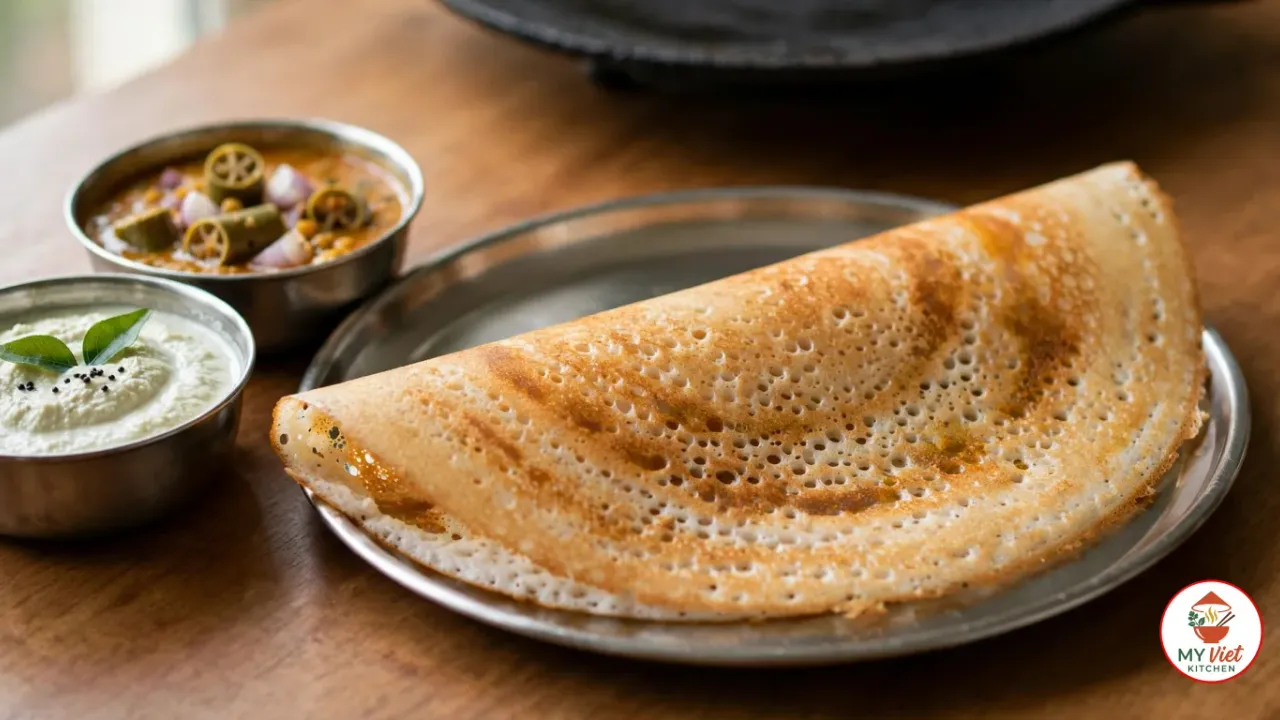
Dosa is a thin, savoury crepe from South India made from a fermented batter of ground black gram (urad dal) and rice, served hot, often with chutney and sambar (Wikipedia). This recipe makes plain, crisp dosas in four stages: soak, grind, ferment overnight, then spread the batter paper-thin on a hot cast-iron tawa. One batch makes about 24, and the leftover batter waits in the fridge.
Prep Time: 40 minutes | Cook Time: 50 minutes | Total Time: 16 hours 30 minutes (includes a 5-hour soak and about 10 hours of fermentation; a cool kitchen takes longer) | Servings: 8 (about 24 dosas)
Difficulty: Medium | Calories: ~420 per serving (3 dosas, without chutney or sambar)

How Long Does Dosa Batter Take to Ferment?
Plan on 8 to 12 hours, and let the temperature of your kitchen decide the rest. Dassana Amit ferments her batter for 8 to 12 hours depending on the temperature, and says that in winter it can take 14 to 24 hours (Dassana’s Veg Recipes). Swasthi Shreekanth gives a range of 8 to 16 hours. Her own batch once needed 16 hours in a closed kitchen cabinet (Swasthi’s Recipes).
Warmth is the main lever. In warm weather the batter can be ready overnight; in a cool kitchen it needs help. Dassana suggests a switched-off oven with the light on. Swasthi heats her oven to 100°F (40°C), keeps the batter in it for at least 2 to 3 hours, then leaves it there overnight with the oven off or just the light on (Swasthi’s Recipes). The soak counts too: start it in the afternoon, grind after dinner, and the batter is ready by breakfast.
Salt, water and the age of the dal also matter. Dassana says salt slightly slows fermentation, so in cold weather she adds it after fermenting, and she names cold weather, old urad dal and too much salt as reasons a batter stays flat (Dassana’s Veg Recipes). Swasthi recommends filtered water, because even the small amount of chlorine in tap water can keep the batter from rising. She also avoids iodized salt before fermentation (Swasthi’s Recipes).
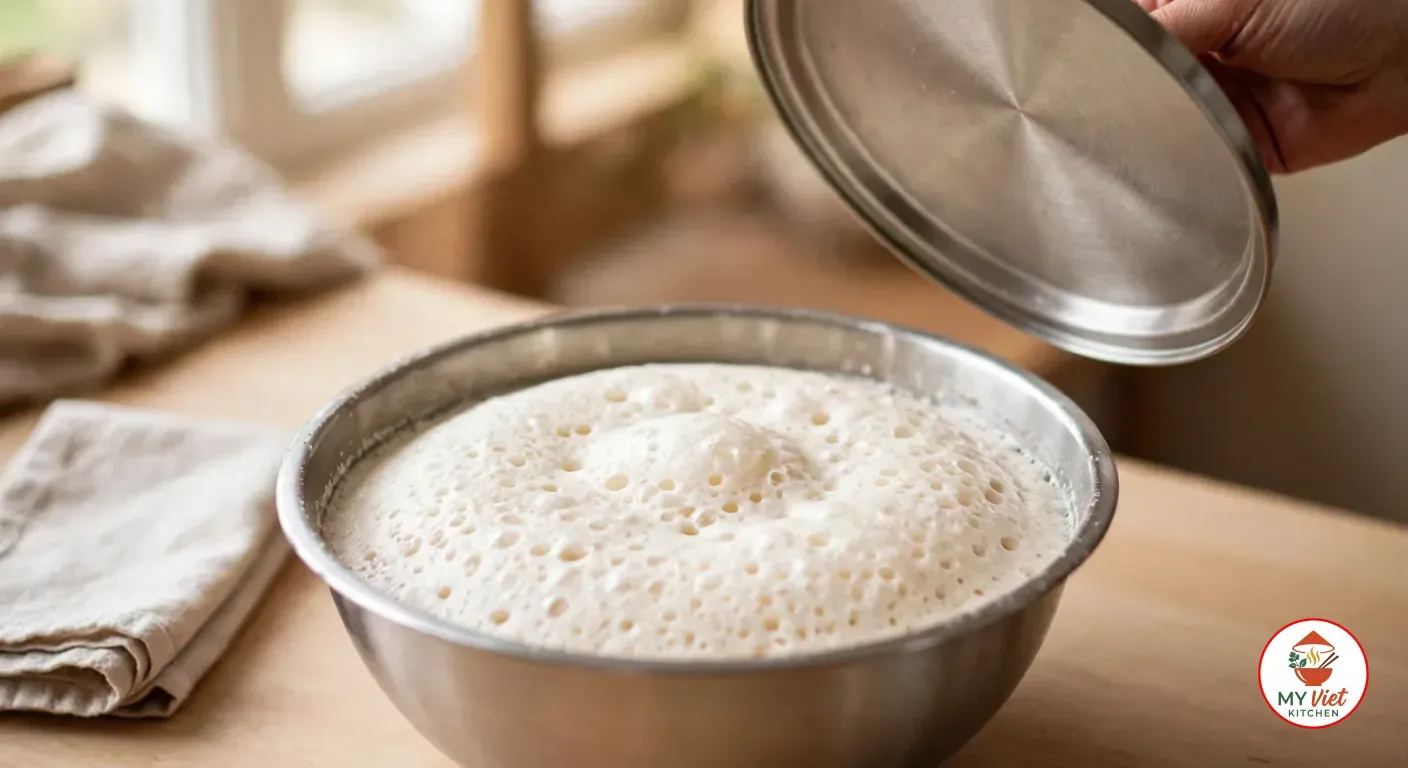
Judge by the batter, not the clock: look for a puffy, bubbly batter with a gentle sour smell. Dassana notes it will not always grow to twice its volume, and that batter smelling very sour has over-fermented and should go into the fridge at once (Dassana’s Veg Recipes). Swasthi’s test is simple: drop half a spoonful into a bowl of water, and if it floats, the batter is ready (Swasthi’s Recipes).
Which Rice and Dal Should You Buy?
Wikipedia puts the usual proportion of rice to lentils at 3:1 or 4:1 (Wikipedia), and this recipe uses 3:1. Households vary. Swasthi writes that cooks in Karnataka use 1 part urad dal to 3 of rice, Andhra Pradesh 1 to 2, and Tamil Nadu and Kerala 1 to 4 (Swasthi’s Recipes).
For the rice, Swasthi gets her crispest, most golden dosas from raw sona masuri. She says raw ponni, basmati or a half-and-half mix of raw and parboiled rice also work, but the dosas come out paler. Dassana says idli rice, parboiled rice, sona masuri or a combination of them all work (Dassana’s Veg Recipes). If you use parboiled rice, mix it with raw rice: Swasthi names parboiled rice as the usual cause of dosas that stay undercooked even after cooking long enough (Swasthi’s Recipes).
Buy skinned urad dal, the creamy white kind, and buy it fresh. Dassana says older dal may not ferment properly and gives a denser, less crisp dosa. The teaspoon of fenugreek seeds is small but has a job: she writes that the seeds support fermentation and add a mild flavor (Dassana’s Veg Recipes). An Indian grocery will have the dal, the rice and the seeds.
Thin and Crisp or Soft and Thick?
Both are dosa. According to Wikipedia, the Tamil Nadu dosa is traditionally softer and thicker, while the thin, crisp version that became popular across India was first made in present-day Karnataka. Its exact birthplace is unknown. Food historian K. T. Achaya read references in Sangam literature as a sign that dosa was eaten in the ancient Tamil country around the first century CE, while the historian P. Thankappan Nair placed its origin in Udupi. A recipe for it appears in the Manasollasa, a 12th-century Sanskrit encyclopedia compiled by Someshvara III (Wikipedia).
This recipe aims for the thin, crisp style. Crispness comes from three things working together, according to Dassana: well-fermented batter, a pourable consistency and a properly heated pan. For a softer dosa, she simply spreads the batter a little thicker (Dassana’s Veg Recipes). Eat each one straight off the tawa, since Swasthi notes that dosas begin to soften as they cool (Swasthi’s Recipes).
Ingredients for Dosa
For the Batter:
- 1 cup (200 g) skinned urad dal, whole or split
- 1 teaspoon (5 g) fenugreek seeds (methi)
- 3 cups (600 g) raw white rice, such as sona masuri
- About 2 1/2 cups (600 ml) cold filtered water for grinding, plus more for soaking
- 1 teaspoon (6 g) non-iodized salt, such as sea salt or rock salt
For Cooking:
- About 1/4 cup (60 ml) ghee or neutral oil
- 1/2 small onion, for rubbing the tawa
To Serve:
- Coconut chutney
- Sambar
Step-by-Step Instructions
Step 1: Soak the Rice, Dal and Fenugreek
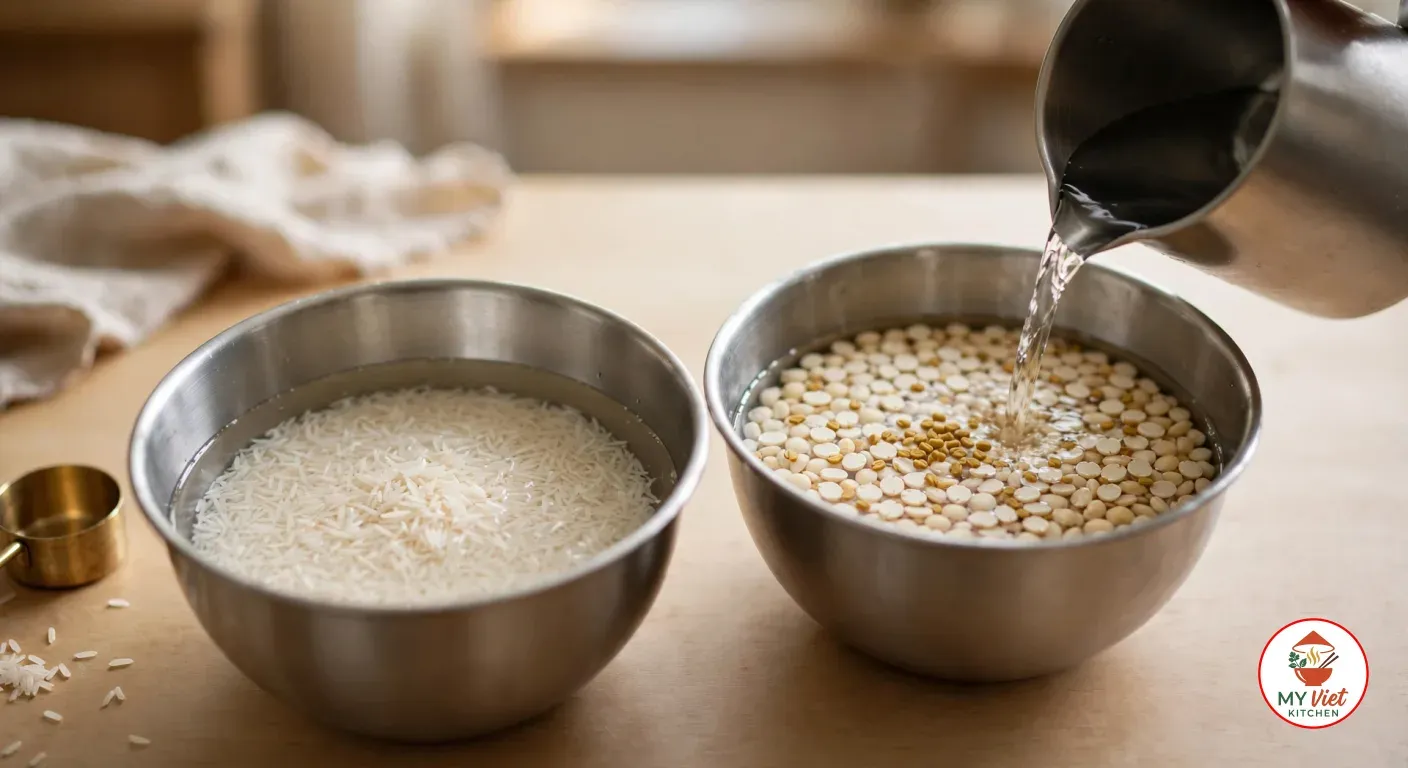
1Put the urad dal and fenugreek seeds in a bowl and rinse them together two or three times, pouring off the cloudy water each time. Cover them with about 3 cups of water. Rinse the rice in a second bowl until the water runs mostly clear, then cover it with about 4 cups of water. Leave both to soak for 4 to 6 hours. Soaking them apart lets you grind each one to its own texture in the next step.
Step 2: Grind the Batter
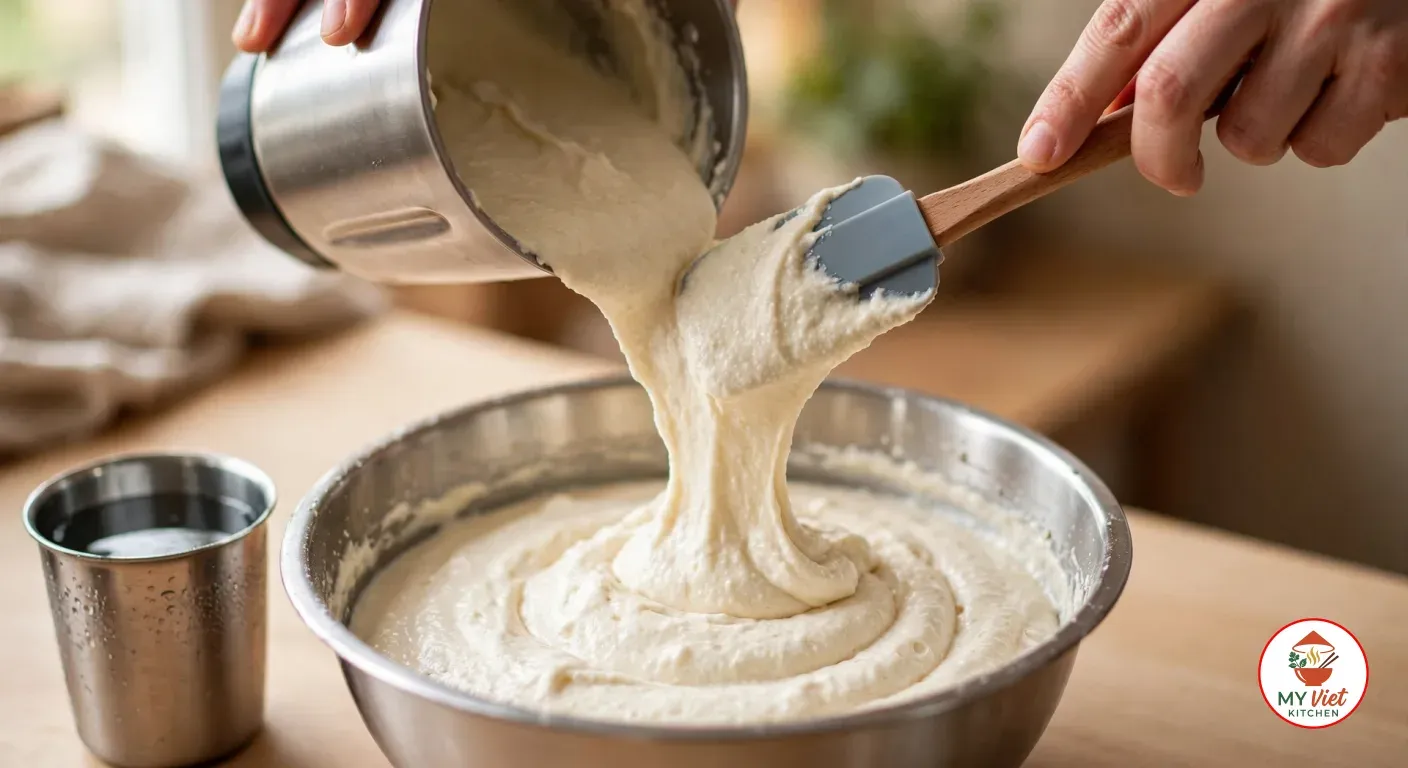
2Drain the dal and fenugreek and grind them in a blender or wet grinder with about 3/4 cup of the cold water, adding it a little at a time, until the batter is smooth, thick and fluffy. Scrape it into a large bowl that it fills no more than a third of the way, since it will rise. Drain the rice and grind it in batches with the remaining 1 3/4 cups of cold water until smooth with a very fine grain. Add it to the dal batter and mix well. The batter should pour thickly, like pancake batter. In warm weather, stir in the salt now.
Step 3: Ferment the Batter
3Cover the bowl loosely with a lid or plate and set it somewhere warm for 8 to 12 hours. It is ready when it has risen, is full of tiny bubbles and smells mildly sour. In a cool kitchen it can take longer; set the bowl in the oven with only the light on. To check, drop a half spoonful of batter into a bowl of water. Ready batter floats.
Step 4: Thin the Batter and Heat the Tawa
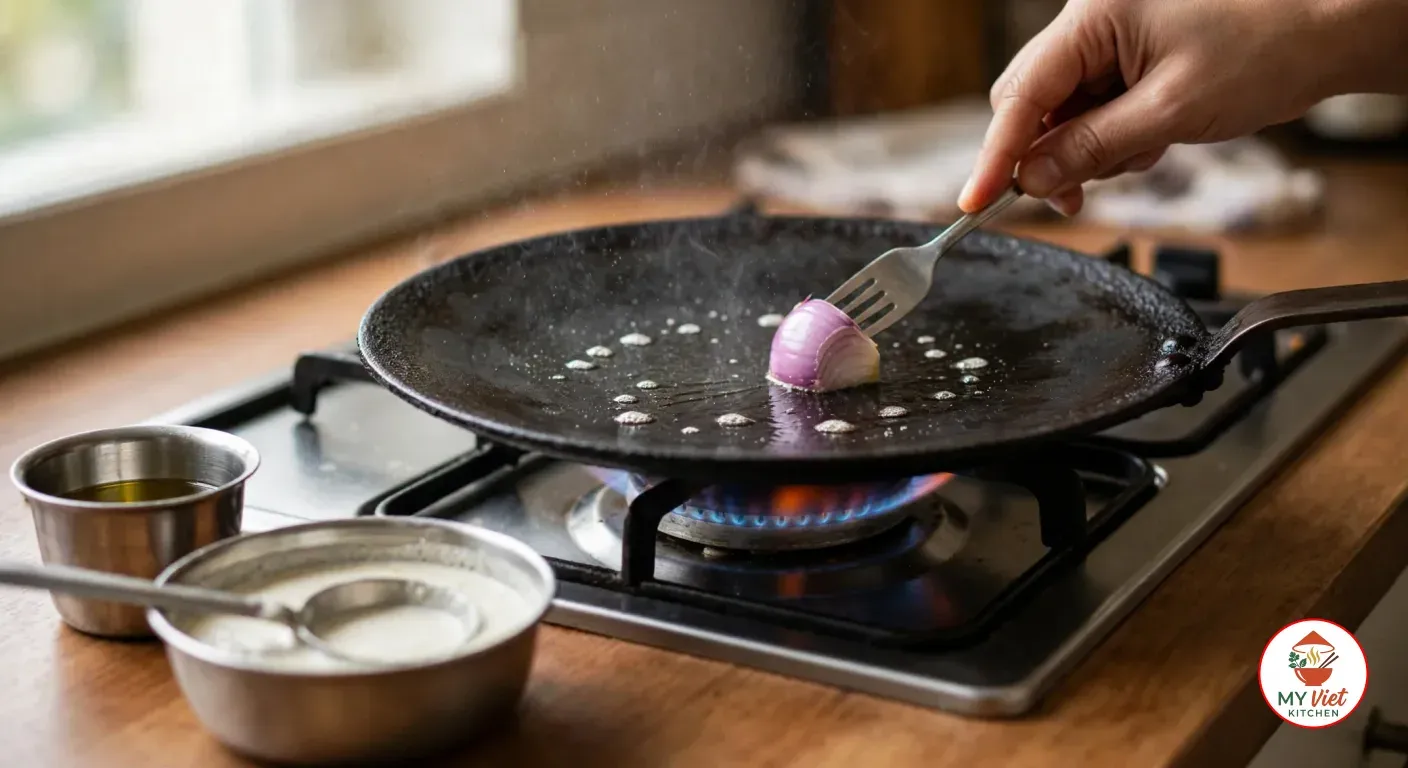
4Stir the batter gently and ladle what you need into a smaller bowl. If you did not salt it in Step 2, stir in about 1/4 teaspoon of salt for every 1 1/2 cups of batter. Thin it with 1 to 2 tablespoons of water only if it is too thick to spread. Refrigerate the rest in a covered container. Heat a cast-iron tawa over medium heat. Spear the onion on a fork and rub the cut face over the tawa with a few drops of oil, then sprinkle on a few drops of water. They should sizzle at once.
Step 5: Spread and Cook the Dosa
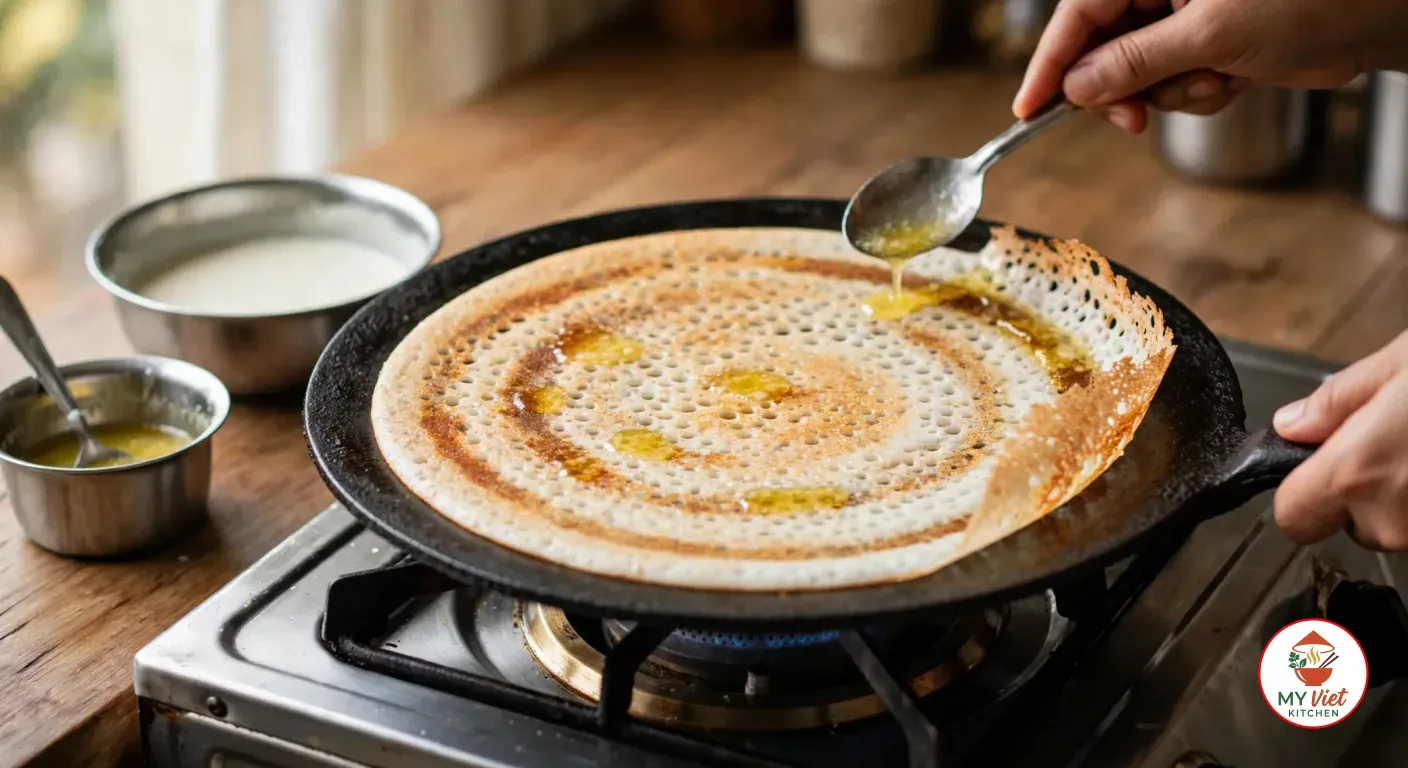
5Pour 1/4 cup of batter into the centre of the tawa and at once spread it in an outward spiral with the base of the ladle, into a thin round about 25 cm (10 inches) across. Turn the heat up to medium-high and drizzle about 1/2 teaspoon of ghee or oil around the edge and over the top. Leave it unflipped for 1 1/2 to 2 minutes, until the bottom has browned to a crisp gold and the rim comes away from the tawa. Fold or roll the dosa and serve at once with coconut chutney and sambar. Lower the heat for a moment, rub the tawa with the onion and repeat.
Frequently Asked Questions
How long does dosa batter keep in the fridge?
Two to three days by Dassana Amit’s count, and up to two weeks by Swasthi Shreekanth’s. Dassana stores it in an airtight container and says it may turn slightly sour, which is normal, and that it can also be frozen for up to a week (Dassana’s Veg Recipes). Swasthi splits a large batch between two bowls, because batter left undisturbed keeps longer in the fridge without turning sour (Swasthi’s Recipes).
Why does my dosa stick or tear?
Usually the tawa is too hot, too oily or not seasoned enough. Dassana says batter poured on a pan that is too hot sticks before you can spread it, and she uses a well-seasoned cast-iron tawa, hot but not smoking, wiped lightly with oil (Dassana’s Veg Recipes). Swasthi adds that too much oil on the empty pan stops the batter spreading, and that batter clumping on the ladle is too thick and needs a little water (Swasthi’s Recipes).
Can you make dosa in a nonstick pan?
Yes, though the texture changes a little. Dassana says a nonstick pan works but gives a slightly different dosa, and she skips oiling it before spreading, because the batter won’t spread over the oil (Dassana’s Veg Recipes). Swasthi says golden color comes from the rice-to-dal ratio and the heat of the pan and batter, not from cast iron alone (Swasthi’s Recipes).
Is the video recipe the same as this one?
The method matches, but the batter is a little different. Swasthi’s written recipe, linked from the video description, uses the same 1:3 ratio of urad dal to rice and makes 12 dosas from 1 1/2 cups of rice. It also adds chana dal and poha (flattened rice), which she says help the golden color (Swasthi’s Recipes). She soaks, grinds the dal and rice separately, ferments until bubbly and spreads on a hot tawa, as here. The potato masala her video description suggests is not covered on this page.
Sources
- Dosa (food), Wikipedia
- Authentic Dosa Recipe, How to make Dosa Batter, Swasthi Shreekanth, Swasthi’s Recipes, March 2016 (updated May 2026)
- Classic Dosa Recipe | How to Make Dosa Batter, Dassana Amit, Dassana’s Veg Recipes, May 2016 (updated March 2026)
- Crispy Dosa Recipe (Basic dosa batter recipe), Swasthi’s Recipes, YouTube, June 2020