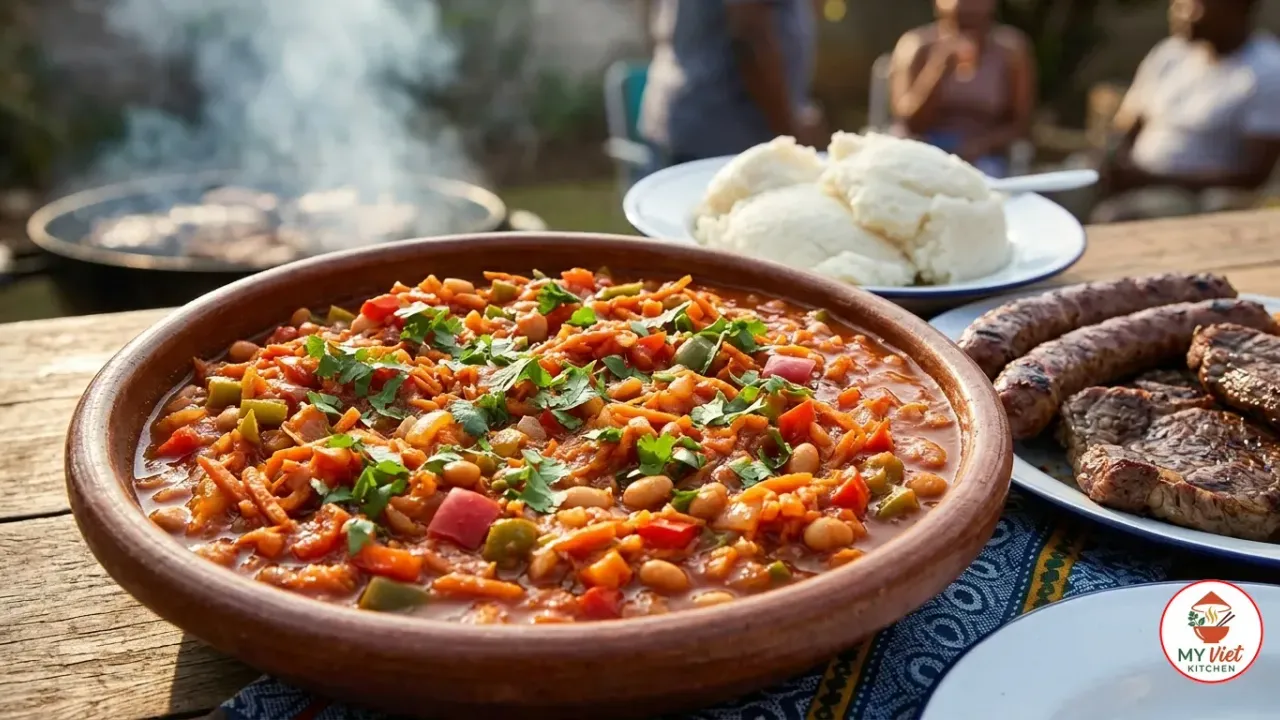
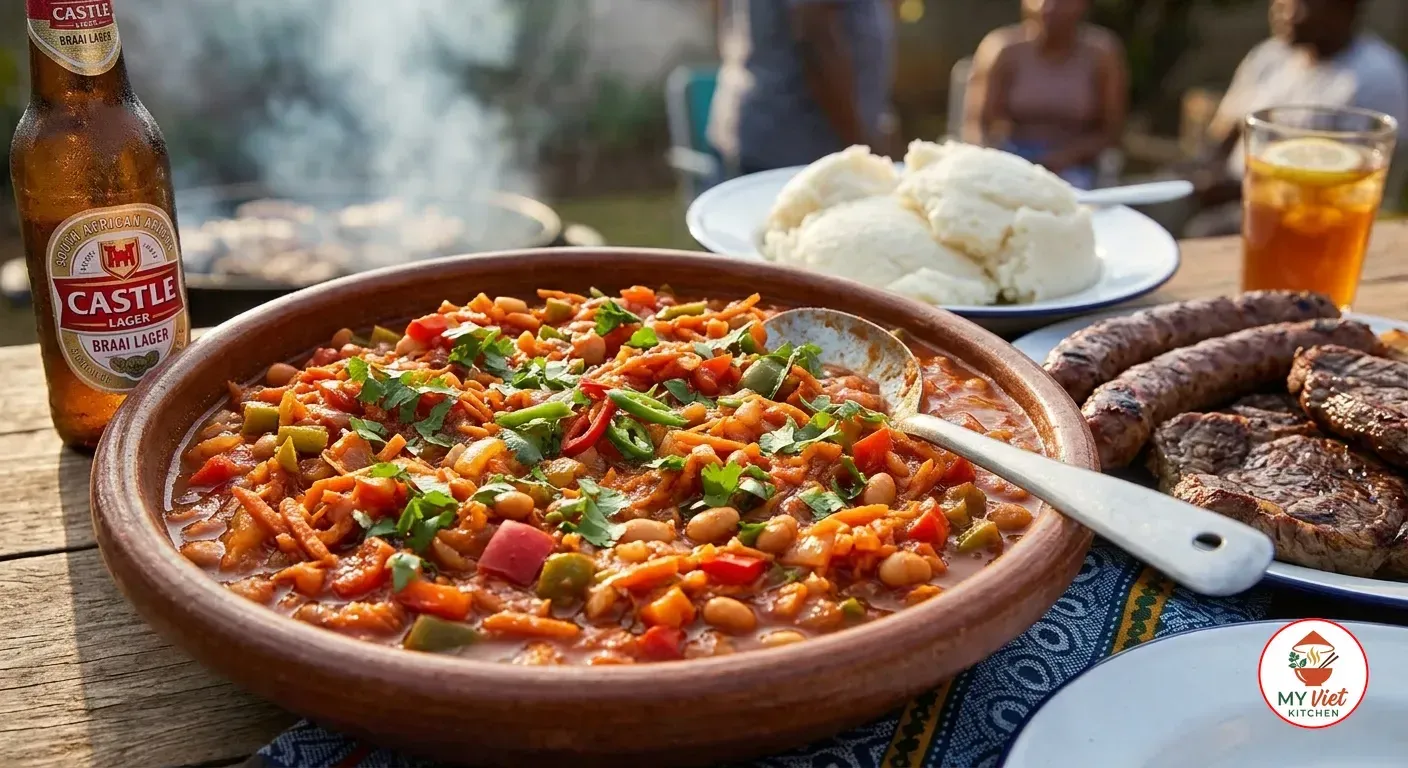
Chakalaka is South Africa’s most iconic vegetable relish, a fiery blend of onions, tomatoes, peppers, carrots, and baked beans simmered with curry powder and aromatic spices. Born in the townships of Johannesburg, this vibrant side dish has become an essential part of every braai gathering across the country. This chakalaka recipe captures the authentic flavors of the original, giving you a thick, spicy relish that transforms any plate of pap and grilled meat into a proper South African feast.
Prep Time: 15 minutes | Cook Time: 30 minutes | Servings: 8
Difficulty: Easy | Calories: ~185 per serving
What Makes Chakalaka Special?
Chakalaka holds a unique place in South African cuisine because it bridges simplicity and bold flavor. In fact, the recipe uses everyday items that most people already have at home. Onions, carrots, peppers, canned tomatoes, and baked beans form the base. Yet when these humble items meet curry powder, cumin, and fresh chili peppers over steady heat, they turn into something far greater than the sum of their parts.
The origins of chakalaka trace back to the gold mines around Johannesburg and Soweto. Mine workers from different regions brought their own spice traditions and cooking methods to the communal kitchens. Over time, these influences blended into a single dish that everyone could agree on. For instance, the curry powder reflects Indian influence through the large South African Indian community. Meanwhile, chili peppers carry the heat preferences of Zulu and Xhosa cooks. In addition, baked beans arrived through British colonial pantries. Together, these elements created a dish that tells the story of South African cuisine itself.
What separates chakalaka from ordinary veggie stews is its role at the table. Essentially, it works as a relish rather than a main course. You spoon it over pap, pile it next to braai meat, or spread it inside a vetkoek roll. As a result, its thick texture holds up against hot food without turning watery. Also, its spice cuts through the richness of grilled beef and boerewors. Every family in South Africa guards their own chakalaka recipe, and lively debates about the correct level of heat and whether beans belong in the mix never seem to end.

Choosing the Right Peppers for Chakalaka
The peppers you select determine the flavor profile and heat level of your chakalaka. Using a combination of sweet and hot peppers creates the characteristic balance that makes this relish so versatile.
- Red bell pepper (best choice for sweetness): Red bell peppers add natural sweetness and a bright color to the relish. Also, they soften fast during cooking and melt into the sauce, giving chakalaka its orange-red look.
- Green bell pepper: Green bell peppers provide a slightly bitter, grassy flavor that balances the red pepper’s sweetness. Furthermore, they hold their shape better during cooking and add texture to the dish.
- Fresh chili peppers: Serrano or bird’s eye chilies deliver the heat that defines chakalaka. For a mild version, simply remove the seeds before chopping. On the other hand, for a fiery result, leave the seeds in and add an extra chili. However, adjust to your taste because the heat builds as the relish cooks.
Ingredients for Chakalaka
Main Vegetables:
- 1 large onion, finely diced
- 4 cloves garlic, minced
- 1 tablespoon fresh ginger, grated
- 2 medium carrots, grated
- 1 red bell pepper, diced
- 1 green bell pepper, diced
- 2 fresh chili peppers, finely chopped
For the Spice Blend:
- 2 tablespoons curry powder
- 1 teaspoon smoked paprika
- 1 teaspoon ground cumin
- 1 teaspoon salt
- 1 teaspoon black pepper
- 1 teaspoon sugar
For the Sauce Base:
- 2 tablespoons vegetable oil
- 1 can (14 oz) diced tomatoes
- 2 tablespoons tomato paste
- 1 can (14 oz) baked beans in tomato sauce
- Fresh cilantro for garnish
Pro tip: Grate the carrots on the coarse side of a box grater rather than dicing them. Grated carrots break down during cooking and thicken the chakalaka naturally, giving it a rich body without needing any flour or cornstarch.
Step-by-Step Instructions
Step 1: Saute the Aromatics
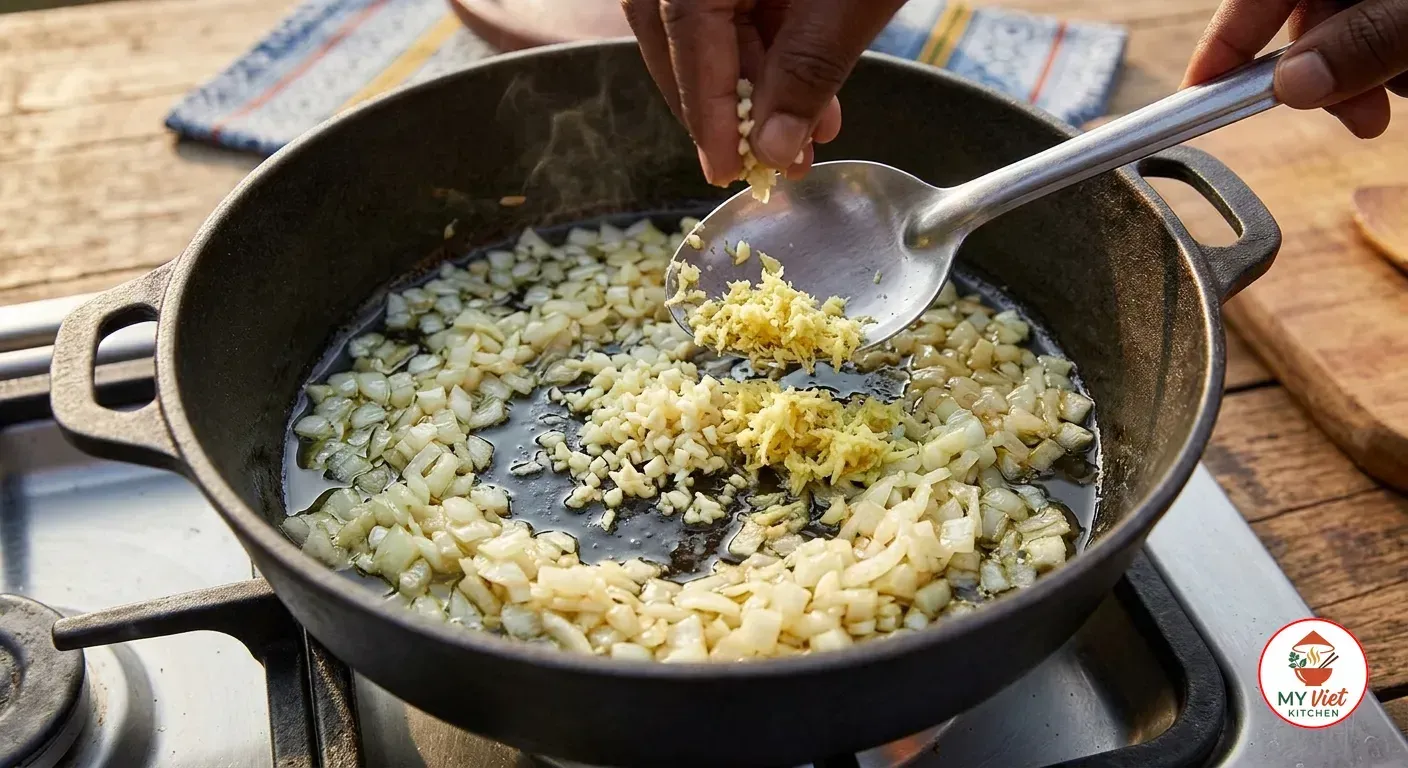
1 Heat the vegetable oil in a large, heavy-bottomed pot over medium heat. Add the diced onion and cook for about 5 minutes, stirring occasionally, until it turns soft and translucent. The onion should not brown at this stage because browning adds bitterness that competes with the curry spices later.
Once the onion is soft, add the minced garlic and grated ginger. Then stir for about 1 minute until the garlic smells fragrant. Notably, the ginger adds a warm, sharp bite that sets a well-made chakalaka apart from a flat one. If the garlic starts to darken, lower the heat right away because burnt garlic turns bitter and cannot be fixed.
Step 2: Cook the Vegetables and Spices
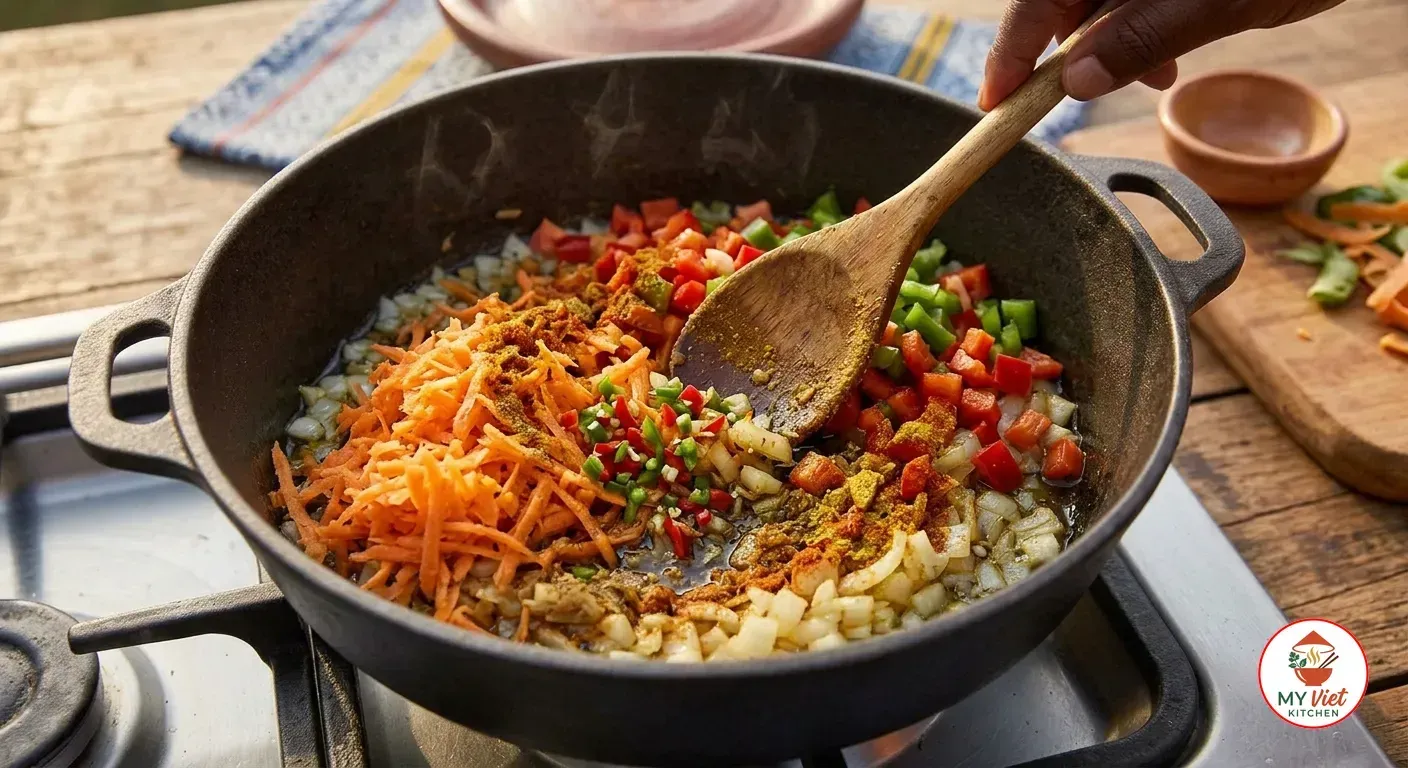
2 Add the grated carrots, diced red and green bell peppers, and chopped chili peppers to the pot. Stir everything together so the vegetables coat evenly in the oil and aromatics. Cook for about 3 minutes, then add the curry powder, smoked paprika, and ground cumin.
Stirring the spices into the hot veggies blooms them. In other words, the heat releases their oils and deepens their flavor. Next, cook the spiced veggies for another 4 to 5 minutes until the carrots start to soften and the peppers lose their raw crunch. At this point, the kitchen fills with a warm, curry-scented aroma. If the mix sticks to the bottom of the pot, add a splash of water and scrape up the fond because those browned bits carry strong flavor.
Step 3: Add the Tomatoes and Simmer
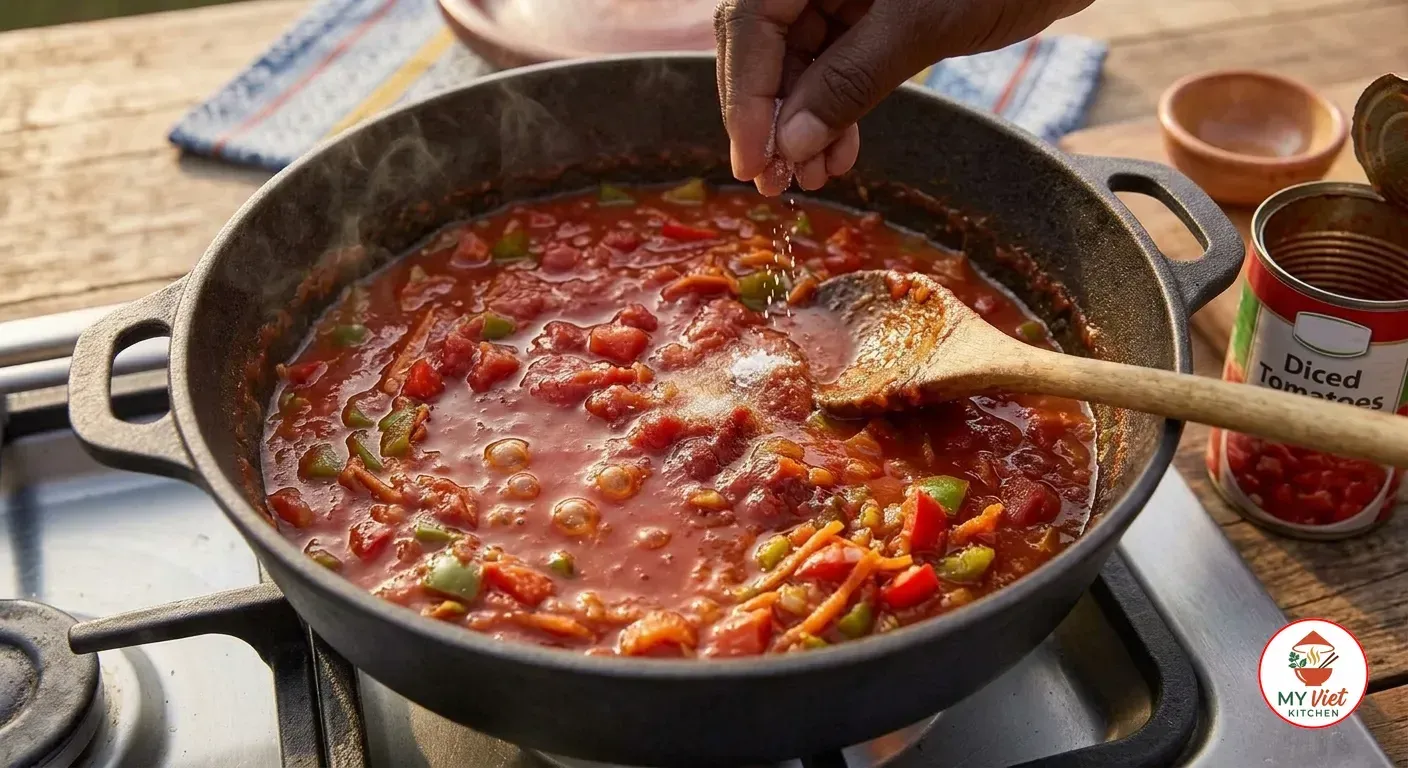
3 Pour the canned diced tomatoes into the pot along with the tomato paste. Then stir well so the paste blends with the liquid and melts in fully. After that, season with the salt, black pepper, and sugar. The sugar does not make the chakalaka sweet. Instead, it tones down the acid in the tomatoes and rounds out the flavor.
Next, bring the mix to a gentle simmer over medium-low heat. Let it cook for about 10 minutes, stirring often to stop it from sticking. During this time, the tomatoes break down and form a thick sauce that binds everything. Meanwhile, the carrots keep softening and release their natural sugars into the sauce. Eventually, the mix should reduce until it looks like a chunky, thick relish rather than a thin stew.
Step 4: Fold in the Baked Beans
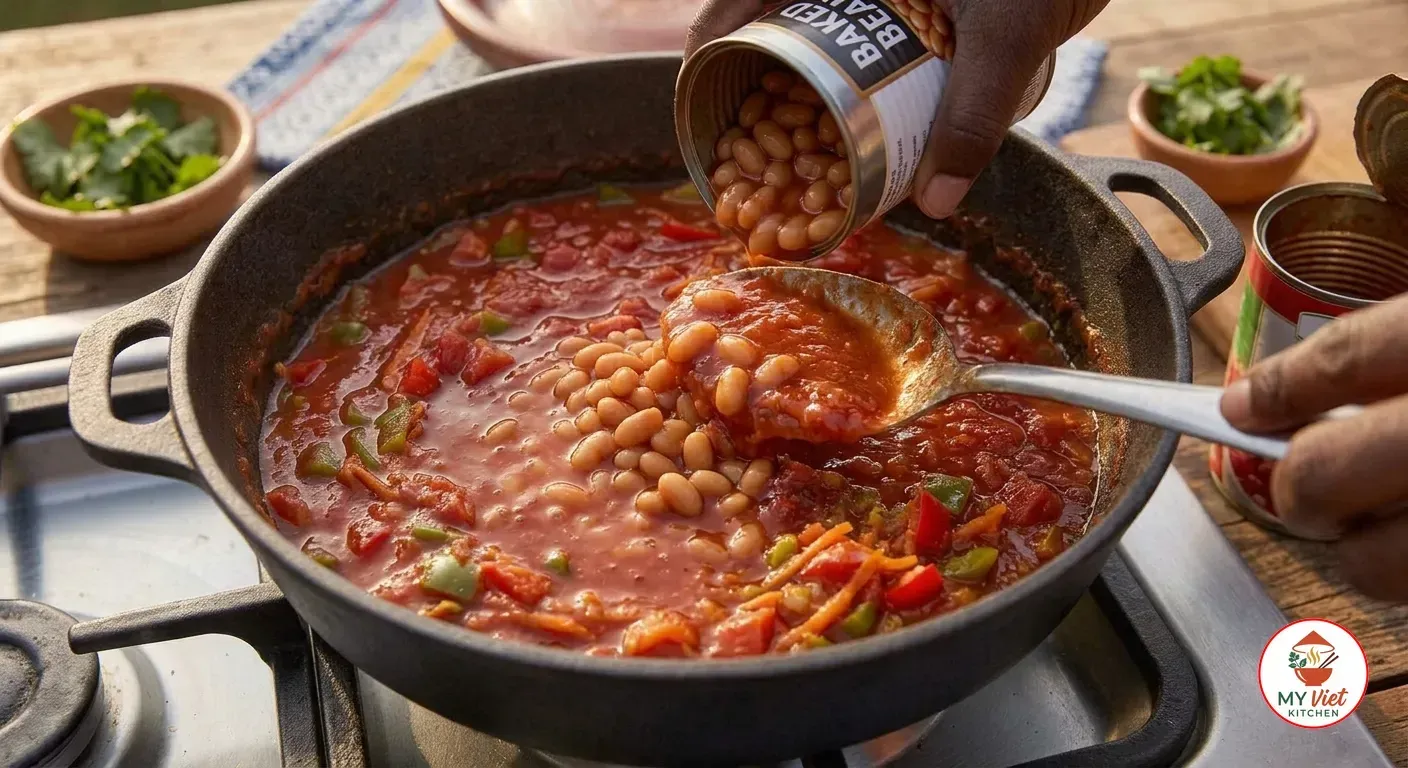
4 Now add the entire can of baked beans, including the tomato sauce they come in. Fold them gently into the veggie mix using a large spoon. Avoid stirring hard because you want the beans to stay whole rather than turning to mash. Indeed, the baked beans add protein, body, and a soft sweetness that is key to real chakalaka.
After that, let the chakalaka simmer for another 5 to 8 minutes. The sauce gets thicker as the bean liquid cooks down. Then taste the relish and tweak the seasoning. Add more salt if it tastes flat, more chili if you want extra heat, or a pinch more sugar if the tomato acid takes over. Ultimately, the final texture should be thick enough to hold its shape on a spoon.
Step 5: Garnish and Serve
5 Finally, remove the pot from the heat. Transfer the chakalaka to a large serving bowl and scatter fresh cilantro leaves over the top. The bright green cilantro adds a fresh pop against the warm, spiced relish. Some families also finish with a squeeze of lemon juice for extra zing.
Serve the chakalaka warm next to braai meat and pap for the most classic look. Or, let it cool to room temperature if you prefer. In fact, many South Africans make chakalaka a day ahead because the flavors grow and deepen overnight in the fridge. Simply bring it back to room temperature or reheat gently before your next braai.
Expert Tips for Perfect Chakalaka
Bloom Your Spices in Oil
Above all, the key technique in making great chakalaka is blooming the curry powder and cumin in hot oil before adding liquid. When dry spices hit hot fat, their oils dissolve and spread through the dish. As a result, this creates a deeper, richer flavor than just adding spices to a wet mix. So cook the spices with the veggies for at least 2 minutes before adding the tomatoes.
Control the Heat Level
First, start with fewer chilies than you think you need. You can always add more heat, but you cannot take it away once the capsaicin melts into the sauce. For a family-friendly batch, use one mild chili with the seeds removed. However, for township-style chakalaka with serious fire, use three or more bird’s eye chilies with seeds intact. Then taste after cooking and add more chili near the end if you want a stronger kick.
Cook It the Day Before
Chakalaka tastes even better the next day. As the relish sits in the fridge overnight, the spices meld with the veggies and beans. Consequently, the flavors become rounder and more unified. Because of this, chakalaka is an ideal dish for braai events since you make it in advance and focus on the fire and meat on the day itself.
Chakalaka vs. Other South African Relishes
South African cuisine features several relishes and condiments, each with a distinct character. Here is how chakalaka compares to other popular options you might see at a braai or family meal.
| Relish | How It Compares to Chakalaka |
|---|---|
| Atchar (pickled mango) | Atchar is a tangy, oil-based pickle made from green mango, vinegar, and spices. It packs intense sourness and heat in small amounts. Chakalaka is milder and eaten in larger portions as a vegetable side rather than a condiment. Both appear at braai gatherings. |
| Tomato and onion smoor | Smoor is a slow-cooked tomato and onion relish with a softer, sweeter flavor profile. It lacks the curry spices and beans that define chakalaka. Smoor works as a topping for bread and meat, while chakalaka stands alone as a substantial side dish. |
| Sous (braai sauce) | Sous is a thin, vinegar-based dipping sauce flavored with apricot jam, chutney, and spices. It serves as a condiment for dipping meat during a braai. Chakalaka functions as a full side dish with vegetables and beans rather than a dipping sauce. |
| Peri peri sauce | Peri peri is a hot sauce made from African bird’s eye chilies, garlic, and citrus. It is a pure heat condiment used in drops or drizzles. Chakalaka delivers warmth within a complete vegetable dish rather than pure concentrated fire. |
Serving Suggestions
In South Africa, chakalaka never arrives at the table alone. It plays a supporting role alongside starchy staples and grilled proteins. The relish appears at braai gatherings, family dinners, and community events throughout the year. Here are the classic ways to serve it.
The Perfect Accompaniments:
- Pap (maize porridge): Stiff pap and chakalaka form the most traditional pairing in South African home cooking. You tear off a piece of pap, press it into a scoop, and load it with chakalaka. The bland starchiness of the pap absorbs the spicy sauce perfectly. For the authentic version, see our South African pap recipe.
- Braai meat and boerewors: Chakalaka cuts through the richness of grilled beef, lamb, and boerewors sausage with its spicy acidity. Spoon it directly over sliced meat or serve it in a separate bowl for guests to help themselves. For a complete braai spread, try our braaivleis recipe.
- Vetkoek (fried bread): Split a warm vetkoek in half and fill it with chakalaka for an incredible street food combination. The crispy, oil-rich dough contrasts with the spicy, chunky relish inside. This is popular at markets and roadside stalls across South Africa.
- White bread or rolls: At many braai gatherings, guests scoop chakalaka onto slices of white bread as a quick snack while waiting for the meat to finish cooking. The soft bread soaks up the spiced tomato sauce and makes every bite satisfying.
Beverage Pairings:
- Castle Lager or craft beer: A cold lager is the default braai drink in South Africa. The crisp carbonation cleanses the palate after each spicy bite of chakalaka. A wheat beer or pale ale also pairs well with the curry spices in the relish.
- South African Chenin Blanc: If you prefer wine, a chilled Chenin Blanc from Stellenbosch offers enough acidity and fruit to stand up to the spice. The slight sweetness of the wine tempers the heat of the chilies without overwhelming the vegetable flavors.
- Rooibos iced tea: For a non-alcoholic option, chilled rooibos tea with a squeeze of lemon provides a uniquely South African pairing. The earthy, caffeine-free tea refreshes the palate between bites of spicy chakalaka.
Storage and Reheating
Refrigerator: Store leftover chakalaka in an airtight box for up to 5 days. In fact, the flavors improve after sitting overnight as the spices meld with the veggies and beans. As a result, chakalaka is one of the best make-ahead dishes for braai events and meal prep.
Freezer: Freeze chakalaka in sealed boxes for up to 3 months. Leave about half an inch of space at the top because the liquid expands as it freezes. Then thaw overnight in the fridge before reheating. Although the texture of the veggies softens a bit after freezing, the flavor stays great.
Reheating: Warm leftover chakalaka gently in a pot over medium-low heat, stirring now and then. If the relish has gotten too thick, add a splash of water. Also, avoid using the microwave at high power because it can make the beans burst and turn mushy. Alternatively, you can serve cold chakalaka at room temperature without any reheating.
Common Mistakes to Avoid
1. Adding the Beans Too Early
One of the most common chakalaka mistakes is adding the baked beans at the same time as the raw veggies. Beans cook much faster than peppers and carrots. So if you add them too early, they turn to mush by the time the other veggies are done. Instead, always add the beans in the last 5 to 8 minutes. This keeps them whole and gives the relish a nice texture with clear bean shapes in every spoonful.
2. Skipping the Spice Blooming Step
Dumping curry powder right into wet tomatoes makes a flat, raw-tasting chakalaka. Dry spices need contact with hot oil to release their full flavor. So when you stir curry powder and cumin into the hot veggies before adding liquid, the spices bloom. In turn, their oils activate and spread through the entire dish. Therefore, skipping this step means you lose half the flavor depth that makes chakalaka so fragrant and rich.
3. Making It Too Watery
Chakalaka should be thick enough to hold its shape on a spoon. A watery, soupy result means the relish slides off pap and drowns the meat. To avoid this, let the tomato mix simmer and reduce before adding the beans. If your chakalaka still seems too thin, then cook it with the lid off for a few extra minutes to boil off excess liquid. Additionally, the grated carrots help thicken the sauce on their own as they break down.
Frequently Asked Questions
What is the origin of chakalaka?
Chakalaka started in the townships near Johannesburg, mainly in Soweto, during the mid-20th century. Mine workers from different ethnic groups pooled their foods and cooking styles to create shared meals. As a result, the dish reflects Indian curry influences, local African veggie and chili tastes, and British pantry staples like baked beans. Over time, chakalaka spread from the mining compounds to homes, braai events, and restaurants across the whole country.
Can I make chakalaka vegan?
Yes, chakalaka is naturally vegan as long as you use baked beans that do not contain pork or animal fat. Most canned baked beans in tomato sauce are vegan-friendly. Just check the label to confirm. Because the rest of the items are fully plant-based, chakalaka works great as a side dish for vegan braai events. You can even serve it as a main course over rice or with bread for a full vegan meal.
What curry powder works best for chakalaka?
South African-style medium curry powder gives the most real flavor. Brands like Rajah and Pakco are popular in South Africa. If you cannot find those, any good Madras curry powder works well instead. However, avoid mild or sweet curry powders because they lack the warmth that defines chakalaka. For extra depth, toast the curry powder in the dry pot for 30 seconds before adding the oil and veggies.
Variations and Adaptations
Bean-Free Chakalaka:
Some South African cooks make chakalaka without any beans at all. Instead, this version focuses on the spiced veggies only. Increase the peppers and carrots by about 50 percent to make up for the missing volume. Also, add half a diced sweet potato for body and natural sweetness. The bean-free version has a lighter, more veggie-forward character that works well as a fresh relish served at room temperature.
Extra-Hot Township Style:
For a chakalaka that matches the heat found in Soweto kitchens, use 4 to 5 bird’s eye chilies with seeds intact. Additionally, add a tablespoon of hot chili flakes along with the curry powder. Then finish with a big drizzle of peri peri sauce after cooking. Certainly, this version brings serious fire and pairs best with plenty of starchy pap to tame the burn. It is not for the faint-hearted, but it is the version many South Africans grew up eating.
Baked Chakalaka Casserole:
Simply transfer the cooked chakalaka to an oven-safe dish and top it with grated cheddar cheese. Then bake at 375 degrees for 15 minutes until the cheese melts and turns golden brown. As a result, this baked version turns chakalaka into a warm, cozy dish that works great for winter braai events. The melted cheese adds richness while the spicy relish below keeps its full flavor.
The Cultural Significance of Chakalaka
Chakalaka carries a story of strength, community, and cultural fusion that mirrors the history of South Africa. The dish came from the mining compounds near Johannesburg, where workers from Zulu, Xhosa, Sotho, Indian, and other groups lived and cooked side by side. In those shared kitchens, foods and methods crossed ethnic lines. For example, curry powder met African chilies, and British canned goods merged with local veggies. As a result, the dish belonged to no single group but to all of them as one.
Today, chakalaka shows up at every big South African gathering. It sits on the table at braai parties next to pap and grilled meat. Similarly, it appears at weddings, funerals, church events, and neighborhood get-togethers. Meanwhile, street vendors sell it in townships from large pots, spooned into bread rolls or over pap. In many ways, chakalaka has become a symbol of the rainbow nation, a dish that brings different groups together around a shared table. For more South African dishes that carry this same spirit, explore our collection of African recipes including South African bobotie and Durban bunny chow.
Conclusion
Making real chakalaka at home requires only basic veggies, canned goods, and a good curry powder. The method is simple: saute the aromatics, bloom the spices, simmer the tomatoes, and fold in the beans at the end. Yet these easy steps produce a relish with great depth of flavor. The curry warms, the chilies bite, the beans add body, and the thick sauce ties it all into one bold dish.
Whether you serve this chakalaka at your next braai, alongside a weeknight dinner, or as a make-ahead side for a gathering, it brings the bold, generous spirit of South African cooking to every plate. Pair it with pap and grilled meat for the full experience, or enjoy it on bread as a satisfying snack. For more South African favorites, explore our African dishes collection including homemade biltong and traditional potjiekos.