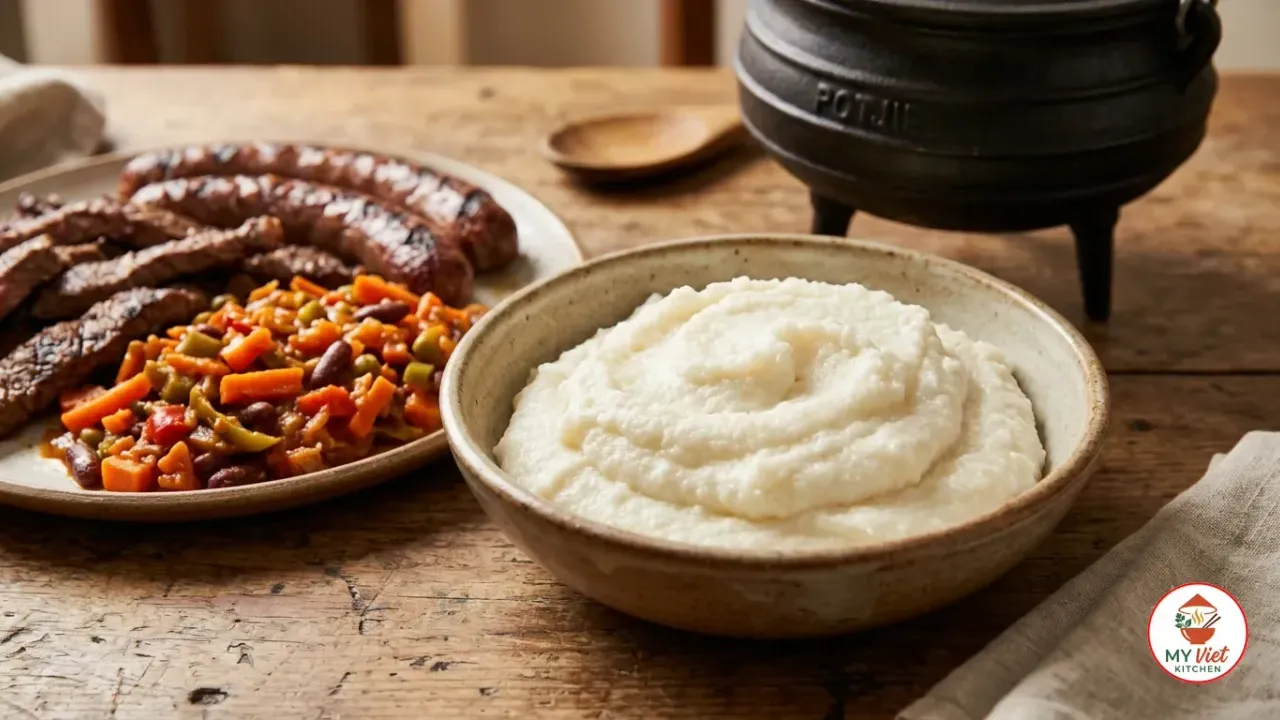
South African pap is the heartbeat of the nation’s table, a smooth and comforting maize porridge that has sustained families for generations. This south african pap recipe walks you through every detail of making perfect pap at home, from choosing the right mealie meal to mastering the three classic textures. Whether you serve it stiff alongside braai meat or soft with milk and sugar for breakfast, pap anchors every South African meal with quiet, dependable warmth.
Prep Time: 5 minutes | Cook Time: 30 minutes | Servings: 6
Difficulty: Easy | Calories: ~210 per serving
What Makes South African Pap Special?
Pap holds a position in South African cuisine that few other foods can claim. In fact, it appears at breakfast, lunch, and dinner across every province and every community. The word “pap” comes from Afrikaans and simply means “porridge,” but calling it just porridge misses the point entirely. Pap is a cultural anchor, a dish that connects Zulu, Xhosa, Sotho, Tswana, and Afrikaner families through shared meals and shared memories.
What makes this south african pap recipe remarkable is its simplicity. You need only three ingredients: white maize meal, water, and salt. Yet from these humble building blocks, South African cooks create three distinct textures that serve different purposes at the table. Slappap is soft and runny, perfect for breakfast with milk and sugar. Stywe pap is stiff and firm, ideal for scooping up stews and sauces with your hands. Krummelpap, also called phutu pap, is dry and crumbly, favored in KwaZulu-Natal and often served with chakalaka or amasi (fermented milk).
The cultural significance runs deep. At braai gatherings, pap sits at the center of the table beside boerewors and chakalaka. During traditional ceremonies, pap feeds entire communities. In rural areas, families grow their own maize and mill it into mealie meal at local grinding stations. As a result, the flavor of homemade pap varies from village to village, each carrying the subtle character of locally grown maize. Understanding this dish means understanding South Africa itself, because pap is not merely food. It is identity.

Choosing the Right Maize Meal
The quality of your pap depends almost entirely on the maize meal you select. South African stores stock several brands and grinds, and each produces a different result. Choosing the right one ensures your south african pap recipe turns out with the correct texture and flavor.
- White maize meal (best choice): Traditional South African pap always uses white maize meal, commonly called “mealie meal.” Brands like Iwisa, White Star, and Ace are the most popular in South Africa. White maize meal produces a clean, mild flavor and the characteristic white color that defines authentic pap.
- Super fine grind: Super fine mealie meal works best for slappap and stywe pap because it absorbs water evenly and creates a smooth texture. If you want a silky porridge without any grit, choose the finest grind available.
- Coarse grind: Coarse maize meal is the right choice for krummelpap or phutu pap. The larger granules stay separate during cooking instead of clumping together, giving the pap its signature crumbly texture. However, coarse grind takes slightly longer to cook through completely.
Ingredients for South African Pap
Main Ingredients:
- 2 cups white maize meal (mealie meal)
- 4 cups water
- 1 teaspoon salt
Optional Additions:
- 1 tablespoon butter for richness
- 1/2 cup milk for a creamier texture
- 1 teaspoon sugar for breakfast-style slappap
For Serving:
- Chakalaka (spicy vegetable relish)
- Tomato and onion gravy (sous)
- Braai meat, boerewors, or stewed chicken
- Amasi (fermented milk) for traditional phutu pap
Pro tip: Always use a heavy-bottomed pot when making pap. Thin pots create hot spots that burn the bottom layer before the rest cooks through. A cast iron pot or thick stainless steel pot distributes heat evenly and prevents sticking.
Step-by-Step Instructions
Step 1: Boil the Water
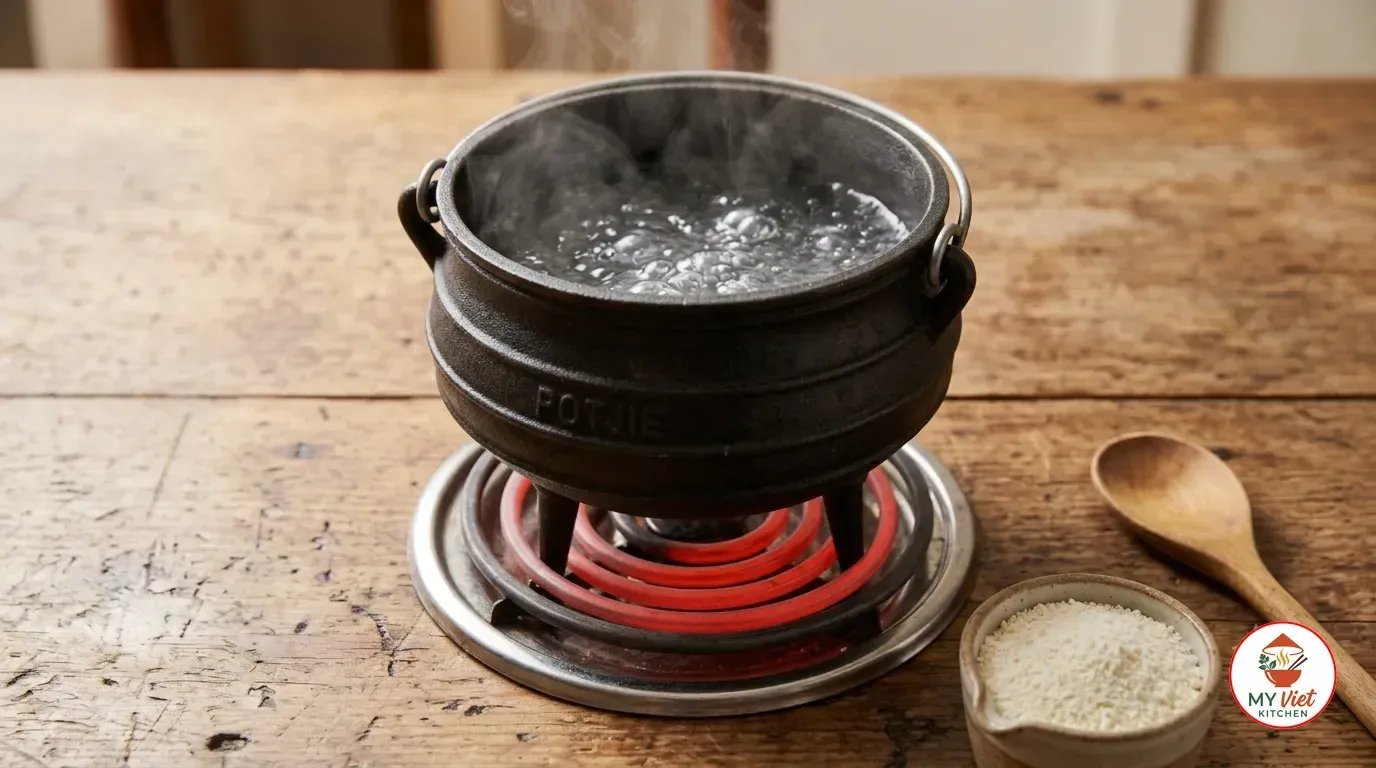
1 Pour 4 cups of water into a heavy-bottomed pot and add the salt. Place the pot over high heat and bring the water to a full, rolling boil. The water must reach a vigorous boil before you add any maize meal, because lukewarm water causes the mealie meal to clump immediately.
While you wait for the water to boil, measure out your maize meal and keep it within arm’s reach. Also, have a sturdy wooden spoon ready. You will need to stir quickly once the maize meal hits the water, so preparation at this stage saves you from a lumpy disaster later.
Step 2: Add the Maize Meal
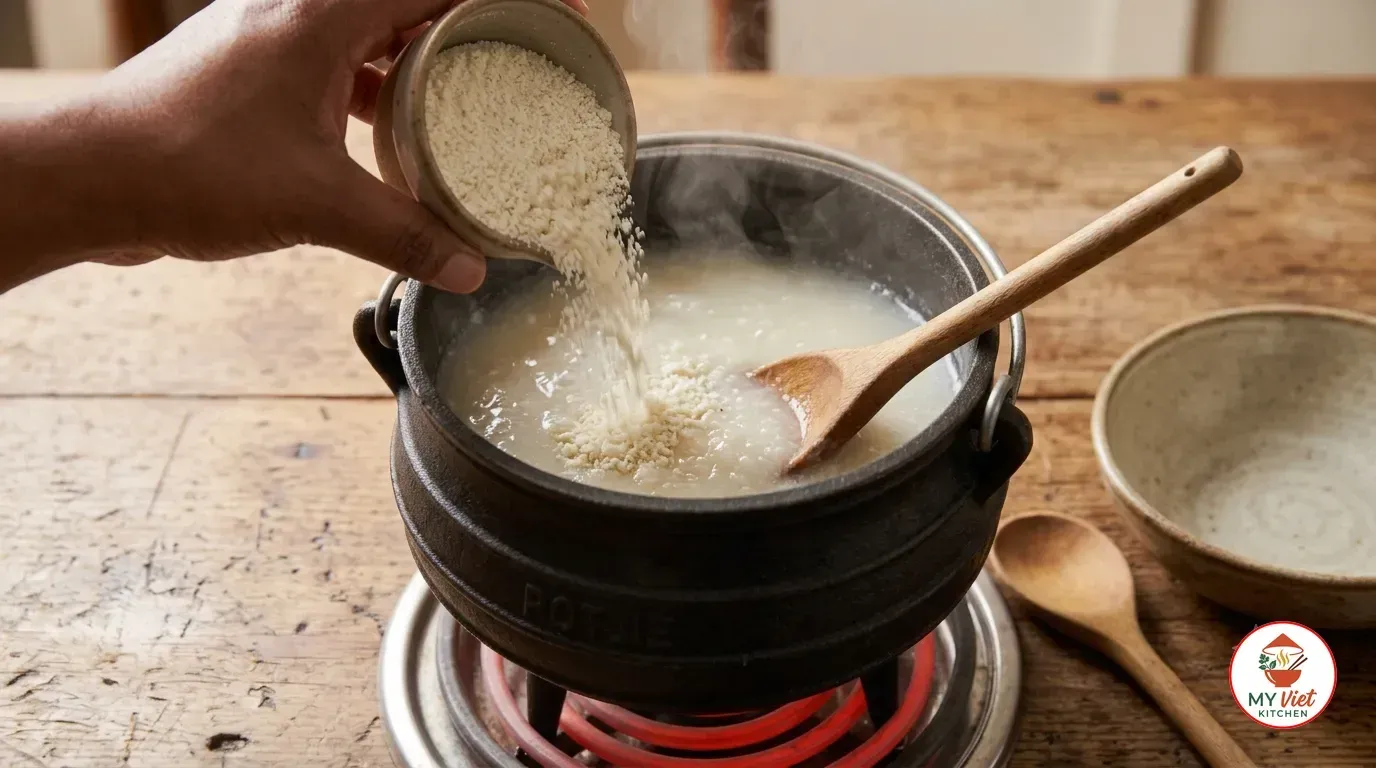
2 Reduce the heat to medium-low. Then slowly sprinkle the maize meal into the boiling water in a thin, steady stream while stirring constantly with your wooden spoon. Do not dump the maize meal in all at once, because that creates large lumps that are nearly impossible to break apart.
Keep stirring as you add the maize meal. The mixture will thicken gradually and start to resist your spoon. If you spot any small lumps forming, press them against the side of the pot with the back of the spoon to crush them. This step takes about 3 to 4 minutes, and patience here determines whether your south african pap recipe produces a smooth result or a lumpy one.
Step 3: Steam the Pap
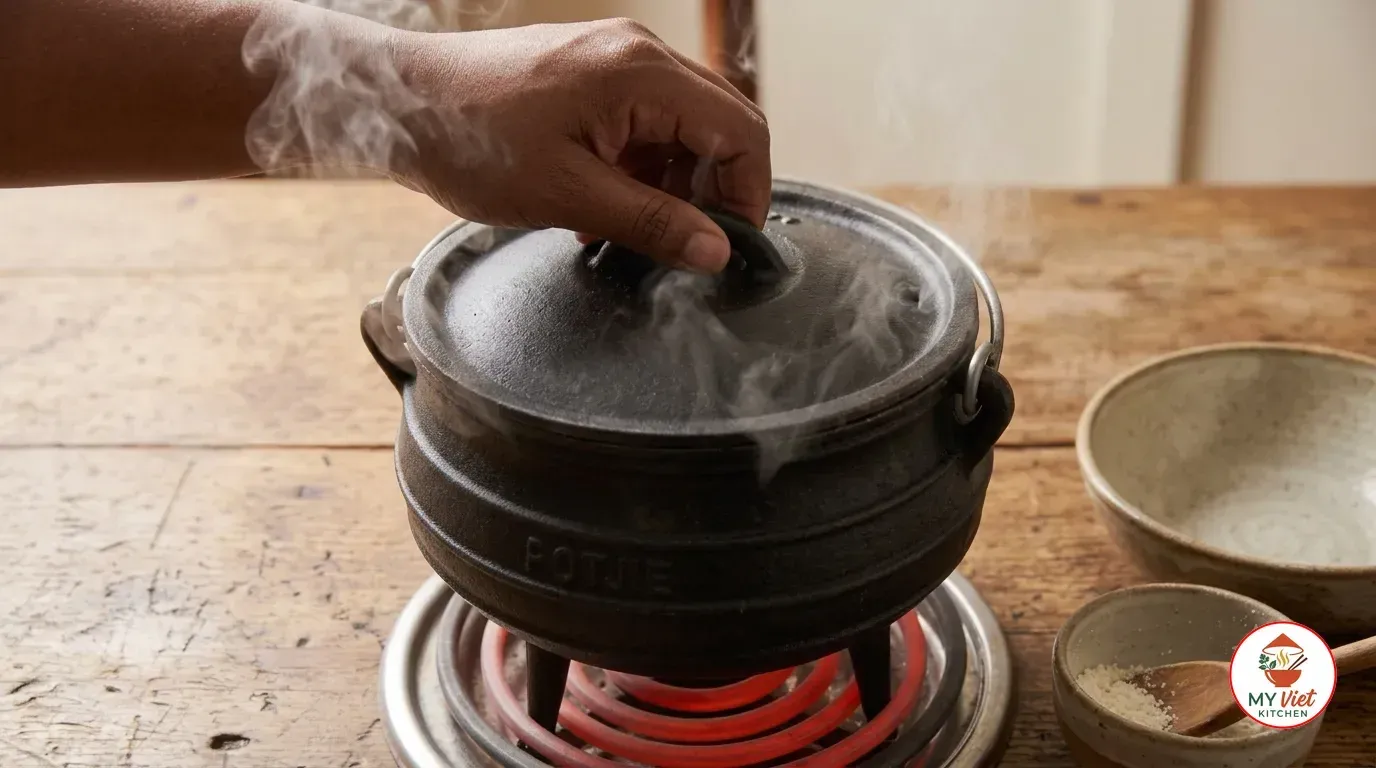
3 Once all the maize meal is incorporated and the mixture pulls away from the sides of the pot, cover with a tight-fitting lid. Reduce the heat to the lowest possible setting. Let the pap steam undisturbed for 20 to 25 minutes. This steaming phase is critical because it cooks the maize meal all the way through and removes the raw, gritty taste.
After about 10 minutes, remove the lid briefly and stir the pap once to redistribute the heat. Then cover again and continue steaming. You may notice a thin layer forming on the bottom of the pot, and this is normal. That bottom crust, known as “intlama” in Xhosa cooking, is actually considered a treat by many South Africans. Some families scrape it out and eat it separately because it has a toasted, nutty flavor.
Step 4: Fluff and Serve
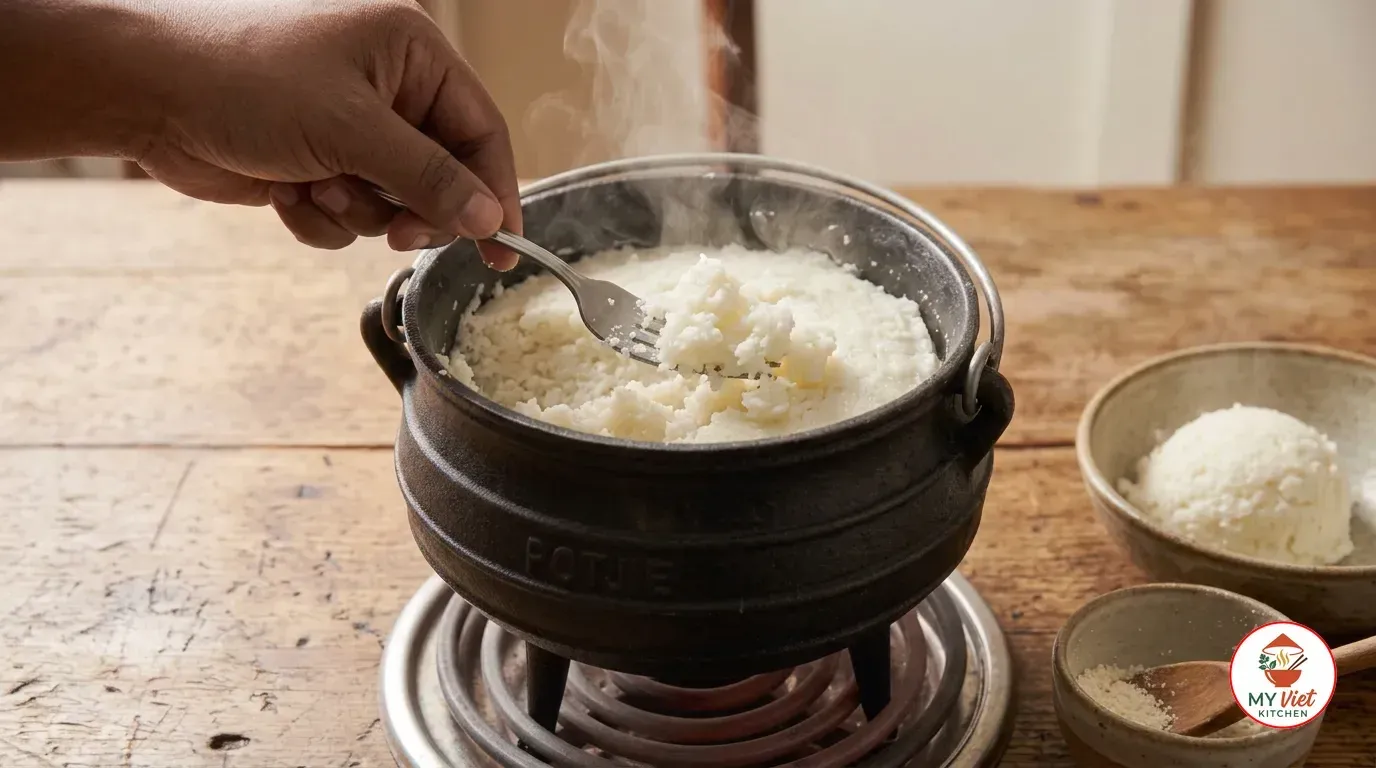
4 Remove the lid and use a fork to fluff the pap, breaking up any dense sections. If you want a richer result, add the tablespoon of butter now and fold it through until melted. The pap should look smooth, pull cleanly from the spoon, and hold its shape when scooped.
Transfer the pap to a serving bowl or plate it directly alongside your braai meat and chakalaka. Serve immediately while hot, because pap firms up and dries out as it cools. If the pap feels too stiff, stir in a small splash of hot water to loosen the texture before serving.
Expert Tips for Perfect South African Pap
The Ratio Is Everything
The water-to-maize-meal ratio controls the final texture. Stywe pap (stiff) calls for a 2:1 ratio of water to maize meal. Slappap (soft porridge) needs more liquid, so increase to a 3:1 or 4:1 ratio. Meanwhile, krummelpap (crumbly) uses only a 1.5:1 ratio, and you fork the mixture apart rather than stirring it smooth. Memorizing these ratios lets you adapt a single south african pap recipe to any meal.
Low and Slow Wins
After the initial mixing, always cook pap on the lowest heat setting your stove offers. High heat scorches the bottom and gives the entire batch a burnt taste. The slow steaming process allows moisture to penetrate every grain of maize meal, resulting in a fluffy texture that melts on the tongue. Rushing this step is the most common mistake beginners make.
Use a Wooden Spoon
South African grandmothers insist on wooden spoons for pap, and food science supports their wisdom. Wood does not conduct heat, so you can stir hot pap without burning your hand. Furthermore, the rough texture of wood grips the thick porridge better than smooth metal or silicone. A flat-edged wooden spoon works best because it scrapes the bottom of the pot and prevents sticking.
Three Textures of Pap Compared
South African pap comes in three main styles, and each serves a different role at the table. Understanding the differences helps you choose the right texture for your meal.
| Feature | Slappap (Soft) | Stywe Pap (Stiff) | Krummelpap (Crumbly) |
|---|---|---|---|
| Water Ratio | 4:1 | 2:1 | 1.5:1 |
| Texture | Runny, like porridge | Firm, holds shape | Dry, crumbly grains |
| Best Served With | Milk and sugar | Braai, stews, chakalaka | Amasi, chakalaka |
| Meal Occasion | Breakfast | Lunch and dinner | Any meal |
| Cooking Method | Stir smooth, no steaming | Stir then steam 20-25 min | Fork apart, steam 20 min |
Serving Suggestions
Pap rarely stands alone on a South African plate. Instead, it serves as the foundation that carries bold, saucy, and spicy dishes. Choosing the right accompaniment turns a simple bowl of pap into a complete and satisfying meal.
The Perfect Accompaniments:
- Chakalaka: This spicy vegetable relish is the most classic pairing with pap. The heat and tang of chakalaka cut through the mild creaminess of the porridge, creating a balanced bite.
- Tomato and onion gravy (sous): A quick sauce of sauteed onions, tomatoes, and a pinch of sugar poured over pap gives you the everyday home-cooked meal that millions of South Africans eat.
- Braai meat: Grilled steak, lamb chops, or chicken pieces served alongside stiff pap form the backbone of any South African braai gathering.
- Boerewors: This coiled South African sausage, grilled until charred and juicy, pairs wonderfully with pap. You tear off a piece of pap, wrap it around a bite of boerewors, and eat it with your hands.
- Amasi: Fermented milk poured over crumbly phutu pap creates a traditional Zulu meal that is both nourishing and refreshing, especially during hot summer months.
Beverage Pairings:
- Rooibos tea: A warm cup of rooibos complements pap at breakfast, especially when the pap is served soft with milk and sugar.
- Umqombothi: This traditional Zulu beer brewed from maize and sorghum pairs naturally with pap at celebrations and ceremonies.
- Castle Lager or a South African red wine: At braai gatherings, a cold lager or a bold Pinotage red wine stands up to the hearty combination of pap and grilled meat.
Storage and Reheating
Refrigerator: Store leftover pap in an airtight container for up to 3 days. The pap will firm up considerably in the fridge, but this is normal and easily fixed during reheating.
Freezer: Pap freezes well for up to 2 months. Portion it into freezer-safe containers or zip-lock bags before freezing. Thaw overnight in the refrigerator before reheating.
Reheating: Add a few tablespoons of water or milk to the cold pap in a pot over medium-low heat. Stir frequently until the pap returns to a smooth, warm consistency. You can also microwave it in 1-minute intervals, stirring between each round, until heated through. Adding a small knob of butter during reheating restores the creamy mouthfeel.
Common Mistakes to Avoid
1. Adding Maize Meal to Cold Water
This is the most frequent error, and it ruins the texture before you even begin. Maize meal added to cold or lukewarm water clumps together into dense balls that no amount of stirring can fix. Always wait for a full rolling boil before adding any maize meal. The boiling water keeps the granules separate as they hydrate, giving you a smooth foundation to work with.
2. Cooking on High Heat Throughout
High heat belongs only at the boiling stage. Once you add the maize meal and mix it in, drop the heat to the lowest setting immediately. Pap that cooks on high heat scorches on the bottom, and that burnt flavor spreads through the entire pot. Additionally, high heat evaporates the water too quickly, leaving you with dry, cracked pap instead of a smooth and fluffy result.
3. Skipping the Steaming Phase
Some cooks stir the pap until it thickens and then serve it right away. However, this shortcut leaves the maize meal undercooked at the center of each grain. The result tastes gritty and raw rather than smooth and clean. The 20 to 25 minute steaming phase under a tight lid is essential because it allows moisture and heat to fully penetrate the maize meal. Patience during this step makes the difference between mediocre pap and the kind that South African grandmothers proudly serve.
Frequently Asked Questions
What is the difference between pap and ugali?
Pap and ugali are closely related staples that share a common ancestor. Both are boiled maize porridges served as side dishes in African cuisines. The main differences lie in the type of maize meal and the final texture. South African pap typically uses finer white maize meal, while East African ugali often uses a slightly coarser grind. Stywe pap and ugali have similar stiff textures, but pap also comes in soft (slappap) and crumbly (krummelpap) versions that ugali traditions do not include.
Can I use yellow cornmeal instead of white maize meal?
You can substitute yellow cornmeal in an emergency, but the result will differ from authentic South African pap. Yellow cornmeal has a stronger, sweeter corn flavor and produces a yellowish porridge. White maize meal gives pap its traditional mild taste and pale color. If you cannot find white mealie meal at regular grocery stores, check African or international food markets, or order it online from South African specialty retailers.
How do I make phutu pap (krummelpap)?
To make phutu pap, use a 1.5:1 water-to-maize-meal ratio with coarse grind mealie meal. Bring the water to a boil and add the maize meal. Instead of stirring it smooth, use a fork to break the mixture apart into small, separate crumbles. Then cover and steam on low heat for 20 minutes, forking the pap apart once or twice during cooking. The finished phutu should look like fluffy, dry grains that separate easily, similar to couscous in appearance.
Is pap healthy?
Pap provides a solid source of carbohydrates and energy, making it an affordable and filling staple food. One serving contains roughly 210 calories, mostly from complex carbohydrates. Maize meal also supplies some B vitamins and iron, especially if fortified. Many South African brands add these nutrients by law. However, pap is low in protein and fiber on its own. Pairing it with braai meat, beans, or amasi creates a more balanced meal.
Variations and Adaptations
Breakfast Slappap:
For a soft breakfast porridge, increase the water ratio to 4:1 and stir continuously without covering. Once smooth and pourable, serve in a bowl with cold milk poured around the edges, a spoonful of sugar, and a pat of butter melting on top. Some families add cinnamon or a drizzle of golden syrup. This version of the south african pap recipe is comfort food at its purest.
Cheesy Pap:
Stir a generous handful of grated cheddar cheese into the finished pap along with a tablespoon of butter. The cheese melts into the hot porridge, and kids love this rich and savory twist. Cheesy pap pairs well with grilled chicken or boerewors and turns an everyday side into something indulgent.
Pap Tart (Mieliepap Tart):
This sweet dessert transforms leftover pap into a baked treat. Mix cold pap with eggs, sugar, butter, and a splash of vanilla extract. Pour the mixture into a greased dish and bake at 180 degrees Celsius for 30 to 35 minutes until golden. Sprinkle cinnamon sugar on top before serving. Mieliepap tart appears at many South African potlucks and church gatherings.
Fried Pap:
Slice cold, firm leftover pap into thick rounds or wedges. Pan-fry them in butter over medium-high heat until crispy on both sides. The outside gets a nice crunch while the inside stays soft. Serve fried pap with eggs and bacon for a hearty breakfast. You can also top the slices with chakalaka as a fun appetizer.
The Cultural Significance of Pap
Pap occupies a position in South African life that goes far beyond the kitchen. For centuries, maize cultivation shaped the economy, the landscape, and the daily rhythms of communities across the country. When European settlers introduced maize to southern Africa in the 17th century, it quickly replaced local grains as the primary crop. The climate and soil suited maize perfectly, so it spread fast. Over time, pap became the staple that fed entire nations through prosperity and hardship alike.
In Zulu culture, pap plays a role in important ceremonies such as weddings and coming-of-age celebrations. Making pap for a large gathering is a communal act, often led by the eldest women in the family. In Sotho and Tswana traditions, pap forms the core of funeral meals. Feeding the community expresses respect for the departed. At township shebeens and rural homesteads, pap with tomato sauce or braai meat remains the meal that brings people together at the end of a long day.
The braai itself cannot exist without pap. Ask any South African, and they will confirm that a braai without pap is simply an outdoor barbecue, missing its soul. When the coals glow and the boerewors sizzle, pap steams in a heavy pot off to the side. That is when the gathering becomes something distinctly South African. This south african pap recipe carries that tradition forward, inviting cooks around the world to experience the dish that feeds an entire nation.
Conclusion
Making perfect pap at home requires just three ingredients and about 35 minutes of your time, yet it connects you to one of the richest food traditions on the African continent. Focus on the fundamentals: boiling water before adding maize meal, stirring out every lump, and steaming low and slow until the texture turns fluffy. Master those steps, and you will produce pap that rivals what South African grandmothers serve.
Whether you pair it with fiery chakalaka, juicy braai meat, or simply milk and sugar for a quiet breakfast, pap adapts to every occasion. Explore our collection of African recipes for more dishes that pair beautifully with this timeless staple.