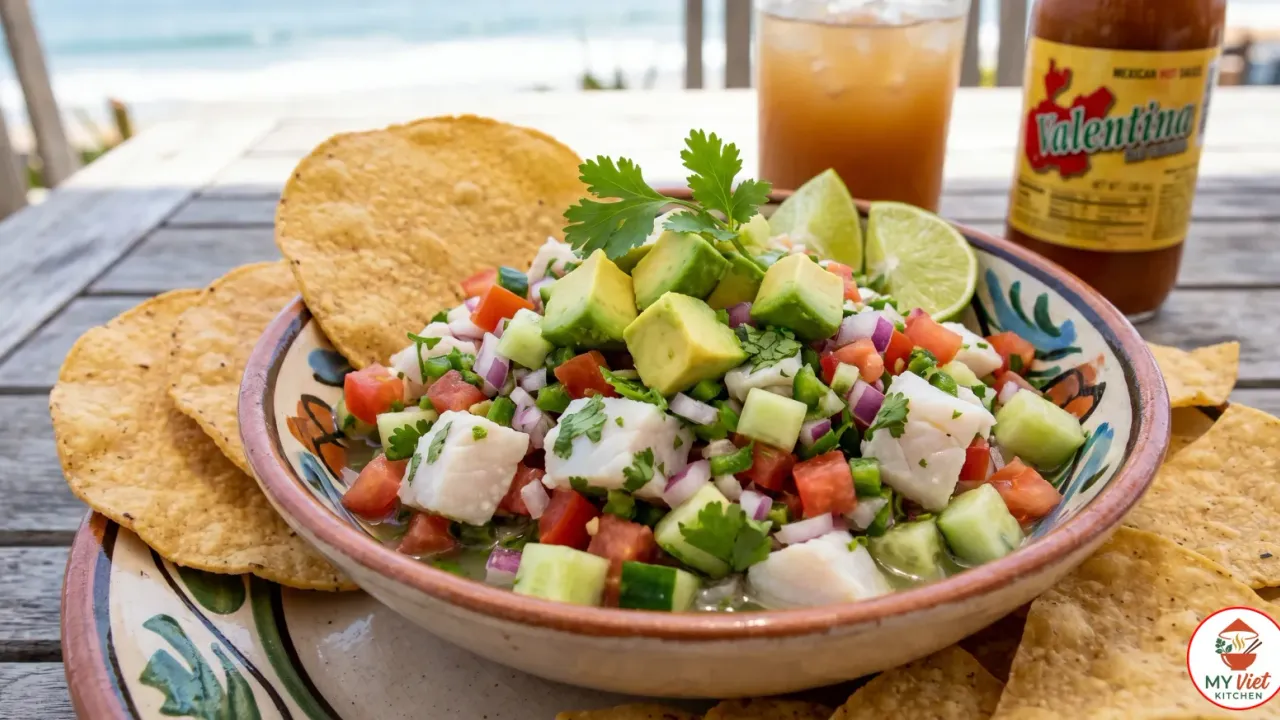
Ceviche Mexicano is one of the most vibrant and refreshing dishes in all of Mexican cuisine, and this ceviche mexicano recipe shows you exactly how to make it at home. Fresh white fish is cured in bright lime juice, then tossed with ripe tomatoes, fiery chiles, cool cucumber, and creamy avocado. This beloved Mexican appetizer requires absolutely no cooking and comes together in just 25 minutes. Whether you serve it at a summer cookout or as a weeknight starter, ceviche mexicano delivers bold, clean flavors that capture the spirit of coastal Mexico.
Prep Time: 25 minutes | Cook Time: 0 minutes (no cooking required) | Servings: 6
Difficulty: Easy | Calories: ~180 per serving
What Makes Ceviche Mexicano Special?
Ceviche mexicano stands apart from other ceviche styles because of its bold, layered flavors. While Peruvian ceviche focuses on a quick cure and a spicy citrus broth, the Mexican version lets the fish sit longer in lime juice. Then it folds in a generous mix of chopped vegetables. As a result, the dish feels almost like a fresh salsa with tender, citrus-kissed fish at its center. Every bite delivers a different mix of tangy, spicy, cool, and creamy textures.
In fact, the magic of ceviche mexicano lies in the chemistry of the cure. Citric acid from fresh lime juice changes the fish from soft and clear to firm and white. This process mimics heat without ever touching a stove. The science is simple, but the timing matters. Too little time leaves the fish raw in the center. On the other hand, too much time turns it rubbery and chalky. Because of this, fifteen to twenty-five minutes in fresh lime juice hits the sweet spot.
Ceviche has deep roots across Latin America, but the Mexican version carries its own distinct identity. Coastal cities like Acapulco, Mazatlan, and Ensenada each claim their own style. In Sinaloa, cooks add cucumber and a splash of Maggi sauce. In Baja California, the ceviche might feature shrimp, octopus, or a mix of seafood. Regardless of the region, the core remains the same: impeccably fresh fish, abundant lime juice, and a fearless hand with chiles and cilantro.

Choosing the Right Fish for Ceviche Mexicano
The fish you choose makes or breaks your ceviche mexicano. Since the fish is never heated, freshness is not just important but essential. Here is a guide to picking the best fish for this recipe.
- Sea bass (corvina): This is the gold standard for ceviche mexicano in Mexico. The flesh is firm, white, and mild, with a clean ocean flavor that absorbs lime juice beautifully. It holds its shape during the cure and does not fall apart when mixed with the vegetables.
- Red snapper (best choice): Snapper offers a slightly sweet, delicate flavor that works wonderfully in ceviche. The texture is firm enough to withstand the acid cure, and the fish cures evenly when cut into small cubes. Many coastal Mexican ceviche stands use snapper as their primary fish.
- Tilapia (budget-friendly option): Widely available and affordable, tilapia is a solid choice for everyday ceviche. The flavor is neutral and mild, which allows the lime, chiles, and cilantro to dominate. However, tilapia is softer than snapper or sea bass, so handle it gently during mixing.
- Mahi-mahi: This tropical fish has a slightly firmer, meatier texture that holds up extremely well to the lime cure. It adds a subtle sweetness and works especially well if you prefer chunkier cubes in your ceviche.
Ingredients for Ceviche Mexicano
The Fish and Cure:
- 1 pound fresh white fish fillets (tilapia, snapper, or sea bass), cut into 1/2-inch cubes
- 1 cup fresh lime juice (about 10 limes)
Fresh Vegetables and Aromatics:
- 3 medium Roma tomatoes, seeded and diced
- 1/2 red onion, finely diced
- 1 medium cucumber, peeled and diced
- 1 serrano chile, seeded and minced
- 1 jalapeno pepper, seeded and minced
- 1/2 cup fresh cilantro, chopped
- 1 ripe avocado, diced
Seasonings and Serving:
- 2 tablespoons extra virgin olive oil
- 1 teaspoon salt
- 1/2 teaspoon dried oregano
- 1/4 teaspoon black pepper
- Tostadas or tortilla chips for serving
Pro tip: Always squeeze your limes fresh. Bottled lime juice contains preservatives that dull the flavor and produce an inferior cure. You need the bright, sharp acidity of freshly squeezed limes for authentic ceviche mexicano. Roll each lime firmly on the counter before cutting to extract maximum juice.
Step-by-Step Instructions
Step 1: Cure the Fish in Lime Juice
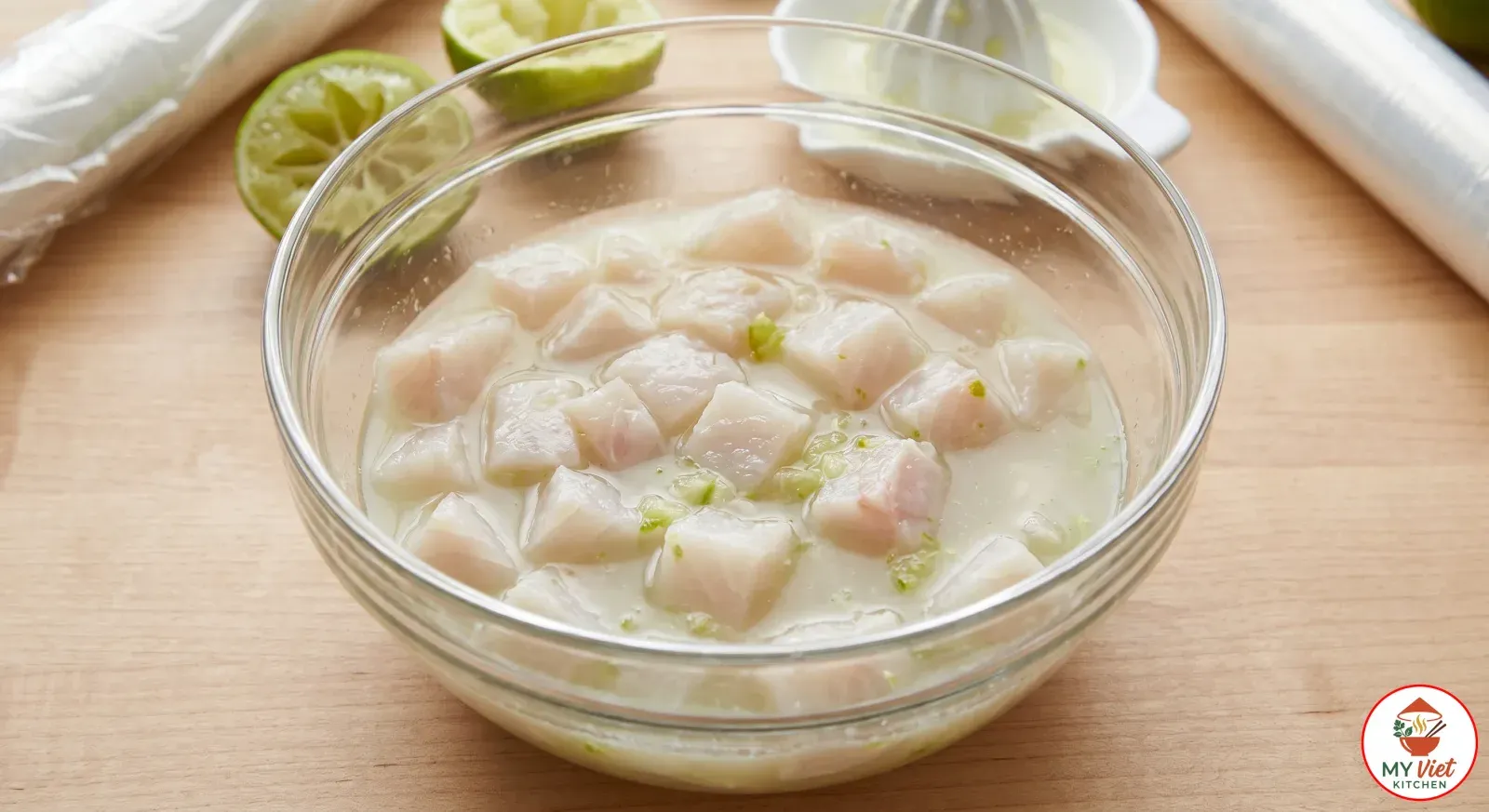
1 Cut the fresh fish fillets into small, even cubes about half an inch across. Uniformly sized pieces ensure even curing. Place the cubes in a glass or ceramic bowl and pour the fresh lime juice over them. Make sure every piece is fully submerged. Cover the bowl tightly with plastic wrap and refrigerate for 15 to 25 minutes.
Check the fish at the 15-minute mark. At this point, the cubes should look opaque on the outside but may still be slightly clear in the center. For a fully cured texture, wait the full 25 minutes. The acid in the lime juice changes the proteins, so the fish turns firm and flaky. Also, do not use a metal bowl for this step, since the acid can react with certain metals and create an off taste.
Step 2: Prepare the Fresh Vegetables
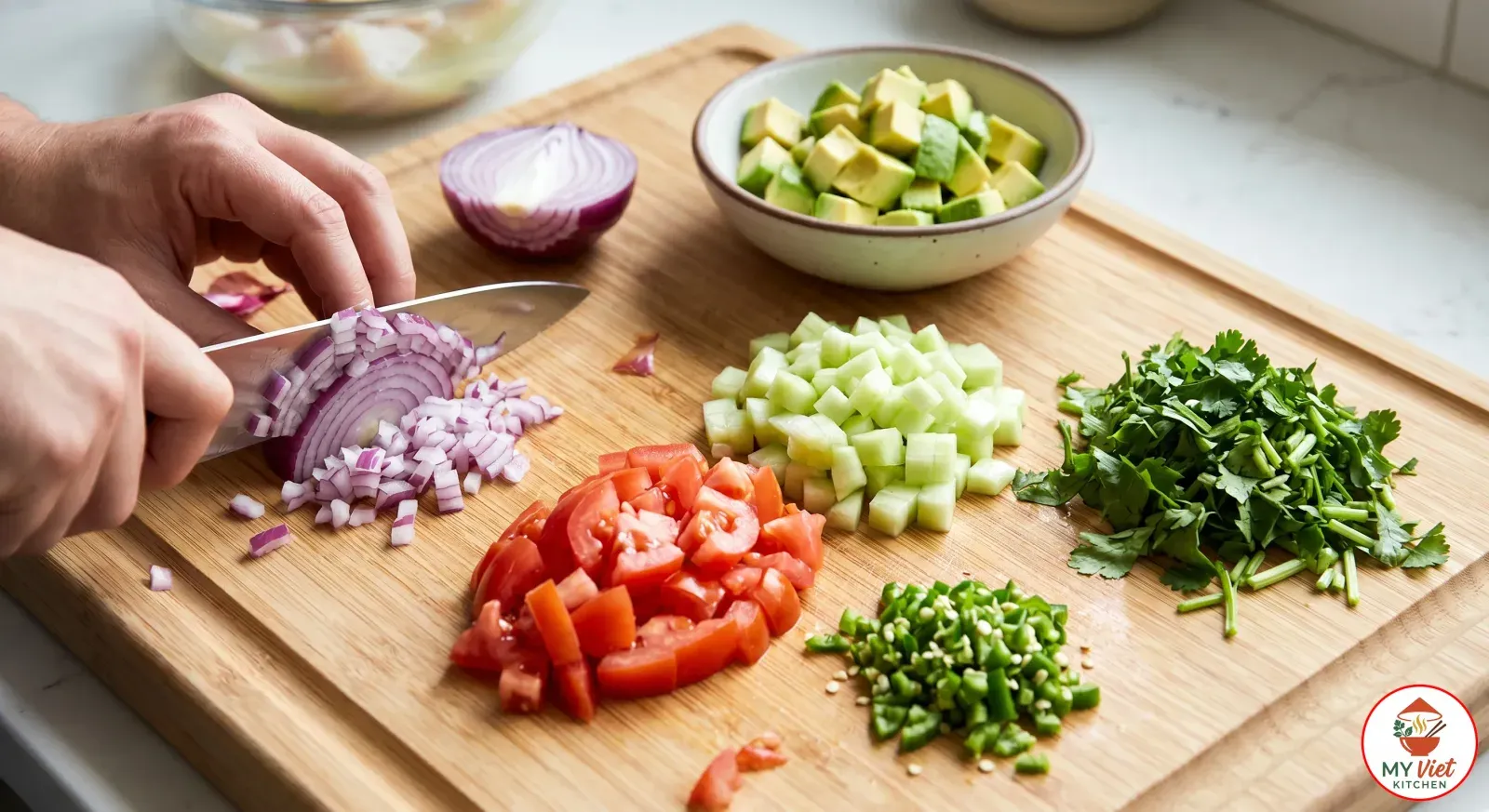
2 While the fish cures, prepare all the fresh vegetables. First, dice the Roma tomatoes after removing the seeds and watery pulp. Then finely dice the red onion and peel and dice the cucumber. Next, mince the serrano chile and jalapeno, removing the seeds if you prefer less heat. Finally, chop the cilantro roughly, using both the leaves and tender stems for extra flavor.
Dice the avocado last and set it aside. Adding avocado too early causes it to oxidize and turn brown. Furthermore, avocado is delicate and will mash if you mix it in with the other vegetables too aggressively. Keep it separate until the final assembly step to maintain those beautiful green cubes.
Step 3: Drain and Combine
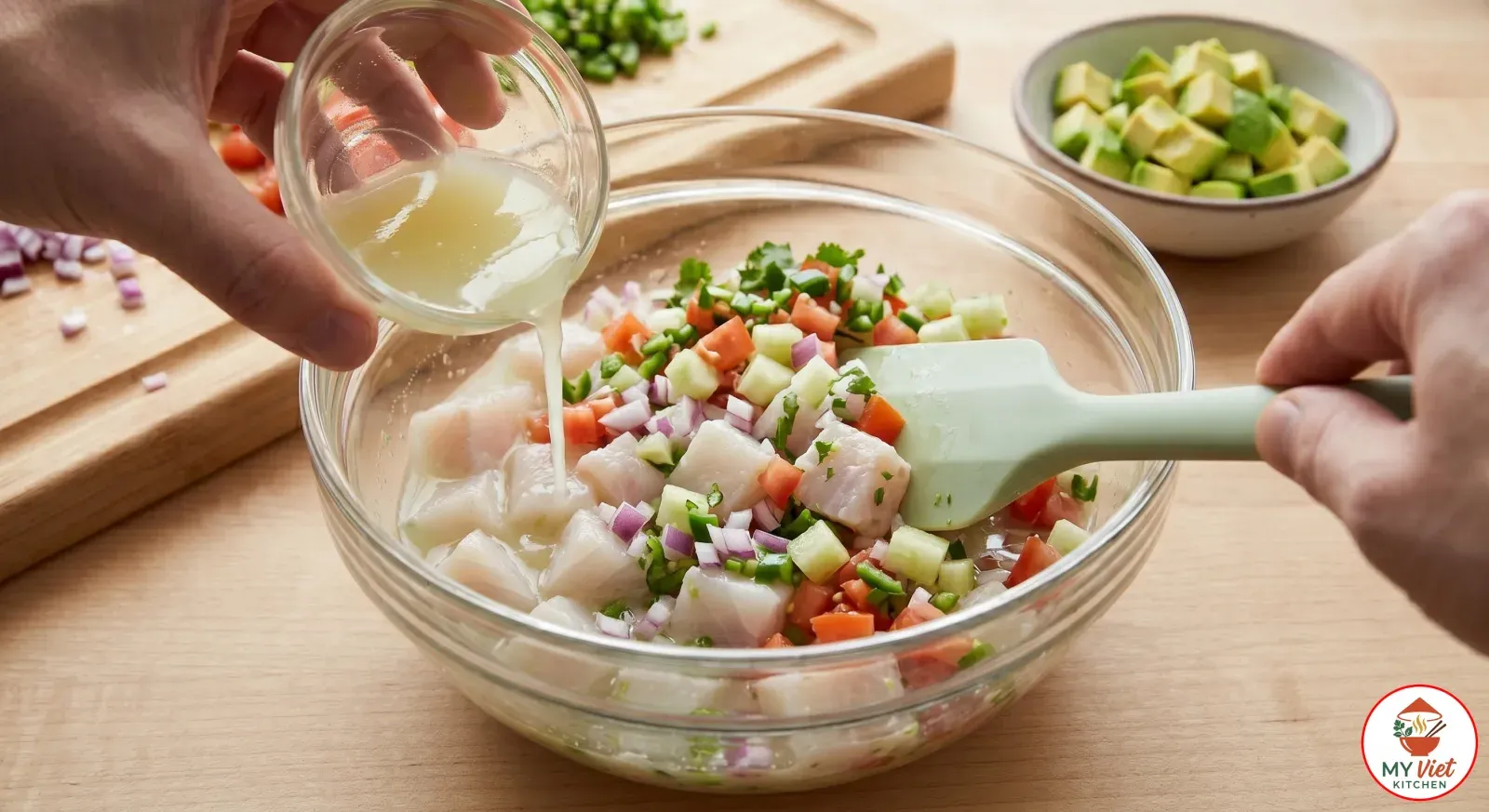
3 Once the fish has turned fully opaque, drain off about half of the lime juice. You want to keep some liquid in the bowl because it forms the tangy base of the ceviche. However, keeping too much juice makes the dish watery and continues to toughen the fish. Therefore, draining half strikes the right balance.
Now add the diced tomatoes, red onion, cucumber, serrano chile, jalapeno, and chopped cilantro to the bowl. Use a large spoon or spatula to fold everything together gently. Avoid stirring too hard, since the cured fish is soft and will break apart. Instead, aim for an even spread of vegetables through the fish.
Step 4: Season the Ceviche
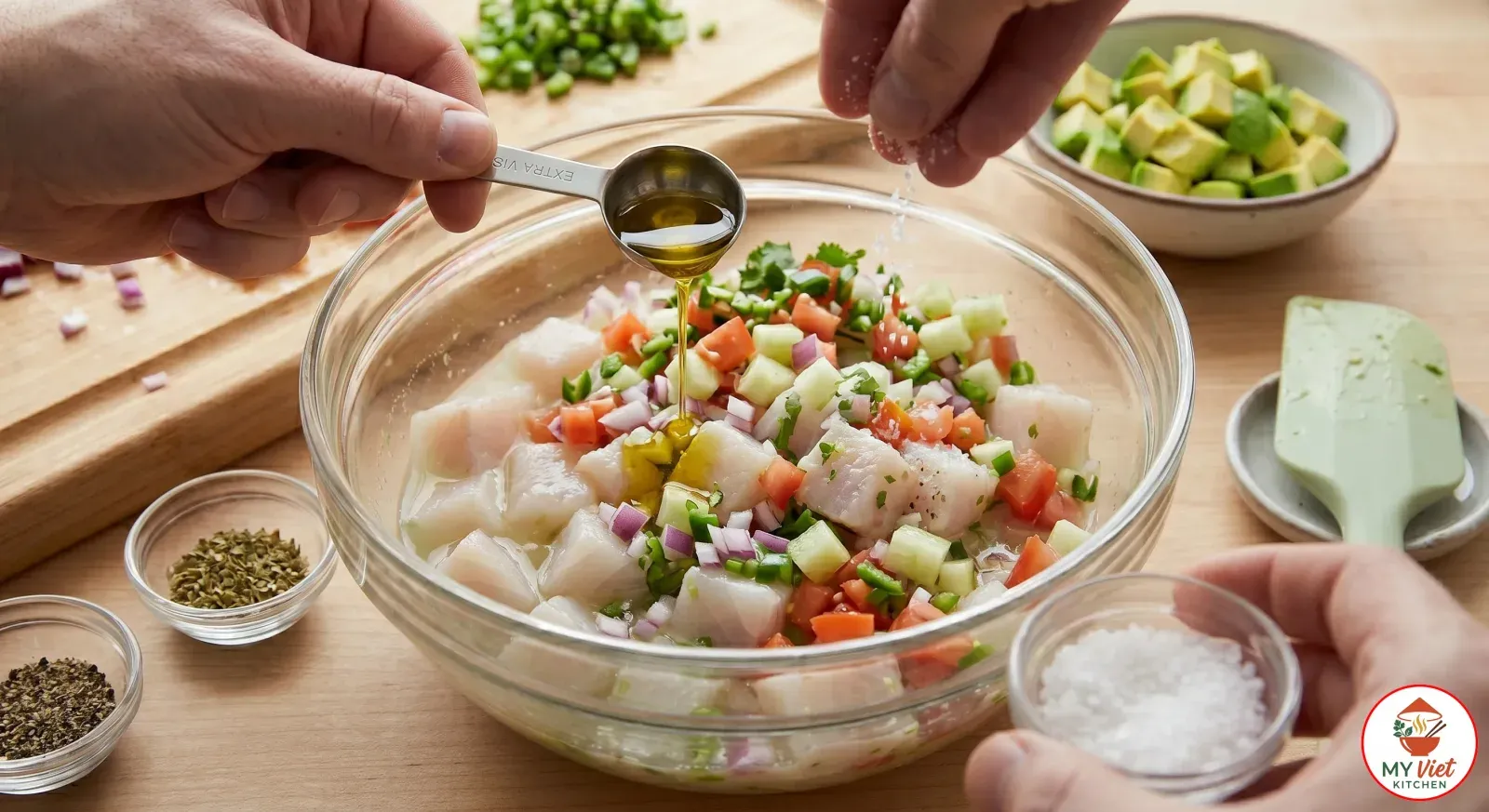
4 Drizzle the extra virgin olive oil over the mixture and sprinkle in the salt, dried oregano, and black pepper. Toss gently one more time to coat everything evenly. Now taste the ceviche and adjust the seasoning. If it needs more tang, squeeze in additional lime juice. If the heat is too mild, add a few more slices of serrano chile.
As a result, the ceviche should taste bright, tangy, and lively with a nice kick of heat. Salt is especially important here because it pulls all the flavors together. So do not be shy with it. A properly seasoned ceviche mexicano should taste bold and punchy, not flat.
Step 5: Add Avocado and Serve
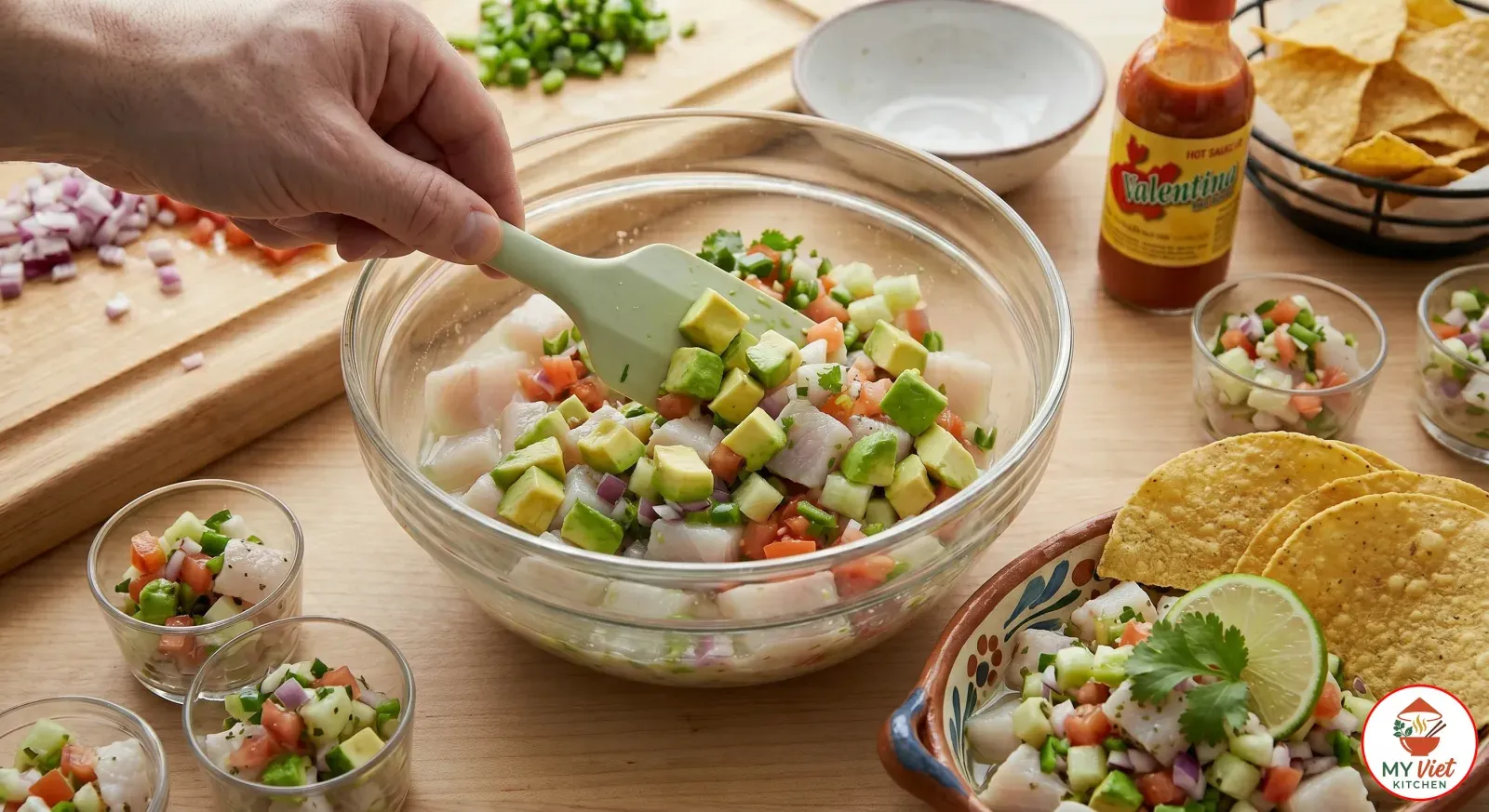
5 Gently fold the diced avocado into the ceviche. Use a wide spatula and turn the mixture only two or three times. The avocado should remain in distinct cubes rather than turning into a mush. Transfer the finished ceviche mexicano to a serving bowl or spoon it onto individual plates.
Serve immediately with crispy tostadas, tortilla chips, or saltine crackers on the side. In Mexico, ceviche is often scooped directly onto a tostada and eaten by hand. You can also serve it in small cups or cocktail glasses for an elegant appetizer presentation. Garnish with a few extra cilantro leaves and a thin slice of lime for color.
Expert Tips for Perfect Results
Buy the Freshest Fish Available
Since ceviche mexicano uses no heat, the freshness of your fish matters most. Buy from a trusted fishmonger and tell them you plan to eat it raw. Fresh fish should smell clean and briny, like the ocean. If it smells fishy or off, walk away. Also, look for flesh that appears moist and clear, not dry or dull.
Cut the Fish Into Uniform Cubes
Uniform pieces cure at the same rate. If some cubes are large and others are tiny, then the small ones become rubbery while the large ones stay raw. So aim for half-inch cubes throughout. A sharp knife is key for this step. A dull blade will crush the fish rather than slicing cleanly through it.
Do Not Over-Cure the Fish
Indeed, this is the most common mistake with ceviche mexicano. Leaving the fish in lime juice for more than 30 minutes makes it tough, dry, and chalky. So set a timer and check at 15 minutes. The moment the cubes turn opaque and feel firm, they are ready. Keep in mind that the fish will continue to cure after you add the vegetables, so err on the side of less time.
Ceviche Styles Across Latin America
Ceviche is a dish that spans the entire western coast of the Americas, and each country puts its own stamp on the recipe. Here is how the most popular versions compare.
| Style | Country | Key Ingredients | Serving Style |
|---|---|---|---|
| Ceviche Mexicano | Mexico | White fish, lime, tomatoes, onion, chiles, cilantro, avocado | Served on tostadas or with tortilla chips |
| Ceviche Peruano | Peru | Sea bass, leche de tigre, aji amarillo, red onion | Served with sweet potato and large-kernel corn |
| Ceviche Ecuatoriano | Ecuador | Shrimp, lime, tomato sauce, orange juice, onion | Served in a bowl with popcorn or plantain chips |
| Ceviche Colombiano | Colombia | Shrimp or fish, lime, ketchup, onion, peppers | Served with saltine crackers |
| Ceviche Costeno | Central America | Fish, lime, coconut milk, peppers, cilantro | Served with rice or fried plantains |
Serving Suggestions
In Mexico, ceviche is not just an appetizer. It is a way of life along the coast. Street vendors serve it from glass carts in the morning sun. Beachside restaurants pile it high on fresh tostadas. Families gather around bowls of it on weekends. The right accompaniments elevate your homemade ceviche mexicano from good to unforgettable.
Classic Accompaniments:
- Tostadas: Crispy fried or baked corn tortillas are the traditional vehicle for ceviche mexicano. Spread a thin layer of refried beans on the tostada first, then pile the ceviche on top for an authentic street-food experience.
- Tortilla chips: A simpler option that works perfectly for casual gatherings. Use thick, sturdy chips that will not break under the weight of the juicy ceviche.
- Sliced radishes: Thinly sliced radishes add a peppery crunch that cuts through the richness of the avocado. In Mexico, a plate of radishes and lime wedges almost always accompanies fresh ceviche.
- Mexican hot sauce: Valentina or Cholula hot sauce on the side allows each person to dial up the heat to their liking. A few dashes of bottled habanero sauce work well for those who crave serious fire.
Beverage Pairings:
- Ice-cold Mexican beer: A crisp lager like Pacifico, Modelo Especial, or Corona pairs perfectly with ceviche. The carbonation and lightness of the beer refresh the palate between bites of tangy, spicy fish.
- Michelada: This spicy beer cocktail made with lime, hot sauce, Worcestershire, and chamoy mirrors the bold flavors of ceviche mexicano and amplifies the experience.
- Fresh agua fresca: A glass of cold horchata, tamarindo, or jamaica (hibiscus) water provides a sweet, fruity contrast to the savory, tangy ceviche.
- Sparkling water with lime: For a non-alcoholic option, bubbly mineral water with a squeeze of fresh lime cleanses the palate beautifully without overpowering the delicate fish flavors.
Storage and Freshness
Refrigerator: Ceviche mexicano is best enjoyed within 2 hours of preparation. You can store it in a sealed container for up to 24 hours, but the texture will change as the lime juice continues to cure the fish. The flavors remain good, though the fish becomes firmer and drier over time.
Freezer: Freezing ceviche is not recommended. The delicate texture of the cured fish and fresh vegetables breaks down when frozen and thawed. The avocado turns brown and mushy, and the tomatoes become watery. Always make ceviche fresh for the best experience.
Leftovers: If you have leftover ceviche, drain the excess lime juice to slow down the curing process. Store in an airtight container in the coldest part of your refrigerator. Before serving leftovers, add a fresh squeeze of lime, a pinch of salt, and some newly diced avocado to revive the flavors and textures.
Common Mistakes to Avoid
1. Using Old or Low-Quality Fish
This is the most critical mistake you can make with ceviche mexicano. Because the fish is never heated, there is no safety net. Stale fish will taste off and pose food safety risks. Therefore, always buy your fish the same day you plan to make ceviche. Ask the fishmonger when the fish came in and if it is safe for raw dishes.
2. Over-Curing the Fish
Leaving fish in lime juice for an hour or longer is a very common error. After all, the acid keeps breaking down the proteins well past the ideal point. After 30 minutes, the fish starts to turn rubbery, dry, and chalky. So always set a timer for 15 minutes and start checking early. Once the fish feels firm and looks opaque, drain the extra juice right away.
3. Using Bottled Lime Juice
Bottled lime juice tastes flat and bitter next to fresh. It also has chemicals that slow the cure and leave an off taste. For that reason, fresh limes are a must for real ceviche mexicano. You need about 10 limes to get one cup of juice. Just roll them on the counter before cutting to get more liquid out.
4. Adding Avocado Too Early
Avocado turns brown fast when it hits acid and air. If you mix it in at the start, it has too much time to go dark and fall apart. Instead, always add avocado as the very last step, right before serving. Then fold it in gently to keep the cubes intact and pretty.
Frequently Asked Questions
What is ceviche mexicano made of?
Ceviche mexicano uses fresh white fish cured in lime juice, then mixed with diced Roma tomatoes, red onion, serrano and jalapeno chiles, cucumber, fresh cilantro, and ripe avocado. The dish requires no cooking at all. The citric acid in the lime juice denatures the fish proteins and gives it a texture similar to cooking.
Is ceviche mexicano safe to eat?
Yes, ceviche mexicano is safe when you use very fresh, high-quality fish from a trusted source. The lime juice acid changes the protein structure of the fish, making it opaque and firm. Always keep your fish cold throughout the preparation process. Consume the ceviche on the same day you make it for the best quality and safety.
How long should you cure fish for ceviche?
Cure the fish for 15 to 25 minutes in fresh lime juice. The cubes should turn fully opaque on the outside and feel firm to the touch. Check frequently after 15 minutes, because over-curing makes the fish rubbery and tough. Smaller cubes cure faster than larger ones, so adjust the time based on your cut size.
What is the best fish for ceviche mexicano?
Firm, mild white fish works best. Sea bass, red snapper, tilapia, and mahi-mahi are all excellent choices. These varieties hold their shape during the lime cure and have a clean, neutral flavor that lets the other ingredients shine. Avoid oily fish like salmon or mackerel, as their strong flavors clash with the bright citrus and chiles.
What is the difference between ceviche mexicano and Peruvian ceviche?
The key difference lies in the cure time and accompaniments. Mexican ceviche cures the fish longer in pure lime juice and mixes in tomatoes, chiles, and avocado. Peruvian ceviche cures for only a few minutes in leche de tigre, a mixture of lime juice, fish stock, and aji amarillo peppers. Additionally, Peruvian ceviche comes with sweet potato and corn, while the Mexican version pairs with tostadas or chips.
Can you make ceviche mexicano with shrimp?
Absolutely. Shrimp ceviche is extremely popular in Mexico, especially along the coasts of Sinaloa and Nayarit. For safety, use pre-cooked or quickly poached shrimp rather than raw. Cut the shrimp into bite-sized pieces and toss them with lime juice and the fresh vegetables. The shrimp needs only about 10 minutes in the lime juice since it is already cooked.
Variations and Adaptations
Ceviche de Camaron (Shrimp Ceviche):
Replace the white fish with 1 pound of cooked, peeled shrimp. Cut the shrimp into bite-sized chunks and toss with the lime juice and vegetables. Since the shrimp is already cooked, you only need to marinate for 10 to 15 minutes. This variation is popular across Mexican beach towns and makes a fantastic party appetizer.
Ceviche Mixto (Mixed Seafood Ceviche):
Combine fish, shrimp, and sliced octopus for a seafood feast. Cure each protein separately because they require different timing. The octopus should be pre-cooked and sliced thin. Mix everything together at the end with the vegetables. This luxurious version appears at Mexican celebrations and special occasions.
Mango Ceviche Mexicano:
Add one diced ripe mango along with the tomatoes for a tropical twist. The mango contributes natural sweetness that plays beautifully against the lime acid and chile heat. This variation is especially popular in the states of Guerrero and Oaxaca, where mangoes grow in abundance. Finish with a sprinkle of Tajin seasoning for an extra layer of tangy spice.
Vegan Ceviche (Ceviche de Palmitos):
For a plant-based version, replace the fish with shredded hearts of palm or diced young coconut meat. The texture mimics cured fish surprisingly well. Follow the same recipe for the vegetables and seasonings. This vegan adaptation has grown popular in Mexican health-conscious circles and delivers the same bright, refreshing flavors without any seafood.
The Cultural Significance of Ceviche Mexicano
Ceviche mexicano is deeply woven into the fabric of coastal Mexican life. In fishing villages along the Pacific coast, the dish represents the freshest possible connection between the ocean and the plate. Fishermen return with their morning catch, and within the hour, that fish sits in a bowl of lime juice at a beachside palapa. This immediacy is central to the dish’s identity. Ceviche is not something you plan days in advance. It is something you make the moment great fish becomes available.
Moreover, ceviche mexicano holds a special place in Mexican social life. It is a dish for gatherings, fiestas, and lazy Sunday afternoons by the water. Families pass down their own recipes for generations. Each one adjusts the heat, the type of chile, or a secret add-in. For example, in Acapulco you might find ceviche with a splash of tomato juice. Meanwhile, in Ensenada, cooks often add a drizzle of soy sauce. These local twists show each town’s bond with its coast and crops.
Today, ceviche mexicano has spread far beyond Mexico’s beaches. It now appears on menus from Los Angeles to London. Home cooks everywhere love it as a healthy, tasty, and easy dish. Yet despite this global fame, the soul of ceviche stays the same. It is still about fresh fish, sharp lime juice, and the joy of eating something cold and bright on a warm day.
Conclusion
This ceviche mexicano recipe captures the authentic taste of coastal Mexico in every tangy, spicy bite. The keys to success are straightforward: start with the freshest fish you can find, use plenty of freshly squeezed lime juice, cure for exactly the right amount of time, and do not hold back on the chiles and cilantro. Follow these steps, and you will produce a vibrant, refreshing appetizer that tastes like it came straight from a beachside stand in Mazatlan.
Looking to explore more global flavors? Browse our full Latin American dishes collection for recipes like feijoada, empanadas, and tamales. Each recipe brings a different corner of the Americas to your kitchen table.