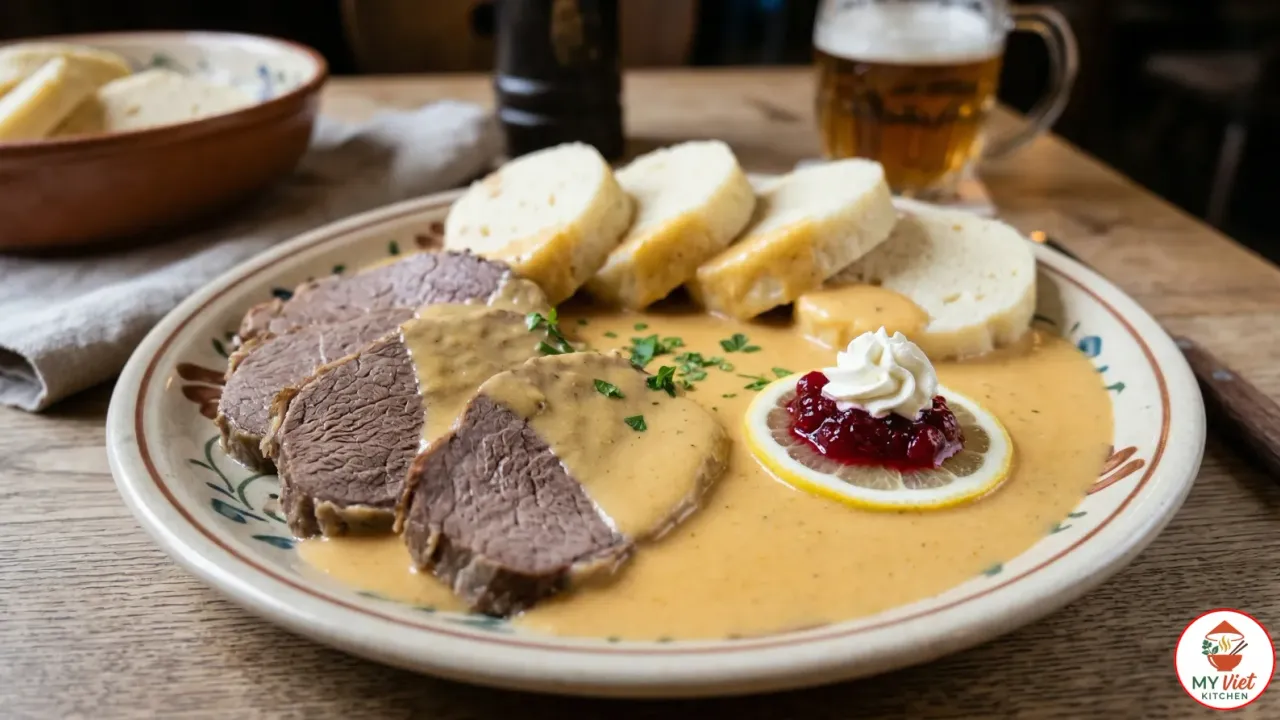
Svickova is the crown jewel of Czech cuisine, and this recipe shows you how to make this beloved national dish at home with tender marinated beef draped in a velvety cream sauce. Known formally as svickova na smetane, which translates to sirloin on cream, this dish transforms a simple beef roast into something extraordinary through a long vegetable marinade and patient braising. This svickova recipe follows the traditional Czech method that has graced Sunday tables and holiday feasts for generations. Once you taste the combination of tangy cream sauce, soft bread dumplings, and bright cranberry compote, you will understand why Czechs consider svickova their most treasured comfort food.
Prep Time: 30 minutes (plus 24-48 hours marinating) | Cook Time: 150 minutes | Servings: 6
Difficulty: Medium | Calories: ~580 per serving
What Makes Svickova Special?
Svickova is not just another beef roast with gravy. It is the dish that defines Czech cooking at its most refined and soulful. Walk into any traditional Czech restaurant, and svickova will sit at the top of the menu. Order it on a cold Prague afternoon, and you receive a plate that looks almost ceremonial: slices of impossibly tender beef blanketed in a pale, silky cream sauce, flanked by thick rounds of bread dumplings, a bright ruby dollop of cranberry compote, a swirl of whipped cream, and a paper-thin lemon slice. Every element has a purpose and a history.
What sets svickova apart from other braised beef dishes is the marinade. Before the beef ever touches heat, it spends one to two days bathing in a mixture of vinegar, root vegetables, and warm spices. During this time, the acid gently breaks down the muscle fibers while the vegetables infuse the meat with their sweet, earthy flavors. As a result, the finished beef has a depth and tenderness that no quick-cook method can match. The marinade vegetables then become the foundation of the cream sauce, so nothing goes to waste.
Furthermore, the cream sauce itself tells you a great deal about Czech culinary philosophy. Czech cooks build flavor through patience rather than spice. The sauce starts as a simple braising liquid, then transforms through straining, thickening, and the addition of heavy cream into something remarkably smooth and complex. A touch of sugar balances the vinegar tang, while lemon zest adds brightness. In the end, the sauce tastes like the concentrated essence of an entire root cellar, enriched with cream and refined into silk.

Choosing the Right Beef for Svickova
The word svickova actually refers to the beef sirloin cut in Czech, so the dish is named after its main ingredient. Your choice of beef shapes the texture and flavor of the entire plate. Here are your best options depending on what you can find at your butcher or grocery store.
- Beef sirloin roast (best choice): This is the traditional and preferred cut. Sirloin has a fine grain, moderate tenderness, and just enough intramuscular fat to stay moist during the long braise. It holds its shape beautifully when sliced and absorbs the marinade flavors deeply. Ask your butcher for a center-cut sirloin roast of about 2.5 pounds.
- Top round roast: A leaner alternative that works very well for svickova. Top round has a tight grain that slices neatly after braising. Because it is leaner than sirloin, the cream sauce provides the richness that the meat itself lacks. This is a popular choice when sirloin is not available or when you prefer a lighter result.
- Eye of round: The most affordable option and still a solid choice. Eye of round is very lean and compact, which means it slices cleanly into uniform rounds. However, it can dry out if overcooked. Watch the braising time carefully and pull the beef as soon as a fork slides in with little resistance. The marinade and sauce compensate for its lower fat content.
Ingredients for Svickova
Main Ingredients:
- 2.5 pounds beef sirloin or top round roast
- 6 slices bacon or smoked pork belly
- 2 tablespoons butter
- 2 tablespoons all-purpose flour
- 2 cups beef broth
- 1 teaspoon sugar
- Salt to taste
For the Marinade:
- 2 large carrots, peeled and diced
- 2 medium parsnips, peeled and diced
- 1 large celery root (celeriac), peeled and diced
- 1 large onion, diced
- 2 bay leaves
- 5 whole allspice berries
- 5 whole black peppercorns
- 1 teaspoon dried thyme
- Zest of 1 lemon
- 1 cup white wine vinegar or mild vinegar
For the Cream Sauce:
- 1 cup heavy cream
- Squeeze of fresh lemon juice
For Serving:
- Cranberry compote (brusinky)
- Whipped cream
- Thin lemon slices
- Bread dumplings (houskove knedliky)
Pro tip: Use a mix of root vegetables rather than just carrots. The combination of carrot, parsnip, and celeriac creates a layered sweetness in the sauce that no single vegetable can achieve on its own. Czech grandmothers insist on all three, and after tasting the difference, you will too.
Step-by-Step Instructions
Step 1: Prepare the Marinade and Marinate the Beef
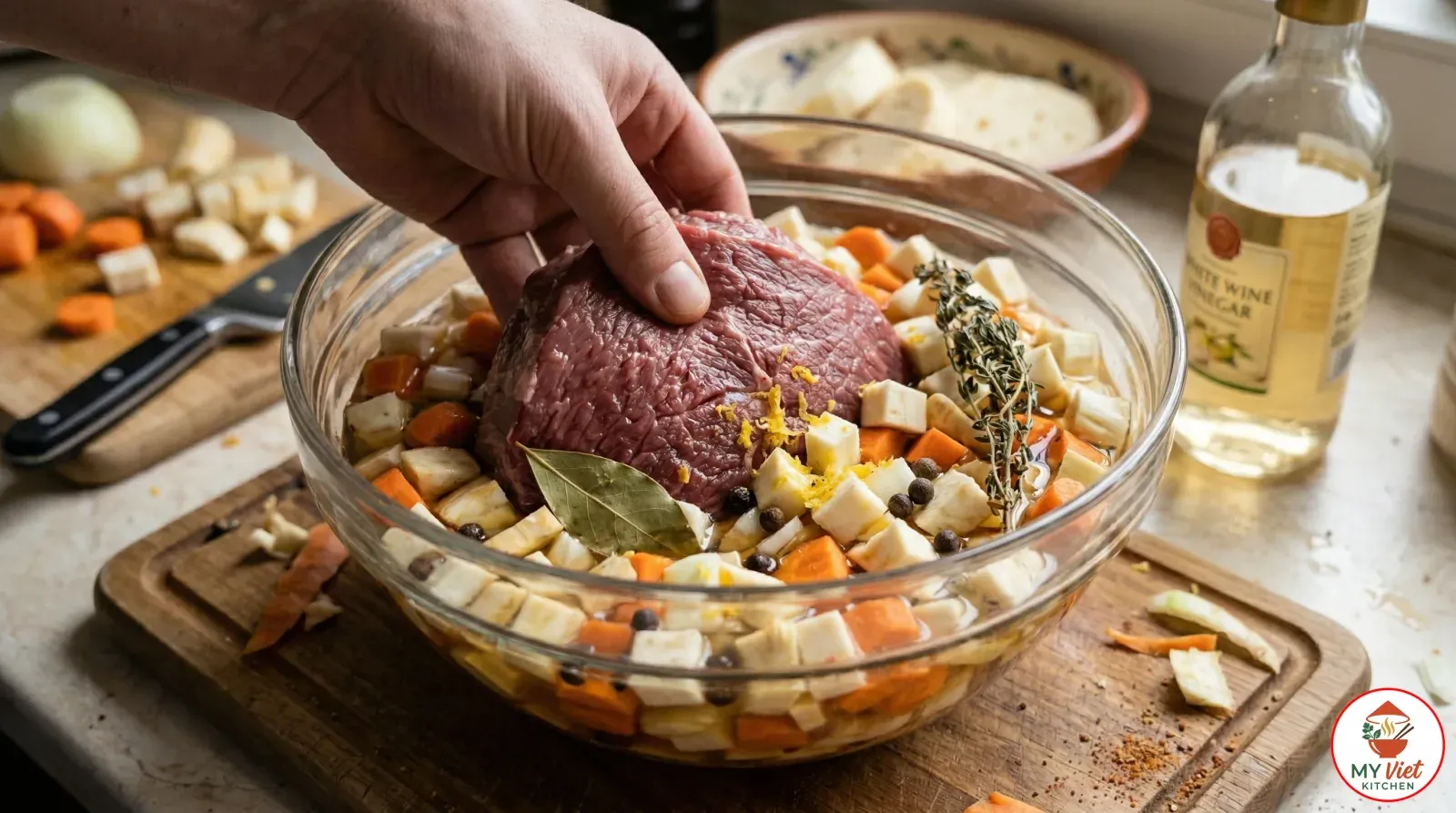
1 Start by dicing the carrots, parsnips, celeriac, and onion into small, even pieces about half an inch across. Smaller pieces release their flavors faster and break down more completely during braising, which gives you a smoother sauce later. Combine all the diced vegetables in a large non-reactive bowl, such as glass or ceramic. Then add the bay leaves, allspice berries, black peppercorns, dried thyme, and lemon zest.
Pour the vinegar over the vegetables and stir well. Place the beef roast in the bowl and turn it several times so the marinade covers every surface. The vinegar does two vital jobs here. First, it tenderizes the beef by breaking down tough connective tissue over time. Second, it draws out the flavors from the root vegetables and spices, creating a complex aromatic liquid that will later become your sauce base. Cover the bowl tightly and refrigerate for 24 to 48 hours, turning the meat twice each day.
Step 2: Sear the Beef and Build the Base
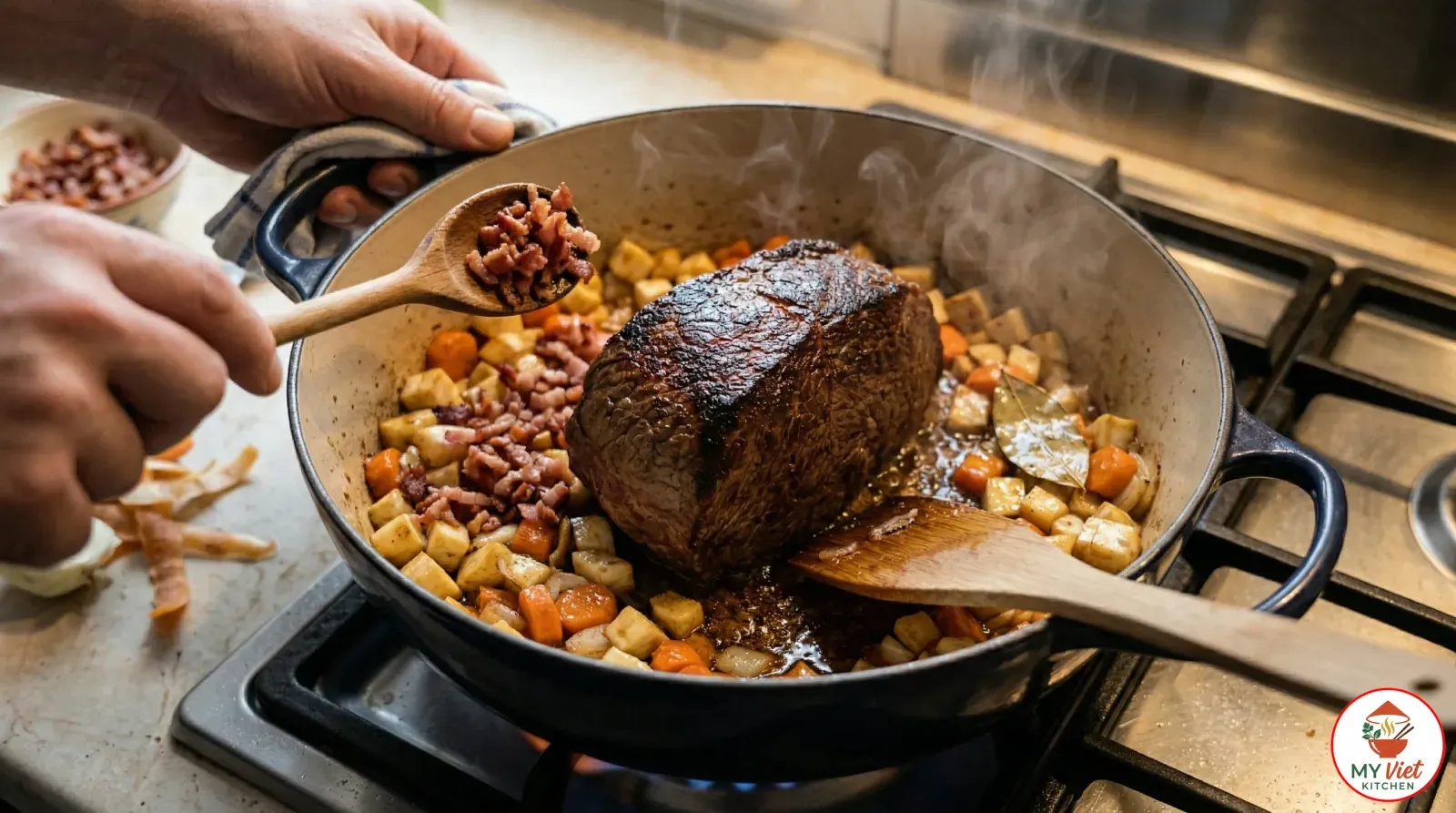
2 Remove the beef from the marinade and pat it completely dry with paper towels. Reserve the vegetables and liquid separately. Dry beef sears much better than wet beef, because surface moisture creates steam instead of the browning you need. In a heavy Dutch oven or large oven-safe pot, lay the bacon slices in a single layer over medium heat. Cook until the fat renders and the bacon turns crisp, about 6 minutes. Remove the bacon and set it aside.
Now sear the beef in the rendered bacon fat. Place it in the hot pot and leave it alone for 3 to 4 minutes per side until a deep brown crust forms. Do not move the meat while it sears. The Maillard reaction needs steady contact with the hot surface to build those complex, savory flavors that will carry through the entire dish. After searing all sides, remove the beef and set it on a plate. Add the butter to the pot, then cook the reserved marinade vegetables until they soften and begin to color, about 8 minutes. Crumble the cooked bacon and return it to the pot.
Step 3: Braise the Beef Low and Slow
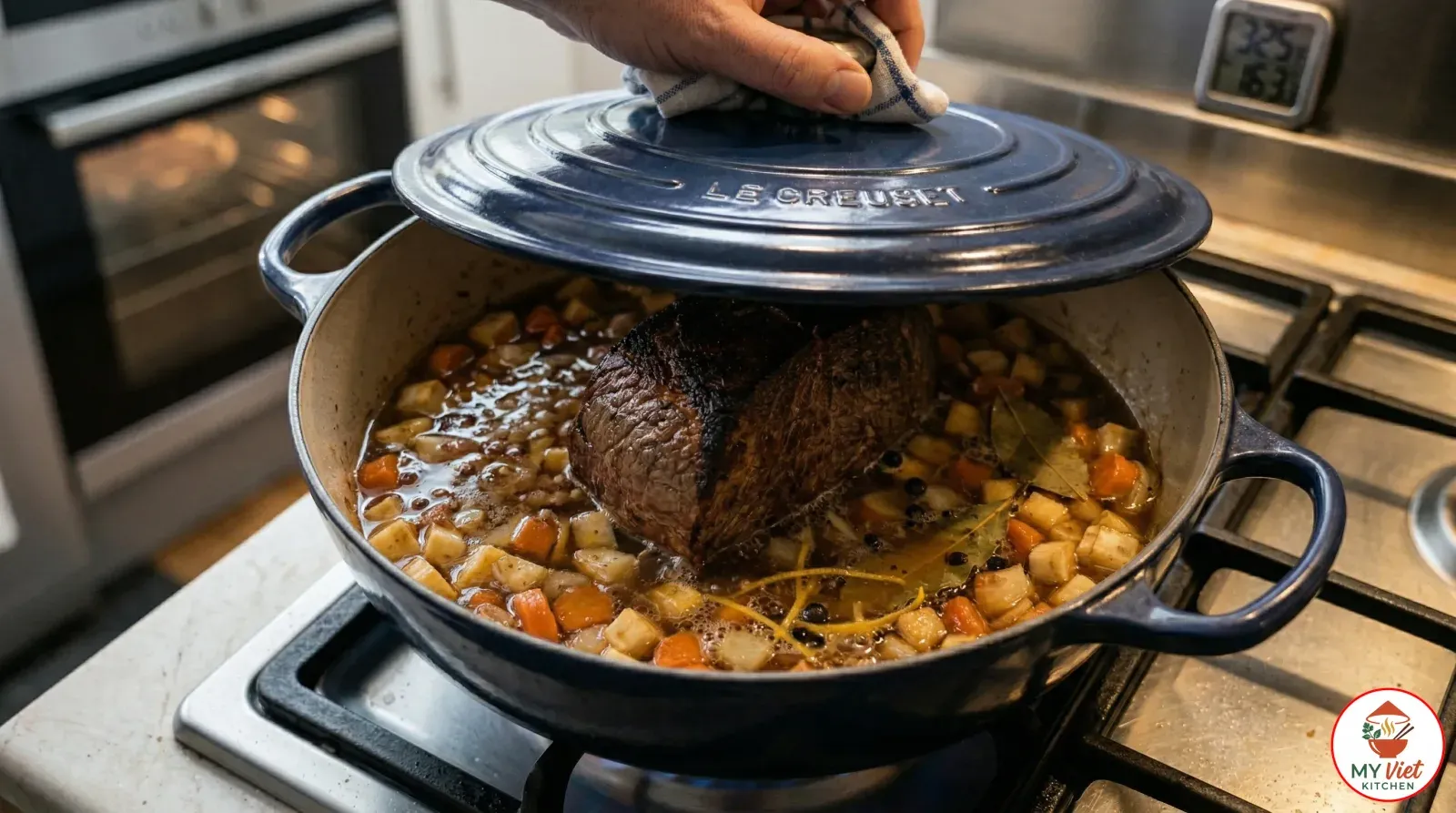
3 Return the seared beef to the pot, nestling it among the softened vegetables. Pour in the reserved marinade liquid and enough beef broth to come about halfway up the sides of the meat. You do not want the beef fully submerged, because the exposed top develops a richer flavor and texture from the dry heat of the oven. Bring the liquid to a gentle simmer on the stovetop, then cover the pot tightly with its lid.
Transfer the covered pot to an oven preheated to 325 degrees Fahrenheit. Braise for 2 to 2.5 hours, turning the beef once at the halfway point. The low, even heat of the oven surrounds the pot from all sides, which produces more consistent results than stovetop braising. The beef is ready when a fork slides into the center with almost no resistance. If it still feels firm, give it another 20 minutes and check again. Patience at this stage rewards you with beef that practically melts on the tongue.
Step 4: Make the Cream Sauce
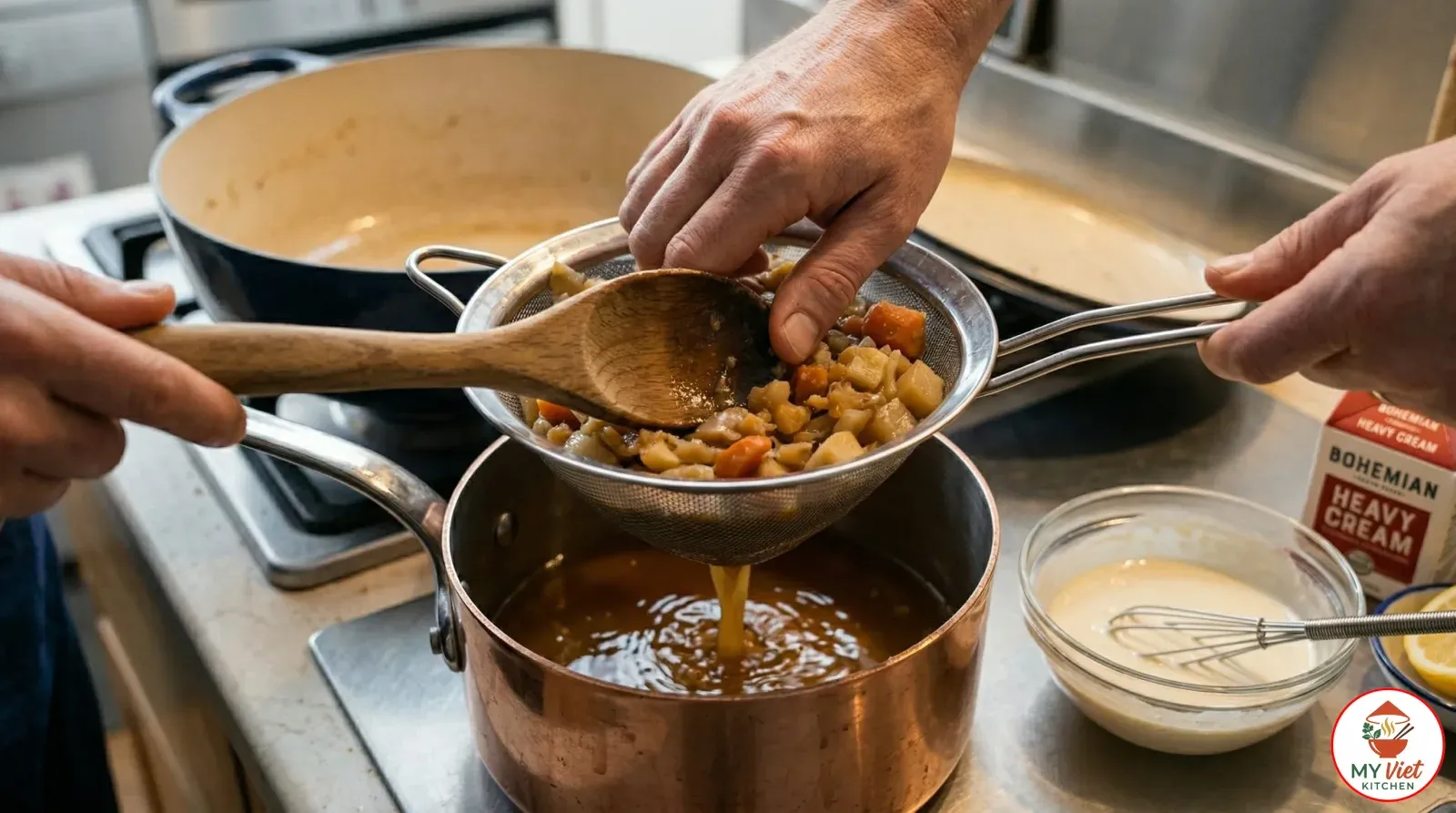
4 Carefully remove the beef from the pot, place it on a cutting board, and tent it loosely with aluminum foil to keep it warm. Now pour the braising liquid and vegetables through a fine-mesh strainer into a clean saucepan, pressing firmly on the vegetables with the back of a spoon. You want to extract every drop of flavor from those root vegetables, because they carry the soul of the sauce. Discard the solids after pressing them thoroughly.
Place the saucepan over medium heat and bring the strained liquid to a gentle simmer. In a small bowl, mix the flour with two tablespoons of the heavy cream to form a smooth paste with no lumps. Whisk this paste into the simmering liquid bit by bit, stirring constantly to prevent lumps. Then pour in the remaining cream in a steady stream while whisking. Let the sauce simmer for 8 to 10 minutes until it thickens enough to coat the back of a spoon. Finally, season with sugar to balance the vinegar tang, a squeeze of fresh lemon juice for brightness, and salt to taste. The finished sauce should be pale, silky, and balanced between tangy, sweet, and savory.
Step 5: Slice and Serve with Traditional Garnishes
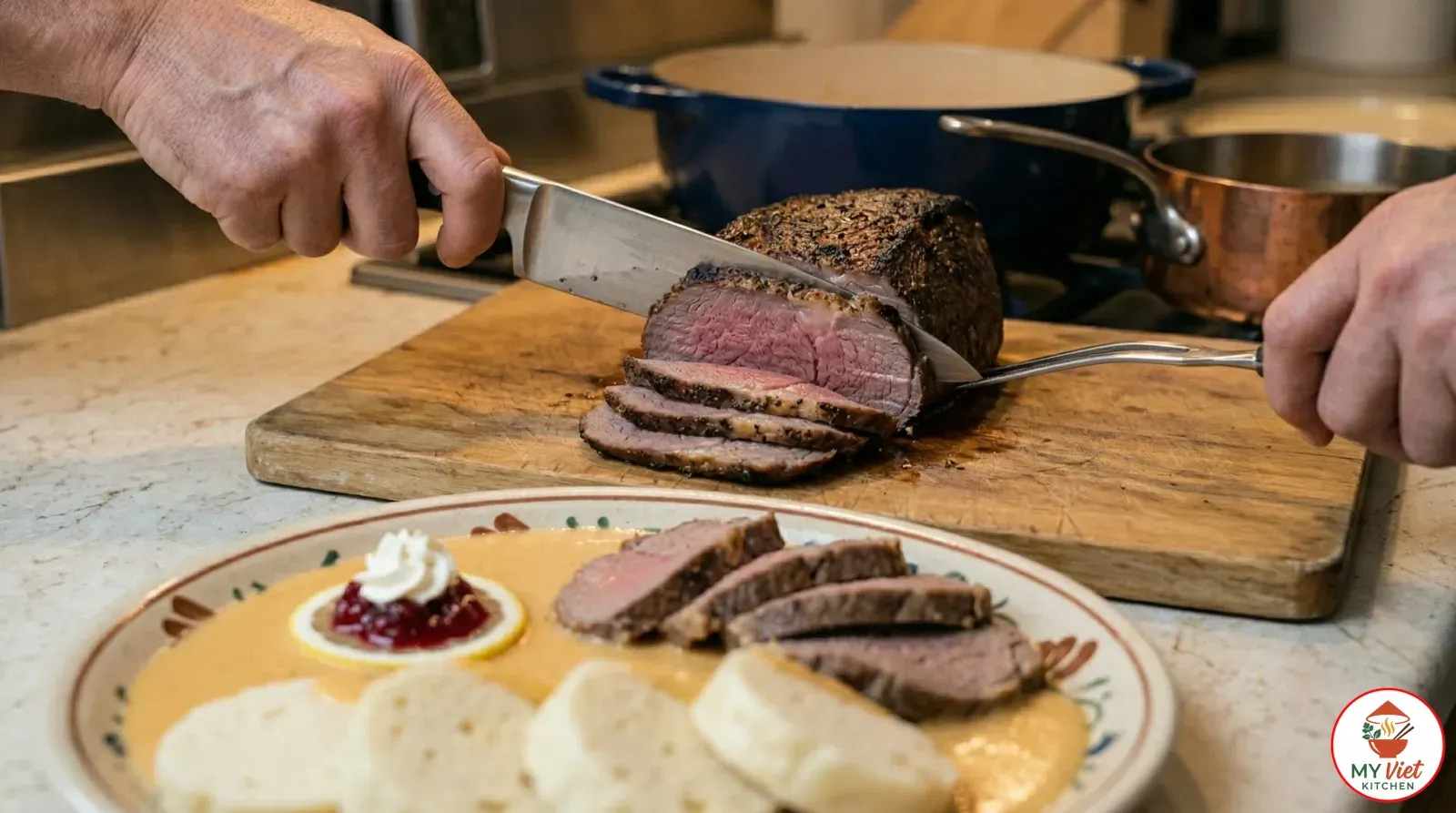
5 Slice the rested beef across the grain into pieces about half an inch thick. Cutting against the grain shortens the muscle fibers, which makes each slice feel more tender on the palate. Arrange the slices on warmed plates, fanning them slightly so the sauce can pool around and over each piece. Ladle the cream sauce generously over the beef, making sure some pools on the plate for the dumplings to soak up.
Place three or four rounds of bread dumplings alongside the beef. Add a generous dollop of cranberry compote to one side of the plate. Then drop a small swirl of whipped cream directly onto the sauce near the beef. Finish with a thin slice of lemon placed on the edge. This presentation is not decorative flair. Instead, each garnish plays a flavor role. The tart cranberry cuts through the cream, the whipped cream adds richness and cools the sauce, and the lemon provides a final citrus note. Serve immediately while the sauce is warm and the dumplings are soft.
Expert Tips for Perfect Svickova
Marinate for the Full 48 Hours
While 24 hours produces acceptable results, the full 48-hour marination makes a remarkable difference. The longer soak allows the vinegar to penetrate deeper into the meat fibers and gives the root vegetables more time to release their flavors into the liquid. As a result, both the beef and the sauce taste more complex and refined. Czech grandmothers who have cooked svickova their entire lives almost universally recommend the longer marination time.
Strain the Sauce Twice for Silk
For the smoothest possible sauce, strain it twice through progressively finer sieves. The first pass removes the large vegetable pieces. The second pass through a fine-mesh strainer or cheesecloth catches small particles that would otherwise make the sauce grainy. This extra step takes only a few minutes but transforms the texture from rustic to restaurant quality. Some Czech cooks also blend the vegetables before straining to extract maximum flavor.
Balance the Sauce Carefully
The cream sauce should taste like a harmony of tangy, sweet, and savory notes. After adding the cream, taste the sauce and adjust in small steps. Too much sharpness from the vinegar calls for a pinch more sugar. A flat-tasting sauce needs a squeeze of lemon juice to wake it up. Meanwhile, a splash of extra broth adds depth when the flavor feels thin. The sugar is not there to make the sauce sweet. Instead, it softens the acid and rounds out the overall flavor. Finding this balance is the true skill of making great svickova.
Svickova vs. Other Czech Beef Dishes
Czech cuisine includes several classic beef preparations, each with a distinct character. Understanding how svickova fits among them helps you appreciate its unique place on the Czech table. Here is a comparison of the most popular options.
| Dish | Cut of Beef | Cooking Method | Key Feature |
|---|---|---|---|
| Svickova na smetane | Sirloin roast | Marinated then braised | Tangy cream sauce with cranberry and whipped cream |
| Gulas (Czech goulash) | Chuck or shoulder, cubed | Stewed | Rich paprika broth, served with dumplings or bread |
| Rostena | Rib steak or sirloin steak | Pan-fried | Topped with caramelized onions, no cream sauce |
| Znojemska pecene | Beef roast | Braised | Sauce made with pickled gherkins from Znojmo region |
| Hovezi na houbove omacce | Various cuts | Braised | Rich mushroom sauce rather than cream sauce |
Serving Suggestions
Svickova follows a strict traditional presentation that Czech cooks rarely deviate from. The dish is a complete plate on its own, but understanding each component helps you assemble it properly and appreciate why every element matters.
The Perfect Accompaniments:
- Houskove knedliky (bread dumplings): These soft, sliced dumplings soak up the cream sauce beautifully. They are made from a simple dough of flour, eggs, milk, and cubed stale bread, then steamed or boiled in a log shape and sliced into rounds. Bread dumplings are non-negotiable with svickova. Without them, the dish feels incomplete.
- Cranberry compote (brusinky): A sweet-tart cranberry sauce that cuts through the richness of the cream sauce and beef. You can use lingonberry preserves as a substitute, since both provide that essential fruity acidity. Place a generous spoonful on the side of the plate, never on top of the meat.
- Whipped cream: A small dollop of unsweetened or very lightly sweetened whipped cream placed directly on the sauce near the beef. It melts slowly into the warm sauce, enriching it further and adding a cool, light contrast. This garnish surprises newcomers, but it is absolutely essential to the authentic experience.
- Lemon slice: A thin round of fresh lemon placed on the edge of the plate. Squeeze it over the sauce just before eating for a burst of citrus that brightens every bite. Some diners eat the lemon alongside the beef, while others use it purely as an aromatic accent.
Beverage Pairings:
- Czech pilsner: A crisp Bohemian pilsner like Pilsner Urquell or Budvar is the most traditional pairing. The beer’s carbonation and gentle bitterness cleanse the palate between bites of rich cream sauce and tender beef.
- Moravian white wine: A dry, aromatic white wine from the Moravia region pairs elegantly with the tangy cream sauce. Look for Gruner Veltliner or Riesling varieties that echo the lemon and herb notes in the dish.
- Sparkling water with lemon: For a non-alcoholic option, sparkling water with a squeeze of lemon refreshes the palate and complements the citrus notes already present in the sauce and garnish.
Storage and Reheating
Refrigerator: Store the sliced beef and sauce in separate airtight containers for up to 4 days. The sauce actually improves during refrigeration as the flavors continue to meld and deepen. Many Czech cooks intentionally make svickova a day ahead because the reheated version often tastes even better than the freshly made dish.
Freezer: Svickova freezes well for up to 3 months. Store the sliced beef submerged in the cream sauce in a freezer-safe container. The sauce protects the beef from freezer burn and keeps it moist during reheating. Thaw overnight in the refrigerator before reheating. Bread dumplings freeze separately and reheat well when steamed for 5 minutes.
Reheating: Place the beef and sauce together in a covered saucepan over low heat. Warm gently, stirring the sauce occasionally, until everything reaches serving temperature. If the sauce has thickened too much during storage, thin it with a splash of beef broth or cream. Avoid boiling the sauce, as high heat can cause the cream to separate. Steam the bread dumplings separately rather than microwaving them, because steaming restores their soft, pillowy texture.
Common Mistakes to Avoid
1. Skipping or Shortening the Marinade
The marinade is not optional for authentic svickova. Without it, the beef and sauce lack the tangy depth that defines this dish. At minimum, marinate for 24 hours. If you skip this step entirely, you end up with a generic braised beef in cream sauce rather than true svickova. Plan ahead and give the meat the time it needs. The marinade does the heavy lifting while you wait.
2. Braising at Too High a Temperature
High heat tightens the beef proteins and squeezes out moisture, leaving you with tough, dry slices no matter how long you cook them. Keep the oven at 325 degrees Fahrenheit and make sure the liquid barely simmers rather than boils. Low and slow is the golden rule for svickova. The beef should feel like it could almost fall apart, yet still hold together when you slice it. Gentle heat achieves this perfect balance.
3. Not Straining the Sauce Properly
Rushing the straining step gives you a grainy, lumpy sauce instead of the silky cream that defines great svickova. Press hard on the vegetables to extract maximum flavor, then strain again through a finer sieve if needed. The sauce should pour like heavy cream with no visible bits. Take your time here, because the texture of the sauce makes or breaks the entire dish.
4. Forgetting the Traditional Garnishes
Serving svickova without cranberry compote, whipped cream, and a lemon slice is like serving a burger without the bun. These garnishes are not decorations. Each one plays a specific flavor role: the cranberry provides tartness, the cream adds richness and temperature contrast, and the lemon brings brightness. Czech cooks consider the dish incomplete without all three. Keep these garnishes on hand whenever you make svickova.
Frequently Asked Questions
What cut of beef is best for svickova?
Beef sirloin roast is the traditional and best choice, since the dish takes its name from this cut. Top round and eye of round also work well because they become fork-tender after long braising. Choose a lean, compact roast that weighs about 2.5 pounds. Avoid heavily marbled cuts like ribeye, because the cream sauce already provides plenty of richness. A leaner cut lets the sauce and marinade flavors shine through.
How long should I marinate the beef for svickova?
Marinate for at least 24 hours and ideally up to 48 hours for the fullest flavor. The vinegar-based marinade needs time to penetrate the beef and mingle with the root vegetables and spices. Turning the meat twice a day ensures even coverage. Some traditional recipes call for up to three days of marination, but 48 hours delivers excellent results for most home cooks.
What are the traditional accompaniments for svickova?
Every authentic plate of svickova includes four essential elements alongside the beef and sauce: bread dumplings (houskove knedliky) sliced into rounds, a dollop of cranberry compote, a swirl of whipped cream on the sauce, and a thin lemon slice. These garnishes are not optional. They provide the flavor contrasts that make the dish complete. Bread dumplings absorb the sauce, cranberry adds tartness, cream adds richness, and lemon brings brightness.
Can I make svickova without marinating the beef?
You can braise the beef without marinating, but the result will differ significantly from true svickova. The marinade gives the dish its characteristic tangy depth and complex flavor. As a partial shortcut, add extra vinegar and a splash of white wine to the braising liquid. This compensates somewhat, though the beef itself will lack the deep flavor that marination develops. For the best experience, plan ahead and give the meat its full soaking time.
Why is there whipped cream on svickova?
The whipped cream is a signature element, not a quirky addition. When it melts into the warm cream sauce on the plate, it adds a cool contrast and extra richness that smooths out the tangy notes from the vinegar marinade. Czechs consider svickova without whipped cream as incomplete as pizza without cheese. Use unsweetened or very lightly sweetened whipped cream for the best balance with the savory sauce.
What is the difference between svickova and goulash?
These two iconic Czech dishes differ in almost every way. Svickova uses a whole marinated sirloin roast braised in a vegetable liquid and finished with cream sauce. Goulash features cubed beef stewed in a paprika-heavy broth. Svickova has a refined, tangy cream sauce with delicate garnishes. Goulash is a hearty, rustic stew with bold, smoky paprika flavor. Both appear on Czech menus regularly, but they represent very different cooking traditions.
Variations and Adaptations
Quick Weeknight Svickova:
If you cannot marinate for a full day, cut the beef into thick steaks rather than using a whole roast. Sear the steaks, then braise them with the vegetables and extra vinegar for about 90 minutes. The thinner pieces absorb flavor faster and cook more quickly. The sauce will not have quite the same depth, but you still get the essential svickova character in less than half the time.
Slow Cooker Svickova:
After marinating and searing the beef, transfer everything to a slow cooker. Cook on low for 7 to 8 hours until the beef falls apart at a touch. Then strain the liquid and finish the cream sauce on the stovetop as directed. The slow cooker method works especially well for tougher cuts like chuck roast, which become incredibly tender during the long, gentle cooking process.
Lighter Svickova with Sour Cream:
Replace the heavy cream with sour cream for a tangier, lighter version. Whisk the sour cream into the strained braising liquid off the heat to prevent curdling, then warm the sauce gently without boiling. This variation is closer to what some Moravian households prepare. The sour cream intensifies the tangy character of the marinade and reduces the overall richness. Consequently, you can enjoy a larger portion without feeling weighed down.
Svickova with Potato Dumplings:
While bread dumplings are the standard, potato dumplings (bramborove knedliky) offer a denser, chewier alternative. Make them from boiled and riced potatoes mixed with flour and egg, then boil in salted water. Potato dumplings absorb less sauce than bread dumplings but add a starchy richness of their own. This variation appears in some Bohemian households and provides a pleasant change for those who make svickova regularly.
The Cultural Significance of Svickova
Svickova holds a position in Czech culture that no other dish can claim. Ask any Czech person to name their national dish, and the answer is almost always svickova na smetane. It appears on the menu of every traditional Czech restaurant, from the humblest village pub to the finest dining rooms in Prague. Indeed, the dish has become such a powerful symbol of Czech identity that Czechs living abroad consider it the taste of home above all others.
The roots of svickova reach back to the aristocratic kitchens of Bohemia, where French-influenced cooks adapted cream sauce techniques to local ingredients. Over centuries, the recipe traveled from noble tables to middle-class homes and eventually became the Sunday lunch that Czech families gather around week after week. Grandmothers pass down their specific ratios of vinegar to vegetables, their preferred marination time, and their secret for the smoothest sauce. Consequently, every family’s svickova tastes slightly different, and every family considers theirs the definitive version.
Furthermore, svickova plays a central role in Czech celebrations and milestones. It is the dish that families prepare for birthdays, name days, and holiday gatherings. Czech restaurants serve it as the default Sunday special. In fact, a 2014 survey confirmed svickova as the most popular dish in the Czech Republic, preferred above goulash, roast pork, and fried cheese. Beyond the borders, Czech communities around the world cook svickova as an act of cultural preservation, keeping the flavors and techniques alive for the next generation. In the end, this tender beef in its silky cream sauce represents far more than a recipe. It carries the memory and the pride of an entire nation’s culinary heritage.
Conclusion
This svickova recipe gives you everything you need to recreate the Czech national dish at home. The keys to success are simple but non-negotiable: marinate the beef for at least 24 hours, braise it low and slow until fork-tender, and build the cream sauce from the strained braising vegetables. Then serve it the traditional way with bread dumplings, cranberry compote, whipped cream, and a lemon slice. Once you master these steps, you will have a dish that rivals what the best restaurants in Prague put on the plate.
Ready to explore more Central European comfort food? Browse our European dishes collection for recipes like Czech goulash, Wiener schnitzel, and beef stroganoff. Each one brings a different tradition of hearty European cooking to your kitchen table.