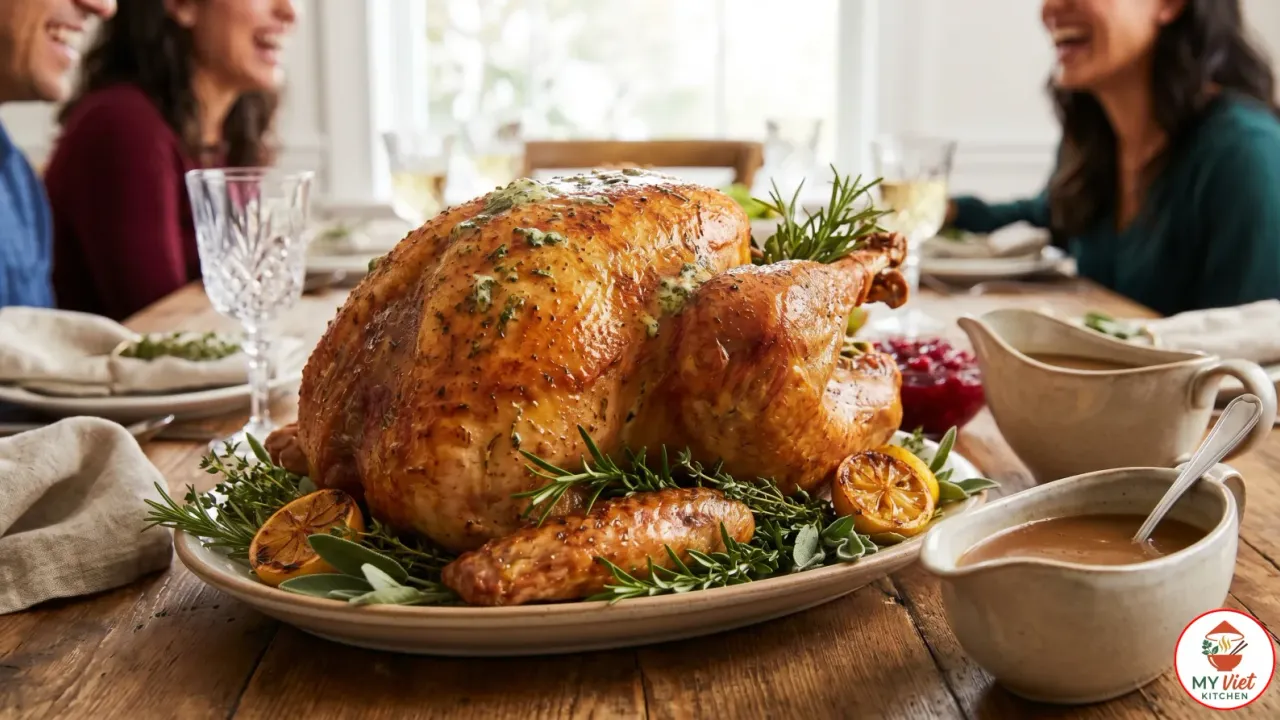
A perfectly roasted Thanksgiving turkey sits at the heart of every holiday table. This recipe shows you how to get juicy, tender meat with crispy golden skin and herb butter that melts into every bite. Whether this is your first holiday feast or your twentieth, this simple method works every time. In addition, you will learn how to make a rich pan gravy from the tasty drippings.
Prep Time: 30 minutes | Cook Time: 3 hours 30 minutes | Servings: 12
Difficulty: Medium | Calories: ~450 per serving
What Makes This Thanksgiving Turkey Special?
Thanksgiving turkey has stood as the star of the American holiday meal since the 1800s. Each November, families gather around the table, and the golden bird takes center stage. However, many home cooks face a common problem: dry breast meat and bland flavor. This recipe fixes both issues with a simple herb butter trick.
The secret lies in spreading herb butter right under the skin. As the turkey roasts, the butter melts and bastes the meat from the inside. As a result, every slice stays moist and full of herby flavor. Furthermore, the butter helps the skin brown nicely, so you get that crispy golden crust that everyone fights over.
Unlike deep-fried or smoked versions, this oven-roasted method works for every home cook. You do not need special tools or expert skills. Therefore, even first-timers can make a turkey that looks and tastes like a pro made it. Above all, the veggies in the pan build the base for a great gravy.

Choosing the Right Turkey
Picking the right bird sets the stage for a great Thanksgiving dinner. The type and size you choose affect both cooking time and flavor. Here are your best options for a perfect roast turkey.
- Fresh turkey (best choice): These birds deliver superior flavor and a more tender texture because they never undergo freezing. They also require no thawing time.
- Frozen turkey: A budget-friendly option that works well if you thaw it properly. Allow 24 hours in the refrigerator for every four to five pounds.
- Heritage breed turkey: These smaller birds have a richer, deeper flavor. They cost more, but many cooks say the taste is worth the price.
- Organic or free-range: These turkeys tend to taste better thanks to their varied diet and active life. They run leaner, so the herb butter trick works very well here.
Ingredients for Thanksgiving Turkey
Main Ingredients:
- 1 whole turkey (12 to 14 pounds), thawed if frozen
- 1 large onion, quartered
- 2 carrots, roughly chopped
- 2 celery stalks, roughly chopped
- 1 lemon, halved
- 4 cups chicken broth
For the Herb Butter:
- 6 tablespoons unsalted butter, softened
- 2 tablespoons fresh rosemary, finely chopped
- 2 tablespoons fresh thyme leaves
- 1 tablespoon fresh sage, finely chopped
- 4 cloves garlic, minced
- 1 teaspoon salt
- 1/2 teaspoon black pepper
For the Pan Gravy:
- Pan drippings from the roasted turkey
- 1/4 cup all-purpose flour
- 2 tablespoons unsalted butter
- Remaining chicken broth as needed
- Salt and pepper to taste
Pro tip: Pat the turkey fully dry with paper towels before adding the herb butter. Dry skin crisps up much better in the oven because surface moisture creates steam and blocks browning.
Step-by-Step Instructions
Step 1: Prepare the Turkey
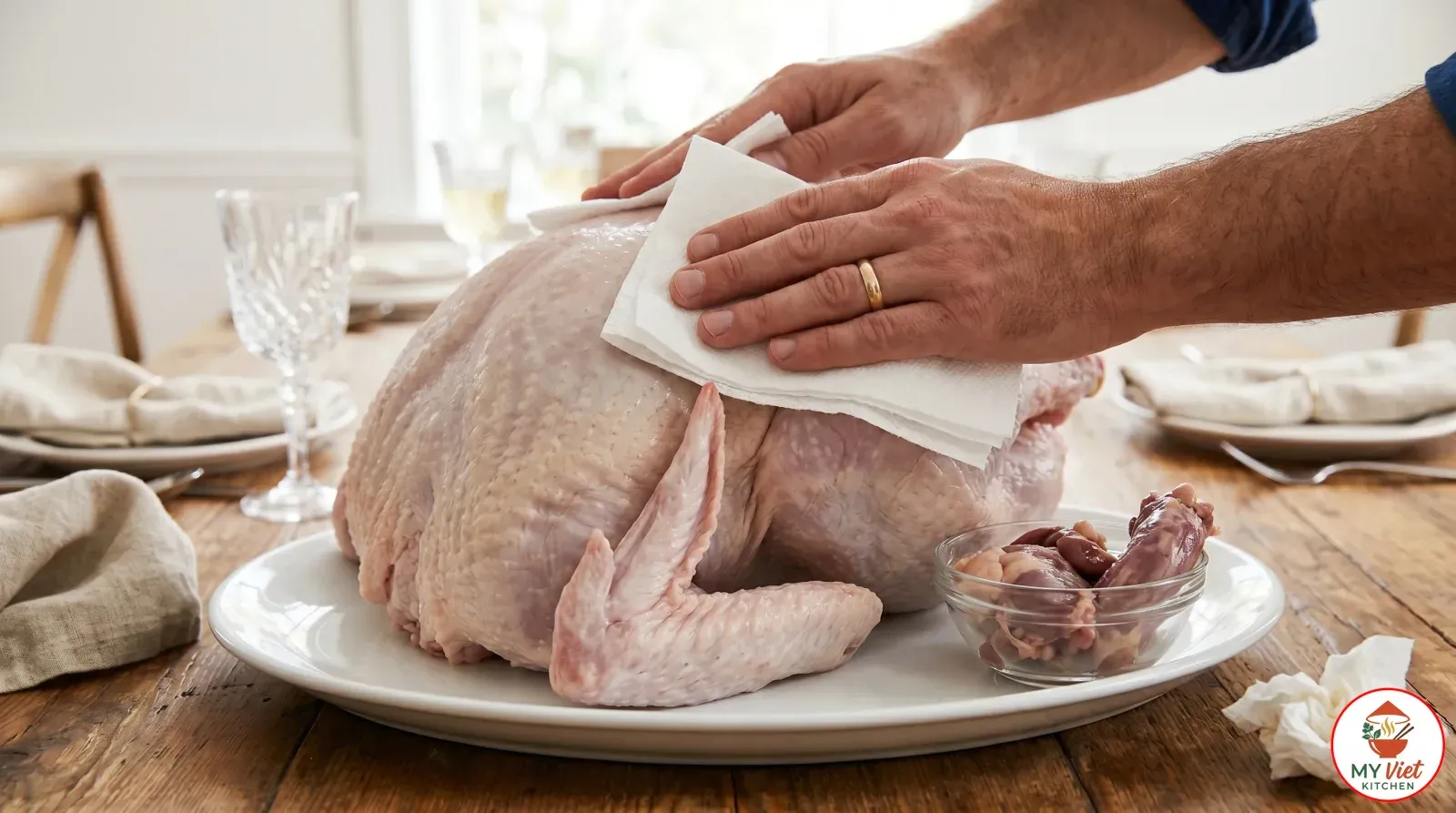
1First, remove the turkey from the refrigerator one hour before cooking. This step brings the meat closer to room temperature, so it cooks more evenly. Next, remove the giblets and neck from the cavity and pat the entire bird dry with paper towels. Then, tuck the wing tips under the body to prevent them from burning. A dry surface is essential because it allows the skin to crisp properly during roasting.
Step 2: Make the Herb Butter
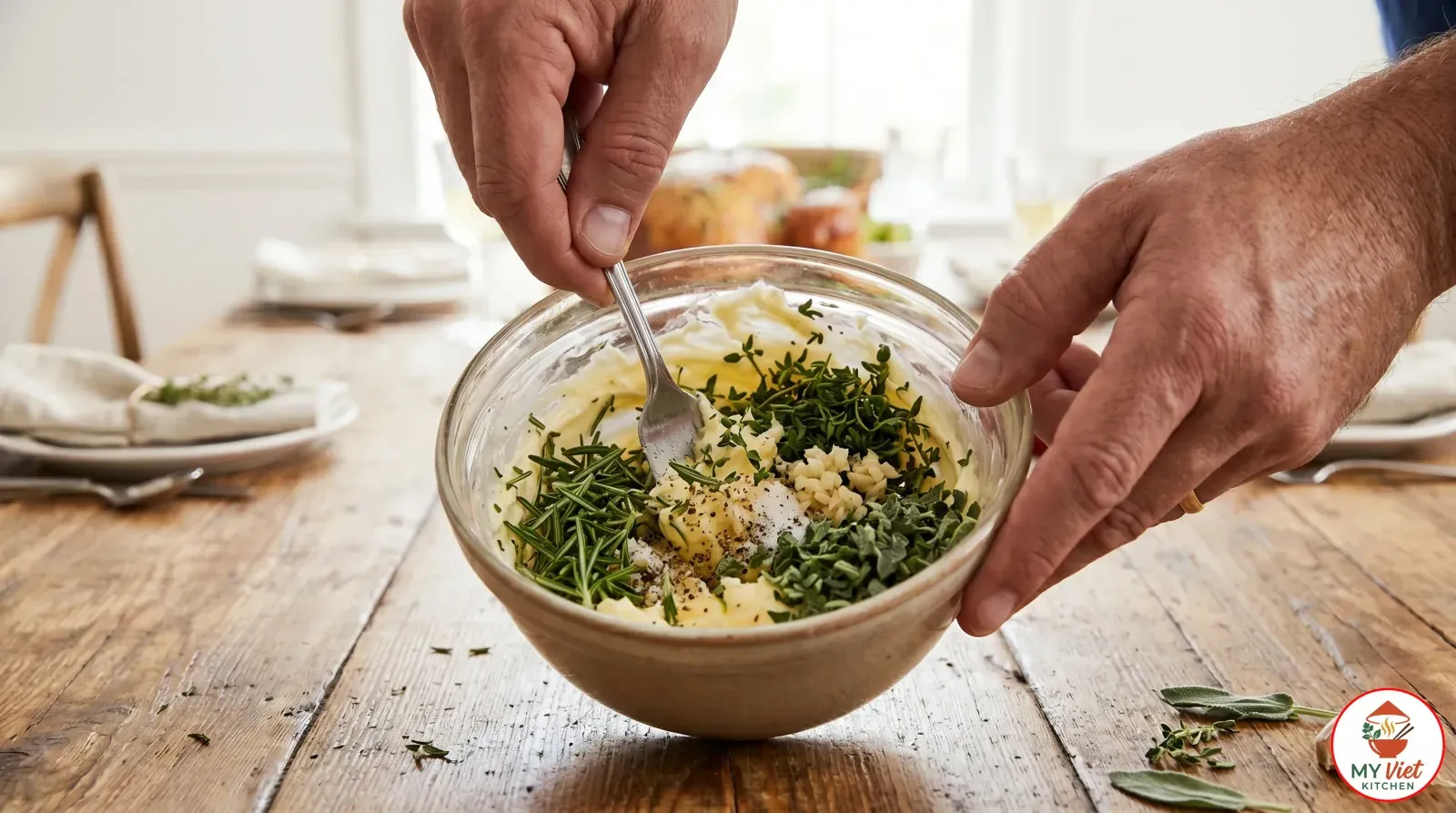
2In a small bowl, combine the softened butter with chopped rosemary, thyme, sage, and minced garlic. Add the salt and pepper, then mix everything together with a fork until the herbs spread evenly throughout the butter. This herb butter does two things: it flavors the meat from the inside and also helps the skin turn golden brown.
Step 3: Season the Turkey
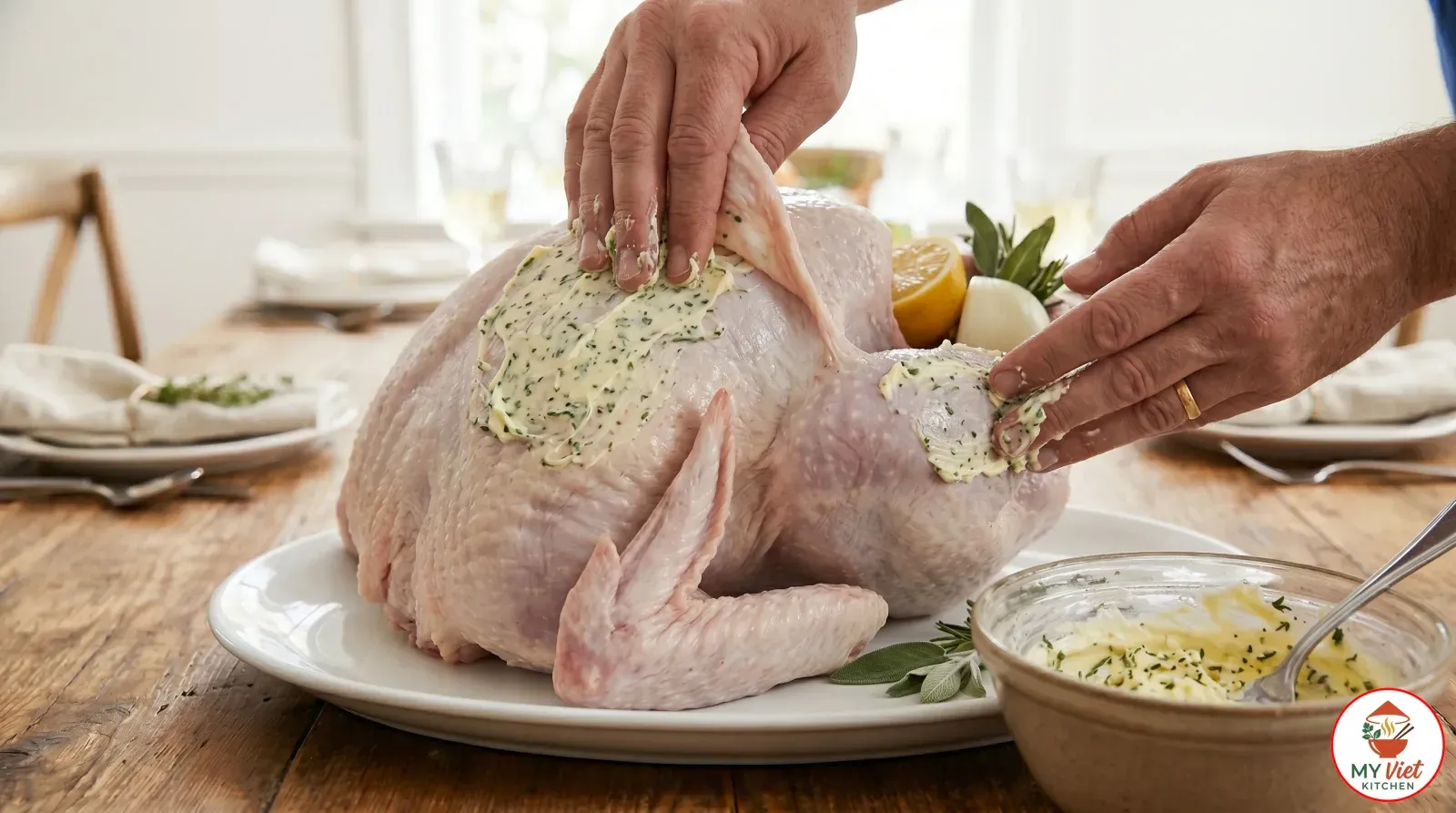
3Gently slide your fingers under the skin of the breast and thighs to loosen it without tearing. Then, spread about two-thirds of the herb butter directly onto the meat under the skin. Rub the remaining butter over the outside of the turkey. After that, stuff the cavity with the quartered onion, lemon halves, and fresh herb sprigs. These add steam and aroma that flavor the meat as it roasts.
Step 4: Set Up the Roasting Pan
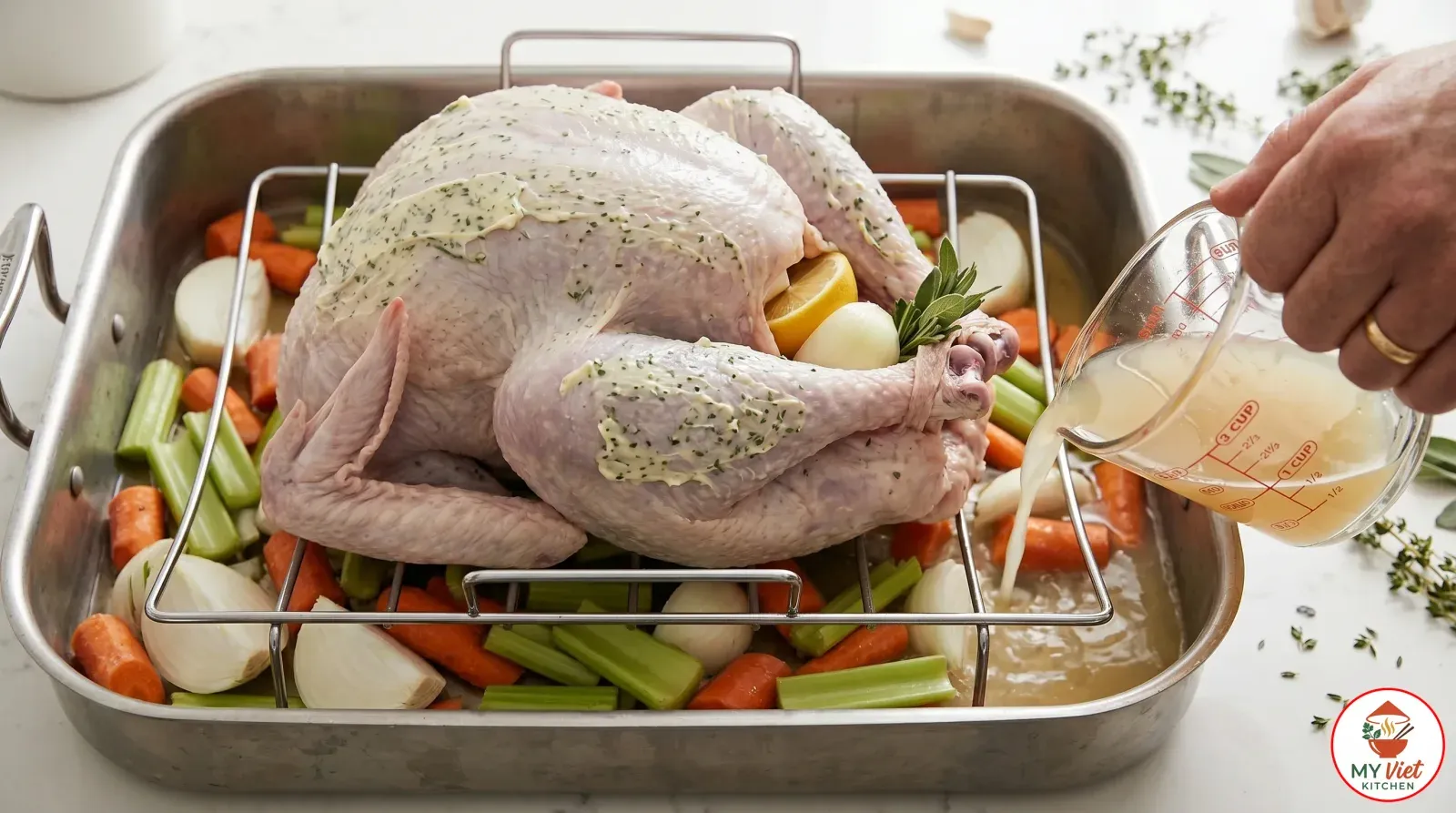
4Scatter the chopped carrots, celery, and remaining onion across the bottom of a large roasting pan. Place a roasting rack over the vegetables, then set the turkey breast-side up on the rack. Pour two cups of chicken broth into the bottom of the pan. The veggies and broth make steam that keeps the oven moist. Also, they form a tasty base for your pan gravy later.
Step 5: Roast the Turkey
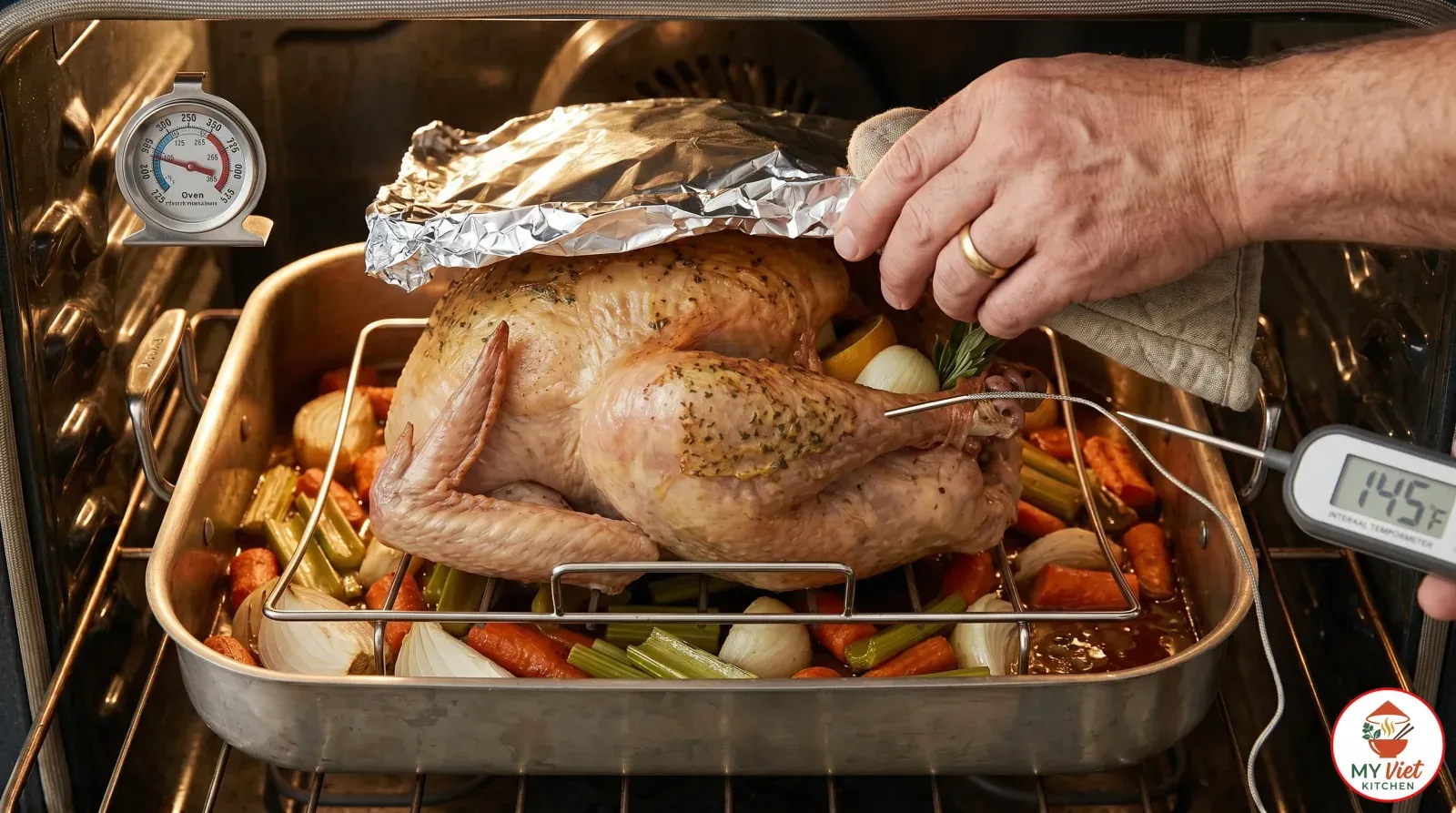
5Place the turkey in an oven preheated to 325F. Roast for approximately 3 to 3.5 hours, basting with pan juices every 45 minutes. If the breast skin turns deep golden before the turkey finishes cooking, tent it loosely with aluminum foil. Check the internal temperature by inserting a meat thermometer into the thickest part of the thigh. The turkey is done when it reaches 165F. Avoid opening the oven door too frequently, because each opening drops the temperature and extends the cooking time.
Step 6: Rest and Make Gravy
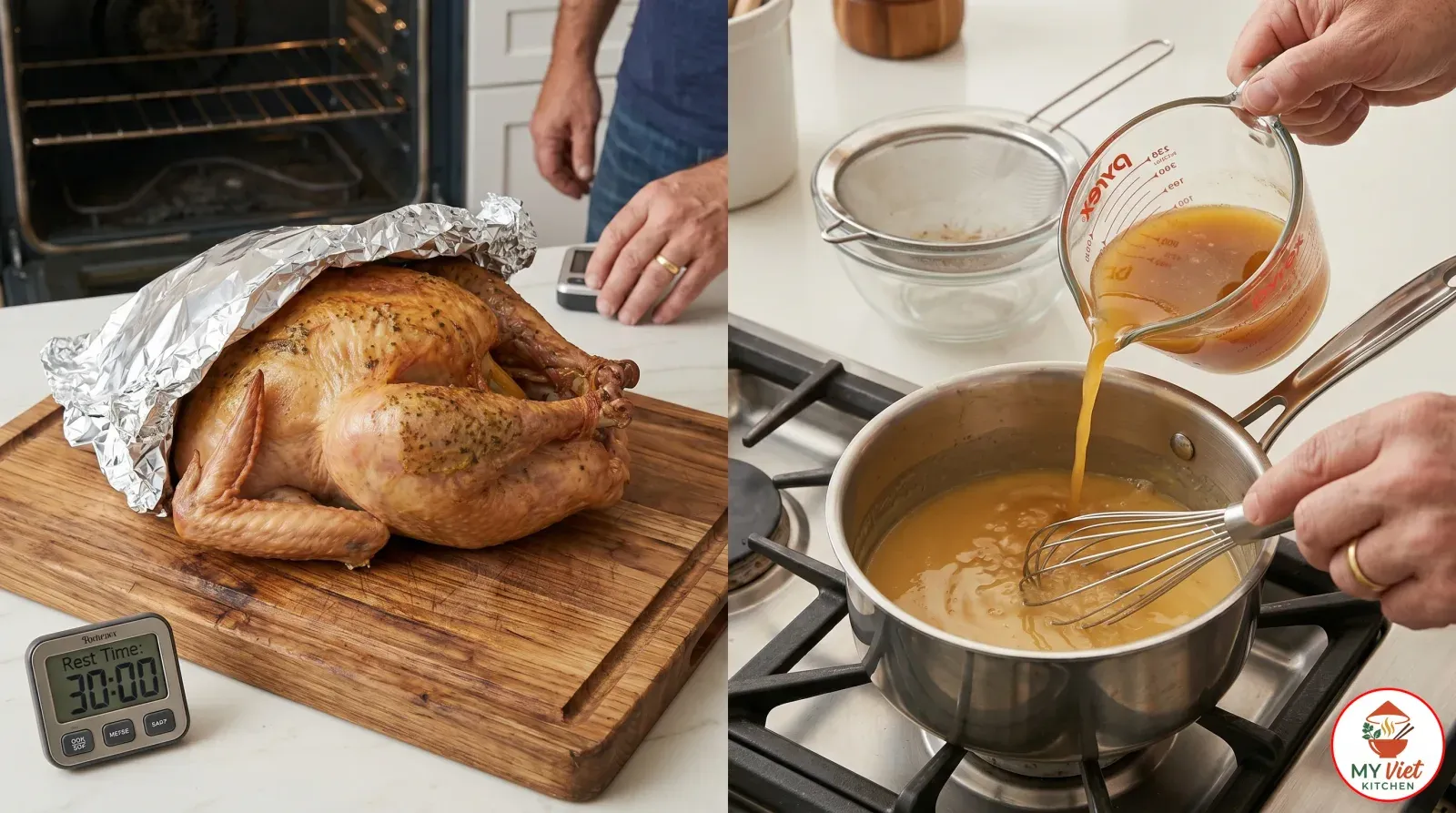
6Transfer the turkey to a large cutting board and tent it loosely with foil. Let it rest for at least 30 minutes. During this time, the juices redistribute throughout the meat, so every slice stays moist. Meanwhile, strain the pan drippings through a fine mesh sieve into a measuring cup. Skim off excess fat. In a saucepan, melt two tablespoons of butter over medium heat, then whisk in the flour. Cook for one minute, then gradually add the strained drippings and remaining broth. Stir constantly until the gravy thickens to your desired consistency. Season with salt and pepper to taste.
Expert Tips for Perfect Thanksgiving Turkey
Use a Meat Thermometer
A good meat thermometer takes all the guessing out of roasting. Stick it into the thickest part of the thigh, but do not touch the bone. The turkey is safe to eat at 165F. This simple tool stops you from both over and under cooking the bird.
Let the Skin Dry Overnight
For the crispiest skin, rub the turkey with herb butter the night before and leave it uncovered in the fridge. The cold, dry air pulls water from the surface. As a result, the skin gets extra crispy in the oven instead of steaming.
Do Not Skip the Resting Time
Resting lets the juices spread back through the meat. If you carve right away, those juices pour out onto the board. Thirty minutes under a foil tent makes a big difference in how moist and tasty the meat turns out.
Roasted Turkey vs. Deep-Fried Turkey
Both methods make a tasty Thanksgiving turkey. However, each has clear pros and cons. Here is a quick look to help you decide.
| Feature | Oven-Roasted Turkey | Deep-Fried Turkey |
|---|---|---|
| Cooking Time | 3 to 3.5 hours | 45 minutes to 1 hour |
| Skin Texture | Crispy and golden | Extra crispy and crunchy |
| Equipment Needed | Roasting pan and oven | Outdoor fryer and oil |
| Gravy Potential | Excellent pan drippings | No pan drippings |
| Difficulty | Easy to medium | Medium to hard |
Serving Suggestions
A Thanksgiving turkey shines when paired with classic side dishes. The right sides match the savory, herby flavors of the roasted bird. The holiday spread usually has a wide range of options.
The Perfect Accompaniments:
- Mashed potatoes: Creamy mashed potatoes serve as the ideal vehicle for the rich pan gravy.
- Cranberry sauce: The tart sweetness cuts through the richness of the turkey and adds a pop of color to the plate.
- Stuffing: A bread-based stuffing with herbs and celery echoes the aromatic flavors of the bird.
- Green bean casserole: This creamy, crunchy side dish provides a welcome contrast in texture.
- Sweet potato casserole: The natural sweetness of roasted sweet potatoes pairs wonderfully with savory turkey.
Beverage Pairings:
- Pinot Noir: This light red wine complements turkey without overpowering its delicate flavor.
- Chardonnay: A buttery Chardonnay pairs naturally with the herb butter roasted bird.
- Apple cider: A non-alcoholic option that brings warm autumn flavors to the table.
Storage and Reheating
Refrigerator: Carve the leftover turkey and store it in airtight containers. It stays fresh for three to four days. The meat also works perfectly for sandwiches, soups, and casseroles.
Freezer: Wrap portions tightly in plastic and then foil. Frozen turkey keeps well for up to three months. Thaw it in the refrigerator overnight before reheating.
Reheating: Place sliced turkey in a baking dish, add a splash of broth to prevent drying, and cover with foil. Warm at 325F for 15 to 20 minutes. Avoid the microwave for large portions because it heats unevenly and dries out the edges.
Common Mistakes to Avoid
1. Cooking a Cold Turkey
Putting a cold turkey straight from the refrigerator into the oven causes uneven cooking. The outside overcooks while the center stays underdone. Always let the bird sit at room temperature for one hour before roasting.
2. Opening the Oven Too Often
Every time you open the oven door, the temperature drops significantly. This extends the cooking time and can lead to dry meat. Baste quickly and keep the door closed as much as possible between bastings.
3. Skipping the Resting Period
Carving the turkey immediately after roasting causes the juices to escape. The result is dry, disappointing meat. Instead, always tent the bird with foil and let it rest for 30 minutes. This patience rewards you with moist, flavorful slices.
Frequently Asked Questions
How long does it take to roast a Thanksgiving turkey?
A 12 to 14 pound turkey takes about 3 to 3.5 hours at 325F. Plan for roughly 13 minutes per pound as a general guideline. However, always rely on a meat thermometer rather than time alone. According to the USDA, the thigh must reach 165F for safe consumption.
Should I brine my turkey before roasting?
Brining adds moisture and flavor, but this recipe achieves similar results through the herb butter technique. If you prefer brining, a dry brine works best. Simply rub salt under the skin and refrigerate the turkey uncovered for 12 to 24 hours before cooking.
How do I keep the turkey breast from drying out?
Spreading herb butter under the skin bastes the breast from the inside during roasting. Additionally, tent the breast with foil once it reaches a golden color. Most importantly, pull the turkey from the oven as soon as the thigh hits 165F to avoid overcooking.
Can I prepare the turkey the night before?
Yes, season the turkey with herb butter and leave it uncovered in the refrigerator overnight. The dry air helps the skin dry out, which produces crispier results. Just bring the bird to room temperature for one hour before placing it in the oven.
What size turkey do I need for Thanksgiving?
Plan for about 1 to 1.5 pounds per person. A 12 to 14 pound bird comfortably serves 10 to 12 guests with enough leftovers for sandwiches and soup the next day. For larger gatherings, consider roasting two smaller turkeys instead of one very large bird.
Variations and Adaptations
Citrus and Herb Turkey:
Add orange zest and fresh orange juice to the herb butter mixture. Place orange halves inside the cavity alongside the lemon. The citrus brightens the flavor and creates a more aromatic roast. Consequently, this version works especially well for those who prefer a lighter taste.
Spice-Rubbed Turkey:
Replace the fresh herbs with a blend of smoked paprika, cumin, and chili powder. This variation delivers a bold, smoky flavor that pairs well with cornbread stuffing. As a result, it offers a unique twist on the traditional roast.
Maple-Glazed Turkey:
Brush the turkey with a mixture of maple syrup, Dijon mustard, and apple cider vinegar during the last 30 minutes of roasting. The glaze caramelizes into a sweet, glossy coating. Therefore, it adds both visual appeal and a delightful sweetness to each bite.
The Cultural Significance of Thanksgiving Turkey
Thanksgiving turkey holds a deeply symbolic place in American culture. The custom dates back to harvest feasts in early colonial times, though the modern meal took shape in the 1800s. In 1863, President Lincoln made Thanksgiving a national holiday. Over time, roast turkey became the star of the table.
Today, Americans eat about 46 million turkeys each Thanksgiving. The bird stands for plenty, thanks, and time spent with loved ones. Beyond the United States, Canadian families also enjoy roast turkey at their own Thanksgiving in October. No matter the date, the act of roasting a whole turkey brings people together like few other meals can.
Conclusion
Roasting a Thanksgiving turkey does not have to feel hard. With herb butter under the skin, a pan lined with veggies, and a meat thermometer, you can make a bird that looks great and tastes even better. Remember to let the turkey warm up before roasting, baste every 45 minutes, and always rest it for 30 minutes before you carve.
Ready to plan your full Thanksgiving menu? Explore our complete recipe collection for dishes from around the world. If you love American comfort food, try our Mac and Cheese or Cornbread recipes to round out your holiday spread.