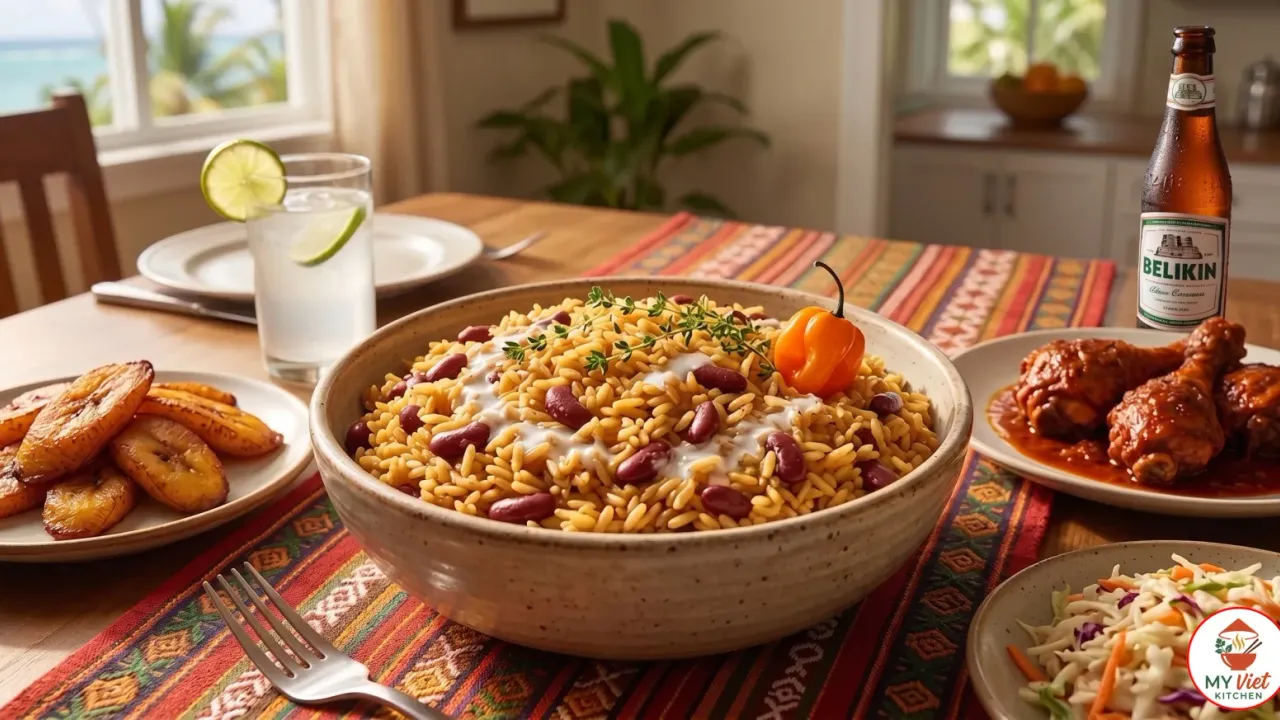
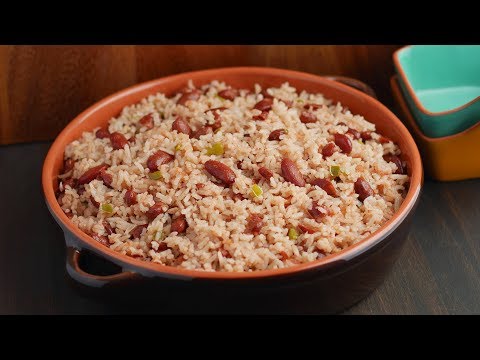
Belizean Rice and Beans is the soul of Belizean cooking. This iconic dish slow-cooks long-grain rice and red kidney beans together in rich coconut milk with fresh thyme, garlic, and a whole habanero pepper. The result is a creamy, aromatic, and deeply satisfying plate that appears on every Belizean table, especially on Sundays. Unlike other Caribbean rice dishes, Belizean rice and beans gets its character from the marriage of coconut fat and kidney bean starch, producing grains that are tender, slightly sticky, and loaded with flavor.
Prep Time: 20 minutes | Cook Time: 55 minutes | Servings: 6
Difficulty: Easy | Calories: ~420 per serving
What Makes Belizean Rice and Beans Special?
Belizean rice and beans occupies a place in the national food culture that few dishes anywhere in the world can match. It is not a side dish. It is the centerpiece. Every Sunday across Belize, families gather around plates of this coconut-scented creation, served alongside stewed chicken, fried plantains, and coleslaw. The ritual is so deeply embedded that Belizeans abroad often describe homesickness in terms of missing their Sunday rice and beans.
What sets this dish apart from other Caribbean rice preparations is the technique. The rice and beans cook together in the same pot, sharing the coconut milk from the start. As the rice absorbs the liquid, it takes on the starch from the beans and the fat from the coconut. Consequently, each grain becomes coated in a thin, creamy layer that delivers flavor in every bite. The thyme and habanero infuse the entire pot with a warm, herbal aroma and a gentle background heat. This is not rice with beans stirred in at the end. Instead, it is a unified dish where every component melds into something greater.
The flavor profile balances richness from the coconut milk, earthiness from the kidney beans, and brightness from the fresh thyme and garlic. A whole habanero pepper sits in the pot during cooking, releasing its fruity, floral capsaicin without overwhelming the other flavors. The pepper comes out before serving, leaving only a gentle warmth. This combination of fat, starch, protein, and spice makes Belizean rice and beans a complete and satisfying meal on its own. Furthermore, the dish is naturally vegan, gluten-free, and dairy-free, which makes it accessible to nearly everyone.
Choosing the Right Coconut Milk
Coconut milk is the single most important ingredient in this recipe. The quality and fat content of the coconut milk you use will determine whether your Belizean rice and beans tastes rich and authentic or thin and flat. Not all coconut milk is equal, so choose carefully.
- Full-fat canned coconut milk: This is the best option for most home cooks. Look for brands that list only coconut extract and water, with no added gums or stabilizers. The can should feel heavy. When you open it, you should see a thick layer of cream on top. Shake it well before using.
- Freshly pressed coconut milk (best choice): In Belize, cooks extract coconut milk by grating mature coconut flesh and squeezing it through a cloth. This produces the richest, most fragrant milk. If you can find mature coconuts, crack them open, remove the flesh, blend it with warm water, and strain through cheesecloth. The flavor difference is remarkable.
- Light coconut milk: Avoid this for Belizean rice and beans. Light coconut milk contains too much water and too little fat. The rice will cook properly, but it will lack the creamy richness that defines the dish. If light coconut milk is all you have, supplement it with a tablespoon of coconut cream or coconut oil.
Ingredients for Belizean Rice and Beans
Main Ingredients:
- 1 1/2 cups (300g) long-grain white rice
- 1 can (13.5 oz / 400ml) full-fat coconut milk
- 1 cup (240ml) water
- 2 cups (340g) cooked red kidney beans, or 1 can (15 oz) drained and rinsed
Aromatics and Seasonings:
- 2 tablespoons coconut oil or vegetable oil
- 1 small onion, finely diced
- 3 cloves garlic, minced
- 1 whole habanero pepper, left intact
- 3 sprigs fresh thyme, or 1 teaspoon dried thyme
- 1 bay leaf
Seasoning:
- 1 teaspoon salt, plus more to taste
- 1/2 teaspoon black pepper
- 1 tablespoon annatto seeds or 1/2 teaspoon ground annatto (optional, for golden color)
Pro tip: If using dried kidney beans, soak them overnight in cold water. Then cook them in a separate pot until tender before adding them to the rice. This takes about 1 to 1.5 hours depending on the age of the beans. Reserve the bean cooking liquid and use it to replace some of the water in the recipe for deeper flavor.
Step-by-Step Instructions
Step 1: Prepare the Coconut Base
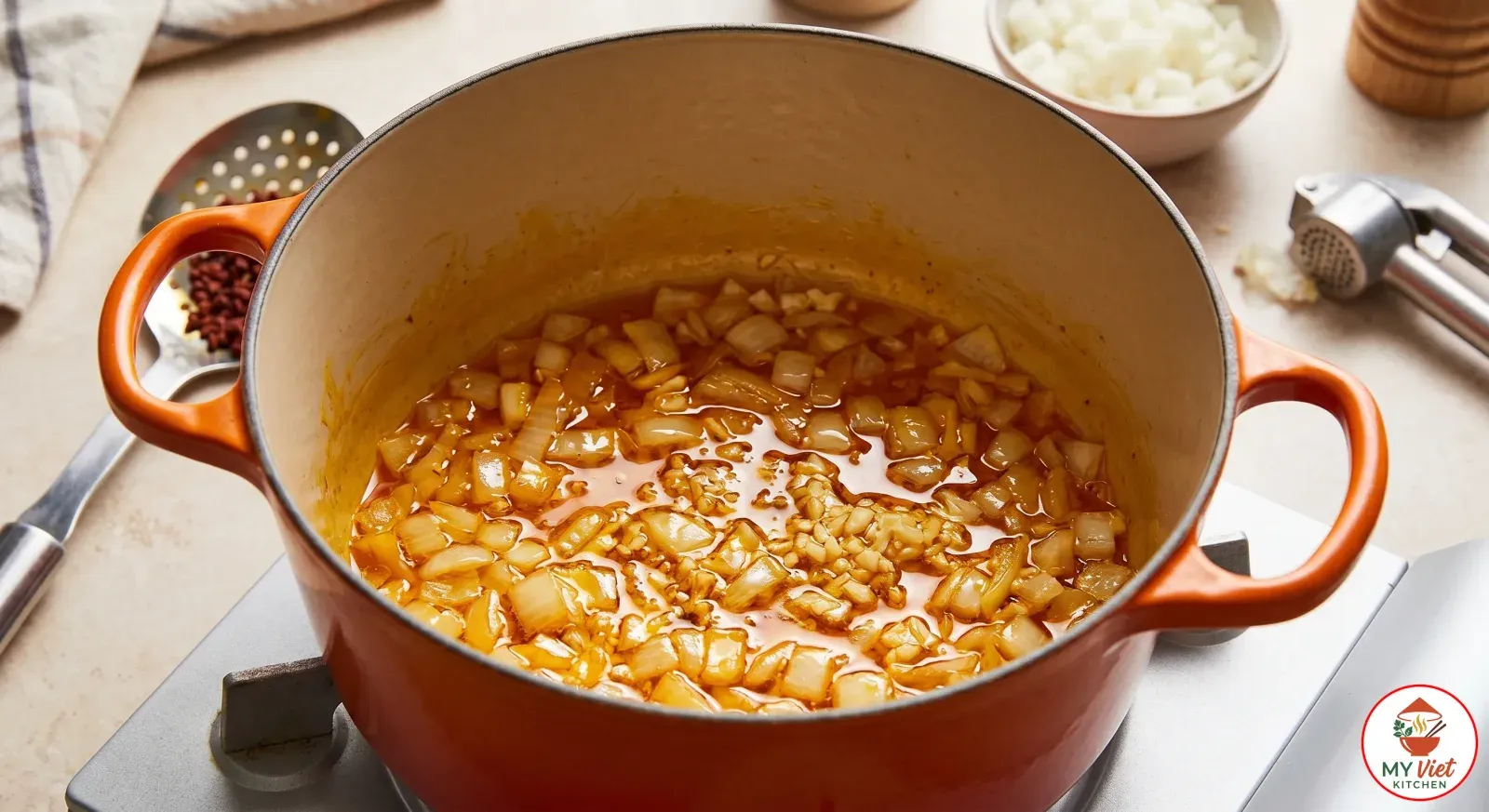
1 Heat the coconut oil in a heavy-bottomed pot or Dutch oven over medium heat. If you are using annatto seeds, add them to the oil now and stir for about one minute until the oil turns a deep golden-orange. Then remove and discard the seeds with a slotted spoon. The annatto adds a beautiful color that mimics the look of traditional Belizean rice and beans.
Add the diced onion to the pot and cook for 3 to 4 minutes, stirring occasionally, until it softens and turns translucent. Next, add the minced garlic and stir for 30 seconds until fragrant. Be careful not to burn the garlic, as it turns bitter quickly. This aromatic base builds the foundation of flavor for the entire dish.
Step 2: Add the Beans and Aromatics
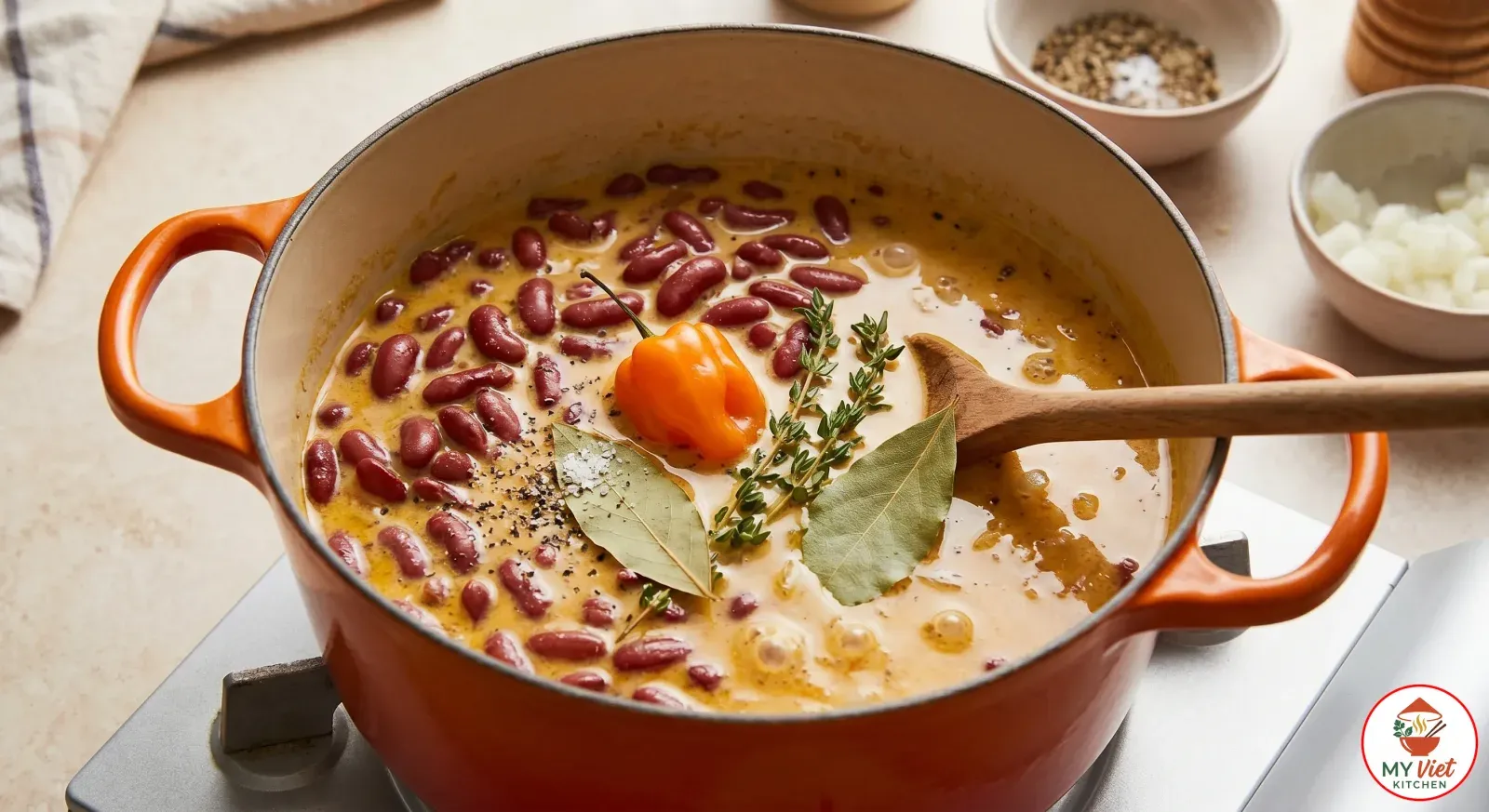
2 Add the cooked kidney beans to the pot and stir them gently to coat each bean in the aromatic oil. Pour in the full can of coconut milk and the water. Drop in the whole habanero pepper, thyme sprigs, and bay leaf. Season with salt and black pepper. Stir everything together until well combined.
Bring the mixture to a gentle boil over medium heat. Let it bubble for 2 to 3 minutes so the coconut milk absorbs the flavors from the thyme and habanero. The liquid should look creamy and slightly golden. At this point, taste the broth and adjust the salt. Remember that the rice will absorb the seasoning, so the liquid should taste well-salted now.
Step 3: Add the Rice
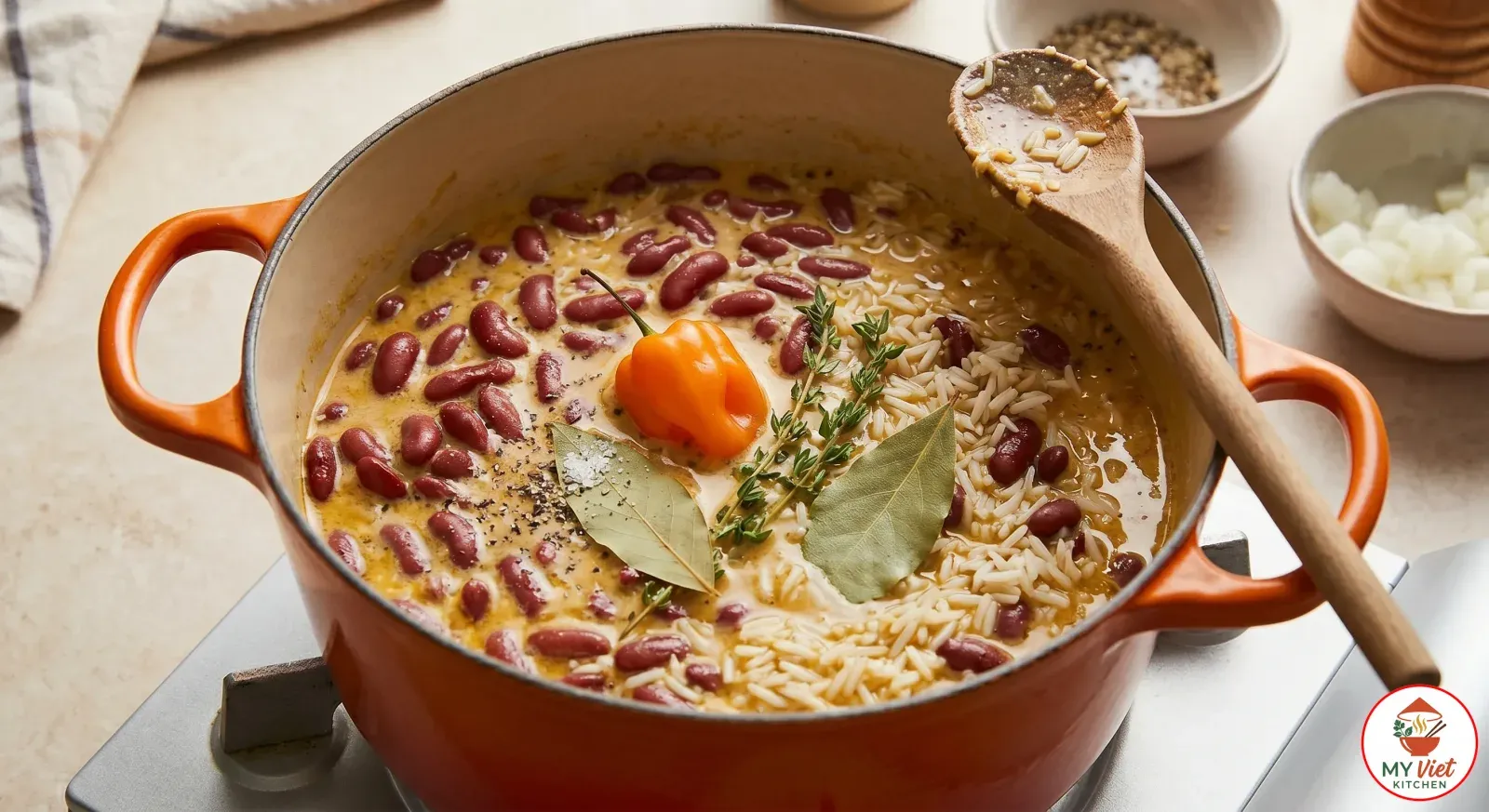
3 Rinse the rice in a fine-mesh strainer under cold running water until the water runs mostly clear. This removes excess surface starch that would make the finished dish gummy. Add the rinsed rice to the pot and stir once to distribute it evenly among the beans and liquid.
Make sure the liquid covers the rice by about half an inch. If the rice sits above the liquid line, add a small splash of water. Do not add too much, as the coconut milk provides most of the cooking moisture. Return the pot to a boil over medium heat. Once it reaches a boil, give the rice one final stir to prevent sticking on the bottom.
Step 4: Simmer Until Tender
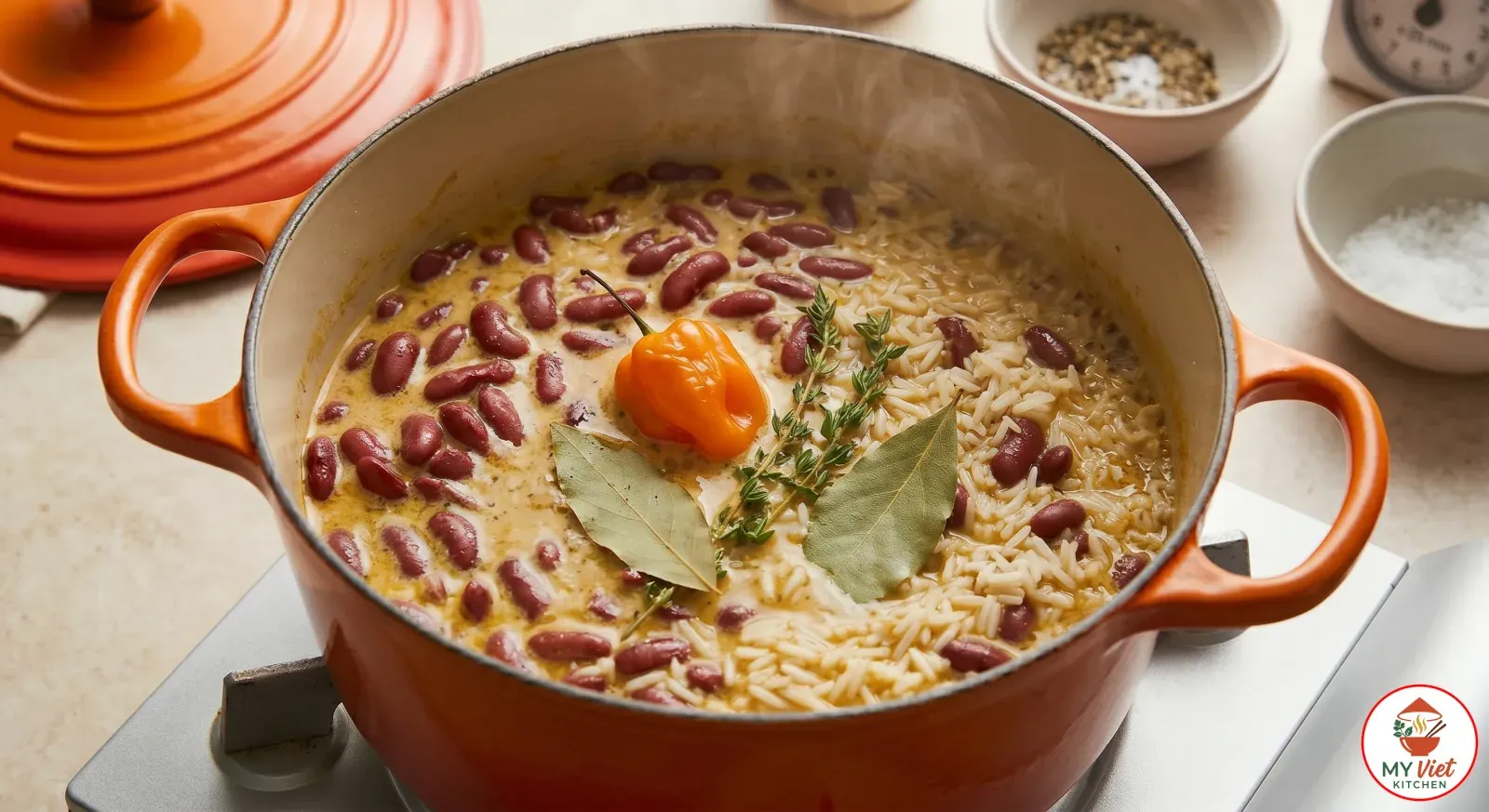
4 Once the pot reaches a boil, reduce the heat to the lowest possible setting. Cover the pot with a tight-fitting lid and let it cook undisturbed for 25 to 30 minutes. Do not lift the lid during this time. The trapped steam is essential to cooking the rice evenly. Lifting the lid releases steam and disrupts the cooking process.
After 25 minutes, quickly lift the lid and check the rice. All the liquid should be absorbed. If any liquid remains, re-cover and cook for 5 more minutes. The rice should look fluffy, with each grain separate yet coated in a thin layer of coconut cream. The beans should be scattered throughout, plump and tender. You may notice a thin crust on the bottom of the pot. In Belize, this is the prized “bun bun,” and cooks fight over it.
Step 5: Rest and Fluff
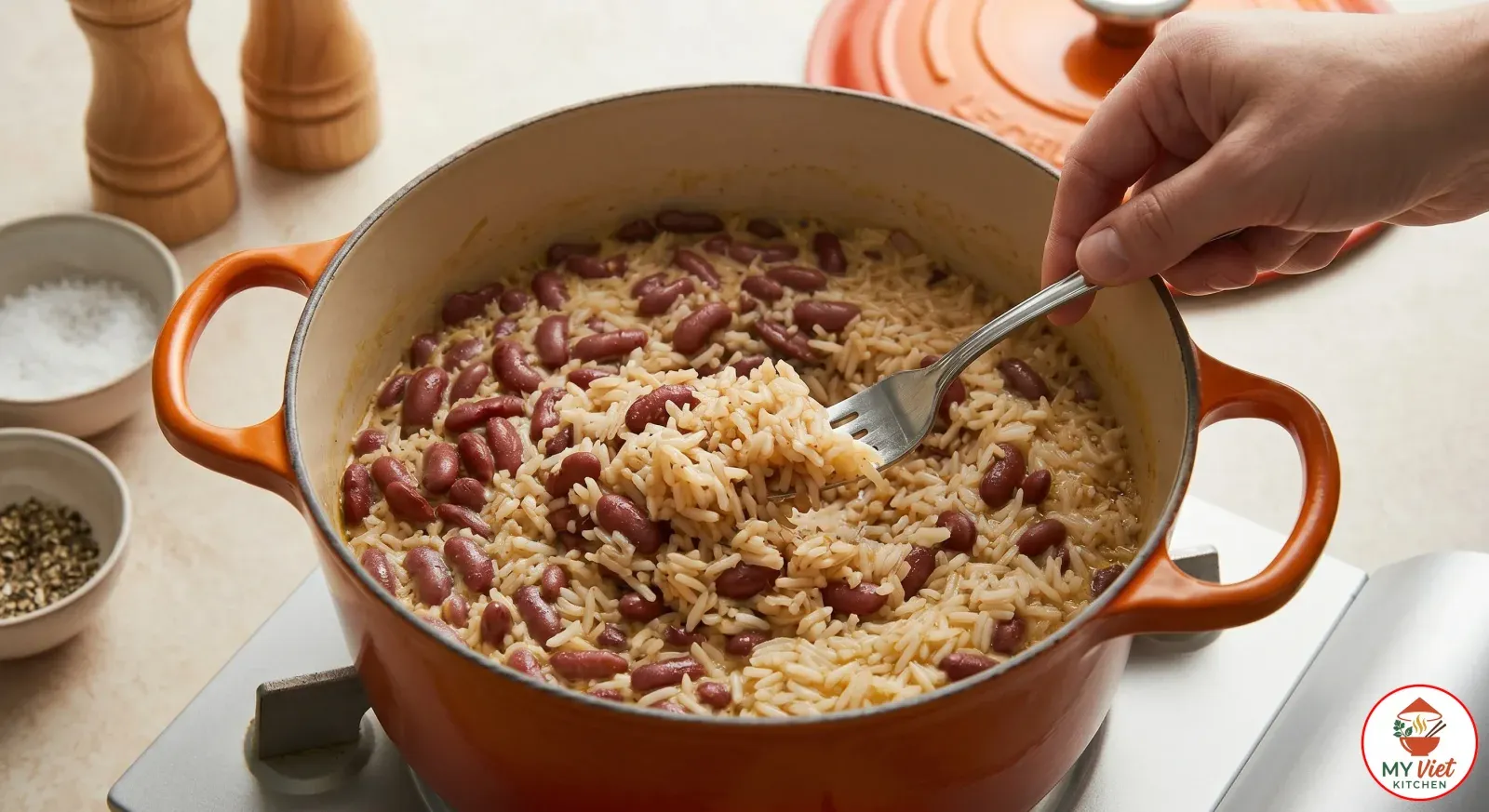
5 Remove the pot from the heat and let it sit with the lid on for 10 minutes. This resting period allows residual steam to finish cooking any remaining moisture into the grains. It also makes the rice easier to fluff without breaking apart.
After resting, remove the habanero pepper, thyme sprigs, and bay leaf. Use a fork to gently fluff the rice from the bottom up. Fold rather than stir, so you do not crush the beans or mash the grains. Taste and adjust salt if needed. Serve hot on its own or alongside your favorite Belizean proteins.
Expert Tips for Perfect Belizean Rice and Beans
Do Not Lift the Lid
The most common mistake when making this dish is checking the rice too early. Every time you lift the lid, you release steam that the rice needs to cook properly. Set a timer for 25 minutes and walk away from the pot. Trust the process. If your heat is on the lowest setting and your lid fits tightly, the rice will cook perfectly without any intervention.
Use the Right Rice
Long-grain white rice produces the best results for Belizean rice and beans. It absorbs the coconut milk evenly and stays fluffy rather than clumping. Avoid short-grain or sushi rice, which releases too much starch and creates a mushy texture. Jasmine rice works as a substitute, though it adds a floral note that is not traditional. Basmati rice also works but cooks slightly drier than long-grain varieties.
Control the Heat Level
The whole habanero pepper provides subtle warmth without making the dish spicy. To eliminate heat entirely, omit the pepper. For mild heat, leave the pepper whole and remove it before serving. If you want moderate heat, pierce the pepper once with a knife during the last 10 minutes of cooking. Slicing the pepper in half before adding it delivers significant heat. Never add a whole sliced habanero unless you specifically want a very spicy dish.
Rice and Beans vs. Beans and Rice in Belize
Belizeans draw a clear line between two dishes that outsiders often confuse. Rice and beans and beans and rice sound similar, but they are fundamentally different preparations with distinct roles in the weekly meal cycle. The following table explains the differences.
| Feature | Rice and Beans (Sunday) | Beans and Rice (Weekday) |
|---|---|---|
| Cooking method | Rice and beans cooked together in coconut milk | Plain white rice served beside stewed beans |
| Coconut milk | Essential, cooked into the rice | Not used in the rice, sometimes in the beans |
| Texture | Creamy, integrated, slightly sticky | Separate components, fluffy rice |
| When served | Sunday dinner, holidays, special occasions | Weekday meals, everyday lunch |
| Cultural status | Celebratory, family-gathering dish | Casual, everyday staple |
Serving Suggestions
In Belize, rice and beans rarely appears alone on the plate. Sunday dinner is a full spread, and the rice and beans serves as the foundation upon which everything else is built. The following pairings reflect the most authentic Belizean combinations.
The Perfect Accompaniments:
- Belizean stewed chicken: This is the classic Sunday partner. Chicken pieces braised in a dark recado seasoning made from annatto, cumin, and black pepper create a deeply flavored, brick-red sauce that pairs perfectly with the creamy coconut rice.
- Fried ripe plantains: Sweet, caramelized plantain slices provide a delicious contrast to the savory rice. The natural sugars in ripe plantains balance the earthy beans and rich coconut.
- Belizean-style coleslaw: A vinegar-based coleslaw with shredded cabbage, carrots, and onion adds crunch and acidity. This tangy side cuts through the richness of the coconut milk and refreshes the palate.
- Fried fish or shrimp: Along the coast and on the cayes, seafood replaces chicken as the protein of choice. Whole fried snapper or garlic shrimp served over rice and beans is a quintessential Belizean coastal meal.
Beverage Pairings:
- Belikin beer: The national beer of Belize is a smooth, light lager that complements the rich coconut flavors without overpowering them. A cold Belikin is the default Sunday dinner drink for many Belizean families.
- Fresh lime juice or limeade: Bright and acidic, fresh lime juice served over ice provides a clean counterpoint to the creamy rice. Belizeans often squeeze lime directly over their plate as well.
- Sorrel drink (hibiscus tea): This tart, ruby-red drink made from dried hibiscus flowers, ginger, and cinnamon is popular throughout Belize. Its acidity and spice balance the coconut and bean richness beautifully.
- Coconut water: For a non-alcoholic option that echoes the coconut theme, fresh coconut water served chilled keeps the tropical flavor consistent across the meal.
Storage and Reheating
Refrigerator: Store leftover rice and beans in an airtight container for up to 4 days. The coconut fat solidifies when cold, which actually helps preserve the texture. The flavor deepens over time as the seasonings continue to meld, so leftovers often taste even better than the fresh batch.
Freezer: Belizean rice and beans freezes well for up to 3 months. Portion it into individual containers or zip-top freezer bags. Press out as much air as possible before sealing. Thaw overnight in the refrigerator before reheating. Frozen and reheated rice and beans retains its flavor well, though the texture becomes slightly softer than freshly cooked.
Reheating: The best method is on the stovetop. Add a tablespoon of water or coconut milk to the rice, cover the pot, and heat over medium-low until steaming. Stir gently once halfway through. Microwave reheating works in a pinch, but cover the bowl and sprinkle a tablespoon of water over the rice first. This prevents the grains from drying out.
Common Mistakes to Avoid
1. Using Light Coconut Milk
Light coconut milk produces flat, watery rice that lacks the signature creaminess of the dish. Full-fat coconut milk is essential. The fat coats each grain and creates that rich, slightly glossy texture. If you are watching calories, reduce the portion size rather than substituting the coconut milk. The dish simply does not work without adequate coconut fat.
2. Stirring the Rice While It Cooks
Once you add the rice and cover the pot, leave it alone. Stirring releases starch from the grains and turns the rice into a gluey mess. The only time you should stir is once, right before you cover the pot. After that, the rice cooks by steam absorption. Trust the low heat and the tight lid to do the work.
3. Cutting the Habanero Pepper
A whole habanero adds subtle warmth. A cut habanero adds serious fire. Many first-time cooks slice the pepper, thinking it will distribute the flavor better. Instead, it releases so much capsaicin that the gentle coconut flavor disappears behind a wall of heat. Always leave the pepper whole unless you deliberately want a spicy result. Remove it before serving.
4. Skipping the Resting Period
The 10-minute rest after cooking is not optional. During this time, residual steam finishes cooking the top layer of rice and the grains firm up slightly. Serving immediately after removing from heat results in mushy rice on top and dry rice on the bottom. The rest period evens out the moisture. Then fluffing with a fork separates the grains gently without crushing them.
Frequently Asked Questions
What is the difference between Belizean rice and beans and beans and rice?
In Belize, rice and beans is a specific dish where the rice and red kidney beans cook together in coconut milk, producing creamy, integrated grains with a rich coconut flavor. Beans and rice, by contrast, refers to plain white rice served alongside stewed beans as two separate components. Rice and beans is the celebratory Sunday tradition. Beans and rice is the casual weekday version. Belizeans take this distinction very seriously.
Can I use canned coconut milk for Belizean rice and beans?
Yes, canned full-fat coconut milk works very well and is the most practical option for home cooks outside Belize. Choose a brand without added sweeteners or preservatives. Shake the can thoroughly before opening to combine the thick cream with the thinner liquid. In Belize, many cooks use freshly pressed coconut milk from grated mature coconut flesh, but canned coconut milk delivers excellent results with far less effort.
Why do you leave the habanero pepper whole?
A whole habanero releases gentle, fruity heat and aroma into the cooking liquid without overwhelming the dish. The seeds and inner membranes contain the most capsaicin, and leaving the pepper intact keeps those compounds contained. If you cut or puncture it, the heat level increases dramatically and can overpower the delicate coconut flavor. Remove the whole pepper before serving for mild warmth throughout.
What kind of beans are traditional in Belizean rice and beans?
Red kidney beans are the traditional and most common choice. They hold their shape during the long simmer and have a robust, earthy flavor that pairs beautifully with coconut milk. Some Belizean cooks in the southern districts near Guatemala use black beans, but red kidney beans remain the standard across the country. Dried beans cooked from scratch produce the best flavor, though canned kidney beans work as a convenient shortcut.
Is Belizean rice and beans gluten-free?
Yes, traditional Belizean rice and beans is naturally gluten-free. The dish contains rice, beans, coconut milk, and fresh aromatics, none of which contain gluten. Always check the labels on canned products to confirm no gluten-containing additives are present. This makes the dish an excellent option for anyone following a gluten-free, dairy-free, or vegan diet.
Can I make Belizean rice and beans in a rice cooker?
You can adapt the recipe for a rice cooker, though the result differs slightly from the stovetop version. Saute the onion and garlic in a separate pan first. Then transfer them along with the beans, coconut milk, water, and seasonings to the rice cooker. Add the rinsed rice on top and use the standard white rice setting. The flavor may be slightly less developed because the rice cooker cannot build the aromatic base as effectively as a pot on the stove.
Variations and Adaptations
Garifuna-Style with Coconut Oil and Fish:
Along the southern coast of Belize, the Garifuna people prepare their rice and beans with extra coconut oil and serve it with fried or grilled fish. This additional fat creates an even richer, more fragrant rice. Some Garifuna cooks also add a pinch of allspice to the pot, which lends a warm, peppery note. Pair this version with whole fried snapper and a squeeze of lime for a coastal Belizean feast.
Pigtail Rice and Beans:
Salted pigtail is a traditional Belizean ingredient that some cooks add to their rice and beans. Soak the pigtail in water overnight to remove excess salt. Then boil it until tender and chop it into small pieces. Add the pigtail pieces to the pot along with the beans. The salted pork infuses the coconut milk with a smoky, meaty depth that makes the dish heartier. Reduce the added salt to compensate for the pigtail’s brine.
Black Bean Version:
In the Cayo and Toledo districts near the Guatemalan border, some Belizean cooks use black beans instead of kidney beans. Black beans produce a darker rice with a slightly earthier, more mineral flavor. The coconut milk takes on a grayish hue, which looks less vibrant than the classic red kidney bean version but tastes equally delicious. Use the same cooking method, adjusting the salt slightly since black beans tend to absorb more seasoning.
Instant Pot Adaptation:
For a faster version, use the saute function on your Instant Pot to cook the onion and garlic. Add all remaining ingredients, lock the lid, and cook on high pressure for 8 minutes. Allow a natural pressure release for 10 minutes, then quick-release any remaining pressure. This method produces good results in about 30 minutes total. The texture is slightly softer than the stovetop version, but the flavor remains faithful to the original.
The Cultural Significance of Belizean Rice and Beans
Belizean rice and beans is far more than a recipe. It is a cultural institution. Every Sunday, across every district in Belize, families prepare this dish as part of a communal meal that brings generations together. The tradition is so universal that many Belizeans define their week by it. Monday through Saturday, you eat beans and rice. Sunday, you eat rice and beans. This rhythm structures the culinary week and marks the passage of time with flavor.
Every ingredient in this dish reflects the diverse heritage of Belize itself. Coconut milk comes from the Garifuna and Creole traditions. Red kidney beans connect to the broader Caribbean basin. Meanwhile, thyme and habanero signal a blend of European and African influences brought to the region through centuries of colonial history and migration. In a country where Creole, Mestizo, Garifuna, Maya, Mennonite, and East Indian communities coexist, rice and beans is the one dish that everyone claims as their own. According to Taste Atlas, Belizean rice and beans ranks among the most iconic dishes in all of Central America. For Belizeans living abroad, preparing it is an act of remembrance. The smell of coconut milk, thyme, and habanero simmering on a Sunday afternoon is enough to bring the entire country back into focus.
Conclusion
Making Belizean rice and beans at home is simpler than it might seem. The technique requires only a good pot, full-fat coconut milk, red kidney beans, a handful of aromatics, and the patience to leave the lid on. Yet the result is extraordinary: creamy, coconut-scented rice with tender beans, gentle heat from the habanero, and an herbal warmth from the thyme. Master this recipe, and you have a foundation for an entire world of Belizean cooking.
Ready to explore more incredible Caribbean and Central American dishes? Browse our collection of Central American dishes for recipes like baleada, pupusas, and gallo pinto. If you try this Belizean rice and beans recipe, leave a rating and share your experience in the comments below.