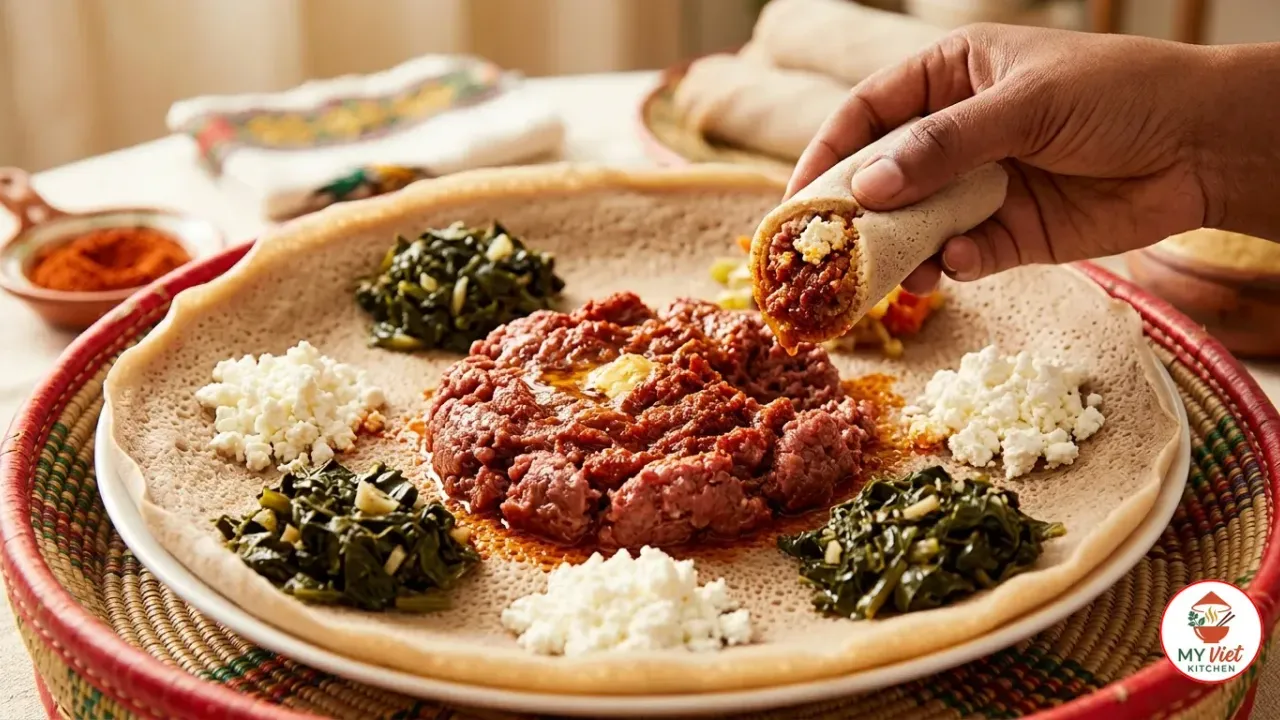
Kitfo is one of the most celebrated dishes in Ethiopian cuisine, and this authentic kitfo recipe shows you exactly how to make it at home. This beloved delicacy features hand-minced raw beef tossed with fiery mitmita chili spice and warm niter kibbeh spiced butter. If you love bold flavors and want to explore one of Africa’s most iconic beef dishes, this guide walks you through every step with the detail you need.
Prep Time: 20 minutes | Cook Time: 10 minutes | Servings: 4
Difficulty: Medium | Calories: ~420 per serving
What Makes Kitfo Special?
Kitfo holds a place of honor in Ethiopian food culture that few other dishes can match. The Gurage people of southern Ethiopia created this dish, and it remains deeply tied to their identity. In Gurage tradition, serving kitfo to guests signals respect and generosity. The fresher the meat and the more generous the butter, the greater the honor bestowed on those at the table.
What separates this kitfo recipe from a simple beef tartare is the spice. Mitmita delivers a fiery, complex heat that builds slowly on the tongue, while niter kibbeh wraps everything in a warm, aromatic blanket of cardamom, fenugreek, and ginger. Together, these two ingredients transform raw beef into something deeply layered and unforgettable. No other cuisine in the world produces a dish quite like it.
In Ethiopian restaurants across Addis Ababa and around the world, kitfo appears on nearly every menu. Diners choose between three styles: tere (completely raw), leb leb (lightly warmed), and yebesele (fully cooked). Each style showcases the same essential combination of beef, mitmita, and niter kibbeh, but the texture and flavor shift with each level of heat. For this kitfo recipe, you can easily adjust to your preferred doneness.

Choosing the Right Beef for Kitfo
Because this kitfo recipe features raw or barely cooked beef, the quality of your meat matters more than anything else. Choosing the right cut and handling it correctly ensures both safety and the best possible flavor.
- Beef tenderloin (best choice): This premium cut has virtually no fat or sinew, which makes it ideal for hand mincing. The texture is buttery and smooth, and the flavor stays clean and mild so the spices can shine.
- Top round: A more affordable alternative that still works well for kitfo. Trim away all visible fat and sinew before mincing. Top round has a slightly firmer texture than tenderloin, but it produces excellent results when minced very finely.
- Eye of round: Another lean and budget-friendly option. The meat is quite lean, which is exactly what you want for this dish. However, it can be slightly tougher, so take extra time to mince it as finely as possible.
Ingredients for Kitfo
Main Ingredients:
- 1 pound beef tenderloin or top round, trimmed of all fat and sinew
- 3 tablespoons niter kibbeh (Ethiopian spiced butter)
- 1 to 2 tablespoons mitmita spice blend
- 1/2 teaspoon salt
For the Niter Kibbeh:
- 1/2 cup unsalted butter
- 1 tablespoon cardamom seeds
- 1/2 teaspoon fenugreek seeds
- 1 small piece fresh ginger, sliced
- 2 cloves garlic, crushed
- 1/4 teaspoon turmeric
For Serving:
- 1 cup ayib (Ethiopian fresh cheese) or ricotta cheese
- 2 cups gomen (collard greens), finely chopped and sauteed
- Injera flatbread
Pro tip: Keep your beef in the refrigerator until the moment you are ready to mince it. Cold meat is easier to cut cleanly and stays safer for raw consumption. If your kitchen is warm, place the cutting board on a sheet pan filled with ice to keep things cool while you work.
Step-by-Step Instructions
Step 1: Prepare the Niter Kibbeh
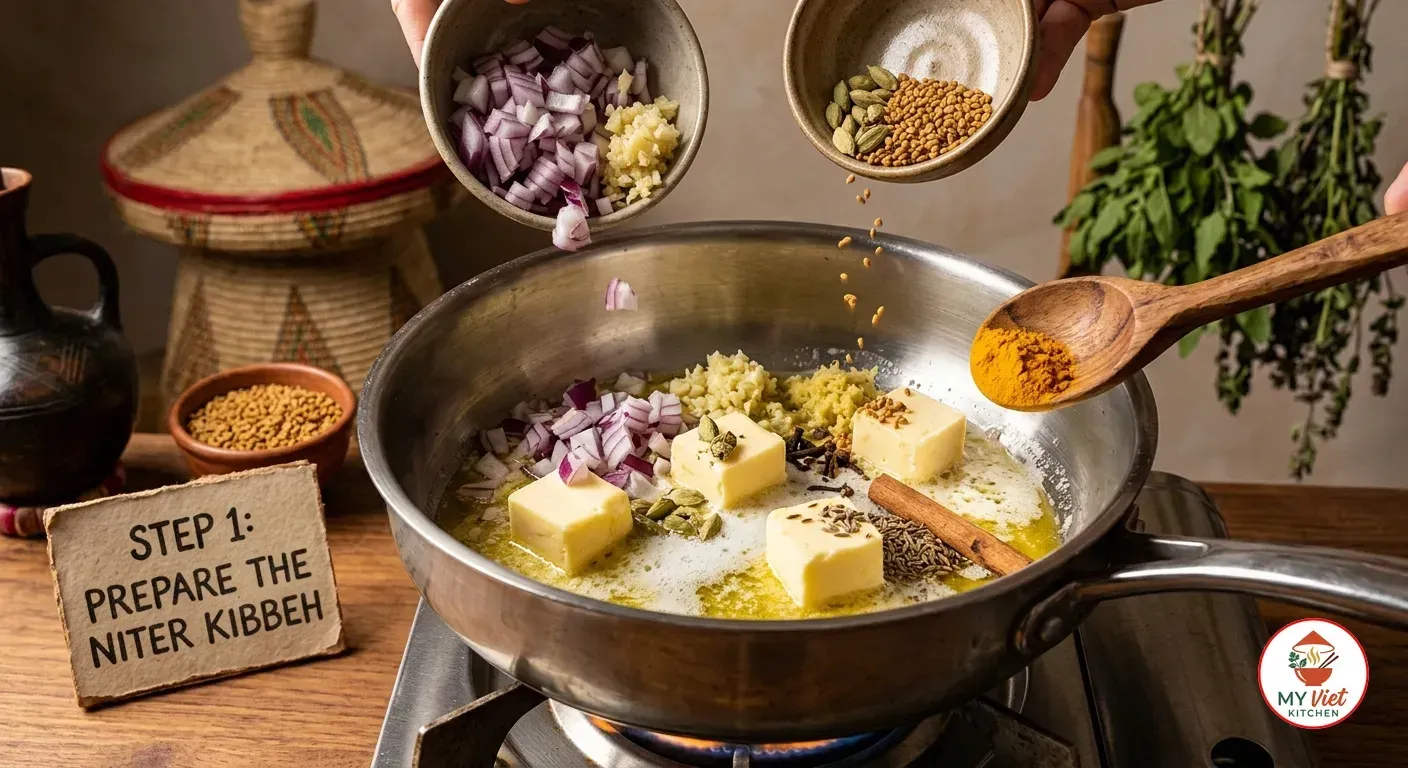
1If you do not already have niter kibbeh on hand, start by making a fresh batch. Place half a cup of unsalted butter in a small saucepan over the lowest possible heat. Let it melt slowly and gently. Add the cardamom seeds, fenugreek seeds, sliced ginger, crushed garlic, and turmeric. Allow the butter to simmer very gently for about 20 minutes. The spices will infuse their flavors and aromas into the fat. Do not let the butter brown or sizzle. After 20 minutes, strain the butter through cheesecloth or a fine mesh sieve into a clean bowl. Discard the solids. Your niter kibbeh is now ready to use.
Step 2: Hand-Mince the Beef
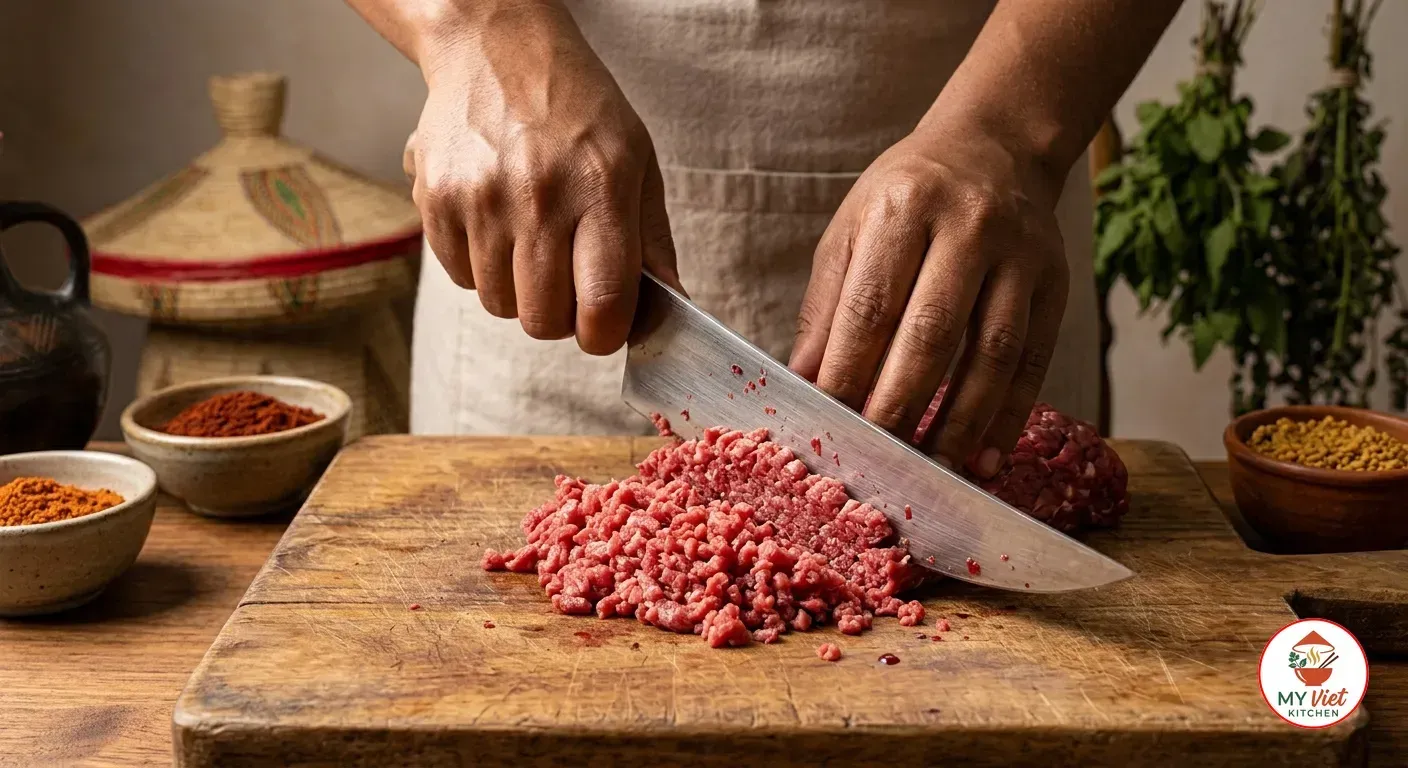
2Take the cold beef tenderloin from the refrigerator and pat it dry with paper towels. Using your sharpest knife, begin slicing the meat into thin strips. Then cut across the strips to create small cubes. Finally, rock the knife back and forth over the cubes to mince the beef as finely as possible. Ethiopian cooks traditionally use a curved blade to achieve an almost paste-like texture. At home, a sharp chef’s knife and steady patience will do the job. The finer you mince, the better your kitfo recipe will turn out. Work quickly so the meat stays cold throughout this process.
Step 3: Season and Warm the Kitfo
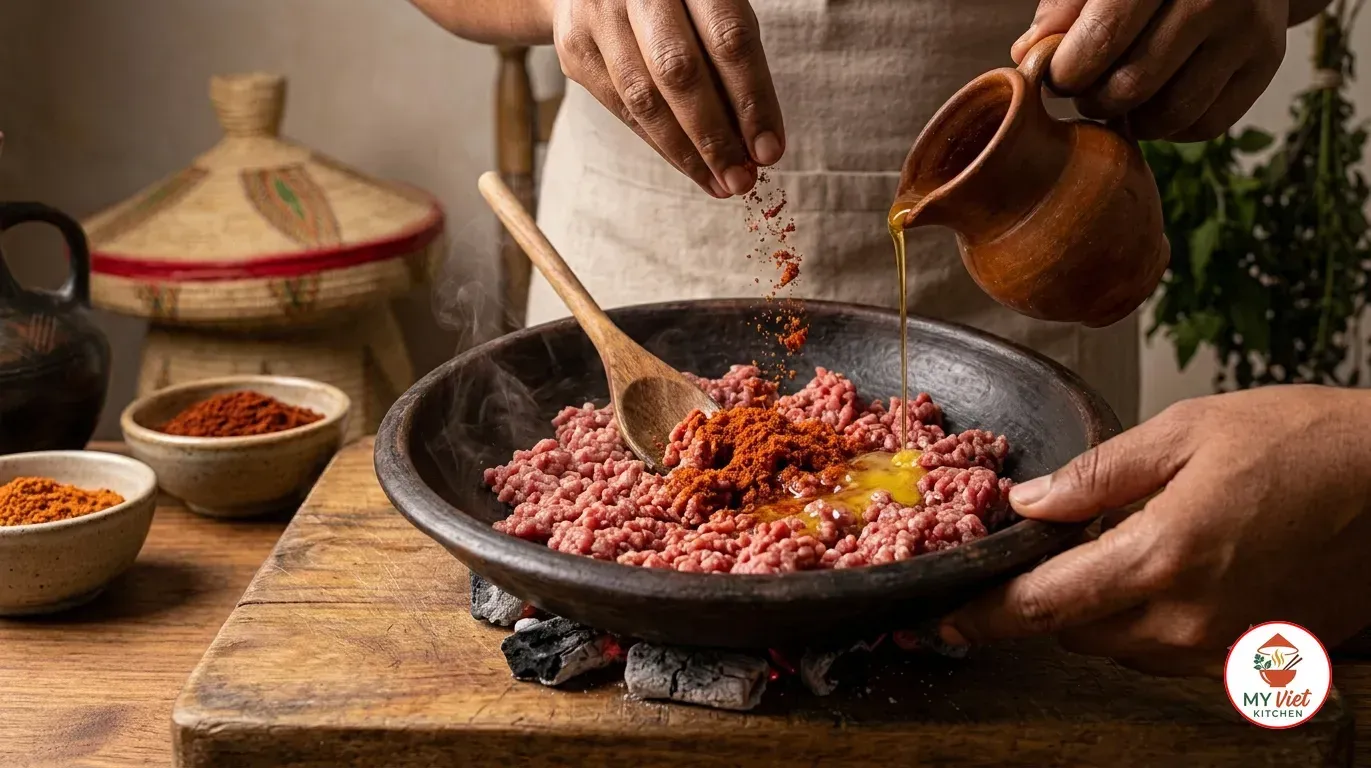
3Place a wide, shallow pan over the lowest heat setting. Add three tablespoons of your freshly made niter kibbeh and let it melt gently. As soon as the butter is liquid and warm, add the minced beef. Sprinkle the mitmita spice blend and salt over the meat. Using a fork or your hands, toss everything together gently. For traditional raw kitfo (tere style), simply warm the mixture for about one minute until the butter coats every strand of meat, then remove from heat immediately. If you prefer leb leb style, continue tossing over low heat for two minutes until the meat is just barely warmed through. To make fully cooked kitfo, increase the heat to medium and stir for three to four minutes.
Step 4: Serve the Kitfo
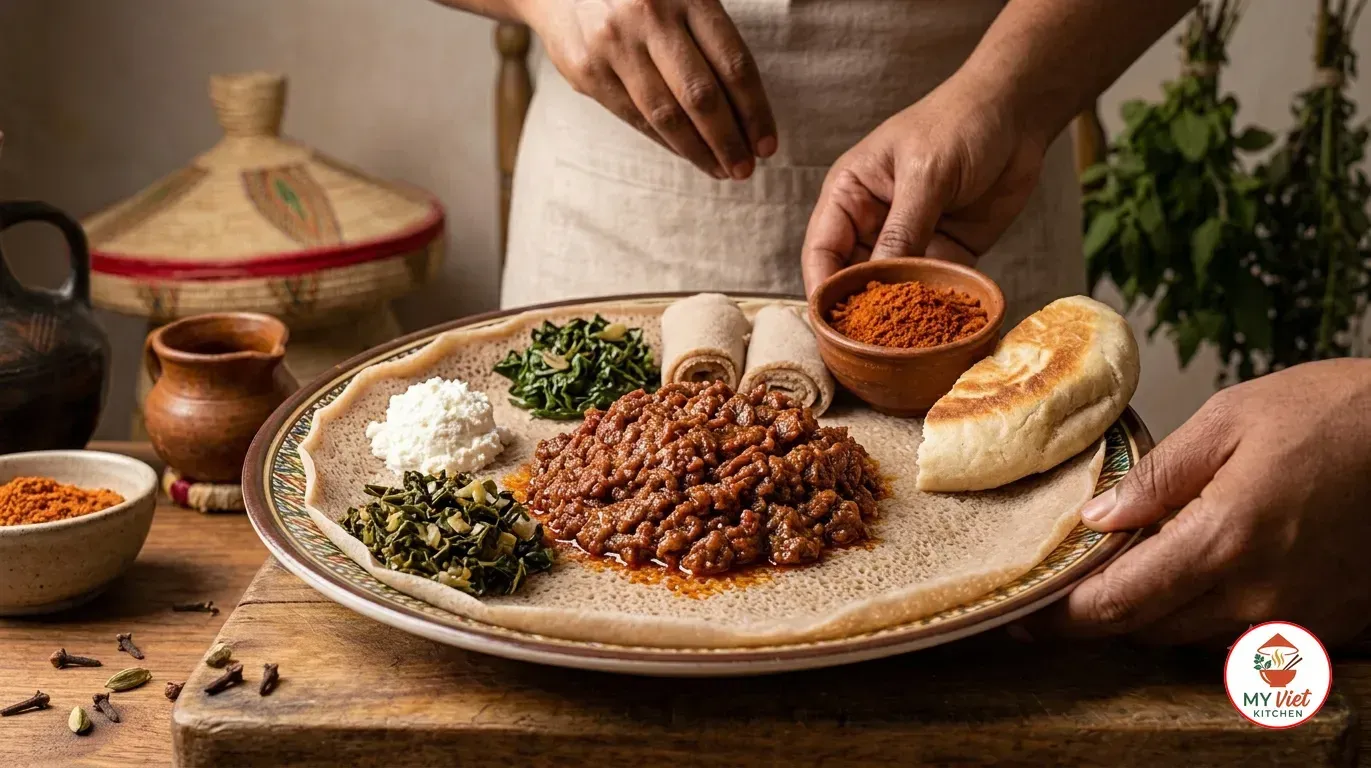
4Line a large platter or individual plates with a sheet of injera flatbread. Mound the warm, spiced kitfo in the center. Place a generous scoop of ayib fresh cheese on one side and a portion of gomen sauteed collard greens on the other. The traditional Ethiopian way to eat kitfo involves tearing small pieces of injera and using them to scoop up the beef, cheese, and greens together in one bite. Each component plays a role in the combination. The tangy injera balances the rich butter, the cool ayib calms the mitmita heat, and the earthy gomen adds a fresh vegetable element. Serve immediately while the kitfo is still warm.
Expert Tips for Perfect Kitfo
Use the Sharpest Knife You Own
The quality of your mince determines the success of this kitfo recipe. A dull knife crushes the meat fibers instead of cutting them cleanly. Crushed fibers release moisture and create a mushy, unpleasant texture. In contrast, a razor-sharp blade slices through the protein cleanly, preserving the delicate structure and producing that signature smooth, buttery mouthfeel. Sharpen your knife immediately before you begin mincing.
Control the Mitmita Heat
Mitmita is a seriously hot spice blend. If you are new to Ethiopian cooking, start with one tablespoon and taste before adding more. You can always increase the heat, but you cannot take it away. Spice lovers will find that two tablespoons deliver the full traditional punch. Additionally, the quality of your mitmita matters. Freshly ground mitmita from an Ethiopian store will have far more depth and aroma than an old jar that has been sitting on a shelf for months.
Never Overheat the Niter Kibbeh
When warming the niter kibbeh to toss with the beef, keep the heat as low as possible. High heat breaks down the delicate spice aromatics in the butter and can give the kitfo a bitter, burnt taste. The goal is gentle warmth that melts the butter and activates the spices without cooking the meat aggressively. Think of it as warming rather than frying.
Kitfo Styles: Raw, Warmed, and Cooked
Ethiopian diners choose their preferred level of doneness when ordering kitfo. Here is how the three traditional styles compare, so you can decide which version of this kitfo recipe suits your taste.
| Style | Description |
|---|---|
| Tere (Raw) | Completely raw minced beef tossed with warm niter kibbeh and mitmita. The meat stays bright red and has the softest, most buttery texture. This is the most traditional style. |
| Leb Leb (Warmed) | The beef is lightly warmed in the spiced butter for one to two minutes. The outside edges turn slightly brown while the center stays pink. This style is the most popular choice for diners who want authentic flavor with a bit less raw texture. |
| Yebesele (Cooked) | The beef is fully cooked over medium heat for three to four minutes. The meat turns brown throughout and has a firmer, more crumbly texture. This style works well for anyone who prefers fully cooked meat. |
Serving Suggestions
In Ethiopia, kitfo never arrives alone. The dish comes as part of a larger spread that balances the rich, spicy beef with cooling, tangy, and fresh accompaniments. Building the right plate around your kitfo creates the full experience.
The Perfect Accompaniments:
- Injera: This spongy, tangy flatbread made from teff flour is essential for eating kitfo the traditional way. The injera acts as both plate and utensil. Its sour flavor provides a perfect counterpoint to the rich, buttery meat.
- Ayib (fresh cheese): This mild, crumbly Ethiopian cheese cools the palate between bites of spicy kitfo. It tastes similar to ricotta or fresh farmer’s cheese. If you cannot find ayib, drained ricotta works as a good substitute.
- Gomen (collard greens): Sauteed collard greens seasoned with garlic and ginger add a fresh, earthy element to the plate. The slightly bitter greens balance the richness of the butter and beef beautifully.
- Doro Wat: To create a grand Ethiopian feast, serve kitfo alongside doro wat chicken stew. Together, these two dishes represent the pinnacle of Ethiopian cooking.
Beverage Pairings:
- Ethiopian honey wine (tej): This sweet, golden wine made from honey and gesho leaves is the classic pairing for kitfo. The sweetness of tej tempers the mitmita heat and complements the spiced butter.
- Ethiopian coffee: A traditional Ethiopian coffee ceremony after a kitfo meal is a cultural experience in itself. The bold, fruity coffee cleanses the palate and brings the meal to a satisfying close.
- Tej (Ethiopian honey wine): Learn more about this traditional Ethiopian beverage that has been paired with kitfo and other meat dishes for centuries across the Ethiopian highlands.
Storage and Reheating
Refrigerator: Store leftover cooked kitfo in an airtight container for up to 2 days. Because raw kitfo is meant for immediate consumption, do not store the raw version. If you have leftover raw kitfo, cook it fully before refrigerating.
Freezer: Freeze fully cooked kitfo in freezer-safe containers for up to 2 months. The spiced butter preserves the beef well during freezing. Thaw overnight in the refrigerator before reheating.
Reheating: Warm leftover kitfo gently in a pan over low heat with a small knob of fresh niter kibbeh. Stir until heated through, and add a pinch of mitmita to refresh the spice. Serve immediately over fresh injera for the best results.
Common Mistakes to Avoid
1. Using Pre-Ground Beef for Raw Kitfo
Pre-ground beef from a grocery store has far more surface area exposed to bacteria during processing. For a raw kitfo recipe, this presents a real food safety concern. Instead, always buy a whole cut of beef and mince it yourself at home with a sharp knife. This way, only the outer surface of the original cut has been exposed, and you remove that when you trim the meat. Hand mincing also gives you control over the texture.
2. Substituting Regular Butter for Niter Kibbeh
Plain butter will melt and coat the beef, but it will not deliver the distinctive warm, aromatic flavor that defines kitfo. Niter kibbeh is infused with cardamom, fenugreek, ginger, and other spices that are essential to the dish. Skipping this step removes an entire layer of complexity. Therefore, always make niter kibbeh from scratch or buy it from an Ethiopian grocery store. The difference in flavor is enormous.
3. Cooking on High Heat
Even for the cooked version of this kitfo recipe, high heat is your enemy. Blasting the minced beef over high heat toughens the protein fibers and dries out the meat. The result is a crumbly, dry dish that bears no resemblance to proper kitfo. Gentle, low heat preserves the tender texture and allows the mitmita and niter kibbeh to meld with the beef gradually. Patience produces the best kitfo every time.
Frequently Asked Questions
What is kitfo?
Kitfo is a traditional Ethiopian dish made from finely hand-minced raw beef seasoned with mitmita chili spice and niter kibbeh spiced butter. The Gurage people of southern Ethiopia originally created kitfo, and it remains one of the most beloved dishes in Ethiopian cuisine. Diners enjoy it raw, lightly warmed, or fully cooked, and it always comes with injera, ayib cheese, and gomen greens.
Is kitfo safe to eat raw?
When made with fresh, high-quality beef from a trusted butcher, kitfo is safe to eat raw for most healthy adults. The key is using the freshest possible meat, keeping it cold during preparation, and consuming it immediately. If you have concerns about eating raw beef, choose the leb leb (lightly warmed) or yebesele (fully cooked) style instead.
What is mitmita spice?
Mitmita is an Ethiopian spice blend made primarily from bird’s eye chili peppers, cardamom, cloves, and salt. It delivers intense heat along with warm aromatic undertones that set it apart from other chili powders. You can find mitmita at Ethiopian grocery stores, specialty spice shops, or online retailers. Alternatively, make your own by toasting and grinding the individual spices at home.
What is niter kibbeh?
Niter kibbeh is Ethiopian spiced clarified butter infused with aromatics such as cardamom, fenugreek, ginger, garlic, and turmeric. It serves as the flavor foundation for many Ethiopian dishes, and it plays a critical role in this kitfo recipe. The butter is gently simmered with the spices and then strained, producing a golden and fragrant cooking fat that adds incredible depth.
Can I use ground beef for kitfo?
For raw kitfo, pre-ground beef from the grocery store is not recommended due to food safety concerns. Instead, buy a whole cut of beef tenderloin or top round and mince it yourself at home. However, if you plan to make fully cooked kitfo (yebesele style), you can use high-quality lean ground beef as a convenient alternative. Just make sure it is very lean and fresh.
Variations and Adaptations
Kitfo Leb Leb (Lightly Warmed):
For this popular variation, follow the same kitfo recipe but warm the seasoned beef in the pan for about two minutes over low heat. The meat develops a slightly firmer texture on the outside while staying pink and tender inside. Leb leb style gives you the best of both worlds, and it is the most commonly ordered version in Ethiopian restaurants.
Vegetarian Kitfo (Yataklete Kitfo):
In Ethiopian Orthodox Christian tradition, followers observe many fasting days when meat is not allowed. During these periods, cooks prepare a vegetarian version using finely chopped green beans, mushrooms, or beets in place of beef. The vegetables are seasoned with niter kibbeh and mitmita just like the original. While the texture differs from the meat version, the spice profile remains wonderfully authentic.
Kitfo with Kocho (Gurage Style):
In the Gurage homeland of southern Ethiopia, kitfo is traditionally served with kocho rather than injera. Kocho is a dense, slightly tangy bread made from fermented enset (false banana) plant. The thick, chewy bread provides a different textural experience than the spongy injera. If you can find kocho at an Ethiopian market, try this traditional pairing for the most authentic Gurage experience.
The Cultural Significance of Kitfo
Kitfo is far more than a recipe in Ethiopia. Above all, it represents celebration, hospitality, and the rich culinary heritage of the Gurage people. In Gurage culture, the ability to prepare excellent kitfo marks a skilled cook, and the dish appears at weddings, holidays, and important family gatherings. Serving kitfo to guests is one of the highest forms of respect in Ethiopian social tradition.
The preparation of kitfo is itself a social event. In many Ethiopian households, the man of the house takes charge of mincing the beef, while others prepare the accompaniments. The rhythmic sound of a sharp knife against the cutting board signals that a special meal is underway. Indeed, the communal nature of Ethiopian dining, where everyone eats from a shared platter, makes kitfo a dish that naturally brings people together.
Furthermore, kitfo connects to the broader story of Ethiopian cuisine, which stands as one of the most distinctive food traditions on the African continent. The unique spice blends, the central role of injera, and the communal eating style all set Ethiopian food apart from any other culinary tradition. For anyone looking to explore African cooking, this kitfo recipe offers a perfect starting point. Discover more Ethiopian and African dishes in our collection of African recipes.
Conclusion
This authentic kitfo recipe brings one of Ethiopia’s most treasured dishes into your home kitchen. Start by making fragrant niter kibbeh spiced butter. Then hand-mince the freshest beef you can find. Finally, toss everything with fiery mitmita and serve on a platter of tangy injera with cool ayib cheese and earthy gomen greens. Once you master those elements, you will produce a dish that captures the bold, generous spirit of Ethiopian cooking.
Whether you choose the traditional raw preparation or the lightly warmed leb leb style, this kitfo recipe delivers an unforgettable experience. For more authentic Ethiopian and African recipes, explore our growing collection and discover the incredible diversity of flavors across the continent.