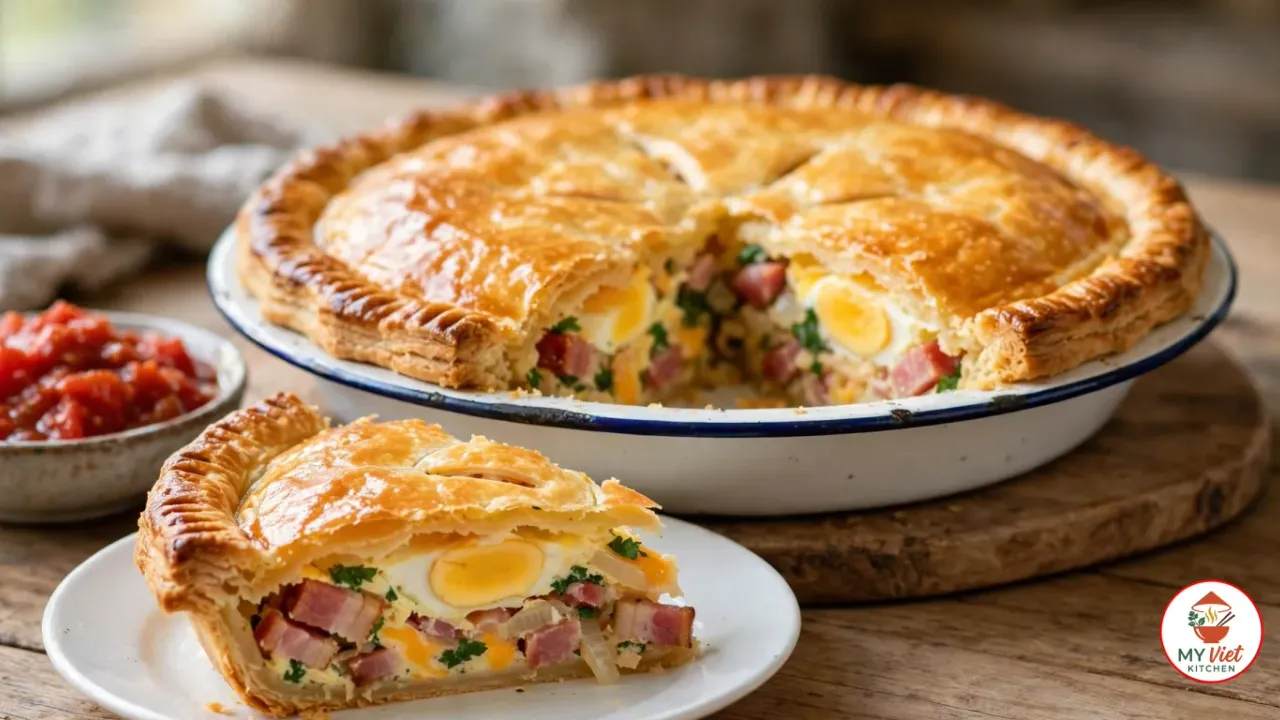
Bacon and egg pie is the ultimate New Zealand comfort food, and for good reason. This golden, flaky pastry shell wraps around a savory filling of smoky bacon, perfectly set eggs, and melted cheese to create a dish that Kiwis have loved for generations. Whether served hot from the oven for a family dinner or packed cold for a picnic at the beach, this classic Kiwi pie delivers warmth, flavor, and satisfaction in every slice. This recipe walks you through making an authentic version at home with a foolproof method that guarantees a crispy crust and a rich, custard-like filling.
Prep Time: 20 minutes | Cook Time: 40 minutes | Servings: 6
Difficulty: Easy | Calories: ~480 per serving
What Makes Bacon and Egg Pie Special?
Few dishes capture the spirit of New Zealand home cooking quite like this savory pie. It is simple, hearty, and deeply satisfying. The beauty of this recipe lies in the contrast between its flaky, buttery pastry crust and the savory, protein-rich filling inside. Every bite delivers a different experience. You get the shatter of puff pastry, the smokiness of bacon, the creaminess of set egg, and the melt of sharp cheddar cheese. Together, these elements create a pie that feels both humble and indulgent at the same time.
The origins of bacon and egg pie trace back to the British pie-making tradition that New Zealand settlers brought with them in the 19th century. Over time, Kiwi cooks adapted the recipe to suit local tastes and ingredients. While British pies tend to feature heavy shortcrust pastry and dense meat fillings, the New Zealand version leans toward lighter puff pastry and a more egg-forward filling. As a result, the dish evolved into something uniquely Kiwi. Today, you will find bacon and egg pie at bakeries, petrol stations, school fairs, and family gatherings across both the North and South Islands.
What sets a great bacon and egg pie apart from an average one comes down to three fundamentals. First, the pastry must be properly handled so it stays flaky rather than tough. Second, the bacon-to-egg ratio needs to be balanced so neither ingredient overwhelms the other. Third, the baking temperature and timing must produce a golden top while fully cooking the filling through to the center. Nail these three elements, and your pie will rival any Kiwi bakery.

Choosing the Right Bacon for Your Pie
Bacon is the star protein in this pie, so the type you choose has a major impact on the final flavor. Not all bacon performs equally when baked inside pastry. You need a cut that renders enough fat to flavor the filling without making it greasy, while also holding its texture through the full baking time.
- Streaky bacon (best choice): This cut comes from the pork belly and has a higher fat-to-meat ratio. It crisps beautifully when pre-cooked and releases just enough rendered fat to enrich the egg filling. Streaky bacon is the traditional choice for New Zealand bacon and egg pie.
- Middle bacon: A popular cut in New Zealand and Australia, middle bacon includes both the lean loin and a strip of belly. It offers a good balance of meat and fat. Use it if you want a meatier pie with slightly less richness.
- Back bacon: This leaner cut works in a pinch, but it produces a drier filling because it lacks the fat needed to enrich the custard. If you use back bacon, consider adding an extra tablespoon of cream to compensate.
- Turkey bacon (not recommended): Turkey bacon does not render fat and has a rubbery texture when baked inside pastry. It also lacks the smoky depth that pork bacon brings to the dish. Avoid it for this particular recipe.
Ingredients for Bacon and Egg Pie
Pastry:
- 2 sheets frozen flaky puff pastry, thawed
- 1 egg yolk, beaten, for egg wash
Filling:
- 8 rashers streaky bacon, roughly chopped
- 6 large eggs
- 1/2 cup heavy cream
- 1 cup grated tasty cheese (sharp cheddar)
- 1 small onion, finely diced
- 2 tablespoons fresh parsley, chopped
- 1/2 teaspoon salt
- 1/4 teaspoon black pepper
- 1/4 teaspoon ground nutmeg
Pro tip: Always thaw your puff pastry in the refrigerator overnight rather than on the counter. Pastry that thaws too quickly becomes sticky and loses its layered structure. Cold pastry is much easier to roll, shape, and press into the pie dish without tearing. Additionally, keeping the pastry cold ensures maximum puff in the oven because the butter layers stay distinct.
Step-by-Step Instructions
Step 1: Prepare the Pastry Base
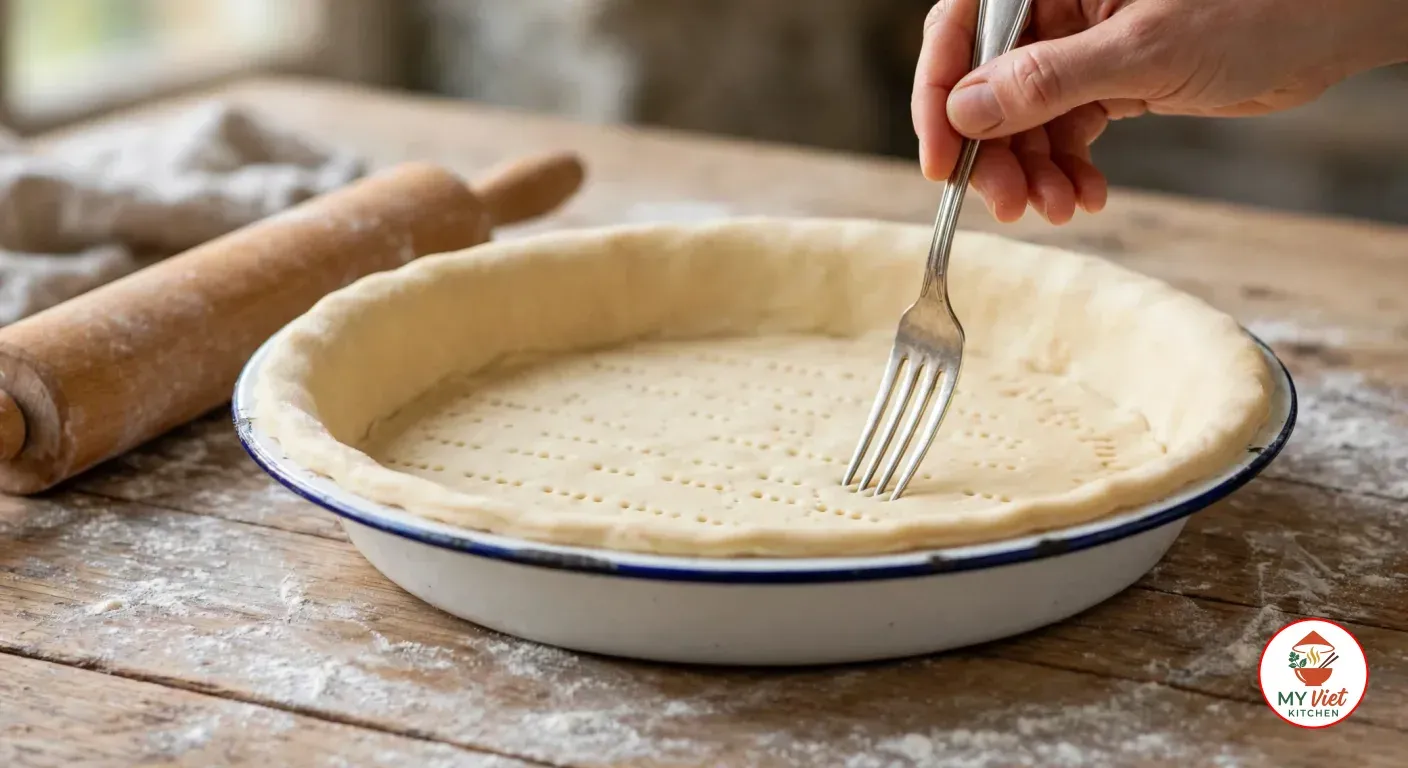
1 Preheat your oven to 400 degrees Fahrenheit (200 degrees Celsius). Lightly grease a 9-inch pie dish with butter or cooking spray. Roll out one sheet of thawed puff pastry on a lightly floured surface until it is large enough to cover the base and sides of the dish. Carefully press the pastry into the dish, pushing it gently into the corners. Leave about half an inch of overhang around the rim.
Prick the pastry base with a fork in several places to prevent it from puffing up during baking. This step is essential because trapped air beneath the pastry creates bubbles that push the filling around. Place the lined pie dish in the refrigerator while you prepare the filling. Keeping the pastry cold at every stage is the secret to achieving those flaky, golden layers.
Step 2: Cook the Bacon and Onion
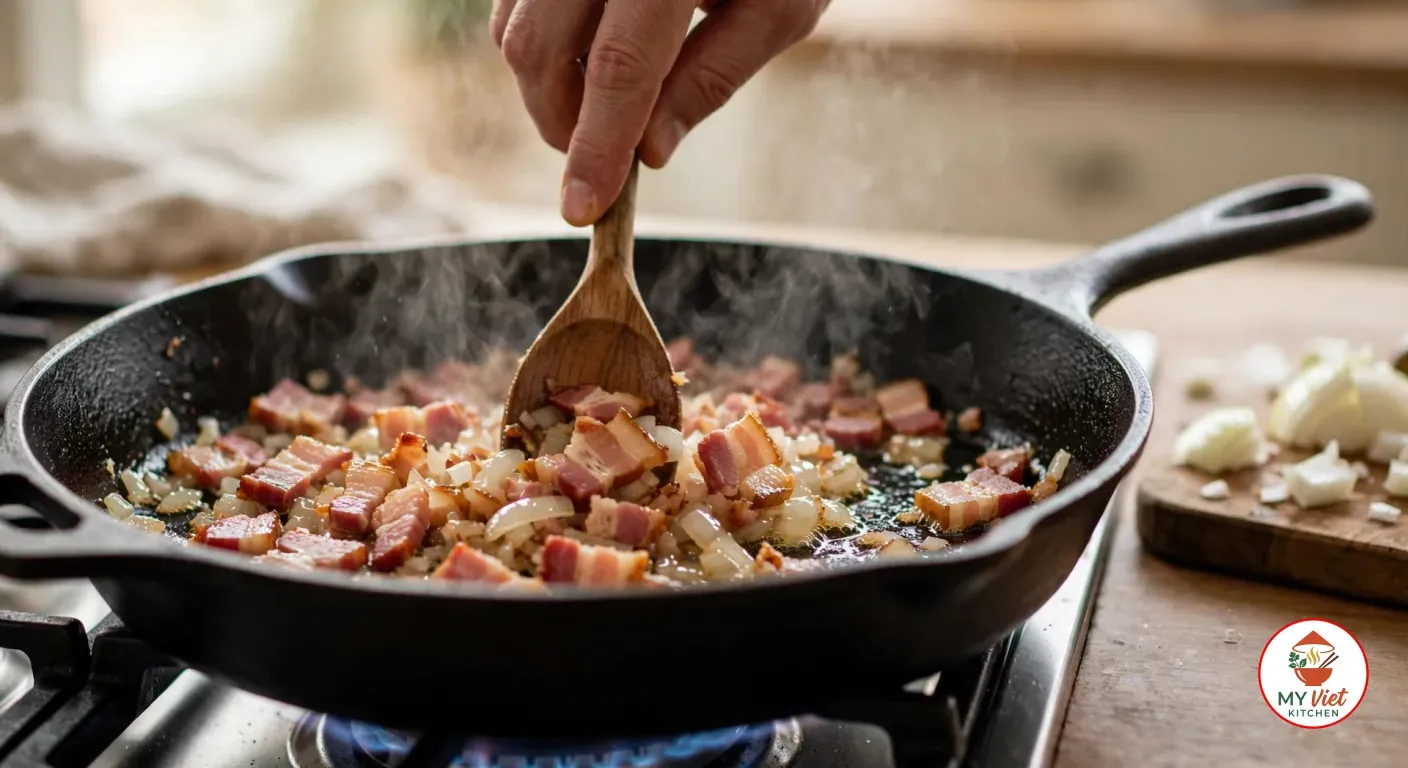
2 Place a large skillet over medium heat. Add the chopped bacon and cook for about 5 minutes, stirring occasionally, until the edges begin to crisp and the fat renders. Then add the diced onion to the pan and cook for another 3 minutes until it softens and turns translucent. The onion will absorb some of the bacon fat, which gives it a wonderful smoky flavor.
Remove the pan from heat and let the mixture cool for 5 minutes. If there is a large pool of excess fat in the pan, drain most of it off but leave a thin coating. A small amount of bacon fat in the filling adds flavor, but too much will make the pie greasy and prevent the custard from setting properly. Pre-cooking the bacon is important because raw bacon inside the pie would release too much moisture and fat during baking.
Step 3: Assemble the Filling
3 Remove the pastry-lined dish from the refrigerator. Spread the cooled bacon and onion mixture evenly over the pastry base. Sprinkle half the grated cheese on top of the bacon layer. Now crack 4 of the eggs directly onto the bacon, spacing them evenly so each slice of pie will contain some whole egg yolk.
In a small bowl, whisk the remaining 2 eggs with the heavy cream, salt, black pepper, ground nutmeg, and chopped parsley. Pour this custard mixture gently around and between the whole eggs. The custard fills the gaps and binds everything together as it bakes. Finally, scatter the remaining cheese over the top. The cheese on top melts into the pastry lid and creates a savory layer between the filling and the crust.

Step 4: Add the Pastry Lid and Seal
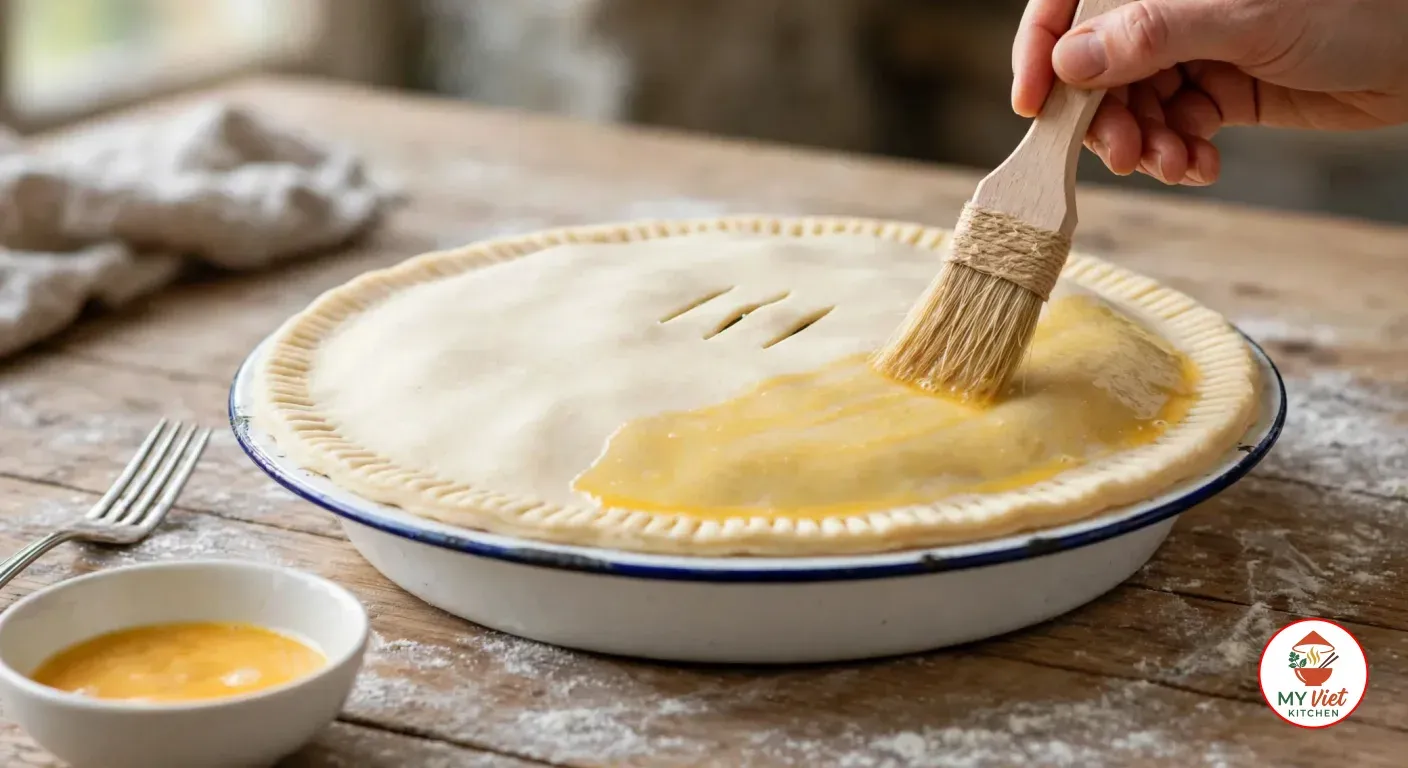
4 Roll out the second sheet of puff pastry and lay it over the filling. Use a sharp knife to trim the excess pastry, leaving enough overlap to create a secure seal. Press the edges of the top and bottom pastry together firmly using the tines of a fork. This crimping method both decorates and seals the pie so the filling cannot leak out during baking.
Cut 3 small slits in the center of the pastry lid using a sharp knife. These vents are essential because they allow steam to escape as the eggs and custard cook. Without vents, the trapped steam causes the pastry to balloon up and pull away from the filling. Brush the entire surface of the pastry lid with beaten egg yolk. This egg wash creates the beautiful deep golden color that makes the finished pie look so inviting.
Step 5: Bake Until Golden Brown
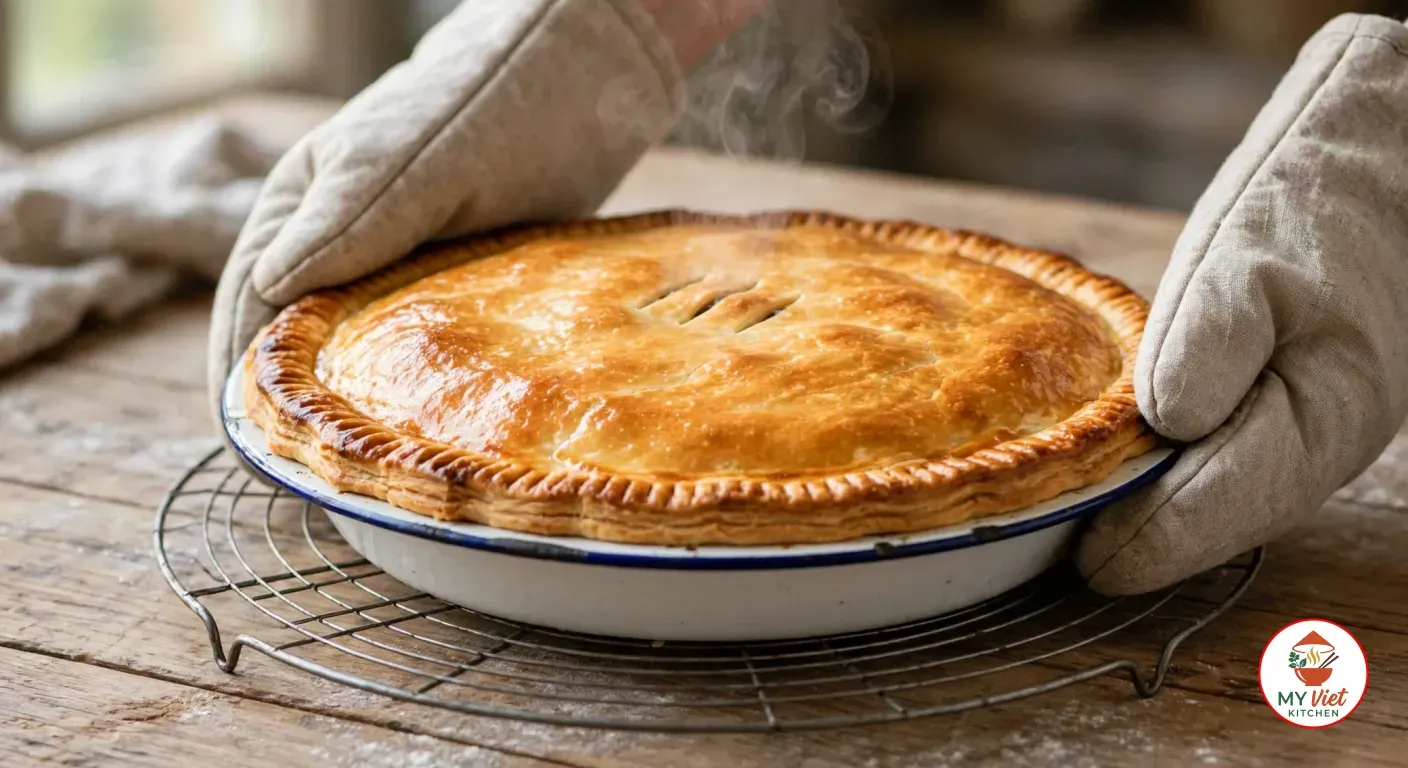
5 Place the assembled pie on the middle rack of the preheated oven. Bake for 35 to 40 minutes until the pastry turns a deep golden brown and the top feels firm when lightly pressed. If the top is browning too quickly before the filling sets, loosely tent a piece of aluminum foil over the pie for the last 10 minutes.
Remove the pie from the oven and let it rest on a wire rack for at least 10 minutes before slicing. This resting time is crucial because the eggs finish setting as the residual heat distributes evenly throughout the filling. Cutting too early produces a runny, messy slice. After resting, the filling will be firm yet creamy, and the slices will hold their shape cleanly. Serve your finished pie warm for the best flavor and texture.
Expert Tips for the Perfect Bacon and Egg Pie
Blind Bake for a Crispy Base
If you have struggled with a soggy bottom in the past, try blind baking the pastry base before adding the filling. Line the pastry with parchment paper and fill it with baking beans or dried rice. Bake at 400 degrees Fahrenheit for 10 minutes, then remove the weights and parchment. This pre-bake sets the pastry so that the wet egg filling cannot make it soggy. It adds a few minutes to your total time, but the result is a noticeably crispier bottom crust.
Use Room-Temperature Eggs
Take the eggs out of the refrigerator 30 minutes before you start cooking. Cold eggs straight from the fridge lower the temperature of the filling, which means the center of the pie takes longer to cook. Meanwhile, the pastry on the outside overcooks and dries out. Room-temperature eggs ensure that the filling and crust finish cooking at roughly the same time. This small detail makes a surprisingly big difference in the final texture.
Do Not Overfill the Pie
Resist the urge to pile in extra bacon or crack too many eggs. An overfilled pie spills when you add the pastry lid, and the excess moisture prevents the bottom crust from cooking through. Stick to the ingredient quantities in this recipe for a 9-inch dish. The filling should come within about half an inch of the rim. Leave enough headspace for the custard to puff slightly during baking without overflowing.
Bacon and Egg Pie vs. Quiche: What Is the Difference?
Many people wonder whether a bacon and egg pie is just a quiche by another name. While the two dishes share some similarities, they are distinctly different in several important ways. Understanding these differences helps you appreciate what makes the New Zealand version special.
| Feature | Bacon and Egg Pie (NZ) | Quiche Lorraine (France) |
|---|---|---|
| Pastry | Puff pastry top and bottom | Shortcrust pastry, open-faced |
| Filling style | Whole eggs with light custard | Rich egg and cream custard throughout |
| Lid | Full pastry lid, sealed | No lid, open top |
| Cheese | Sharp cheddar (tasty cheese) | Gruyere, sometimes omitted |
| Serving temperature | Hot or cold, great for picnics | Usually served warm |
| Texture | Distinct layers of egg and bacon | Uniform creamy custard |
| Origin | New Zealand | Lorraine region, France |
The biggest distinction is the pastry lid. A true New Zealand bacon and egg pie is fully enclosed in pastry, which makes it portable and sturdy enough for packed lunches. In contrast, quiche is always open-faced with its custard filling exposed. The NZ version also features visible whole eggs nestled in the filling, while quiche blends everything into a smooth, uniform custard. Both dishes are delicious, yet they serve different purposes and deliver different eating experiences.
Serving Suggestions
One of the best things about this pie is its incredible versatility. You can serve it fresh from the oven as a centerpiece for dinner, or let it cool completely and slice it for a packed lunch. In New Zealand, this pie is a staple at picnics, road trips, potlucks, and school lunch boxes. It tastes just as good cold as it does warm, which is part of what makes it such a practical and beloved recipe.
The Perfect Accompaniments:
- Tomato relish: A tangy, slightly sweet tomato relish is the classic Kiwi condiment for this pie. The acidity balances the richness of the eggs and bacon beautifully.
- Green salad: A simple mixed leaf salad with a light vinaigrette adds freshness and color alongside the hearty pie.
- Roasted kumara: Sweet roasted kumara (New Zealand sweet potato) is a traditional side that pairs wonderfully with savory pies. If you love root vegetables, try our roasted vegetables guide for more ideas.
- Baked beans: For a full Kiwi-style brunch, serve a slice of warm bacon and egg pie alongside baked beans and grilled tomatoes.
Beverage Pairings:
- Flat white coffee: New Zealand’s signature coffee pairs perfectly with a slice of this pie for brunch or morning tea.
- Sauvignon Blanc: A crisp Marlborough Sauvignon Blanc cuts through the richness with its bright acidity and herbal notes.
- New Zealand Pilsner: A cold, clean lager complements the smoky bacon and buttery pastry without overpowering the dish.
- English breakfast tea: For a classic Kiwi afternoon tea, a strong cup of tea with milk is the time-honored companion to a cold slice of pie.
Storage and Reheating
Refrigerator: Store leftover bacon and egg pie in an airtight container or wrapped tightly in plastic wrap for up to 3 days. The pastry softens slightly during refrigeration, but the flavor actually improves as the bacon and egg filling melds together. Many Kiwis prefer their pie cold straight from the fridge.
Freezer: This pie freezes well for up to 2 months. Wrap individual slices in plastic wrap and then aluminum foil to prevent freezer burn. Thaw overnight in the refrigerator before reheating. You can also freeze the unbaked assembled pie, though the pastry may lose some of its puff during the freeze-thaw cycle.
Reheating: The oven is the best method for bringing leftover pie back to life. Place slices on a baking sheet and reheat at 350 degrees Fahrenheit for 12 to 15 minutes until the pastry crisps again and the filling warms through. Avoid the microwave if possible, because it makes the puff pastry limp and chewy rather than flaky. If you must use the microwave, heat in 30-second intervals and accept that the texture will not match the original.
Common Mistakes to Avoid
1. Not Pre-Cooking the Bacon
Placing raw bacon directly into the pie is one of the most frequent errors. Raw bacon releases a significant amount of fat and moisture as it cooks inside the sealed pastry. This excess liquid pools at the bottom and creates a soggy, greasy crust that falls apart. Pre-cooking the bacon for just 5 minutes renders most of the fat and gives the bacon a head start on crisping. Your finished pie will be dramatically better for this small extra step.
2. Forgetting the Steam Vents
Skipping the slits in the pastry lid is a guaranteed path to a messy pie. As the eggs cook, they release steam. Without an escape route, that steam inflates the pastry lid like a balloon. Eventually, it bursts at the weakest point, creating an uneven, cracked top that leaks filling. Three small slits take 5 seconds and prevent this problem entirely. Make the cuts confidently with a sharp knife so they stay open during baking.
3. Cutting Too Soon
Impatience is understandable when your kitchen smells like bacon and buttery pastry. However, slicing into the pie immediately after removing it from the oven guarantees runny eggs and a collapsed filling. The eggs need a full 10 minutes of resting time to finish setting from residual heat. During this period, the proteins firm up and the filling transitions from liquid to creamy-solid. Wait the full 10 minutes and you will be rewarded with clean, picture-perfect slices.
Frequently Asked Questions
What pastry is best for bacon and egg pie?
Flaky puff pastry is the traditional and best choice for this type of savory pie. It provides a buttery, layered crust that crisps beautifully in the oven. Shortcrust pastry also works and gives a sturdier, more crumbly shell. For the most authentic New Zealand result, use store-bought flaky puff pastry sheets, which are widely available in the frozen section of most supermarkets.
Can you make bacon and egg pie ahead of time?
Yes, you can assemble the pie up to 12 hours ahead and refrigerate it before baking. You can also bake the pie fully and reheat it the next day. Cooked pie keeps in the refrigerator for up to 3 days. Reheat at 350 degrees Fahrenheit for 15 minutes until warmed through. Making it ahead is actually a popular approach for picnics and packed lunches because the pie tastes excellent cold.
Why is my bacon and egg pie soggy on the bottom?
A soggy bottom happens when the pastry base does not cook through before the filling sets. To prevent this, prick the base with a fork, bake on the lowest oven rack, or blind bake the pastry for 10 minutes before adding the filling. Using a metal pie dish instead of glass also helps because metal conducts heat faster and delivers it directly to the pastry base.
Can you freeze bacon and egg pie?
Absolutely. This pie freezes well for up to 2 months. Wrap individual slices or the whole pie tightly in plastic wrap and then aluminum foil. Thaw overnight in the refrigerator and reheat in a 350-degree oven until warmed through. Avoid reheating from frozen in the microwave, as the uneven heat makes the pastry rubbery while the center stays cold.
What can I add to bacon and egg pie for extra flavor?
Popular additions include diced cooked potato, sliced tomato, sauteed mushrooms, chopped spinach, or a handful of frozen peas. Many New Zealand families also add a layer of sliced cheese or a sprinkle of fresh herbs like chives and thyme. Keep additional ingredients to small amounts so the pie does not become too wet, which would affect the pastry. For more creative filling ideas, check out our European dishes collection.
Variations and Adaptations
Cheese and Bacon Egg Pie:
For a richer version, double the cheese to 2 cups and add a layer of cream cheese dollops between the bacon and eggs. The cream cheese melts into pockets of tangy richness that elevate the filling. Use a combination of sharp cheddar and a mild mozzarella for the best texture. This variation is especially popular at potluck gatherings because the extra cheese makes every slice more indulgent and satisfying.
Vegetable Bacon and Egg Pie:
Add a handful of vegetables for color, nutrition, and flavor. Sauteed spinach, diced red bell pepper, and sliced mushrooms all work beautifully. Cook the vegetables before adding them to the pie to remove excess moisture. Spread the vegetables over the bacon layer before cracking the eggs on top. This version works well as a light summer dinner when served with a fresh garden salad.
Gluten-Free Bacon and Egg Pie:
Replace the puff pastry with a gluten-free shortcrust pastry made from rice flour and tapioca starch. The texture will be slightly different, but the filling remains identical. Many specialty stores now carry frozen gluten-free pastry sheets that work as a direct substitute. Press the pastry gently into the dish because gluten-free dough cracks more easily than wheat-based pastry.
Mini Bacon and Egg Pies:
Use a muffin tin to make individual-sized pies that are perfect for parties and lunchboxes. Cut the pastry into rounds using a large cookie cutter, press them into the muffin cups, and add a spoonful of bacon mixture and one egg per cup. These mini pies bake faster, typically 20 to 25 minutes, and they make portion control effortless. Kids especially love having their own personal pie.
The Cultural Significance of Bacon and Egg Pie in New Zealand
In New Zealand, the humble bacon and egg pie is more than just a recipe. It is a piece of national identity. This pie sits alongside pavlova, lamingtons, and meat pies as one of the defining foods of Kiwi culture. According to The New Zealand Herald, the humble bacon and egg pie consistently ranks among the most popular homemade dishes in the country. It represents the Kiwi values of simplicity, practicality, and making the most of basic ingredients.
Every family in New Zealand seems to have their own version passed down through generations. Grandmothers guard their specific ratios of egg to cream, their preferred cheese, and their pastry-handling techniques with quiet pride. The pie appears at rugby match picnics, school fundraiser stalls, Christmas barbecues, and weeknight dinners alike. It is one of those rare dishes that bridges every occasion, from casual to celebratory, without ever feeling out of place.
The rise of artisan bakeries in cities like Auckland, Wellington, and Christchurch has brought renewed attention to this classic. While gourmet versions with truffle oil and specialty cheeses exist, the traditional recipe remains the crowd favorite. There is something deeply comforting about a dish that has not changed much in over a century. If you enjoy exploring comfort food from around the world, you might also love our guides to shepherd’s pie and carbonara, two other timeless recipes that celebrate simple ingredients done right.
Conclusion
Making a classic bacon and egg pie at home is one of the most rewarding and straightforward baking projects you can take on. The ingredient list is short, the technique is forgiving, and the result is a golden, flaky pie that tastes incredible whether served hot or cold. Remember the key principles: keep your pastry cold, pre-cook the bacon, do not overfill, and let the pie rest after baking. Follow these steps and you will produce a pie that looks and tastes like it came from the best bakery in New Zealand.
Whether you are a Kiwi longing for a taste of home or a curious cook discovering this classic for the first time, this recipe delivers genuine comfort in every bite. The combination of buttery pastry, smoky bacon, creamy eggs, and melted cheese is universally appealing and endlessly satisfying. Once you make it, this pie will earn a permanent spot in your recipe rotation. Explore more of our European dishes for your next kitchen adventure.