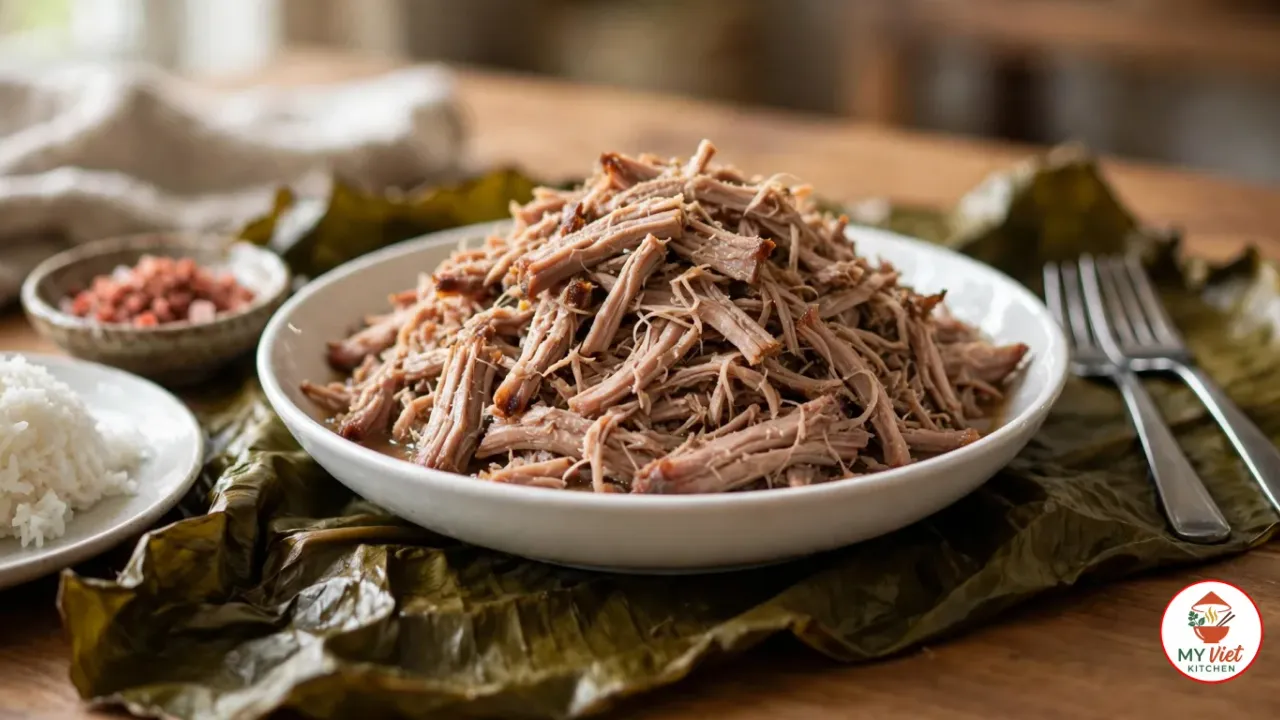
Kalua pig is a Hawaiian dish of salted pork cooked for hours in an imu, an underground oven, then shredded (Wikipedia). This recipe brings it indoors. A pork butt is rubbed with ʻalaea sea salt and liquid smoke, wrapped in banana leaves and foil, and roasted at 325°F (165°C) for about 6 hours. Then you pull it into strands and moisten it with its own juices.
Prep Time: 25 minutes | Cook Time: 6 hours | Total Time: 6 hours 40 minutes, including 15 minutes of resting | Servings: 10
Difficulty: Easy | Calories: ~430 per serving

What Does Kālua Mean, and How Does an Imu Cook a Pig?
Kālua is Hawaiian for “to cook in an underground oven”, and the word also names food cooked that way, such as kālua pig or kālua turkey, both commonly served at lūʻau feasts (Wikipedia). The oven is the imu. A hardwood fire burns in a pit big enough for the food, the stones and the leaves that cover them, and stones set on the fire take two to three hours to reach full heat. Dry stones matter, because moisture inside a stone can turn to steam and make it explode (Wikipedia).
When the stones are ready they are spread over the coals and covered with pounded banana plants, then a layer of ti leaves (Cordyline fruticosa). The salted meat goes on top; a whole pig also gets hot stones inside its body cavity so it cooks through. More ti and banana leaves go over it, then soil several inches deep so no steam escapes, and the meat stays in the pit for several hours before it is lifted out and shredded (Wikipedia). The Polynesian Cultural Center in Lāʻie expects a whole pig to take 7 to 8 hours, and notes that a larger pit holding more food takes longer (Polynesian Cultural Center).
Wikipedia, citing chef Sam Choy’s Polynesian Kitchen, compares the dish to vuaka vavi in Fiji and puaʻa faunaʻa in Tahiti and the Marquesas Islands (Wikipedia).
How Do You Get Imu Flavor from a Home Oven?
An oven has no hot rocks, soil or hardwood smoke, so three things stand in for the pit: leaves, salt and liquid smoke.
The leaves do the most. Wikipedia credits the hardwood smoke for part of the flavor of kālua pig, “but more importantly the use of ti leaves to wrap the meat”, and calls the ti leaf what sets it apart from other whole hogs slow-cooked over hardwood (Wikipedia). If you can buy ti leaves, use them. Sam Choy’s oven recipe in Bon Appétit uses banana leaves instead: three of them wrapped one at a time around a 5-pound boneless pork butt, tied with string and sealed in foil (Bon Appétit).
ʻAlaea salt is unrefined sea salt mixed with ʻalaea, an iron-oxide-rich volcanic clay that gives it a deep red colour, and it goes into traditional dishes such as kalua pig, poke and pipikaula (Wikipedia). Choy’s ingredient list allows coarse sea salt in its place (Bon Appétit). Fine table salt packs more salt into a spoon, so start with 1 tablespoon if that is all you have.
Liquid smoke is a shortcut that even lūʻau use. Wikipedia notes that kālua pig at tourist lūʻau is sometimes cooked on a gas or electric stove with artificial mesquite or kiawe liquid smoke (Wikipedia). Recipes disagree on how much. Choy stirs 1/2 teaspoon, in salted boiling water, into the shredded pork at the end (Bon Appétit). The Polynesian Cultural Center adds 1 tablespoon to a 6-pound pork butt before cooking (Polynesian Cultural Center). This recipe splits the difference: 2 teaspoons on the raw meat, then up to 1 more after you taste the shredded pork.
Oven times depend on the heat and the size of the roast. Choy roasts at 350°F for about 5 hours (Bon Appétit). The Polynesian Cultural Center gives its 6-pound pork butt 6 hours at 325°F (Polynesian Cultural Center). Onolicious Hawaiʻi, working with a 3-pound butt, roasts for 3 to 4 hours at 325°F (Onolicious Hawaiʻi). For a 5- to 6-pound roast at 325°F (165°C), plan on 5 1/2 to 6 hours and start checking at 5.
How Do You Know Kalua Pig Is Done?
Safe comes long before shreddable. For whole cuts and pieces of pork, Health Canada’s safe internal temperature is 71 °C (160 °F). Its instruction is to push the thermometer through the thickest part to the middle without touching bone (Health Canada). A slow-roasted shoulder passes that mark hours before it will pull apart, because its connective tissue needs a long time in moist heat to soften.
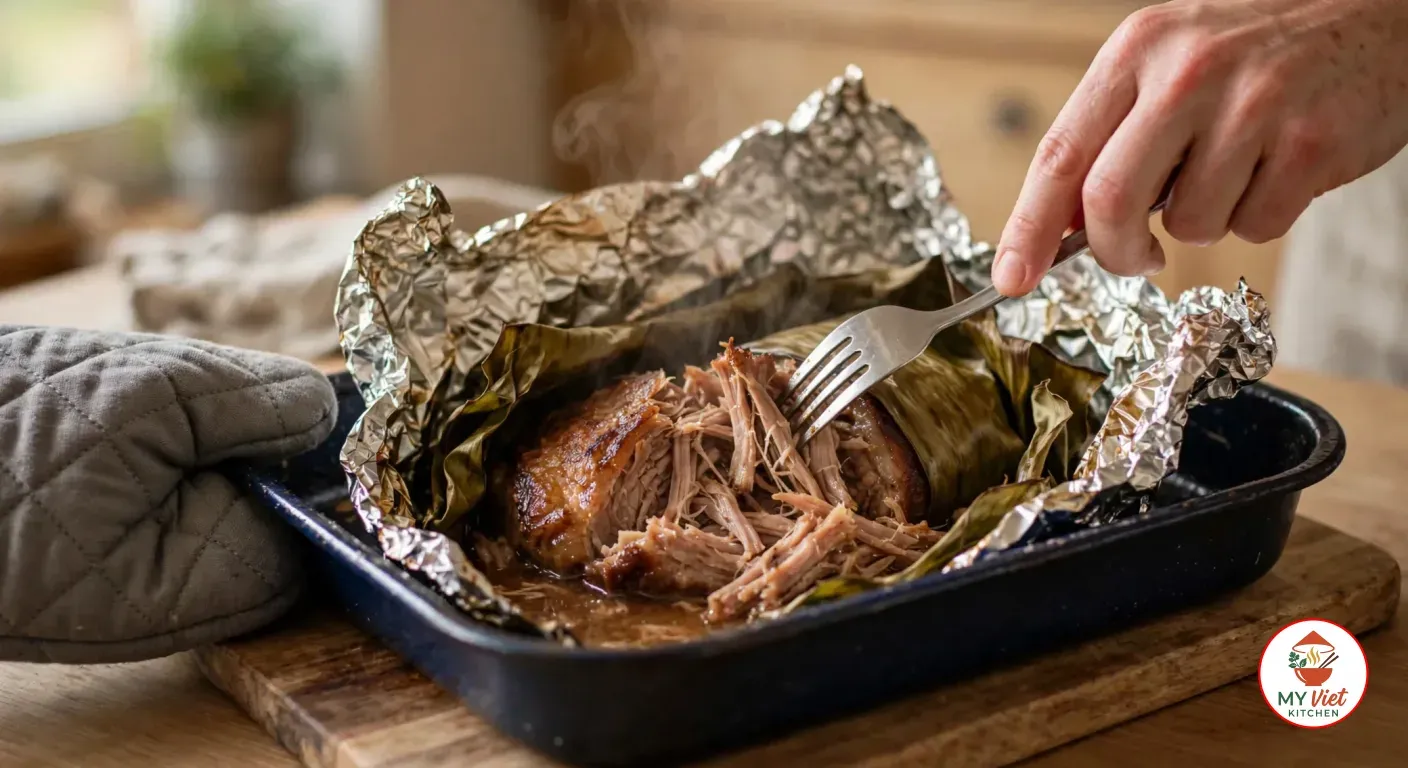
So judge the last stretch by texture. Push a fork into the thickest part and twist: when the meat slides apart into strands, it is done, and when the fork meets resistance, it needs another 30 minutes. A bone-in roast is ready when the bone wiggles loose.
Keep every drop of liquid in the foil. Kathy YL Chan of Onolicious Hawaiʻi calls the drippings “liquid gold” and adds about half of them back to the shredded pork (Onolicious Hawaiʻi). Skim the fat first, and save what you don’t use to warm leftovers.
Ingredients for Kalua Pig
- 1 pork butt (Boston butt), bone-in or boneless, 5 to 6 pounds (2.3 to 2.7 kg)
- 1 1/2 tablespoons coarse ʻalaea (Hawaiian red) sea salt or coarse sea salt, plus more to taste
- 1 tablespoon liquid smoke, mesquite or hickory, divided
- 4 to 6 banana leaves, thawed if frozen, each about 12 by 24 inches (30 by 60 cm)
- 2 cups (480 ml) water
Step-by-Step Instructions
Step 1: Score and Salt the Pork
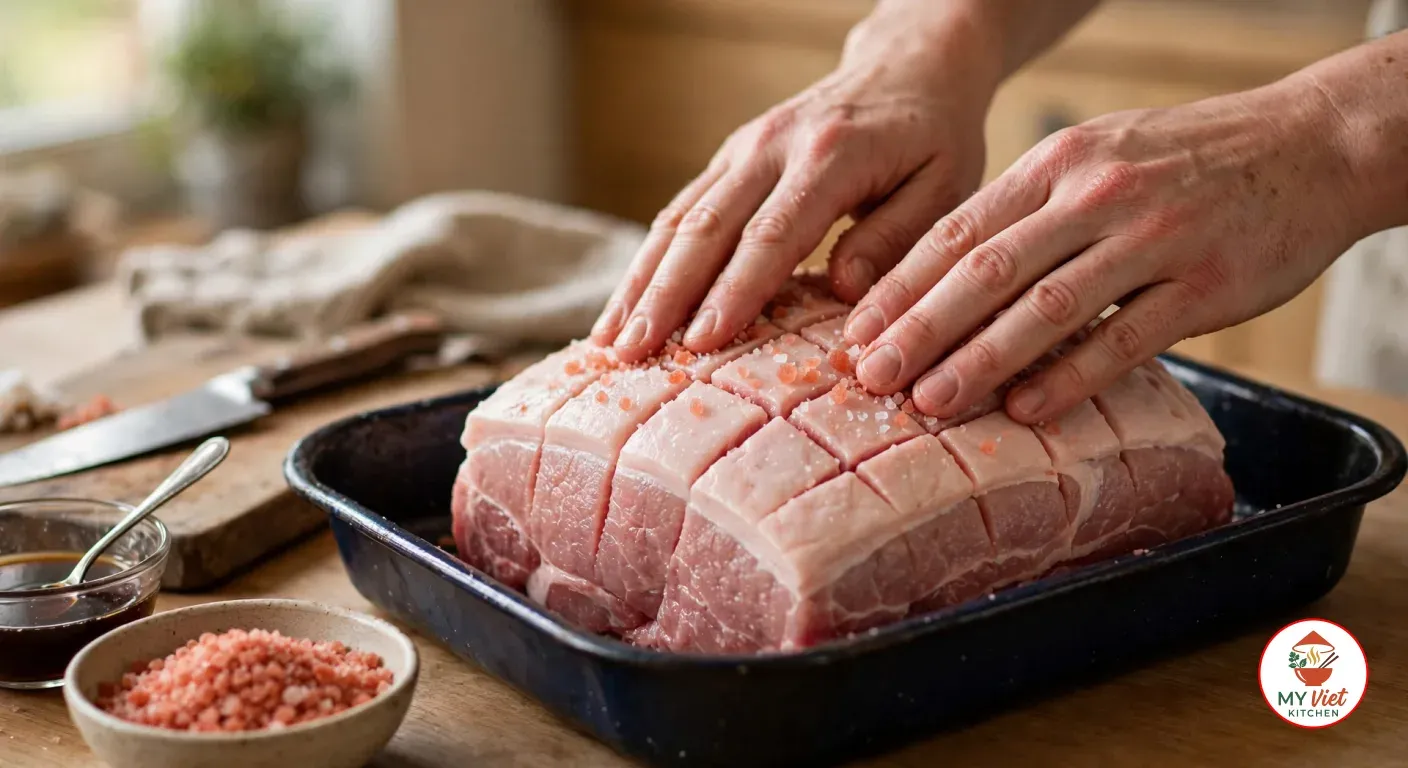
1Get the oven heating to 325°F (165°C). Pat the pork dry with paper towels. With a small sharp knife, cut slits 1/4 to 1/2 inch (6 to 12 mm) deep and about 1 inch (2.5 cm) apart over the whole roast, fat cap included. Rub the salt over every surface and down into the slits, then drizzle 2 teaspoons of the liquid smoke over the pork and rub it in.
Step 2: Wrap in Banana Leaves and Foil
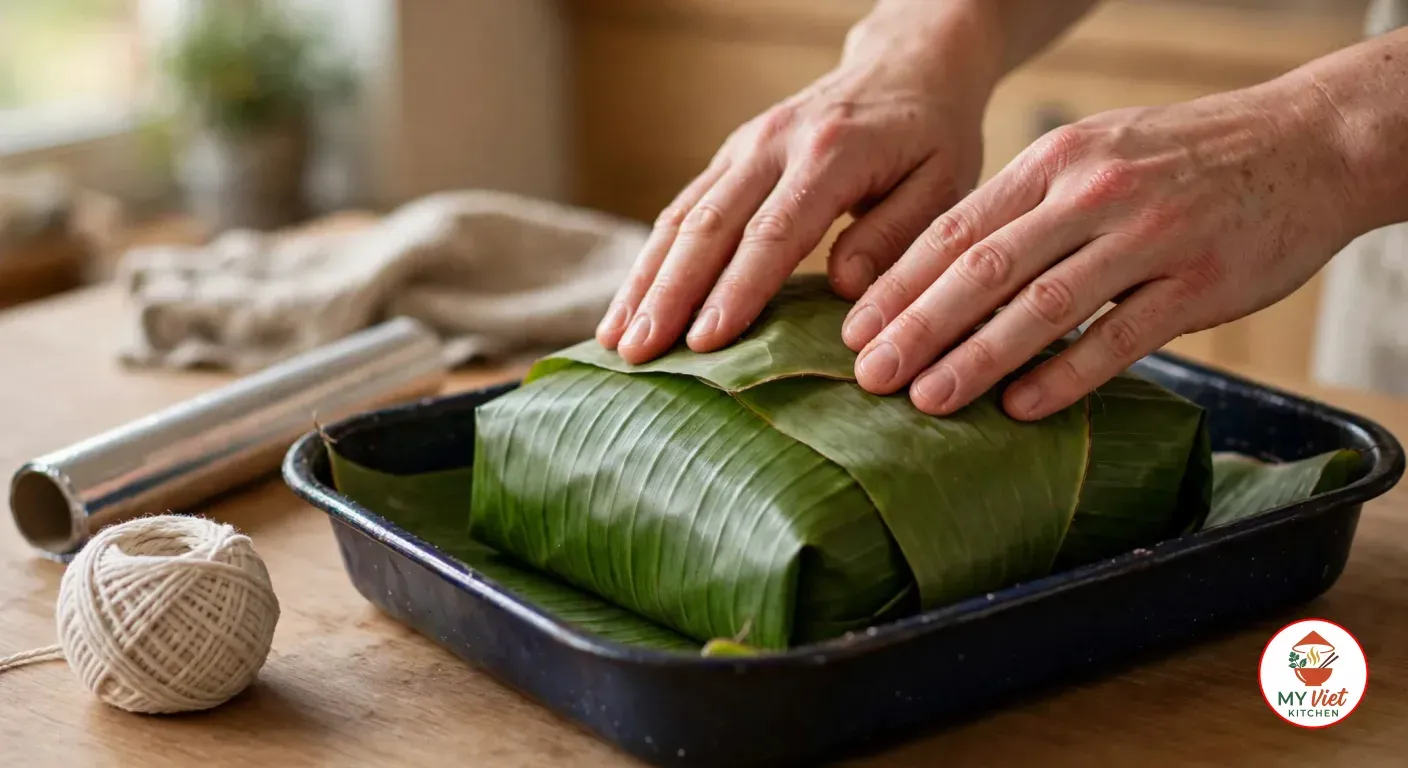
2Wipe the banana leaves clean and trim off any thick centre rib. If a leaf feels stiff, pass it over a gas flame or a hot dry pan for a few seconds until it turns glossy and bends without splitting. Lay two leaves crosswise in a roasting pan, set the pork in the middle fat side up, fold the leaves over it and cover any gaps with the rest. Tie the parcel with kitchen twine, wrap it tightly in two layers of heavy-duty foil, and pour the water into the pan around it.
Step 3: Roast Until Fork-Tender
3Roast for 5 1/2 to 6 hours. After 5 hours, peel back a corner of the foil and leaves, push a fork into the thickest part and twist it. The pork is ready when it slides apart into strands with no resistance. If it still feels firm, close it up and check again every 30 minutes, adding a splash of water to the pan if it has dried out. Let the parcel rest in the pan for 15 minutes.
Step 4: Shred and Season
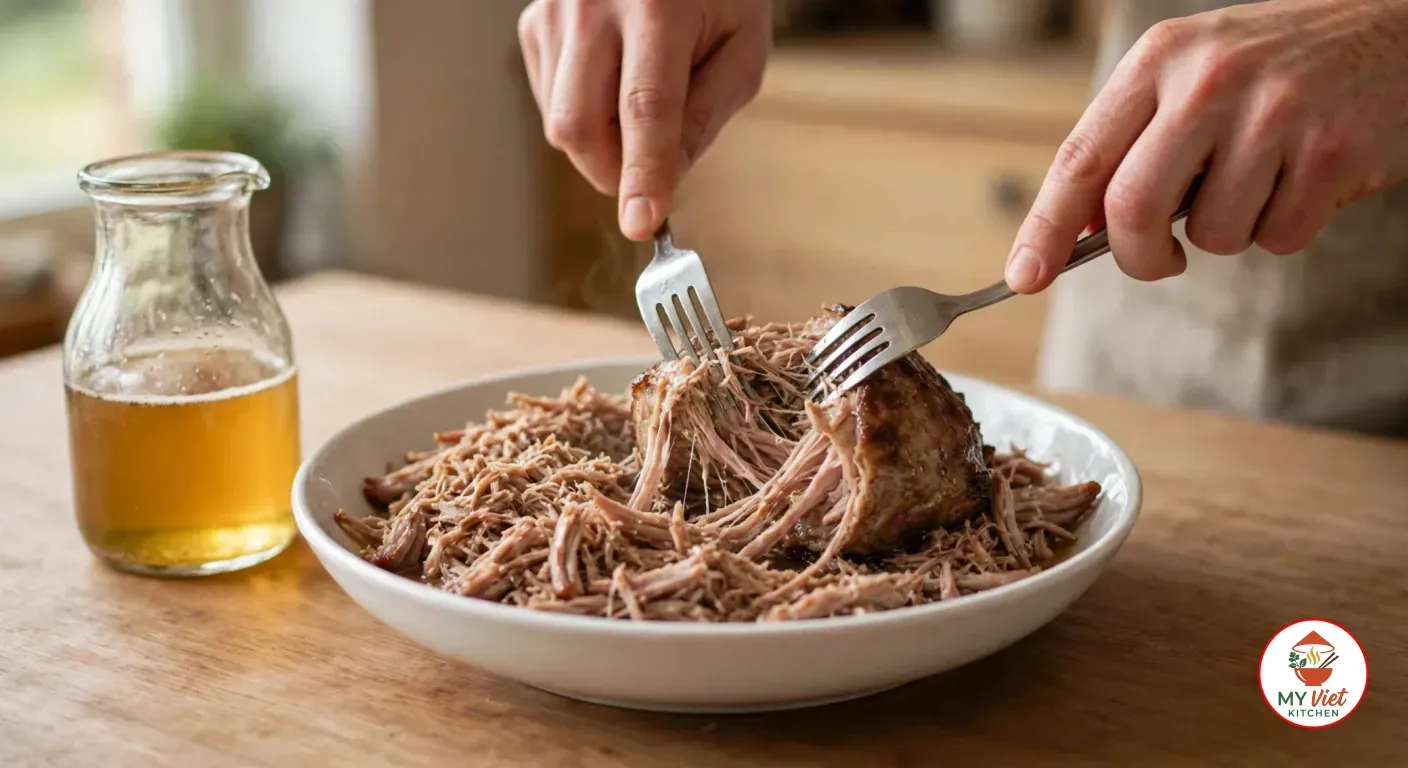
4Open the parcel over the pan and tip the juices from inside the foil into a heatproof jug. Discard the leaves, any bone and large pieces of fat, then pull the meat into long, thin strands with two forks. Spoon the fat off the juices and stir about 1/2 cup (120 ml) of them into the pork. Taste, then add more salt or some of the last teaspoon of liquid smoke a few drops at a time. Serve hot with rice.
Frequently Asked Questions
Is kalua pig the same as kalua pork?
Yes, they are two names for one dish. Kathy YL Chan of Onolicious Hawaiʻi writes that locals call it kalua pig while tourists and anyone not from Hawaiʻi say kalua pork, and that both are correct (Onolicious Hawaiʻi). The Polynesian Cultural Center’s recipe uses both names too (Polynesian Cultural Center).
Can you make kalua pig without banana leaves?
Yes. Onolicious Hawaiʻi’s oven method covers the roasting pan tightly with foil and adds banana leaves only if you have them, tied around the pork under an outer layer of foil (Onolicious Hawaiʻi). Without leaves, seal the salted pork in two layers of heavy-duty foil so the juices stay in, and expect a plainer taste, since the leaves are part of what gives the dish its flavor.
How long does kalua pig keep?
Three to four days in the fridge and two to three months in the freezer. Health Canada gives those limits for cooked meat, provided the fridge runs at 4 °C (40 °F) or below and the freezer at −18 °C (0 °F) or below (Health Canada). Pack the pork with some of its juices so it doesn’t dry out, in portions you will use at one time; Kathy YL Chan notes that kalua pork freezes very well (Onolicious Hawaiʻi). Reheat leftovers to 74 °C (165 °F) (Health Canada).
Can you cook kalua pig in a slow cooker or Instant Pot?
Yes, with the same salt and liquid smoke. The Polynesian Cultural Center cooks its pork butt on low in a slow cooker for about 8 hours or overnight, or for 90 minutes on manual in an Instant Pot plus 5 minutes to release the pressure (Polynesian Cultural Center). Onolicious Hawaiʻi browns a 3-pound butt cut into 3 pieces, then pressure cooks it for 90 minutes on high with a natural release (Onolicious Hawaiʻi). Neither method uses leaves, so expect plain salted, smoky pork.
Sources
- Kālua, Wikipedia
- Alaea salt, Wikipedia
- Traditional Hawaiian Kalua Pork: 4 Ways to Cook It, Polynesian Cultural Center, January 2026
- Sam Choy’s Oven-Roasted Kalua Pig, Sam Choy, Bon Appétit, January 2006
- 3-Ingredient Kalua Pork, Kathy YL Chan, Onolicious Hawaiʻi, December 2020
- Safe internal cooking temperatures, Health Canada, June 2024
- Safe food storage, Health Canada, April 2024
- Hawaiian-Style Kalua Pork | Food Wishes, Food Wishes, YouTube, June 2024