There is nothing quite like the deep, smoky flavor of homemade baba ganoush. This beloved Middle Eastern dip transforms simple eggplant into something extraordinary by charring it over an open flame, then blending the silky flesh with tahini, fresh lemon juice, and garlic. If you have ever tasted baba ganoush at a great Lebanese or Syrian restaurant and wondered how to recreate that incredible smokiness at home, this recipe shows you exactly how.
Prep Time: 15 minutes | Cook Time: 40 minutes | Servings: 6
Difficulty: Easy | Calories: ~165 per serving
What Makes Baba Ganoush Special?
Baba ganoush earns its reputation from one transformative technique: charring the eggplant directly over fire. This process creates a deep, complex smokiness that no amount of seasoning can replicate. The charred skin infuses the tender flesh with a campfire-like aroma, and when you blend that smoky pulp with the nutty richness of tahini and the bright acidity of lemon, the result is a dip that tastes far more complex than its short ingredient list suggests.
Unlike many other dips, baba ganoush has a light, airy texture that comes from the natural moisture of the eggplant. It is less dense than hummus and has a more nuanced flavor profile. The smokiness, the tang of lemon, the earthiness of tahini, and the subtle bite of raw garlic create layers of flavor that keep you reaching for another scoop of pita.
Baba ganoush appears on meze tables across Lebanon, Syria, Turkey, and the broader Middle East. Each region adds its own subtle twist — some include yogurt for extra creaminess, others add pomegranate molasses for a sweet-tart finish. This recipe stays close to the classic Lebanese version, which relies on just a handful of ingredients and lets the smoky eggplant shine. Once you master this baba ganoush recipe, you will never buy the store-bought version again.

Choosing the Right Eggplant for Baba Ganoush
The eggplant you select will directly affect the flavor and texture of your baba ganoush. Here is what to look for when shopping.
- Large globe eggplant (best choice): These have the most flesh relative to their skin and seed content, which gives you the creamiest dip. Choose ones that feel heavy and firm with smooth, shiny skin.
- Italian eggplant: Smaller than globe eggplant but still works well. The flesh is slightly sweeter and less bitter. You may need an extra one to get enough pulp.
- Japanese or Chinese eggplant: These long, slender varieties are tender and have fewer seeds, but they contain more moisture and less flesh. They char quickly, so watch them carefully over the flame.
Ingredients for Baba Ganoush
Main Ingredients:
- 3 large eggplants (about 1 kg total)
- 3 tablespoons tahini
- 3 tablespoons fresh lemon juice (about 1.5 lemons)
- 2 cloves garlic, minced
- 1 teaspoon salt
- 1/2 teaspoon ground cumin
- 2 tablespoons extra virgin olive oil, plus more for drizzling
For Garnish:
- 1 tablespoon fresh flat-leaf parsley, finely chopped
- Pomegranate seeds (optional)
- Paprika or sumac for sprinkling
- Warm pita bread for serving
Pro tip: Use good-quality tahini for the best results. Look for a brand that is smooth, pourable, and made from 100% sesame seeds. Gritty or bitter tahini will ruin the delicate balance of flavors in this dip.
Step-by-Step Instructions
Step 1: Char the Eggplants Over Open Flame
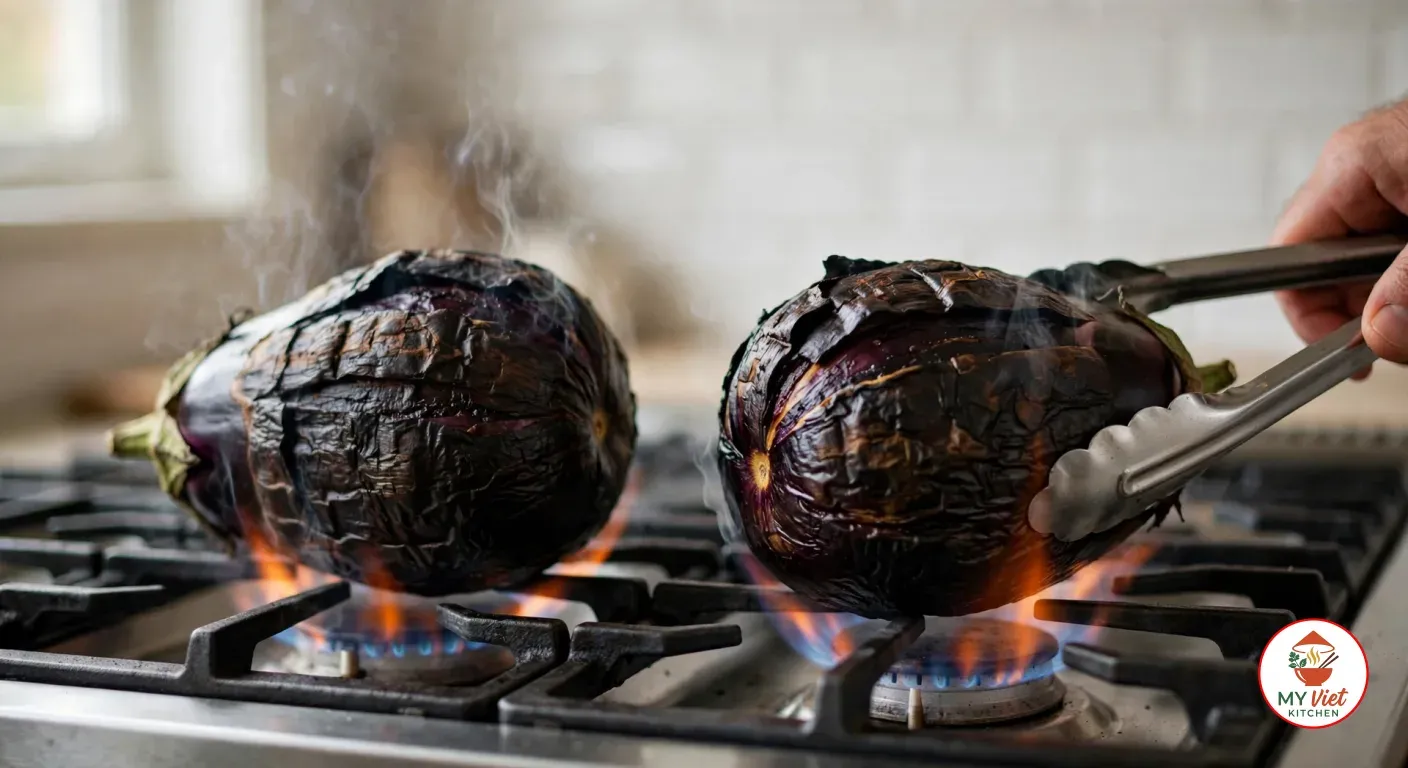
1Place the whole eggplants directly on the grate of a gas stove over a medium-high flame. Turn them with tongs every three to four minutes until the skin is completely blackened and blistered on all sides. The eggplant should collapse and feel very soft when squeezed gently — this means the flesh is cooked through. Each eggplant takes about 15 to 20 minutes. If you do not have a gas stove, you can use a charcoal grill for even better smoky flavor, or broil them in the oven four inches from the element.
Step 2: Steam and Peel the Eggplant
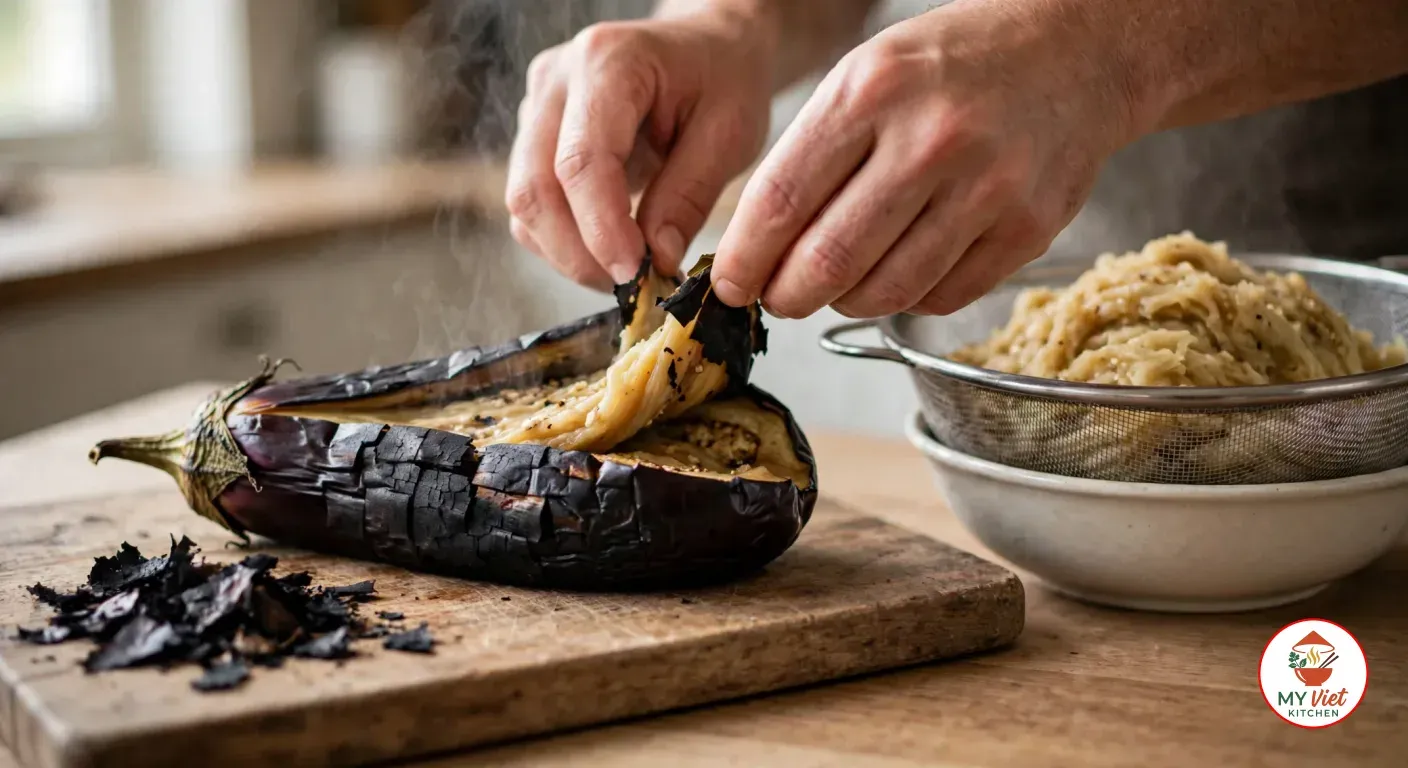
2Transfer the charred eggplants to a large bowl and cover tightly with plastic wrap or a lid. Let them sit for 15 minutes — the trapped steam loosens the skin and finishes cooking the interior. Once cool enough to handle, peel away the blackened skin with your fingers or a spoon. It should slip off easily. Place the soft, smoky flesh in a colander set over a bowl and let it drain for at least 10 minutes. Removing this excess liquid prevents a watery dip.
Step 3: Chop the Eggplant by Hand
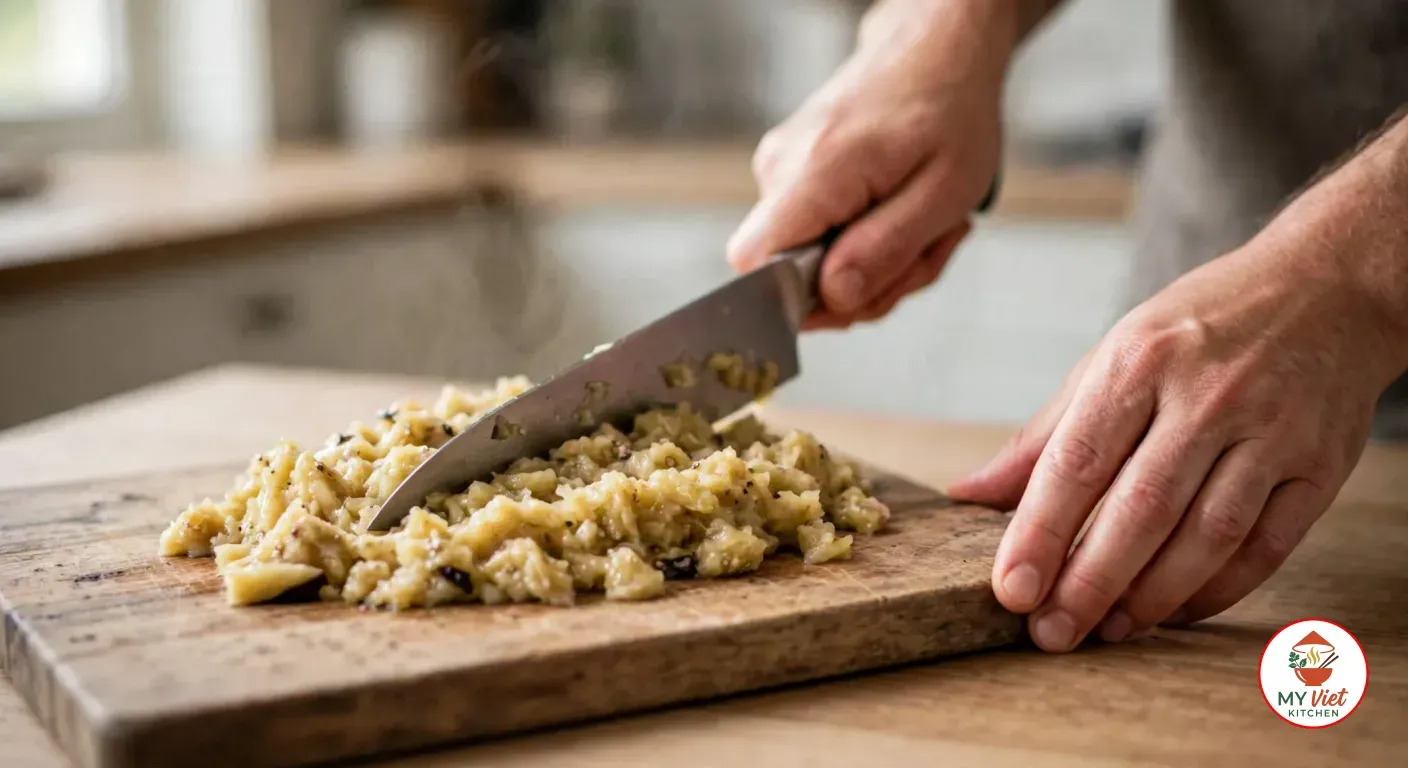
3Move the drained eggplant to a cutting board and chop it roughly with a knife. Use a rocking motion to break down the larger pieces while keeping the overall texture chunky and rustic. Resist the urge to use a food processor — mechanical blending turns the eggplant into a smooth, gluey paste and destroys the beautiful texture that defines this classic dip. You want visible pieces of smoky eggplant in every spoonful.
Step 4: Mix with Tahini and Seasonings
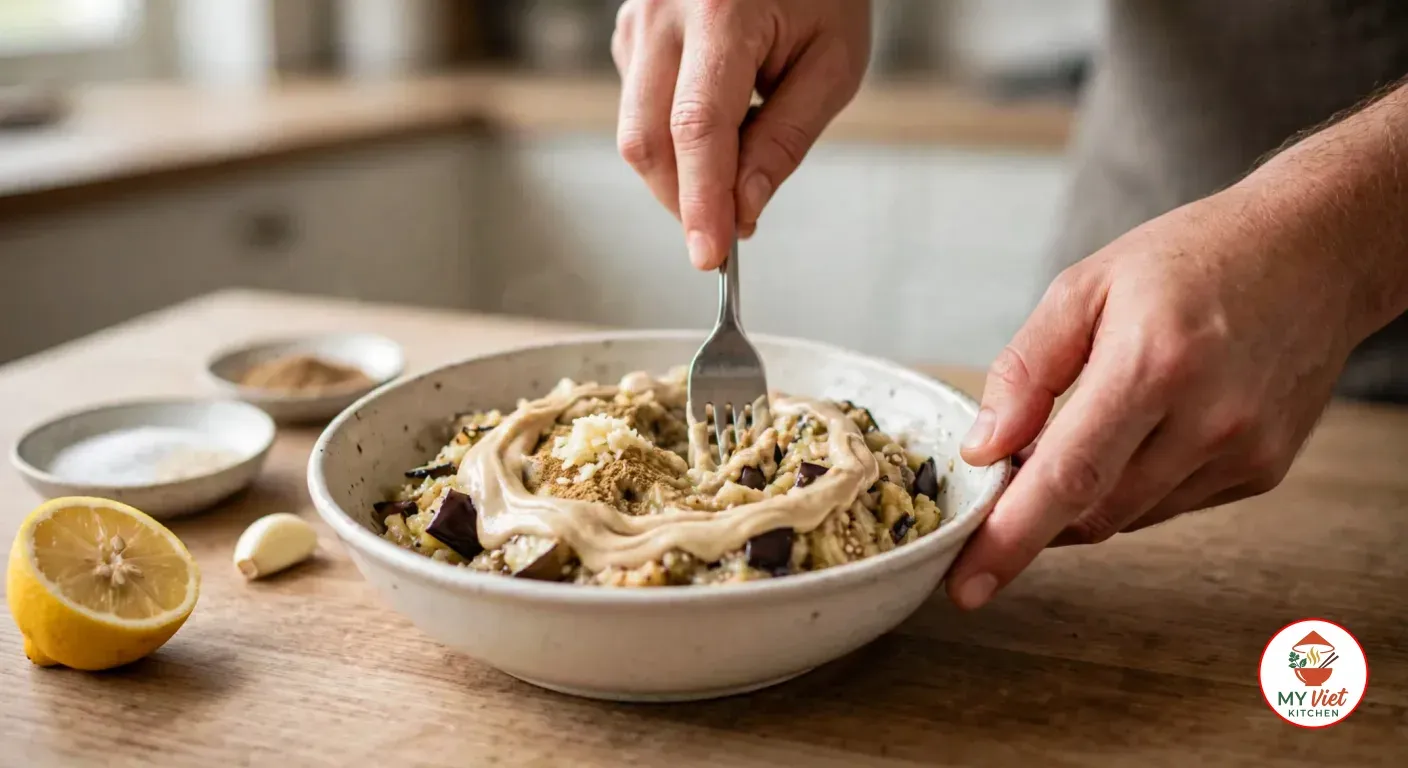
4Place the chopped eggplant in a medium bowl. Add the tahini, fresh lemon juice, minced garlic, salt, and ground cumin. Stir everything together with a fork, mashing gently to combine while preserving some texture. The dip should look creamy with visible chunks of eggplant throughout. Taste and adjust the seasonings — add more lemon for brightness, more tahini for richness, or more salt for depth.
Step 5: Rest and Develop Flavors
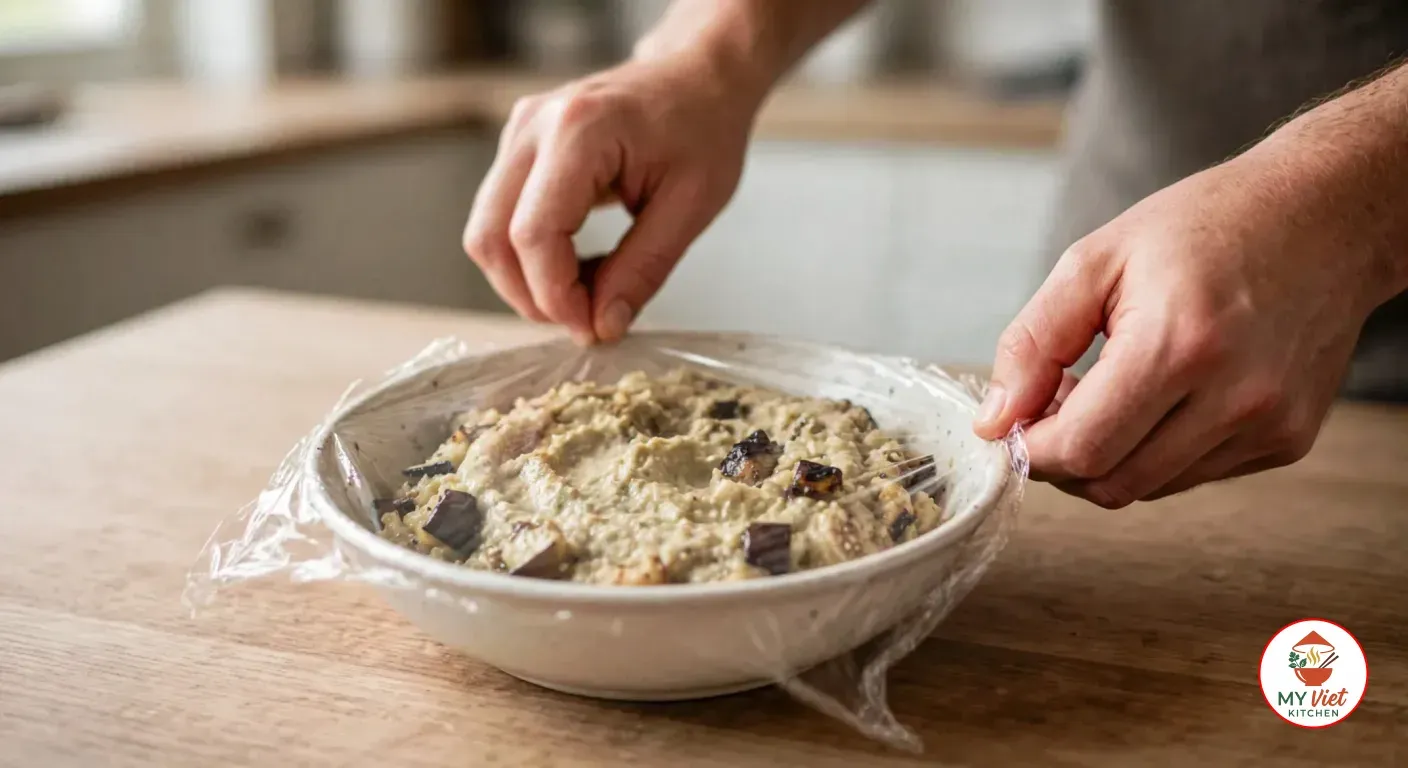
5Cover the bowl with plastic wrap and place it in the refrigerator for at least 30 minutes. This resting time is important because it allows the tahini, lemon, and garlic to meld with the smoky eggplant, creating a more harmonious and rounded flavor. The dip will thicken slightly as it chills. Before serving, bring it back to room temperature for about 15 minutes so all the flavors are fully expressed.
Step 6: Garnish and Serve
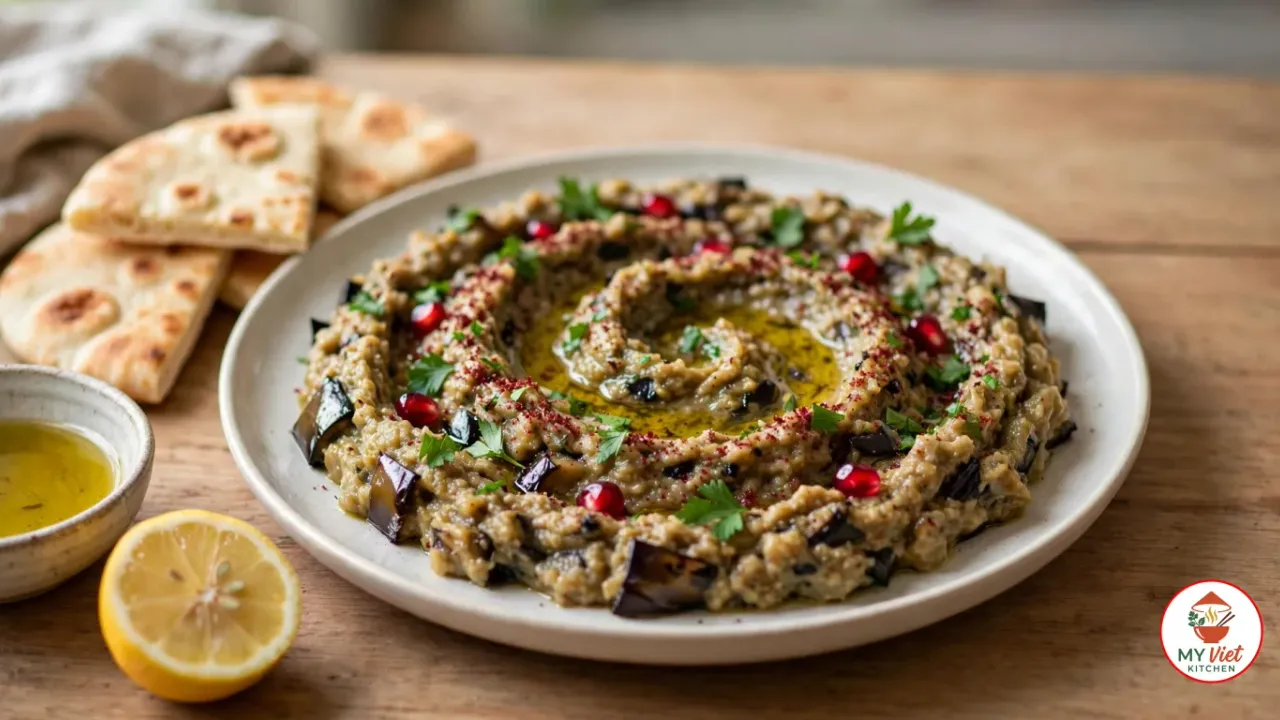
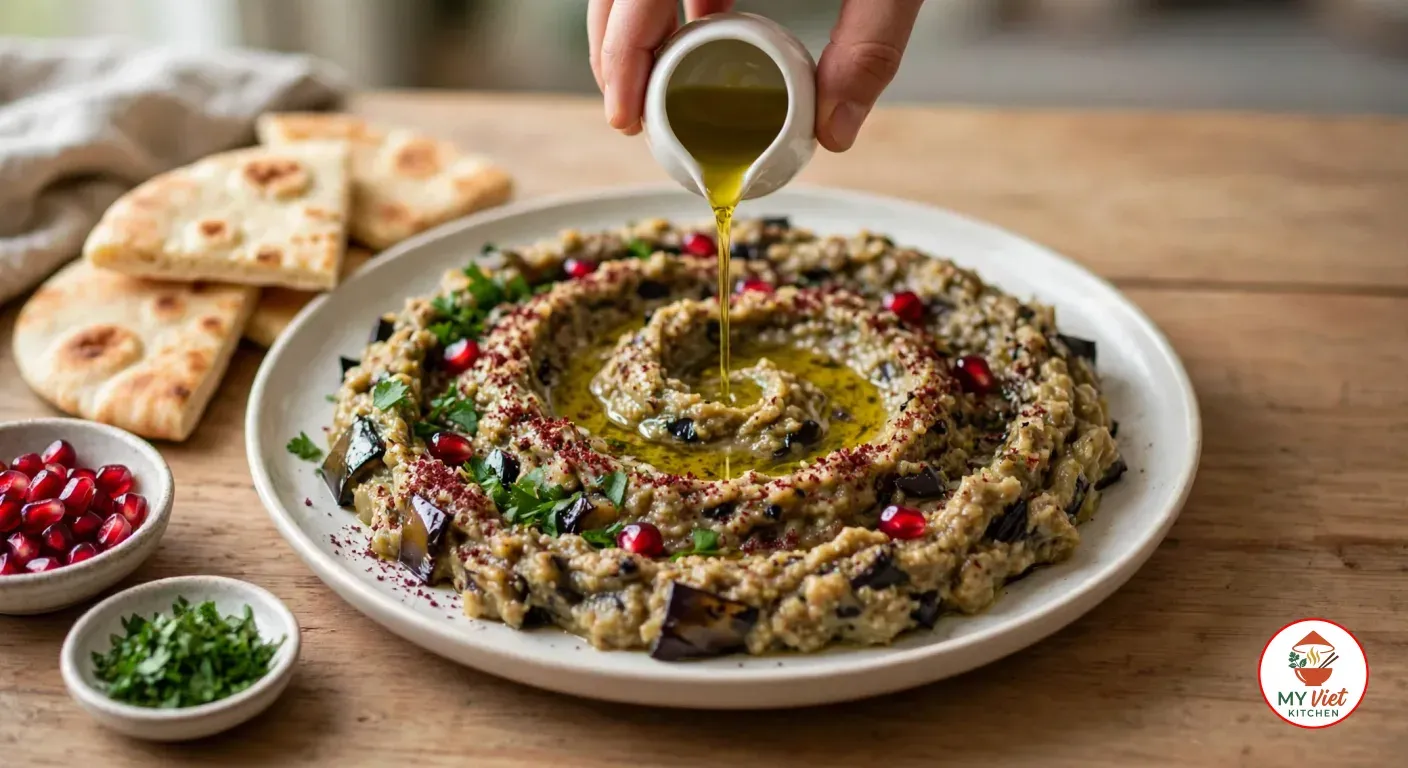
6Spread the baba ganoush across a shallow plate or wide bowl. Use the back of a spoon to create a shallow well in the center. Drizzle generously with extra virgin olive oil, filling the well. Sprinkle chopped fresh parsley over the surface, add a dusting of paprika or sumac for color, and scatter pomegranate seeds on top if desired. Arrange warm pita bread wedges around the plate and serve immediately.
Expert Tips for the Best Baba Ganoush
Char Thoroughly for Maximum Smoke
The smokiness is what makes baba ganoush extraordinary, so do not rush the charring step. The eggplant skin should be completely black and blistered, and the flesh should be totally collapsed. Undercharred eggplant produces a dip that tastes flat and one-dimensional. Take the full 15 to 20 minutes per eggplant.
Drain the Eggplant Well
Eggplant holds a surprising amount of water. If you skip the draining step, the result will be thin and watery instead of thick and creamy. Let the flesh sit in a colander for a full 10 minutes, and gently press out any remaining liquid before chopping. This simple step makes a dramatic difference in the final texture.
Add Tahini Gradually
Start with two tablespoons of tahini and taste before adding more. Different tahini brands vary significantly in intensity. Some are very strong and bitter, while others are mild and sweet. Adding the tahini gradually ensures the dip has the perfect balance of nuttiness without overwhelming the smoky eggplant flavor.
Baba Ganoush vs. Other Eggplant Dips
Several eggplant-based dips exist across Mediterranean and Middle Eastern cuisines. Here is how baba ganoush compares to its closest relatives.
| Feature | Baba Ganoush | Mutabal | Melitzanosalata |
|---|---|---|---|
| Origin | Lebanon/Syria | Syria/Jordan | Greece |
| Key ingredient | Tahini, lemon, garlic | Yogurt, tahini, garlic | Olive oil, garlic, vinegar |
| Texture | Chunky, rustic | Smooth, creamy | Chunky, olive oil-rich |
| Smokiness | Strong | Strong | Moderate |
| Served | Room temperature | Cold | Room temperature |
Serving Suggestions
Baba ganoush is a natural star of the meze table. Here are the best ways to enjoy this smoky dip.
The Perfect Accompaniments:
- Hummus: Serve baba ganoush and hummus side by side for a classic dual-dip meze plate that offers contrasting textures.
- Tabbouleh: The fresh, herby salad provides a bright contrast to the rich, smoky baba ganoush.
- Falafel: Crispy falafel dipped in baba ganoush is a match that works on every level.
- Warm pita bread: Freshly warmed pita cut into wedges is the essential vehicle for scooping up baba ganoush.
- Raw vegetables: Cucumber sticks, carrot sticks, and bell pepper strips add a refreshing crunch alongside the creamy dip.
Beverage Pairings:
- Arak or ouzo: The anise flavor complements the smoky eggplant beautifully.
- Dry rosé wine: A chilled rosé balances the richness of the tahini with crisp acidity.
- Sparkling water with lemon: A simple, clean drink that refreshes the palate between bites.
Storage and Reheating
Refrigerator: Store baba ganoush in an airtight container for up to 5 days. Drizzle a thin layer of olive oil on top before sealing to prevent browning. The flavor deepens over the first day or two, so leftovers often taste even better.
Freezer: Baba ganoush freezes reasonably well for up to 2 months. Thaw overnight in the refrigerator and stir well before serving. The texture may be slightly thinner after freezing, so drain any excess liquid and stir in a spoonful of fresh tahini.
Serving tip: Always bring refrigerated baba ganoush to room temperature before serving. Serving it cold tastes muted because the flavors need warmth to fully express themselves. Allow at least 15 minutes out of the refrigerator.
Common Mistakes to Avoid
1. Not Charring the Eggplant Enough
Half-charred eggplant produces a dip with a raw, bitter taste instead of the desired deep smokiness. The skin must be completely black and the flesh totally collapsed. If you remove the eggplant too early, you will miss out on the smoky magic that defines this dish.
2. Using a Food Processor
Blending the eggplant in a food processor turns it into a smooth, gluey paste that lacks character. The beauty of baba ganoush lies in its chunky, rustic texture. Always chop by hand with a knife for the authentic result. Each bite should have recognizable pieces of smoky eggplant.
3. Skipping the Draining Step
Roasted eggplant releases a lot of liquid. If you mix the filling without draining first, the finished dip will be thin, watery, and bland. Always let the peeled eggplant drain in a colander for at least 10 minutes. This concentrates the smoky flavor and gives you a thick, scoopable dip.
Frequently Asked Questions
What is the difference between baba ganoush and hummus?
The main difference is the base ingredient. Baba ganoush is made from fire-roasted eggplant, while hummus is made from cooked chickpeas. Both use tahini and lemon juice, but baba ganoush has a distinctive smoky flavor and lighter texture, whereas hummus is creamier and more protein-dense. They complement each other perfectly on a meze platter.
Do I need to peel the eggplant for baba ganoush?
Yes, you should remove the charred skin before mixing. However, you do not need to be perfectly thorough — tiny bits of char left on the flesh actually add extra smoky flavor and a subtle visual appeal. Just remove all the large pieces of blackened skin and leave any small fragments that cling to the soft flesh.
Can I make baba ganoush in the oven?
Yes. Pierce the eggplants several times with a fork and broil them four inches from the heating element, turning every five minutes until completely collapsed and charred. This takes about 30 to 40 minutes. You can also roast at 475°F (245°C) for 40 minutes, though the smoky flavor will be milder compared to an open flame. For extra smokiness when using the oven, add half a teaspoon of smoked paprika to the finished dip.
Why is my baba ganoush bitter?
Bitterness usually comes from undercooked eggplant or from eggplants that are old and full of large, dark seeds. Make sure the eggplant is completely soft and collapsed before removing it from the heat. Choose firm, heavy eggplants with smooth, shiny skin — these tend to have fewer seeds. Draining the excess liquid after peeling also helps remove bitter compounds.
How long does baba ganoush last in the fridge?
Properly stored baba ganoush keeps well in the refrigerator for up to five days. The flavors actually deepen and improve after the first day. Drizzle a thin layer of olive oil on the surface before sealing to prevent oxidation and browning. Stir well and bring to room temperature before serving.
Variations and Adaptations
Pomegranate Baba Ganoush:
Stir one tablespoon of pomegranate molasses into the finished baba ganoush for a sweet-tart dimension. Top with fresh pomegranate seeds and a drizzle of olive oil. This variation is popular in Syrian cuisine and adds a beautiful jewel-toned garnish.
Spicy Baba Ganoush:
Add one finely chopped red chili pepper or half a teaspoon of red pepper flakes to the mix for a kick of heat. A pinch of cayenne pepper works well too. The heat pairs surprisingly well with the smokiness and creates a more dynamic flavor profile for your baba ganoush.
Yogurt Baba Ganoush (Mutabal):
For the closely related Syrian dish called mutabal, add three tablespoons of thick Greek yogurt to the standard baba ganoush recipe. The yogurt makes the dip creamier and tangier. This version is often served as a spread on flatbread rather than scooped with pita.
The Cultural Significance of Baba Ganoush
Baba ganoush has roots that stretch back centuries across the Levant region. According to food historians, the dish likely originated in Lebanon or Syria, where eggplants have been cultivated since the medieval period. The name itself is debated — some scholars believe “baba” means “father” and “ganoush” means “pampered” or “coquettish” in Arabic, though the exact origin of the name remains a topic of friendly academic dispute.
In Middle Eastern culture, baba ganoush represents the art of transforming a humble vegetable into something extraordinary through the simple power of fire. The tradition of charring eggplant over open flames connects modern cooks to ancient cooking methods that predate ovens and modern kitchens. Every time you char an eggplant on your stovetop, you are participating in a culinary tradition that spans millennia.
Today, baba ganoush has become a global favorite, appearing on restaurant menus and in home kitchens far beyond the Middle East. Despite its widespread popularity, the best baba ganoush is still made the old-fashioned way — over an open flame, by hand, with patience and good ingredients.
Conclusion
Making baba ganoush at home is remarkably simple once you understand the key technique: char the eggplant completely, drain it well, and chop by hand rather than blending. These three steps are the difference between ordinary eggplant dip and the extraordinary, smoky baba ganoush that makes a meze table memorable. With just a few ingredients and less than an hour of your time, you can create a dip that will impress everyone at your table.
Build the ultimate meze spread by pairing your baba ganoush with creamy hummus, fresh tabbouleh salad, and crispy homemade falafel for a feast your guests will remember.