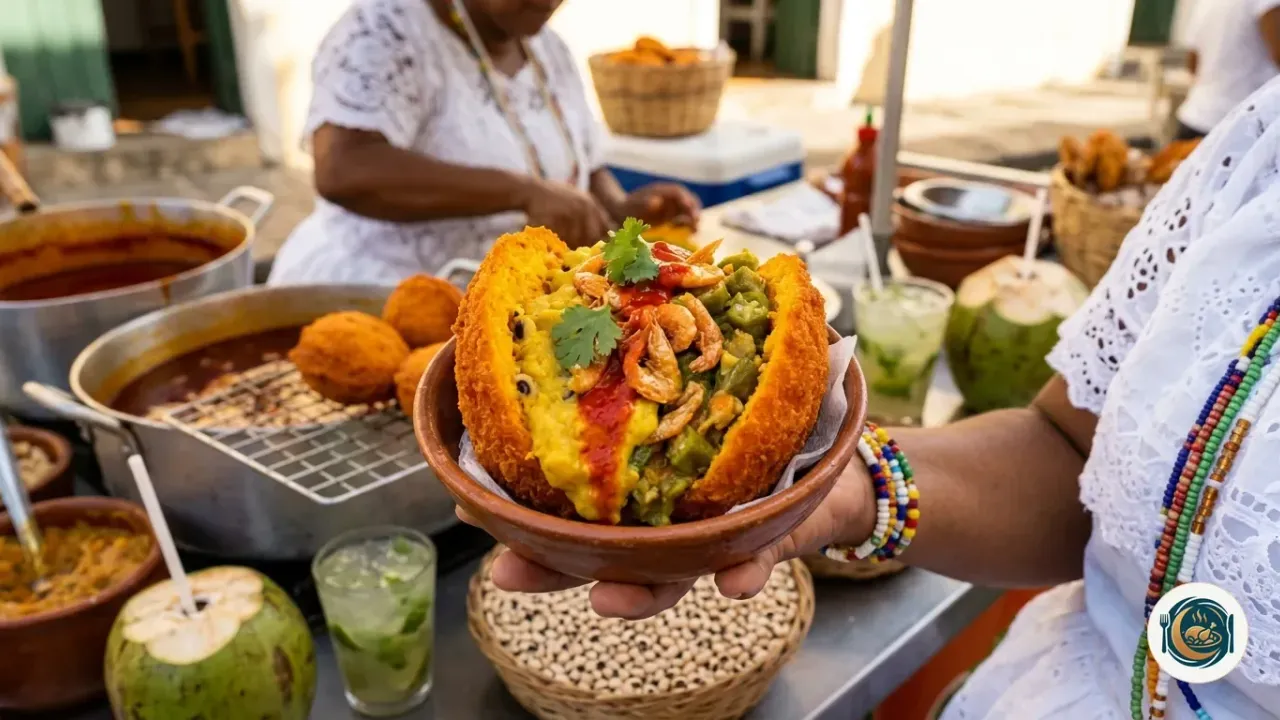
Acaraje is one of Brazil’s most iconic street foods, a crispy, golden fritter made from black-eyed peas and deep-fried in vibrant dende oil. Born in the streets of Salvador, Bahia, this beloved Afro-Brazilian snack carries centuries of cultural heritage in every bite. This acaraje recipe walks you through the entire process, from peeling the peas to assembling the traditional fillings, so you can bring the bold flavors of Bahian cuisine straight to your kitchen.
Prep Time: 40 minutes | Cook Time: 25 minutes | Servings: 12 fritters
Difficulty: Medium | Calories: ~280 per serving
What Makes Acaraje Special?
Acaraje is not just a fritter. It is a living link between West Africa and Brazil. Enslaved Yoruba people carried this recipe across the Atlantic to Bahia. Over time, it grew into something new and bold. The use of dende oil, the rich fillings, and the care of the Baianas in their white lace dresses all set acaraje apart from its African roots.
What makes this acaraje recipe so good is the mix of textures and flavors. The outside fries to a deep golden crust that crunches when you bite in. Inside, the batter stays light and fluffy because you whip air into it before frying. Then the fillings add rich layers. Creamy vatapa brings peanuts and coconut. Savory caruru adds okra and cashews. Briny dried shrimp tie it all together. Each bite is different, and the dende oil wraps it all in a warm, earthy scent.
In Salvador, acaraje is more than food. It is a symbol of culture that UNESCO lists as part of Brazil’s heritage. The Baianas de Acaraje, the women who make and sell it on the streets, are icons in their own right. Therefore, making acaraje at home is not just cooking. It is taking part in a tradition that goes back hundreds of years.

Choosing the Right Black-Eyed Peas
The type of peas you use will make or break your acaraje. Since the batter has only three items, peas, onion, and salt, bad peas have nowhere to hide. Here are your best options for this recipe.
- Dried black-eyed peas (best choice): Always use dried peas rather than canned. Dried peas soak properly, peel cleanly, and blend into a smooth batter with the right consistency. Canned peas are too soft and waterlogged, and they produce a batter that falls apart during frying.
- Fradinho beans (traditional Brazilian variety): If you can find fradinho beans at a Brazilian grocery store, use them. They are the traditional variety used in Bahia and produce the most authentic flavor and texture. However, standard black-eyed peas are nearly identical and work perfectly.
- Frozen peeled black-eyed peas (convenient shortcut): Some specialty stores sell frozen, pre-peeled black-eyed peas. These save significant prep time because the tedious peeling step is already done. Simply thaw, drain well, and blend directly into batter.
Ingredients for Acaraje
For the Fritter Batter:
- 2 cups dried black-eyed peas, soaked overnight
- 1 large onion, roughly chopped
- 1 teaspoon fine sea salt
- 2 cups dende (red palm) oil for deep frying
For the Vatapa Filling:
- 1 cup dried shrimp, soaked in warm water for 15 minutes and drained
- 1 cup roasted peanuts, finely ground
- 1 cup coconut milk
- 2 tablespoons dende oil
- 1 onion, finely diced
- 2 cloves garlic, minced
- 1 tablespoon fresh ginger, grated
- 1 tablespoon dried shrimp, ground to powder
- 2 slices stale white bread, soaked in coconut milk and squeezed
- Salt to taste
For the Caruru:
- 2 cups fresh okra, finely chopped
- 1/2 cup dried shrimp, ground
- 1/2 cup roasted cashews, ground
- 1/4 cup dende oil
- 1 small onion, finely diced
- 1 cup coconut milk
- Salt to taste
For Serving:
- Malagueta pepper sauce or your favorite hot sauce
- Extra dried shrimp for topping
- Fresh cilantro, chopped
- Lime wedges
Pro tip: The most critical step in making acaraje is removing every last skin from the black-eyed peas. Any remaining skins will make the batter grainy and prevent it from achieving the signature fluffy interior. After soaking, rub handfuls of peas together vigorously under running water and rinse until every skin floats away. This takes patience, but it makes the difference between good acaraje and great acaraje.
Step-by-Step Instructions
Step 1: Soak and Peel the Black-Eyed Peas
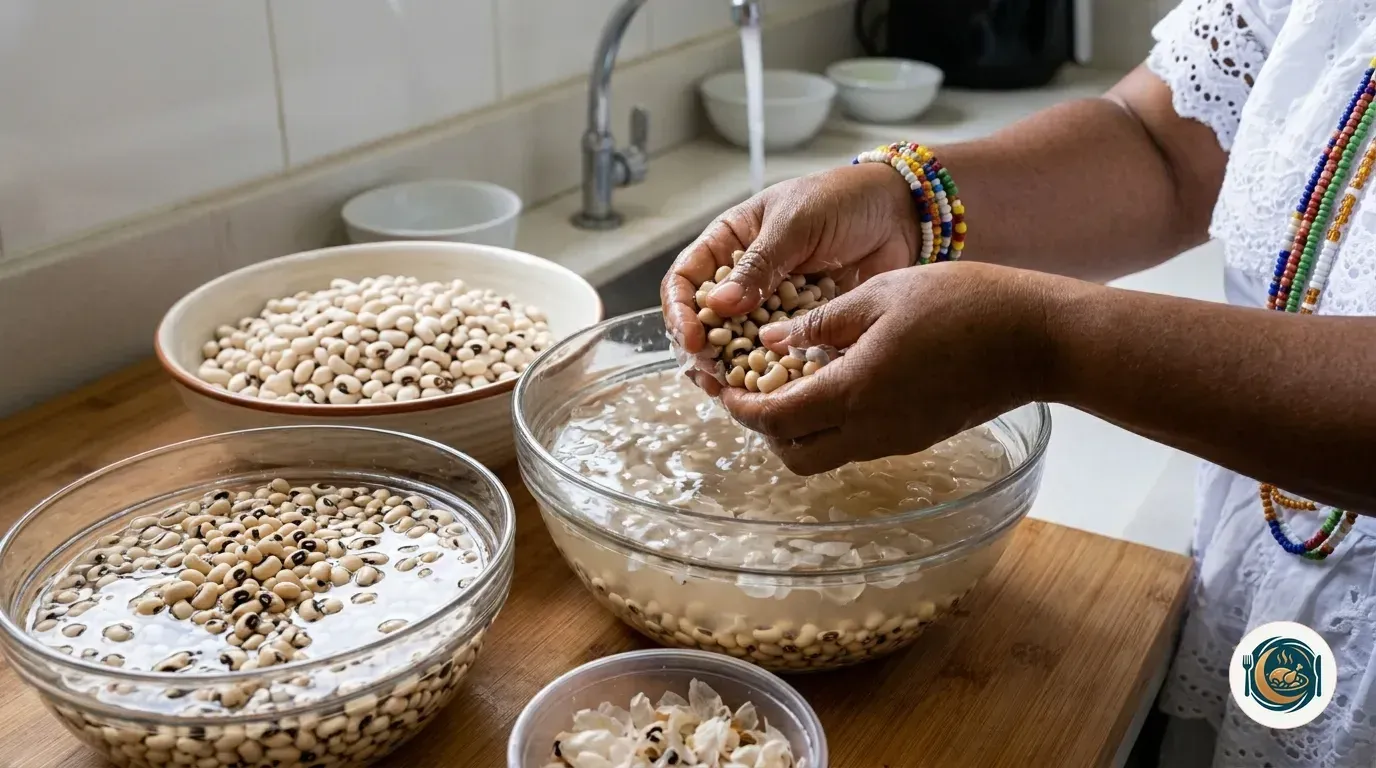
1 Place the dried black-eyed peas in a large bowl and cover with plenty of cold water. Let them soak for at least 8 hours or overnight. The peas will double in size, so use a bowl that is big enough to accommodate this. After soaking, drain the water and transfer the peas to a clean bowl.
Now comes the essential peeling step. Take handfuls of peas and rub them firmly between your palms. The friction loosens the skins. Fill the bowl with fresh water and agitate the peas. The loose skins will float to the surface. Pour them off and repeat this process until the water runs clean and all the peas are completely white. This usually takes 10 to 15 minutes of patient work. However, it is the most important step in the entire recipe because the skins prevent the batter from becoming smooth and airy.
Step 2: Blend the Batter
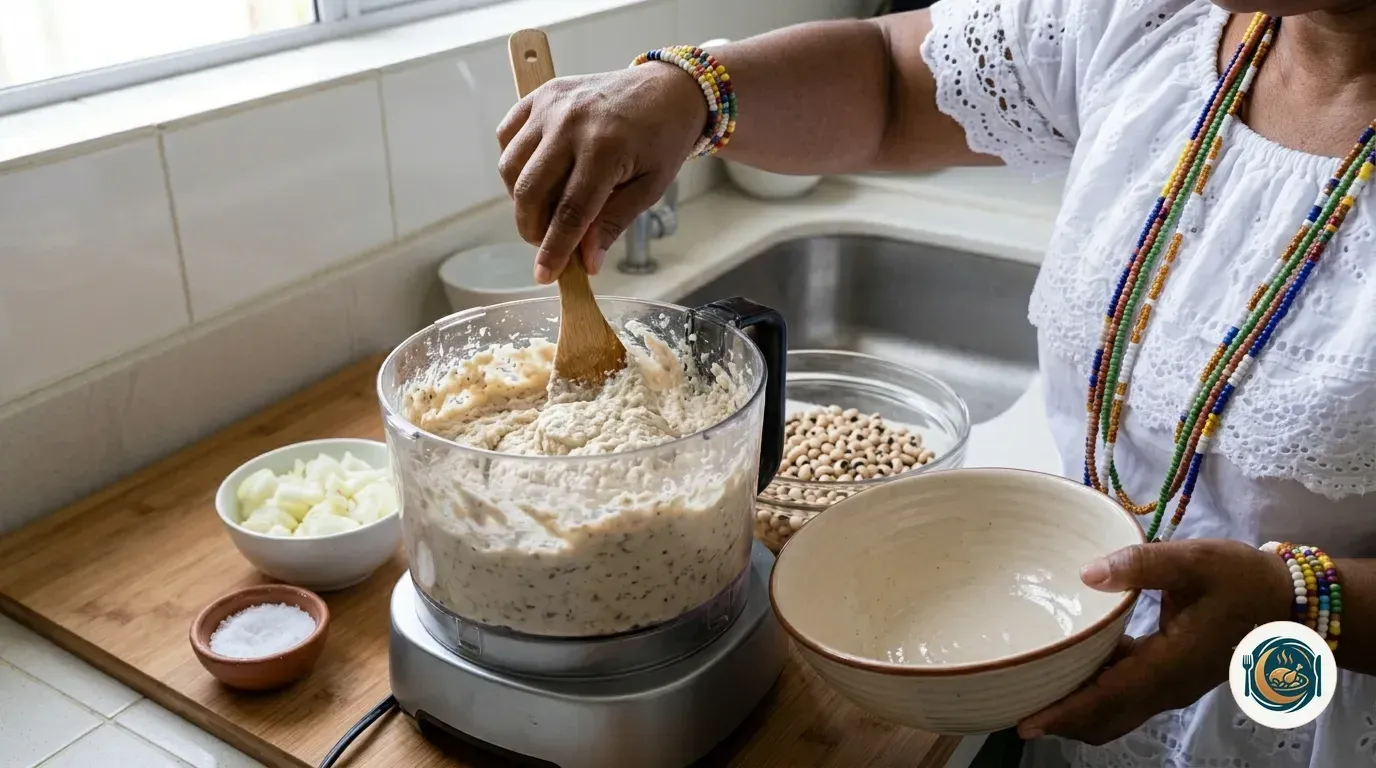
2 Place the peeled peas, chopped onion, and salt into a food processor. Blend until the mix forms a thick, smooth paste like hummus. Scrape the sides often for even blending. Add only 1 to 2 tablespoons of water if the blades get stuck, but go easy on the liquid. The batter must hold its shape on a spoon. If it drips, it is too thin and will fall apart in the hot oil.
Step 3: Whip the Batter
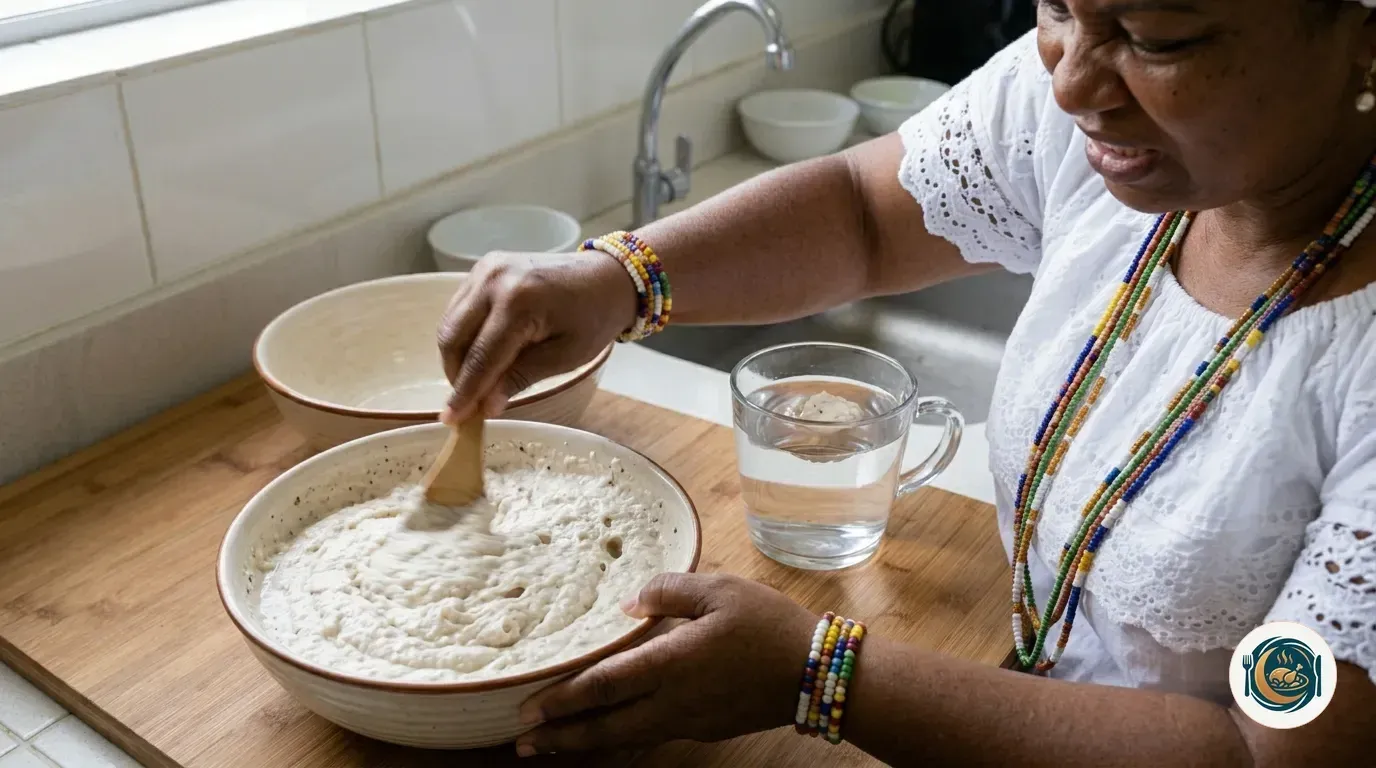
3 Move the batter to a large bowl and beat it hard with a wooden spoon for a full 5 minutes. This step sets great acaraje apart from the rest. Beating adds air to the batter. That air is what makes the inside fluffy and light, almost like soft bread. You will see the batter turn lighter in color and grow in volume. In Bahia, cooks test it by dropping a small ball into water. If it floats, the batter is ready. If it sinks, keep beating.
Step 4: Prepare the Vatapa Filling
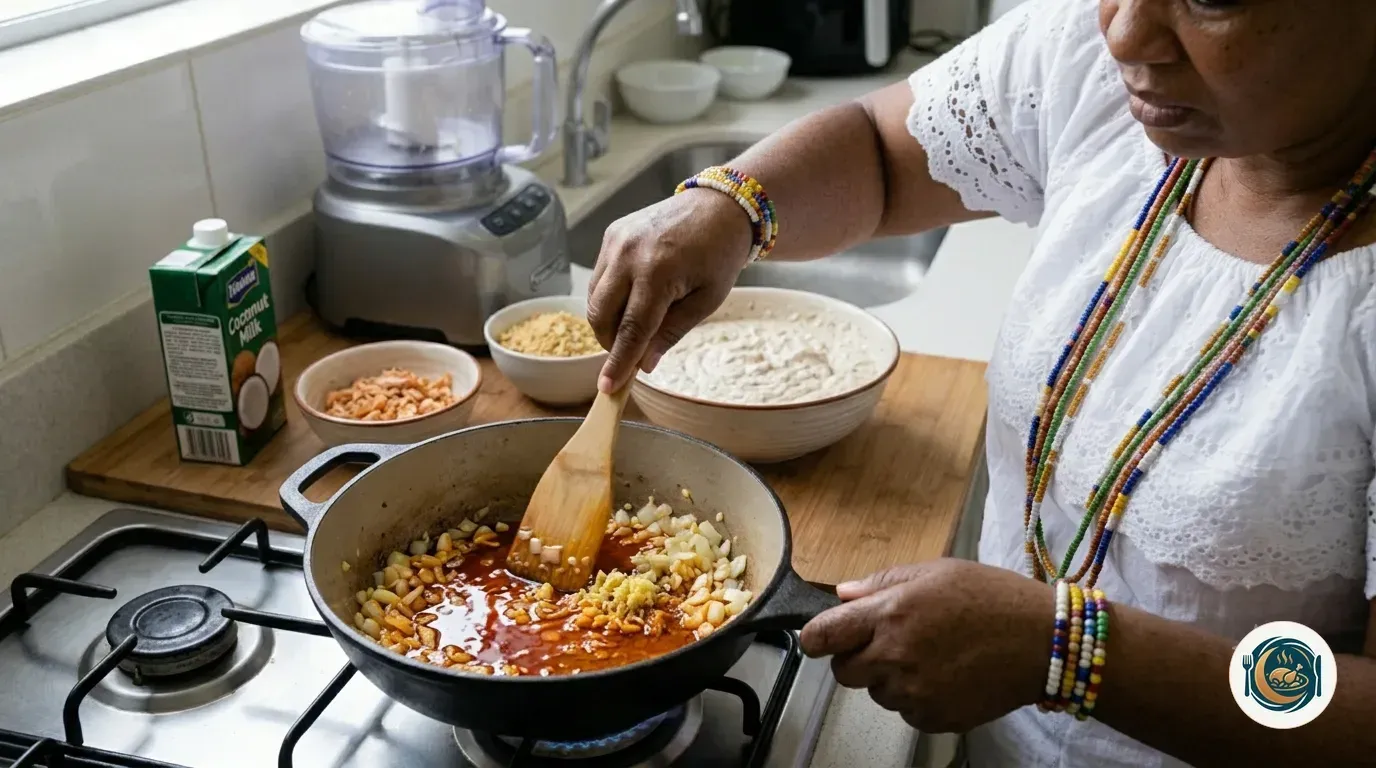
4 Heat 2 tablespoons of dende oil in a medium saucepan over medium heat. Add the finely diced onion, minced garlic, and grated ginger. Saute for 3 minutes until fragrant and softened. Then add the ground dried shrimp, ground peanuts, and the soaked bread that has been squeezed of excess liquid. Stir to combine everything thoroughly.
Pour in the coconut milk and lower the heat. Stir for 10 minutes as the mix thickens into a creamy paste. The vatapa should hold its shape on a spoon but still feel smooth and rich. Add salt to taste and set aside. You can make this filling a day ahead. In fact, the flavors get even better after a night in the fridge.
Step 5: Prepare the Caruru
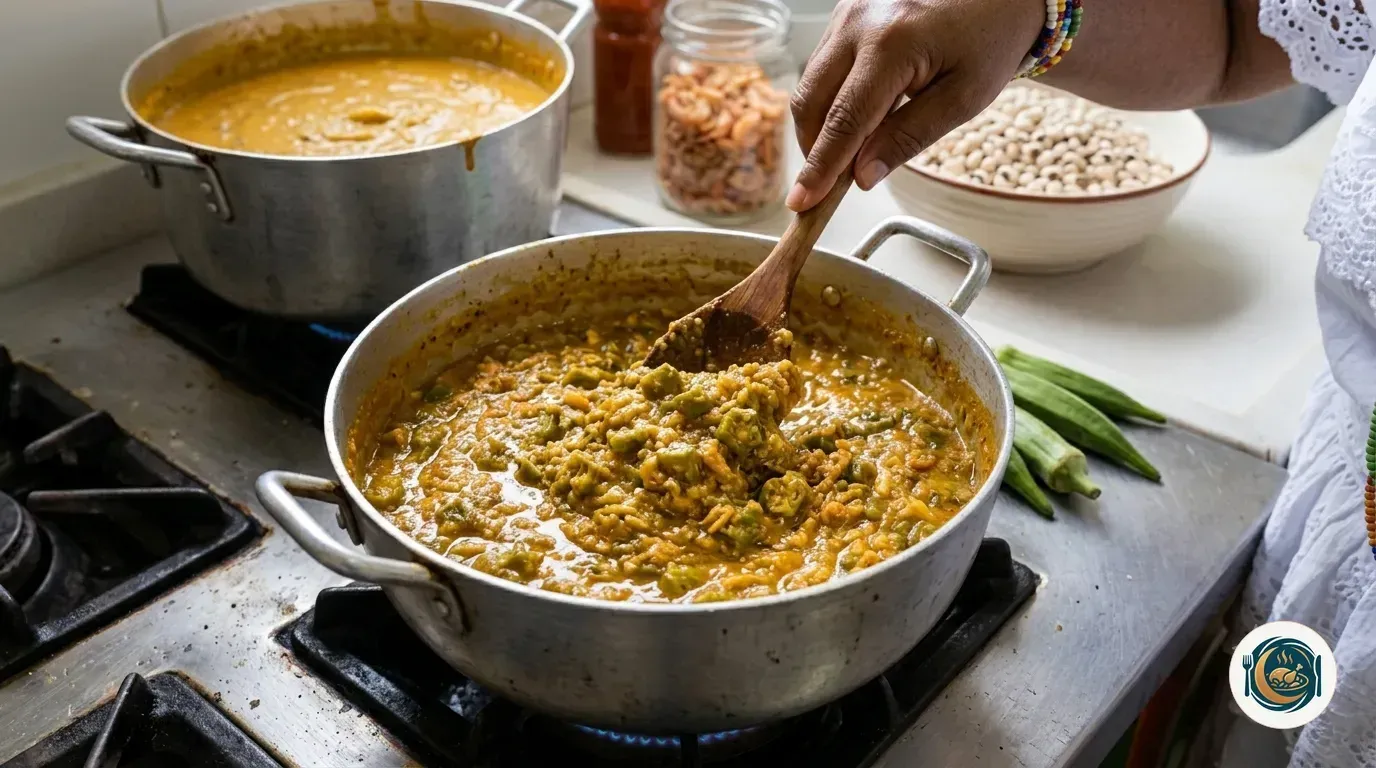
5 Heat the dende oil in a separate saucepan over medium heat. Add the diced onion and cook for 2 minutes until translucent. Next, add the chopped okra and cook for 8 minutes, stirring often, until the okra gets soft. Do not worry if the okra feels a bit slimy. That thick liquid is what gives caruru its body and helps it cling to the fritter.
Add the ground shrimp and ground cashews, then pour in the coconut milk. Stir well and simmer for 5 minutes until thick, like chunky pesto. Add salt and set aside. Like the vatapa, you can also make caruru a day ahead.
Step 6: Fry the Acaraje
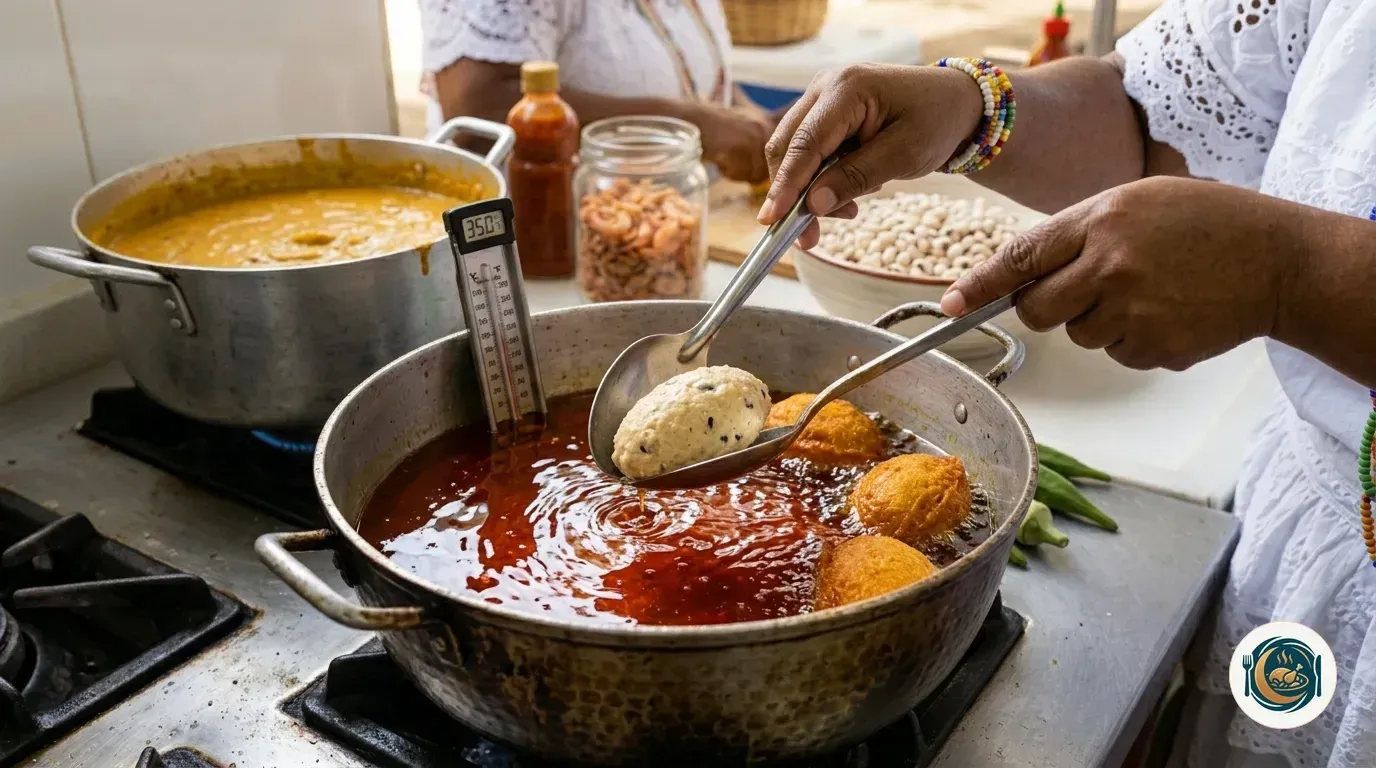
6 Pour the dende oil into a deep, heavy pot to a depth of at least 3 inches. Heat the oil to 350 degrees Fahrenheit. Use a thermometer to check the heat. Oil that is too cool makes greasy, soggy fritters. Oil that is too hot burns the outside while the inside stays raw.
Use two big spoons to scoop the batter and shape it into an oval the size of a large egg. Slide it into the hot oil with care. Fry 3 to 4 at a time so the pot does not get crowded. Cook for 4 to 5 minutes per side, turning once, until deep gold and crispy. The fritters will puff up as the trapped air expands. Drain on a wire rack or paper towels. Let the oil heat back up between batches for the best results.
Step 7: Assemble and Serve
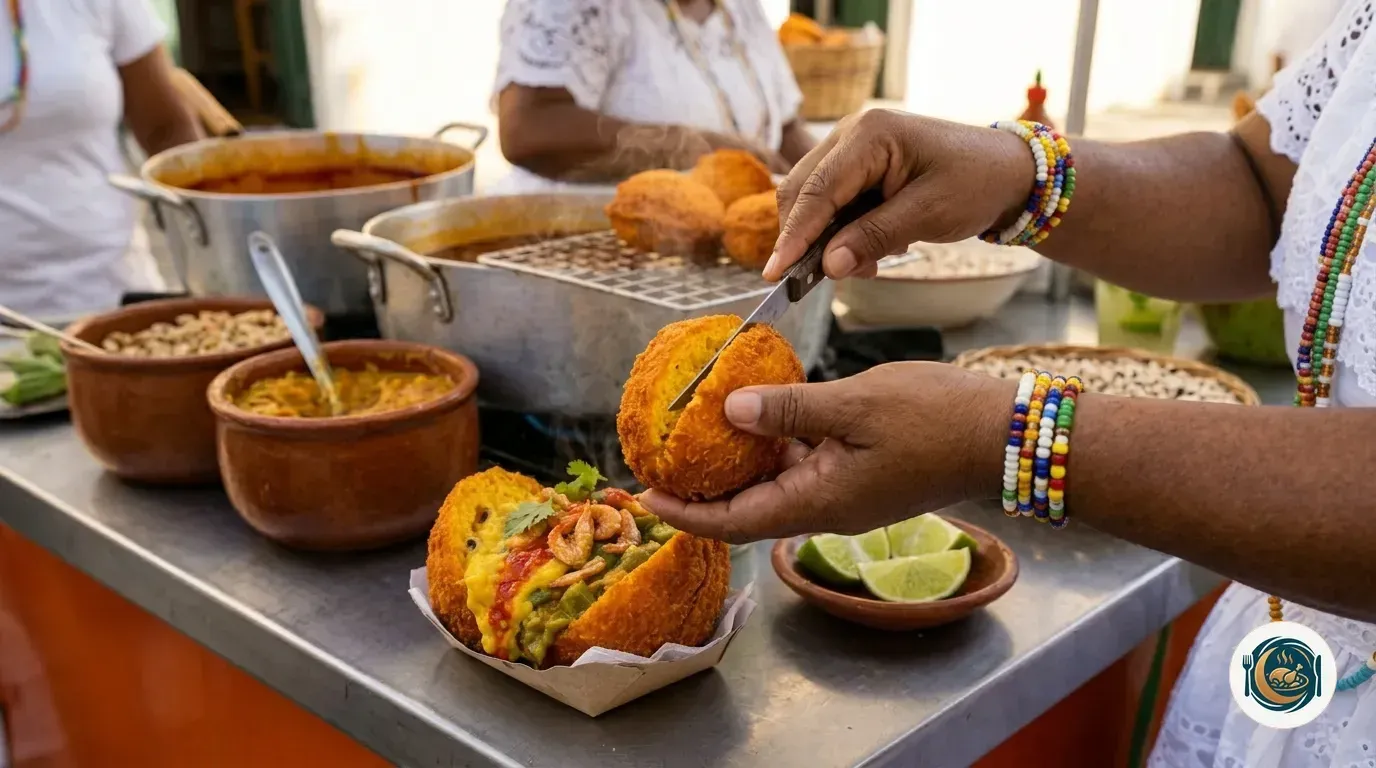
7 While the fritters are still hot, use a sharp knife to split each one open on one side. Make a pocket, but do not cut all the way through. Spoon vatapa into the pocket first. Then add a layer of caruru on top, plus a handful of whole dried shrimp. Drizzle on some malagueta pepper sauce for heat. Add a pinch of fresh cilantro for color. Serve right away with lime wedges, because acaraje tastes best when hot and crispy.
Expert Tips for Perfect Acaraje
Peel Every Single Skin
The skins on the peas are the enemy of great acaraje. Even a few left behind will make the batter grainy and dense. Take your time with this step. Some cooks pulse the soaked peas in a food processor to loosen the skins before rubbing them in water. This trick saves a few minutes and works well.
Beat the Batter Until It Floats
Bahian cooks test their batter with a cup of water. Drop a small ball in. If it floats, the batter has enough air. If it sinks, keep beating. This test tells you if your fritters will be light or dense. Five minutes of hard beating is usually enough, but try the float test to be sure.
Use Authentic Dende Oil
Dende oil, also called red palm oil, gives acaraje its deep orange color and earthy taste. There is no real swap for it. Look for it at Brazilian, African, or Asian stores. If you truly cannot find it, mix plain oil with a pinch of annatto powder for color. Just know that the taste will be quite different.
Acaraje vs. Akara: A Comparison
Acaraje and akara share the same roots but took different paths on each side of the Atlantic. Here is how they compare so you can see what makes the Brazilian version stand out.
| Feature | Acaraje (Brazil) | Akara (West Africa) |
|---|---|---|
| Frying oil | Dende (red palm) oil | Vegetable or palm oil |
| Batter | Black-eyed peas, onion, salt | Black-eyed peas, onion, salt, sometimes peppers |
| Fillings | Vatapa, caruru, dried shrimp, hot sauce | Usually eaten plain or with simple pepper sauce |
| Cultural role | Sacred Candomble offering and street food | Everyday breakfast and snack food |
| Shape | Large oval, split and stuffed | Small round balls |
| Preparation | Ceremonial, prepared by Baianas | Casual, prepared by street vendors |
Serving Suggestions
In Salvador, acaraje is always eaten as a full package. The fritter is just the shell for a mix of fillings that create the real magic. Here is how to serve it the right way, plus some ideas for a full meal.
The Classic Accompaniments:
- Vatapa: This creamy paste of peanuts, coconut milk, dried shrimp, and bread is the essential filling. It provides richness that balances the crispy fritter perfectly.
- Caruru: The okra-based sauce adds body, earthy flavor, and a slight viscosity that holds everything together inside the fritter pocket.
- Dried shrimp: Whole dried shrimp scattered on top add a salty, briny crunch that contrasts with the soft fillings beautifully.
- Malagueta pepper sauce: This fiery Brazilian hot sauce brings the heat that ties all the flavors together. Adjust the amount to your tolerance.
Beverage Pairings:
- Caipirinha: Brazil’s national cocktail, made with cachaca, lime, and sugar, cuts through the richness of the fried acaraje beautifully.
- Guarana soda: This sweet, mildly caffeinated Brazilian soft drink is the classic non-alcoholic pairing at street food stalls in Bahia.
- Fresh coconut water: Light and refreshing, coconut water cleanses the palate between bites and keeps you cool in the tropical Bahian heat.
- Cold lager beer: A chilled Brahma, Skol, or Antarctica beer is what most Brazilians reach for alongside acaraje at street stalls.
Storage and Reheating
Refrigerator: Store unassembled fried acaraje fritters in an airtight container for up to 2 days. Keep the vatapa and caruru fillings in separate containers for up to 3 days. Do not stuff the fritters before storing, because the moisture from the fillings will make them soggy.
Freezer: Fried acaraje fritters freeze well for up to 2 months. Lay them in a single layer on a baking sheet, freeze until solid, then transfer to freezer bags. The unfried batter can also be frozen in portioned balls for up to 1 month.
Reheating: The best method is to reheat the fritters in an oven preheated to 375 degrees Fahrenheit for 8 to 10 minutes until crispy again. Alternatively, refry them briefly in hot dende oil for 2 minutes per side. Avoid the microwave, because it makes the exterior soft and rubbery. Reheat the fillings gently on the stovetop with a splash of coconut milk to restore their creamy texture.
Common Mistakes to Avoid
1. Skipping the Peeling Step
Some recipes suggest you can leave the skins on the black-eyed peas to save time. Do not follow this shortcut. The skins create a gritty, heavy batter that produces dense fritters instead of the light, fluffy acaraje you want. Proper peeling takes 10 to 15 minutes and makes a dramatic difference in the final result.
2. Making the Batter Too Thin
Adding too much water during blending is one of the most common mistakes. The batter should be thick enough to mound on a spoon without sliding off. If it is too thin, the fritters will fall apart in the oil and absorb grease instead of staying crispy. If your batter is already too wet, blend in a few additional dry black-eyed peas to thicken it.
3. Not Beating the Batter Enough
Skipping the whipping step or only beating for a minute or two produces acaraje that is dense and heavy. Five full minutes of vigorous beating with a wooden spoon is the minimum. The incorporated air is what creates the fluffy interior that contrasts so beautifully with the crispy crust. Use the float test in water to confirm the batter is ready.
4. Frying at the Wrong Temperature
Oil that is too cool results in greasy, pale fritters that absorb excessive oil. Oil that is too hot burns the outside while leaving the inside raw. Maintain a steady 350 degrees Fahrenheit throughout the frying process. Use a kitchen thermometer and adjust the heat between batches. Also, let the oil come back to temperature before adding the next batch of fritters.
Frequently Asked Questions
What is acaraje made of?
Acaraje is made from dried black-eyed peas that are soaked, peeled, and blended into a smooth batter with onion and salt. The batter is deep-fried in dende (red palm) oil until crispy on the outside and fluffy on the inside. Traditional acaraje is then split open and stuffed with vatapa, caruru, and dried shrimp. Malagueta pepper sauce adds heat to the finished fritter.
What does acaraje taste like?
Acaraje has a crispy golden exterior with a soft, fluffy interior. The black-eyed pea batter tastes mildly nutty and savory. Dende oil gives it a distinctive earthy, slightly sweet flavor with a deep orange color. When stuffed with the traditional fillings, each bite delivers a rich combination of creamy peanut, savory shrimp, coconut, and the gentle heat of malagueta pepper.
Can I make acaraje without dende oil?
While dende oil is traditional and provides the signature color and flavor, you can use a blend of vegetable oil with a pinch of annatto powder for a similar golden appearance. However, the flavor will not be identical. Another option is to mix half dende oil with half neutral oil to reduce the strong palm flavor while still preserving some authenticity. Look for dende oil at Brazilian, African, or Asian grocery stores.
Is acaraje vegan?
The acaraje fritter itself is naturally vegan. It contains only black-eyed peas, onion, salt, and oil. However, the traditional fillings include dried shrimp, which makes the complete dish non-vegan. For a vegan version, replace the fillings with sauteed vegetables, avocado, and hot sauce. In Bahia, a related dish called abara uses the same batter but wraps it in banana leaves and steams it instead of frying.
Why do my acaraje fritters fall apart when frying?
Acaraje falls apart for three main reasons: the batter is too thin, the oil is not hot enough, or the peas were not properly peeled. Ensure the batter holds its shape on a spoon without dripping. Heat the oil to exactly 350 degrees Fahrenheit before frying. Also, make sure all pea skins are removed, because skins prevent the batter from binding properly.
What is the difference between acaraje and akara?
Acaraje and akara are essentially the same dish from different continents. Akara originated with the Yoruba people of West Africa, while acaraje is the Brazilian version that developed in Bahia after enslaved Africans brought the recipe across the Atlantic. The main difference is that Brazilian acaraje is fried in dende oil and stuffed with elaborate fillings. In contrast, West African akara is typically fried in vegetable oil and served plain or with a simple pepper sauce.
Variations and Adaptations
Abara (Steamed Version):
Abara uses the same batter as acaraje but wraps it in banana leaves and steams it. The result is soft, light, and lower in fat. Abara is a hit with health-minded cooks in Bahia. It is also the go-to offering in some Candomble rites. Just wrap spoonfuls of batter in banana leaf squares, tie with string, and steam for 30 minutes.
Spicy Acaraje:
For extra heat, blend 1 to 2 malagueta or habanero peppers right into the batter before frying. The peppers spread heat through each fritter, so every bite has a kick. Also pile on more malagueta sauce on top for what Bahians call “quente” (hot). This version goes great with cold beer.
Baked Acaraje (Healthier Option):
For a lighter take, shape the batter into patties and bake on an oiled sheet at 400 degrees Fahrenheit for 20 minutes. Flip once at the halfway mark. Brush the tops with dende oil before baking for color and taste. They will not be as crispy as fried acaraje, but this method cuts the fat by a lot while keeping the black-eyed pea flavor.
The Cultural Significance of Acaraje
Acaraje sits at a rare spot where food, faith, and identity meet. The dish is sacred in Candomble, the Afro-Brazilian religion of Bahia. It is an offering to Iansa, also known as Oya, the spirit of winds and storms. In these rites, the fritters are made with prayers and care. Cooking them is a spiritual act, not just a kitchen task.
On the streets of Salvador, the Baianas de Acaraje pass this craft down through the generations. They set up stalls in white lace outfits that reflect the blend of African and Portuguese roots in Bahian culture. In 2005, the art of making acaraje was listed as a cultural heritage by Brazil’s IPHAN, the national heritage body.
The journey of acaraje from West Africa to Brazil tells the story of the African diaspora in food form. Enslaved Yoruba people brought the akara recipe across the ocean and adapted it with local items. Over the years, the dish became something new and Brazilian, yet kept its African soul. Today, every bite of acaraje connects you to a deep history of strength and survival.
Conclusion
This acaraje recipe gives you everything you need to make one of Brazil’s best street foods at home. The key steps are simple: peel the peas well, whip the batter until light, fry in dende oil at the right heat, and stuff with creamy vatapa and savory caruru. Follow these steps, and you will get crispy, golden fritters that are fluffy inside and packed with the bold flavors of Bahia.
Want to explore more flavors from Latin America and beyond? Check out our collection of Latin American dishes, including coxinha, empanadas, and pao de queijo. Also, discover our street food recipes from around the world for more inspiration.