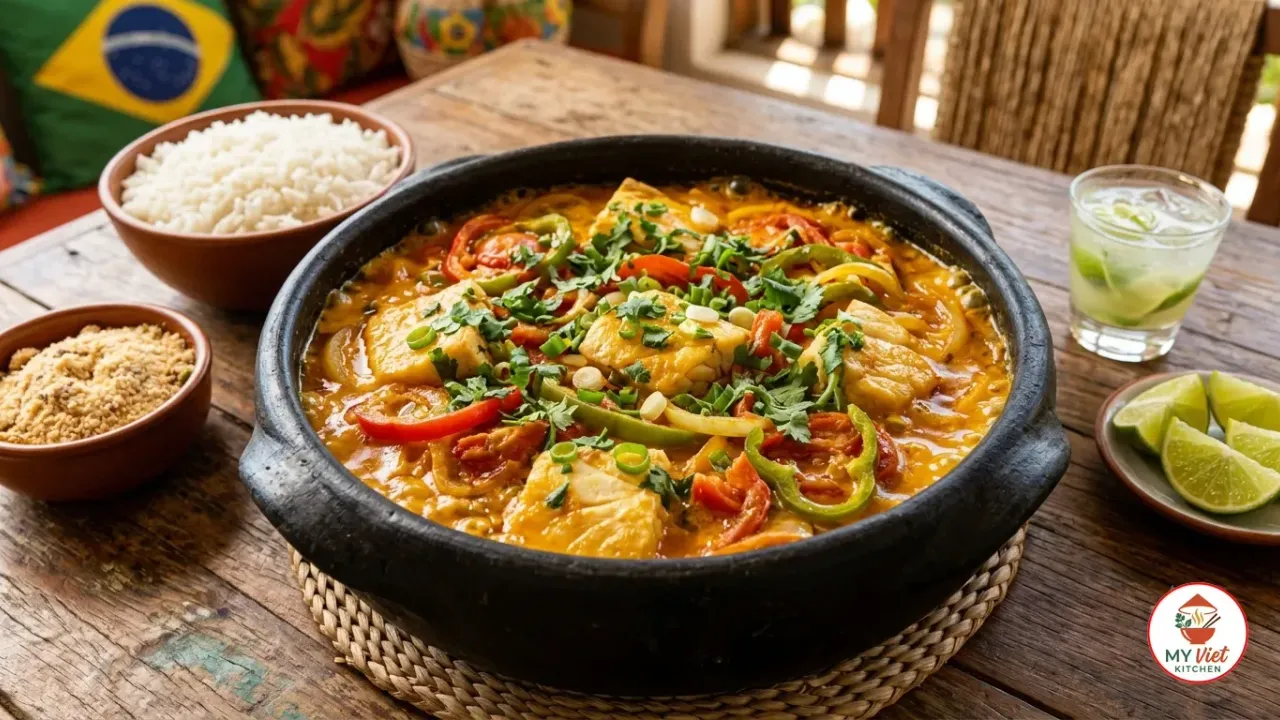
Moqueca is Brazil’s most celebrated fish stew, a vibrant pot of firm white fish simmered slowly in coconut milk, dende oil, tomatoes, and sweet peppers. Originating from the coastal state of Bahia, this moqueca recipe captures the soul of Brazilian cooking in one dish. Whether you call it moqueca baiana or simply moqueca de peixe, the result is the same: a fragrant, golden stew that turns a simple piece of fish into something extraordinary.
Prep Time: 20 minutes | Cook Time: 30 minutes | Servings: 4
Difficulty: Easy | Calories: ~420 per serving
What Makes Moqueca Special?
Moqueca is not just another fish stew. It is a dish that carries the combined heritage of three cultures. African slaves brought the technique of slow-simmering fish with palm oil. Additionally, Indigenous Brazilians contributed the use of clay pots and native peppers. Meanwhile, Portuguese colonists added onions and tomatoes from the Old World. The result is a stew that belongs to no single tradition but draws power from all three.
What sets moqueca apart from other seafood stews is the layering method. You do not saute everything together. Instead, you build the stew in layers, vegetables on the bottom, fish in the middle, more vegetables on top, and then pour coconut milk over all of it. The pot simmers undisturbed, so the fish cooks gently in the steam and broth without falling apart. As a result, this technique creates distinct pockets of flavor rather than a uniform soup.
Then there is the dende oil. This deep orange palm oil gives moqueca its signature color and an earthy, slightly nutty aroma that you will not find in any other stew. Combined with the richness of coconut milk and the acidity of tomatoes and lime, it produces a broth that is simultaneously light and deeply satisfying. Indeed, one taste and you understand why Bahians consider moqueca their greatest culinary gift to the world.

Choosing the Right Fish for Moqueca
The fish you choose will determine whether your moqueca holds together beautifully or falls apart into shreds. Since the stew simmers for 20 to 25 minutes, you need fish that can handle the heat without disintegrating. Here are the best options.
- Cod (bacalhau fresco): Fresh cod has thick, firm flakes that stay intact during simmering. It absorbs the coconut and dende flavors beautifully and gives the stew a meaty, satisfying bite. This is one of the most reliable choices for home cooks.
- Red snapper (best traditional choice): Red snapper is the classic fish for moqueca in Bahia. Its firm flesh holds its shape perfectly, and its mild, slightly sweet flavor lets the coconut and dende oil take center stage. If you can find fresh snapper, use it.
- Mahi-mahi or grouper: Both of these tropical fish are excellent alternatives. They are dense enough to survive long simmering and have clean, mild flavors that pair well with the rich broth. Grouper is especially popular in coastal Brazilian restaurants.
Ingredients for Moqueca
For the Fish Marinade:
- 1.5 pounds firm white fish fillets (cod, snapper, or mahi-mahi), cut into large chunks
- Juice of 2 limes
- 3 cloves garlic, minced
- 1 teaspoon fine sea salt
- 1/2 teaspoon freshly ground black pepper
For the Stew:
- 3 tablespoons dende (red palm) oil
- 1 large onion, sliced into half rings
- 1 large red bell pepper, sliced into strips
- 1 large green bell pepper, sliced into strips
- 3 medium tomatoes, sliced into rounds
- 1 can (13.5 oz) full-fat coconut milk
- Salt to taste
For Garnish and Serving:
- 1/2 cup fresh cilantro, chopped
- 2 green onions, sliced
- White rice for serving
- Farofa (toasted cassava flour) for serving
- Extra lime wedges
Pro tip: Always use full-fat coconut milk, never light. The fat in the coconut milk is what creates the rich, creamy broth that defines moqueca. Light coconut milk produces a thin, watery stew that lacks body and flavor. Shake the can well before opening to combine the cream and liquid.
Step-by-Step Instructions
Step 1: Marinate the Fish
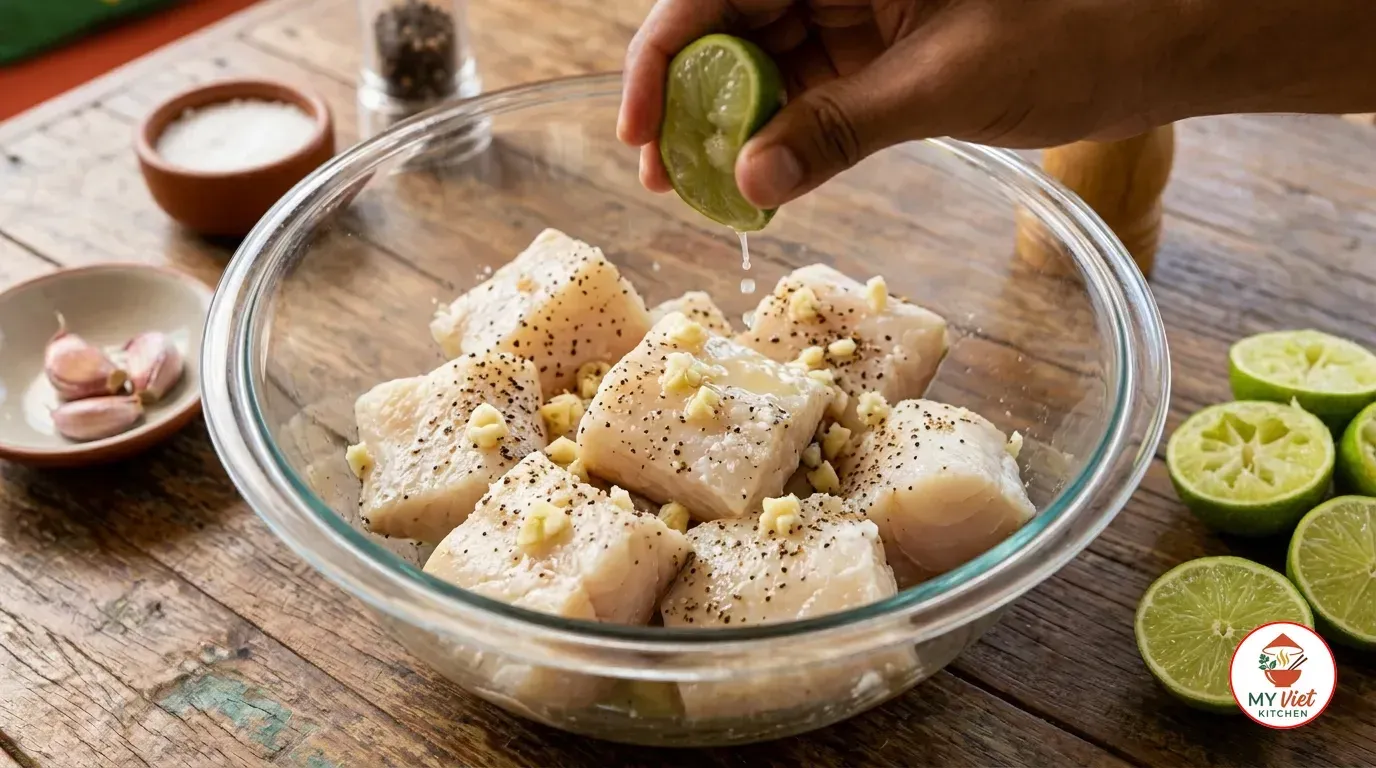
1 Place the fish chunks in a large bowl. Squeeze the juice of 2 limes over the fish and add the minced garlic, salt, and black pepper. Toss gently so every piece gets coated evenly. Cover the bowl with plastic wrap and place it in the refrigerator for 15 to 30 minutes.
The lime marinade does two essential things for this moqueca. First, the acid firms up the surface of the fish, which helps the chunks hold their shape during simmering. Second, it removes any fishy smell and replaces it with a bright, clean citrus note that carries through the finished stew. Do not skip this step, even if you are short on time. Even 15 minutes makes a noticeable difference.
Step 2: Prepare the Vegetables
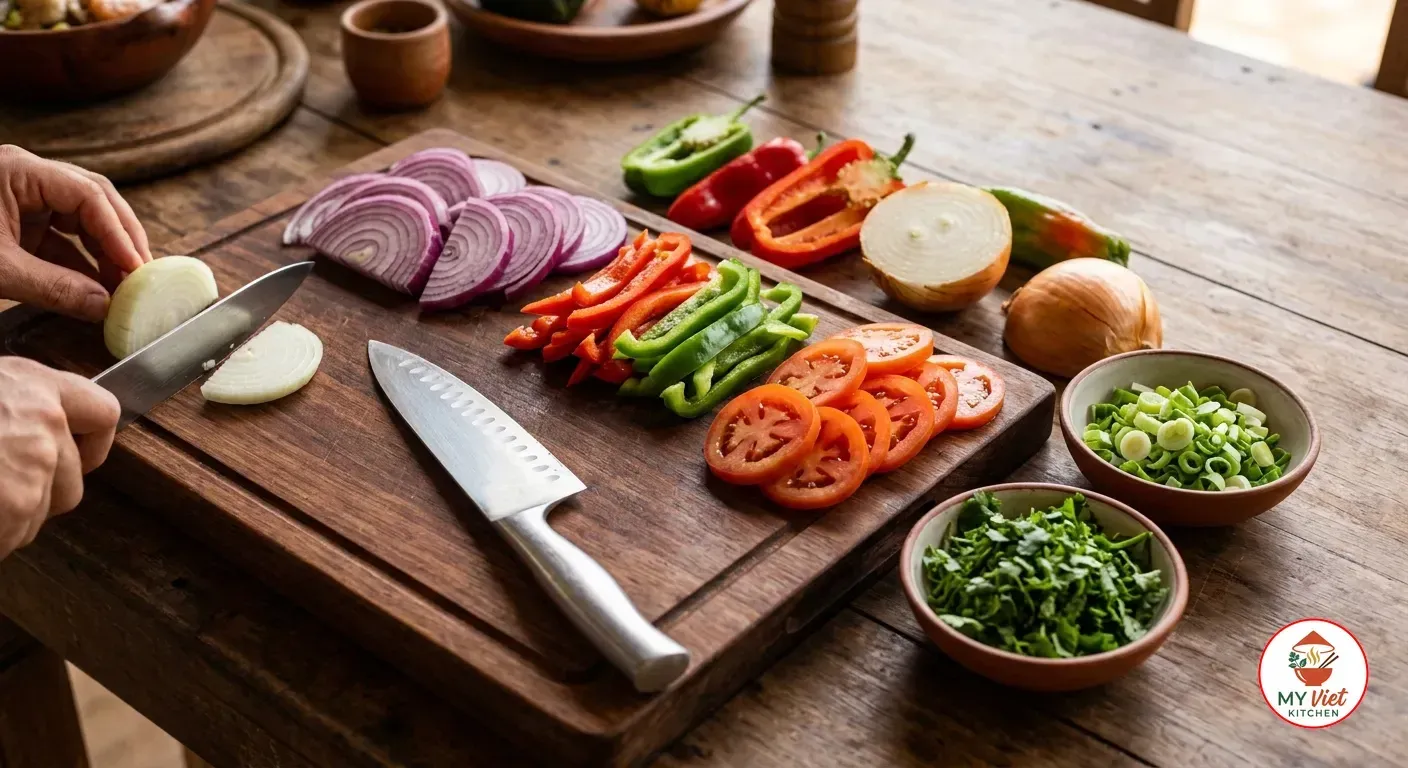
2 While the fish marinates, slice the onion into half rings about a quarter inch thick. Cut the red and green bell peppers into strips of similar width. Slice the tomatoes into rounds. Chop the cilantro and green onions and set them aside for garnish.
Consistent sizing matters for this recipe. When the vegetables are roughly the same thickness, they cook at the same rate and release their juices evenly into the broth. Thick, uneven slices create a stew where some pieces are mush and others are still crunchy. Take a minute to cut everything neatly, because it pays off in the final dish.
Step 3: Build the First Layer
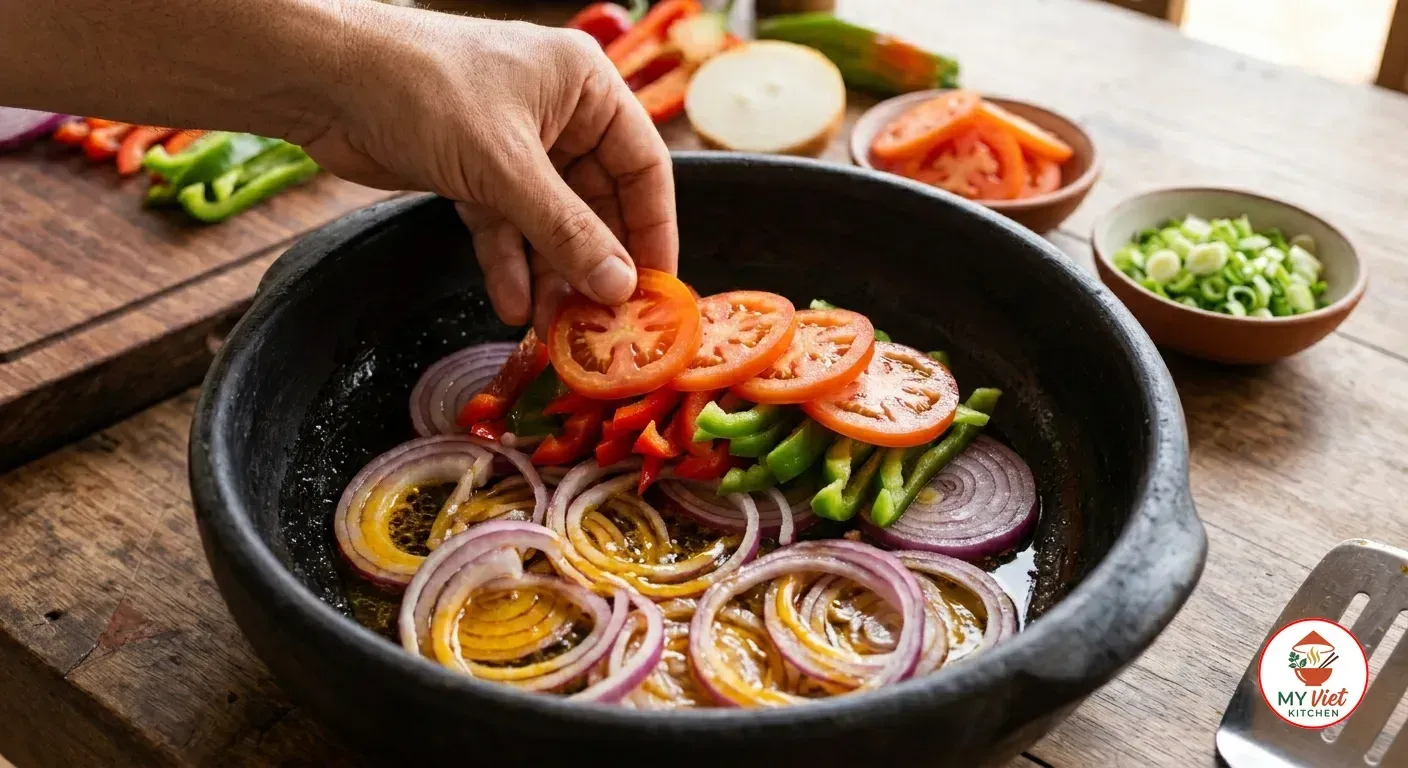
3 Heat 2 tablespoons of dende oil in a large, deep skillet or a traditional clay pot over medium heat. Once the oil shimmers and releases its earthy aroma, spread half of the sliced onions evenly across the bottom of the pan. Layer half of the bell pepper strips on top, then arrange half of the tomato rounds over the peppers.
This layered technique is the heart of how authentic moqueca is built. Each vegetable layer releases moisture as it heats, creating a natural braising liquid that keeps the fish moist from below. First, the onions soften and form a sweet base. Next, the peppers add body. Finally, the tomatoes contribute acidity and juice. Together, they build a foundation of flavor before the fish even enters the pot.
Step 4: Add the Fish
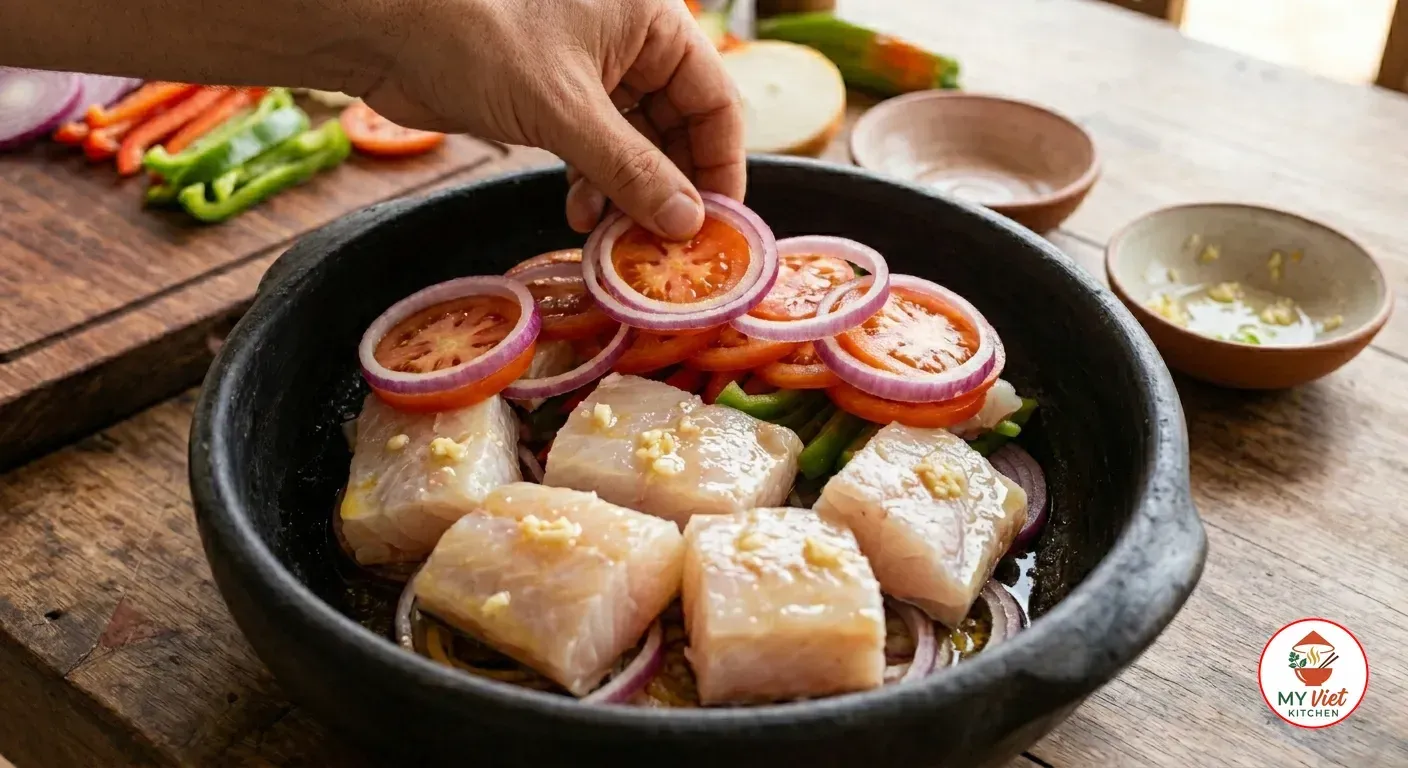
4 Remove the fish from the marinade and arrange the chunks in a single layer on top of the vegetables. Pour any remaining lime juice and garlic from the bowl over the fish. Now place the rest of the onions, bell peppers, and tomatoes on top to create a second vegetable layer that blankets the fish completely.
Keeping the fish sandwiched between two layers of vegetables protects it from direct heat and ensures it cooks gently through steam rather than aggressive boiling. This is why moqueca produces fish that is tender and silky rather than tough or dry. Do not push the fish down or try to rearrange it. Just lay it in place and cover it up.
Step 5: Simmer in Coconut Milk
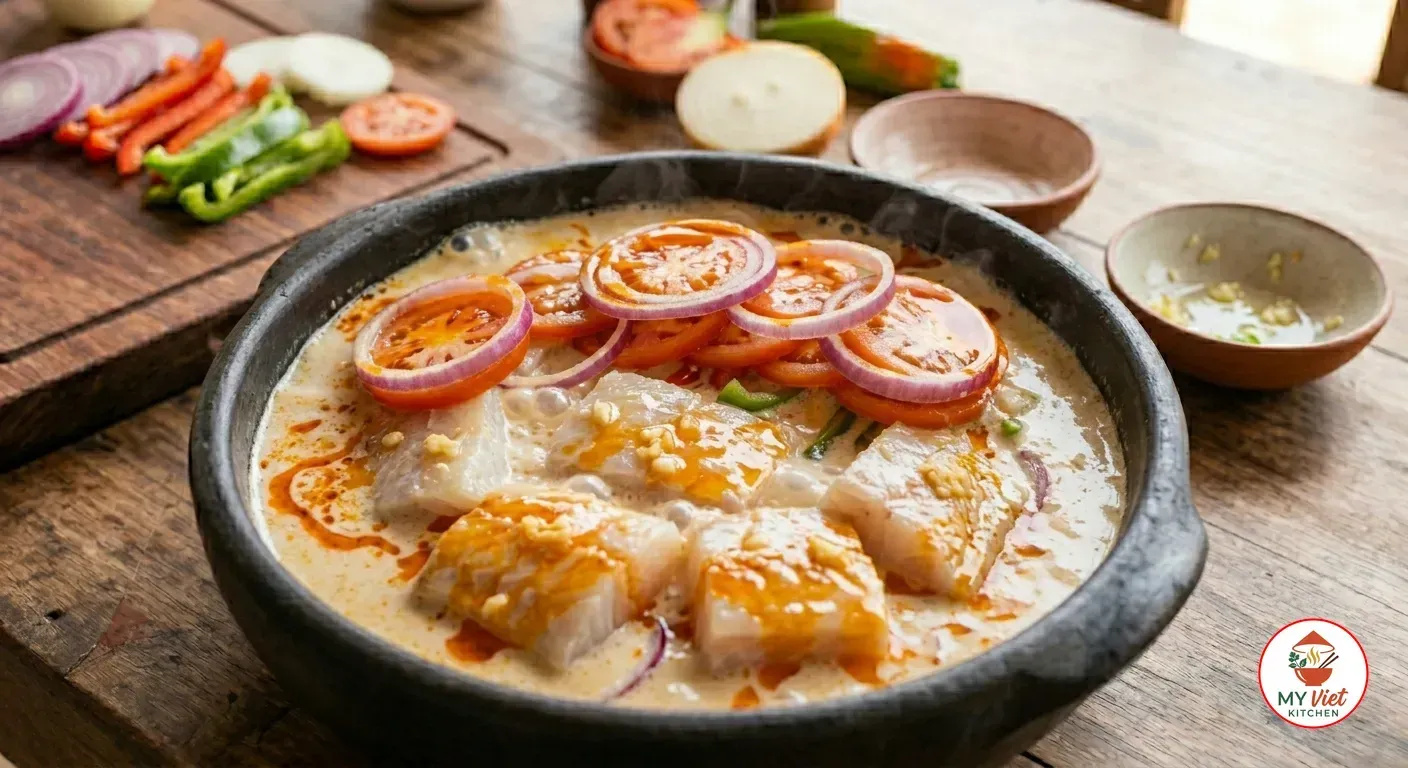
5 Shake the can of coconut milk well, then pour it evenly over the layered vegetables and fish. Drizzle the remaining tablespoon of dende oil on top in a zigzag pattern. Place the lid on the pan and reduce the heat to medium-low. Let the moqueca simmer gently for 20 to 25 minutes without lifting the lid or stirring.
Resisting the urge to stir is the single most important rule in making moqueca. The fish cooks perfectly in the trapped steam and coconut broth. Stirring breaks the chunks into flakes and turns the stew into a cloudy mess. After 20 minutes, remove the lid and check that the fish is opaque all the way through. If any pieces still look translucent in the center, replace the lid and cook for 3 to 5 more minutes.
Step 6: Finish and Serve
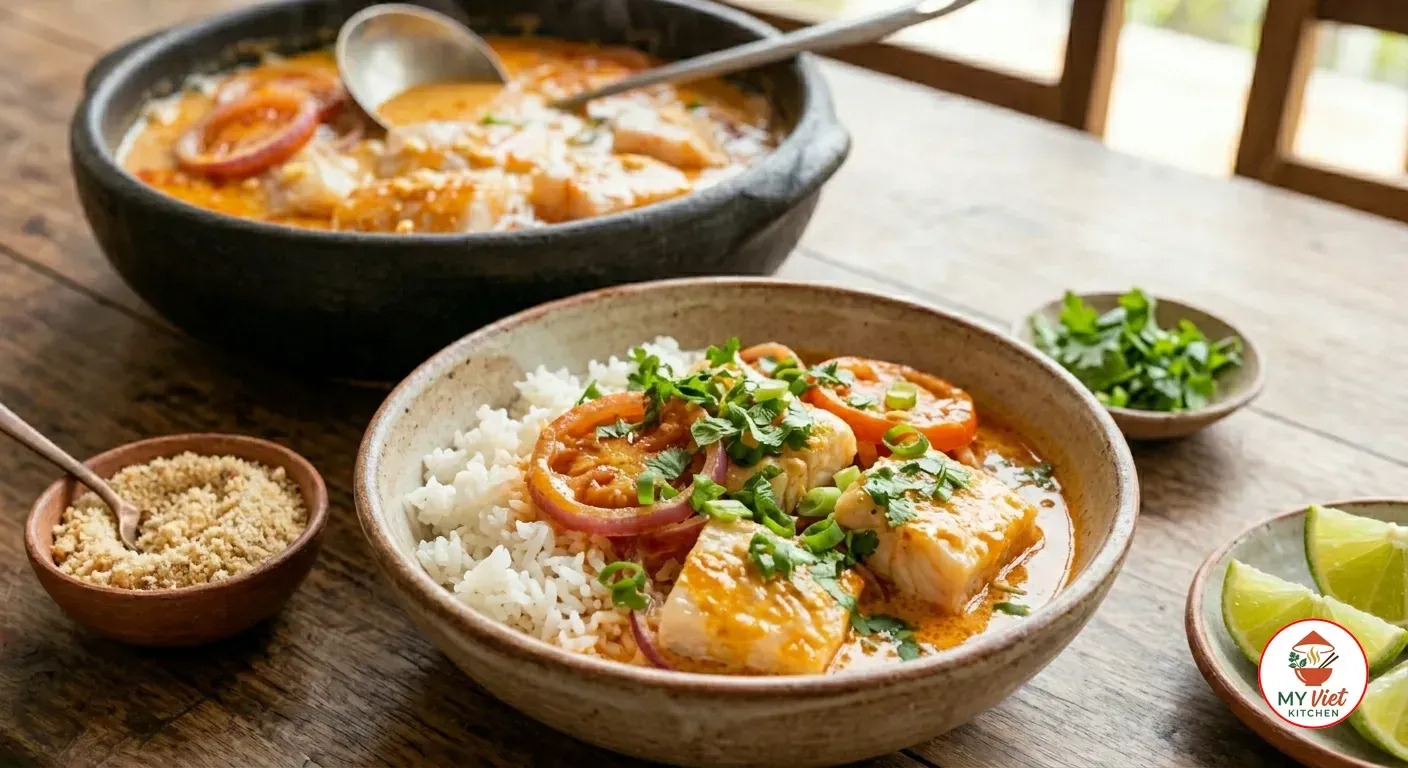
6 Once the fish is cooked through, taste the broth and add salt if needed. Scatter the chopped cilantro and sliced green onions generously over the surface. Bring the pot straight to the table, because moqueca is traditionally served from the cooking vessel. Spoon the stew over fluffy white rice and offer farofa and extra lime wedges on the side.
In Bahia, moqueca always arrives at the table still bubbling in its clay pot. The presentation is part of the experience. The golden broth, the bright green cilantro, and the colorful peppers all catch the eye before the first spoonful hits your lips. If you have a clay pot or a cast iron pan, use it for serving to keep the stew hot throughout the meal.
Expert Tips for Perfect Moqueca
Never Stir the Stew
The biggest mistake cooks make with moqueca is stirring it. Once the coconut milk goes in and the lid goes on, leave the pot alone. The layered structure is designed to cook the fish gently through indirect heat and steam. In fact, stirring destroys the beautiful chunks of fish and turns the stew muddy. If you want to distribute the broth, gently tilt and swirl the pot instead.
Use a Clay Pot When Possible
Traditional moqueca is cooked in a panela de barro, a black clay pot that distributes heat slowly and evenly. The clay retains heat long after you turn off the stove, so the stew stays warm at the table. If you do not own one, a heavy Dutch oven or deep cast iron skillet works well. However, avoid thin stainless steel pans, because they create hot spots that can burn the bottom layer.
Cut Fish into Large Chunks
Cut the fish into pieces about 2 inches across. Small pieces overcook quickly and shred into the broth. In contrast, larger chunks stay intact and give each serving a satisfying portion of fish. The goal is to have identifiable pieces of fish sitting in the golden broth when you bring the pot to the table.
Moqueca Baiana vs. Moqueca Capixaba
Brazil has two main styles of moqueca, and each state fiercely defends its version as the original. Here is how they compare so you can decide which one to make.
| Feature | Moqueca Baiana (Bahia) | Moqueca Capixaba (Espirito Santo) |
|---|---|---|
| Oil used | Dende (red palm) oil | Olive oil with annatto seeds |
| Coconut milk | Yes, full can for richness | No coconut milk at all |
| Broth color | Deep golden orange | Lighter, reddish from annatto |
| Richness | Creamy and substantial | Light and brothy |
| Cooking vessel | Panela de barro (clay pot) | Panela de barro (clay pot) |
| Flavor profile | Earthy, coconut-rich, complex | Clean, tomato-forward, delicate |
Serving Suggestions
In Bahia, moqueca is never served alone. It arrives with a set of sides that complete the meal and let each person customize their plate. Here is the traditional spread, plus a few additions for a memorable dinner.
The Classic Accompaniments:
- White rice: Plain steamed rice is the essential side for moqueca. It soaks up the rich coconut and dende broth and provides a neutral base that balances the bold flavors of the stew.
- Farofa: This toasted cassava flour adds a dry, crunchy contrast to the creamy stew. Sprinkle it over the top of each serving for texture. Bahian farofa is often mixed with butter, onion, and bits of bacon.
- Pirão: A thick, porridge-like sauce made by simmering cassava flour directly in fish stock. It acts like a gravy and is spooned alongside the stew for extra richness. Many Bahian restaurants serve pirão automatically with every moqueca order.
- Lime wedges: A final squeeze of fresh lime brightens the stew and cuts through the richness of the coconut milk. Always serve extra wedges at the table.
Beverage Pairings:
- Caipirinha: The lime and sugar in Brazil’s national cocktail mirror the citrus notes in the moqueca marinade, creating a natural pairing that feels like it was designed for this dish.
- Sauvignon Blanc: A crisp, dry white wine with high acidity complements the richness of the coconut broth without overwhelming the delicate fish.
- Cold lager beer: A chilled Brahma or Skol cuts through the fat from the dende oil and refreshes the palate between bites. This is the most popular pairing at beachside restaurants in Bahia.
- Fresh coconut water: For a non-alcoholic option, coconut water echoes the coconut milk in the stew while keeping things light and refreshing.
Storage and Reheating
Refrigerator: Store leftover moqueca in an airtight container for up to 2 days. The flavors actually deepen overnight as the coconut milk and spices meld further. Although the fish may break into smaller pieces as you reheat, the flavor will be even better on day two.
Freezer: Moqueca freezes well for up to 1 month. Let the stew cool completely before transferring to freezer-safe containers. Leave some headspace since the coconut milk expands when frozen. Thaw overnight in the refrigerator before reheating.
Reheating: Warm the moqueca gently over low heat on the stovetop. Do not boil it, because high heat toughens the fish and can cause the coconut milk to separate. Add a splash of coconut milk if the broth has thickened too much. Stir as little as possible to preserve the fish chunks. Avoid the microwave for best results.
Common Mistakes to Avoid
1. Stirring the Stew While It Simmers
This is the most common error and the most damaging. Stirring breaks the fish into small flakes and turns the clear golden broth into a cloudy, unappealing mess. The layered cooking method works because each component steams in place. If you need to redistribute the liquid, gently tilt the pot in a circular motion. Never push a spoon through the layers.
2. Using Delicate Fish
Thin, flaky fish like tilapia, sole, or flounder dissolve in the simmering broth and leave you with a fish-flavored coconut soup instead of a stew with identifiable chunks. Always choose firm, thick fillets. Cod, snapper, grouper, halibut, and mahi-mahi all hold together well. Cut them into 2-inch chunks for the best results.
3. Using Light Coconut Milk
Light coconut milk lacks the fat needed to create the signature creamy broth. It produces a thin, watery stew that does not cling to the rice. Always use full-fat coconut milk and shake the can before opening to combine the cream layer with the liquid. The fat also carries flavor, so full-fat milk makes the dende oil and lime sing rather than fade into the background.
4. Cooking on High Heat
High heat causes the coconut milk to boil aggressively, which breaks the emulsion and creates an oily, separated broth. Furthermore, it toughens the fish. Moqueca should simmer gently, with small bubbles barely breaking the surface. Keep the heat at medium-low and resist the temptation to speed things up. Patience is what makes the broth silky and the fish tender.
Frequently Asked Questions
What is moqueca?
Moqueca is a traditional Brazilian fish stew made with firm white fish, coconut milk, dende oil, tomatoes, onions, and bell peppers. It comes from the state of Bahia and reflects centuries of African, Indigenous, and Portuguese culinary traditions. The stew is cooked in a clay pot using a layered method and served with white rice and farofa.
What is the difference between moqueca baiana and moqueca capixaba?
Moqueca baiana uses coconut milk and dende oil, giving it a rich, golden broth with creamy body. Moqueca capixaba from Espirito Santo uses olive oil and annatto seeds instead, producing a lighter, more tomato-forward stew. Both versions share the layered cooking technique and the use of a clay pot, but the flavor profiles are quite different. Baiana is the more widely known version internationally.
What fish is best for moqueca?
Firm white fish is the best choice. Red snapper, cod, grouper, halibut, and mahi-mahi all work beautifully. The fish needs to hold its shape during 20 to 25 minutes of simmering. Avoid thin, delicate fish like tilapia or sole. In Brazil, grouper and red snapper are the most traditional choices for this stew.
Can I make moqueca without dende oil?
You can substitute dende oil with olive oil plus a pinch of annatto powder or sweet paprika for color. The flavor will change since dende has a unique earthy, nutty quality. This substitution essentially creates a stew closer to moqueca capixaba. Look for dende oil at Brazilian, African, or Asian grocery stores if you want the authentic Bahian flavor.
Can I add shrimp to moqueca?
Yes, shrimp moqueca, called moqueca de camarao, is extremely popular in Brazil. Use large shell-on shrimp for maximum flavor and add them during the last 8 to 10 minutes of cooking to prevent them from becoming rubbery. You can also make a mixed seafood version by combining fish chunks with shrimp in the same pot.
How long does moqueca take to cook?
The entire moqueca takes about 50 minutes from start to finish. Marinating the fish and preparing the vegetables takes roughly 20 minutes. The simmering time is 25 to 30 minutes. Despite the short cooking time, the layered method and the quality of the ingredients create a stew with surprisingly deep, complex flavors.
Variations and Adaptations
Moqueca de Camarao (Shrimp Version):
Replace the fish with 1.5 pounds of large shell-on shrimp. Build the vegetable layers the same way but add the shrimp during the last 10 minutes of cooking. Shrimp cook much faster than fish and become tough if simmered too long. The shells add extra flavor to the coconut broth. Remove them before eating or let guests peel their own at the table.
Mixed Seafood Moqueca:
Combine fish chunks, shrimp, and cleaned mussels or clams for a luxurious seafood stew. Add the fish first and let it cook for 15 minutes. Then add the shellfish and shrimp for the final 10 minutes. The mussels and clams open as they steam, releasing their briny liquor directly into the coconut broth.
Vegan Moqueca (Hearts of Palm Version):
For a plant-based version, substitute the fish with drained hearts of palm cut into 2-inch pieces and chunks of firm tofu. Hearts of palm have a mild, slightly briny flavor that mimics seafood surprisingly well. Add a sheet of nori to the broth for extra ocean-like umami. Keep the rest of the recipe identical, including the dende oil and coconut milk.
The Cultural Significance of Moqueca
Moqueca is far more than a recipe. It is a symbol of Bahian identity and one of the dishes that put Brazilian cuisine on the global map. The stew has roots stretching back over 300 years to a time when African, Indigenous, and Portuguese foodways collided on the coast of northeastern Brazil. Each culture contributed something essential: the Africans brought the use of palm oil and the slow-simmering technique, the Indigenous Tupi people contributed the clay pots and native peppers, and the Portuguese colonists introduced onions and tomatoes.
In Bahia today, moqueca holds a place of honor at family tables and restaurants alike. It is the dish that grandmothers pass down through spoken instructions rather than written recipes. Every family claims their version is the best, and heated debates about technique are common. The rivalry between Bahia and Espirito Santo over which state invented moqueca has been going on for decades, with both sides presenting evidence and passion in equal measure.
For Bahians, moqueca represents the soul of their coastal cooking. It captures the abundance of the sea, the richness of the land, and the warmth of a culture that sees food as a gathering force. When you make moqueca at home, you are not just cooking dinner. You are connecting with a tradition that has brought people together around a bubbling clay pot for centuries. That sense of community and shared pleasure is what makes this Brazilian stew so much more than the sum of its ingredients.
Conclusion
This moqueca recipe proves that some of the world’s greatest dishes are also among the simplest. You need just a handful of fresh ingredients, a good pot, and the patience to let the stew simmer without interference. The layered technique does all the heavy lifting, producing a golden, coconut-rich broth with tender fish, sweet peppers, and bright tomatoes. Follow the steps above, and you will have a showstopping Brazilian dish on the table in under an hour.
Ready to explore more Brazilian flavors? Check out our acaraje recipe for crispy black-eyed pea fritters, or browse the full collection of Latin American dishes for more inspiration. For another hearty stew, try our soups and stews collection featuring comfort food from every corner of the world.