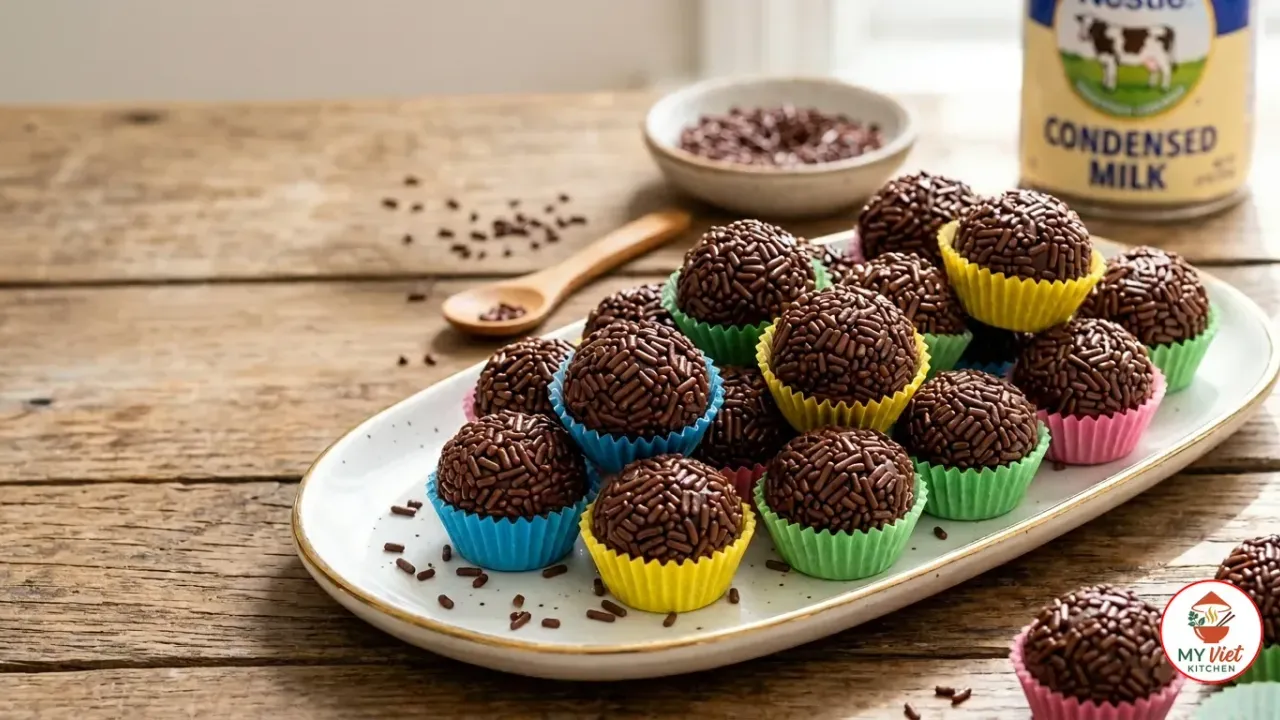
Brigadeiro is the most beloved sweet in all of Brazil, and this recipe teaches you how to make it from scratch with just three main ingredients. These fudgy chocolate truffles combine sweetened condensed milk, butter, and cocoa powder into a rich, velvety confection that rolls beautifully in chocolate sprinkles. Whether you call them Brazilian chocolate truffles or simply brigadeiro, they deliver an intensity of chocolate flavor that puts most candy to shame. Best of all, you need no oven and no special equipment to make them at home.
Prep Time: 10 minutes | Cook Time: 15 minutes | Chill Time: 1-2 hours | Servings: 25 truffles
Difficulty: Easy | Calories: ~85 per truffle
What Makes Brigadeiro Special?
Brigadeiro stands apart in the world of sweets because of its stunning simplicity. Most chocolate truffles need tempering, ganache work, or exact heat control. In contrast, brigadeiro needs none of that. You cook three items in a saucepan, let the mix cool, and roll it into balls. As a result, you get a truffle with a texture between fudge and caramel, plus a deep chocolate flavor that coats your palate. Indeed, no other sweet does this much with so little.
The flavor of brigadeiro is also quite complex. Condensed milk gains caramel-like depth through the Maillard reaction that takes place during cooking. As the milk sugars and proteins heat up, they create deep, toasty notes that go far beyond plain sweetness. In addition, cocoa powder adds bitterness and earthy depth. Butter then rounds it all out with rich, fat-based flavor. Moreover, the cooking step drives off moisture and packs the flavor in tight. So what starts as a thin, pourable liquid turns into a dense, fudgy mass full of taste.
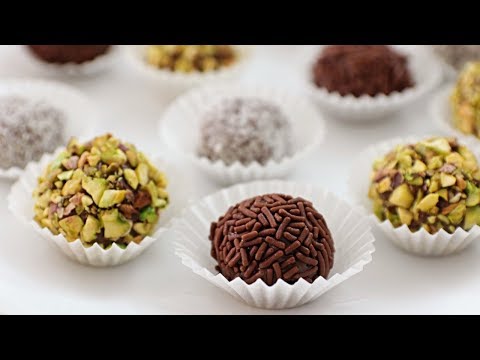
What truly sets brigadeiro apart from European truffles is the coating. Instead of a hard chocolate shell, each ball gets rolled in chocolate sprinkles called granulado. These tiny, crunchy bits add textural contrast to the soft, yielding center. As a result, every bite starts with a slight crunch before giving way to the creamy core. Furthermore, the sprinkles also stop the truffles from sticking to each other on a plate. Because of this winning combo, Brazilians eat billions of brigadeiro each year at birthday parties, weddings, and daily get-togethers.
Choosing the Right Cocoa Powder
Cocoa powder is the key item that shapes the chocolate flavor of your brigadeiro. Different types create very different results in both color and taste. Therefore, picking the right one for your needs makes a real change in the final truffle.
- Natural cocoa powder (best choice for traditional brigadeiro): This is the standard cocoa powder with a light brown color and sharp, fruity acidity. It reacts with the milk proteins during cooking to create a classic, bright chocolate flavor. Most Brazilian home cooks use natural cocoa, and it produces the most authentic result.
- Dutch-process cocoa powder: Alkalized cocoa has a darker color and smoother, mellower flavor with less acidity. It creates a richer-looking brigadeiro with a deeper brown hue. However, the flavor is less punchy than natural cocoa. Choose this option if you prefer a gentler, more European-style chocolate taste.
- Premium single-origin cocoa: High-quality cocoa from specific regions like Ecuador or Ghana delivers complex flavor notes. You may taste hints of cherry, citrus, or roasted nuts depending on the origin. These powders cost more but elevate gourmet brigadeiro to a remarkable level.
- Avoid sweetened cocoa mixes: Hot chocolate powder or sweetened cocoa blends contain added sugar, powdered milk, and sometimes thickeners. Using these will make your brigadeiro cloyingly sweet and throw off the texture completely. Always use pure, unsweetened cocoa powder.
Ingredients for Brigadeiro
Main Ingredients:
- 1 can (14 oz / 395g) sweetened condensed milk
- 2 tablespoons (30g) unsalted butter, cut into small pieces
- 1/4 cup (25g) unsweetened cocoa powder, sifted
- Pinch of fine sea salt
For Coating:
- 1 cup (150g) chocolate sprinkles (granulado), or as needed
- Extra butter for greasing your hands
Optional Additions for Gourmet Brigadeiro:
- 1 tablespoon heavy cream for a softer texture
- 1/2 teaspoon pure vanilla extract
- 1 oz (30g) dark chocolate, finely chopped, for extra richness
- Flaky sea salt for finishing (such as Maldon)
Pro tip: Sift the cocoa powder before adding it to the pan. Cocoa powder clumps easily, and those lumps are nearly impossible to dissolve once the mixture starts cooking. A 30-second sift ensures a perfectly smooth brigadeiro every time. Also, use real butter rather than margarine. Butter contributes genuine dairy richness and helps the mixture release cleanly from the pan.
Step-by-Step Instructions
Step 1: Cook the Brigadeiro Mixture
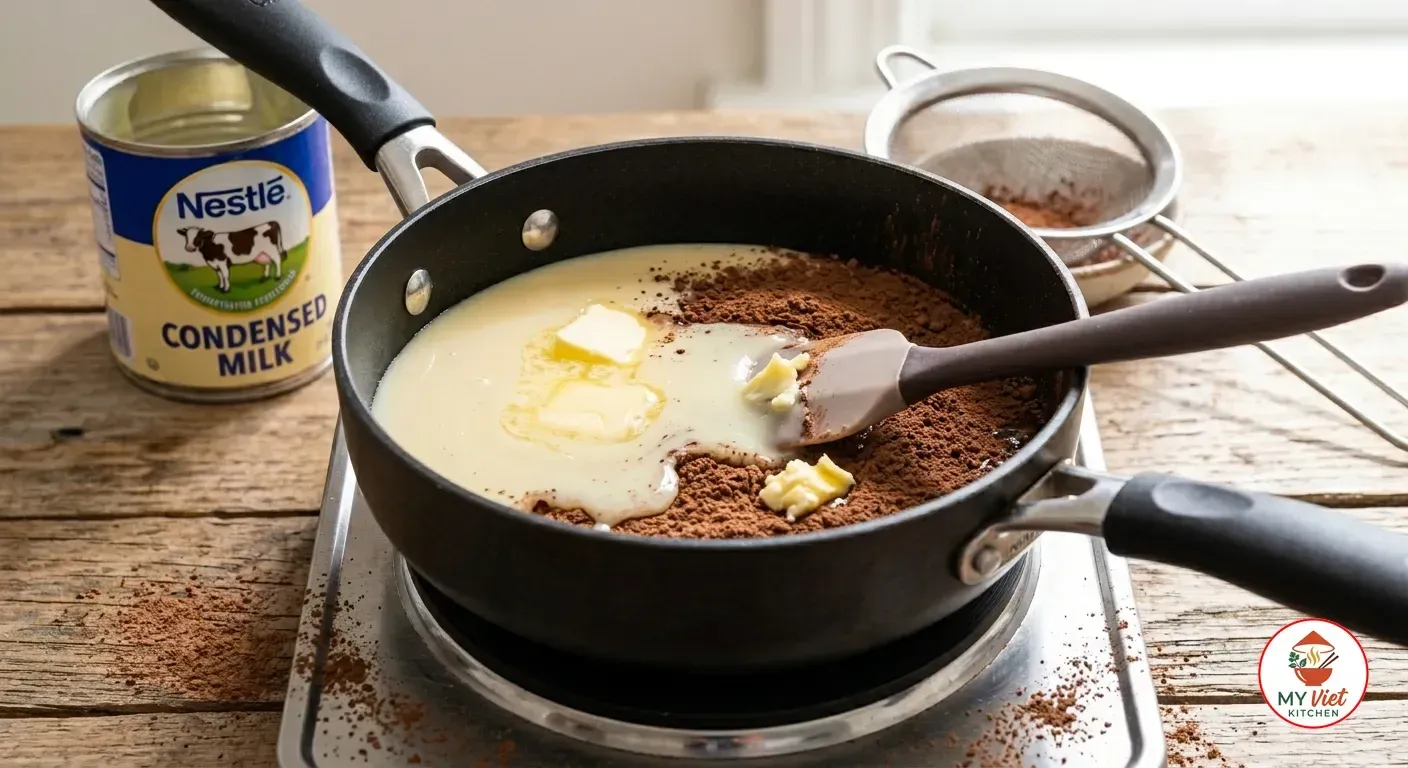
1 Place the sweetened condensed milk, butter, sifted cocoa powder, and a pinch of salt in a medium nonstick saucepan. Set the heat to medium-low. Stir continuously with a silicone spatula or wooden spoon until the butter melts completely and the cocoa dissolves into the milk. The mixture should become smooth and uniform in color within the first 2 minutes.
A nonstick pan matters here because the mix gets very sticky as it cooks. Stainless steel or cast iron will cause the brigadeiro to burn before it gets thick. So keep the heat at medium-low the whole time. After all, high heat scorches the milk sugars and makes a bitter, burnt taste. Patience at this stage pays off with a silky, even result.
Step 2: Cook Until Thickened
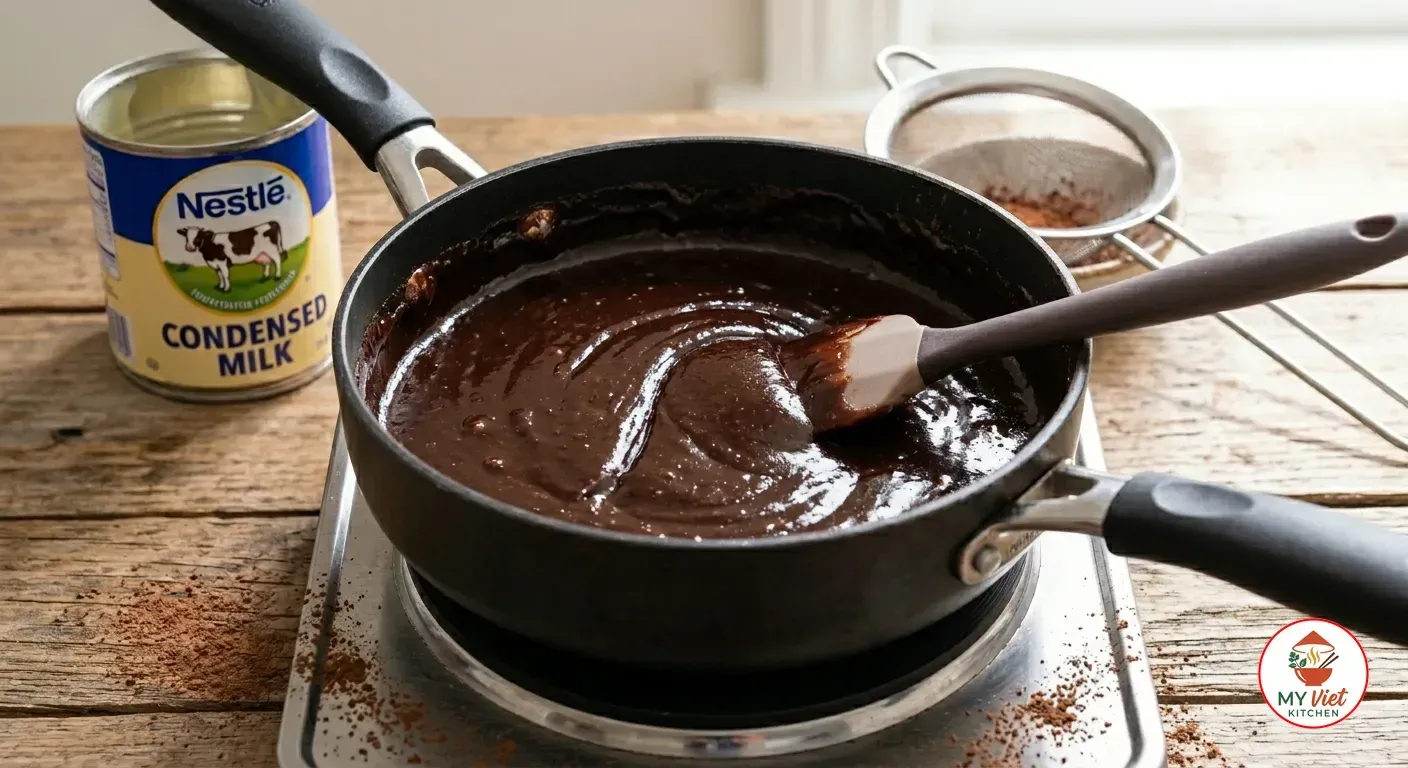
2 Continue stirring constantly over medium-low heat for 10 to 15 minutes. The mixture will gradually thicken and darken in color. You will feel increasing resistance against your spatula as the moisture evaporates. The brigadeiro is ready when it pulls away cleanly from the sides and bottom of the pan as you stir.
Here is the key doneness test. First, tilt the pan at a 45-degree angle. The mix should slide slowly as one mass rather than flowing like a liquid. Next, drag your spatula through the center. The trail should hold for 2 to 3 seconds before it closes. If you undercook, the mix stays too soft to roll. On the other hand, if you overcook, it turns stiff and dry. Therefore, aim for a feel like soft fudge. Once you reach that point, take the pan off the heat right away.
Step 3: Cool the Mixture
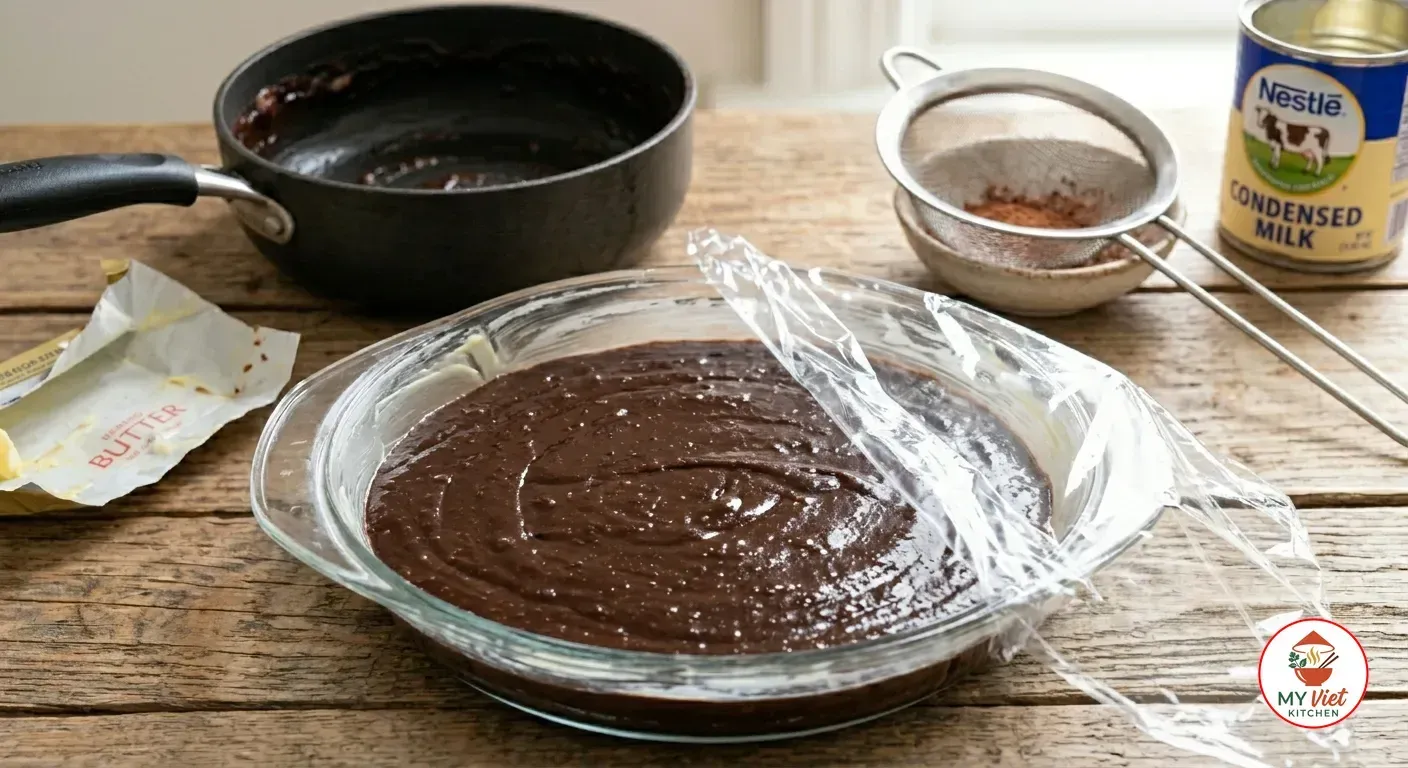
3 Transfer the hot brigadeiro mixture to a plate or shallow dish that you have greased lightly with butter. Spread the mixture out into an even layer about half an inch thick. This thin layer cools much faster than leaving it in a mound. Let it sit at room temperature for about 30 minutes, then cover with plastic wrap and refrigerate for at least 1 hour.
This chilling step is key for rolling. Warm brigadeiro sticks to everything and will not hold its shape. In contrast, cold brigadeiro firms up enough to scoop and roll with ease. If you are short on time, spread the mix on a baking sheet and put it in the freezer for 20 minutes. However, do not freeze it solid. You want it firm but still soft enough to bend. To test, press a finger into the top. It should feel like chilled cookie dough.
Step 4: Roll and Coat
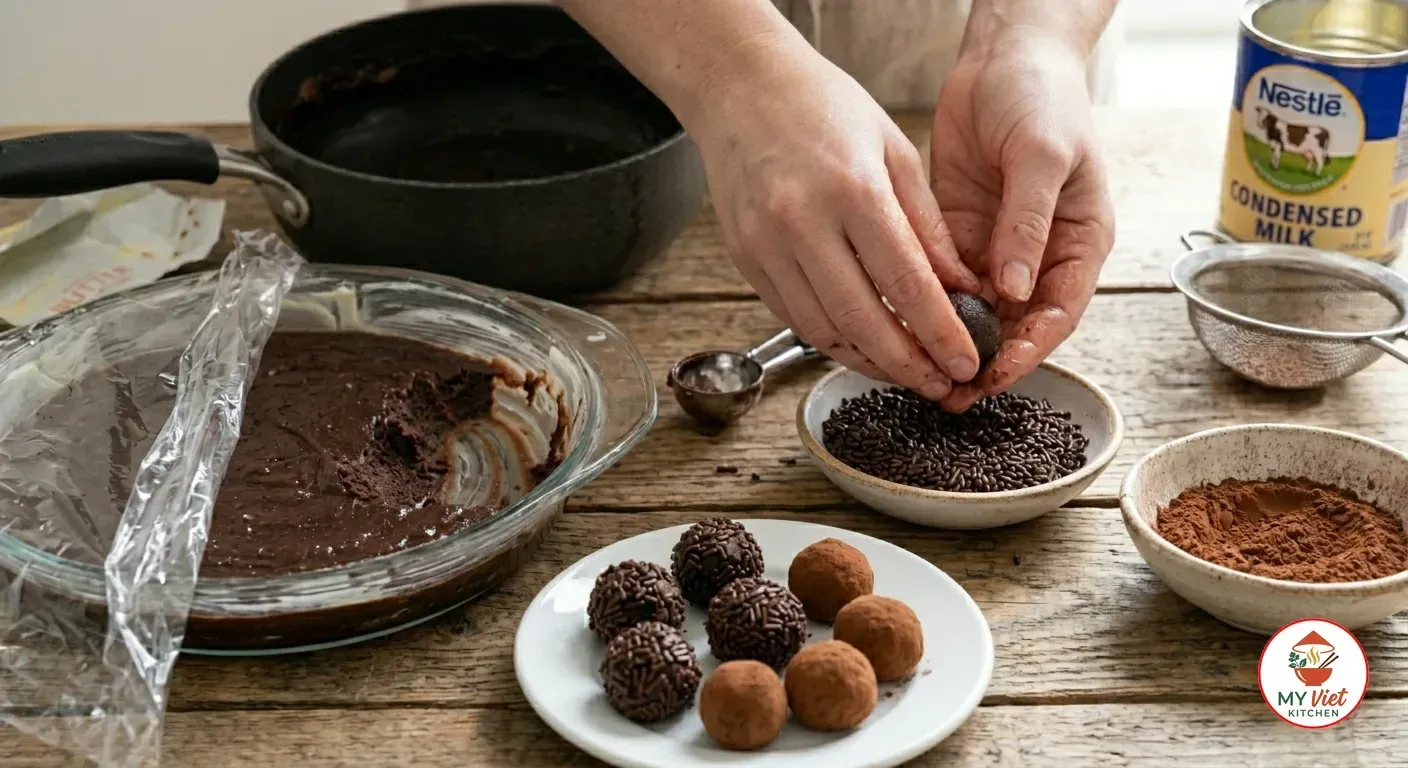
4 Pour the chocolate sprinkles into a shallow bowl. Grease your hands lightly with a thin layer of butter. Scoop about 1 tablespoon of the chilled brigadeiro mixture and roll it between your palms into a smooth ball. Work quickly because the warmth of your hands softens the mixture. Drop each ball into the sprinkles and roll it until completely coated on all sides.
Place each finished brigadeiro into a mini cupcake liner or on a parchment-lined tray. Re-grease your hands with butter every 4 to 5 balls to prevent sticking. If the mixture becomes too soft to handle, return it to the refrigerator for 10 minutes. You should get about 25 truffles from one batch. For perfectly uniform brigadeiro, use a small cookie scoop to portion the mixture before rolling. Consequently, every truffle will look professional and consistent in size.
Expert Tips for Perfect Brigadeiro
Use a Nonstick Pan and Low Heat
A nonstick pan is the single most vital tool for making brigadeiro. The milk mix gets very sticky as it cooks, and it will bond to a steel or cast iron pan. Because of this, low heat also matters a great deal. Scorched milk turns grainy and picks up a bitter taste that no cocoa can hide. So keep the flame gentle and stir the whole time. As a result, you will end up with a smooth, glossy mix that slides off the pan with ease.
Stir Constantly from Start to Finish
This is not a recipe where you can walk away and check your phone. Even 30 seconds off the spoon lets the milk burn in spots. Instead, use a silicone spatula and scrape the bottom and sides of the pan at all times. This steady motion spreads the heat and stops hot spots from forming. In addition, constant stirring lets moisture leave the mix at the same rate. Consequently, the mix gets thick in an even way. The end result is brigadeiro with a smooth feel and no burnt bits.
Grease Your Hands with Butter, Not Oil
When rolling brigadeiro into balls, butter is your best tool. A thin coat of butter stops the sticky mix from clinging to your palms. Oil works too, but it leaves a greasy film that keeps sprinkles from sticking well. Butter, on the other hand, adds a hint of flavor while keeping your hands clean. Also, be sure to re-apply every few truffles for the smoothest rolling.
Brigadeiro vs. Chocolate Truffles: A Comparison
Many people compare brigadeiro to European chocolate truffles, but the two confections differ in ingredients, technique, and texture. Here is a side-by-side look at what makes each one unique.
| Feature | Brigadeiro (Brazilian) | Chocolate Truffle (European) |
|---|---|---|
| Base ingredient | Sweetened condensed milk | Heavy cream and chocolate (ganache) |
| Cooking method | Stovetop reduction, 15 minutes | Melting chocolate into hot cream |
| Texture | Fudgy, chewy, slightly caramel-like | Smooth, melt-in-your-mouth |
| Coating | Chocolate sprinkles (granulado) | Cocoa powder, nuts, or tempered chocolate |
| Shelf life | 3 days at room temperature | 1-2 days at room temperature |
| Difficulty | Easy, beginner-friendly | Moderate, requires tempering skill |
Serving Suggestions
Brigadeiro shines at celebrations, but these versatile truffles work beautifully in many settings. In Brazil, no birthday party is complete without a platter of freshly rolled brigadeiro arranged in colorful cupcake liners. Here are the best ways to serve them at home.
Presentation Ideas:
- Classic party platter: Arrange brigadeiro in mini cupcake liners on a tiered serving stand. Mix different coatings like chocolate sprinkles, coconut flakes, and crushed pistachios for a stunning visual display. This is the traditional Brazilian birthday presentation.
- Gift boxes: Pack brigadeiro into small candy boxes lined with tissue paper. Tie with a ribbon for an elegant homemade gift. These truffles hold their shape well during transport and make impressive presents for holidays and special occasions.
- Dessert table accent: Pair brigadeiro with other sweets on a dessert buffet. They complement cakes, cookies, and fruit beautifully. Their small size makes them ideal for grazing alongside other treats.
Beverage Pairings:
- Brazilian coffee (cafezinho): A small, strong, sweetened coffee is the classic Brazilian pairing. The bitterness of the coffee balances the sweetness of the brigadeiro perfectly. This combination is served at virtually every Brazilian gathering.
- Espresso: A straight shot of espresso works beautifully alongside these truffles. The concentrated coffee flavor cleanses your palate between bites and enhances the chocolate notes in the brigadeiro.
- Cold milk: A tall glass of cold whole milk is simple, nostalgic, and effective. The milk cuts through the sweetness and creates a comforting combination that children and adults both enjoy.
- Port wine: For an adult pairing, a glass of tawny port mirrors the caramel notes in the brigadeiro while adding its own dried fruit complexity. Serve both at room temperature for the best flavor match.
Storage and Reheating
Room temperature: Rolled brigadeiro keeps well at room temperature for up to 3 days in an airtight container. Store them in a single layer to prevent the sprinkle coating from getting crushed. The texture remains soft and fudgy at room temperature, which is how Brazilians traditionally serve them. Keep them away from direct sunlight and heat sources.
Refrigerator: For longer storage, refrigerate brigadeiro in an airtight container for up to 2 weeks. The cold firms the texture considerably. Remove them from the fridge 15 to 20 minutes before serving so they soften to their ideal consistency. Cold brigadeiro tastes muted because the fat in the butter and condensed milk suppresses flavor at low temperatures. Therefore, that brief rest at room temperature is essential for the best eating experience.
Freezer: Brigadeiro freezes exceptionally well for up to 3 months. Place the rolled truffles in a single layer on a parchment-lined tray and freeze until solid. Then transfer them to a freezer bag or airtight container. Thaw overnight in the refrigerator and bring to room temperature before serving. The texture returns almost perfectly after freezing, making brigadeiro an excellent make-ahead treat for parties.
Common Mistakes to Avoid
1. Cooking on High Heat
High heat is the fastest way to ruin brigadeiro. Condensed milk scorches with ease, and once burnt, the taste cannot be saved. The sugars brown in patches and leave dark, bitter spots in the mix. Instead, keep the heat at medium-low and accept that cooking takes 10 to 15 minutes. In the end, that extra time gives you smooth, even brigadeiro with no burnt taste. So resist the urge to speed things up by turning the burner high.
2. Stopping the Stirring
If you stop stirring, even for a short time, the mix will stick and burn on the bottom. The milk at the contact point gets too hot while the rest stays under done. As a result, you end up with hard bits in what should be smooth brigadeiro. So commit to nonstop stirring from the moment the pan hits the heat until you move the mix to the cooling plate. Use a silicone spatula and scrape all parts of the pan as you go.
3. Rolling Before the Mixture Is Cold Enough
Being too eager at the cooling stage leads to a messy, hard time rolling. Warm brigadeiro sticks to your hands, will not hold a ball shape, and makes the sprinkles soggy. Instead, let the mix chill in the fridge for at least 1 hour. If it still feels too soft after that, give it 30 more minutes. Once properly chilled, brigadeiro scoops clean, rolls smooth, and picks up sprinkles with a nice crunch.
4. Using the Wrong Type of Sprinkles
Soft, waxy rainbow sprinkles melt on contact with brigadeiro and leave a sticky, ugly surface. In contrast, Brazilian granulado are small, firm, crunchy chocolate bits that keep their shape and add real crunch. If you cannot find granulado, then use chocolate jimmies or vermicelli from the baking aisle. These hold up well and give the right look. Also, check the label and stay away from sprinkles made mainly from wax and fake coloring.
Frequently Asked Questions
What is brigadeiro made of?
Brigadeiro requires just three main ingredients: sweetened condensed milk, butter, and cocoa powder. You cook them together on the stovetop until the mixture thickens into a fudgy consistency, then cool, roll into balls, and coat in chocolate sprinkles. The simplicity of the ingredient list is part of what makes brigadeiro so accessible. Most kitchens already have everything needed. Some gourmet versions add heavy cream, dark chocolate, or flavor extracts, but the traditional recipe needs nothing more than those three core ingredients and a pinch of salt.
Why is it called brigadeiro?
The name brigadeiro comes from Brigadier Eduardo Gomes, a Brazilian Air Force officer who ran for president in 1946. His supporters created and sold these chocolate treats at campaign rallies to raise funds for his candidacy. Although Gomes lost the election, the candy bearing his military title became one of the most enduring symbols of Brazilian food culture. Over the following decades, brigadeiro spread to every corner of Brazil and became the default sweet at birthday parties, weddings, and celebrations of all kinds.
How do you know when brigadeiro is done cooking?
Look for three signs of doneness. First, the mixture should pull away from the sides of the pan as you stir. Second, if you tilt the pan, the mass should slide slowly as one piece rather than flowing freely. Third, drag your spatula through the center of the mixture. A properly cooked brigadeiro holds a visible trail for a few seconds before it closes. If the mixture still flows like liquid, continue cooking. If it has become stiff and crumbly, you have gone too far.
Can I make brigadeiro without condensed milk?
You can try a substitute, but the result will taste quite different. For instance, you can simmer whole milk with sugar until it gets thick, then use it in the recipe. Coconut condensed milk also works well for a dairy-free take and turns out quite good. Nevertheless, regular condensed milk is the true base of real brigadeiro. Its blend of protein and sugar gives the treat its famous caramel-like flavor and fudgy feel.
How long does brigadeiro last?
Rolled brigadeiro keeps at room temperature for up to 3 days in a sealed container. Refrigerated, they last up to 2 weeks, though you should let them warm to room temperature before serving for the best flavor. The unrolled mixture stores in the fridge for up to 5 days, which means you can cook it ahead and roll the truffles when you are ready to serve. Brigadeiro also freezes beautifully for up to 3 months without significant texture loss.
What are the best sprinkles for brigadeiro?
Traditional Brazilian brigadeiro uses granulado, a specific type of small, firm chocolate sprinkle designed for coating confections. These provide the authentic crunch and clean chocolate flavor. Regular chocolate jimmies or vermicelli from the baking aisle work as a solid substitute in most countries. Avoid soft, waxy decorating sprinkles, as they melt against the warm truffle surface and create a sticky mess. Look for granulado at Brazilian grocery stores, Latin American markets, or online specialty retailers.
Variations and Adaptations
Beijinho (Coconut Brigadeiro):
Use 1/2 cup of dried coconut in place of the cocoa powder. Cook it the same way and roll the balls in more coconut. Then press a single whole clove into the top of each one. This is the classic look. Beijinho means “little kiss,” and it is the most loved variant in Brazil. In fact, it shows up next to chocolate brigadeiro at every birthday party. The coconut type is sweeter and lighter than the original.
Brigadeiro de Ninho (Powdered Milk):
Swap the cocoa for 1/2 cup of powdered milk (Ninho brand in Brazil). You get a pale, caramel truffle with a deep milky sweetness. Then roll these in more powdered milk to coat them. This version has become hugely popular in Brazilian gourmet candy shops. The flavor is like dulce de leche but with a denser, chewier feel. It also pairs very well with a dash of cinnamon on top.
Brigadeiro Gourmet (Dark Chocolate):
For a richer version, add 2 ounces of chopped dark chocolate (70% cacao) in the last 2 minutes of cooking. Stir until it melts fully. The extra chocolate adds deep flavor and cuts the sweetness. Then roll these in cocoa powder, crushed hazelnuts, or gold sugar pearls. Gourmet brigadeiro shops in Brazil sell these at high prices. However, making them at home costs just a small amount.
Brigadeiro de Pistache (Pistachio):
Use 3 tablespoons of pistachio paste or ground pistachios in place of the cocoa. Add a drop of green food coloring for a bold look. Then roll the balls in chopped pistachios. This version has a nutty, earthy sweetness that pairs well with the caramel base. In fact, pistachio brigadeiro has become one of the trendiest flavors in Brazilian candy shops. Serve these next to the classic chocolate type for a great looking platter.
The Cultural Significance of Brigadeiro
Brigadeiro is far more than a candy in Brazil. It is a cultural institution. The story begins in 1946 when supporters of Brigadier Eduardo Gomes made these chocolate sweets to sell at political rallies during his presidential campaign. Although Gomes did not win the election, his namesake confection conquered the entire country. Within a decade, brigadeiro had become the default sweet at Brazilian birthday parties, and that tradition holds firmly to this day. A Brazilian birthday without a tray of freshly rolled brigadeiro is almost unthinkable.
The rise of brigadeiro also shows the cleverness of Brazilian home cooks who worked with what they had. During the mid-1900s, fresh chocolate was costly and hard to find in much of the country. However, condensed milk was cheap and easy to get. By mixing this pantry staple with low-cost cocoa powder and butter, cooks made a treat that tasted rich despite its humble roots. As a result, that thrift became a point of national pride. Indeed, brigadeiro proved that great food does not need fancy items.
Today, brigadeiro has grown past its humble roots into a booming gourmet market. Specialty brigadeiro shops now operate in big cities across Brazil and abroad. They offer dozens of flavors from passion fruit to champagne. Furthermore, artisan candy makers use fine chocolate, organic items, and creative toppings to reinvent the classic. Meanwhile, the simple three-item original is still the version most Brazilians grew up eating. It is also the one they ask for at every party. That dual life, as both comfort food and gourmet treat, shows just how versatile and beloved this Brazilian sweet truly is.
Conclusion
This brigadeiro recipe shows that great sweets do not need hard methods or rare items. Three pantry staples, one pan, and about 30 minutes of work give you truffles that match any candy shop. The keys are simple. Use low heat. Stir the whole time. Chill the mix well. Roll with buttered hands. Once you master those basics, you will make brigadeiro that tastes truly Brazilian every single time.
Ready to explore more beloved recipes from around the world? Browse our American dishes collection for classics from across the Americas, or try your hand at other global sweets like tiramisu and pasteis de nata. Each recipe features the same detailed, step-by-step approach to bring world cuisine to your kitchen.