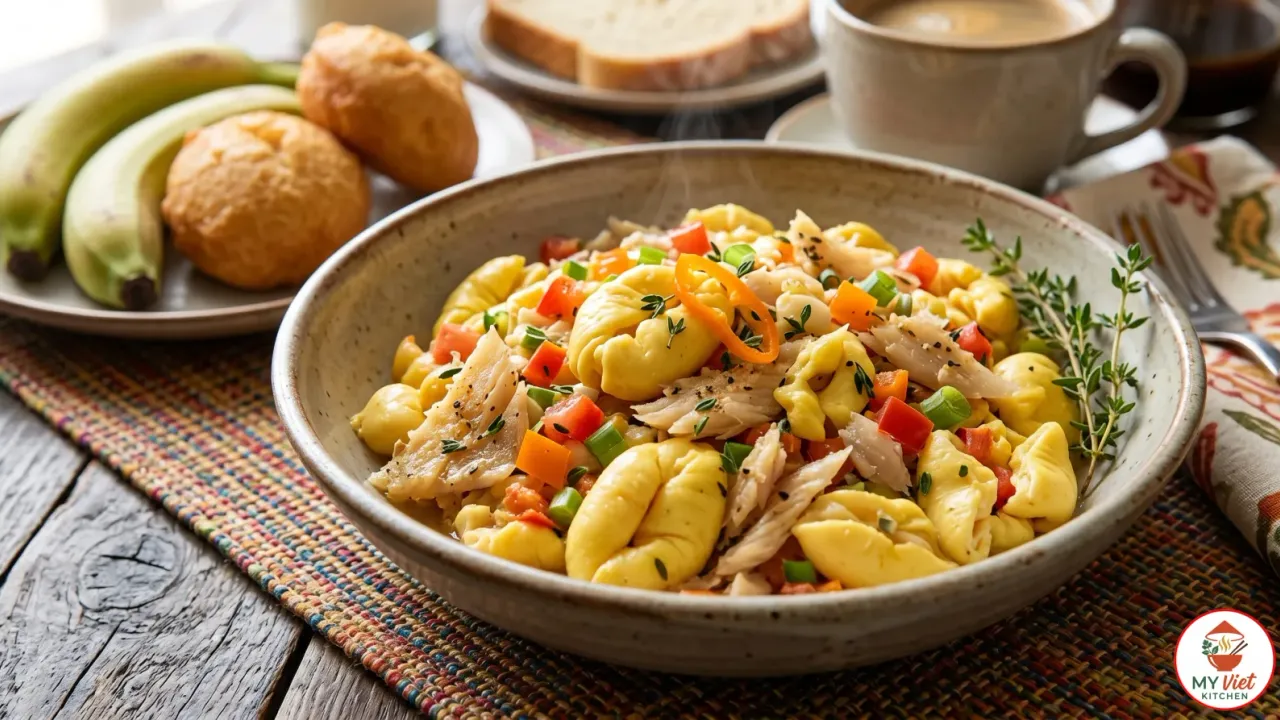
Ackee and saltfish is the undisputed national dish of Jamaica and a cornerstone of Caribbean cuisine. This vibrant, deeply savory breakfast combines tender, creamy ackee fruit with flaky salt cod, all sauteed with aromatic Scotch bonnet peppers, fresh thyme, and ripe tomatoes. If you have never tasted it, imagine the richness of perfectly scrambled eggs meeting the bold, briny depth of seasoned salt cod. This step-by-step ackee and saltfish recipe captures the authentic flavors of Jamaica so you can bring the Caribbean to your kitchen.
Prep Time: 25 minutes | Cook Time: 20 minutes | Servings: 4
Difficulty: Easy | Calories: ~320 per serving
What Makes Ackee and Saltfish Special?
Ackee and saltfish is far more than a breakfast dish in Jamaica. It is a national symbol, a source of pride, and a flavor that Jamaicans carry with them around the world. The dish pairs a mild, soft tropical fruit with salty cured fish. These two items seem like odd partners. Yet together they create a mix of flavor and texture that no other dish can match.
The genius of this recipe lies in its balance. Salt cod brings deep umami and a firm, satisfying flake. Ackee adds a creamy, almost custard-like richness that softens the salty fish. Then the base of Scotch bonnet pepper, garlic, thyme, and tomatoes ties it all together with warmth and brightness. Simply put, every part plays a key role.
Unlike many national dishes that exist mainly in restaurants, ackee and saltfish is home cooking at its finest. Jamaican grandmothers have passed this recipe down for generations. Moreover, every household has its own twist. Some add a splash of vinegar. Others toss in extra bell pepper or a knob of butter at the end. This version respects tradition while also giving clear guidance for first-time cooks.

Choosing the Right Salt Cod for Ackee and Saltfish
The quality of your salt cod directly shapes the success of your ackee and saltfish. Indeed, not all salt cod is equal. So here is what to look for when shopping.
- Boneless salt cod (best choice): This saves time because you do not need to pick out bones after boiling. It flakes cleanly and evenly. Look for thick, white center-cut pieces with minimal yellow discoloration.
- Bone-in salt cod: This is more traditional and often cheaper. However, you must carefully remove all bones after boiling. The flavor is identical to boneless, so the only difference is preparation time.
- Salted pollock or mackerel (substitutes): If salt cod is unavailable, salted pollock works well as a budget-friendly alternative. Salted mackerel is another popular Jamaican option with a richer, oilier flavor that some cooks actually prefer.
Ingredients for Ackee and Saltfish
Main Ingredients:
- 1 pound salt cod (boneless preferred)
- 1 can (19 oz) ackee, drained carefully (or 12 fresh ackee arils)
- 2 tablespoons coconut oil or vegetable oil
- 1 tablespoon butter (optional, for extra richness)
Aromatics and Vegetables:
- 1 medium onion, diced
- 1 red bell pepper, diced
- 1 Scotch bonnet pepper, seeded and minced
- 3 cloves garlic, minced
- 2 medium tomatoes, diced
- 3 green onions (scallions), sliced
- 4 sprigs fresh thyme
Seasonings:
- 1/2 teaspoon black pepper
- 1/2 teaspoon smoked paprika
- Salt to taste (use sparingly, the saltfish is already salty)
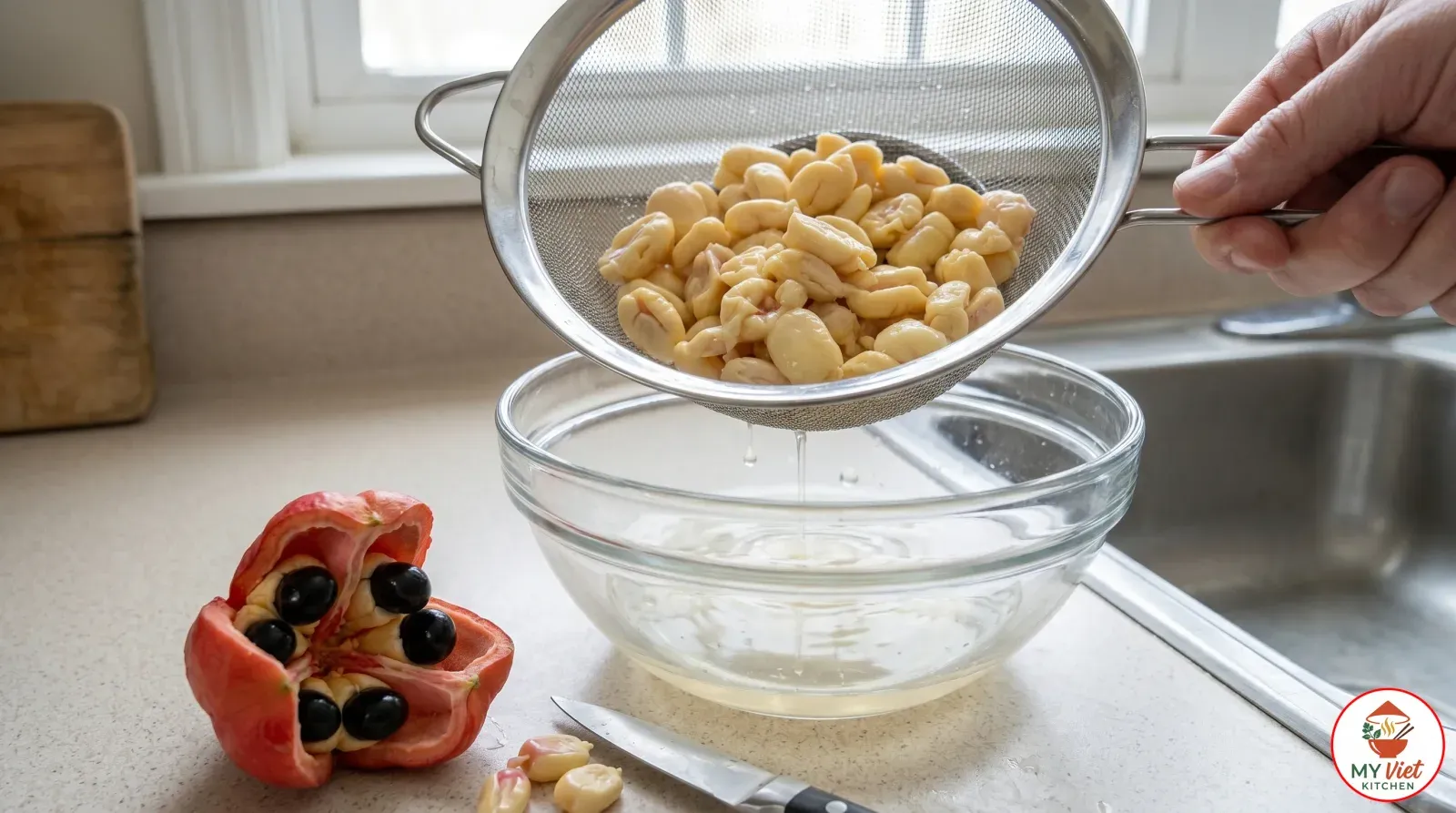
Pro tip: When draining canned ackee, pour it gently into a colander and let gravity do the work. Never press or squeeze the ackee because the arils are incredibly delicate. Crushed ackee turns mushy and loses the beautiful yellow appearance that makes this dish so striking.
Step-by-Step Instructions
Step 1: Prepare the Salt Cod
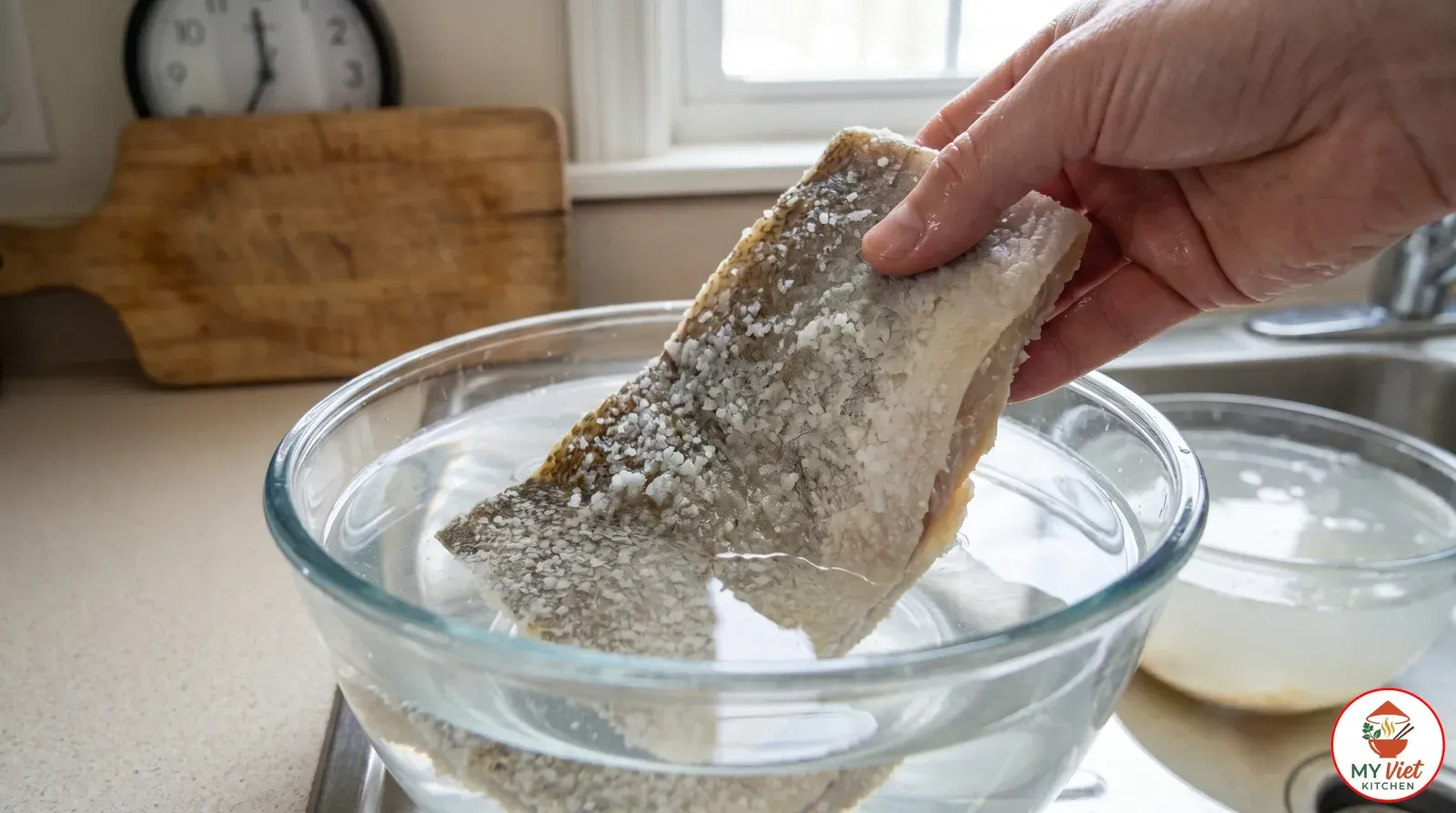
1 Soak the salt cod in a large bowl of cold water for at least 8 hours or overnight. Change the water 2 to 3 times during this period to draw out excess salt. After soaking, place the cod in a pot of fresh cold water and bring to a boil. Reduce heat and simmer for 15 minutes until the fish flakes easily with a fork. Drain the cod and let it cool enough to handle. Then flake it into bite-sized pieces, removing any skin, bones, or tough spots. Taste a small piece to check the salt level. If it still tastes very salty, boil it in fresh water for another 10 minutes.
Step 2: Prepare the Ackee
2 If using canned ackee, open the can and pour the contents gently into a colander. Let the liquid drain naturally without pressing. Set the ackee aside until needed. Handle with care because the arils break apart very easily. If using fresh ackee, remove the black seeds and the pink-red membrane completely. Then boil the arils in lightly salted water for 5 to 7 minutes until tender but still holding their shape. Fresh ackee must come from fully ripe pods that have opened naturally on the tree.
Step 3: Saute the Aromatics
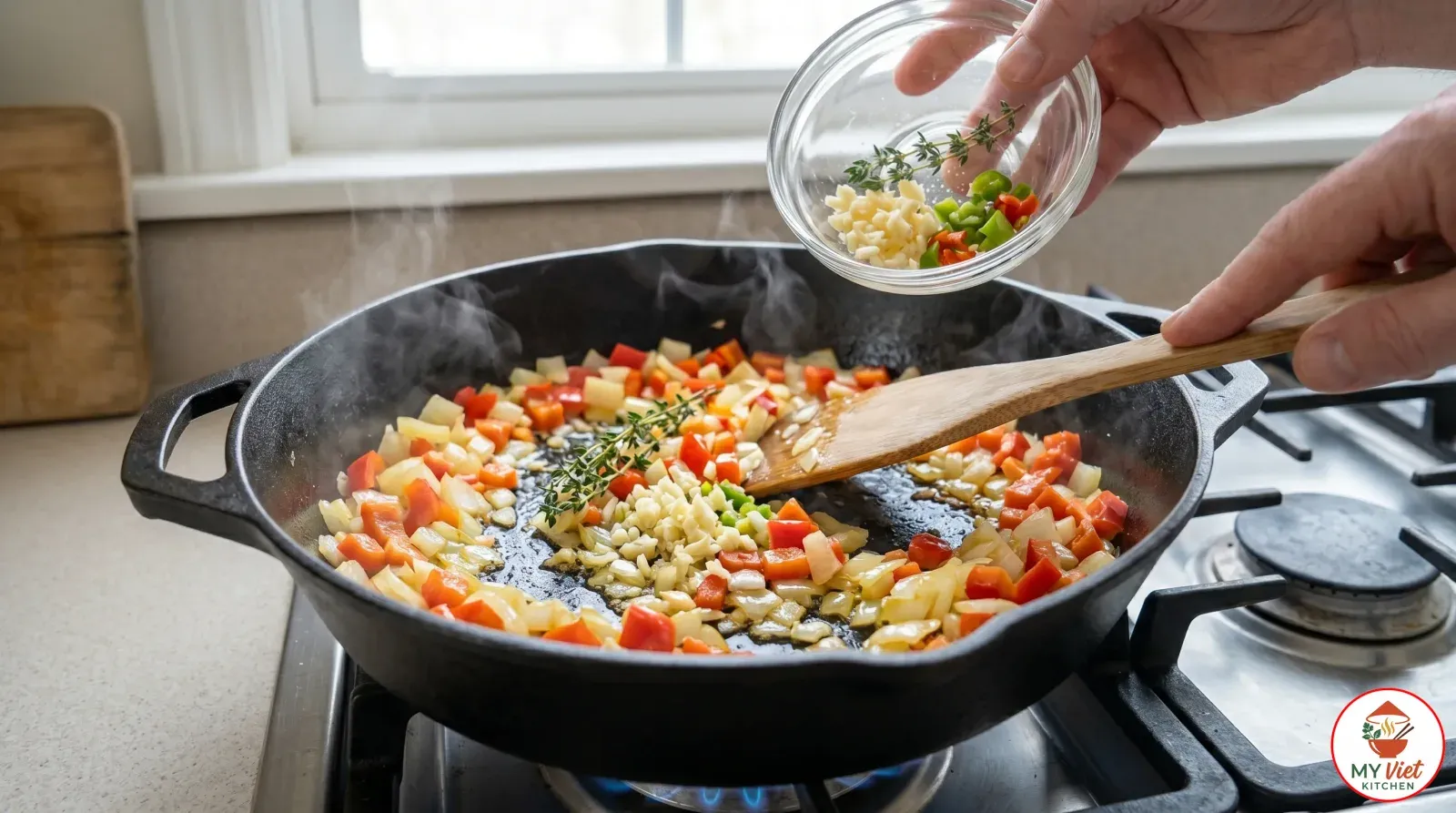
3 Heat the coconut oil in a large skillet or Dutch oven over medium heat. Coconut oil adds a subtle Caribbean flavor, but vegetable oil works too. Add the diced onion and red bell pepper. Cook for 3 to 4 minutes until the onion turns translucent and the bell pepper softens slightly. Then add the minced garlic, Scotch bonnet pepper, and fresh thyme sprigs. Stir for another minute until the garlic becomes fragrant. The Scotch bonnet provides both heat and a fruity aroma that is essential to authentic Jamaican flavor.
Step 4: Add Tomatoes and Saltfish
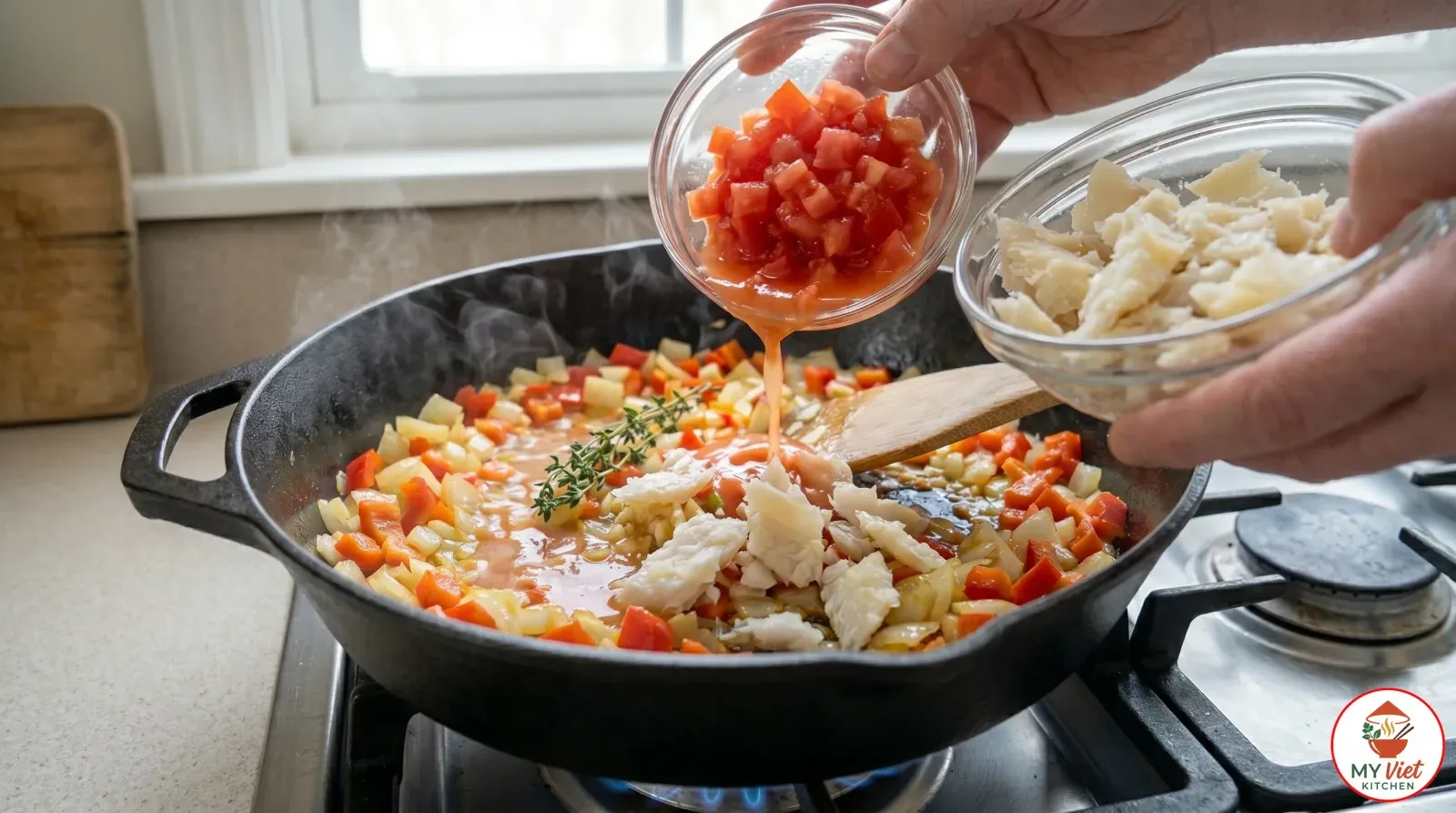
4 Add the diced tomatoes to the skillet and cook for 2 minutes. The tomatoes will soften and release their juices, creating a light sauce for the fish. Next, add the flaked salt cod. Stir gently and season with black pepper and smoked paprika. Cook for 3 to 4 minutes, tossing occasionally, so the fish absorbs the aromatic flavors. Do not add salt at this stage because the fish already carries plenty. Taste first, then adjust seasoning later.
Step 5: Fold in the Ackee
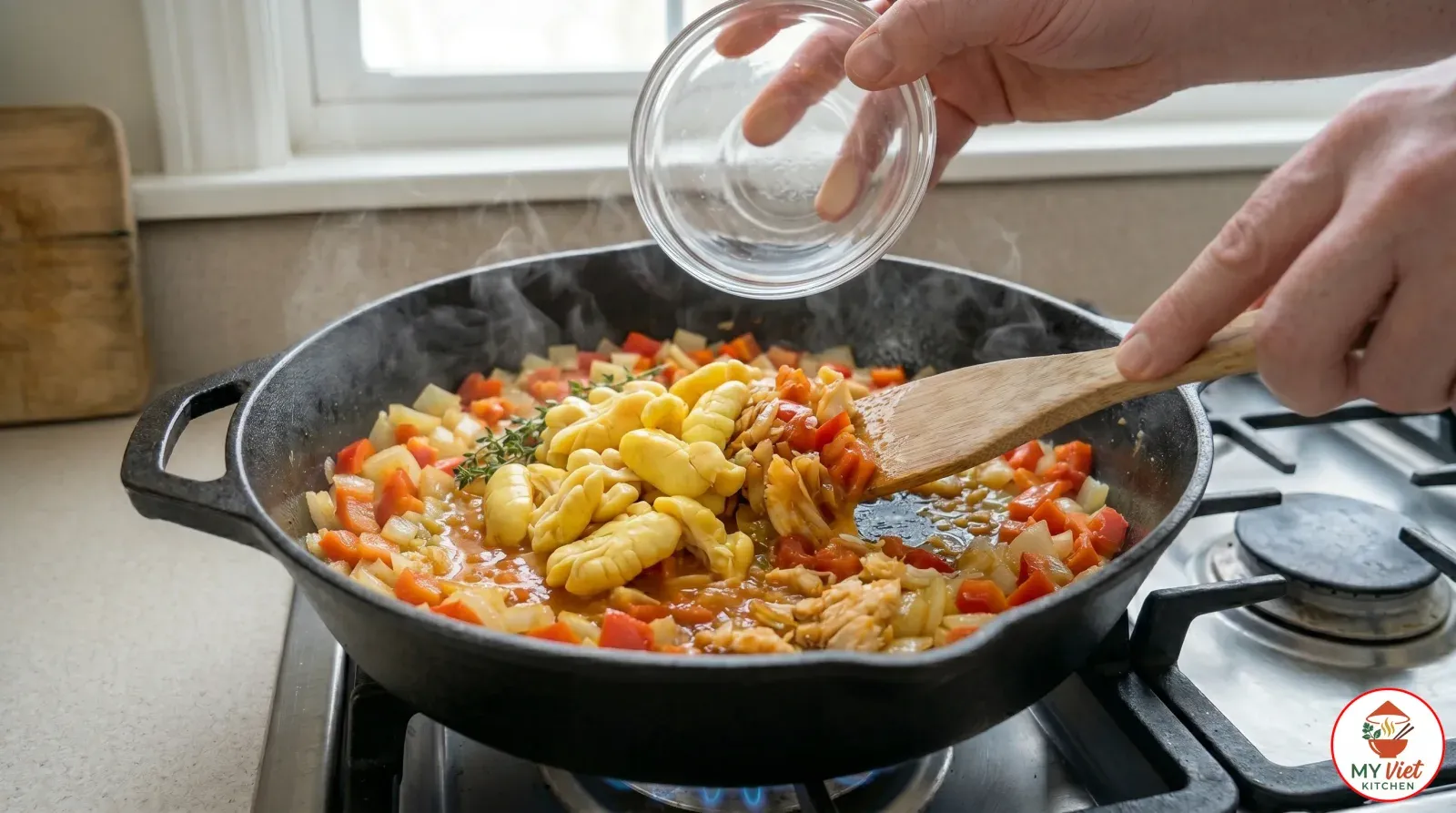
5 Reduce the heat to low. Gently fold the drained ackee into the skillet using a wooden spoon or silicone spatula. This is the most important moment in the recipe. Work slowly and deliberately, turning the mixture from the bottom rather than stirring in circles. You want the golden ackee arils to stay intact and distributed evenly throughout the dish. Cook for 2 to 3 minutes until the ackee warms through. If desired, add a tablespoon of butter at this point for extra richness.
Step 6: Finish and Serve
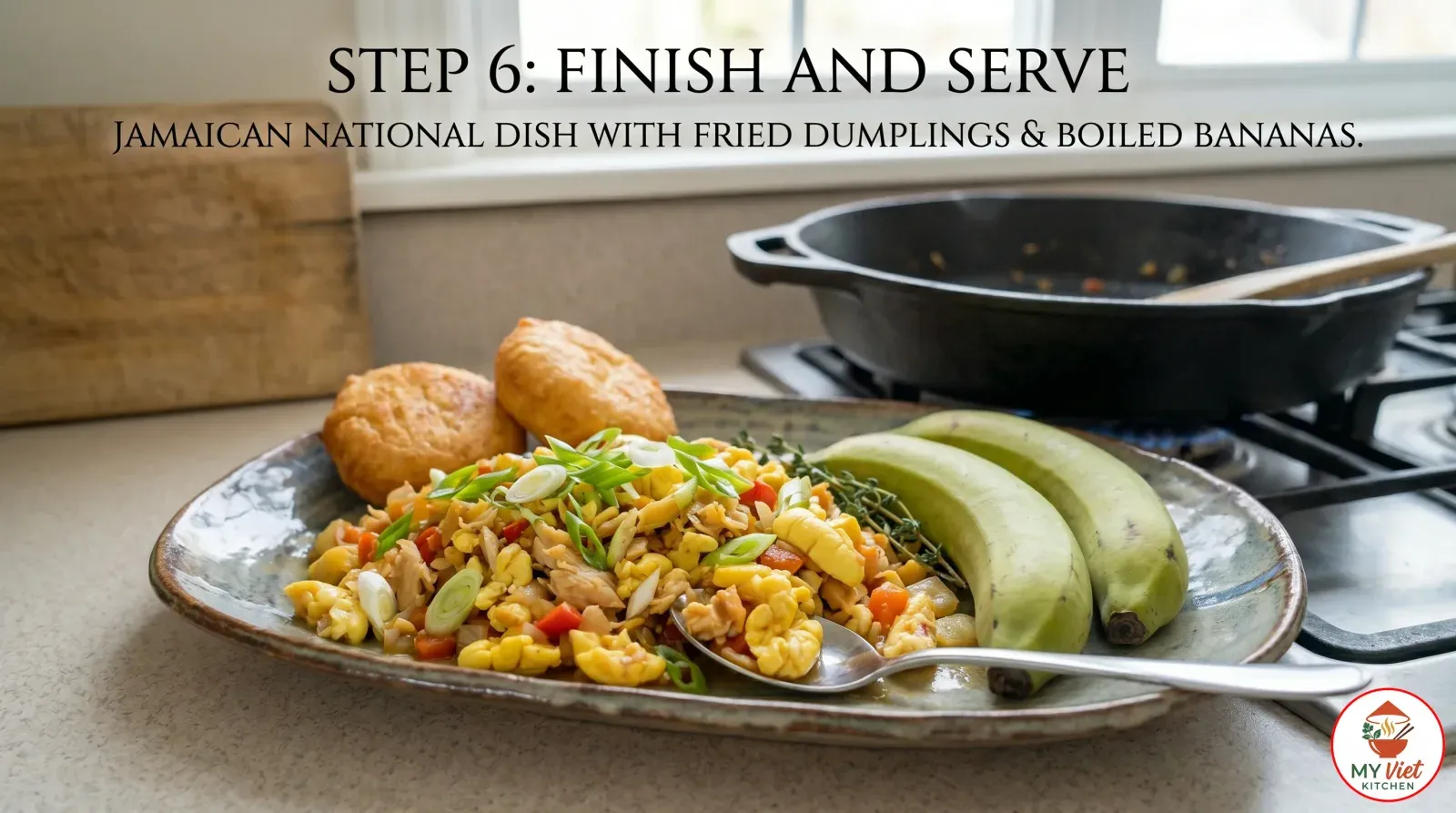
6 Remove and discard the thyme sprigs. Scatter the sliced green onions over the top and give everything one final gentle toss. Taste and adjust salt only if needed. Transfer to a warm serving plate and present immediately. In Jamaica, this dish arrives at the table hot alongside fried dumplings, boiled green bananas, or thick slices of hard dough bread. The combination of creamy ackee, savory fish, and starchy sides creates a complete, deeply satisfying meal.
Expert Tips for Perfect Ackee and Saltfish
Desalt the Cod Properly
The soaking step is not optional. Salt cod straight from the package is far too salty to eat. You need at least 8 hours of soaking with multiple water changes. For best results, start the soak the night before you plan to cook. Then the boiling step after soaking removes even more salt. It also softens the fish so it flakes just right.
Handle the Ackee Gently
Ackee arils are very fragile, especially from a can. Rough stirring turns them into a yellow mush that lacks the nice look and texture of good ackee and saltfish. So always fold rather than stir. Use a flat spatula and work from the bottom of the pan upward. Additionally, add the ackee last and cook it for only 2 to 3 minutes.
Use Fresh Thyme, Not Dried
Fresh thyme sprigs release oils that dried thyme simply cannot match. This herb is a key flavor in Jamaican cooking. If you must swap, use only one-third the amount of dried thyme since it is much stronger. However, fresh thyme is the best choice for real Jamaican taste.
Ackee and Saltfish: Canned vs. Fresh Ackee
One of the most common questions from first-time cooks is whether to use canned or fresh ackee. Here is a detailed comparison to help you decide.
| Factor | Canned Ackee | Fresh Ackee |
|---|---|---|
| Availability | Widely available at Caribbean markets and online | Only available in Jamaica and tropical regions |
| Safety | Pre-processed, always safe to eat | Must be fully ripe with pod naturally open |
| Texture | Slightly softer, more delicate | Firmer, creamier, holds shape better |
| Flavor | Mild and subtle | Richer, more pronounced buttery taste |
| Convenience | Ready to use after draining | Requires cleaning, deseeding, and boiling |
| Cost | Moderate (about 5 to 8 dollars per can) | Inexpensive in Jamaica, rare elsewhere |
Serving Suggestions
In Jamaica, ackee and saltfish is the centerpiece of a hearty breakfast or brunch. However, it works beautifully as a lunch or dinner dish too. The key is pairing it with starchy sides that complement the creamy ackee and savory fish.
Traditional Jamaican Accompaniments:
- Fried dumplings (Johnny cakes): These golden, crispy-outside, fluffy-inside dumplings are the classic partner for ackee and saltfish. They soak up every drop of flavor.
- Boiled green bananas: Firm, starchy, and subtly sweet, green bananas add a mild counterpoint to the bold seasoning of the fish.
- Fried plantains: Sweet, caramelized plantain slices create an irresistible contrast with the savory, spicy fish.
- Hard dough bread: This dense, slightly sweet Jamaican bread is perfect for scooping up the ackee and saltfish mixture.
- Boiled yam and dumplings: A heartier option that turns breakfast into a full feast.
Beverage Pairings:
- Blue Mountain coffee: Jamaica’s world-famous coffee is the traditional morning partner. Its smooth, low-acid flavor complements the dish perfectly.
- Sorrel drink: This hibiscus-based beverage with ginger and cloves offers a tart, refreshing contrast to the rich fish and ackee.
- Ginger beer: A spicy, non-alcoholic option that echoes the warmth of the Scotch bonnet pepper in the dish.
- Fresh coconut water: Light and naturally sweet, coconut water cleanses the palate between bites.
- Rum punch: For a brunch gathering, a light rum punch with lime and pineapple juice brings the full Caribbean experience.
Storage and Reheating
Refrigerator: Store leftover ackee and saltfish in an airtight container for up to 3 days. The flavors actually deepen overnight as the seasonings continue to meld with the fish.
Freezer: This dish freezes well for up to 2 months. However, the ackee texture softens further after freezing. Portion into freezer-safe containers and thaw overnight in the refrigerator before reheating.
Reheating: The best method is on the stovetop over low heat with a tablespoon of water or coconut oil. Stir gently to avoid breaking the ackee further. Microwave reheating works in a pinch, but use 50 percent power in 1-minute intervals to prevent the ackee from becoming rubbery.
Common Mistakes to Avoid
1. Not Soaking the Salt Cod Long Enough
If you skip or shorten the soaking step, the fish will be overwhelmingly salty. Even a quick 2-hour soak is not enough for most salt cod. Plan ahead and soak for at least 8 hours. Changing the water multiple times speeds up the desalting process significantly.
2. Stirring the Ackee Too Aggressively
Vigorous stirring destroys the ackee arils and turns the dish into a mushy, unappetizing paste. Always fold gently with a flat spatula. Treat the ackee like you would handle a delicate souffle. Less movement produces better results.
3. Adding Salt Before Tasting
The salt cod already provides significant seasoning. Adding extra salt before tasting is a common beginner mistake that can ruin the dish. Always taste after adding the fish and before adding the ackee. Then adjust only if truly needed.
4. Using Unripe Fresh Ackee
Unripe ackee has a toxin called hypoglycin A, which causes serious illness. So never force open an ackee pod. The fruit must open on its own on the tree when fully ripe. If you are not sure how to pick fresh ackee, use canned ackee instead. Canned types are always safe to eat.
Frequently Asked Questions
What does ackee taste like?
Ackee has a mild, creamy flavor with a buttery texture like scrambled eggs. In fact, it does not taste strongly fruity despite being a tropical fruit. Instead, ackee acts as a canvas that soaks up the seasonings around it. As a result, the arils take on the savory, spicy taste of the thyme, garlic, and Scotch bonnet pepper in ackee and saltfish.
Is ackee safe to eat?
Ripe ackee is safe and nutritious. However, the danger comes from unripe ackee, which has toxins called hypoglycin A and B. These cause a condition known as Jamaican vomiting sickness. To avoid this, only eat ackee from pods that have opened on their own. Canned ackee from good brands is always safe because it has been properly processed.
Can I use fresh cod instead of salt cod?
Fresh cod will not give you the same result. Specifically, salt cod has a unique firm texture and deep flavor that defines ackee and saltfish. The curing process changes the fish entirely. If you cannot find salt cod, try salting fresh cod yourself by packing it in coarse sea salt for 24 to 48 hours. Alternatively, salted pollock and salted mackerel also work well.
Where can I buy ackee?
Canned ackee is sold at Caribbean grocery stores, world food markets, and online shops. Grace and Island Sun are the most trusted brands. In the United States, the FDA restricts fresh ackee imports because of safety risks with unripe fruit. Therefore, canned ackee is the standard and best option for home cooks outside the Caribbean.
What is traditionally served with ackee and saltfish?
The classic Jamaican sides include fried dumplings, boiled green bananas, hard dough bread, fried plantains, and boiled yam. For a full breakfast spread, also add callaloo greens, avocado slices, and a cup of Blue Mountain coffee. Together, the starchy sides balance the rich ackee and add substance to the meal.
How long does it take to desalt salt cod?
Most salt cod needs at least 8 hours of soaking in cold water, with the water changed 2 to 3 times. Furthermore, thicker pieces may need up to 24 hours. After soaking, a 15-minute boil removes more salt and softens the fish. Then always taste a small piece after boiling to check the salt level before adding it to the pan.
Variations and Adaptations
Ackee and Saltfish with Callaloo:
Add a generous handful of chopped callaloo greens (or spinach as a substitute) to the skillet before adding the ackee. The greens wilt down and add color, nutrition, and a mild earthiness. This variation is popular across Jamaica and turns the dish into an even more complete meal.
Spicy Ackee and Saltfish:
For extra heat, leave the seeds in the Scotch bonnet pepper or add a second one. You can also add a splash of Jamaican hot sauce at the end. Some cooks in Kingston add a teaspoon of curry powder to the aromatics for a fusion twist that brings warmth and color.
Vegan Ackee “Saltfish”:
Replace the salt cod with crumbled extra-firm tofu seasoned with nori flakes, soy sauce, and a pinch of Old Bay seasoning. The tofu mimics the flaky texture of fish while the nori provides a sea-like flavor. This plant-based version has gained popularity in vegan Caribbean communities and delivers a surprisingly authentic experience.
Ackee and Saltfish Fritters:
Mix leftover ackee and saltfish with flour, egg, and a pinch of baking powder to form a thick batter. Drop spoonfuls into hot oil and fry until golden brown. These crispy fritters make an excellent appetizer or snack and are a creative way to use leftovers.
The Cultural Significance of Ackee and Saltfish
Ackee and saltfish tells the story of Jamaica itself. The ackee tree came to Jamaica from West Africa on slave ships in the 18th century. Its name comes from the Akan word “ankye.” Meanwhile, salt cod came from trade routes across the Atlantic. It was cheap protein used to feed enslaved people on sugar plantations. From these painful origins, Jamaican cooks turned two humble items into a dish of great character and pride.
Today, ackee and saltfish stands as the official national dish of Jamaica. It appears on breakfast tables from Kingston to Montego Bay every morning. Jamaican restaurants around the world feature it prominently on their menus. The dish carries emotional weight because it connects Jamaicans to their heritage, their grandmothers, and their sense of home.
In the Caribbean diaspora, particularly in London, Toronto, and New York, ackee and saltfish is a symbol of identity. It is the dish that Jamaicans abroad crave most. Canned ackee shipments to these cities run into the millions of cans annually. Simply put, ackee and saltfish is not just food. It is culture, memory, and belonging on a plate.
Conclusion
This authentic ackee and saltfish recipe brings Jamaica’s most beloved dish to your kitchen with clear, simple steps. The keys to success are easy to remember: soak and boil the salt cod until the salt level is right, handle the ackee with great care, and build a base of Scotch bonnet, thyme, and garlic. Follow these steps, and you will produce golden ackee arils and savory flaked fish that taste like a Sunday morning in Kingston. Whether you are Jamaican and cooking a taste of home, or trying this Caribbean treasure for the first time, ackee and saltfish rewards every effort.
Ready to explore more Caribbean and global flavors? Browse our collection of Caribbean dishes, including jerk chicken, curry goat, and oxtail stew. Also, discover our seafood recipes from around the world for more inspiration.