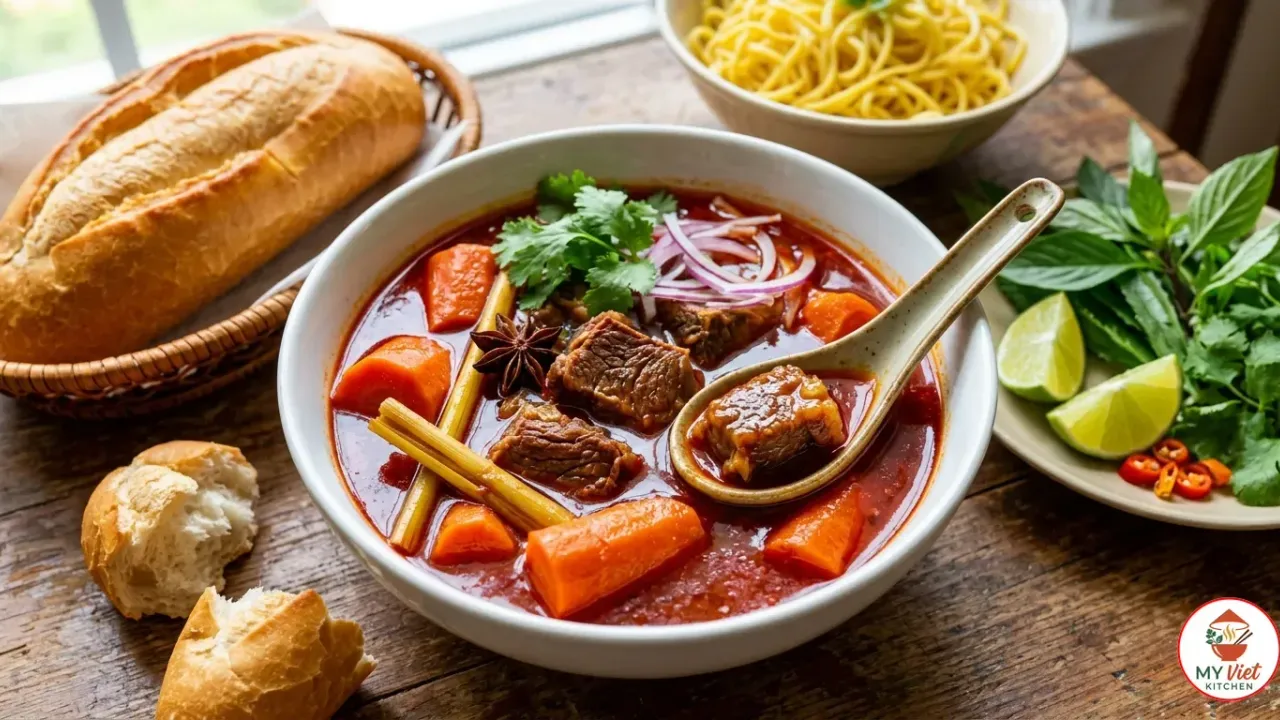
Bo kho is the soul of Saigon home cooking. This deeply red Vietnamese beef stew, known in full as bò kho, brings together fragrant lemongrass, star anise, fish sauce, and tender chunks of slow-simmered beef. In this guide, you will learn how to make authentic bo kho at home from scratch. Every step is here, from the spice rub to building a glossy red broth, simmering the beef to silky tenderness, and serving it three classic ways with banh mi, egg noodles, or rice noodles.
Prep Time: 20 minutes | Cook Time: 2 hours | Servings: 6
Difficulty: Easy | Calories: ~490 per serving
What Makes Bo Kho Special?
Bo kho stands apart from every other beef stew because of its bold red broth. Each spoonful glows a deep crimson, rich with lemongrass and star anise. Most importantly, the dish stays soupy rather than thick like a Western stew, since cooks add only a small splash of cornstarch slurry at the end. As a result, bo kho doubles as both a stew and a noodle soup, depending on how you serve it.
The dish has its roots in southern Vietnam. Saigon cooks first developed bo kho as a hearty answer to the lighter pho of the north. Because the south of Vietnam has long been a melting pot of cultures, bo kho borrows freely from French stew traditions and Chinese spice cabinets. Today, bo kho appears at every kind of Saigon meal, from morning street stalls to Sunday family dinners. The smell of lemongrass and star anise drifting through the kitchen feels like home for millions of Vietnamese families.
What makes a great bo kho is balance. The beef must turn silky and tender, while the broth should taste of warm spice without feeling heavy. Carrots add a soft sweetness, and a fresh herb plate at the table cuts through the richness. If you love bold Vietnamese mains, you will also enjoy our recipes for pho and com tam. According to the Wikipedia overview of Vietnamese cuisine, bo kho ranks among the most beloved braised dishes in the country and is often listed alongside pho as a signature southern soup.

Choosing the Right Beef for Bo Kho
Great bo kho starts with the right cut of beef. The meat must hold up to a long simmer without falling apart, while still turning silky and tender by the end. Look for cuts with plenty of collagen and a healthy marbling of fat. Here are the best options to look for at your butcher or local Asian market.
- Boneless beef shank (the classic): Shank carries the most connective tissue, so it melts into a silky texture during the simmer. The flavor is deep and beefy, which is exactly what bo kho needs.
- Beef chuck (widely available): Chuck offers a balance of fat and lean muscle, so it stays juicy even after 90 minutes of cooking. Most American supermarkets carry it, often labeled as stew meat.
- Beef brisket (for richness): Brisket adds a satisfying fatty layer to each bite. Trim off any extra hard fat, although a thin border of fat helps the broth turn glossy.
- Oxtail (premium pick): A few pieces of oxtail give the broth incredible body and a subtly sweet flavor. They cost more, but the payoff is worth it for a banquet pot of bo kho.
Ingredients for Bo Kho
For the Beef Marinade:
- 2 pounds boneless beef shank or chuck, cut into 1.5-inch chunks
- 1 teaspoon Vietnamese five-spice powder
- 1/2 teaspoon turmeric powder
- 1/2 teaspoon ground coriander
- 1/2 teaspoon sweet paprika
- 1 teaspoon salt
- 1/2 teaspoon ground black pepper
- 1 tablespoon minced ginger
- 1 tablespoon minced garlic
For the Aromatics and Broth:
- 2 tablespoons annatto seed oil (or vegetable oil tinted with paprika)
- 5 large lemongrass stalks, bruised and tied into knots
- 2 large shallots, peeled and smashed
- 4 star anise pods
- 2 bay leaves
- 2 tablespoons tomato paste
- 2 teaspoons soy sauce
- 2 tablespoons fish sauce
- 1 tablespoon rock sugar
- 5 cups water (or 3 cups water plus 2 cups coconut water)
For Vegetables and Finishing:
- 1 pound carrots, roll-cut into thick chunks
- 2 tablespoons cornstarch mixed with 2 tablespoons water
For Garnish and Serving:
- Thai basil, cilantro, and saw-tooth herb (ngo gai)
- Sliced raw onion and lime wedges
- Sliced bird’s eye chilies
- Crusty banh mi, fresh egg noodles, or rice noodles
Pro tip: Replace 2 cups of the water with fresh coconut water for a softer, naturally sweeter broth. Many Saigon street vendors keep this trick to themselves, although it is one of the easiest ways to push your bo kho closer to restaurant quality.
Step-by-Step Instructions for Bo Kho
Step 1: Marinate the Beef
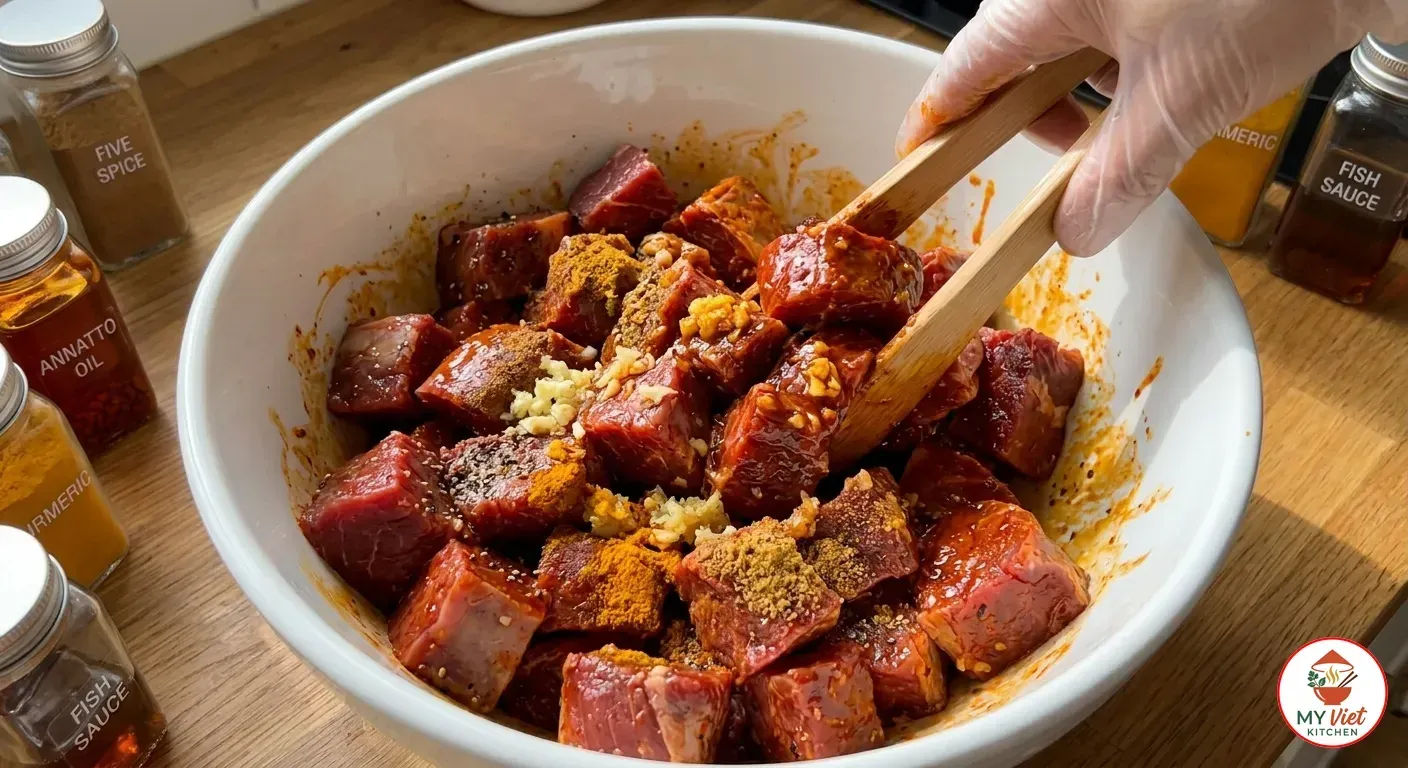
1 Toss the beef chunks in a large bowl with five-spice, turmeric, coriander, paprika, salt, pepper, ginger, and garlic. Drizzle 1 tablespoon of annatto oil over the meat and stir until every piece glistens with deep red color. Cover and refrigerate for at least 30 minutes, although a full hour gives even better flavor.
The marinade is the secret behind a deeply flavored bo kho. Without it, the beef tastes flat no matter how long you simmer the broth. As a result, never skip this step. If you have time, prepare the marinade the night before and let the meat rest in the fridge overnight. The spices have a chance to soak right into the muscle fibers.
Step 2: Sear the Beef and Build the Base
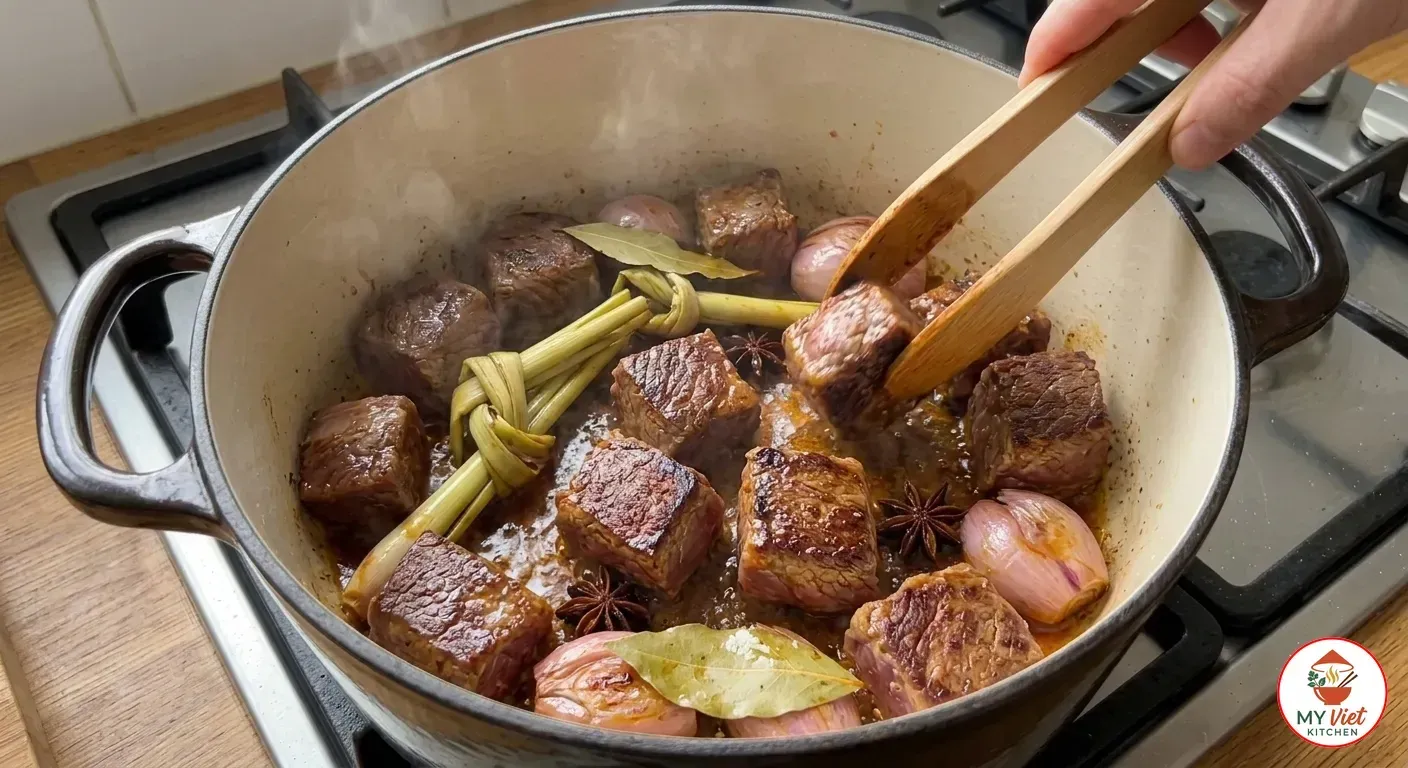
2 Heat the remaining annatto oil in a heavy-bottomed pot over medium-high heat. Add the bruised lemongrass, smashed shallots, star anise pods, and bay leaves. Saute for about 1 minute until the kitchen fills with a citrusy, warm aroma. The aromatics need to bloom in hot oil before the beef arrives, since this step locks their flavors into the broth.
Drop the marinated beef into the pot in a single layer. Sear for 5 minutes, turning the chunks every minute, until the surface browns deeply. Browning builds the rich, savory base of any great stew. If your pot crowds, work in two batches so the meat sears rather than steams. After all, the difference between a good bo kho and a great one is right there at the bottom of the pot.
Step 3: Add the Tomato Paste and Liquids
3 Stir the tomato paste into the pot and cook for 2 minutes. The paste should darken and smell sweet, which is the sign that the natural sugars have caramelized. This quick step deepens the red color of the broth and gives the stew that classic Saigon hue. Skipping it leaves the broth thinner and a bit washed out.
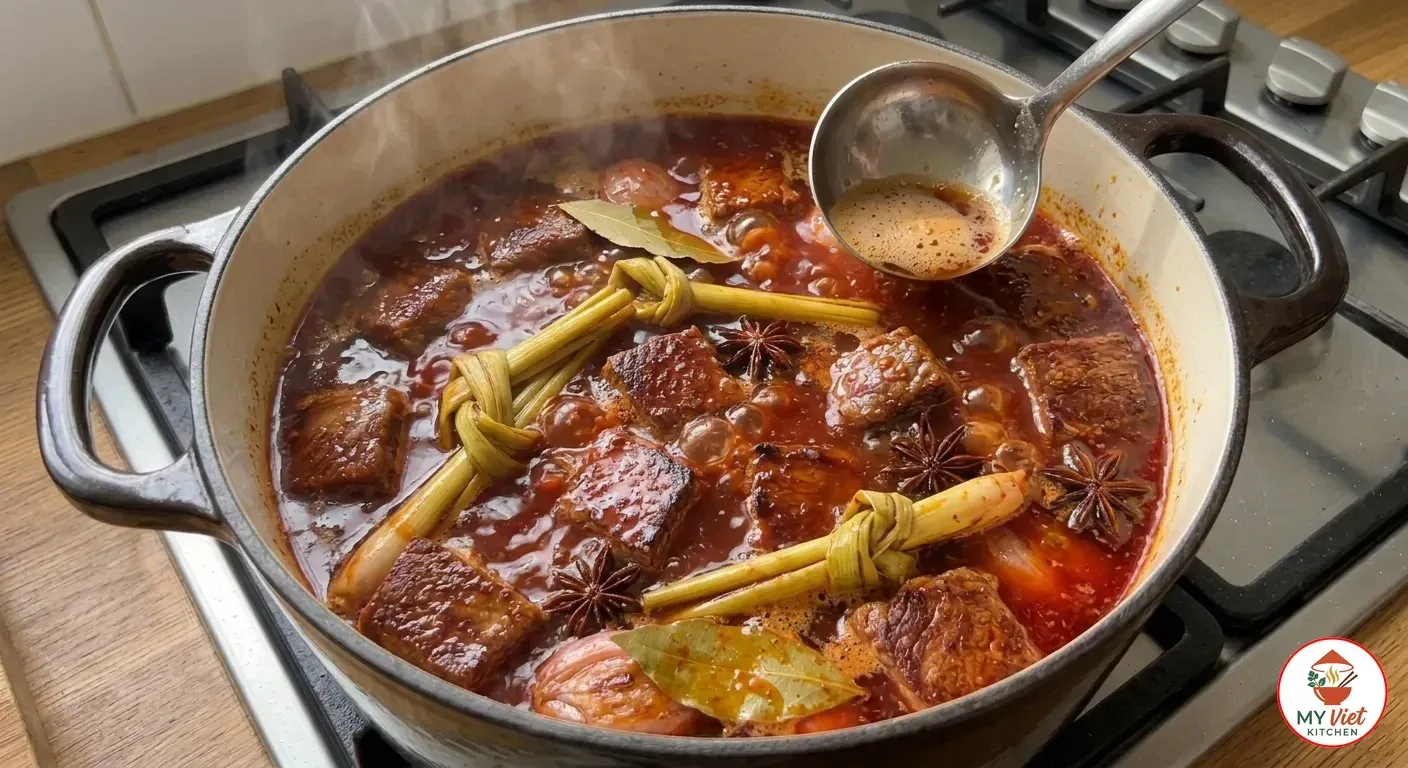
Pour in the fish sauce, soy sauce, rock sugar, and 5 cups of water or coconut water. Bring everything to a strong boil over high heat. Skim any foam or scum that floats to the surface during the first 5 minutes. Lower the heat once the foam clears, since a gentle simmer keeps the broth clean and beefy without turning cloudy.
Step 4: Simmer Until Tender
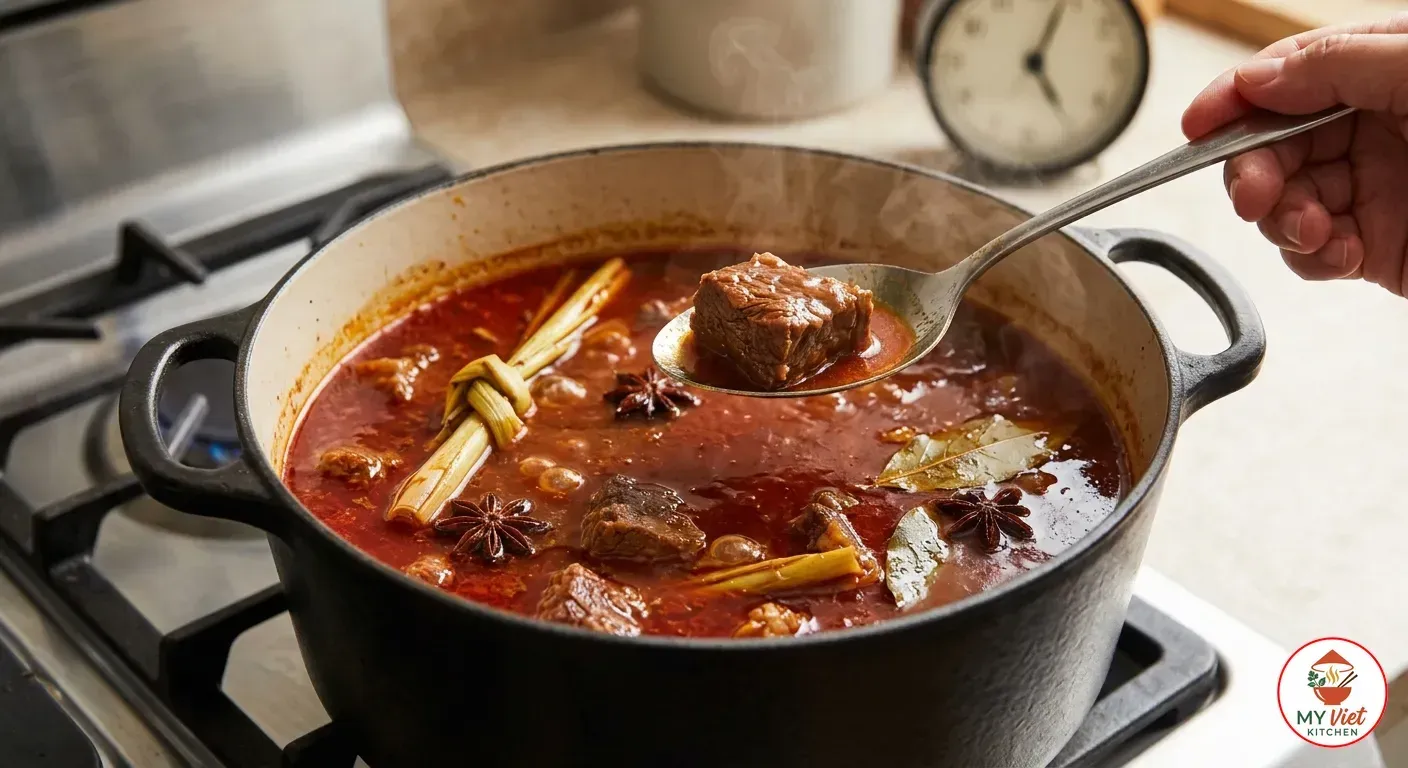
4 Cover the pot loosely and simmer gently for 90 minutes. Stir every 30 minutes to prevent the meat from sticking to the bottom. If the liquid level drops below the meat, top it up with hot water. Patience here is the most important rule, since beef shank needs time for its collagen to break down into silky gelatin.
The beef is ready when a fork slides through with little resistance, although the chunks should still hold their shape. The broth at this point glows a deep red and smells of lemongrass and star anise. Taste a small spoonful for seasoning. If the broth feels too salty, add a splash of water. If it tastes flat, stir in a teaspoon of fish sauce.
Step 5: Add the Carrots
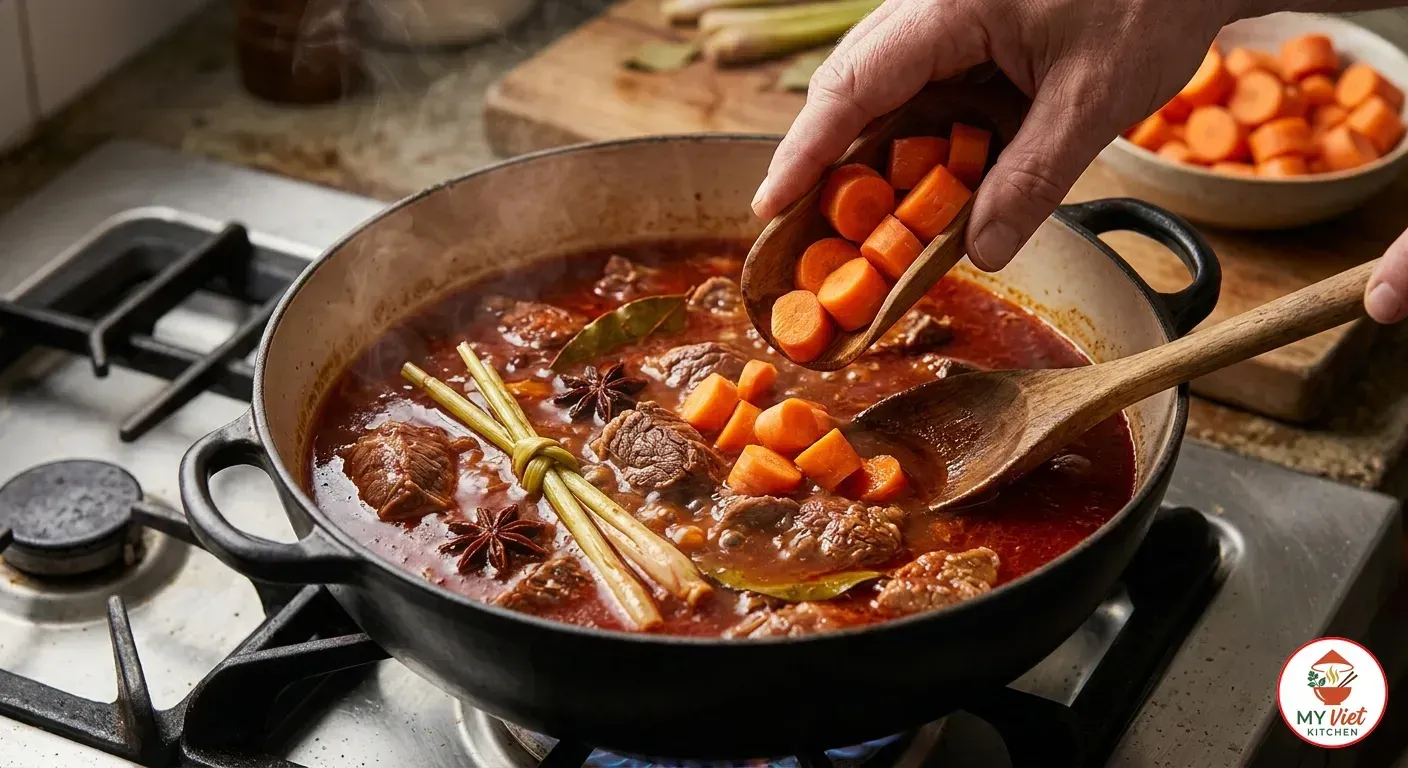
5 Drop the roll-cut carrots into the pot. Roll-cut means you cut the carrot at an angle, then turn it a quarter turn before each new cut. The shape exposes more surface for soaking up broth and looks beautiful in the bowl. Simmer for 15 minutes until the carrots pierce easily with a chopstick.
Adding the carrots late keeps them from turning to mush. Many home cooks dump the vegetables in at the start, although that move leaves the carrots soft and the broth heavy. Saigon cooks always wait until the beef is almost tender before adding any root vegetable. Taste the broth one more time and adjust with sugar, fish sauce, or salt as needed.
Step 6: Thicken and Serve
6 Fish out the lemongrass knots, star anise, and bay leaves with a pair of tongs. Whisk the cornstarch slurry together one more time, then stir it into the pot. Simmer for 2 minutes until the broth lightly coats the back of a spoon. Bo kho should never feel as thick as a Western stew, since the soupiness is part of its charm.
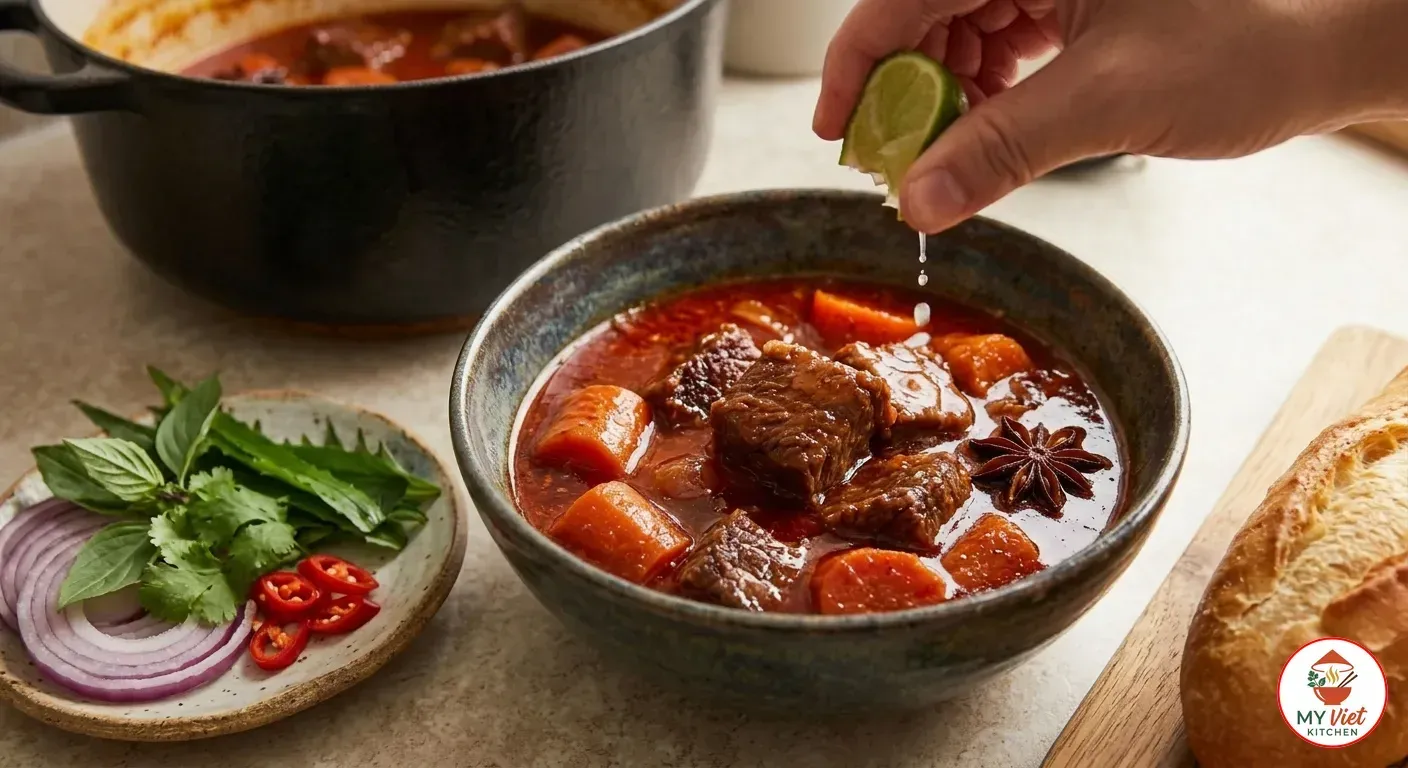
Ladle the stew into deep bowls. Pile Thai basil, cilantro, saw-tooth herb, sliced raw onion, and chili on top. Squeeze a wedge of lime over each bowl right before serving. Set out a basket of warm banh mi for dipping, or place a bowl of fresh egg noodles next to each guest. Each person can build their bowl exactly the way they like.
Expert Tips for Perfect Bo Kho
Bruise the Lemongrass Hard
Place the lemongrass stalks on a cutting board and whack them firmly with the back of a heavy knife. The fibers split open and release their citrus oils into the broth. As a result, the stew tastes far more fragrant than if you tossed in whole, uncrushed stalks. Tie each stalk into a knot so it is easy to fish out at the end.
Make Annatto Oil from Scratch
Heat 1/4 cup vegetable oil in a small pan over low heat. Add 1 tablespoon of annatto seeds and warm gently for 3 minutes until the oil glows deep red. Strain out the seeds and store the oil in a jar. A tablespoon of this oil gives bo kho its iconic crimson color, which is hard to fake any other way.
Make It a Day Ahead
Bo kho tastes even better the next day. The lemongrass, star anise, and tomato have time to marry, and the broth turns glossier as the meat juices settle. Cool the pot and refrigerate overnight, then reheat on the stove for the best flavor. Many Saigon stalls cook a giant pot at midnight and serve it for breakfast service.
Bo Kho Banh Mi vs. Mi Bo Kho: A Quick Comparison
Saigonese eat bo kho in two main ways. The first is with crusty banh mi for dipping, while the second is over fresh egg noodles. Both are delicious, although they suit different cravings. Here is how the two styles compare side by side.
| Feature | Bo Kho with Banh Mi | Mi Bo Kho (Egg Noodles) |
|---|---|---|
| Carbohydrate | Crusty French baguette | Fresh yellow egg noodles |
| Eating style | Dip and tear bread | Slurp from a deep bowl |
| Time of day | Lunch or late dinner | Breakfast or hearty lunch |
| Broth thickness | Thicker, more stew-like | Soupier with extra liquid |
| Garnish plate | Onion and chili in dish | Full herb plate at table |
| Calories | About 540 per portion | About 580 per portion |
| Best for | French-Vietnamese fusion fans | Soup and noodle lovers |
Serving Suggestions for Bo Kho
Bo kho is rich and filling, so the way you serve it shapes the whole experience. In Vietnam, the dish almost always comes with a tray of fresh herbs and at least one type of carb. Diners build each bite at the table, which keeps every spoonful fresh and balanced.
The Perfect Accompaniments:
- Thai basil and saw-tooth herb: A bright herb plate adds a peppery, anise-like aroma that lifts the rich broth.
- Sliced raw onion: Thin rings of white onion add a sharp, juicy crunch that cuts through the stew.
- Lime wedges: A squeeze of lime right before eating wakes up every flavor in the bowl.
- Bird’s eye chilies: A few rings of fresh chili add a slow heat that builds across the meal.
Beverage Pairings:
- Cold Vietnamese beer (Saigon or 333): A crisp lager balances the rich, spiced broth.
- Iced jasmine tea: A light, floral tea cleanses the palate between bites of stew.
- Fresh young coconut water: Cool and lightly sweet, it echoes the coconut water you can use in the broth.
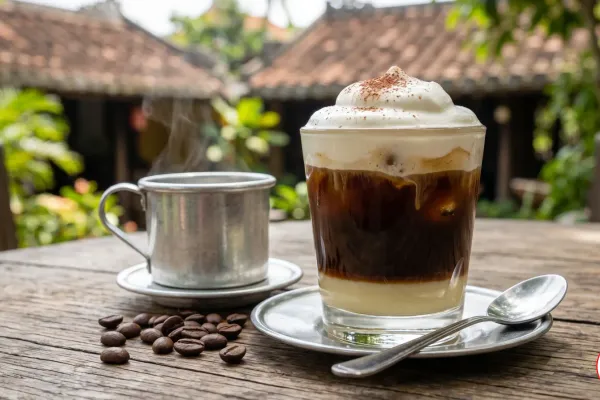
- Vietnamese iced coffee (ca phe sua da): A traditional pairing for late-morning bo kho at Saigon stalls.
Storage and Reheating
Refrigerator: Store bo kho in an airtight container for up to 4 days. The flavor deepens overnight as the spices and meat juices marry. Keep the noodles or banh mi separate, since both turn soggy if soaked in the stew.
Freezer: Cool the stew completely and pack into freezer-safe containers. Bo kho freezes beautifully for up to 3 months. Thaw overnight in the fridge before reheating. The carrots stay slightly softer after freezing, although the beef and broth taste exactly the same.
Reheating: Warm the stew in a pot over medium heat until it reaches a gentle simmer. Avoid boiling hard, since high heat can break apart the tender beef. Cook fresh noodles or warm a baguette right before serving for the best texture. A fresh herb plate also helps revive the bowl.
Common Mistakes to Avoid
1. Skipping the Marinade
A 30-minute marinade is the minimum for bo kho. Without it, the beef tastes flat no matter how rich the broth turns. Plan ahead and toss the meat with five-spice, turmeric, and ginger first thing in the morning. As a result, the spices have time to soak deep into the muscle fibers before the simmer begins.
2. Using Lean Beef Cuts
Sirloin and eye of round dry out long before the broth reaches its full flavor. Stick to shank, chuck, brisket, or oxtail for tender, juicy chunks. The collagen in these cuts breaks down during the long simmer and turns the broth glossy and rich.
3. Adding Carrots Too Early
Many home cooks dump every ingredient in at the start. As a result, the carrots turn into mush by the time the beef is tender. Wait until the meat is almost done, then add the carrots for the last 15 minutes. The vegetables stay firm, sweet, and beautiful in the bowl.
4. Boiling the Broth Hard
A rolling boil churns fat and proteins into the liquid, which makes the broth cloudy and a bit greasy. Lower the heat once the pot reaches a boil, since a gentle simmer is what produces the deep, glossy red broth. You should see only a few bubbles rising every couple of seconds.
Frequently Asked Questions about Bo Kho
What is bo kho in Vietnamese cuisine?
Bo kho is a Vietnamese beef stew that traces its roots to southern Vietnam, where it is a beloved Saigon street food. The word kho means braise, since the dish slowly simmers beef in a fragrant broth of lemongrass, star anise, fish sauce, and tomato. Most cooks serve it with banh mi, egg noodles, or rice noodles.
What is the best cut of beef for bo kho?
Boneless beef shank is the gold standard. The cut has plenty of collagen and connective tissue, so it turns silky and tender. Beef chuck is a great backup, since it stays juicy after braising. Some Saigon cooks add a few oxtail pieces for extra body in the broth.
How is bo kho different from pho bo?
Both are Vietnamese beef soups, although they are different dishes. Pho bo features a clean, light broth with thin slices of beef and rice noodles. Bo kho is a thick, deeply red stew with chunks of slow-simmered beef and carrots. Pho relies on cinnamon and cloves, while bo kho leans on lemongrass and tomato paste.
Can I make bo kho in an Instant Pot?
Yes. Saute the aromatics and beef on the saute setting, then add all the liquids and seasonings. Pressure cook on high for 35 minutes with a 15-minute natural release. Add the carrots after, then simmer on saute mode for 15 minutes more. The texture is slightly different from a stovetop simmer, but the flavor is just as deep.
What does annatto oil do in bo kho?
Annatto oil gives bo kho its signature deep red color without changing the flavor much. Make it by steeping annatto seeds in hot oil. If you cannot find annatto seeds, blend 2 tablespoons of vegetable oil with 1 teaspoon of sweet paprika as a quick substitute.
How should I serve bo kho?
There are three classic ways. The first is with toasted banh mi, where you tear the bread and dip into the broth. Another popular option is mi bo kho, ladled over fresh yellow egg noodles. Finally, hu tieu bo kho serves the stew over flat rice noodles. Each style comes with the same fresh herb plate.
Variations and Adaptations
Mi Bo Kho (Egg Noodle Style):
Boil fresh yellow egg noodles for 1 minute and divide among bowls. Ladle the stew over the top, then pile on Thai basil, sliced onion, and lime. The starch from the noodles thickens the broth slightly, which makes every spoonful even more comforting.
Hu Tieu Bo Kho (Rice Noodle Style):
Soak flat rice noodles in warm water for 30 minutes, then blanch in boiling water for 30 seconds. Top with bo kho and the usual herb plate. The chewy rice noodles soak up the broth beautifully and turn each bite into a richer, soupier experience.
Slow Cooker Bo Kho:
Sear the beef and aromatics in a pan first, then transfer everything to a slow cooker with the broth ingredients. Cook on low for 7 hours or on high for 4 hours. Add the carrots in the last 30 minutes. This method is perfect for busy weekdays.
Vegan Bo Kho Chay:
Replace beef with king oyster mushrooms cut into chunks and pan-seared until golden. Use vegetable broth and mushroom seasoning instead of fish sauce. The dish stays deeply red, fragrant, and satisfying, with a fraction of the cooking time.
The Cultural Significance of Bo Kho
Bo kho is more than a stew in southern Vietnam. It is a marker of home and street life. Saigon families make a big pot for Sunday lunch, while market stalls ladle it out from sunrise. Even taxi drivers and motorbike riders stop for a quick bowl with banh mi during a busy morning. The dish bridges class and age, since it tastes the same to a child as it does to a grandparent.
The dish also reflects Saigon’s cultural mix. Bo kho borrows freely from French stew traditions, with its slow braise and tomato paste base. The Chinese spice cabinet brings star anise and five-spice to the table. Yet the soul of the dish remains entirely Vietnamese, with lemongrass, fish sauce, and a fresh herb plate at every bowl. As a result, bo kho stands as one of the clearest examples of fusion cooking in Vietnam.
Modern Vietnamese chefs continue to honor bo kho while putting their own spin on the dish. Some use sous vide for the beef, while others smoke the aromatics for extra depth. Whether you serve it for a family Sunday lunch or a hearty dinner with friends, every pot of bo kho ties you to that long Saigon love of slow cooking and shared bowls. For more comforting Vietnamese mains, try our guides to thit kho tau, ca kho to, and canh chua.
Conclusion
Making bo kho at home is easier than you might think. The keys to success are simple: marinate the beef with five-spice, sear before you simmer, and let the pot bubble gently for 90 minutes. Master these three steps and you will turn out a deeply red, lemongrass-perfumed stew that rivals any Saigon street stall. The rest is just adding carrots and serving with bread or noodles.
Once you taste your first homemade bo kho, you will understand why Saigon adores it. The fragrant broth, the silky meat, and the bright herb plate hit every note in one bowl. So clear an afternoon, pick up a beef shank, and let the kitchen fill with the smell of lemongrass and star anise. Your family will reach for seconds, and the leftovers taste even better tomorrow. For more Vietnamese favorites, explore our guides to pho, com tam, and banh mi.