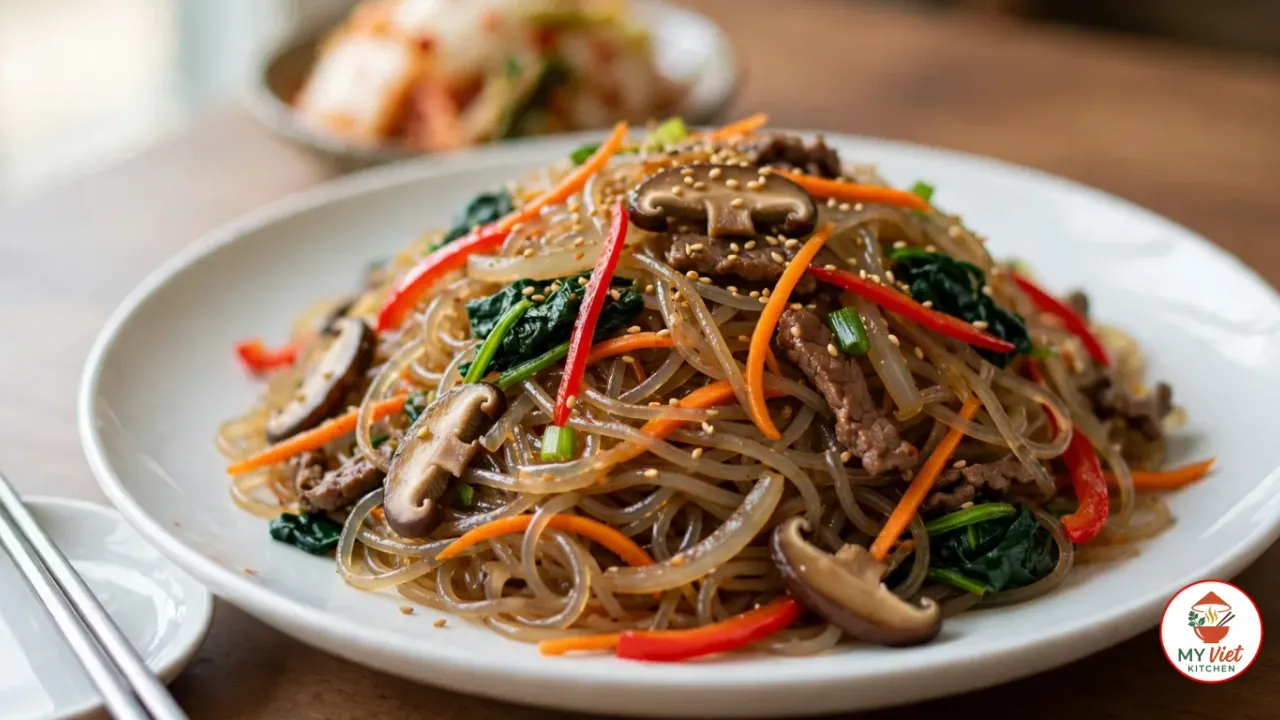
Japchae is a Korean dish of dangmyeon, chewy noodles made from sweet potato starch, stir-fried with vegetables and meat and seasoned with soy sauce and sesame oil (Wikipedia). It began as a royal court dish and is now served at weddings, first birthdays and holidays. This recipe boils the noodles soft, cooks the beef, shiitake, spinach, carrot, onion and bell pepper apart, then tosses everything with a soy, sugar and sesame sauce.
Prep Time: 25 minutes | Cook Time: 25 minutes | Total Time: 50 minutes, including 15 minutes of marinating | Servings: 4
Difficulty: Easy | Calories: ~470 per serving

Was Japchae Always Made with Noodles?
No. The name is Sino-Korean: jap means “mixed” and chae means “vegetable” (Wikipedia). In the 17th century japchae was cooked without noodles and served as a royal food to very high-level officials, and its vegetables included cucumbers, radishes and mushrooms (Korea JoongAng Daily).
Food critic Hwang Kwang-hae points to a detailed recipe in the Eumsik dimibang, a cookbook from 1670 that he calls the first in East Asia written by a woman. His list of its japchae ingredients runs to 17 vegetables and mushrooms, among them cucumber, radish, shiitake, mung bean sprouts, bellflower root and spinach, plus pheasant. The book then tells the cook not to hunt for every item but to use whatever can be found (Seoul Metropolitan Government).
The dish is tied to one court official. Wikipedia, citing the Veritable Records of the Joseon Dynasty, says Yi Chung first made it for King Gwanghaegun’s palace banquet and was rewarded with a high-ranking post (Wikipedia). Hwang tells the story less kindly. In his account, Yi Chung became minister of revenue by sending dishes to the king, who reportedly would start a meal only once the food from Yi’s house had arrived. People whispered that he was the “japchae minister” (Seoul Metropolitan Government).
The noodles came much later. Hwang dates dangmyeon’s arrival from China to the 1910s: a Japanese-run dangmyeon factory opened in 1912 and a Korean one in Sariwon in 1919. The noodles first appear in a written recipe in Joseon musang sinsik yori jebeop, a cookbook published in 1924. He argues that the noodle japchae of the 1920s is what people now take for the traditional dish (Seoul Metropolitan Government). Korea JoongAng Daily also places the change in the early 20th century (Korea JoongAng Daily).
Which Noodles Do You Need for Japchae?
Korean dangmyeon, made from sweet potato starch. Wikipedia describes them as pale grey, semi-transparent, chewy and elastic, and notes they are also sold as glass noodles, cellophane noodles or sweet potato vermicelli (Wikipedia). Because those English names cover other starches too, check that the packet says sweet potato. Mung bean noodles are a different product with a different cooking time; if you use them, follow their packet rather than the times below.
Cook them soft. Hyosun Ro of Korean Bapsang doesn’t soak them first. She boils them for about 8 minutes until soft and elastic, warns that they should not be al dente, and notes that package instructions vary by brand. After a cold rinse she seasons them with some of the sauce and pan-fries them for a soft, bouncy texture (Korean Bapsang). Korea.net’s recipe also boils the noodles for 8 minutes, then cuts them into 20 cm lengths and stir-fries them for 2 minutes over medium heat (Korea.net).
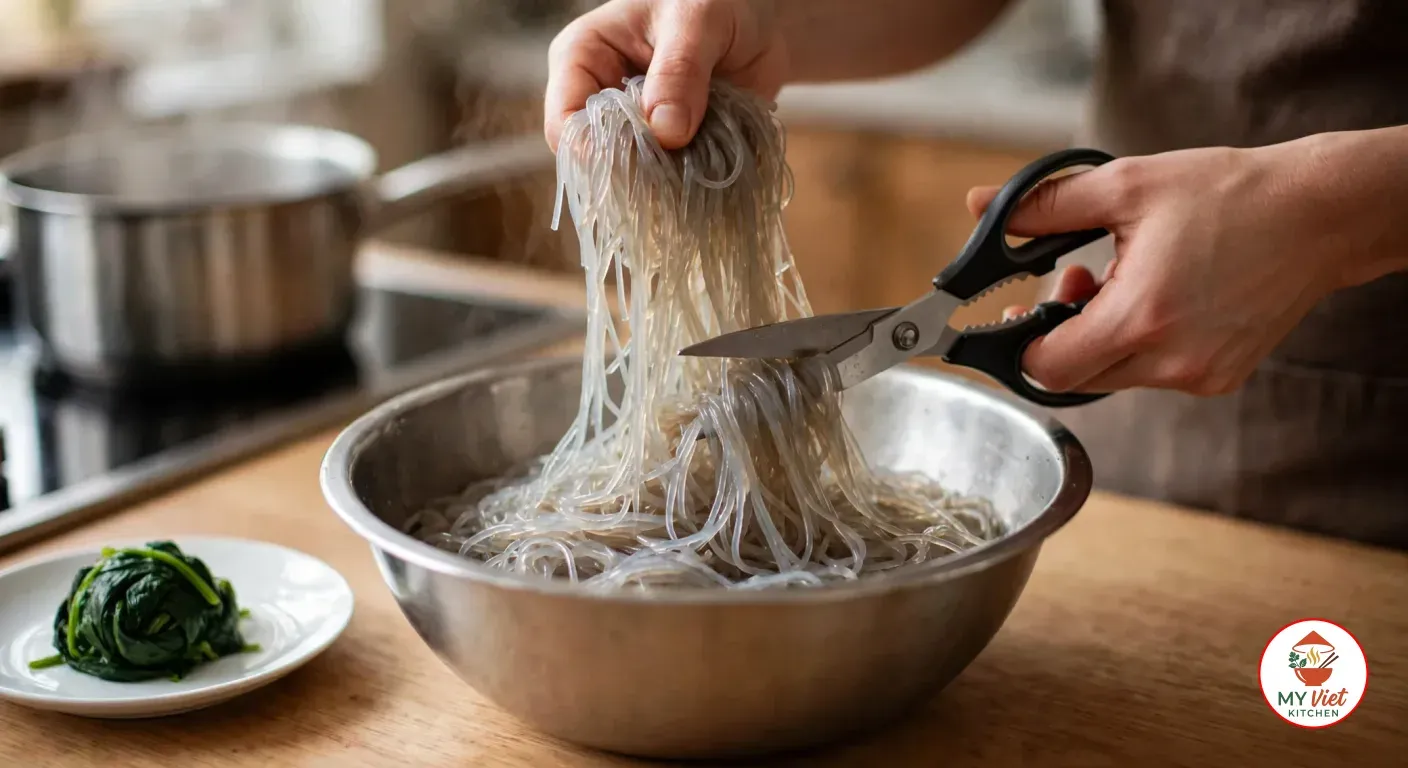
Uncut, the strands are long enough to tangle into one rope in the bowl. Two or three snips with kitchen scissors, to about 15 cm (6 inches), make them easy to toss and to serve.
Why Cook Each Vegetable Separately?
Each one needs its own time in the pan. In the classic method every ingredient is stir-fried on its own before it meets the boiled, drained noodles (Wikipedia). Maangchi explains the reason in the notes to her video: “Stir frying each ingredient separately seems like a lot of labor, but each one requires a different cooking time and a bit of care, and keeping the color and freshness of each ingredient intact makes for a stunning final presentation” (Maangchi).
Colour is part of the dish. Korea.net describes japchae as combining green, red, yellow, white and black, the five colours Korean cooks call obangsaek. It advises frying every ingredient quickly over high heat for better taste and brighter colour (Korea.net). Here spinach gives the green, carrot and red pepper the red, onion the white and shiitake the black. In the Korea.net recipe, strips of fried egg yolk supply the yellow; this recipe leaves them out.
You don’t need a pan per vegetable. Hyosun Ro streamlines the method by cooking some ingredients together in one pan, and wants the vegetables slightly crunchy so they pair well with the soft noodles (Korean Bapsang). This recipe follows that idea: one pot of boiling water for the spinach and noodles, one skillet for everything else. She also calls the balance of soy sauce and sugar the real secret of the flavour, and says to scale the sauce up if you add more vegetables or meat (Korean Bapsang).
Ingredients for Japchae
For the Beef and Mushrooms:
- 6 ounces (170 g) beef sirloin or rib eye
- 4 fresh shiitake mushrooms (about 3 ounces / 85 g)
- 1 tablespoon soy sauce
- 1 teaspoon sugar
- 1 teaspoon toasted sesame oil
- 1 clove garlic, minced
For the Sauce:
- 3 tablespoons soy sauce
- 2 tablespoons sugar
- 2 tablespoons toasted sesame oil
- 1 clove garlic, minced
- 1/4 teaspoon ground black pepper
For the Noodles and Vegetables:
- 8 ounces (225 g) Korean sweet potato starch noodles (dangmyeon)
- 6 ounces (170 g) fresh spinach
- 1 medium carrot (about 3 ounces / 85 g)
- 1/2 medium onion
- 1/2 red bell pepper
- 3 scallions
- 1 1/2 tablespoons neutral cooking oil, divided
- Salt
- 1 tablespoon toasted sesame seeds
Step-by-Step Instructions
Step 1: Marinate the Beef and Mix the Sauce
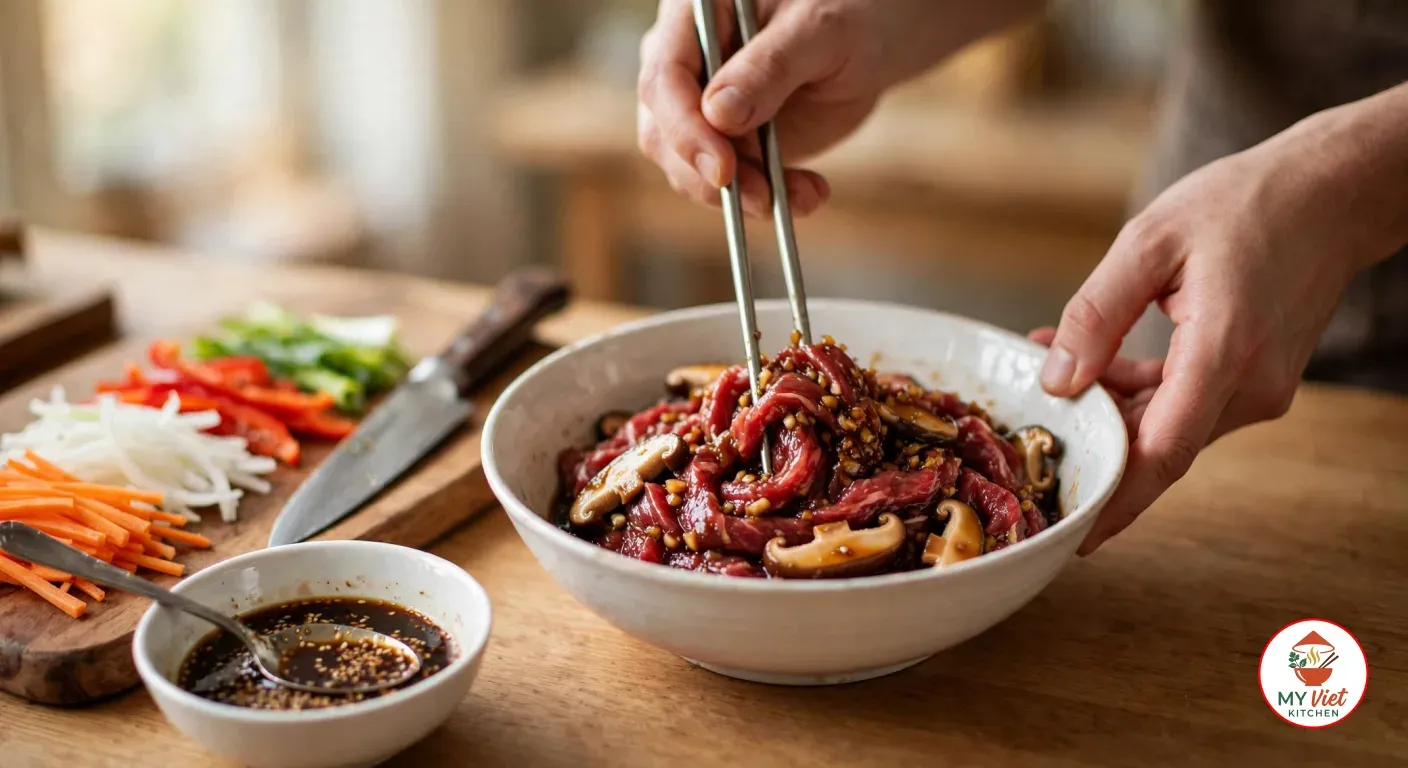
1Cut the beef across the grain into thin strips about 2 inches (5 cm) long. Remove the shiitake stems and slice the caps 1/4 inch (6 mm) thick. In a bowl, mix the beef and mushrooms with 1 tablespoon of soy sauce, 1 teaspoon of sugar, 1 teaspoon of sesame oil and one minced garlic clove, and leave them for 15 minutes. In a small bowl, stir the sauce ingredients together until the sugar dissolves. Meanwhile, cut the carrot into matchsticks, thinly slice the onion and bell pepper, and cut the scallions into 2-inch (5 cm) pieces.
Step 2: Blanch the Spinach and Boil the Noodles
2Fill a large pot with about 3 quarts (3 litres) of water and bring it to a boil. Drop in the spinach for 30 seconds, just until it wilts, then lift it out with tongs and rinse it under cold water. Squeeze it dry, cut it once or twice, toss it with a pinch of salt and set it aside. Boil the noodles in the same water for 6 to 8 minutes, until a strand is soft, clear all the way through and free of any white core. Drain, rinse under cold water and drain well. Cut them 2 or 3 times with kitchen scissors into roughly 6-inch (15 cm) lengths, put them in a large bowl and toss with 3 tablespoons of the sauce.
Step 3: Stir-Fry the Vegetables
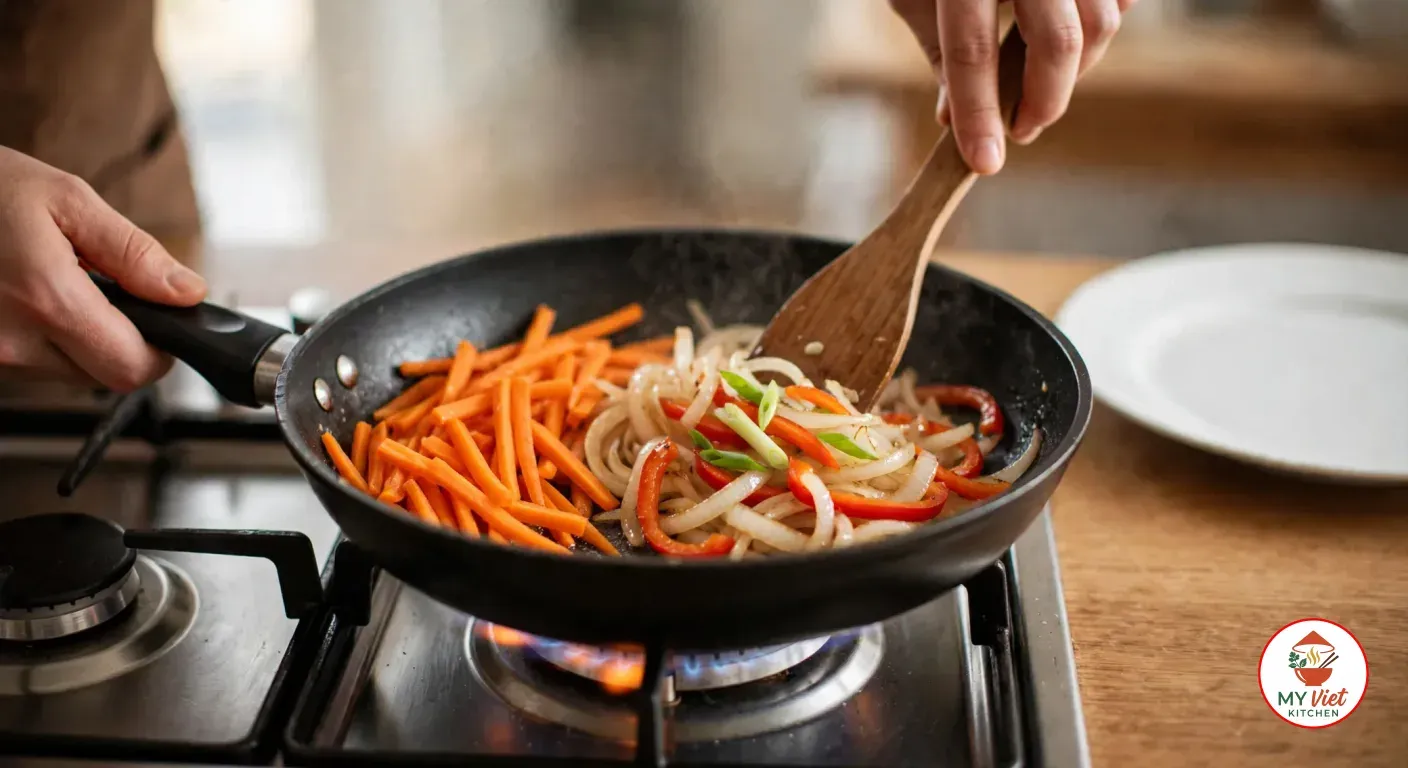
3Set a large skillet over medium-high heat and swirl in 1/2 tablespoon of oil. Add the carrot with a pinch of salt and stir-fry for 1 minute. Slide it to one side of the pan, then cook the onion and bell pepper with another pinch of salt, keeping them moving for 1 to 2 minutes; the onion should turn translucent at the edges but keep some crunch. Stir in the scallions for 30 seconds, then spread all the vegetables on a large plate.
Step 4: Cook the Beef, Mushrooms and Noodles
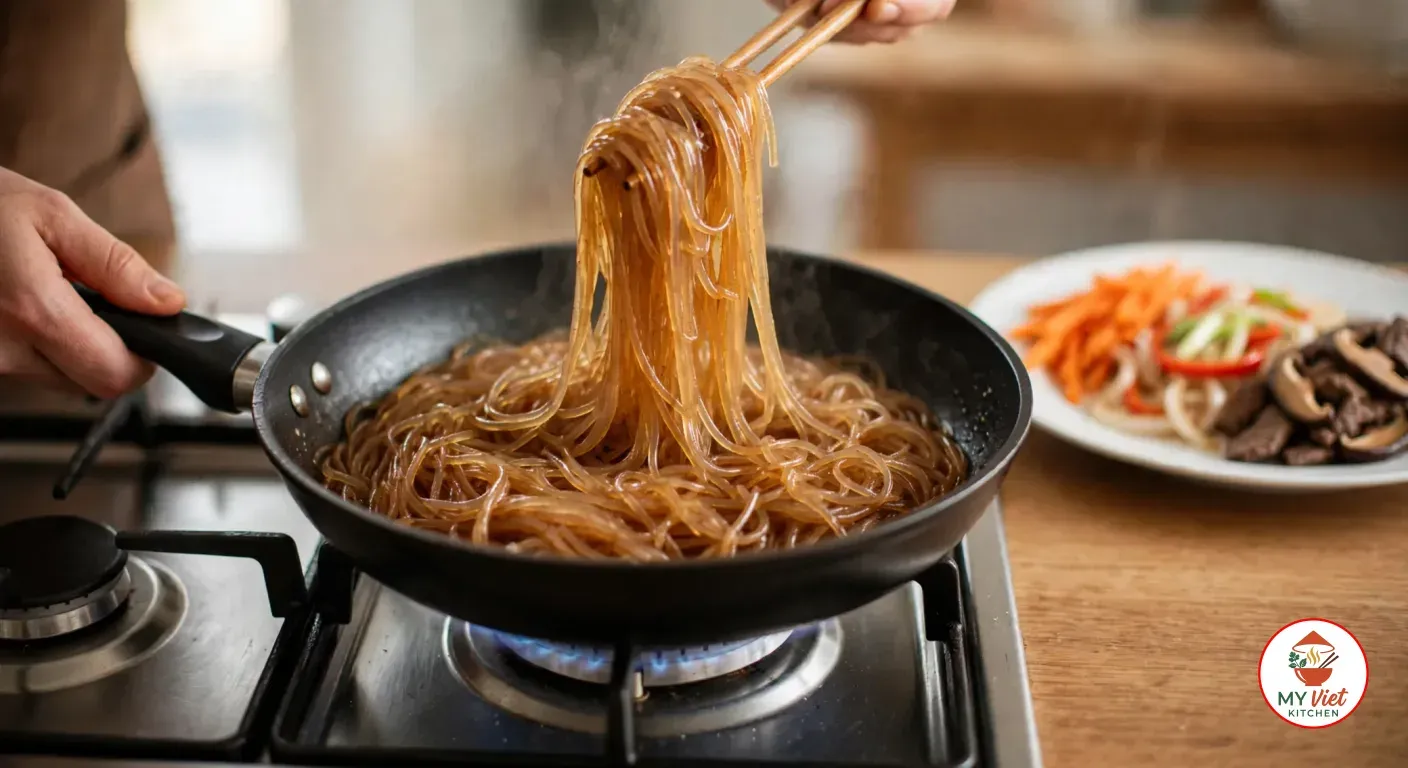
4Add 1/2 tablespoon of oil to the same skillet and turn the heat to high. Tip in the beef and mushrooms with any marinade left in the bowl and keep them moving for 2 to 3 minutes. Once no pink shows on the beef, move everything to the plate with the vegetables. Turn the heat down to medium, pour in the last 1/2 tablespoon of oil, add the sauced noodles and toss them in the pan for 3 to 4 minutes, until glossy, a little sticky and soft right through. Return them to the large bowl.
Step 5: Toss and Serve
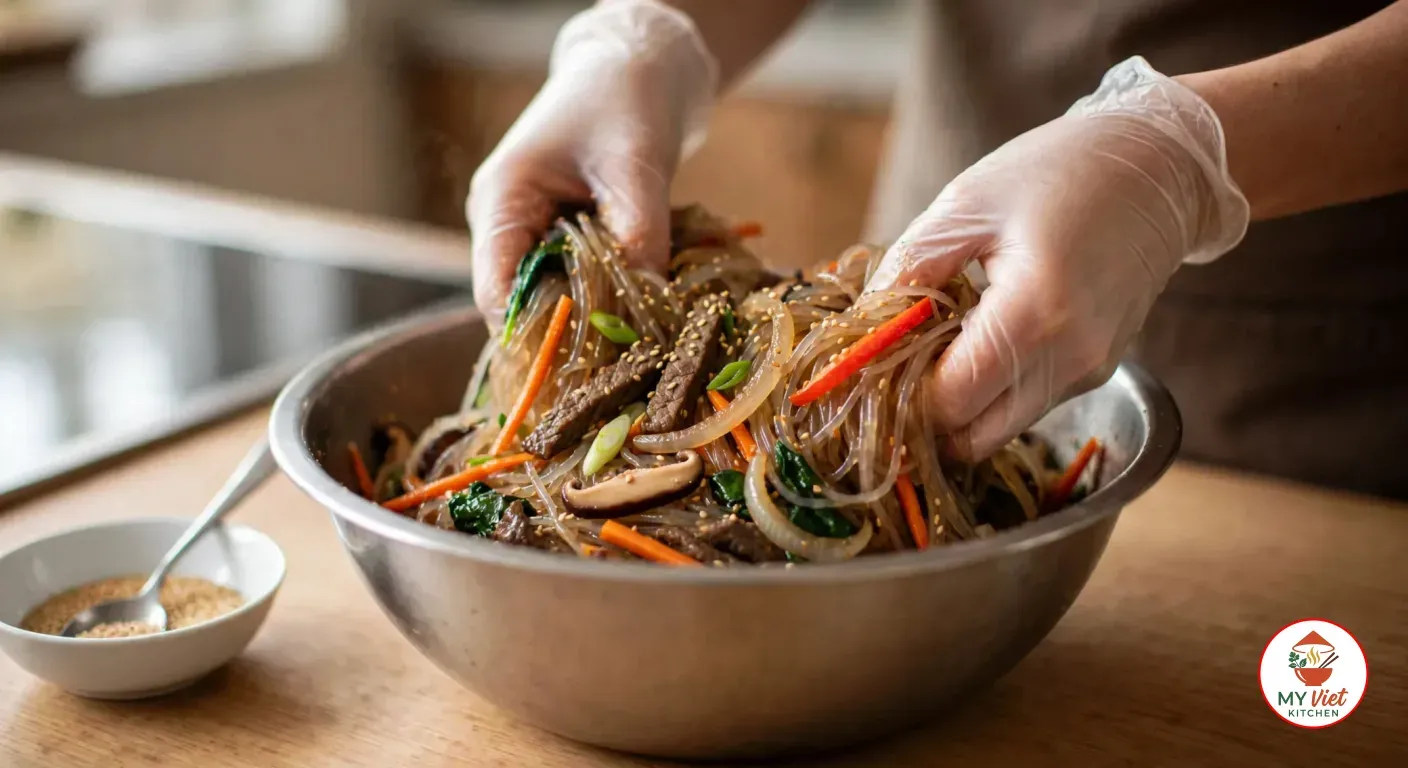
5Add the vegetables, beef, mushrooms and spinach to the noodles, pour over the rest of the sauce, and toss with tongs or gloved hands until every strand is evenly coloured. Taste a strand and add up to 1/2 teaspoon more soy sauce or sugar if it needs it. Sprinkle with the sesame seeds and serve warm or at room temperature.
Frequently Asked Questions
Can you make japchae ahead of time?
Yes. Japchae is eaten warm, at room temperature or cold, and keeps for a few days chilled. Wikipedia notes that it can be eaten freshly made or the day after, one reason it is popular at potlucks (Wikipedia). Health Canada’s storage chart puts leftover cooked meat, stews and vegetable dishes at 3 to 4 days, with the fridge at 4 °C (40 °F) or colder (Health Canada). Hyosun Ro of Korean Bapsang says leftovers reheat well in the microwave and the noodles turn soft and chewy again (Korean Bapsang).
Is japchae a side dish or a main course?
Both. It is commonly served as banchan, a side dish, but may also be eaten as a main dish. Served on a bed of rice, it is called japchae-bap (Wikipedia). The quantities here make 4 main-course servings with the beef and vegetables included; as one banchan among several, the same batch goes further.
Can you make japchae without meat?
Yes. Hyosun Ro’s advice for a meatless japchae is to leave out the meat and add a little more mushroom or other vegetables. She calls pan-fried tofu an excellent substitute for the meat (Korean Bapsang). Mushroom japchae, beoseot-japchae, is a named variety in its own right (Wikipedia). Marinate the extra shiitake or the tofu strips just as you would the beef.
Why are my japchae noodles hard or clumped?
Most often they were drained too early. Dangmyeon should be soft and elastic, and Hyosun Ro says plainly that they should not be al dente (Korean Bapsang). Taste one before you drain; if it has a firm white centre, give it another minute or two. Toss the noodles with sauce as soon as they are drained so the strands stay apart, and expect chilled leftovers to firm up until they are reheated.
Sources
- Japchae, Wikipedia
- Japchae: A royal Korean tradition, but kings of old held the noodles, Lee Eun-joo, Korea JoongAng Daily, February 2010
- 광해군이 매일마다 찾던 요리 (The dish King Gwanghaegun asked for every day, in Korean), Hwang Kwang-hae, Seoul Food Safety News on Seoul Metropolitan Government’s Mediahub, March 2016
- Korean recipes: Japchae stir-fried noodles, Korea.net, Ministry of Culture, Sports and Tourism, November 2015
- Japchae (Stir-fried Glass Noodles) Recipe, Hyosun Ro, Korean Bapsang, updated January 2021
- Safe food storage, Health Canada, April 2024
- Japchae (Glass noodles stir-fried with vegetables: 잡채), Maangchi, YouTube, November 2014
- Tried and true japchae recipe everyone loves! Perfect for gatherings with family and friends!, Korean Bapsang, YouTube, March 2022