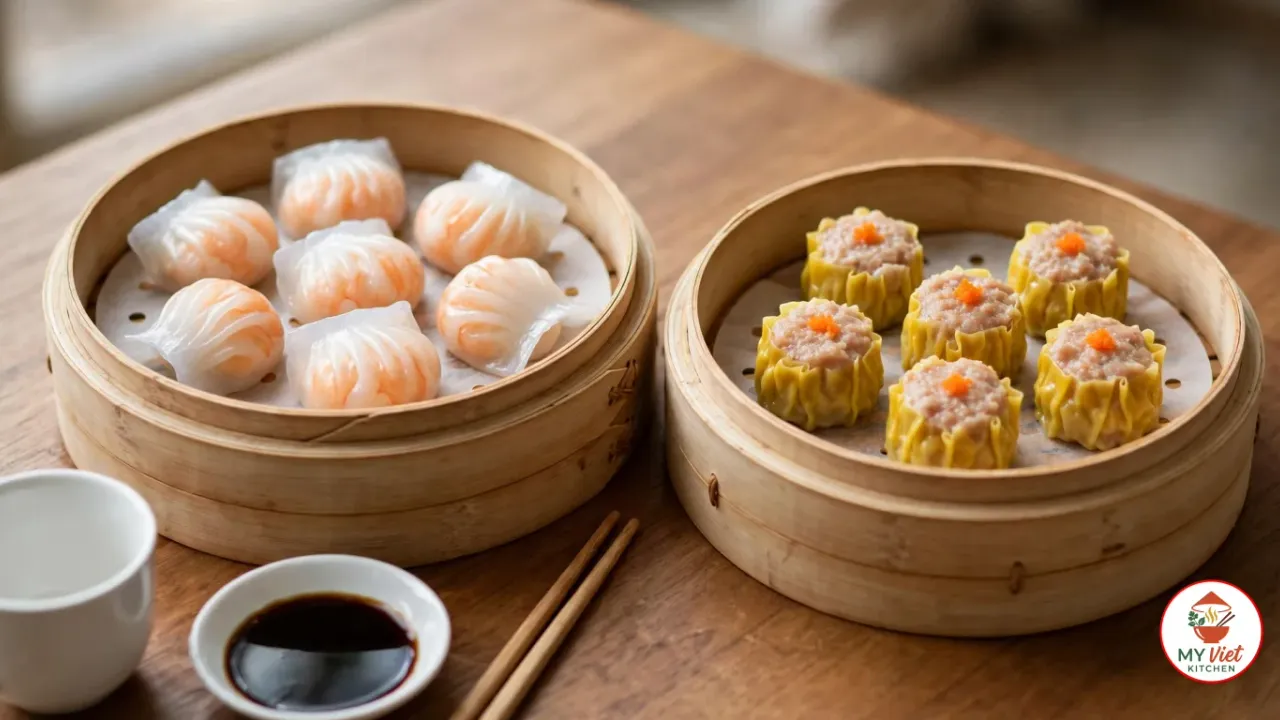
Dim sum is the Cantonese spread of small dishes served with tea, and har gow and siu mai are two of its classics. This recipe makes 20 of each: shrimp har gow in a thin wheat-starch skin you press out with a cleaver, and open-topped pork and shrimp siu mai in bought yellow wrappers. It takes 2 hours 25 minutes, and almost half of that is pleating and wrapping, so read the timeline below before you start.
Prep Time: 2 hours (includes 20 minutes soaking and 30 minutes chilling) | Cook Time: 25 minutes | Total Time: 2 hours 25 minutes | Servings: 4 (40 dumplings)
Difficulty: Hard | Calories: ~580 per serving

What Are Har Gow and Siu Mai?
Har gow are Cantonese shrimp dumplings. Wikipedia lists wheat starch, tapioca starch, shrimp, cooked pork fat and bamboo shoots among their main ingredients. After cooking, the wrapper turns somewhat translucent, which is why the dumplings are sometimes called crystal shrimp dumplings. The same article says har gow is the dish a dim sum chef’s skill is judged on. Traditionally it has at least seven pleats, preferably ten or more, and a thin, translucent skin that is still sturdy enough not to break when picked up with chopsticks (Wikipedia).
Siu mai stand open at the top. For the Cantonese version, Wikipedia gives the standard filling as minced pork, small whole or chopped shrimp and Chinese black mushroom, wrapped in a thin sheet of lye-water dough that is either yellow or white. The center usually gets an orange dot of crab roe or diced carrot, though a green pea is also used (Wikipedia).
The two are often served together, and then they are collectively called ha gow-siu mai. With cha siu bao and egg tarts, they are counted among the classic dishes of Cantonese dim sum, nicknamed the Four Heavenly Kings (Wikipedia). You eat them at yum cha, the Cantonese tradition of breakfast or brunch with tea and dim sum, where small portions come in bamboo steamers and are shared around the table (Wikipedia).
How Do You Fit Both Dumplings Into One Afternoon?
Only the wrapping is slow, so set things up to keep your hands busy. Put the mushrooms in hot water first and make both fillings while they soak. The fillings then chill for 30 minutes. Make the har gow dough in the last 10 minutes of that chill, not earlier. Red House Spice notes that, unlike flour dough, this one needs no rest and can be shaped at once. Leave it too long and its texture changes until it is no longer workable (Red House Spice).
Pleat the har gow first, while the dough is soft. Allow about 40 minutes for 20 of them if the fold is new to you. The siu mai take about 20 minutes, since the wrappers are bought and only need gathering.
Steam the siu mai before the har gow, so the har gow reach the table last and hottest. Made With Lau explains that steamed dumpling wrappers dry out from air exposure once they leave the steamer, and suggests keeping them in the steamer until you are ready to eat (Made With Lau).
Have more time? Daddy Lau marinates his siu mai filling in the fridge for 4 to 8 hours (Made With Lau). Have less? Make only one kind. Each dumpling has its own ingredient groups below, so you can skip the har gow filling and dough, or the siu mai filling and wrappers.
Which Ingredients Matter, and What Can You Swap?
Wheat starch and tapioca starch. Wheat starch is not wheat flour, and flour will not give a see-through skin. Red House Spice uses wheat starch, tapioca starch and water in equal volumes, and allows cornstarch or potato starch in place of the tapioca. The water must be just boiled. With cooler water, Wei Guo warns, you can end up with a bowl of white liquid (Red House Spice).
Siu mai wrappers. Most Chinese supermarkets sell siu mai wrappers, which are yellow and round. Daddy Lau does not recommend making your own, because wrappers rolled by hand are hard to get both thin and sturdy. Wonton wrappers are made with the same ingredients but cut square: buy the thinnest you can find and trim off the corners, or trace around an upturned cup (Made With Lau).
Pork and shrimp. Pick a fatty cut such as pork shoulder butt or belly. Made With Lau finds that lean loin or chops turn out dry and tough. Its tip for plump siu mai that are not soggy is to squeeze as much liquid as you can out of the meat, shrimp and mushrooms (Made With Lau).
Fatback and bamboo shoots. The fat keeps the har gow filling juicy. Red House Spice uses a little lard or cooking oil for the same job, and water chestnuts alongside the bamboo shoots for crunch (Red House Spice). Either swap works here, as does fish roe or a green pea in place of the carrot on the siu mai.
Ingredients for Dim Sum
For the Har Gow Filling:
- 10 ounces (280 g) raw shrimp, peeled and deveined
- 1 ounce (30 g) pork fatback, finely diced, or 1 tablespoon lard
- 3 tablespoons (30 g) finely diced bamboo shoots
- 2 teaspoons cornstarch
- 1 teaspoon sesame oil
- 1/2 teaspoon sugar
- 1/2 teaspoon salt
- 1/4 teaspoon ground white pepper
For the Siu Mai Filling:
- 4 dried shiitake mushrooms
- 8 ounces (225 g) minced pork, not too lean
- 4 ounces (115 g) raw shrimp, peeled, deveined and chopped
- 1 tablespoon light soy sauce
- 1 tablespoon oyster sauce
- 1 tablespoon cornstarch
- 1 teaspoon sesame oil
- 1 teaspoon sugar
- 1/4 teaspoon ground white pepper
For the Har Gow Dough:
- 1/2 cup (60 g) wheat starch
- 1/2 cup (60 g) tapioca starch
- 1 pinch salt
- 1/2 cup (120 ml) boiling water
- 1 teaspoon lard or neutral oil, plus more for the cleaver
For Wrapping and Steaming:
- 20 round siu mai wrappers or thin yellow wonton wrappers
- 1 small carrot (about 1 ounce / 30 g), very finely minced, or fish roe
- Perforated parchment rounds or napa cabbage leaves, to line the steamer
Step-by-Step Instructions
Step 1: Make Both Fillings
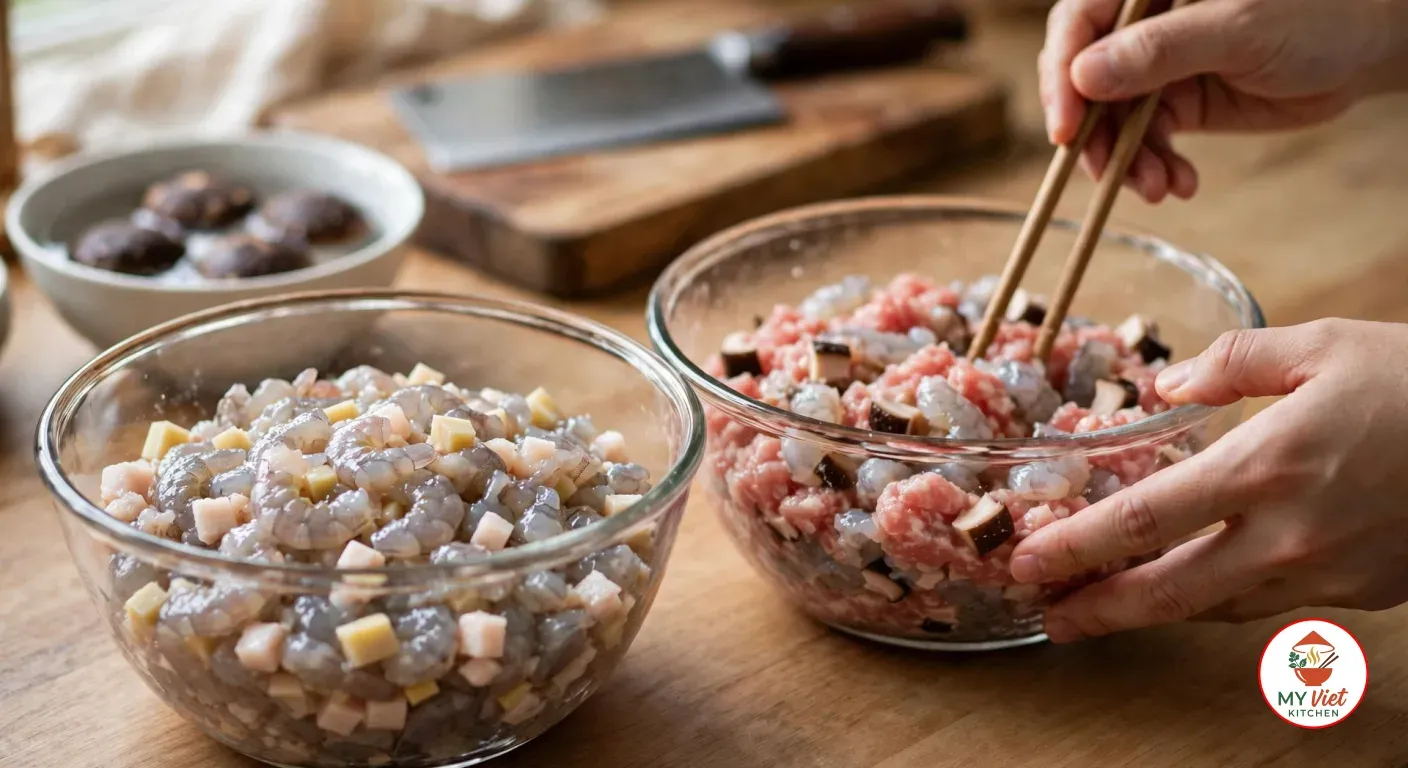
1Cover the shiitake with hot water and leave them for 20 minutes. While they soak, pat the har gow shrimp dry with paper towels, since wet shrimp make a loose filling. Chop two-thirds of them finely and cut the rest into 1/2-inch (1 cm) pieces so each dumpling has some bite. Mix them with the fatback, bamboo shoots, 2 teaspoons of cornstarch, 1 teaspoon of sesame oil, the sugar, salt and white pepper, stirring in one direction for 1 to 2 minutes until sticky. Squeeze the mushrooms dry and dice them finely. In a second bowl, work them into the pork and chopped shrimp along with the soy and oyster sauces, 1 tablespoon of cornstarch and the siu mai’s own sesame oil, sugar and pepper. Keep mixing for 2 to 3 minutes; the pork is ready when it clings to the spoon in one mass. Cover both bowls and chill for 30 minutes.
Step 2: Make the Har Gow Dough
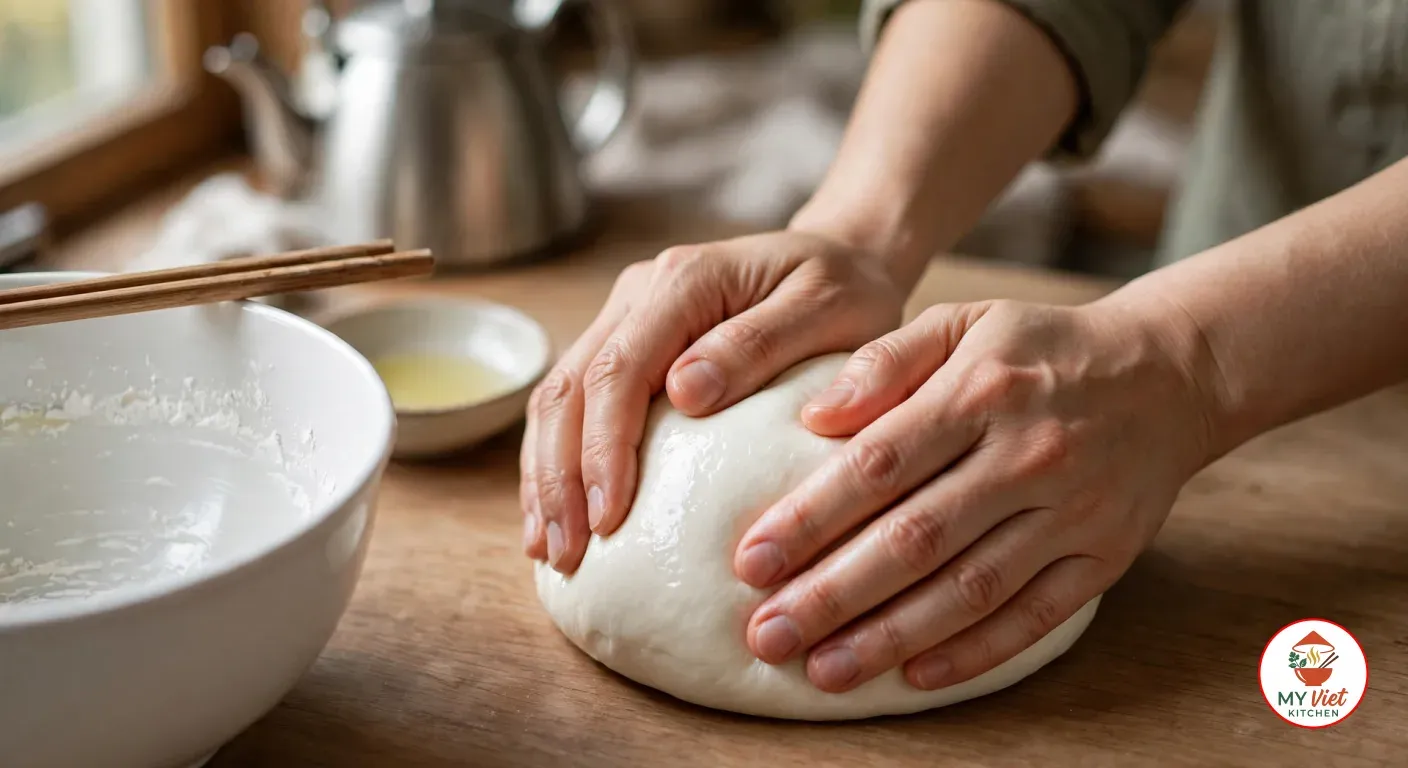
2Start this about 10 minutes before the fillings finish chilling. Mix the wheat starch, tapioca starch and salt in a heatproof bowl. Bring the water to a full boil and pour 1/2 cup (120 ml) straight in while stirring fast with chopsticks; water that has cooled even a little leaves a runny paste. Add 1 teaspoon of lard or oil. When the clump is cool enough to touch, knead it for 2 to 3 minutes into a smooth, soft white dough. Cover it with plastic wrap and go straight on to shaping.
Step 3: Roll and Pleat the Har Gow
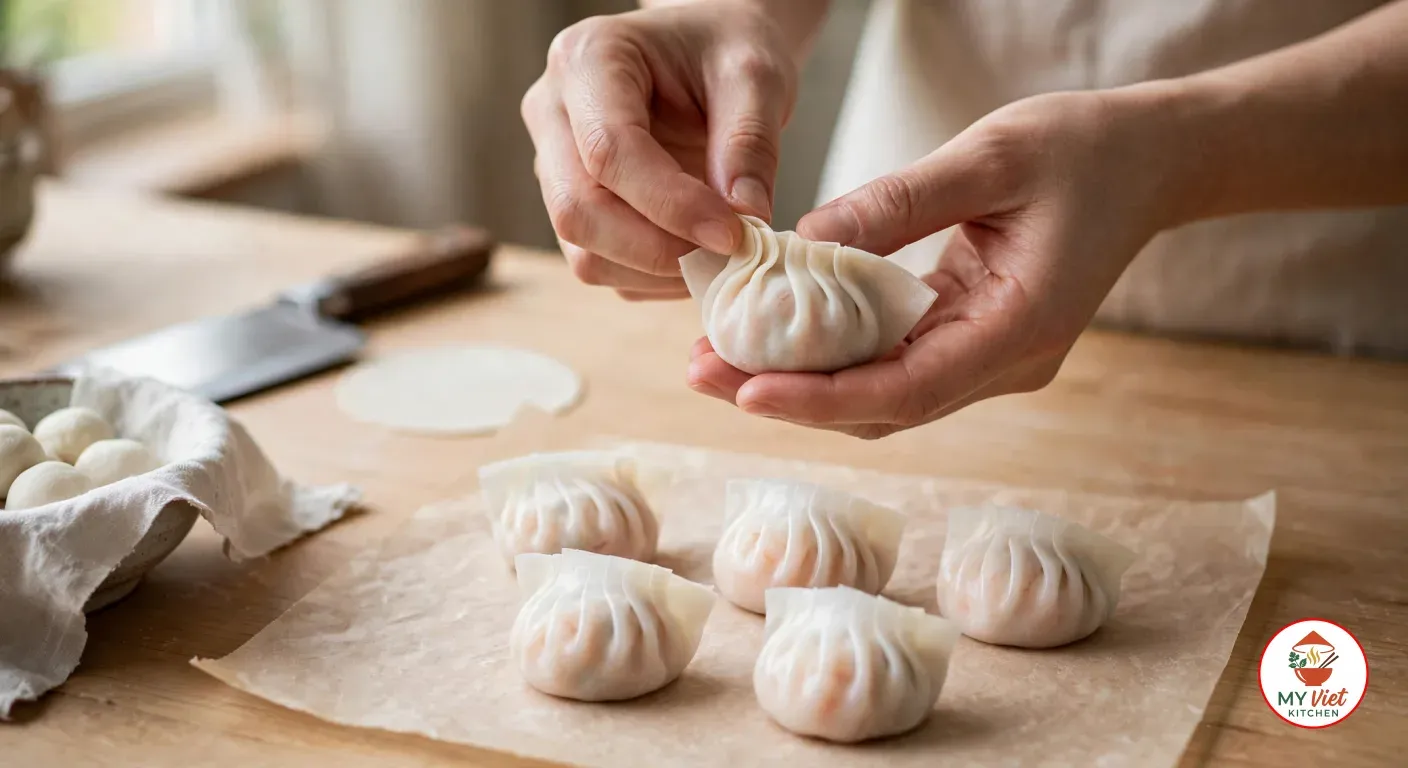
3Roll the dough into a log and cut it into 20 pieces, about 12 g each. Keep them under plastic wrap and shape one at a time. Rub a little oil on the flat side of a cleaver and on the counter. Roll a piece into a ball, lay the cleaver on it and press down, rocking it from side to side, into a round about 3 inches (8 cm) across and as thin as it will go without tearing. Peel it off and put about 1 tablespoon of filling in the middle. Pleat the far edge 7 to 10 times with one thumb and index finger while the other thumb pushes the smooth near edge forward, then pinch the top closed into a crescent. Set each one on a parchment square and keep the finished dumplings covered.
Step 4: Wrap the Siu Mai
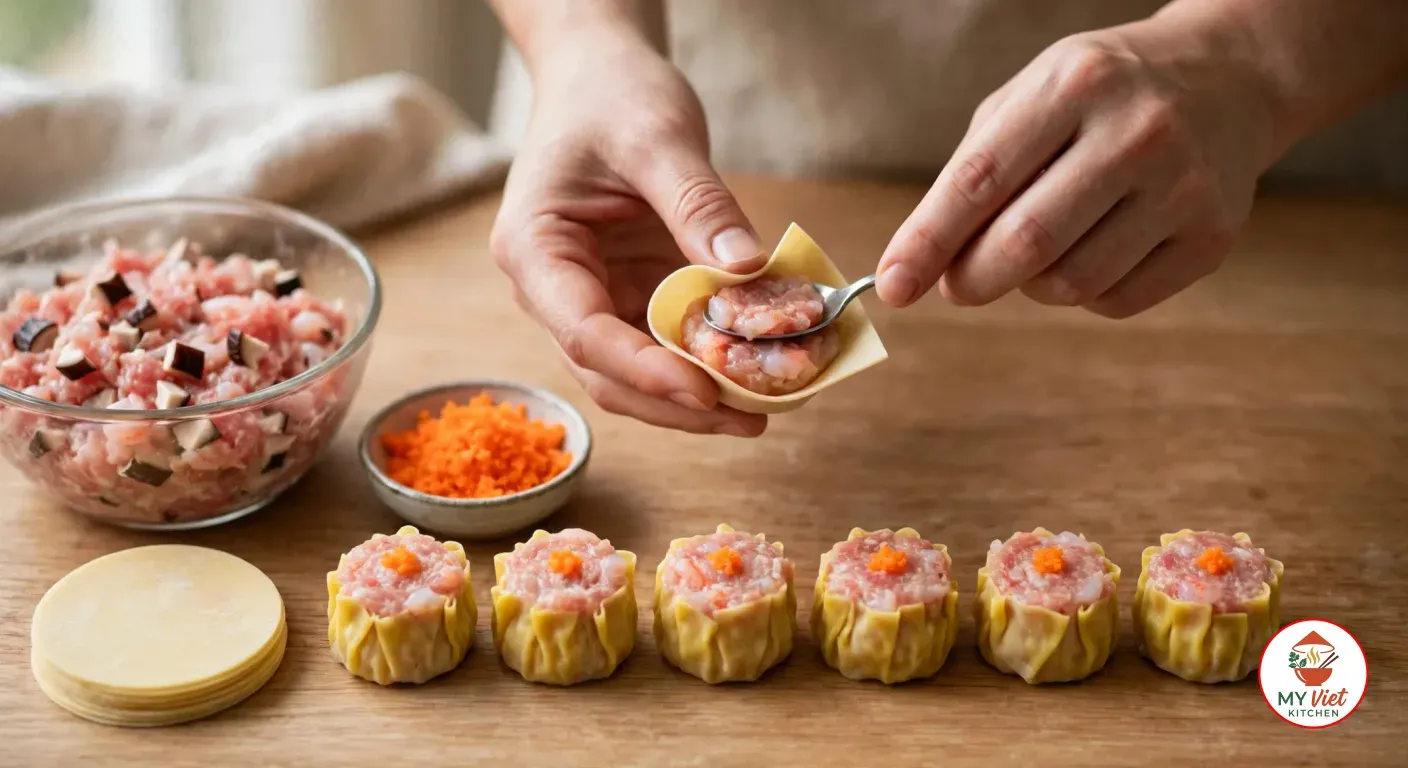
4If your wrappers are square, trim them into circles first. Make a loose ring with the thumb and index finger of one hand and lay a wrapper over it. Put about 1 heaping tablespoon of filling in the center and press it down into the ring with the back of a small spoon, turning the dumpling and squeezing gently so the wrapper gathers into folds around the sides while the top stays open. Smooth the exposed filling flat with the spoon, then tap the base on the counter so it stands upright. Dot the center with minced carrot. Make 20.
Step 5: Steam the Dim Sum
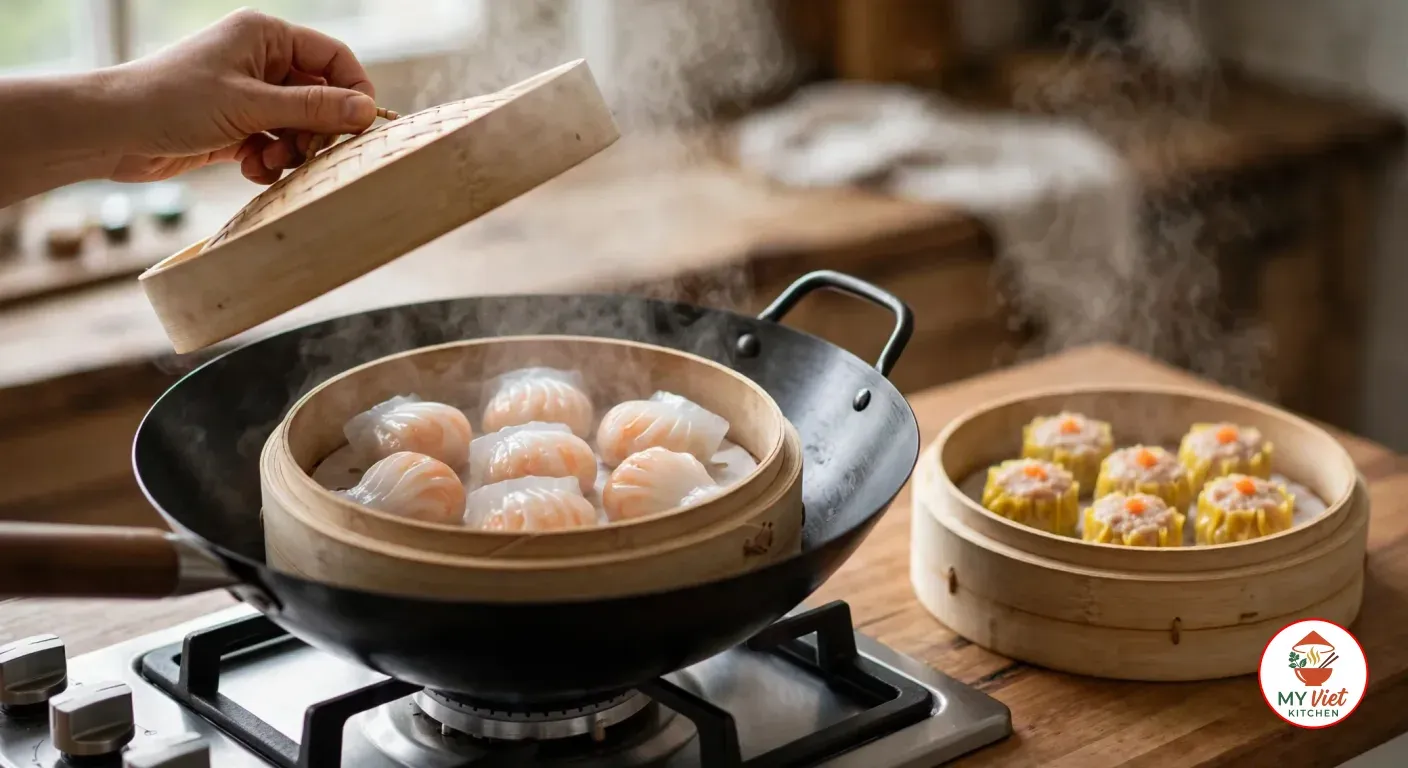
5Line two bamboo steamer baskets with perforated parchment rounds or napa cabbage leaves and set the dumplings 1 inch (2.5 cm) apart, because they swell a little. Pour about 2 inches (5 cm) of water into a wok, check that it stays below the bottom of the basket, and bring it to a full boil. Steam the siu mai over high heat for 10 minutes, until the filling is firm and no pink shows at the top. Then steam the har gow over medium heat for 6 minutes, until the skins turn glossy and translucent and the pink shrimp show through. Work in batches if they don’t all fit, topping up the wok with boiling water between them. Rest the baskets for 1 to 2 minutes before lifting the dumplings out, and serve them in the baskets.
Frequently Asked Questions
Why did my har gow dough crack or turn into paste?
A runny paste means the water was not boiling; cracks usually mean the dough cooled, dried out or waited too long. Keep the pieces covered and press each wrapper as soon as you cut it. Wei Guo of Red House Spice explains that wheat starch has no gluten, so the dough is less elastic and more delicate than flour dough. She adds that it can take a little practice to feel confident with it (Red House Spice).
Can you freeze har gow and siu mai?
Yes, freeze them uncooked, but the two sources here handle them differently. Red House Spice keeps uncooked har gow in the freezer for up to 4 weeks and steams them without thawing, starting over cold water and cooking for 8 minutes once it boils (Red House Spice). Made With Lau freezes siu mai on a tray, not touching, for 1 to 2 hours before bagging them, keeps them for at least a month and thaws them completely before steaming. It warns against steaming them first and freezing them afterwards (Made With Lau).
How do you stop dumplings sticking to the steamer?
Put a liner under every dumpling and give them a minute before you lift them. This recipe uses perforated parchment or napa cabbage leaves, while Red House Spice sets each har gow on a thin slice of carrot. Wei Guo also notes that very hot har gow skin tends to stick, so let the dumplings cool a little before you move them (Red House Spice).
Does the video make the same recipe?
It covers the har gow only. Chinese Cooking Demystified says the wheat starch gives a chewy, translucent wrapper, calls the wrapper tough to make, and tells home cooks not to feel discouraged if their first har gow aren’t quite right (Chinese Cooking Demystified). Its written recipe is a separate one, so use the amounts on this page. For the siu mai fold, Made With Lau’s written guide breaks the shaping into small steps, using a spoon to press the filling into the wrapper (Made With Lau).
Sources
- Har gow, Wikipedia
- Shumai, Wikipedia
- Yum cha, Wikipedia
- Har gow: dim sum shrimp dumplings (虾饺), Wei Guo, Red House Spice, updated June 2022
- Siu Mai, Daddy Lau, Made With Lau, April 2021 (updated October 2026)
- Har Gow, Dim Sum Shrimp Dumplings (虾饺), Chinese Cooking Demystified, YouTube, October 2018