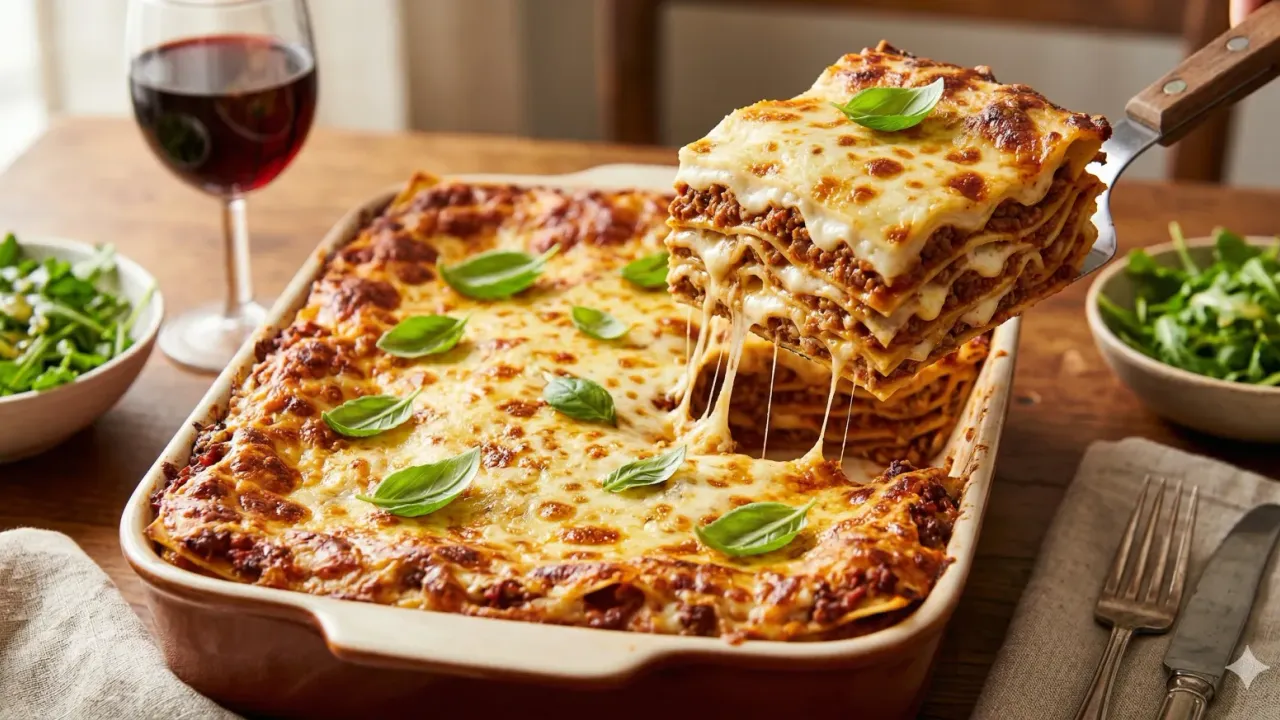
Lasagna is the crown jewel of Italian baked pasta — a magnificent tower of silky noodles, slow-simmered Bolognese ragu, velvety bechamel sauce, and rivers of melted cheese. This classic lasagna recipe has anchored Italian Sunday tables for centuries. Each layer contributes something essential. The meat sauce brings depth. Meanwhile, the bechamel brings creaminess. On top, the cheese creates that irresistible golden crust. When you pull a perfectly baked lasagna from the oven, bubbling at the edges and bronzed on top, every person in the room stops talking and starts gathering around the table.
Prep Time: 45 minutes | Cook Time: 60 minutes | Servings: 8
Difficulty: Medium | Calories: ~580 per serving
What Makes Lasagna Special?
Lasagna stands apart from every other pasta dish because of its architecture. Unlike spaghetti or penne, where sauce coats the exterior of the noodle, lasagna traps flavor between every layer. Each bite delivers pasta, meat, cream, and cheese simultaneously. This layered construction creates a complexity of texture that no single-component pasta dish can achieve. The top crisps into a golden shell. In contrast, the middle stays soft and saucy. Below that, the bottom absorbs the concentrated juices that settle during baking.
The foundation of great lasagna is a proper Bolognese ragu. This is not a quick tomato sauce with ground beef stirred in at the last minute. A true Bolognese simmers for nearly an hour. During that time, the meat breaks down into fine, tender strands. Gradually, the tomatoes reduce into a concentrated paste. The wine evaporates and leaves behind its acidity and depth. Patience transforms ordinary ingredients into something extraordinary. Rushing the sauce is the single biggest mistake home cooks make with lasagna.
The second essential element is bechamel. In authentic Italian lasagna, ricotta has no place. Instead, a smooth white sauce made from butter, flour, and milk creates the creamy layer between pasta sheets. Bechamel binds the layers together. It prevents the noodles from drying out in the oven. A touch of freshly grated nutmeg gives the sauce a warm, aromatic quality that quietly elevates every bite. Without bechamel, lasagna loses its elegance and becomes just another baked pasta casserole.

Choosing the Right Pasta Sheets
The pasta you choose determines the texture of your entire lasagna. Not all noodles perform the same way in the oven. Here are the options worth considering when planning your bake.
- Fresh pasta sheets (best choice): Homemade or store-bought fresh pasta cooks quickly and produces the thinnest, silkiest layers. Fresh sheets do not need boiling — simply layer them directly into the dish. They absorb sauce beautifully and create a delicate texture that dried noodles cannot match.
- Dried lasagna noodles (reliable option): Traditional dried noodles are widely available and produce excellent results. Boil them for 2 minutes less than the package directions. This al dente starting point ensures they finish cooking in the oven without becoming mushy. Lay them flat on oiled parchment after boiling to prevent sticking.
- No-boil noodles (convenient shortcut): These thinner dried sheets hydrate directly in the baking dish. They save time but require extra sauce and bechamel. The dry noodles absorb liquid during baking, so a lasagna built with insufficient moisture turns out stiff and chewy. Add roughly 20 percent more sauce when using no-boil sheets.
- Whole wheat or gluten-free noodles (dietary alternative): These specialty noodles work in lasagna but require careful handling. Whole wheat noodles have a nuttier flavor and firmer bite. Gluten-free versions tend to be more fragile, so handle them gently after boiling. Both absorb liquid differently, so test your brand before committing to a full recipe.
Ingredients for Lasagna
For the Bolognese Sauce:
- 1 pound ground beef (80/20 blend)
- 8 ounces ground pork
- 1 medium yellow onion, finely diced
- 2 medium carrots, finely diced
- 2 celery stalks, finely diced
- 4 cloves garlic, minced
- 1 can (28 oz) whole San Marzano tomatoes, crushed by hand
- 2 tablespoons tomato paste
- 1/2 cup dry red wine (Chianti or Sangiovese)
- 2 bay leaves
- 3 tablespoons extra virgin olive oil
- Salt and freshly ground black pepper to taste
For the Bechamel Sauce:
- 4 tablespoons unsalted butter
- 1/4 cup all-purpose flour
- 3 cups whole milk, warmed
- 1/4 teaspoon freshly grated nutmeg
- Salt and white pepper to taste
For Assembly:
- 1 pound dried lasagna noodles (or 1.5 pounds fresh pasta sheets)
- 1 pound low-moisture mozzarella cheese, shredded
- 1 cup freshly grated Parmigiano-Reggiano cheese
- Fresh basil leaves for garnish
Pro tip: Warm your milk before adding it to the butter-flour roux. Cold milk hitting a hot roux causes lumps that are nearly impossible to whisk out. Heat the milk in a separate saucepan or in the microwave until steaming. Then pour it in slowly while whisking constantly. This simple step guarantees a perfectly smooth bechamel every time.
Step-by-Step Instructions
Step 1: Prepare the Bolognese Sauce
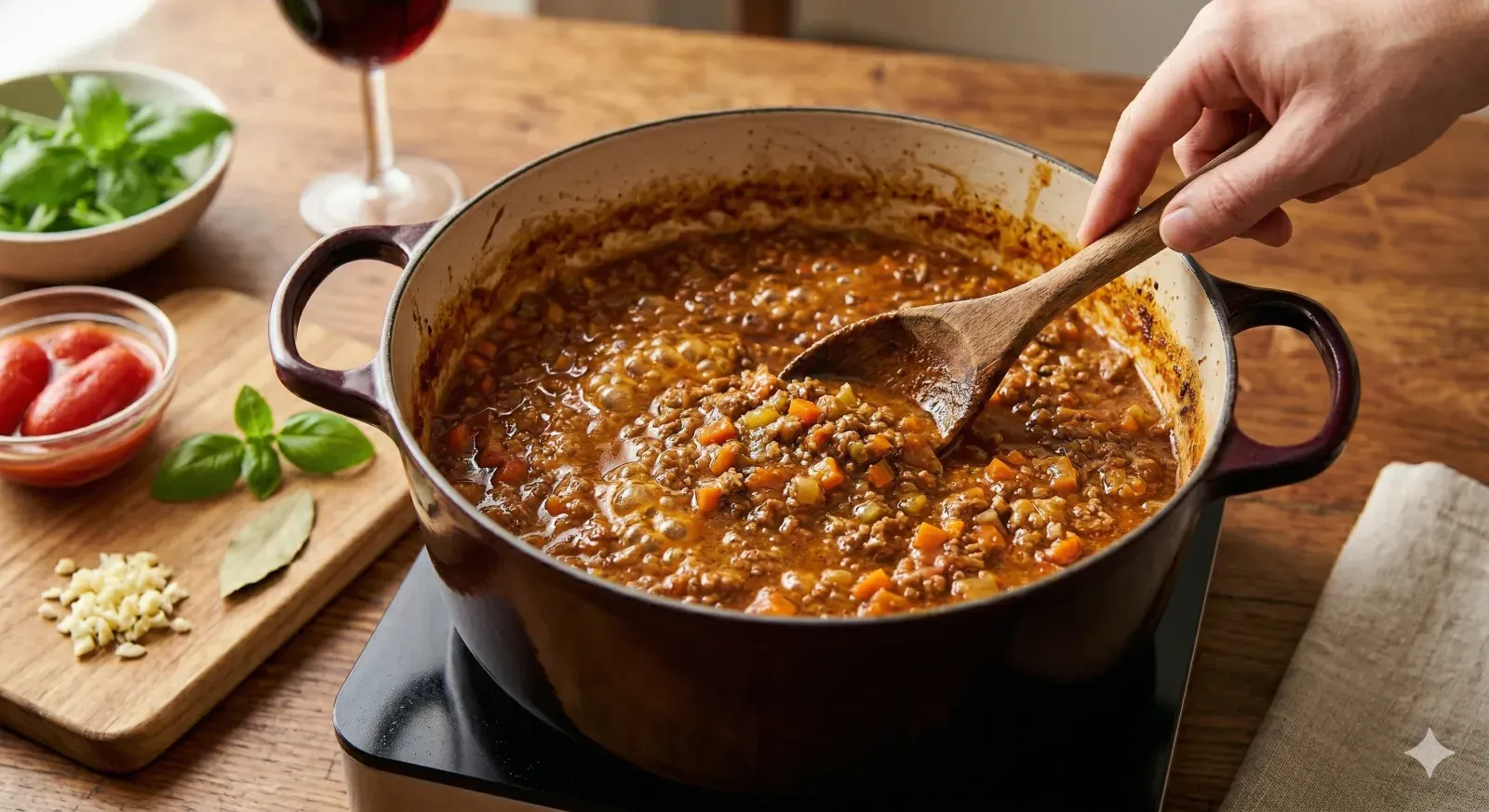
1 Heat the olive oil in a large Dutch oven over medium-high heat until it shimmers. Add the ground beef and pork in an even layer. Let the meat sit undisturbed for 3 to 4 minutes so it develops a deep brown crust on the bottom. Then break it into small pieces with a wooden spoon. Continue cooking for 8 to 10 minutes total until the meat is deeply browned throughout. Color equals flavor here — pale, grey meat produces a bland sauce. Remove the browned meat with a slotted spoon and set it aside on a plate.
In the same pot with the rendered fat, add the diced onion, carrots, and celery. This classic Italian soffritto forms the aromatic backbone of the Bolognese. Cook for 6 to 8 minutes, stirring occasionally, until the vegetables soften. Add the minced garlic and tomato paste. Stir constantly for about 1 minute until the paste darkens slightly. Pour in the red wine and scrape the bottom of the pot to lift all the browned bits. Let the wine reduce by half, about 3 minutes. Return the meat to the pot. Add the crushed San Marzano tomatoes and bay leaves. Reduce the heat to low and simmer gently for 45 minutes to 1 hour, stirring every 10 minutes. The finished sauce should be thick and rich, not watery.
Step 2: Make the Bechamel Sauce
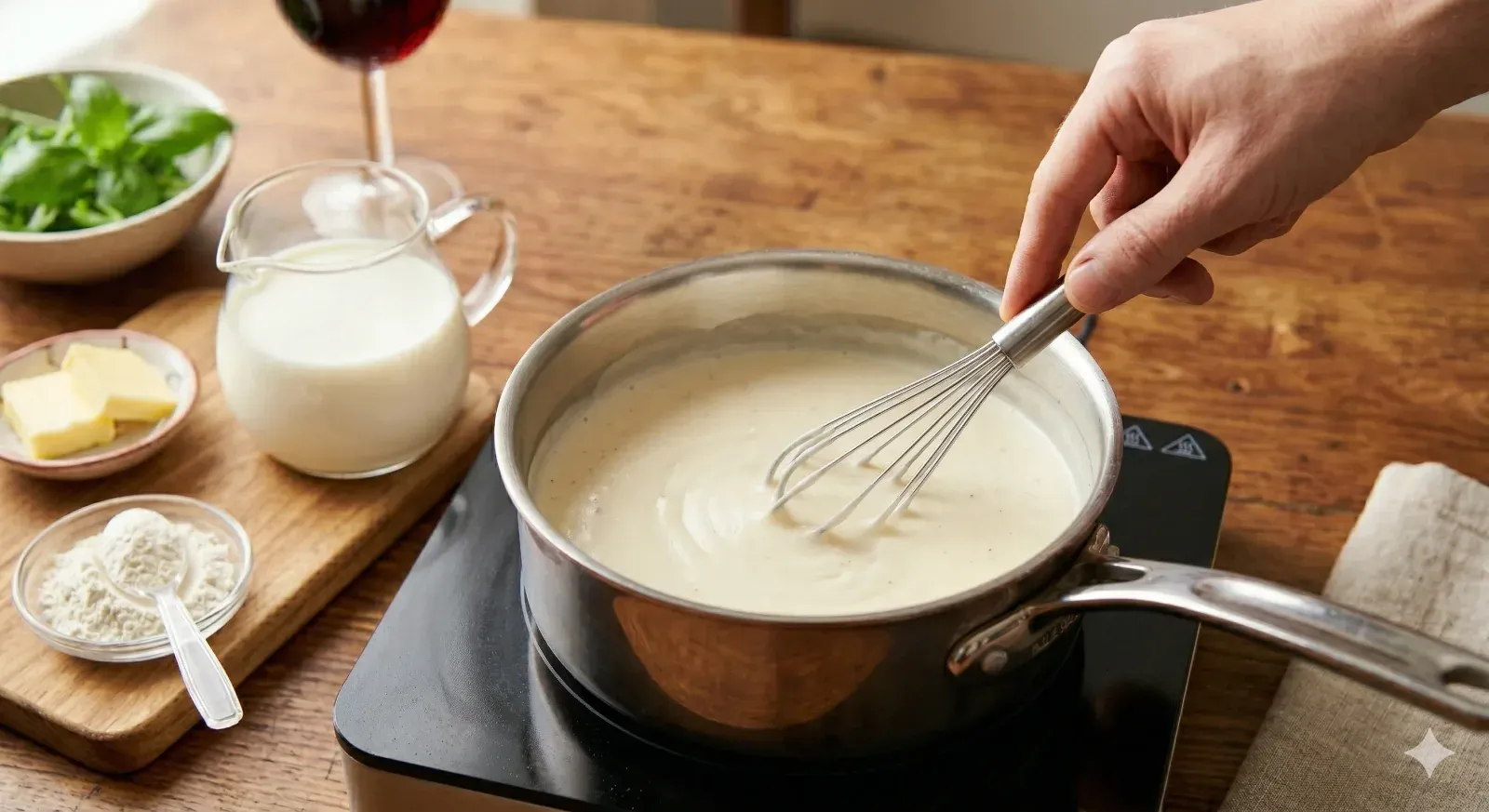
2 Melt the butter in a medium saucepan over medium heat. Once it foams, add the flour all at once. Whisk constantly for 2 full minutes to cook out the raw, starchy taste. This butter-flour mixture is called a roux, and it serves as the thickening agent for the entire sauce. The roux should turn a pale blonde color but should not brown. If it darkens too much, the bechamel will taste toasty rather than creamy.
Begin pouring in the warm milk in a slow, steady stream while whisking vigorously. Add about one-third of the milk first and whisk until fully incorporated before adding more. This gradual approach prevents lumps from forming. Continue whisking as the sauce heats and thickens. After 5 to 7 minutes, the bechamel should coat the back of a spoon and hold a line when you draw your finger through it. Remove the pan from the heat. Stir in the freshly grated nutmeg, a generous pinch of salt, and a few turns of white pepper. Cover the surface directly with plastic wrap to prevent a skin from forming while you prepare the other components.
Step 3: Cook the Pasta Sheets
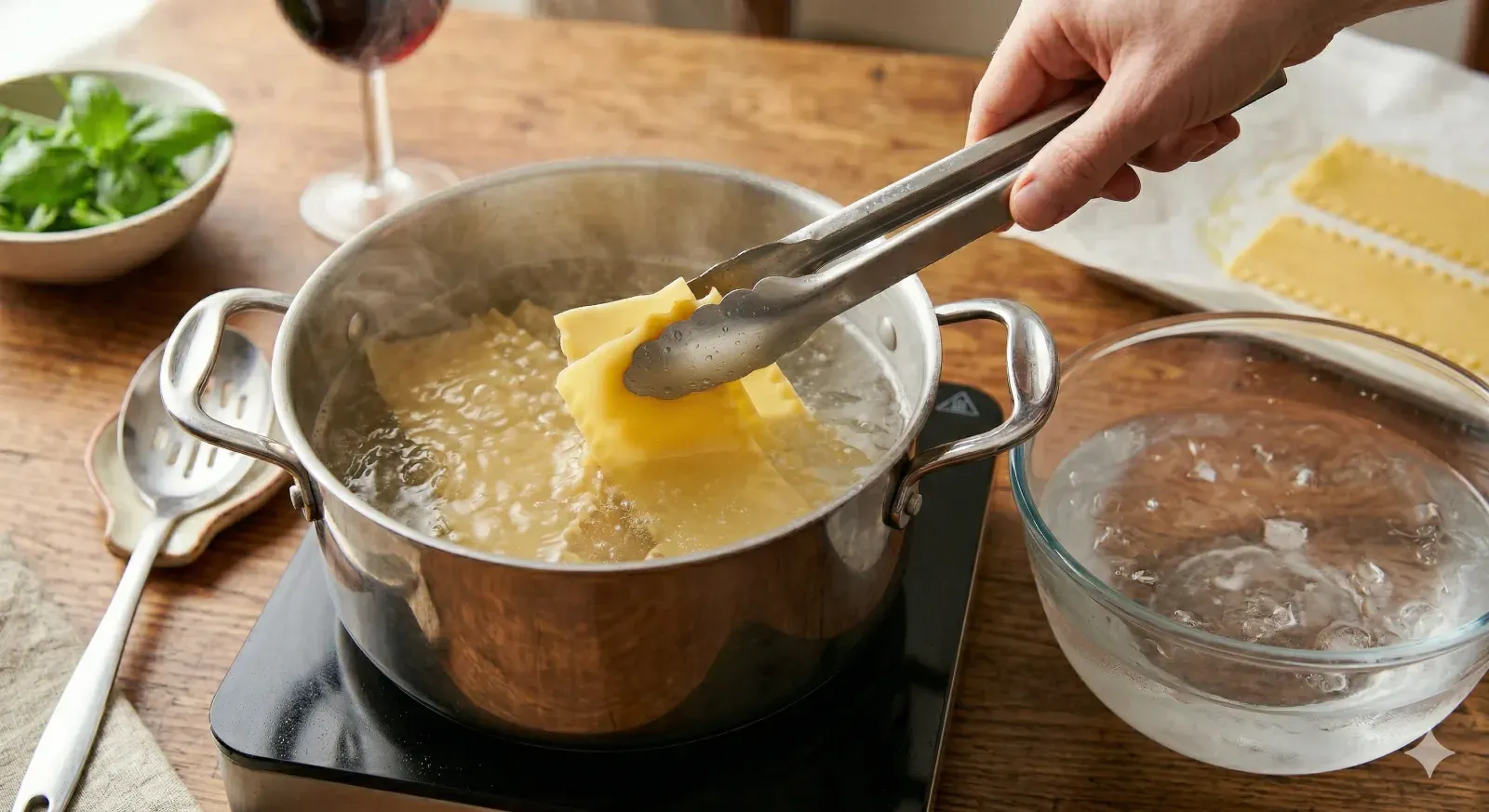
3 Bring a large pot of generously salted water to a rolling boil. The water should taste like the sea. Add the lasagna noodles and stir gently during the first minute to prevent them from sticking together. Cook for 2 minutes less than the time printed on the package. This shorter cooking time is critical because the noodles will continue absorbing liquid and softening during the 45-minute bake in the oven. Fully cooked noodles turn to mush by the time the lasagna is done.
Once the noodles reach al dente, transfer them immediately to a large bowl of cold water. This stops the cooking process instantly. After the noodles cool, lay them flat in a single layer on lightly oiled parchment paper or a clean kitchen towel. Overlapping noodles stick together and tear when you try to separate them later. If you are using fresh pasta sheets, skip the boiling step entirely. Fresh sheets are thin enough to cook through in the oven from the moisture in the sauces alone.
Step 4: Assemble the Lasagna Layers
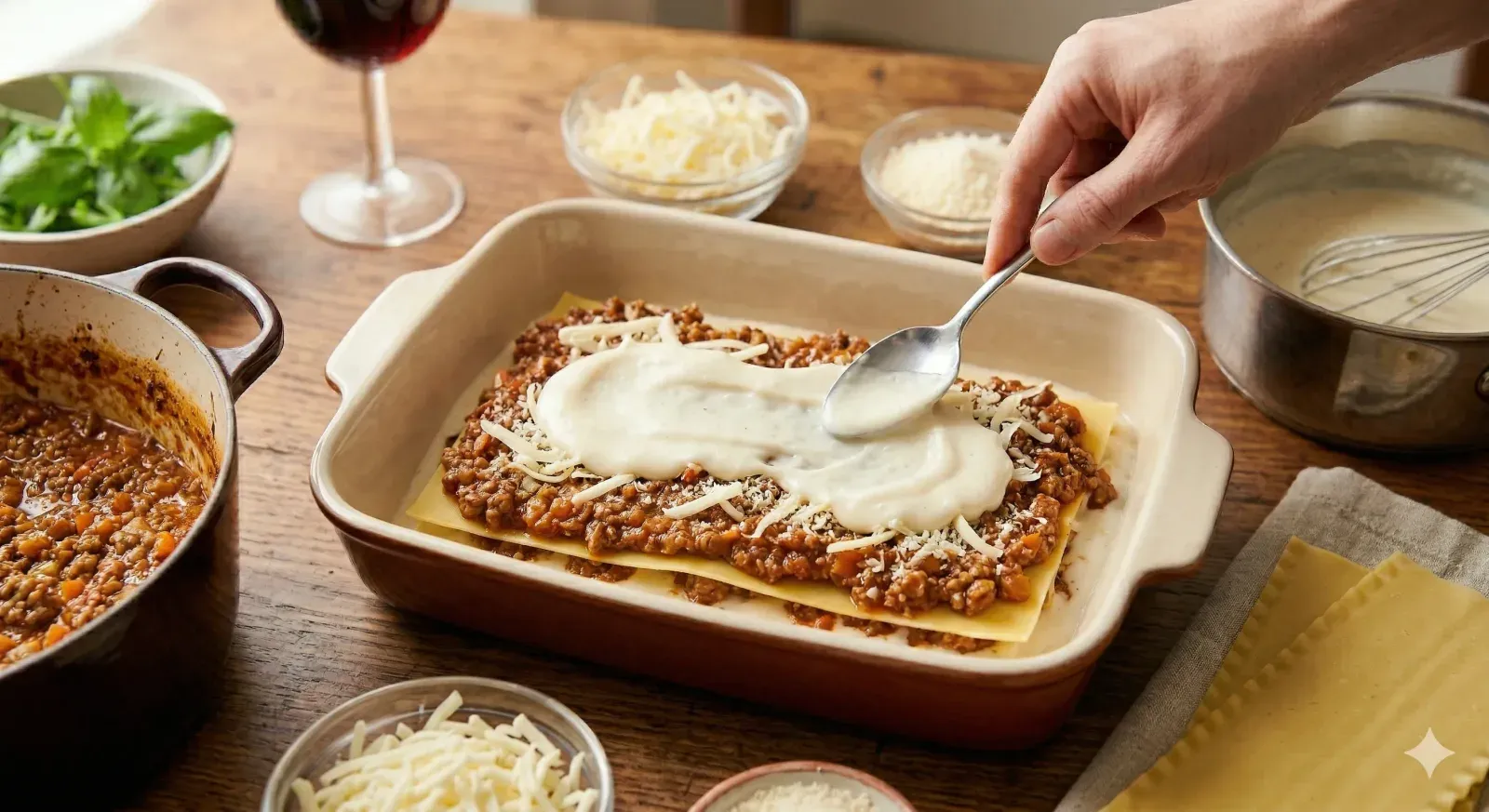
4 Preheat your oven to 375 degrees Fahrenheit (190 degrees Celsius). Begin by spreading a thin layer of Bolognese sauce across the bottom of a 9x13 inch baking dish. This prevents the first layer of pasta from sticking and burning. Lay pasta sheets over the sauce in a single layer without overlapping. Trim any sheets that hang over the edges of the dish. A clean, even foundation sets the stage for uniform layers above.
Spread one-third of the remaining Bolognese sauce evenly over the pasta. Drizzle one-third of the bechamel on top and gently spread it with the back of a spoon. Scatter one-third of the shredded mozzarella and a generous handful of Parmigiano-Reggiano across the surface. Place another layer of pasta sheets on top. Repeat this exact sequence two more times: Bolognese, bechamel, mozzarella, Parmesan, pasta. For the final top layer, cover the last sheet of pasta with the remaining bechamel, mozzarella, and an extra-generous shower of Parmigiano-Reggiano. This top layer creates the golden, bubbling crust that makes lasagna irresistible.
Step 5: Bake Until Golden and Bubbling
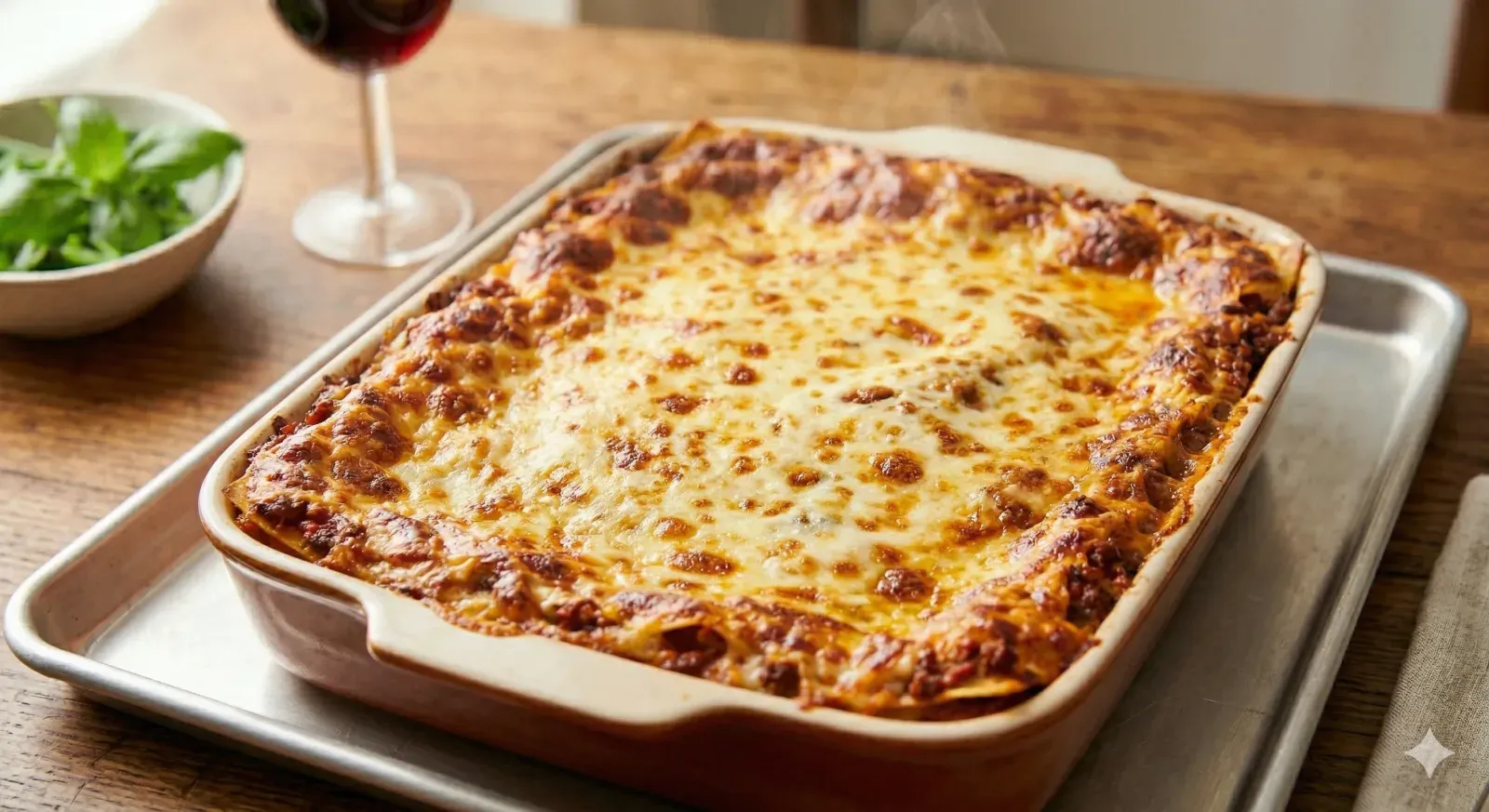
5 Cover the baking dish tightly with aluminum foil. The foil traps steam during the first phase of baking, which helps the noodles finish cooking and the cheese melt evenly. Place the dish on a rimmed baking sheet to catch any sauce that bubbles over. Bake at 375 degrees Fahrenheit for 25 minutes with the foil on. The internal temperature will climb steadily during this covered phase.
After 25 minutes, remove the foil carefully — hot steam will escape quickly. Continue baking uncovered for another 20 to 25 minutes. Watch for the signs of perfection: the top should turn deep golden brown, the edges should bubble actively, and the cheese should develop a slightly crispy crust in spots. If the top is not browning fast enough, switch to the broiler for the final 2 to 3 minutes. Keep the oven door slightly open and watch constantly during broiling. The difference between golden perfection and a charred surface is only seconds.
Step 6: Rest and Serve
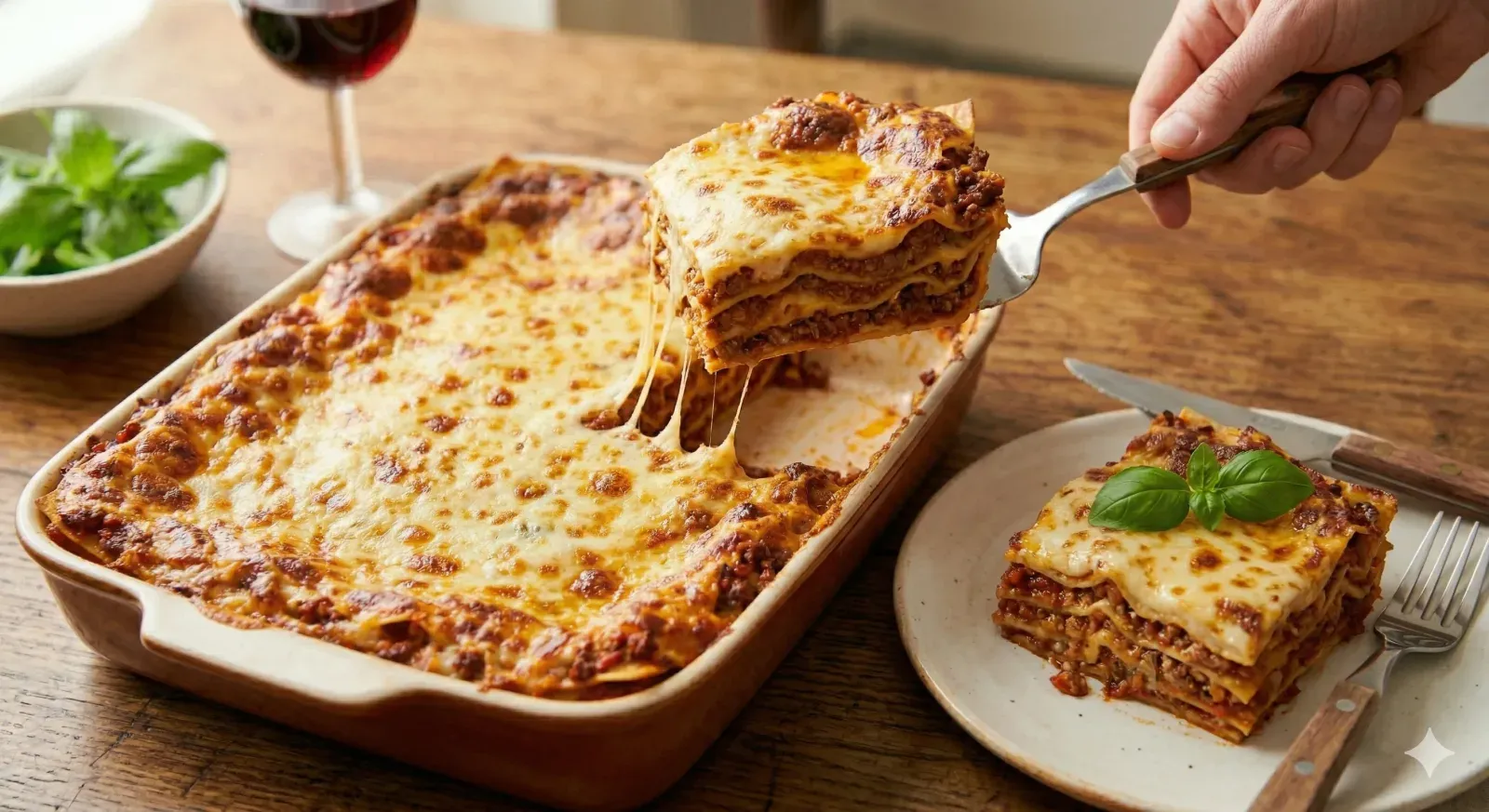
6 Remove the lasagna from the oven and place it on a wire rack or heat-safe surface. Now comes the hardest part — waiting. Let the lasagna rest for a full 15 to 20 minutes before cutting. During this resting period, the layers cool just enough for the cheese and sauces to set. If you cut too early, the layers collapse into a soupy puddle on the plate. Patience here is the difference between a beautiful slice and a messy heap.
After resting, garnish the top with fresh basil leaves. Use a sharp knife to cut clean, straight portions. A spatula or pie server works best for lifting each piece cleanly from the dish. The first slice is always the trickiest to remove, so do not worry if it is less photogenic than the rest. Serve each portion on a warmed plate alongside a crisp green salad dressed with a simple lemon vinaigrette. The acidity of the salad provides a welcome contrast to the richness of the lasagna.
Expert Tips for Perfect Lasagna
Simmer the Bolognese Longer Than You Think
A 15-minute meat sauce will never produce a great lasagna. The Bolognese needs at least 45 minutes of gentle simmering. During this time, the tomatoes break down completely. The wine mellows. The meat fibers relax and absorb flavor from the surrounding liquid. If you have the time, an even longer simmer of 90 minutes produces deeper, more complex results. The sauce should be thick enough to hold its shape on a spoon without running off the edges.
Use Low-Moisture Mozzarella
Fresh mozzarella is wonderful on pizza and in caprese salads. However, it is a poor choice for lasagna. Fresh mozzarella contains a high percentage of water that releases during baking. This excess moisture makes the layers soggy and prevents the top from crisping properly. Low-moisture mozzarella melts into smooth, stretchy sheets of cheese. It browns beautifully under high heat and keeps the lasagna structurally sound.
Never Skip the Resting Period
Cutting into a lasagna straight from the oven is tempting but destructive. The sauces are still liquid at 200+ degrees and have not had time to set. The result is a plate of separated, runny components instead of clean, layered slices. Fifteen minutes of resting allows the cheese to firm slightly and the sauces to thicken. The layers bond together during this cooling phase. Every professional kitchen rests lasagna before service, and so should every home cook.
Season Each Component Separately
Taste and season the Bolognese and the bechamel individually before assembling. Each component should taste well-seasoned on its own. Under-seasoned sauces produce a bland lasagna, no matter how good the cheese is. Salt enhances every flavor in the dish, from the meat to the tomato to the nutmeg in the bechamel. A properly seasoned lasagna needs nothing added at the table.
Lasagna Styles Compared
Lasagna varies dramatically across Italy and around the world. Each regional tradition brings a different philosophy to the same basic concept of layered pasta. Here is how the major styles compare.
| Style | Region | Sauce | Key Characteristics |
|---|---|---|---|
| Lasagna alla Bolognese | Emilia-Romagna | Bolognese ragu + bechamel | Thin egg pasta, subtle layers, no ricotta, refined and balanced |
| Lasagna Napoletana | Naples (Campania) | Neapolitan ragu + ricotta | Meatballs, sausage, hard-boiled eggs, rich and festive |
| American-Style Lasagna | United States | Tomato-meat sauce + ricotta | Thick layers, heavy cheese, no bechamel, hearty and filling |
| Lasagna Bianca | Various Italian regions | Bechamel only (no tomato) | White lasagna with mushrooms, spinach, or chicken, delicate flavor |
| Vincisgrassi | Marche | Chicken liver ragu + bechamel | Truffle or offal enriched, a regional specialty of Le Marche |
Serving Suggestions
Lasagna is a substantial, rich main course that benefits from lighter accompaniments. The right side dish and beverage turn a family dinner into an occasion. These pairings complement the dish without competing with its bold flavors.
Classic Accompaniments:
- Arugula salad: Peppery arugula tossed with shaved Parmesan, lemon juice, and olive oil cuts through the richness of the lasagna. The bitterness of the greens resets the palate between bites. This is the most popular side dish in Italian trattorias that serve baked pasta.
- Garlic bread: Crusty Italian bread rubbed with garlic and toasted with butter is a crowd favorite alongside lasagna. Use it to mop up the sauces that pool on the plate after each slice. Keep the garlic subtle so it does not overpower the dish.
- Roasted vegetables: Zucchini, bell peppers, or asparagus roasted at high heat provide a light, slightly charred counterpoint to the soft, creamy lasagna. Their natural sweetness pairs well with the tomato in the Bolognese.
- Minestrone soup: A light vegetable soup as a first course sets the stage for the main event. Keep the soup brothy rather than thick so your guests still have room for a generous slice of lasagna.
Beverage Pairings:
- Chianti Classico (red wine): This Tuscan wine with bright cherry fruit and firm tannins is the definitive pairing for lasagna. Its acidity mirrors the tomato in the Bolognese, creating a harmonious match. Look for a Chianti Classico Riserva for extra depth.
- Sangiovese (red wine): The grape behind Chianti delivers medium body and enough acidity to cut through the cheese and bechamel. Any quality Sangiovese from central Italy works beautifully with baked pasta dishes.
- Montepulciano d’Abruzzo (red wine): A slightly fuller, fruit-forward option that complements the richness of the meat sauce. This affordable Italian red is approachable and food-friendly, making it perfect for casual lasagna dinners.
- Sparkling water with lemon: For a non-alcoholic choice, mineral water with a squeeze of lemon cleanses the palate and refreshes between bites of the rich, layered pasta. Italian San Pellegrino is the classic table water for a reason.
Storage and Reheating
Refrigerator: Store leftover lasagna in an airtight container or covered tightly with plastic wrap for up to 4 days. Lasagna actually tastes better the next day. The flavors meld overnight, and the layers firm up for cleaner slices when reheated. Many Italian families intentionally make extra for this reason.
Freezer: Lasagna freezes exceptionally well for up to 3 months. Wrap individual portions in plastic wrap and then aluminum foil. Alternatively, freeze the entire uncut lasagna in its baking dish. Thaw overnight in the refrigerator before reheating. The bechamel and cheese retain their creamy texture remarkably well after freezing, which makes lasagna one of the best dishes to batch cook for busy weeks.
Reheating: For the best results, reheat individual slices in the oven at 350 degrees Fahrenheit for 15 to 20 minutes. Cover with foil to prevent the top from drying out. Add a tablespoon of water to the dish before covering — the steam keeps the noodles moist. Avoid microwaving entire portions if possible, as the microwave heats unevenly. If you must use a microwave, heat at 50 percent power in 2-minute intervals to prevent rubbery edges.
Common Mistakes to Avoid
1. Using a Thin, Under-Cooked Sauce
A watery Bolognese produces watery lasagna. The sauce must be thick enough to stay on a spoon without dripping. If your sauce still looks soupy after 45 minutes, continue simmering with the lid off until it reduces further. All the excess liquid in the sauce ends up between the layers, turning your beautiful lasagna into a swimming pool of separated ingredients.
2. Overcooking the Pasta
Fully cooked noodles become soft and mushy after spending nearly an hour in a hot oven. Always undercook your lasagna sheets by at least 2 minutes. They should feel slightly firm and resistant when you drain them. The residual heat and moisture from the sauces finish the job during baking. Overcooked noodles also tear easily during assembly, which makes layering frustrating and uneven.
3. Cutting Too Soon After Baking
Impatience is the most common reason for sloppy lasagna slices. The hot cheese and sauces need time to cool and set. Fifteen minutes of resting is the minimum. Twenty minutes produces even better results. If you are serving guests, use this time to dress the salad and pour the wine. The lasagna will still be piping hot inside when you finally slice into it.
4. Neglecting the Bottom Layer of Sauce
Placing pasta directly on the bottom of a dry baking dish is a recipe for stuck, burnt noodles. Always spread a thin layer of Bolognese on the bottom before adding the first pasta sheet. This barrier of sauce prevents sticking and ensures the bottom layer cooks evenly. It also makes serving the first slice much easier, since you can slide a spatula underneath without tearing.
Frequently Asked Questions
What is the best cheese for lasagna?
The ideal combination is low-moisture mozzarella and Parmigiano-Reggiano. Low-moisture mozzarella melts evenly into smooth, stretchy sheets without releasing excess water. It also browns beautifully on the top layer. Parmigiano-Reggiano adds a sharp, nutty depth that elevates every layer. Avoid fresh mozzarella in lasagna because its high water content makes the dish soggy. For the best flavor, grate the Parmesan fresh from a block rather than using pre-grated versions, which often contain anti-caking agents.
Can I make lasagna ahead of time?
Absolutely. Lasagna is one of the best make-ahead dishes in any cuisine. Assemble the entire lasagna up to 24 hours before baking. Cover it tightly with plastic wrap and aluminum foil, then refrigerate. When ready to bake, add 10 to 15 extra minutes of covered cooking time since the dish starts cold. You can also freeze an assembled, unbaked lasagna for up to 3 months. Thaw it completely in the refrigerator overnight before baking. Making lasagna ahead actually improves the result because the sauces soak into the pasta, creating even more cohesive layers.
Why is my lasagna watery?
Three common culprits cause watery lasagna. First, the Bolognese sauce may not have simmered long enough to reduce and thicken. A thin sauce releases liquid between the layers during baking. Second, fresh mozzarella or ricotta that has not been properly drained adds excess moisture. Always use low-moisture mozzarella for baked pasta. Third, skipping the resting period after baking means the sauces have not had time to set. Let the lasagna sit for at least 15 minutes before cutting.
Do I need to boil lasagna noodles before baking?
For traditional dried lasagna noodles, yes. Boiling them for 2 minutes less than the package directions gives an al dente texture that finishes perfectly in the oven. No-boil noodles are a valid shortcut that eliminates this step entirely. However, no-boil sheets are thinner and produce a slightly different texture. If you choose no-boil noodles, increase the amount of sauce and bechamel by about 20 percent. The dry noodles absorb liquid as they cook in the oven. Fresh pasta sheets also do not need boiling.
What is the difference between Italian lasagna and American lasagna?
The biggest difference is in the creamy component. Italian lasagna uses bechamel sauce — a smooth white sauce made from butter, flour, and milk. American lasagna replaces bechamel with a ricotta cheese mixture, often combined with egg and parsley. Italian lasagna also features a slow-simmered Bolognese ragu, while American versions typically use a simpler meat-and-tomato sauce. The layers in Italian lasagna tend to be thinner and more numerous. Overall, the Italian style is more refined and delicate, while the American style is heartier and more cheese-forward.
How many layers should lasagna have?
Three to four layers of pasta with filling is the standard for a 9x13 inch baking dish. This number allows each layer to cook evenly and absorb the right amount of sauce. Fewer than three layers produces something closer to a casserole than a proper lasagna. More than four layers risks an undercooked center because heat cannot penetrate deeply enough in the allotted baking time. Each layer of filling should be thin and even. Thick, uneven layers create pockets of dry pasta and concentrated sauce.
Variations and Adaptations
Vegetarian Lasagna:
Replace the Bolognese with layers of roasted vegetables such as zucchini, eggplant, bell peppers, and mushrooms. Roast the vegetables at high heat first to remove excess moisture and concentrate their flavors. Season them well with garlic, herbs, and olive oil. Keep the bechamel and cheese layers exactly the same. The result is a lighter but equally satisfying lasagna that vegetarians and meat-eaters both enjoy.
Lasagna Bianca (White Lasagna):
This elegant variation eliminates tomato entirely. Layer the pasta with bechamel, sauteed mushrooms, wilted spinach, and a generous amount of fontina and Parmigiano-Reggiano cheese. The absence of tomato allows the earthy mushroom flavor and the creamy bechamel to dominate. Add a few gratings of truffle if you want to elevate this version into something truly luxurious. White lasagna pairs beautifully with a crisp white wine like Vermentino.
Lasagna Napoletana:
Naples takes a maximalist approach to lasagna. The Neapolitan version includes small meatballs, sliced Italian sausage, hard-boiled eggs, and ricotta between the layers. The sauce is a rich Neapolitan ragu made with pork ribs or braciole. This version is traditionally served during Carnevale, the festive period before Lent. It is heavier and more extravagant than the Bolognese style, reflecting the exuberant spirit of Neapolitan cooking.
Gluten-Free Lasagna:
Several brands now produce high-quality gluten-free lasagna noodles made from rice flour, corn flour, or a blend. These sheets are more delicate than wheat pasta, so handle them carefully. Follow the boiling instructions on the package precisely, as gluten-free noodles go from al dente to overcooked quickly. Alternatively, thinly sliced roasted eggplant or zucchini can replace the pasta sheets entirely for a grain-free version that is naturally gluten-free.
The Cultural Significance of Lasagna
Lasagna occupies a sacred place in Italian family life. It is the dish that appears on the table during holidays, celebrations, and Sunday gatherings when the entire family sits down together. In Emilia-Romagna, where the Bolognese version originates, making lasagna is a ritual passed from one generation to the next. Grandmothers roll fresh pasta by hand on large wooden boards. They layer each sheet with the care of someone building something meant to last. The dish represents more than food — it symbolizes family continuity and the preservation of tradition.
The history of lasagna stretches back to ancient Rome, where a dish called “lasanum” referred to a cooking pot rather than the pasta itself. Over centuries, the concept evolved from flat dough baked with layers of sauce into the elaborate construction we know today. Each region of Italy developed its own interpretation. Bologna refined it with bechamel and ragu. Naples loaded it with meats and cheese. The Marche region created vincisgrassi with truffles and organ meats. This regional diversity reflects the fundamental Italian belief that food is local, seasonal, and deeply personal.
Beyond Italy, lasagna became one of the most beloved Italian exports worldwide. Italian immigrants carried the recipe to the Americas, Australia, and beyond. In each new country, the dish adapted to local tastes and available ingredients. American lasagna embraced ricotta and mozzarella in generous quantities. Yet the core idea remained the same everywhere: layers of pasta, sauce, and cheese baked together into something greater than the sum of its parts. That universal appeal is why lasagna endures as one of the most recognized and requested dishes on the planet.
Conclusion
Great lasagna demands attention at every stage. A properly simmered Bolognese, a silky bechamel, and perfectly cooked noodles are the three pillars of this legendary dish. Layer them with care, bake until golden, and resist the urge to cut too soon. The reward is a slice that holds its shape, reveals distinct layers, and delivers a symphony of meat, cream, and cheese in every bite. This recipe gives you everything you need to master authentic Italian lasagna at home.
Looking for more Italian and European classics? Explore our full collection of European dishes for recipes like carbonara, osso buco, and tiramisu. If you try this lasagna recipe, leave a rating and share how it turned out.