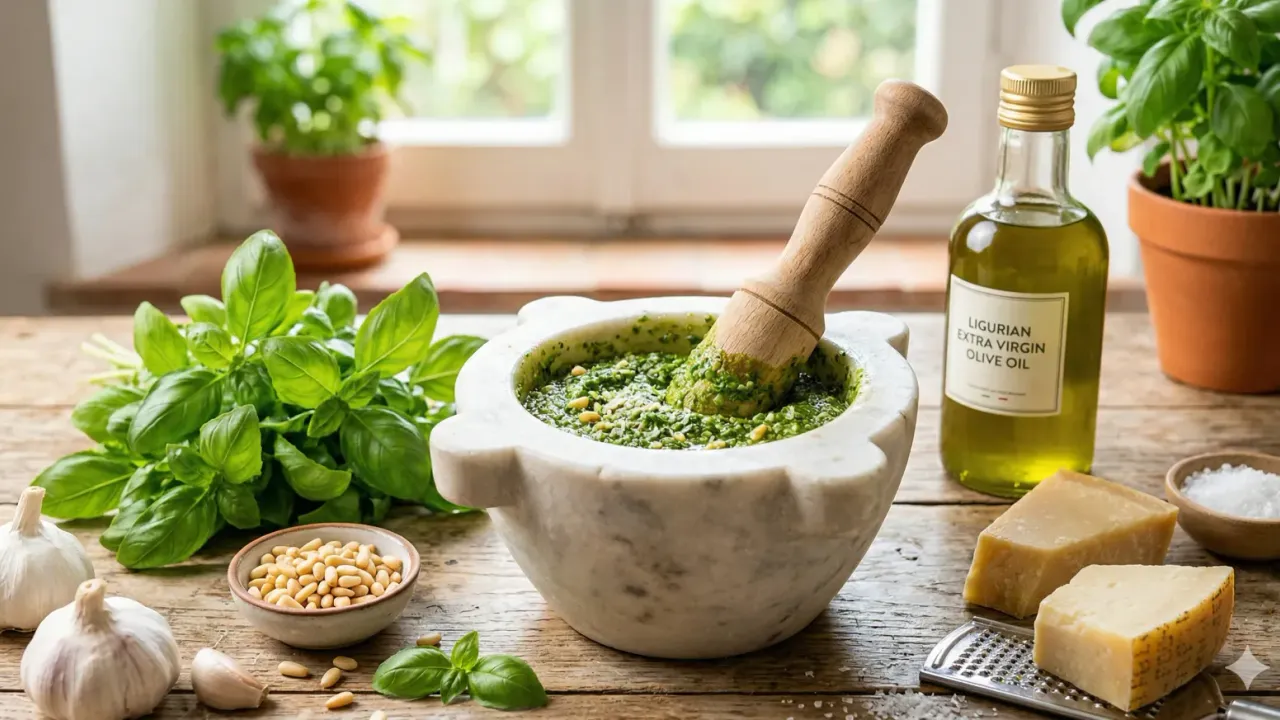
Pesto alla Genovese is the crown jewel of Ligurian cuisine and arguably the most beloved sauce in all of Italy. This vibrant basil pesto transforms a handful of raw ingredients — fresh basil, pine nuts, garlic, aged cheese, and olive oil — into a sauce so intensely aromatic that a single spoonful perfumes an entire kitchen. Unlike cooked sauces that develop flavor over hours, pesto alla Genovese captures the raw, unfiltered essence of summer basil at its peak. Every batch is a snapshot of the season, bright and impossibly green.
Prep Time: 20 minutes | Cook Time: 0 minutes | Servings: 4
Difficulty: Easy to Intermediate | Calories: ~320 per serving
What Makes Pesto alla Genovese Special?
Pesto alla Genovese is not just another basil sauce. It holds a protected status that few condiments in the world can claim. In 2022, the Consorzio del Pesto Genovese formally codified the recipe to preserve its authenticity. The designation specifies exact ingredients, proportions, and even the preferred method of preparation. That level of institutional protection tells you how seriously Genoa takes its signature sauce. Consequently, when you make authentic pesto alla Genovese, you are following a recipe with centuries of documented tradition behind it.
The magic of this pesto lies in what does not happen to it. There is no cooking involved. No heat touches the basil at any stage. The sauce remains completely raw, which preserves the volatile aromatic compounds that heat would destroy. Fresh basil contains linalool, eugenol, and estragole — fragrant molecules that evaporate rapidly above 100 degrees Fahrenheit. By grinding rather than cooking, pesto alla Genovese retains a fragrance that cooked sauces simply cannot match. The result tastes alive in a way that jars of shelf-stable pesto never do.
What further separates this pesto from its countless imitations is the technique. Traditional Genovese pesto is made in a marble mortar with a wooden pestle. The gentle crushing and grinding action tears the basil leaves rather than chopping them. Tearing releases the essential oils slowly and evenly, while a metal blade generates friction heat that accelerates oxidation. Therefore, mortar-pounded pesto stays greener, tastes brighter, and has a more complex texture than any food processor version. The difference is not merely philosophical — it is chemical.

Choosing the Right Basil
Basil is the foundation of pesto alla Genovese. It contributes the dominant flavor, the signature color, and the soul of the sauce. Choosing the wrong variety or handling it carelessly will compromise the entire batch. Here is what you need to know about selecting the best basil for this recipe.
- Genoese basil (basilico genovese DOP): This is the only variety used in authentic pesto alla Genovese. Grown in the Pra district of Genoa, it has smaller, more tender leaves with a sweeter, less peppery flavor than other varieties. The aroma is delicate and floral rather than sharp. If you can source seeds or plants labeled “Genovese basil,” you will get the closest result to the original.
- Sweet basil (common supermarket variety): This widely available basil works as a solid alternative. It has larger leaves and a slightly more pungent flavor than true Genovese basil. The pesto will taste excellent, though marginally sharper. Choose bunches with small to medium leaves, as younger leaves are more tender and less bitter than large, mature ones.
- Thai basil or purple basil (avoid for this recipe): Thai basil has a strong anise flavor that clashes with the traditional Genovese profile. Purple basil produces a dark, muddy-colored pesto. Both varieties make interesting sauces on their own terms, but neither belongs in authentic pesto alla Genovese.
- Freshness indicators: Look for bright green leaves with no dark spots or wilting. The stems should be firm, not slimy. Smell the basil before buying — it should release a strong, sweet fragrance when you rub a leaf between your fingers. Avoid basil that has begun flowering, as the leaves become bitter once the plant bolts.
Ingredients for Pesto alla Genovese
For the Pesto Base:
- 2 packed cups (about 60g) fresh Genoese basil leaves
- 1/3 cup (50g) pine nuts
- 2 cloves garlic, peeled
- 1/2 teaspoon coarse sea salt
For the Finishing:
- 1/2 cup (50g) finely grated Parmigiano-Reggiano
- 2 tablespoons (20g) finely grated Pecorino Fiore Sardo
- 2/3 cup (150ml) extra virgin olive oil, preferably Ligurian
- Pinch of fine salt to taste
Pro tip: Chill the marble mortar in the refrigerator for 30 minutes before making pesto. A cold mortar keeps the basil cooler during grinding, which slows oxidation and preserves the vivid green color. Similarly, if using a food processor, freeze the bowl and blade for 15 minutes beforehand. Temperature control is the single biggest factor in keeping your pesto alla Genovese bright and fresh-tasting.
Step-by-Step Instructions
Step 1: Prepare the Basil
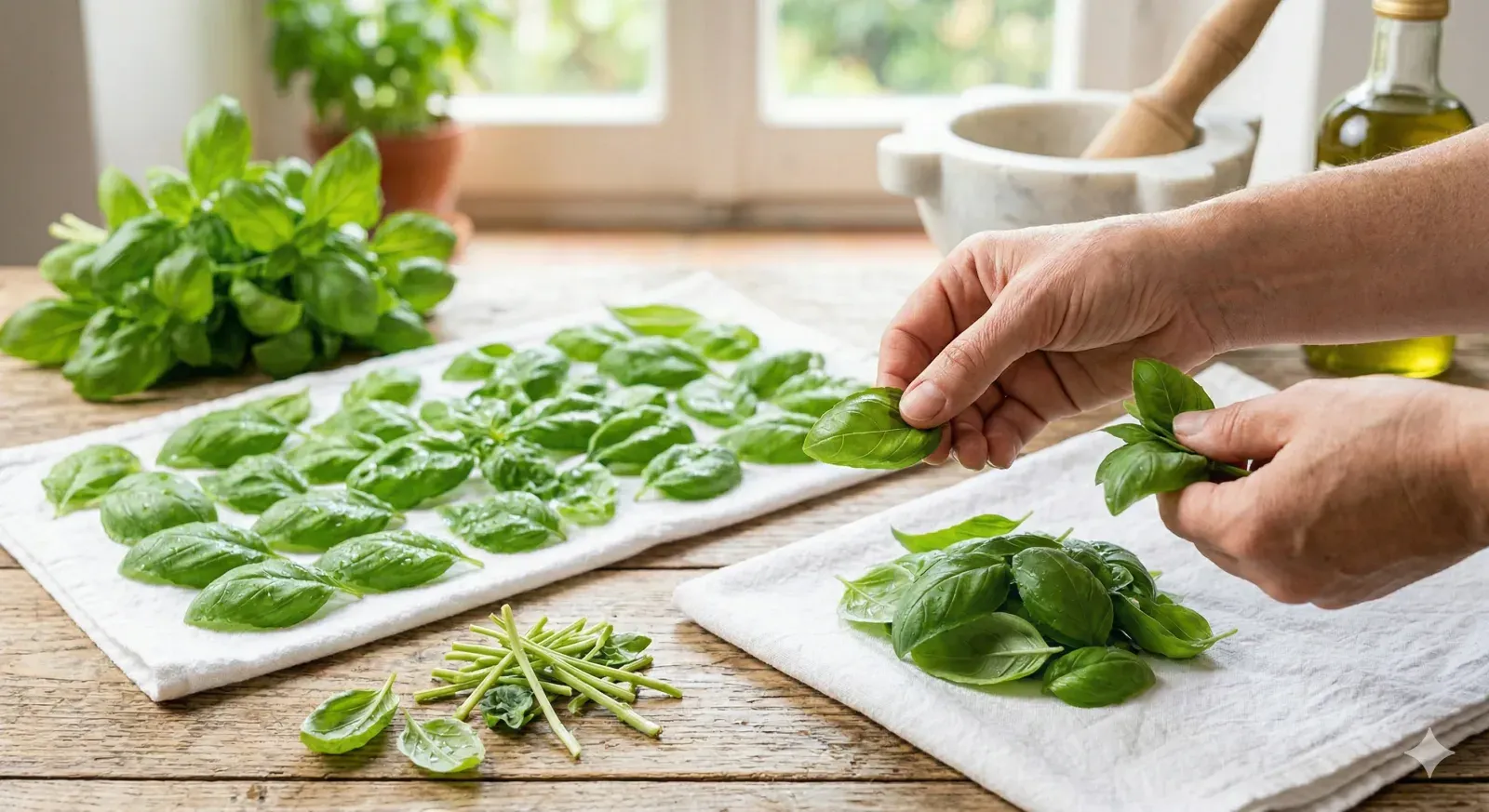
1 Begin by washing the basil leaves gently under cold running water. Handle them delicately — basil bruises easily, and bruised leaves turn brown faster. After rinsing, spread the leaves in a single layer on a clean kitchen towel. Pat them dry with a second towel, pressing gently rather than rubbing. Every drop of moisture matters here. Water trapped on the leaves causes oxidation during grinding, which dulls the color and flavor.
Once the leaves are completely dry, pick through them carefully. Remove all stems, as they add bitterness to the finished pesto. Discard any leaves that show dark spots, yellowing, or signs of wilting. You want only the brightest, most vibrant leaves in your mortar. This sorting step takes just a couple of minutes, but it makes a noticeable difference in both taste and appearance. Fresh, dry, unblemished basil produces pesto that glows.
Step 2: Crush the Garlic and Salt
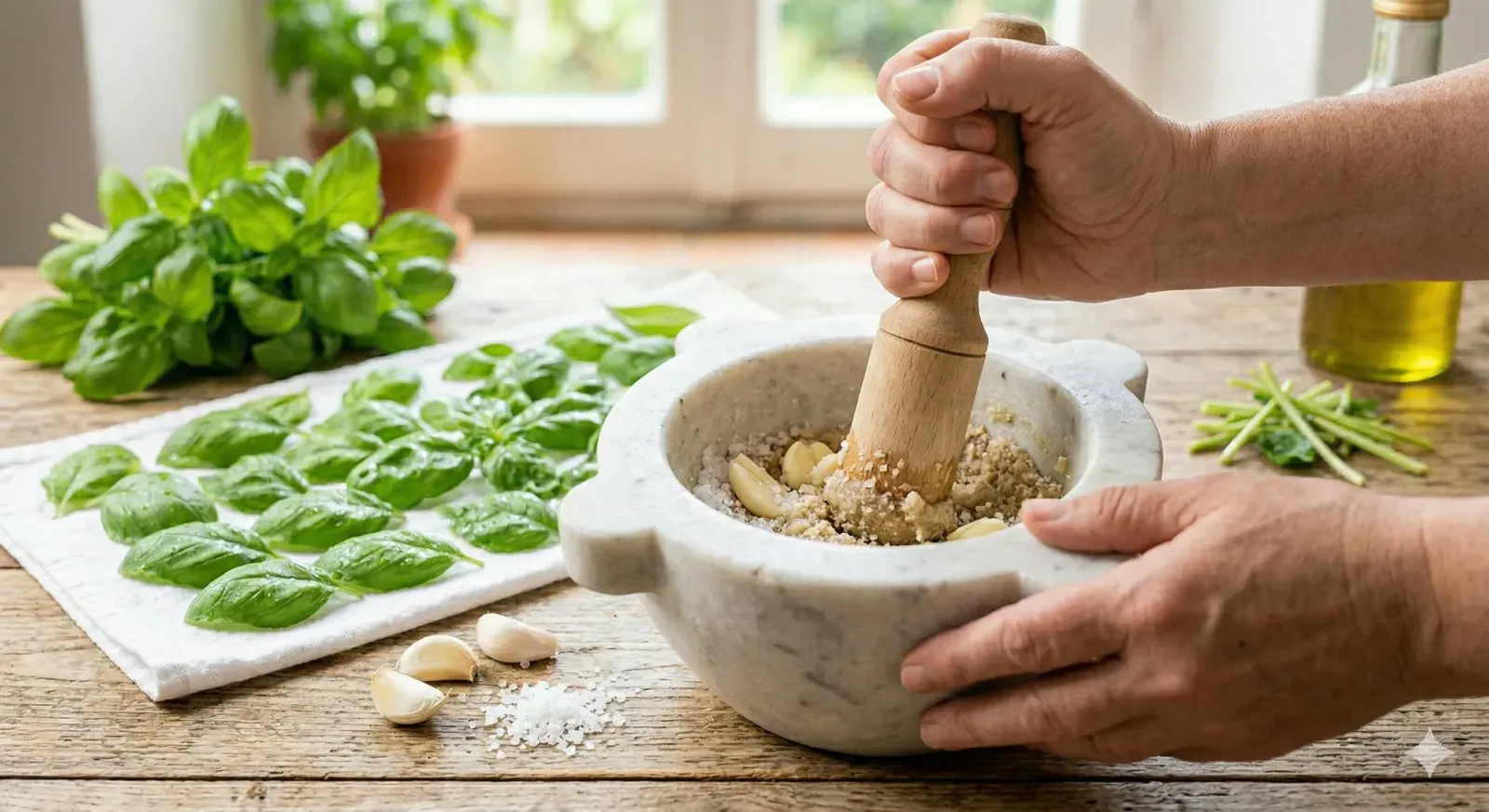
2 Place the peeled garlic cloves and coarse sea salt into a marble mortar. The salt serves a dual purpose here. First, it seasons the pesto from the very beginning. Second, the coarse grains act as an abrasive that helps break down the garlic fibers far more effectively than pounding alone. Begin pressing the garlic against the bottom of the mortar with the pestle, using a firm, rotating motion.
Continue grinding for 1 to 2 minutes until the garlic and salt form a smooth, uniform paste. No visible chunks should remain. The garlic paste should look almost creamy. This thorough crushing is essential because larger garlic pieces create sharp, harsh flavor pockets in the finished pesto. A smooth paste distributes the garlic flavor evenly throughout the sauce. Additionally, the cell walls of fully crushed garlic release allicin more completely, which mellows into a rounder flavor than coarsely chopped garlic provides.
Step 3: Add the Pine Nuts
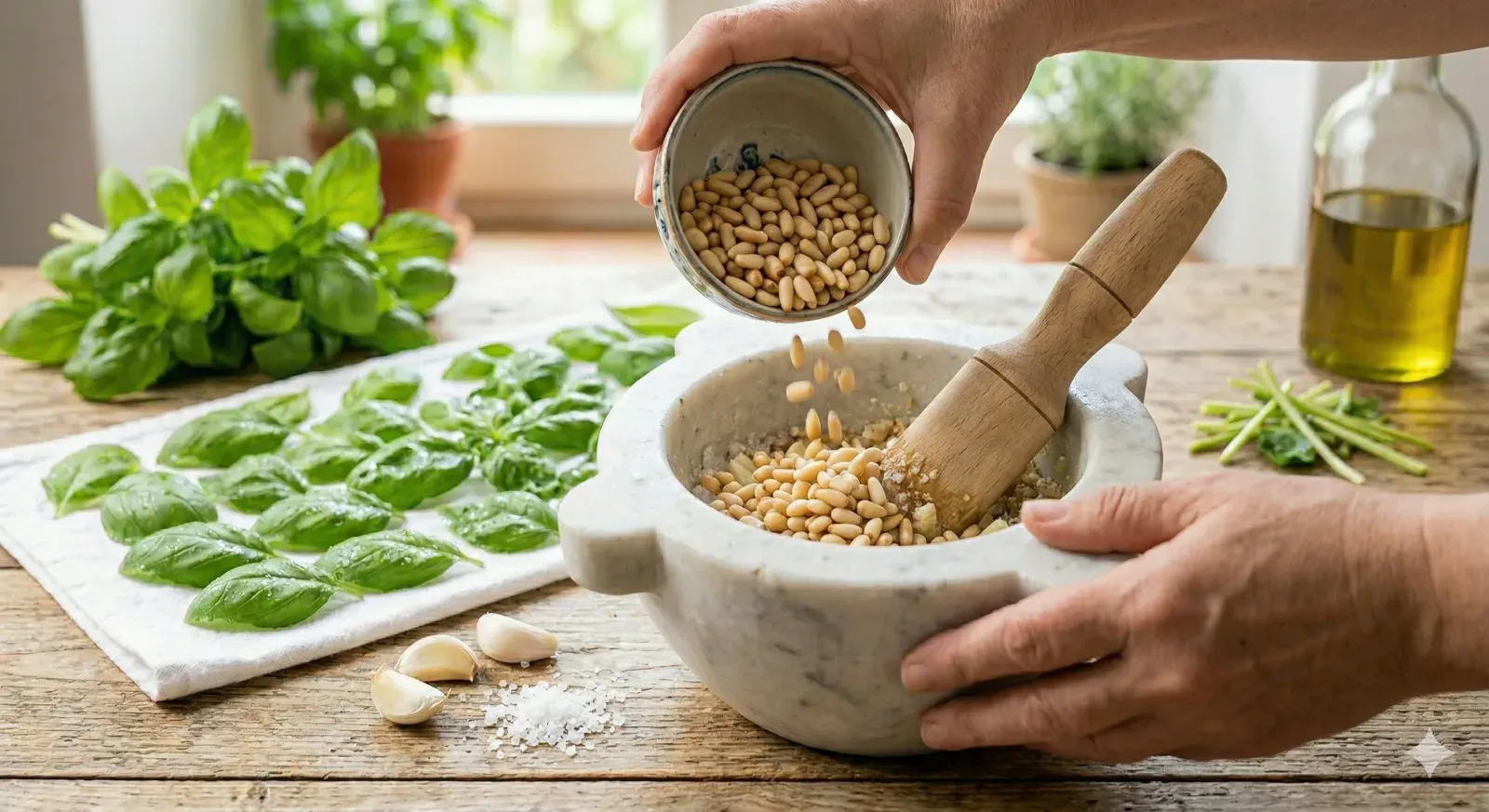
3 Add the pine nuts to the mortar containing the garlic paste. Grind them in a circular motion, pressing the pestle against the sides and bottom of the mortar. The pine nuts should break down gradually into a coarse, creamy texture. Avoid grinding them into a completely smooth butter — some small pieces add pleasant texture to the finished pesto.
This step requires about 2 to 3 minutes of steady, patient work. The natural oils in the pine nuts will begin to release, creating a slightly oily paste that binds with the garlic. These oils contribute a sweet, resinous richness that balances the sharpness of the garlic and the pepperiness of the basil. If your pine nuts are very fresh, they will break down faster. Stale pine nuts are harder to crush and may taste rancid. Always smell your pine nuts before using them — they should have a sweet, clean scent with no sour or metallic notes.
Step 4: Pound the Basil
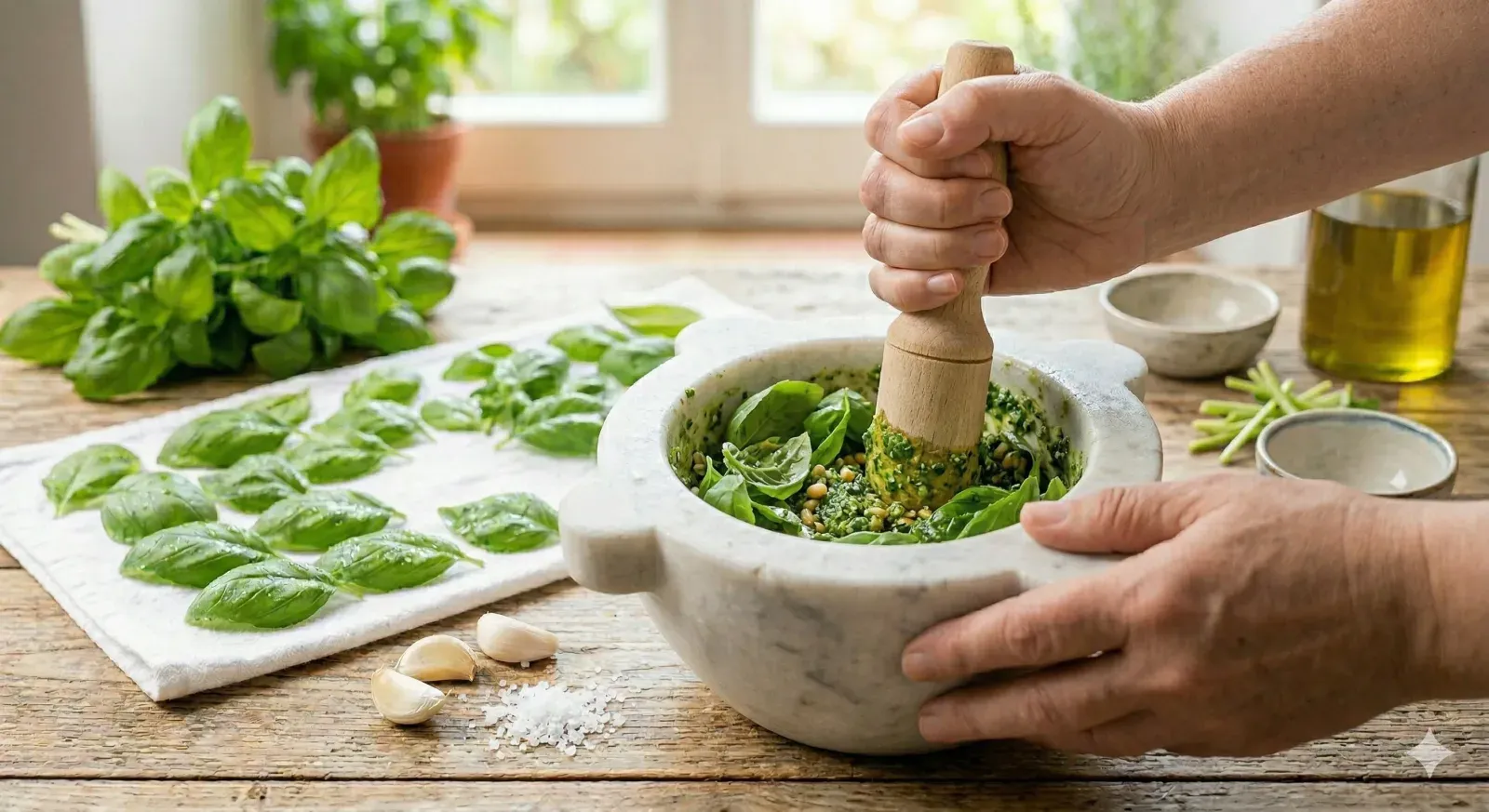
4 Now comes the most important and time-consuming step. Add the basil leaves to the mortar in small batches of about 10 to 15 leaves at a time. Press the pestle against the leaves and drag it along the curved interior of the mortar. Use a gentle grinding and twisting motion rather than hammering straight down. This technique tears the basil cells open gradually, releasing the essential oils without generating heat.
Work each batch fully into the pine nut paste before adding the next handful of leaves. The basil should break down into a deep green, fragrant mass. You will notice the aroma intensifying with each addition — sweet, slightly peppery, and unmistakably alive. The entire process takes between 5 and 8 minutes. Patience is critical here. Rushing this step by adding too many leaves at once results in uneven grinding, with some leaves barely bruised while others turn to mush. Steady, consistent work produces the smoothest, most flavorful result.
Step 5: Fold in the Cheese and Oil
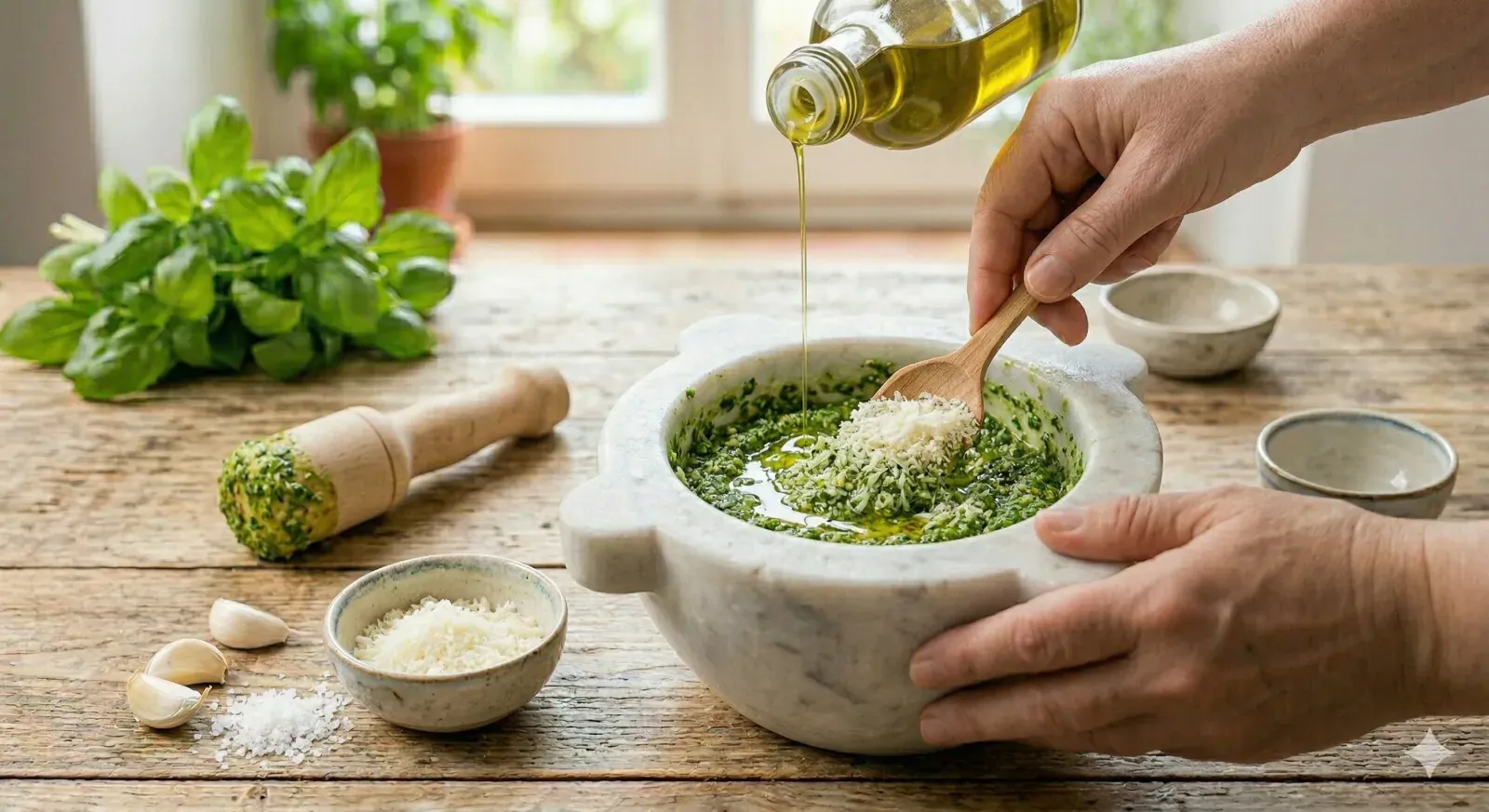
5 Transfer the basil paste to a medium mixing bowl. Add the finely grated Parmigiano-Reggiano and Pecorino Fiore Sardo. Fold the cheeses into the paste using a wooden spoon, stirring gently in one direction. The cheese should dissolve gradually into the oily basil mixture, adding body and a savory umami depth.
Next, begin drizzling in the extra virgin olive oil in a thin, steady stream while stirring continuously. Pour slowly and deliberately. The oil emulsifies with the cheese and basil paste, creating the characteristic smooth, spoonable consistency. After incorporating all the oil, taste the pesto and adjust the seasoning with fine salt if needed. The finished pesto alla Genovese should be vibrant green, intensely fragrant, and thick enough to coat the back of a spoon without dripping. Serve immediately or store with a thin layer of olive oil on top to prevent oxidation.
Expert Tips for Perfect Pesto alla Genovese
Use a Marble Mortar, Not a Metal One
Marble stays naturally cool and has a rough interior surface that grips the ingredients during grinding. Metal mortars conduct heat, which warms the basil and accelerates oxidation. Wooden mortars absorb oils and flavors over time, which can transfer unwanted tastes to fresh batches. A marble mortar with a wooden pestle is the traditional Genovese combination. The weight of the marble provides stability, while the softer wood pestle crushes without generating excessive friction. If you make pesto regularly, this is the one tool worth investing in.
Choose Ligurian Olive Oil When Possible
Ligurian extra virgin olive oil is prized for its delicate, fruity flavor. It lacks the aggressive pepperiness of Tuscan oils and the grassy intensity of Sicilian varieties. That mildness allows the basil to remain the star of the sauce. If Ligurian oil is unavailable, choose any light, fruity extra virgin olive oil. Avoid strongly flavored oils that overpower the basil. The oil should complement the herbs, not compete with them. Taste your oil before adding it — if it burns the back of your throat aggressively, it is too pungent for traditional pesto.
Never Cook the Pesto
Pesto alla Genovese is a raw sauce. Heat destroys its most valuable qualities. When basil reaches temperatures above 100 degrees Fahrenheit, the volatile compounds that create its aroma begin to evaporate. The bright green chlorophyll breaks down into a dull olive color. The fresh, lively flavor turns flat and cooked-tasting. Always toss pesto with pasta off the heat. Add a splash of pasta cooking water to loosen the sauce, then fold in the pesto gently. The residual warmth of the pasta is enough to distribute the sauce evenly without degrading it.
Regional Pesto Comparison Across Italy
While pesto alla Genovese is the most famous, Italy has several regional pesto traditions. Each reflects local ingredients and preferences. Understanding the differences deepens your appreciation for the Genovese original.
| Pesto Variety | Region | Key Ingredients | Key Characteristics |
|---|---|---|---|
| Pesto alla Genovese | Liguria | Basil, pine nuts, garlic, Parmigiano, Pecorino Fiore Sardo | Bright green, raw, fragrant, the original and most traditional |
| Pesto Rosso | Sicily | Sun-dried tomatoes, almonds, basil, garlic | Deep red color, sweet and tangy, bolder flavor |
| Pesto alla Trapanese | Sicily (Trapani) | Tomatoes, almonds, basil, garlic | Fresh tomatoes give a lighter, brighter sauce than rosso |
| Pesto di Pistacchio | Sicily (Bronte) | Pistachios, basil, Pecorino, garlic | Rich, nutty, vibrant green from pistachios, luxurious |
| Pesto alla Calabrese | Calabria | Roasted peppers, ricotta, chili, walnuts | Smoky, spicy, creamy texture from ricotta |
Serving Suggestions
Pesto alla Genovese is remarkably versatile. While pasta is the most classic pairing, the sauce enhances dozens of dishes across every course of a meal. The key is to let the pesto shine without burying it under competing flavors.
Classic Accompaniments:
- Trofie al pesto with potatoes and green beans: This is the definitive Genovese presentation. Boil sliced potatoes and trimmed green beans in the same water as the trofie pasta. Drain everything together, then toss with pesto and a splash of cooking water. The starchy potatoes thicken the sauce, and the green beans add a fresh crunch.
- Trenette or linguine: Flat ribbon pastas cling to the pesto beautifully. Toss the cooked pasta with pesto off the heat, adding reserved pasta water one tablespoon at a time until the sauce coats every strand evenly. Finish with a dusting of extra Parmigiano-Reggiano.
- Minestrone alla Genovese: A generous spoonful of pesto stirred into a bowl of vegetable minestrone transforms the soup entirely. The basil oil melts across the surface, releasing its aroma with the rising steam. This pairing is a Ligurian winter staple.
- Bruschetta and focaccia: Spread pesto on toasted bread for an effortless appetizer. Top with sliced fresh tomatoes or a smear of burrata for contrast. The crisp bread provides textural balance against the smooth, oily pesto.
Beverage Pairings:
- Vermentino (white wine): This Ligurian white is the natural regional partner for pesto. Its herbal, citrusy notes complement the basil without overwhelming it. Serve it well chilled on a warm evening for the full Riviera experience.
- Pigato (white wine): Another Ligurian native, Pigato offers a rounder body than Vermentino with hints of white peach and almond. It handles the richness of the cheese and olive oil in the pesto gracefully.
- Prosecco (sparkling wine): The light effervescence of Prosecco cleanses the palate between bites of rich, oily pesto. Its gentle sweetness contrasts the savory, salty cheese notes. This is an excellent choice for a casual summer lunch.
- Fresh lemonade or sparkling water: For a non-alcoholic option, homemade lemonade with a sprig of basil mirrors the herbal character of the pesto. Sparkling water with a lemon wedge works equally well. Both provide a clean, refreshing contrast to the rich sauce.
Storage and Reheating
Refrigerator: Transfer the pesto to a glass jar or airtight container. Press plastic wrap directly onto the surface of the pesto to eliminate air contact. Then pour a thin layer of extra virgin olive oil on top as an additional barrier. Stored this way, pesto alla Genovese keeps for up to 5 days in the refrigerator. The color may darken slightly near the edges, but the flavor remains excellent. Stir before using.
Freezer: Unlike many fresh sauces, pesto freezes remarkably well. Spoon portions into ice cube trays and freeze until solid. Pop the frozen cubes into a labeled freezer bag and store for up to 3 months. Each cube yields roughly one tablespoon, which is perfect for tossing with a single portion of pasta. Thaw in the refrigerator overnight, or place the cube directly into warm pasta and toss until it melts. Frozen pesto retains most of its bright flavor and vivid color.
Important note: Pesto is not a sauce that benefits from reheating. It should always be served at room temperature or mixed into warm (not hot) dishes. Direct heat degrades the basil’s volatile oils and turns the vibrant green sauce into a dull, flat-tasting shadow of itself. If adding pesto to warm pasta, always remove the pasta from heat first. Then fold in the pesto gently, using a splash of cooking water to help it coat the noodles evenly.
Common Mistakes to Avoid
1. Using Wet Basil Leaves
Moisture is the primary enemy of vibrant pesto. Water on the basil leaves triggers enzymatic browning during grinding. The chlorophyll breaks down faster, and the pesto turns from bright green to muddy olive within hours. Always wash the basil well in advance and dry it thoroughly. Some cooks even spread washed basil on towels for 30 minutes before making pesto. This extra drying step ensures the greenest possible result.
2. Over-Processing in a Food Processor
Running a food processor for too long generates friction heat that damages the basil. The blade also chops rather than tears, which ruptures more cell walls than necessary. Both effects lead to faster oxidation and a less vibrant sauce. If you use a food processor, pulse in 2-second bursts. Scrape down the sides between pulses. Stop as soon as the texture looks coarsely blended. The pesto should have visible texture, not the smoothness of a puree.
3. Skipping the Pecorino Fiore Sardo
Many home cooks use only Parmigiano-Reggiano and skip the Pecorino entirely. This produces a milder pesto that lacks the tangy, sharp counterpoint that defines the authentic Genovese version. Pecorino Fiore Sardo is a Sardinian sheep’s milk cheese with a smoky, assertive character. It adds complexity that Parmesan alone cannot provide. The traditional ratio is roughly 3 parts Parmigiano to 1 part Pecorino. That small amount of sheep’s milk cheese makes a significant difference in depth.
4. Using Old or Rancid Pine Nuts
Pine nuts have a high fat content and turn rancid quickly when stored improperly. Rancid pine nuts ruin pesto with a bitter, metallic aftertaste that no amount of basil can mask. Always store pine nuts in the freezer to extend their shelf life. Before using them, taste one or two raw. Fresh pine nuts should taste sweet, creamy, and faintly resinous. If they taste sour, sharp, or stale, discard the entire batch. Fresh nuts are essential for clean, balanced flavor.
Frequently Asked Questions
What is the difference between pesto alla Genovese and regular pesto?
Pesto alla Genovese is the original and most traditional form of pesto, from Genoa in the Liguria region. It requires specific ingredients: Genoese basil, pine nuts, garlic, Parmigiano-Reggiano, Pecorino Fiore Sardo, and Ligurian olive oil. “Regular pesto” is a broader term covering any herb-based sauce, including sun-dried tomato pesto rosso, arugula pesto, or kale pesto. The Genovese version is traditionally made with a marble mortar and pestle. Other pestos often use a food processor by default and may include non-traditional ingredients like lemon juice or nutritional yeast.
Can I make pesto alla Genovese in a food processor?
A food processor produces a perfectly good pesto for everyday use. However, the texture and flavor differ from the mortar-and-pestle version. The blade generates heat through friction, which causes slight oxidation and dulls the basil’s color. To minimize this, chill the processor bowl and blade for 15 minutes before starting. Pulse in short bursts rather than running continuously. Add the olive oil last, drizzling it through the feed tube while the motor runs on low. The result will be smoother and more uniform than hand-pounded pesto.
Why does my pesto turn brown?
Browning happens when basil oxidizes after exposure to air, heat, or moisture. The chlorophyll in the leaves degrades into pheophytin, a brownish-green pigment. Several strategies prevent this. First, dry your basil leaves completely before grinding. Second, work quickly to limit air exposure during preparation. Third, cover the finished pesto with plastic wrap pressed directly onto the surface. Finally, pour a thin layer of olive oil on top to create an oxygen barrier. These precautions keep pesto vibrant green for days.
What can I substitute for pine nuts in pesto?
Walnuts are the most common substitute and are actually traditional in some Ligurian households. They create a slightly earthier, more bitter pesto. Cashews provide a milder, creamier base that lets the basil dominate. Blanched almonds add delicate sweetness. For nut-free alternatives, sunflower seeds or pumpkin seeds both work well. Each substitution changes the flavor profile subtly, but all produce a satisfying sauce. Toast any substitute lightly before adding it to the mortar for the richest flavor.
What is the best pasta to serve with pesto alla Genovese?
Trofie is the most traditional Genovese choice. These short, twisted noodles catch pesto in their curves beautifully. Trenette, a flat ribbon pasta similar to linguine, is another Ligurian classic. For the most authentic presentation, boil trofie with sliced potatoes and green beans, then toss everything together with pesto. Linguine and spaghetti are excellent everyday options. Avoid very smooth pasta shapes, as they cannot grip the oily sauce effectively. Bronze-die-extruded pasta with a rough surface holds pesto best.
How long does homemade pesto alla Genovese last?
In the refrigerator, properly stored pesto lasts up to 5 days. Keep it in an airtight glass container with olive oil covering the surface. For longer storage, freeze pesto in ice cube trays. Frozen cubes last up to 3 months and thaw quickly when added to warm pasta or soup. The flavor and color hold up remarkably well after freezing. Avoid leaving pesto at room temperature for more than 2 hours, as the garlic and cheese can develop off-flavors when left out too long in warm conditions.
Variations and Adaptations
Walnut Pesto alla Genovese:
Replace the pine nuts with an equal amount of toasted walnuts. This substitution is both budget-friendly and historically grounded — walnuts appear in older Ligurian pesto recipes from inland villages where pine nuts were scarce. The walnut version has a deeper, earthier flavor with a slight bitterness that pairs especially well with whole wheat pasta. To reduce bitterness, blanch the walnuts briefly in boiling water. Then peel off the thin brown skins before toasting. This extra step produces a noticeably cleaner flavor.
Vegan Pesto alla Genovese:
Omit the Parmigiano-Reggiano and Pecorino entirely. Replace them with 3 tablespoons of nutritional yeast and 1 tablespoon of white miso paste. The nutritional yeast provides the cheesy umami character, while the miso adds fermented depth and saltiness. Increase the pine nuts to 1/2 cup to compensate for the lost body from the cheese. The result is a remarkably convincing pesto that satisfies plant-based eaters without sacrificing the essential character of the sauce.
Pesto with Mixed Herbs:
Replace up to one-third of the basil with fresh flat-leaf parsley, mint, or arugula. Parsley adds a clean, grassy note. Mint introduces brightness that works particularly well in summer dishes. Arugula brings a peppery kick that intensifies the sauce. These variations stray from strict Genovese tradition, but they produce interesting results when good basil is limited. Keep basil as the dominant herb in any blend to preserve the essential pesto character.
Lighter Pesto with Yogurt:
For a lower-calorie version, reduce the olive oil by half and stir in 2 tablespoons of plain Greek yogurt after blending. The yogurt adds creaminess without the calorie density of oil. Its tanginess mimics some of the Pecorino’s sharpness. This adaptation works best as a spread or dip rather than a pasta sauce. The yogurt makes the pesto slightly thinner and less shelf-stable, so consume it within 2 days.
The Cultural Significance of Pesto alla Genovese
Pesto alla Genovese is far more than a pasta sauce to the people of Genoa. It is a cultural symbol, a point of civic pride, and a source of passionate debate. The city holds an annual World Pesto Championship, where competitors from dozens of countries gather to pound basil in marble mortars. Judges evaluate color, aroma, texture, and flavor with the seriousness of a wine competition. The event draws media coverage across Italy and reinforces Genoa’s claim as the birthplace and guardian of authentic pesto.
The sauce also reflects Liguria’s broader culinary philosophy. This is a region defined by restraint. Ligurian cooking favors fresh herbs, quality olive oil, and simple preparations over the rich, butter-heavy cuisine of northern Italy or the bold spicing of the south. Pesto embodies that philosophy perfectly. It takes a few raw ingredients and, through careful technique, elevates them into something greater than the sum of their parts. No heat, no stock, no hours of simmering. Just the cook’s hands, a stone mortar, and ingredients at their peak. According to Saveur, this simplicity is precisely what makes pesto alla Genovese one of the most revered sauces in the Western culinary tradition.
Conclusion
Pesto alla Genovese rewards patience and attention more than any other sauce in the Italian repertoire. The ingredients are humble. The technique is accessible to any home cook willing to spend 20 minutes at a mortar. Yet the result is extraordinary — a raw, vibrant sauce that captures the very essence of fresh basil in a way no cooked preparation can match. Master this recipe, and you unlock a sauce that transforms pasta, soup, bread, and countless other dishes throughout the year.
Ready to discover more Italian and European classics? Browse our full collection of European dishes for recipes like cacio e pepe, carbonara, and risotto alla Milanese. If you try this pesto alla Genovese recipe, leave a rating and share how it turned out.