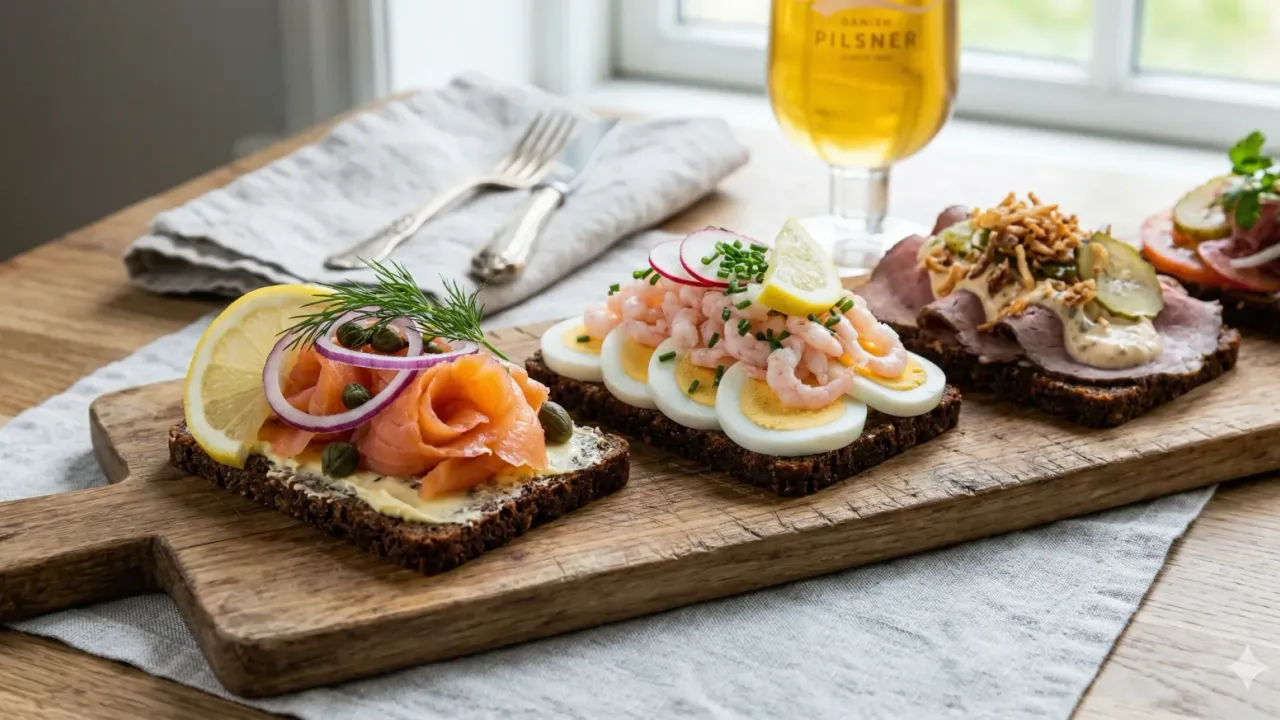
Smorrebrod is Denmark’s most iconic lunch dish, and it deserves a place on your table. These stunning open-faced sandwiches layer fresh seafood, cured meats, and crisp vegetables on top of dark rye bread. Every bite delivers a mix of textures and bold Nordic flavors. This smorrebrod recipe teaches you exactly how to build these beautiful Danish sandwiches at home. Once you learn the basics, you can create endless combinations with whatever toppings you love.
Prep Time: 30 minutes | Cook Time: 10 minutes | Servings: 4 (8 open-faced sandwiches)
Difficulty: Easy | Calories: ~350 per serving
What Makes Smorrebrod Special?
Smorrebrod is not just a sandwich. It is a culinary art form that Danes have perfected over more than 150 years. The concept is simple: take a slice of dark rye bread, spread it with butter, and pile it high with carefully chosen toppings. Yet the result is anything but ordinary. Each piece is a small edible masterpiece, balanced in flavor, texture, and color. In Denmark, making smorrebrod is a skill passed down through families and celebrated in restaurants across the country.
What sets smorrebrod apart from other sandwiches is the focus on open presentation. Because there is no top slice of bread, every ingredient is visible. As a result, the arrangement matters as much as the taste. Danish cooks treat each piece like a canvas. They layer proteins first, then add sauces, pickles, fresh herbs, and edible flowers. The visual impact is part of the dining experience. Furthermore, the flavor combinations follow strict traditions. Certain toppings always go together, and Danes take these pairings seriously.
The origins of smorrebrod trace back to the late 1800s, when Danish workers brought open-faced sandwiches to factories as their midday meal. Over time, restaurants began offering elaborate versions with luxurious toppings. Today, smorrebrod is a national treasure. Copenhagen alone has dozens of dedicated smorrebrod restaurants, some operating for over a century. Whether you enjoy it as a quick lunch or a full spread for guests, smorrebrod connects you to a proud Danish food tradition.

Choosing the Right Bread for Smorrebrod
The bread is the foundation of every smorrebrod. Without the right base, even the best toppings will not shine. Danish rye bread, called rugbrod, is dense, dark, and slightly sour. It provides structure that holds up under heavy toppings. Here are your best options for building an authentic smorrebrod at home.
- Danish rugbrod (best choice): This is the gold standard for smorrebrod. Made from whole rye kernels, rye flour, and sourdough starter, rugbrod is dense, moist, and nutty. Its firm texture supports even the heaviest toppings without collapsing. Look for it at Scandinavian grocery stores or specialty bakeries. You can also bake it at home with a two-day fermentation process.
- Pumpernickel bread: German pumpernickel is the closest substitute for rugbrod. It shares the dark color, dense crumb, and earthy flavor. However, pumpernickel tends to be sweeter and softer. Slice it thin and toast it lightly for extra firmness. This option works well when you cannot find authentic Danish rye.
- Whole-grain rye bread: Regular rye bread from a standard bakery will work in a pinch. Choose the darkest, densest loaf available. Avoid light rye or deli rye, as these are too soft and will turn soggy under moist toppings. Toasting adds needed structure for this lighter alternative.
Ingredients for Smorrebrod
Bread Base:
- 8 slices Danish dark rye bread (rugbrod), about 1/2 inch thick
- 4 tablespoons salted butter, softened to room temperature
Smoked Salmon Topping:
- 8 ounces cold-smoked salmon, thinly sliced
- 2 tablespoons whole-grain mustard
- 1 small red onion, sliced into thin rings
- 2 tablespoons capers, drained
- Fresh dill sprigs
- 1 lemon, cut into wedges
- Butter lettuce leaves
Egg and Shrimp Topping:
- 4 hard-boiled eggs, peeled and sliced
- 8 ounces cooked baby shrimp, peeled and deveined
- 4 tablespoons remoulade sauce
- Fresh chives, finely chopped
- Radishes, thinly sliced
- Cornichons, sliced
Optional Extras:
- 4 ounces pickled herring, drained
- Crispy fried onions
- Microgreens or watercress
- Horseradish cream
Pro tip: Always use softened butter, never melted. Softened butter spreads evenly and creates a smooth, waterproof layer on the bread. This barrier keeps the rye from absorbing moisture from wet toppings like shrimp or pickled herring. Cold butter tears the bread, and melted butter soaks right in. Leave your butter on the counter for about 20 minutes before you start assembling your smorrebrod.
Step-by-Step Instructions
Step 1: Prepare the Bread Base
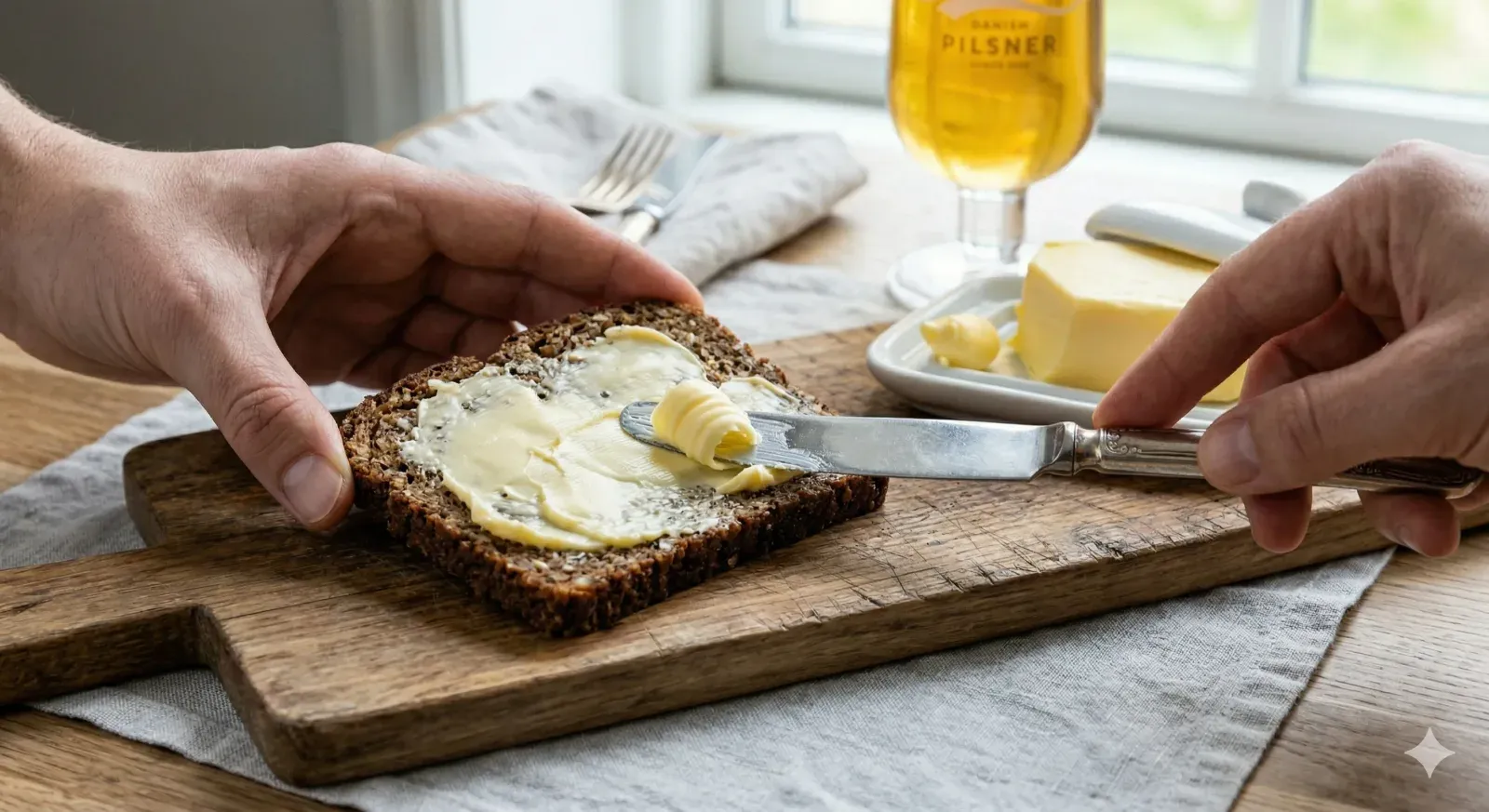
1 Start by slicing your dark rye bread into even pieces, about half an inch thick. If you are using pre-sliced rugbrod, simply separate the slices. Next, take the softened butter and spread a generous layer across each slice. Make sure you cover the entire surface from edge to edge. The butter serves two purposes here. First, it adds rich, creamy flavor. Second, it forms a moisture barrier that prevents the bread from getting soggy.
Do not skip the butter. In Danish tradition, the butter layer is non-negotiable. A smorrebrod without butter is simply not a smorrebrod. Use good-quality salted butter for the best taste. Set the buttered slices on your work surface and gather all your prepared toppings before moving to the next step.
Step 2: Prepare the Toppings
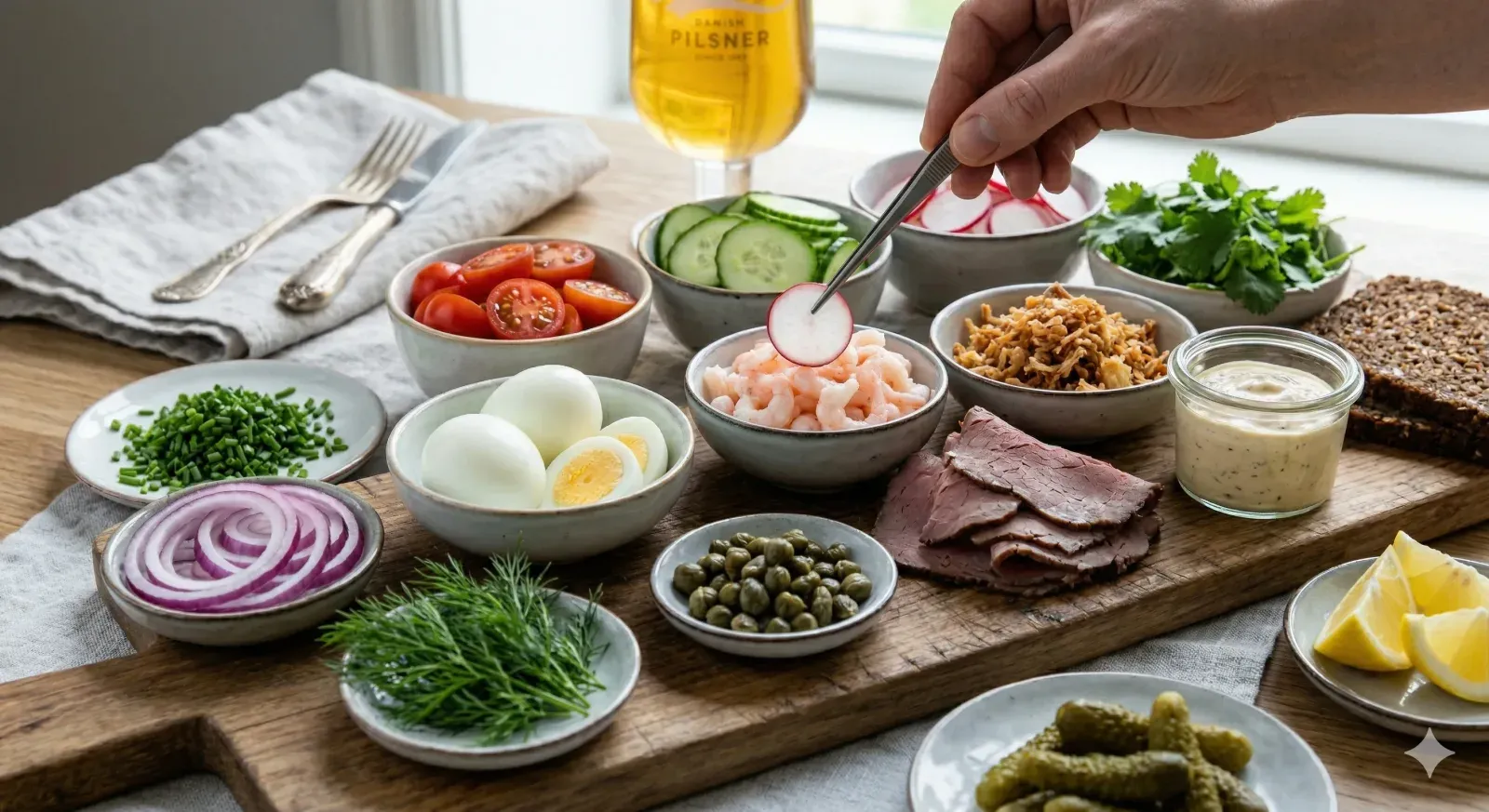
2 Boil your eggs for 10 minutes, then plunge them into ice water to stop the cooking. Once cool, peel and slice them into even rounds. Meanwhile, rinse the baby shrimp under cold water and pat them dry with paper towels. Slice the red onion into paper-thin rings. Cut the radishes into thin rounds as well. Chop the chives finely and pick fresh dill sprigs from the stems.
Arrange everything on a large cutting board or in small bowls. Having all your toppings ready before assembly is essential. Smorrebrod should be put together quickly so the bread stays fresh. Additionally, this mise en place approach lets you focus on the artistic arrangement without rushing back and forth to the fridge.
Step 3: Assemble the Smoked Salmon Smorrebrod
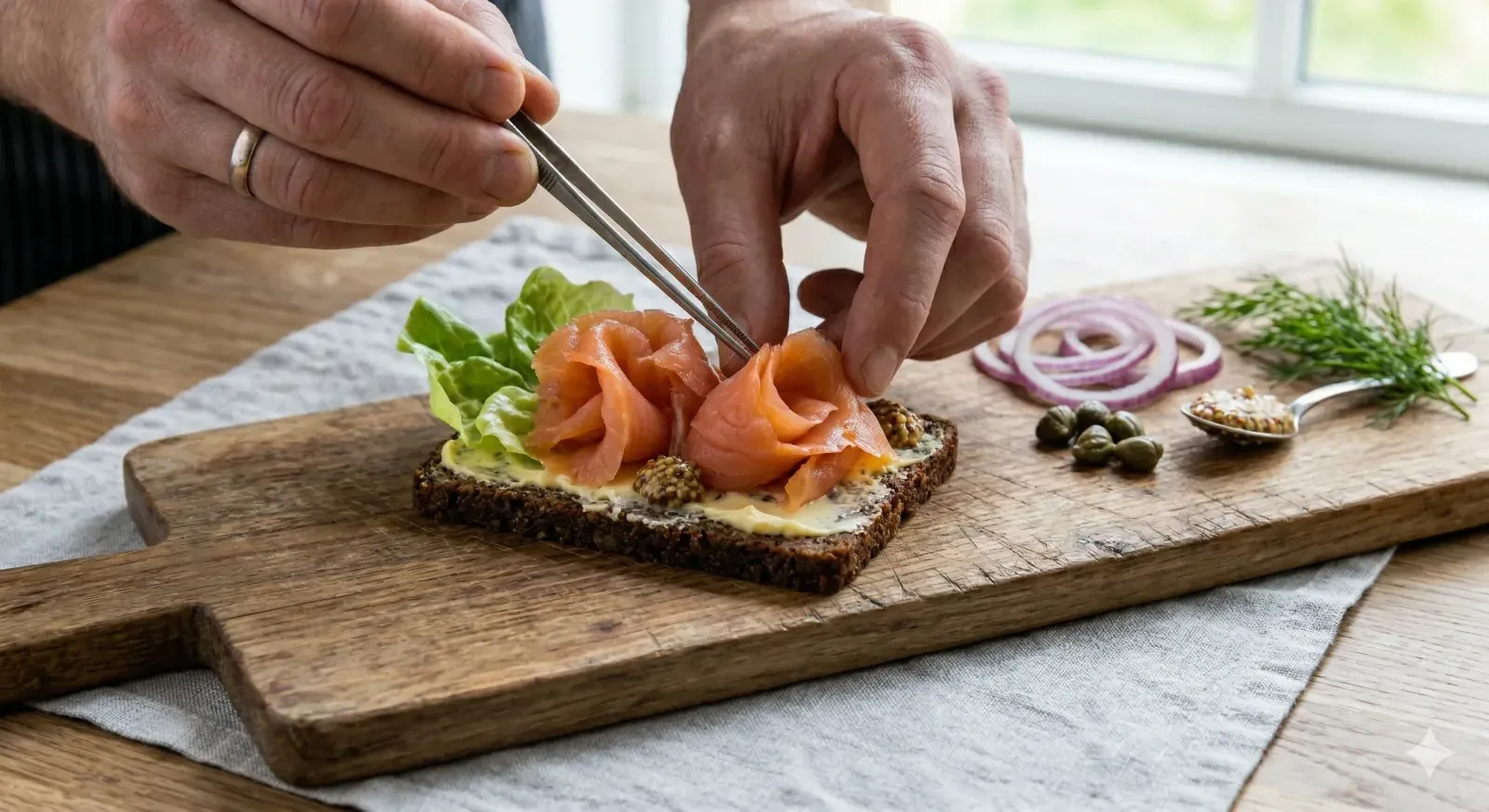
3 Place a small butter lettuce leaf on the buttered rye bread. The lettuce adds color and a gentle crunch. Take the smoked salmon slices and fold each one loosely into a rosette or ruffle shape. Lay two or three salmon rosettes across the lettuce. Spoon a small amount of whole-grain mustard alongside the salmon. Scatter thin red onion rings and a few capers over the top.
Finish with a sprig of fresh dill and a lemon wedge tucked to the side. The dill brings a bright, herbal note that cuts through the rich salmon. Moreover, the lemon wedge lets your guests squeeze fresh juice over their smorrebrod right before eating. This topping combination is one of the most classic in all of Danish cooking.
Step 4: Assemble the Egg and Shrimp Smorrebrod
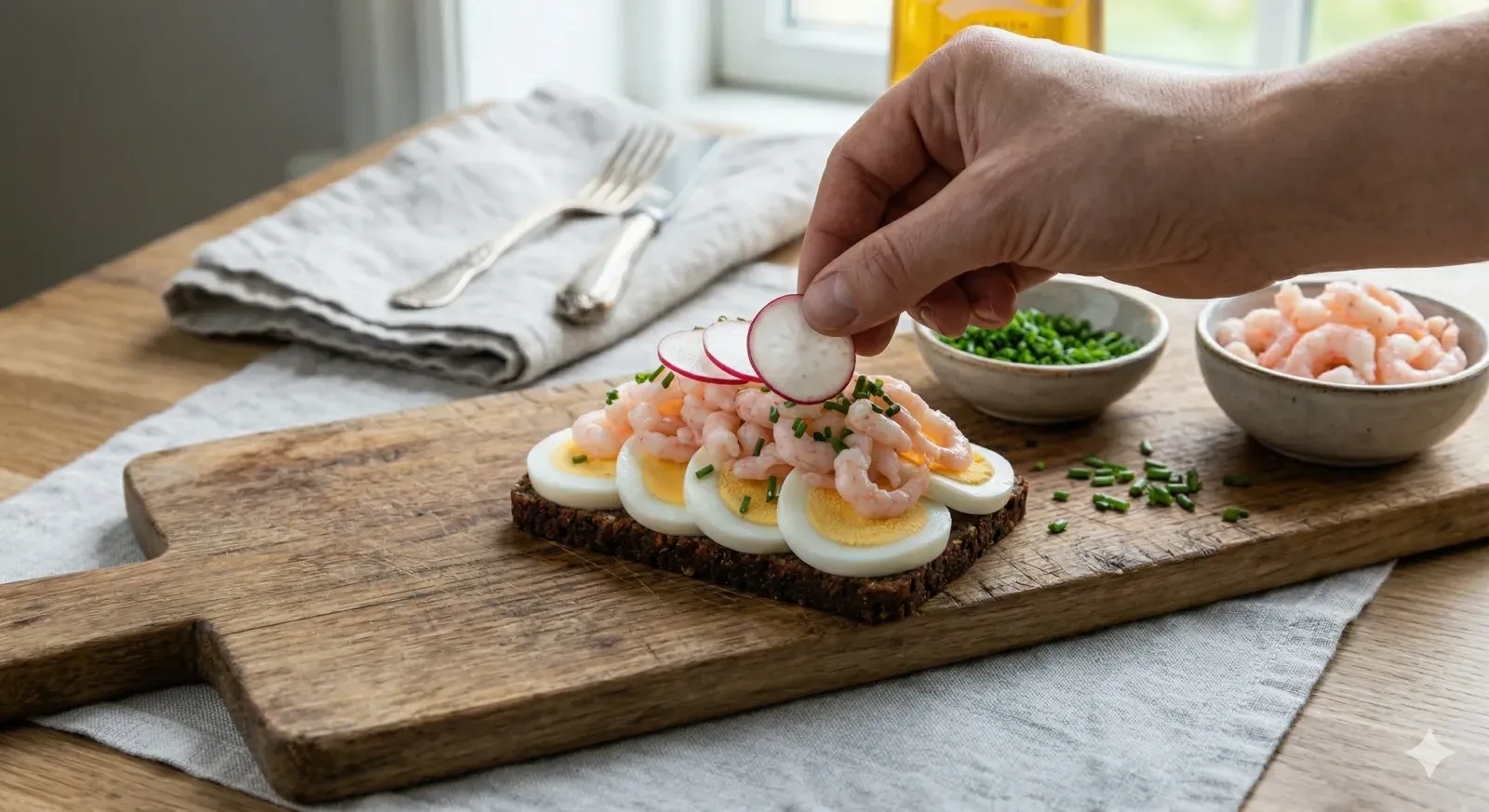
4 Spread a thin layer of remoulade sauce over the buttered bread. This tangy, slightly sweet sauce is a staple of Danish cuisine. Lay the sliced hard-boiled eggs across the bread in overlapping rows. Then pile a generous mound of baby shrimp on top of the eggs. The shrimp should look abundant and overflowing.
Sprinkle chopped chives across the shrimp. Add a few thin radish slices for a peppery bite and a pop of pink color. Tuck a small lemon wedge on the side. The combination of creamy egg, sweet shrimp, and tangy remoulade is a beloved Danish classic. This version of smorrebrod is often the first one that Danish children learn to love.
Step 5: Garnish and Serve
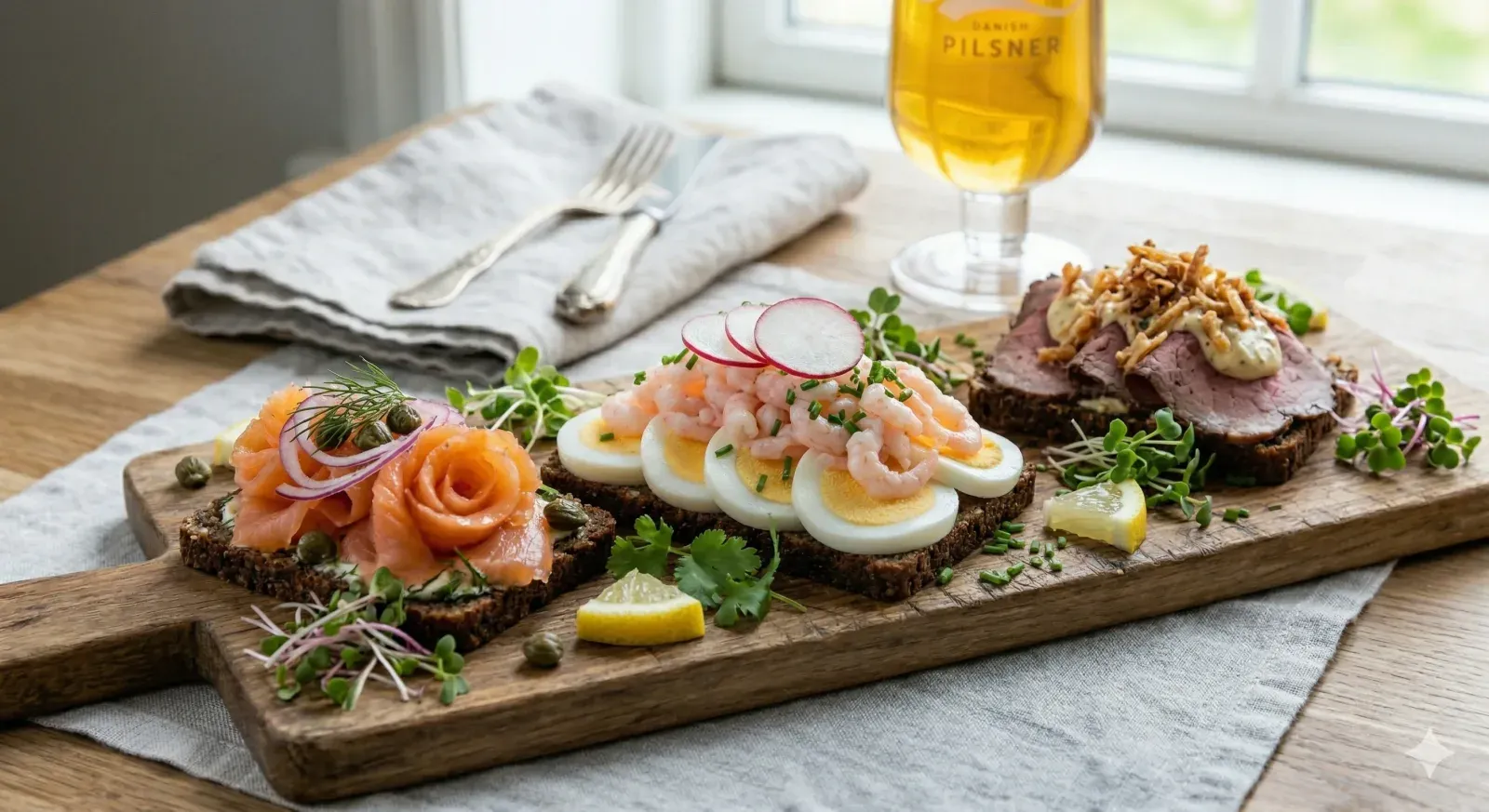
5 Arrange all the finished smorrebrod on a large wooden board, slate platter, or clean cutting board. Leave a small gap between each piece so the toppings do not get crowded. Place extra lemon wedges, cornichons, and small piles of microgreens around the board for decoration. Serve immediately for the freshest taste and crispest bread.
In Denmark, smorrebrod is always served at room temperature or slightly chilled. Never heat or warm the assembled pieces. The cold toppings against the dense, room-temperature rye bread create the perfect contrast. Pair your smorrebrod with a cold Danish pilsner or a shot of aquavit for a truly authentic experience.
Expert Tips for Perfect Smorrebrod
Build from Bottom to Top
Always layer your toppings in order of weight. Start with leafy greens or a sauce on the buttered bread. Then add your main protein, such as salmon or egg. After that, place lighter garnishes like herbs, onion rings, and capers on top. This method keeps everything stable and prevents the heavy items from crushing the delicate ones beneath.
Think About Color Contrast
Great smorrebrod looks as good as it tastes. Aim for at least three different colors on each piece. Pink salmon with green dill and white onion rings is a natural winner. Yellow eggs with pink shrimp and green chives also create beautiful contrast. The dark rye bread serves as a dramatic backdrop that makes every color pop.
Keep Toppings Cold and Dry
Moisture is the enemy of good smorrebrod. Pat all proteins dry with paper towels before placing them on the bread. Keep everything refrigerated until the moment you start assembling. Excess liquid from shrimp or pickled herring will seep into the rye and make it unpleasantly soggy. The butter barrier helps, but dry toppings are your first line of defense.
Smorrebrod Regional Comparison
Open-faced sandwiches appear across Scandinavia, but each country puts its own spin on the concept. Here is how smorrebrod compares to similar dishes from neighboring Nordic countries.
| Feature | Danish Smorrebrod | Norwegian Smorbroed | Swedish Smorgasar |
|---|---|---|---|
| Bread | Dense dark rye (rugbrod) | White or light rye bread | Crisp bread or soft rye |
| Toppings | Elaborate, multi-layered | Simpler, fewer layers | Moderate, clean style |
| Meal occasion | Formal lunch centerpiece | Casual everyday lunch | Part of smorgasbord buffet |
| Butter | Always, generous layer | Common but lighter | Optional, sometimes skipped |
| Eating style | Knife and fork required | Often eaten by hand | By hand or fork |
| Popular protein | Pickled herring, salmon | Brown cheese, smoked salmon | Shrimp, meatballs |
Serving Suggestions
In Denmark, smorrebrod is traditionally served as the main event at lunch. A proper Danish lunch features three to five different smorrebrod varieties, eaten in a specific order. Danes start with herring, move to other fish, then meat, and finish with cheese. Following this order shows respect for the tradition and keeps flavors from clashing.
The Perfect Accompaniments:
- Pickled vegetables: Cornichons, pickled beets, and pickled cucumbers cut through the richness of butter and smoked fish. Their acidity refreshes your palate between bites.
- Fresh salad: A light cucumber salad dressed with white vinegar and sugar pairs beautifully. It adds freshness without competing for attention on the plate.
- Danish remoulade: This tangy condiment made from mayonnaise, pickles, capers, and curry powder is essential. Serve it in a small bowl for dipping or drizzling.
- Rye bread crisps: Toasted rye bread chips on the side add extra crunch. They also work as a backup base for any leftover toppings.
Beverage Pairings:
- Danish pilsner: A cold Carlsberg or Tuborg pilsner is the classic match. The crisp, light beer cleanses the palate between rich bites of smorrebrod.
- Aquavit: This caraway-flavored Scandinavian spirit is the traditional companion. Serve it ice-cold in small glasses. Danes often toast with aquavit during a formal smorrebrod lunch.
- Dry white wine: A crisp Chablis or Sauvignon Blanc works well with seafood-topped smorrebrod. The bright acidity complements smoked salmon and shrimp.
- Sparkling water with lemon: For a non-alcoholic option, sparkling water with a squeeze of lemon keeps things light and refreshing.
Storage and Reheating
Refrigerator: Assembled smorrebrod should be eaten within 2 hours for the best texture. If you must store them, cover tightly with plastic wrap and refrigerate for up to 4 hours. Beyond that, the bread begins to absorb moisture and soften. The toppings also lose their fresh appearance after prolonged storage.
Component storage: Individual toppings store much better than assembled sandwiches. Keep cooked shrimp, sliced eggs, and smoked salmon in separate airtight containers. They stay fresh in the fridge for up to 2 days. Buttered bread slices can be wrapped individually and refrigerated overnight.
Reheating: Smorrebrod is a cold dish, so reheating is not recommended. If you want to refresh day-old rye bread, toast the plain slices briefly before buttering and topping. Never microwave assembled smorrebrod, as the bread turns rubbery and the fresh toppings wilt.
Common Mistakes to Avoid
1. Skipping the Butter Layer
Some home cooks skip the butter to cut calories. However, the butter is essential for authentic smorrebrod. It adds flavor and creates a waterproof seal between the bread and toppings. Without it, the rye absorbs moisture and turns soggy within minutes. Always spread a full, even layer across the entire surface.
2. Using the Wrong Bread
Regular sandwich bread or baguettes cannot support smorrebrod toppings. Soft white bread collapses under the weight and turns into a soggy mess. You need the dense structure of dark rye bread. If you cannot find rugbrod, choose the darkest, firmest rye available. Toasting adds extra structural support.
3. Overloading the Toppings
While smorrebrod should look abundant, piling too much on the bread makes it impossible to eat. The ideal smorrebrod is generous but balanced. Each ingredient should be visible and accessible with a knife and fork. Stick to one main protein per piece, then accent it with two or three complementary garnishes.
4. Assembling Too Far in Advance
Smorrebrod tastes best when freshly assembled. Making them hours ahead allows moisture to seep into the bread. Consequently, the textures go from crisp and layered to damp and flat. Prepare all your components ahead of time, but put the pieces together just before serving for the best results.
Frequently Asked Questions
What does smorrebrod mean in Danish?
Smorrebrod translates literally to “buttered bread” in Danish. The word comes from “smor” meaning butter and “brod” meaning bread. Over time, it evolved from a simple slice of buttered bread into an elaborate open-faced sandwich. Today, smorrebrod refers to the full art of Danish open-faced sandwiches with their many traditional toppings.
What kind of bread is used for smorrebrod?
Traditional smorrebrod uses dark Danish rye bread called rugbrod. This dense, slightly sour bread holds up under heavy toppings without falling apart. Its sturdy texture is essential. If you cannot find rugbrod, good-quality pumpernickel or German-style dark rye works as a substitute. Avoid soft breads, as they collapse under the toppings.
Can you eat smorrebrod with your hands?
Traditionally, no. Smorrebrod is always eaten with a knife and fork in Denmark. The toppings are stacked high and arranged carefully, so picking it up would cause everything to fall off. Danes consider it proper etiquette to use cutlery when eating smorrebrod. Only very simple versions with a single light topping might be eaten by hand.
What are the most popular smorrebrod toppings?
The most popular toppings include pickled herring with onions and capers, smoked salmon with dill and mustard, and roast beef with remoulade. Curried herring salad, egg and shrimp with mayonnaise, and leverpostej (liver pate) with pickled beets are also beloved classics. Each combination follows pairing rules passed down through generations of Danish cooks.
Is smorrebrod served warm or cold?
Smorrebrod is almost always served cold or at room temperature. The bread, butter, and toppings stay cool. A few modern variations use warm elements like pan-fried fish or crispy bacon, but the base remains cold. This makes smorrebrod ideal for prepare-ahead lunches and gatherings where you want everything ready before guests arrive.
How far in advance can you make smorrebrod?
You can prepare the individual components up to a day ahead. However, assemble the smorrebrod no more than 1 to 2 hours before serving. If assembled too early, the bread absorbs moisture from the toppings and becomes soggy. Keep all components refrigerated and covered until you are ready to plate and serve.
Variations and Adaptations
Roast Beef Smorrebrod:
Layer thin slices of cold roast beef on buttered rye bread. Top with a generous spoonful of remoulade sauce, crispy fried onions, and a few slices of pickled cucumber. Add a small pile of grated horseradish for heat. This is one of the heartiest smorrebrod options and a favorite among meat lovers across Denmark.
Vegetarian Smorrebrod:
Skip the seafood and meat entirely. Instead, spread the rye bread with a thick layer of hummus or cream cheese. Top with sliced avocado, roasted beets, pickled red onion, and microgreens. Add a sprinkle of toasted seeds for crunch. This modern take keeps the spirit of smorrebrod alive while offering a plant-based alternative that is just as colorful and satisfying.
Pickled Herring Smorrebrod:
Start with a base of buttered rye bread and lay pieces of pickled herring across the surface. Add thin rings of raw red onion and a few capers. Top with a small dollop of sour cream and a sprinkle of fresh dill. This is the most traditional smorrebrod variety and the one that Danes eat first during a formal lunch spread.
Leverpostej (Liver Pate) Smorrebrod:
Spread a thick layer of warm Danish liver pate on the buttered bread. Top with crispy bacon, pickled beet slices, and a few cornichons. This rich, savory combination is comfort food at its finest. In Denmark, leverpostej smorrebrod is considered essential at any proper lunch gathering.
The Cultural Significance of Smorrebrod
Smorrebrod is woven into the fabric of Danish daily life. It is not just a meal but a cultural ritual. In Copenhagen, dedicated smorrebrod restaurants have operated for over a century. Some of these establishments have menus listing more than 100 different smorrebrod varieties. Workers, business executives, and tourists all sit side by side at communal tables, sharing in this uniquely Danish tradition.
The concept connects deeply to the Danish value of “hygge,” that untranslatable sense of warmth, togetherness, and simple pleasure. A smorrebrod lunch with friends or family is the perfect expression of hygge. Everyone gathers around the table, shares stories, and savors each beautifully crafted piece. The pace is slow and deliberate. There is no rushing through a smorrebrod meal.
Furthermore, smorrebrod reflects Denmark’s resourcefulness with local ingredients. Dark rye bread thrives in the Nordic climate. Cold-water fish like herring and salmon are abundant in Danish waters. Preserved foods like pickles and smoked meats reflect centuries of food preservation knowledge. Every bite of smorrebrod tells a story about Danish geography, history, and the creativity of its cooks. This humble open-faced sandwich carries an entire culture on its simple slice of bread.
Conclusion
Making smorrebrod at home is easier than you might think. The key lies in choosing quality ingredients, preparing everything in advance, and assembling with care. Start with good dark rye bread and real butter. Pick fresh toppings that contrast in color, flavor, and texture. Layer thoughtfully from bottom to top. Then serve immediately for the best experience.
Whether you build a single smoked salmon smorrebrod for a quick lunch or lay out a full spread for guests, these Danish open-faced sandwiches never fail to impress. They prove that simple ingredients, treated with respect and arranged with intention, can create something truly extraordinary. Now that you have the techniques, the combinations are limited only by your imagination.
Explore more European classics in our European dishes collection and bring the flavors of the world to your kitchen.