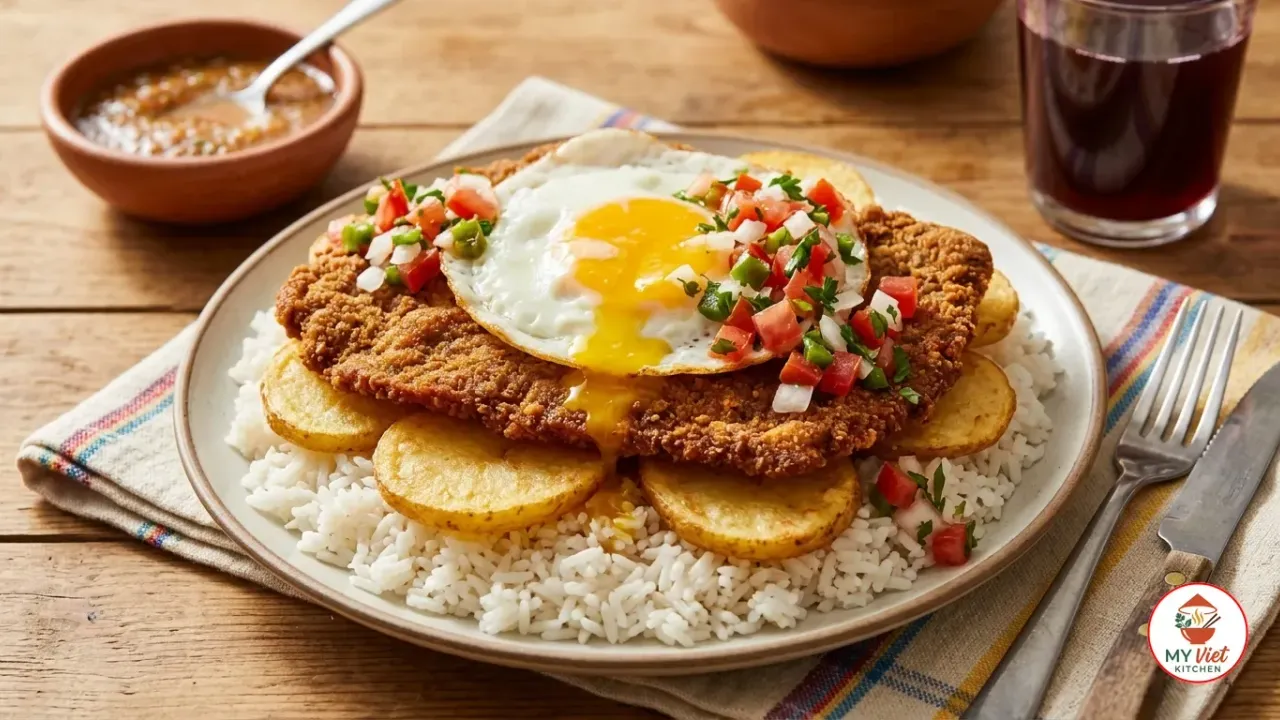
Silpancho is Bolivia’s most iconic comfort food, and one bite reveals exactly why. This magnificent dish layers crispy breaded beef over a foundation of fluffy white rice and golden fried potatoes, then crowns everything with a runny fried egg and vibrant fresh salsa. Born in the city of Cochabamba, this silpancho recipe captures the bold, generous spirit of Bolivian cuisine in every layered forkful. Whether you have traveled through the Andes or are discovering this dish for the first time, this step-by-step guide delivers authentic results.
Prep Time: 30 minutes | Cook Time: 25 minutes | Servings: 4
Difficulty: Medium | Calories: ~680 per serving
What Makes This Silpancho Recipe Special?
Silpancho is not just a breaded cutlet with sides. It is a carefully constructed plate where every component plays a role. Rice absorbs the rich juices from the beef. Fried potatoes add a crispy, starchy foundation. Meanwhile, the breaded beef, pounded paper-thin and fried until shatteringly crisp, delivers satisfying crunch in every bite. Then a runny fried egg breaks open to create a golden, velvety sauce. Finally, the fresh salsa criolla cuts through all that richness with bright acidity and gentle heat.
What truly sets this silpancho recipe apart from other breaded meat dishes is how it demands assembly on the plate. Unlike a German schnitzel or Argentine milanesa that arrives as a standalone cutlet, silpancho is always a composed dish. Each layer works with the others to create a harmony of textures and flavors that no single component could achieve alone.
In Bolivia, this silpancho recipe holds a special place in the hearts of Cochabamba. This city is widely considered the food capital of the country, and silpancho is its top contribution. Every family has a slightly different version, but the core elements remain sacred. Moreover, the dish reflects the Bolivian approach to cooking: generous portions, bold flavors, and a deep respect for simple ingredients prepared with care.

Choosing the Right Beef for Silpancho
Your choice of beef determines how well this silpancho recipe turns out. You need a lean, firm cut that pounds thin without falling apart. Here are your best options.
- Beef sirloin (best choice): Sirloin is lean enough to pound thin, yet tender enough to stay juicy after frying. It holds its shape well and gives a clean, beefy flavor that works great with the crispy crust.
- Top round: This is the most traditional cut in Bolivia. Top round is very lean and cheap. It needs good pounding to break the tough fibers, but it crisps up very well once fried.
- Eye of round: Another cheap option that works well. It is a bit firmer than sirloin, so pound it a bit longer. It fries evenly and has a nice chew that many Bolivians prefer.
Ingredients for Silpancho
For the Breaded Beef:
- 4 boneless beef sirloin or round steaks, about 6 oz each
- 1 cup all-purpose flour
- 2 large eggs, beaten (for breading)
- 2 cups fine breadcrumbs
- 1 teaspoon salt
- 1/2 teaspoon black pepper
- 1/2 teaspoon ground cumin
- 1/4 teaspoon garlic powder
- Vegetable oil for frying
For the Base:
- 2 cups cooked white rice
- 4 medium potatoes, peeled and sliced into 1/4-inch rounds
- 4 large eggs (for frying)
- Salt to taste
For the Salsa Criolla:
- 4 medium tomatoes, diced
- 1 large white onion, finely chopped
- 2 locoto peppers or habanero peppers, seeded and finely minced
- 1/4 cup fresh parsley, finely chopped
- 1 tablespoon white vinegar
- Salt and pepper to taste
Pro tip: The secret to a perfectly crispy silpancho is pounding the beef as thin as possible, ideally to about 1/4 inch. Thinner meat cooks faster, stays juicier, and develops a higher ratio of crunchy breadcrumb crust to tender beef. Additionally, let the breaded cutlets rest on a wire rack for 10 minutes before frying. This helps the coating set and prevents it from falling off in the oil.
Step-by-Step Instructions
Step 1: Pound and Season the Beef
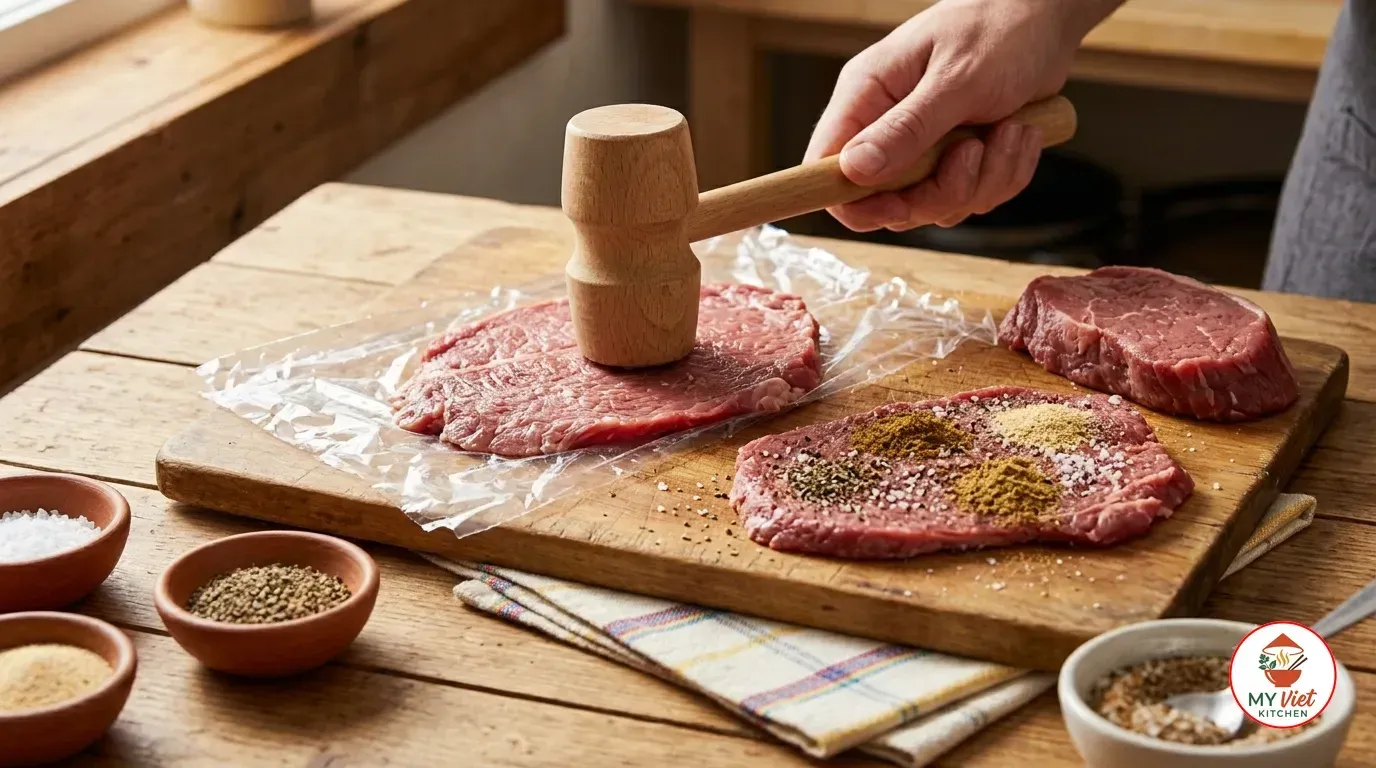
1 Place each beef steak between two sheets of plastic wrap. Using the flat side of a meat mallet, pound each piece firmly and evenly until it reaches about 1/4 inch thickness. Work from the center outward to create an even surface. The meat should be noticeably larger in area after pounding. Then season both sides generously with salt, black pepper, cumin, and garlic powder. Let the seasoned steaks rest for 5 minutes so the spices penetrate the surface.
Step 2: Bread the Beef
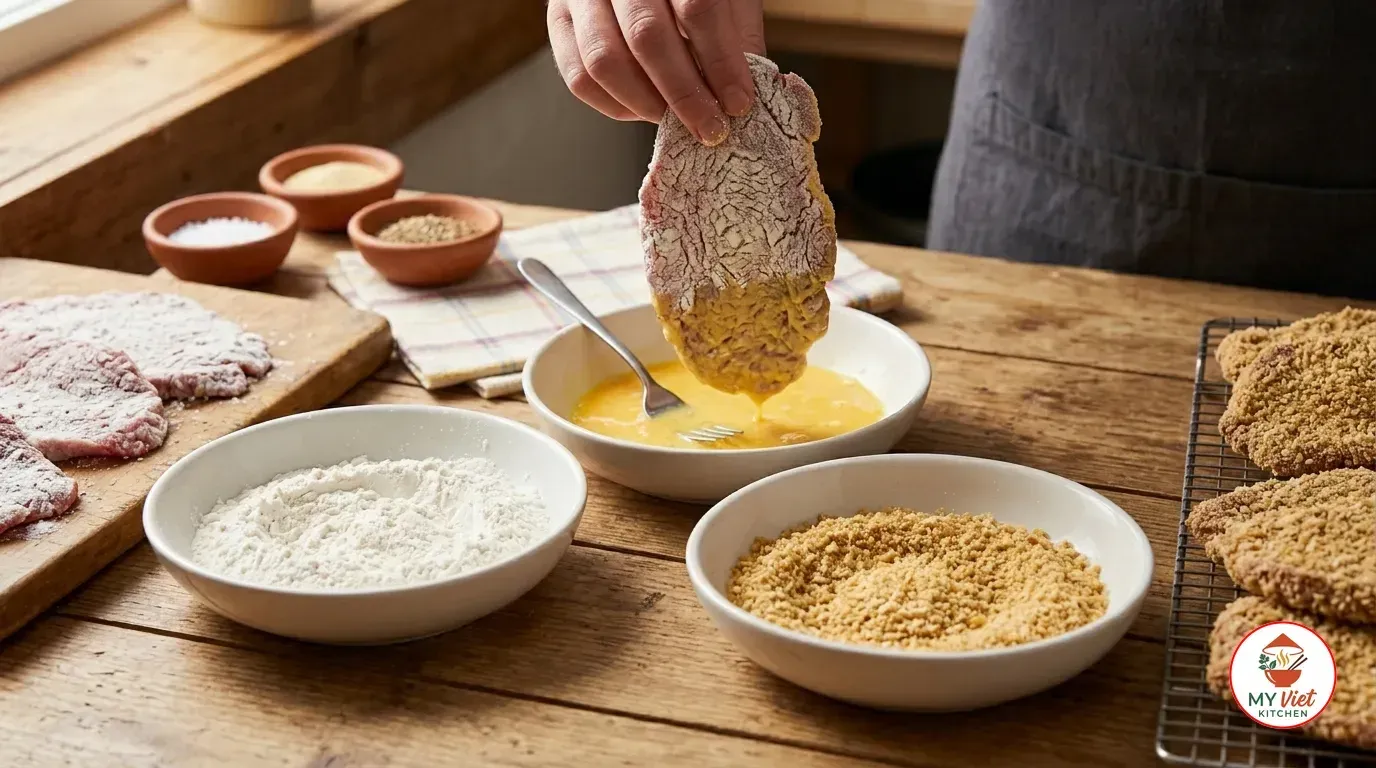
2 Set up a breading station with three shallow dishes. Fill the first with flour, the second with beaten eggs, and the third with fine breadcrumbs. Take each pounded steak and dredge it thoroughly in flour, shaking off any excess. Then dip it into the beaten egg, letting any drips fall off. Finally, press the steak firmly into the breadcrumbs on both sides, making sure every surface is evenly coated. Place the breaded cutlets on a wire rack and let them rest for 10 minutes.
Step 3: Prepare the Salsa Criolla
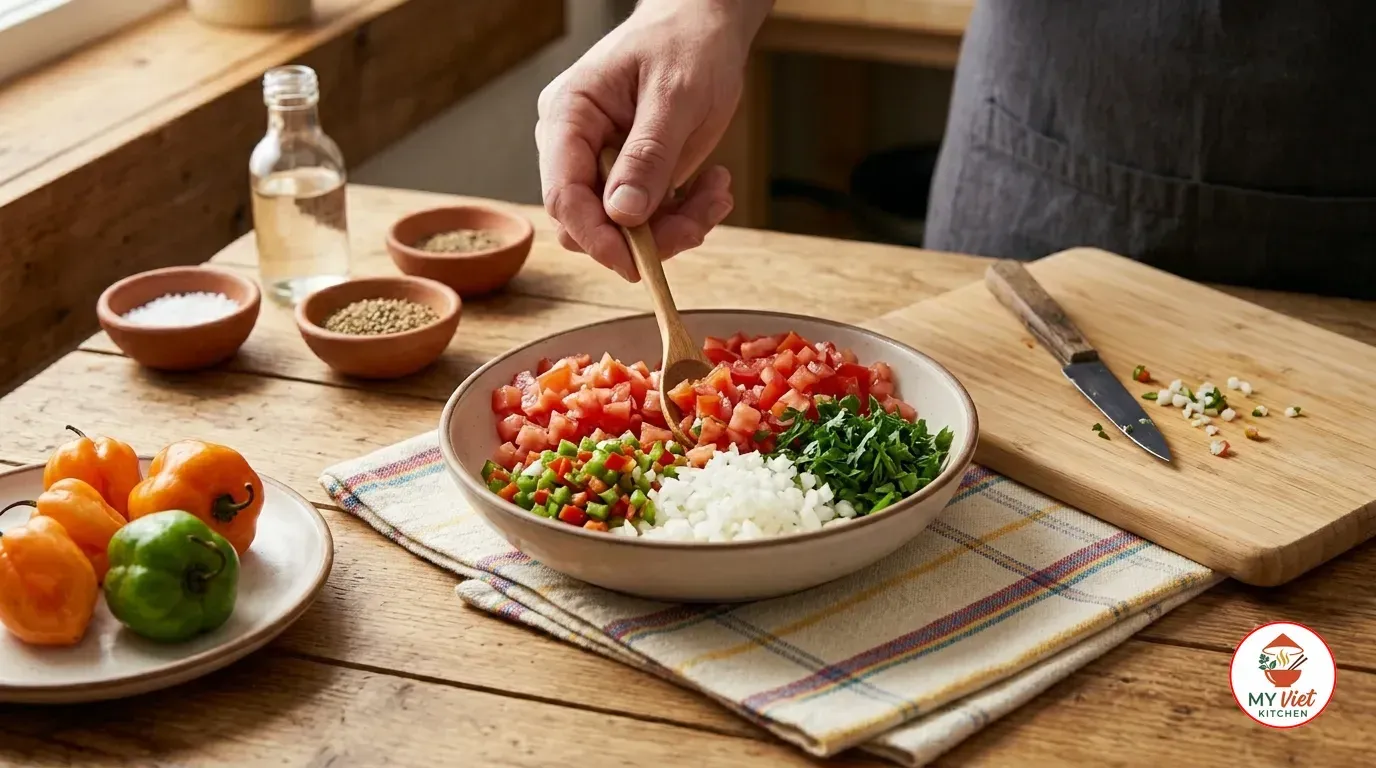
3 While the breaded cutlets rest, prepare the salsa criolla. Combine the diced tomatoes, finely chopped onion, minced locoto peppers, and fresh parsley in a medium bowl. Add the white vinegar, salt, and pepper. Toss everything together gently. Then let the salsa sit at room temperature for at least 15 minutes. This resting time allows the salt to draw out the tomato juices and the vinegar to soften the raw bite of the onion. The result is a bright, tangy condiment that brings the entire dish together.
Step 4: Fry the Potatoes
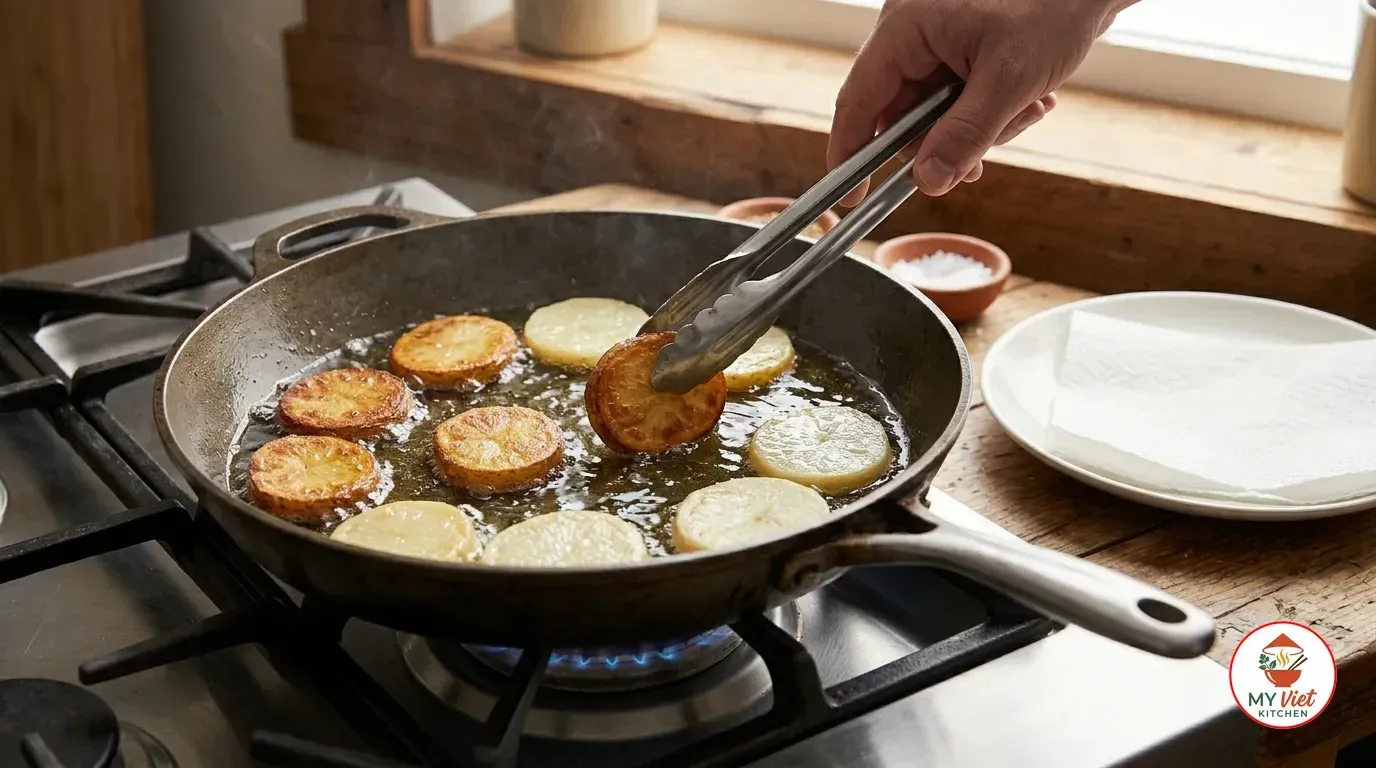
4 Heat about half an inch of vegetable oil in a large skillet over medium-high heat. When the oil shimmers, carefully add the potato rounds in a single layer. Fry for 3 to 4 minutes per side until they turn a deep golden brown and feel tender when pierced with a fork. Work in batches to avoid crowding, because overcrowding drops the oil temperature and produces soggy potatoes. Transfer the fried potatoes to a plate lined with paper towels and season with a pinch of salt while they are still hot.
Step 5: Fry the Breaded Beef
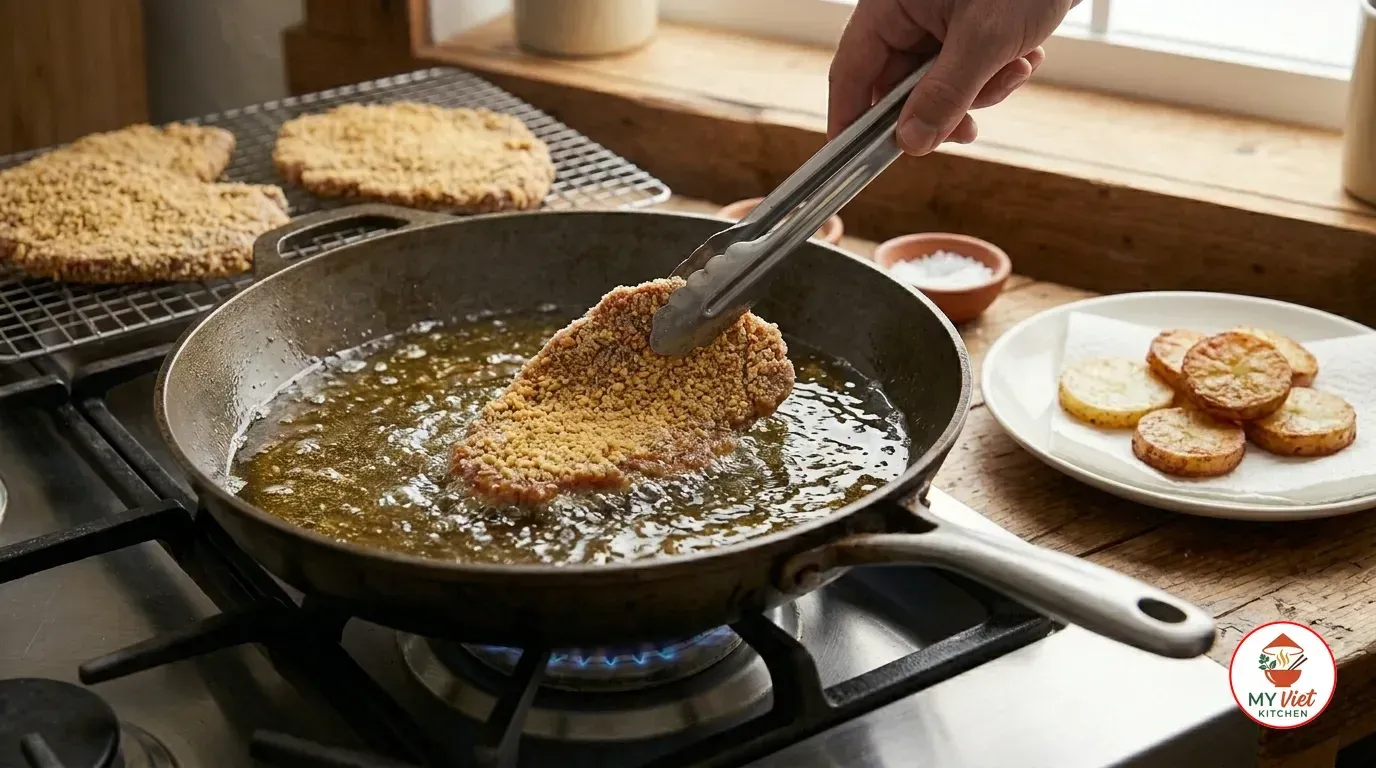
5 Using the same skillet, add more oil if needed to maintain about half an inch of depth. Heat over medium-high until a breadcrumb dropped into the oil sizzles immediately. Carefully lay one breaded steak into the oil and fry for 2 to 3 minutes per side. The coating should turn a rich, deep golden brown while the beef inside cooks through completely. Because the meat is so thin, it cooks quickly without drying out. Transfer to a wire rack or paper towels. Repeat with the remaining cutlets.
Step 6: Fry the Eggs
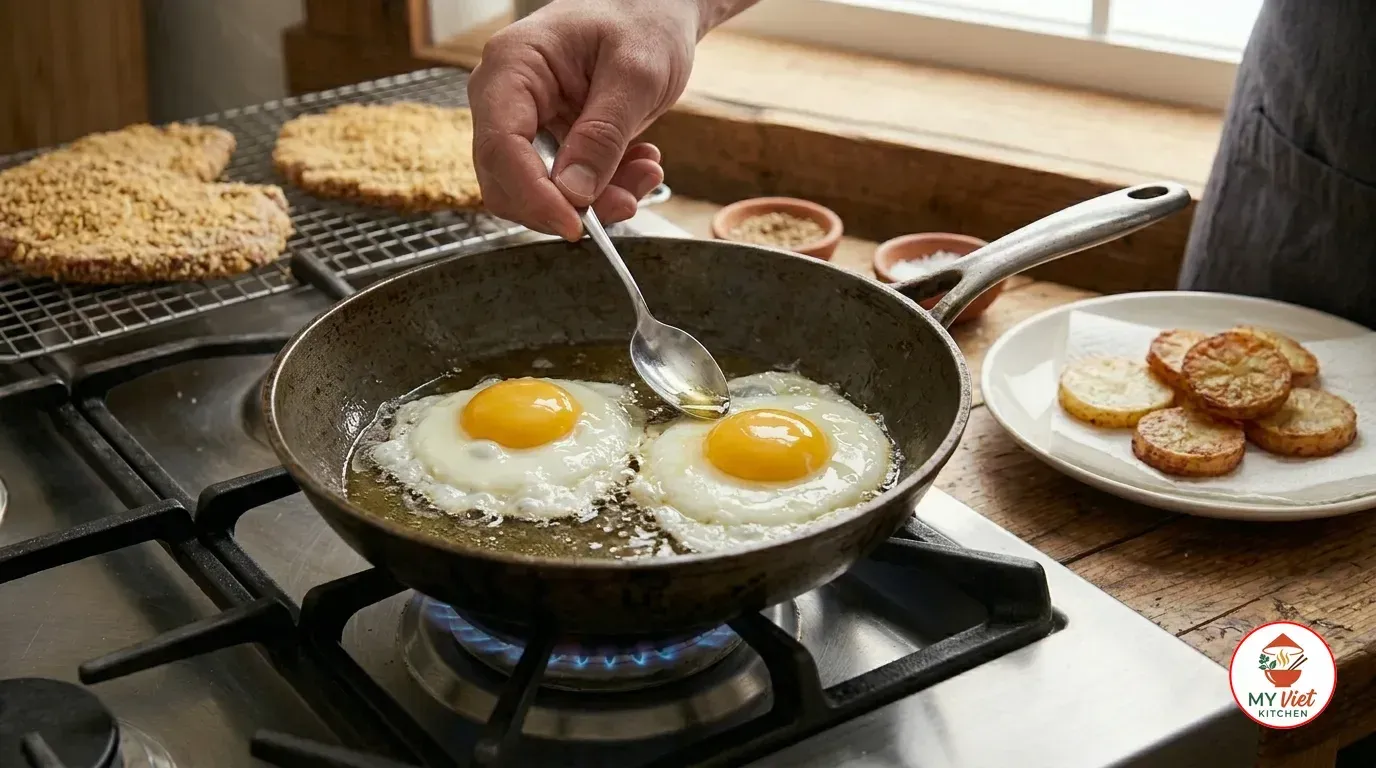
6 Pour off most of the frying oil, leaving about 2 tablespoons in the skillet. Reduce the heat to medium-low. Crack each egg into the pan and fry gently until the whites set completely but the yolks remain soft and runny. For the best results, baste the egg whites with a spoonful of hot oil to help them cook evenly on top. The runny yolk is essential to the silpancho experience because it acts as a natural, rich sauce that coats the beef and rice below.
Step 7: Assemble and Serve
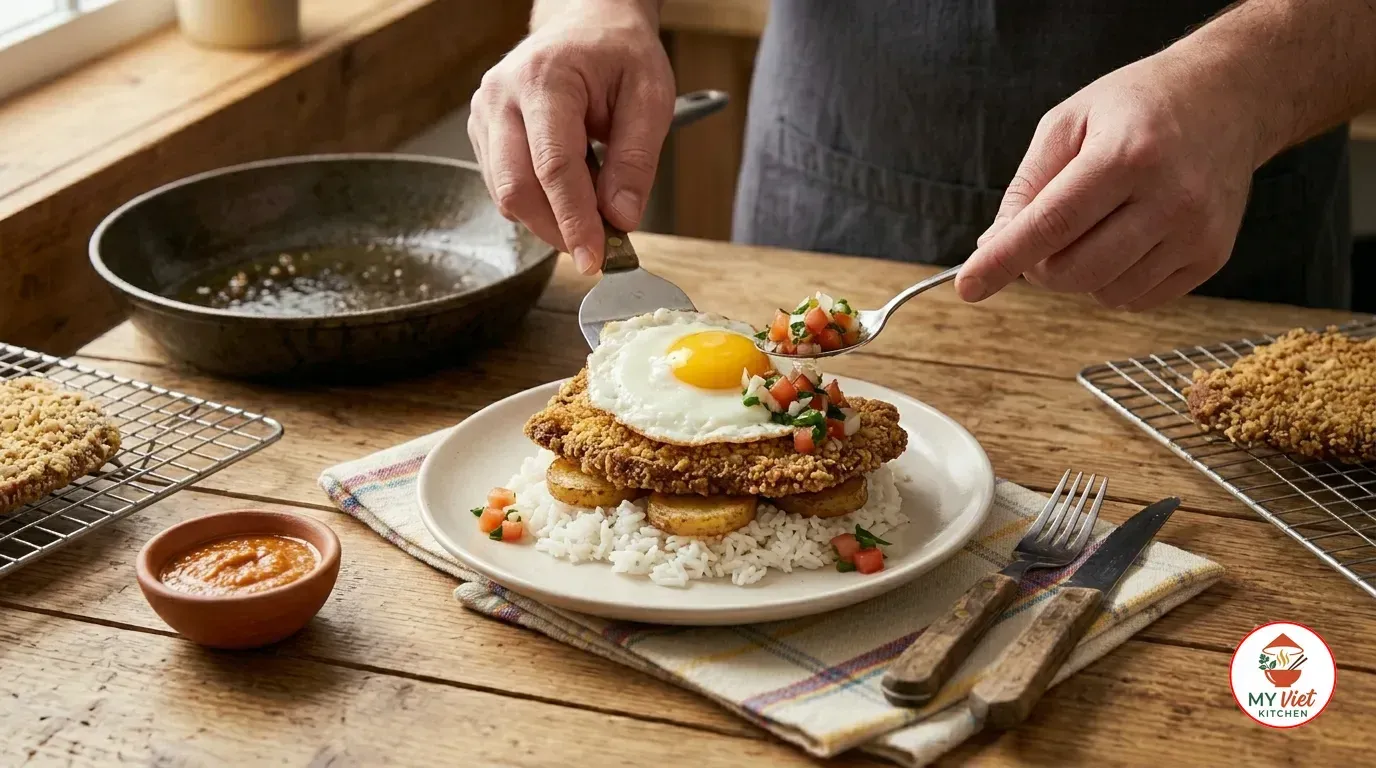
7 Now comes the best part of this silpancho recipe. On each plate, spread a generous bed of warm white rice. Arrange the golden fried potato rounds on top of the rice in an even layer. Place one crispy breaded beef cutlet over the potatoes. Then crown the entire plate with a perfectly fried egg, yolk side up. Finally, spoon the fresh salsa criolla generously over everything. The first cut through the egg releases a golden river of yolk that mingles with the crispy beef and tangy salsa. Serve immediately while everything is hot and crisp.
Expert Tips for a Perfect Silpancho Recipe
Pound the Beef Evenly
Uneven thickness means some parts cook too fast while others stay raw. Work from the center outward with steady strokes. If one area gets too thin, hit the thick spots instead. You want a flat, even piece that cooks at the same rate all over. Even pounding also helps the breading stick to every part of the meat.
Use Fine Breadcrumbs
Fine crumbs make a thinner, crunchier crust than coarse ones. In Bolivia, many cooks grate stale bread by hand for the finest texture. If you only have coarse crumbs, pulse them in a food processor. Finer crumbs stick better and give a more even golden color when fried.
Keep the Oil at the Right Temperature
Keep your oil at 350 to 375 degrees. If the oil is too cool, the crust soaks up fat and turns soggy. If it is too hot, the outside burns before the beef cooks inside. Use a thermometer for best results. You can also drop a bread cube into the oil. It should sizzle and turn golden in about 30 seconds.
Silpancho vs. Other Breaded Meat Dishes
Breaded and fried meat appears in cuisines around the world. However, each culture puts its own distinctive stamp on the concept. Here is how silpancho compares to similar dishes globally.
| Dish | Country | Meat | Served With |
|---|---|---|---|
| Silpancho | Bolivia | Beef, pounded very thin | Rice, fried potatoes, fried egg, salsa criolla |
| Wiener Schnitzel | Austria | Veal, pounded thin | Lemon wedge, potato salad, lingonberry jam |
| Milanesa | Argentina | Beef or chicken | French fries, lemon, salad |
| Tonkatsu | Japan | Pork loin, thick cut | Shredded cabbage, rice, tonkatsu sauce |
| Chicken Fried Steak | United States | Beef round, pounded | Mashed potatoes, cream gravy, green beans |
Serving Suggestions
Any good silpancho recipe produces a complete meal on its own. In Cochabamba, the plate arrives towering with layers and the portions are famously generous. However, you can add a few accompaniments to round out the table, especially when feeding a crowd.
Traditional Accompaniments:
- Llajwa (Bolivian hot sauce): A fiery salsa made from locoto peppers and fresh tomatoes, ground together in a stone mortar. It adds a layer of heat that elevates the entire dish.
- Pickled onions and carrots: These vinegar-soaked vegetables provide a tangy, crunchy contrast to the rich fried components.
- Simple green salad: Crisp lettuce, sliced radishes, and a squeeze of lime offer a refreshing counterpoint to the hearty plate.
- Boiled corn on the cob: A common side throughout Bolivian cuisine that adds sweetness and textural variety to the meal.
Beverage Pairings:
- Chicha morada: A refreshing Andean drink made from purple corn, cinnamon, cloves, and lime. Its fruity sweetness pairs well with the savory, fried flavors.
- Pacena or Huari beer: These popular Bolivian lagers are light and crisp, perfect for cutting through the richness of the breaded beef and fried potatoes.
- Api (warm corn drink): A thick, spiced purple corn beverage traditionally enjoyed with Bolivian street food and hearty dishes like silpancho.
- Fresh squeezed orange juice: The bright citrus acidity cleanses the palate between bites of the rich, layered plate.
Storage and Reheating
Refrigerator: Store the breaded beef, rice, and potatoes separately in airtight containers for up to 3 days. Keep the salsa criolla in its own container since it releases liquid over time. Storing the components separately prevents the breading from becoming soggy.
Freezer: The breaded beef cutlets freeze well for up to 2 months. Wrap each cutlet individually in plastic wrap, then place them in a freezer bag. Thaw overnight in the refrigerator before reheating. The rice and potatoes also freeze well for up to 1 month.
Reheating: For the best results, reheat the breaded beef in a preheated oven at 375 degrees Fahrenheit for 8 to 10 minutes to restore the crispy coating. Reheat the rice in a microwave with a splash of water. Fry fresh eggs and make a new batch of salsa criolla, since both taste significantly better when freshly prepared.
Common Mistakes to Avoid
1. Not Pounding the Beef Thin Enough
Thick cutlets will not cook through by the time the breading turns golden. This leaves you with raw beef inside a burnt exterior. Always pound to 1/4 inch or thinner. The meat should almost look translucent in spots before breading. In Cochabamba, the cutlets are famously thin, sometimes covering the entire plate.
2. Skipping the Resting Step After Breading
If you fry the cutlets immediately after breading, the coating is more likely to fall off in the hot oil. A 10-minute rest on a wire rack lets the flour, egg, and breadcrumb layers bond together. This creates a seal that stays intact during frying. In other words, patience at this stage pays off with a much crispier result.
3. Crowding the Pan
Putting too many pieces in the skillet at once drops the oil temperature dramatically. Cold oil produces greasy, soggy food instead of crispy, golden results. Fry one or two cutlets at a time and let the oil return to temperature between batches. This principle applies equally to the potatoes.
4. Overcooking the Fried Egg
A hard, fully cooked yolk defeats the purpose of the egg topping. The runny yolk is not optional in traditional silpancho. It serves as a rich, golden sauce that ties all the layers together. Cook the whites gently over medium-low heat and remove the eggs as soon as the whites set. The residual heat continues cooking them on the plate.
Frequently Asked Questions
What cut of beef is best for silpancho?
Beef sirloin or top round are the best choices for silpancho. Both cuts are lean and pound thin easily without falling apart. The key is reaching about 1/4 inch thickness so the meat cooks quickly inside the crispy breading. Avoid fatty cuts like ribeye, because the excess fat makes the breadcrumbs slide off during frying.
What is the difference between silpancho and milanesa?
While both dishes feature breaded fried meat, silpancho is a complete composed plate. It always arrives over a specific base of rice and fried potatoes, then gets topped with a fried egg and fresh salsa criolla. In contrast, milanesa is simply the breaded cutlet served on its own or with a side salad. Silpancho is also pounded much thinner than most milanesa preparations.
Can I bake silpancho instead of frying it?
Yes, you can bake the breaded beef at 425 degrees Fahrenheit for 15 to 18 minutes. Flip once halfway through for even browning. Spray or brush the cutlets with oil before baking to help them crisp up. The result will not match the deep golden crunch of the fried version, but it offers a lighter alternative that still tastes great.
What is a locoto pepper and what can I substitute?
Locoto, also called rocoto, is a thick-fleshed hot pepper native to the Andes. It has a fruity, apple-like heat that is distinctive in South American cooking. Habanero peppers are the closest substitute in terms of heat. For a milder version, use serrano or jalapeño peppers instead. Adjust the quantity based on your personal heat tolerance.
Is silpancho gluten-free?
Traditional silpancho uses wheat flour and breadcrumbs, so it is not gluten-free by default. However, you can make an easy gluten-free version by using rice flour instead of all-purpose flour and substituting gluten-free breadcrumbs or crushed cornflakes for the regular breadcrumbs. The rest of the dish, including the rice, potatoes, egg, and salsa, is naturally gluten-free.
What is salsa criolla and can I make it ahead?
Salsa criolla is a fresh, uncooked condiment made from diced tomatoes, onions, hot peppers, parsley, and vinegar. You can prepare it up to 4 hours ahead and refrigerate it. However, it tastes best at room temperature, so remove it from the fridge about 15 minutes before serving for the brightest, most vibrant flavor.
Variations and Adaptations
Chicken Silpancho:
Replace the beef with boneless, skinless chicken breasts. Butterfly each breast, then pound thin following the same technique. Chicken silpancho is lighter than the beef version and cooks even faster. It is a popular alternative in Bolivian restaurants for those who prefer poultry. The breading and assembly remain exactly the same.
Silpancho de Trucha (Trout Silpancho):
In the Lake Titicaca region of Bolivia, trout replaces beef entirely. Butterfly a fresh trout fillet, bread it lightly, and fry until golden. The fish version is delicate, flaky, and pairs exceptionally well with the tangy salsa criolla. This adaptation reflects the culinary traditions of highland Bolivia where freshwater fish is abundant.
Spicy Silpancho:
For extra heat, add 1 teaspoon of cayenne pepper to the breadcrumbs before coating. Then double the locoto peppers in the salsa criolla. Additionally, serve with a side of llajwa, the fiery Bolivian stone-ground hot sauce. This version is popular in Cochabamba’s street food stalls where diners demand bold, intense flavors.
Baked Lighter Version:
For a lighter take on this silpancho recipe, bake the cutlets and potatoes instead of frying. Spray both with cooking oil and arrange on separate baking sheets. Bake the potatoes at 425 degrees Fahrenheit for 20 minutes, flipping once. Bake the breaded beef at the same temperature for 15 to 18 minutes. You still get satisfying crunch with significantly less oil.
The Cultural Significance of Silpancho
Silpancho is at the heart of Cochabamba, Bolivia’s third-largest city and its food capital. The dish first showed up in the 1950s. Legend says a restaurant called Capitolio created it. What started as a simple lunch plate quickly grew into a citywide craze, then spread across the whole country.
In Cochabamba, silpancho is far more than restaurant food. It is a daily ritual. Market vendors sell it from big shared pots. Students line up for it between classes. Families gather around it on Sundays. The dish stands for the local way of eating: generous, honest, and bold. More food on the plate is always better. Every layer should pack real flavor.
Bolivia officially declared silpancho part of its intangible cultural heritage. Every year, Cochabamba hosts food festivals where silpancho takes center stage. Cooks compete to create the most perfectly layered plate. The dish has also become a symbol of Bolivian identity abroad. In cities like Buenos Aires, Miami, and Madrid, Bolivian restaurants always feature silpancho prominently on the menu because it is the dish that homesick Bolivians crave most.
Conclusion
This silpancho recipe brings one of South America’s greatest comfort foods into your kitchen. Success lies in pounding the beef thin, building a crispy breading that stays intact, and assembling each plate with care. Every layer matters: the fluffy rice, the golden potatoes, the shattering crispy beef, the runny egg, and the bright salsa on top. Follow this silpancho recipe step by step, and you will create a plate that captures the bold spirit of Bolivian cooking.
Ready to explore more South American flavors? Browse our collection of South American dishes, including empanadas, lomo saltado, and ceviche. Also, discover our beef recipes from around the world for more inspiration.