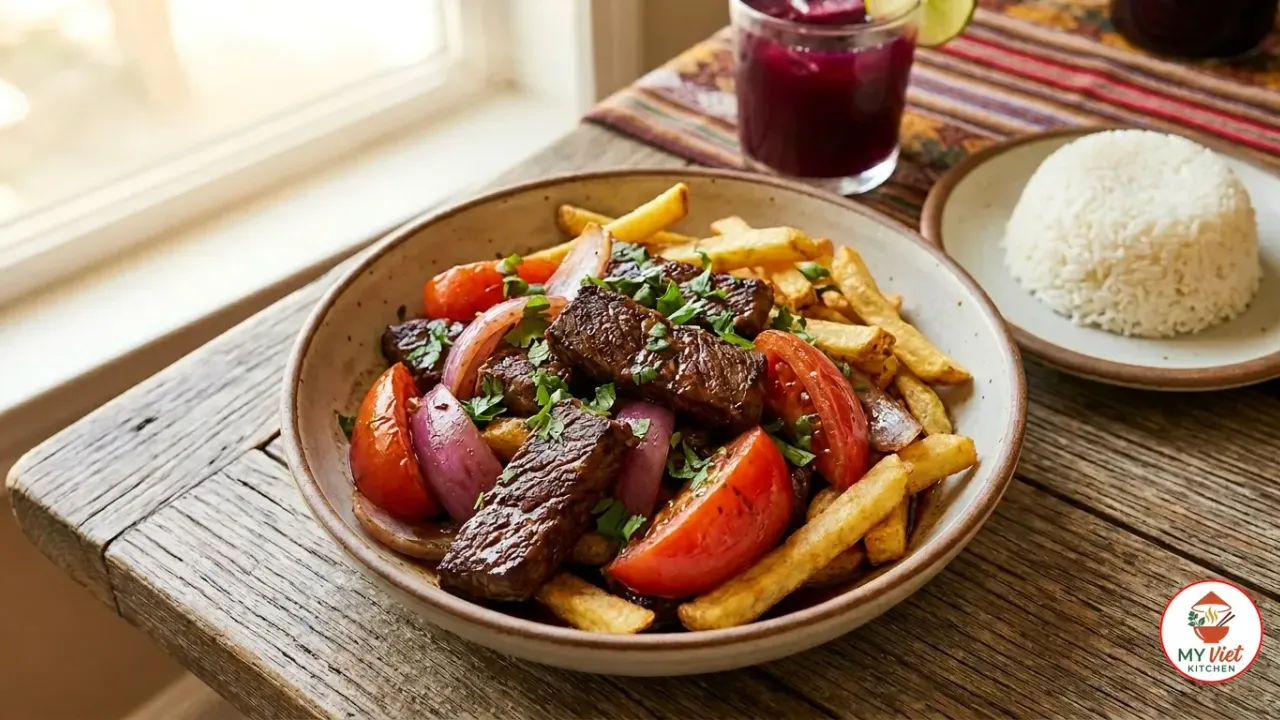
Lomo Saltado is the crown jewel of Peruvian cuisine and one of the most exciting stir-fries you will ever make. This Peruvian stir-fried beef dish tosses thick-cut sirloin strips with red onions, ripe tomatoes, and a tangy sauce over blazing high heat. It finishes with a handful of crispy french fries tossed right into the wok. The result is a mix of Chinese wok skill and Peruvian soul that has won over food lovers around the world. Few dishes deliver this much flavor, texture, and cultural history in a single pan.
Prep Time: 20 minutes | Cook Time: 15 minutes | Servings: 4
Difficulty: Easy | Calories: ~580 per serving
What Makes Lomo Saltado Special?
Lomo saltado belongs to a food style called chifa, the blend of Chinese and Peruvian cooking that grew in the mid-1800s. When Chinese workers came to Peru for railroad and farm jobs, they brought their woks, stir-fry methods, and soy sauce. Peruvian cooks loved these tools and mixed them with local foods. As a result, the wok met the potato. Soy sauce met aji amarillo. The result was a new cuisine that neither culture could have made alone. Lomo saltado became the most famous dish to emerge from this fusion.
What sets this dish apart from any standard beef stir-fry is its bold combination of textures and flavors. First, the beef stays rare in the center, seared hard on the outside. Meanwhile, the tomatoes remain chunky and barely cooked, releasing their juices into the pan at the last moment. Red onions keep their crunch and sweetness alongside them. Then the crispy french fries go directly into the wok, soaking up the tangy sauce while maintaining their golden exterior. Serving everything alongside fluffy white rice completes the experience. This dual-starch approach, both fries and rice on the same plate, is not excess. It is tradition.
The sauce itself is deceptively simple yet perfectly balanced. Soy sauce provides the savory depth. Red wine vinegar adds a sharp acidity that cuts through the richness of the beef fat. Additionally, aji amarillo paste, the key Peruvian chili, adds a fruity warmth that lingers on the tongue. These three items create a flavor that feels both known and brand new at the same time. You taste Asia and South America in every bite, and they fit as one.

Choosing the Right Beef for Lomo Saltado
The word lomo means loin in Spanish, and that tells you everything about the cut this dish demands. You need a tender, quick-cooking steak that can withstand blazing heat without turning tough. Consequently, the right cut makes the gap between a great lomo saltado and a flat one. Here are your best options.
- Beef sirloin (best choice): This is the traditional cut for lomo saltado. Top sirloin offers an ideal balance of tenderness, beefy flavor, and value. Cut it into strips about half an inch thick and two inches long, always slicing against the grain. The slight marbling melts during the high-heat sear and bastes the meat from within.
- Beef tenderloin: The most tender option, producing an incredibly silky result. However, tenderloin has a milder flavor compared to sirloin. It also costs significantly more. Reserve this cut for special occasions when you want the ultimate melt-in-your-mouth texture.
- Flank steak or skirt steak: These cuts deliver more robust beef flavor and work well in lomo saltado when sliced very thinly against the grain. They are chewier than sirloin, so the cutting technique is critical. The extra flavor compensates for the slightly firmer texture.
Ingredients for Lomo Saltado
For the Beef:
- 1.5 pounds (680g) beef sirloin, cut into thick strips
- 1 teaspoon ground cumin
- Salt and black pepper to taste
- 2 tablespoons vegetable oil for stir-frying
For the Sauce:
- 2 tablespoons soy sauce
- 2 tablespoons red wine vinegar
- 1 tablespoon aji amarillo paste
For the Vegetables and Fries:
- 1 large red onion, cut into thick wedges
- 2 medium tomatoes, cut into wedges
- 4 cloves garlic, minced
- 1 pound (450g) russet potatoes, cut into thick fries
- Vegetable oil for deep frying
For Serving:
- Steamed white rice
- 1/2 cup fresh cilantro, chopped
Pro tip: Pat the beef strips completely dry with paper towels before searing. Surface moisture creates steam instead of a good sear. Dry meat browns faster, forming a deep crust in seconds. Additionally, take the beef out of the fridge 15 minutes before cooking. Room-temperature meat sears more evenly. These two small steps transform the texture of every strip in the pan.
Step-by-Step Instructions
Step 1: Prepare the Beef and Sauce
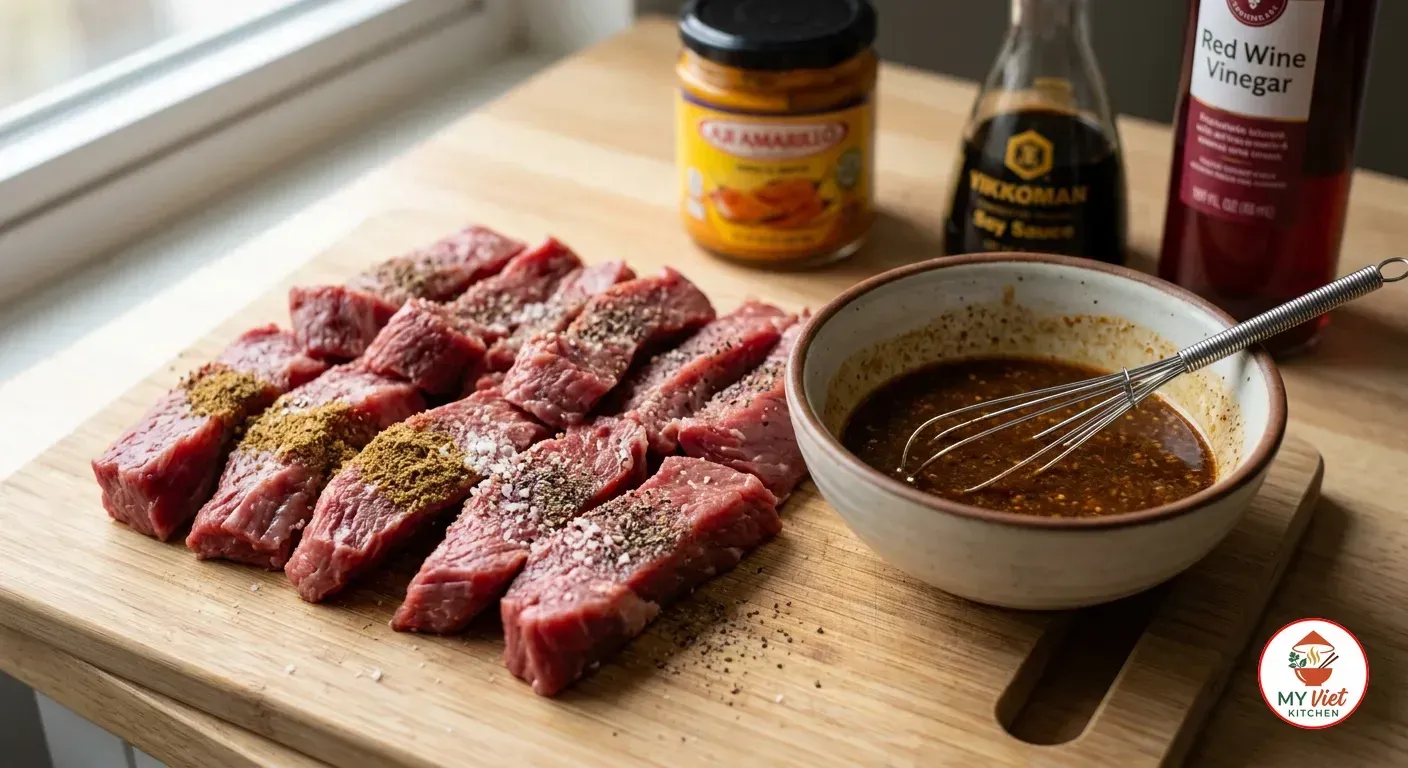
1 Cut the beef sirloin against the grain into strips about half an inch thick and two inches long. Cutting against the grain shortens the muscle fibers, so each piece is much more tender. Season the strips generously with salt, black pepper, and ground cumin. In particular, the cumin is essential because it adds an earthy warmth that is characteristic of Peruvian seasoning.
In a small bowl, combine the soy sauce, red wine vinegar, and aji amarillo paste. Whisk until the paste dissolves completely into the liquid. This three-ingredient sauce is the backbone of lomo saltado. Soy sauce delivers umami depth. Meanwhile, the vinegar provides sharp acidity. In addition, aji amarillo brings fruity heat and a beautiful orange color. Set this mixture aside within arm’s reach of the stove. Once the stir-fry begins, everything happens in minutes.
Step 2: Fry the Potatoes
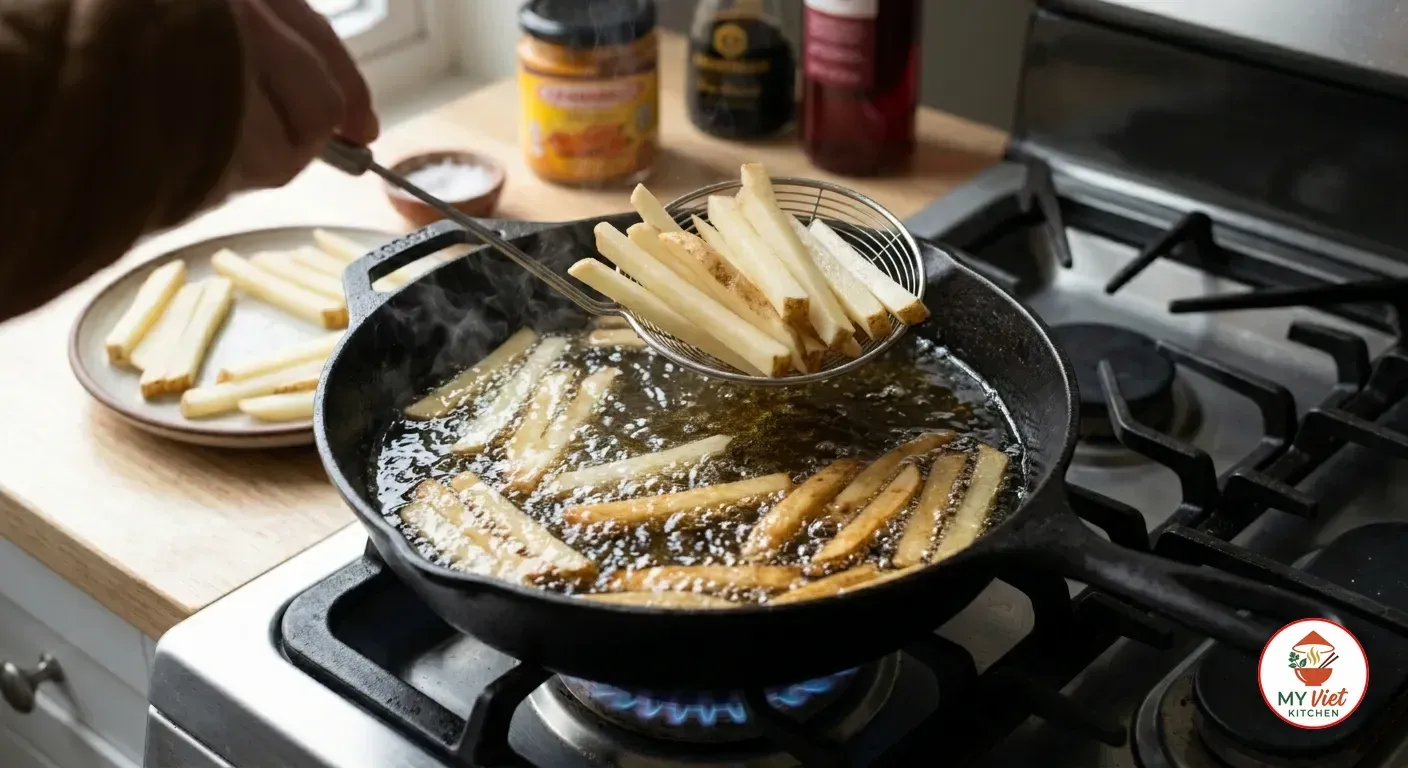
2 Cut the russet potatoes into thick fries, about a third of an inch wide. Russet potatoes are best since their high starch gives a fluffy inside and a crispy shell. Rinse the cut fries under cold water to remove surface starch, then pat them completely dry. After all, wet potatoes splatter dangerously in hot oil.
Heat vegetable oil in a deep heavy pot to 350 degrees Fahrenheit. Fry in small batches so you do not crowd the pot, which drops the oil heat and makes soggy fries. Cook each batch for 4 to 5 minutes until golden brown. Remove with a slotted spoon and drain on paper towels. Then season immediately with salt while the surface is still hot and slightly sticky. The salt adheres better this way. Keep the fries warm in an oven set to 200 degrees Fahrenheit while you cook the stir-fry.
Step 3: Sear the Beef
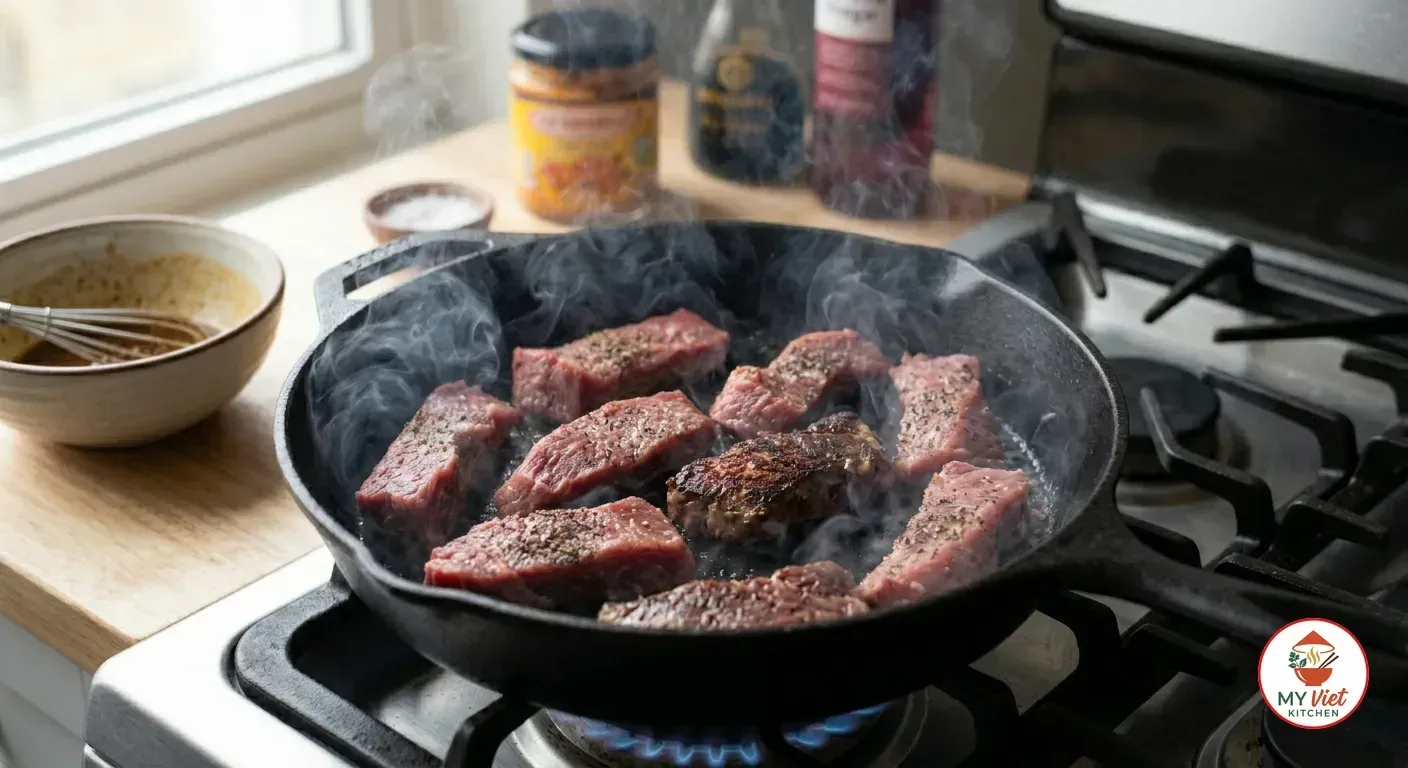
3 Heat 2 tablespoons of vegetable oil in a large wok or heavy cast-iron skillet over the highest heat your stove can produce. This step demands serious heat. The pan should be so hot that the oil shimmers and just begins to smoke. Add the seasoned beef strips in a single layer with space between each piece. Do not stir for a full 60 seconds.
Above all, this wait is key. Moving the meat too soon stops the crust from forming. After 60 seconds, flip each strip and sear the other side for another 60 seconds. Most importantly, the interior should remain pink and juicy. Overcooked beef turns dry and tough in this dish. Transfer the seared strips immediately to a clean plate. They will finish cooking when you add them back to the wok later. If your pan is small, sear in two batches. Crowding creates steam and turns the meat grey and sad.
Step 4: Stir-Fry the Vegetables
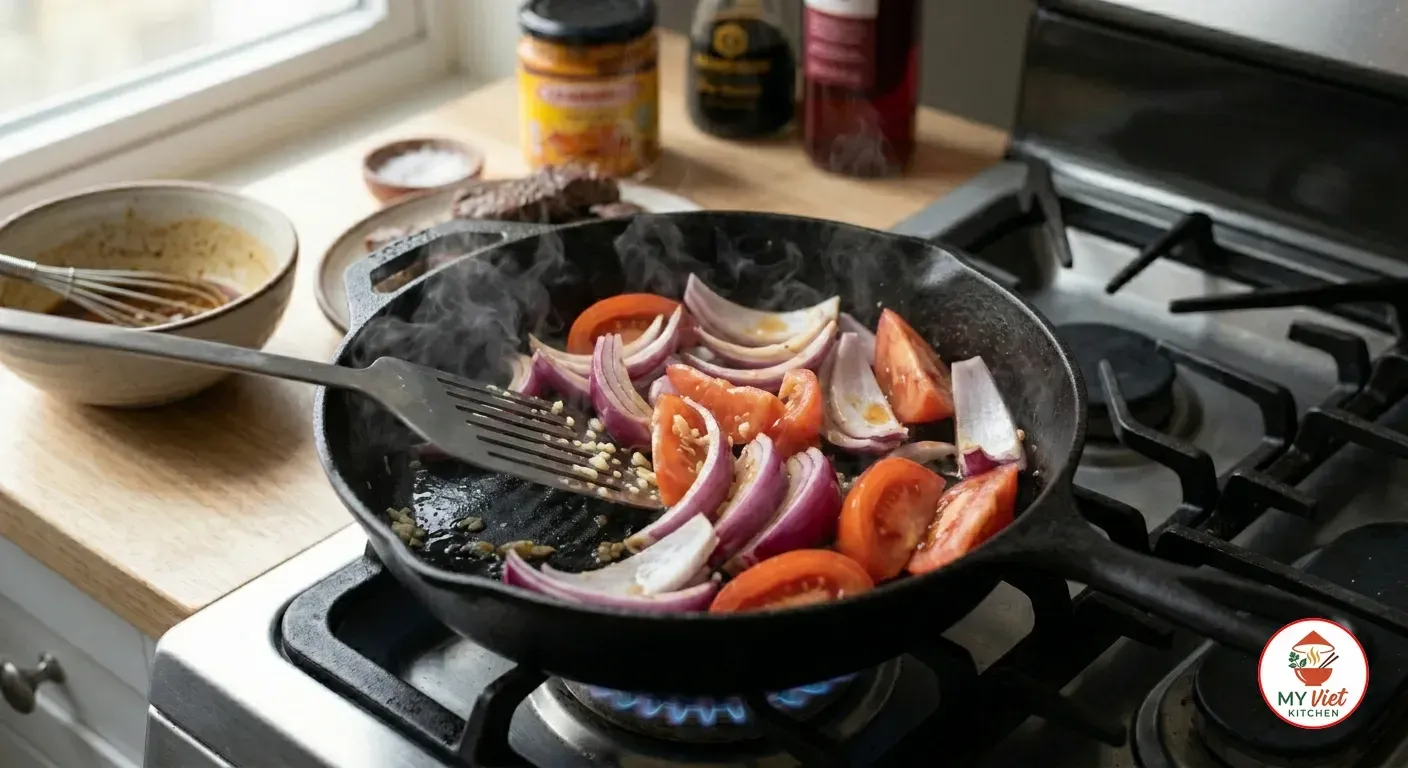
4 Keep the wok over high heat. Add a small splash of oil if the pan looks dry. Toss in the red onion wedges and stir-fry for about 90 seconds. The onions should soften slightly at the edges while keeping their shape and crunch. They should not become limp or translucent. In short, speed is everything in this step.
Add the minced garlic and stir for 30 seconds until fragrant. Then add the tomato wedges. Stir-fry for just 1 minute. In fact, the tomatoes need only enough heat to warm them through and release a small amount of juice. They should hold their wedge shape and still have a slight firmness. Overcooked tomatoes dissolve into a sauce, which is not what you want here. Instead, the chunky vegetables are a defining feature of authentic lomo saltado. Each component should retain its individual identity on the plate.
Step 5: Combine and Finish the Lomo Saltado
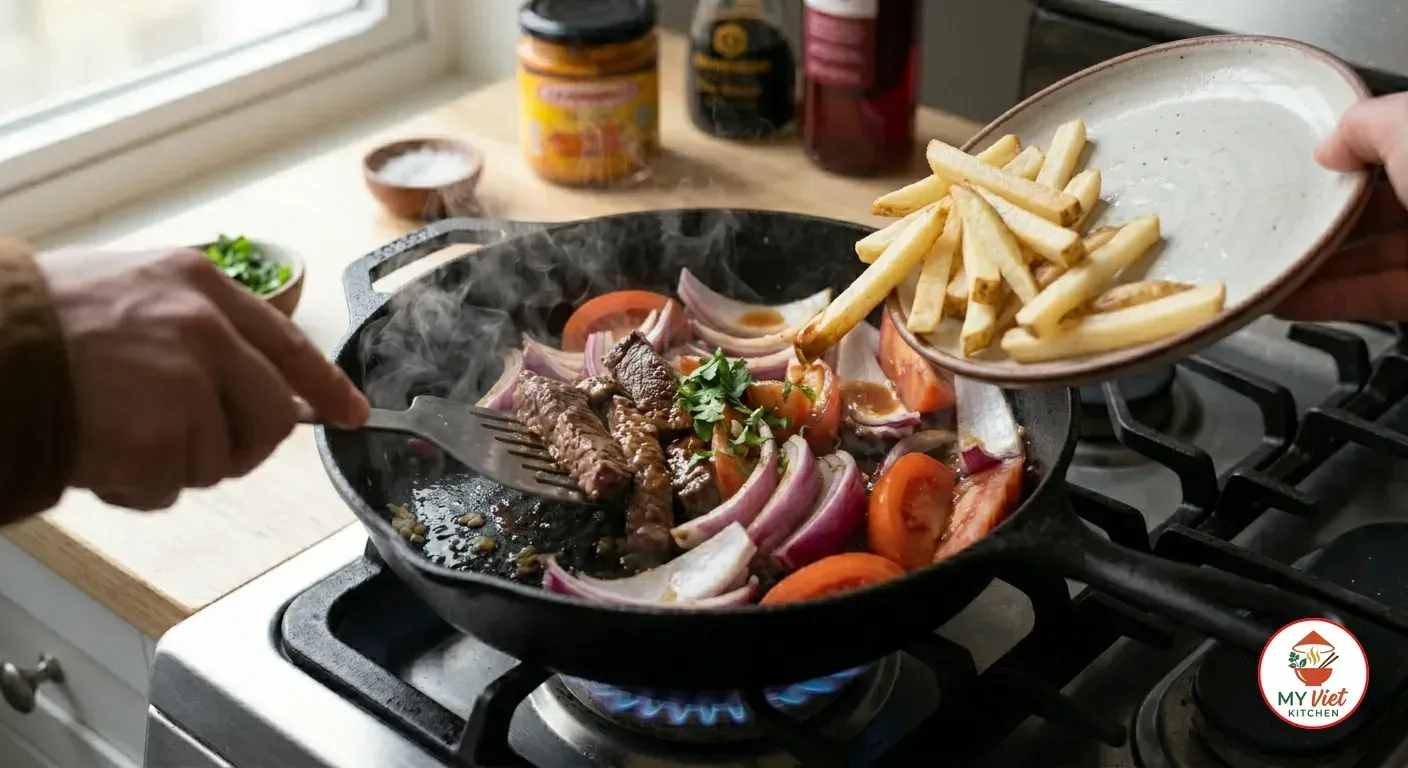
5 Return the seared beef strips to the wok with all their resting juices. Pour the soy sauce, vinegar, and aji amarillo mixture over everything. Toss vigorously over high heat for 30 seconds. The sauce sizzles on contact and coats every piece of meat and vegetable in a glossy, tangy glaze. The vinegar hits the hot wok and creates a burst of aromatic steam. This moment is the heart of the dish.
Finally, add the crispy fries to the wok. Toss them through the stir-fry once or twice. They absorb a small amount of sauce while maintaining their crunch. Then remove the wok from heat immediately. Garnish generously with fresh chopped cilantro. Serve the lomo saltado alongside a mound of steamed white rice. The traditional presentation places the stir-fry on one side of the plate with the rice on the other, allowing the fries to spill across both zones. Each forkful should include beef, a vegetable, a fry, and a bit of rice for the complete experience.
Expert Tips for Perfect Lomo Saltado
Maximize Your Wok Heat
The single most important factor in lomo saltado is heat. Professional Peruvian cooks use commercial wok burners that produce flames far beyond what home stoves deliver. To compensate, preheat your heaviest pan for a full 3 minutes over the highest setting. A cast-iron skillet retains heat better than a thin wok for home cooking. Also, cook in small batches so the pan temperature stays high. If the meat sizzles violently on contact, you have enough heat. If it makes a gentle hiss, the pan needs more time. This bold heat makes the smoky taste called wok hei, the mark of a great stir-fry.
Cut Vegetables in Large Pieces
Unlike Chinese stir-fries where vegetables are often thinly sliced, lomo saltado uses chunky cuts. The onions go in as thick wedges, not rings. The tomatoes stay in large wedges, not diced. This approach ensures the vegetables retain their texture during the brief cooking time. Moreover, large pieces create a more dramatic visual presentation. Each component should remain identifiable on the finished plate. If your tomatoes and onions melt into the sauce, you have cut them too small or cooked them too long.
Add the Fries at the Very End
Timing is critical with the fries. They enter the wok only during the final 10 seconds of cooking. Any longer and they absorb too much sauce, turning soggy. The goal is a light coating of sauce on crispy fries. Some Peruvian cooks prefer to serve the fries on the side rather than tossing them into the wok. Both approaches are authentic. If you choose to add them to the wok, work quickly and serve immediately. Lomo saltado waits for no one.
Lomo Saltado vs. Other South American Stir-Fries
Lomo saltado is the most famous example of chifa cuisine, but Peru is not the only South American country with stir-fry traditions. The following comparison shows how different regions adapted Asian cooking techniques to local ingredients and tastes.
| Dish | Country | Key Ingredients | Key Characteristics |
|---|---|---|---|
| Lomo Saltado | Peru | Beef sirloin, fries, tomatoes, soy sauce, aji amarillo | High-heat sear, tangy sauce, fries in the stir-fry |
| Tallarin Saltado | Peru | Noodles, beef, vegetables, soy sauce | Same chifa base but with egg noodles instead of fries |
| Arroz Chaufa | Peru | Fried rice, char siu pork, eggs, soy sauce | Peruvian fried rice with Chinese-Peruvian seasonings |
| Yakisoba Brasileira | Brazil | Fried noodles, chicken, vegetables, soy sauce | Japanese-Brazilian fusion with a sweeter sauce profile |
| Chapsui | Bolivia | Mixed vegetables, meat, soy sauce, served over rice | Adapted from Chinese chop suey with Andean influences |
Serving Suggestions
Lomo saltado is traditionally served as a complete one-plate meal. The combination of beef, vegetables, fries, and rice covers all the bases. However, adding a few complementary sides elevates the experience and rounds out the Peruvian dining table.
Classic Accompaniments:
- Steamed white rice: Non-negotiable. Use long-grain white rice cooked until fluffy and separate. The neutral starch absorbs the tangy sauce and balances the bold flavors. Some cooks add a clove of garlic and a splash of oil to the rice pot for subtle depth.
- Aji verde sauce: This creamy green sauce made from aji amarillo, cilantro, huacatay (Peruvian black mint), and mayonnaise adds a bright, herbaceous kick. Drizzle it over the beef and fries for an extra layer of flavor.
- Fresh salad: A simple salad of sliced avocado, red onion rings, and lime juice provides cool, creamy contrast to the hot stir-fry. The fat from the avocado soothes the palate between bites of the peppery beef.
- Cancha (toasted corn): These crunchy, salt-roasted corn kernels are served at virtually every Peruvian table. They add a satisfying crunch and a nutty flavor that pairs beautifully with the rich beef.
Beverage Pairings:
- Pisco sour: Peru’s national cocktail is the ultimate pairing for lomo saltado. The tart lime juice, egg white foam, and aromatic pisco complement the tangy-savory stir-fry beautifully. Serve it alongside the meal for an authentic Peruvian experience.
- Cusquena lager: This crisp Peruvian beer provides a clean, refreshing counterpoint to the rich, smoky beef. The light carbonation cleanses the palate between bites. Keep it ice-cold for the best effect.
- Malbec red wine: A South American Malbec from Argentina or Peru offers dark fruit and soft tannins that complement the seared beef without overwhelming the aji amarillo heat. Choose a young, fruit-forward bottle rather than a heavily oaked one.
- Chicha morada: This non-alcoholic drink made from purple corn, pineapple, cinnamon, and cloves is sweet, spiced, and uniquely Peruvian. Its fruity sweetness contrasts the savory stir-fry perfectly.
Storage and Reheating
Refrigerator: Store the beef and vegetable mixture separately from the fries and rice. The stir-fry keeps for 2 to 3 days in an airtight container. However, the fries will soften significantly in the refrigerator. Accept that leftover fries will have a different texture, or make fresh ones when reheating.
Freezer: The beef and vegetable stir-fry freezes reasonably well for up to 2 months. Do not freeze the fries, as they become mealy and unpleasant after thawing. Freeze the stir-fry in flat, portion-sized containers for even thawing. Rice freezes separately for up to 3 months.
Reheating: Reheat the stir-fry in a very hot skillet or wok for 2 to 3 minutes. Do not use the microwave if you can avoid it, as it steams the beef and eliminates the seared texture. If the sauce has dried out, add a small splash of soy sauce and vinegar to refresh it. Make fresh fries if possible, or re-crisp leftover fries in a hot oven at 425 degrees Fahrenheit for 8 minutes.
Common Mistakes to Avoid
1. Using a Cold Pan
A lukewarm pan is the most common reason homemade lomo saltado disappoints. Without extreme heat, the beef steams instead of searing. It turns grey and releases water instead of forming a caramelized crust. Therefore, preheat your heaviest pan for at least 3 minutes over the highest flame. The oil should shimmer and begin to smoke lightly before any beef touches the surface. This intensity is non-negotiable for authentic results.
2. Overcrowding the Pan
Adding all the beef at once drops the pan temperature dramatically. As a consequence, the meat stews in its own juices instead of searing. Instead, work in two batches if your pan cannot hold all the strips in a single layer with space between them. Each strip needs direct contact with the hot metal surface. This extra step adds only 2 minutes but makes the difference between restaurant-quality lomo saltado and a forgettable weeknight stir-fry.
3. Overcooking the Vegetables
The tomatoes and onions should spend no more than 90 seconds each in the wok. They are not meant to soften completely. Overcooked vegetables dissolve into a mushy sauce that lacks the signature chunky texture of lomo saltado. Specifically, the onions should still have a slight bite. Similarly, the tomatoes should hold their wedge shape with firm centers. If your vegetables look like a pasta sauce, you have gone too far.
4. Skipping the Aji Amarillo
Substituting generic hot sauce or sriracha changes the flavor profile entirely. Aji amarillo paste has a unique fruity, slightly smoky heat that defines Peruvian cuisine. No other chili replicates its character. However, it is available online and in Latin American grocery stores. Making lomo saltado without aji amarillo is like making pad thai without tamarind. The dish functions, but its soul is missing.
Frequently Asked Questions
What cut of beef is best for lomo saltado?
Beef sirloin is the traditional and best choice. The word lomo means loin, referring directly to this cut. Sirloin offers the ideal balance of tenderness, flavor, and value. Alternatively, beef tenderloin works for a more luxurious version, while flank steak provides a more robust beefy flavor. Always cut against the grain into strips about half an inch thick for the best texture.
What is aji amarillo paste and where can I find it?
Aji amarillo is a bright orange Peruvian chili pepper with a fruity, moderately spicy flavor. The paste version is sold in jars at Latin American markets and online. Common brands include Dona Isabel and Inca’s Food. If unavailable, mix one tablespoon of yellow mustard with half a teaspoon of cayenne pepper as an approximate substitute. However, the authentic paste is worth seeking out for its irreplaceable flavor.
Why does lomo saltado use both french fries and rice?
This dual-starch combination reflects the chifa fusion at the heart of lomo saltado. The fries represent the Peruvian potato tradition, since Peru is the birthplace of the potato. The rice reflects the Chinese cooking influence brought by 19th-century immigrants. In fact, serving both together is not excess. It is an essential part of the dish’s identity and cultural history. Each starch serves a different textural purpose on the plate.
Can I make lomo saltado ahead of time?
The stir-fry itself should not be made ahead, as the beef overcooks and the fries lose their crunch during storage. However, you can prepare all components in advance. Cut the beef, mix the sauce, slice the vegetables, and store them separately in the refrigerator for up to 8 hours. Additionally, cut and soak the potatoes in cold water. When ready to serve, fry the potatoes first, then execute the stir-fry. Actual cooking takes only 5 minutes.
What makes lomo saltado different from regular beef stir-fry?
Several key elements distinguish this dish. First, the sauce combines soy sauce with red wine vinegar, creating a tangy-savory flavor profile that is uniquely Peruvian. Second, aji amarillo adds a fruity heat unlike any Chinese or Thai chili. Third, crispy french fries go directly into the stir-fry, a feature unique to lomo saltado. Finally, the vegetables stay in large, chunky wedges rather than thin slices. This combination of Chinese technique and Peruvian ingredients defines the chifa culinary tradition.
Is lomo saltado spicy?
Traditional lomo saltado has a mild to moderate heat level. Aji amarillo ranks around 30,000 to 50,000 Scoville units, similar to cayenne pepper but with a fruitier character. Most people who handle mild salsa comfortably will find lomo saltado pleasant. Reduce the aji amarillo to half a tablespoon for a milder version, or increase to two tablespoons for more heat. Either way, the soy sauce and vinegar help balance the warmth in either case.
Variations and Adaptations
Pollo Saltado (Chicken Version):
Replace the beef with boneless, skinless chicken thighs cut into strips. Chicken thighs hold up better than breast meat under high heat and stay juicier. Otherwise, the cooking technique remains identical. Sear the chicken until golden, then proceed with the vegetables and sauce. This version is lighter and less expensive while still delivering the signature lomo saltado flavor profile. Cooking time increases slightly, as chicken must reach an internal temperature of 165 degrees Fahrenheit.
Lomo Saltado with Sweet Potatoes:
Peru grows thousands of varieties of sweet potato. Substituting them for russet potatoes creates a sweeter, more colorful version. Cut the sweet potatoes into thick fries and fry at 325 degrees Fahrenheit for 6 to 7 minutes. Their natural sugars caramelize beautifully. As a result, the sweetness pairs surprisingly well with the tangy soy-vinegar sauce and the earthy cumin on the beef.
Air Fryer Lomo Saltado:
For a lighter version, use an air fryer for the potatoes instead of deep frying. Toss the cut fries with a tablespoon of oil and air-fry at 400 degrees Fahrenheit for 15 to 18 minutes, shaking halfway through. The result is crispier than oven fries and uses a fraction of the oil. The stir-fry itself still requires a hot wok or skillet for proper searing. This adaptation cuts significant calories while preserving the dish’s essential character.
Vegetarian Lomo Saltado:
Replace the beef with extra-firm tofu or portobello mushrooms, both cut into thick strips. First, press the tofu for 30 minutes to remove excess water, then sear it aggressively in a hot pan until deeply golden. Portobello mushrooms provide a meaty texture and absorb the sauce beautifully. Add an extra tablespoon of soy sauce to compensate for the missing beef umami. The fries, vegetables, sauce, and rice remain unchanged. This version satisfies even devoted meat eaters when the tofu or mushrooms are properly seared.
The Cultural Significance of Lomo Saltado
Lomo saltado is more than a recipe. It is a living document of Peru’s multicultural history. The dish tells the story of Chinese immigrants who arrived in Peru during the 1850s and 1860s, initially as contract laborers. These workers brought their culinary traditions, including wok cooking, soy sauce, ginger, and rice. As they established communities along Peru’s coast, their cooking merged with indigenous Peruvian ingredients. Potatoes, aji peppers, and tomatoes entered the wok. The result was chifa cuisine, a fusion so successful that Peru now has more Chinese restaurants per capita than any country outside Asia.
According to Taste Atlas, lomo saltado consistently ranks among the world’s best beef dishes. It represents how migration and cultural exchange create something greater than either source tradition alone. Today, lomo saltado appears on menus from Lima to London, Tokyo to Toronto. Yet it remains most meaningful in the small chifa restaurants of Lima, where families have served their version of the dish for generations. The smoky wok, the sizzle of beef on hot metal, and the bright tang of vinegar hitting the pan are sounds and smells that define Peruvian identity as much as Machu Picchu or the Andes. For more delicious South American recipes, explore our growing collection.
Conclusion
Lomo saltado proves that the best dishes often come from cultural collision. Chinese wok technique, Peruvian ingredients, and centuries of culinary exchange produced a dish that is fast, bold, and deeply satisfying. The recipe is forgiving for beginners yet rewarding for experienced cooks who chase that perfect sear. With a hot pan, good beef, and a bottle of aji amarillo paste in your pantry, you are 15 minutes away from one of South America’s greatest plates.
Ready to explore more bold South American flavors? Try our feijoada for a slow-cooked contrast or browse our full collection of global dishes for recipes from every continent. If you make this lomo saltado, share your results and leave a rating in the comments below.