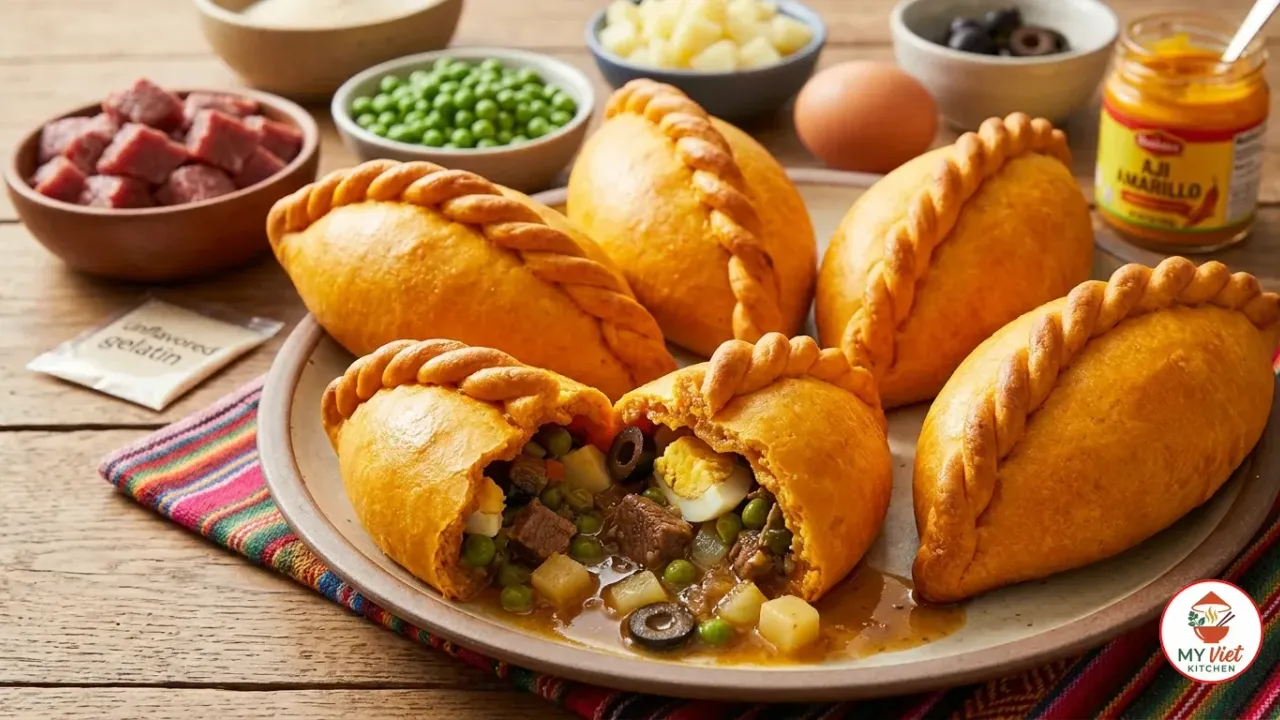
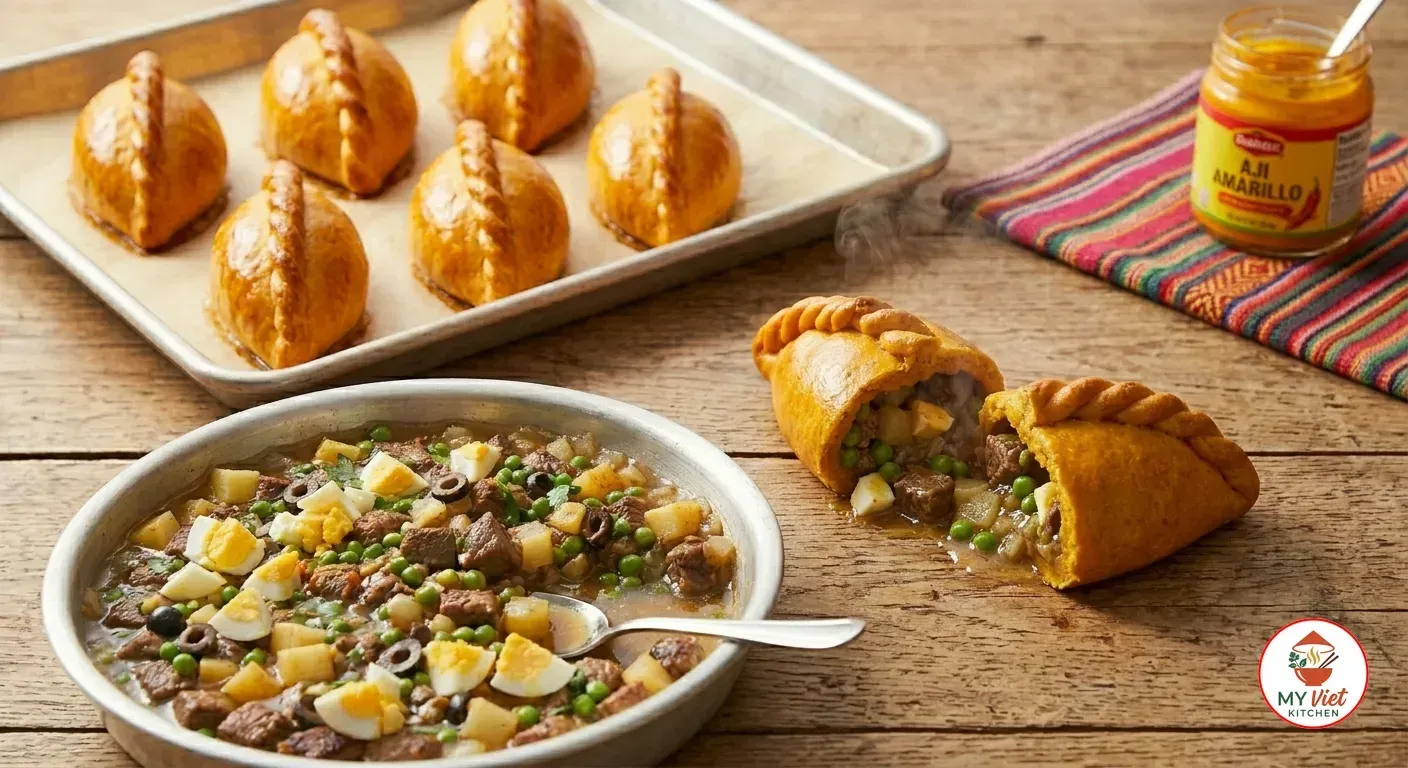
Saltenas are the crown jewel of Bolivian street food, and this recipe teaches you how to make them from scratch at home. These golden, slightly sweet pastries hide a remarkable secret inside: a juicy, soupy filling of tender beef, potatoes, peas, olives, and hard-boiled eggs that bursts with flavor the moment you bite through the crust. Unlike any other empanada in South America, saltenas use gelatin in the filling to create a broth that solidifies when cold and liquefies during baking. The result is a handheld pastry that doubles as a soup bowl. This guide walks you through every step, from the sweet dough to the perfectly crimped seal that keeps all that precious liquid inside.
Prep Time: 90 minutes | Cook Time: 25 minutes | Servings: 12
Difficulty: Medium | Calories: ~310 per serving
What Makes Saltenas Special?
Saltenas stand apart from every other filled pastry in the Americas. The reason is simple: they are juicy. Most empanadas deliver a dry or semi-moist filling inside savory dough. Saltenas flip that on its head. Bite into one and warm broth floods your mouth. As a result, you taste tender beef, soft potato, and bright green peas all at once. This magic comes from one Bolivian trick: stirring gelatin into the cooked filling, then chilling it until it sets firm like jelly. The cold, solid filling is easy to scoop and seal. In the oven, the gelatin melts. It turns back into a rich broth trapped inside the golden shell.
The dough is also different. Most South American empanadas use a savory crust. Saltenas dough has sugar in it, plus annatto or turmeric for a warm golden-orange color. The result is a subtly sweet shell that plays off the savory, spicy filling inside. Sweet crust meets rich broth in every bite. Consequently, that contrast is what makes saltenas so hard to stop eating. No other empanada style offers this combination.
Then there is the crimp. Saltenas have a raised seam that runs along the top, pinched and twisted into a rope-like ridge. This crimp is not just for looks. It seals the juicy filling so nothing leaks in the oven. Bolivian cooks take huge pride in their crimping skills. In fact, a tight, even crimp is often what sets a great saltena apart from a mediocre one.
Choosing the Right Beef for Saltenas
The cut of beef you choose affects both the texture and flavor of the filling. You want meat that stays tender after simmering and holds up during baking without drying out. Here are your best options.
- Beef sirloin (best choice): Lean enough to avoid a greasy filling, but tender enough to cut into small cubes that hold their shape. Sirloin absorbs the seasonings well and delivers a clean, beefy flavor that does not overpower the other ingredients in the filling.
- Beef chuck: A fattier cut that adds richness to the broth. Chuck requires a slightly longer simmer to become tender, but the extra fat creates a more luscious, velvety filling. Trim any large pieces of connective tissue before dicing.
- Chicken thighs: The most popular non-beef alternative in Bolivia. Boneless, skinless thighs stay moist during baking and contribute a lighter flavor. Use chicken broth instead of beef broth for consistency.
Ingredients for Saltenas
For the Sweet Dough:
- 3 cups all-purpose flour
- 1/2 cup sugar
- 1/2 teaspoon salt
- 1 teaspoon annatto powder or turmeric for color
- 1/2 cup unsalted butter, cold and cubed
- 1 egg
- 1/2 cup warm water
For the Juicy Filling:
- 1 pound beef sirloin, cut into small cubes
- 1 medium onion, finely diced
- 2 tablespoons vegetable oil
- 1 teaspoon ground cumin
- 1/2 teaspoon black pepper
- 1 teaspoon salt
- 1 tablespoon sugar
- 1 tablespoon aji amarillo paste or mild chili paste
- 1 cup beef broth
- 1 tablespoon unflavored gelatin
For the Add-ins and Assembly:
- 1 large potato, peeled and diced small
- 1/2 cup green peas, fresh or frozen
- 1/4 cup black olives, sliced
- 2 hard-boiled eggs, chopped
- 2 tablespoons fresh parsley, chopped
- 1 egg yolk mixed with 1 tablespoon milk for egg wash
Pro tip: Dissolve the gelatin in warm water before adding it to the filling. Cold gelatin clumps and does not distribute evenly, which means some saltenas will be juicy while others stay dry. Stir the dissolved gelatin into the hot filling right at the end so it mixes thoroughly before you transfer everything to the refrigerator.
Step-by-Step Instructions
Step 1: Prepare the Filling
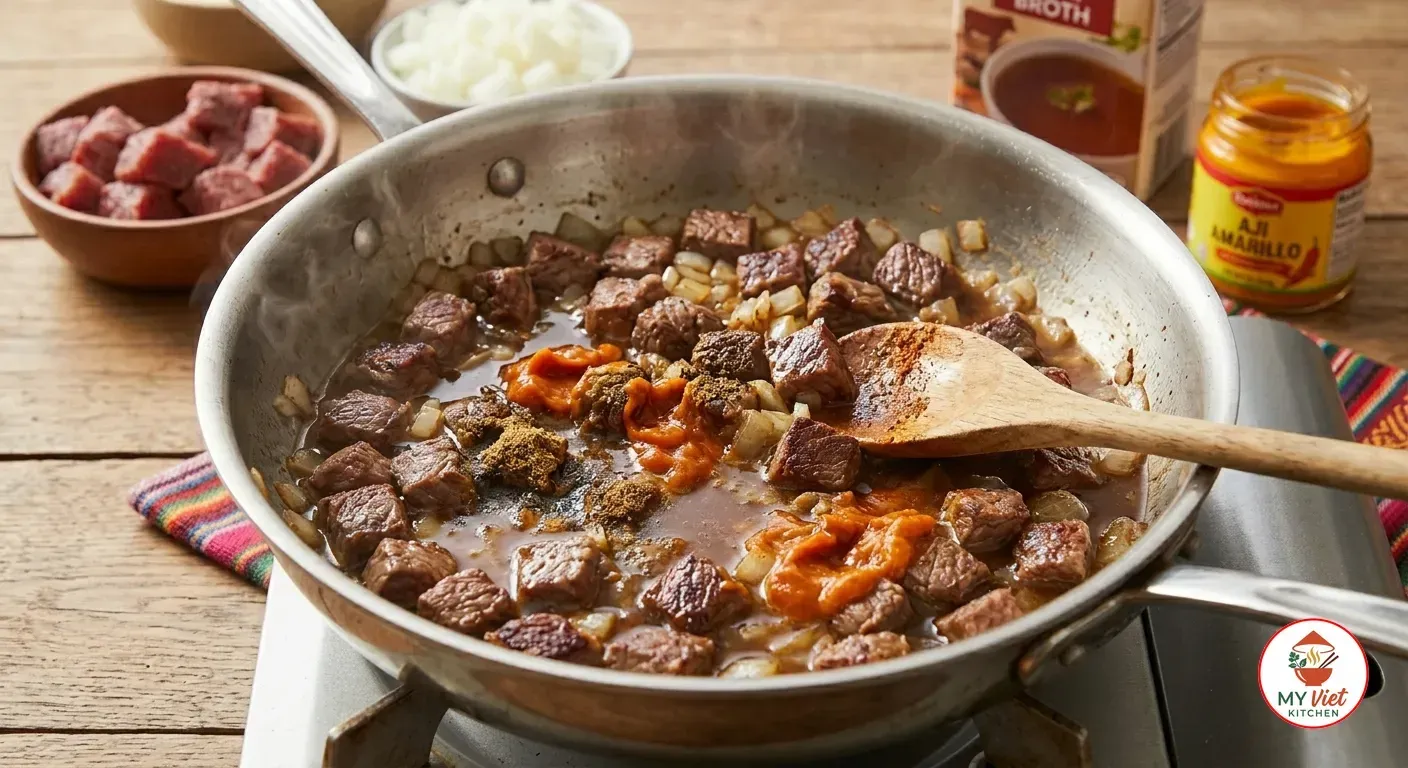
1 Heat the vegetable oil in a large skillet over medium heat. Add the diced onion and cook for 4 minutes, stirring occasionally, until soft and translucent. Add the beef cubes and sear them on all sides until browned, about 5 minutes. The browning creates a deep, caramelized flavor that forms the backbone of the filling.
Season the beef with cumin, black pepper, salt, sugar, and aji amarillo paste. Stir everything together so the spices coat the meat evenly. Pour in the beef broth, bring it to a gentle simmer, and cook for 15 minutes until the beef turns tender and the liquid reduces by about half. The reduced broth concentrates the flavors and gives the gelatin enough body to set properly once chilled.
Step 2: Add Vegetables and Set the Filling
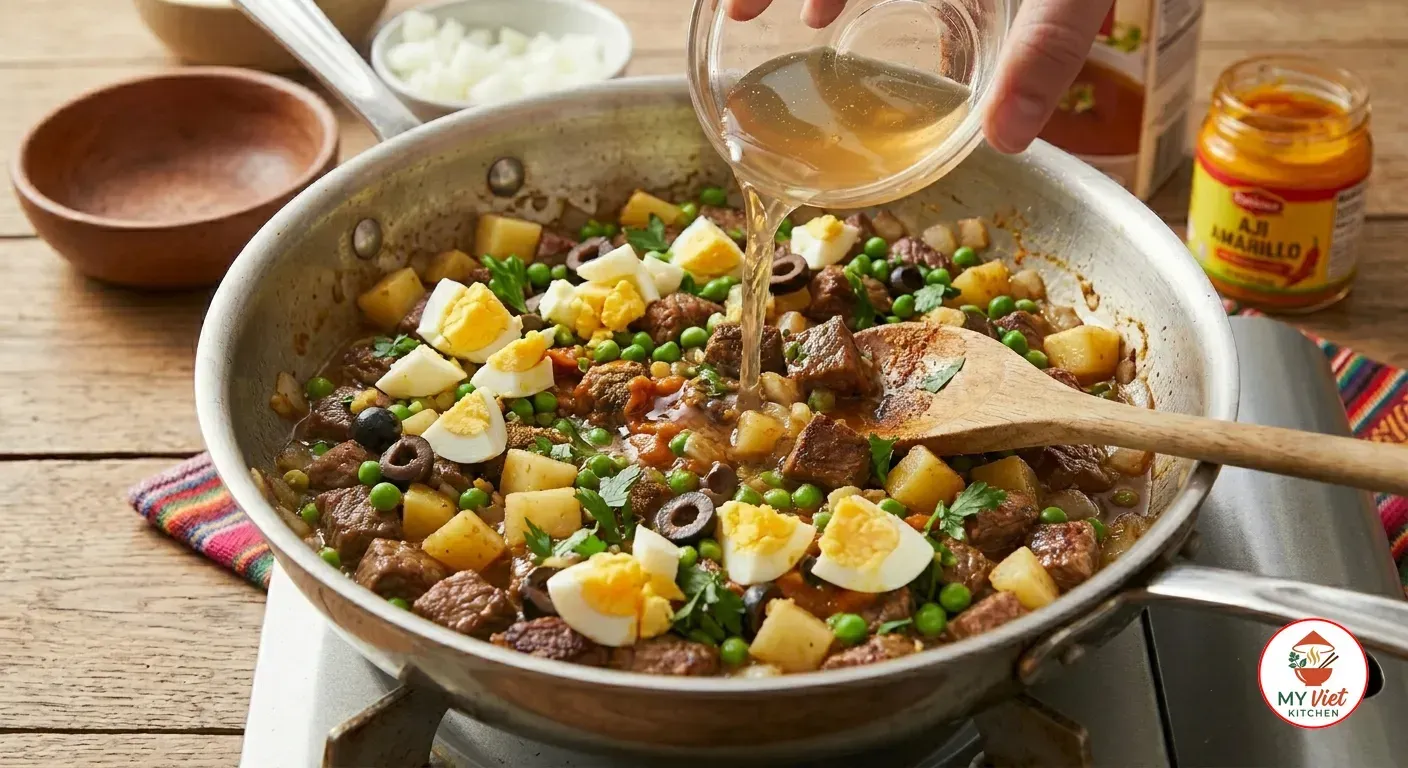
2 Add the diced potato to the skillet and cook for 8 minutes until the pieces are just tender but still hold their shape. You want them soft enough to eat but firm enough to survive the assembly and baking process. Stir in the green peas, sliced olives, chopped hard-boiled eggs, and parsley.
Dissolve the gelatin in 2 tablespoons of warm water, then stir it into the hot filling. Mix thoroughly so the gelatin distributes evenly throughout. Transfer the filling to a shallow dish, spread it out, and let it cool to room temperature. Then cover the dish and refrigerate for at least 2 hours, or overnight for best results. The filling should set into a firm, jelly-like consistency. This step is critical because solid filling is far easier to scoop and seal inside the dough than a loose, wet mixture.
Step 3: Make the Dough
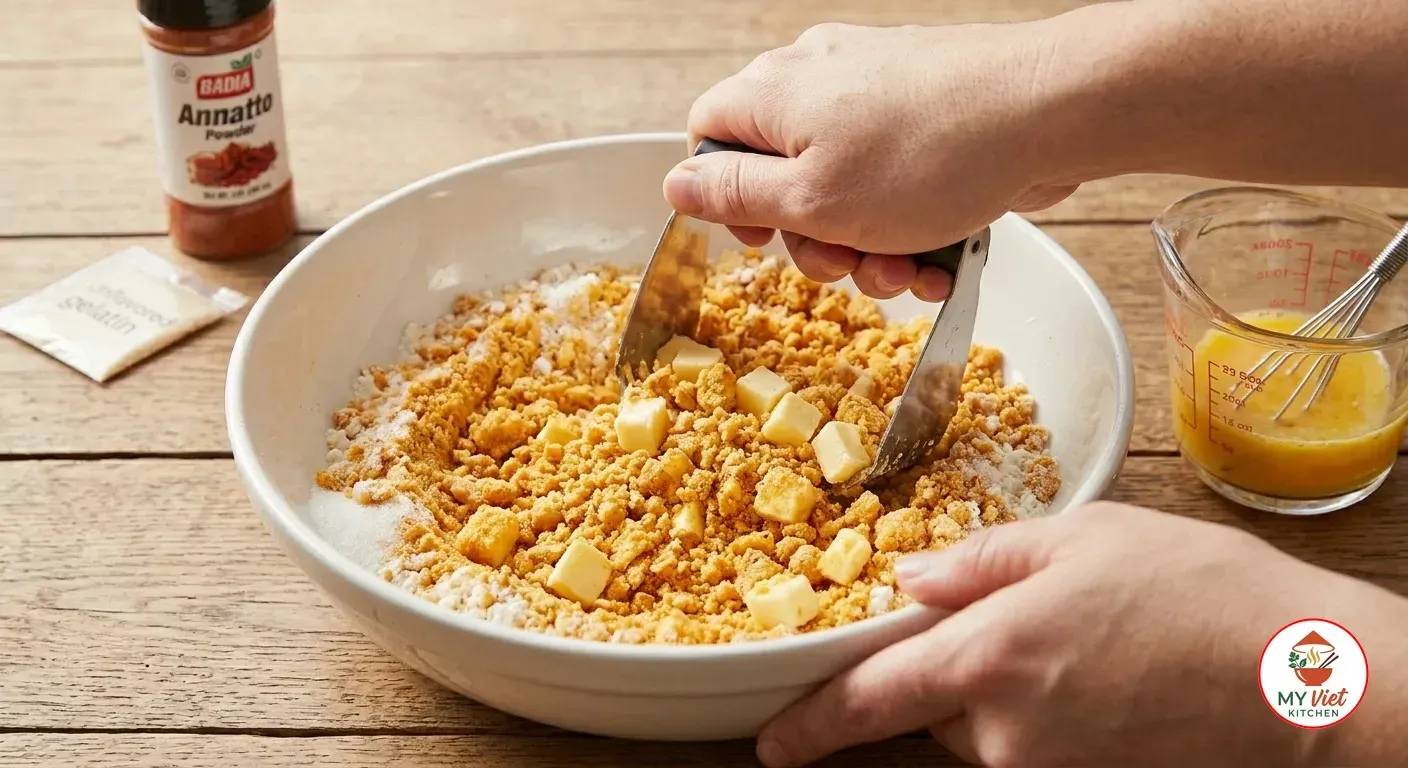
3 Whisk together the flour, sugar, salt, and annatto powder in a large bowl. The annatto gives the dough its traditional golden-orange color, but turmeric works as a substitute if annatto is unavailable. Cut the cold butter into the flour mixture using a pastry cutter or your fingertips until the texture resembles coarse breadcrumbs. The cold butter creates small pockets of fat that help the dough bake up slightly flaky.
Beat the egg with the warm water and pour it into the flour mixture. Stir until a shaggy dough forms, then turn it out onto a lightly floured surface. Knead for 5 minutes until the dough becomes smooth and pliable. Do not overwork it, since excessive kneading develops too much gluten and makes the baked crust tough. Wrap the dough in plastic and refrigerate for 30 minutes before rolling.
Step 4: Assemble the Saltenas
4 Divide the chilled dough into 12 equal portions. Roll each portion into a ball, then flatten it into a circle about 5 inches in diameter and roughly 1/8 inch thick. Keep the edges slightly thinner than the center so the crimped seam does not become too bulky after folding.
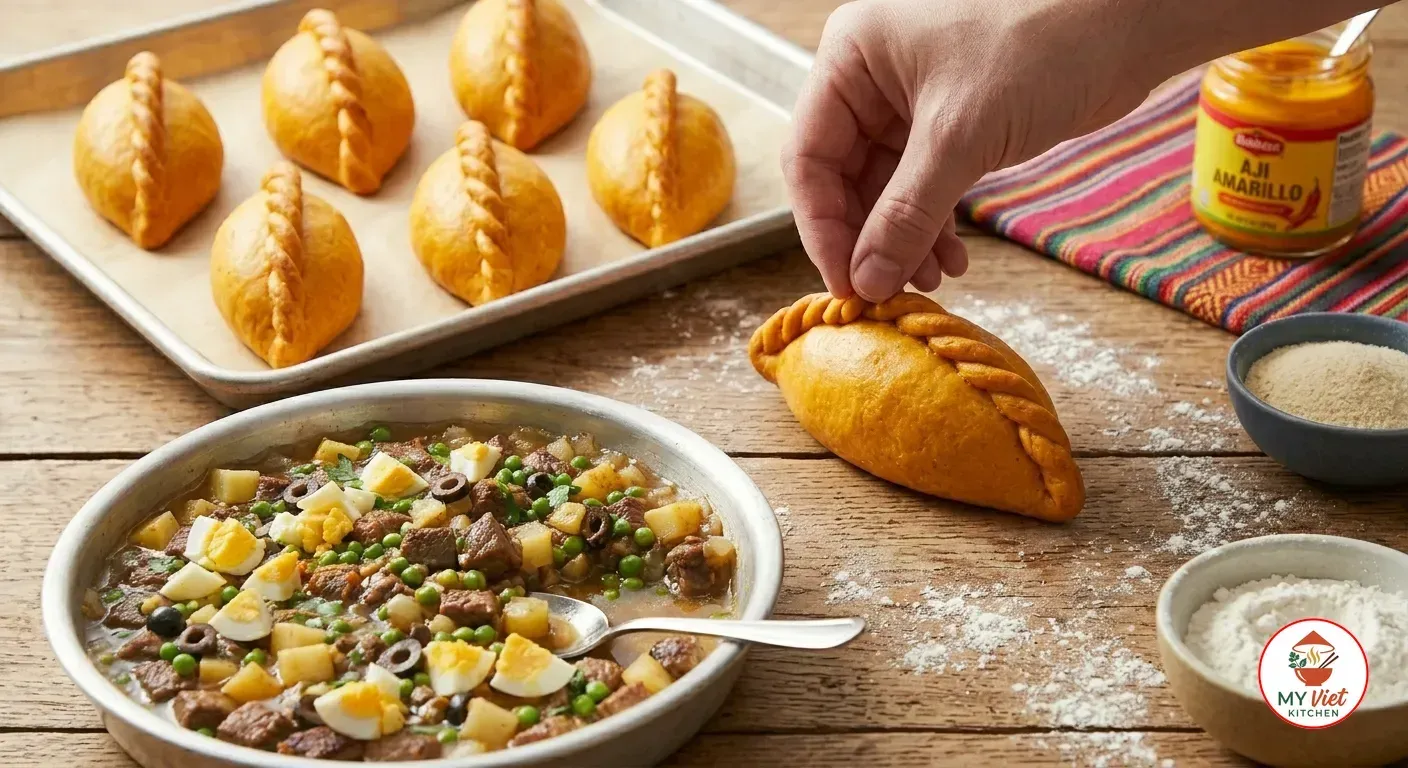
Place a generous spoonful of the chilled, set filling in the center of each dough circle. Fold the dough over to create a half-moon shape, but do not press the edges flat. Instead, bring the edges together at the top and pinch them into a raised ridge by twisting small sections of dough along the seam. This crimped ridge should sit on top of the saltena like a spine. Stand each assembled saltena upright on a parchment-lined baking sheet so the ridge faces straight up. The upright position prevents the juicy filling from pooling at the seam and leaking during baking.
Step 5: Bake Until Golden
5 Preheat your oven to 425 degrees Fahrenheit. Brush each saltena generously with the egg wash, which gives the crust a glossy, deep golden finish. Place the baking sheet in the oven and bake for 20 to 25 minutes. The pastry should turn a rich golden brown, and you may hear the filling bubbling gently inside.
Remove the baking sheet from the oven and let the saltenas cool for 5 minutes. This brief rest allows the filling to stop bubbling so it does not scald your mouth. The gelatin keeps the broth liquid at serving temperature, which means the interior stays juicy and soupy even after cooling slightly. Serve the saltenas standing upright on a plate, just as they are presented in every Bolivian salteneria.
Expert Tips for Perfect Saltenas
Chill the Filling Overnight
Two hours in the fridge is the bare minimum. Overnight is better. A rock-solid filling is far easier to handle. It holds its shape on the dough and gives you time to crimp the edges without it melting out. If the filling has not set all the way, you will struggle to seal the saltenas. They will leak in the oven, and you will lose the broth that makes them special.
Master the Crimp
The crimp seals in the broth. Start at one end of the seam. Pinch a small bit of dough, twist it, then move on. Work along the full top edge to build a rope-like ridge. Press each twist hard so the seal stays tight. A weak crimp means broth leaks in the oven. A leaking saltena loses its soul. Practice on a few test pieces before you do the full batch.
Bake at High Heat
Saltenas need a hot oven. At 425 degrees, the crust sets fast. It firms up and seals before the gelatin melts all the way. A cooler oven lets the gelatin melt too slowly. The broth seeps through the seams before the crust can hold it in. High heat also gives you a deeper golden color and a crispy shell that plays off the soft, juicy filling inside.
Keep Everything Cold During Assembly
Work fast and keep things cold. After all, warm dough gets sticky and tears. Similarly, warm filling gets soft and leaks through the seams. Only take out enough dough and filling for 4 saltenas at a time. Put the rest back in the fridge while you crimp. This small habit makes a big difference in the final result.
Saltenas vs. Other South American Empanadas
Every country in South America has its own version of the empanada, and each one reflects the local ingredients and culinary traditions. Saltenas stand out for their sweet dough and soupy filling, but here is how they compare to other regional styles.
| Country | Style | Dough | Filling Character |
|---|---|---|---|
| Bolivia | Saltenas | Sweet, golden with annatto | Juicy and soupy with gelatin |
| Argentina | Empanadas | Savory, flaky | Dry to semi-moist with raisins |
| Chile | Empanadas de pino | Savory, wheat-based | Moist with onion and egg |
| Colombia | Empanadas | Corn-based, fried | Dry with seasoned meat and potato |
| Venezuela | Empanadas | Corn flour, fried | Varies widely by region |
| Peru | Empanadas | Wheat, baked or fried | Semi-moist with aji peppers |
Serving Suggestions
In Bolivia, saltenas are traditionally a mid-morning snack, eaten between breakfast and lunch. Saltenerias open their doors around 9 or 10 in the morning and sell out by noon. The pastries are always served standing upright on a plate, and eating them requires a specific technique to avoid spilling the precious broth inside.
The Perfect Accompaniments:
- Llajwa (Bolivian hot sauce): A fresh salsa made from locoto peppers and tomatoes, ground together in a mortar. This fiery condiment is the traditional partner for saltenas, adding bright heat that cuts through the richness of the broth.
- Fresh lime wedges: A squeeze of lime juice over a freshly opened saltena brightens all the flavors inside. The acidity balances the sweetness of the dough and the richness of the beef filling.
- Simple green salad: A light salad of lettuce, tomato, and onion dressed with lime juice and a pinch of salt provides a refreshing contrast to the hearty, juicy pastry.
- Pickled onions: Thinly sliced red onions marinated in vinegar and a touch of sugar add a tangy crunch that complements the warm, savory filling.
Beverage Pairings:
- Api (Bolivian corn drink): A thick, warm beverage made from purple corn, cinnamon, and cloves. Api is the traditional drink served alongside saltenas in Bolivia, and the sweet, spiced flavor complements the pastry beautifully.
- Fresh fruit juice: Mango, passion fruit, or papaya juice provides a tropical contrast to the savory filling. The natural sweetness echoes the sweet dough.
- Bolivian Singani cocktail: Bolivia’s national spirit, Singani, mixed with ginger ale and lime makes a refreshing cocktail that pairs well with the rich, spiced filling.
- Black coffee: A strong cup of coffee balances the sweetness of the dough and the richness of the broth. This is a common choice in Bolivian saltenerias.
Storage and Reheating
Refrigerator: Store baked saltenas in an airtight container for up to 2 days. The filling stays juicy because the gelatin re-sets as it cools, which means reheated saltenas still deliver the signature brothy interior. Keep them in a single layer to preserve the shape.
Freezer: Freeze unbaked saltenas on a parchment-lined baking sheet until solid, then transfer them to a freezer bag for up to 2 months. Bake directly from frozen at 425 degrees Fahrenheit for 28 to 30 minutes. You can also freeze baked saltenas, though the crust will not be quite as crispy after reheating.
Reheating: Always reheat saltenas in a 375-degree Fahrenheit oven for 12 to 15 minutes. The oven restores the crispness of the crust while the filling heats through and liquefies again. Never use the microwave, because it turns the golden crust soft and ruins the texture that defines a great saltena.
Common Mistakes to Avoid
1. Skipping the Gelatin
Without gelatin, a saltena is just an ordinary empanada. The gelatin is what creates the soupy, brothy interior that defines this dish. Additionally, it makes the filling firm enough to handle during assembly. If you skip it, the filling will be too loose to seal inside the dough. As a consequence, the baked result will lack the juicy quality that makes saltenas worth the effort.
2. Using Warm Filling
Warm filling has not set and will ooze out of the dough during assembly. Furthermore, it softens the dough from the inside, which makes crimping nearly impossible. Therefore, always chill the filling until it is completely firm before you begin assembling. Patience at this stage saves enormous frustration later.
3. Weak Crimping
A loose or poorly sealed crimp is the number one cause of leaking saltenas. The filling melts into hot broth during baking, and any gap in the seam lets that broth escape. Pinch each twist of the crimp firmly and make sure the entire seam is sealed from end to end. Test the seal by gently pressing the saltena. If filling pushes out anywhere, reinforce that section.
4. Baking at Too Low a Temperature
A low oven temperature gives the gelatin time to melt and the broth to seep through the seams before the crust sets. You need high heat to firm up the dough quickly so it can contain the liquefying filling. Bake at 425 degrees and resist the temptation to lower the temperature, even if the tops start browning. The deep golden color is exactly what you want.
Frequently Asked Questions
What is the difference between saltenas and empanadas?
Saltenas are a type of Bolivian empanada with two key traits. First, the dough has sugar in it. This gives the crust a sweet flavor and a golden color. Second, the filling has gelatin. It sets firm when cold, then melts in the oven to create a juicy, soupy inside. Most empanadas across South America use savory dough and dry fillings. The mix of sweet crust and brothy filling makes saltenas one of a kind.
Why do saltenas need gelatin in the filling?
Gelatin does two things. First, it firms up the filling so you can scoop it and seal it inside the dough. Second, it melts in the oven. The filling turns into a rich broth trapped inside the shell. Without gelatin, the filling stays dry. The saltena loses the soupy quality that defines it. One tablespoon of gelatin is all you need for 12 saltenas.
Can I make saltenas ahead of time?
Yes, and making them ahead actually produces better results. Prepare the filling a full day before you plan to assemble and bake. The overnight chill gives the gelatin ample time to set firmly, which makes assembly much easier. You can also freeze assembled saltenas before baking and bake them directly from the freezer. Add 5 to 8 extra minutes to the baking time when cooking from frozen.
What is the proper way to eat saltenas?
Hold the saltena upright and bite a small hole near the top of the pastry. Sip the hot broth through the opening first, then eat the rest of the pastry and filling in alternating bites. Never tip a saltena sideways or bite into the bottom, because the broth will spill out immediately. Many Bolivians eat saltenas over a plate or napkin to catch any drips. Mastering the technique is part of the cultural experience.
What can I substitute for aji amarillo paste?
If aji amarillo paste is unavailable, mix sweet paprika with a small amount of cayenne pepper and a pinch of turmeric for color. You can also use a mild chili paste or even sriracha diluted with a touch of honey. The goal is a gentle, fruity warmth rather than intense heat. Aji amarillo has a unique, slightly sweet flavor, so no substitute replicates it exactly, but any of these options produce a delicious filling.
Can I use chicken instead of beef for saltenas?
Chicken saltenas are a popular variation throughout Bolivia. Use boneless chicken thighs cut into small cubes, since thigh meat stays moist and tender during baking. Substitute chicken broth for beef broth in the gelatin mixture. Follow the same seasoning and cooking method as the beef version. The rest of the recipe, including the dough, the gelatin technique, and the crimping method, remains exactly the same.
Variations and Adaptations
Chicken Saltenas:
Replace the beef with boneless chicken thighs and swap beef broth for chicken broth. Add a squeeze of lime juice to the filling before chilling for a brighter, lighter flavor. Chicken saltenas are slightly less rich than the beef version but equally delicious. They are a common choice in warmer regions of Bolivia where lighter food is preferred.
Vegetarian Saltenas:
Build the filling around diced potatoes, peas, corn kernels, chopped olives, and hard-boiled eggs. Use vegetable broth with the gelatin. Add extra cumin and a touch of smoked paprika to compensate for the absence of meat flavor. The gelatin technique works exactly the same way, so you still get the signature juicy interior. This version is popular during Lent in Bolivia.
Spicy Saltenas:
Double the aji amarillo paste or add a finely diced locoto pepper to the filling for serious heat. You can also stir a spoonful of llajwa directly into the filling before chilling. The gelatin traps the spice inside the pastry, so the heat hits you when the broth floods your mouth. This version is popular in the lowland city of Santa Cruz, where locals prefer bolder flavors.
Mini Saltenas for Parties:
Divide the dough into 24 smaller portions instead of 12. Roll each piece into a 3-inch circle and use a smaller amount of filling. Mini saltenas make excellent appetizers for gatherings and bake in 15 to 18 minutes instead of the standard 20 to 25. They are easier to eat without the mess, which makes them more practical for standing parties or buffets.
The Cultural Significance of Saltenas
Saltenas occupy a unique place in Bolivian culture. They are not breakfast, not lunch, and not a snack in the conventional sense. They belong to a distinctly Bolivian time of day called “las diez,” meaning “ten o’clock,” when the country pauses its morning routine for a saltena break. Saltenerias across La Paz, Cochabamba, and Sucre fill with workers, students, and families who line up for freshly baked pastries. The ritual is deeply embedded in daily life, and skipping your saltena is like skipping your morning coffee in other cultures.
The name “saltena” itself carries a story. According to popular legend, the dish was created by a woman from Salta, a city in northern Argentina, who was exiled to Bolivia in the early 19th century. She began selling filled pastries to earn a living, and the locals named them after her origin. Whether or not this story is historically accurate, it reflects the pride Bolivians take in claiming saltenas as their own. No other country makes them the same way, and Bolivians are emphatic about this distinction.
Every Bolivian city claims to make the best saltenas, and the rivalry between La Paz and Sucre is especially fierce. La Paz saltenas tend to be spicier with a thinner crust, while Sucre saltenas lean sweeter with a thicker, more bread-like dough. Cochabamba falls somewhere in between, balancing sweetness and spice with an emphasis on generous filling. These regional variations reflect the broader diversity of Bolivian cuisine, which draws on Andean, Amazonian, and Spanish influences. Saltenas, more than almost any other dish, represent the country’s culinary identity as a whole.
Conclusion
This saltenas recipe gives you the tools to recreate one of South America’s most remarkable pastries in your own kitchen. The process takes patience, especially the overnight chill and the careful crimping, but the reward is extraordinary. Each golden pastry delivers a burst of warm, seasoned broth alongside tender beef, soft potato, and bright peas. Master the gelatin technique, keep everything cold during assembly, and seal your crimps tightly. These three principles are all that stand between you and a perfect batch of Bolivian saltenas.
Ready to explore more South American and global street food? Browse our South American dishes collection for recipes like empanadas, arepas, and ceviche. Each recipe brings the vibrant flavors of Latin America to your table.