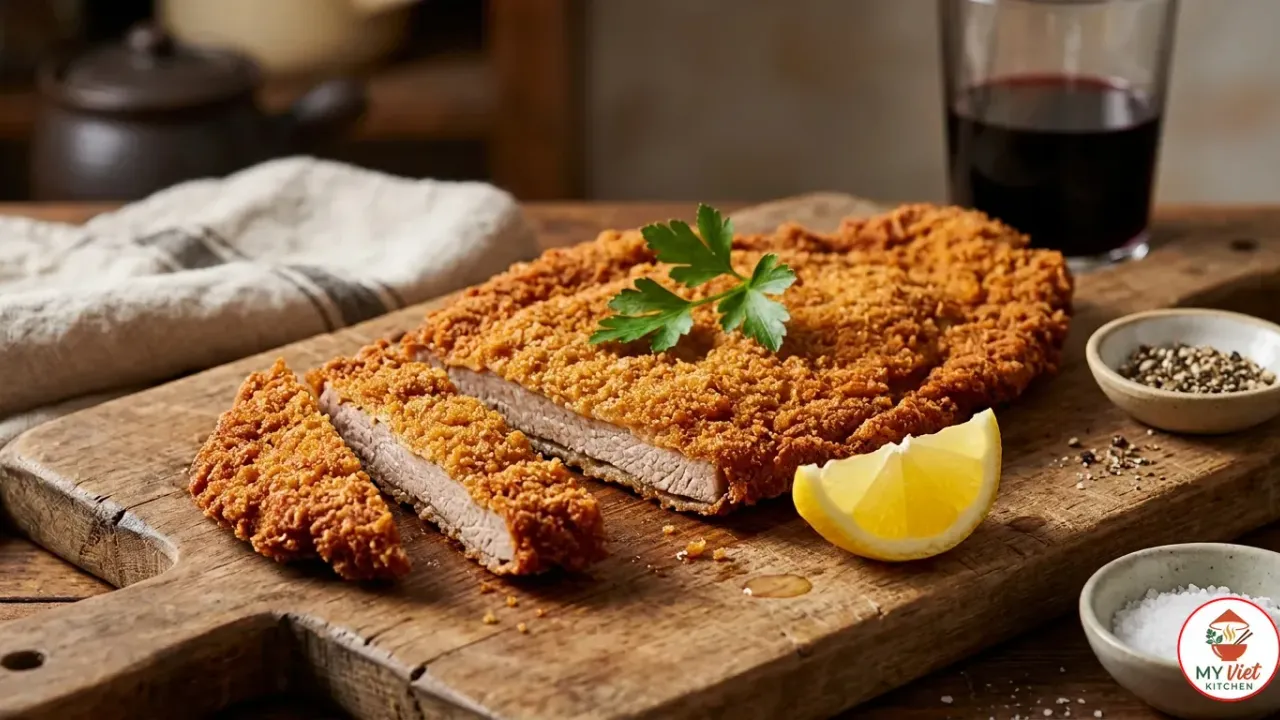
Milanesa is the golden, crispy breaded cutlet that holds a place of honor on dinner tables across Argentina and Uruguay. This beloved South American comfort food features thinly pounded beef coated in seasoned breadcrumbs and fried to perfection. Moreover, milanesa is far more than just a breaded cutlet. It represents a culinary tradition that families pass down through generations. This authentic milanesa recipe shows you how to achieve that signature shattering crunch with tender, juicy meat inside every time.
Prep Time: 25 minutes | Cook Time: 20 minutes | Total Time: 45 minutes | Servings: 4
Difficulty: Easy | Calories: ~480 per serving
What Makes Milanesa Special?
Milanesa stands apart from other breaded cutlets. So much care goes into every layer. The beef is pounded exceptionally thin, often to just 1/8 of an inch. This gives you more crispy coating per bite of tender meat. Furthermore, the egg wash carries flavor directly into the breading. Specifically, Argentine cooks season it with garlic, dried oregano, and sometimes fresh parsley. As a result, every bite delivers seasoning throughout instead of just on the surface.
The dish traces its roots to the Italian cotoletta alla milanese, which Italian immigrants brought to South America in the late 19th and early 20th centuries. Argentina and Uruguay received massive waves of Italian immigration during this period. Consequently, Italian culinary traditions merged with local tastes and ingredients. The milanesa evolved into something distinctly South American. While the Italian original typically uses veal, the Argentine version embraces beef. This fits the country’s deep love of beef and its long ranching history.
What truly elevates a great milanesa is technique. First, the pounding must be even. Next, the breading station needs careful organization. Finally, the oil temperature requires close attention. Additionally, resting the breaded cutlets before frying allows the coating to bond with the meat. These details set a good milanesa apart from a great one. Once you master this technique, you hold the key to dozens of variations that South American families enjoy every week.
Choosing the Right Cut of Beef for Milanesa
Your choice of beef cut shapes both the texture and how easy the dish is to make. Lean cuts work best. They pound flat with ease and fry up clean. Below are the top choices for making perfect milanesa at home.
- Top round (nalga): This is the traditional and most popular cut for milanesa across Argentina and Uruguay. Top round is lean, affordable, and pounds out beautifully to an even thickness. It has a clean, mild beef flavor that lets the seasoned breading shine. Most butchers in South America sell it pre-sliced for milanesa. Ask your butcher to slice it into 1/4-inch steaks.
- Sirloin (best for tenderness): Sirloin offers a bit more tenderness than top round. It costs slightly more but delivers a noticeably softer bite. The flavor is richer too. Furthermore, sirloin requires less aggressive pounding because it starts out more tender. This makes it an excellent choice for beginners.
- Eye of round (budget option): Eye of round is the most affordable choice. It is very lean with tight grain. However, it can become dry if overcooked. Pound it thin and fry quickly. Similarly, do not skip the resting step after frying. The residual heat finishes the cooking gently. For the best results, serve eye of round milanesa immediately after it comes out of the oil.
- Chicken breast (milanesa de pollo): Although beef is traditional, chicken milanesa is equally beloved. Butterfly the breast and pound it thin. Chicken cooks faster, so reduce the frying time to 2 minutes per side. In fact, many Argentine families serve both beef and chicken milanesa at the same meal.
Ingredients for Milanesa
The Beef:
- 4 beef top round steaks, about 1/4 inch thick (approximately 1.5 pounds total)
- Salt and black pepper for seasoning
The Breading Station:
- 1/2 cup all-purpose flour
- 3 large eggs
- 2 tablespoons whole milk
- 1 teaspoon garlic powder
- 1/2 teaspoon dried oregano
- 1 teaspoon sweet paprika
- 2 cups fine dried breadcrumbs
For Frying and Serving:
- Vegetable oil for frying (about 2 cups)
- 1 lemon, cut into wedges
- Fresh parsley for garnish (optional)
Pro tip: Use fine dried breadcrumbs, not fresh or panko. Traditional milanesa demands a tight, compact crust that shatters when you cut into it. Fresh breadcrumbs create a soft coating. Panko produces a flaky texture. Neither matches the authentic crunch. Additionally, let the breaded cutlets rest in the refrigerator for 15 minutes before frying. This sets the coating and prevents it from falling off in the oil. Consequently, your milanesa will have an even, golden crust every time.
Step-by-Step Instructions
Step 1: Pound the Beef Thin
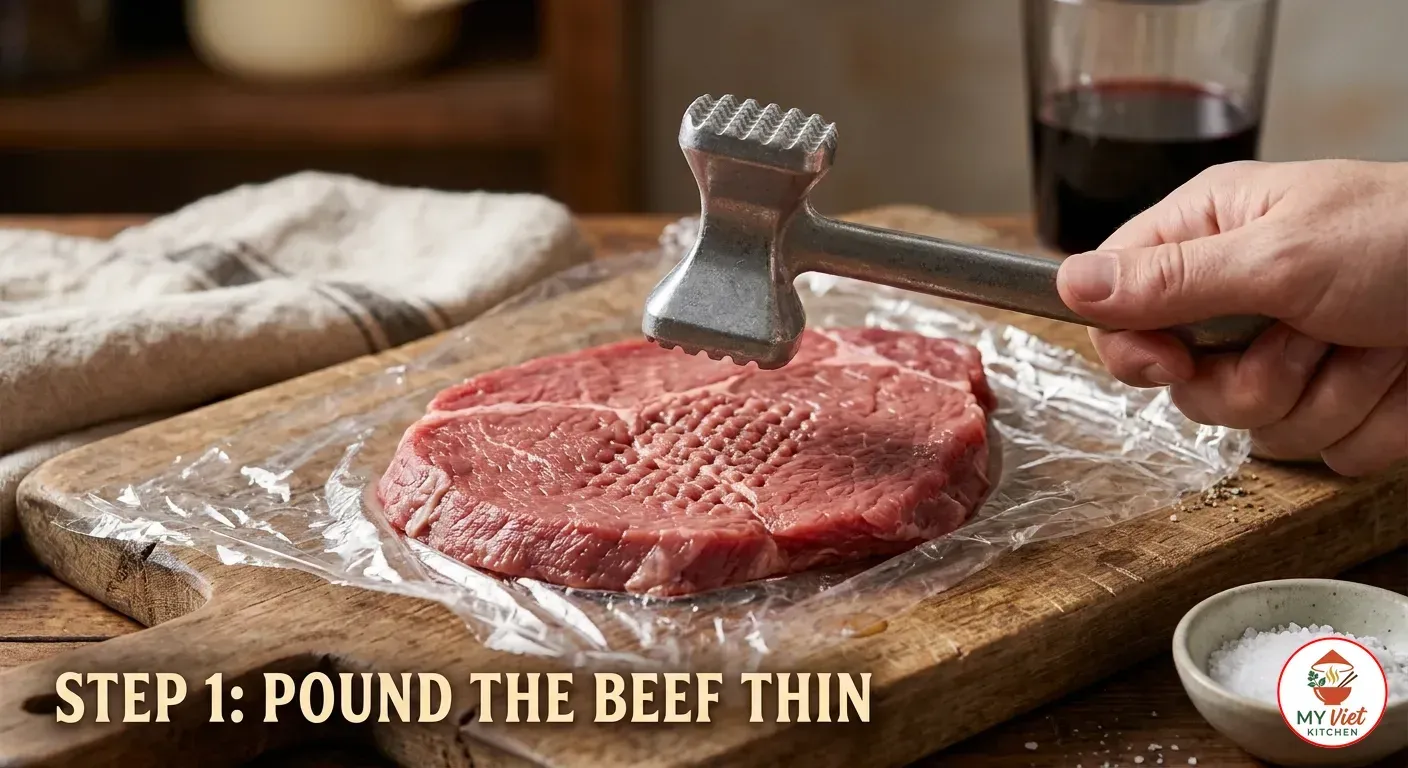
1 Place each steak between two sheets of plastic wrap. Use a meat mallet or heavy rolling pin to pound the beef to an even 1/8-inch thickness. Start from the center and work outward with firm, controlled strokes. Also, turn the meat 90 degrees halfway through to ensure uniform thickness.
Even thickness is critical for two reasons. First, thin cutlets cook quickly and stay tender. In contrast, thick spots stay raw while thin areas dry out. Second, a thin cutlet means more crispy surface in each bite. This is what makes milanesa so good. Take your time here. Rushing leads to torn meat and bad results.
Step 2: Set Up the Breading Station
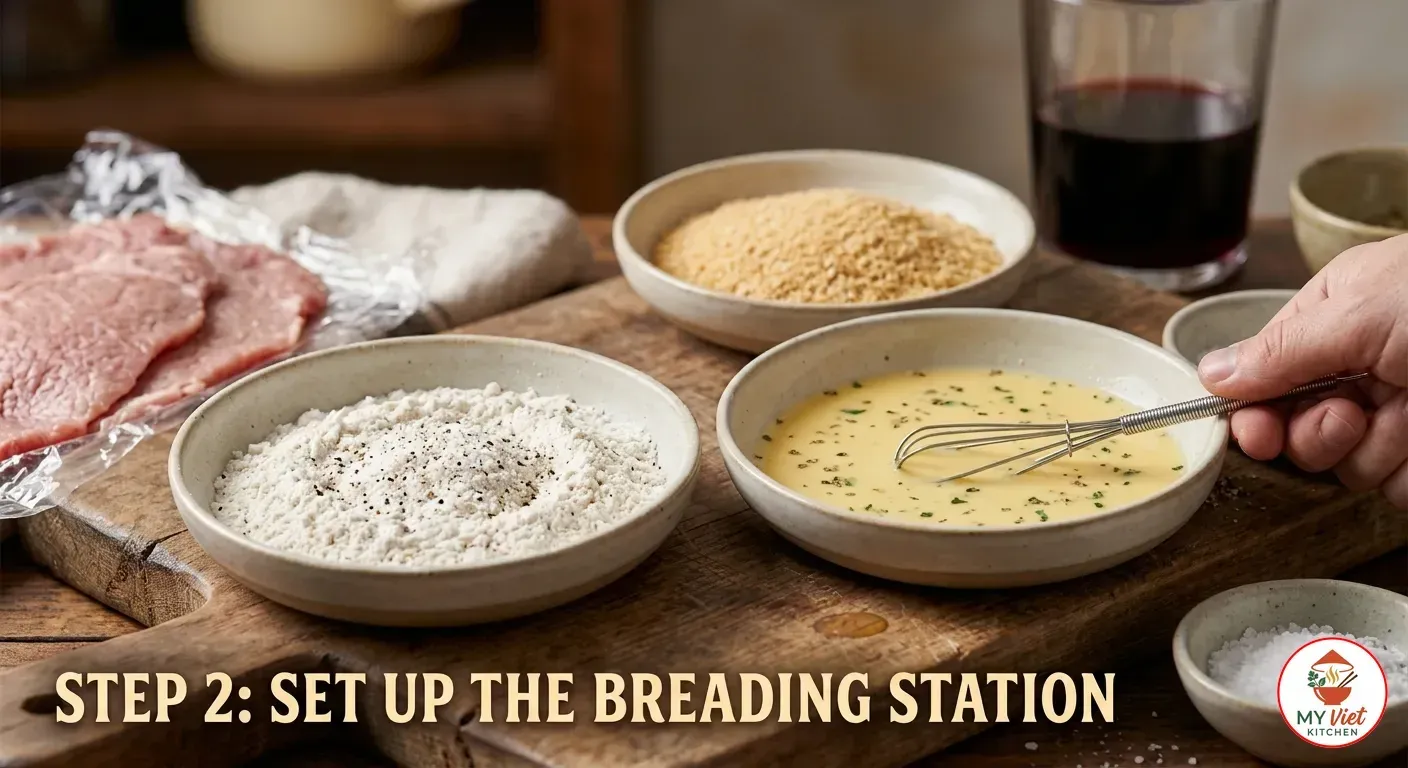
2 Arrange three shallow dishes or plates in a row. Place the flour in the first dish and season it with a pinch of salt and pepper. In the second dish, whisk together the eggs, milk, garlic powder, and oregano until smooth. Spread the breadcrumbs in the third dish and mix in the paprika.
Indeed, each layer serves a key role. The flour gives a dry base for the egg to grip. Then the egg wash adds flavor and acts as glue. Finally, the crumbs form the crispy shell. Notably, skipping the flour step is the top reason breading falls off. Moreover, putting spices in the egg wash spreads flavor more evenly than mixing them into the crumbs.
Step 3: Bread the Cutlets
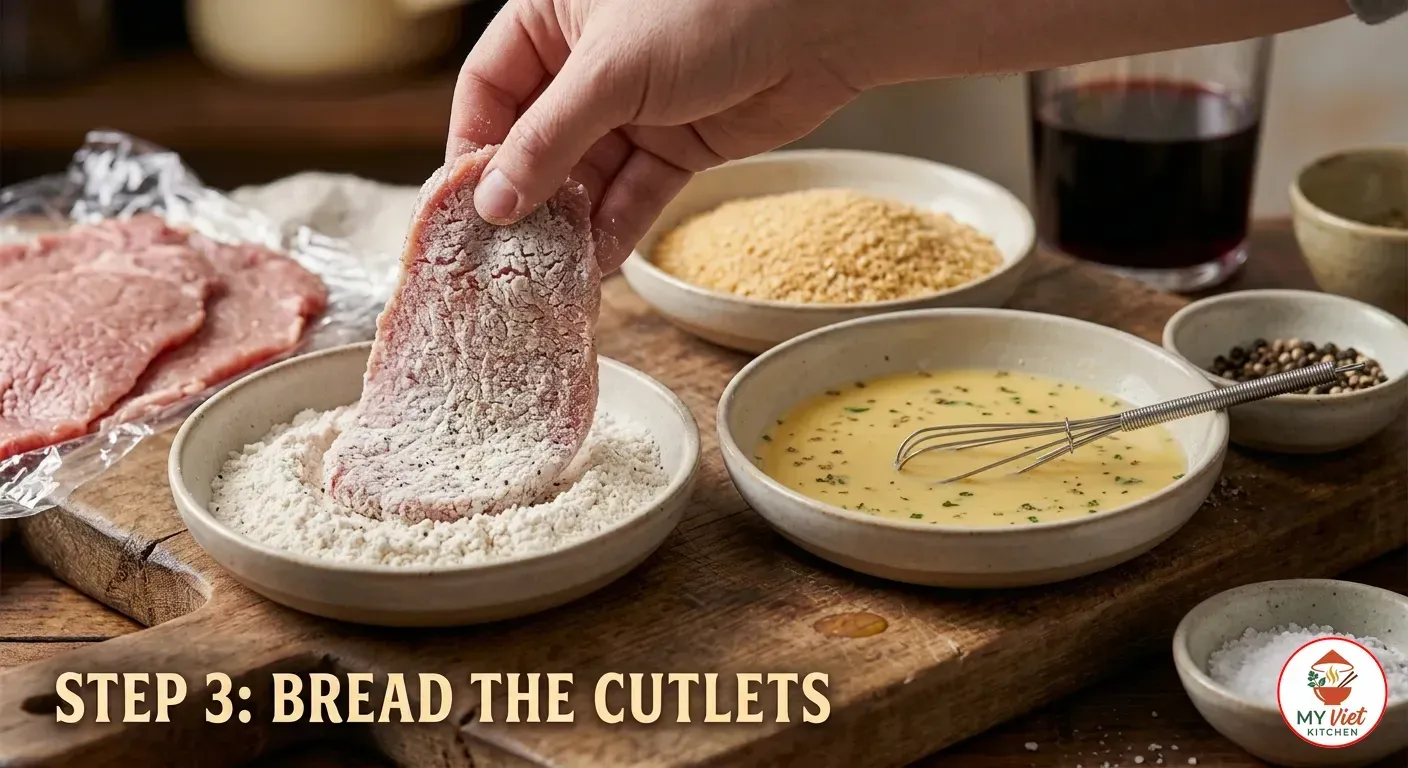
3 Season each pounded cutlet lightly with salt. Dredge it in the flour, shaking off any excess. Dip it into the egg wash, letting extra drip back into the dish. Press the cutlet firmly into the breadcrumbs on both sides. Use your palms to pack the crumbs tight against the surface.
After that, place each cutlet on a wire rack over a baking sheet. Once all are done, chill them in the fridge for at least 15 minutes. This cold rest is key. It firms up the egg wash and helps the crumbs stick during frying. In addition, the brief rest lets the flour bond to both the meat and the egg more firmly.
Step 4: Fry Until Golden
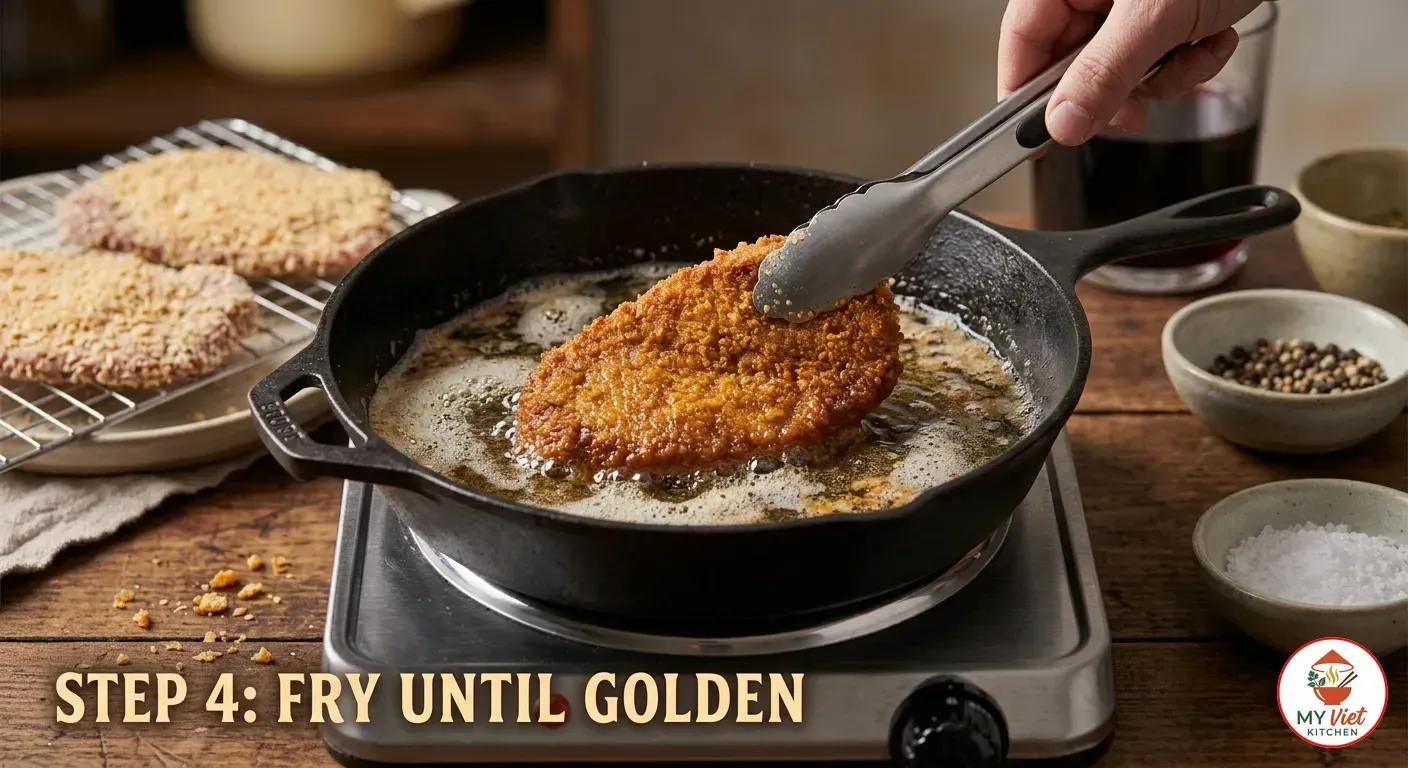
4 Pour oil into a large, heavy skillet to about half an inch deep. Heat it over medium-high heat to 350 degrees Fahrenheit. To test, drop a small breadcrumb into the oil. It should sizzle immediately and float to the surface.
Next, carefully lay one cutlet into the hot oil. Fry for 2 to 3 minutes without moving it until the bottom turns deep golden brown. Flip once using tongs. Cook the second side for another 2 to 3 minutes. Transfer the finished milanesa to a clean wire rack. Instead of paper towels, use the rack alone. Paper towels trap steam on the bottom. So the crust goes soggy. A wire rack lets air flow, and the crust stays crispy on all sides.
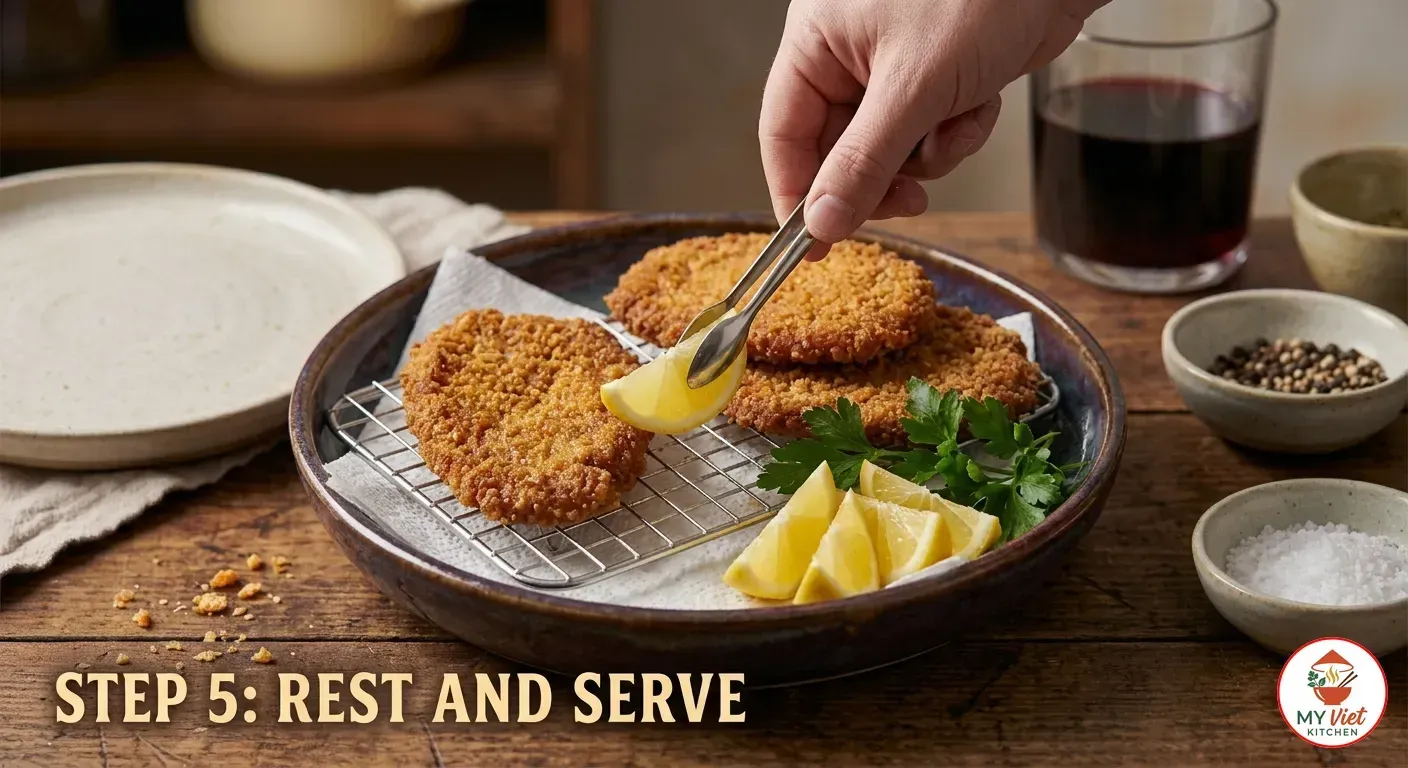
Step 5: Rest and Serve
5 Let each milanesa rest on the wire rack for 2 minutes after frying. During this time, residual steam escapes through the breading. As a result, the exterior crisps up even further while the meat relaxes. Then, squeeze fresh lemon juice generously over the top just before serving. The acidity cuts through the richness beautifully.
Serve the milanesa immediately for the best texture. After all, the crunch diminishes as it sits. Arrange it on a warm plate with lemon wedges, a pile of french fries, and a fresh green salad. In Argentina and Uruguay, this combination is the classic way to enjoy this dish. Above all, a cold beer alongside completes the experience perfectly.
Expert Tips for Perfect Milanesa
Control Your Oil Temperature
Oil that is too hot burns the crust before the meat cooks. Oil that is too cool makes greasy, soggy food. So keep it at 350 degrees the whole time. Use a thermometer if possible. Furthermore, always let the oil return to temperature between batches. Cold cutlets drop the heat by 20 to 30 degrees. Ultimately, a bit of patience here pays off in even, crispy results.
Use One Hand for Wet, One for Dry
Use one hand for the dry stuff (flour and crumbs) and the other for the wet egg wash. This stops clumps from forming on your fingers. Clumpy hands lead to patchy coating. In addition, this trick speeds up the whole process. In fact, pro cooks always do it this way. It keeps your station clean and fast.
Do Not Skip the Resting Step
Chilling the breaded cutlets for 15 minutes is not optional. During this rest, the egg proteins start to set. The flour bonds with the meat. As a result, the whole coating forms one tight shell. Without this step, crumbs fall off in the oil. They burn and make the oil dirty. Consequently, this rest is key for both taste and a clean fry.
Argentine Milanesa vs. Uruguayan Milanesa
Both Argentina and Uruguay claim milanesa as a national treasure. While the basic technique is identical, subtle differences reflect each country’s food culture. Here is how they compare.
| Feature | Argentine Milanesa | Uruguayan Milanesa |
|---|---|---|
| Preferred meat | Beef top round (nalga) | Beef top round or sirloin |
| Breading style | Fine, compact breadcrumbs | Slightly coarser crumbs |
| Egg wash seasoning | Garlic, oregano, parsley | Garlic, oregano, sometimes mustard |
| Popular variation | Milanesa napolitana (ham, sauce, cheese) | Milanesa a caballo (topped with fried eggs) |
| Classic side | French fries and salad | Mashed potatoes or fries |
| Sandwich version | Sandwich de milanesa (in bread roll) | Milanesa al pan (similar) |
Serving Suggestions
In South America, milanesa rarely comes alone on the plate. The sides and accompaniments are an integral part of the meal. Here are the most authentic ways to serve your freshly fried milanesa.
The Perfect Accompaniments:
- French fries (papas fritas): This is the most iconic pairing. Thin, crispy fries alongside a golden milanesa is the default order in most Argentine and Uruguayan restaurants. Indeed, this combination is simple and deeply satisfying.
- Mixed salad (ensalada mixta): A simple salad of lettuce, tomato, and onion dressed with olive oil and vinegar provides a fresh counterpoint. The acidity and crunch balance the richness of the fried cutlet perfectly.
- Mashed potatoes (pure de papas): Creamy mashed potatoes make an excellent base for milanesa napolitana. Moreover, the sauce from the napolitana topping mingles with the potatoes for an indulgent combination.
- Fried egg (huevo frito): A fried egg placed on top of the milanesa creates the beloved milanesa a caballo. The runny yolk acts as a rich, built-in sauce that coats each bite.
Beverage Pairings:
- Argentine Malbec: A medium-bodied Malbec from Mendoza pairs beautifully with beef milanesa. The fruit-forward notes complement the savory breading.
- Cold lager beer: A crisp, cold lager is the most popular everyday pairing. The carbonation cleanses the palate between bites of the rich, fried cutlet.
- Sparkling water with lemon: For a non-alcoholic option, sparkling water with lemon provides refreshing contrast to the fried coating.
Storage and Reheating
Refrigerator: Store leftover milanesa in an airtight container for up to 3 days. Place parchment paper between layers to prevent the breading from getting soggy. The flavor holds up well, although the crunch will soften.
Freezer: Freeze uncooked breaded cutlets for up to 2 months. Lay them flat on a baking sheet until frozen solid. Then stack them with parchment paper between layers in a freezer bag. Fry directly from frozen. Add 1 to 2 extra minutes of cooking time per side.
Reheating: Reheat leftover fried milanesa in an oven preheated to 400 degrees Fahrenheit. Place the cutlets on a wire rack over a baking sheet. Heat for 8 to 10 minutes. This method restores much of the original crispness. Avoid microwaving because it makes the breading rubbery and limp. Similarly, avoid re-frying because the breading absorbs too much additional oil.
Common Mistakes to Avoid
1. Not Pounding the Meat Thin Enough
Thick cutlets lead to raw centers or dark, burnt crust. Aim for 1/8 inch thick. If it still feels too thick, keep pounding. Even thickness matters more than any exact number. Moreover, same-size cutlets cook at the same rate. So you can fry several pieces with total confidence.
2. Using Wet Meat
Wet meat stops the flour from sticking. Without flour, the egg wash slides right off. Then the crumbs have nothing to grip. So always pat the cutlets fully dry before you start. This one step prevents the most common milanesa failure.
3. Crowding the Pan
Too many cutlets at once drops the oil heat fast. Cold oil leads to greasy, pale milanesa with no crunch. So fry in small batches and let the oil get hot again. Patience here gives you crispy results every time. In addition, a crowded pan makes it hard to flip without tearing the crust.
Frequently Asked Questions
What is the difference between milanesa and schnitzel?
Both dishes share Italian origins, but they evolved in different directions. Schnitzel uses veal and unseasoned breading. However, milanesa typically uses beef and adds garlic, oregano, and sometimes parsley to the egg wash. Furthermore, the serving traditions differ significantly. Schnitzel pairs with potato salad or cranberry sauce. Milanesa comes with french fries, salad, or a fried egg on top. The cultural context around each dish reflects the culinary identity of its home region.
Can I make milanesa with chicken?
Absolutely. Chicken milanesa, called milanesa de pollo, is just as popular as the beef version. Use boneless, skinless chicken breasts. Butterfly them first, then pound to an even thickness. Since chicken cooks faster than beef, so reduce the frying time to about 2 minutes per side. The breading process and seasoning remain identical. In fact, many families in Argentina serve both versions side by side for Sunday lunch.
What oil is best for frying milanesa?
Vegetable oil, sunflower oil, or canola oil all work well. Choose a neutral-flavored oil with a high smoke point. In particular, avoid olive oil because its lower smoke point causes it to break down at frying temperatures. Additionally, olive oil adds its own flavor, which competes with the seasoned breading. In South America, sunflower oil is the most commonly used option for frying milanesa at home.
How do I know when the oil is hot enough?
Simply drop a small breadcrumb into the oil. If it sizzles immediately and rises to the surface, the oil is ready. Ideally, a kitchen thermometer should read 350 degrees Fahrenheit. If the oil smokes, it is too hot. In that case, remove the pan from heat briefly. Ultimately, keeping the right oil temperature is the single most important factor for achieving perfect, crispy milanesa.
Variations and Adaptations
Milanesa Napolitana:
This is the most famous variation. After frying the milanesa, place it on a baking sheet. Then top it with a slice of ham, a spoonful of tomato sauce, and a layer of mozzarella cheese. Broil for 3 to 4 minutes until the cheese melts and bubbles. Despite its name, this dish was invented in Buenos Aires, not Naples. In essence, it is a deconstructed pizza on top of a breaded cutlet. The combination of crispy breading, savory ham, tangy sauce, and melted cheese makes milanesa napolitana irresistible.
Milanesa a Caballo:
First, fry two eggs sunny-side up while the milanesa rests. Then place the eggs directly on top of the cutlet. The name means “milanesa on horseback.” The runny yolk creates a luscious sauce that soaks into the crispy breading. This variation is popular for lunch in both Argentina and Uruguay. Moreover, it adds richness and protein without much extra effort.
Sandwich de Milanesa:
Place a freshly fried milanesa inside a crusty bread roll. Add lettuce, tomato, mayonnaise, and a squeeze of lemon. This is Argentina’s answer to the fast-food sandwich. Indeed, street vendors and casual restaurants across Buenos Aires sell thousands of these daily. Meanwhile, the bread soaks up the juices while the lettuce adds crunch. For the complete version, known as milanesa completa, add ham, cheese, and a fried egg as well.
Baked Milanesa (Lighter Option):
For a healthier version, bake the breaded cutlets instead of frying. Preheat the oven to 425 degrees Fahrenheit. Place them on a wire rack over a baking sheet and spray with cooking oil. Bake for 10 minutes per side. As a result, the dish is lighter and uses very little oil. While it does not match the deep-fried crunch entirely, baked milanesa still delivers satisfying flavor and texture.
The Cultural Significance of Milanesa
Milanesa occupies a unique place in South American food culture. In Argentina and Uruguay, it is not merely a dish. It is a weekly ritual. Most families have a designated milanesa night, often on weekdays when time is short but the appetite is strong. Grandmothers pass their specific breading techniques and seasoning ratios to daughters and granddaughters. Each family’s version is slightly different, and each family believes theirs is the best.
The dish also tells the story of immigration. Italian families arriving in Buenos Aires and Montevideo in the early 1900s brought the cotoletta tradition with them. However, they adapted it to local ingredients and preferences. Beef replaced veal because Argentina’s pampas produced some of the finest cattle in the world. Consequently, the milanesa became a symbol of cultural fusion. It represents how immigrant traditions blend with local identity to create something entirely new. Today, milanesa appears on nearly every restaurant menu in Argentina and Uruguay. It is comfort food in the truest sense. Whether fried at home on a Tuesday night or ordered at a bodegon with friends, milanesa connects people to family, history, and the simple pleasure of a perfectly crispy cutlet.
Conclusion
Making authentic milanesa at home is straightforward once you understand the key techniques. Pound the beef thin and evenly. Build a well-organized breading station with seasoned egg wash. Chill the breaded cutlets before frying. Maintain your oil at 350 degrees Fahrenheit. These four principles guarantee a milanesa with a shattering golden crust and tender, juicy meat inside. The recipe is forgiving and adaptable. Start with the classic version, then explore napolitana, a caballo, or the beloved sandwich version.
If you enjoy this South American classic, explore more of our South American recipes and discover other comfort food favorites from around the world.