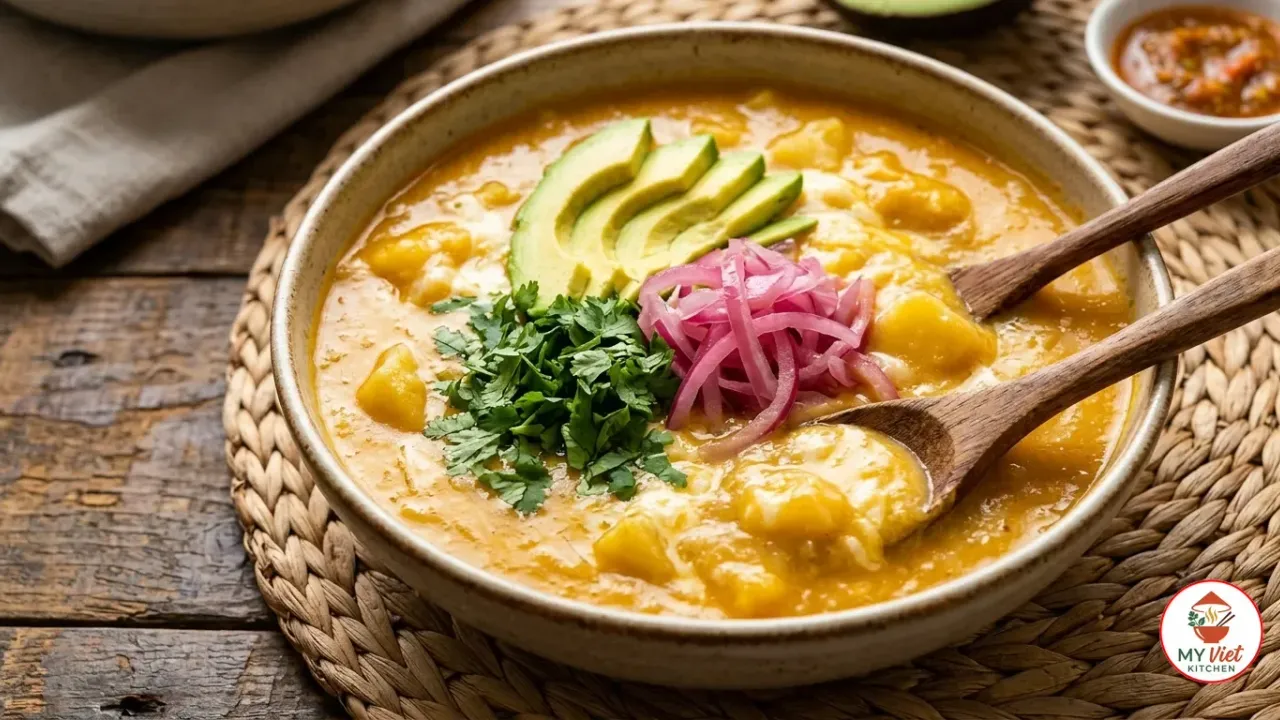
Locro de papa is one of the most beloved comfort foods in Ecuador, and this locro de papa recipe shows you how to make it perfectly at home. This thick, creamy potato soup gets its golden hue from annatto oil and its richness from melted cheese and milk. Topped with cool slices of avocado, a handful of fresh cilantro, and tangy pickled red onions, locro de papa delivers warmth and satisfaction in every spoonful. Whether you are new to Ecuadorian cooking or looking for the best potato soup you have ever made, this recipe will not let you down.
Prep Time: 15 minutes | Cook Time: 35 minutes | Servings: 6
Difficulty: Easy | Calories: ~310 per serving
What Makes Locro de Papa Special?
Locro de papa stands apart from other potato soups because of its technique and its toppings. Instead of pureeing the soup in a blender, you crush some of the potatoes right in the pot with a masher. This gives the soup a thick, starchy body while leaving soft chunks throughout. The result is a texture that feels hearty and rustic, not smooth like a French veloute.
The golden color comes from annatto oil, also called achiote, which is a staple in Ecuadorian kitchens. Annatto seeds are simmered in oil to release a warm, earthy pigment that tints the soup a beautiful sunset gold. Combined with the creamy white of melted cheese and the green of fresh avocado, a bowl of locro de papa is as stunning to look at as it is to eat.
Locro has deep roots across South America, with versions appearing in Argentina, Peru, and Colombia. However, Ecuador’s locro de papa is unique because it focuses entirely on the potato. There is no meat, no corn, and no squash competing for attention. The potato is the star, and everything else in the bowl exists to support it. This simplicity is what makes the dish so elegant and so addictive.

Choosing the Right Potatoes for Locro de Papa
The potato you pick will make or break your locro de papa. You need a variety that breaks down easily when cooked, because part of the technique relies on the starch thickening the broth naturally. Here are your best options.
- Yukon Gold (best choice): These yellow-fleshed potatoes have a naturally buttery, creamy texture that mirrors the Ecuadorian varieties used in traditional locro de papa. They break down beautifully when mashed and hold their shape when left in chunks. Yukon Gold potatoes are the closest match to what Ecuadorian cooks use.
- Russet potatoes: High in starch and widely available, russets will thicken the soup quickly. However, they produce a slightly drier, grainier texture compared to Yukon Gold. If you use russets, add a bit more milk to keep the soup creamy.
- Red potatoes (not ideal): These waxy potatoes hold their shape too well. They resist mashing and will not break down enough to thicken the broth. Your soup will end up thin and brothy instead of thick and creamy. Avoid red potatoes for this recipe.
Ingredients for Locro de Papa
Main Soup Ingredients:
- 2 pounds yellow potatoes (Yukon Gold), peeled and diced into 1-inch cubes
- 6 cups vegetable or chicken broth
- 1 cup whole milk
- 2 tablespoons butter
- 1 tablespoon annatto (achiote) oil or 1 teaspoon annatto powder
Aromatics and Seasoning:
- 1 medium white onion, finely diced
- 3 cloves garlic, minced
- 1 teaspoon ground cumin
- Salt and white pepper to taste
For the Toppings:
- 1 cup shredded queso fresco or mozzarella cheese
- 2 ripe avocados, sliced
- Fresh cilantro, roughly chopped
- Pickled red onions (curtido)
Pro tip: To make annatto oil at home, heat 1/4 cup of vegetable oil in a small pan over low heat and add 2 tablespoons of annatto seeds. Stir for 2 to 3 minutes until the oil turns deep orange. Strain out the seeds and use the oil. This homemade version has a richer color and flavor than store-bought powder.
Step-by-Step Instructions
Step 1: Build the Aromatic Base
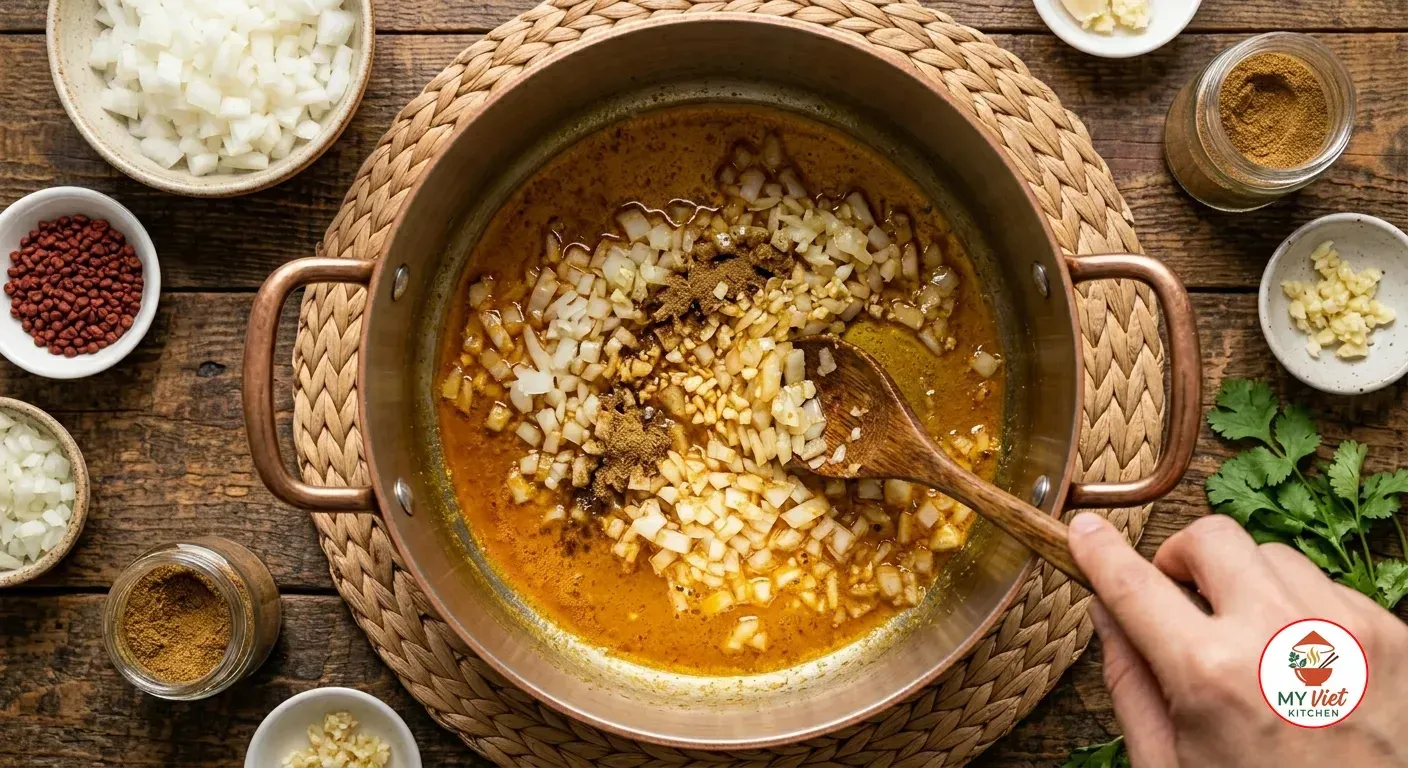
1 Melt the butter in a large, heavy-bottomed pot over medium heat. Add the annatto oil and stir until the butter turns a warm golden-orange color. Drop in the diced onion and cook for about 5 minutes, stirring occasionally, until the onion softens and turns translucent. You want the onion to sweat gently, not brown, because browning adds a roasted flavor that does not belong in this soup.
Add the minced garlic and ground cumin. Stir for 30 seconds until the kitchen fills with a warm, earthy aroma. Cumin is essential to the flavor of locro de papa. It adds a smoky depth that rounds out the natural sweetness of the potatoes. Be careful not to burn the garlic, since burnt garlic turns bitter and will spoil the entire pot.
Step 2: Cook the Potatoes
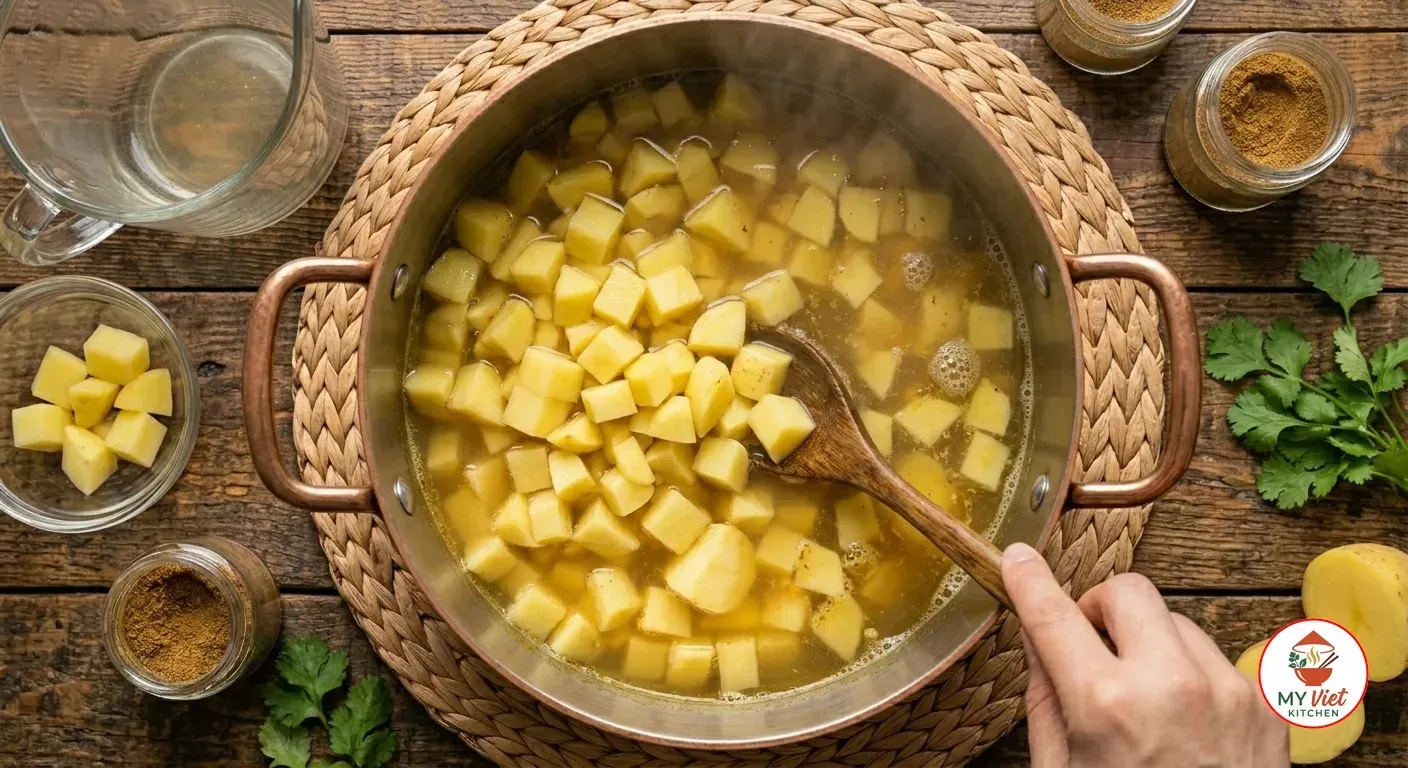
2 Add the diced potatoes to the pot and stir to coat them in the aromatic base. Pour in the broth and bring everything to a boil over high heat. Once boiling, reduce the heat to medium-low and let the soup simmer for 20 to 25 minutes. The potatoes should be completely tender, and some pieces will start to crumble at the edges on their own.
Test a potato chunk by pressing it against the side of the pot with your spoon. If it falls apart easily, you are ready for the next step. If it still holds its shape firmly, give it another 5 minutes. Undercooked potatoes will not mash properly and your soup will end up lumpy instead of creamy.
Step 3: Thicken the Soup
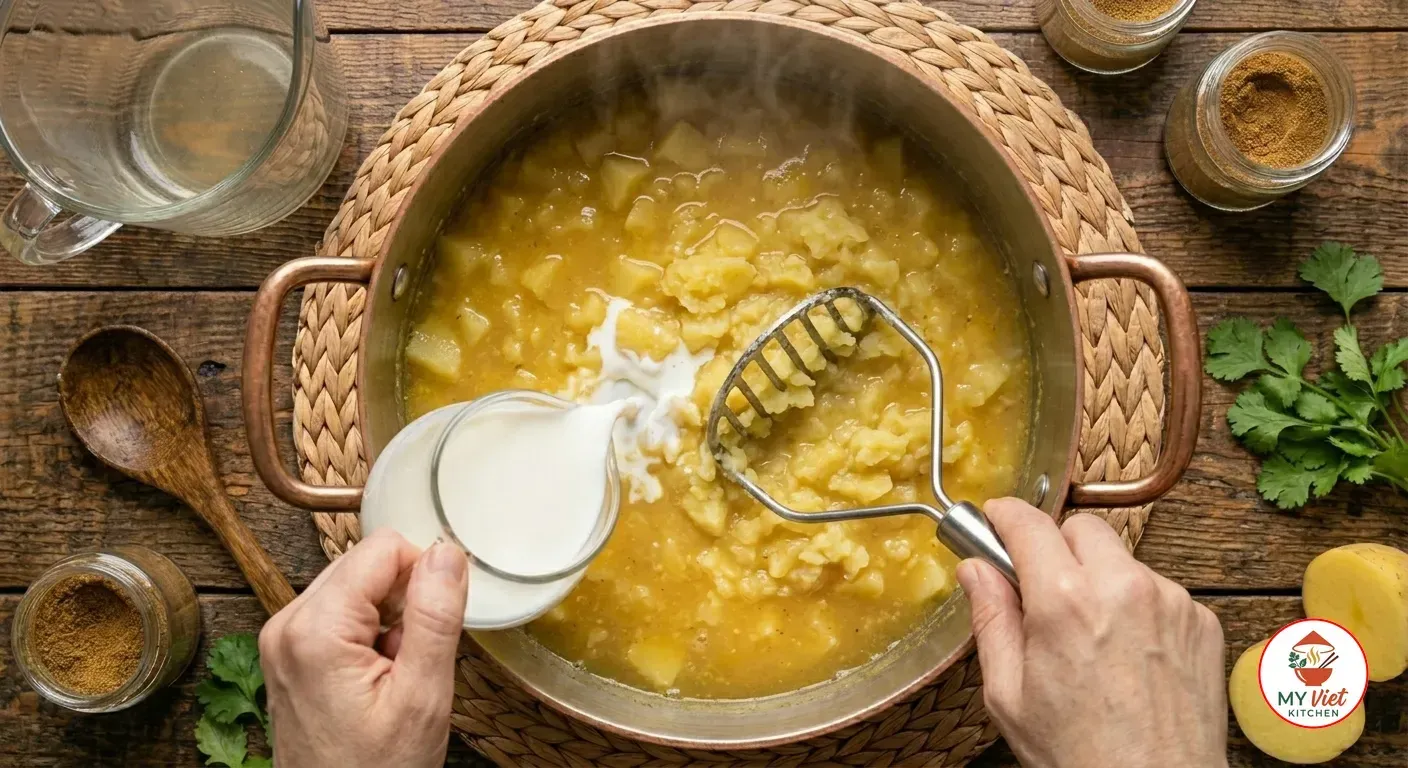
3 Use a potato masher or the back of a large wooden spoon to crush about half of the potatoes directly in the pot. Press down firmly and work in batches around the pot. The goal is to break down enough potato to thicken the broth into a creamy, stew-like consistency while leaving plenty of soft chunks for texture.
Pour in the milk and stir well. The milk adds richness and smooths out the texture of the soup. Let it simmer for 3 more minutes so everything blends together. At this point, the soup should coat the back of a spoon. If it seems too thick, add a splash more broth. If it is too thin, crush a few more potato pieces to release their starch.
Step 4: Add Cheese and Serve
4 Lower the heat to the lowest setting. Add the shredded cheese a handful at a time, stirring after each addition until it melts completely into the soup. The cheese makes the soup silky and adds a salty, tangy note that balances the mild potatoes beautifully. Season with salt and white pepper to taste.
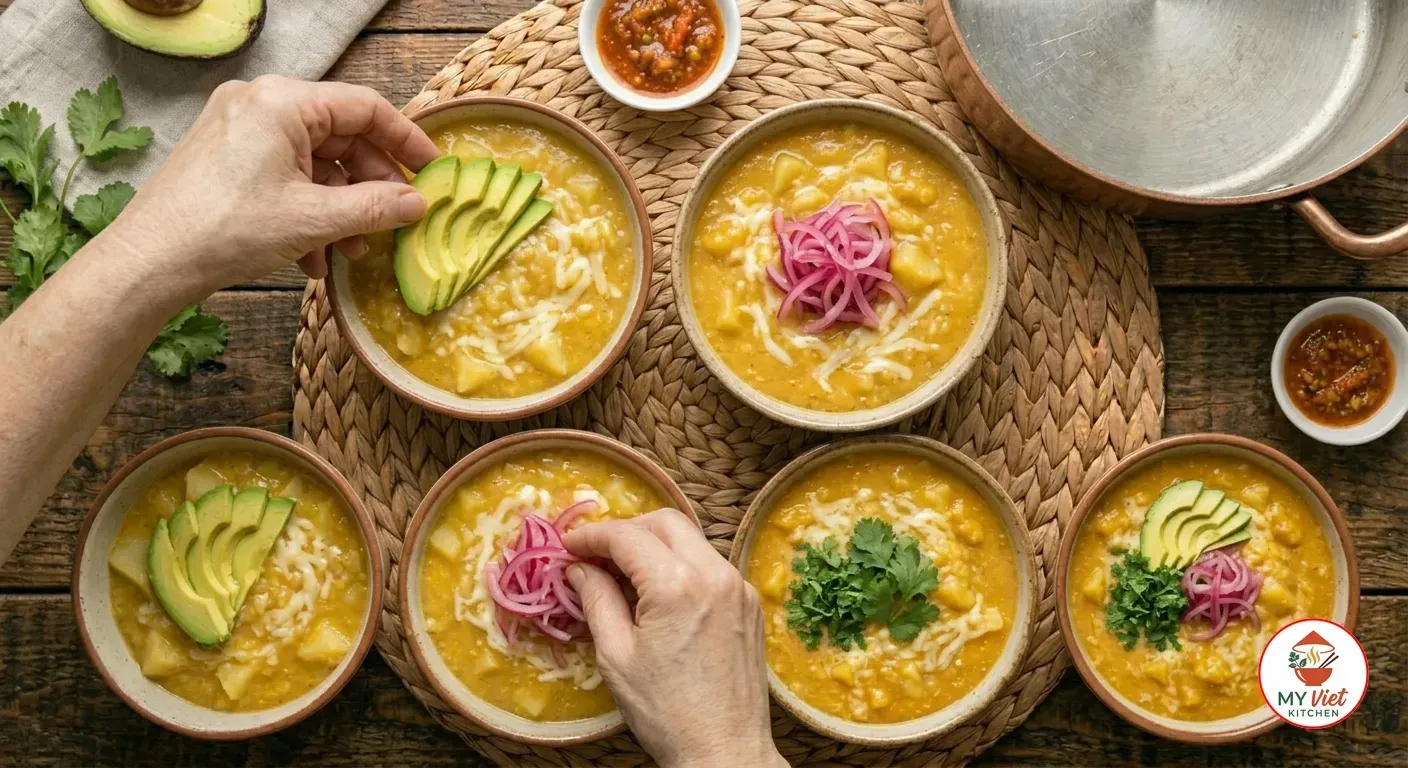
Ladle the hot soup into deep bowls. Fan slices of ripe avocado over the top, scatter fresh cilantro across the surface, and pile a small mound of pickled red onions in the center. The cool avocado against the hot, cheesy soup is one of the great contrasts in South American cooking. Serve immediately while the cheese is still melted and stretchy.
Expert Tips for the Perfect Locro de Papa
Mash by Hand, Not by Blender
An immersion blender or food processor will turn your soup into a smooth puree, which is not what you want. The beauty of locro de papa is the mix of textures: thick, starchy broth with soft chunks of potato throughout. A handheld potato masher gives you full control over how much you crush. Work slowly and stop when you reach a consistency that looks like a thick chowder.
Do Not Skip the Annatto
Annatto oil gives locro de papa its signature golden color. Without it, the soup looks pale and plain. The flavor contribution is subtle but real, adding a faint earthiness that you would miss if it were gone. If you cannot find annatto seeds or oil, a small pinch of turmeric blended with sweet paprika is the best substitute.
Add the Cheese Off the Heat
High heat causes cheese to seize up and become stringy or rubbery. Lower the heat as much as possible before you add the cheese, and stir gently until it melts. This keeps the soup smooth and velvety. If the cheese clumps, the heat was too high.
Locro de Papa vs. Other Latin American Potato Soups
Many Latin American countries have their own version of potato soup. While they share some ingredients, the techniques and toppings vary greatly. Here is how locro de papa compares to its regional cousins.
| Dish | Country | Key Ingredients | Texture |
|---|---|---|---|
| Locro de papa | Ecuador | Yellow potatoes, cheese, annatto, avocado | Thick and creamy with chunks |
| Ajiaco | Colombia | Three types of potato, chicken, corn, capers, cream | Thick broth with distinct layers |
| Chuppe de papa | Peru | Potatoes, egg, milk, oregano, chili | Creamy and smooth |
| Locro argentino | Argentina | Squash, corn, beans, chorizo, potatoes | Hearty stew, thick and chunky |
| Sopa de papa | Mexico | Potatoes, chipotle, tomato, sour cream | Brothy with smoky heat |
Serving Suggestions
In Ecuador, locro de papa is a meal on its own. It appears at lunch and dinner tables across the country, from street stalls in Quito to family kitchens in the highlands. The toppings are what complete the experience, so do not skip them.
Traditional Accompaniments:
- Avocado slices: Cool, creamy avocado contrasts the hot soup perfectly. Use ripe Hass avocados and slice them just before serving so they stay bright green.
- Pickled red onions (curtido): These sharp, tangy onions cut through the richness of the cheese and potato. Quick-pickle them in lime juice and salt for at least 30 minutes before serving.
- Crusty bread or tostadas: A piece of toasted bread is perfect for soaking up the thick, cheesy broth at the bottom of the bowl.
- Aji criollo (Ecuadorian hot sauce): A spoonful of this fresh chili sauce made with tree tomatoes and hot peppers adds brightness and heat to each bowl.
Beverage Pairings:
- Morocho: A warm, sweet Ecuadorian drink made with cracked corn and milk, spiced with cinnamon. It pairs wonderfully with the savory soup.
- Chicha morada: A refreshing Andean purple corn drink with pineapple, clove, and cinnamon. Its sweet, fruity flavor balances the rich soup.
- Light lager beer: A cold, crisp beer such as Pilsener or Club cuts through the creaminess of the cheese and refreshes the palate between spoonfuls.
- Herbal tea with lemongrass: A light, fragrant tea complements the gentle flavors of the soup without competing with them.
Storage and Reheating
Refrigerator: Locro de papa keeps well for up to 4 days in a sealed container. The soup thickens considerably as it cools, which is normal. The flavor actually develops and deepens after sitting in the fridge overnight, so leftovers taste even better than the first serving.
Freezer: You can freeze locro de papa for up to 2 months. Let it cool completely, then pour into freezer-safe bags or containers. Leave room at the top for the liquid to expand. Thaw in the refrigerator overnight before reheating. Note that the texture may be slightly grainier after freezing, but a vigorous stir while reheating brings it back.
Reheating: Warm the soup slowly on the stove over medium-low heat, stirring often. Add a splash of milk or broth to thin it back to the right consistency. Do not boil, because high heat can cause the cheese to separate and turn grainy. Add fresh avocado and cilantro only when serving.
Common Mistakes to Avoid
1. Using Waxy Potatoes
Waxy varieties like red potatoes or fingerlings resist mashing. They hold their shape stubbornly, and your soup will end up thin and brothy instead of thick and creamy. Always use starchy or all-purpose potatoes such as Yukon Gold or russet for the best results. The starch is what naturally thickens the broth when you crush the potatoes.
2. Over-Blending the Soup
Locro de papa should not be a smooth puree. Using a blender removes the chunky, rustic texture that defines this dish. Stick to a potato masher and crush only half the potatoes. The mix of creamy broth and tender chunks is what makes every spoonful interesting.
3. Adding Cheese to Boiling Soup
When cheese hits boiling liquid, it seizes and turns into rubbery clumps. Lower the heat before adding the cheese, and stir it in gradually. The soup should be hot but not bubbling. This is especially important with queso fresco, which has a lower melting tolerance than aged cheeses.
4. Skipping the Toppings
A plain bowl of locro de papa without its garnishes is only half the experience. Avocado adds creaminess and a cool contrast. Pickled onions bring acid and crunch. Meanwhile, cilantro adds freshness. Together, these toppings complete the dish and turn a good soup into a great one.
Frequently Asked Questions
What is locro de papa?
Locro de papa is an Ecuadorian potato soup known for its thick, creamy texture and golden color. It uses yellow potatoes cooked in broth, partially mashed, then enriched with milk and cheese. The soup is served hot with fresh avocado, cilantro, and pickled red onions on top. It is one of the most popular dishes in Ecuador and appears on tables year-round.
What kind of potatoes are best for locro de papa?
Yukon Gold potatoes are the best option because they have a buttery, creamy texture that breaks down easily. In Ecuador, cooks use local varieties like chola or superchola, which share similar traits. Russet potatoes work as a second choice, though they produce a slightly drier result. Avoid waxy potatoes like red or fingerling, as they will not thicken the soup properly.
Can I make locro de papa vegan?
Yes, and it turns out beautifully. Use vegetable broth, swap the butter for olive oil, replace the milk with oat or coconut milk, and use a vegan cheese that melts well. The potatoes do most of the thickening work on their own, so the soup stays rich and creamy. Top with avocado and cilantro just like the original version.
What is annatto oil and can I substitute it?
Annatto oil is made by heating annatto seeds in cooking oil to extract their orange-red pigment. It gives locro de papa its warm golden color and a faint earthy taste. If you cannot find annatto seeds at a Latin grocery store, mix a pinch of turmeric with a pinch of sweet paprika into your cooking oil. The color will be close, though the flavor will differ slightly.
Is locro de papa gluten-free?
Yes, locro de papa is naturally gluten-free. There is no flour or wheat used anywhere in the recipe. The thickening comes entirely from the starch in the potatoes. Just make sure your broth does not contain hidden gluten, which some commercial brands add. If you have celiac disease, use a certified gluten-free broth to be safe.
How do you store leftover locro de papa?
Store the soup without the toppings in an airtight container in the fridge for up to 4 days. It thickens as it cools, so add a splash of broth or milk when you reheat it. Warm it gently on the stove and stir often. Only add fresh avocado, cilantro, and pickled onions right before you serve each bowl.
Variations and Adaptations
Locro de Papa with Chorizo:
For a heartier version, crumble and brown some Ecuadorian chorizo before building the aromatic base. Cook the onions in the rendered chorizo fat instead of butter for a smoky, meaty twist. Add the cooked chorizo back to the finished soup or scatter it on top as a garnish alongside the avocado.
Spicy Locro de Papa with Aji Amarillo:
Stir in 1 to 2 tablespoons of aji amarillo paste when you add the milk. This Peruvian-Ecuadorian chili paste adds a fruity heat and a vibrant orange color. It transforms the mild soup into something with real kick. Start with 1 tablespoon and taste before adding more, because the heat builds.
Vegan Locro de Papa:
Replace butter with olive oil, milk with oat or coconut milk, and cheese with a plant-based alternative. The potatoes provide so much body that the swap is nearly seamless. Add nutritional yeast for a cheesy flavor if your vegan cheese does not melt as well as dairy. This version is creamy, satisfying, and entirely plant-based.
The Cultural Significance of Locro de Papa
Locro de papa is more than a recipe in Ecuador. It is a symbol of Andean identity and a testament to the humble potato, which has fed the people of South America for thousands of years. The Inca Empire cultivated hundreds of potato varieties across the highlands, and many of those same varieties still grow in Ecuador today. When you cook locro de papa, you are participating in a culinary tradition that stretches back centuries.
In modern Ecuador, locro de papa appears everywhere. Street vendors in Quito serve it in styrofoam cups for a quick lunch. Families in the Sierra prepare it for weekend gatherings. Restaurants in Guayaquil offer upscale versions with truffle oil and aged cheese. The soup transcends class and region, connecting Ecuadorians through a shared love of simple, honest food.
There is also a strong link between locro de papa and Ecuadorian national holidays. On September 19, when Ecuador celebrates its independence, locro de papa often takes center stage at the table. It represents the country’s agricultural heritage and the resourcefulness of highland cooks who turned basic ingredients into something extraordinary. Every bowl of locro de papa tells that story.
Conclusion
This locro de papa recipe captures everything that makes Ecuadorian cooking so appealing: simple ingredients, smart technique, and bold toppings that bring the whole dish together. The keys to success are straightforward. Use starchy yellow potatoes, mash them by hand for the right texture, melt the cheese on low heat, and never skip the avocado on top. Follow these steps, and you will have a bowl of creamy, golden soup that tastes like it came from a kitchen in the Ecuadorian highlands.
Looking for more South American and global comfort food? Explore our South American dishes collection, or try our French onion soup and Ukrainian borscht for more world-class soups. Also browse our full range of European comfort food for more warming recipes from around the globe.