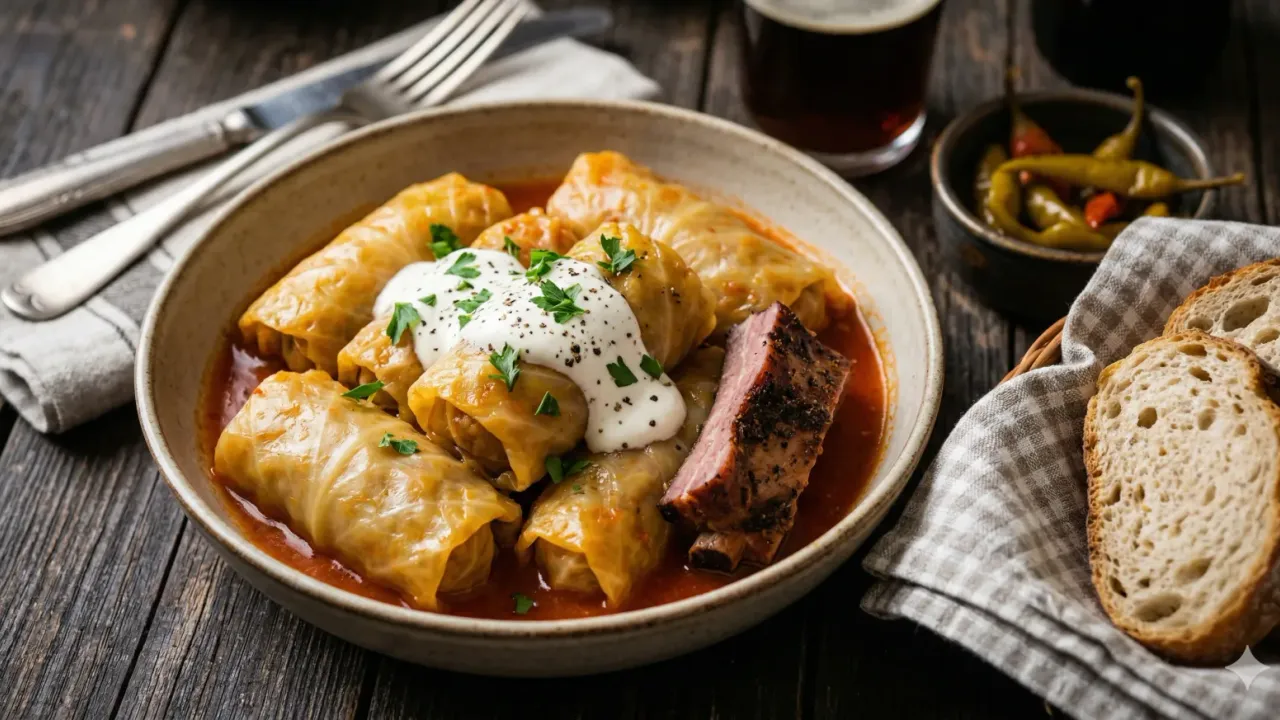
Sarma is the crown jewel of Balkan comfort food. These tender stuffed cabbage rolls wrap a savory meat and rice filling inside tangy fermented cabbage leaves. Then they simmer for hours with smoked meat until every bite is rich, tender, and deeply satisfying. This sarma recipe guides you through the entire process. Whether you are preparing a holiday feast or a hearty weeknight dinner, these Balkan stuffed cabbage rolls deliver unforgettable flavor.
Prep Time: 45 minutes | Cook Time: 3 hours | Servings: 8 (about 24 rolls)
Difficulty: Medium | Calories: ~380 per serving
What Makes Sarma Special?
At first glance, sarma looks like any stuffed cabbage roll. However, the secret lies in the cabbage itself. Traditional Balkan sarma uses whole heads of cabbage that have been fermented in brine for weeks. This fermentation gives the leaves a sour, tangy bite that fresh cabbage simply cannot deliver. The result is a deeper, more complex flavor profile that balances beautifully with the rich meat filling.
Another key difference is the long, slow cooking process. Unlike quick-baked cabbage rolls, sarma simmers gently for three hours on the stovetop. During this time, the rice swells and absorbs the surrounding juices. The cabbage turns silky and almost melts on your tongue. Meanwhile, pieces of smoked pork ribs tucked between the rolls release their smoky essence into the entire pot. Every component becomes better because of the time spent together.
Sarma also holds a special place in Balkan culture. Families prepare enormous batches for Christmas, New Year, and Slava celebrations. In Serbia, Croatia, and Bosnia, no winter holiday table is complete without a steaming pot of sarma. The dish is meant to be shared, and it tastes even better the next day. That quality makes it the ideal dish for feeding a crowd over several meals.

Choosing the Right Cabbage for Sarma
The cabbage you choose determines the entire character of your sarma. Not all cabbage works equally well. Here are the options and what to expect from each one.
- Fermented whole cabbage (best choice): This is the traditional pick. Whole cabbage heads fermented in salt brine produce large, pliable leaves with a perfect sour tang. You can find them at Eastern European markets, often sold in barrels or vacuum-sealed packs. The leaves peel off easily and roll without cracking.
- Jarred sauerkraut leaves: A good backup if you cannot find whole fermented cabbage. Look for whole or large-leaf sauerkraut rather than shredded. Rinse them briefly if they taste overly salty. The flavor is similar, though the texture may be slightly softer.
- Fresh green cabbage (not traditional): You can use fresh cabbage, but the sarma will lack that signature sour depth. Blanch the whole head in boiling water for 5 to 8 minutes to soften the leaves. Add a splash of white vinegar or lemon juice to the cooking liquid to compensate for the missing tang.
Ingredients for Sarma
Cabbage and Filling:
- 1 large head of sauerkraut (fermented whole cabbage) or 2 pounds sauerkraut leaves
- 1 pound ground pork
- 1/2 pound ground beef
- 1 cup short-grain rice, uncooked
- 1 large onion, finely diced
- 3 cloves garlic, minced
- 1 teaspoon sweet paprika
- 1/2 teaspoon smoked paprika
- 1/2 teaspoon black pepper
- Salt to taste
- 1 egg
For the Pot:
- 8 ounces smoked pork ribs or smoked bacon
- 2 tablespoons sunflower oil or lard
- 2 bay leaves
- 1 cup tomato passata or crushed tomatoes
- Water or pork stock as needed
For Serving:
- Sour cream or kajmak
- Crusty bread
- Pickled hot peppers (optional)
Pro tip: Use short-grain rice, not long-grain. Short-grain rice releases more starch during cooking, which thickens the sauce and gives the filling a creamy, cohesive texture. Long-grain rice stays too firm and separate inside the roll. Arborio or any round-grain variety works perfectly.
Step-by-Step Instructions
Step 1: Prepare the Cabbage Leaves
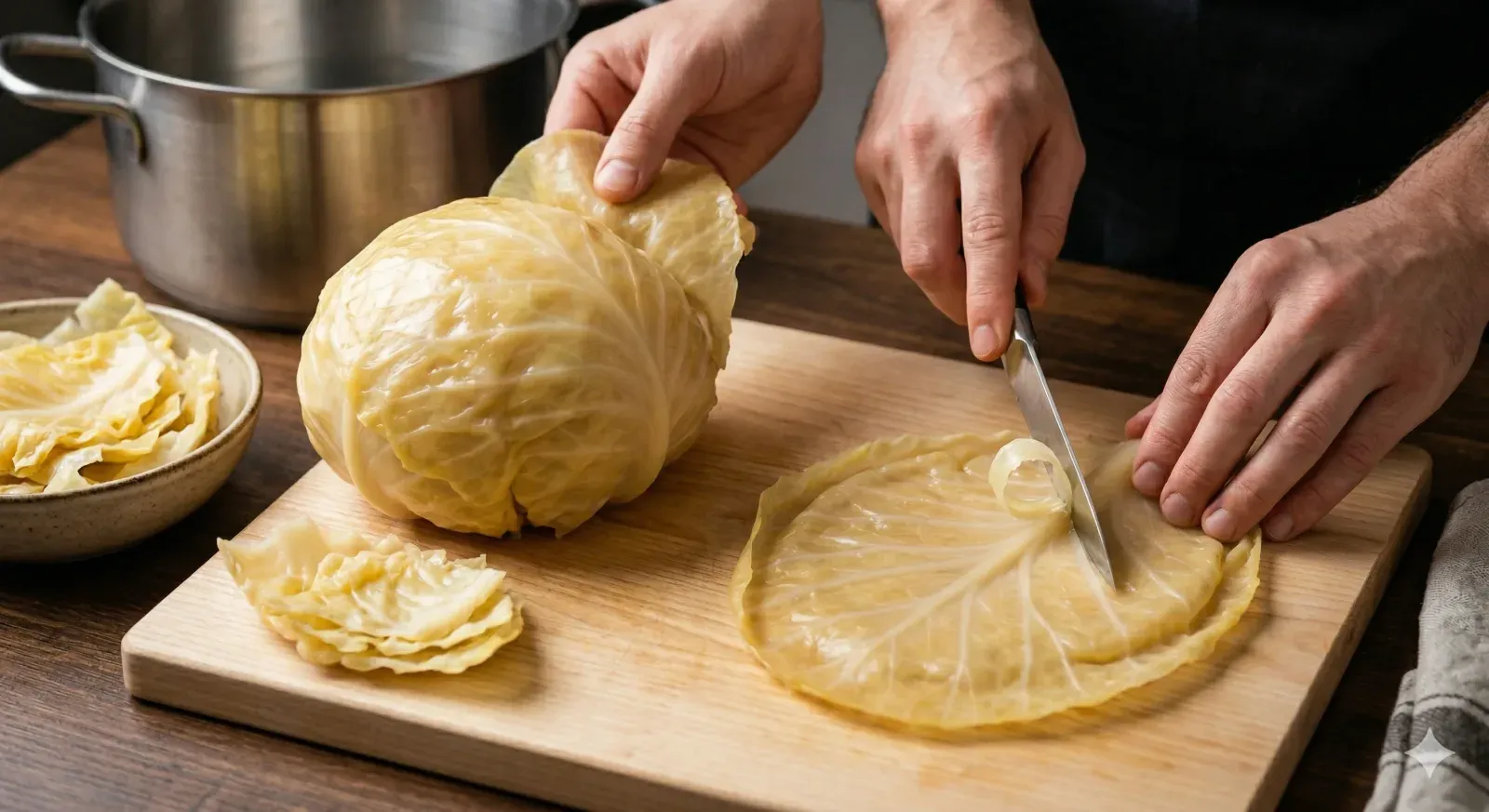
1 Carefully peel the leaves from the fermented cabbage head one at a time. Start from the outside and work inward. The outer leaves are the largest and best for rolling. Rinse each leaf briefly under cold water if it tastes very salty. You want some tang but not an overwhelming brine flavor.
Next, lay each leaf flat on a cutting board. Use a sharp knife to shave down the thick central rib so it sits flush with the rest of the leaf. This step is important because a thick rib prevents the leaf from rolling smoothly. Save the smaller inner leaves and any torn pieces. You will use them to line the bottom of the pot later.
Step 2: Make the Filling
2 Heat the oil in a small pan over medium heat. Add the diced onion and cook for 5 to 7 minutes until soft and golden. Let the onion cool before adding it to the meat. Otherwise, hot onion can partially cook the egg in the filling, which creates an uneven texture.
In a large bowl, combine the ground pork, ground beef, uncooked rice, cooled onion, minced garlic, sweet paprika, smoked paprika, black pepper, salt, and the egg. Mix everything thoroughly with your hands. The filling should be uniform and slightly sticky. The egg binds it together, while the rice absorbs moisture during cooking. Furthermore, do not skip the garlic and paprika, as they provide the warm, earthy backbone of every good sarma.
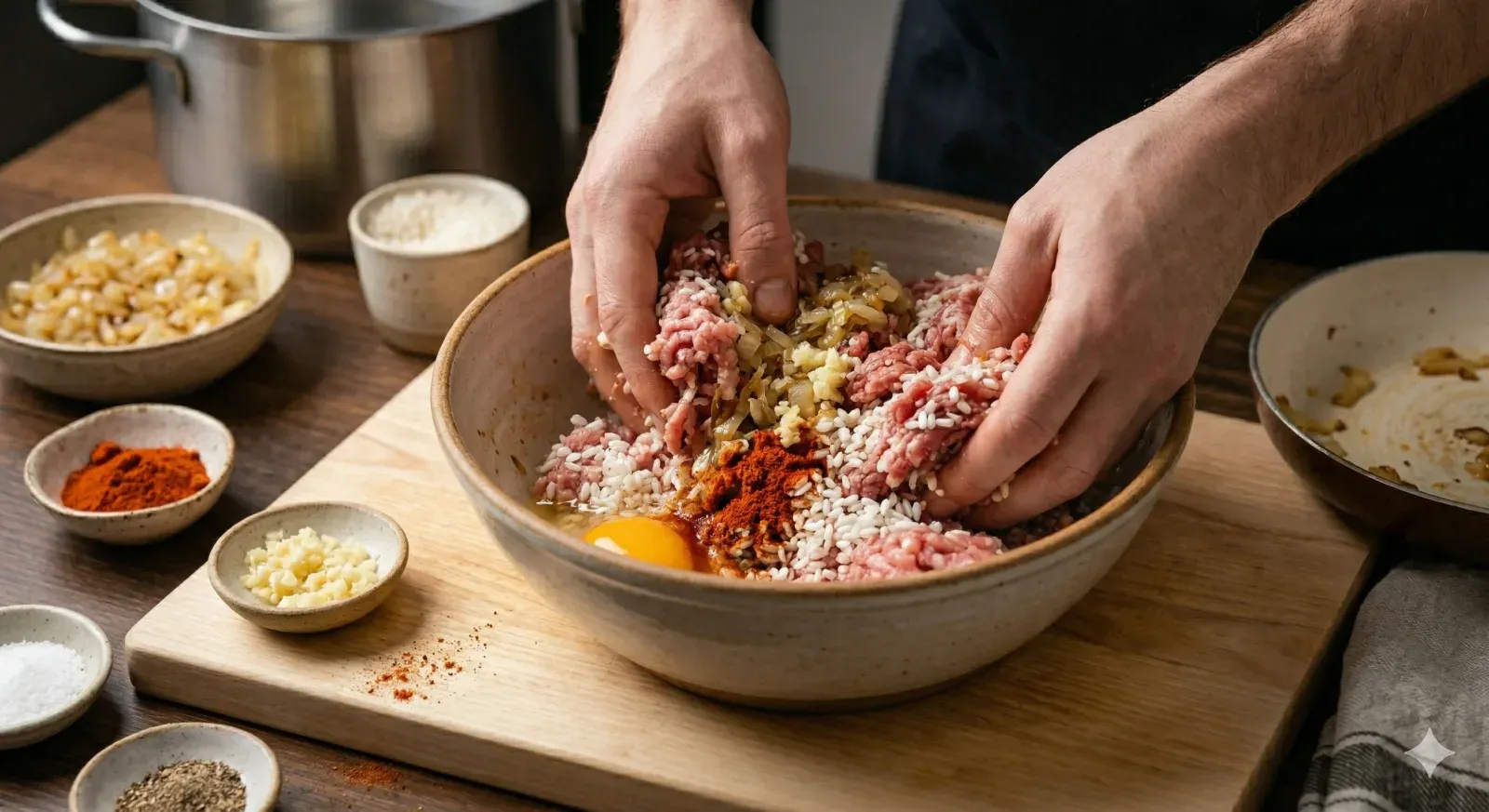
Step 3: Roll the Sarma
3 Place a prepared cabbage leaf flat on your work surface. Position it with the stem end closest to you. Scoop about 2 tablespoons of filling and shape it into a small log near the base of the leaf. Fold the bottom edge of the leaf up and over the filling. Then tuck in both sides toward the center, like wrapping a burrito.
Now roll the leaf tightly toward the top. The roll should be snug but not overly tight. Remember that the rice inside will expand as it cooks. Consequently, if you roll too tightly, the sarma may burst during simmering. Place each finished roll seam side down on a tray. Repeat until all the filling and leaves are used. You should get about 24 rolls from this batch.
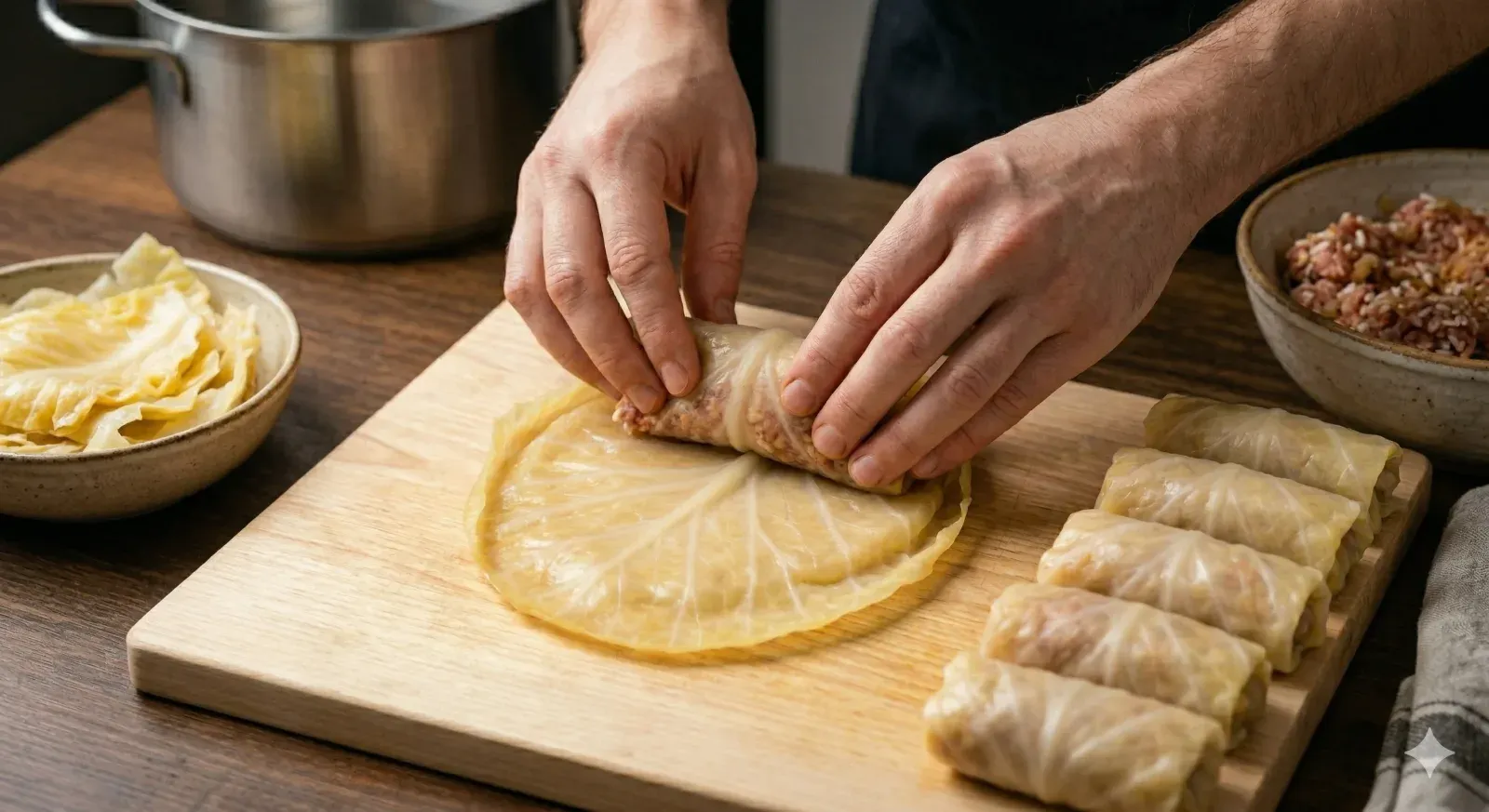
Step 4: Layer the Pot
4 Layering the pot correctly is essential for even cooking. Start by spreading the reserved torn leaves and any leftover chopped sauerkraut across the bottom. This layer prevents the rolls from sticking and burning. Additionally, it adds extra flavor to the cooking liquid below.
Arrange the sarma rolls seam side down in tight, even rows. Pack them snugly so they hold their shape during cooking. Between the layers, tuck pieces of smoked pork ribs or thick-cut smoked bacon. Drop in the bay leaves as well. Once all rolls are in the pot, pour the tomato passata evenly over the top. Then add enough water or pork stock to just barely cover the rolls. The liquid should reach the top layer but not drown it.
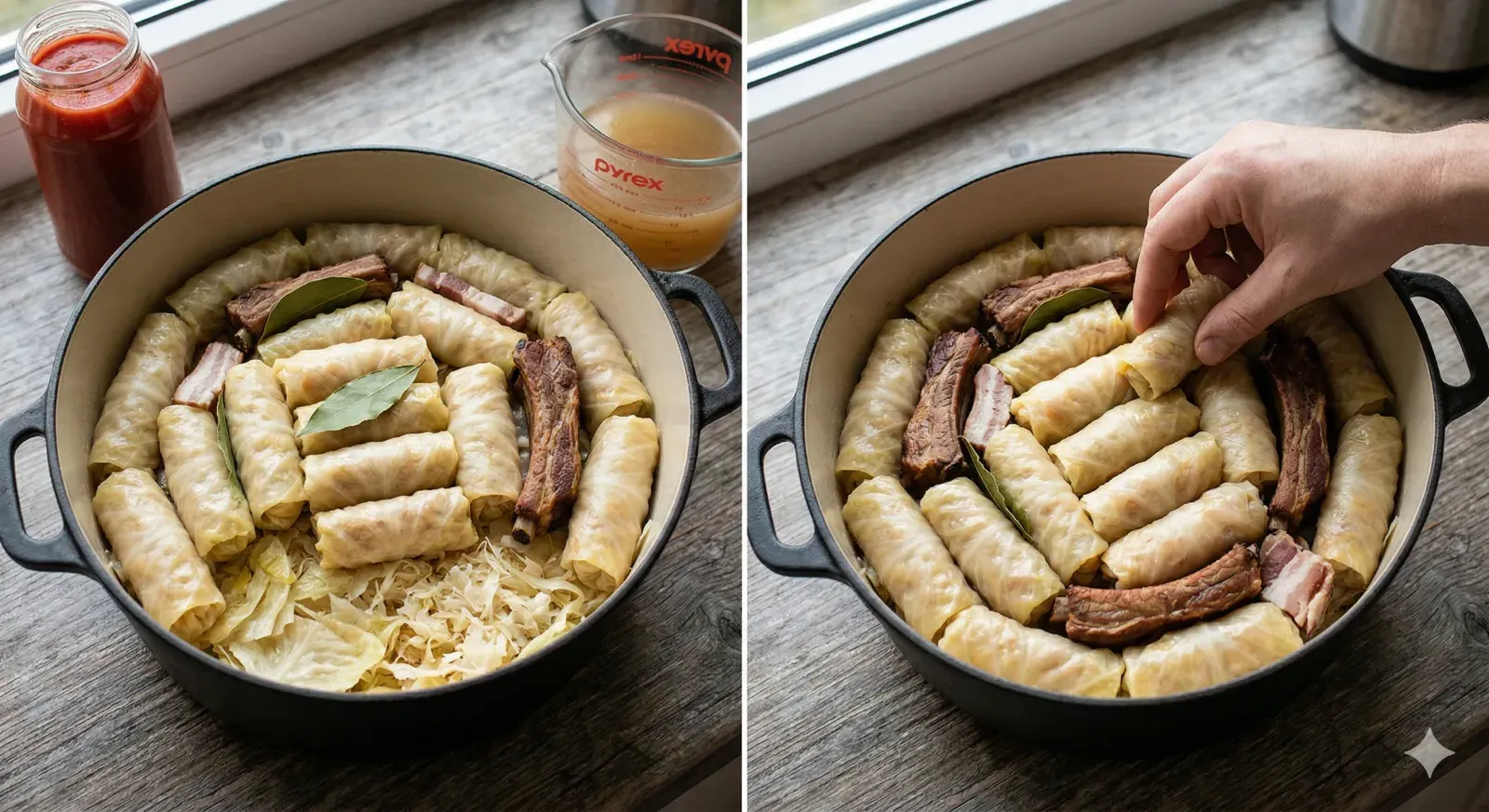
Step 5: Slow Cook the Sarma
5 Place a heatproof plate or a smaller pot lid directly on top of the rolls. This weight keeps them submerged and prevents them from unraveling. Then cover the pot with its own lid. Bring the liquid to a gentle boil over medium heat, then immediately reduce the flame to low.
Let the sarma simmer very gently for 2.5 to 3 hours. The surface should barely bubble. A hard boil will tear the delicate cabbage leaves apart. Instead, check the pot every 45 minutes and add a splash of warm water if the liquid drops below the top of the rolls. After about 2 hours, carefully lift one roll and cut it open to check the rice. It should be fully cooked and soft. If the rice still has a firm center, simply continue cooking for another 30 minutes.
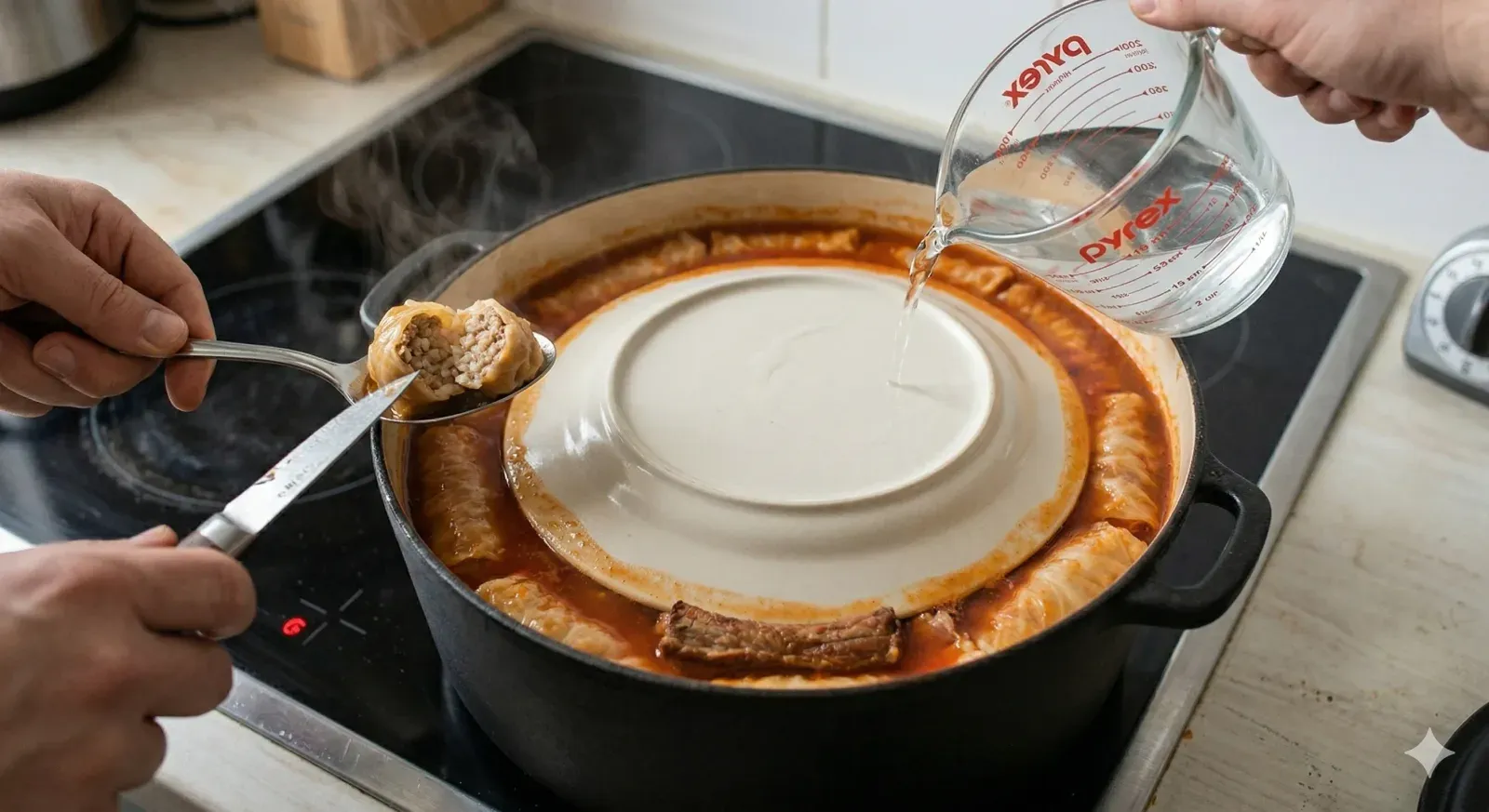
Step 6: Rest and Serve
6 Turn off the heat and let the sarma rest in the covered pot for at least 20 minutes. This resting period is more than just patience. As the temperature drops gradually, the rolls reabsorb some of the surrounding liquid. They become firmer and easier to plate without falling apart.
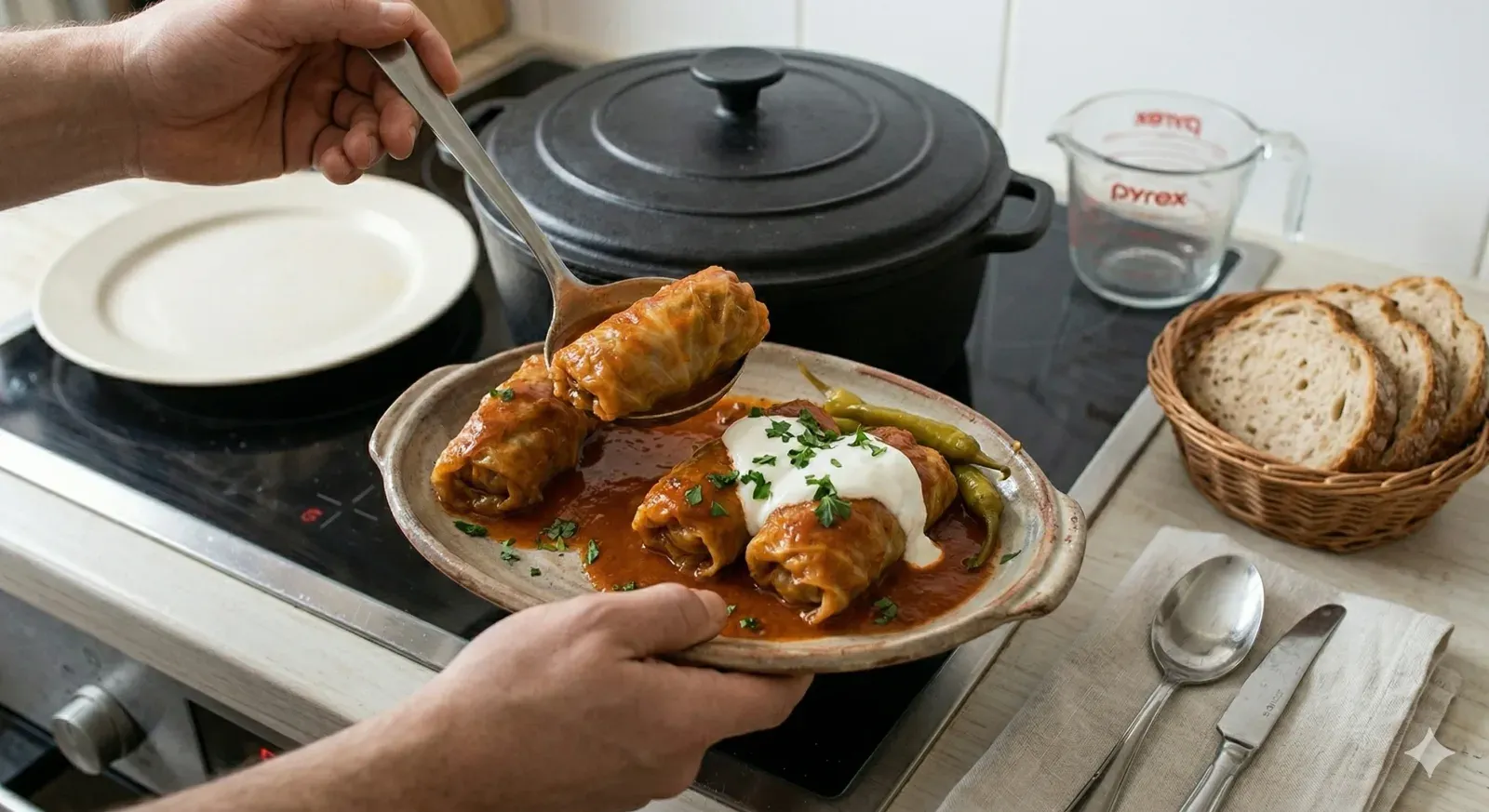
Use a large spoon to carefully lift the sarma onto a serving platter. Spoon some of the rich cooking liquid over the top. Serve each portion with a generous dollop of sour cream or kajmak on the side. A few pickled hot peppers add a welcome kick. Do not forget thick slices of crusty bread to mop up every drop of that smoky, tangy sauce.
Expert Tips for Perfect Sarma
Use Smoked Meat for Depth
Smoked pork ribs are the traditional flavor booster in Balkan sarma. As the rolls simmer, the smoky pork releases fat and flavor into the cooking liquid. This transforms a simple broth into a rich, complex sauce. If you cannot find smoked ribs, thick-cut smoked bacon or a smoked ham hock works well too. Never skip the smoked element entirely, because it is what separates great sarma from ordinary cabbage rolls.
Keep the Simmer Low and Slow
A vigorous boil is the enemy of good sarma. High heat causes the cabbage to tear and the rolls to fall apart. Keep the flame as low as possible so the surface barely moves. The gentle heat allows the flavors to develop slowly and evenly. Three hours at a low simmer produces far better results than two hours at a higher temperature.
Make It a Day Ahead
Sarma genuinely tastes better on the second day. Overnight, the flavors meld and intensify in a way that freshly cooked sarma cannot match. Many Balkan cooks prepare sarma the day before a gathering on purpose. Simply cool the pot to room temperature, then refrigerate it overnight. Reheat gently on the stovetop before serving and you will notice a remarkable improvement in flavor.
Sarma Across the Balkans
Nearly every country in the Balkans and beyond claims its own version of sarma. The core concept stays the same, but each region adds its own twist. Here is how the main variations compare.
| Country | Name | Key Differences | Typical Serving Style |
|---|---|---|---|
| Serbia | Sarma | Pork and beef mix, heavy on smoked ribs, sweet and smoked paprika | With kajmak and cornbread |
| Croatia | Sarma | Often uses only pork, includes diced smoked sausage in the filling | With mashed potatoes |
| Bosnia | Sarma | Smaller rolls, sometimes uses grape leaves, seasoned with pepper only | With sour cream and bread |
| Romania | Sarmale | Pork with dill, tomato-heavy sauce, frequently topped with polenta | With sour cream and polenta |
| Turkey | Lahana Sarma | Uses fresh cabbage, often lamb-based, spiced with cumin and mint | With yogurt sauce |
| Greece | Lahanodolmades | Pork or beef with lemon-egg avgolemono sauce, uses fresh cabbage | With avgolemono sauce |
Serving Suggestions
In the Balkans, sarma is often served as the main course with very little else needed. The rolls are rich, filling, and deeply flavorful on their own. However, a few well-chosen sides can round out the meal beautifully.
Classic Accompaniments:
- Crusty bread: A thick slice of rustic bread is essential for soaking up the smoky, tangy cooking liquid. Sourdough or a dense country loaf works best.
- Sour cream or kajmak: A cool, creamy topping that contrasts beautifully with the warm, tangy rolls. Kajmak is a traditional Balkan clotted cream with an incredible richness.
- Pickled hot peppers: Sharp, vinegary peppers cut through the richness of the meat and smoked pork. They add a pleasant heat that wakes up every bite.
- Polenta or mashed potatoes: In Romania and parts of Croatia, sarma is served on a bed of creamy polenta or smooth mashed potatoes. Both absorb the sauce wonderfully.
Beverage Pairings:
- Rakija (plum brandy): The classic Balkan spirit. A small glass of sljivovica before or during the meal is how sarma is traditionally enjoyed in Serbia and Bosnia.
- Red wine: A medium-bodied red like Vranac from Montenegro or Plavac Mali from Croatia pairs perfectly with the smoky, meaty flavors of sarma.
- Dark beer: A malty dark lager or amber ale complements the rich, slow-cooked flavors. The slight bitterness balances the tangy cabbage.
- Ayran or buttermilk: For a non-alcoholic option, these tangy, salted yogurt drinks are refreshing alongside heavy winter dishes like sarma.
Storage and Reheating
Refrigerator: Store leftover sarma in its cooking liquid in an airtight container for up to 5 days. The flavor actually deepens over time, making leftovers even more delicious than the first serving. Always keep the rolls submerged in liquid to prevent them from drying out.
Freezer: Sarma freezes beautifully for up to 3 months. Cool the rolls completely, then pack them with some cooking liquid into freezer-safe containers. Thaw overnight in the refrigerator before reheating. The texture holds up remarkably well after freezing.
Reheating: The best method is gentle stovetop reheating. Place the sarma and its liquid in a pot over low heat. Cover and warm for 15 to 20 minutes until heated through. Avoid the microwave, as it can make the cabbage rubbery and unevenly hot. You can also reheat in a covered baking dish at 325 degrees Fahrenheit for 30 minutes.
Common Mistakes to Avoid
1. Using Shredded Sauerkraut Instead of Whole Leaves
Shredded sauerkraut cannot be rolled. You need whole fermented cabbage leaves for sarma. Look for whole cabbage heads at Eastern European specialty stores. If you only have shredded sauerkraut, use it as a base layer in the pot, but you will still need whole leaves for the rolls themselves.
2. Rolling Too Tightly
Remember that uncooked rice expands significantly during cooking. If you roll the sarma too tight, the pressure from the swelling rice will burst the cabbage leaf. Leave just a bit of room inside each roll. The roll should feel snug but not stretched to its limit.
3. Cooking at Too High a Temperature
A hard boil is the most common reason sarma falls apart. The bubbling tears the cabbage, and the rolls open up in the liquid. Keep the heat low so the surface barely simmers. Patience is the most important ingredient in this recipe.
4. Skipping the Smoked Meat
Smoked meat is not optional in authentic sarma. Without it, the dish tastes flat and one-dimensional. Smoked pork ribs, bacon, or even a small piece of smoked ham hock adds an irreplaceable layer of flavor. Even a small amount makes a noticeable difference in the final result.
Frequently Asked Questions
What is the difference between sarma and regular stuffed cabbage?
The biggest difference is the cabbage. Balkan sarma uses fermented, sour cabbage leaves that give the dish a tangy complexity. Regular stuffed cabbage typically uses fresh cabbage and relies on tomato sauce for flavor. Additionally, sarma includes smoked meat in the pot and simmers for hours. These elements create a richer, more layered taste than most baked cabbage roll recipes.
Can I make sarma with fresh cabbage instead of sauerkraut?
Yes, you can substitute fresh cabbage. Blanch the whole head in boiling salted water for 5 to 8 minutes until the leaves soften enough to bend. The taste will be milder and sweeter without the fermented tang. To add some acidity, stir a tablespoon of white vinegar or lemon juice into the cooking liquid. The result will be good, though different from the traditional version.
How long does sarma need to cook?
Plan for 2.5 to 3 hours of gentle simmering on the stovetop. The long cook time is necessary for three reasons. First, the uncooked rice needs time to absorb liquid and soften. Second, the cabbage leaves must become silky and tender. Third, the smoked meat needs to release its flavor throughout the pot. Rushing this process results in tough cabbage and crunchy rice.
Does sarma taste better the next day?
Without question, yes. Sarma is a classic example of a dish that improves with time. As the rolls rest overnight in their cooking liquid, the flavors continue to meld and deepen. The cabbage absorbs more of the smoky, savory sauce. Many experienced Balkan cooks make sarma specifically a day ahead for holidays, knowing that reheated sarma always outshines the freshly made version.
Can I freeze sarma?
Absolutely. Sarma is one of the best dishes to freeze. Cool the rolls completely in their cooking liquid, then transfer them to airtight containers or heavy-duty freezer bags. They keep well for up to 3 months. To serve, thaw them in the refrigerator overnight and reheat gently on the stovetop. The texture and flavor survive the freezing process remarkably well.
What do you serve with sarma?
Crusty bread is essential for mopping up the rich cooking liquid. A spoonful of sour cream or kajmak on top adds a cool, creamy contrast. Pickled hot peppers on the side provide a sharp kick. In Romania, polenta is the traditional pairing. In Croatia and Serbia, mashed potatoes are popular. Many families simply serve sarma on its own, as it is hearty enough to stand alone as a complete meal.
Variations and Adaptations
Vegetarian Sarma:
Replace the meat with a mixture of rice, finely diced mushrooms, grated carrots, and sauteed onions. Add smoked paprika generously to compensate for the missing smoky meat flavor. Use vegetable stock instead of water. The cooking time stays the same, and the result is a lighter but still satisfying version. This variation is popular during Orthodox fasting periods across the Balkans.
Grape Leaf Sarma:
In southern parts of the Balkans and throughout Turkey and Greece, grape leaves replace cabbage. The rolls are much smaller and more delicate. Use the same filling but reduce the amount per roll to about one teaspoon. Grape leaf sarma cooks faster, usually in 60 to 90 minutes. Serve them cold with a squeeze of lemon for a refreshing summer dish.
Oven-Baked Sarma:
Instead of simmering on the stovetop, you can bake sarma in a covered Dutch oven. Preheat your oven to 325 degrees Fahrenheit and bake for 3 to 3.5 hours. The oven provides even, gentle heat that works just as well as the stovetop method. Some cooks uncover the pot for the last 30 minutes to lightly brown the tops of the rolls.
The Cultural Significance of Sarma
Across the Balkans, sarma carries deep emotional weight. It is the dish that grandmothers make in enormous pots for winter holidays. In Serbia, sarma is the centerpiece of Christmas and New Year celebrations. Families gather in the kitchen to roll dozens of cabbage rolls together, turning the preparation into a social event. The recipe passes from one generation to the next, often without written measurements, relying instead on feel and intuition.
The history of sarma traces back to the Ottoman Empire, which spread the concept of stuffed leaves across southeastern Europe and the Middle East. Each culture then adapted the dish using local ingredients and traditions. The word “sarma” itself comes from the Turkish “sarmak,” meaning “to wrap.” This shared heritage connects cuisines from Istanbul to Zagreb, from Bucharest to Sarajevo.
Beyond the holiday table, sarma represents warmth, generosity, and home. Making a big pot of sarma is an act of love. It takes time and care, and it feeds many people. In the Balkans, offering someone sarma is a gesture of welcome and hospitality. Whether eaten fresh from the pot or reheated the next day, every serving carries the story of a family and a tradition that stretches back centuries.
Conclusion
This sarma recipe gives you the tools to create one of the Balkans’ most beloved dishes at home. The keys to success are simple: use fermented cabbage, keep the simmer low, and do not rush the process. Good sarma rewards patience with layers of tangy, smoky, meaty flavor that no quick recipe can match. With a pot of smoked ribs, a bowl of seasoned meat and rice, and a stack of sour cabbage leaves, you have everything you need.
Once you master this recipe, you will understand why Balkan families make sarma for every important occasion. It fills the house with an incredible aroma and brings people together around the table. Make a big batch, enjoy it over several days, and share it with people you love. For more hearty European comfort food, explore our European dishes collection, including goulash, moussaka, and pierogi.